Just before you reach the junction at Uxahryggir and Kaldidalur valley highland trail, you might, or might not, notice a couple of crosses by Biskupsbrekka hill on the Uxahryggjaleið route.
Top photo: the memorial crosses by Biskupsbrekka
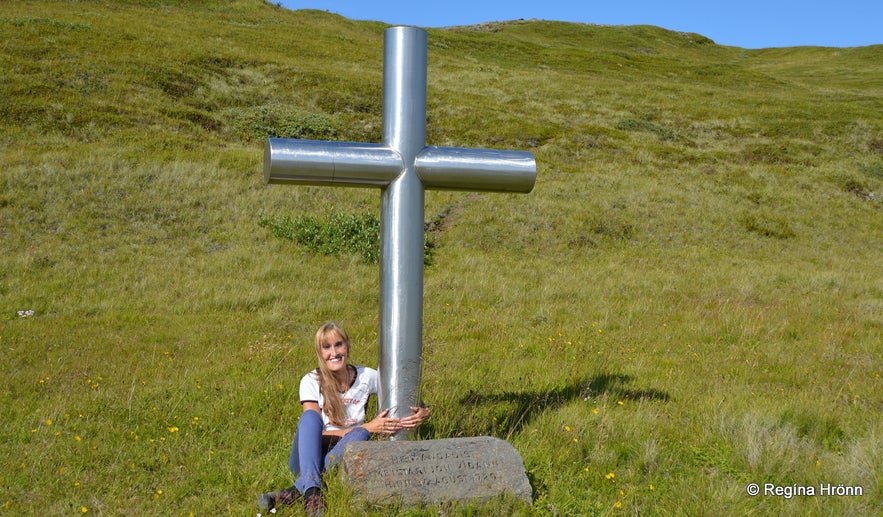 One of the memorial crosses at Biskupsbrekka hill
Most travellers will not notice these crosses as they blend into the landscape if you don't know that they are there.
The reason for these crosses being erected there and the name of the hill, Biskupsbrekka - the Bishop's Hill, is that the Bishop of Skálholt, Jón Vídalín Þorsteinsson (1666-1720), travelled through here on the 30th of August 1720.
He was on his way to bury his brother-in-law, Rev. Þórður Jónsson (1672 - 21st of August 1720) at Staðarstaður on the Snæfellsnes peninsula in West Iceland. Þórður was the brother of Jón's wife, Sigríður Jónsdóttir.
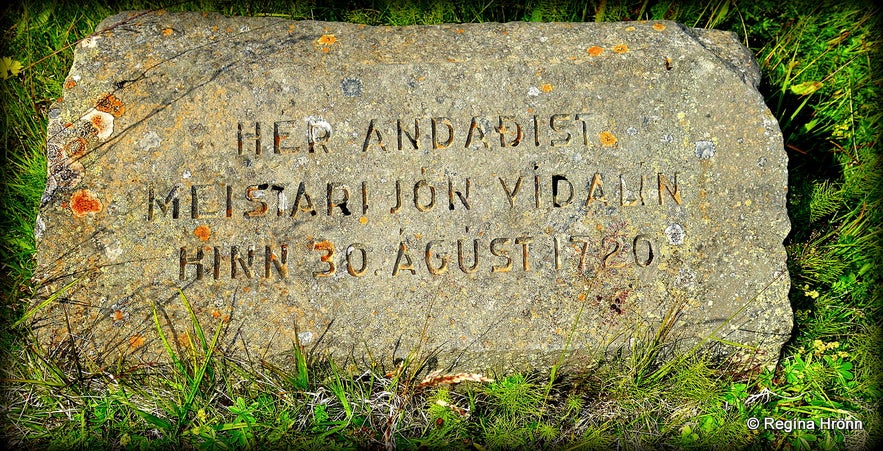 Here, Jón Vídalín died on the 30th of August 1720
Jón and Þórður had made a promise to each other that when one of them would die, the other one would bury him.
It was Jón's duty to bury his brother-in-law, so he went on this journey. But as it turned out, neither of them could fulfill their agreement, as Bishop Jón Vídalín died here by Biskupsbrekka hill.
Just imagine the heartbreak of Sigríður Jónsdóttir, who lost her brother and her husband 9 days apart. Sigríður was the daughter of Bishop Jón Vigfússon at Hólar from 1684 to 1690, but Hólar was the northern bishopric of Iceland.
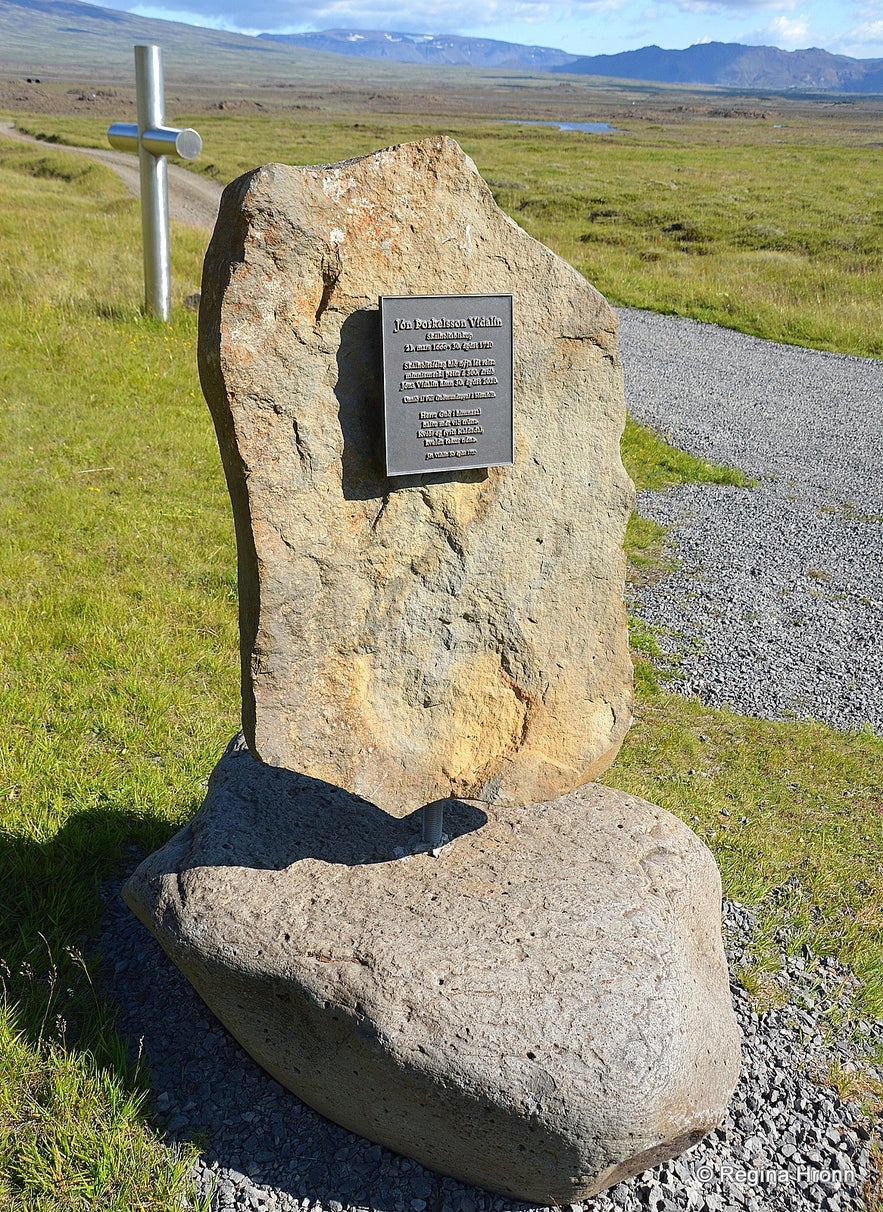
The memorial stone for Bishop Jón Vídalín
While staying in the rest house by Kvígindisfell, Jón Vídalín got a sharp pain in his side and died shortly after. On the 2nd of September, his body was carried to Skálholt, where he was buried on the 6th of September.
Bishop Jón Vídalín was the foremost Latin poet of his time, a scholar and a pioneer, and a great preacher. He was the author of Vídalínspostilla, a collection of sermons to be read at home. It was the most widely read religious track in Iceland for one and a half centuries.
Jón Vídalin was the bishop of the Skálholt episcopal see from 1698 to 1720, but there had been a bishopric at Skálholt since 1056.
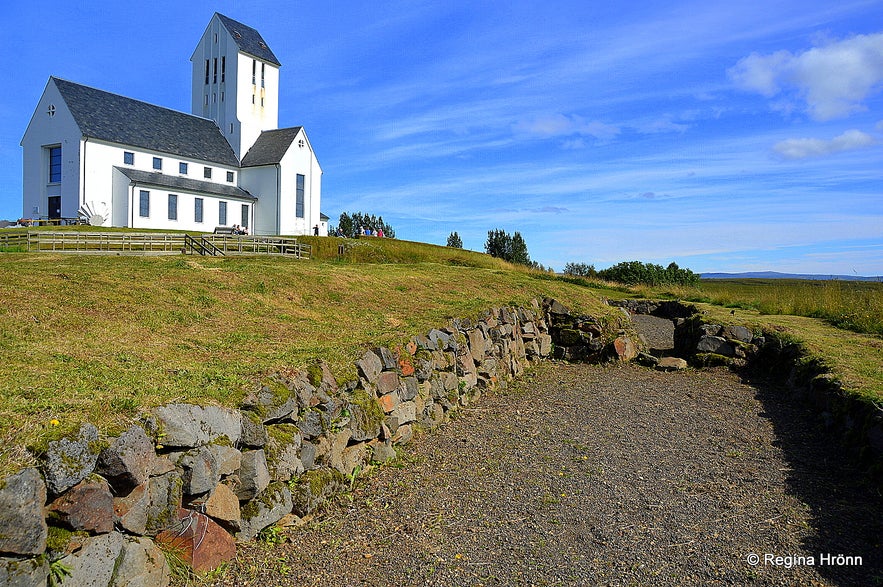 Skálholt episcopal see
Skálholt was the center of ecclesiastical power in Iceland from 1056 to 1796, for 740 years, and here was the center of culture, learning, and worldly power.
The cathedral in my photo above was erected in 1963, but when Jón Vídalín was bishop at Skálholt, another cathedral, Brynjólfskirkja, stood at this location from 1650 to 1802.
That cathedral was named after Bishop Brynjólfur Sveinsson, who served as Bishop of Skálholt from 1639 to 1674.
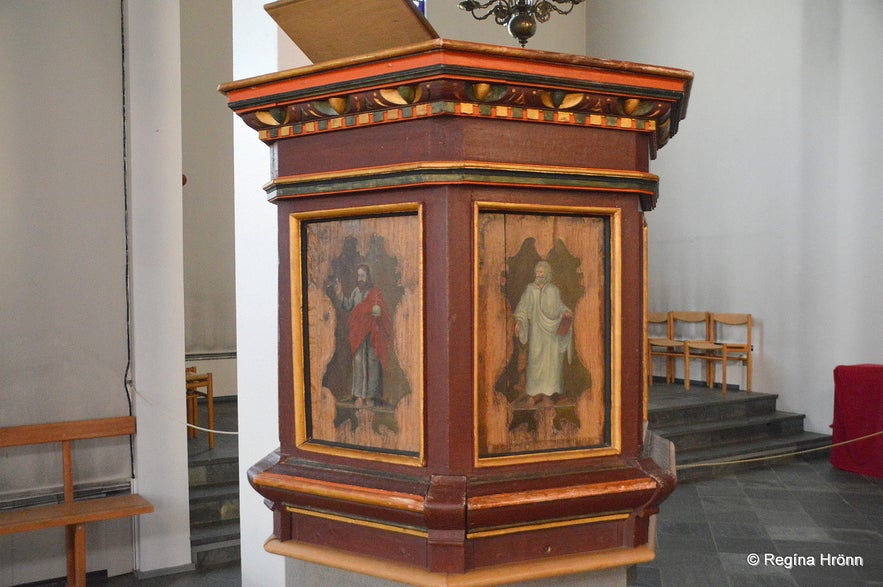 The old pulpit in the cathedral, which Bishop Jón Vídalín must have used for his sermons
You can still find some of the old artifacts from Brynjólfskirkja cathedral in the new cathedral, such as a 17th-century pulpit, an old altar, and a copper chandelier.
I have written another travel blog about Skálholt: The historic Skálholt Episcopal See in South Iceland.
It was a really tragic event when the bishop died suddenly while away on a trip, and I am glad that memorial crosses have been erected in honour of the Bishop of Skálholt.
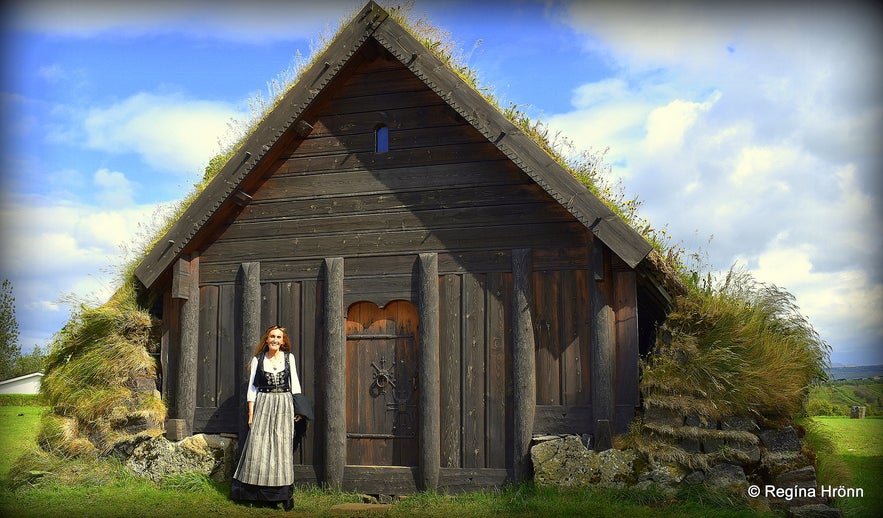 At Skálholt - Þorláksbúð
The story goes that Jón Vídalín wrote this four-line stanza before he went on his final journey:
"Herra Guð í himnasal
haltu mér við trúna.
Kvíði ég fyrir Kaldadal,
kvelda tekur núna"
but here Jón Vídalín is asking his God in heaven to help him keep his faith, as he dreads travelling on the Kaldidalur route, now that night is approaching.
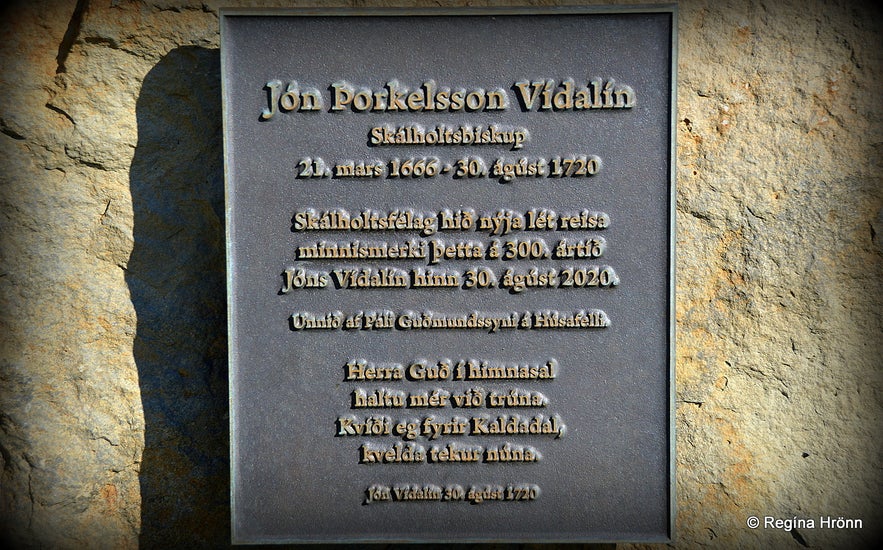
The memorial for Jón Vídalín
The thoroughfare to West Iceland was through here, as was the thoroughfare to the north, as I told you in my last travel blog.
And it is believed that people from the east, north, and west of Iceland would meet up at Hofmannaflöt plains and catch up before riding to Alþingi at Þingvellir, where the parliament was held for 2 weeks in June from 930 to 1798.
There seem to have been discussions about erecting a memorial for Bishop Jón Vídalín since 1745, but the first memorial cross I know of was erected in 1963, the same year as Skálholtskirkja cathedral was consecrated.
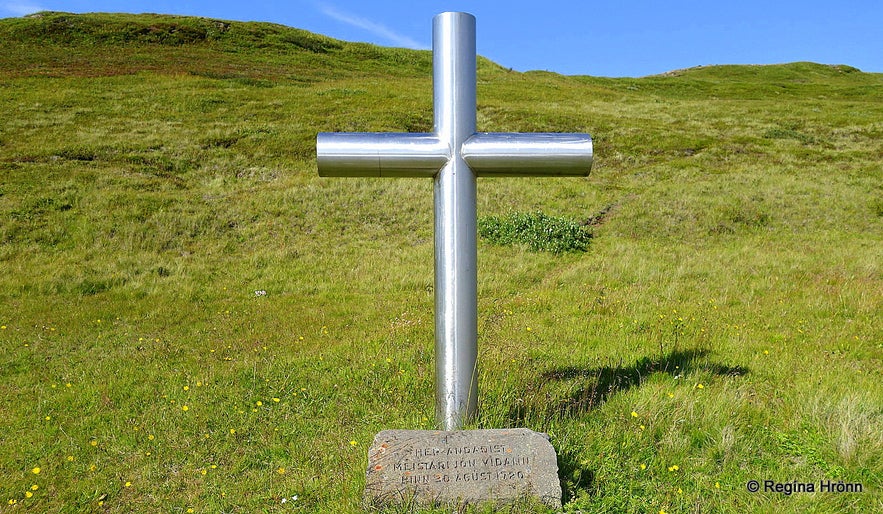 The aluminum cross at Biskupsbrekka
That wooden cross, unfortunately, broke under a heavy snow load. Shortly after, an aluminum cross was erected on Biskupsbrekka hill.
The new cross, erected in 2020, is 6 meters tall (1.5 meters underground) and made of cured pinewood (málmfura). The memorial was erected at Biskupsbrekka on the 30th of August 2020, on the 300th anniversary of Jón Vídalín's death.
The instigator for this project was Skálholtsfélagið with financial support from Vinnslustöðin in Vestmannaeyjar.
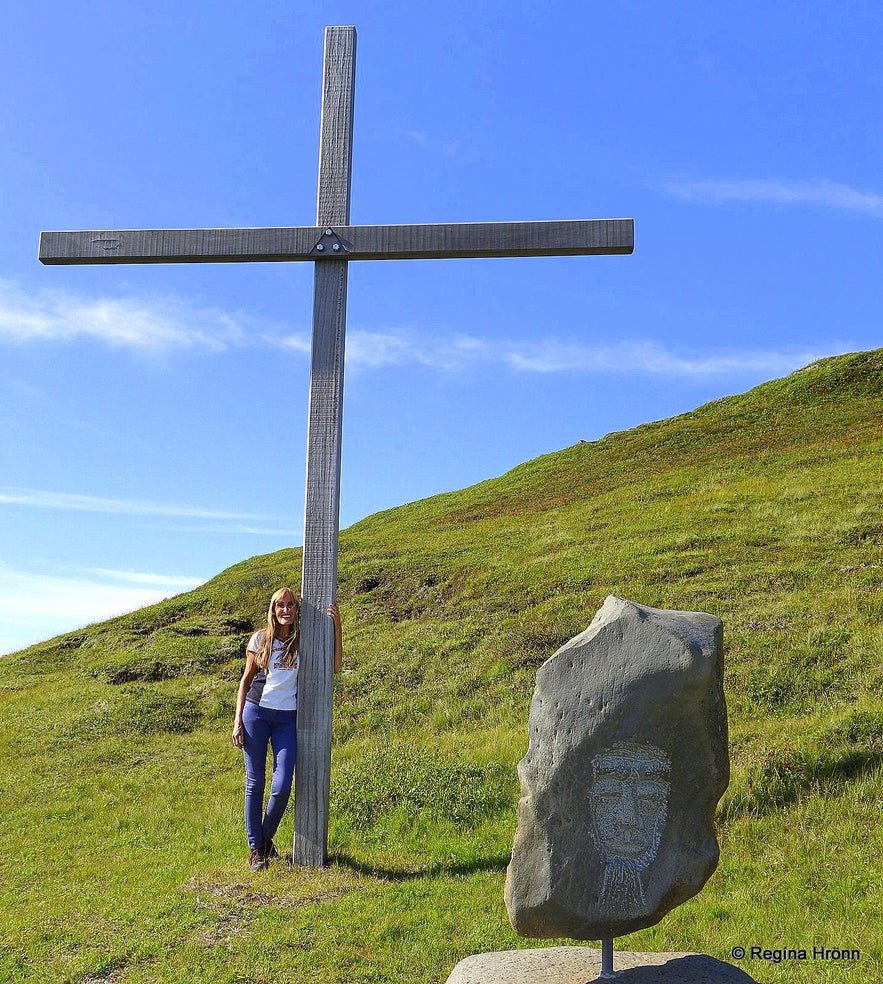
By the new memorial cross and the stone relief of Jón Vídalín
Páll at Húsafell made the stone memorial, but he is best known in Iceland for carving faces into rocks. Páll is a great artist, and you can see his work both at Húsafell in West Iceland and in many places in Iceland.
If you take the Kaldidalur highland track from here instead of the Uxahryggjaleið route, you will end up in Húsafell.
Páll found the stone in Kaldidalur and thought that it looked like Bishop Jón Vídalín. He only had to sharpen the features a bit. And when water is poured over it, the resemblance is even more evident.
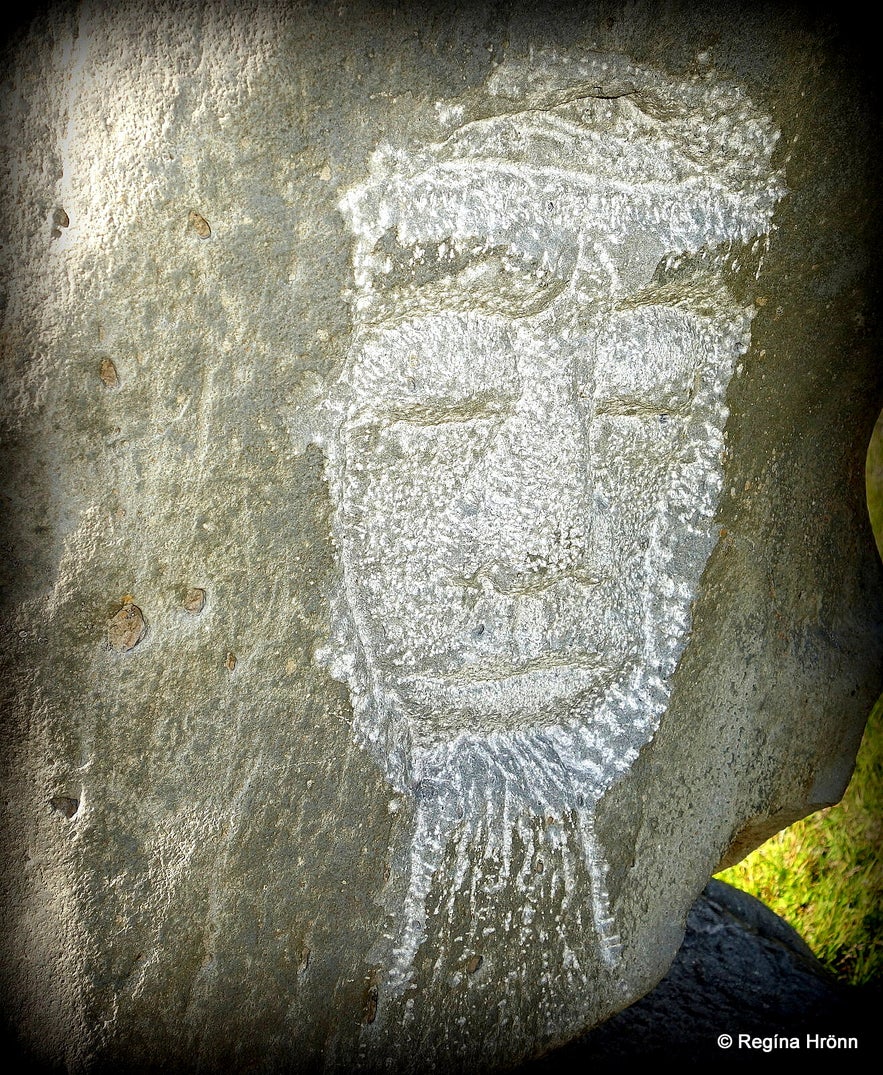 Bishop Jón Vídalín by Páll at Húsafell
Páll played on his stone harp during the consecration of the new memorial cross, the 4-line stanza which Jón Vídalín supposedly composed before he died.
The ordination bishop at Skálholt, Kristján Björnsson (who is married to my second cousin), blessed the new cross and the memorial stone.
And earlier that day, a memorial service was held at Þingvallakirkja church. Jón Vídalín's sister, Guðrún, was married to the minister at Þingvellir.
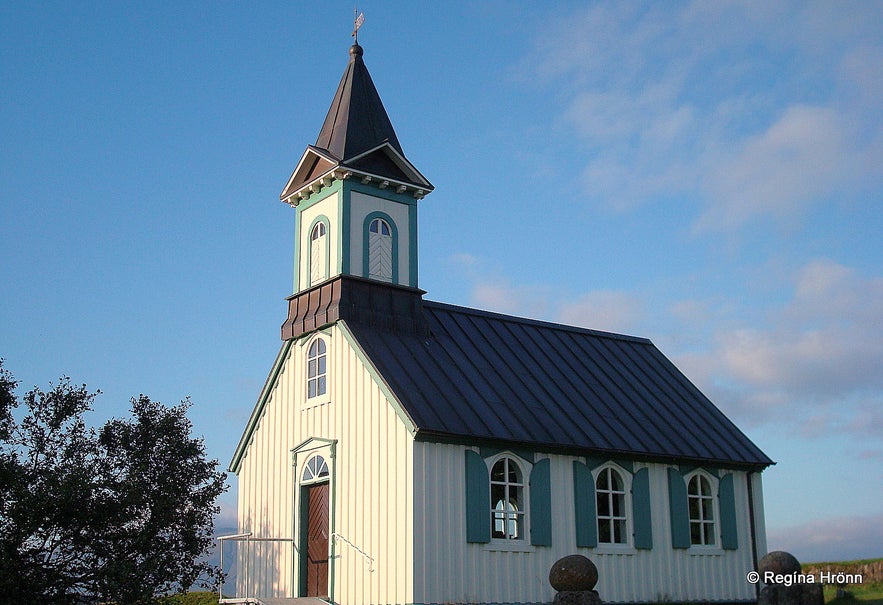 Þingvallakirkja church
Jón Vídalín had donated a church bell to the church when he was ordained the Bishop at Skálholt, and on the 300th anniversary of his death, the old church bell was rung at Þingvellir.
I think it is lovely that a bishop who died here in the 18th century is remembered in such a beautiful way in the 21st century :)
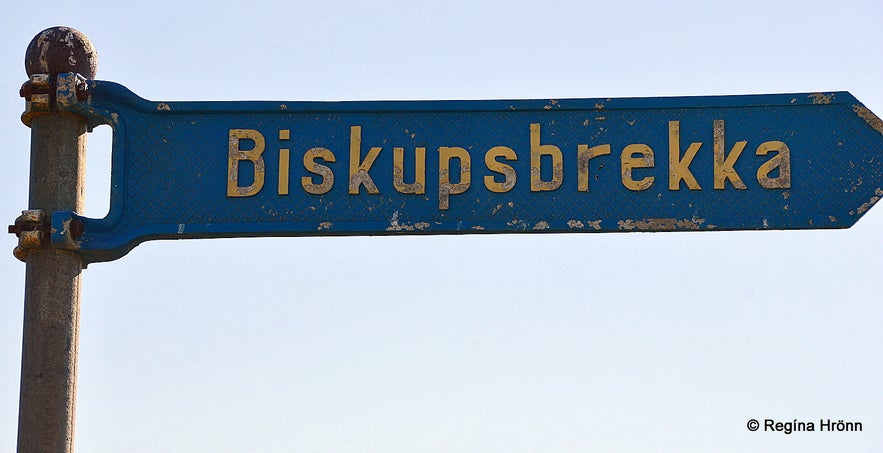 The old sign by Biskupsbrekka
The crosses are not directly by the new road and are somewhat hidden if you don't know what you are looking for, which leads people to miss them. I once passed them without seeing them.
They are not far from the road, though, and as you turn for Uxahryggir, you can turn to the left onto the old road leading to Biskupsbrekka and drive back 1.5 km. There is a sign by the road.
Hallbjarnarvörður cairns
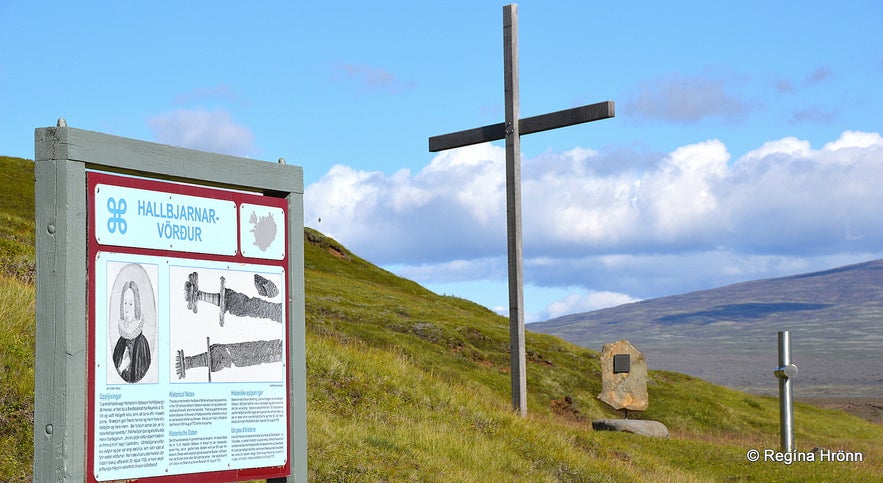
The information sign and the crosses by Biskupsbrekka
There is an information sign by the crosses, which tells us about the Hallbjarnarvörður cairns. The ancient story about these cairns is found in the 51st chapter of Landnámabók, the Book of Settlements, and dates back to the 10th century.
It tells us about Hallbjörn Oddsson, the grandchild of Hallkell, the brother of Ketilbjörn gamli at Mosfell, whom I mentioned in my travel blog about Kerið crater.
He demanded a duel with Grímur, the settler of Grímsnes, and killed him and took his land - he was not a nice guy. And neither was his grandchild, Hallbjörn, who lived at Kiðjaberg in Grímsnes.
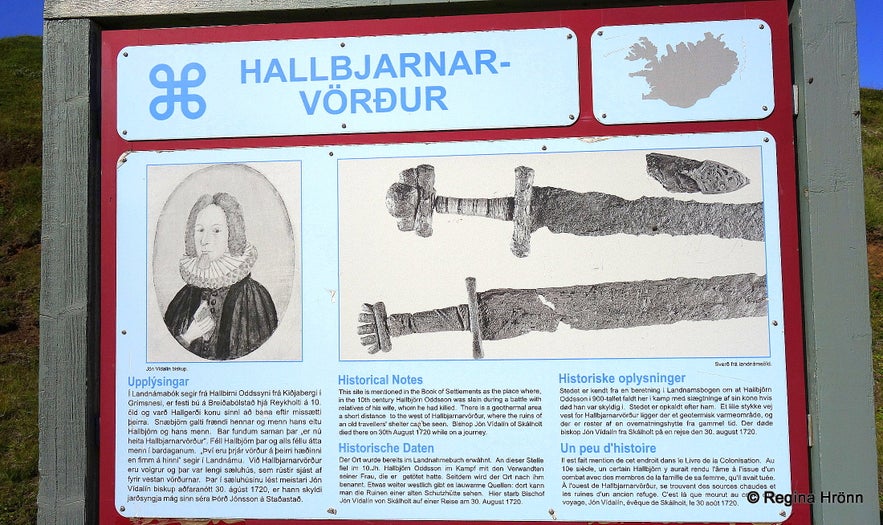
The information sign by Biskupsbrekka
Hallbjörn married Hallgerður, the daughter of Tungu-Oddur, but the marriage was not affectionate. They lived with her father for the first winter, but when spring arrived, Hallbjörn wanted to leave and take his wife, Hallgerður, with him.
Hallgerður is described as having the longest hair in Iceland, together with Hallgerður langbrók from Njálssaga - the Story of Burnt Njál and the Laxdæla saga.
When Hallbjörn wanted to leave and take her with him, she sat and combed her long hair, which fell all the way to the floor.
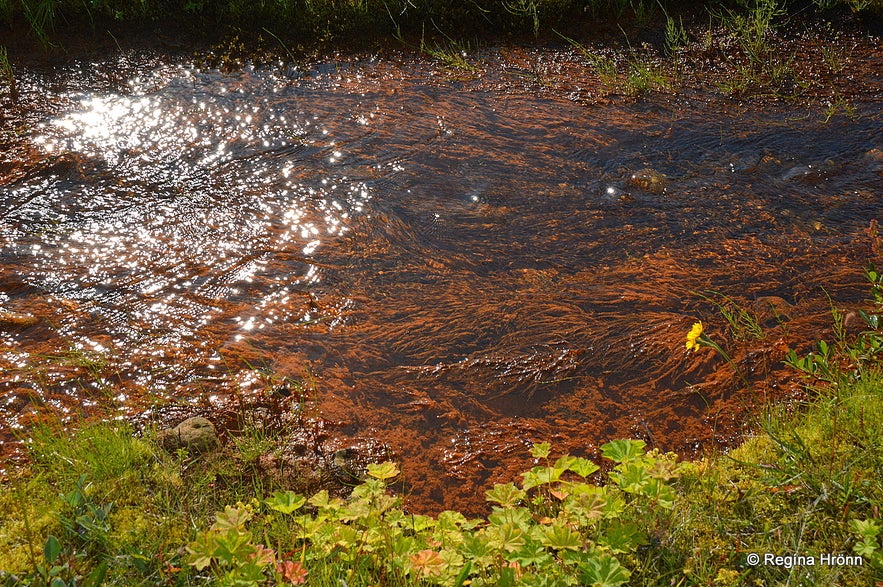 A beautiful red creek on the hike to Hallbjarnarvörður cairns
Hallbjörn ordered her to leave with him, but she didn't budge, no matter how hard he tried to lift her.
So he took hold of her hair and wanted to pull her by the hair from the spot where she sat, but she didn't budge.
So he cut her head off with his sword and rode off!! I remember how shocked I was when I read this chapter in Landnámabók; things like this stay with me.
Of course, Tungu-Oddur was not happy about this, but he kept his distance, and men were sent to chase after Hallbjörn. There were 12 of them, but only two men had accompanied Hallbjörn.
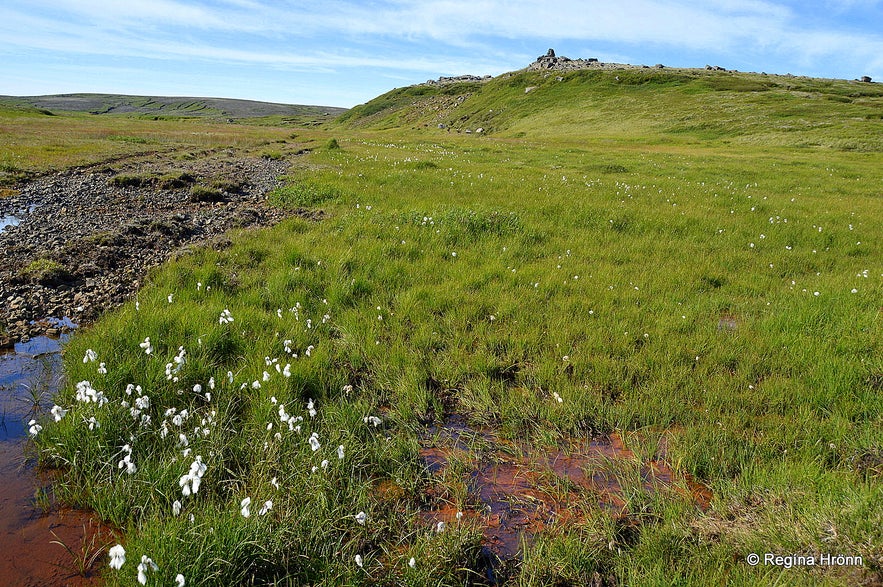 Searching for Hallbjarnarvörður cairns
Hallbjörn first killed three of the men chasing after him, and his two companions were killed.
He then killed another two before he was slain for this evil deed.
This place has since that time been called Hallbjarnarvörður - the Cairns of Hallbjörn, but on one hill there are five cairns, and on one hill there are two cairns, in remembrance of the men who were killed on the hills.
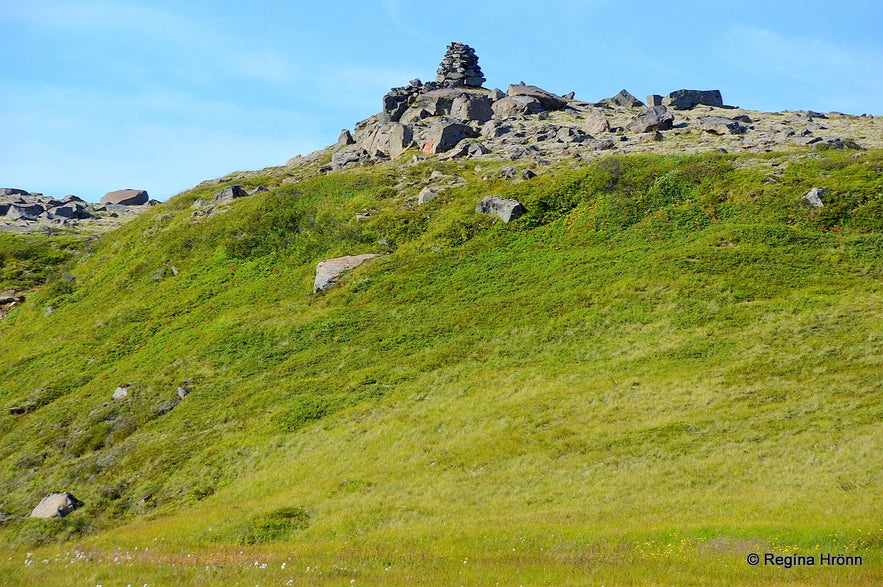 There were cairns on all the hills
I went searching for the Hallbjarnarvörður cairns, but as there were several hills with cairns on them, I will have to come back with better directions.
I am sure that I would have found them if we had walked a little further.
Biskupsbrekka is a beautiful stop on the way to Uxahryggir or Kaldidalur valley, and it is well worth stopping here before you drive any further.
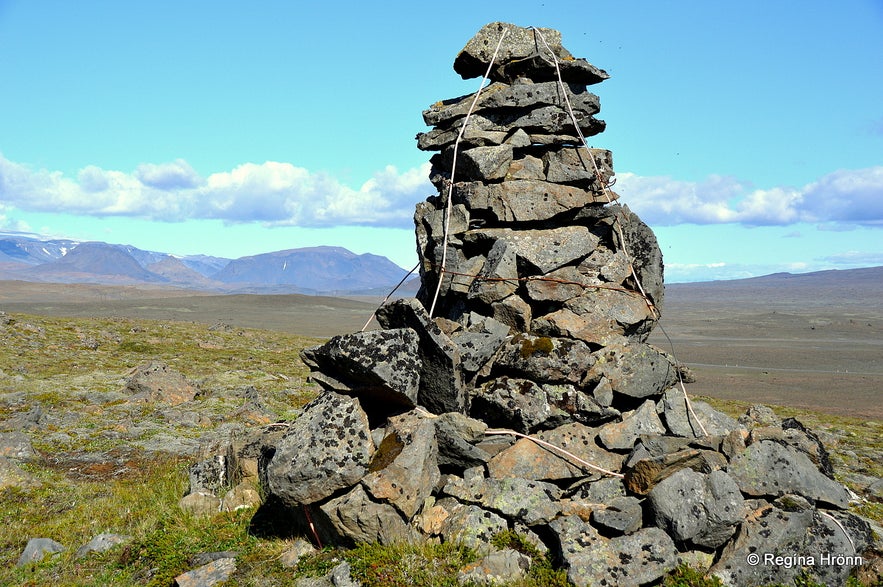 There is one cairn with suspenders on Biskupsbrekka hill
Here you can see the location of Biskupsbrekka on Google Maps.
I have written a couple of travel blogs about what there is to see and do on the Uxahryggjaleið route:
Lundarreykjadalur Valley in West Iceland - the Natural Hot Pools Krosslaug and Englandshver
The majestic Waterfall Hvítserkur in the Fitjaá River in West-Iceland
And if you take the Kaldidalur highland track and drive to Húsafell, then you will find yourself on the beautiful Silver Circle with myriad attractions: The Spectacular Silver Circle in West Iceland.
Have a lovely time in Iceland :)
Ref.
Kirkjan - Nýr kross í Biskupsbrekku