Discover the Londrangar Basalt Cliffs on the Snaefellsnes Peninsula, one of Iceland’s most unique rock formations. Find out the best time to visit, learn its geology, and get to know some tips to get up close to this incredible natural wonder.
Londrangar Cliffs, located on Iceland’s Snaefellsnes Peninsula, are two dramatic basalt sea stacks rising from the Atlantic Ocean. Part of the Snaefellsjokull National Park, these volcanic formations are a must-see stop for travelers on self-drive tours in Iceland or Snaefellsnes adventures.
Its convenient location makes Londrangar ideal for day trips from Reykjavik or as a highlight during a longer stay in West Iceland. Travelers with a rental car in Iceland can explore the cliffs at their own pace, while guided tours often combine the cliffs with other nearby highlights such as Kirkjufell Mountain and Ytri Tunga Beach.
Why You Can Trust Our Content
Guide to Iceland is the most trusted travel platform in Iceland, helping millions of visitors each year. All our content is written and reviewed by local experts who are deeply familiar with Iceland. You can count on us for accurate, up-to-date, and trustworthy travel advice.
Beyond the scenery, Londrangar is also tied to Icelandic folklore, with stories of trolls and hidden people connected to the surrounding lava fields. The mix of geology, wildlife, and local legend makes the site more than just a photography stop in Iceland.
This travel guide covers everything you need to plan your visit, from how to get to Londrangar from Reykjavik to the best nearby attractions to include in your itinerary. Read on to map your route and make the most of your time at one of Iceland’s most remarkable rock formations.
Fun Facts About Londrangar Cliffs
-
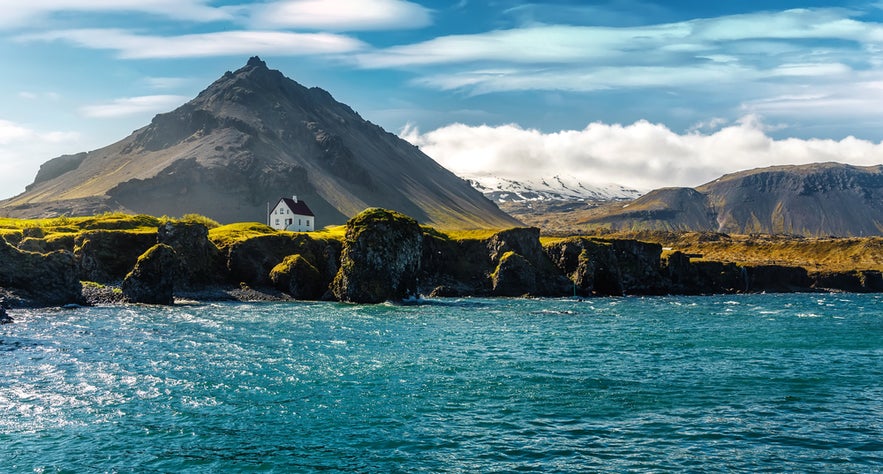
Londrangar consists of two basalt sea stacks rising about 246 feet (75 meters) and 200 feet (61 meters) above the Atlantic Ocean.
-
The cliffs are the remains of a collapsed volcanic crater, shaped over thousands of years by wind, rain, and ocean waves.
-
Puffins, guillemots, fulmars, and kittiwakes nest at Londrangar from late spring to summer.
-
Londrangar is part of Snaefellsjokull National Park; visitors must stay on marked paths to protect wildlife and nesting sites.
-
Local tales claim the cliffs were once trolls petrified by sunlight, and elves, or huldufolk, inhabit the surrounding lava fields.
-
The cliffs’ dramatic shapes, rugged coastline, and nearby Thufubjarg Cliff make them ideal for landscape photography in Iceland.
-
Visitors can reach Londrangar via the Ring Road (Route 1), with parking at Svalthufa and Malarrif providing short walks to the viewing platforms.
What Are the Londrangar Cliffs?
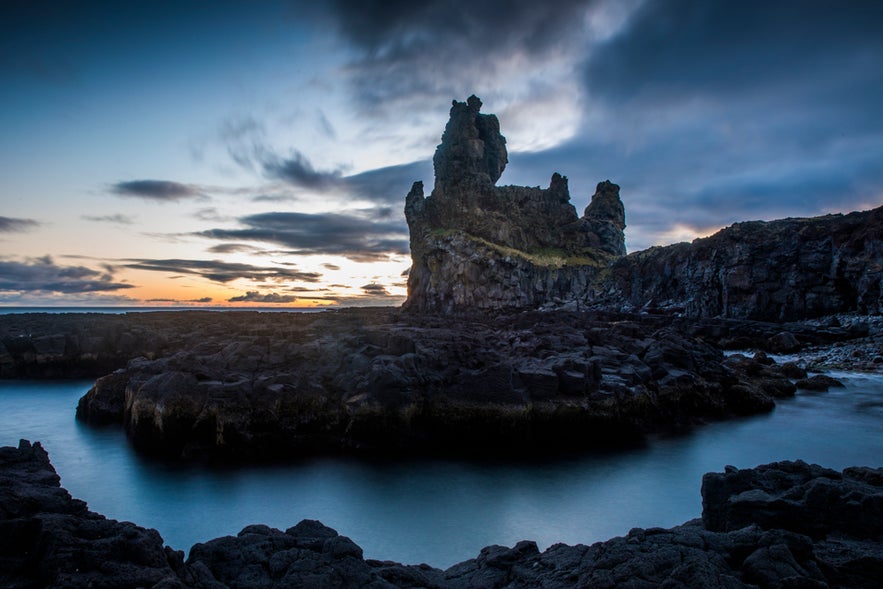
Londrangar are two towering basalt sea stacks on the Snaefellsnes Peninsula in West Iceland. The taller pillar rises about 246 feet (75 meters), and the smaller reaches around 200 feet (61 meters) above the Atlantic Ocean.
Their sharp, fortress-like shapes have earned them the nickname “The Rocky Castles.” Rising directly from the ocean, the cliffs are part of Snaefellsjokull National Park, adding both natural beauty and protected status to the site.
Londrangar is also one of the most popular viewpoints in Iceland, offering dramatic coastal panoramas. The site is easily accessible and can be reached without difficulty, so it is often included on itineraries for many vacation packages in Iceland.
Geology and History of Londrangar Basalt Cliffs
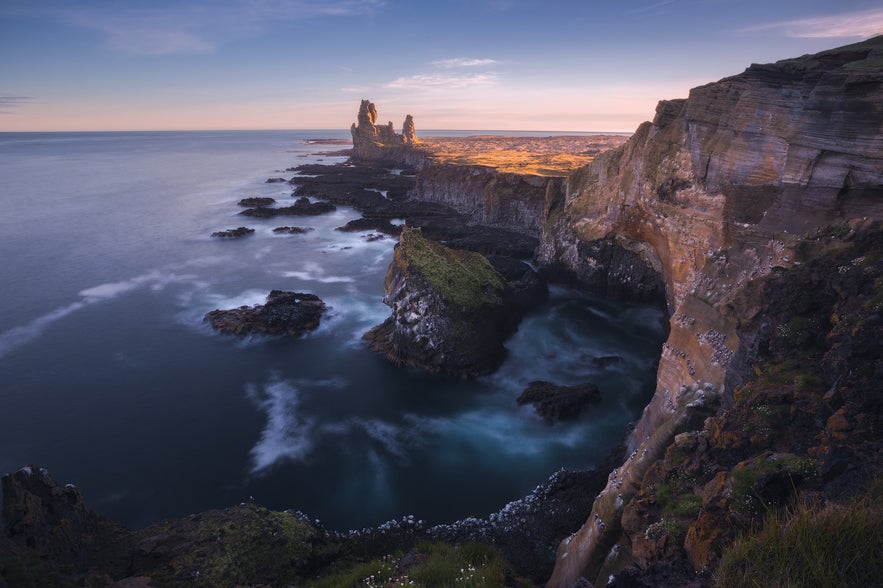
Londrangar is made of dense basalt, formed by ancient lava flows that cooled and cracked into towering pillars. These cliffs are believed to be the remains of a collapsed volcanic crater. Over thousands of years, wind, rain, and powerful ocean waves eroded the surrounding rock, leaving the two sea stacks visible today.
Historically, the cliffs served as a natural landmark for local fishermen, helping them navigate the coast. Today, Londrangar is one of Iceland’s most impressive natural wonders and is protected as part of Snaefellsjokull National Park.
Few people have ever climbed the towers. The taller pinnacle was first ascended in 1735 by Ásgrímur Bergþórsson, while the smaller one wasn’t climbed until 1938. Climbing is not allowed today to protect the rock formations and the seabirds that nest on the cliffs.
Where is Londrangar Located on the Snaefellsnes Peninsula?
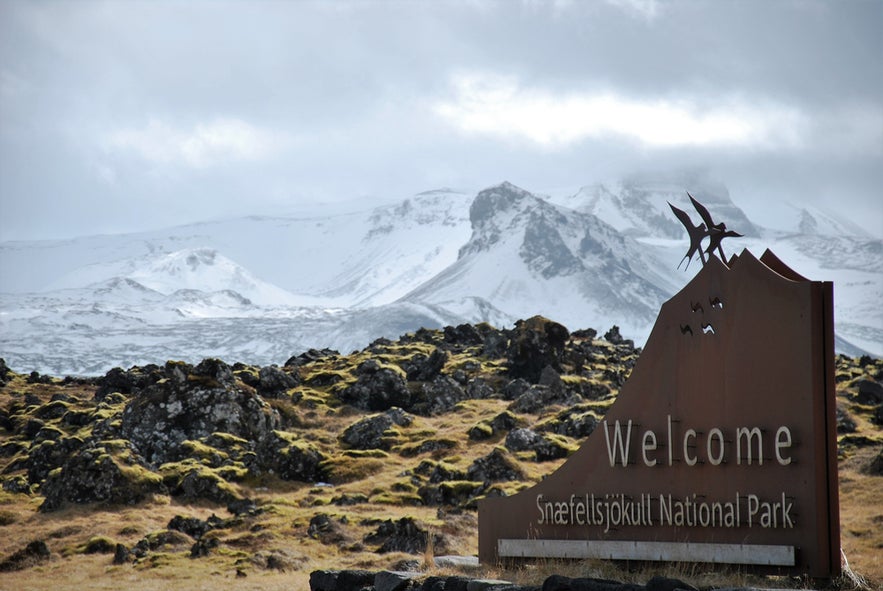
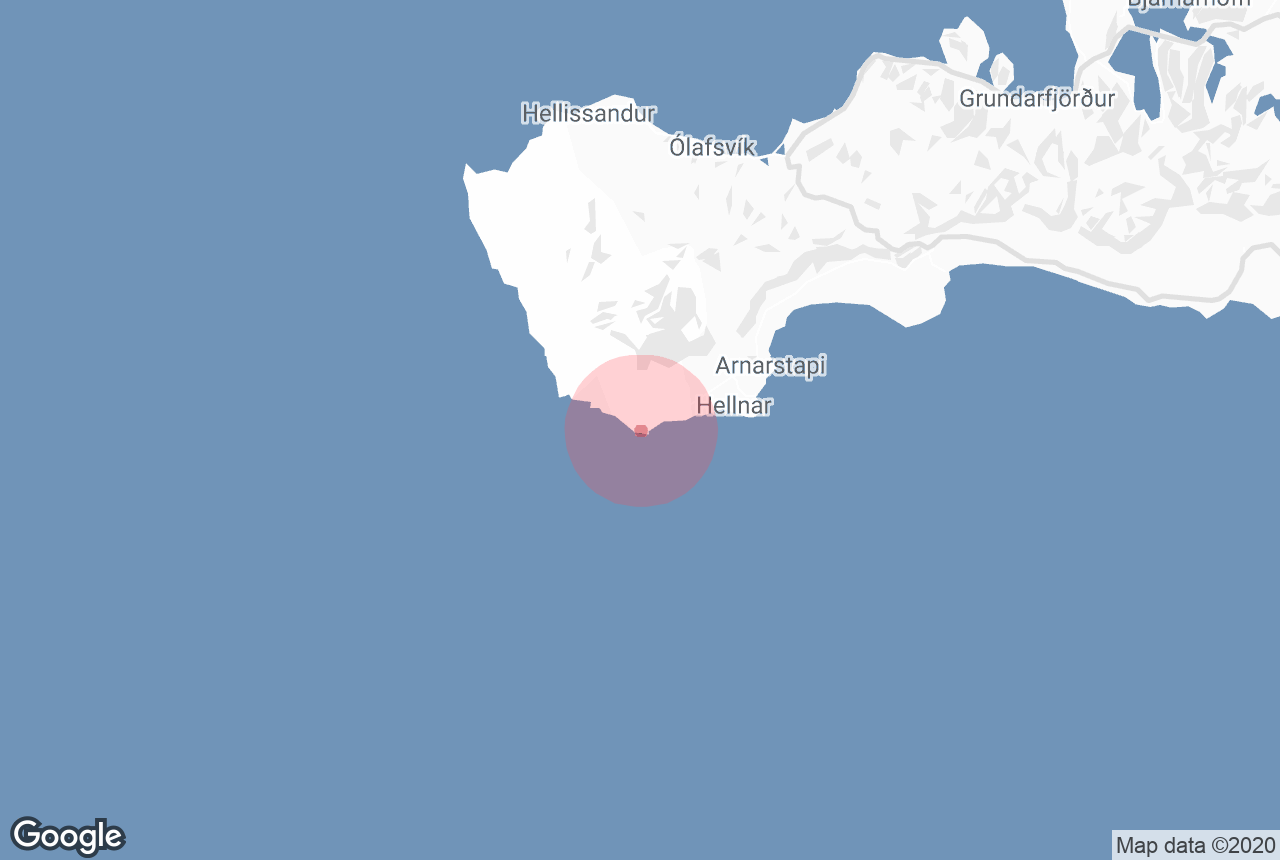
Londrangar is located on the southern coast of the Snaefellsnes Peninsula in West Iceland. This region is often called “Iceland in Miniature” because it combines mountains, glaciers, lava fields, and coastal scenery in one compact area. It’s part of Snaefellsjokull National Park, a protected area known for its dramatic volcanic landscapes.
The drive from Reykjavik to Londrangar is about 192 miles (310 kilometers). The nearest villages are Hellnar, about 5 miles (8 kilometers) east, and Arnarstapi, about 5.6 miles (9 kilometers) away.
To reach the cliffs, follow the Ring Road (Route 1) through Borgarnes and past the Hvalfjordur Tunnel. The drive is scenic, with views of mountains, lava fields, and coastal villages. Upon reaching Snaefellsnes, turn toward Arnarstapi, where a parking area is located about 10 minutes from the cliffs.
Parking at Londrangar
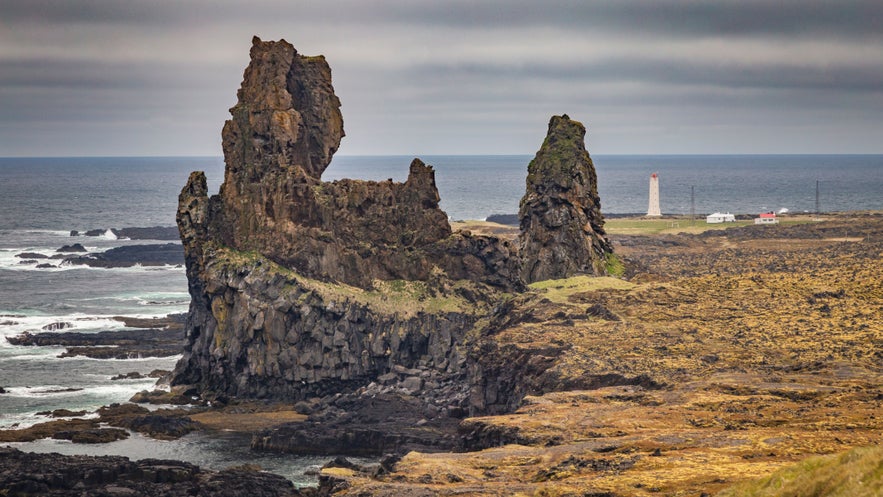
Londrangar, on the Snaefellsnes Peninsula, has two main parking areas on the left-hand side of Route 574, giving easy access to the cliffs and nearby trails:
-
Svalthufa Parking: For the quickest route to the Londrangar viewing platforms, use the free roadside parking lot near Svalthufa. A short walking trail from the lot takes you directly to the cliffs, offering up-close views of the basalt pillars.
-
Malarrif Parking: About 0.6 miles (1 km) west of the cliffs, this lot provides a longer scenic walk. The nearby Malarrif Visitor Center offers information, exhibits, restrooms, and souvenirs.
Parking at Londrangar is free. The walking paths and viewing platforms are well maintained, but sturdy shoes are recommended. Keep a safe distance from cliff edges, as the terrain can be uneven and winds are often strong.
How To Go to Londrangar from Reykjavik
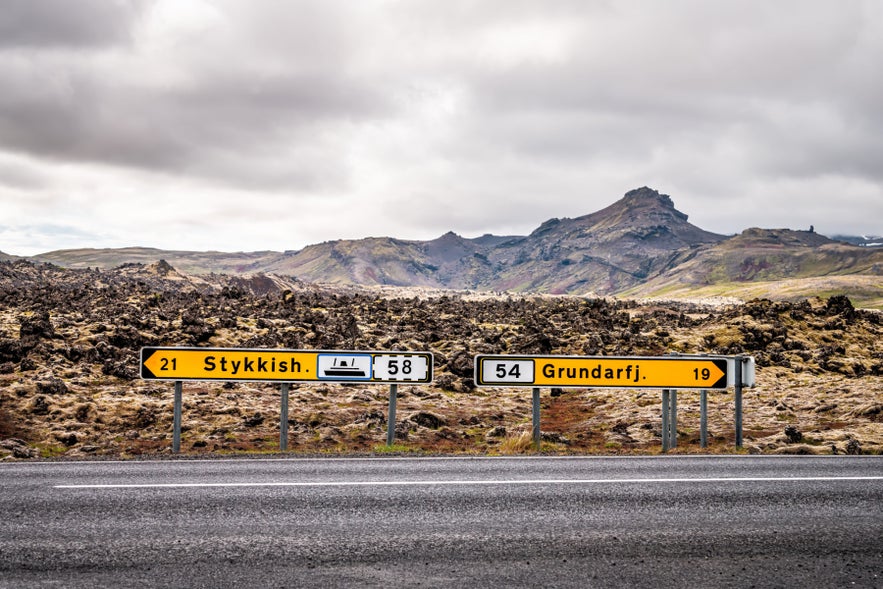
To reach Londrangar Cliffs from Reykjavik, you can rent a car or join a guided tour to Snaefellsjokull National Park. Start by taking Route 1 north through Mosfellsbaer, then head west toward Borgarnes. From there, follow Route 54 into the Snaefellsnes Peninsula. The drive is about 2.5 to 3 hours, depending on stops along the way.
Look for signs of Snaefellsjokull National Park. As you approach the western side of the peninsula, take Route 574 to access Londrangar. A clearly marked roadside parking area makes stopping easy, and from there, a short walking path leads to several excellent viewpoints of the cliffs.
Many travelers visit Londrangar as part of summer self-drive tours, especially when exploring West Iceland at their own pace. It’s also a popular stop on day tours in Iceland, often combined with nearby black sand beaches, coastal villages, and other key landmarks of the Snaefellsnes Peninsula in one itinerary.
Ways to Visit Londrangar Cliffs
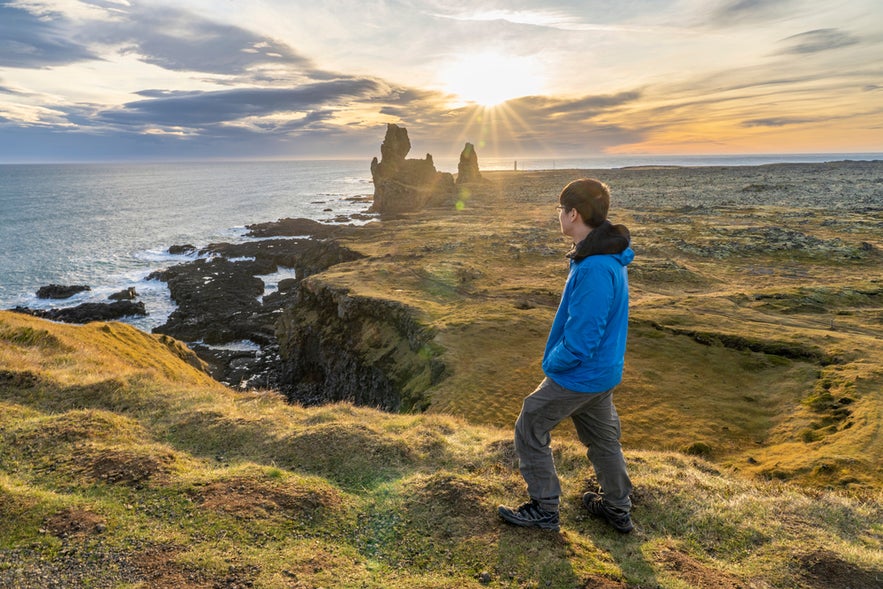
The easiest way to reach Londrangar Cliffs is by renting a car and driving to the Snaefellsnes Peninsula. If you want a guided experience, there are plenty of nature tours in Iceland that will take you to the cliffs.
Self-Drive Tours
Self-driving allows you to explore the Snaefellsnes Peninsula at your own pace, stopping at viewpoints, villages, and other attractions along the way.
-
10-Day Self-Drive Ring Road Tour: Circle around Iceland’s entire coastline and top landmarks while including a scenic stop at the Londrangar Cliffs.
-
7-Day Northern Lights Self-Drive Tour of South Iceland, the Golden Circle & Snaefellsnes Peninsula: Experience a detailed winter adventure, including top attractions like Jokulsarlon Glacier Lagoon, Seljalandfoss, Thingvellir National Park, and Kirkjufell.
-
1-Week Self-Drive Tour of West and South Iceland with the Golden Circle: Explore Iceland’s top natural wonders and hidden gems on a summer road trip.
Guided Day Tours to Londrangar Cliffs
Guided tours offer local expertise and a stress-free way to visit Londrangar Cliffs in a single day.
-
Small Group Snaefellsnes Tour from Reykjavik: Explore the volcanoes, lava fields, glacier views, and coastal villages of the peninsula with an expert guide and transfer from Reykjavik.
-
Small-Group Snaefellsnes Peninsula Minibus Tour from Reykjavik: Witness the incredible beauty of West Iceland, like Snaefellsjokull Volcano, Ytri-Tunga Beach, and Kirkjufell.
-
12-hour Snaefellsnes Peninsula with Transfer from Reykjavik: Visit Londrangar and other natural sites in West Iceland with guided insight into the area’s geology and culture.
Multi-Day Guided Tours
Multi-day tours let you combine Londrangar Cliffs with Iceland’s wider natural wonders.
-
2-Day West Coast Tour of Snaefellsnes Peninsula from Reykjavik with Caving: Discover the best of West Iceland from waterfalls, fishing villages, and historic sites to black sand beaches.
-
7-Day Tour Around Iceland's Ring Road & Snaefellsnes Peninsula: Journey along Iceland’s Ring Road to explore top locations like the Golden Circle, South Coast, and the Snaefellsnes Peninsula.
-
7-Day Ring Road Minibus Tour: Explore Iceland's entire Ring Road, including a guided visit through Snaefellsnes and other top landmarks.
Vacation Packages
Vacation packages provide a hassle-free way to explore Iceland, with included accommodations, transportation, and guided activities.
-
10-Day Winter Circle Package Around Iceland's Ring Road and Snaefellsnes Peninsula: Enjoy a comprehensive winter experience across Iceland, including the magical Snaefellsnes Peninsula and Londrangar's rugged cliffs.
-
One-Week Northern Lights Winter Package with Ice Caving & National Parks: Combine winter adventures and northern lights viewing with a visit to all the must-see sights in Iceland.
Best Time to Visit Londrangar Cliffs
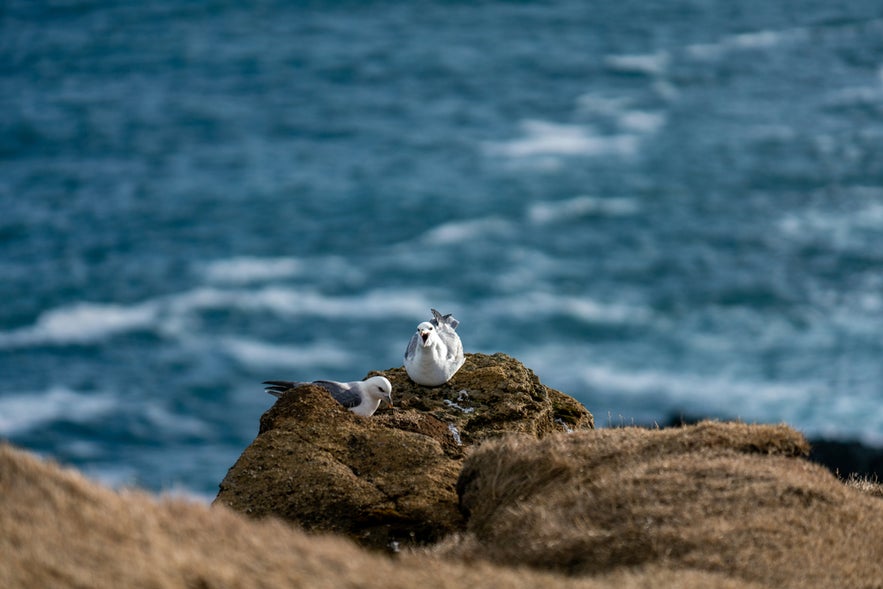
The best time to visit Londrangar is summer, from June to August. During these months, the weather is mild, daylight hours are long, and conditions are ideal for sightseeing. Summer in Iceland is also the best time for birdwatching at Londrangar, as seabirds like puffins, kittiwakes, and guillemots nest along the cliffs.
If you want to photograph Londrangar, try to visit early in the morning or later in the afternoon. The low sun highlights the cliffs’ shapes and creates a strong contrast against the ocean.
Late spring and early autumn (May to early June and September) offer a quieter experience with fewer crowds. The weather is generally stable, and the walking paths remain accessible, making it a good choice for those who prefer a more peaceful visit.
Visiting in winter (October to April) is possible but more challenging. Strong winds, icy paths, and rough seas are common, so traveling with a guide is recommended for a safe visit. Wildlife sightings are limited, but you may see dramatic ocean views and, on clear nights, the northern lights.
Viewpoints at Londrangar Cliffs
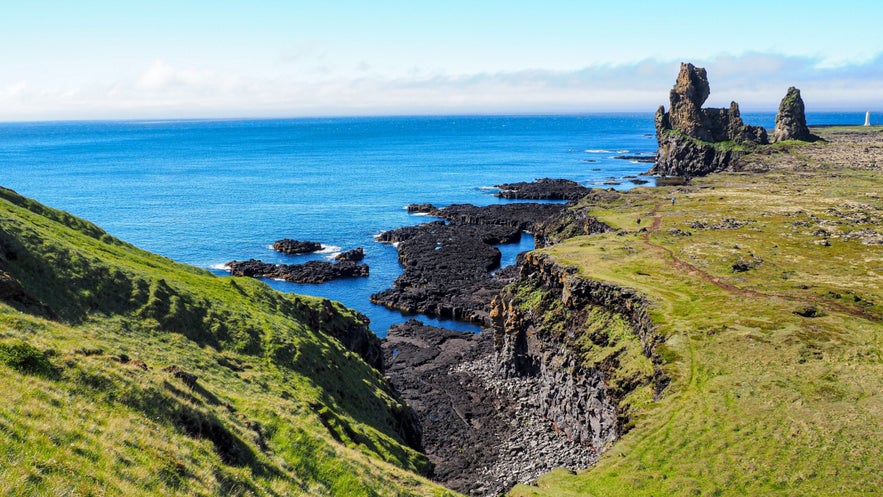
From the parking lot, a short 5-minute walk leads to the main viewpoint. The path is easy and accessible, winding through grasslands and lava fields. Facing southeast, the platform is ideal for photography and offers unobstructed views of the basalt pillars rising from the Atlantic Ocean.
Just below the viewpoint, you can see the cliffs’ distinctive basalt columns. Formed as lava cooled and contracted, these hexagonal formations are similar to those at Reynisfjara Beach and Studlagil Canyon, showcasing Iceland’s unique volcanic geology up close.
For a slightly higher perspective, Thufubjarg Cliff sits 850 feet (250) meters uphill at Svalthufa, directly in front of the parking area. From here, the two basalt pillars dominate the view, making it a perfect spot for wide-angle photos of the coastline.
Visitors can also get close to the iconic “Rocky Castle” basalt pillars via well-marked hiking trails from the Malarrif parking area. These easy-to-moderate paths lead toward the base of the cliffs for dramatic, up-close views.
Climbing the pillars is not allowed, as the area is protected to preserve both the fragile rock and nesting seabirds. The designated viewpoints along the coastal trail remain the best spots for safe, breathtaking views of Londrangar.
Folklore & Mythology of Londrangar Cliffs
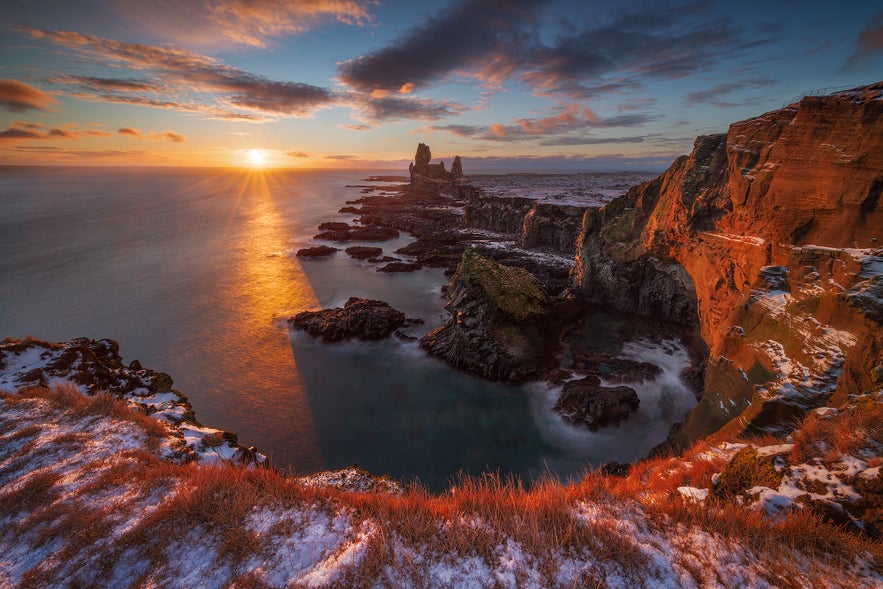
According to Icelandic folklore, Londrangar is believed to be a dwelling place of elves, known as huldufolk, or hidden people. The surrounding lava fields were considered their home, and local farmers once avoided grazing animals or cutting hay nearby as a sign of respect.
The cliffs are also linked to troll legends in Iceland. In Nordic mythology, trolls cannot survive daylight and turn to stone when exposed to the sun. The two basalt pillars at Londrangar are often imagined as trolls frozen in place, standing like stone guardians along the coast.
Historical texts add to the site’s reputation. The 13th-century Landnámabók (Book of Settlements) mentions a troll sitting on the rocks, stamping its feet to create waves along the shore.
According to a folk tale, the Kolbeinn Joklaskald even encountered the Devil at Thufubjarg near Londrangar. They competed in a verse-making contest on the cliffs, and Kolbeinn cleverly outwitted the Devil, forcing him to retreat into the sea.
These legends make Londrangar more than a natural landmark in Iceland. Travelers are encouraged to respect the land to preserve both the environment and Iceland’s cultural heritage.
Wildlife at Londrangar Cliffs
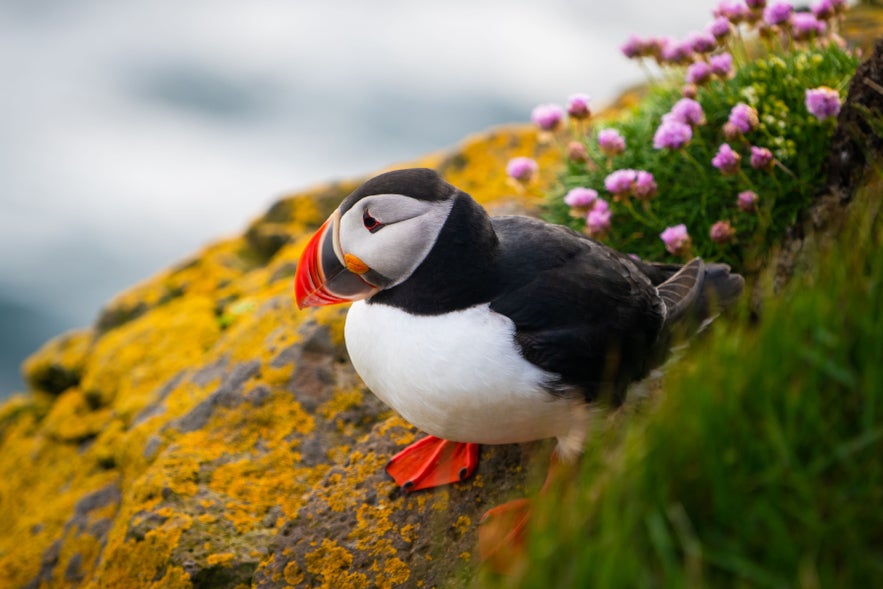
Londrangar Cliffs are a protected habitat for seabirds in Iceland, making the area an important wildlife site on the Snaefellsnes Peninsula. During the breeding season from late spring to summer, you can see puffins nesting along the cliffs, along with fulmars, kittiwakes, guillemots, and several species of gulls.
Londrangar is one of the best places for birdwatching in Iceland, with easy access and well-placed viewpoints. From the marked paths and viewing platforms, you often spot birds circling the basalt cliffs or diving into the ocean below.
At the base of Londrangar, Arctic foxes are known to pass through the rocky terrain. While sightings are rare, the presence of foxes highlights the area’s ecological importance.
Travelers can safely observe wildlife from the walking paths near the Malarrif area or along the road toward Svalthufa Hill. Stay on designated paths at all times, as the cliffs are fragile and nesting sites are protected. Following these rules helps preserve Iceland’s natural landscapes and wildlife.
Where To Stay Near Londrangar
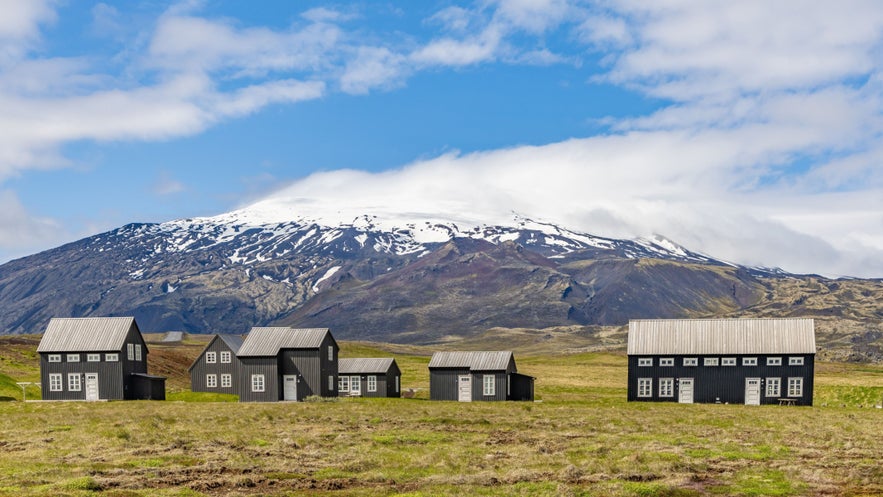
While the Londrangar Cliffs are often visited on a day trip from Reykjavik, staying in Snaefellsnes accommodations lets you explore the area at a slower pace. You can catch the sunrise or sunset over the cliffs and enjoy sightseeing away from the crowds.
The closest village, Hellnar, is about 5 miles (8 kilometers) away and offers charming guesthouses and cafes in a peaceful countryside setting. Just a short drive east, Arnarstapi features scenic coastal lodging and easy access to cliffside walking paths. Top choices include Fosshotel Hellnar, Thorubud Cottage in Hellnar, and Arnarstapi Hotel.
About 9 miles (15 kilometers) north, Hellissandur is a quiet fishing village with plenty of lodging options. For comfort and convenience, stay at Adventure Hotel Hellissandur. Budget travelers will find Freezer Hostel a practical and friendly option close to the village center.
Top 11 Attractions near Londrangar
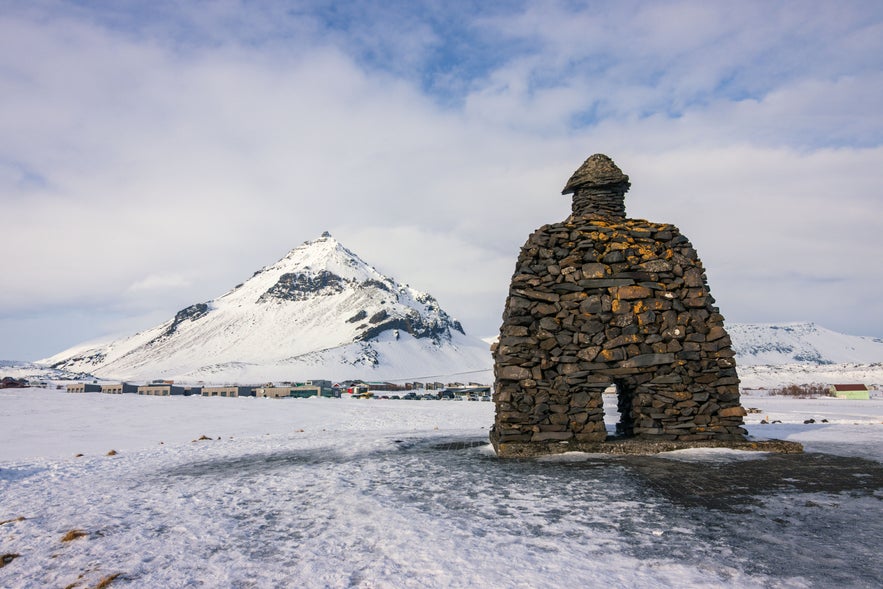
Londrangar Cliffs are surrounded by some of the most scenic and unique spots on the Snaefellsnes Peninsula. From dramatic coastlines and lava fields to glaciers and charming villages, here are the top things to do on the Snaefellsnes Peninsula.
11. Malarrif Lighthouse
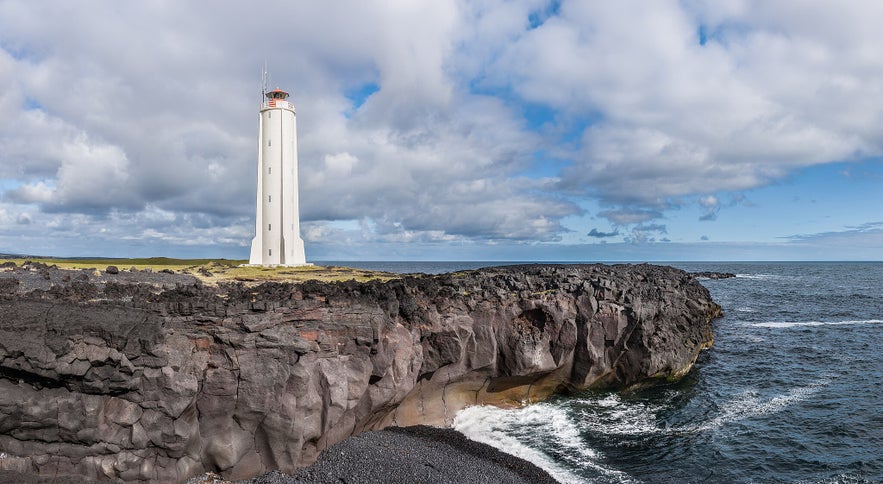
Photo from Wikimedia, Creative Commons, by Richard Bartz. No edits made.
Discover Malarrif Lighthouse, a rocket-shaped landmark at the western coast of Snaefellsnes Peninsula. Visitors can explore nearby walking trails leading toward Londrangar, making it a perfect spot for a peaceful coastal stroll.
10. Raudfeldsgja Gorge
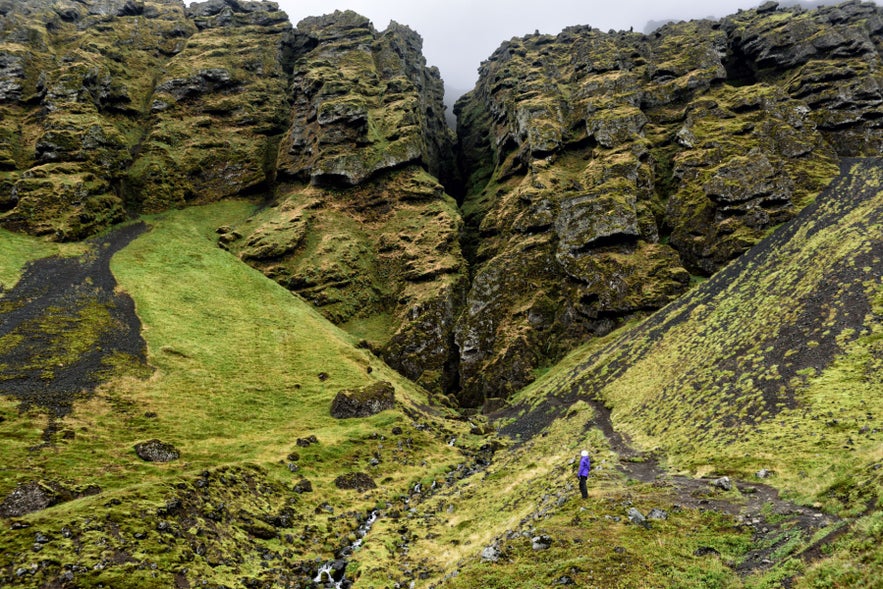
Discover Raudfeldsgja Gorge, known as Red-Cloak Rift, a narrow canyon on Botnsfjall Mountain. A narrow crack in the cliff face opens into a moss-covered wall leading to a small river and a hidden waterfall. A short hike leads into the gorge, providing a sense of adventure and Icelandic wilderness.
9. Saxholl Crater
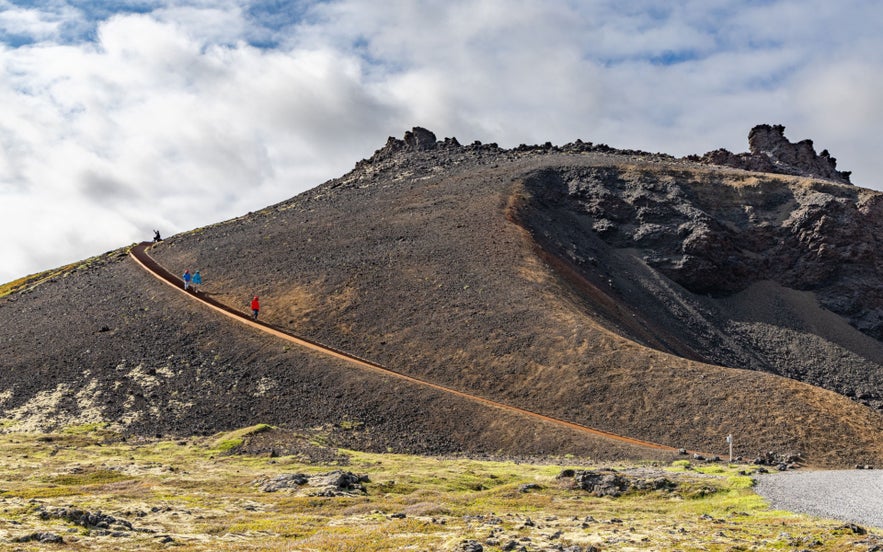
Saxholl Crater offers a short, easy climb via a metal staircase to its 197-foot (60-meter) rim. The well-maintained staircase takes visitors to the rim, revealing expansive lava fields, distant coastline, and the Snaefellsjokull Glacier. It’s ideal for family-friendly tours in Iceland and a great spot to take in the country’s dramatic volcanic landscapes.
8. Budir Black Church
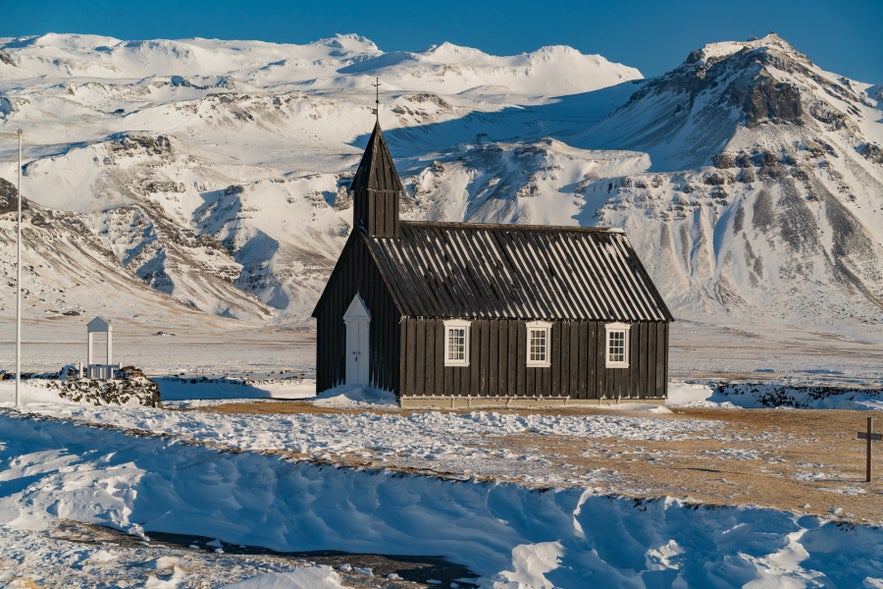
The Budir Black Church is a striking landmark set against lava fields and mountain backdrops. It’s one of Iceland’s most photographed spots and a must-see for anyone exploring the western Snaefellsnes Peninsula.
7. Djupalonssandur Black Sand Beach
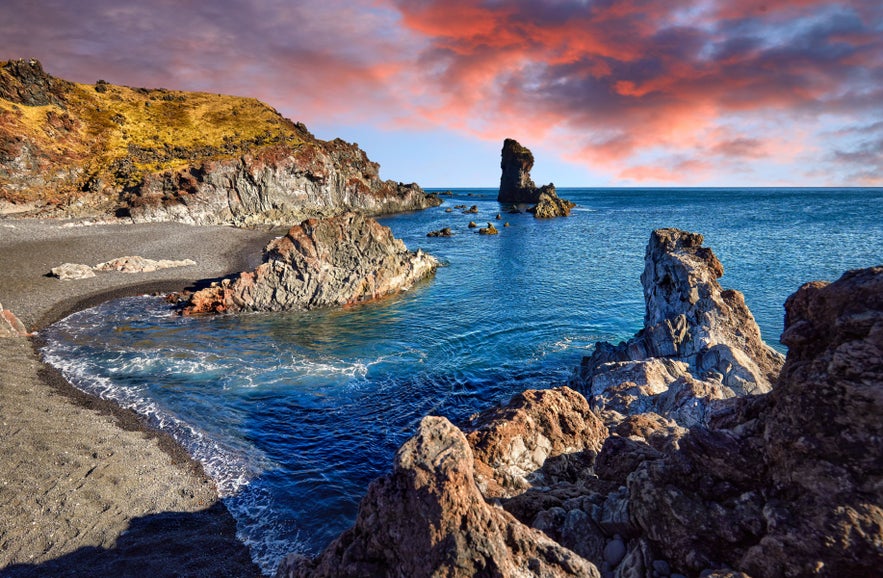
Located at the western tip of the Snaefellsnes Peninsula, Djupalonssandur Beach offers stunning ocean views and rusted shipwreck remnants. Walk the shoreline, try the traditional strength stones, or simply admire the rugged coastline framed by lava cliffs.
6. Arnarstapi and Hellnar
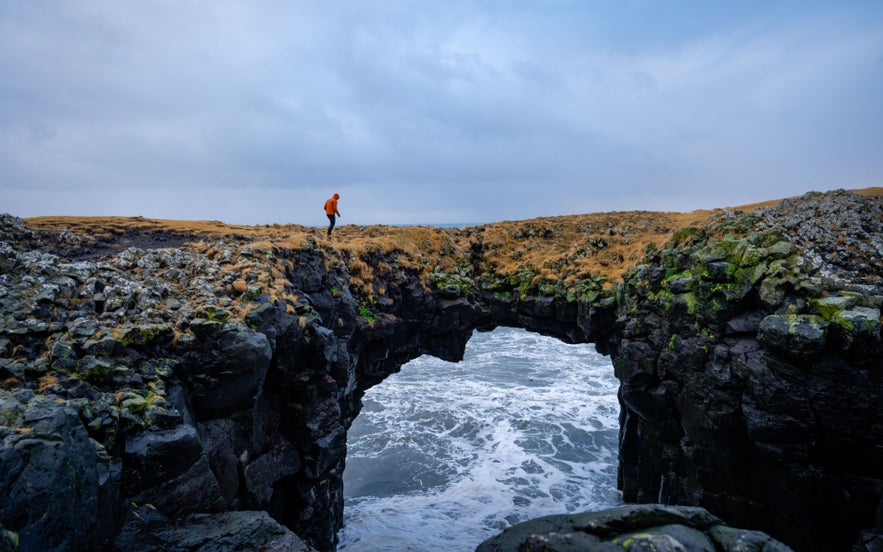
These neighboring coastal villages offer charming walking trails, basalt cliffs, and abundant birdlife. The scenic seaside path connecting Arnarstapi and Hellnar makes it easy to explore at a relaxed pace. Visitors will enjoy picturesque views, quiet coastal charm, and a true taste of Icelandic village life near Londrangar.
5. Gatklettur (Arch Rock)
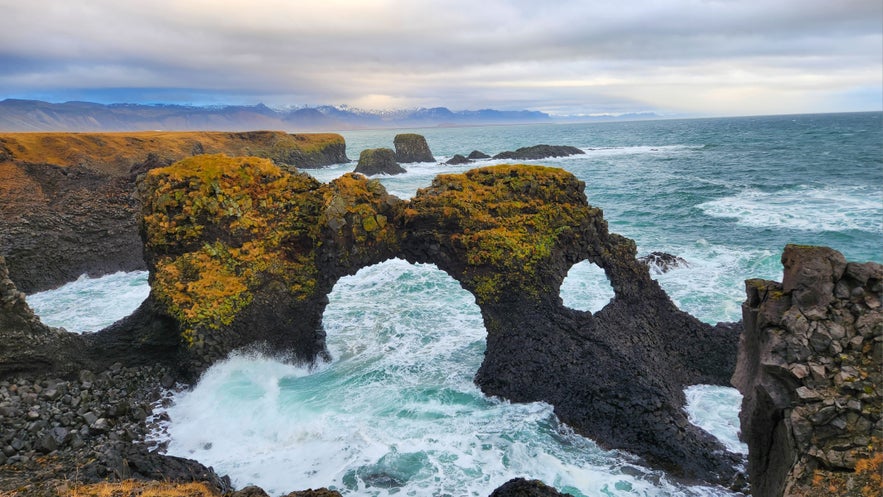
A natural stone arch rising from the sea near Arnarstapi, Gatklettur is a striking feature along the coastline. Seabirds nest around the rock, making it a favorite for photographers and wildlife enthusiasts. The surrounding cliffs offer scenic walking trails.
4. Vatnshellir Cave
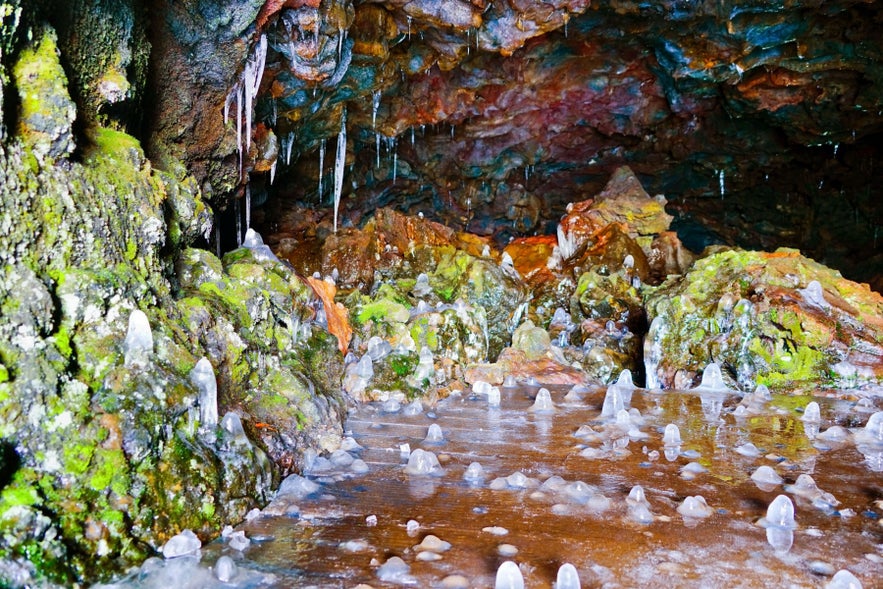
Explore Vatnshellir Cave, an 8,000-year-old lava tube beneath the Snaefellsjokull Lava Fields. Take a guided Vatnshellir Cave tour through twisting passages and striking basalt formations. It’s an exciting attraction for geology enthusiasts and families traveling in Iceland with kids.
3. Ytri Tunga Beach
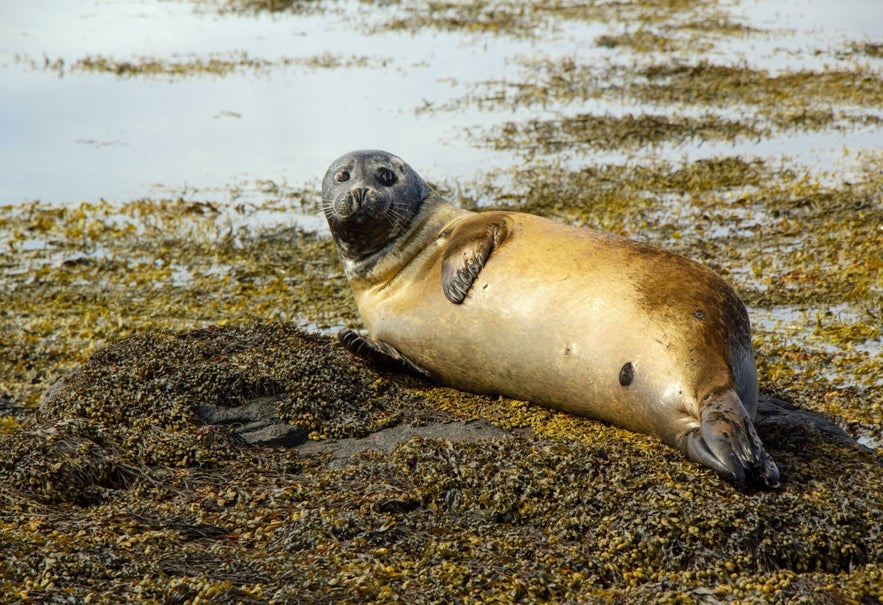
Ytri Tunga Beach is a coastal gem known for seal watching in Iceland. Its sandy coastline is home to playful seals that can often be seen lounging on rocks or swimming close to shore. The beach also offers stunning ocean views and a chance to enjoy Iceland’s rugged coastal scenery.
2. Snaefellsjokull Glacier
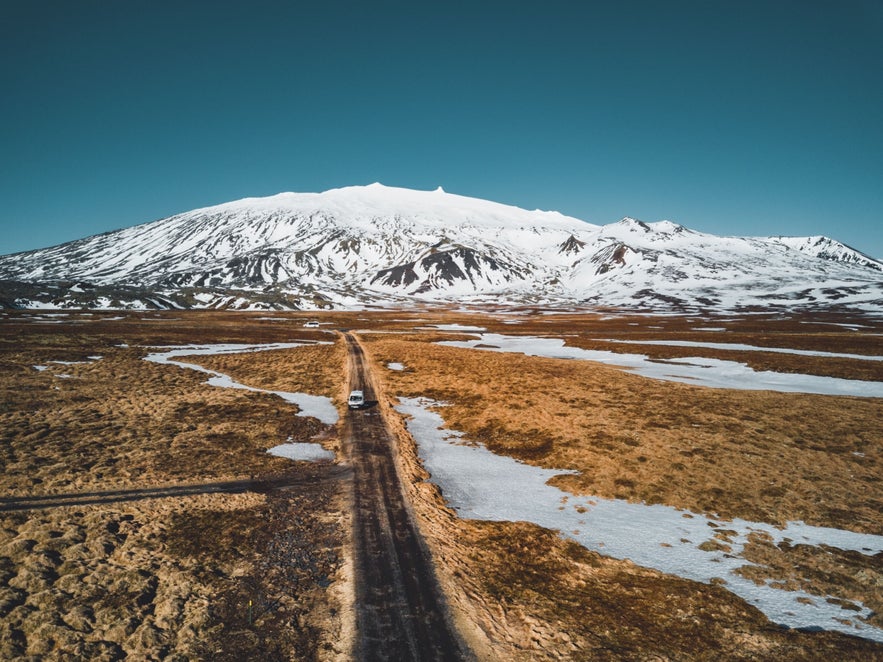
Snaefellsjokull Glacier is a 700,000-year-old glacier-capped volcano that dominates the Snaefellsnes Peninsula skyline. Its dramatic appearance inspired Jules Verne’s Journey to the Center of the Earth, making it a cultural and natural highlight of West Iceland. Snaefellsjokull is also a great base for glacier tours and ATV adventures that cross lava fields on the way to the glacier.
1. Kirkjufell Mountain
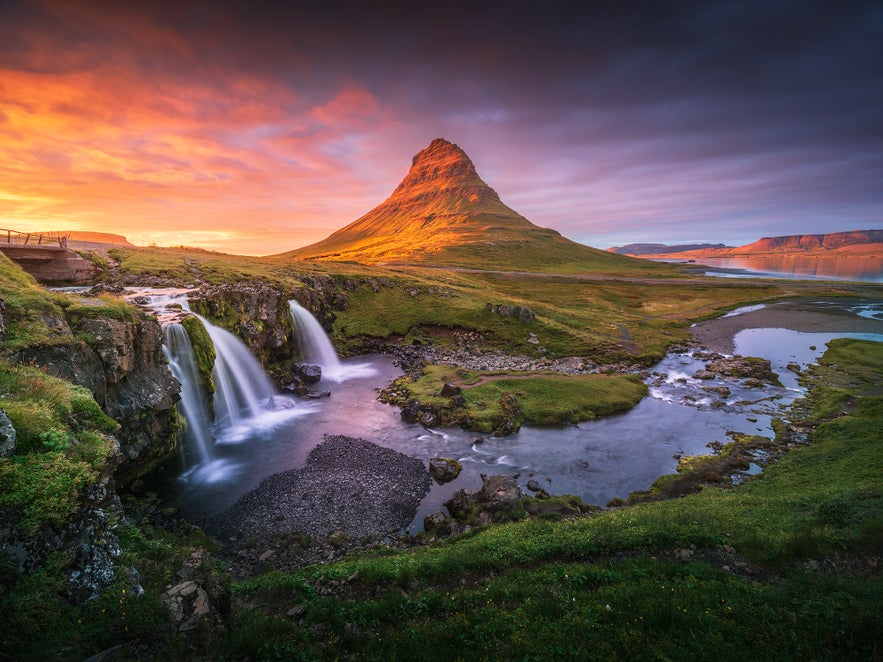
Kirkjufell is one of Iceland’s most photographed mountains. Its arrowhead peak, paired with nearby Kirkjufellsfoss Waterfalls, creates a dramatic and picturesque scene. Beyond its beauty, the area offers short hikes, scenic viewpoints, and a glimpse into Iceland’s dramatic west coast landscapes.
Add Londrangar to Your West Iceland Itinerary
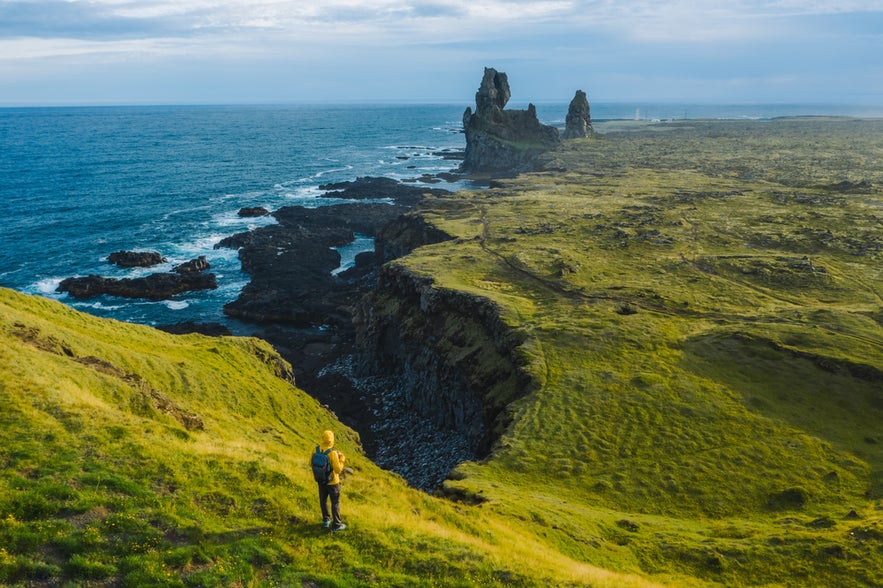
Londrangar Basalt Cliffs are a highlight on any West Iceland adventure, showcasing dramatic volcanic sea stacks, rugged coastlines, and rich natural history all in one easily accessible area. The cliffs can be explored on short walks, scenic drives, or as part of guided tours, making it simple to plan a visit no matter your schedule.
Pair your visit with nearby villages, black sand beaches, and other highlights to experience some of the top things to do in West Iceland. From birdwatching along the cliffs to snapping photos of striking lava formations, this area shows why West Iceland is one of the top destinations in Iceland.