I have written many travel blogs about the extraordinarily diverse Mývatn area in North Iceland over the years.
Now I want to show you a guided tour of Mývatn, as it is always very informative to listen to the geological explanations from the guides and learn new things about Iceland.
I was staying with a friend in Akureyri for a week, and decided to try as many tours as I could in the area to introduce them to you.
I was picked up very early in Akureyri, the capital city of North Iceland, and the guide made the first stop at an observational platform on the other side of Eyjafjörður fjord, where we had a beautiful view of Akureyri town.
Top photo: Akureyri - the Capital of the North
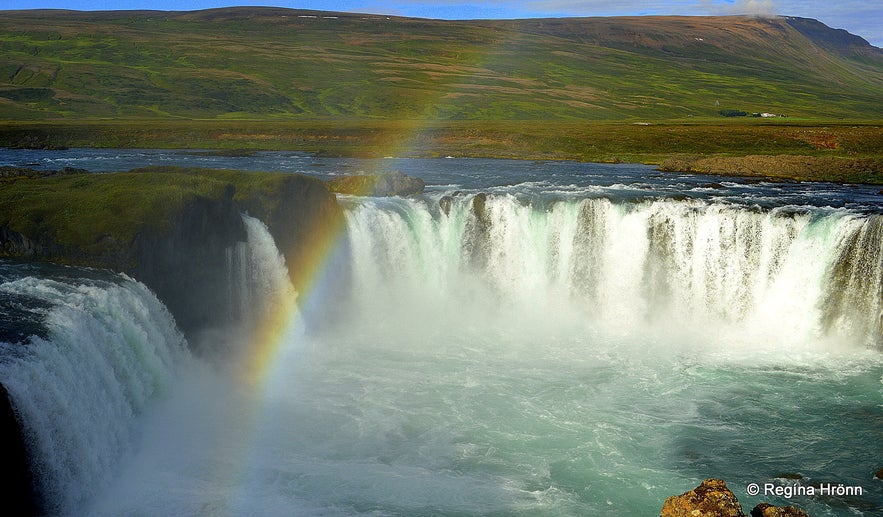
Goðafoss - the Waterfall of the Gods
Goðafoss - the Waterfall of the Gods
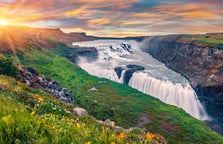
Our second stop was at Goðafoss waterfall, a beautiful and historic waterfall right by the main road.
The name, Goðafoss, means the Waterfall of the Gods. There is a story behind it dating back to the year 1000.
The conversion to Christianity in Iceland was made in that year, and the Lawspeaker and ex-Pagan Chieftain, Þorgeir ljósvetningagoði, is said (oral history) to have thrown his idols of the old pagan Nordic gods into this waterfall - right after returning from the Alþingi Parliament at Þingvellir, where the conversion was made.
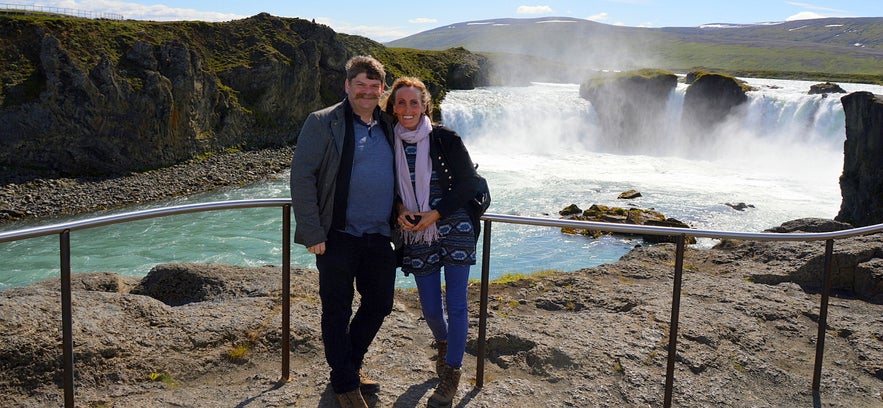 A photo taken from the west bank
I always think about this Viking story when I visit this beautiful waterfall.
On this tour, we visited both the east and west banks. There is a new viewing platform on the east bank where you can admire the waterfall.
Also on the east bank, you will be able to see the beautiful artwork of nature on the west bank - see my photo below.
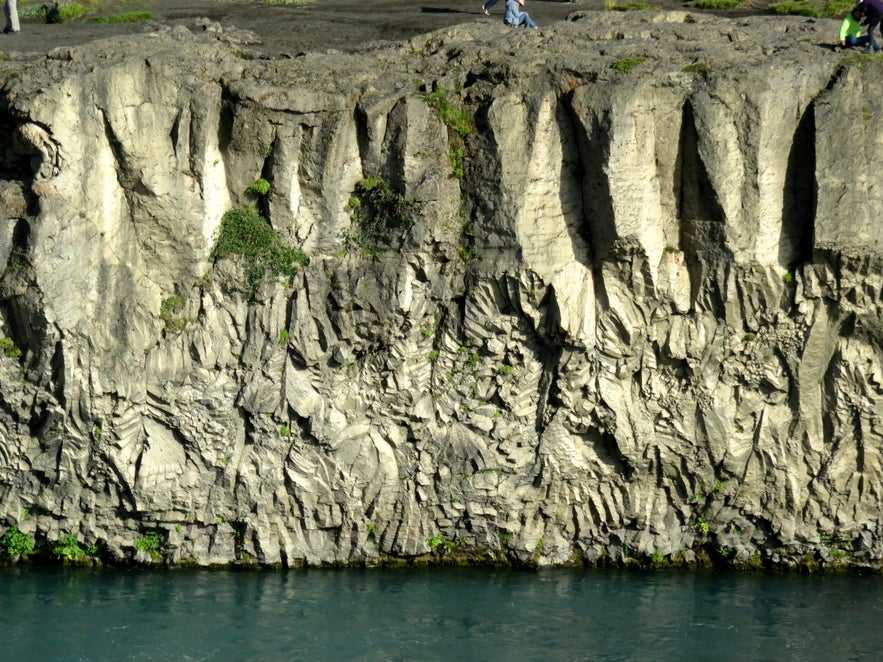
Beautiful basalt columns by Goðafoss
This historic waterfall, which has a drop of 12 meters and a width of 30 meters, cascades into the white and green glacial river Skjálfandafljót.
Skútustaðagígar - Pseudocraters
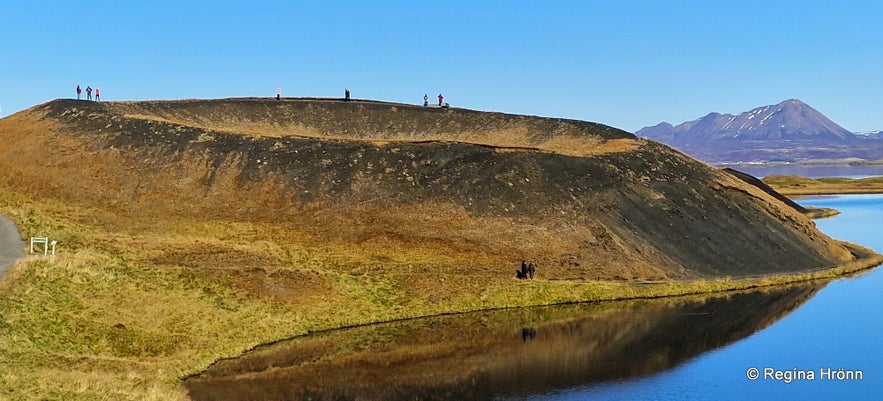
Skútustaðagígar pseudocraters
After visiting Goðafoss waterfall, we entered the Mývatn area, where the first sight of interest is Skútustaðir pseudocraters.
We made our third stop here and walked on the rim of the pseudocraters from where there is a lovely view of Lake Mývatn.
This natural phenomenon occurs when lava flows over wet ground and pushes it down. This traps steam under the weight of the lava, which in turn builds a lot of pressure.

Skútustaðagígar pseudocraters
When the pressure becomes too great, it causes steam explosions and the formation of these strange-looking pseudocraters.
As far as I know, this phenomenon can only be seen above ground here in Iceland and on the planet Mars.
Lake Mývatn
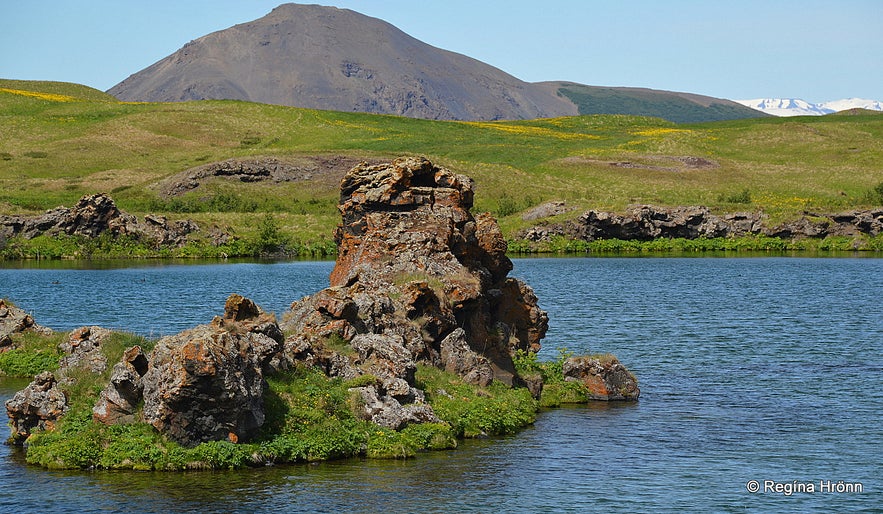
Lava pillars by Lake Mývatn
We made our fourth stop by Lake Mývatn, which was created in a basaltic lava eruption 2,300 years ago. There are so many freestanding lava formations in this area, including the lava pillars by and in Lake Mývatn.
Lake Mývatn is 37 km2, and there are about 50 islands and islets on it. The lake is protected as a nature reserve as there is a very diverse water birdlife here, including 15 species of ducks that nest permanently at Lake Mývatn.

Birdlife on Lake Mývatn - horned grebe
Lake Mývatn gets its name from the myriad of midges in this area.
They can be pretty annoying, but they are the foundation of Mývatn's ecosystem, so we have to endure them.
Our guide told us that twice during the summer, huge black clouds can be seen - these clouds are the midges mating.
He told us there can be between 750 and 900 tonnes of midges in this area! After their death, the midges enrich this area even further as they become fertilizers.
Dimmuborgir - the Dark Fortress
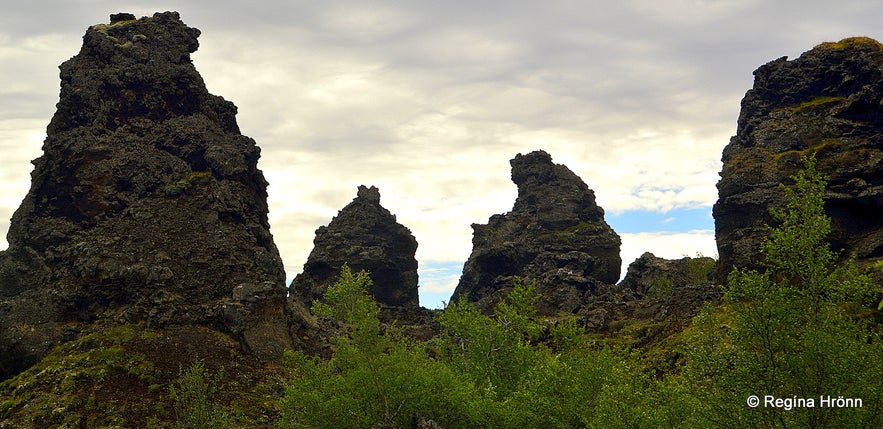
Dimmuborgir at Mývatn
Dimmuborgir - the Dark Fortress - at Mývatn is a true wonder of nature - an extraordinary labyrinth of lava formations. Here we made our fifth stop.
Lava ponds cause the formation of these lava cliffs and pillars - hot lava streamed over these ponds, trapping the water underneath the lava.
Steam issued through a vent in the lava ponds and formed these pillars, which then remained standing after the crust around them had disappeared.

Our group by the gap in Dimmuborgir
Dimmuborgir is 1 km in diameter and has several walking paths. Our guide walked us through these extraordinary lava formations for 35 minutes, making several photo stops along the way.
I love visiting this area - there is even a hidden cave here where the Icelandic Yule lads live!
Vogafjós restaurant and cowshed
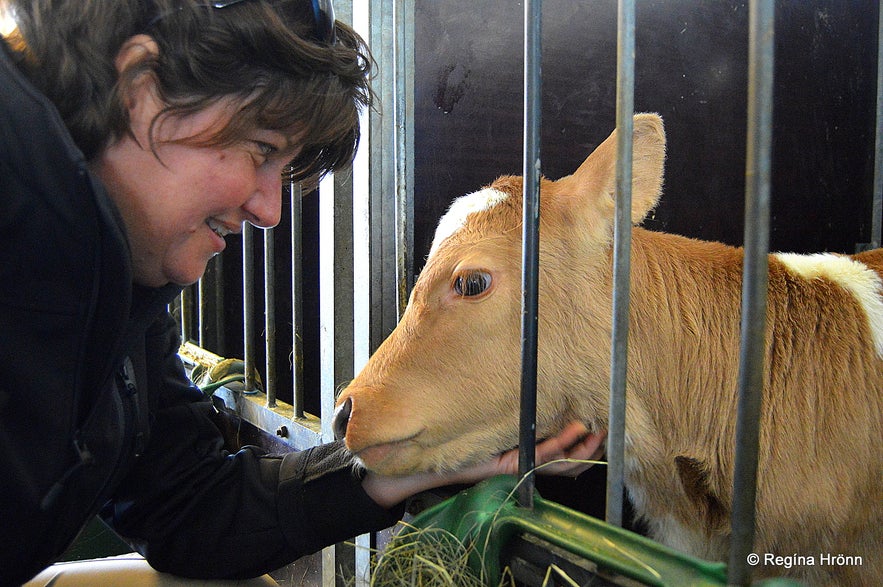
One of my fellow travellers on the tour saying hi to the calves at Vogafjós
It was now time for lunch, so our sixth stop was at the Vogafjós restaurant.
Vogafjós restaurant is a bit out of the ordinary, as Vogafjós means Cove Cowshed. From a window in the restaurant, one can actually have a look at the cows in the cowshed.
Or pop in to visit the cowshed and have a look at the cows and their calves. They are very friendly and inquisitive.
I took so many photos of my fellow traveller stroking and talking to one of the calves, as it was so beautiful watching them together.
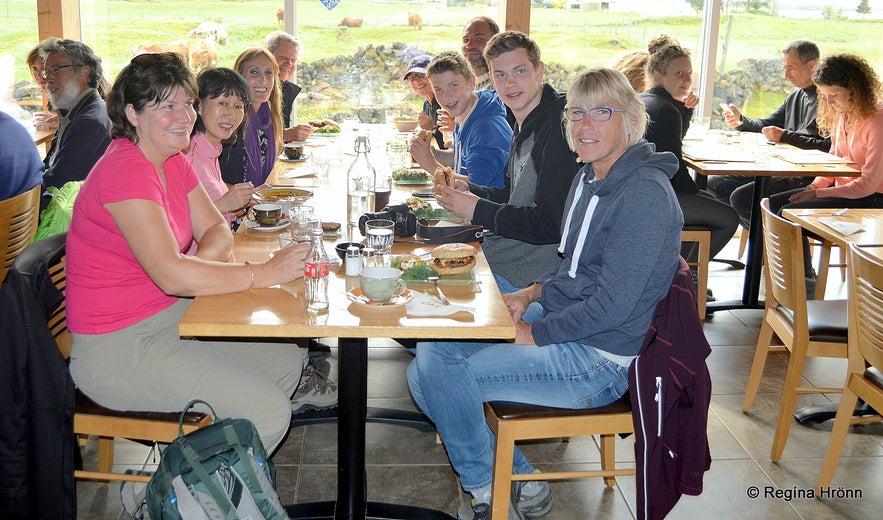
Having lunch with the group at Vogafjós
The farmers at the farm Vogar by Vogafjós smoke their own trout from Lake Mývatn and lamb in a turf shed on their land. And they make their own rye bread, which is cooked in hot springs in Mývatn.
The Mývatn mozzarella and salad cheese are made from the milk of the cows in the cowshed. They also make jam and tea from locally picked herbs.
On their menu is, of course, beef from their cattle. I love it when people put their pride in offering local food to visitors.
Grjótagjá Cave
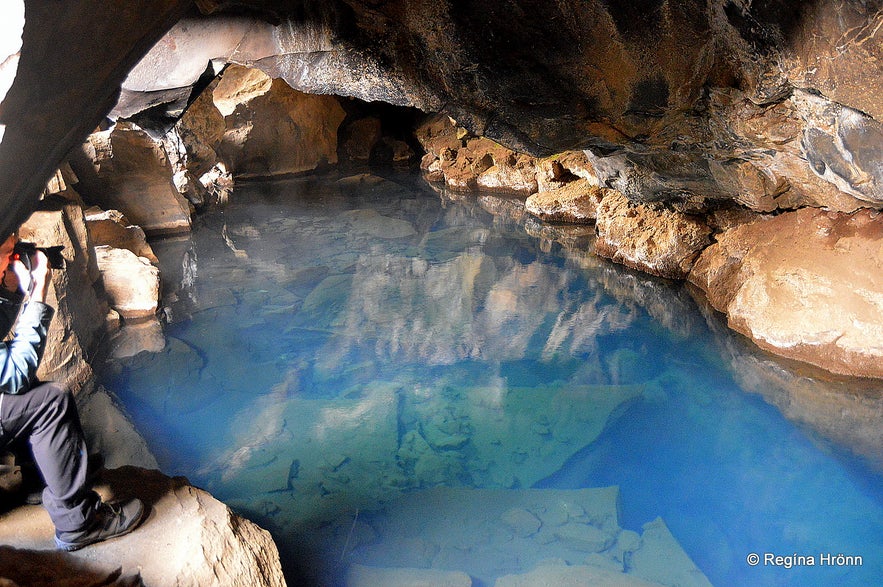
Grjótagjá cave
We made our seventh stop, not far from Dimmuborgir, to check out the Grjótagjá rift.
Grjótagjá is a hot spring in a cave, with two entrances and a rocky path leading down to it. It is half-full with the most extraordinary blue geothermal water.
During the eruption of Mt. Krafla in 1975-1984, the water temperature rose so high that it couldn't be used for bathing for 20 years.
The water temperature is again too hot for bathing. I dipped my feet in the water back in 2014, and it was very hot, something like 46 degrees C.
Grjótagjá is privately owned and belongs to the farmers at Vogar - bathing is forbidden here.
Mt. Námafjall and the boiling mud pools
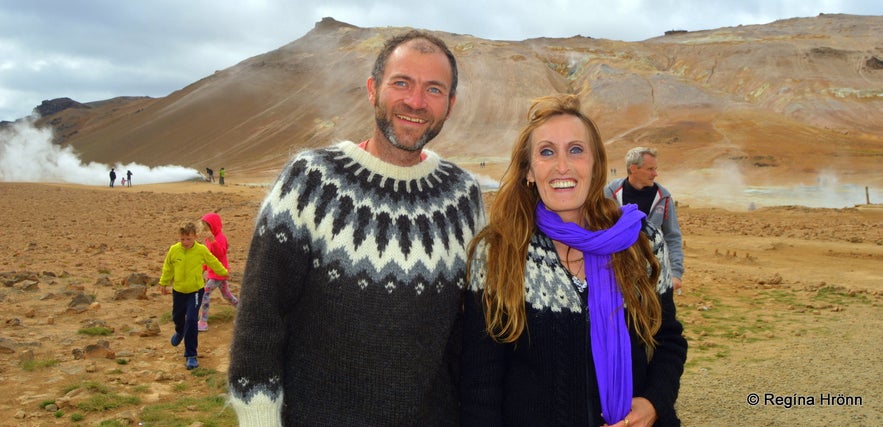
With our guide at Hverir by Mt. Námafjall
We are now headed out to Mt. Námafjall and the high-temperature area, Hverir. Our eighth stop was made by bubbling and boiling mud pools!
We had an excellent guide from Belgium, Leo, who spoke English and excellent Icelandic.
On our tour, there was a Belgian family - I admire how Leo was able to switch from one language to another. Leo is in the photo with me above by Mt. Námafjall.
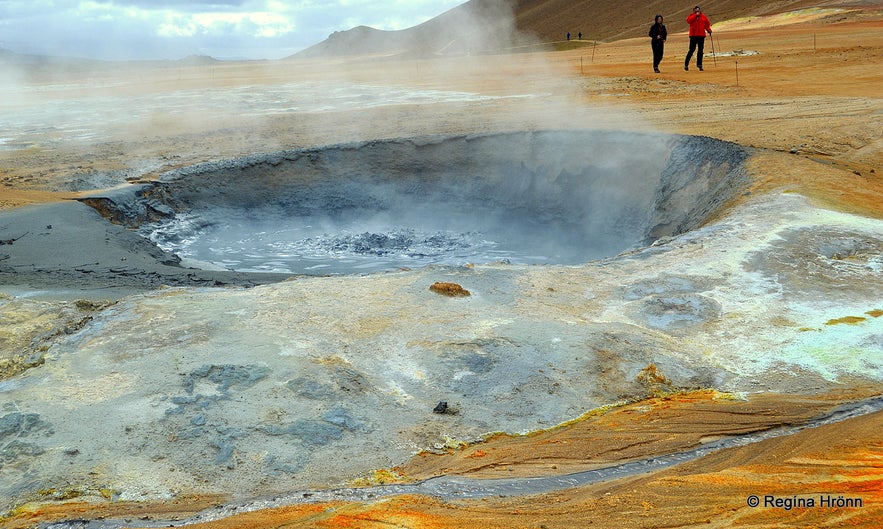
Boiling mud pots at Hverarönd
This area is referred to as Hell's Kitchen due to the strong smell of sulfur in the air caused by the steam and the fumarole gas, such as hydrogen sulfide.
This gas can cause headaches and nausea if you stay in geothermal areas for too long or when it is very windy. It happened to me during one of my visits to Hverir, and it took me 2 days to recover.
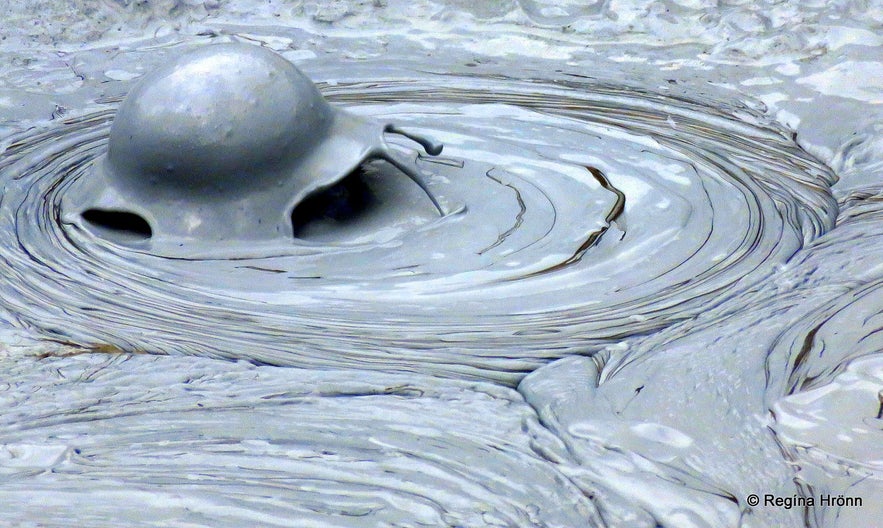
Boiling mud pots at Hverir
The hot springs also produce substantial sulfur deposits, which were mined in Iceland in previous centuries for gunpowder.
The strange yellow and orange colours of this geothermal area stem from sulphur. You can see the yellow sulphur in my photo below.
Let's be extremely careful in this area, as it is very hot, and we don't want anyone to get hurt or burned.
It is essential to stick to the paths in this geothermal area, and that goes for all of Iceland's geothermal areas.
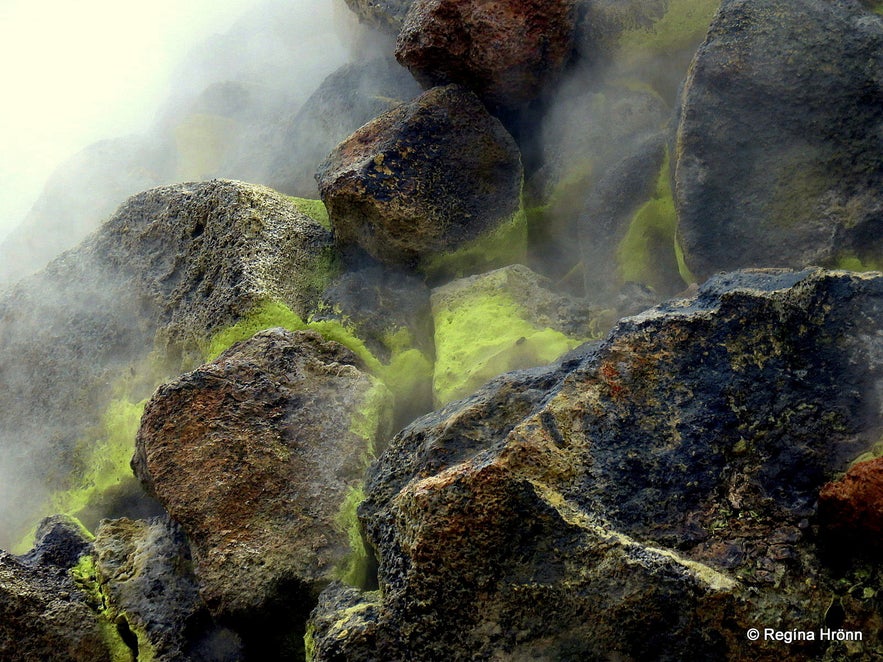
Steaming borholes at Hverir
I always get a knot in my stomach when I see footsteps inside the fenced-off geothermal areas!
We Icelanders are brought up to fear the dangers of Icelandic nature, so we know not to step into fenced-off areas in geothermal areas.
Because if you step on mud inside these fences, your foot might sink straight into a hidden, boiling hot spring and get severely burned.
This has happened several times, so it is a real danger.
So, my sincere plea to those of you who don't know this is: "Be careful out there!"
The Mývatn Nature Baths - the Blue Lagoon of the North
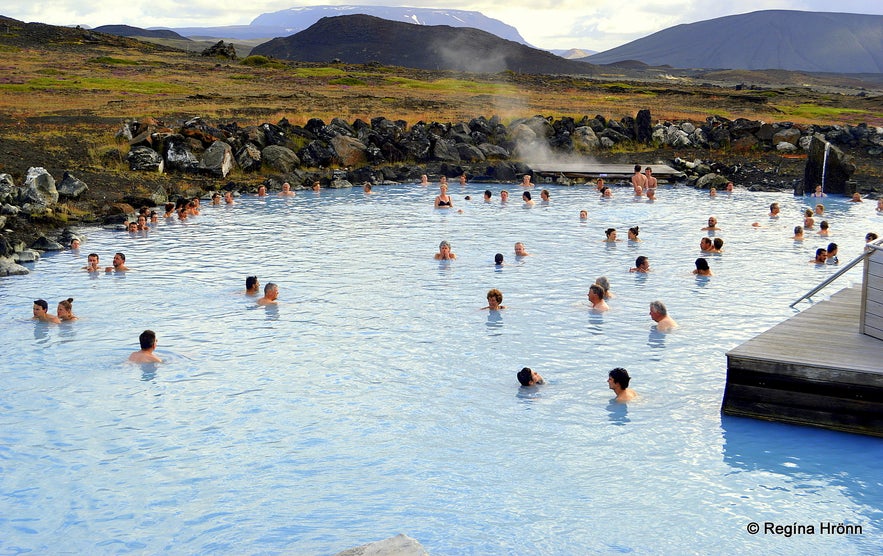
The Mývatn Nature Baths
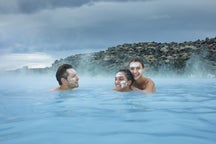
By now, it was 2:30 pm, and time for some relaxation. Our ninth and final stop was at the Mývatn Nature Baths, where we soaked for 40 minutes.
The admission fee to the Nature Baths is included in the tour price, so the whole group dipped in.
I asked to be left behind when my fellow travellers left the Nature Baths and were driven back to Akureyri, as I was going to stay in our summer cottage at Mývatn for the night. My husband drove from Akureyri and picked me up later on.
I soaked in this wonderfully blue geothermal water by myself for 2 hours, and the sun even came out, making the scenery even more beautiful. 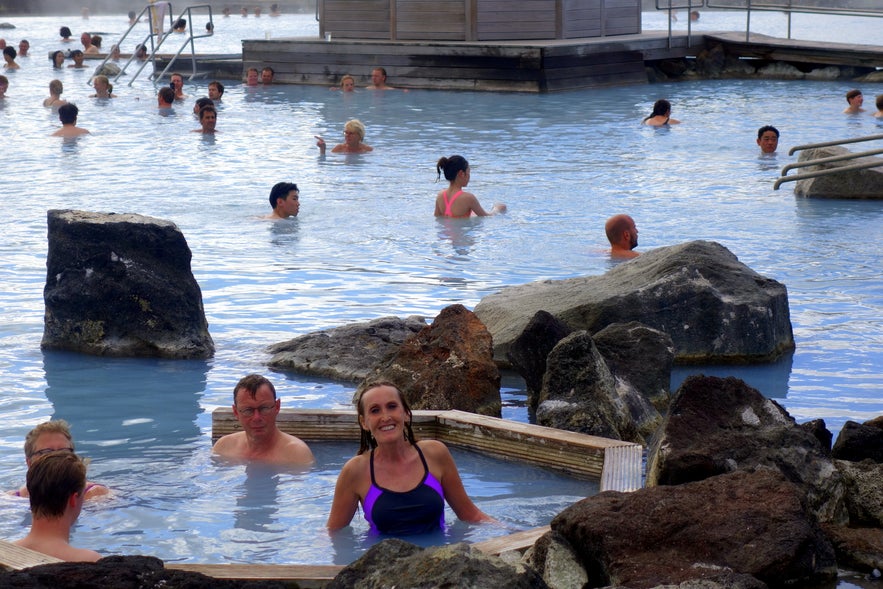
Soaking in the Mývatn Nature Baths after the tour
The geothermal water in the Nature Baths, which cover an area of 5,000 m2, is drawn from depths of up to 2,500 meters and is rich in minerals, silicates, and geothermal microorganisms, which are believed to be beneficial for the skin.
The Mývatn Nature Baths are sometimes called the Blue Lagoon of the North. Soaking in the warm geothermal water is an excellent way to wind down after a day of visiting all the interesting sights in the Mývatn area.
This had been a truly wonderful day, so I am glad I joined a day tour of Mývatn - I learnt a whole lot about this area and got to know some lovely people in the group.
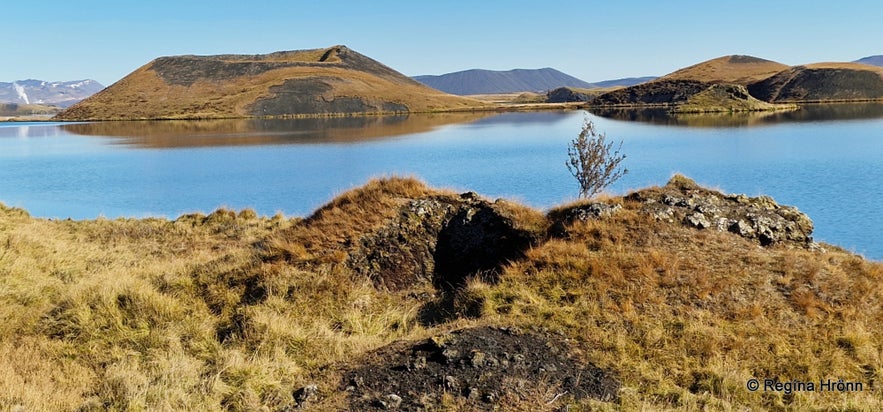 Lake Mývatn and Skútustaðagígar
You can join this tour or similar tours.
I highly recommend it to get to know this area better:
Fascinating 8-Hour Lake Myvatn Private Day Tour from Akureyri
Incredible 8-Hour Sightseeing Tour on Lake Myvatn and Godafoss Waterfall from Akureyri.
 At Hverir geothermal area
I joined several other guided tours while travelling up north:
The Spectacular Diamond Circle in North Iceland
A Unique Lava Walk through the colourful Lava Field Gjástykki at Krafla in North Iceland
An Amazing Tour to Askja and Holuhraun Lava Field in the Highland of Iceland
A Wonderful Day of exploring the Mývatn Area in North Iceland
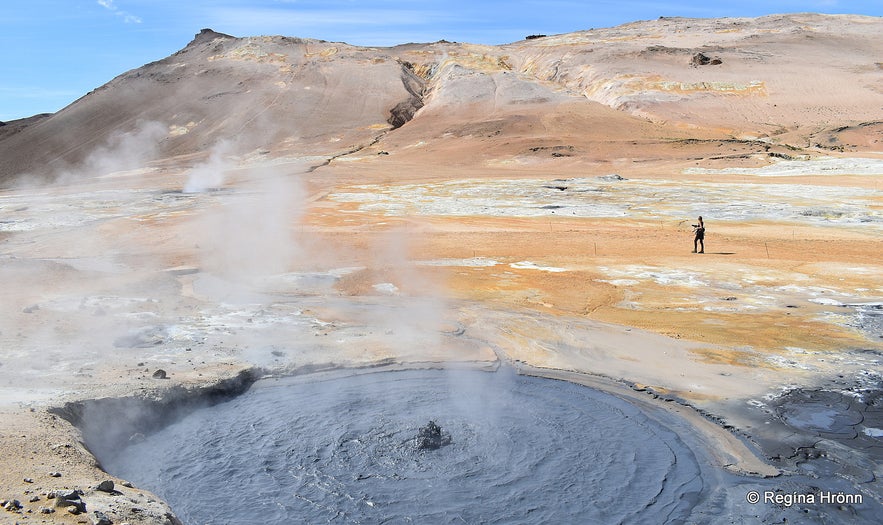 Alone at Hverir geothermal area by Mt. Námafjall
Here is the location of Mývatn on Google Maps.
Here you can see the selection of Mývatn tours: The best Mývatn tours.
You can also check out the tours offered by Imagine Iceland Travel; they run a wide selection of tours in this area.
Have a lovely time in North Iceland :)