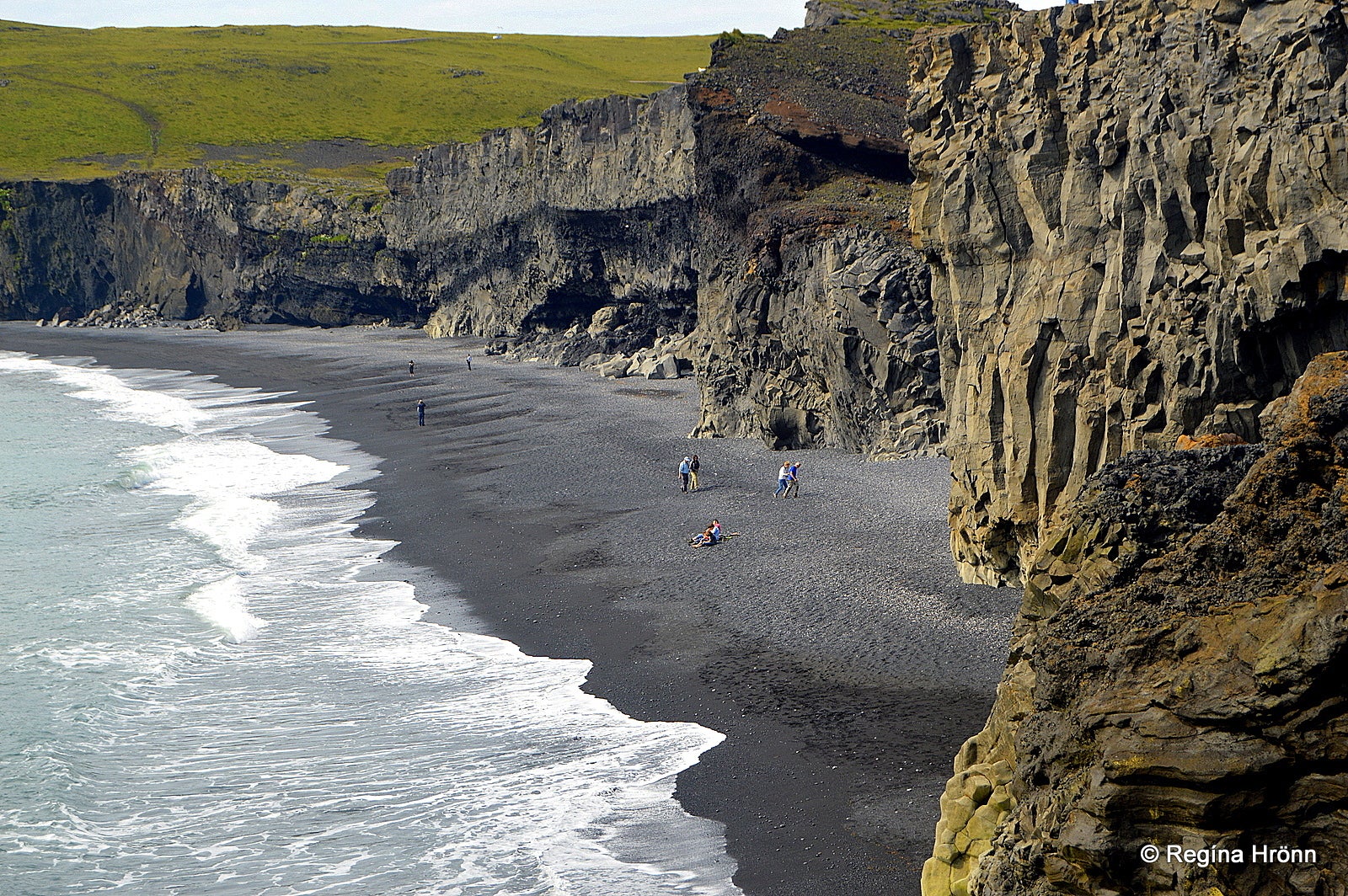
Yet another fatal accident took place on the 2nd of August 2025, on Reynisfjara beach in South Iceland, when a 9-year-old girl drowned after the sneaker waves grasped her on this dangerous beach :( The family seems to have been stuck in the cave, and the waves reached them.
The last fatal accident before this one was on the 10th of June 2022, when a foreign traveller was swept out to sea by the sneaker waves on this notorious beach. His wife got caught in the same wave but got saved.
Top photo: Kirkjufjara beach
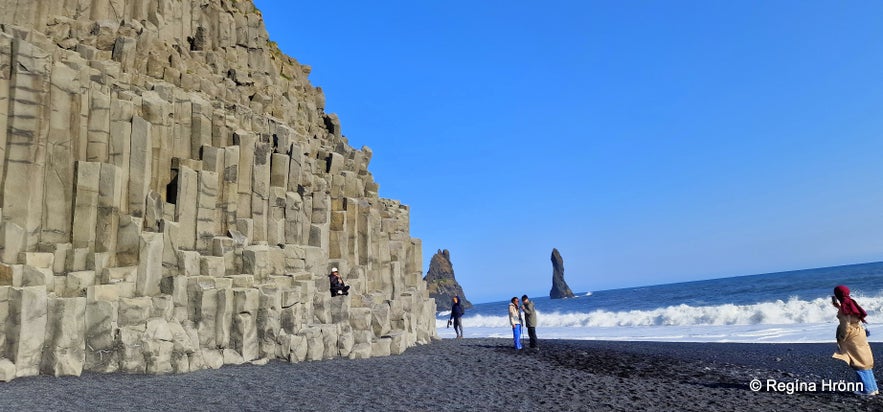 Reynisfjara beach
After the girl's death, it was decided to activate the red light earlier and to close off access to the basalt columns and Hálsanefshellir cave when the red light is flashing.
In 2026, the beach changed dramatically, to say the least!
Please, please be careful at Reynisfjara! It breaks my heart having to update my travel blog with new fatalities like this one :(
Reynisfjara is so beautiful, but it is also one of the deadliest beaches in the world. Please don't risk your life there; follow the locals' advice.
Even after the last fatality on the beach, people behave so recklessly at Reynisfjara that we have all but given up.
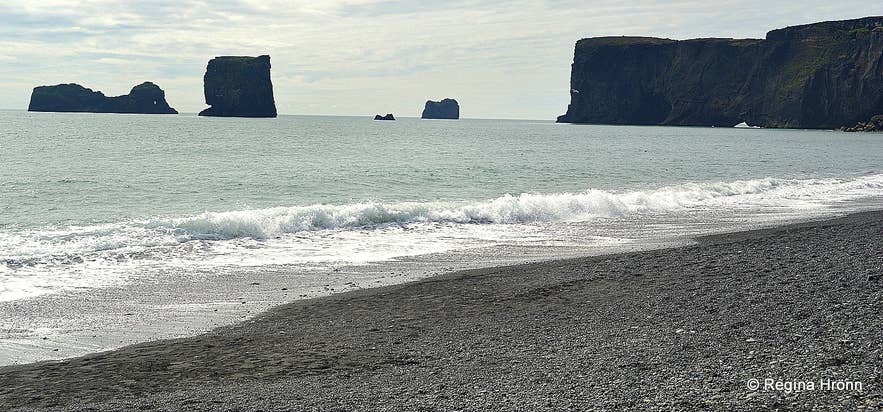
Dyrhólaey
On the 9th of January 2017, a German woman travelling with her family was snatched by a sneaker wave at Kirkjufjara beach near Dyrhólaey.
Her husband and adolescent children had been knocked over by the waves as well, but were able to save themselves in the nick of time from the undertow, which sucked this poor woman out to sea.
These accidents shake the whole Icelandic nation, and it sure shakes me to the core when I hear about fatal accidents on these infamous beaches, Kirkjufjara and Reynisfjara.
Reynisfjara and its basalt columns are so pretty, which is why so many people want to visit them.
In 2007, an elderly American lady was sucked into the sea by a sneaker wave, a.k.a. a killer wave, and couldn't be saved.
I totally understand that people would want to have their photo taken or take a selfie with the waves in the background, but it is too dangerous, so please heed my advice.
The waves here are so sneaky, they come creeping up on you and suck you in if you are standing too close - nothing can be done to save people if this happens - so please be extremely careful if you visit these beaches, and never turn your back to the sea and the waves.
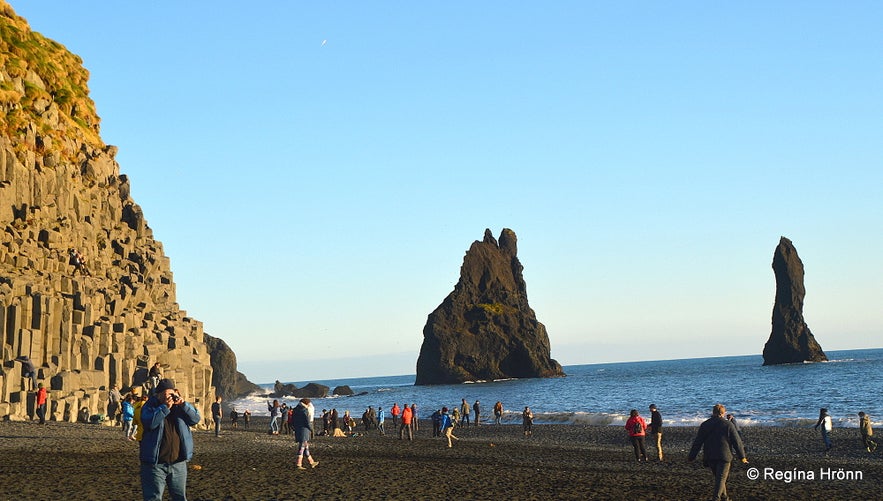
Crowds at Reynisfjara beach
Þórir Kjartansson, whom I regularly refer to, as he knows this beach and the situation here very well, said after the fatal accident in November 2021: "The reason is primarily that the sea is extremely deep very close to the shore, so that the wave is almost unbroken when it reaches the beach.
The beach is steep, which makes the backwash very strong.
In addition, there can also be a rebound from the columnar basalt, which is very powerful and knocks everybody to the ground.
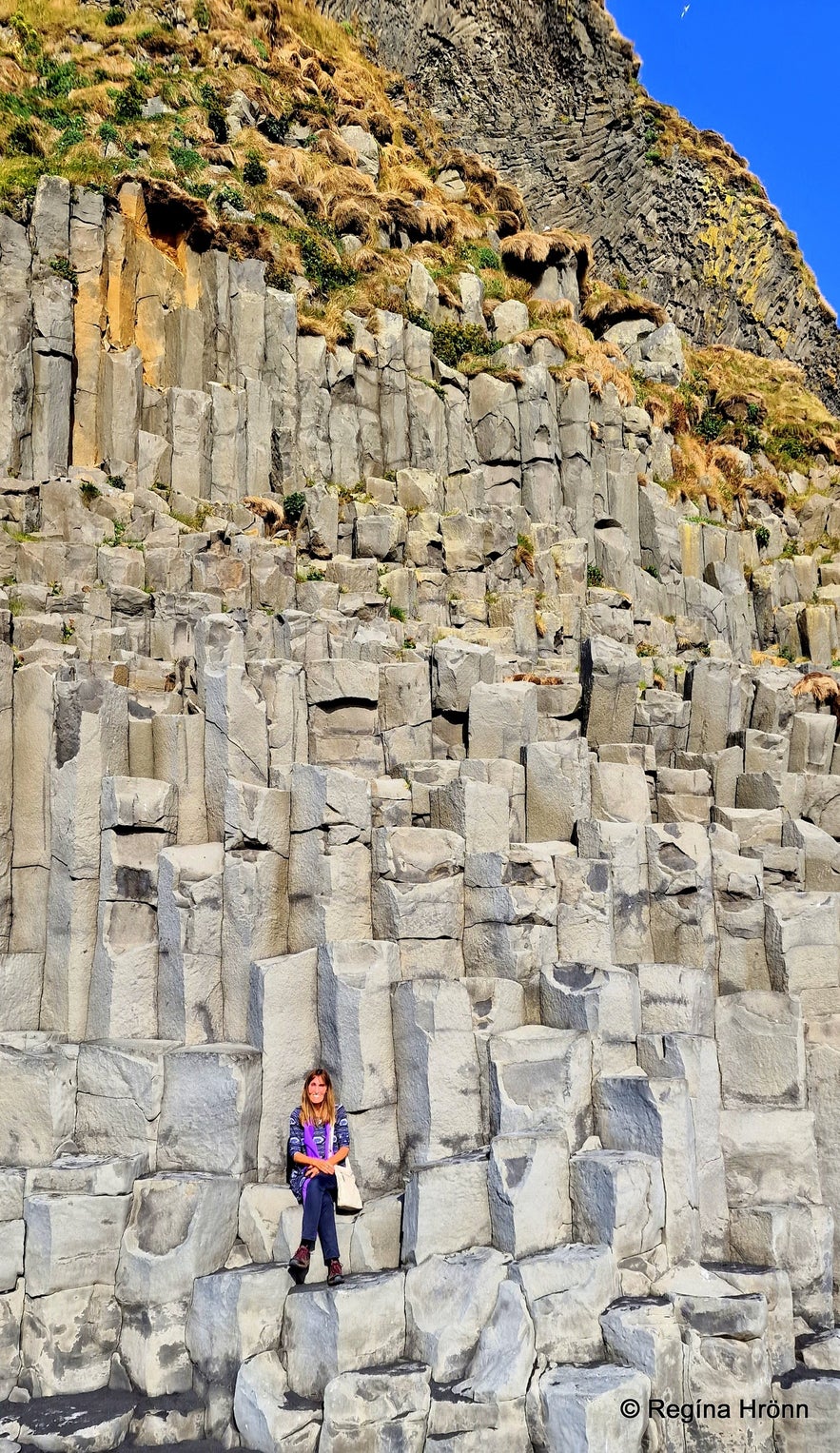 Basalt columns by Reynisfjara beach
On the day of one of the accidents on the beach, the conditions were hazardous. Then there was what we old locals call northerly surf or "high-direction surf".
Such conditions arise when the wind changes from a southerly to a northerly direction.
Then the sea conditions become very special.
Extremely thick and high-ridged waves with long intervals go very far up the shore. Because of the distance between these wave ridges, the suction from the last "disturbance" is often fully drained before the next one arrives."
Thank you for your input, Þórir!
WATCH THIS VIDEO TO THE END! It shows precisely what you might expect to happen at Kirkjufjara and Reynisfjara.
It was shot on the beach of Porsguen near Portsall and shows what the dangerous sneaker waves are really about - the waves seem calm enough, but watch until you see what happens at minute 2!
Scary, right?!!
I have added more videos of the sneaker waves later in my travel blog!
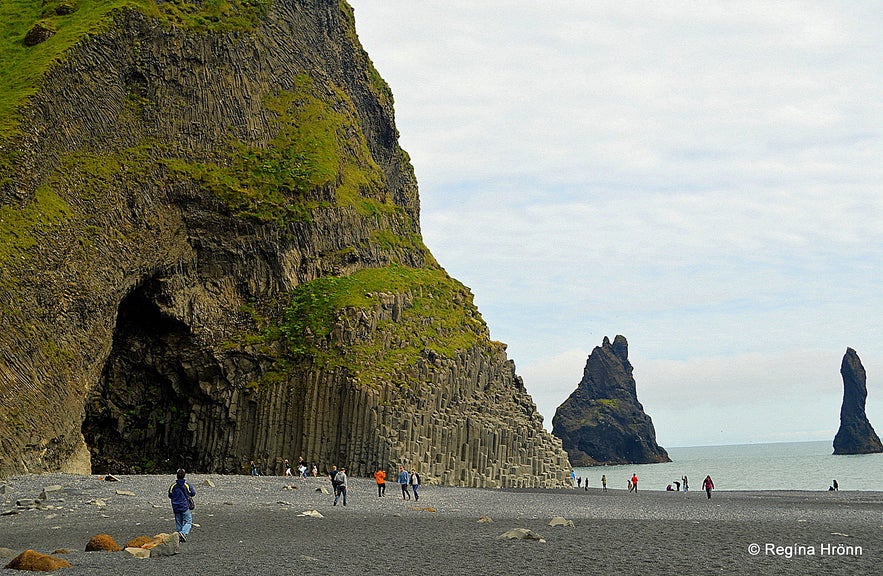
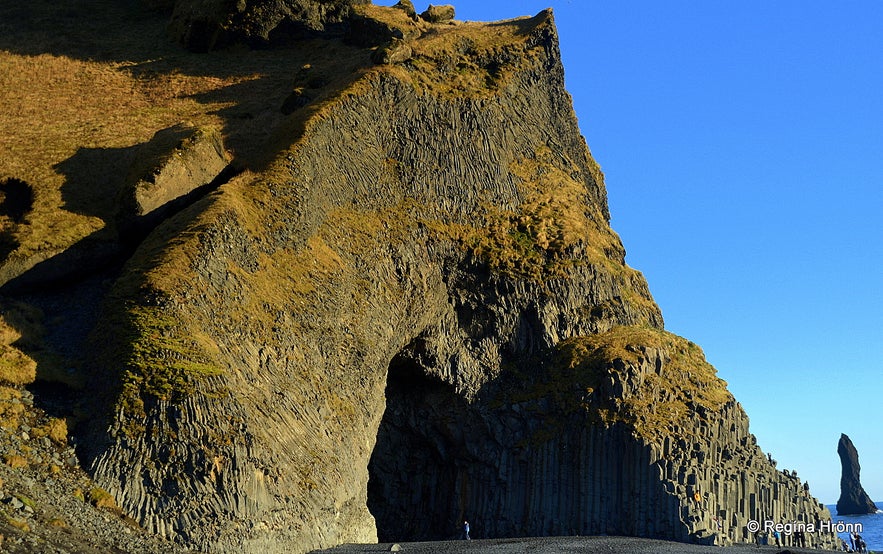
Hálsanefshellir cave at Reynisfjara
There were no warning signs by Reynisfjara back then, as we Icelanders know about the dangers of this beach and respect Icelandic nature. On the other hand, our foreign visitors weren't aware of the risks here.
There was so much controversy about this, and the landowners were even talking about closing Reynisfjara (on the news on 24.07.08).
Reykjavík Excursions promised to put up a big warning sign at Reynisfjara (on the news 14.09.08). Again, some tourists had a close call on this beach in August 2009.
Finally, warning signs were put up.
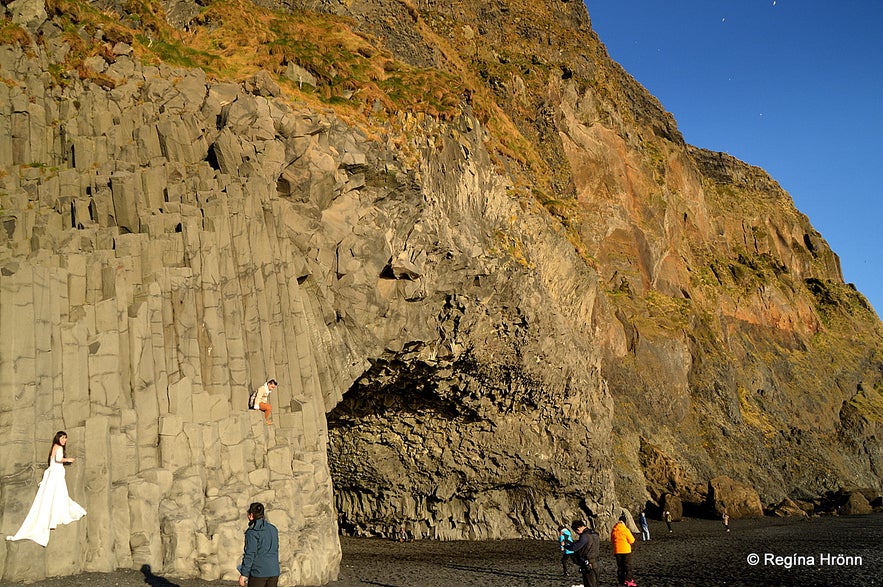
Hálsanefshellir cave
Even though there are now warning signs by the beach, on 20.06.13, a tourist tried swimming in the dangerous sea and was in trouble for half an hour.
He finally reached the shore at Hálsanefshellir cave in Reynisfjara, but was stuck inside the cave and had to be rescued by a volunteer rescue team and a helicopter.
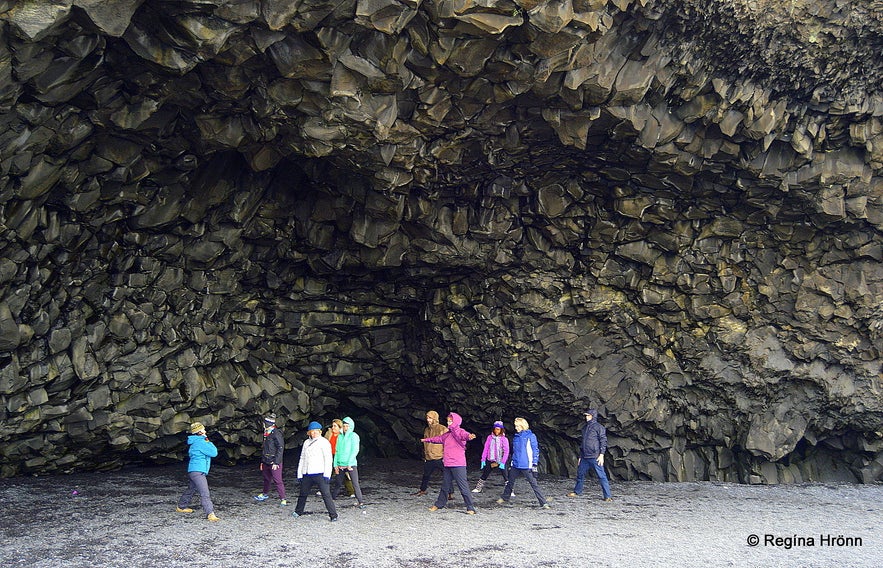
Working out in a lava cave at Reynisfjara beach
On 16.11.2013, some 100 tonnes of columnar basalt collapsed in Hálsanefshellir cave. Fortunately, nobody was in the cave at the time. Here is the story of the collapse in Hálsanefshellir.
It is in Icelandic, but there is a photo of the collapse, so you can see how dangerous it would have been to be inside the cave at that time.
I am pretty sure that these people (in my photo above) did not know about the collapse inside this cave. I have been inside the cave after the collapse, as it is extremely beautiful, but that is a risk I took, knowing about the dangers. I shouldn't have, though.
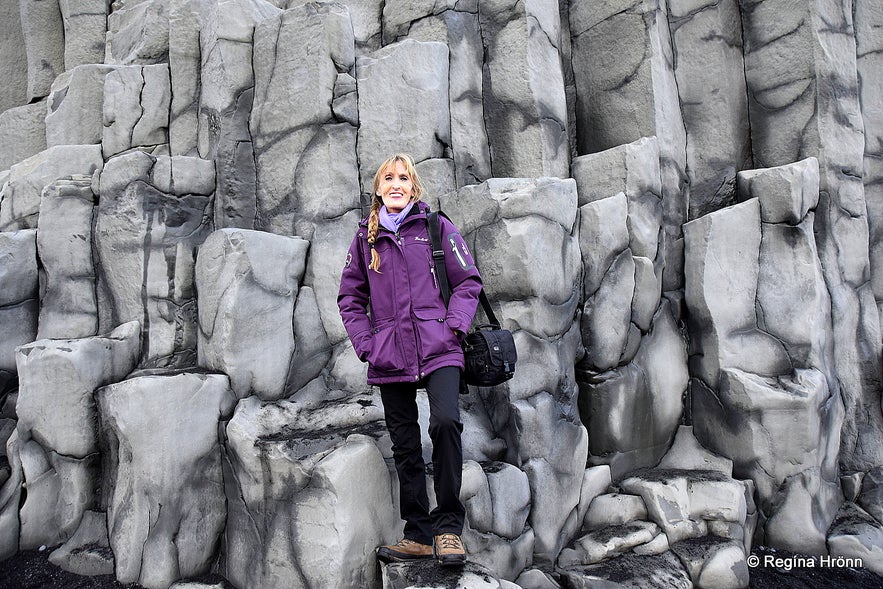
By the basalt columns at Reynisfjara
People have been climbing on the basalt rocks, scaring the puffins and requiring rescue by the voluntary Icelandic rescue team, and putting up tents in this cave and on Kirkjufjara beach by Dyrhólaey. There is no waking up after that!
I also must ask people to stop climbing up to the puffins; they lay just one egg and should never be disturbed or scared like this! And no drones up there by the puffins, that is strictly forbidden; this is, after all, nature and not an amusement park.
There have been so many close calls on these beaches, and we count our blessings when people get saved from these killer waves.
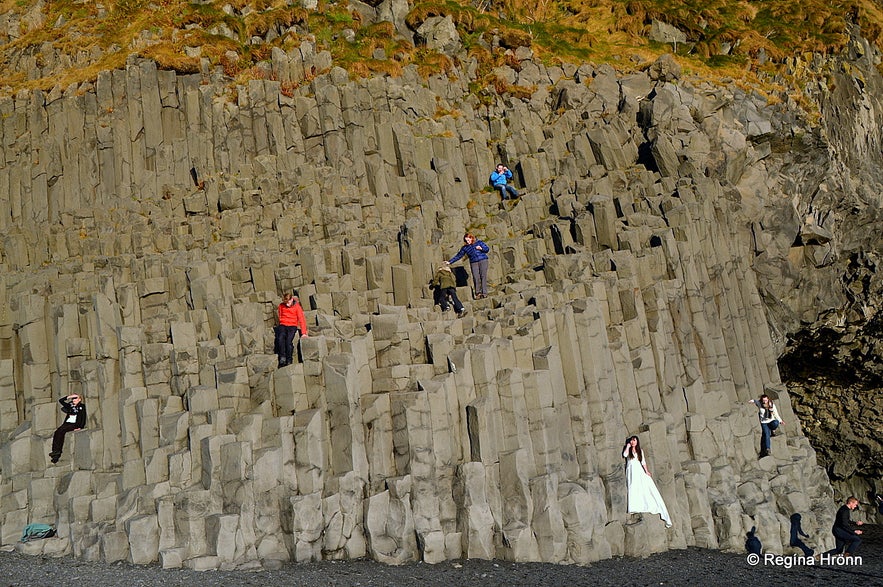
People are climbing way too high up in the basalt columns
In August 2013, a storm hit Iceland, and there were big, scary waves at Reynisfjara.
Tourists were watching the waves when a 4-5-year-old girl, who was there with her father and sister, ran towards the sea.
She got as close to the sea as possible, but as fate had it, the sea retreated, and she was saved. Had the sea not retreated, she would have been sucked out into it and would have drowned.
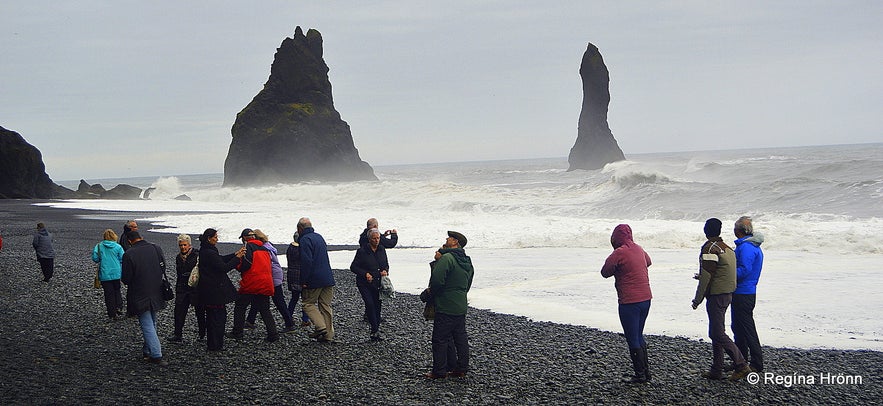
Reynisfjara beach and Reynisdrangar sea stacks
It was only a matter of minutes between life and death. A policeman and a tour guide, Páll Jónsson, who was on the beach, were able to grab the girl before the next wave would have caught her.
I was so sad when I read this on the news. Why don't people read the warning signs and put their children and themselves in danger like this?!!
What can we Icelanders do to spread the word about the dangers of this beautiful yet infamous beach in Iceland?
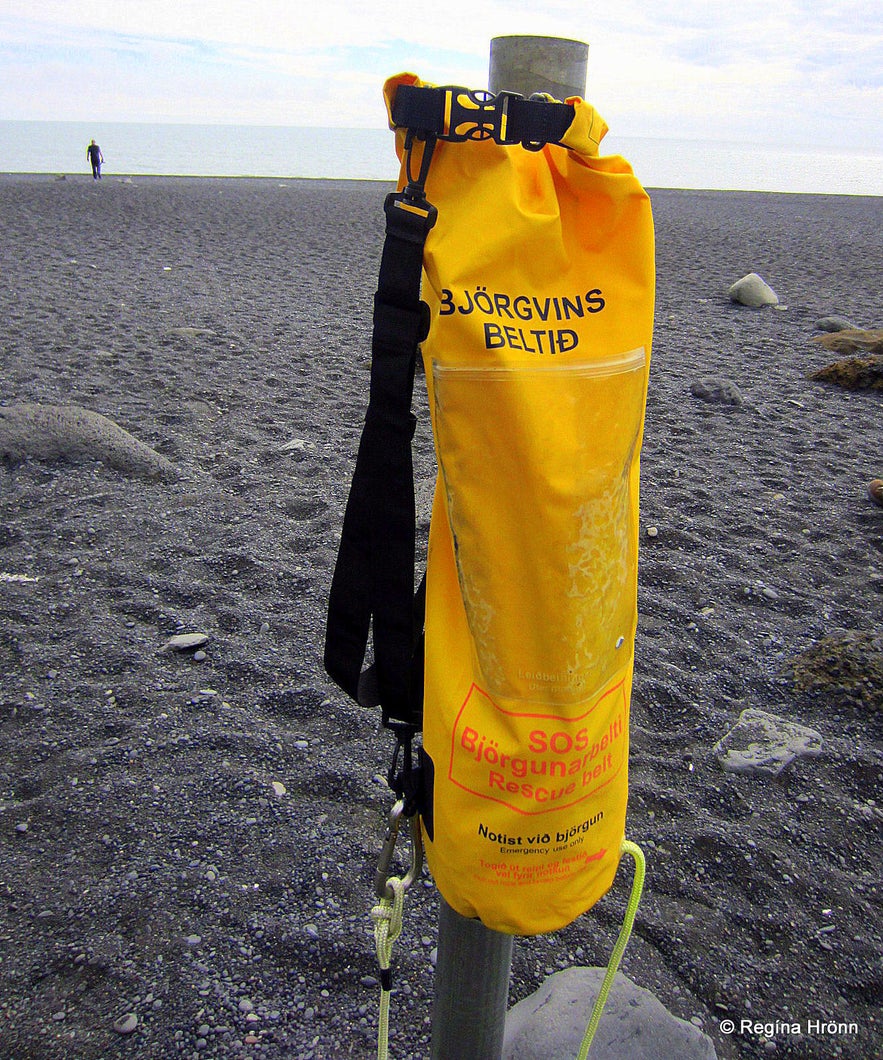
Björgvinsbeltið life belt at Reynisfjara
I got these suggestions from Mary Stewart from Daytona Beach, Florida:
"1. Have a guard gate where a small entrance fee is charged, and people are told not to get close to the water or turn their back on it.
2. Change the signage so it has more of an immediate impact. A huge DANGER sign in bold red letters would be better. Other languages could be shown at the bottom of it, but I would put the main word in English and have it written much smaller but still readable along the bottom of that sign.
3. Either hire a guard who makes people get away from the water, or have them sign waivers right before they step on the beach, whether it be at the entrance station, or on their tour bus right before they are allowed off of it. The entry fee could actually pay for a guard."
Thank you very much for your input, Mary!
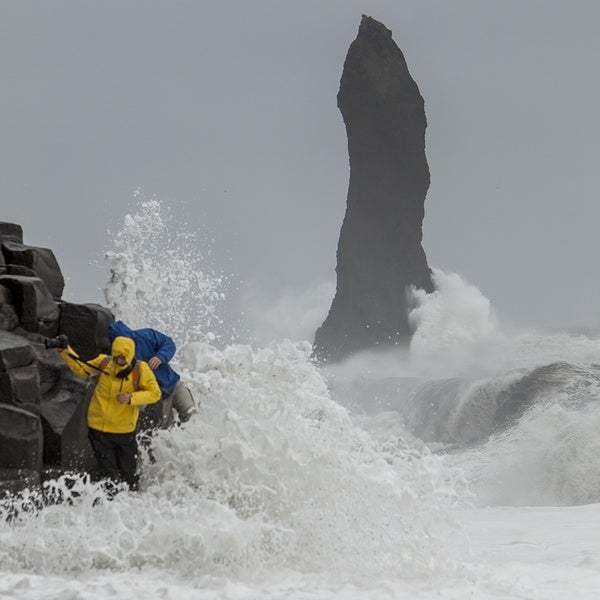
Photo credit: Finnbogi Marínósson
I regularly see photos and videos of people putting themselves in danger on these beaches, and it seems endless.
In 2015, a tourist was standing in the waves taking photos, even though locals were yelling at him to get out.
This happens almost daily now, and the tour guides are growing tired of yelling at people and going unheard,côté and even getting the finger from defiant travellers!
I added a photo above, shot by Finnbogi Marínósson, of tourists in grave danger at Reynisfjara on 16.05.2015.
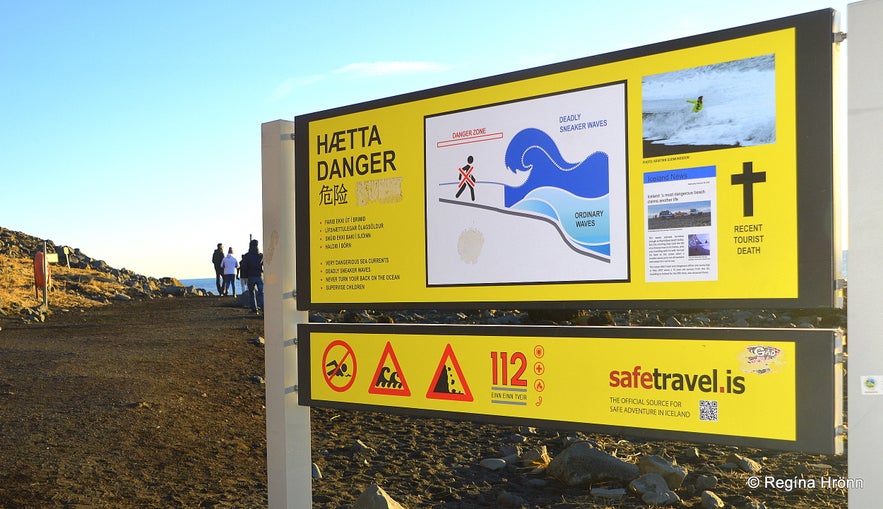
Warning signs at Reynisfjara
Finnbogi allowed me to use his photo in my blog so we can reach more people and warn them about the dangers on this beach.
Finnbogi said on the news that a couple with 2 toddlers had been letting the toddlers follow the waves!
Something needs to be done here to make people aware of this danger. I don't think people read the warning signs and might believe they are just informational signs about the area, not warnings.
But somehow they come to know about Reynisfjara, be it through photos on the Internet or travel websites. And, usually, this infamous beach is praised for its beauty in the ads and articles.
A word of warning should always be added when introducing photos or writing about Reynisfjara.
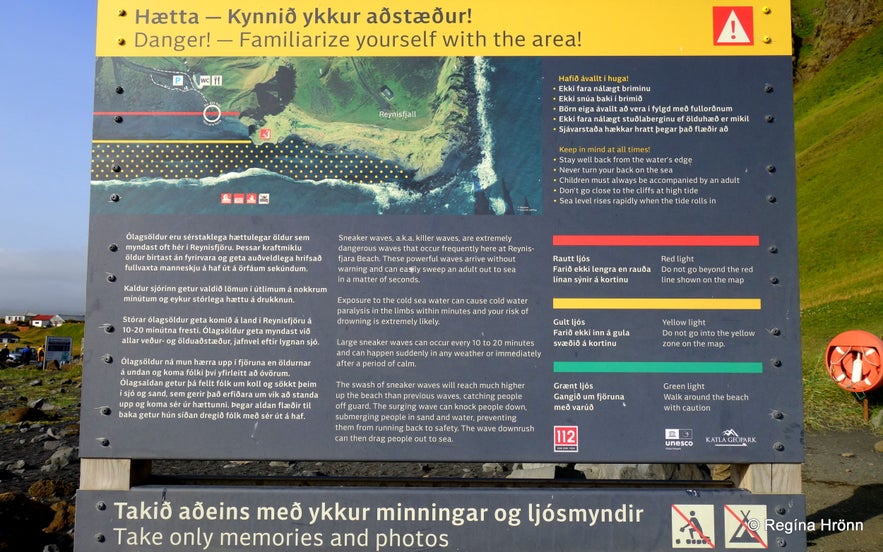 The new warning sign uses green, yellow, and red lines to indicate the dangers.
Nobody would put themselves or their children at risk like this on purpose, so the fault lies in the lack of information, somehow.
People follow the waves and then run away from them, laughing like this is a sort of game - a game playing with death.
It used to irritate me so much watching this kind of behaviour.
Now, since the 9-year-old girl drowned, I have decided to stop visiting this beach.
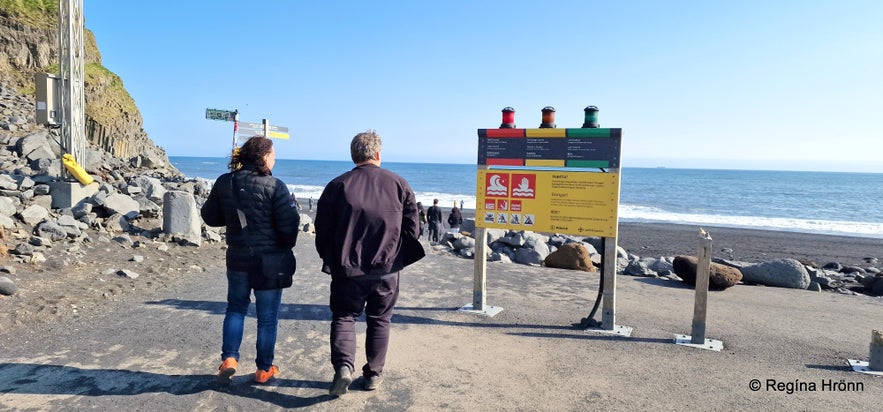 Visiting the beach in May 2025, the sign had blown away in a storm
The light was yellow when the family visited the beach, but it was a stormy day on the southwest corner.
And the information sign in my photo above had blown away in a storm a couple of months earlier (it wasn't there when I last visited the beach on the 15th of May 2025) and wasn't in its place in August.
How were people to know which area was red and which one was yellow? The sign is up now, and the red warning sign is activated earlier than before.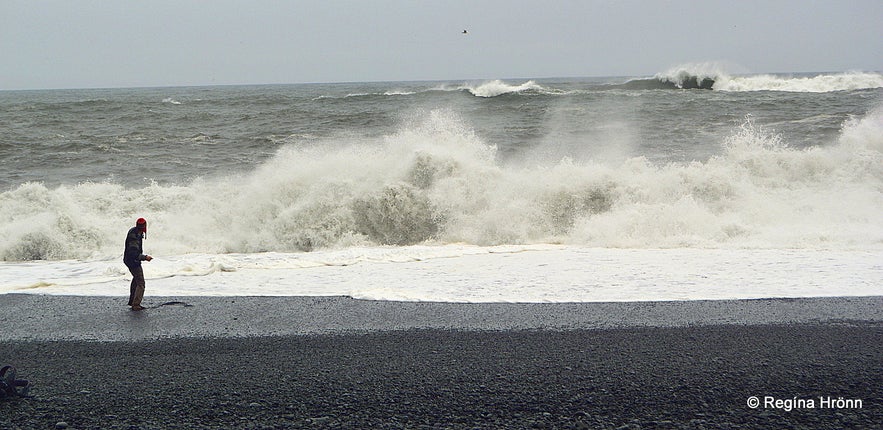
Defying the waves at Reynisfjara beach
I took the photo above on one of my visits to Reynisfjara. This man was also playing the dangerous game of letting the waves follow him, obviously unaware of the danger of sneaker waves in Reynisfjara.
The staff at Svarta fjaran - the Black Beach restaurant by Reynisfjara, say that they often go down to the beach to warn people against playing in the waves, only to be sneered at and scolded for trying to ruin the holiday of these people!
Not so, they are actually trying to save their lives, as it is very difficult for them to watch people putting their lives at risk. Or the lives of their children, which is much worse.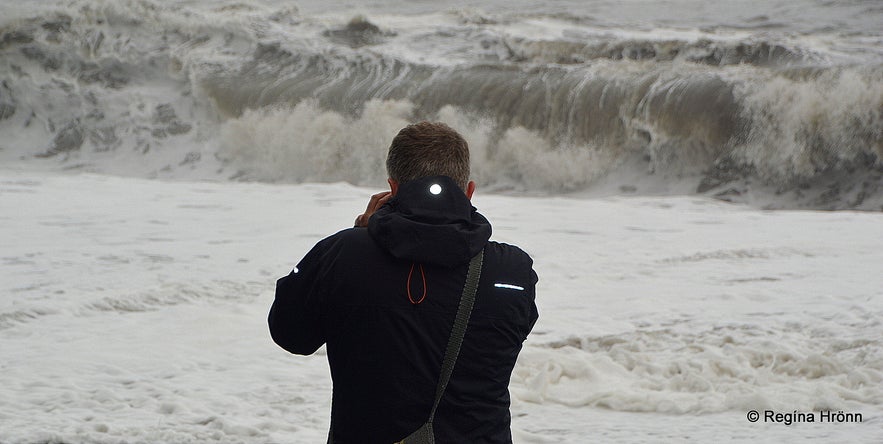
A friend of mine at Reynisfjara beach. He kept a safe distance as he is an experienced traveller
I regard it as my duty to warn our foreign visitors about this danger, and of other risks in my country.
Sometimes they listen to me, sometimes they don't - and believe me, it is very frustrating when they don't listen.
A video shot by Erica Mengouchian shows vividly how dangerous it can be to turn your back on the waves. Please watch it - a group of people got caught in the waves.
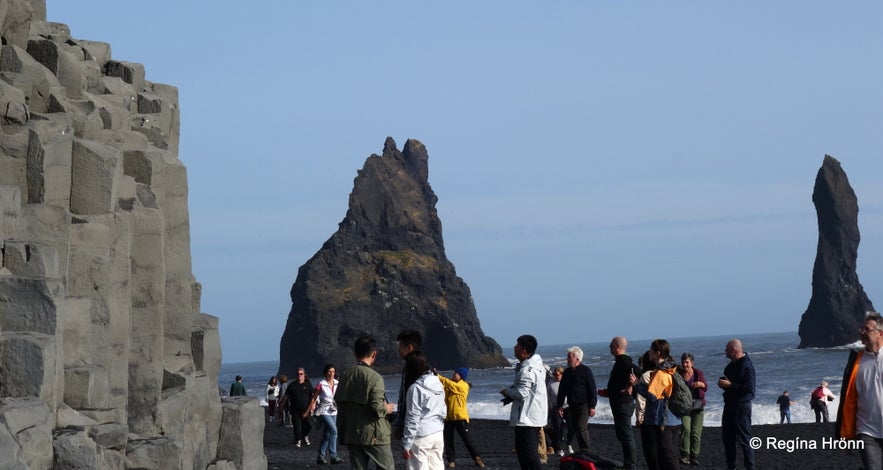 This part of the beach was off-limits, yet it was filled with visitors
I also want to ask you to read an article titled It's been a year since I almost died in which Kathy Kiely describes her near-death experience when the waves in Reynisfjara threw her into the cave and sucked her out again.
Amazingly, she stayed alive.
On 1.2.2016, a tourist ignored warnings and got too close to the sea, and the waves caught her. She couldn't stand up and save herself (see the photo below).
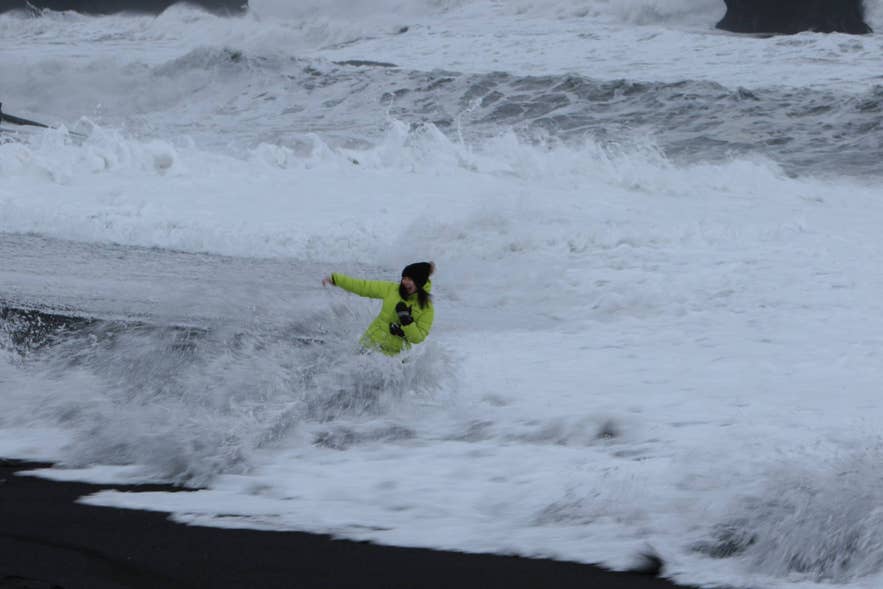
Photo credit: Kristján Guðmundsson
People ran to her help and thus put themselves in danger, but they managed to save her life.
She was not the first, nor the only one, to get caught in the waves on this day in February, and even those who had watched this woman get caught were caught in the same waves at the exact location later on!
Kristján Guðmundsson, coach-driver, took the photos I have added here with his permission. Kristján zoomed in on his camera to take these photos, but he could not do anything to help this woman because he was too far away.
We are all eager for this to stop, so we wish for the photos we take to be spread around until our foreign visitors understand the grave danger of the killer waves on this beach.
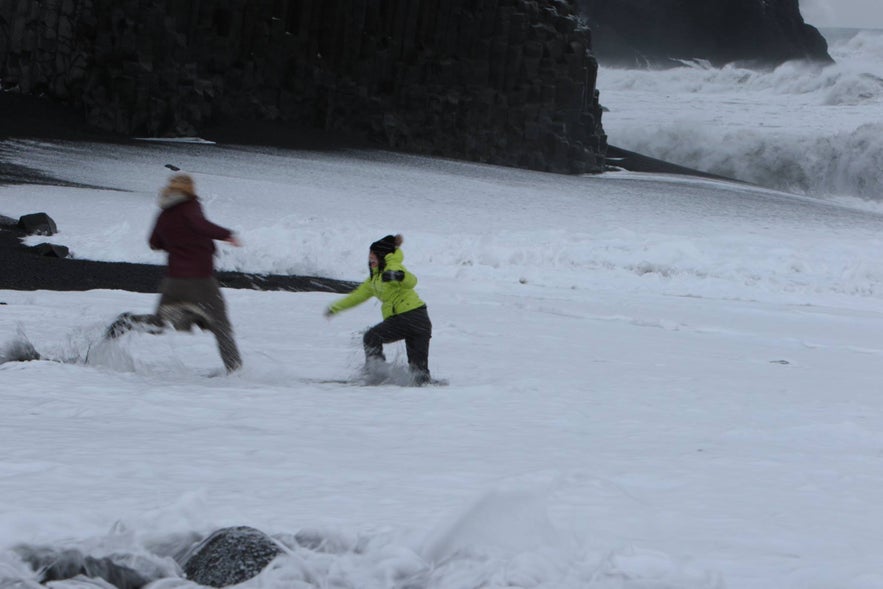
Photo credit: Kristján Guðmundsson
I shudder at the thought of myself in this situation, not being able to save myself, and feel the undertow dragging me out to sea. Please don't let it happen to you!
In February 2016, yet another FATAL accident happened in Reynisfjara. A Chinese man had stood on a 50 cm-high freestanding basalt column in front of the beautiful wall of basalt columns, taking photos with his back turned to the sea.
The waves hit him and dragged him into the sea, where he drowned :(
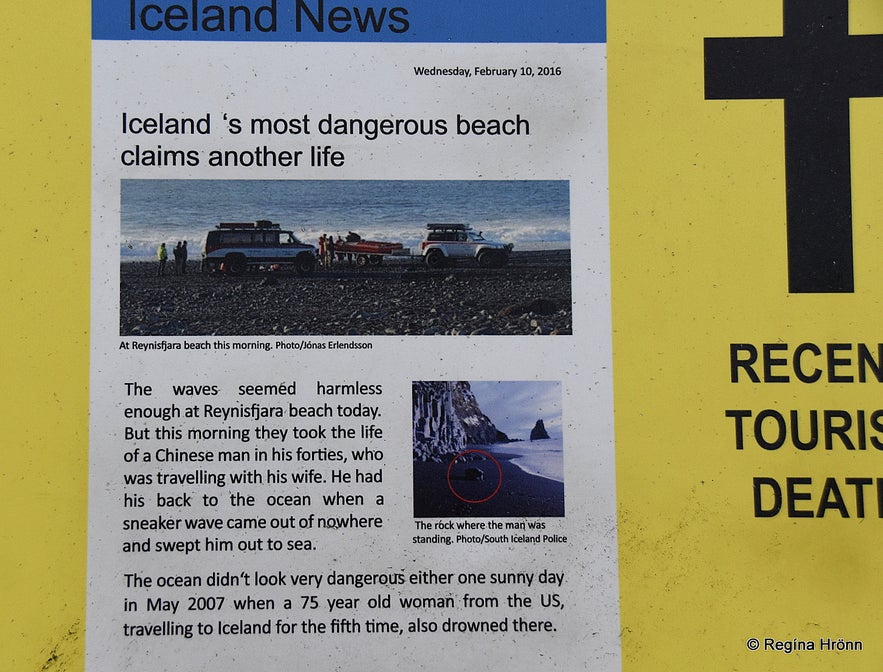
The warning sign at Reynisfjara beach
He was in Iceland with his wife - I cannot even begin to imagine what his wife must have felt like when this was happening.
Just a couple of hours later, tourists were still playing in the waves, even though they had been informed about the fatal accident. What do you think can be done?
After the fatal accident in February 2016, the police guarded the beach for 2 weeks. But despite warnings of immediate danger, people seemed to flock to the beach and get caught in the waves. We don't really know what to do to keep people safe on this beach.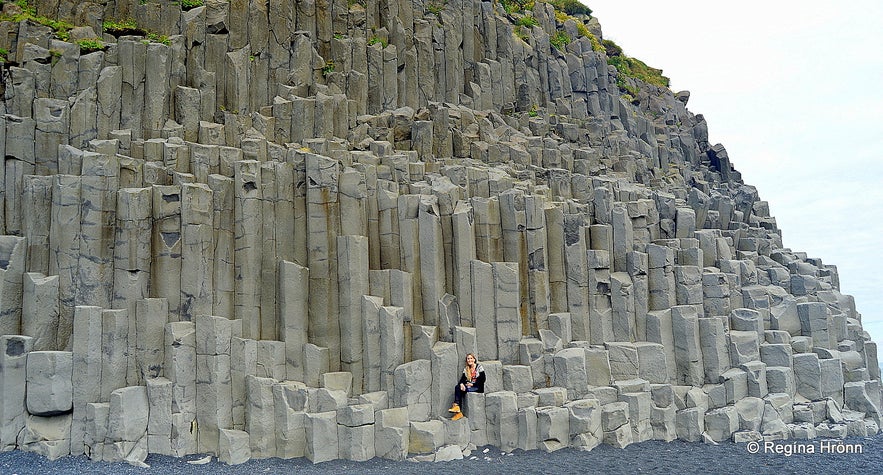
The beautiful basalt columns at Reynisfjara beach
This is causing us Icelanders a lot of worry, as so many tourists are visiting Iceland now and don't seem to use their common sense at Reynisfjara beach.
New graphic danger signs have been put up because people were ignoring the old ones and passing them without even looking at them.
Now it seems like these graphic signs are not even catching the attention of our foreign visitors, and we Icelanders don't know what we can do to prevent more deaths here on these beaches.
Should we put up crosses for every fatal accident at this beach? Or a sign with the name of every victim on this beach?
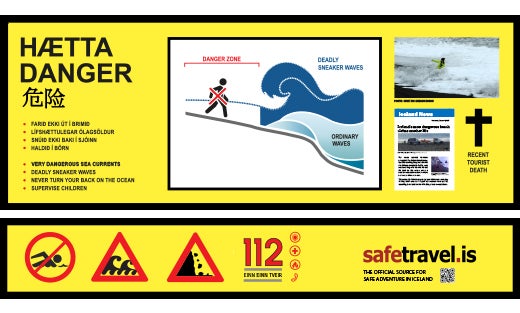
The warning sign at Reynisfjara beach
Should the signs be bigger and more graphic? And should we put up more than 2 warning signs?
The best idea I have heard is to put blinking lights on the warning signs to attract attention. I support putting up flashing lights here.
In November 2022, blinking signs were finally put up, and I hope that people will notice them before visiting the beach.
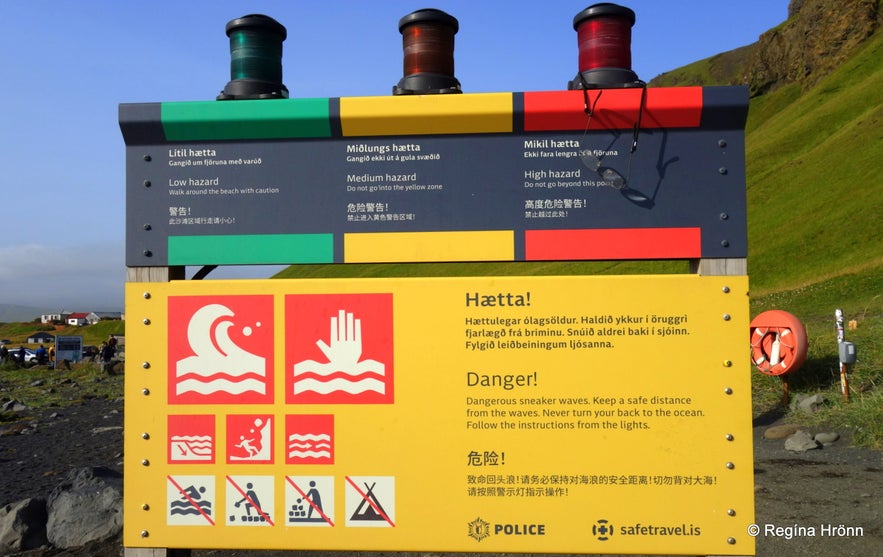 The new warning signs - the yellow light was blinking during my last visit
The warning lights are green, yellow, and red and show how dangerous the waves are. The path should lead to the warning lights, then to the beach, so people notice them.
During my last visit, the yellow sign was blinking, but it was sunny, so not many people noticed the flashing yellow light.
But while I was taking photos of the sign, a couple of people noticed the yellow light and checked how far they were allowed to go before reaching the yellow warning line.
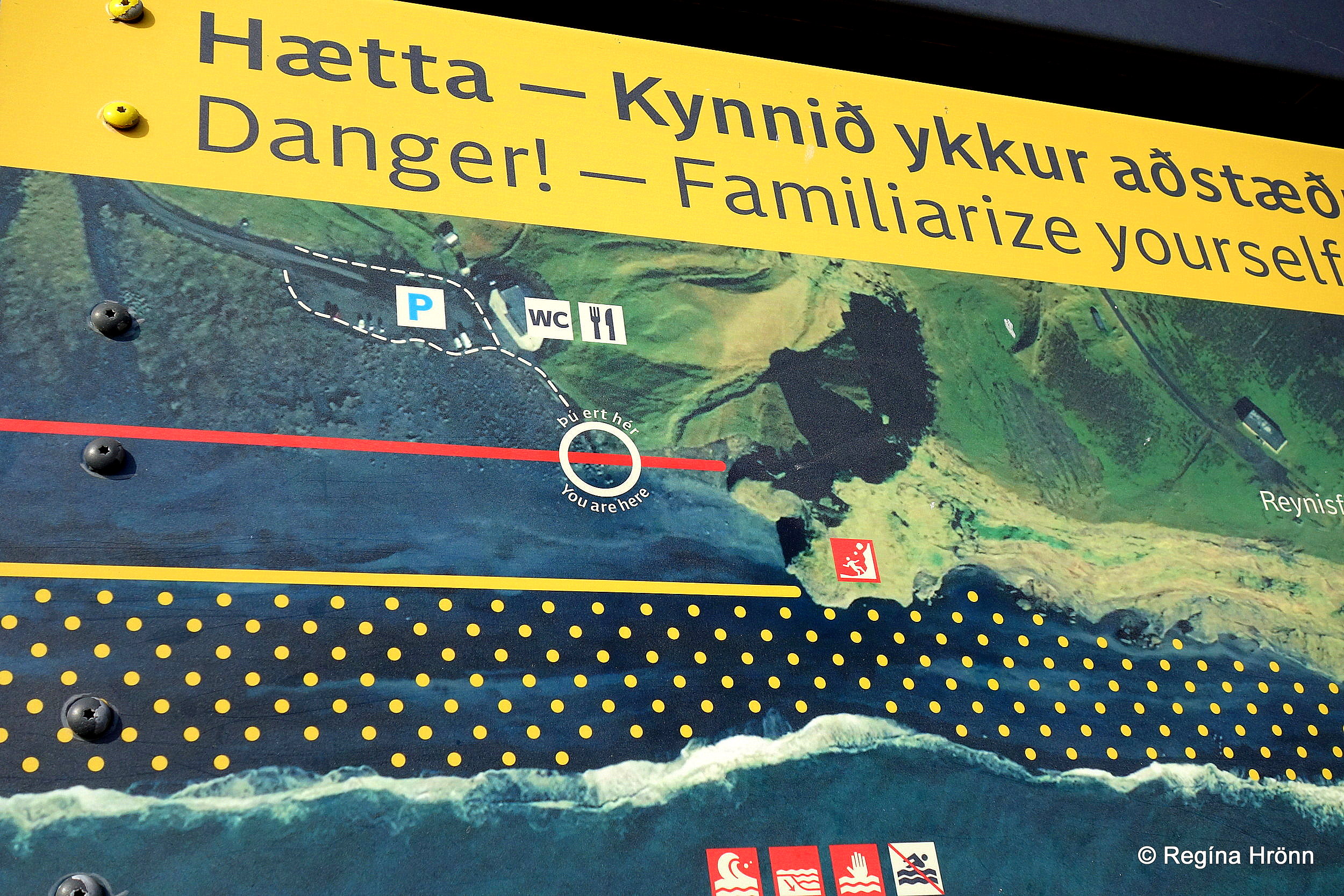 Here you can see the yellow line and dots that are off-limits when the yellow light is blinking
I know I have said this before, but I must reiterate: don't turn your back to the sea and stay at a safe distance from it. Even if you think you are safe, go a little further away.
But, even though the yellow light was blinking, there were some people down by the sea photographing their children wading into the sea!!
Stay higher up than the wet sand, as sneaker waves go higher than the last waves.
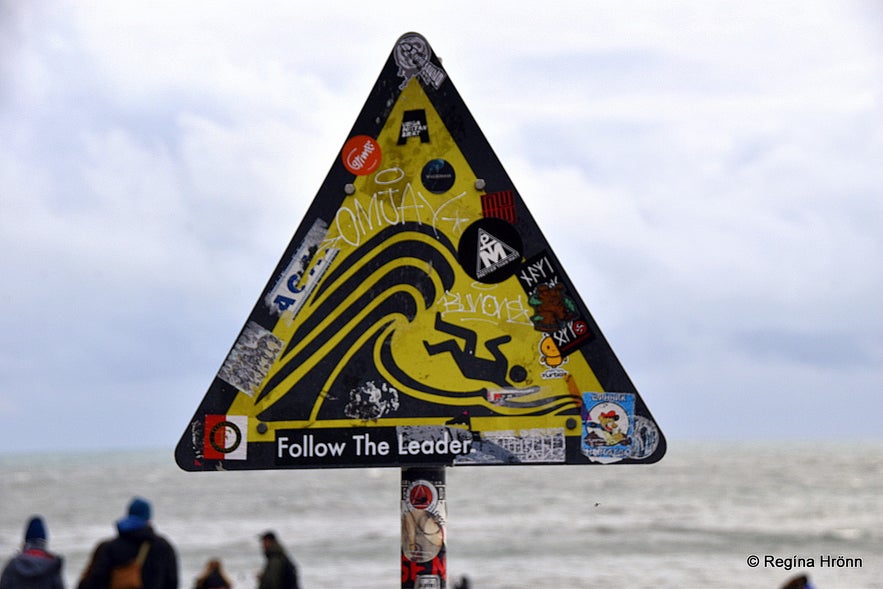 Why are some people putting stickers on this danger sign??
It is better to be safe than sorry. This is the cold and rough North Atlantic Ocean, which is nothing like the Adriatic Sea or the Mediterranean Sea.
We have had foreign visitors who have wanted to jump into the waves because they remind them of the sea in their homeland.
Our tour guides have had to battle with people who have wanted to take a dip in the dangerous sea by Reynisfjara, and who have run towards the waves as soon as the tour guides turn their heads!
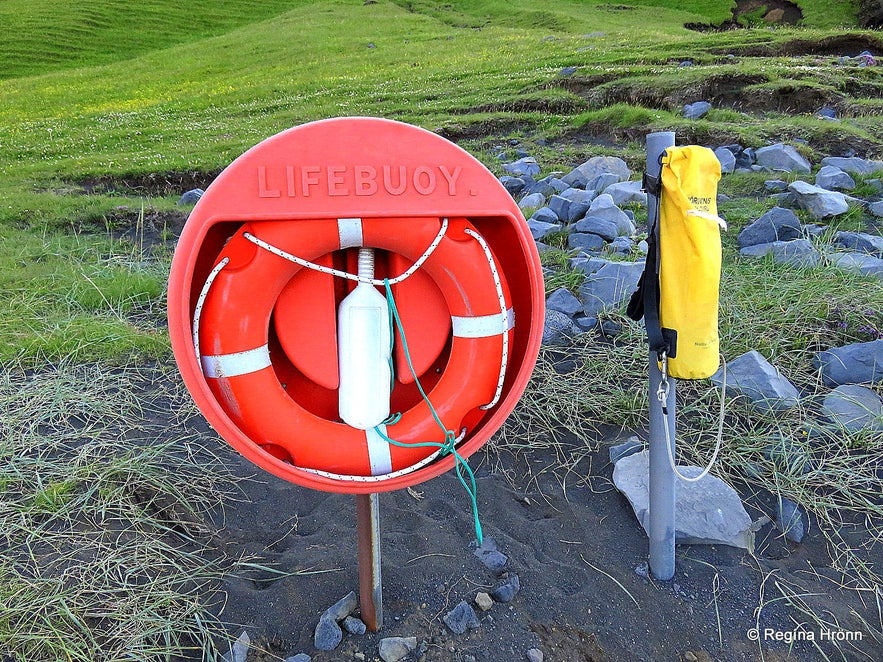
The life buoy at Reynisfjara beach
They claim to be very strong swimmers and that this sea could not harm them, sic!
This is so very sad, and we don't want this to happen to anybody else.
So please stay safe if you visit this beach. The waves come unexpectedly and drag you into the ice-cold sea if you are not on your guard.
Reynisfjara in beautiful weather in 2025
I got permission from Mirella-Marie Katarina Radman to publish her story in my travel blog, but she shared her experience at Reynisfjara in a comment on my travel blog when we posted it on the Facebook page of Guide to Iceland. It is a must-read:
"I profess I was one of those stupid people who ran out to the sea with great delight. In June 2016, on a very windy but beautiful day, I visited this beach with an Icelandic Photographer and Tour Leader friend, Thorsten Henn.
If it were not for his repeated and angry warnings, I tell you I would have rushed into the sea for a dip. In fact, I tried the first chance I got.
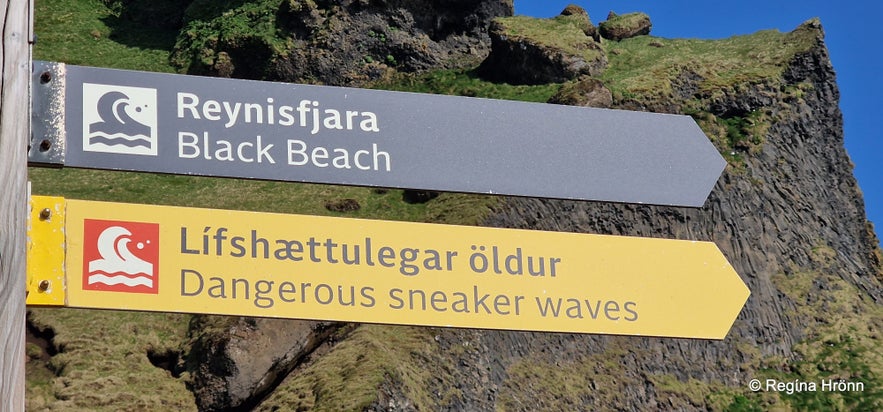 Warning signs - dangerous sneaker waves
The waves were not even high that day.
Thorsten was very angry with me, as he had warned me numerous times while in the car not to stray too far from him,South Iceland and that the weather conditions change pretty quickly.
Of course, I did not listen to him. When we arrived at the beach, we separated for a few minutes as he went to the only hospitality cafe on the beach.
Once I was out of his sight, I made a bold dash for the water. 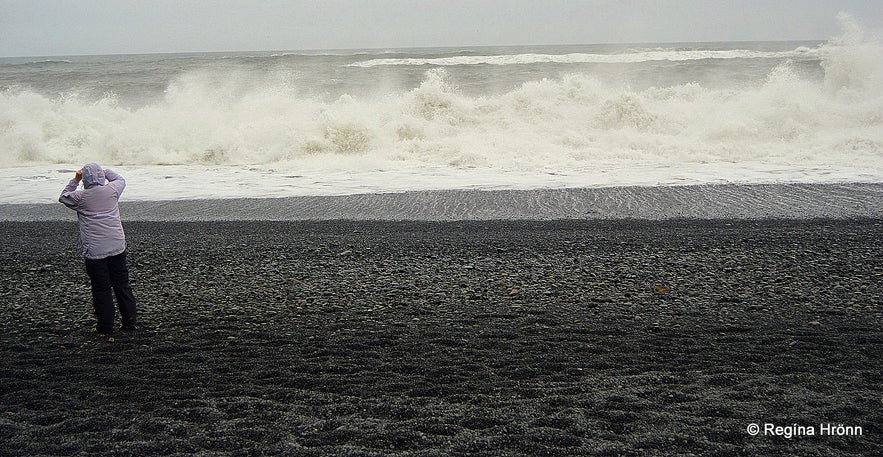
Reynisfjara beach
I was about three or five metres from the shoreline -- shoes and socks off -- when I was grabbed by another Icelandic tour guide leader who scolded me for my stupidity and reiterated that I was endangering my life.
I had run past this other tour guide who yelled after me: "Where the hell do you think you are going (in English)?" and had completely ignored him, as I was obsessed with the idea of swimming in the sea and seeing a puffin up close.
The tour guides all know one another, and I got a royal, well-deserved telling-off. Back at the cafe, I was terrified of telling Thorsten, but figured I had better tell him before he heard from others. Of course, he exploded on me, and the day was ruined. I deserved every expletive directed at me.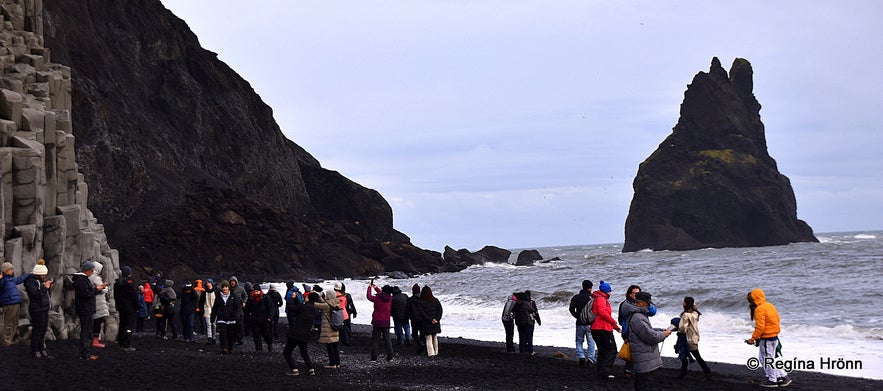
Crowds at Reynisfjara beach
During the car ride back to Reykjavik, I apologized, and he did as well. He told me he was angry because, with 10+ years of experience leading tours across Iceland, people of all shapes and sizes think they are stronger than the elements and Mother Nature, until catastrophe strikes.
I argued I was from Croatia and was a very strong swimmer.
He told me: "No, Katarina. This is not the Adriatic Sea but the North Atlantic Ocean, for God's sake!
You are endangering not just your own life but that of Iceland's rescue crews as well!"
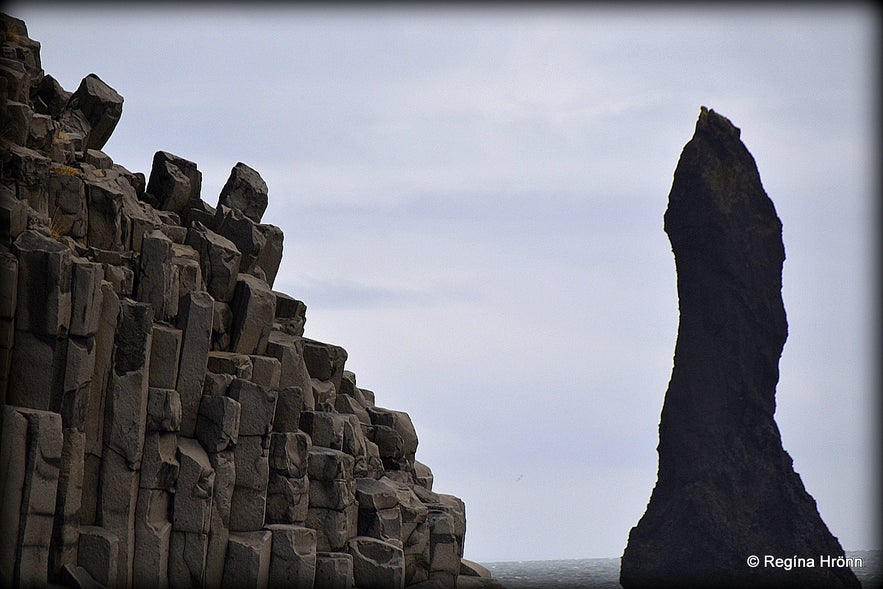
Basalt columns and sea stacks at Reynisfjara beach
Of course, he was right, and of course, I was impulsive and stupid. Looking back, I shudder to think what would have happened if the other tour guide had not picked me up and plucked me away from harm.
Now, whenever I visit Iceland, I am thoroughly conscientious and respectful of all the do's and don'ts.
Please, dear tourists, visit and enjoy this beautiful Wonderland of a country, but respect the signs as a courtesy and to help ensure that Mother Nature stays untouched by our human footprint and selfish selfie-obsessed tactics. If you don't, it's just too high a price to pay".
Thank you for your story, Mirella-Marie. It is a very important input to our endeavor to save lives on Reynisfjara beach.
Here is another story: It’s been a year since I almost died
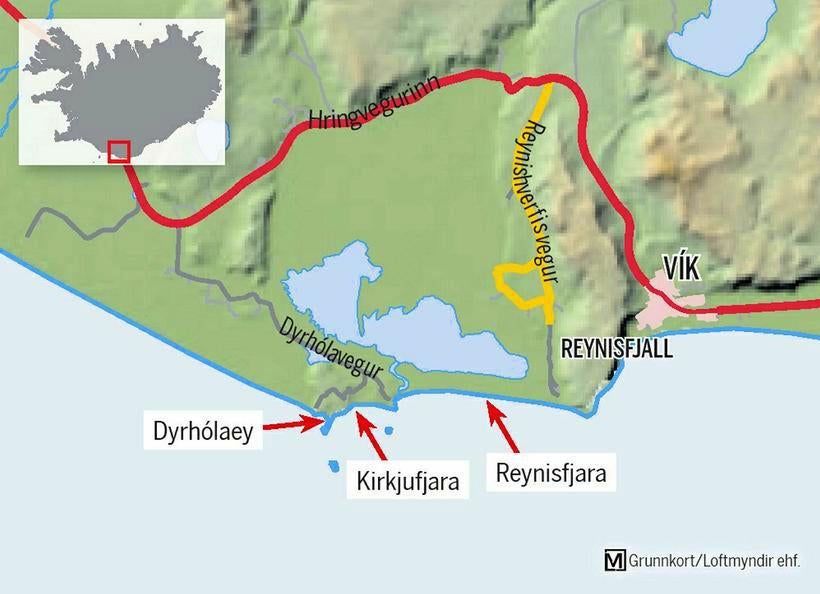
A map of Reynisfjara beach
Over the years, I have taken notes on fatal accidents and close calls at Reynisfjara and Kirkjufjara for an upcoming travel blog about the dangers on these beaches, which is why I had the exact dates written down.
But it was not until the German lady drowned that I watched a really frightful video shot by Þórir Kjartansson, one of the previous owners of Hjörleifshöfði, and realized it was time to write this long-overdue travel blog.
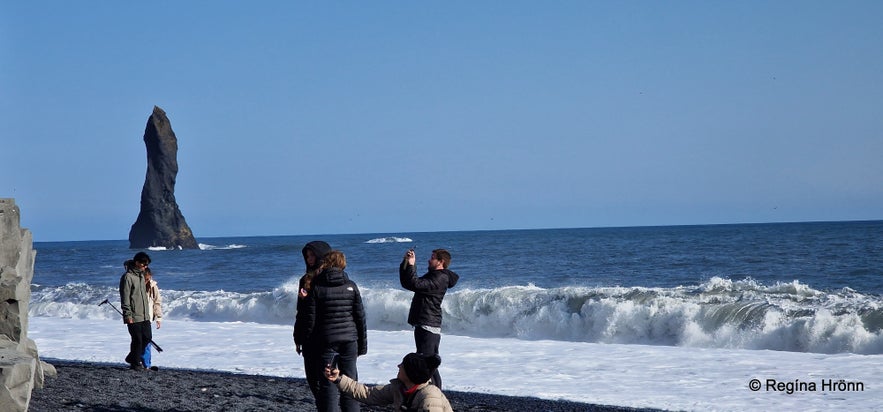 Reynisfjara beach on a sunny day in 2025
Þórir's short video completely shocked me.
The video shows an Asian family with their small children at Kirkjufjara beach, taking photos of one of their children.
The 6-year-old child is so close to the treacherous waves, which were extremely dangerous that day, that I wonder how the parents could have thought this was safe, even if they were unaware of the danger at this particular beach.
Þórir shot the video from a distance, but when he saw a wave reach the child, he immediately ran to its aid!
When he explained to the parents that their child was about to be sucked into the sea and there was no rescue after that, they got a shock.
That the parents got a shock made me realize that they had no idea that their child was in any immediate danger!
To us Icelanders watching the video, it was so evident that it made me wonder what the difference is between us Icelanders and the foreign tourists in question.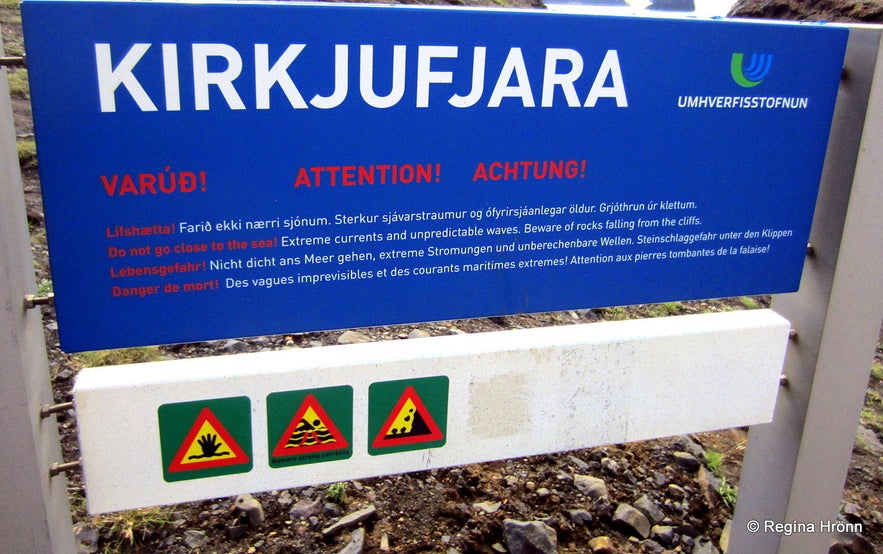
The Kirkjufjara sign with warnings
We live here and are taught from a very early age about the many dangers in Iceland. Do these people come from the city and have not seen the sea before?
Or do they know the sea but are not aware of how dangerous it can be here in Iceland?
Note that I am just trying to find out what is happening on this beach so that we can prevent more deaths here. Had they read the warning signs and known about the dangerous waves here?
Or did they miss the signs and have no idea that they were in danger? As on this very same day, the German lady drowned on this beach.
The video above was taken from Lágey of Kirkjufjara beach in the fall of 2021. The beach is now closed, and nobody goes there anymore.
People of all nationalities seem to put themselves in danger on this beach, so it has nothing to do with where they are from, but rather human nature. So we need to find out what we have to do to prevent this from happening.
I think big, very graphic signs would be helpful. Or crosses for every death at the beach. If I were to go to a beach and see photos of people in trouble in the waves and photos of people who have drowned on the beach, I would think twice before putting myself in danger there.
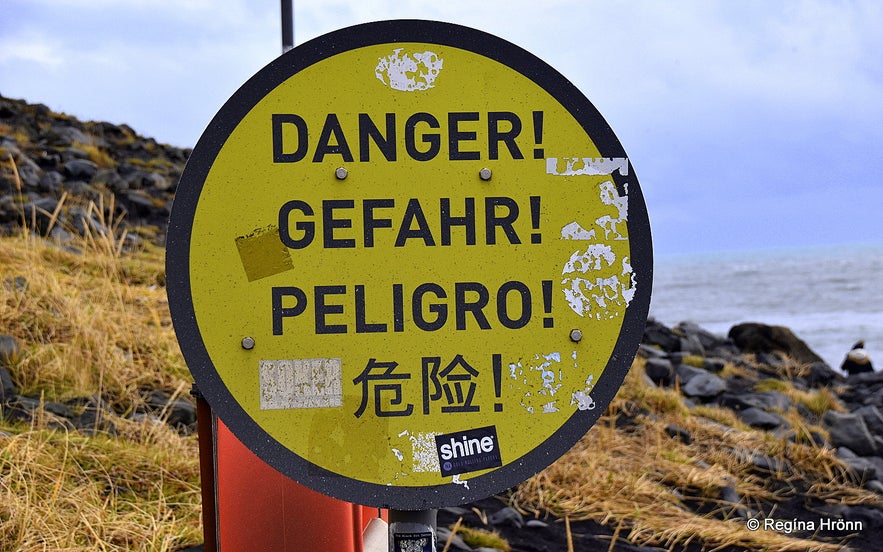
One of the danger signs - and the stickers again??
Jónína Sólborg Þórisdóttir, the daughter of Þórir Kjartansson, who shot the video above, allowed me to add to my travel blog her explanation of why the waves are so dangerous here on this particular beach.
The father and daughter are so very knowledgeable about this area, as they were born and raised here:
"The continental shelf at Reynisfjara and Kirkjufjara beaches is very steep and close to the shore, so the tidal waves only break maybe once or twice when they're coming up to the shore (which creates these very unexpected, big, and sudden waves).
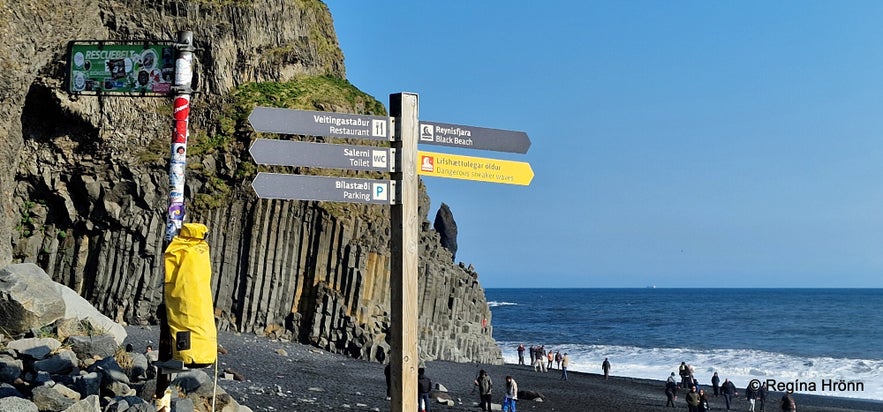 Reynisfjara beach
This is not the case at Víkurfjara, so the beach in Vík is entirely different and not nearly as dangerous as the waves break several times before they reach the shore.
But the other day, when the German woman passed away, the wind was sort of suddenly turning from southern winds to northern winds, and that, in combination with the steep shelf, probably contributed greatly to how the tidal waves behaved on that particular day".
Thank you very much for your input, Jónína :)
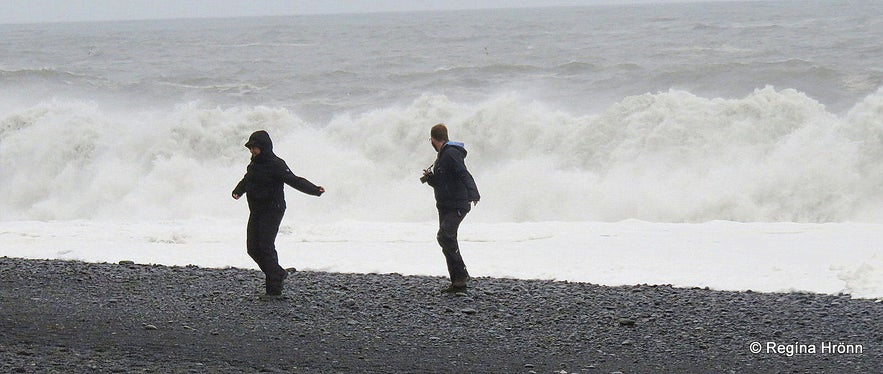
Reynisfjara beach
Tour guides warn their group about the dangers, but when the group arrives at the beach, the tourists seem to scatter and forget the warnings.
If you visit Reynisfjara beach on a guided tour, stick with your tour guide and the other members of yourSouth Iceland group.
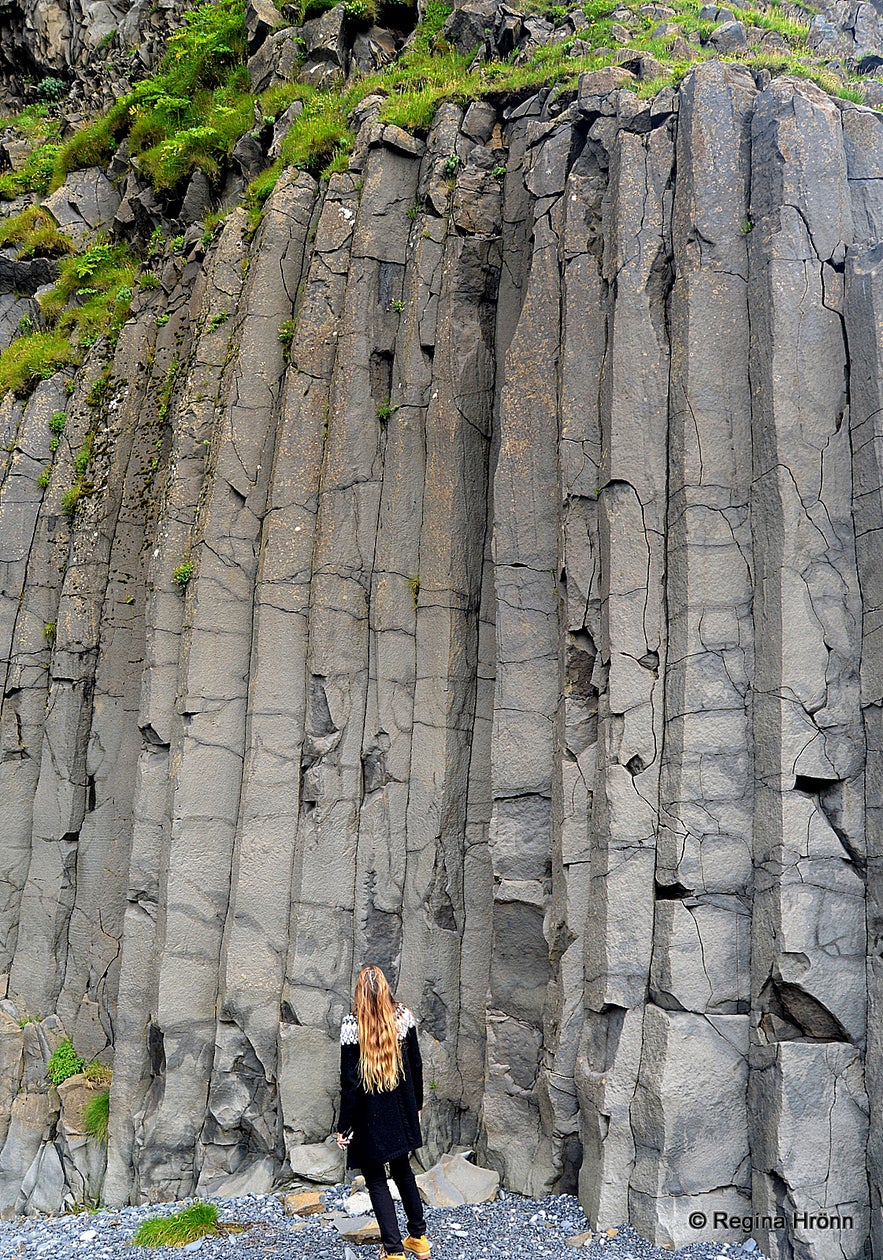
There are many photo opportunities at Reynisfjara - beware of the waves while taking photos
We thought people were behaving recklessly to get the right photo, but now I realize they don't know about the danger, or don't realize they are in grave danger.
They are not to blame, so we locals have to do something to stop them from harming themselves.
A video on sneaker waves was pointed out to me, which I am going to add here before I finish up. This video was shot by Steve Raplee in Coos Bay, Oregon, USA.
It is advisable to read these news articles on Mbl.is before visiting Reynisfjara and Kirkjufjara beaches:
Reckless behaviour to get the right photo.
Reynisfjara beach death: Woman was pulled down by a wave and sucked along in the undertow.
Beach closed at Kirkjufjara following yesterday's tragedy
The woman who defied death with a smile on her face (in Icelandic, but the article contains a series of photos depicting the dangers of the waves)
... and many, many more news articles, where you will see photos of people getting caught in these dangerous waves and get more information on Reynisfjara and Kirkjufjara beaches.
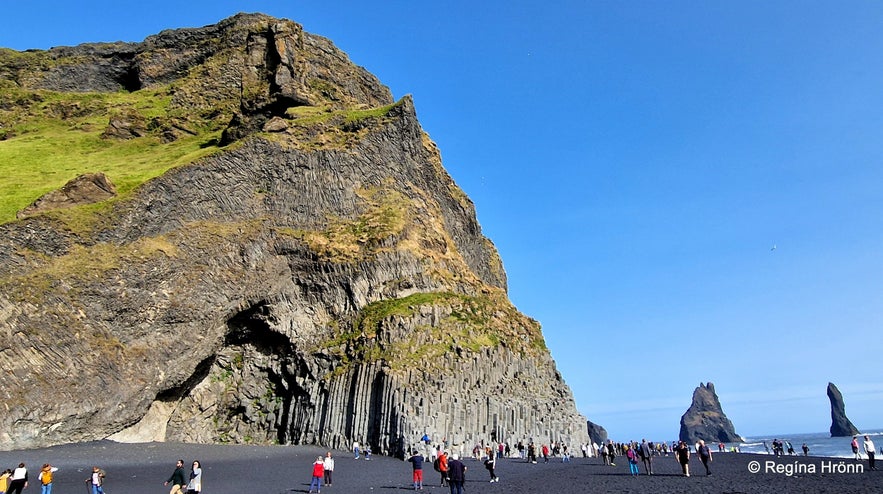 A beautiful sunny day at Reynisfjara in 2023
Kirkjufjara was closed after the death on the beach in 2022, but some people crossed the police banner to visit the beach!! This is so incomprehensible, and we are at a loss about what to do to keep our visitors safe :(
On the 19th and 20th of August 2019, a large landslide fell from Mt. Reynisfjall and onto the beach below.
Reynisfjara was closed by a police banner, and people seemed to respect that closure, as they could see the massive landslide with their own eyes and understand how dangerous it would be to cross the banner.
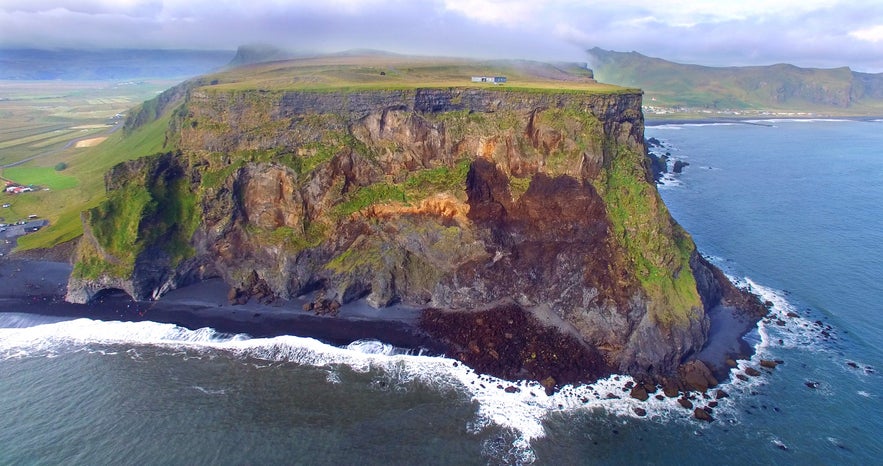
Photo by one of the landowners, Þórir Kjartansson, which he most graciously allowed me to use to warn visitors about the immediate danger
That was only at the beginning, though, and the police and landowners were frustrated to see tourists crossing the police banner, and standing in the danger zone beneath the landslide.
More landslides, with tonnes of rocks and mud, can be expected, so please stay away and stay safe! NOW THE EASTERN PART OF THE REYNISFJARA BEACH HAS BEEN CLOSED OFF PERMANENTLY.
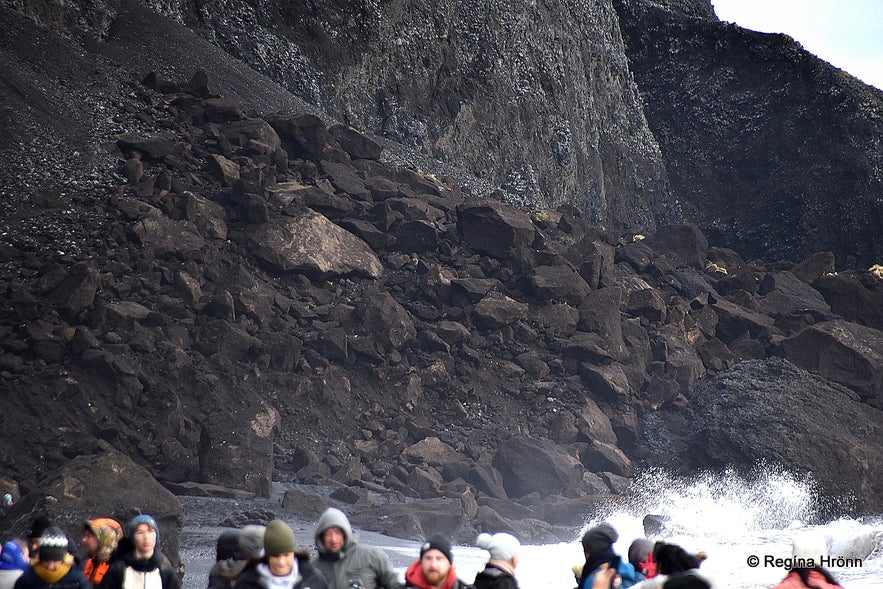
From my visit in October 2019, you can see how massive the landslide is
You can read about the landslide in the English version of Morgunblaðið newspaper - Iceland Monitor: Landslide on Reynisfjara beach.
Now, the latest video I watched from Reynisfjara is scary, to say the least. In November 2019, during bad weather, the waves reached very high!
https://www.facebook.com/thorolfurs/posts/10157696933817937
The video was posted on Facebook by an Icelandic tour guide, and one of his passengers filmed people being caught by the waves.
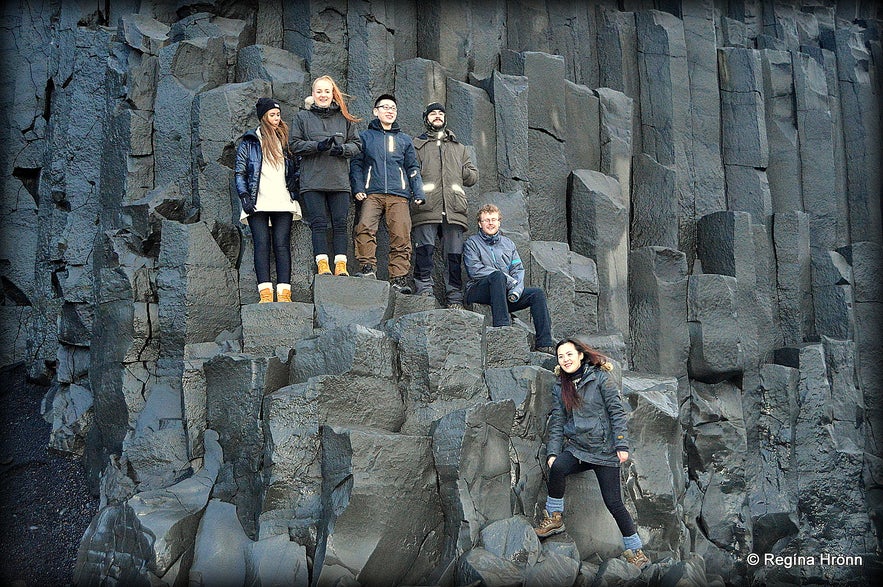
The staff at the office of Guide to Iceland visited the beach on a rainy day in January 2016
Again, in February 2020, two young children were saved by a tour guide when a big wave reached them, slammed them down, and was about to suck them out to sea with their faces underwater!
Their parents stood petrified, so the tour guide, knowing what was about to happen, risked his own life by jumping into the waves to save the children.
See also: Risk Assessed on Reynisfjara: Children Rescued Last Weekend on Iceland Monitor.
Do not let this happen to your kids, and hold on to them while visiting this beach!!
And in May 2022, a Spanish tourist almost drowned when he deliberately went swimming in the dangerous waves by Reynisfjara.
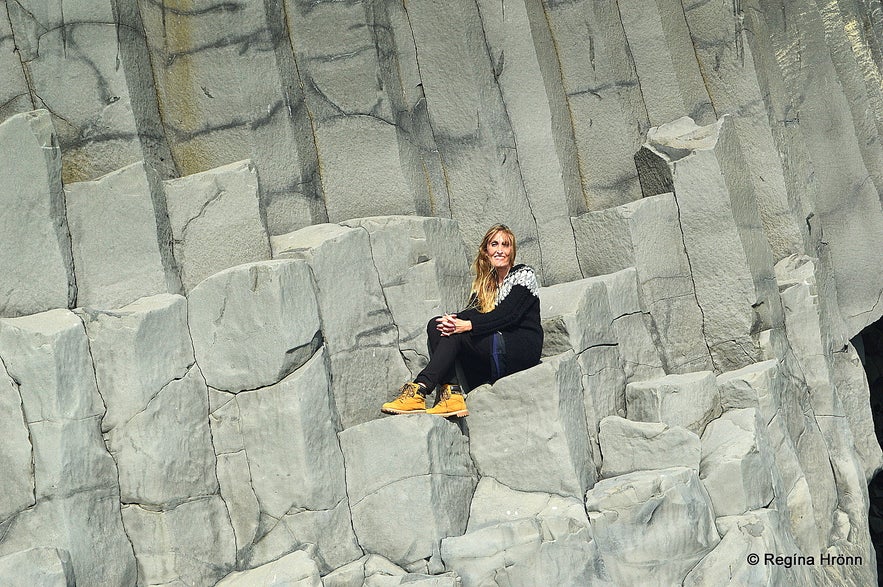
Also, may I ask you not to climb any higher on the basalt columns than I do here? I am sitting low, but it still makes for a good photo
Before visiting Iceland, please also read the safety instructions on safetravel.is - they can save your life in Iceland. And remember that even though Reynisfjara beach is so beautiful with all the basalt columns and Reynisdrangar pillars of rock, it is one of the most dangerous beaches in Iceland.
An essential read before you visit Iceland: Things That Can Kill You in Iceland
Here you can find a selection of guided tours to Reynisfjara black sand beach.
Please stay safe in my country!

Hi, my name is Regína Hrönn, and I was born and raised here in Iceland.