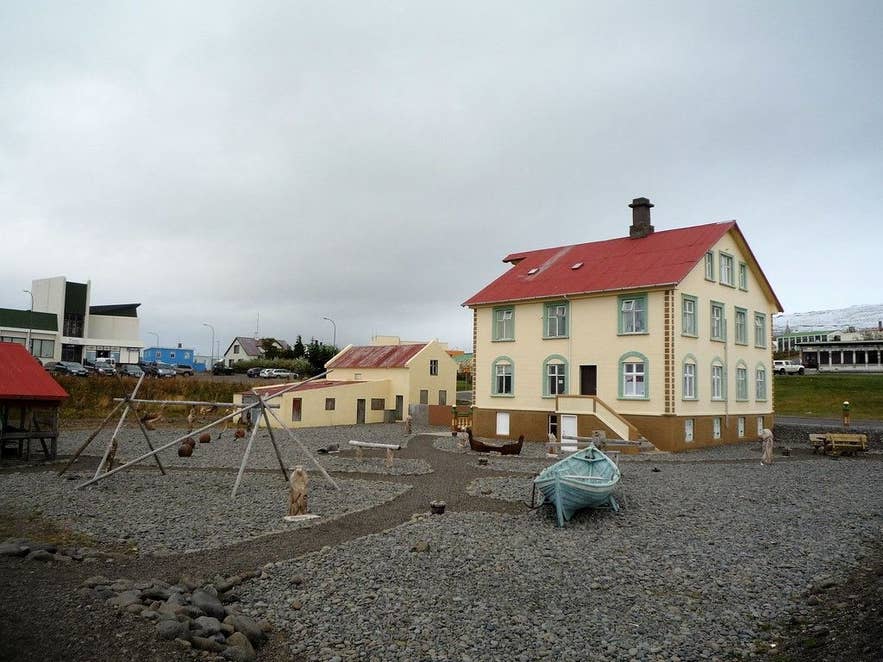
Hvammstangi harbour quarter. Photo: Jason Eppink, CC BY 2.0
Bardúsa Trade Museum (Icelandic: Verslunarminjasafnið Bardúsa, "Bardúsa trade-heritage museum") is a small museum and handicraft gallery in Hvammstangi, the main village of Húnaþing vestra in North-West Iceland.
It occupies the remains of an early-20th-century merchant's shop at Brekkugata 4, a short walk from the harbour and the Icelandic Seal Center, and it tells the story of how a bare spit of land on Miðfjörður became the trading post for the surrounding farming district.
Bardúsa is not a large institution: expect a preserved shop interior, old goods and photographs, and a gallery selling work by local craftspeople. The origin of the name Bardúsa is not explained in the sources we found.
Key Takeaways About Verslunarminjasafnið Bardúsa
- Small trade-heritage museum and handicraft gallery in an early-20th-century merchant's shop, Brekkugata 4, Hvammstangi
- Open 1 June–1 September (weekdays 10–18, weekends 11–17, per Ferðalag.is); by arrangement otherwise
- 100 m from the Icelandic Seal Center and tourist office; KIDKA wool outlet nearby
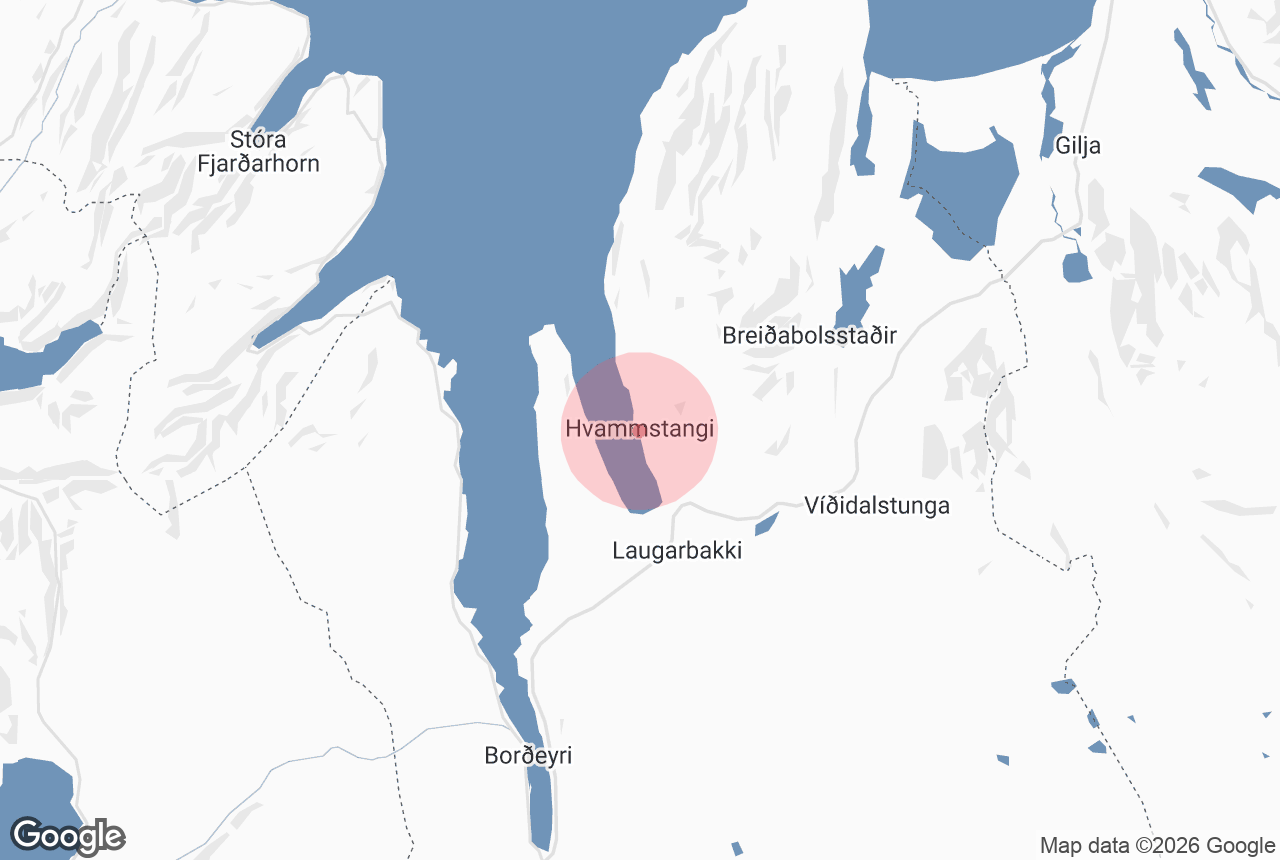
- 7 km off the Ring Road on Road 72; about 195–200 km / 2 h 50 min from Reykjavík, paved all the way
- Hvammstangi: trading post since 1846, licensed 1895, about 600 residents

Why visit Bardúsa Trade Museum
Hvammstangi exists because of trade. Merchants were calling at the spit from 1846, the village was formally licensed as a trading place in 1895, and the first dwelling house went up only in 1900.
Everything a farmer in Miðfjörður, Vatnsnes or Víðidalur needed for a year arrived by sea and passed over a shop counter here, and wool, meat and fish went the other way.
Bardúsa Trade Museum preserves what is left of that world: the fittings and goods of a general store from the early 1900s, in the building where the trading happened.
The museum is run locally and shares its building with Gallerí Bardúsa, an outlet for handicrafts made in the district: woollens, ceramics, bone and wool animal figures, candles, jewellery and felted bags from around twenty local makers.
It is a good place to buy something that was actually made in Húnaþing rather than imported.
It pairs well with the Icelandic Seal Center around the corner at Strandgata 1, which opened in 2006 and houses the regional tourist information office, and with the KIDKA wool factory shop, the outlet of one of Iceland's largest knitting factories.
Together they make Hvammstangi a worthwhile stop rather than just a fuel halt on the way to the seal colonies of Vatnsnes.
For context, walk up to Kirkjuhvammur above the village, where a timber church from 1882 stands on a farm recorded as an assembly place in 1406.
Farming there ended in 1947, the farm buildings were levelled around 1960, and the church, in the care of the National Museum since 1976, restored 1992–97 and closed to the public, is the only old building left.
How to get to Bardúsa Trade Museum

Hvammstangi and its harbour from the air. Photo: Eysteinn Guðni Guðnason, CC BY-SA 4.0
Hvammstangi lies about 7 km north of the Ring Road (Route 1) on Road 72 (Hvammstangavegur), roughly 195–200 km and about 2 hours 50 minutes from Reykjavík, and a similar distance from Akureyri. Turn off at the junction near Laugarbakki and Staðarskáli.
In the village, follow signs toward the harbour; Brekkugata runs down toward the shore and the museum is at number 4, within 100 m of the Seal Center. There is parking on the street and by the harbour.
The village has a hotel, campsite, swimming pool, fuel, restaurant, bank and health centre, and the roads are paved all the way, so no special vehicle is needed.
Best time to visit
Bardúsa Trade Museum is a summer museum. According to the Ferðalag.is listing it is open from 1 June to 1 September, weekdays 10:00–18:00 and weekends 11:00–17:00, and by arrangement outside the season.
Hours can change from year to year, so check the museum's Facebook page (Verslunarminjasafn Bardúsa Hvammstanga) or phone before making a detour. The Seal Center keeps daily hours 10:00–17:00 from 15 May to 15 September.
June and July are also the best months for the seal-watching trips and the Vatnsnes drive that most visitors combine with Hvammstangi.
Safety and practical tips
- Allow 20–40 minutes for the museum and gallery. Admission details are not published online; ask on arrival.
- The museum is in an old building; step-free access is not guaranteed.
- Hvammstangi is the last place with a full range of services before the largely gravel road around Vatnsnes (Road 711), so fill up and use the facilities here.
- Winter visitors should not expect the museum to be open without a prior call; the Seal Center and the swimming pool are the year-round options.
Nearby attractions
- Hvammstangi – the village itself, 0.1 km
- Icelandic Seal Center – seal exhibition and tourist information, 0.1 km
- KIDKA Wool Factory Shop – textile factory outlet, 0.5 km
- Laugarbakki – geothermal village at the Ring Road junction, 8 km
- Borgarvirki – basalt fortress on the ridge east of the fjord, 18 km
- Kolugljúfur Canyon – waterfalls in a gorge in Víðidalur, 19 km
- Illugastaðir seal watching – seal colony on the west coast of Vatnsnes, 24 km
- Hvítserkur Rock – basalt sea stack, 27 km as the crow flies (about 44 km by road)
Tours that visit Bardúsa Trade Museum
- 7-Day Express Vacation Package | The Ring Road of Iceland & Reykjavik – a guided package whose fifth day, on the way back to Reykjavík, visits the seal colonies of the Vatnsnes peninsula and Hvammstangi, which the tour describes as home to the Seal Center and Bardúsa, then Hvítserkur and Kolugljúfur.