Wake up surrounded by nature and discover why camping in Iceland is one of the best ways to explore the country. Read on to find out how easy it can be to camp in Iceland, where to rent gear, what rules to look out for, and the best places to pitch your tent.
Camping in Iceland is one of the best ways to experience the country's dramatic landscapes. You don't need years of outdoor experience to enjoy camping here. You can choose from camping tours and equipment rentals, or learn the essentials of driving in Iceland and enjoy the flexibility of renting a campervan to combine transportation and accommodation in one.
Why You Can Trust Our Content
Guide to Iceland is the most trusted travel platform in Iceland, helping millions of visitors each year. All our content is written and reviewed by local experts who are deeply familiar with Iceland. You can count on us for accurate, up-to-date, and trustworthy travel advice.
From black sand beaches and waterfalls to volcanic highlands and peaceful fjords, camping lets you stay closer to nature while exploring places many visitors only see for a few hours. Whether you're planning weekend breaks or prefer self-drive trips, campsites are never far from the country's top attractions.
To help ensure this guide is as practical as possible, we also spoke with Arnar Haukur Rúnarsson, a former travel guide and current staff member of the Icelandic Touring Association (Ferðafélag Íslands). He shares expert advice on camping safely in Iceland, choosing the right gear, and preparing for the country's ever-changing weather.
This guide covers everything you need to know about camping in Iceland, including the latest camping regulations, the best Iceland campsites, costs, essential gear, and safety tips, so you can plan your adventure with confidence.
Camping in Iceland at a Glance
-
Peak Camping Season: Summer (June through August), with the warmest temperatures, nearly 24-hour daylight, and the best camping conditions.
-
Sunniest Time To Camp: Late May is sunniest in the south and west, and June is sunniest in the north, based on our 26-year sunshine study.
-
Driest Time To Camp: June and July give campers the best odds of a dry week in every region, based on our study of the rainiest month in Iceland.
-
Frost-Free Months: July and August are the only months without frost anywhere in Iceland, according to our 26-year temperature study.
-
Top Campsites in Iceland: Thakgil, Svinafell, Asbyrgi, Hellissandur, and Hallormsstadaskogur are among the country's most popular camping destinations.
-
Wild Camping: Heavily restricted.
-
Camping Costs: Typically between 1,500 and 2,500 ISK (12 and 20 USD) per person per night, with extra fees sometimes applied for showers or electricity.
-
Iceland Camping Card: Grants access to participating campsites and can provide significant savings for longer trips.
-
Camping Facilities: Many campsites provide toilets, showers, kitchens, laundry facilities, electricity hookups, and Wi-Fi.
-
Getting Around: Rental motorhomes and campervans in Iceland offer the most flexibility.
-
Essential Camping Gear: Waterproof outer layers, insulated clothing, a warm sleeping bag, and a sturdy tent.
Can You Camp in Iceland?
Short answer: yes, you can camp in Iceland! Camping, however, is allowed only in designated campsites in almost all cases.
As tourism has grown, the rules have tightened to protect the country's fragile nature, so it pays to know exactly where you can and can't pitch a tent or park a campervan before you set off.
The official guidance is published by the Environment Agency of Iceland, and the key points are below.
Wild Camping in Iceland
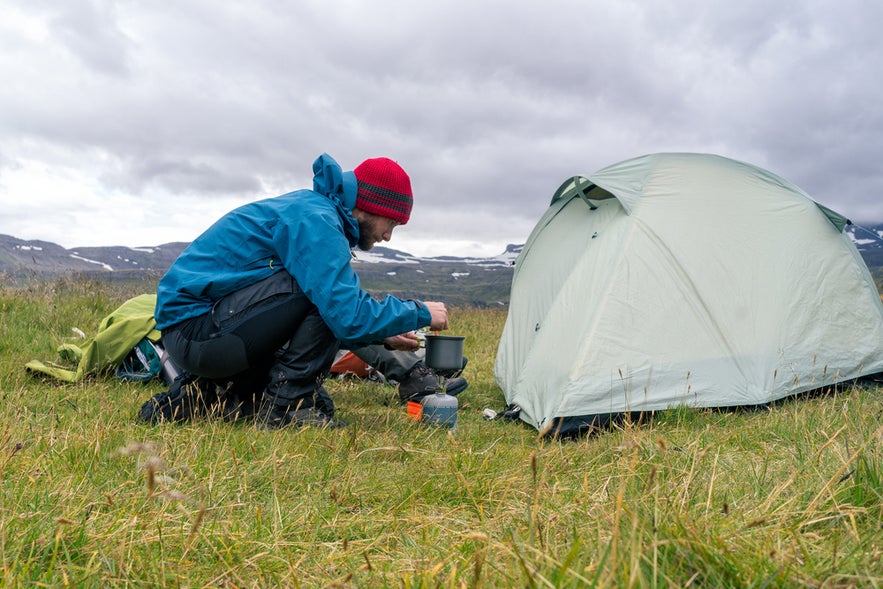
Free or "wild" camping in Iceland is heavily restricted.
According to the Environment Agency of Iceland, you may pitch a maximum of three traditional tents for a single night on uncultivated, non-private land that is well away from any farm, residence, or organized campsite, unless the landowner has posted a notice prohibiting camping.
The moment you want to stay longer, use more than three tents, or camp near habitation or cultivated land, you must ask the landowner's permission.
For most travelers following the Ring Road or the Golden Circle, the simplest and safest choice is always a registered campsite.
Camping in Designated Iceland Campsites
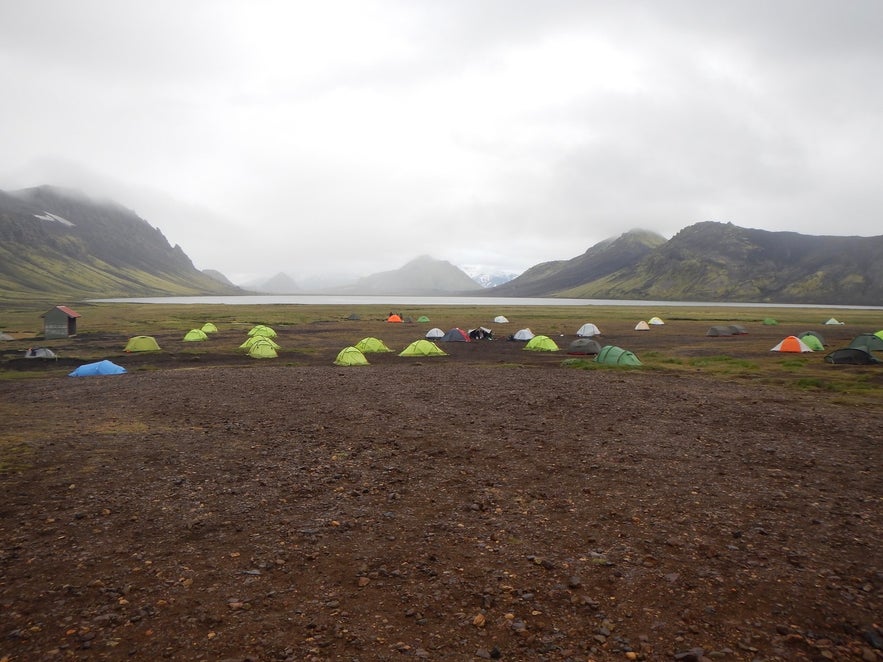
Iceland has roughly 170 registered campsites, ranging from basic highland fields to well-equipped sites with showers, kitchens, electricity, and laundry.
Staying at a designated site is not only the legal default; it also gives you reliable facilities, safer ground, and easy access to nearby hikes and attractions. We cover where to find them in the Where to Camp in Iceland section below.
Camping in Icelandic National Parks
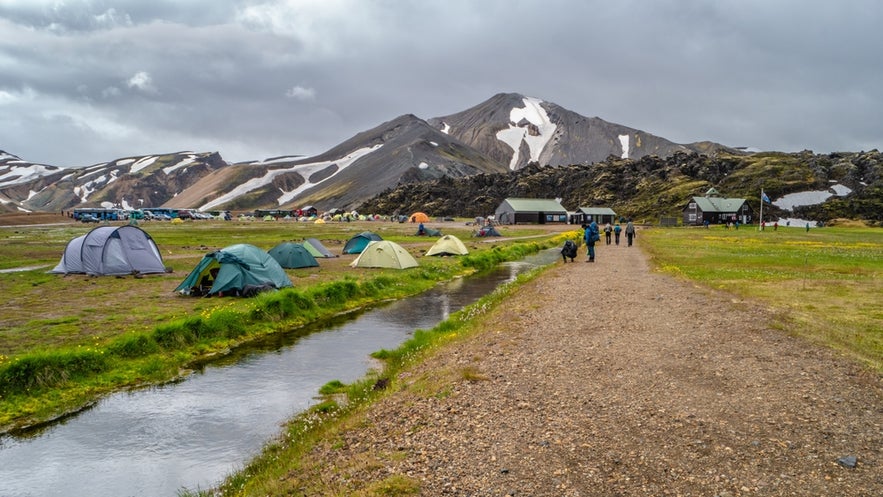
Inside Iceland's national parks, Thingvellir, Vatnajokull, and Snaefellsjokull, camping is permitted only within marked camping areas, with no exceptions.
Off-road driving is strictly forbidden, and Leave No Trace principles apply everywhere. This means you have to stay on trails and take care never to disturb the slow-growing moss.
Camping is also banned outside designated sites at many popular landmarks, including Dimmuborgir, Dyrholaey, Hverfjall Volcano, Myvatn, and Jokulsargljufur Canyon.
Campervans and Motorhomes in Iceland
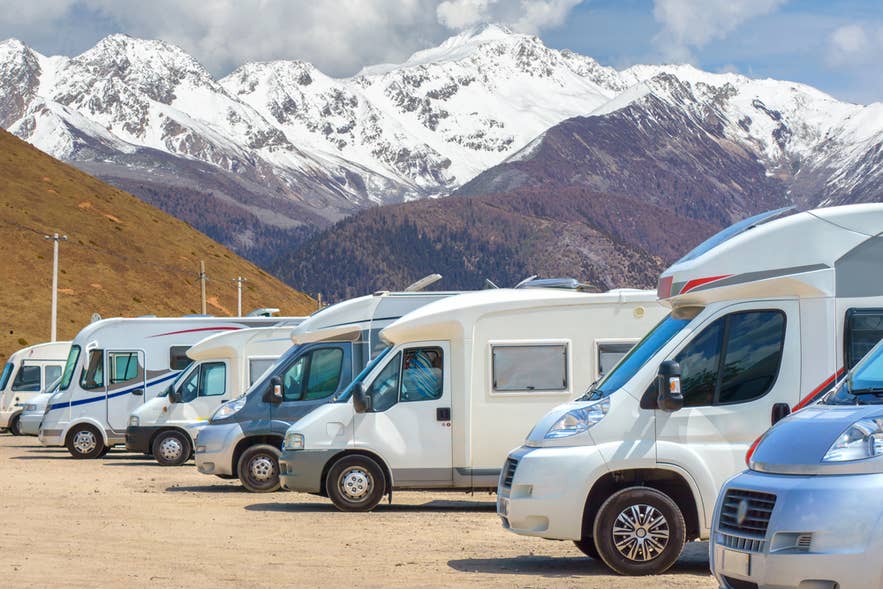
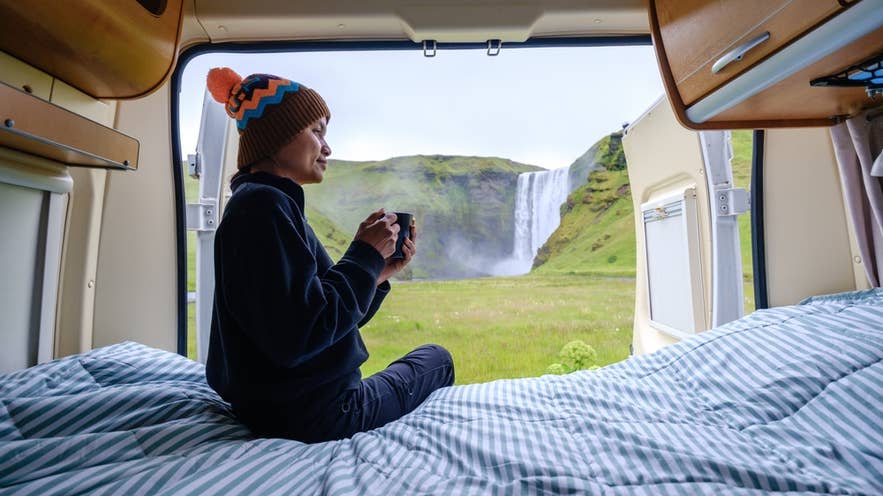 Sleeping in a campervan, motorhome, or car is allowed only at designated campsites. Parking overnight in a lay-by, car park, or on the side of the road to sleep is not permitted, regardless of the vehicle.
Driving off marked roads or F-roads is a criminal offense that can carry fines of up to 500,000 ISK, so plan each night around a real campsite. If a campervan suits your trip better than a tent, a wide range of campervans and motorhome rentals is available.
Remember, though, that while tents have a narrow one-night exception on remote uncultivated land, vehicles never do. Campervans and cars must always overnight at a campsite.
For more on conditions that shape where and when you camp, read about the weather and temperatures in Iceland and our tips for backpacking in Iceland.
Where To Camp in Iceland
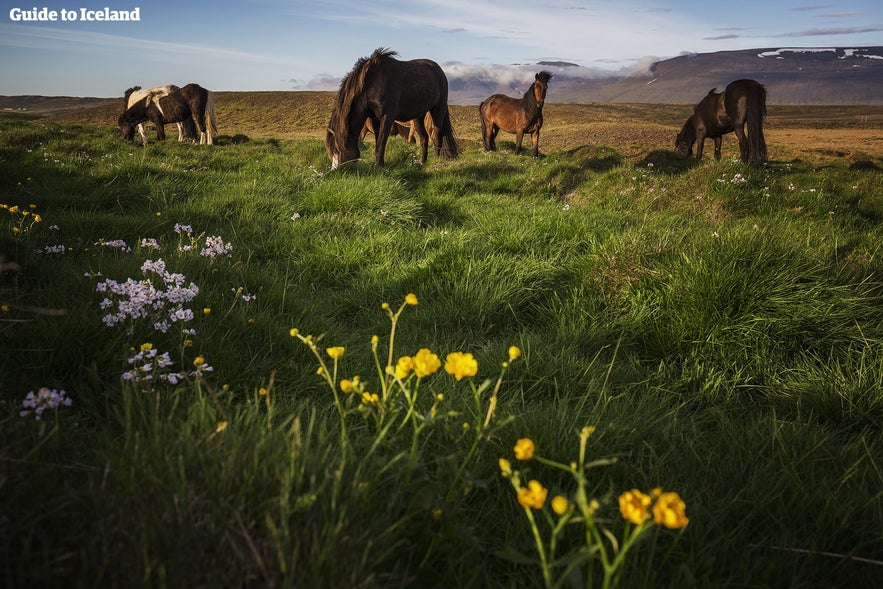
With around 170 registered campsites spread across Iceland, you're rarely far from somewhere to spend the night. Below are some of the most rewarding individual campsites, followed by a region-by-region overview so you can plan a route that matches your itinerary.
Best Campsites in Iceland
These campsites stand out for their setting, facilities, and access to nearby hikes and attractions.
Thakgil Campsite (South Iceland)
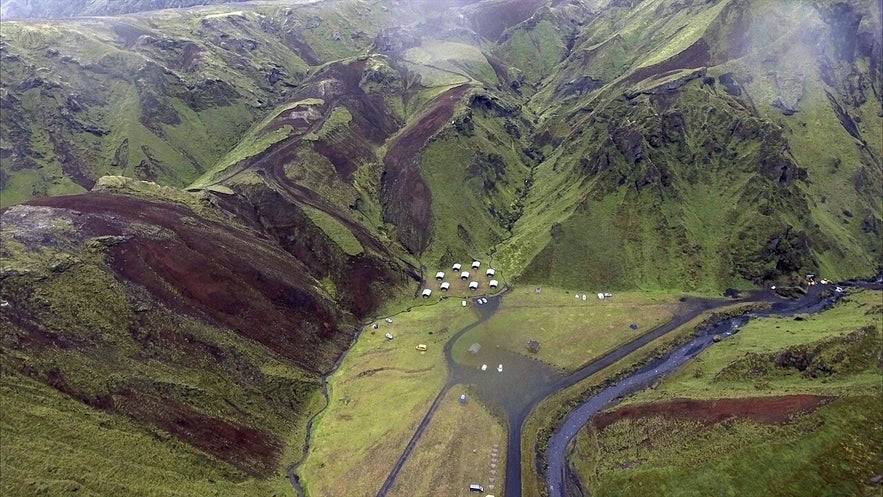
Located about 13 miles (21 kilometers) inland from Vik, Thakgil campsite offers plenty of space, stunning scenery, and access to several wonderful hikes.
Like many campsites in Iceland, Thakgil features well-maintained facilities that can make your stay even more comfortable. The campsite has self-service charcoal grills, picnic tables, showers, bathrooms, and access to electricity.
Thakgil is perfect for all ages. With access to attractions like the Remundargil Canyon, Maelifell Volcano, and Austurafrettur Trail, advanced hikers will have plenty to keep them busy. Thakgil also offers a playground at the campsite, making it perfect for families, too.
The road to get to the campsite can be rough, so bring a well-equipped 4x4 rental vehicle and take the journey slowly.
-
Thakgil camping fee per night:
-
3,000 ISK (around 24 USD) per person for 12 years and older (12-16 years old pay for one night only)
-
-
Thakgil Campsite open season:
-
Summer, from June to mid-September
-
-
Must-Try Activities Near Thakgil Campsite:
-
Horse Riding Tour on the Black Sand Beach from Vik: Explore one of Iceland's iconic South Coast black sand beaches on an unforgettable one-hour horseback riding tour.
-
The Katla Ice Cave Tour: Experience the magic of ice caving in Iceland with this hassle-free and thrilling way to explore Iceland's incredible glaciers.
-
Svinafell Campsite (South Iceland)
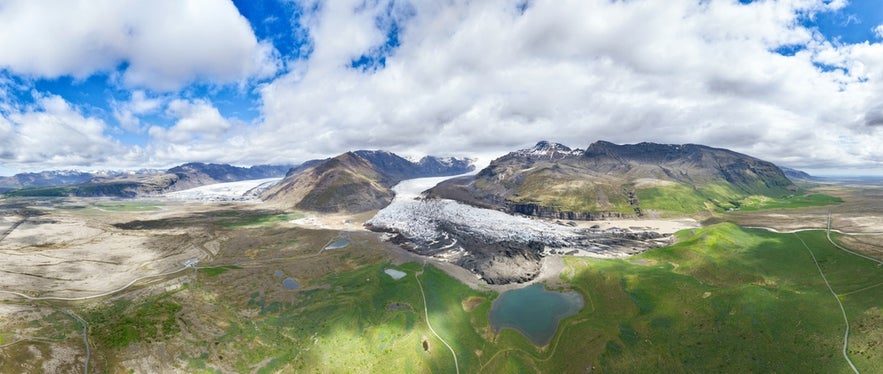
Located just off the Ring Road in Southeast Iceland, Svinafell campsite gives travelers amazing views of mountains and glaciers. It serves as the perfect base for exploring nearby attractions like Skaftafell Nature Reserve and Vatnajokull Glacier.
Svinafell provides several areas for tent camping. It also offers six heated cabins, each holding up to four people in bunk beds. Additional sleeping bag space is offered in rooms holding up to three people, with shared bathrooms and kitchen facilities.
Guests all share a service center, called Skali, which has common facilities for cooking, dining, showers, laundry, and toilets.
-
Svinafell camping fee per night:
-
2,300 ISK (around 18 USD) per person
-
Free for 13 years and below
-
-
Svinafell Campsite open season:
-
Tent camping: Summer, from May through September
-
Sleeping bag rooms: Available year-round except for certain holidays
-
-
Must-Try Activities Near Svinafell Campsite:
-
Ice Cave Tour in Vatnajokull Glacier: Explore one of Iceland's most amazing natural wonders on this adventure tour into the stunning Crystal Ice Cave within Vatnajokull National Park, starting from the Jokulsarlon Glacier Lagoon.
-
Beginner-Friendly Glacier Walk in Skaftafell on Vatnajokull Glacier: Reach new peaks with a guided tour that will take you hiking and climbing through the Skaftafell Nature Reserve.
-
Asbyrgi Campsite (North Iceland)
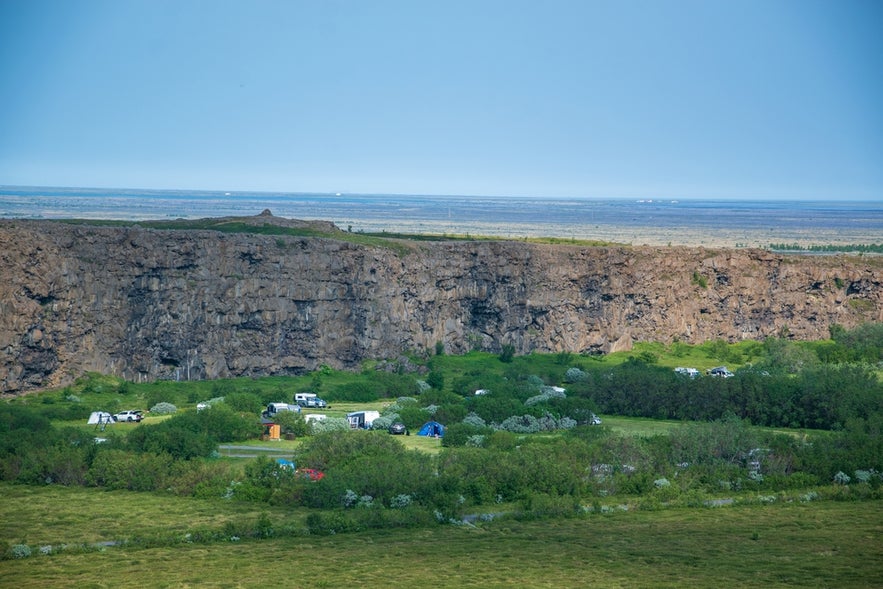
Located in the horseshoe-shaped Asbyrgi Canyon in North Iceland, this campsite offers a peaceful setting of lush plant life and towering cliffs. It's a great place to stay and explore the Asbyrgi region and the Jokulsargljufur Canyon, home to Dettifoss, Hafragilsfoss, and Selfoss waterfalls.
The campsite in Asbyrgi features electrical access, showers and restrooms, washing machines, and a playground. Tents, trailer tents, and caravans are all welcome here.
From Asbyrgi, you can access trails of any difficulty, from the gentle Botnstjorn Trail to the multi-day Canyon Trail that leads to the Dettifoss Waterfall.
-
Asbyrgi camping fee per night:
-
2,800 ISK (around 22 USD) per person
-
Free for 16 years and below if accompanied by an adult
-
-
Asbyrgi Campsite open season:
-
Summer, from mid-May through October
-
-
Must-Try Activities Near Asbyrgi Campsite:
-
GeoSea Geothermal Baths in Husavik Admission Ticket: Soak in geothermal seawater pools with panoramic views of Skjálfandi Bay and the surrounding coastline.
-
Myvatn Snowmobile Tour: Ride a snowmobile across the snowy landscapes around Lake Myvatn while taking in North Iceland's winter scenery.
-
Hellissandur Campsite (Snaefellsnes Peninsula)
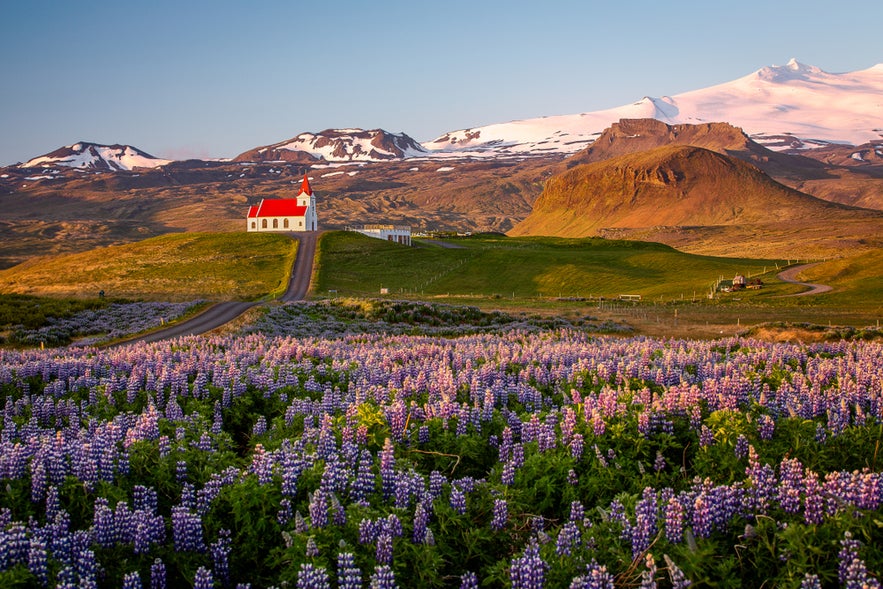
On the far west coast of Iceland, nestled within the Snaefellsjokull National Park on the Snaefellsnes Peninsula, the campground of Hellissandur Village offers views of the Atlantic Ocean and a nearby glacier.
From the campsite, you can access numerous trails that explore the unique lava fields and sandy beaches nearby. Sunsets here are exceptional!
Expect facilities that include showers, a communal kitchen, a washing machine, and a playground.
-
Hellissandur camping fee per night:
-
1,700 ISK (around 13 USD) per adult
-
500 ISK (around 4 USD) for 14-16 years old
-
1,200 ISK (around 9 USD) for the elderly and disabled
-
Free for 13 years and below
-
-
Hellissandur Campsite open season:
-
Summer, from May through September
-
-
Must-Try Activities Near Hellissandur Campsite:
-
Whale Watching Tour from Olafsvik in the Snaefellsnes Peninsula: Search for orcas, humpback whales, sperm whales, and other marine wildlife on a guided boat tour off the Snaefellsnes coast.
-
Midnight Sun Kayaking Tour by Kirkjufell Mountain: Paddle beneath the midnight sun while enjoying unique views of Kirkjufell Mountain and the surrounding coastline from the water.
-
Hallormsstadaskogur Campsites (East Iceland)
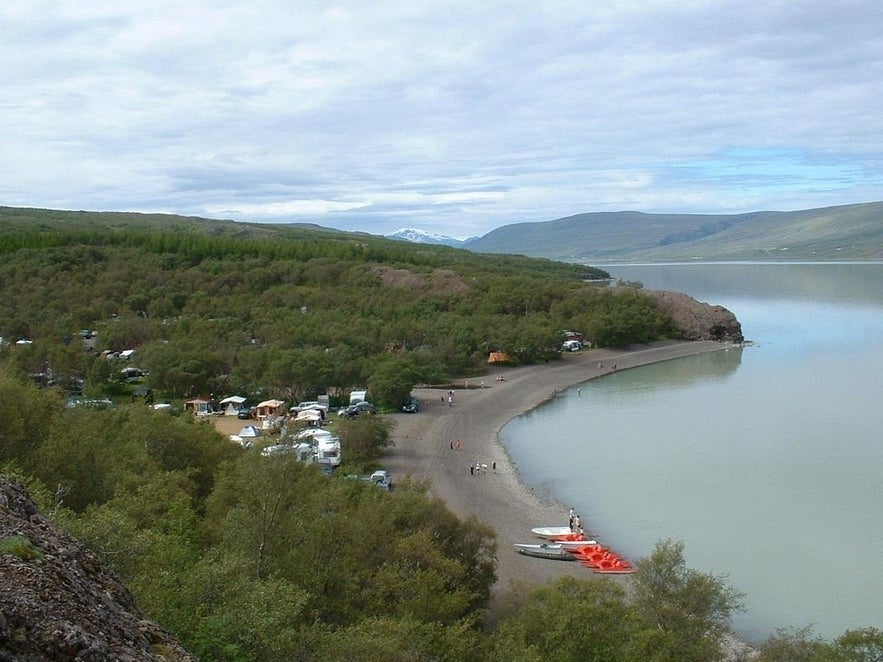
If you're looking to camp in one of Iceland's forests, Hallormsstadaskogur is hard to beat. Located on the shores of Lake Lagarfljot in East Iceland, it's the country's largest national forest and offers peaceful camping surrounded by birch trees instead of lava fields. It's also a great base for exploring East Iceland or hiking through the forest's extensive trail network.
There are two campsites within the forest:
-
Atlavik Campsite: Atlavik sits on the lakeshore and is especially popular with families. Facilities include toilets with hot and cold water, dishwashing stations, campervan waste disposal, accessible restrooms, outdoor barbecue areas, picnic tables, and a playground.
-
Hofdavik Campsite: Just a short distance away, Hofdavik offers similar amenities, with the addition of hot showers and electric hookups for campervans and motorhomes. Guests also have access to accessible restrooms, barbecue facilities, picnic tables, and a playground.
Beyond camping, Hallormsstadaskogur is a destination in its own right. More than 25 miles (40 kilometers) of marked hiking trails wind through the forest, while a family-friendly arboretum showcases over 90 species of trees and shrubs.
If you prefer a few extra comforts, Hotel Hallormsstadur is located nearby with a restaurant and modern accommodations.
-
Hallormsstadaskogur Camping fee per night:
-
2,000 to 2,200 ISK (around 16 to 17 USD) per night
-
-
Hallormsstadaskogur Campsites open season:
-
Summer, from mid-May through September
-
-
Must-Try Activities Near Hallormsstadaskogur Campsites:
-
Vok Baths Admission near Egilsstadir: Unwind in East Iceland's floating geothermal pools, surrounded by the serene waters of Lake Urridavatn.
-
Hidden Waterfalls e-Bike Tour from Seydisfjordur: Ride an electric bike through the scenic landscapes around Seydisfjordur, visiting hidden waterfalls and quiet countryside trails.
-
Iceland Campsites by Region
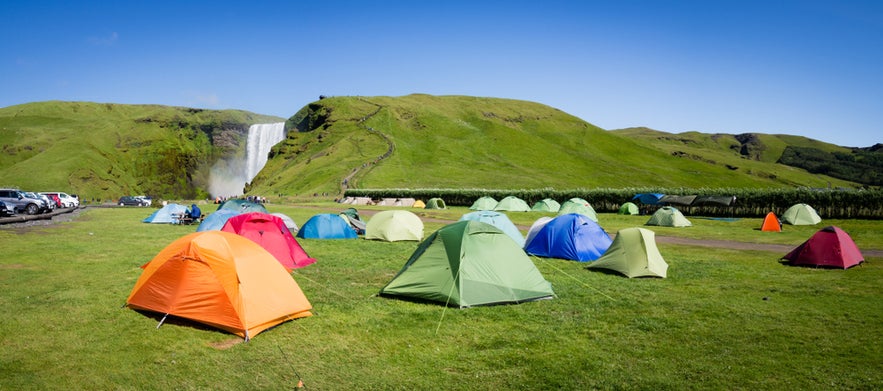
Iceland's campsites cluster around the main travel regions. Use this overview to match sites to your route, whether you're on full Ring Road trips or focusing on one corner of the country.
South Iceland Campsites
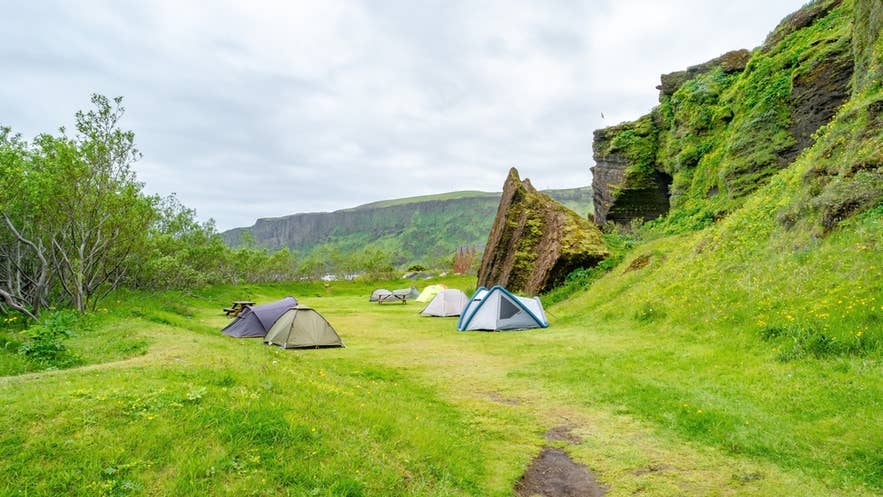 The South Coast is Iceland's most popular camping region, known for its spectacular waterfalls, black sand beaches, glaciers, and volcanic landscapes.
Aside from the more popular camping grounds of Skaftafell and Thakgil Valley, campsites near Vik, Skogar, and Kirkjubaejarklaustur offer convenient access to many of the country's top attractions. It's an excellent choice for first-time campers, thanks to its well-developed facilities, easy road access, and one of the longest camping seasons in Iceland.
There are also plenty of South Coast tours that visit famous landmarks such as Seljalandsfoss Waterfall, Skogafoss Waterfall, Reynisfjara Black Sand Beach, and Jokulsarlon Glacier Lagoon.
If you're planning a camping trip, these are some of the top campsites in South Iceland:
West Iceland Campsites
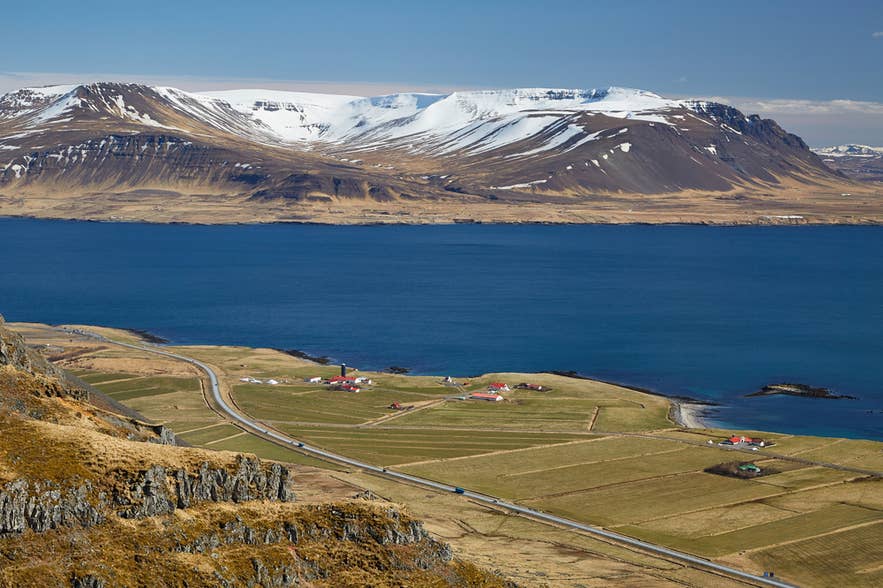 Campsites in West Iceland are centered on the Snaefellsnes Peninsula, often called "Iceland in miniature." Popular campsites can be found in Hellissandur, Grundarfjordur near Kirkjufell Mountain, and Borgarnes, making the region an excellent choice for a road trip just a couple of hours from Reykjavik.
After setting up camp, you can explore the region's waterfalls, lava caves, coastal villages, and scenic viewpoints with this guide to the best things to do on the Snaefellsnes Peninsula. Alternatively, join one of the many Snaefellsnes tours to visit the peninsula's most iconic attractions with a local guide.
Here are some of the top campsites in West Iceland:
North Iceland Campsites
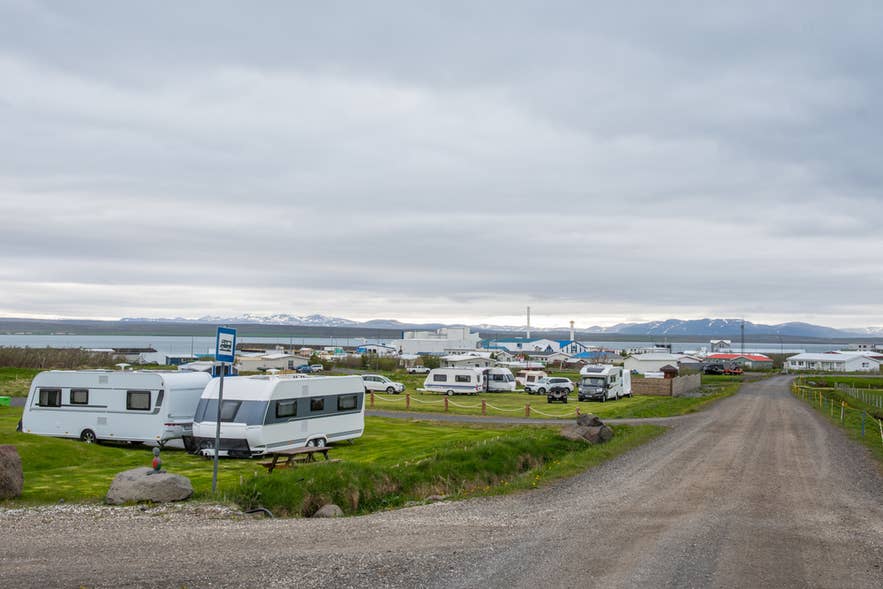 North Iceland is home to some of the country's most diverse camping destinations, from the lively town of Akureyri to the volcanic landscapes of Lake Myvatn and the forested Asbyrgi Canyon in the Diamond Circle.
Campsites throughout the region offer excellent facilities and easy access to geothermal areas, powerful waterfalls, whale-watching tours, and scenic hiking trails.
While you're in the region, explore more of the best places to visit in North Iceland, or venture beyond the main attractions to discover some of North Iceland hidden gems.
You'll find plenty of great campsites across North Iceland, including:
East Iceland Campsites
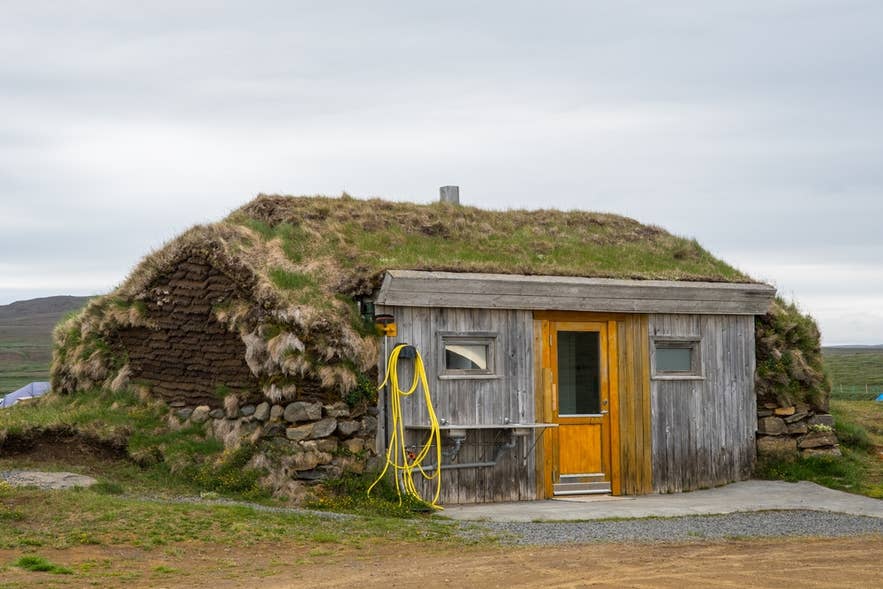 East Iceland is the country's quietest camping region, known for its peaceful fjords, charming fishing villages, and Iceland's largest forest, Hallormsstadaskogur. Popular campsites in Seydisfjordur and Egilsstadir also offer a tranquil base for exploring the Eastfjords away from the busiest tourist routes.
Although less visited than the South Coast, East Iceland is home to several top places to visit in Iceland, from scenic mountain passes to geothermal baths and picturesque coastal villages. To explore the region without the hassle of planning, you can also join one of the available Eastfjords tours.
East Iceland is home to several excellent campsites, including:
Westfjords Campsites
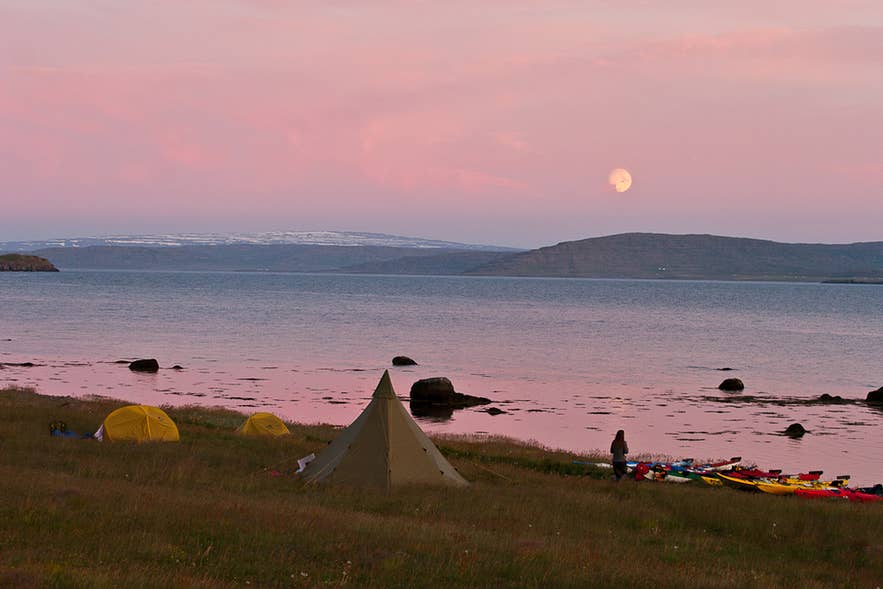 Remote, rugged, and rewarding, the Westfjords offer a more off-the-beaten-path camping experience. Small, simple campsites near Isafjordur, Patreksfjordur, and the Dynjandi Waterfall provide a peaceful base for exploring dramatic fjords, towering sea cliffs, and quiet fishing villages.
Roads are slower and more winding than in other parts of Iceland, so it's best to plan shorter driving days and allow extra time between destinations.
If your itinerary includes Hornstrandir Nature Reserve at the northern tip of the Westfjords, be prepared for an even more remote adventure.
Rúnarsson emphasizes the need to bring reliable camping gear, prepare for rapidly changing weather, and keep your schedule flexible:
Hornstrandir is one of the most remote areas in Iceland, so plan to be completely self-sufficient.
If you're camping in the region, consider joining one of the available Westfjords tours to explore hidden gems, wildlife, and scenic coastal routes with the insight of a local guide.
For an overnight stay surrounded by nature, consider these campsites in the Westfjords:
Highlands Campsites
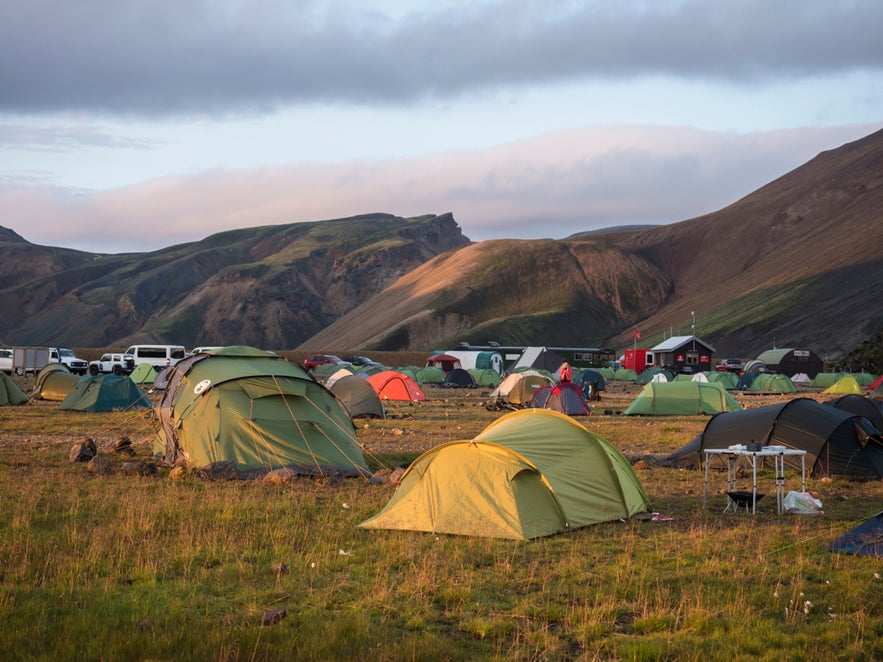
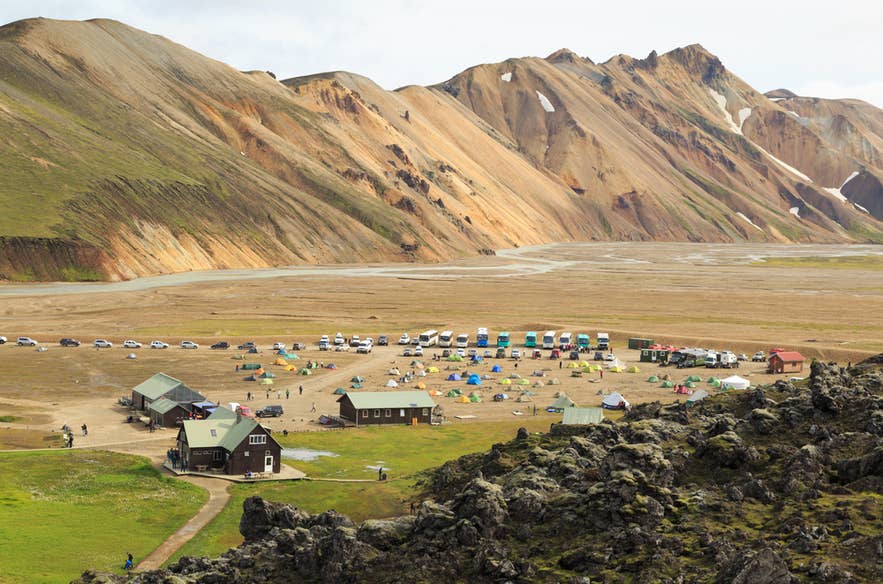 Iceland's Highlands offer some of the country's most spectacular camping, with mountain huts and campsites at Landmannalaugar, Thorsmork, and Hrafntinnusker along the famous Laugavegur Hiking Trail.
Open only during the summer months (typically late June to mid-September), these remote campsites are surrounded by colorful rhyolite mountains, volcanic deserts, glaciers, and river valleys.
Reaching the Highlands requires careful planning, as most routes are accessible only by 4x4 vehicles via F-roads or the seasonal Highland Bus. Campsites have basic facilities, but the breathtaking scenery more than makes up for the lack of modern amenities.
Rúnarsson also points to a recent improvement for visitors: an online booking system for mountain huts and campsites. He points out that the system makes it easier to reserve accommodation in advance and see which dates are likely to be busier, helping campers plan around peak periods.
If you'd rather leave the driving to someone else, there are plenty of Highlands tours that showcase this extraordinary region.
These are some of the most popular campsites in the Highlands:
Camping Costs in Iceland
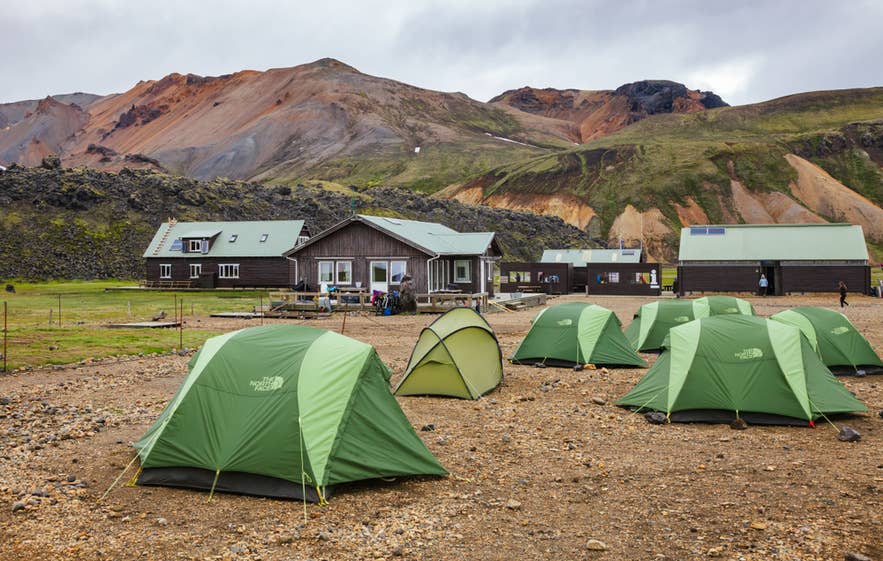
Camping is one of the most affordable ways to experience Iceland, but it isn't free, and a few costs are easy to overlook.
Below is a realistic breakdown. Prices fluctuate, and currency conversions are approximate, so treat them as planning guides rather than fixed quotes.
Campsite Fees in Iceland
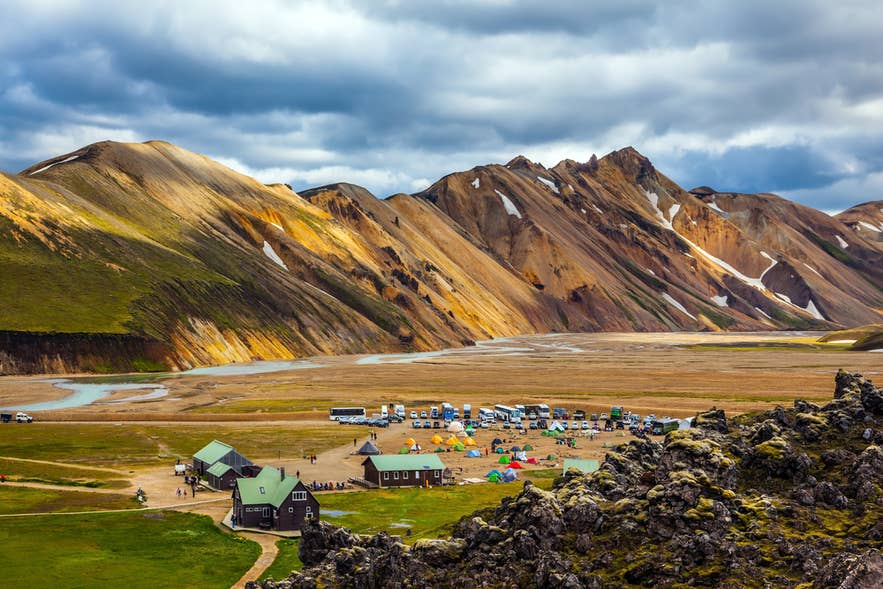
Most campsites charge per person, typically 1,500 to 2,500 ISK (around 12 to 20 USD) per night. Amenities such as electricity, showers, and washing machines often cost extra, usually adding 500 to 1,000 ISK (about 4 to 8 USD).
Don't forget the overnight lodging tax. Iceland applies a small government accommodation tax to campsites, which is currently 400 ISK (around 3 USD) per night per unit. It's usually collected at check-in and is not included in camping-card coverage, so factor it into your nightly total.
Transportation Costs When Camping in Iceland
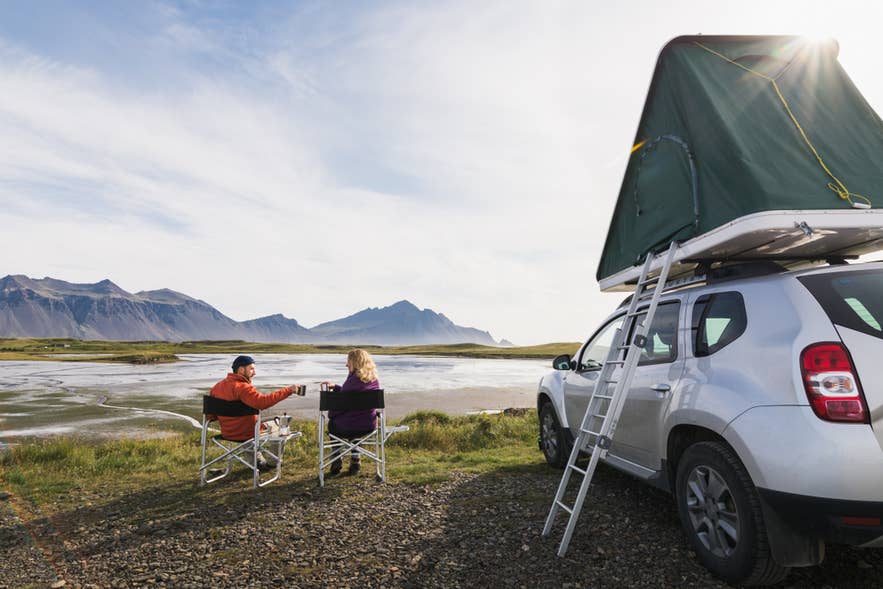
If you're camping in a tent, you'll need reliable transportation to reach campsites around the country. Renting a car offers the greatest flexibility, especially if you plan to explore multiple regions.
Average daily rental prices include:
-
Economy cars: From around 50 to 60 USD per day.
-
SUVs and 4x4 vehicles: From around 80 USD per day, ideal for gravel roads and required for F-roads in the Highlands.
-
Campervans: From around 130 USD per day, combining transportation and accommodation in one vehicle.
-
Rental insurance: Typically adds 20 to 40 USD per day, depending on the coverage you choose.
If you don't plan to rent a vehicle, the seasonal Highland Bus (operating from approximately June through late September) provides access to popular hiking areas and campsites, including Landmannalaugar, Thorsmork, and Skogar.
One-way fares to most Highland destinations generally cost less than 100 USD, making it a convenient option for hikers and backpackers.
Camping Gear Rental in Iceland
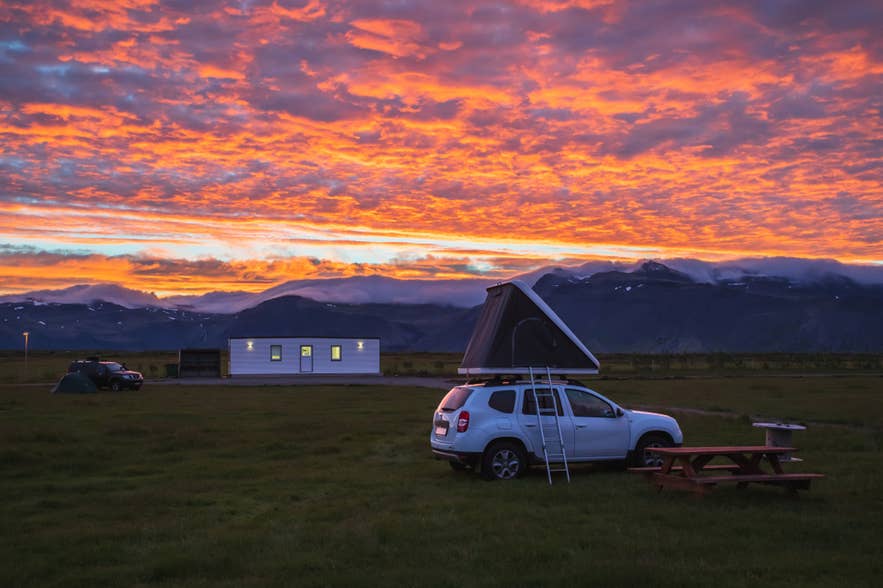
Campers may need to consider renting extra gear to stay comfortable through Iceland's unique weather and experiences. In addition to low-temperature sleeping bags, cooking kits, and more, these items can cost up to around 50 USD per day.
You don't have to haul your camping gear and tools to Iceland, thanks to these helpful gear rentals:
-
One- or two-person light tent rental: Stay dry and comfortable with a lightweight tent that's easy to set up and carry.
-
Four-season sleeping bag rental: Keep warm during chilly Icelandic nights, even in the shoulder seasons.
-
Self-inflating mattress rental: Add extra comfort and insulation for a better night's sleep.
-
Waterproof jacket and pants rental: Stay protected from Iceland's unpredictable rain, wind, and changing weather.
-
Hiking shoes rental: Tackle trails with durable, supportive footwear designed for Iceland's varied terrain.
-
Walking poles rental: Improve stability and reduce strain on rocky trails, river crossings, and uneven ground.
The Iceland Camping Card
For longer trips, the Iceland Camping Card can save money and simplify planning. For 2026, it costs about 26,000 ISK (around 206 USD), and a single card covers two adults and up to four children under 16 for up to 28 nights at more than 40 participating campsites.
The card is valid until September 15 each year, with some sites closing earlier, and you can choose a physical card or an instant electronic version.
This card is worth the money, especially if you'll camp many nights at participating sites. Roughly speaking, it pays off once you exceed about 7 to 10 paid nights at participating campsites as a couple or family.
For shorter trips, paying per night is often cheaper. Note that the card does not cover the government overnight tax, electricity, or showers.
Multi-Day Guided Camping Tours in Iceland
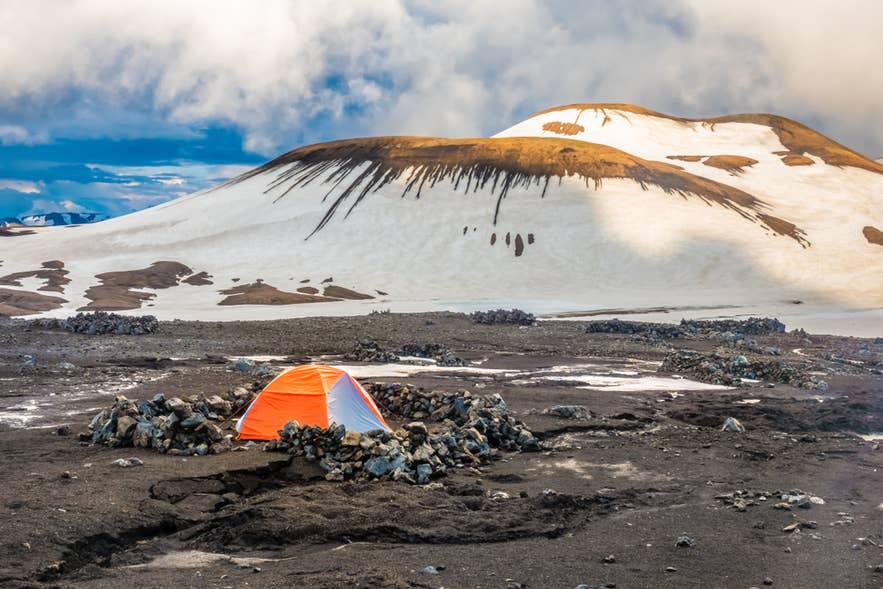
If you'd rather skip the logistics (route planning, gear, permits, and F-road driving), a guided multi-day camping tour handles it all while taking you to places that are hard to reach independently. Now that you know the costs and rules of camping on your own, these guided options are easy to compare.
Browse the full range of camping tours, or consider these standouts:
-
3-Day Hiking and Glamping Tour: Trek over 20 miles (35 kilometers) of trails in the remote Hornstrandir Nature Reserve in the Westfjords.
-
4-Day Laugavegur Hiking & Camping Tour: Walk Iceland's most famous trail from Landmannalaugar to Thorsmork with a guide and camp each night.
-
4-Day Eldgja Trek Expedition: Explore Landmannalaugar, Lake Langisjor, and the Eldgja fissure across the southern Highlands.
Guided tours cost more per day than independent camping, but they remove the biggest hurdles, such as vehicle requirements, navigation, and safety in remote terrain. For this reason, a guided camping tour often offers better value for the Highlands.
Things To Know Before Camping in Iceland
 A little preparation goes a long way in Iceland, where the weather is changeable, and distances between services are long. These are the practical points worth sorting out before you leave home.
Best Time To Camp in Iceland
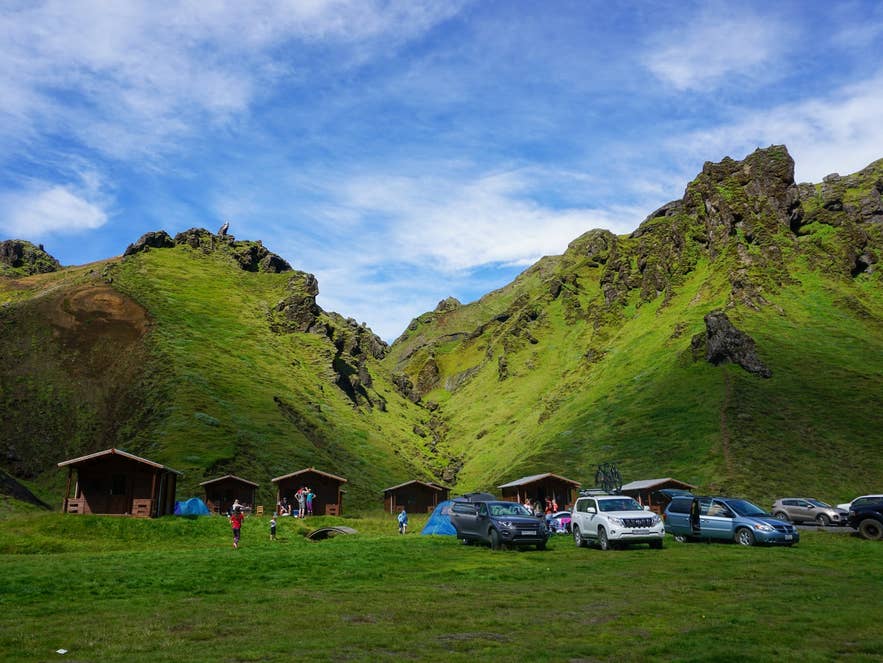 Photo by Sonali Deo
The main camping season runs from late May to August, when temperatures are warmest, daylight is longest, and most campsites and highland roads are open. Since this is the best time to camp in Iceland, it is also the busiest and most expensive period.
Wind plays a role too. Our study of the windiest month in Iceland found July the calmest month nationally, averaging 9.8 mph (15.8 km/h). That makes a tent easier to pitch and hold through the night.
According to Rúnarsson, the biggest mistake first-time campers make is “trusting the weather forecast.” Even during summer, conditions can change far more quickly than many visitors expect, so make sure to pack and pitch camp as though wind and rain could arrive, even if the forecast looks calm.
It’s good to treat the forecasted weather as a best-case scenario and prepare for the worst.
For a balance of decent weather and thinner crowds, aim for the shoulder weeks in late May or September, but pack for cold even then. Only July and August are frost-free everywhere in the country, based on our study of the warmest and coldest months in Iceland. A late-May or September night in the Highlands can drop below freezing, and September brings the frost back to Akureyri.
Late May is also the sunniest time to camp in the south and west of Iceland. Our study of the sunniest month in Iceland found that May brings Reykjavik about 7 hours of sunshine a day, more than any other month. Campers heading north should wait for June, when Akureyri has its sunniest month.
A handful of lowland sites stay open year-round, though winter camping demands serious cold-weather gear, shorter daily plans around limited daylight, and constant attention to road and weather conditions.
Pre-Booking Iceland Campsites
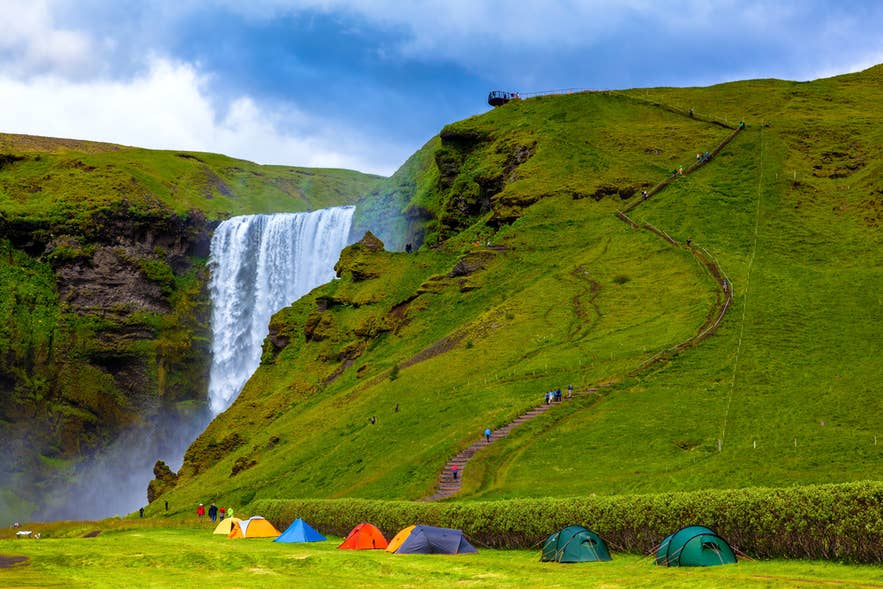 Most Icelandic campsites are informal and work on a first-come, first-served basis, and it's rare for them to fill completely.
Even so, pre-booking is worth considering in peak season near busy areas like the South Coast and Golden Circle. Pre-booking a campsite is also essential for popular highland sites such as Landmannalaugar in July and August.
If you're wondering how to book campsites in Iceland, you can reserve campgrounds and pay through the Parka app, available on both Android and iOS. Others also accept payment upon arrival or require booking through their own websites.
Campsite Facilities in Iceland
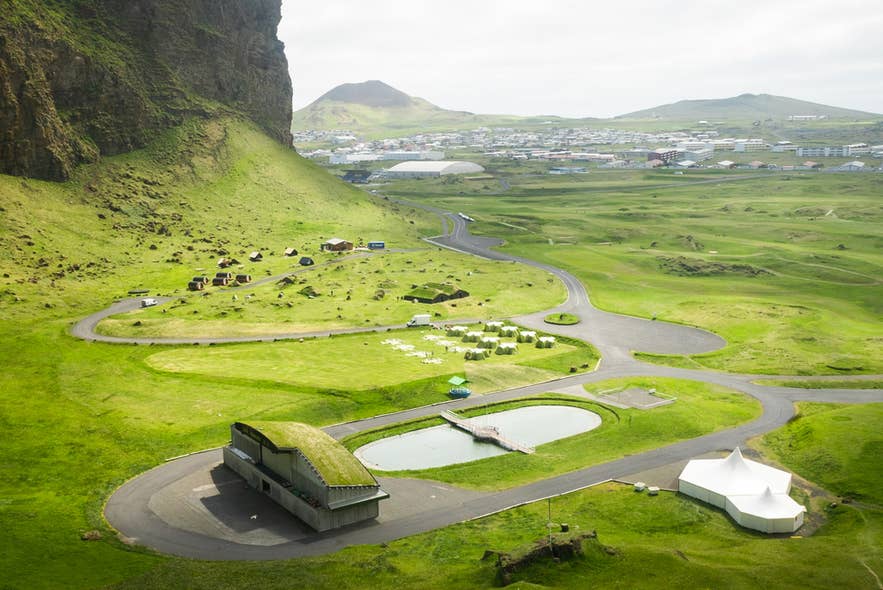 Facilities at Icelandic campsites vary depending on their location and size. Larger campsites, such as Skaftafell, Vik, Skogar, and Asbyrgi, typically offer hot showers, flushing toilets, communal kitchens or cooking shelters, electrical hookups, laundry facilities, waste disposal, and, in some cases, playgrounds or small convenience shops.
In contrast, campsites in the Highlands and other remote areas provide only basic amenities. You can usually expect simple toilets, cold water, and limited services, while hot showers and electricity often require an additional fee.
When camping, it's a good idea to carry a payment card or some cash for these extras, along with a refillable water bottle. Iceland's tap water is safe, clean, and among the best drinking water in the world.
Essential Camping Gear in Iceland
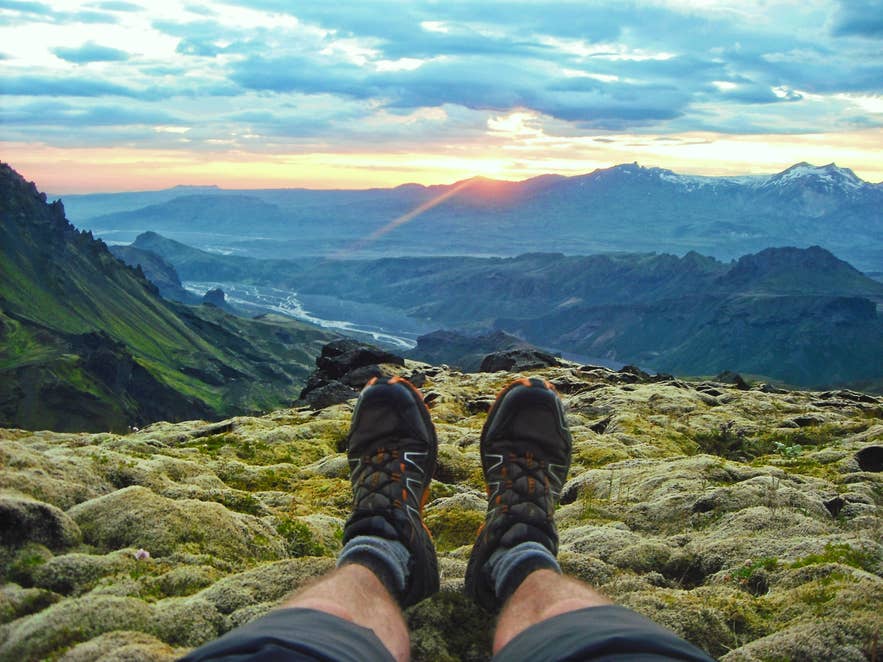 Iceland's weather can swing from sun to rain within hours, even in summer, so pack for all conditions. Below is a practical checklist from Rúnarsson:
-
A four-season, low-temperature sleeping bag, as nights can approach freezing year-round.
-
A sturdy, wind-resistant tent with strong pegs and guy lines. Iceland's wind is the real challenge, not the cold.
-
Waterproof and windproof jacket and trousers, plus thermal base layers. Always bring a spare set of dry clothes.
-
Durable, waterproof hiking boots and warm socks.
-
A camp stove with enough fuel, since open fires are not permitted.
-
Headlamp or flashlight, power banks, and a way to charge devices.
-
A refillable water bottle and a basic first-aid kit.
If you'd rather not travel with bulky equipment, local gear rentals can supply most of this on arrival. For safety on longer or remote trips, save Iceland's emergency number (112), check forecasts at the Icelandic Met Office, monitor road conditions, and leave a travel plan using the SafeTravel service.
Iceland's Camping Culture
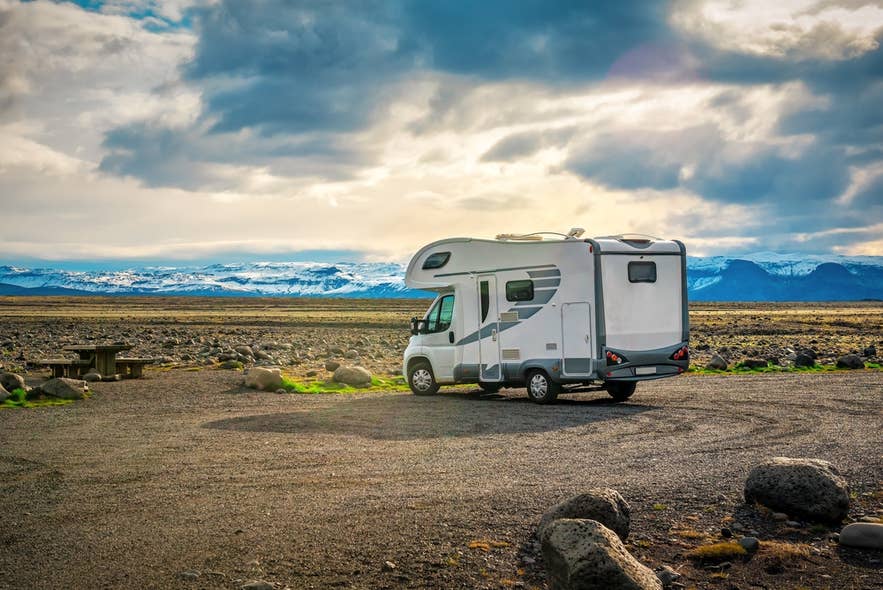
Iceland is known for its natural beauty, with most visitors coming to the country to experience it. The camping culture here makes it easy to make new friends, especially since so many travelers and campsite staff speak English as a second language.
Most campsites have communal kitchens, dining areas, and outdoor spaces, so it's easy to strike up conversations. Travelers often share tips about camping recipes, hikes, and routes.
Camper van travelers talk about routes and work together to fix minor vehicle problems. Photographers and visitors hunting the best aurora view share their techniques and experiences. In the summer, the midnight sun keeps people active and social late into the night, with conversations and even hikes.
If you prefer solitude, that's fine, too. Travelers camping in Iceland are very considerate and keep noise levels low, especially at night.
Camping Safety Tips in Iceland
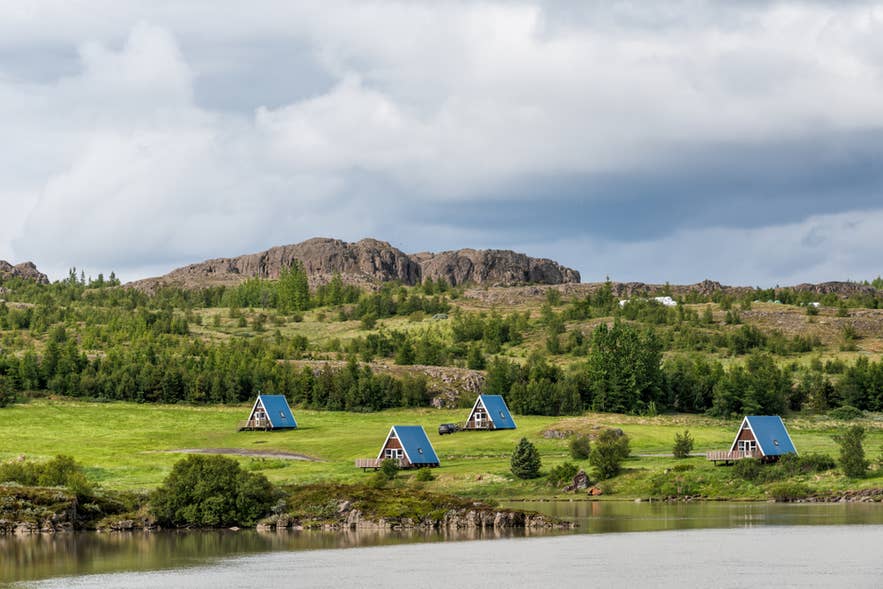
Camping in Iceland is an unforgettable experience, but the country's rugged landscapes and rapidly changing weather demand proper preparation. Many campsites are located in remote areas with limited services, so knowing what to expect can help you stay safe throughout your trip.
-
Get comfortable with your camping equipment. If you're new to camping or using new gear for the first time, get a few practice rounds setting up your tent and using your camp stove before your Iceland camping trip.
-
Be realistic about long distances between campsites. Make sure you travel with enough food and water. Keep your phone charged, and have enough fuel to get where you're going.
-
Prepare for all kinds of weather. Even in the summer, Iceland's temperatures can drop close to freezing, and the wind can be intense. Weather can change quickly, so check the Iceland weather forecast for real-time weather updates before heading out each day.
-
Account for limited daylight. The winter months have fewer daylight hours. Plan your activities accordingly so you don't get stuck hiking in the dark.
-
Respect the roads and trail paths. The weather can severely affect the road conditions, especially during winter, so check road conditions regularly. Some campsites require travel on highland roads (F-roads), which need a 4x4 vehicle. If hiking near glaciers, waterfalls, or hot springs, stay on marked trails to avoid dangerous terrain.
-
Be prepared for emergencies and safety. Make sure to pack waterproof and windproof gear, headlamps and flashlights, and power banks to charge your devices. Save Iceland's emergency number (112) in your phone, and always let someone know your travel plans, especially when camping in remote areas.
Whether you’re camping or hiking, Rúnarsson says that proper preparation and sharing your itinerary are the two habits that do the most to keep visitors safe.
Improper planning and not telling anyone what your plans are would definitely be considered reckless.
He strongly recommends leaving your travel plans with SafeTravel, which lets a local safety service monitor your trip and respond far more quickly if something goes wrong.
Your Iceland Camping Adventure Awaits
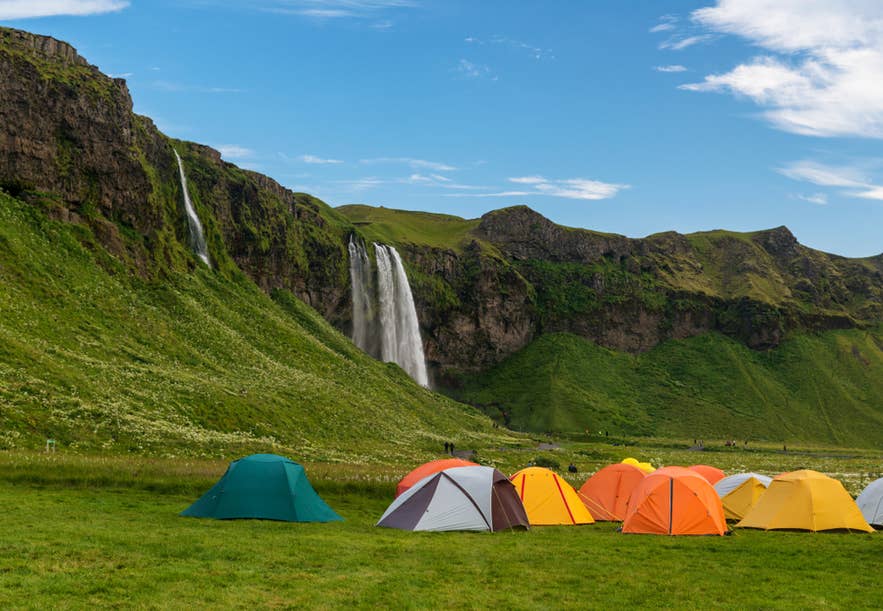
Camping in Iceland is one of the best ways to experience the country's dramatic landscapes. Whether you're spending a night beneath the midnight sun or waking up to mountain views, every camping stop brings a new adventure.
With a little planning, an Iceland camping trip is both accessible and rewarding. You can rent a campervan for maximum flexibility, opt to rent a small car and arrange a camping gear rental before you arrive, or join one of Iceland's guided camping tours.
Is wild camping allowed in Iceland?
For tent campers, the rules are slightly different but still strict. According to the Environment Agency of Iceland, you may pitch a maximum of three traditional tents for a single night on uncultivated, non-private land that is well away from any farm, residence, or organized campsite, unless the landowner has posted a notice prohibiting camping.
What is the best time of year to camp in Iceland?
Do I need to book campsites in advance?
What is the Iceland Camping Card, and is it worth it?
How much does camping in Iceland cost?
What gear should I bring for camping in Iceland?
If you plan to cook, bring basic cooking equipment, as not all campsites have kitchen facilities. A power bank is also recommended, since charging stations may be limited at some campsites.
What safety precautions should I take while camping in Iceland?
Download the SafeTravel app, share your itinerary with a friend or family member, and stay informed about changing conditions. In an emergency, call 112, Iceland’s national emergency number.
Are there facilities at Icelandic campsites?
- Toilets and showers (some charge extra)
- Communal kitchens and picnic tables
- Electrical access for an additional fee
- Laundry facilities at select locations
Can you sleep in a campervan anywhere in Iceland?
Planning to camp in Iceland or already done it? Share your questions, recommendations, or unforgettable camping experiences in the comments below. We'd love to hear from you!

Hi, I’m Richard. I lived in Iceland for a decade, during which I traveled the country extensively and worked as a guide for several leading travel companies. I’m passionate about writing and sharing the best travel experiences Iceland has to offer so visitors can discover and enjoy the magic of this incredible country just like I did.