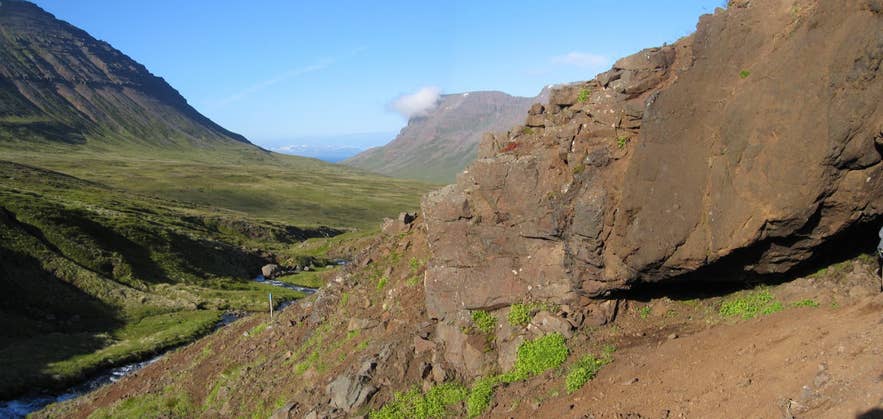
Entrance to Gilsnáma lignite mine. Photo: Salvör Gissurardóttir, CC BY 2.5
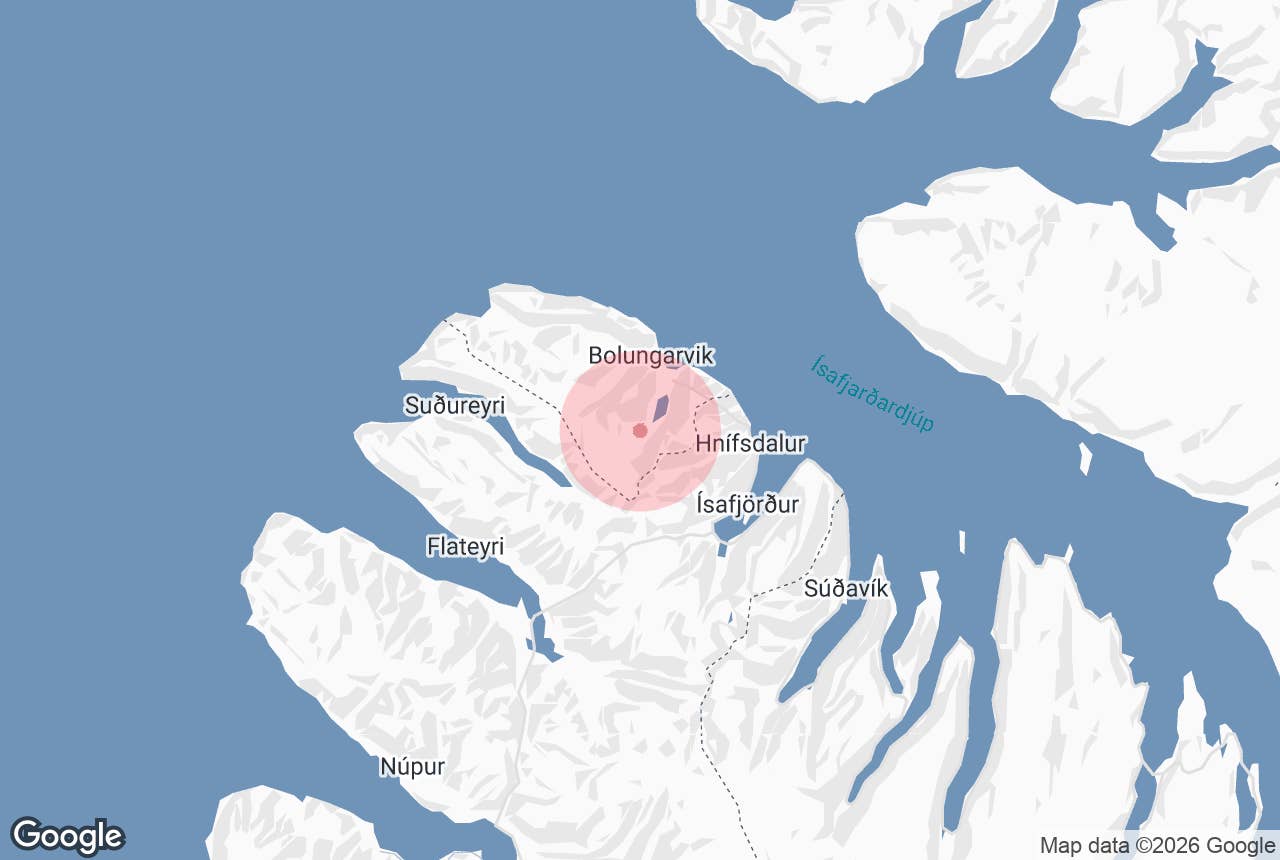
Gilsnáma Lignite Mine (Icelandic: Gilsnáma) is an abandoned brown-coal mine in Syðridalur, the valley behind the town of Bolungarvík in the north-western Westfjords.
It is one of a handful of Icelandic coal workings opened during the fuel shortage of the First World War, and one of the few you can still enter.
The main tunnel runs more than 100 metres into the hillside, and inside you can stand upright and see tools the miners left behind more than a century ago.
Key Takeaways About Gilsnáma
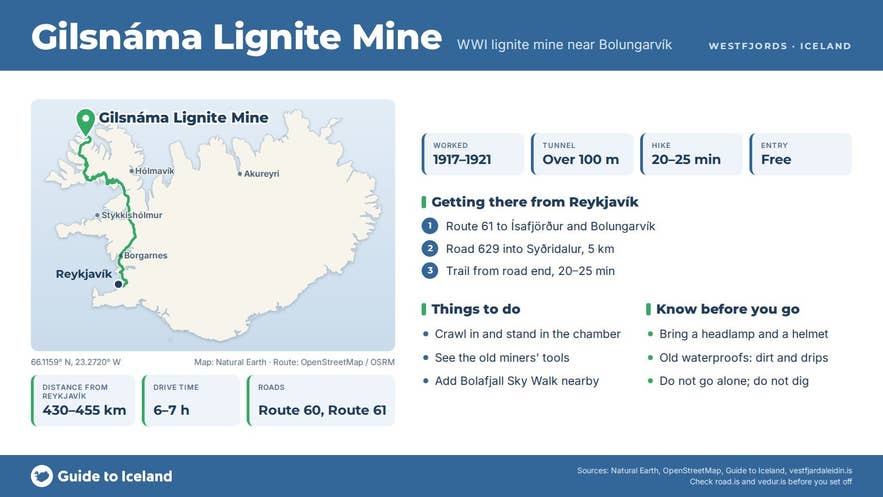
- Abandoned surtarbrandur (lignite) mine worked 1917–1921 during the First World War coal shortage
- Main tunnel over 100 m long; crawl through the entrance, then stand upright; miners' tools still inside
- 20–25 minute marked hike from the end of Road 629 in Syðridalur, about 5 km from Bolungarvík
- Free, unstaffed; bring a headlamp, helmet or hard-brimmed hat and old waterproof clothes
- Visited on the 4-hour Bolafjall Sky Walk and Lignite Mine tour from Ísafjörður
Why visit Gilsnáma Lignite Mine
Iceland has no true coal, but the oldest part of the country's bedrock, the Tertiary basalt pile that forms the Westfjords, holds thin seams of surtarbrandur: compressed plant remains, sometimes with flattened tree trunks, from forests that grew between lava flows millions of years ago, when Iceland's climate was far warmer.
When imported coal became scarce and expensive during the First World War, Icelanders turned to these seams. Mines were opened in Syðridalur at Bolungarvík, at Botn in Súgandafjörður, in Arnarfjörður, at Stálfjall between Barðaströnd and Rauðisandur, on Skarðsströnd, on Tjörnes and in Reyðarfjörður.
Gilsnáma worked from 1917 until 1921. Once European coal flowed freely again it could not compete: Icelandic surtarbrandur is about 60 percent carbon, against 70 to 80 percent for imported brown and hard coal, and it is mixed with volcanic ash, so it burns poorly. The mine closed and has sat largely untouched since.
What you find today:
- Two tunnels on opposite sides of the stream. The two lie on either side of the Gilsá stream. The larger one, Gilsnáma proper, runs more than 100 metres into the hillside; the smaller one across the stream, Hanhólsnáma, is only about 5 to 10 metres deep.
- A tight entrance that opens up. You crawl for the first stretch, then the ceiling lifts and you can stand comfortably.
- Original tools. Tools used in the mining remain inside, along with the dark seam itself.
- The setting. Syðridalur is a broad green valley with the lake Syðradalsvatn (locally written Syðridalsvatn) in its mouth and small waterfalls down its sides; the mine sits above the valley floor at the end of a marked path.
How to get to Gilsnáma Lignite Mine
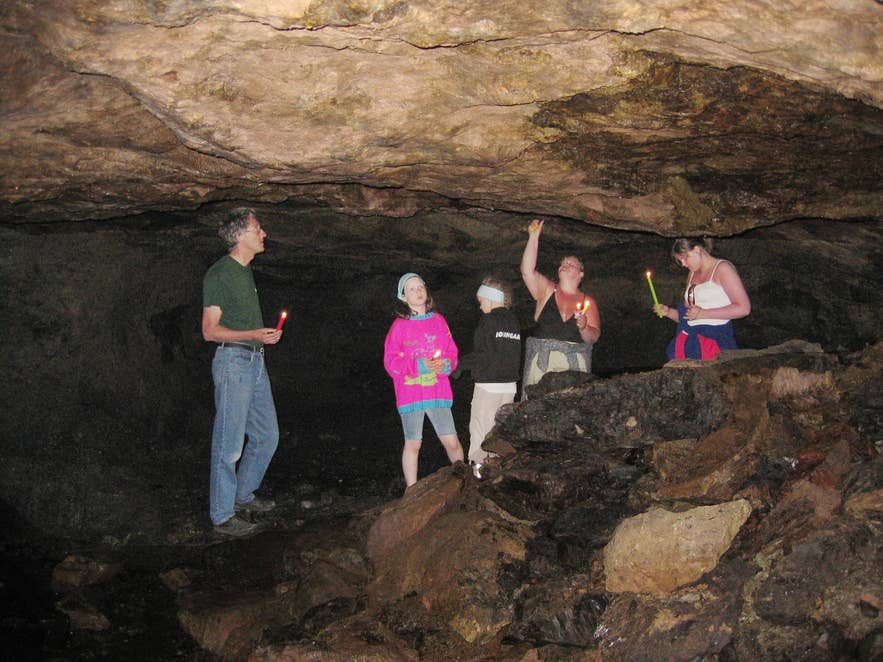
Inside Gilsnáma lignite mine. Photo: Salvör Gissurardóttir, CC BY 2.5
- From Ísafjörður: drive Route 61 north through the Bolungarvíkurgöng tunnel to Bolungarvík, about 13 kilometres or 15 to 20 minutes. From Reykjavík it is a full day: roughly 430 to 455 kilometres and six to seven hours via Route 60 or Route 61, or a 40-minute flight to Ísafjörður.
- From Bolungarvík: turn inland into Syðridalur on Road 629 (Syðridalsvegur), the valley under the mountain Ernir. The gravel road runs along the valley past the lake; the mine is at approximately 66°06'57"N, 23°16'19"W, about 5 kilometres from the town centre.
- On foot: from the end of the drivable road a marked trail climbs to the mine in about 20 to 25 minutes. The path is uneven and can be boggy after rain.
- Vehicle: any car in summer; the valley road is gravel but not an F-road.
- Parking: informal space at the road end. Do not block farm gates or access to the lake.
Best time to visit
June to September, when the trail is free of snow and the valley road is dry.
The mine itself is the same temperature year-round, cool and damp, but reaching it in winter means deep snow on steep slopes, and the Bolungarvík area is known for avalanches.
Long summer evenings in the Westfjords make a late-afternoon visit after the Bolafjall viewpoint comfortable.
Safety and practical tips
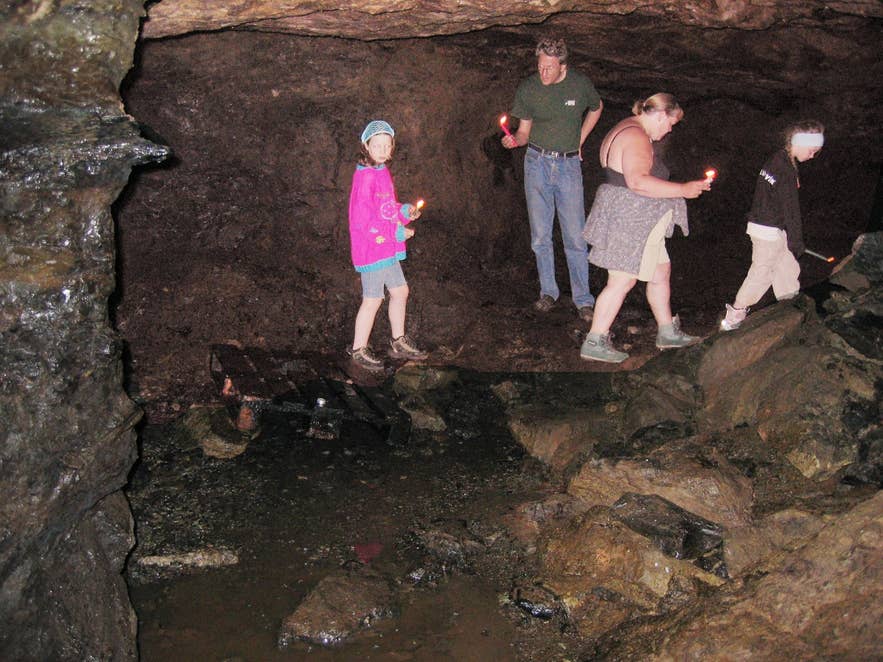
Lignite seam inside Gilsnáma mine. Photo: Salvör Gissurardóttir, CC BY 2.5
- Head protection and light: bring a headlamp or torch for every person and wear a helmet, or at least a hat with a hard brim; the entrance is low and the rock is sharp.
- Clothing: you will crawl through dirt and dripping water. Wear old waterproof trousers and gloves, and boots with grip for the walk.
- Do not go alone and do not dig. The workings are a century old and unmaintained. Stay in the open chamber, touch nothing structural and leave the tools where they are; they are part of the site's history.
- Weather: Westfjords weather changes fast and the trail is exposed. Carry a shell layer even on a sunny day.
- Facilities: none at the mine. Toilets, fuel, shops, a swimming pool and the Ósvör maritime museum are in Bolungarvík, 5 to 6 kilometres away.
- Fees and hours: no entry fee and no opening hours; the site is unstaffed. The guided tour from Ísafjörður includes transport and a guide who knows the entrance.
- Respect the land: the valley is working farmland. Close gates and keep dogs on a lead.
Nearby attractions
- Syðridalur – the valley the mine sits in, with Syðridalsvatn lake, about 2 km.
- Bolungarvík – one of Iceland's oldest fishing stations, about 4 km.
- Ósvör Museum – reconstructed 19th-century fishing station, about 5 km.
- Bolafjall – mountain-top viewing platform over Ísafjarðardjúp, about 7 km.
- Hnífsdalur – village and valley between Bolungarvík and Ísafjörður, about 7 km.
- Ísafjörður – the Westfjords' main town, about 8 km.
Tours that visit Gilsnáma Lignite Mine
- Bolafjall Sky Walk and Lignite Mine Tour in the Westfjords from Isafjordur – a four-hour guided tour from Ísafjörður that combines the Bolafjall viewing platform with the 20 to 25-minute hike to Gilsnáma, a crawl into the mine, and a stop at the Ósvör maritime museum in Bolungarvík.