Iceland has more than 10,000 waterfalls, and these 20 are the ones worth planning a trip around. This guide covers the famous Ring Road giants and the lesser-visited falls in remote canyons, with directions, parking notes, and seasonal advice for each.
Iceland’s waterfalls are fed by glaciers, lava-field springs, and seasonal meltwater. Travelers can join guided waterfall tours in Iceland or book a self-drive tour and rent a car in Keflavik or Reykjavik to set their own pace.
Together, the list covers many of the most recommended waterfalls in Iceland alongside quieter alternatives. Each entry includes the height, region, drive or hike time, and parking notes.
Top Iceland Waterfalls at a Glance
Iceland’s waterfalls range from 11-meter cascades to 228-meter giants. Here are the quick answers most travelers need before planning a trip.
-
Total waterfalls in Iceland: Over 10,000, with only about 200 officially named.
-
Tallest waterfall: Morsarfoss at 748 feet (228 meters), identified in 2007 in Vatnajokull National Park.
-
Second-tallest: Glymur at 650 feet (198 meters) in West Iceland.
-
Most powerful: Dettifoss in North Iceland, with 193 cubic meters of water per second.
-
Bluest water: Bruarfoss, fed by glacial meltwater filtered through lava rock.
-
Easiest Ring Road stop: Skogafoss, visible from Route 1 on the South Coast.
-
Best for photographers: Kirkjufellsfoss with Kirkjufell Mountain framed behind it.
-
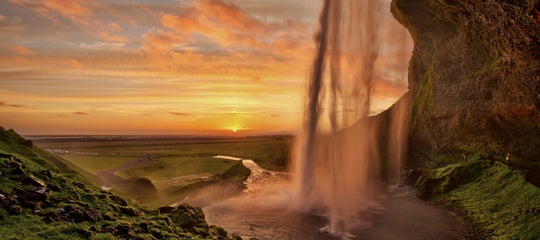
Most accessible walk-behind: Seljalandsfoss on the South Coast.
-
Best in winter: Godafoss and Aldeyjarfoss, both photogenic when partly frozen.
Quick Comparison of Iceland’s Famous Waterfalls
Use this table to compare the 10 most famous waterfalls in Iceland at a glance. Heights are listed in feet first, then in meters.
| Waterfall | Height | Region | Hike Difficulty | Best Season |
|---|---|---|---|---|
| Gullfoss | 105 ft (32 m), two-tier | Southwest, Golden Circle | Easy — paved paths from lot | Year-round |
| Skogafoss | 197 ft (60 m) | South Coast | Easy at base; optional 527-step climb to platform | Year-round |
| Seljalandsfoss | 197 ft (60 m) | South Coast | Easy walk-behind loop (20–30 min) | Year-round; walk-behind path closes in winter |
| Svartifoss | 65 ft (20 m) | Vatnajokull National Park | Moderate — 1 mi (1.5 km) uphill from visitor center | Year-round; microspikes useful in winter |
| Dettifoss | 144 ft (44 m) | North, Diamond Circle | Easy — short walk from either parking lot | Summer best; west-bank Road 862 limited in winter |
| Godafoss | 39 ft (12 m) | North, Diamond Circle | Easy — paved paths from Route 1 | Year-round |
| Hraunfossar | Wide series, low drop | West, Silver Circle | Easy — paved viewing platforms | Year-round |
| Glymur | 650 ft (198 m) | West, Hvalfjordur | Strenuous — 4.4 mi (7 km) loop, river crossing, 3–4 hours | June–September only (seasonal log bridge) |
| Hengifoss | 420 ft (128 m) | East Iceland | Moderate — 1.5 mi (2.4 km) uphill, ~90 min round trip | May–October |
| Dynjandi | 328 ft (100 m) | Westfjords | Easy — 15-min marked trail past smaller falls | Summer; roads close in winter |
Top 10 Most Famous Waterfalls in Iceland (Ranked 1–10)
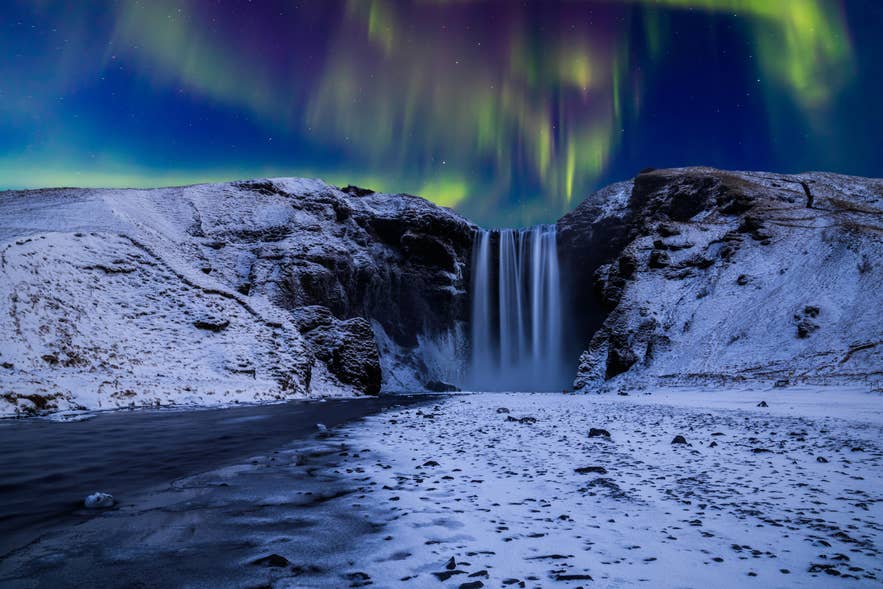
Iceland’s 10 most famous waterfalls all sit within a 4-hour drive of either Reykjavik or Akureyri, and most are visible from the Ring Road. These are the falls travelers see on postcards and the ones most worth prioritizing on a first-time trip. The list counts down from #10 to #1.
10. Dynjandi Waterfall
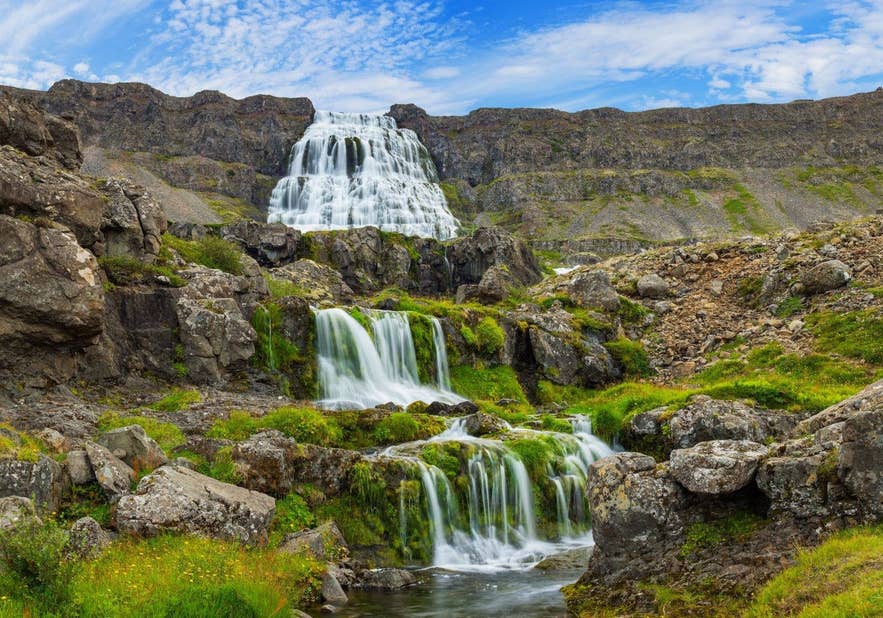
Dynjandi cascades 328 feet (100 meters) down a trapezoidal cliff in the Westfjords, widening from 98 feet (30 meters) at the top to 196 feet (60 meters) at its base. The Icelandic name means “thunderous,” and the sound carries across the Arnarfjordur Fjord. Six smaller waterfalls drop below it on the same hillside.
Dynjandi is also known as Fjallfoss (Mountain Falls) and is the largest waterfall in the Westfjords. The surrounding area along Dynjandisvogur Bay is known for abundant birdlife, dramatic Icelandic fjords, and rugged coastal scenery.
How To Visit Dynjandi Waterfall
Dynjandi sits on Road 60 in the Westfjords. From Isafjordur it is a 3-hour drive, and from Reykjavik it is about 6 hours one way. A 15-minute marked trail climbs past the six smaller falls to the main cascade. Westfjords tours from Isafjordur include a 3.5-hour guided Dynjandi tour from Isafjordur, and a longer Dynjandi Waterfall and Westfjords villages from Patreksfjordur trip combines the falls with the area’s villages.
Dynjandi Parking Information
Parking is free at the trailhead lot just below the falls. Restrooms are open in summer. Both close in winter when the Westfjords roads become unreliable.
9. Hengifoss Waterfall
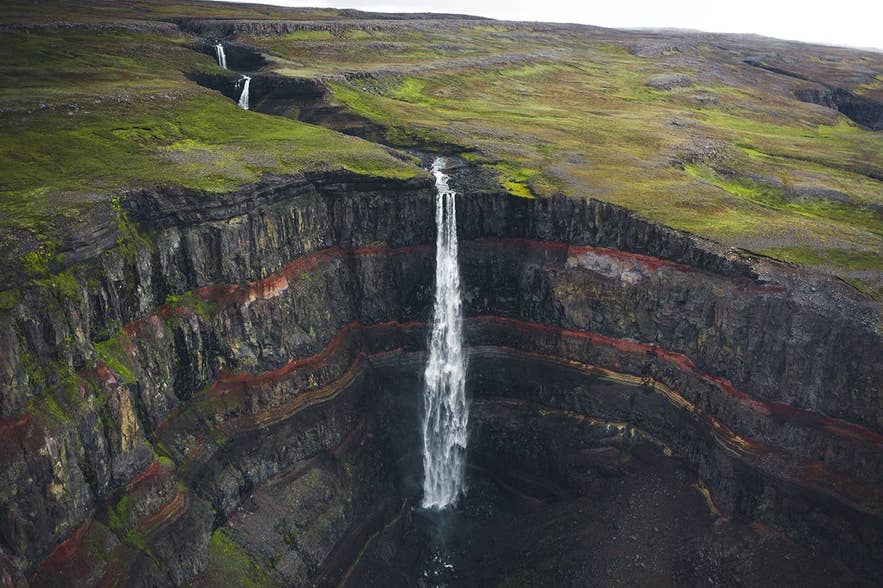
Hengifoss is the third-tallest waterfall in Iceland at 420 feet (128 meters), located in East Iceland on the Hengifossa River. The cliff face behind the falls shows alternating bands of black basalt and red clay, the layered geology being the section’s main visual draw alongside the water itself.
The closest town is Egilsstadir, about 22 miles (35 kilometers) from the trailhead. Things to do in Egilsstadir include walking along Lagarfljot Lake and visiting the East Iceland Heritage Museum.
How To Visit Hengifoss Waterfall
The hike from the parking area covers 1.5 miles (2.4 kilometers) one way and takes about 90 minutes round trip. Along the way you pass Litlanesfoss Waterfall, framed by tall basalt columns. Eastfjords tours often include Hengifoss, and the 11-day self-drive tour of the Ring Road of Iceland makes a natural stop here.
Hengifoss Parking Information
A free gravel lot sits at the trailhead with a small information board. Accommodation options nearby include Hengifoss Guesthouse and Lyngas and Laufas Guesthouse, both near Egilsstadir.
8. Glymur Waterfall
Glymur is Iceland’s second-tallest waterfall, plunging 650 feet (198 meters) into a narrow canyon along the Botnsa River in Hvalfjordur Fjord. It was Iceland’s tallest waterfall for centuries until Morsarfoss Waterfall was identified in 2007 and officially measured at 228 meters in 2011.
The falls sit in a steep gorge in West Iceland, about 45 miles (72 kilometers) from Reykjavik. Hvammsvik Hot Springs sit nearby and pair well with the hike. Booking your Hvammsvik admission before the drive secures a slot.
How To Visit Glymur Waterfall
The Glymur trail is a 4.4-mile (7-kilometer) loop that takes 3 to 4 hours round trip. The hike includes a river crossing on a seasonal log bridge (in place June to September) and a short cave passage. The viewing platform sits about 2 hours’ walk from the trailhead. A private hiking tour to Glymur Waterfall from Reykjavik or the private Glymur Waterfall hiking tour with a super jeep transfer removes the logistics for solo travelers.
Glymur Parking Information
Park at the Botnsa trailhead lot at the end of Road 47 in Hvalfjordur. Parking is free. The lot fills quickly on summer weekends, so an early start helps.
7. Svartifoss Waterfall
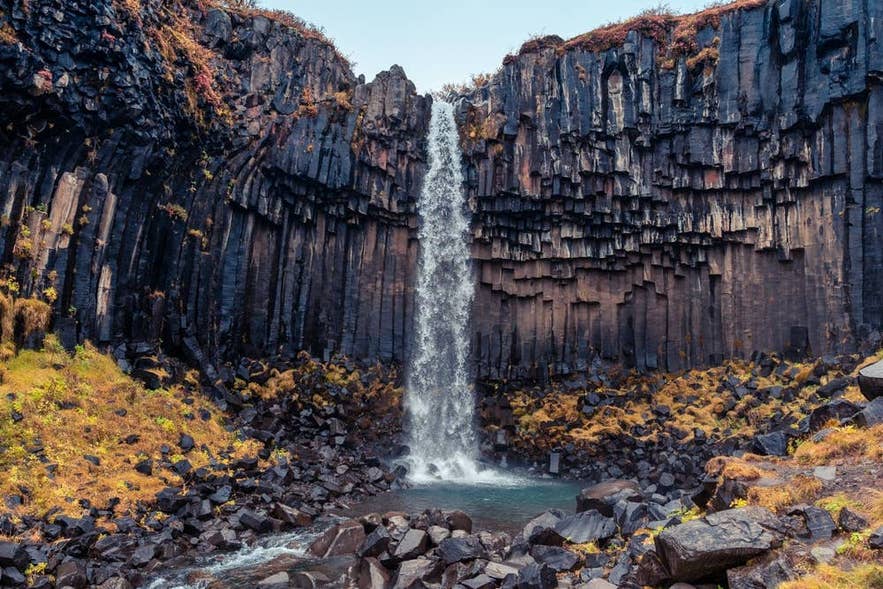
Svartifoss plunges 65 feet (20 meters) over a backdrop of dark hexagonal basalt columns inside Skaftafell Nature Reserve, part of Vatnajokull National Park. The name means “Black Falls,” and the column formations inspired the facade of Hallgrimskirkja Church in Reykjavik, as well as the ceiling of the National Theater of Iceland. Sharp rocks at the base, broken off from the columns over time, give the pool below an otherworldly look that photographers come back for in every season.
How To Visit Svartifoss Waterfall
From Skaftafell Visitor Center, follow the clearly marked trail for about 1 mile (1.5 kilometers) to reach Svartifoss. You pass three smaller waterfalls on the way. The best Skaftafell guided tours include Svartifoss as a stop, including the Skaftafell Panorama Hike.
Svartifoss Parking Information
Parking is at the Skaftafell Visitor Center lot, with a small per-vehicle fee. Restrooms, a cafe, and an information desk are on site year-round.
6. Hraunfossar and Barnafoss Waterfalls
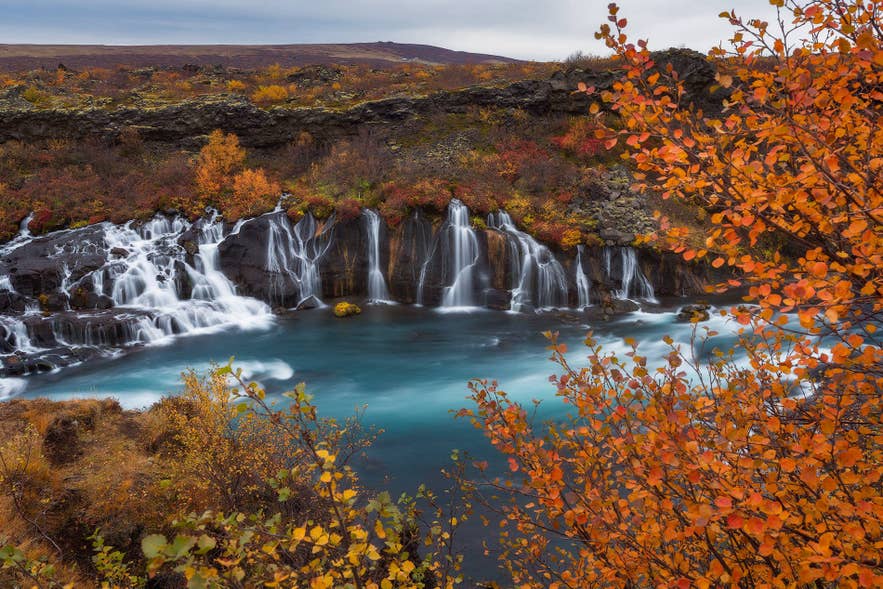
Hraunfossar is a series of waterfalls that stretches 2,950 feet (900 meters) along the edge of the Hallmundarhraun Lava Field in West Iceland. Glacier meltwater from Langjokull Glacier filters through the porous lava and emerges as countless rivulets spilling into the Hvita River.
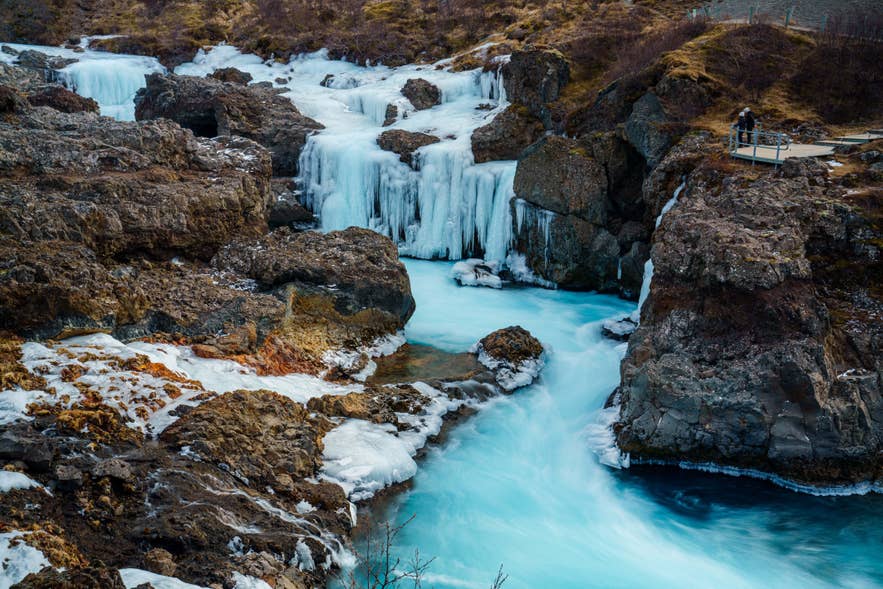
Just upstream, Barnafoss Waterfall roars through a narrow gorge in a sharp contrast to Hraunfossar’s quieter cascades. Deildartunguhver Hot Spring, Europe’s most powerful hot spring, sits a short drive away in Reykholt.
How To Visit Hraunfossar and Barnafoss Waterfalls
Hraunfossar is about a 1-hour 40-minute drive from Reykjavik via the Silver Circle. Day trips from Reykjavik include the Into the Glacier ice cave tour with Hraunfossar Waterfall and the private 9-hour Hraunfossar and Barnafoss waterfalls tour from Reykjavik.
Hraunfossar and Barnafoss Parking Information
A free parking lot sits at the viewing area. Paved paths and small bridges connect the viewpoints, so the site is accessible year-round.
5. Dettifoss Waterfall, Iceland’s Most Powerful
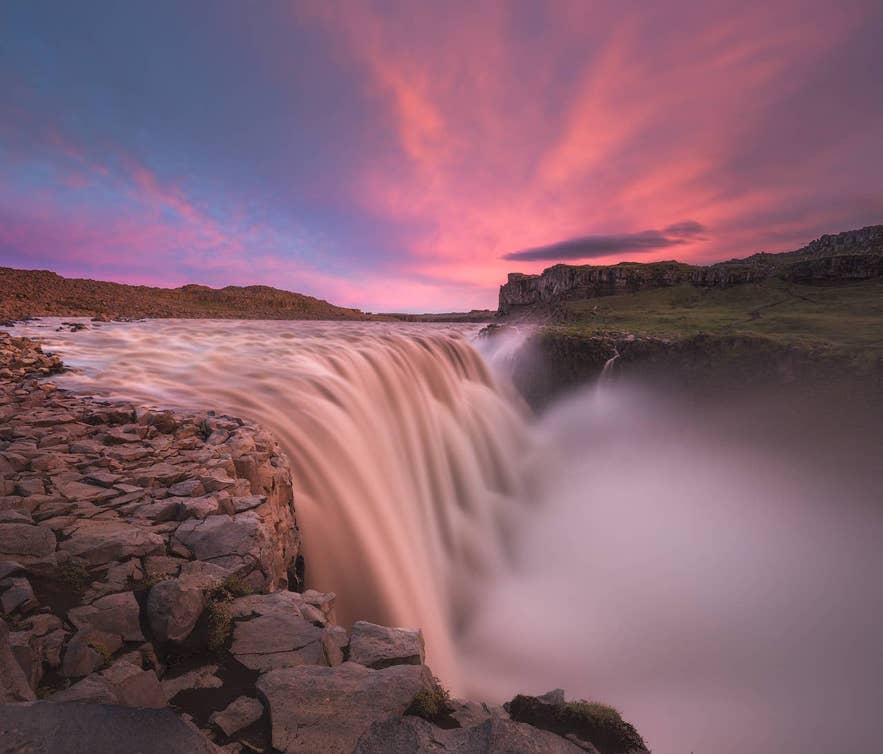
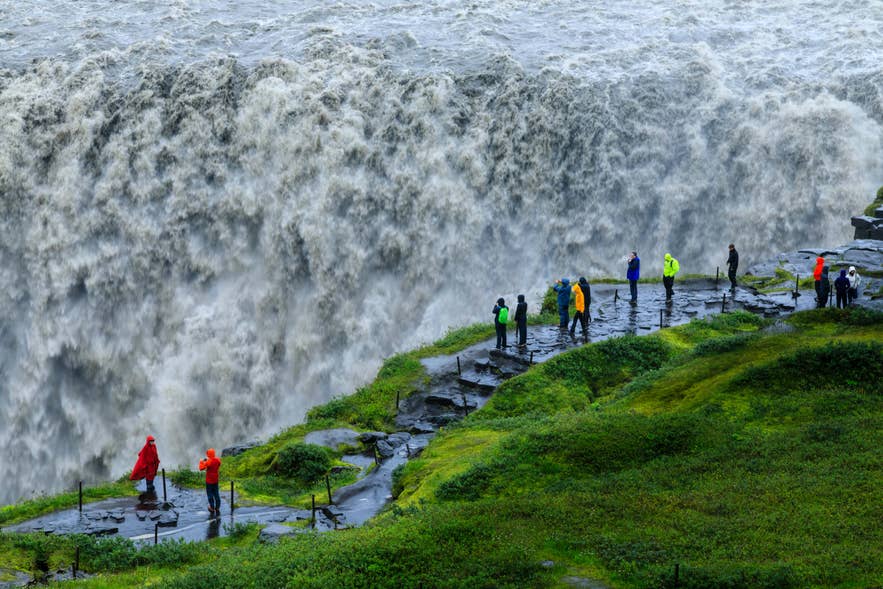
Dettifoss is the most powerful waterfall in Iceland and the second most powerful in Europe, behind Switzerland’s Rhine Falls. Stretching 330 feet (100 meters) wide and plunging 144 feet (44 meters) into the Jokulsargljufur Canyon, Dettifoss sends an average of 193 cubic meters of water over the cliff every second.
Dettifoss sits inside Vatnajokull, one of the largest national parks in Iceland by area, and has appeared in filming locations in Iceland including Prometheus. It is the centerpiece of the Diamond Circle route in North Iceland.
How To Visit Dettifoss Waterfall
Dettifoss has two viewpoints: the east bank (Road 864, paved access) and the west bank (Road 862, smoother drive but a longer walk from the parking area). Dettifoss tours from Akureyri usually include Lake Myvatn, Godafoss, and Asbyrgi Canyon. The 7-day self-drive North Iceland tour covers all four in a single itinerary.
Dettifoss Parking Information
Both parking lots are free. The west-bank lot is closer to the rim and offers the most photographed angle. The east-bank lot has the marked safety trails and the platform closest to the falls.
4. Godafoss Waterfall, the Waterfall of the Gods
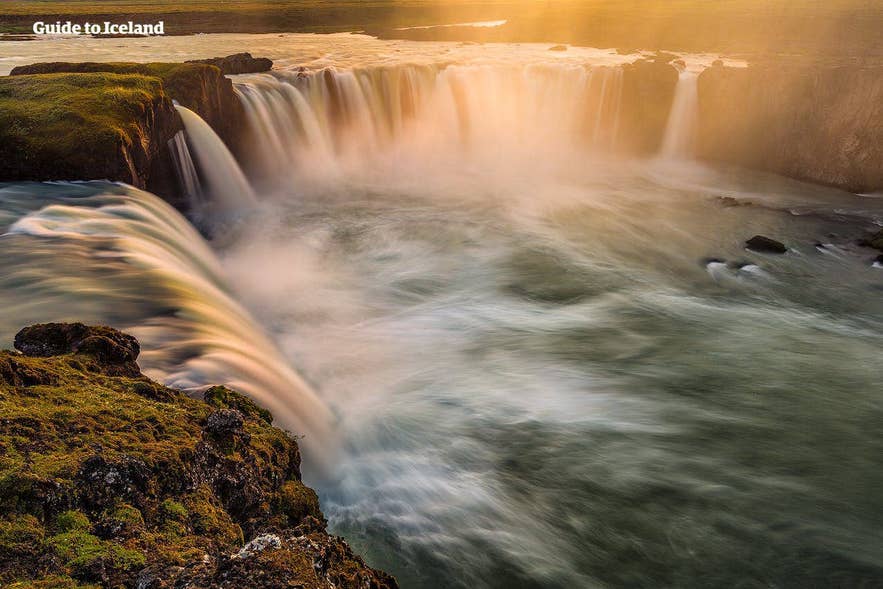
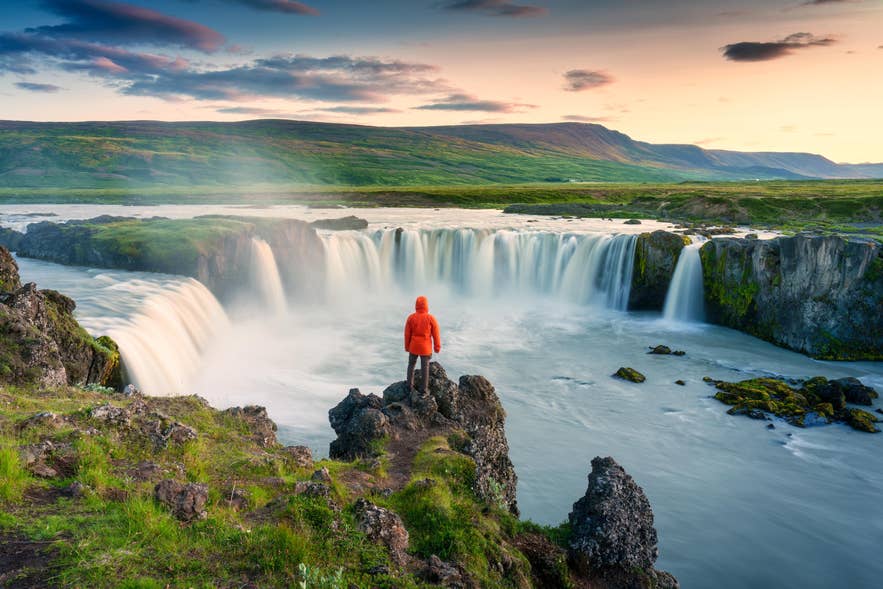
Godafoss is a horseshoe-shaped waterfall in North Iceland that stands 39 feet (12 meters) high and stretches 98 feet (30 meters) across. The Icelandic name means “Waterfall of the Gods,” tied to one of the most consequential moments in Icelandic history.
When Iceland converted to Christianity around the year 1000, lawspeaker Thorgeir Ljosvetningagodi symbolically threw his pagan idols into Godafoss — the event that gave the falls their name and the kind of historical weight that’s hard to ignore standing at the edge. The waterfall is also among the top waterfalls in Iceland to see in winter, when partial ice creates a striking contrast with the flowing center channel.
How To Visit Godafoss Waterfall
Godafoss sits directly on Route 1 between Akureyri and Lake Myvatn, about 30 minutes from Akureyri. A Diamond Circle tour from Akureyri bundles it with Dettifoss, Asbyrgi Canyon, and Lake Myvatn. Car rental in Akureyri is the most flexible way to combine it with other Akureyri tours. Cruise travelers can take the Godafoss Waterfall shore excursion from Akureyri Port or pair it with the Godafoss and Forest Lagoon package.
Godafoss Parking Information
Two free parking lots flank the waterfall, one on each side of Route 1. Both connect to short paved paths leading to the viewing platforms.
3. Seljalandsfoss and Gljufrabui Waterfalls
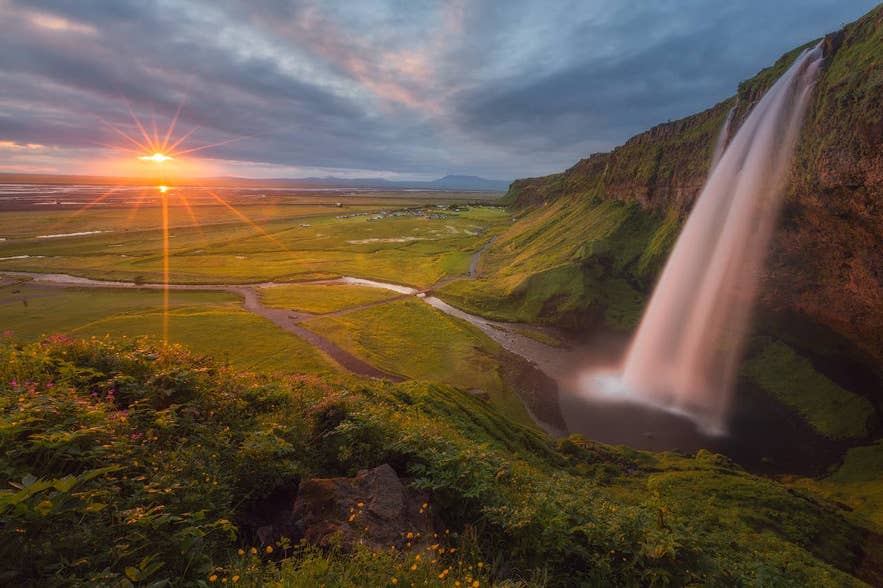
Seljalandsfoss stands 197 feet (60 meters) tall and is the most famous waterfall in Iceland where visitors can walk behind the cascade. It sits on the Seljalands River about 80 miles (128 kilometers) from Reykjavik on Route 1. Seljalandsfoss is one of the few Icelandic waterfalls you can walk behind.
Five minutes’ walk north, Gljufrabui Waterfall hides inside a narrow rock cleft. Wading a few steps up the stream reveals the falls inside their hidden chamber.
How To Visit Seljalandsfoss and Gljufrabui Waterfalls
Both falls share the same parking area off Route 1, about 1 hour 50 minutes from Reykjavik. A loop trail covers both in 20 to 30 minutes. Seljalandsfoss tours from Reykjavik include the 10-hour South Coast sightseeing tour and the 2-day guided South Coast winter trip.
Seljalandsfoss Parking Information
Parking is paid by the hour at the main lot (current rate around ISK 750 via the Parka app). Restrooms and a small cafe sit at the lot entrance.
2. Skogafoss Waterfall
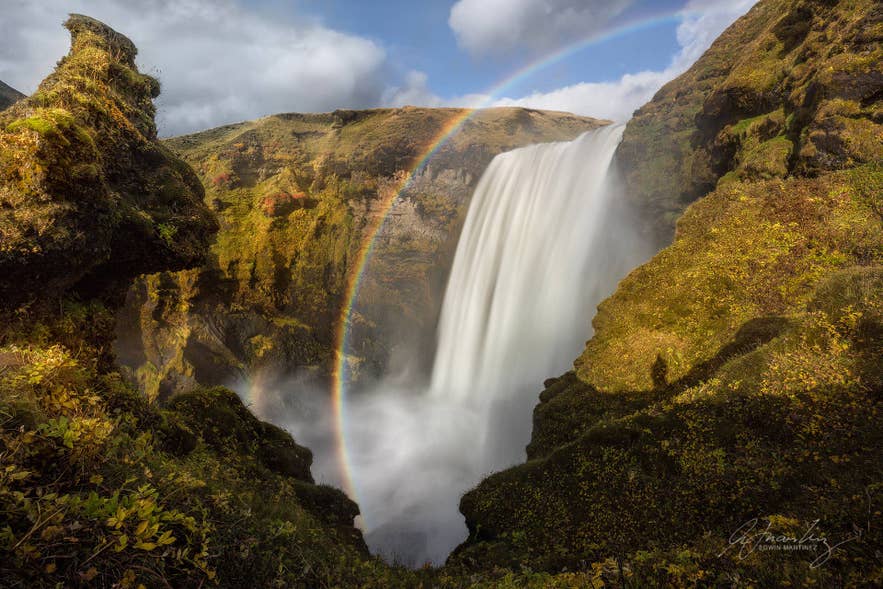
Skogafoss has a single drop of 197 feet (60 meters) and a width of 82 feet (25 meters), and it is one of Iceland’s largest waterfalls by volume. It sits at the village of Skogar on the South Coast of Iceland, visible from Route 1. Skogafoss is located about 18.5 miles (30 kilometers) east of Seljalandsfoss Waterfall.
A 527-step staircase climbs to a viewing platform above the falls. From there, the Fimmvorduhals Hiking Trail continues into Thorsmork. The Skogar Museum sits at the foot of the falls and offers a window into Icelandic cultural history through turf houses, traditional buildings, and a collection of regional artifacts.
How To Visit Skogafoss Waterfall
Skogafoss tours from Reykjavik typically pair the falls with Seljalandsfoss and other South Coast trips. The Katla ice cave tour from Reykjavik combines Skogafoss with an ice cave expedition under Myrdalsjokull.
Skogafoss Parking Information
A free public parking area sits beside the campground at the base of the falls. Hotels in South Iceland include Hotel Skogafoss with rooms overlooking the waterfall.
1. Gullfoss Waterfall, the Golden Falls
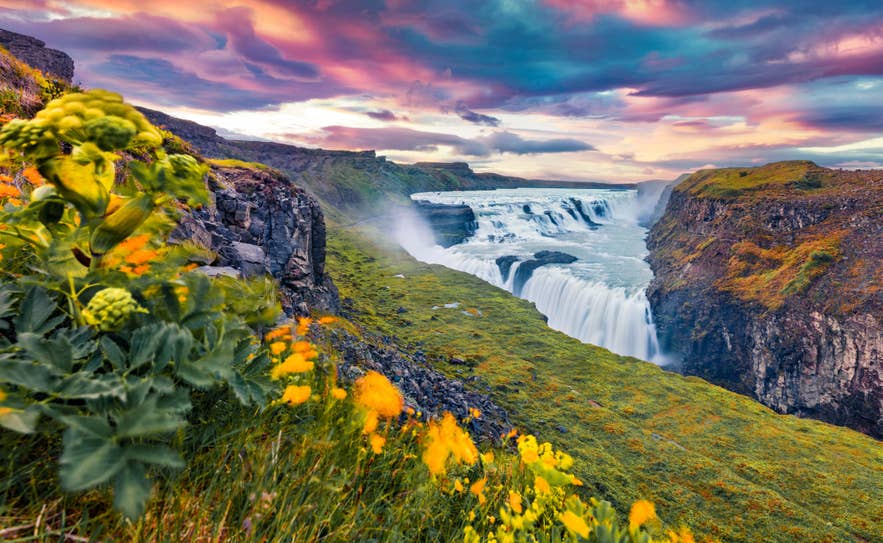
Gullfoss is a two-tiered waterfall in Southwest Iceland that drops a combined 105 feet (32 meters) into a rugged canyon. The water comes from the Hvita River, fed by glacial meltwater from Langjokull. The Icelandic name means “Golden Falls,” a reference to the amber hue the water takes on in late-afternoon light.
Gullfoss is one of three primary stops on the Golden Circle, along with Geysir Geothermal Area and Thingvellir. Gullfoss is photogenic in every season, from spray rainbows in summer to ice formations in winter in Iceland.
How To Visit Gullfoss Waterfall
Gullfoss is about 1 hour 45 minutes from Reykjavik on the Golden Circle route. Golden Circle tours typically run year-round, including the Gullfoss Waterfall tours specifically and the Golden Circle minibus tour from Reykjavik. Self-drive travelers can reach it via Routes 35 and 37.
Gullfoss Parking Information
Two parking lots serve the site: a lower lot with a cafe and gift shop, and an upper lot with the main viewing platforms. Both are free. Best Golden Circle hotels are within a short drive and make a useful base for early-morning visits before the day-tour crowds arrive.
Top 10 Underrated Waterfalls in Iceland (Ranked 11–20)
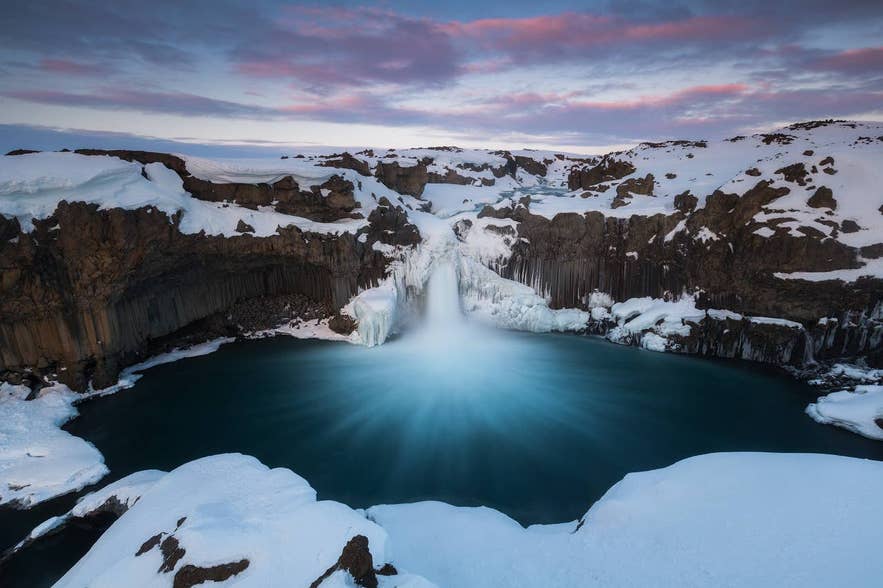
Iceland’s 10 underrated waterfalls reward the detour off the Ring Road. Most need a short hike, a 4x4, or both, but each delivers a quieter experience than the famous falls and rewards photographers with less-photographed angles. The list continues the countdown from #20 to #11.
20. Oxararfoss Waterfall
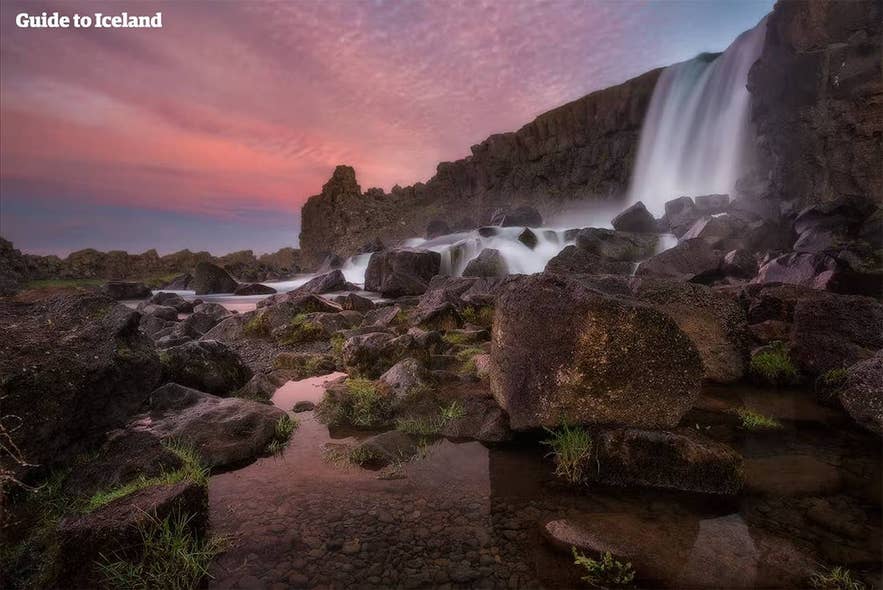
Oxararfoss is a 20-foot (6-meter) waterfall on the Oxara River inside Thingvellir National Park, reached by a 10-to-15-minute walk from the main car park. The park is about 27 miles (44 kilometers) from Reykjavik and is part of the Golden Circle route.
Thingvellir is a UNESCO World Heritage Site and the only place on Earth where the Mid-Atlantic Ridge is visible above sea level. Snorkeling in Silfra is the area’s most popular activity beyond the waterfall.
How To Visit Oxararfoss Waterfall
Park at the main P1 parking area inside Thingvellir National Park, then follow the boardwalk trail to Oxararfoss. The walk takes 10 to 15 minutes each way. Renting affordable cars in Iceland is the easiest way to combine Oxararfoss with the rest of the Golden Circle loop.
19. Selfoss Waterfall
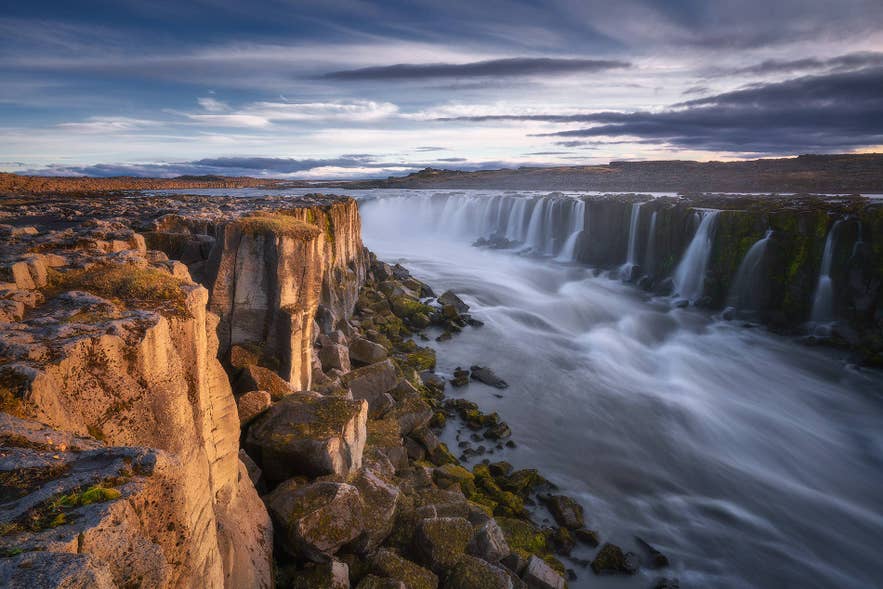
Selfoss Waterfall is only 36 feet (11 meters) tall but stretches roughly 330 feet (100 meters) wide across the Jokulsa a Fjollum river in North Iceland, immediately upstream of Dettifoss. Selfoss Waterfall sits about 100 miles (160 kilometers) from Akureyri.
Selfoss is in NORTH Iceland and should not be confused with the town of Selfoss in the south. The hike to the waterfall takes 15 to 20 minutes from the Dettifoss parking area.
How To Visit Selfoss Waterfall
The easiest way is to combine Selfoss with Dettifoss in a single visit. The guided 4x4 tour to Lake Myvatn, Godafoss, Dettifoss and Selfoss Waterfalls from Akureyri covers all four in a long day trip from Akureyri.
18. Hrafnabjargafoss Waterfall
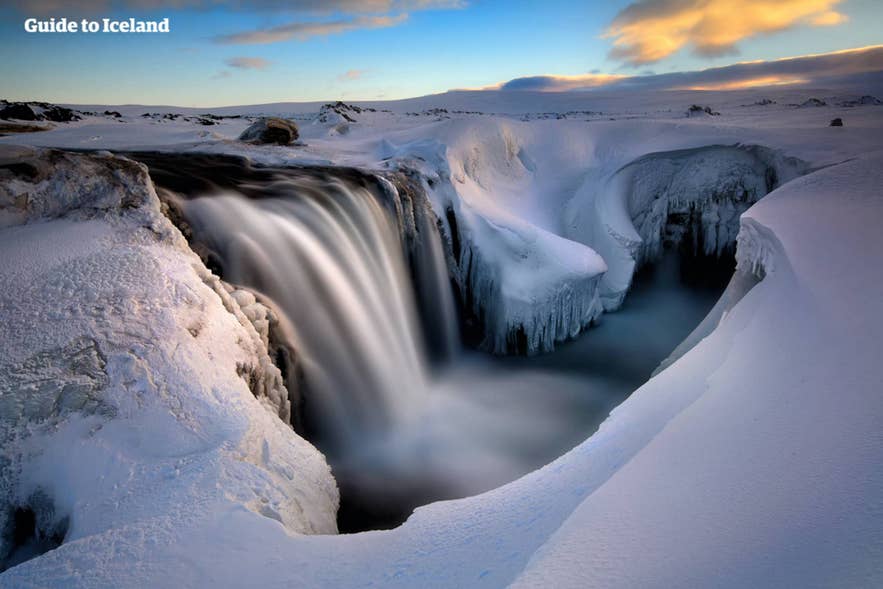
Hrafnabjargafoss is a wide, multi-channel waterfall on the Skjalfandafljot River in the Highlands, between Godafoss and Aldeyjarfoss. The setting is open and remote, with no facilities nearby.
How To Visit Hrafnabjargafoss Waterfall
Access is via Route 842 from Godafoss, then F26 from there. A 4x4 rental car is required past the Route 842 junction. The 6-day summer guided tour package to North Iceland includes both Hrafnabjargafoss and Aldeyjarfoss.
17. Kirkjufellsfoss Waterfall
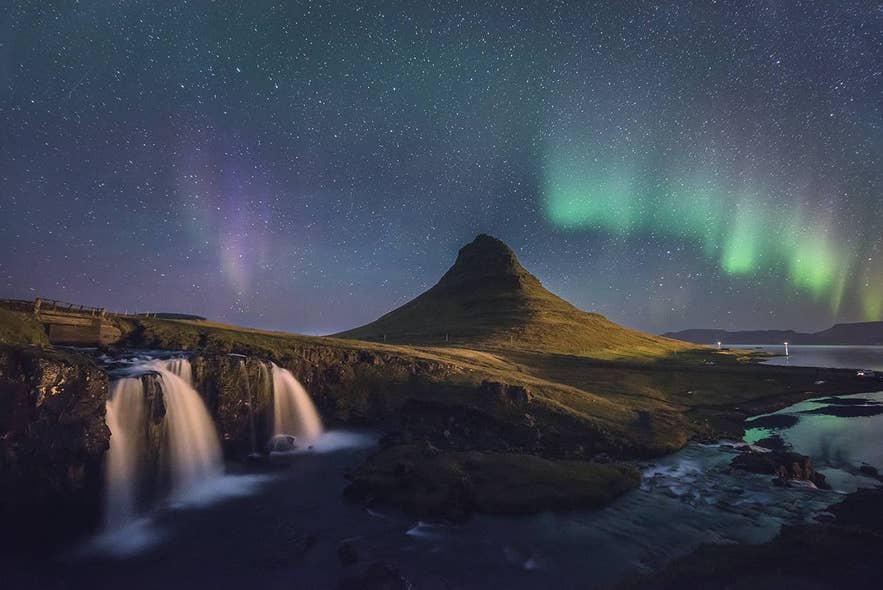
Kirkjufellsfoss is a small three-tier waterfall on the Snaefellsnes Peninsula, best known for the view of Kirkjufell Mountain framed directly behind it. Kirkjufellsfoss is one of the most photographed waterfalls in Iceland because of that single composition.
The setting works in every season: the midnight sun in summer, autumn in Iceland’s warm light, and northern lights in winter all add a layer to the scene. The nearby town of Grundarfjordur has the closest cafes and accommodation.
How To Visit Kirkjufellsfoss Waterfall
Park at the lot just off Route 54 about 2 hours 30 minutes from Reykjavik. From the lot, the main viewpoints are a short 5-minute walk. Snaefellsnes tours include the Snaefellsnes Peninsula minibus tour from Reykjavik, which usually pairs Kirkjufellsfoss with Djupalonssandur Beach, and Snaefellsnes accommodations make a multi-day visit easy.
16. Bruarfoss Waterfall
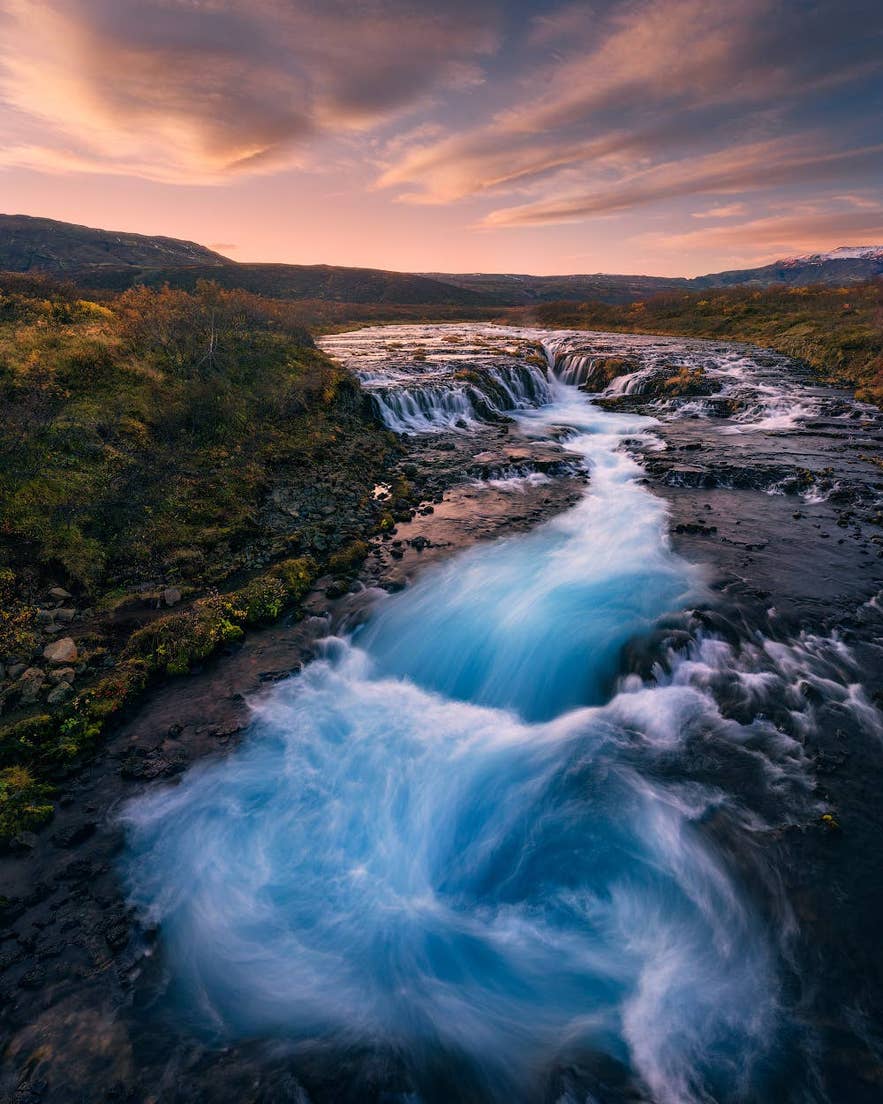
Bruarfoss is famed for having the bluest water of any waterfall in Iceland, fed by glacial meltwater from Langjokull that filters through lava rock and emerges in a vivid turquoise. Bruarfoss sits on the Bruara River in Southwest Iceland, roughly 15 minutes’ drive from Geysir.
A parking area opened near the trailhead in spring 2023, replacing the old 4.4-mile round-trip hike. The current fee is around ISK 850 per vehicle via the Parka app.
How To Visit Bruarfoss Waterfall
From the parking lot it is only a 5-minute walk to the falls. Bruarfoss makes a natural detour on a Golden Circle drive between Geysir and Gullfoss or Kerid Crater. The small-group Golden Circle minibus tour from Reykjavik can include the stop on request.
15. Haifoss Waterfall
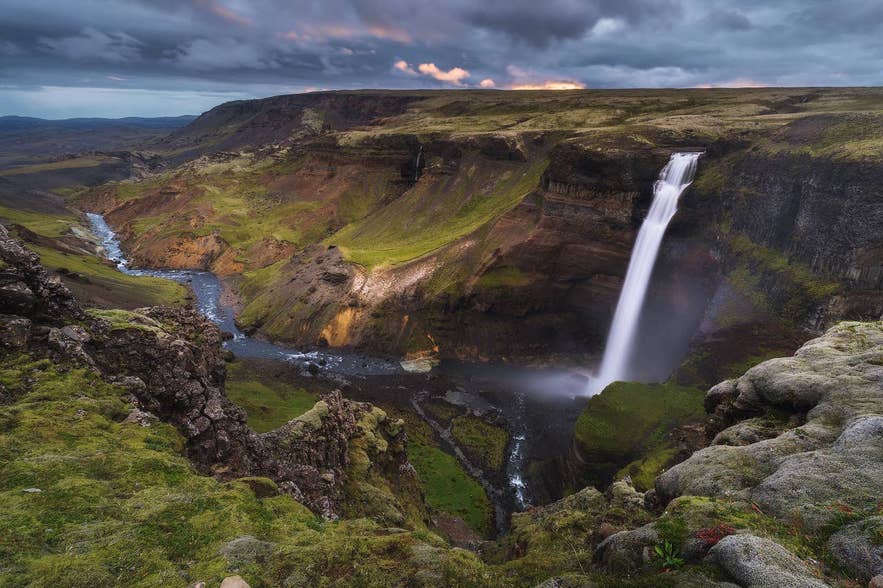
Haifoss is one of Iceland’s tallest waterfalls at 400 feet (122 meters), sitting in the Thjorsardalur valley in South Iceland. The neighboring Granni Waterfall drops alongside it from a similar height, framing the canyon from the same viewpoint.
Haifoss is among the lesser-known waterfalls in Iceland for one reason: the access road. Landmannalaugar tours sometimes include Haifoss as a detour, and the Landmannalaugar bus tour with hiking and nature baths from Reykjavik covers both areas in a single day.
How To Visit Haifoss Waterfall
From Reykjavik, drive Route 1 east to Route 26, then Route 32, then the rough 4-wheel-drive-only Road 332 to the viewpoint. From a 2-wheel-drive parking area on Route 32, hiking the last 4.5 miles (7.2 kilometers) is the alternative. Renting a car with sufficient clearance matters.
14. Klifbrekkufossar Waterfall
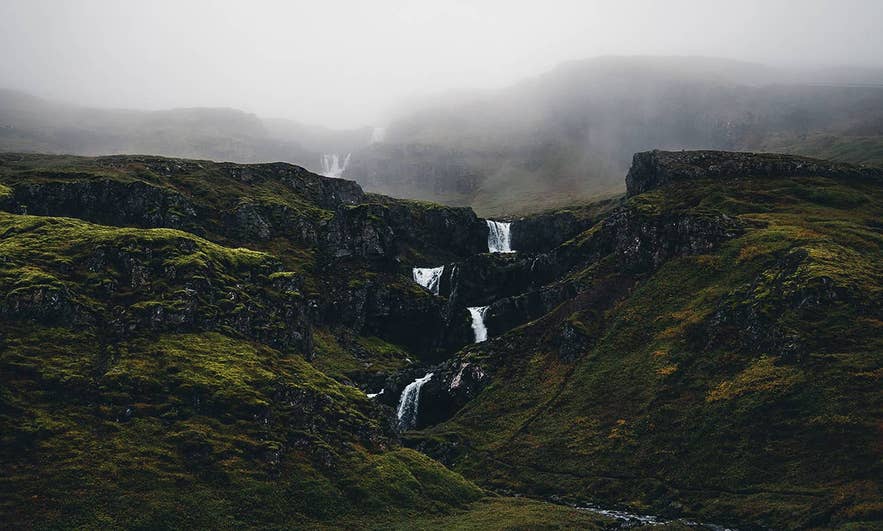
Klifbrekkufossar tumbles down seven cliff steps into Mjoifjordur Fjord in East Iceland, with a total height exceeding 295 feet (90 meters). The plural form (“-ar” suffix in Icelandic) reflects that it is a series of cascades, not a single drop.
Mjoifjordur is one of Iceland’s least-visited fjords, known for roaming reindeer and pristine, untouched scenery. The route in is one of Iceland’s most scenic, with sweeping fjord views and a small village of about 35 residents at the end, and Klifbrekkufossar sits on the way down. The waterfall is one of the best places to visit in East Iceland.
How To Visit Klifbrekkufossar Waterfall
From Egilsstadir, take Road 953 into Mjoifjordur. The road is steep, narrow, and gravel for most of its length, and is closed in winter. Summer access only. Eastfjords tours include the small-group Super Jeep tour to Mjoifjordur Fjord from Seydisfjordur, which can be combined with a visit to the Vok Geothermal Baths.
13. Aldeyjarfoss Waterfall
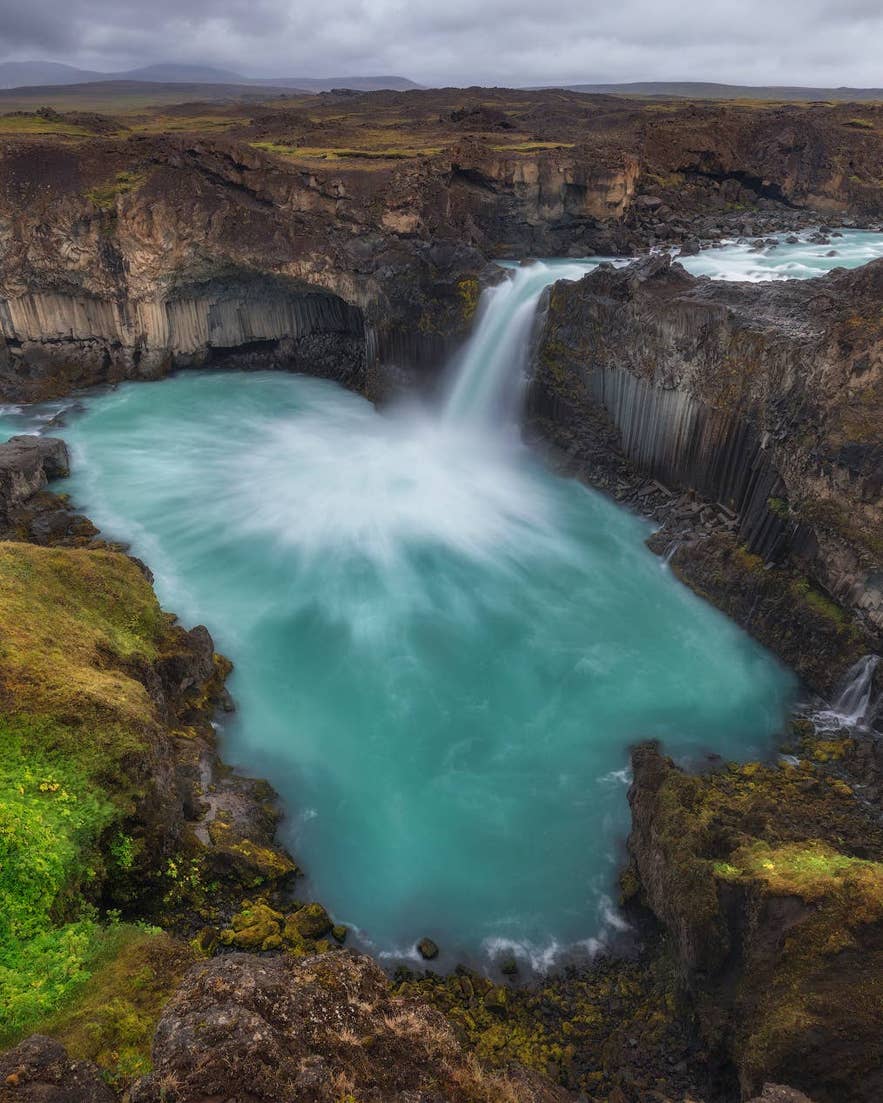
Aldeyjarfoss stands 65 feet (20 meters) tall on the Skjalfandafljot River in the Highlands. The waterfall is framed by columnar basalt that belongs to the 9,000-year-old Bardardalshraun lava field, formed by the same eruption that shaped the surrounding terrain. Aldeyjarfoss sits north of Odadahraun Lava Field in a stark, treeless landscape.
Aldeyjarfoss’s basalt columns are among the most dramatic in Iceland. In winter, ice forms along the columns, making Aldeyjarfoss one of the top waterfalls in Iceland to see in winter for photographers willing to drive the F-road.
How To Visit Aldeyjarfoss Waterfall
From Godafoss, drive Route 842 south for about 45 minutes, then continue 6 km on F26 to the parking area. The final stretch needs a 4x4. From the lot, the main viewpoint is a 10-to-15-minute walk. Guided Highlands tours include the 4-hour tour of Aldeyjarfoss and Godafoss Waterfalls from Akureyri.
12. Kvernufoss Waterfall
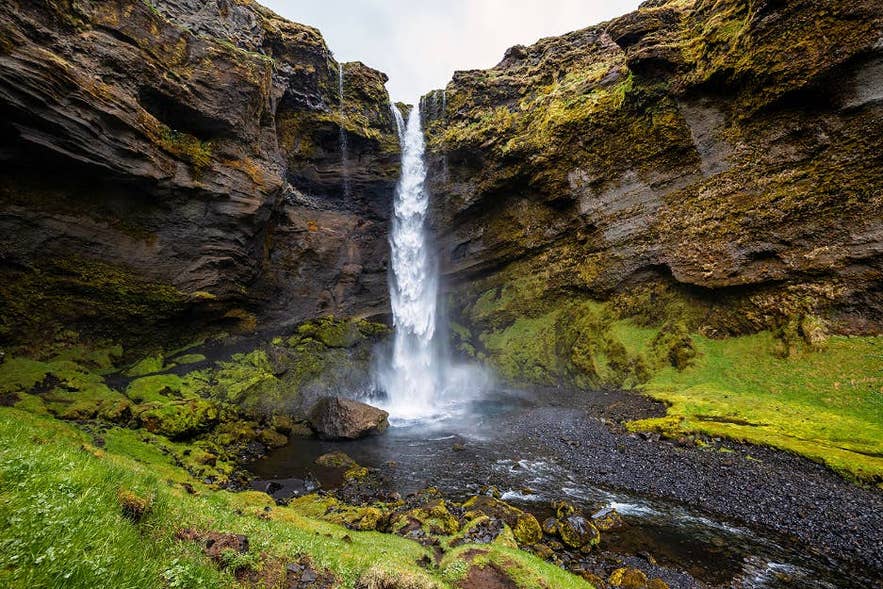
Kvernufoss is a 98-foot (30-meter) waterfall in a narrow moss-walled gorge directly behind the Skogar Museum, a short walk from Skogafoss on the South Coast. Visitors can walk behind Kvernufoss, much like its more famous neighbor Seljalandsfoss, but with far smaller crowds.
How To Visit Kvernufoss Waterfall
From the Skogar Museum parking lot, a 20-minute marked trail leads directly into the gorge. South Coast tours sometimes include Kvernufoss as a quiet add-on. The private photo tour of the South Coast from Reykjavik is the best option for travelers focused on photography.
11. Sigoldugljufur Canyon
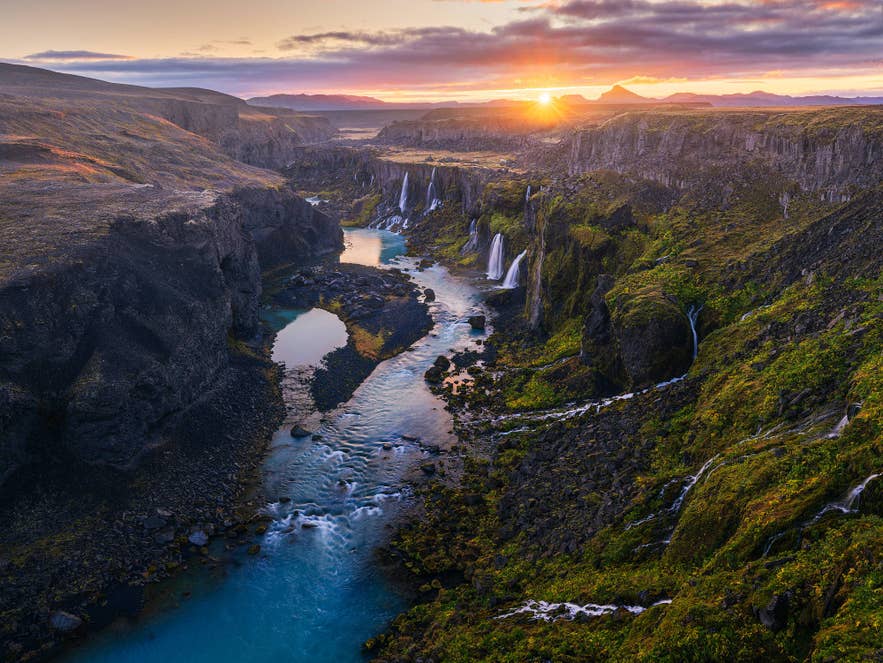
Sigoldugljufur is a narrow Highland canyon lined with dozens of small waterfalls that seep through the porous volcanic rock. The Sigalda hydropower station opened upstream in 1978, dropping the canyon’s water level and exposing the rock faces that now feed the side cascades. Sigoldugljufur is one of the top canyons in Iceland.
The canyon sits in the Fjallabak Nature Reserve in the Highlands, off the F208 Highland road. Hrauneyjafossar (also called Lekafossar or Fogrufossar) is the main set of waterfalls visible from the canyon edge.
How To Visit Sigoldugljufur Canyon
Access is via the F208 Highland road, summer only (typically June to mid-September). A 4x4 rental in Iceland is required for any F-roads drive. Guided Highlands tours include the small-group Highlands super jeep tour from Reykjavik and the private Highlands tour with a professional photographer.
Practical Info for Visiting Waterfalls in Iceland
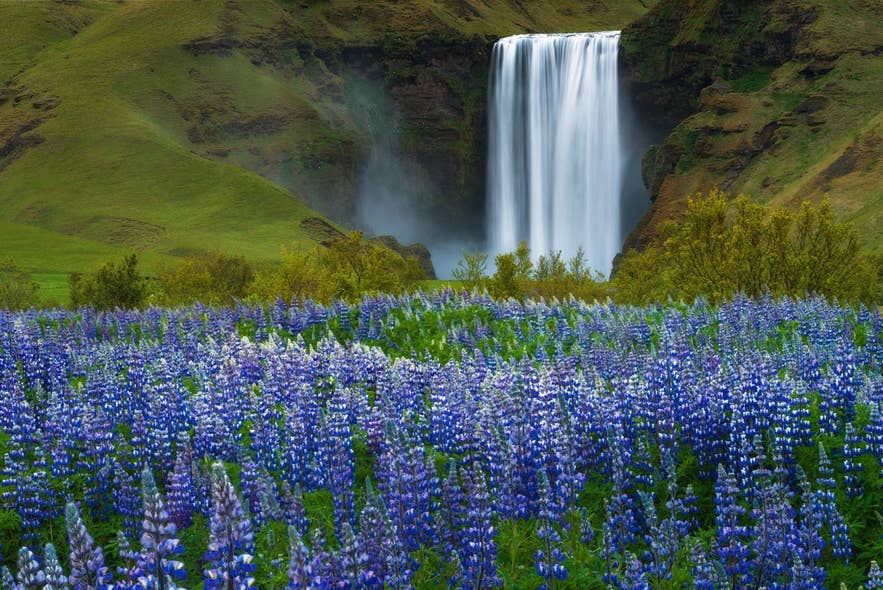
Iceland’s waterfalls are open year-round and free to visit at most sites, but conditions change dramatically by season. The four sections below cover when to go, how to stay safe on slippery rocks, what to wear in the spray, and how to leave the trails as you found them.
Best Seasons to See Waterfalls in Iceland
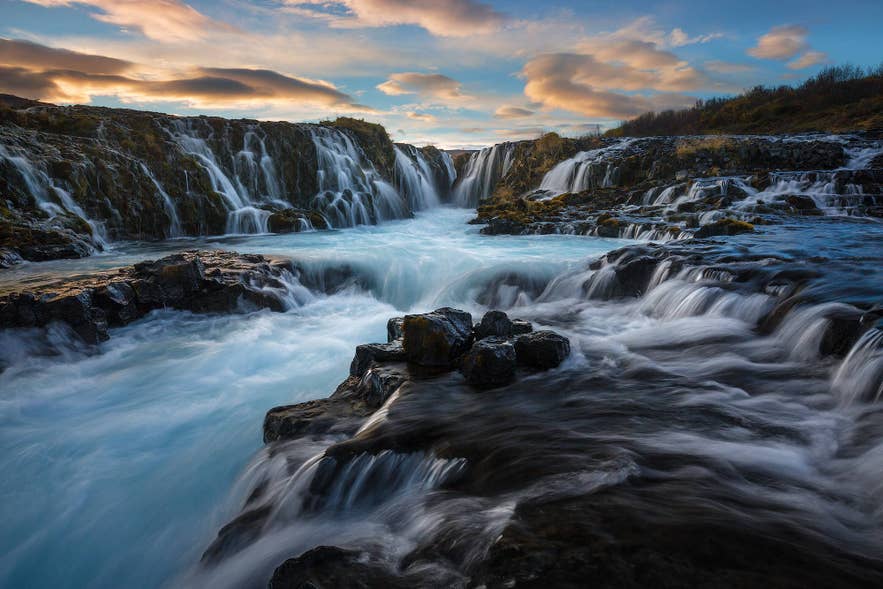
Summer in Iceland (June to August) is the easiest time to see most waterfalls. Roads are open, daylight stretches close to 24 hours during the midnight sun, and Highland F-roads are accessible by 4x4. Most travelers choose summer self-drive tours or join a guided tour during this window.
Iceland in winter (December to February) is for travelers who want partially frozen waterfalls and the northern lights. Highland routes close, so falls like Aldeyjarfoss, Haifoss, and Sigoldugljufur are not reachable. The ultimate winter itinerary in Iceland covers what is accessible from December to February.
Spring (March to May) brings the highest meltwater flow and the most dramatic photos at Dettifoss and Skogafoss. Autumn in Iceland (September to November) is the quietest tourist window with autumn colors at sites like Hraunfossar.
Essential Safety Tips for Visiting Icelandic Waterfalls
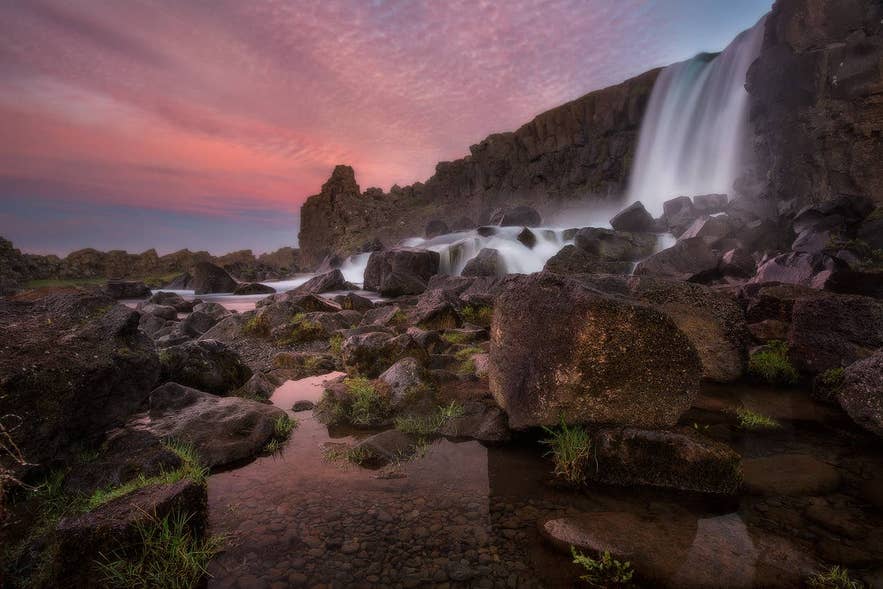
Most Icelandic waterfalls have unfenced viewpoints. The rocks near the edge are wet and slippery in every season, and rescue access is slow. Check current alerts at safetravel.is before any hike.
-
Stay on marked paths. Trails are routed for a reason, especially around Gullfoss, Glymur, and Dettifoss where the canyon edges are eroded.
-
Mind the spray zone. Skogafoss, Seljalandsfoss, and Dettifoss all produce mist that ices over surrounding rocks even in summer.
-
Check road conditions before driving. F-road conditions change daily in shoulder seasons. Road.is is the official source.
-
Don’t try walk-behind hikes alone in winter. The path behind Seljalandsfoss closes when ice builds up, and signs at the parking lot confirm whether it is open.
What To Wear When Exploring Iceland’s Waterfalls
Waterproof everything. Even on dry days, waterfall spray will reach you at Skogafoss, Seljalandsfoss, Dettifoss, and most of the underrated falls. Icelandic weather shifts in 20-minute windows. Layer accordingly.
-
Waterproof jacket and pants. A rain shell over a fleece works year-round.
-
Sturdy waterproof boots. Trail boots with ankle support, especially for Svartifoss, Glymur, and Haifoss.
-
Microspikes in winter. Many viewing platforms ice over from October to April.
-
Lens cloth or microfiber cloth. Spray on camera lenses becomes spots in photos within seconds.
The best clothes and gear for tours in Iceland guide breaks down what to bring by season.
Respecting Iceland’s Nature
Iceland’s volcanic soils and moss take decades to recover from a single footprint. Stay on marked paths, even when the photo angle would be better off-trail. Off-road driving is illegal and carries fines starting around ISK 250,000. Travel etiquette in Iceland covers the broader expectations.
Carry out everything you bring in, including organic waste like apple cores and orange peels. Iceland’s slow-decomposing climate means they sit on the trail for years.
Map of Iceland’s Most Beautiful Waterfalls
Use this map to find the best waterfalls in Iceland and plan your perfect waterfall-hopping adventure.
Quick Trivia: Fun Facts About Iceland’s Waterfalls
Iceland’s waterfalls carry centuries of folklore, geology, and quirks. Here are the trivia items most worth sharing on the road.
-
Skogafoss treasure legend: A Viking settler named Thrasi Thorolfsson is said to have hidden a chest of gold behind Skogafoss. The chest has never been found.
-
Seljalandsfoss used to meet the sea: The cliff line behind Seljalandsfoss marks Iceland’s former coastline before lava and erosion pushed the shore south.
-
Svartifoss inspired Reykjavik’s main church: The hexagonal basalt columns at Svartifoss are the design model for Hallgrimskirkja Church’s facade in central Reykjavik.
-
Aldeyjarfoss columns are 9,000 years old: The basalt columns framing Aldeyjarfoss formed in a single eruption that shaped the entire Bardardalshraun lava field.
-
Sigoldugljufur is mostly man-made: The canyon’s dozens of seep waterfalls only appeared after the Sigalda hydropower station opened in 1978 and dropped the water level.
-
Dynjandi means “thunderous”: The collective sound of the main fall and the six smaller falls below it is the source of the name.
-
Morsarfoss only appeared this century: Iceland’s tallest waterfall at 228 meters was identified in 2007 as the Morsarjokull glacier retreated, then officially measured in 2011.
-
Hraunfossar emerges from lava, not over it: The river is invisible until it surfaces through cracks in the 1,000-year-old Hallmundarhraun lava field.
-
Gullfoss was almost destroyed by a hydroelectric project: Sigridur Tomasdottir, daughter of a local landowner, walked barefoot to Reykjavik in protest in the early 1900s. A memorial plaque to her sits at the upper lot.
-
Iceland has more than 10,000 waterfalls but fewer than 200 named: Most of the country’s cascades are seasonal or too small to have an entry in the official register.
Witness Iceland’s Waterfalls in Person
Iceland’s 20 most beautiful waterfalls span every region of the country, with options on the South Coast Ring Road, the Diamond Circle in the north, and the Highland F-roads. A Golden Circle day trip covers Gullfoss and Oxararfoss, and a full Ring Road loop hits all of the famous 10 in a week.
In summer, a 1-week self-drive tour of Iceland’s west and south coasts covers Skogafoss, Seljalandsfoss, Gullfoss, and Bruarfoss in a relaxed pace. In winter, the 9-day northern lights Ring Road self-drive tour combines the famous falls with aurora chances over a full Ring Road loop.
Have you visited any of the famous waterfalls in Iceland, or do you have a favorite on your bucket list? Share your experiences and tips in the comments below.

I’m Andri Gunnar Hauksson, a marketing specialist, travel writer, and copywriter from Keflavík who specializes in Icelandic travel, local culture, and destination storytelling. I’m an expert in the Reykjanes Peninsula and passionate about sharing the region’s volcanic landscapes, coastal scenery, hidden spots, and cultural history through engaging and informative content. Now based in downtown Reykjavík, I write about travel, music, culture, and local experiences while helping businesses communicate through clear, effective copywriting and marketing.