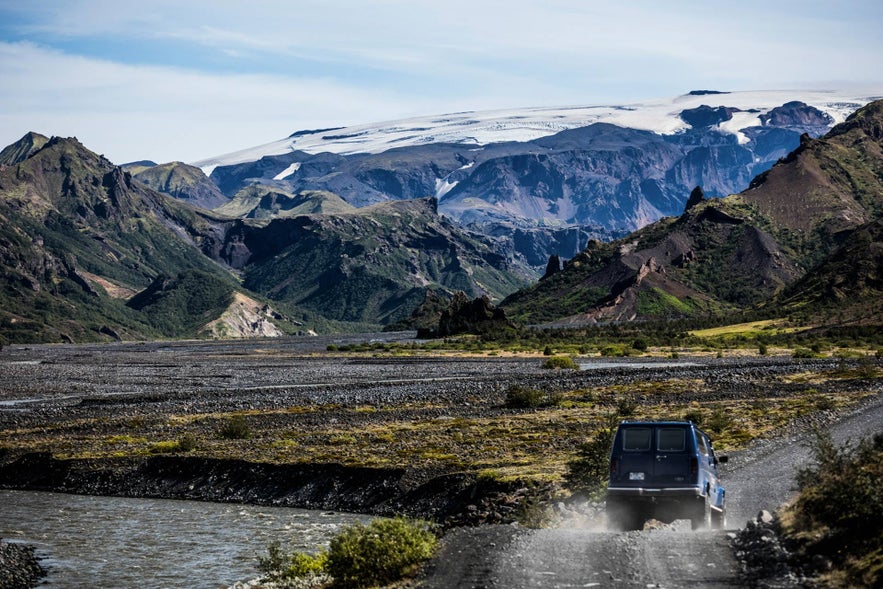
F-roads in Iceland refer to "mountain roads" (the "F" referring to the Icelandic word for mountain: "Fjall") that are primarily found in the Highlands and less accessible parts of the country. Usually only open during the summer months, F-roads can be tricky to traverse and require renting a 4x4 vehicle ready to take them on.
What F-roads are, and whether you need a 4x4 for them, is one of the most frequently asked questions about Iceland, and this guide answers both.
Why You Can Trust Our Content
Guide to Iceland is the most trusted travel platform in Iceland, helping millions of visitors each year. All our content is written and reviewed by local experts who are deeply familiar with Iceland. You can count on us for accurate, up-to-date, and trustworthy travel advice.
F-roads are often narrower, less maintained, and more rugged than primary roads. They are usually gravel roads, though some can be rougher tracks, especially as you go deeper into the Highlands. Knowing safe driving practices is crucial for anyone planning self-drive tours in Iceland, whether the Highlands are part of that route or not.
To help visitors better understand the challenges of driving in remote areas, we spoke with Gunnar Geir Gunnarsson, Head of Safety and Education at the Icelandic Transport Authority. Throughout this guide, you'll find his expert advice on navigating gravel roads, river crossings, and other conditions that often catch foreign drivers off guard.
The Icelandic wilderness is full of natural wonders just begging to be explored. If driving in Iceland and visiting spectacular locations found at the end of bumpy F-roads is a non-negotiable, you're going to need to come prepared.
So, let's jump into everything you need to know about F-roads in Iceland!
Where to Find the F-Roads of Iceland
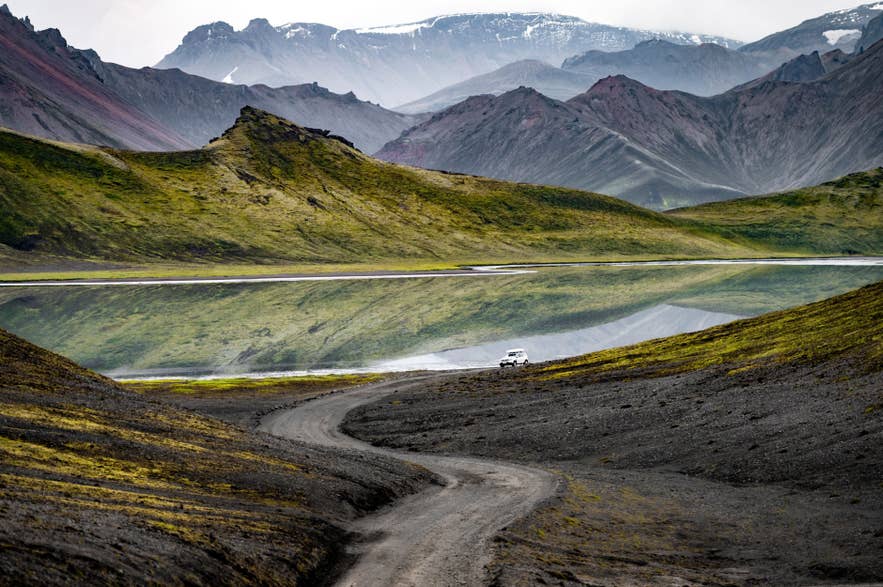 Nearly all of Iceland's F-roads lead to one place: the Highlands. This wild, empty interior sits in the middle of the country, far from the Ring Road and its towns. The land here is too rough for paved roads, so it's crossed by gravel mountain tracks instead. That's where you'll find almost every F-road.
The Highlands are a summer-only destination. Most F-roads open gradually between June and early July, once the snow melts, and stay open into September. Dates shift every year with the weather, so check road.is before you go. The cheapest months are the ones with the F-roads closed.
Two famous routes run north to south across the interior. Kjolur (F35) passes Gullfoss and the Hveravellir hot springs, with no rivers to cross. Sprengisandur (F26) is the wilder of the two, with real river crossings and no services for hours.
In the south, F-roads lead to the Highlands' best-loved spots: Landmannalaugar, with its colorful mountains and hot springs, and the green valley of Thorsmork. Further northeast, behind Lake Myvatn, rougher routes head to Askja, a remote volcanic caldera with a crater lake. And closer to the south coast, a short detour reaches the dramatic Laki craters.
When Are the F-Roads Open?
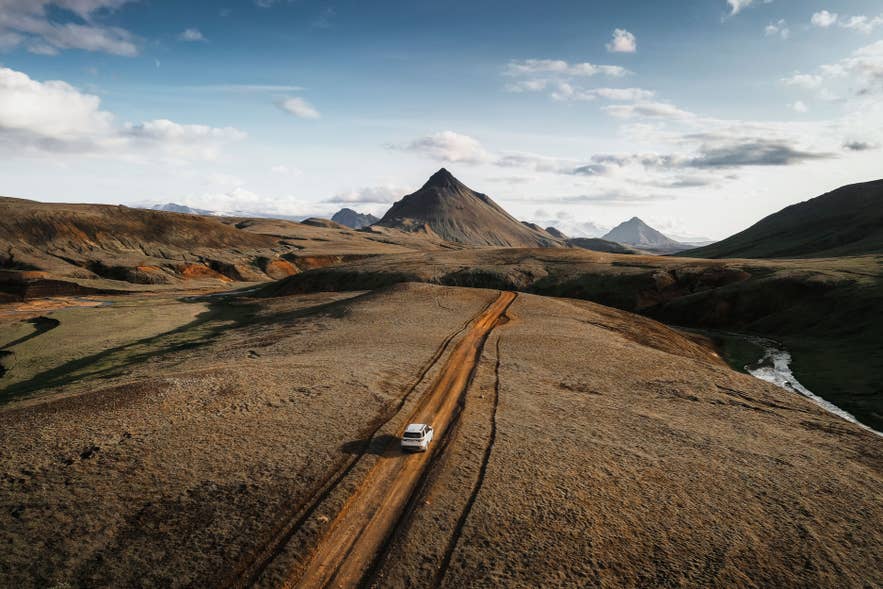
F-roads are only open during the summer months. They usually open between June and early July and stay open into September, depending on weather conditions and snow melting. During other times of the year, these roads are often closed due to unsafe conditions, such as snow, ice, or flooding.
Even during the summer months, you should always check road.is, which lists the conditions of the roads in Iceland at any given time. Even though summer has technically arrived, the roads may still be closed due to unforeseen circumstances.
Gunnar also emphasizes that many visitors underestimate how different Icelandic gravel roads can feel compared to paved highways.
If a vehicle begins to slide on gravel or icy surfaces, he advises drivers to reduce speed smoothly rather than braking aggressively. If the rear of the vehicle begins to drift, steering gently in the direction of the slide while slowing down can help regain control.
What Type of Car is Suitable for F-Roads?
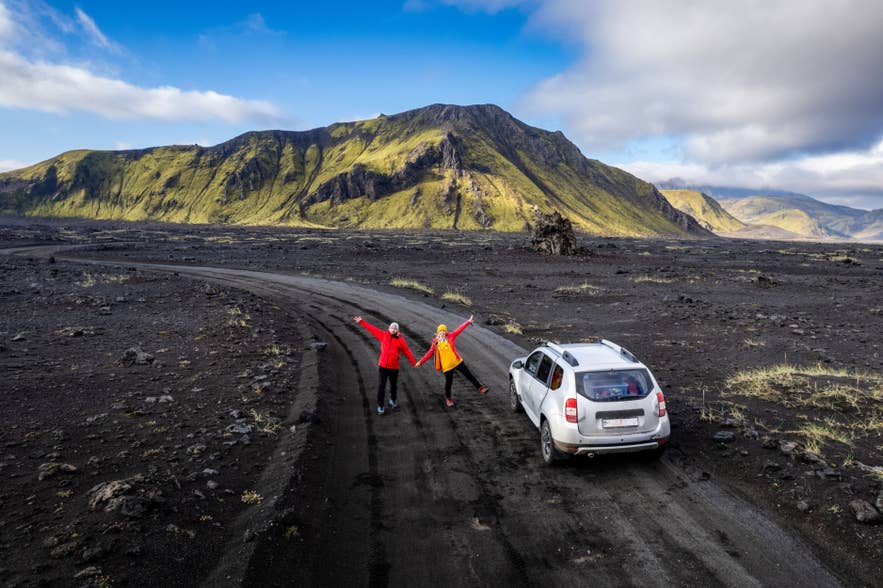 While a 4x4 (four-wheel drive) vehicle is a requirement for driving on F-roads in Iceland, not all 4x4 vehicles are suitable for this purpose. The suitability of a 4x4 vehicle for F-roads depends on several factors, such as ground clearance, tire size, engine power, and river crossing capability.
This may seem rather complicated, but luckily, each of our 4x4 rental car listings tells you whether or not that car is highland-capable or not. If you plan on driving the F-roads while visiting Iceland, make sure to choose a vehicle with highland capability.
Further, choosing the right vehicle for your travels in Iceland is especially important because Icelandic road conditions can be very different from what many visitors are used to. According to Gunnar, gravel roads are common throughout the country, and winter conditions can bring ice and snow.
These conditions may be very alien to our guests and will, in some cases, lead to accidents, since you have to adjust your driving accordingly.
River Crossings on F-Roads
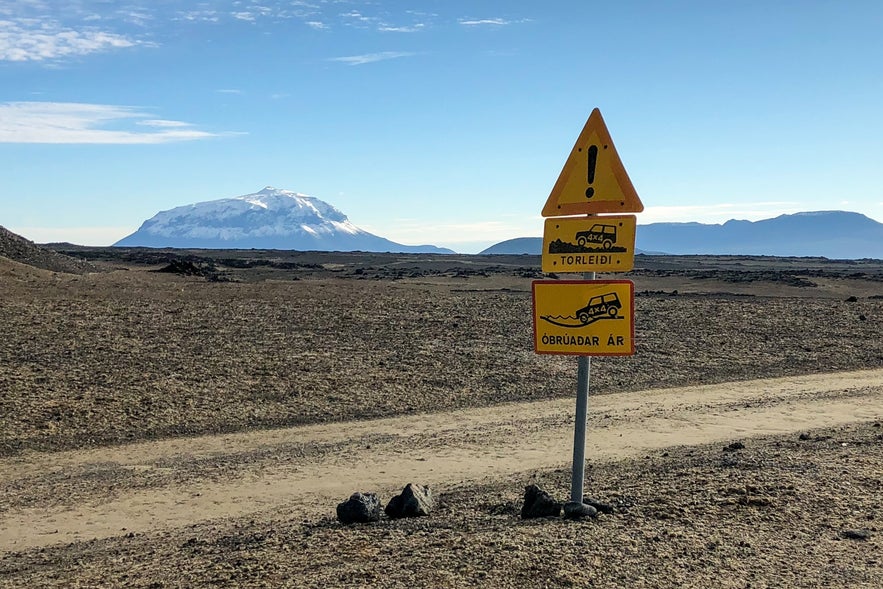 Some F-roads have river crossings, which can be one of the more challenging aspects of driving in the Icelandic wilderness and require careful preparation and caution. There are some essential points to consider when dealing with river crossings.
River crossings are also where Gunnar draws the firmest line.
Not all cars can cross rivers; they're only for big 4x4 SUVs, and really only for people experienced in that kind of driving.
Before attempting any crossing, he recommends speaking with your rental company to confirm that your specific vehicle is suitable and that you're familiar with its limitations.
Here are a few points to keep in mind for travel on F-roads with river crossings:
-
Check Road and Weather Conditions: Before setting off, check the current road and weather conditions. Conditions in Iceland can change rapidly, and what might be a small stream in the morning could turn into a dangerous river by the afternoon due to rain or glacial melt. Most rivers have a lower flow in the early morning.
-
Suitable Vehicle: Use a 4x4 vehicle that's designed for rough terrain and river crossings. The vehicle should have adequate ground clearance and be in good mechanical condition. Standard rental cars are not suitable for river crossings.
-
Control Your Speed: On well-marked stream crossings where the route across is clearly defined, keep a slow but steady pace rather than crawling; going too slowly can leave you stuck midstream.
-
Cross at Designated Points: Cross rivers at designated crossing points, where the river is likely to be at its shallowest and most stable. If you do not see a designated crossing point, the rule of thumb is that the river is the deepest where the waters are the calmest.
-
Avoid Crossing Rivers Alone: Try not to cross rivers alone. Having another vehicle with you can be invaluable if you encounter difficulties.
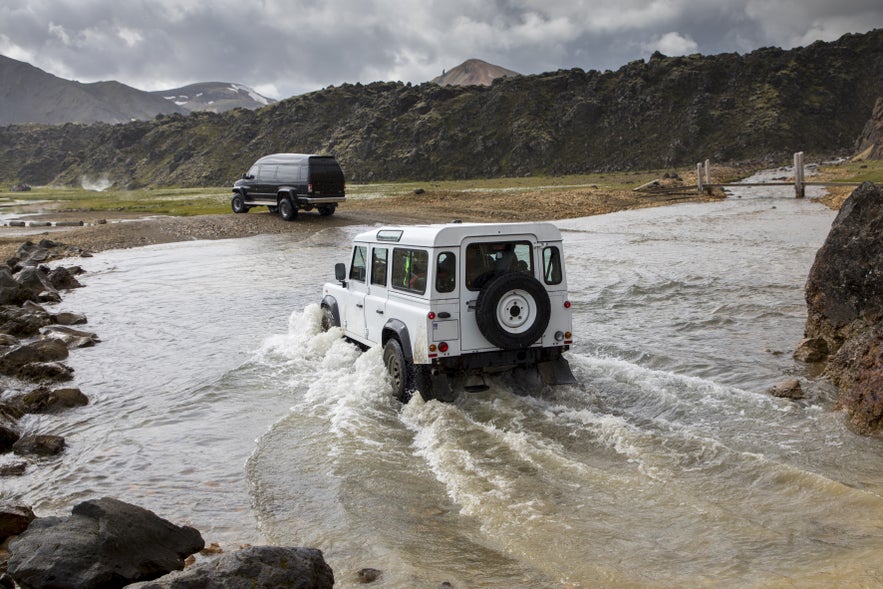
Gunnar's general advice on river crossing, however, is even more cautious, especially for visitors without prior experience driving through rivers.
I would deter all foreign drivers from choosing a route where they have to cross a river
If you intend to make river crossings during your travels, make sure to check your rental car's insurance policy. No Icelandic car rental covers insurance for crossing rivers, so be very careful.
Notable F-Roads in Iceland
Now that we've got the basics down, let's go over some of the most traveled F-roads in Iceland.
F26 - Sprengisandur
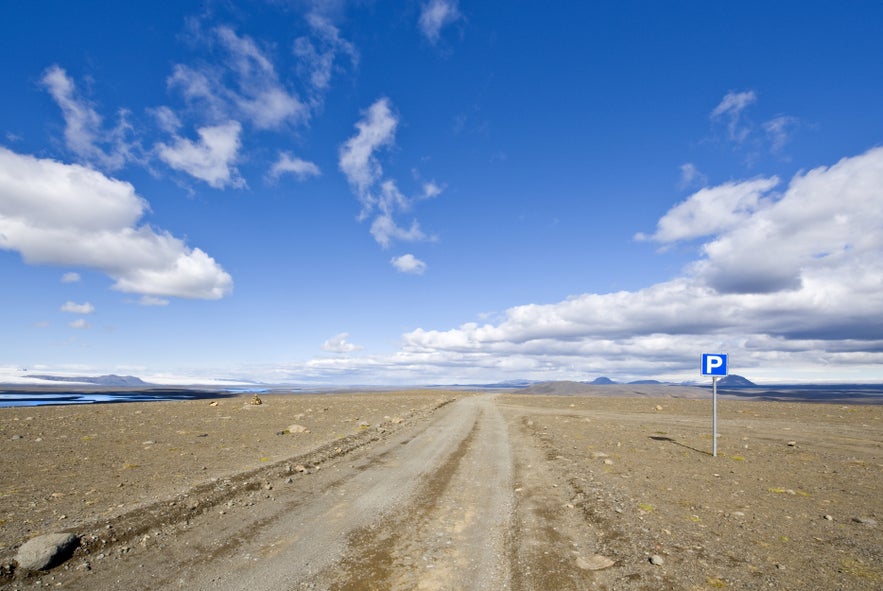
Route F26, commonly known as the Sprengisandur Route, or "Sprengisandsleið" in Icelandic, is one of the longest F-roads in Iceland at approximately 200 kilometers. It connects the southern part of Iceland near the Hofsjokull glacier to the northern region near Lake Myvatn.
The journey along F26 is known for its stark and dramatic landscapes. The route passes through a desolate area of black sand deserts, volcanic fields, and rugged mountain scenery. The absence of vegetation in many parts of Sprengisandur gives it a moon-like appearance, offering a sense of isolation and wilderness.
The harsh landscape of Sprengisandur is steeped in folklore as the area pops up in several sagas and traditional Icelandic songs, with outlaws and all kinds of creatures hiding in the dark sands. There is a river crossing in F26 that drivers need to be equipped to deal with.
There are no services along the F26, so travelers must be well-prepared with sufficient fuel, food, water, and emergency supplies. The route is also devoid of any formal accommodations, making it a popular choice for those interested in camping and experiencing Iceland's raw nature.
F35 - Kjolur
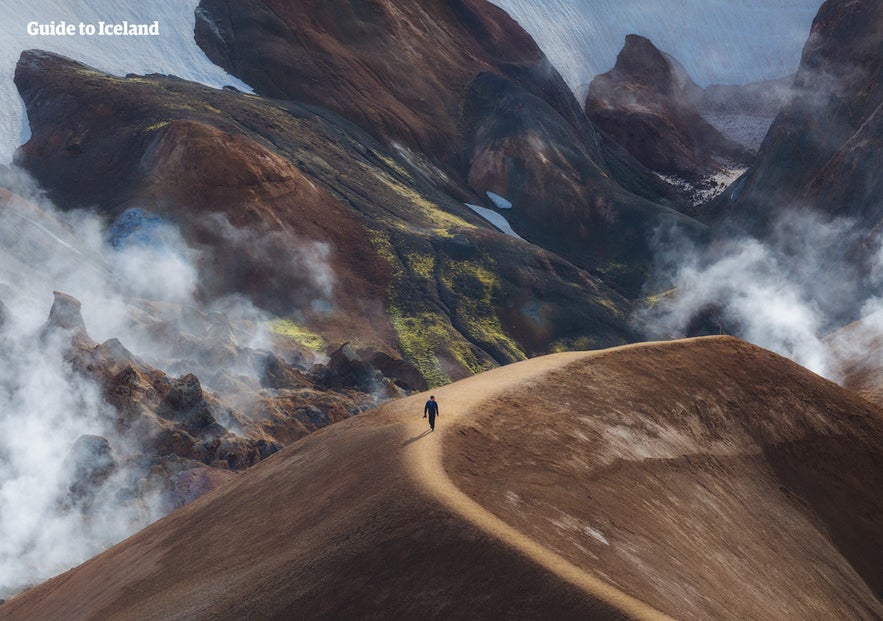 The F35 Kjolur route, also known in Icelandic as "Kjalvegur," is one of the two main highland tracks cutting through the interior of Iceland, running from Gullfoss in the south to Blonduos in the north, effectively bridging the gap between the southern and northern regions of Iceland.
Due to recent road improvements, it is actually no longer officially classified as an F-road but is still often referred to as one. It is less challenging than some other highland routes, like the F26, making it more accessible to a wider range of travelers with appropriate 4x4 vehicles.
One of the highlights along F35 is Hveravellir, a geothermal area located roughly halfway along the route, and the Kerlingarfjoll mountain range, which is renowned for its beautifully colored rhyolite peaks and large geothermal area.
Overall, the F35 offers a more approachable adventure into Iceland's highlands compared to more rugged routes. Its mix of accessible yet remote landscapes, coupled with historical and geological significance.
F249 - Thorsmork
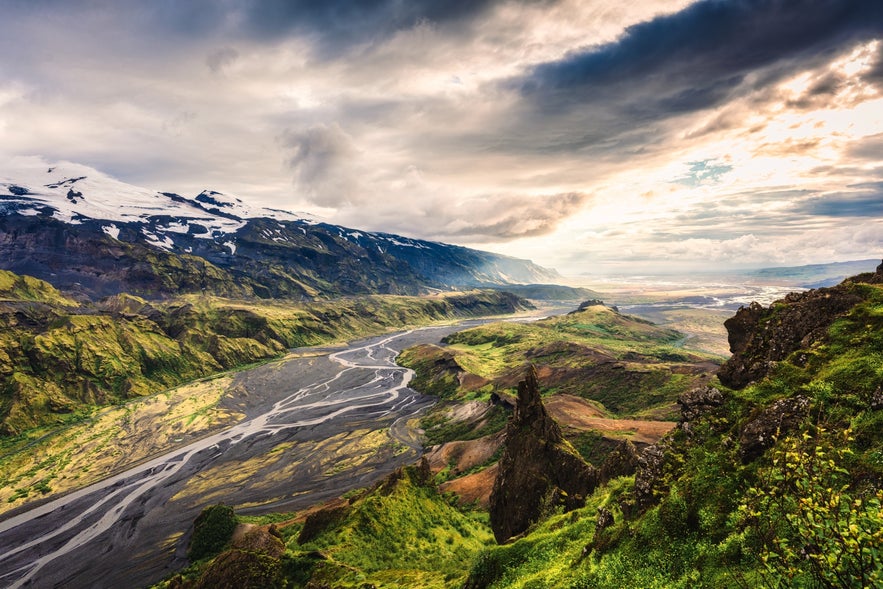
Route F249 leads to the Thorsmork Nature Reserve, a stunning valley surrounded by glaciers and rugged mountains located in the southern part of Iceland. This route diverges straight from the main Ring Road (Route 1) and involves multiple river crossings.
The initial river crossings on the way to Thorsmork are not too daunting until you get to the river Krossa. This river crossing is perhaps the most infamous and dangerous in Iceland and has claimed many rental cars in the past. It should not be crossed by anyone except the most experienced drivers.
This is why we advise against crossing the river yourself and instead take a guided tour, such as this super Jeep and hiking tour of Thorsmork. Leaving the river crossing to the experts is the best way to enjoy the spectacular sights in Thorsmork without worrying about your rental car becoming another victim of the river Krossa.
The journey on F249 offers a diverse array of landscapes, including glacial rivers, lush valleys, and dramatic mountain scenery. The road is known for its challenging conditions, particularly the river crossings, which can be daunting and vary significantly in depth, especially after heavy rains or glacial melt. These crossings require careful judgment and experience in fording rivers.
F88 - Askja
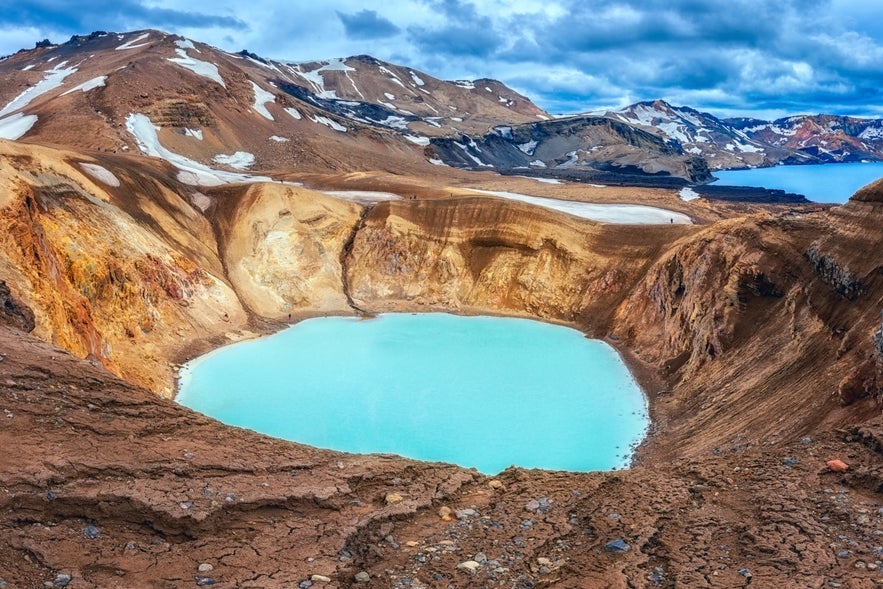
Askja is a caldera in the central Highlands of Iceland that was the site of a terrifying eruption in the 19th century. Today, the area is absolutely stunning and well worth the visit, although people often disagree about the best way to get there.
As F88 is called "Askja Route," or "Oskjuleid" in Icelandic, it stands to reason that it would be the best way to get there. However, there are several river crossings, with the final one over the river Linda being perilous if water levels are high.
This is why we do not recommend taking the F88 at all, but rather following our guide on how to visit Askja and taking other F-roads instead. It might seem more complicated, but having to turn back or get into trouble because of high water levels on the F88 is surely worse.
Once at Askja, you can take in the stunning scenery. Locations are sometimes described as otherworldly, but we think it's quite an apt description as NASA astronauts actually used these lunar landscapes as training grounds for the Apollo missions!
F225 - Landmannalaugar
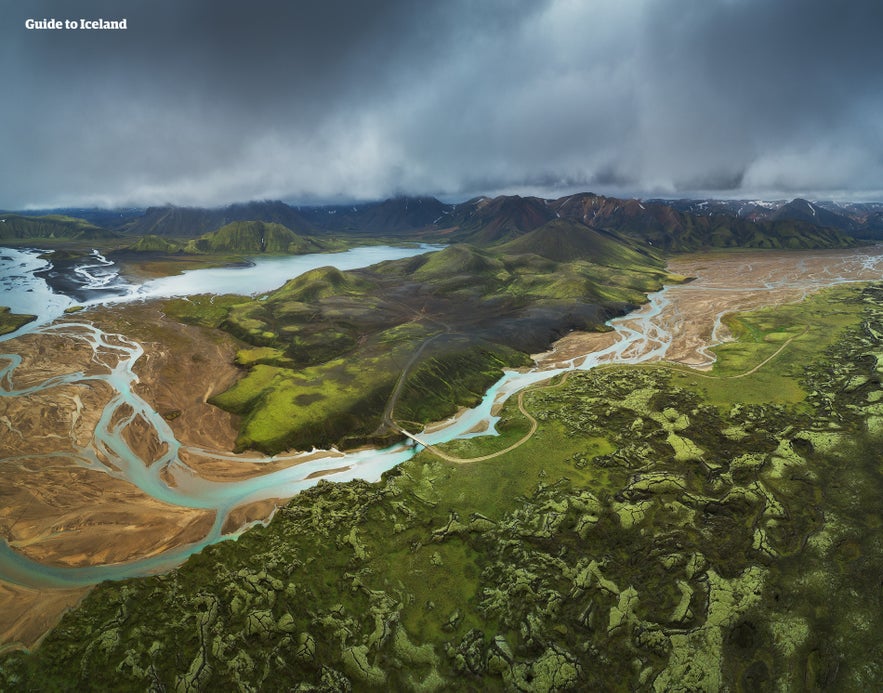 Route F225, called "Landmannaleið" in Icelandic, is a route that leads to the Landmannalaugar area, which is full of colorful rhyolite mountains and geothermal hot springs. Throughout the summer, it is one of the most popular places in Iceland for hiking and natural hot spring bathing.
Drivers on F225 should be prepared for river crossings that are easily crossed on a 4x4 under normal circumstances but can be challenging, especially after periods of heavy rain or during glacial melt. The river crossings are quite tame compared to those found in many other F-roads, so you shouldn't be too put off if you're driving a decent 4x4.
If you want to visit Landmannalaugar but would like to avoid river crossings, you can also take the F208, which has actually been recently reclassified as simply 208 due to road improvements. This road is a bit longer than the F225 but considerably less hassle.
Once you get to Landmannalaugar, you'll be greeted by stunning scenery that features numerous hiking trails, ranging from short walks to multi-day treks like the famous Laugavegur trail. Don't forget to take a dip in the hot springs by the newly constructed bathing facilities.
Super Jeep Tours on the F-Roads of Iceland
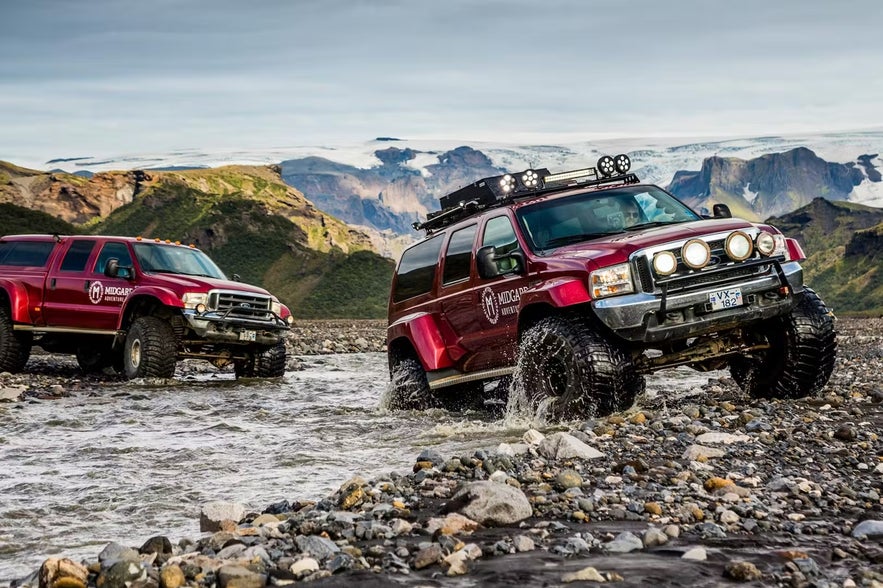
Photo from Scenic 7-Hour Super Jeep Tour in Thorsmork Valley with Transfer from Hvolsvollur.
If you don't plan on taking on the F-roads of Iceland by yourself but would still like to experience taking on the more rugged side of Iceland's nature, there are many great highland tours available where you can leave the driving to the experts.
Take, for example, this Landmannalaugar super jeep tour, where you are picked up in the city by a large and luxurious vehicle built to take on the rugged roads. This will allow you to take in natural wonders such as waterfalls, lakes, and gorgeous scenery in Landmannalaugar while getting expert guidance.
There is also a super jeep tour of Askja available, where you can travel to the caldera and the nearby lava field of Holuhraun to take in the otherworldly landscapes. During late summer, you might even get the opportunity to go swimming in the Viti explosion crater, one of the most unusual bathing experiences around.
Another great option is this 7-hour super jeep tour of Thorsmork, where you get to explore the nature reserve without having to worry about crossing the Krossa river. As there is so much to do and see in Thorsmork, it's easy to become overwhelmed, but here, you will have local expertise to help guide you to the best bits.
Safety Tips for Driving on Iceland's F-Roads
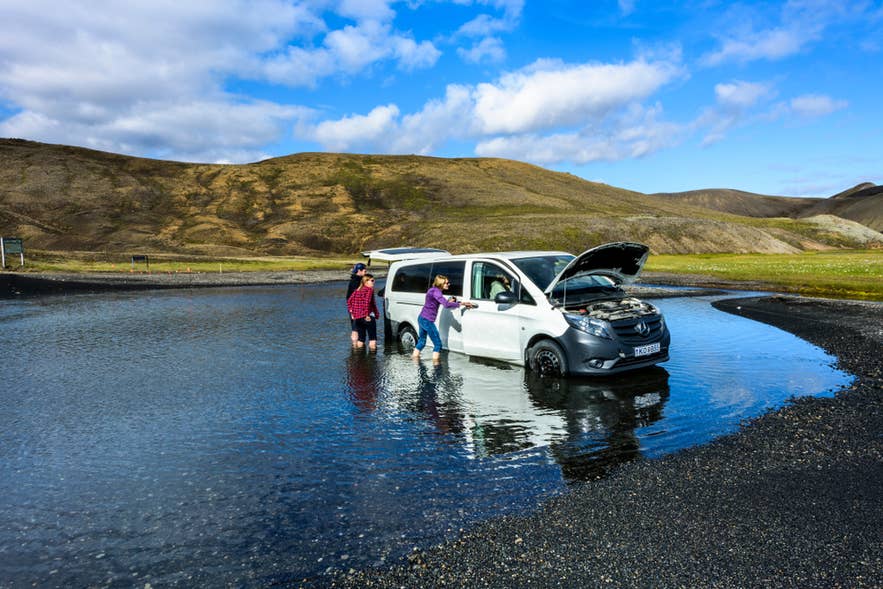 Driving on Iceland's F-roads requires more than just the right vehicle. Conditions can change quickly, and gravel surfaces, river crossings, and remote locations all demand extra caution. Before setting out, make sure you understand the route, check the weather and road conditions, and drive at a speed appropriate for the terrain.
When asked for the single most important piece of advice he would give visitors driving in Iceland, Gunnar immediately pointed to one thing:
Always use the seatbelts, without exceptions.
According to him, many of the serious accidents involving foreign drivers are run-off-the-road and rollover accidents. In these situations, wearing a seatbelt can make a dramatic difference in the severity of injuries.
He also encourages visitors to spend a few extra minutes preparing before their trip by learning about Iceland's unique driving conditions, including gravel roads, river crossings, single-lane bridges, and rapidly changing weather. A little preparation can go a long way toward ensuring a safe and enjoyable Highland adventure.
Exploring Iceland's F-Roads Safely and Responsibly
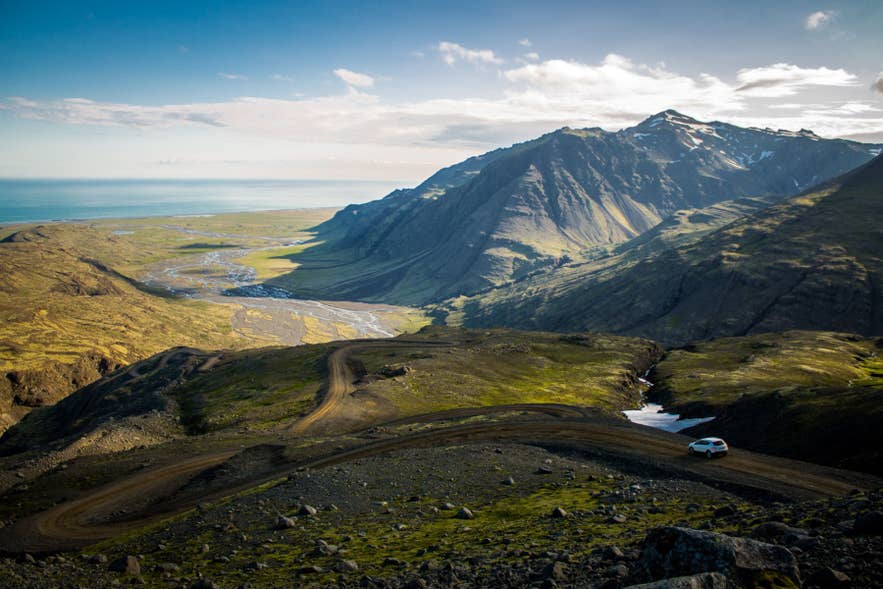 Iceland's F-roads offer access to some of the country's most remote and spectacular landscapes. Reaching these destinations requires careful planning, the right vehicle, and a good understanding of Highland driving conditions.
Whether you choose to rent a 4x4 vehicle or join Super Jeep tours, exploring Iceland's Highlands is a memorable adventure. With the right precautions and a healthy respect for the terrain, you'll be well-equipped to experience one of Iceland's most remarkable regions safely and responsibly.
What are F-roads in Iceland?
Can I drive on F-roads with a regular rental car?
Are the F-roads open in winter?
Is off-road driving allowed in Iceland?
What does the "F" in F-roads stand for?
Do F-roads have river crossings?
What kind of vehicle do I need for F-roads?
That's it for F-road driving in Iceland for now. Do you have any experience with driving in the Icelandic Highlands? Did we leave any questions unanswered? Let us know in the comments!

Hi, I’m Arnar Tómas, a storyteller with a background in journalism and content creation. I’ve worked with top Icelandic media and travel organizations, and I’m into fantasy football, pro wrestling, and travel.