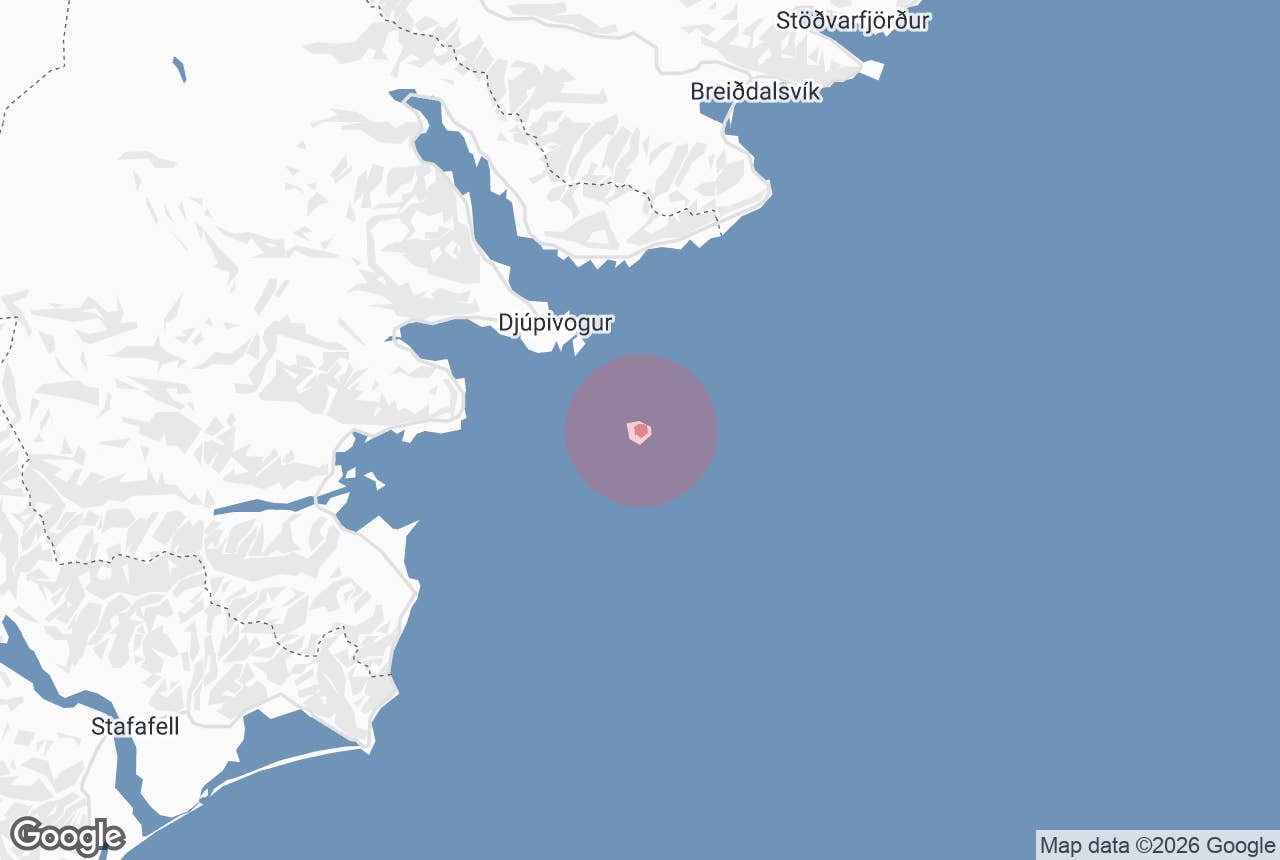

The quiet and quaint island of Papey can be found off Iceland's East Coast, in the municipality of Djúpavogshreppur.
Roughly 2 square kilometres in size, with its highest point 59m above sea level, the island is famous amongst birdwatchers and nature lovers for its large colony of Atlantic Puffins and guillemot and is a popular day tour destination for those looking for a break from the mainland.
저희의 콘텐츠를 신뢰할 수 있는 이유
가이드투아이슬란드는 아이슬란드에서 가장 믿을 수 있는 여행 플랫폼으로, 매년 수백만 명의 여행객이 저희와 함께 아이슬란드를 방문합니다. 저희의 모든 콘텐츠는 아이슬란드를 누구보다 잘 아는 현지 전문가들이 작성하고 검토하므로, 정확하고 신뢰할 수 있는 최신 여행 정보만 제공합니다.
Explore this area on a self drive tour in Iceland.
History
Aside from the bird population, Papey today is uninhabited. This has not always been the case, however. The name Papey derives from ‘The Papar’, an ancient Icelandic term for the Irish Christian hermits who narrowly beat out the Norse as the first men to settle Iceland. Papey Island, in fact, translates to “Friar’s Island” in Celtic. Two 12th century sources, as well as more recent archaeological digs, have confirmed that the Irish monks settled a hermitage on the island (though these excavations have done little to prove the island was inhabited before the 10th century.) Following the Norse settlement, it is accepted that the Papar were driven away from both Papey Island, and Iceland itself.
In 1726, Papey’s minute population reached its peak, homing 16 people. For centuries, the island’s inhabitants had lived self-sufficient lives, tending small farmsteads and cattle herds, collecting the eider duck down, growing vegetables, hunting seal and sharks, and fishing the coastal waters. As more progressive times ushered the rest of Iceland into a new era, the inhabitants of Papey quickly found themselves too isolated. The final residents left the island in 1966.
The island still resonates with the ghosts of this lost settlement. The oldest wooden church in Iceland can be found in Papey, having been constructed in 1807, alongside an automated weather station and a lighthouse.