Moving to Iceland from the US starts with one thing: a residence permit tied to work, study, or family. This 2026 guide breaks down every visa for US citizens, the exact application steps, and what to sort out once you land. Read on to plan your move with confidence.
Moving to Iceland from the US is a realistic goal once you know how the system works. Because the US sits outside the European Economic Area, you cannot just relocate and settle in. You can visit for 90 days, but living here long term means holding a residence permit before you arrive.
Why You Can Trust Our Content
Guide to Iceland is the most trusted travel platform in Iceland, helping millions of visitors each year. All our content is written and reviewed by local experts who are deeply familiar with Iceland. You can count on us for accurate, up-to-date, and trustworthy travel advice.
That permit has to be tied to a specific purpose: studying in Iceland, joining family already settled there, working in Iceland, or remote work for an employer abroad. The route you qualify for shapes every step that follows, from the forms you file to how long you wait and whether it can lead to permanent residence.
This guide walks you through it in order. First, the visa routes, then what to handle after you land. We also cover the real cost of living and what daily life in Iceland is like once the paperwork is done.
Keep reading to discover and learn the details of the visa route that fits your situation best.
Key Takeaways
-
US citizens need a residence permit before moving to Iceland, tied to work, study, family, or remote work, because the US sits outside the EEA.
-
The four main routes are a work permit, a student permit, family reunification, and a remote-work route, each with its own forms, costs, and timeline.
-
After you arrive, you register your address and get a kennitala, open a bank account, and join the public healthcare system.
-
Iceland has a high cost of living, and US citizens keep filing US taxes, though the Foreign Earned Income Exclusion and foreign tax credit usually prevent double taxation.
-
Permanent residence is possible after four years and citizenship after seven, and both the US and Iceland allow dual citizenship.
How To Move to Iceland From the US: Visa Routes and Steps

Every move to Iceland from the US runs through the Directorate of Immigration (Útlendingastofnun), and the residence permit you apply for depends on why you are coming. The table compares the four routes open to Americans. Below it, you will find the full step-by-step process for each one, so you can find your route and follow it in order.
| Visa Route | Who It Suits | Income or Key Requirement | Typical Processing | Permit Length | Path to PR? |
|---|---|---|---|---|---|
| Work permit | US citizens with a job offer | Employer shows no EEA candidate fits | Up to 180 days | 1 year, then 2-year renewals | Yes, after 4 years |
| Student permit | Accepted university students | Proof of enrollment and funds | By May 1 or October 1 | Semester to 1 year, renewable | Partially, up to 2 years count |
| Family reunification | Spouses, children, parents 67+ | Sponsor with income and housing | About 3 to 6 months | Usually 2 years | Yes |
| Remote work | Remote workers paid from abroad | High minimum monthly income | Varies | Short-term | No |
Whichever route fits you, every first-time applicant needs the same core documents.
Here is how US applicants obtain each core document:
-
Valid passport. Make sure it stays valid well past your intended permit length.
-
Criminal record check. Request an FBI Identity History Summary from the FBI's Criminal Justice Information Services, which takes about two to four weeks, then have it apostilled by the US Department of State so Iceland will recognize it.
-
Proof of funds. Bank statements stamped by your US bank showing income or savings above the subsistence minimum, which is about 260,000 ISK (1,900 USD) per month for a single person as of mid-2026.
-
Health insurance. A policy valid in Iceland that covers you from arrival until you join the public system.
-
Confirmed Icelandic address. A signed rental contract or housing certificate at a real residential address, which the application requires (more on finding one below).
That last point changes your timeline, so plan for it. Because a first-time permit needs a confirmed address, most US movers line up housing while still applying, often a lease arranged remotely or through an employer or university.
Work Permit: Moving to Iceland With a Job Offer

A work permit is the most common way for US citizens to move to Iceland, and it requires a job offer before you apply. Your Icelandic employer starts the process, not you, and the role must be one that no EEA or EFTA candidate can fill.
That means the job search comes first, and it is competitive. Skills in healthcare, technology, engineering, and tourism are in the highest demand. Our guide to finding a job in Iceland covers where to look and which sectors recruit from abroad. Once you have a signed contract, the permit process begins.
Here is how the work permit process works:
-
Land the job. Secure a signed employment contract with an Icelandic employer willing to sponsor your permit.
-
The employer files the application. Your employer submits the combined residence and work permit to the Directorate of Immigration, along with your passport, qualifications, criminal record check, and proof of housing.
-
Two agencies review it. The Directorate of Immigration handles the residence permit, then forwards the work portion to the Directorate of Labor (Vinnumálastofnun) for approval.
-
Wait for the decision. A standard application takes up to 180 days, and longer during busy periods.
-
Do not start work until approved. You cannot legally begin the job or draw a salary until both permits are granted.
The residence permit fee for work is about 80,000 ISK (575 USD) as of January 2026. Your first permit lasts one year, renews for up to two years at a time, and is tied to your employer, so changing jobs means a new application.
Student Permit: Moving to Iceland To Study
A student residence permit lets US citizens move to Iceland after being accepted to an accredited Icelandic university. It does not lead straight to permanent residence, but part of your study time counts toward it. You apply yourself once you have an offer of admission.
A few things about Icelandic universities are worth knowing first. Public ones like the University of Iceland charge a modest annual registration fee rather than US-style tuition, while private universities cost more. Most undergraduate teaching is in Icelandic, so Americans usually enter English-taught graduate programs.
The student permit process runs as follows:
-
Get accepted. Secure a confirmed place at an accredited institution such as the University of Iceland or the University of Akureyri.
-
Complete form D-108. This is the student residence permit application from the Directorate of Immigration.
-
Submit with your documents. File the form with proof of enrollment, proof of funds, health insurance, a criminal record check, and a housing certificate. Apply by the deadlines: May 1 for the fall term and October 1 for spring.
-
Complete arrival steps. After approval, register your address, then visit the Directorate of Immigration within two weeks to give biometrics and collect your residence card.
The permit is issued for the semester or up to a year and renews, and with a separate work permit, you can work up to 22.5 hours per week during term. It does not convert automatically to a work permit after graduation, though graduates can apply for a job-seeking permit.
Only about two years of student time counts toward the four years required for permanent residence, so it is a slower route to settling. The application fee is about 70,000 ISK (505 USD). For programs, universities, and student life, see our guide to studying in Iceland.
Family Reunification: Moving To Join Relatives in Iceland
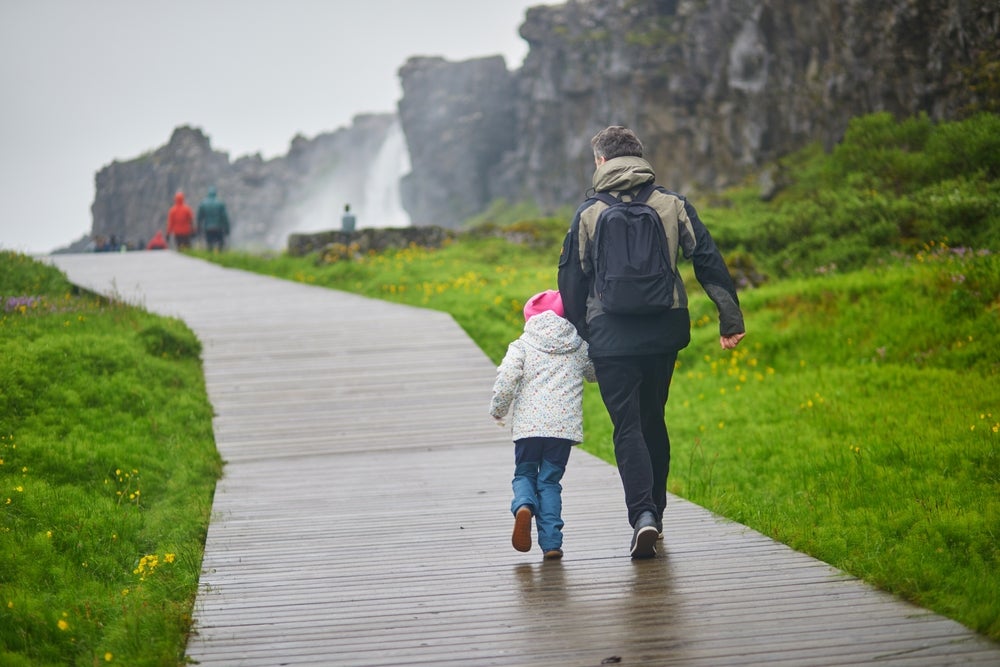
Family reunification lets a US citizen move to Iceland to join a close relative who already holds legal residence there. It covers spouses and cohabiting partners, children under 18, and parents aged 67 or older, with the relative in Iceland acting as your sponsor.
The family reunification process works like this:
-
Confirm eligibility. Check that your sponsor's permit type carries reunification rights and that you fall within the eligible family categories.
-
Gather proof of the relationship. A marriage or cohabitation certificate, or a birth certificate for children, each less than six months old, apostilled and translated.
-
Submit to the Directorate of Immigration. File the application online or in person in Kopavogur. Your sponsor can apply on your behalf while you are still in the US.
-
Wait for approval before entering. In most cases, the family member must wait for the permit before moving to Iceland.
Your sponsor must show financial stability and adequate registered housing for you both. Processing typically takes three to six months, and the application fee is about 110,000 ISK (800 USD). Note that a spouse on this permit needs a separate work permit before taking a job.
Long-Term Visa for Remote Workers: Iceland's Digital Nomad Route
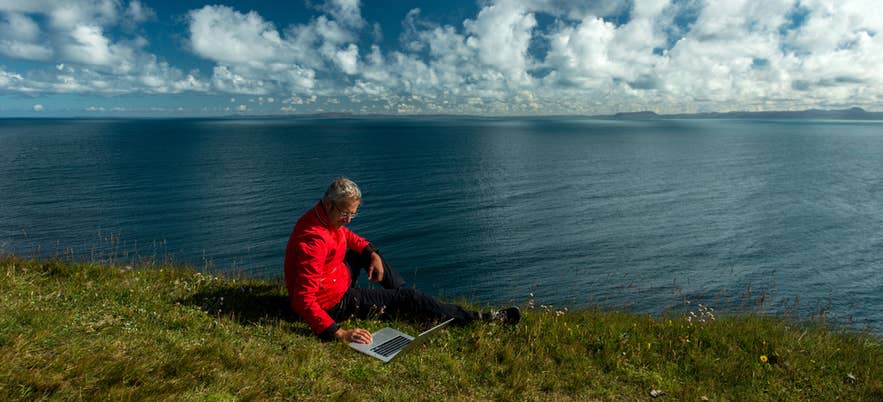
Iceland offers a remote-work route, often called the Iceland digital nomad visa, for US citizens who work for a US employer or their own business while living in Iceland. It is short-term and does not lead to permanent residence.
In broad terms, this route is for non-EEA nationals who earn their income abroad, meet a high minimum-income requirement, and carry qualifying health insurance. You cannot work for an Icelandic employer on it.
The income bar is among the highest of any digital nomad visa in the world, so this route suits established remote professionals rather than job seekers.
Permanent Residence and Citizenship for Americans
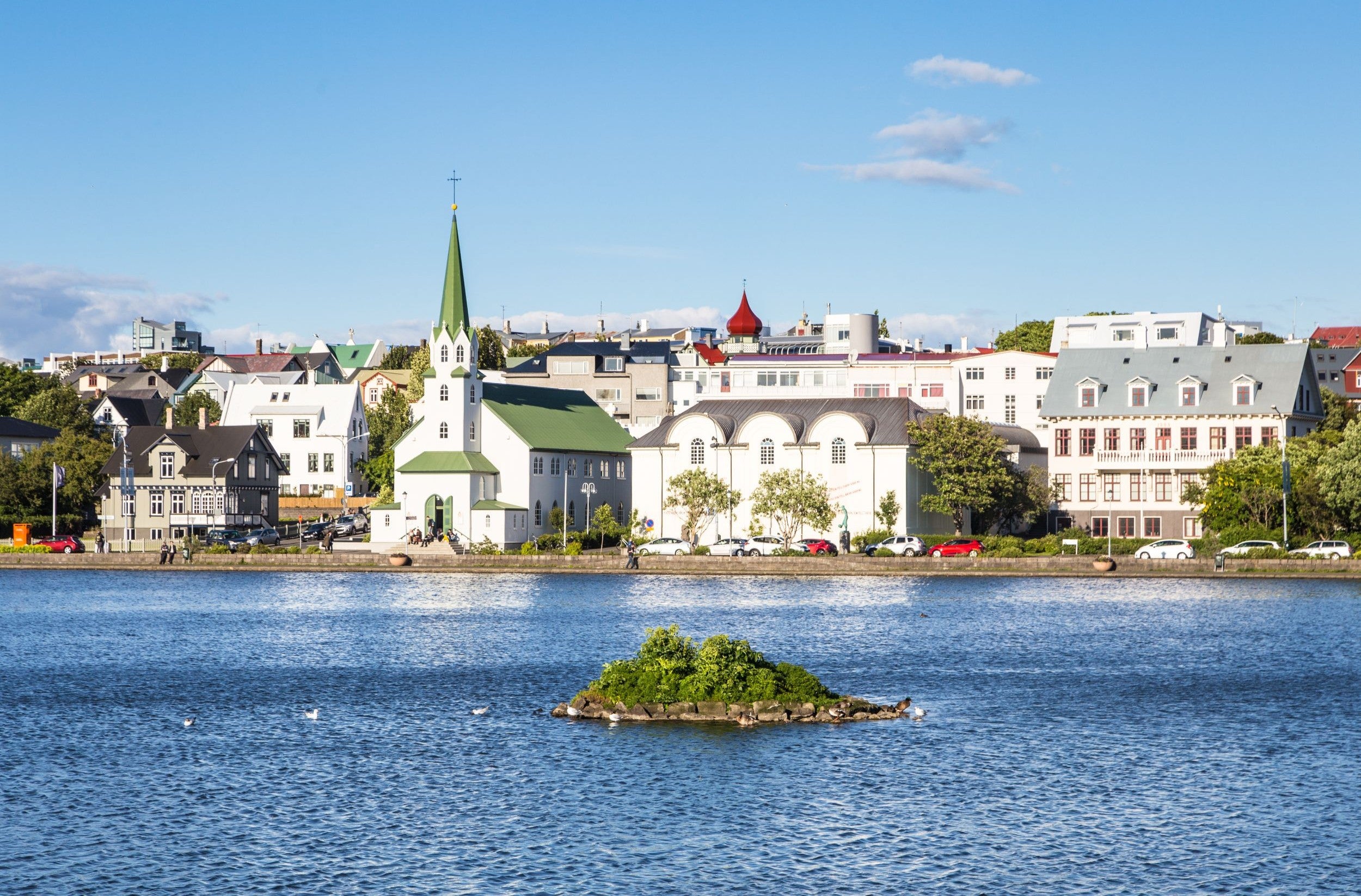
US citizens can apply for permanent residence in Iceland after four years of continuous legal residence on a qualifying permit. Permanent residence makes your status secure and removes the employer tie of a work permit.
To qualify, you must meet integration conditions, including Icelandic language requirements. Citizenship can follow after about seven years, and because the US recognizes dual citizenship, you generally keep your US passport when you naturalize. Confirm the current rules with the Directorate of Immigration.
What To Do After You Move to Iceland

Once your permit is approved and you arrive, a few practical tasks set up your daily life in Iceland: registering your address, getting your kennitala, opening a bank account, and joining the healthcare system. Handle them in roughly this order, because each one tends to depend on the last.
Registering Your Address and Getting a Kennitala
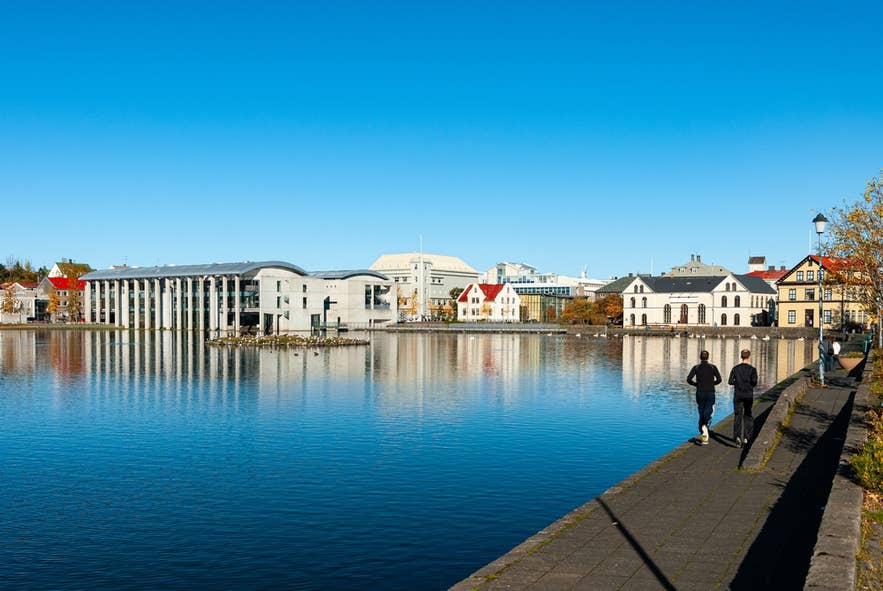
A kennitala is the Icelandic national identification number, and you need it for almost everything: a lease, a bank account, a phone plan, a salary, and healthcare. Sorting it out is the first thing to do after you arrive.
As a non-EEA citizen, you do not apply for the kennitala on its own. It is issued through your residence permit, and Registers Iceland (Þjóðskrá Íslands) assigns it. Your next step on arrival is to register your legal domicile, meaning your official home address in Iceland, which ties that address to your kennitala.
You register your domicile in person at Registers Iceland in Reykjavik, bringing your passport, residence permit, and signed rental contract. A guesthouse or hotel does not count, which is why a real lease matters. Until your kennitala comes through, opening a bank account or signing a new lease is difficult, so treat it as the key that unlocks everything else.
Opening an Icelandic Bank Account as a US Citizen
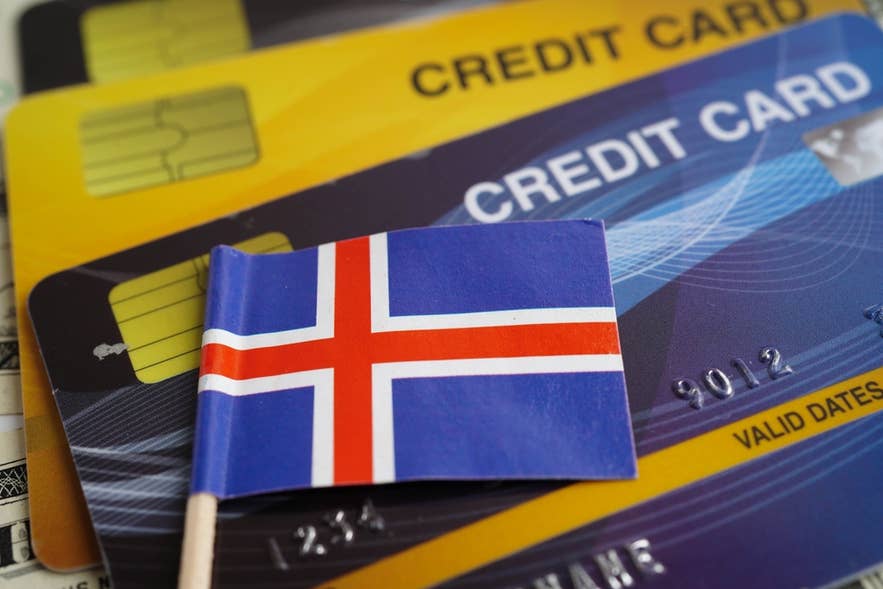
Opening an Icelandic bank account is straightforward once you have a kennitala, with Landsbankinn, Islandsbanki, and Arion Bank as the main retail banks. US citizens just have one extra form to expect, because of American tax reporting rules.
Under the US Foreign Account Tax Compliance Act (FATCA), Americans' overseas accounts are reported to the IRS, so banks ask US customers for a US tax ID number and a signed W-9 form. Bring your kennitala, passport, and proof of your Icelandic address to a branch to open the account and get a debit card.
Joining the Icelandic Healthcare System

Iceland has universal, tax-funded healthcare, but new residents are not covered for their first six months in the country. You bridge that gap with private health insurance, which matters for Americans because you are likely dropping US coverage when you move.
For those first six months, keep a private health insurance policy valid in Iceland, the same coverage you needed for your permit. After about six months of living in Iceland, you join the public system, Icelandic Health Insurance (Sjúkratryggingar Íslands). From then on, you pay only small service fees, far below US costs.
Finding Housing in Iceland

Housing is the toughest part of moving to Iceland, with a tight rental market concentrated in the Reykjavik capital area. Because a first permit needs a confirmed address, many US movers arrange a lease remotely or start with a short-term rental, then search for a long-term home after arriving.
Most long-term listings appear on Icelandic rental sites such as Leiguland and Ivera. You can also check out the classifieds on MBL and Visir, plus large Facebook groups, the biggest simply called Leiga.
Icelandic landlords expect a kennitala and references from previous landlords or employers in Iceland, and your US rental history and credit score do not carry over. The legal deposit maximum is three months' rent, held in a separate account. Always view a place in person, or have someone you trust view it, before sending money.
Cost of Living in Iceland and US Taxes

Iceland is more expensive than most of the US for rent, food, and transport, and as a US citizen, you carry a tax obligation back home. Plan for both before you move.
How Much Does It Cost To Live in Iceland

A single person in Iceland should budget roughly 350,000 to 490,000 ISK (2,500 to 3,500 USD) per month, including rent, with Reykjavik ranking among the most expensive cities in the world. Cheap geothermal heating and hydroelectric power are the main offsets, keeping energy bills far below US levels.
Here is what to expect for core monthly costs in 2026:
| Expense | Typical Monthly Cost | Notes |
|---|---|---|
| One-bedroom rent, Reykjavik | 200,000 to 300,000 ISK (1,450 to 2,200 USD) | Central highest, suburbs are cheaper |
| Single-person total budget | 350,000 to 490,000 ISK (2,500 to 3,500 USD) | Including rent |
| Home heating and electricity | Low by US standards | Geothermal and hydroelectric power |
Grocery shopping and dining out in restaurants run noticeably higher than in the US because most food is imported. Cooking Icelandic recipes at home, using the bus network, and living outside the city center are the biggest levers for keeping costs down.
Why US Citizens Still Pay US Taxes in Iceland

US citizens must file a federal tax return every year, no matter where they live, so moving to Iceland does not end their obligations to the IRS. You file in both countries, but you rarely pay twice.
The Foreign Earned Income Exclusion and foreign tax credits usually reduce or erase your US bill, since Iceland's income tax is high. You also report overseas accounts above a threshold through two filings: the FBAR (Report of Foreign Bank and Financial Accounts) and FATCA (Foreign Account Tax Compliance Act).
Icelandic residents pay a progressive income tax of 31.49% to 46.29% (national plus average municipal rates), cut by a monthly personal tax credit of about 72,492 ISK (520 USD). A cross-border accountant is worth it in your first year.
What Life in Iceland Is Like for US Expats

Beyond the paperwork, daily life in Iceland surprises most Americans in a few ways: how safe it feels, how seriously equality is taken, the landscape on the doorstep, and the swing of daylight through the year.
Safety and Social Trust

Iceland is consistently ranked one of the most peaceful countries in the world, with very low violent crime and high social trust. For many US movers, that is the most immediate day-to-day change.
In practice, it means parents let young children walk or take the bus to school alone, and people leave their bikes and front doors unlocked. There is no need to weigh which neighborhoods are safe after dark. The flip side is a small society of about 394,000 people, as our demographics of Iceland study shows, so it can feel tight-knit and short on anonymity, especially outside Reykjavik.
Gender Equality and LGBTQ Rights

Iceland has ranked first in the world for gender equality on the World Economic Forum's Global Gender Gap Index for well over a decade, and it is also one of the most accepting countries for LGBTQ residents, with strong legal protections.
This shows up in ordinary life. Shared parental leave is the norm, women are well represented in politics and business, and same-sex marriage has been legal since 2010. Iceland elected the world's first democratically chosen female president, Vigdís Finnbogadóttir, in 1980, and later the first openly lesbian prime minister, Jóhanna Sigurðardóttir.
For women and LGBTQ Americans in particular, the gain in legal security and everyday acceptance is significant. See our articles on the LGBTQ community and gender equality in Iceland for the fuller picture.
Living With Iceland's Nature and Daylight

Iceland's landscape and extreme daylight hours shape daily life more than almost anywhere Americans come from. Summer brings near-endless light, while midwinter days can offer only four or five hours of it, which takes adjustment.
Geothermal pools are the social heart of most towns, a cheap daily ritual rather than a tourist outing, and the northern lights are a winter regular. Glaciers, volcanoes, and black-sand beaches sit within an easy drive of the capital, so weekend plans look different from anywhere in the US.
Language and Where Americans Settle
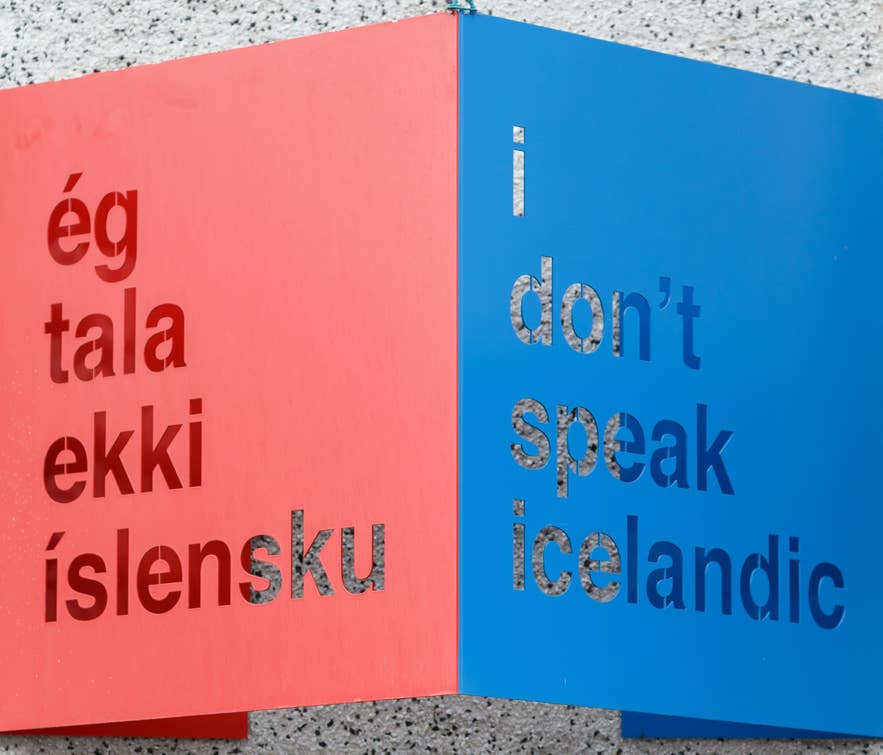
English is widely spoken in Iceland, so you can manage daily life and work in many fields from day one. Learning at least some of the Icelandic language still helps you settle, make local friends, and is required for citizenship later.
Most US expats settle in the Reykjavik capital area, where the jobs, services, and international community are concentrated. Akureyri in North Iceland is the main hub outside the capital, with smaller towns offering cheaper rent but fewer English-speaking services.
Start Planning Your Move to Iceland From the US
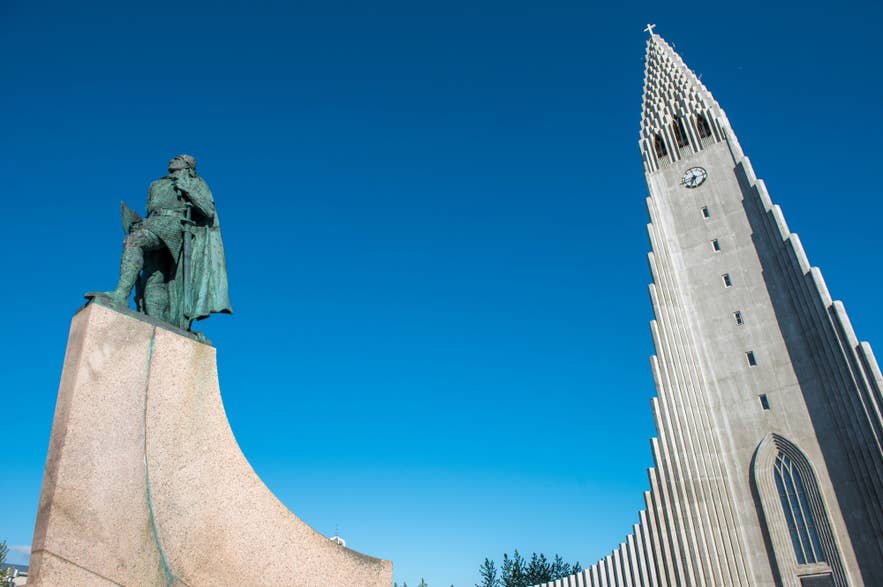
Moving to Iceland from the US is very doable when you work in the right order. Pick the visa route that fits you, gather your documents and a confirmed address early, and file from the US before you go.
After you land, your kennitala, bank account, healthcare, and long-term housing fall into place over your first weeks. For the work and study routes, our guides to finding a job in Iceland and studying in Iceland go deeper.
미국 시민은 어떻게 아이슬란드로 이주할 수 있나요?
미국인이 아이슬란드로 영구 이주할 수 있나요?
아이슬란드 거주 허가를 받는 데 얼마나 걸리나요?
아이슬란드에 살면서도 미국 세금을 계속 내야 하나요?
아이슬란드의 생활비는 미국과 비교해 어떤가요?
미국인이 아이슬란드에서 일자리를 구하기 어렵나요?
아이슬란드에서 살려면 아이슬란드어를 해야 하나요?
케니탈라(kennitala)란 무엇이며, 어떻게 받을 수 있나요?
Which visa route fits your move to Iceland, and what is still holding you back? Tell us in the comments below.

I was the Content Manager at Guide to Iceland from 2013 to 2018, and now run the creative studio Huldufugl while working as a freelance writer. I’m passionate about storytelling, Icelandic culture, and creating thoughtful experiences through words and visuals.