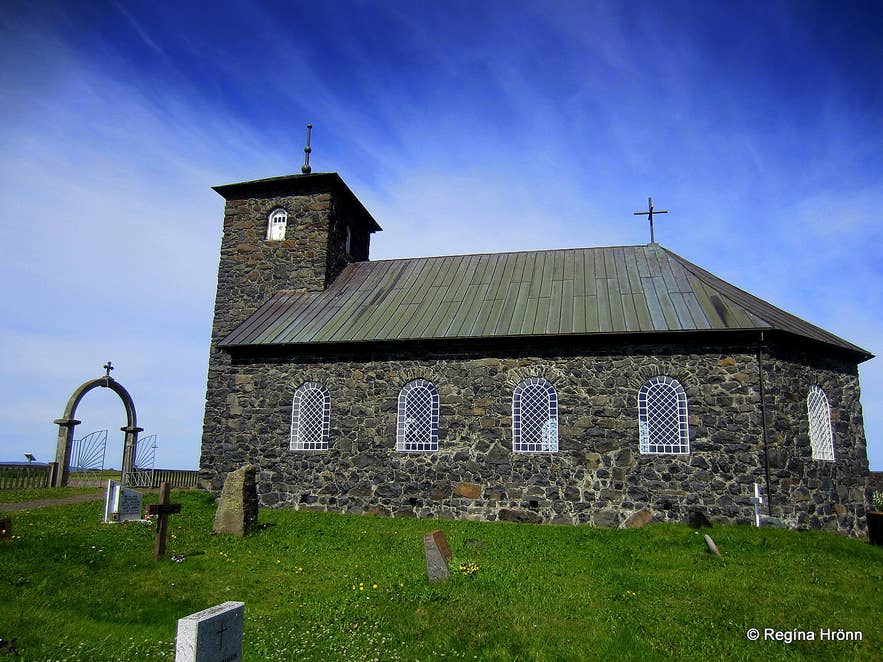
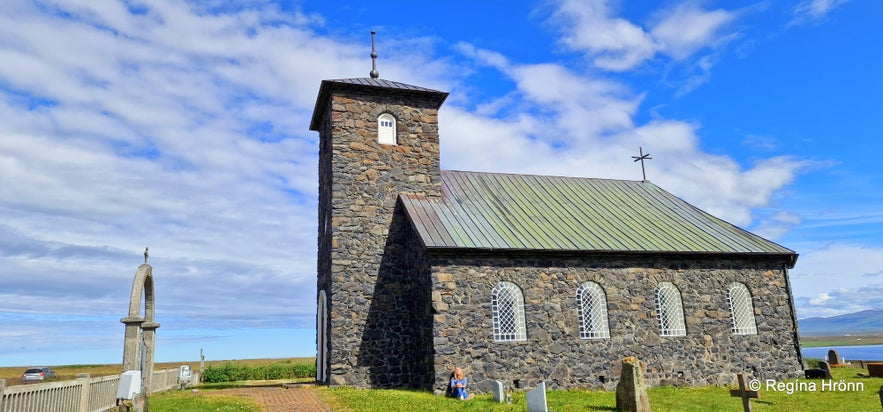
One of Iceland's treasures, Þingeyrakirkja church in North Iceland, is among the most noteworthy churches in the country.
It is located at the historical Þingeyrar, the site of a Benedictine monastery from 1133 to 1551. Þingeyraklaustur monastery was the first permanent monastery in Iceland and the longest-running.
Let's take a tour of this beautiful church and explore the history of Þingeyrar.
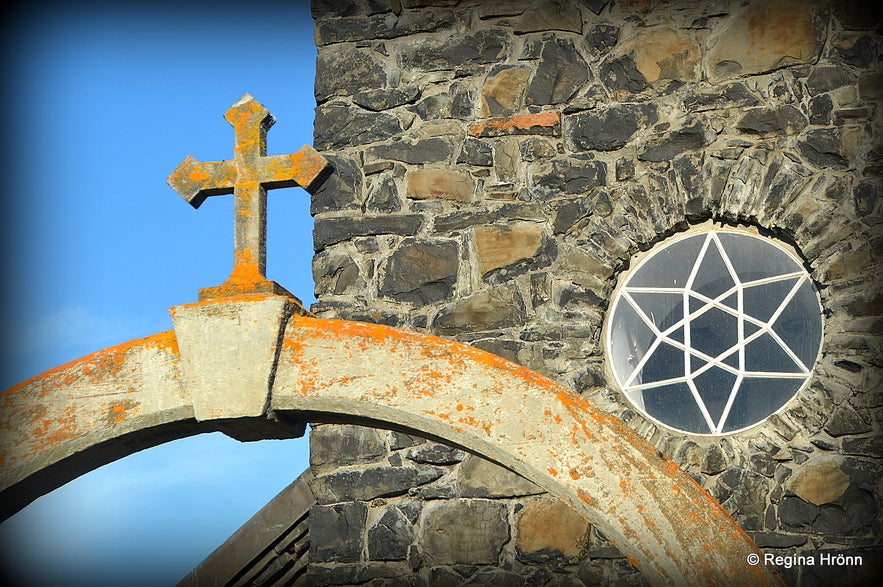 Þingeyrakirkja church and the lychgate
I have shown you some of Iceland's cultural centres from medieval times in other travel blogs, such as Skálholt Episcopal See, Hólar Episcopal See, and Reykholt.
Here at Þingeyrar was another ecclesiastical and cultural centre, and several manuscripts were written at Þingeyrar.
How did Þingeyrar become the site of a wealthy monastery, a minster, and the seat of chieftains for centuries?

Inside Þingeyrakirkja
The story goes that when the first Bishop of Hólar, Jón helgi Ögmundsson, 1106-1121, visited Þingeyrar in May 1112, during the spring session of the parliament at Þingeyrar, there was still drift ice, and all the lakes were frozen.
The bishop pledged that if a church and a farm were erected at Þingeyrar, things would start to look brighter.
He then marked the site of the church with his cope.
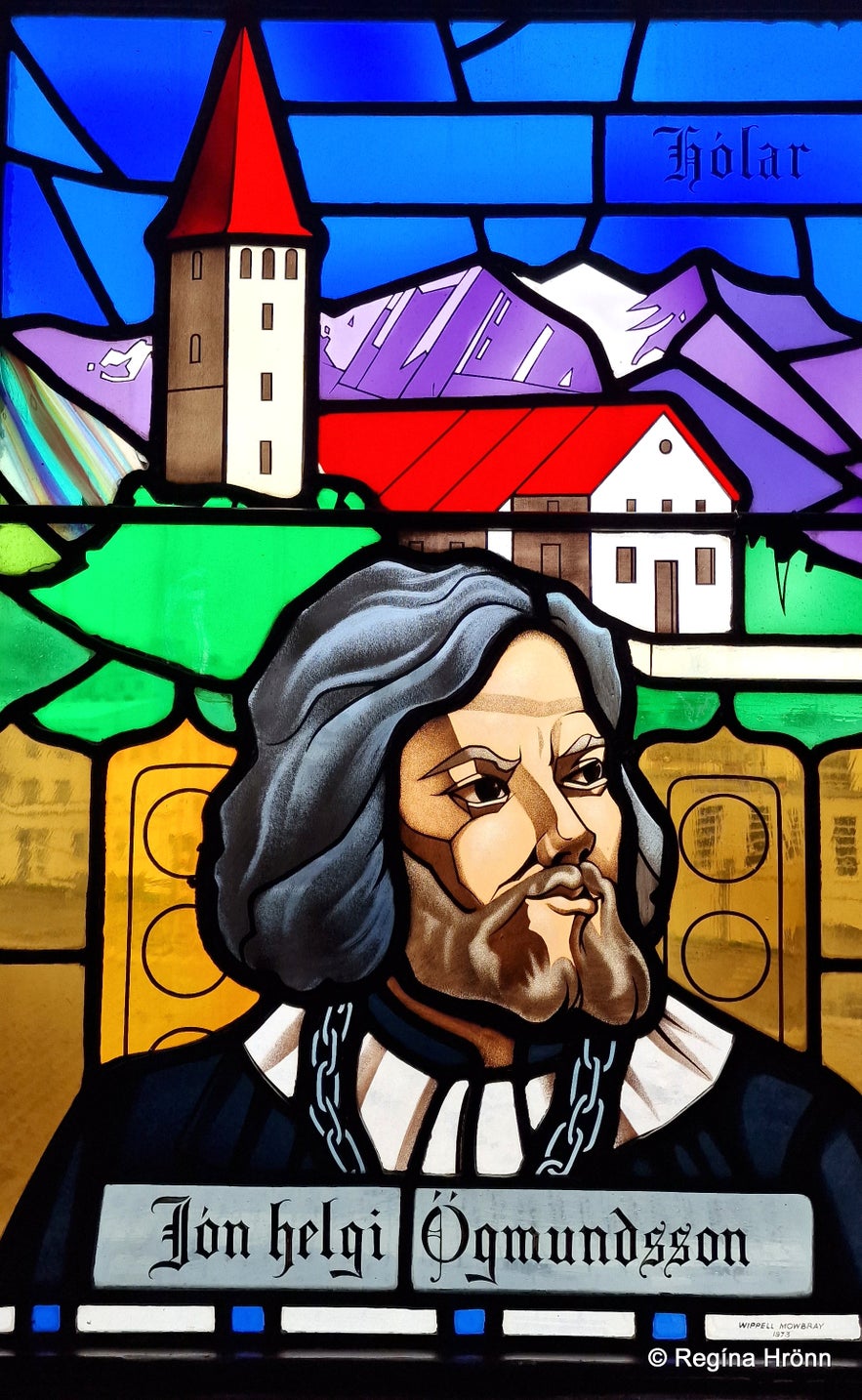 Stained-glass windows in Akureyrarkirkja designed by Kristinn G. Jóhannsson & James Crombie
That same week, the drift ice drifted away and disappeared, and the grass grew at a miraculous rate.
We must also take into account that the Hekla volcano erupted in 1104, as I mentioned in another travel blog about Stöng, and the ashes reached this area.
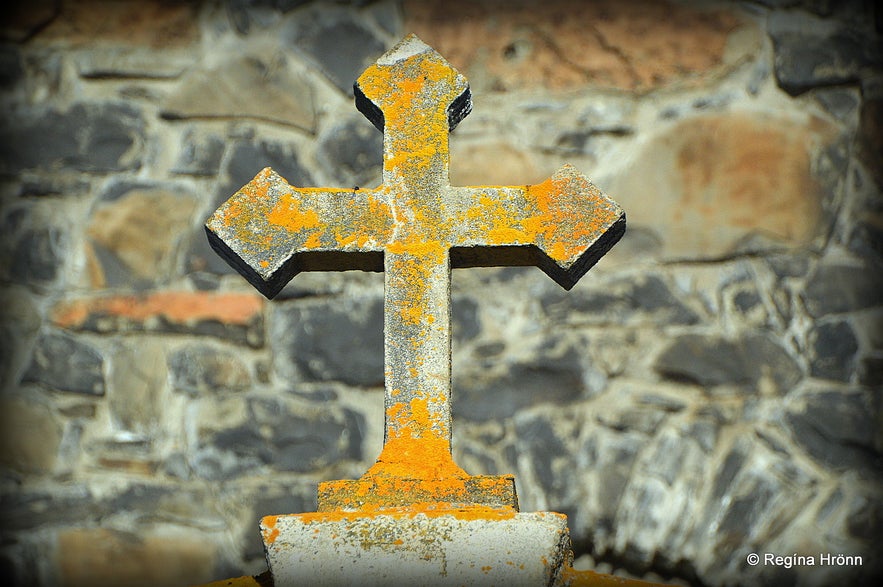 The lychgate cross
The story goes that Jón's friend, the minister Þorkell trandill, was the first to build a farm at Þingeyrar, and that the bishop consecrated the first church there.
Bishop Jón Ögmundsson is said to have performed several miracles during his time as a bishop at Hólar, and driving away the drift ice is one of his miracles.
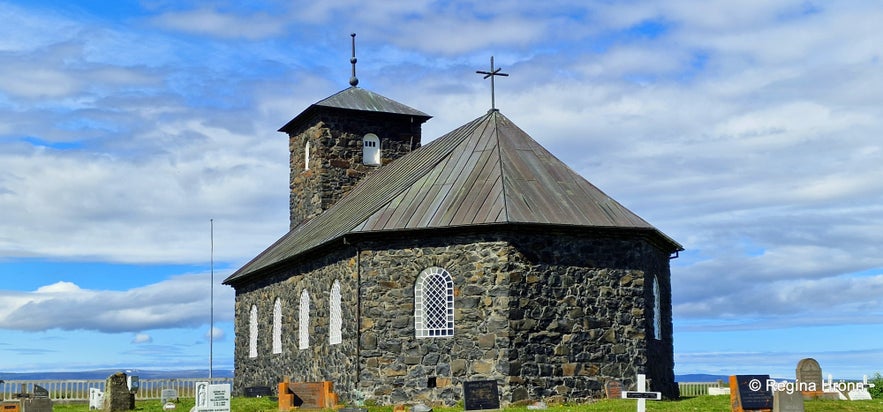 Þingeyrakirkja church and the graveyard
At Þingeyrar, the first permanent Benedictine monastery in Iceland was erected in 1133. It operated here until the Reformation in 1550.
It was an enormously wealthy monastery, and at the time of the Reformation, it owned 50-60 landed estates and a large amount of livestock.
After the Reformation, the Danish King appointed his agents to reside at Þingeyrar to oversee the monastic properties and serve as district commissioners.
You might have noticed that the church goes by two names, Þingeyrakirkja and Þingeyraklausturskirkja. Klaustur is the Icelandic word for a monastery.
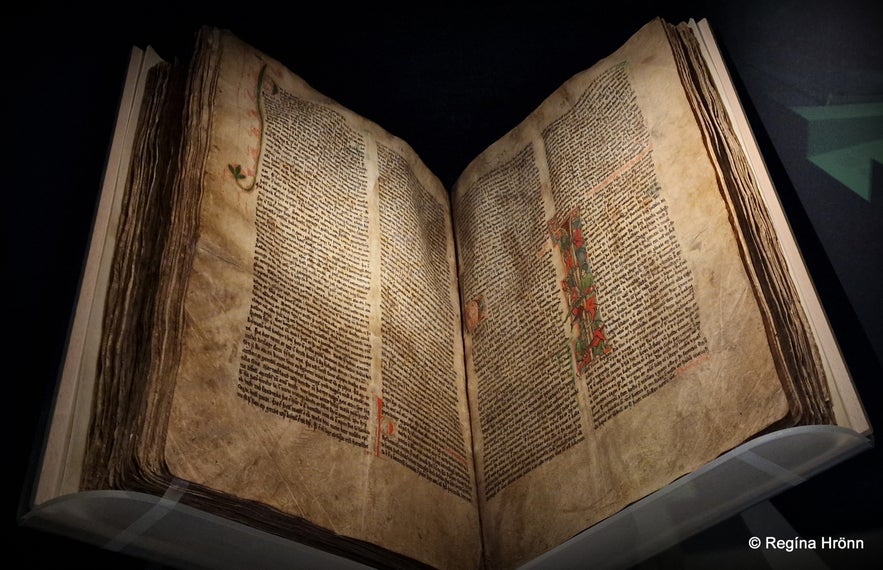 Flateyjarbók was on temporary display at the manuscript exhibition World in Words
The monks at Þingeyrar wrote many manuscripts at the monastery until the reformation in 1550.
Flateyjarbók, the Flatey Book, was most likely written here at Þingeyrar.
It is the largest and most impressive of all Icelandic vellum manuscripts, dating to the Middle Ages and written between 1387 and 1394.
Calfskin from 113 calves was used to write this remarkable manuscript.
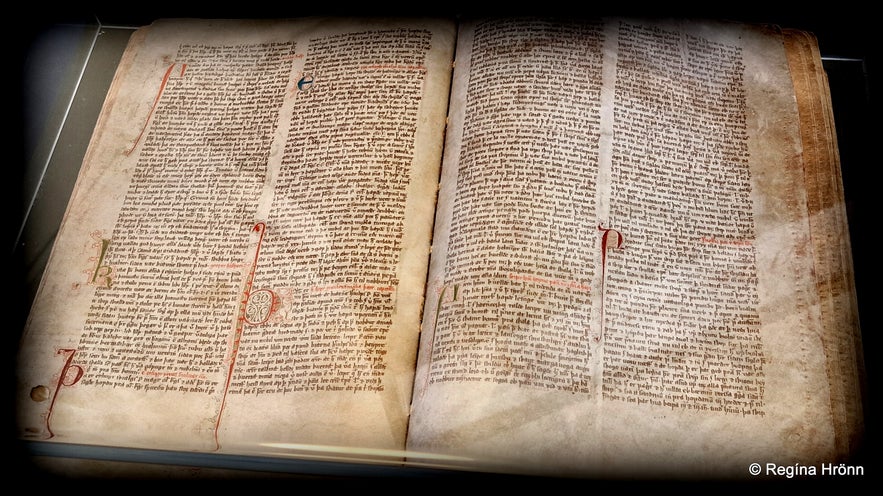 A replica of Flateyjarbók is on display under glass at Klausturstofa at Þingeyrar
Flateyjarbók tells us the story of the Norwegian kings and also contains some of the Icelandic Sagas, which tell us the stories of the Vikings in Iceland.
In 1656, the Bishop at Skálholt, Brynjólfur Sveinsson, donated Flateyjarbók to the Danish King Frederick III.
It remained in Denmark until 1971, when the Danish nation returned this precious vellum manuscript to the Icelandic nation.
"Vær så god! Flatøbogen“ is music to the ears of us Icelanders, uttered by the Danish Minister of Education Helge Larsen, when he presented Flateyjarbók to the Icelandic Minister of Education.
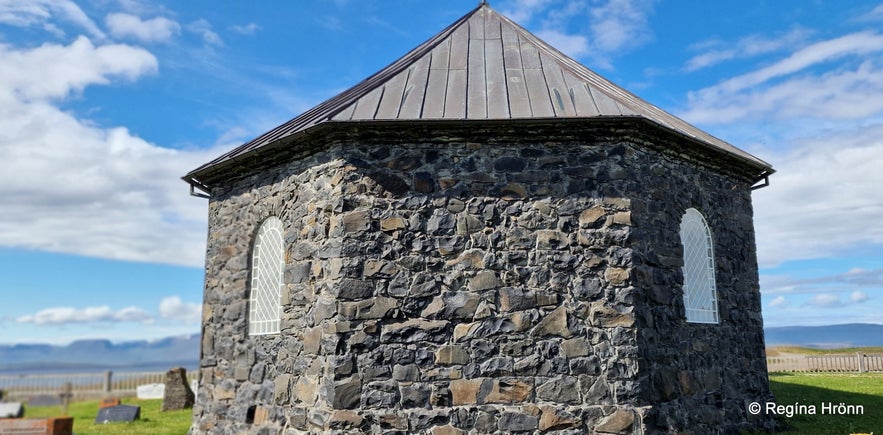 Þingeyrakirkja stone church as seen from behind
Ásgeir Einarsson from Kollafjarðarnes in the Strandir area came to Þingeyrar around 1860.
Upon his arrival at Þingeyrar, he decided to build a church from sturdy, durable material that would ideally stand on his land forever.
He decided to build it from stone, but unfortunately, there were no stones on his landed estate at Þingeyrar.
So he had his farmhands get the material for the church from Nesbjörg cliffs, some 8 km away from the church across the lake Hópið.
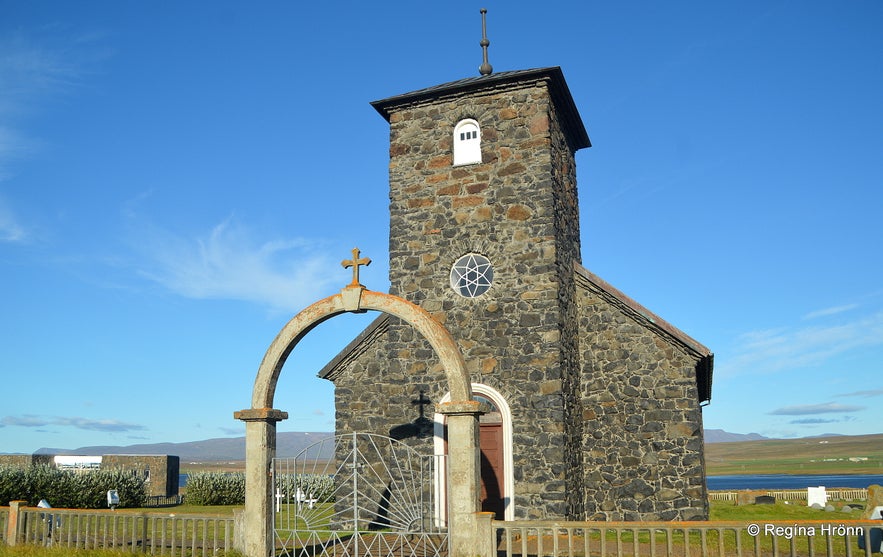 Þingeyrakirkja church
He had to wait for the lake to freeze over, and for the next four winters from 1864-1868, his farmhands worked hard at transporting the stones across the frozen Hópið on sledges and bulls.
The stones were then transported in the spring on horse trailers, over a distance of some 2 km to Þingeyrar.
The walls of the stone church are 95 cm to 1 meter thick and glued together with limestone. It must have been very hard work transporting all these stones to Þingeyrar.
The noted stonemason Sverrir Runólfsson built Þingeyrakirkja, his masterpiece, and I am very grateful to these men for their ambition.
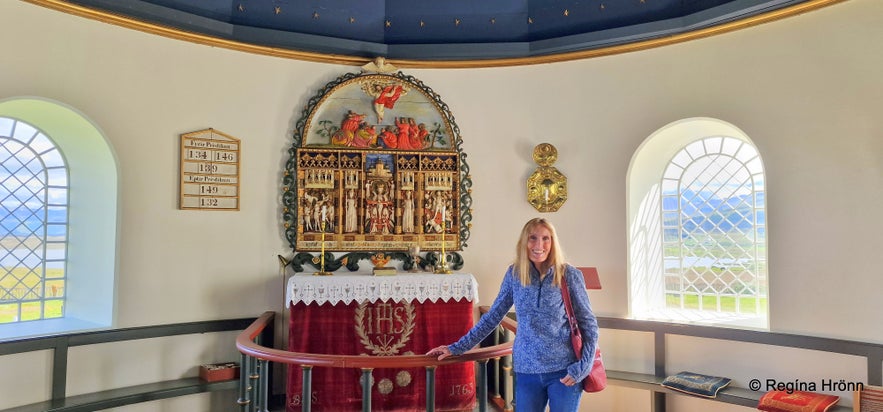 Inside Þingeyrakirkja church in 2025 - the antependium on the altar is old, from 1763
Þingeyrakirkja church, built in the Romanesque style, was consecrated on the 9th of September 1877.
The total building cost was 16,000 kr, and Ásgeir himself paid the majority of it, 10,000 kr.
The stone church serves as a memorial to Ásgeir, and there is no tombstone at his grave.
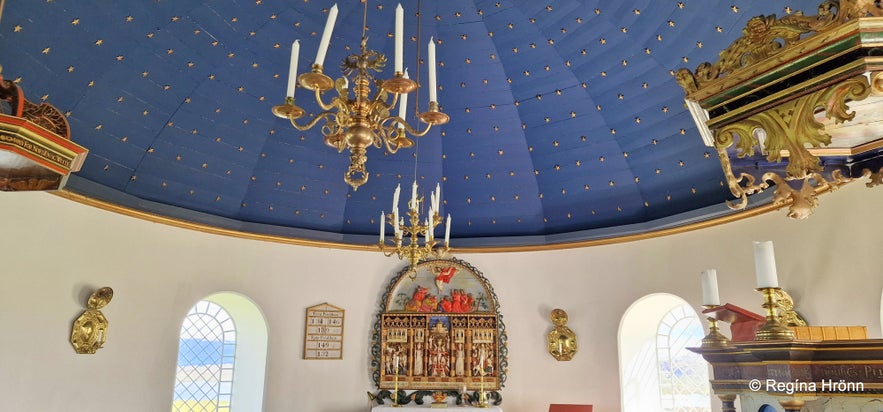 A small section of the 1000 stars in the ceiling that matches the number of the windowpanes
Þingeyrakirkja church is spacious and seats over 100 people. The church is so beautiful and ornate inside, and I hope you will be able to take a guided tour of the church.
Þingeyrakirkja is well known for its blue-painted ceiling, which features 1000 gilt stars.
Matching the number of stars in the beautiful ceiling are the windowpanes. There are 10 windows in Þingeyrakirkja, each one with 10 window panes.
In 2013, I came here, especially with my mother, to have a look at the stars on the ceiling, and we were in awe when we saw the other beautiful artifacts in the church.
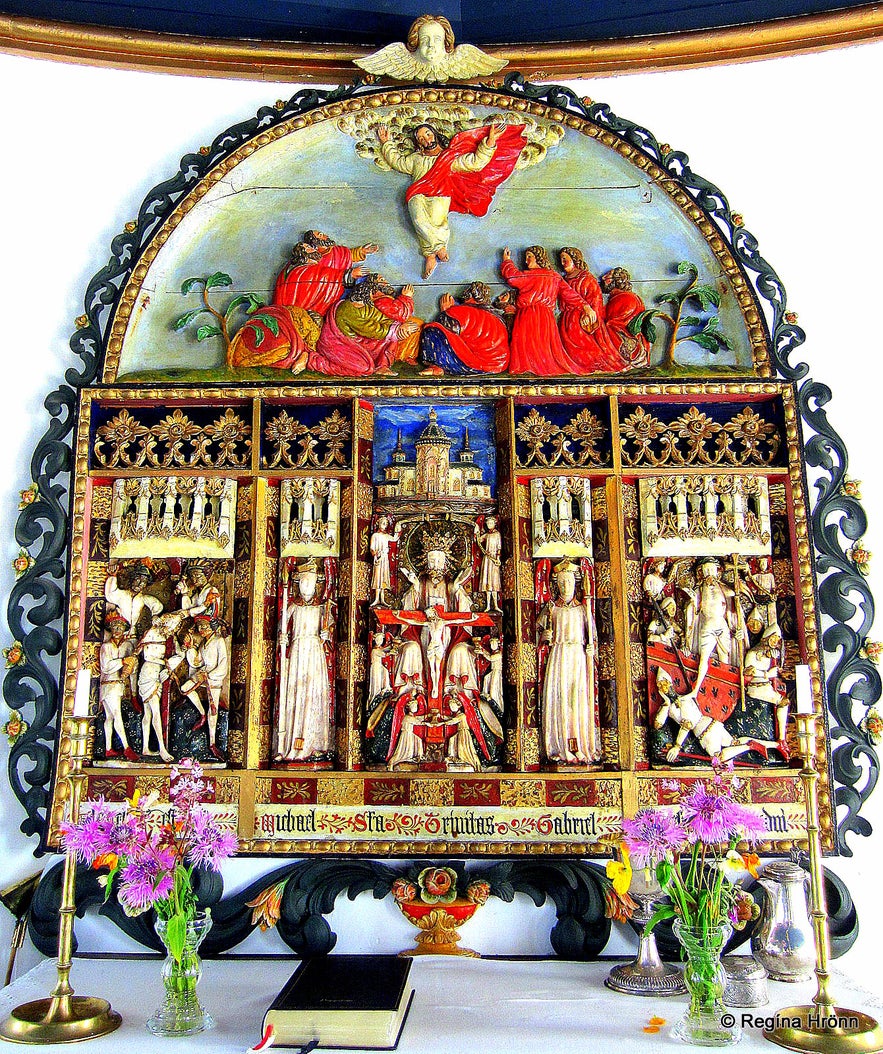
The beautiful altarpiece in Þingeyrakirkja
Most of our churches are Lutheran churches, and they are not as ornate as Catholic or Orthodox churches.
The oldest artifact in the church is the alabaster altarpiece, dating to the 15th century (around 1470).
This is the only artifact left from the old monastery church at Þingeyrar from the Catholic period. We are so lucky that this exquisite altarpiece has survived through the ages.
Such alabaster altarpieces, which were most likely imported from England, can nowadays be found in only a few churches in Iceland, and some are in the possession of the National Museum of Iceland.
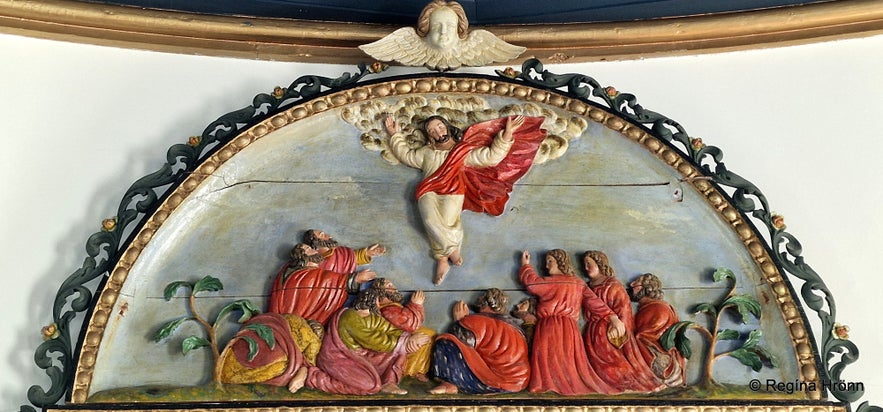 The upper part of the altarpiece is a later addition
When Icelanders began exporting stockfish to England, they purchased several church objects, including many alabaster altarpieces from the English.
I have seen such beautiful, old alabaster altarpieces at Hóladómkirkja cathedral, and in Möðruvallakirkja church in Eyjafjörður. We were told while visiting Þingeyrakirkja church that there is one in Flateyjarkirkja church in Breiðafjörður, but I didn't see it during my visit to that church.
The upper part of the altarpiece, which shows the ascension of Christ, is a later addition.
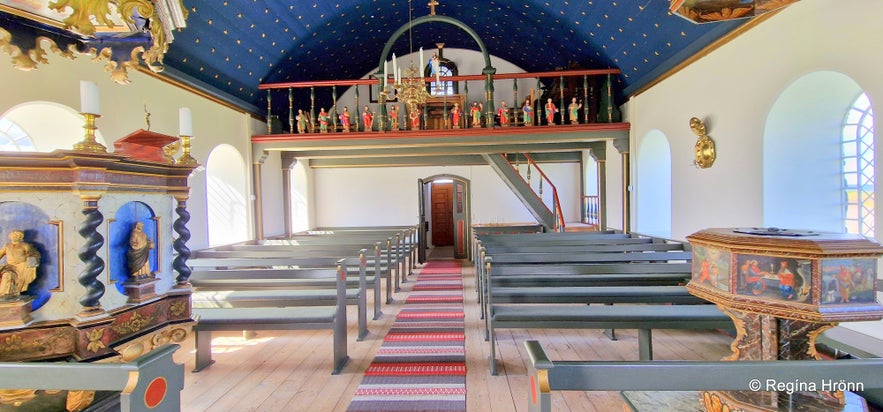 Inside Þingeyrakirkja - the pulpit and baptismal font were donated by Lauritz Gottrup
It was carved by Guðmundur "bíldur" Pálsson (1830-1884), who was a well-known woodcarver. Guðmundur had studied woodcarving in Copenhagen and was a prolific woodcarver in Iceland.
If you look at my travel blog about historical churches in Eyjafjörður, you will see another one of his works, the upper part of the alabaster altarpiece in Möðruvallakirkja.
It is much smaller, though, and less ornate than his work in Þingeyrakirkja church.
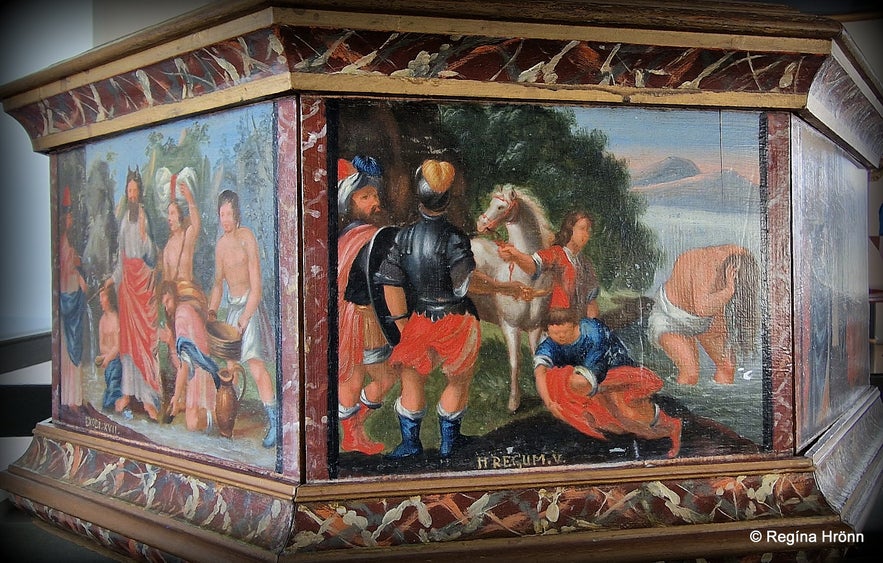 The old baptismal font in Þingeyrakirkja church
At Þingeyrar, one of the grandest manors in Iceland was erected, where chieftains resided. So this was quite an important place in Iceland's history.
Today, there is a farm at Þingeyrar, the church that was consecrated in 1877, and Klausturstofa.
The Danish Lauritz Gottrup took over Þingeyrar in 1684. He built a large timberhouse and a timber church at Þingeyrar.
The Danish King appointed Lauritz to hold a high position in Iceland.
Lauritz was a wealthy, forward-thinking man, and the large house was partially heated and had running water.
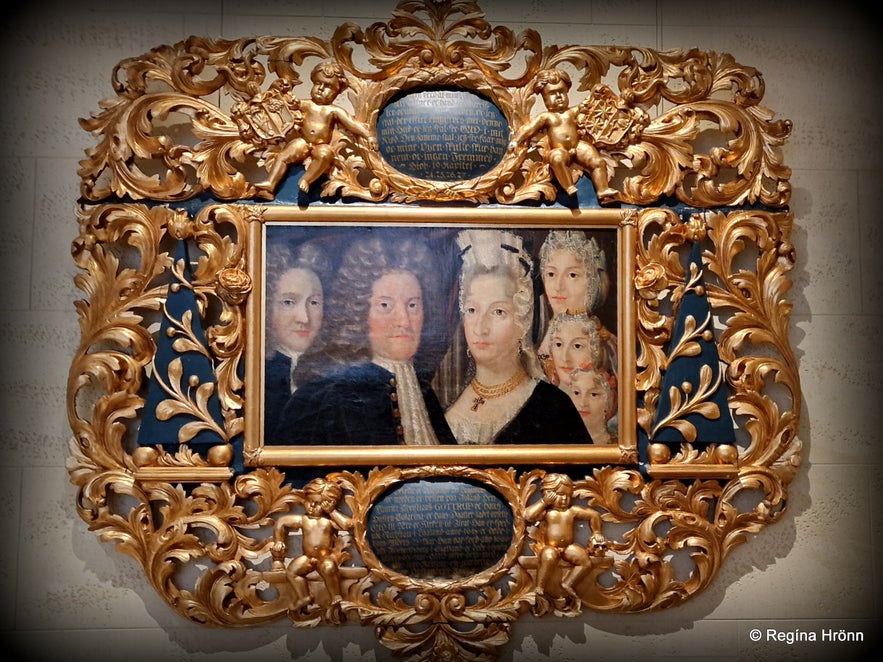 A painting of Lauritz Gottrup and his family at the National Museum of Iceland
Lauritz donated several exquisite artifacts to his church.
He donated the beautifully decorated baptismal font to Þingeyrakirkja church in 1697. The baptismal bowl is made of tin and is slightly older than the baptismal font.
The baptismal font is unusual because it is quite large and octagonal.
On each panel, you will see beautiful and colourful paintings of significant events in Jesus's life. It is one of the biggest and most beautiful baptismal fonts I have seen in an Icelandic church.
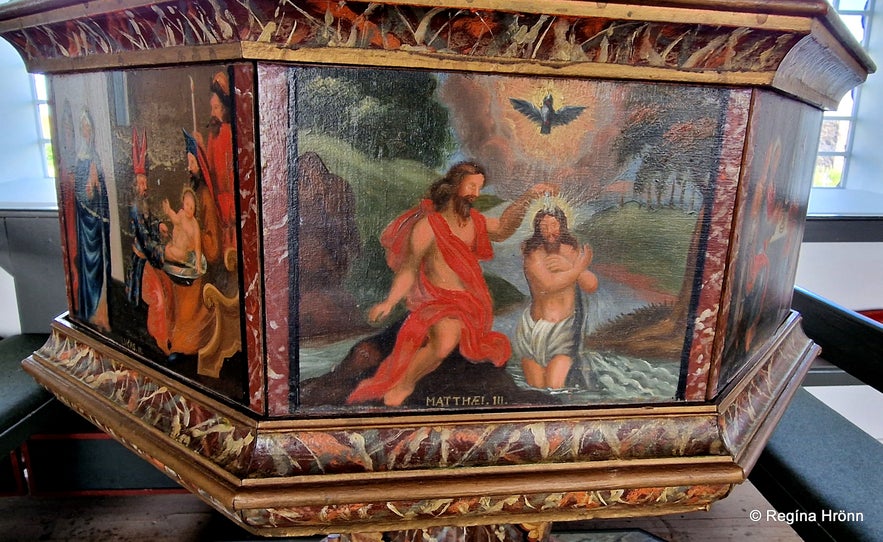 The old baptismal font in Þingeyrakirkja church
The photo above shows a painting of Jesus' baptism. I took pictures from every angle and every painting, as I thought they were so beautiful.
Above the baptismal font is a sky, so to speak, a sounding board, also beautifully decorated with a dove in the middle.
Another such decorative sounding board is above the pulpit, and Björn, who gave us a guided tour of the church, told us it was added to improve the acoustics.
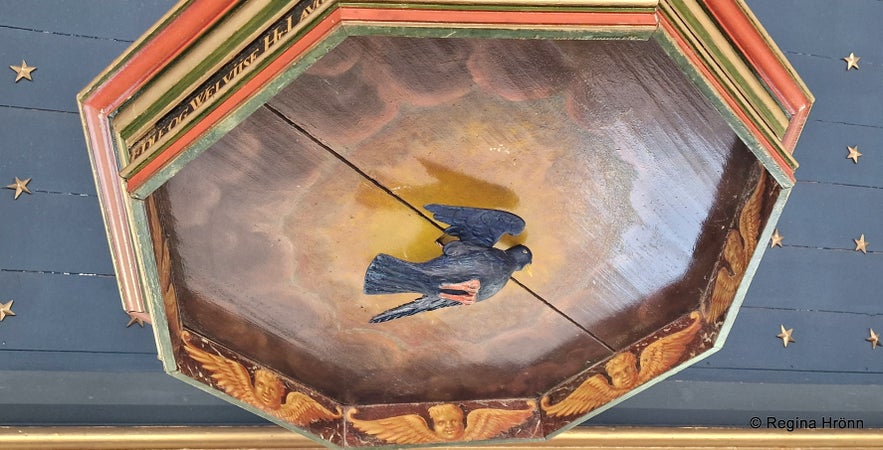 The sounding board above the baptismal font
In 1696, Lauritz donated the beautifully decorated hexagonal pulpit to Þingeyrakirkja church.
You can see the pulpit in a couple of my photos, especially in the third photo.
The baroque-style pulpit is decorated with gilded carved figures of Christ and the Evangelists. It is high-quality work, so Lauritz cut no corners when decorating his church at Þingeyrar.
He was wealthy, and the farm at Þingeyrar was among the grandest in Iceland. There were, all in all, 46 buildings in 1684 at Þingeyrar, including a 24-cow stable.
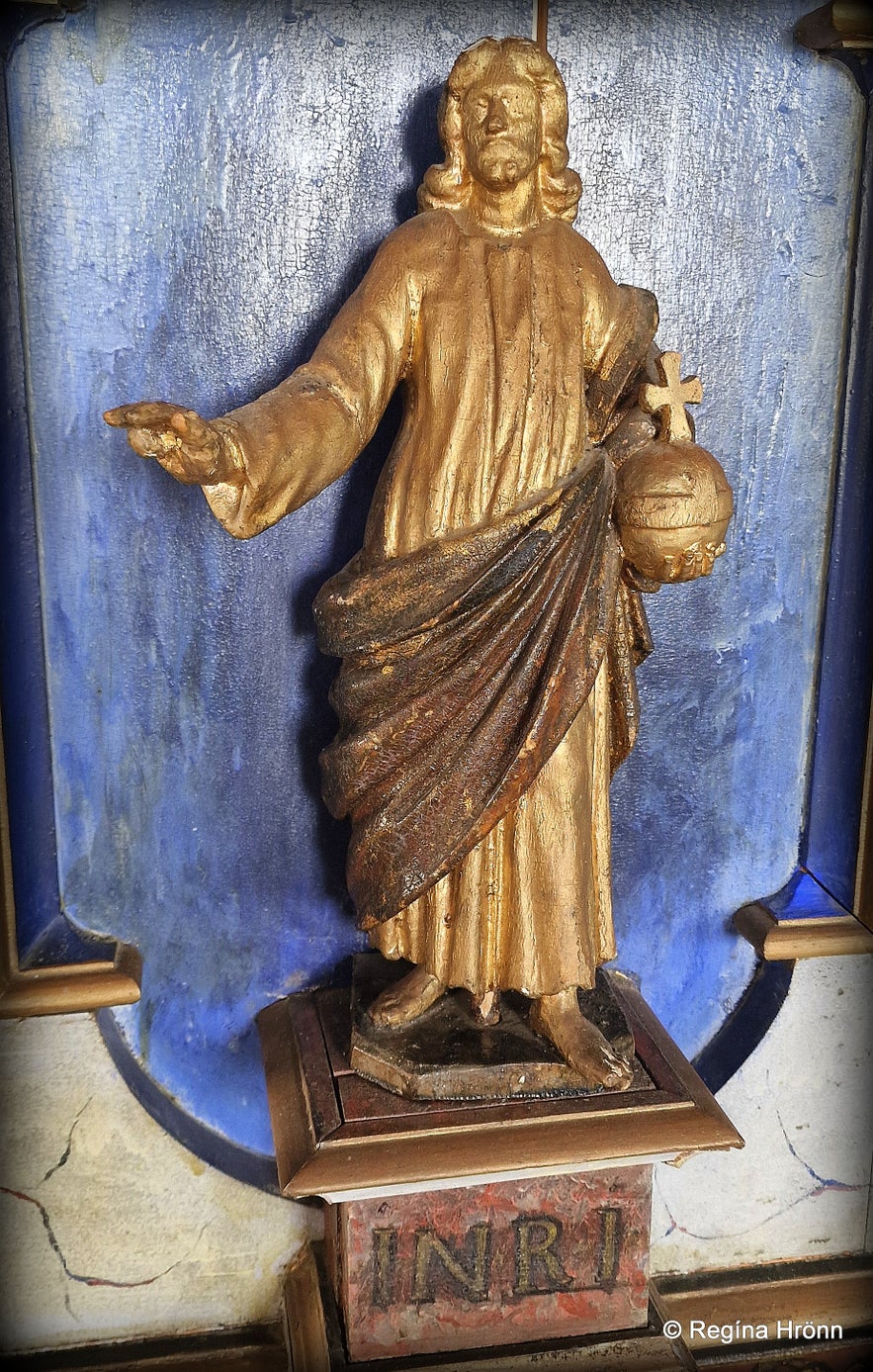 A gilded carved figure of Christ on the pulpit
Let's remember that his church was a timber church, and these old artifacts were moved to the stone church when it was built.
The inscription on the pulpit tells us that Lauritz donated it to the church. You will see a similar inscription on the baptismal font.
The pulpit was made in Denmark, but at the time, Iceland had a Danish king. It wasn't until 1944 that we cut the ties to Denmark.
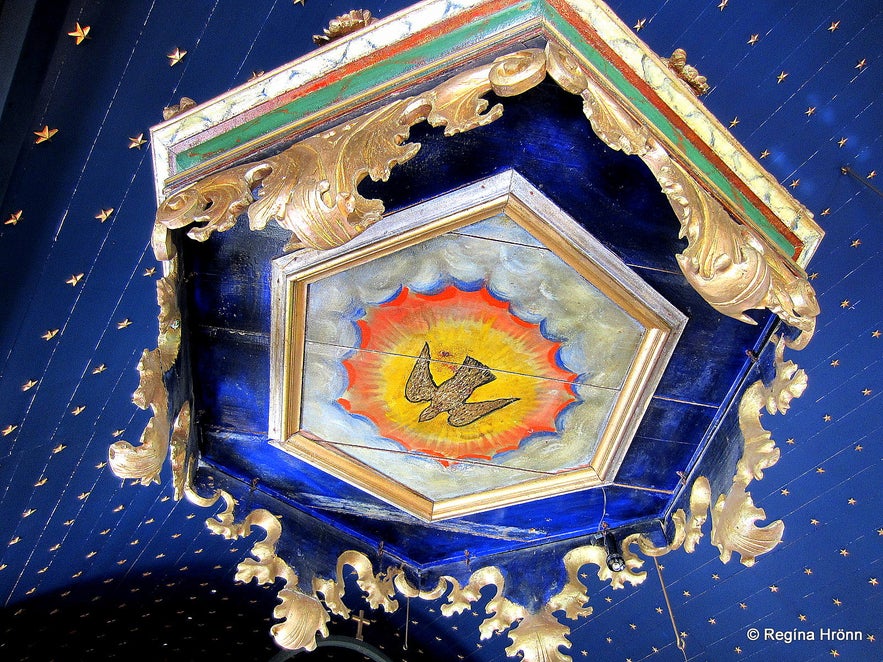
Above the pulpit is a beautiful sounding board with a dove
Lauritz also donated the Danish silver, which you can see on the altar at Þingeyrakirkja.
This silver is one of the treasures of Þingeyrakirkja church, especially the exquisite silver chalice with a silver patina and gold lining. At this time, in the 18th century, Danish silver was of exceptionally high quality.
I added another photo of the old altarpiece without the flowers (the former one I took in 2013; this one was taken in the summer of 2025).
In the photo below, you can see the silver chalice on the altar.
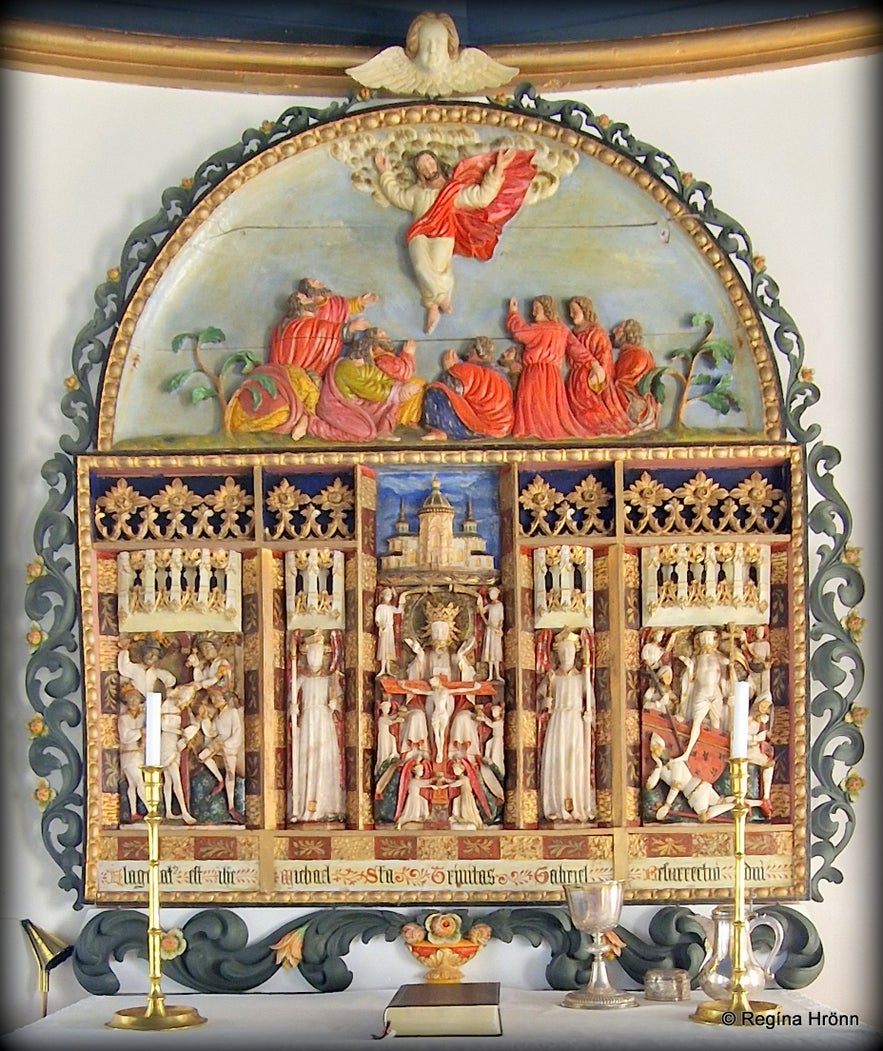 The old altarpiece and the silver chalice lined with gold
Lauritz also donated the silver box, called a pyx, for the communion wafers (marked with the year 1705 and the initials of both Lauritz and his wife, Catarina).
You can also see the silver wine jug in the photo behind the candlestick. It is marked with the name of Lauritz and his wife.
It was unusual to keep such wine jugs in Icelandic churches, and it shows how ambitious Lauritz was in making his church as ornate and splendid as possible. He for sure did a good job.
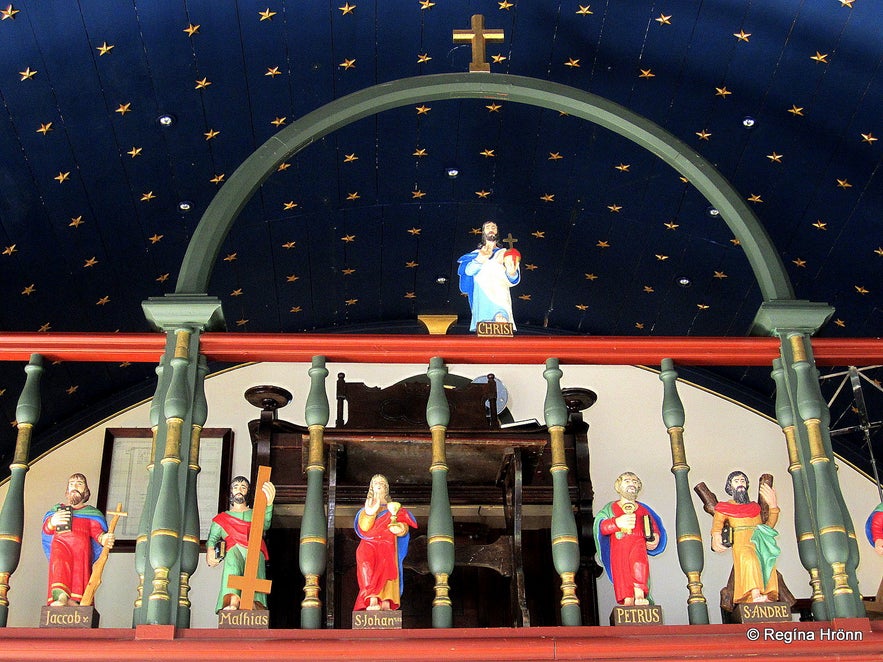
Inside Þingeyrakirkja
The chandeliers you can see in some of my photos and the light shields by the altar are from the late 17th century. They are also of high quality, so you can see many old, priceless artifacts in Þingeyrakirkja church.
I am sure that you will notice the colourful carved figures of Christ and the apostles in between the railings of the singers' balcony.
I am going to tell you their story and why they are not the original statues.
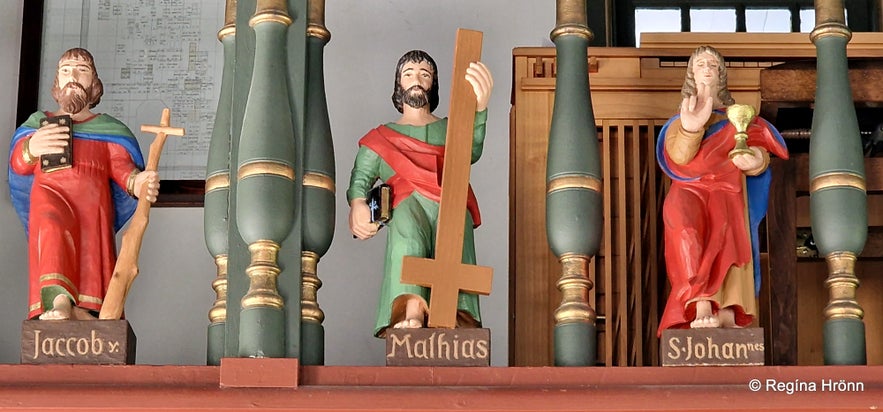 Three of the carved apostles in Þingeyrakirkja church
The original statues were made in Germany, and once adorned the minster. But around 1900, the church's owner sold several artifacts from Þingeyrakirkja.
He sold the apostles to the consul Jón Vídalín in Copenhagen. Jón scraped off the painting of these old statues and stained them with oak stain, so that the statues would complement his oak armour!
In 1908, Jón Vídalín donated the statues to the National Museum of Iceland. So somebody must have told him how valuable they were to the Icelandic nation.
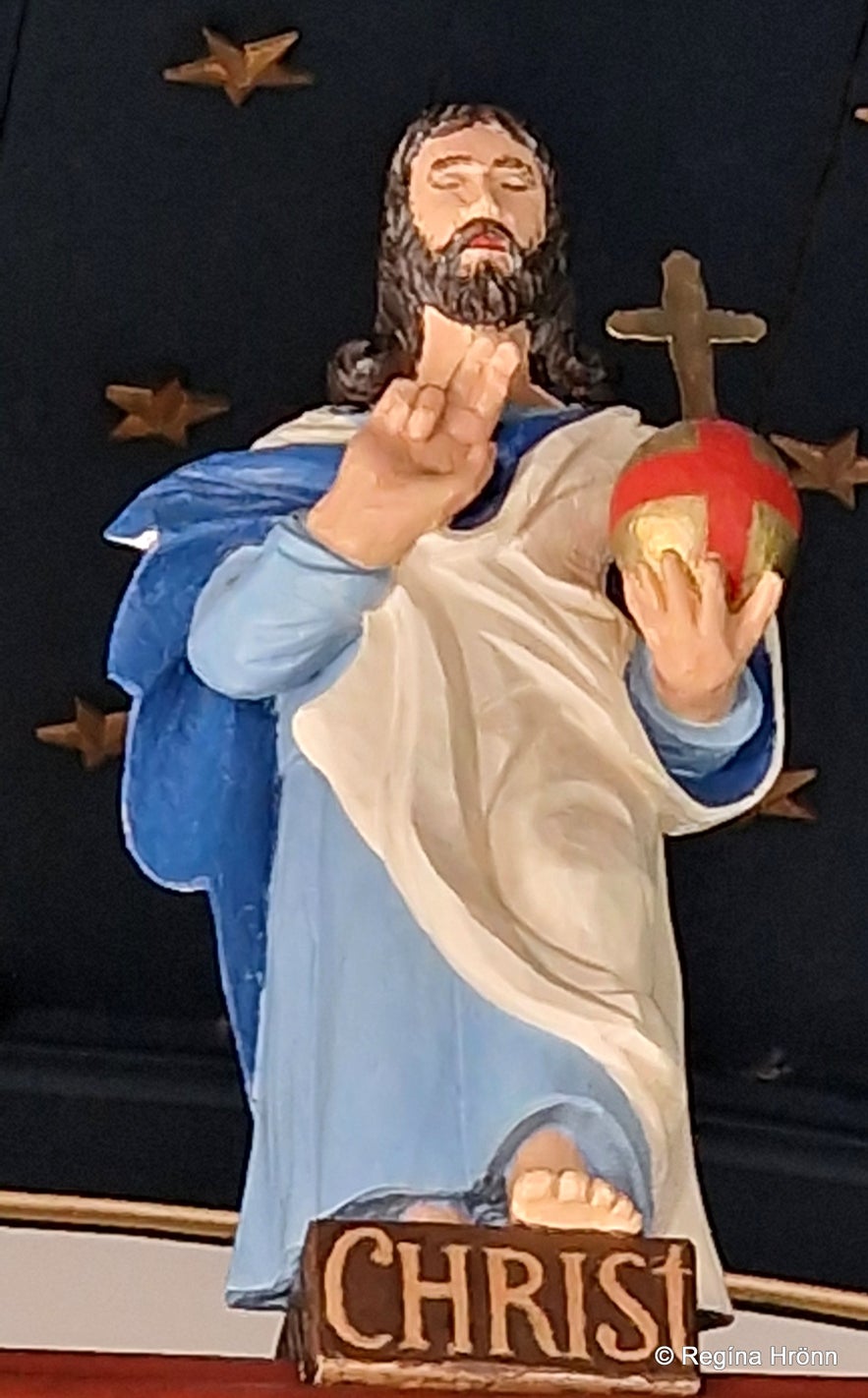 Christ is in the middle of the apostles - the resolution is too low, I know, as I had to zoom in on him
Þingeyrakirkja church asked the National Museum of Iceland to return the statues to the church, but the museum refused, citing a strict policy of never returning objects donated to it.
You can see photos of the original statues at the National Museum of Iceland in Sarpur.
They could have made the exemption in this case, don't you agree? So what did Þingeyrakirkja church do?
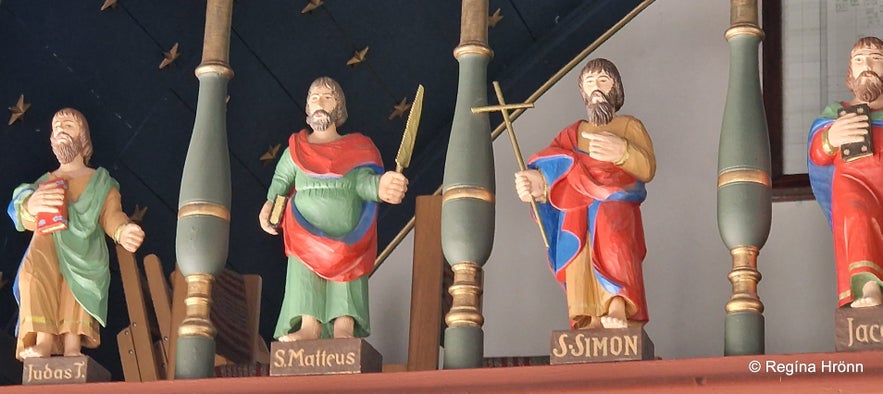 Four of the apostles
They hired a woodcarver, Sveinn Ólafsson, and commissioned new statues. Sveinn borrowed one statue at a time from the National Museum and finished carving them all in 3 years.
So these beautiful statues have only been in the church since 1983.
I bet that if you didn't know this story, you wouldn't be able to tell they aren't from the same century as the rest of the artifacts.
At least it is not evident to a layman like me, though I can see from my photos that they are in mint condition.
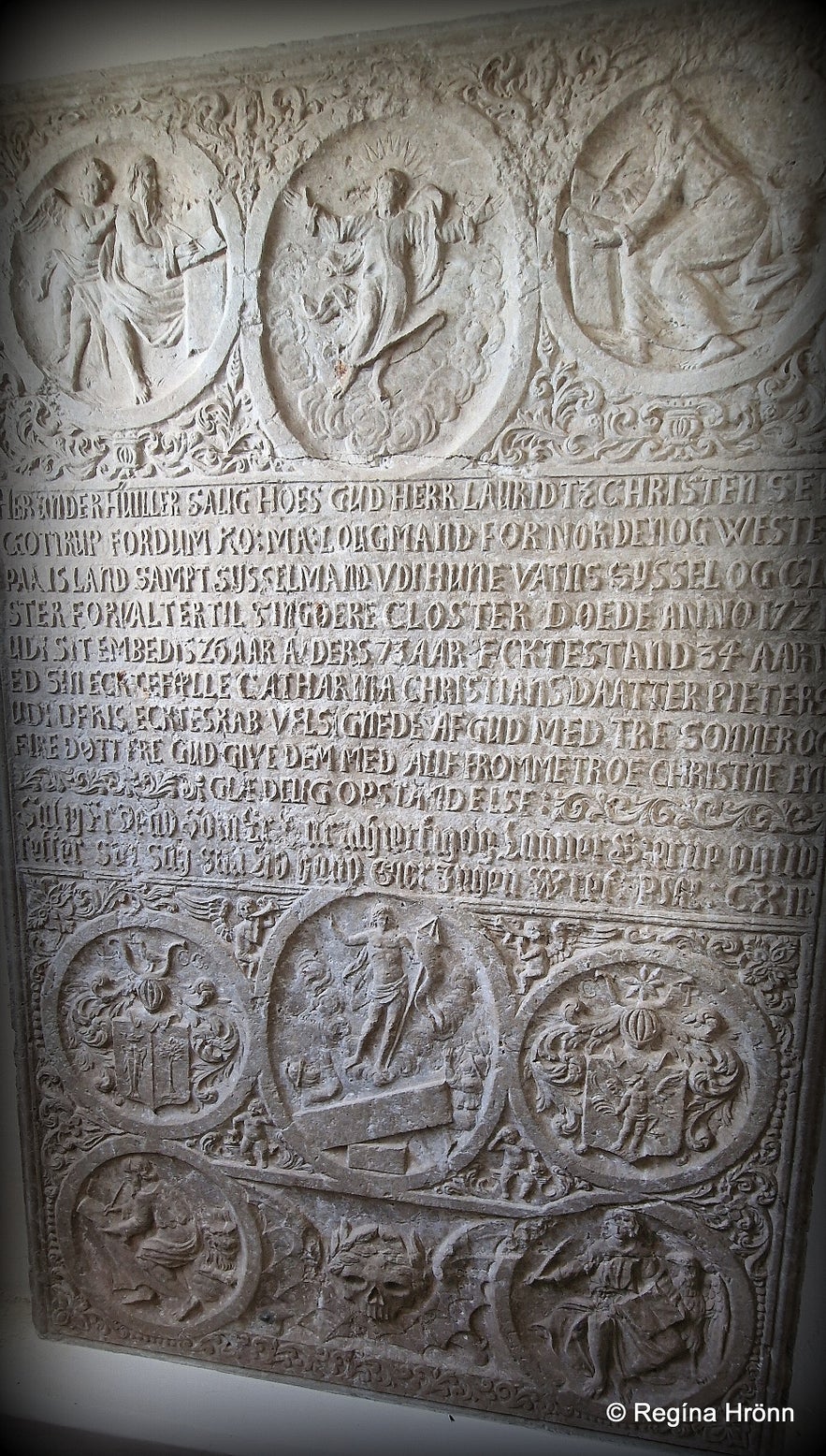 The tombstone of Lauritz Gottrup
As you leave the church, you will notice a large tombstone on the western wall. This is the tombstone of Lauritz Gottrup, found by chance in the old graveyard in 1927.
The tombstone had sunk into the ground, and when the tombstones were removed from the old graveyard, one of the workers stuck a pinch bar into the ground and hit a rock.
And there were supposedly no stones in the land at Þingeyrar, and thus the stones had to be fetched from Nesbjörg. So they started digging.
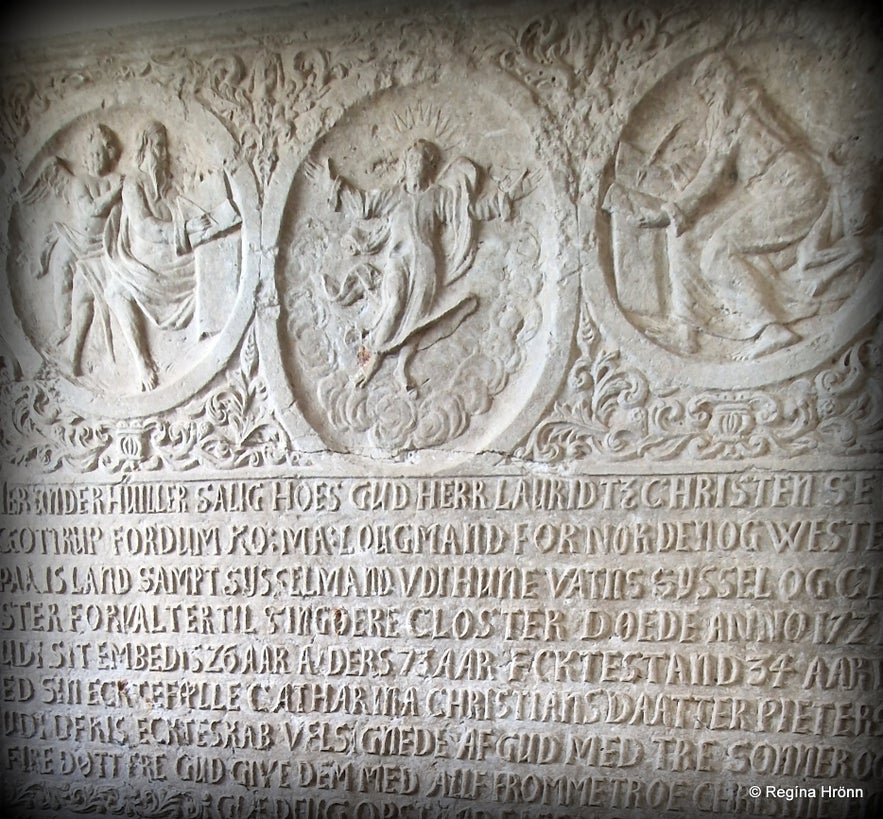 The tombstone of Lauritz and Catarina
You can see the holes in the tombstone made by the pinch bar.
I find it remarkable that they found Gottrup's tombstone; otherwise, it would just remain hidden in the ground. He died in 1721, at the age of 73.
The tombstone has been mounted on the wall inside Þingeyrakirkja church since 1936.
The masons, who were plastering the church, had to mount this massive, extremely heavy tombstone on the wall, and it took several men to finish the job.
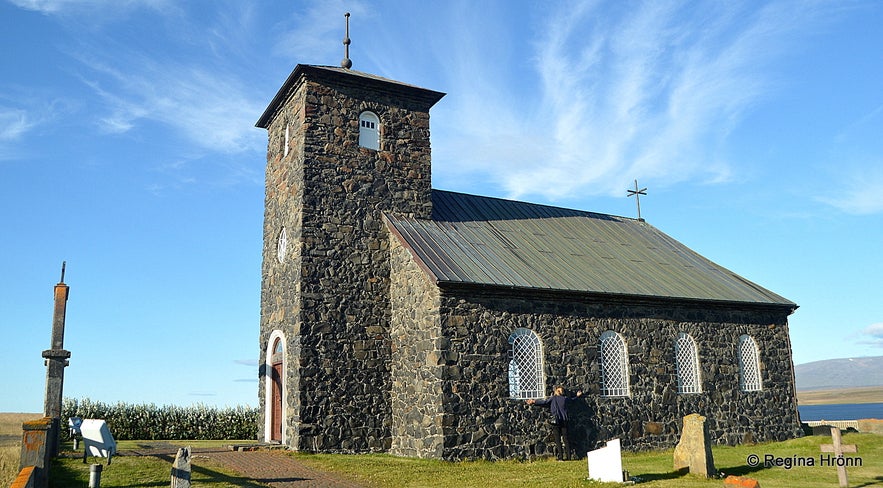
I love this church, and it always gets a hug from me when I visit it
In 1812, Þingeyrar came into private ownership when the district commissioner Björn Ólsen bought the land from the Danish King.
By that time, the buildings at Þingeyrar had become dilapidated, so he tore them down and built new houses.
In 1817, after trying to repair the old, dilapidated timber church that Gottrup had erected, Björn tore it down and built a new, smaller church of turf and rocks, paneled with timber.
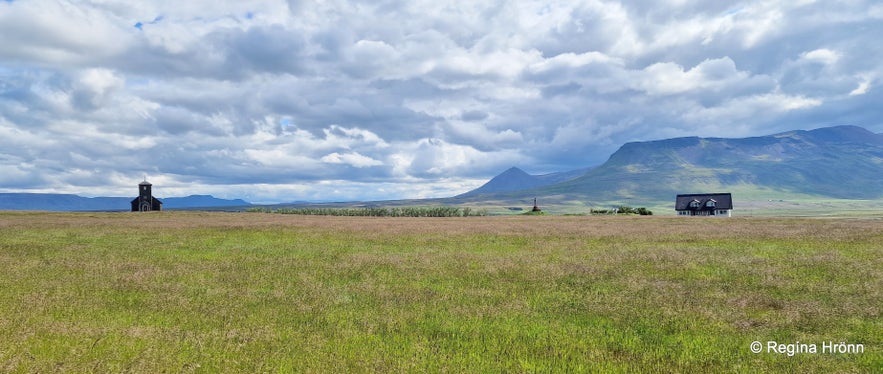 Þingeyrar - to the right of the church, closer to the farm, the old church once stood
These churches stood closer to the house in my photo above, where there is an old graveyard, until the current Þingeyrakirkja stone church was built further away.
Archaeologists have searched for the monastery at Þingeyrar since 2014, and in the summer of 2018, when archaeological digs began at Þingeyrar, they reached the sedimentary strata from the 17th and 18th centuries.
Here, they found a structure built atop the old church, which appears to have been much larger than the current stone church.
The structure might have been used for human habitation.
The archaeologists have unearthed a leather book jacket, a ring with a red, carved stone, and a red velvet cap with silver laces.
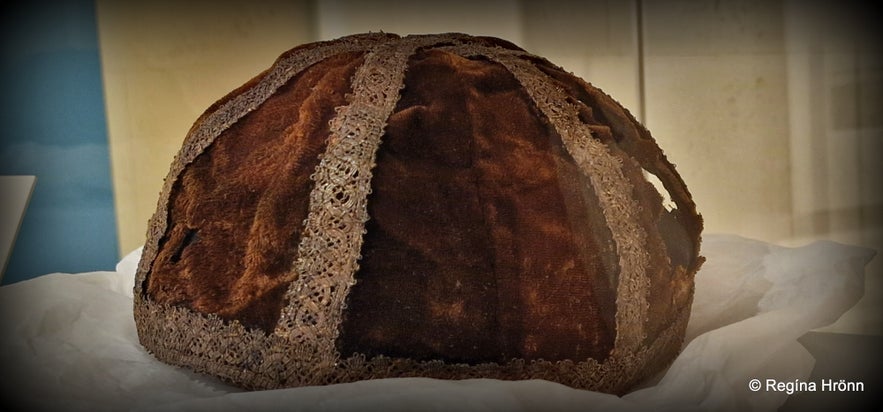 In 2025, the velvet cap was on display at Þjóðminjasafnið - the National Museum of Iceland
Also, a signet, a carved walrus tusk pax with Mary and Jesus carved on it, and a golden thread wrapped around a cylinder, but finding gold in archaeological digs is very rare.
In 2022, archaeologists discovered the ruins of the monastery.
They were made of turf, as stones could not be found at Þingeyrar, as I mentioned earlier, but in better condition than the archaeologists had dared to hope for.
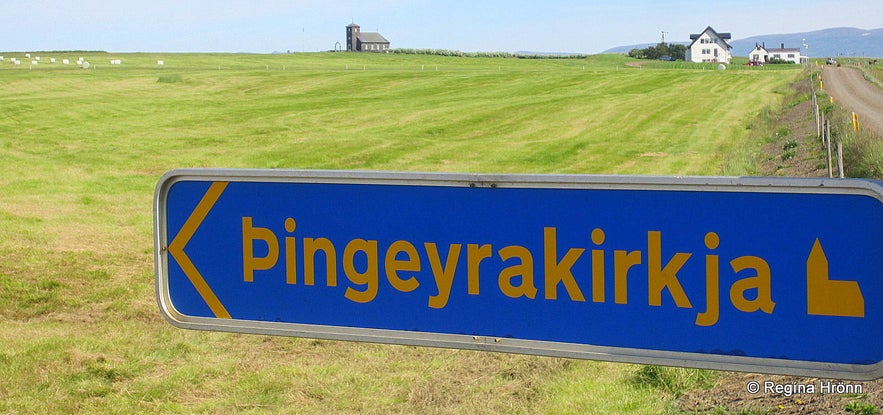
The road sign leading to Þingeyrakirkja
It will be interesting to see what further excavations reveal about this historical site. Unfortunately, this work had to stop, as they didn't receive additional funding.
I wish more funding were granted to archaeological sites in Iceland.
The money is needed elsewhere, but this part of Iceland's history is essential, and more funding is needed for such vital projects.
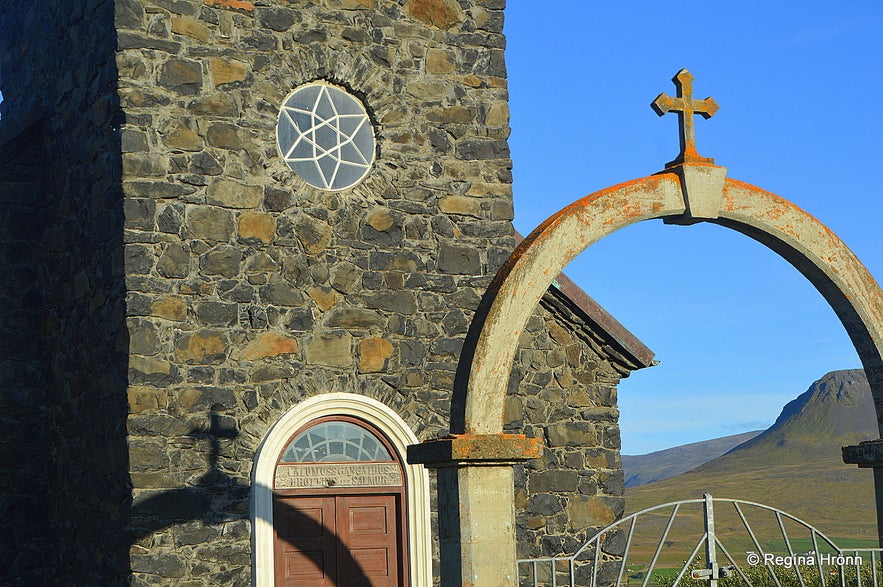 Þingeyrakirkja church and the lychgate
Þingeyrar derives its name from "Þing-" meaning Parliament, as district legislative assemblies were held here, twice a year, during the Commonwealth Period from 930-1262.
A spring assembly was held before the Alþingi parliament convened at Þingvellir in June, and another in the late summer.
Close to the church are the remains of a circular structure, a judgment circle, which is a listed heritage site because it is believed to be part of the assembly site.
Unfortunately, I didn't see the circle. Would have loved to, as I travel all over Iceland to visit such old sites.
The district legislative assembly was called Húnavatnsþing, and it is mentioned in Landnámabók - the Book of Settlements, the Saga of Hallfreður vandræðaskáld, and Vatnsdæla Saga. It is also mentioned in the Saga of Grettir the Strong and a couple of other Sagas.
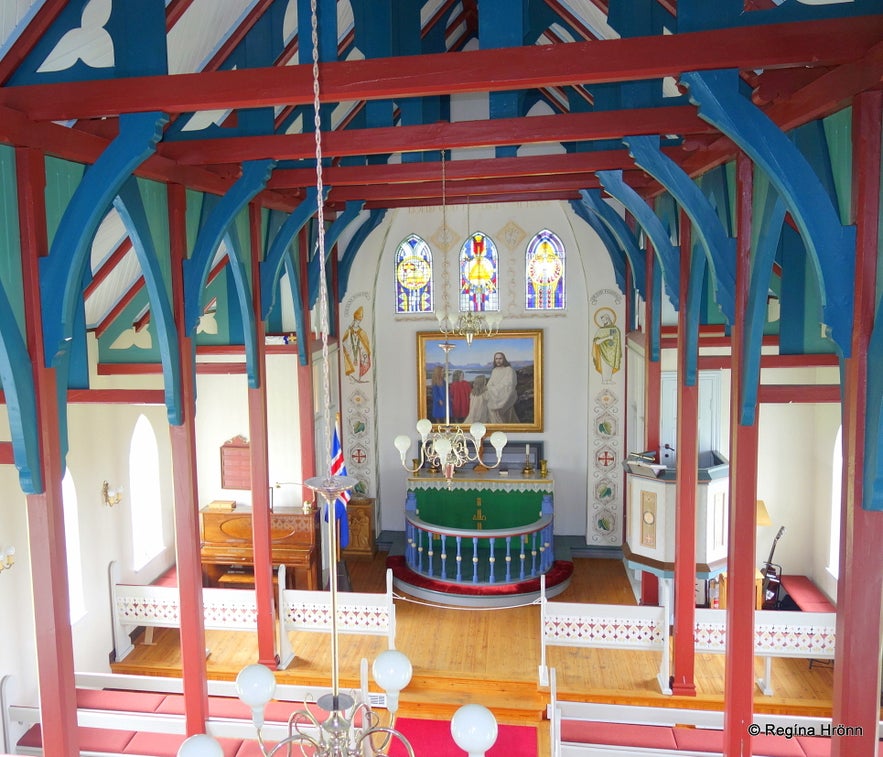 Þingeyrarkirkja at Þingeyri village is also a very beautiful church
In 1912, the Þingeyrakirkja church came into the congregation's possession.
There is another church by a similar name in the village of Þingeyri in the Westfjords.
It is called Þingeyrarkirkja, and the difference is that one church is named after Þingeyri (singular) and the other after Þingeyrar (plural).
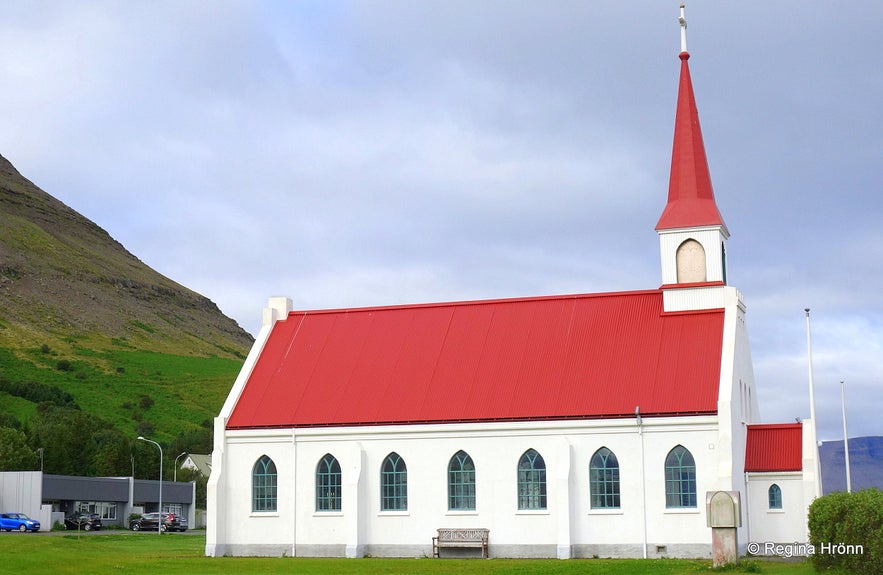 Þingeyrarkirkja in the Westfjords of Iceland
If you put the name into the GPS, write Þingeyrakirkja without the -r-, otherwise you will find yourself in the beautiful Westfjords of Iceland.
I have heard of several such incidents where an extra "r" was entered into the GPS for place names in Iceland, and people drove hundreds of km to the wrong place.
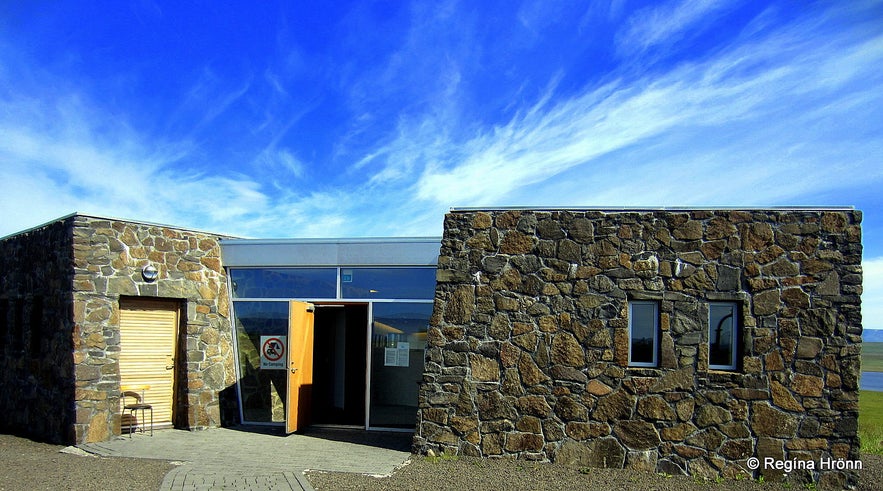
Klausturstofa
By Þingeyrakirkja church, you will find a Visitor Centre, called Klausturstofa. It was built to resemble the church in stone and complements it.
At the Visitor Centre, you can get guidance in the church for groups for a small fee.
I revisited the Visitor Centre in the summer of 2025 on a Sunday, and we were lucky enough to have a man arrive, open the church for us, show us around, and offer excellent guidance.
This was Björn Magnússon, the farmer at Hólabak farm nearby, and he told me that the Visitor Centre used to be open, but, due to a lack of funding, it can no longer remain open.
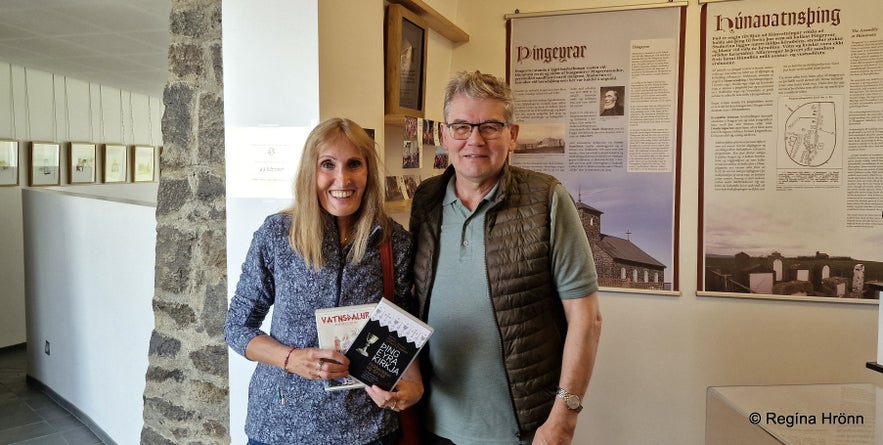 With Björn, who gave us guidance in the church and material to watch for my travel blog
So only groups can get guidance in Þingeyrakirkja church now.
I cannot fathom why Þingeyrakirkja church, Klausturstofa, and the archaeological excavations at Þingeyri don't receive enough funding.
But as we were there on a Sunday, Björn had popped over to see if there were any visitors. We were so lucky, as I hadn't entered my favourite church since 2013.
On the walls of the Visitor Centre are drawings from the Saga that took place here in the Vatnsdalur valley, Vatnsdæla Saga. Here I bought an excellent map, the Vatnsdæla Saga Heritage Map.
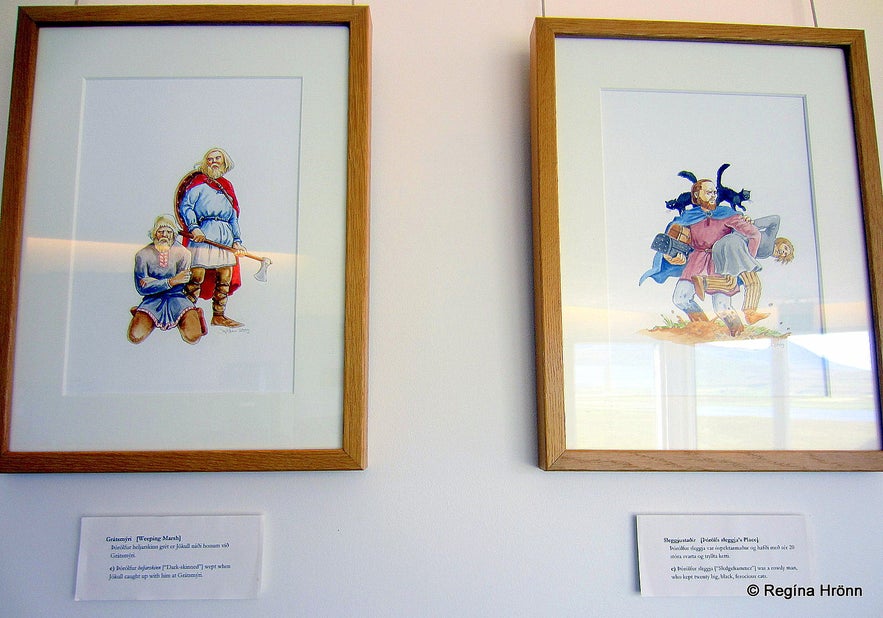
At Klausturstofa
At the Visitor Centre, you will find a replica of Flateyjarbók.
It mainly tells the story of the Norwegian kings, as I told you earlier. In Flateyjarbók, you will also find some of the Sagas, e.g., Fóstbræðrasaga, Grænlendingasaga, Færeyingasaga, and Orkneyingasaga.
I have read all of the Sagas, apart from Orkneyinga Saga, and they are excellent reads.
I recommend starting with one or two of them: the Saga of Egill or the Saga of Grettir the Strong. The jewel in the crown of the Icelandic Sagas is Njála - the Saga of Burnt-Njál.
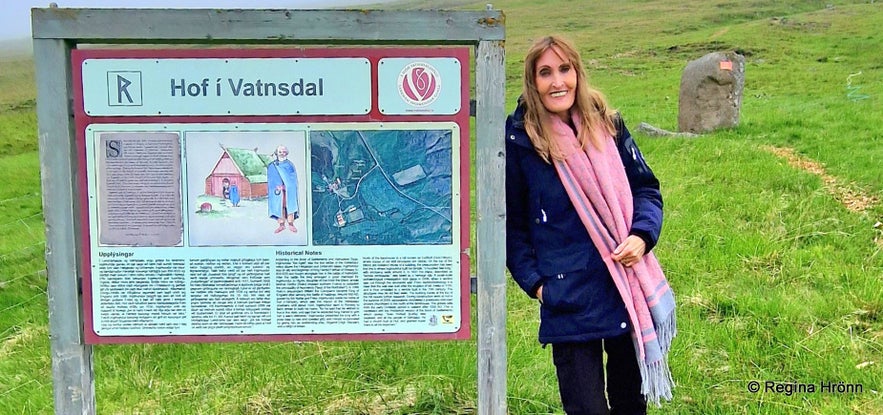 At the Saga sign at Hof in Vatnsdalur valley
In Vatnsdalur valley, the Vatnsdæla Saga took place. Vatnsdæla Saga was most likely written in 1270 in the monastery at Þingeyrar and tells the story of the people living in this part of Iceland.
I have read Vatnsdæla Saga and have stayed overnight in the Vatnsdalur valley twice to get to know this historical valley better.
I will write a travel blog soon about Vatnsdalur valley and the people of the Vatnsdæla Saga. I am a great fan of the Sagas and visit places in Iceland where the Sagas took place.
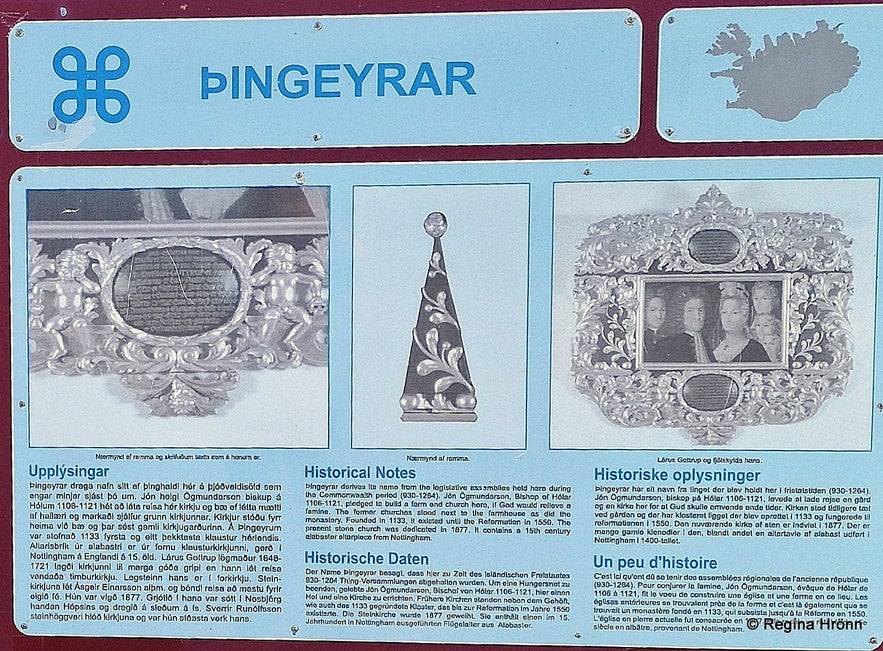 The information sign at Þingeyrar
For information about when the Visitor Centre at Þingeyrar and the Þingeyrakirkja church are open, visit the website of Þingeyraklausturkirkja.
You can send them a message if you want a group to visit the church. Or phone Björn Magnússon at Hólabak farm +354-895-4473
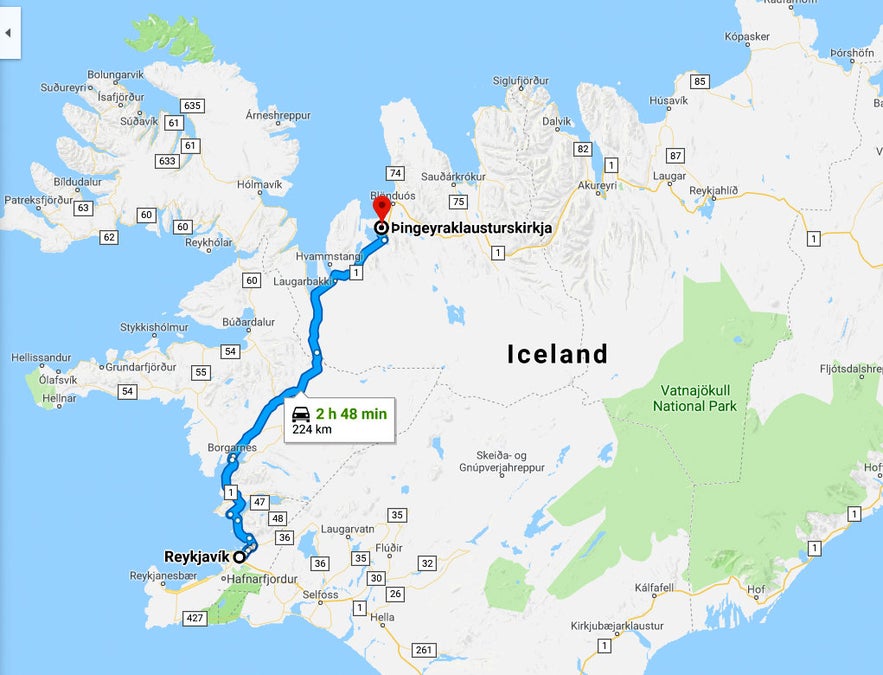
I wanted to introduce you to Þingeyrar, as many people pass it by without knowing about this historical site. And too many people drive by without even noticing this extraordinary church.
As, from the Ring Road 1, you can only see Þingeyrakirkja church as a black dot in the landscape.
To visit Þingeyrakirkja church, you can rent a car in Reykjavík, and drive north on Ring Road 1, turn left on road 721, and drive for 6 km on a gravel road.
Þingeyrar are located midway between the towns Blönduós and Hvammstangi, and can be seen from the road in the distance, i.e., if you know what you are looking for.
 Contemplating by Þingeyrakirkja church
I have written three other travel blogs about things to see and do in the vicinity of Þingeyrakirkja:
Borgarvirki Fortress in North West Iceland - was this a Viking Fortress?
Hvítserkur monolith on the Vatnsnes peninsula
A lovely Stay at Dæli by Kolugljúfur Canyon in North Iceland
Have a lovely time visiting Þingeyrakirkja church, and I hope that you will be able to get guidance of the church :)
Ref.:
Kirkjur Íslands - volume 8
Þingeyrakirkja - þjóðardjásn og dýrindi (DVD, a gift from Björn)
Leitin að klaustrunum, Steinunn Kristjánsdóttir

Hi, my name is Regína Hrönn, and I was born and raised here in Iceland.