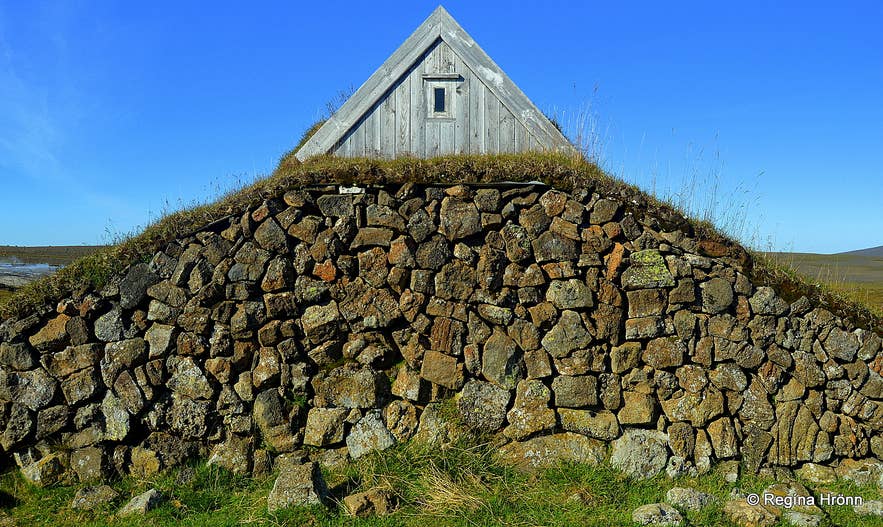
In the central highland of Iceland, you will find one of Iceland's pearls: a beautiful geothermal area called Hveravellir, a nature reserve at 650 meters above sea level.
Join me on an adventure into the highland, where we will visit colourful geothermal hot springs and bathe in a hot pool in a geothermal river :)
After driving through the vast, barren highland of Iceland, it is so lovely to encounter such an oasis.
Top photo: The oldest still-standing turf rest house at Hveravellir, built in 1922
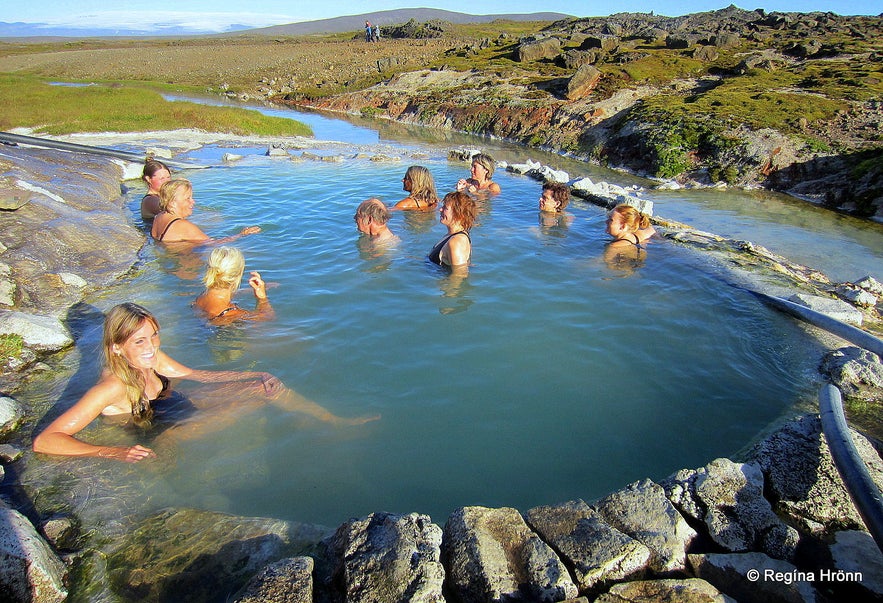
Chilling in the hot pool at Hveravellir
There was an old route through this area, referred to in the Viking Sagas, with the earliest references dating to around the year 900. This road is called Kjalvegur road.
The oldest first-hand descriptions of Hveravellir date back to 1752, when the travellers Eggert Ólafsson and Bjarni Pálsson wrote about this area in their travelogue.
Here at Hveravellir, you can bathe in a lovely hot pool in a geothermal river, which is ever so nice and relaxing after a long day of travelling.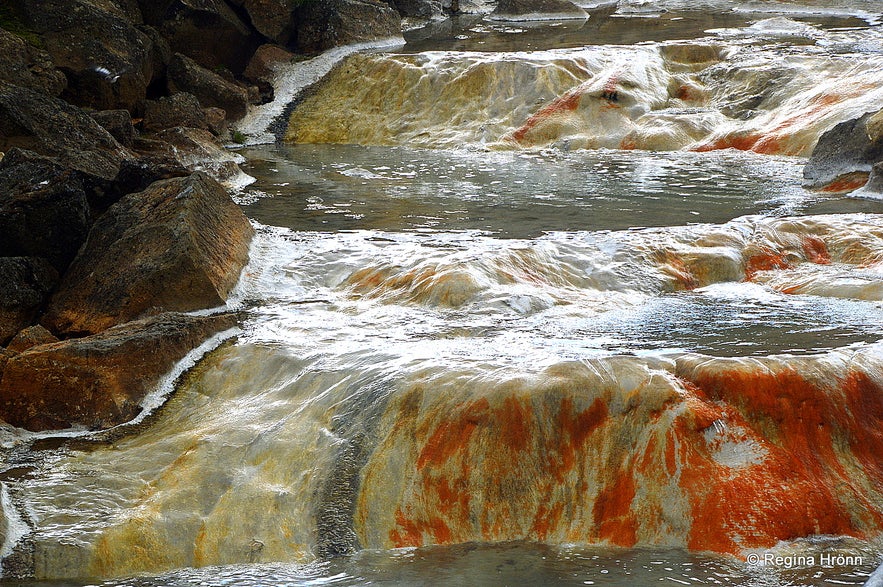
The small river by the pool - geothermal colours
It is heavenly sitting in this hot pool in the wilderness of Iceland, nestled between two of Iceland's glaciers, Langjökull and Hofsjökull glaciers.
The hot pool at Hveravellir is located in a warm stream, and the temperature varies from 18.6 to 39.3 degrees C. The water in the intake pipe is much hotter, though 80-90 degrees C, so let's be careful here.
A small dam was built in the stream in 1950, creating this wonderful hot pool. One of the perks of living on a volcanic island is being able to soak in the many natural hot pools in nature.
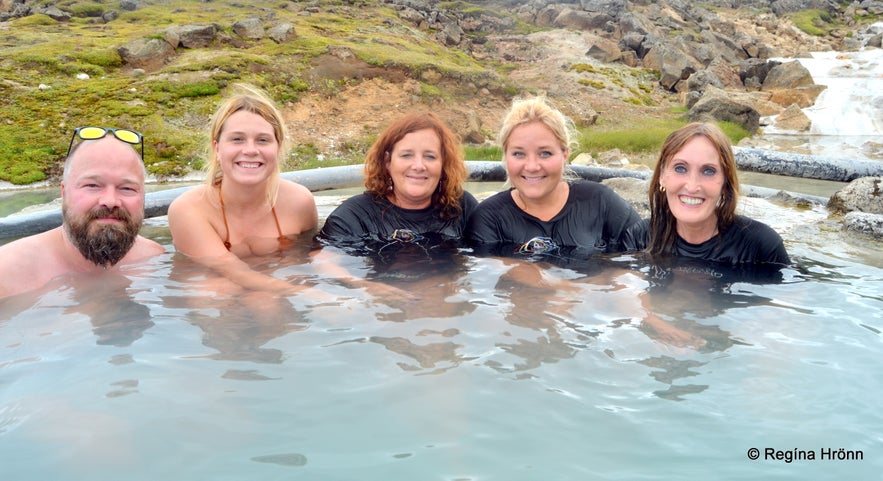 Soaking in the hot pool, the 3 of us forgot bathing suits, so we bought a black T-shirt at Gullfoss
Don't forget your bathing suit. On one of my travels in this area, I didn't bring a bathing suit, so we stopped at the Gullfoss store, and I bought a "Lost in Iceland" T-shirt, and so did 2 of my fellow travellers, as you can see in my photo above :)
The beautiful Geothermal Area at Hveravellir
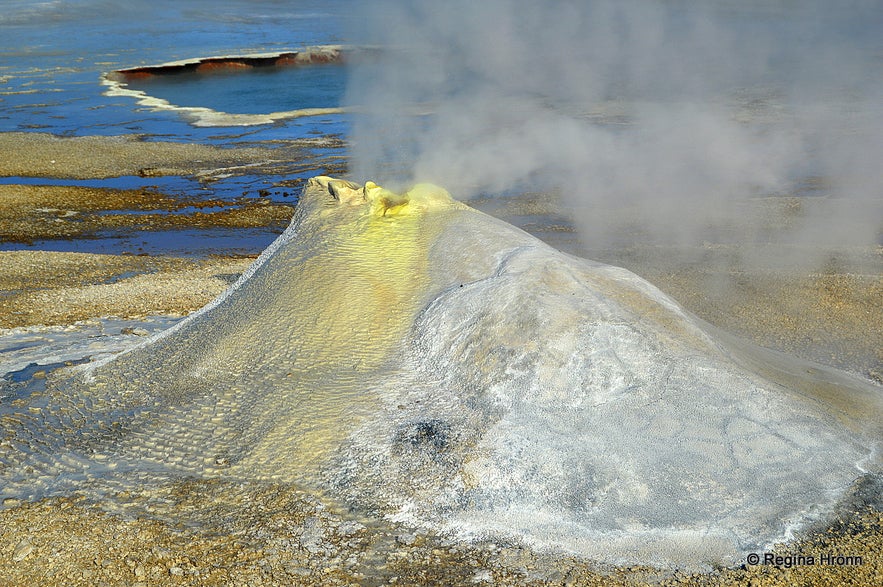
Öskurhóll hot spring
Now let's visit the geothermal area at Hveravellir, which has been called one of the most beautiful in Iceland.
Only a short distance from the hot pool, the beautiful geothermal area with multi-coloured boiling mud pools, huffing and puffing fumaroles, and extraordinary azure hot springs will take your breath away.
At least the beauty of this area always takes my breath away, no matter how often I visit it.
Öskurhólshver hot spring
Eggert and Bjarni, in their travelogue, named one of the hot springs Öskurhóll or the Roaring Mound because of the loud sounds coming from it; the hot spring is whistling and roaring.
Öskurhóll has stopped whistling, but it is still roaring.
We refer to this loud hot spring as Öskurhóll or Öskurhólshver.
Eyvindarhver hot spring

Eyvindarhver hot spring at Hveravellir
Hveravellir is not just about gorgeous landscapes; it is also rich in history and folklore.
One of the hot springs is called Eyvindarhver or the Hot Spring of Eyvindur.
It is named after one of Iceland's most famous outlaws, Fjalla-Eyvindur, who lived here at Hveravellir for some time in the 18th century during his 20-year outlawry.
He and his wife, Halla, sought refuge here in the highland of Iceland by the hot springs.
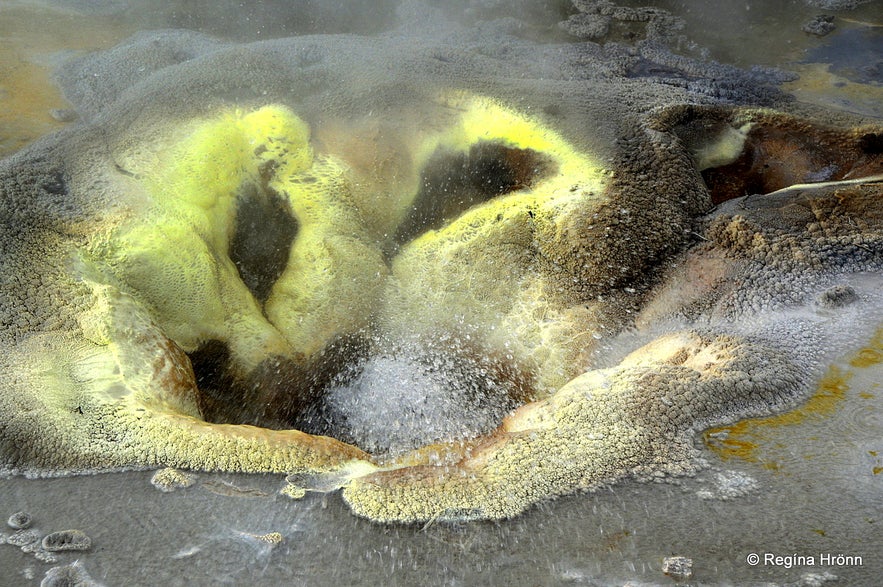
Eyvindarhver hot spring at Hveravellir
Fjalla-Eyvindur cooked food in this hot spring. From what we gather, he stacked rubble around the hot spring to be able to cook food for his wife, Halla, and himself.
Fjalla-Eyvindur and Halla were very resourceful, and living by hot springs made it easier for them to survive in the highland of Iceland. They were always hunted, so what a dreadful life this must have been.
You can see how this hot spring has changed over the years, but I took the two photos above 4 years apart.
Eyvindarhver hot spring continuously spouts water, and sulfur has accumulated, making it look like a roaring monster with eyes and a spouting mouth!
You can hear it roar in my video above.
At Hveravellir, you will find Bláihver - Blue Hot Spring, Grænihver - Green Hot Spring, Rauðihver - Red Hot Spring, Fagrihver - Lovely Hot Spring, and Gamli Fagrihver - Old Lovely Hot Spring.
Such beautiful names for hot springs :)
There are many more hot springs here, and the geothermal colours are out of this world; they become especially vivid on sunny days.
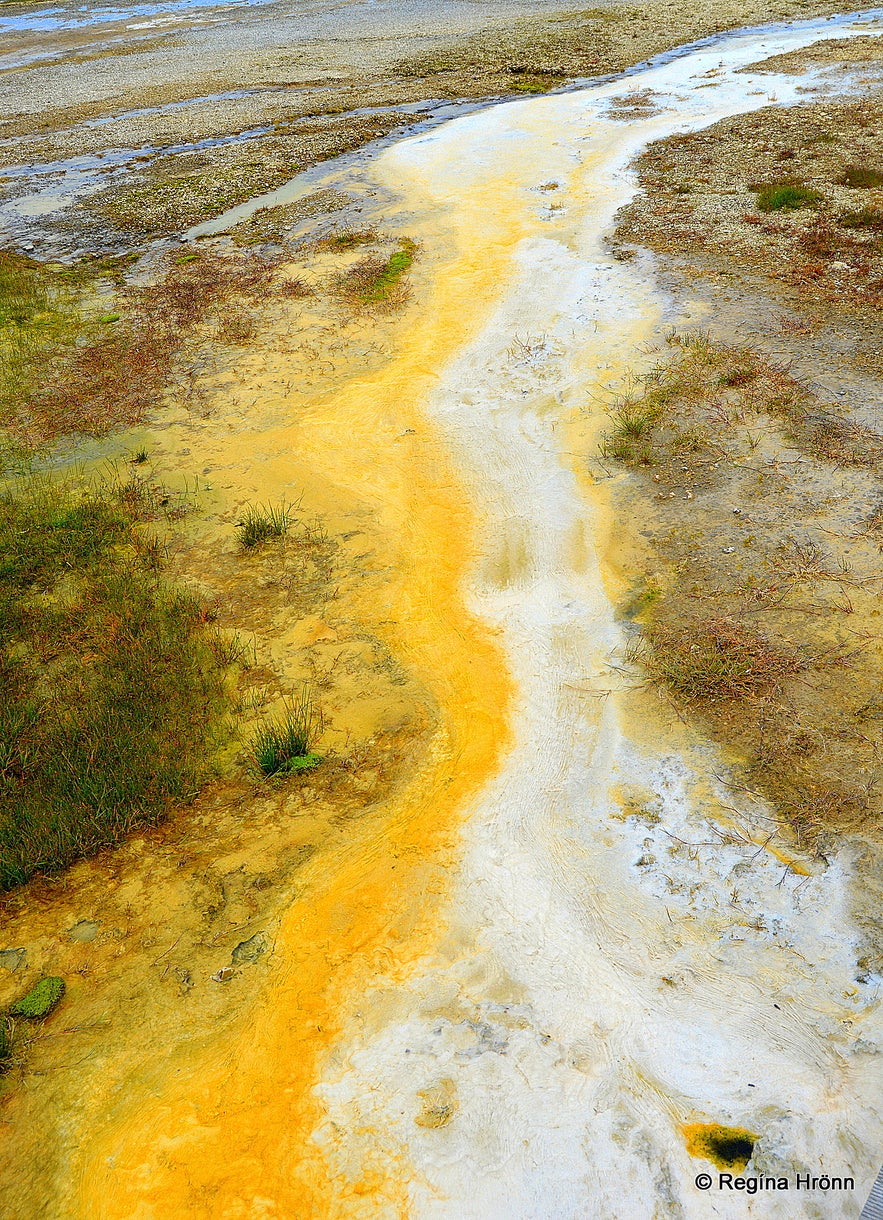
Colourful Hveravellir geothermal area
The silica ratio of the geothermal area at Hveravellir is amongst the highest in Iceland, and around some of the hot springs, a beautiful geyserite has accumulated.
I especially like Fagrihver - Lovely Hot spring with the white geyserite complementing the azure blue water. Isn't it pretty? :)
It is such a delight walking around this beautiful geothermal area and admiring the various hot springs.
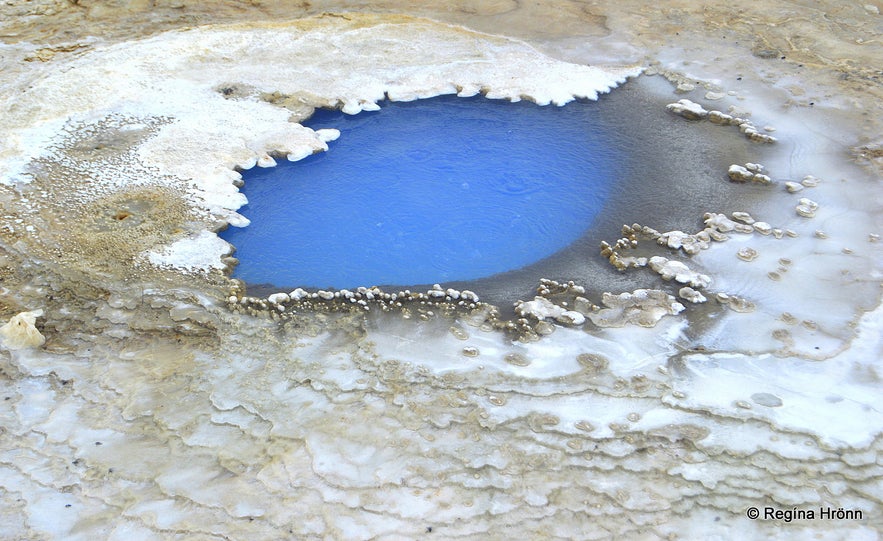
Fagrihver hot spring at Hveravellir - my favourite one
The geothermal area at Hveravellir has been protected since 1960.
The water in the hot springs is very hot, 70-100 degrees C, so be careful, especially if you are visiting with young children. Always carry small children in the geothermal areas of Iceland.
Magnúsarhver hot spring
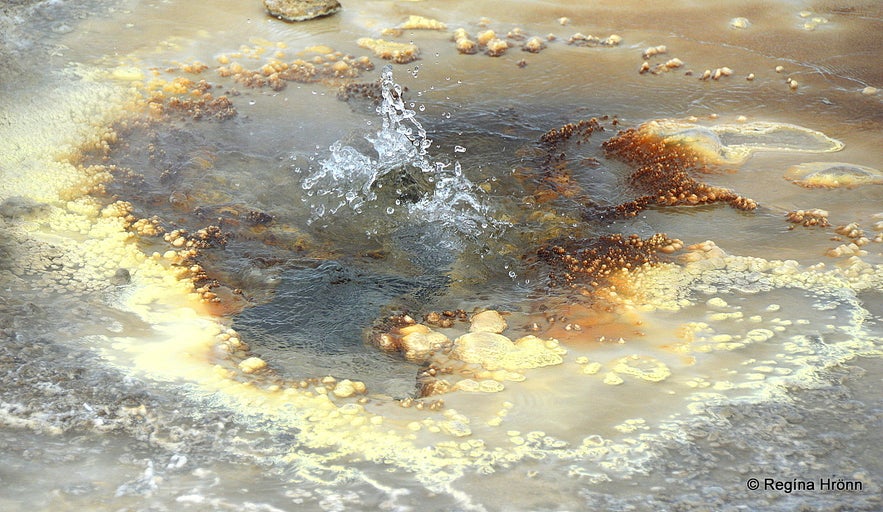
A boiling and colourful hot spring
An account from the first part of the 19th century is related to one of the hot springs at Hveravellir, Magnúsarhver - the Hot Spring of Magnús.
I have not been able to find the Magnúsarhver hot spring at Hveravellir, but the following is an excerpt of the account. It is a very strange story, but I will include it anyway:
Magnús Guðmundarson (born around 1771) was a wanderer and had the nickname sálarháski or peril of the souls, as he regarded fishing at sea as a life-threatening situation.
One of his first "feats" was planning to become an outlaw and live at Hveravellir.
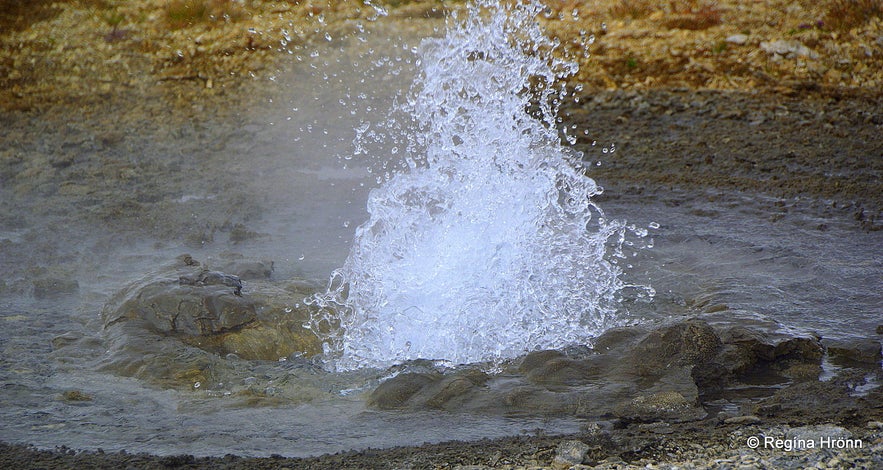
One of the spouting hot springs at Hveravellir
He stole a lamb from the highland pastures but later told the story that the lamb had bleated pleadingly at him, and he thought he heard it saying: "Spare my life, Magnús!"
But Magnús didn't show any mercy and replied to the lamb's lamentations by saying: "No mercy, my dear lamb!"
The lamb cooked into a mush in the hot spring, and Magnús could only eat its lungs as they had floated above the water and were raw.
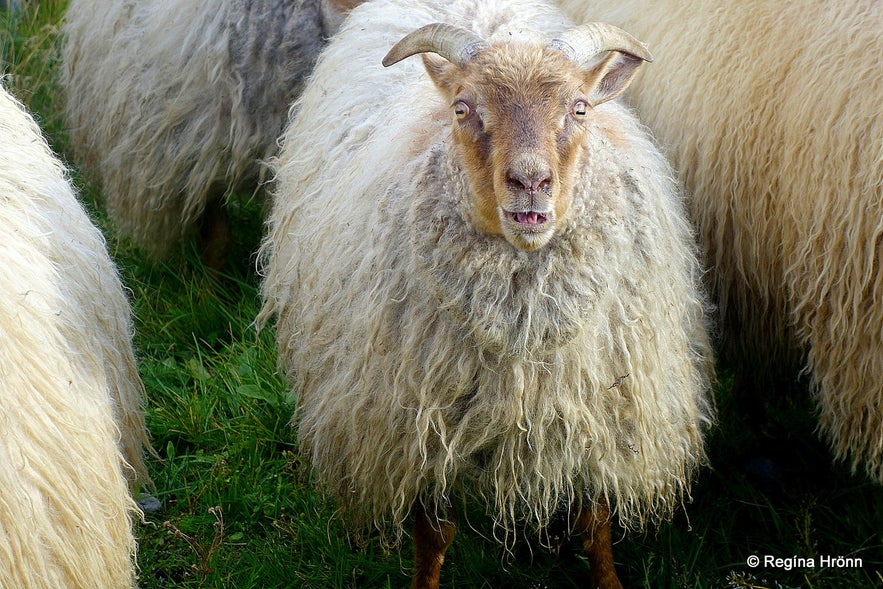 Icelandic sheep - sheep theft was considered a serious crime in Iceland
Magnús stayed for 3 weeks at Hveravellir and later told the story that the first week he had lived on raw lamb lungs, the second week on his own saliva, and the third week on the mercy of God, and that the last week had been the worst. From then on, he could never eat lungs.
Sources:
Still, we Icelanders have the saying: "Engin miskunn hjá Magnúsi" or "Magnús shows no mercy" - I am pretty sure that most people have no idea who this Magnús was.
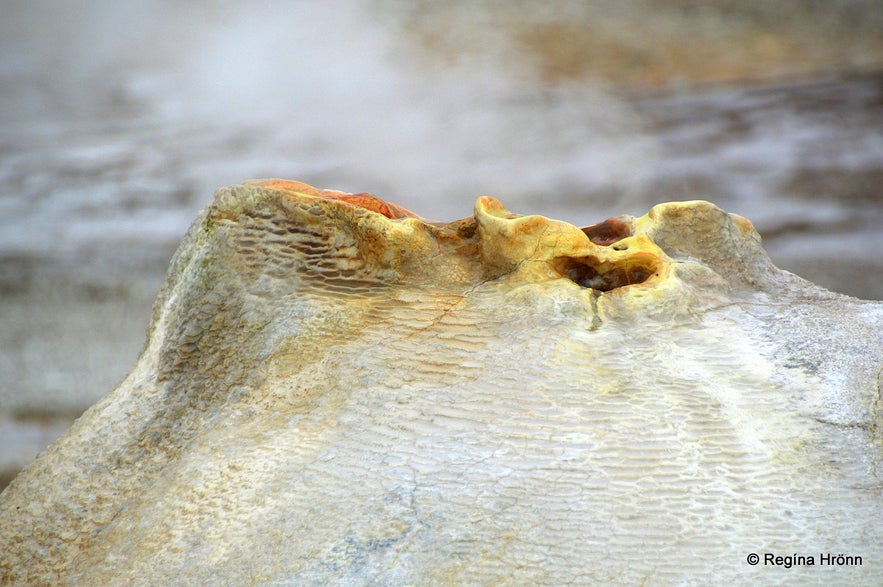
Öskurhóll - Roaring Mound
Hveravellir is located on the edge of the 8000-year-old Kjalhraun lava field, and hiking through the lava field is amazing, as the lava takes on all kinds of forms and structures.
In some places, it looks like the earth has just cracked and opened up.
And steam is coming through fissures in the ground, making it an even more mysterious hike.
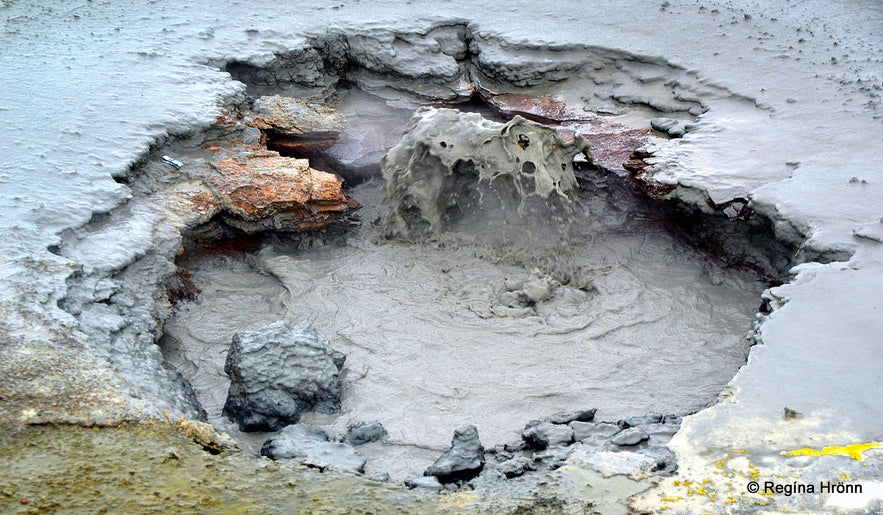
A boiling mud pool at Hveravellir
And once I saw a fox jumping around on one of our hikes in this area. I rarely see foxes in Iceland, but last summer I saw two: one here and one in South Iceland.
Both of them jumped high in the air when they noticed me.
Be on the lookout for foxes, as I also spotted one when driving on Kjalvegur road.
The courageous outlaws Fjalla-Eyvindur and Halla
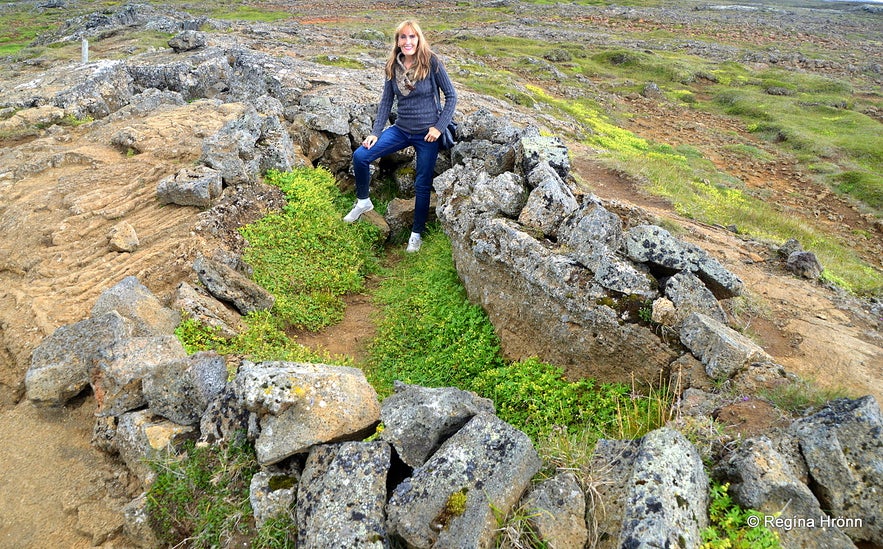
Eyvindarkofi ruins
Let me tell you more about our best-known outlaws, Fjalla-Eyvindur (Eyvindur of the Mountains), who lived in Iceland from 1714 to 1783, and his wife Halla.
I have visited more of his and their hiding places in the highland of Iceland, e.g., the one at Herðubreiðarlindir Oasis.
Fjalla-Eyvindur was alone there for a while without Halla and said that it was the most difficult time of his outlawry, being alone at Herðubreiðarlindir Oasis.
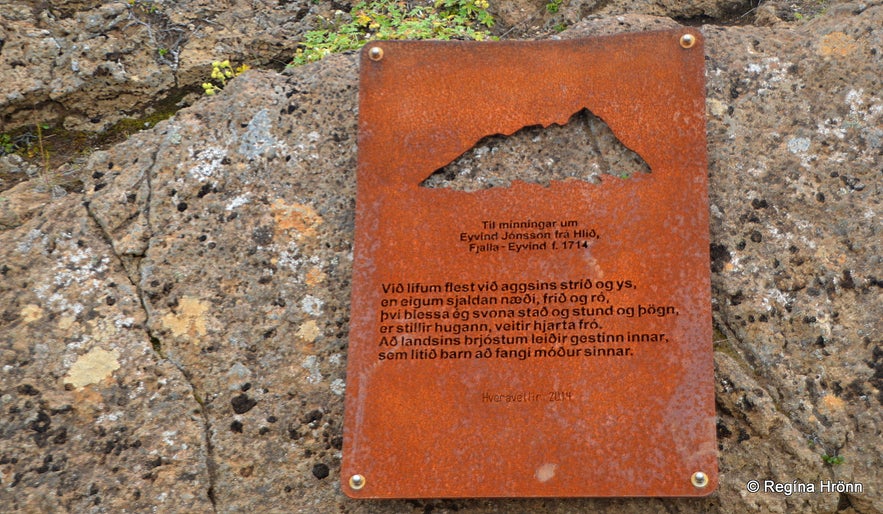
In memory of Eyvindur Jónsson from Hlíð - Fjalla-Eyvindur, born in 1714
Remnants of their life here together can be seen at Hveravellir, for example, in the Eyvindarkofi ruins and Eyvindarhellir, or the Cave of Eyvindur.
In the photo above, you will see the ruins of Eyvindarkofi, or the Hut of Eyvindur.
It is a rift in the lava, which Eyvindur and Halla closed up with rocks and turf, and from the outside, there were no signs that this was the dwelling place of outlaws on the run.
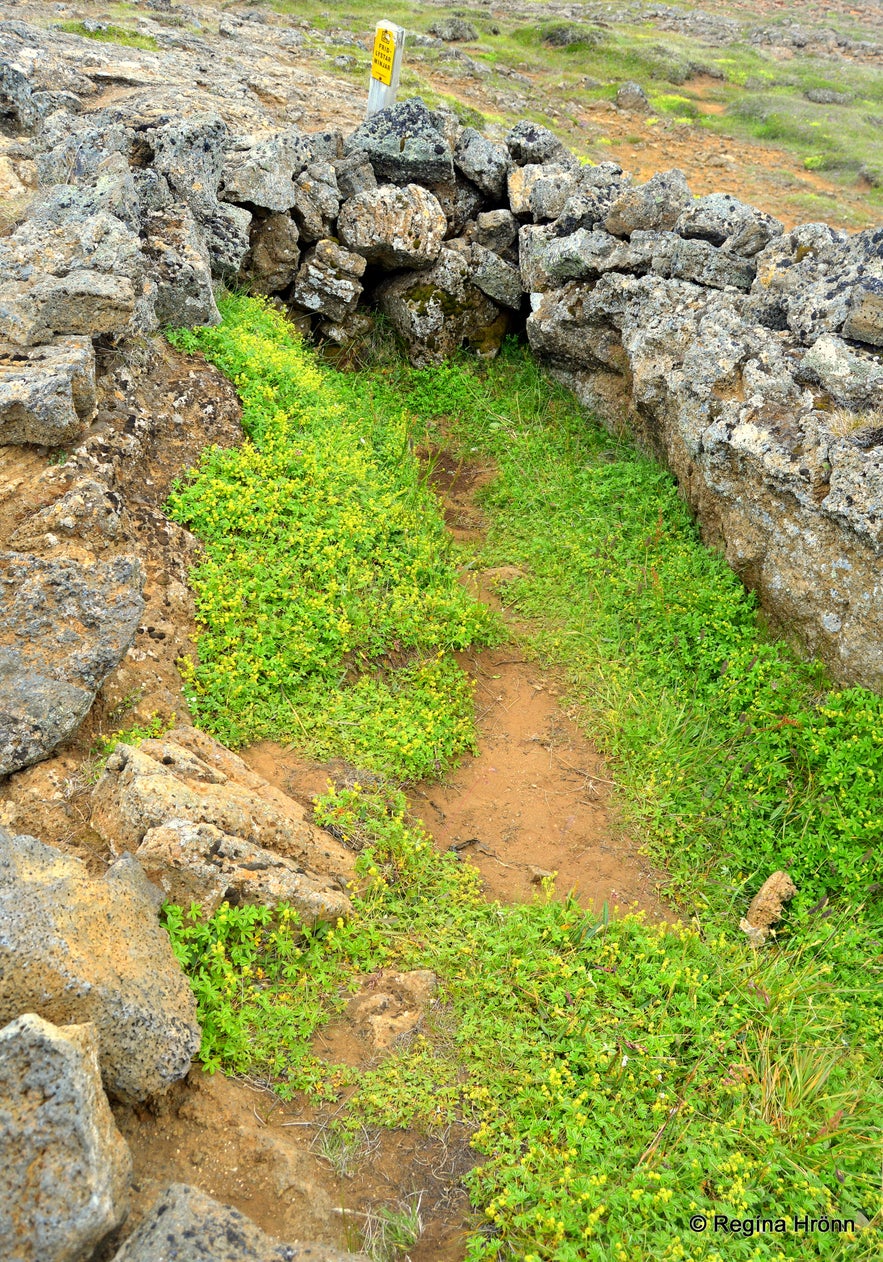 Eyvindarkofi - see the yellow sign? It means that the ruins are protected
Eyvindarkofi is located very close to the hot springs, making it the perfect place for an outlaw, as here they could get warmth from the hot springs and cook their food.
A wicker basket was found here at Hveravellir, believed to have been made by Fjalla-Eyvindur, and it shows him as a master craftsman.
You can visit the Glaumbær District Museum in Skagafjörður in North Iceland and see the basket with your own eyes. These baskets are waterproof and perfect for carrying water for the outlaws.

Eyvindarhellir cave at Hveravellir
I visited Eyvindarhellir Cave on my hike on the Eyvindarrétt Circle, but there are several good hiking trails here at Hveravellir.
This is the shortest hike, 2.57 km, which leads you to an old natural sheep pen, Eyvindarrétt, and the cave.
The cave is just a hole in the ground, and you can easily pass by it if you don't know what to look for. But once you enter the cave, you will see how big it really is. Fjalla-Eyvindur was in luck to find such a good hiding place.
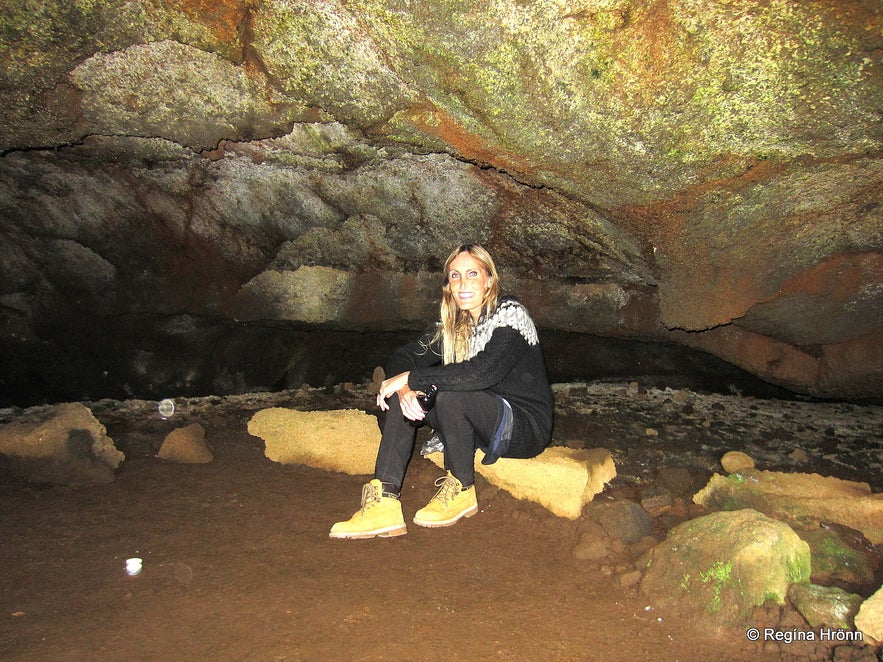
Inside Eyvindarhellir cave
We had lunch in the cave before continuing on our hike through this interesting terrain.
You can visit an exhibition in Blönduós town on Fjalla-Eyvindur and Halla. There, you can peek into a cave and see Halla preparing food while Fjalla-Eyvindur sleeps.
At the exhibition, you can get information on the places in Iceland, where Fjalla-Eyvindur and Halla sought shelter over the years.
It is a very informative exhibition that too few people know about. It is located on the second floor of a restaurant in Blönduós. It is called Eyvindarstofa.

Halla preparing dinner in Eyvindarhellir cave at the exhibition in Blönduós village
The next stop on our hike was at Eyvindarrétt, a large natural lava mound rising from the ground. This lava mound is the biggest of its kind in this area.
A rift cuts through the full length of Eyvindarrétt with grass in the middle of it. The rift is about 2 meters wide, and it is possible to walk through it.
Inside, there is stowage in several places. Fjalla-Eyvindur used this sheep pen.
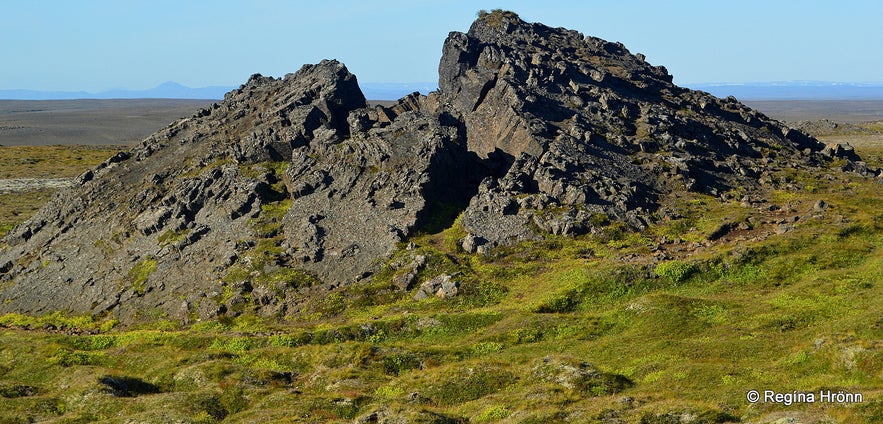
Eyvindarrétt at Hveravellir
A monument was erected in 1998 at Hveravellir in honor of Fjalla-Eyvindur and Halla. It is called Fangar frelsisins - Prisoners of Freedom, and the inscription reads: "In memory of Eyvindur Jónsson b. 1714 and Halla Jónsdóttir b. 1710? outlaws in the wilderness for many years. Here nearby was one of their dwellings".
A descendant of Fjalla-Eyvindur unveiled the monument, and it was consecrated by one of our ministers.
It is a lovely, but sad monument, two stone hearts behind steel bars. I think it leaves no man untouched, thinking about the fate of these two unfortunate people, who were destined to live on the run in Iceland's wilderness.
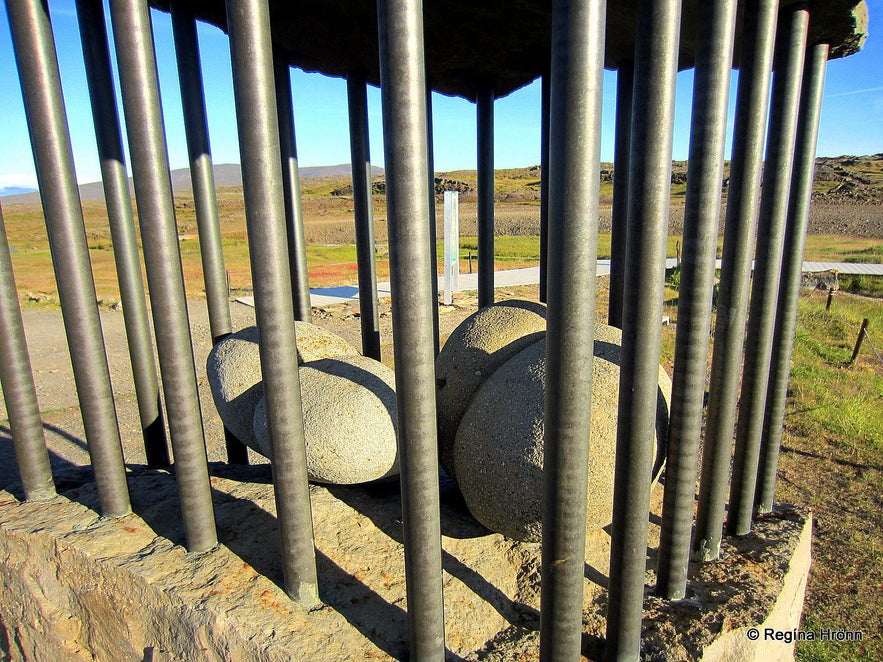
The monument Fangar frelsisins - Prisoners of Freedom at Hveravellir
To reach Hveravellir in the highland of Iceland, coming from the south, pass Iceland's most famous waterfall, Gullfoss, and continue driving on the Kjalvegur road.
This road will then take you for some 168 km across Iceland to Blöndudalur in North Iceland, where you will then merge with Ring Road 1.
Kjalvegur road is a shorter route to the north of Iceland, but the road is unpaved and lies through some rugged landscape - an alternative to driving on the paved ring-road 1.
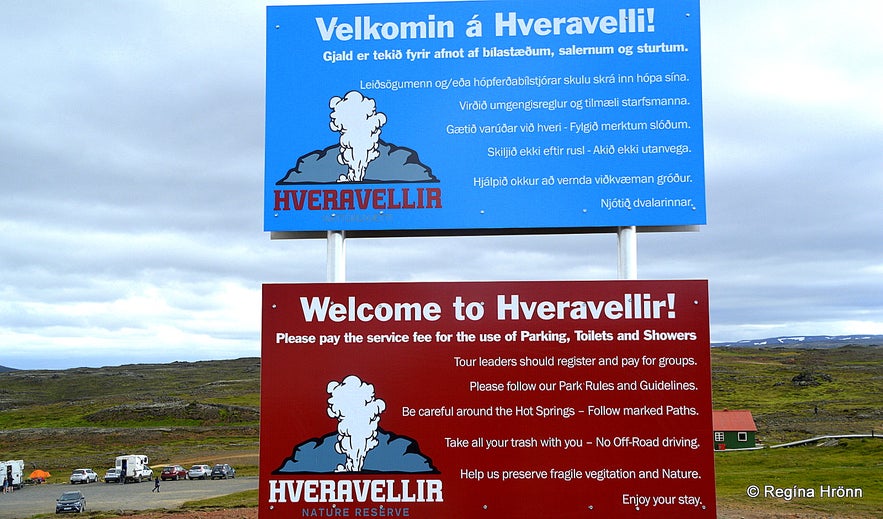
Information signs at Hveravellir
Kjalvegur road is a bumpy gravel road, so a 4x4 is preferred. It can be driven in 2WD, but not the smallest car, as after rain, the potholes are huge.
I have driven this road both in a 2WD and a 4x4, and I can tell you it was no picnic driving the small car, trying to avoid potholes after heavy rain.
Here is a selection of car rentals, which will help you to find a car that might suit you the best for this journey into the Highland of Iceland.
This area can only be accessed in the summertime.
 Kjalvegur road signs by Hveravellir
The sign below stands at the intersection of Kjalvegur road and the road leading to Hveravellir.
You can see on the sign that you can spend the night at Hveravellir, get some basic groceries and coffee, take a dip in the geothermal river, and have a look around the area.
What you can not do, on the other hand, is to fill up on gas. Make sure you have plenty of gas before entering the Kjalvegur - Kjölur Route.
Once we miscalculated how much gas we needed, as we were driving my father-in-law's jeep, and had to borrow gas from some people at Hveravellir.
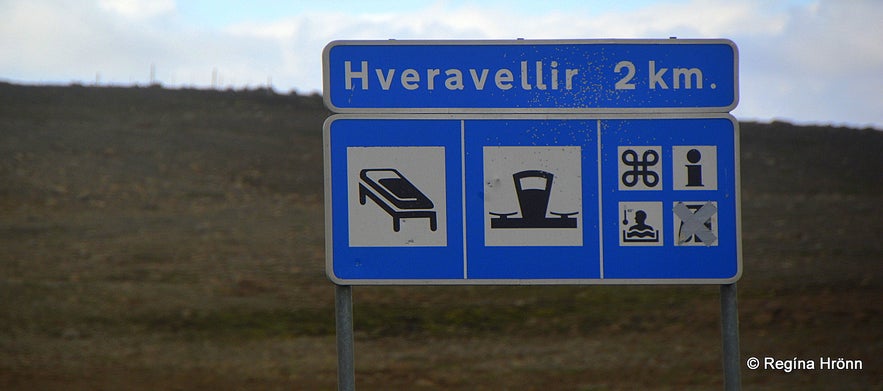
Information signs leading to Hveravellir
You will find more information here: Hveravellir.is
See also: A fascinating Hike through the Geothermal Area of Hveradalir in Mt. Kerlingarfjöll and the Kjölur Route, where I write a chapter about the Kjalvegur road and show you the view-dials by that road.
And, I wrote another travel blog about the other pearl of this area, that should not be missed: The amazing Mt. Kerlingarfjöll, a fascinating Hike through Hveradalir, and the Kjölur Route.
It is best to stay at Hveravellir or at the Kerlingarfjöll mountain resort to make the most of your visit to the highland of Iceland.
Here you can see the location of Hveravellir on Google Maps.
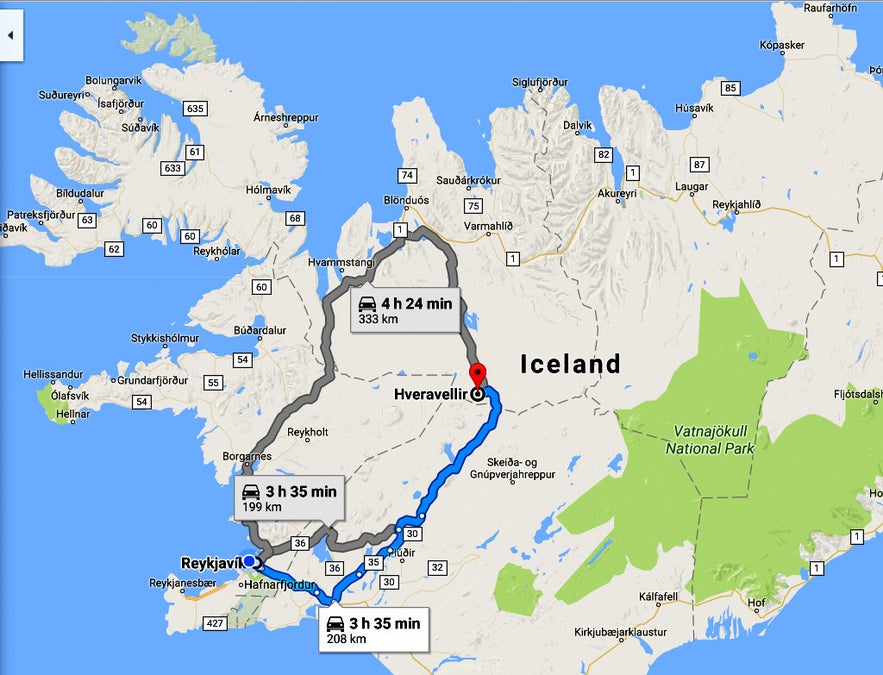
Hveravellir is located at 64°51,9015'N 19°32,0223'W.
If you want to see other geothermal areas in Iceland, I have written travel blogs about many of them. I love visiting them, especially when the sun is shining.
Here is also a list of the geothermal areas I have visited: A Local's Favourite Geothermal Areas in Iceland.
And here is a selection of the best Highland Tours in Iceland.
Have a lovely time at Hveravellir :)
Source: Minjastofnun

Hi, my name is Regína Hrönn, and I was born and raised here in Iceland.