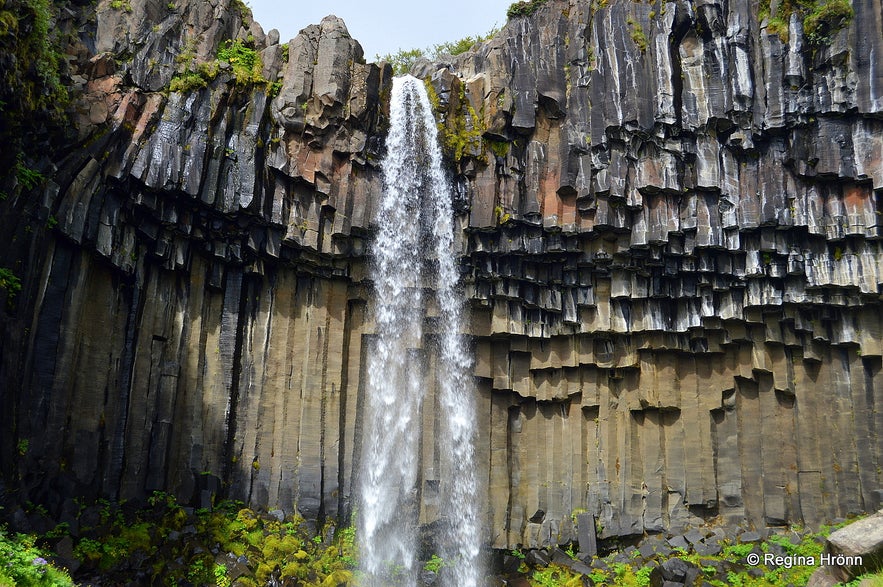
In this travel blog, I want to show you the elegant Svartifoss waterfall - the Black Fall, a beautiful waterfall which cascades down into a heart-shaped gorge made of black and brown basalt columns.
Svartifoss, the Black waterfall, is one of the unique waterfalls in SE-Iceland, tucked away in Skaftafell nature reserve, which has been part of Vatnajökull National Park since 2008.
Top photo: Svartifoss up close
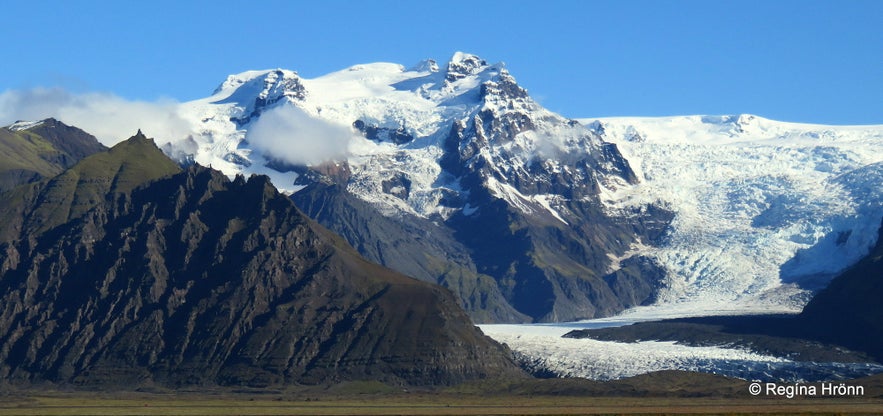
Glacial tongues
Skaftafell is a true oasis after driving through the vast black lava sand plains of Skeiðarársandur glacial outwash.
On this drive, you will see glacier tongues in abundance, as we are in the Vatnajökull glacier region, the largest of Iceland's glaciers.
It is lovely driving in this area on a sunny day with blue skies.
Here you will see the glacier tongues Skeiðarárjökull, Morsárjökull, Skaftafellsjökull, Svínafellsjökull, and Öræfajökull, which are very prominent in this area.
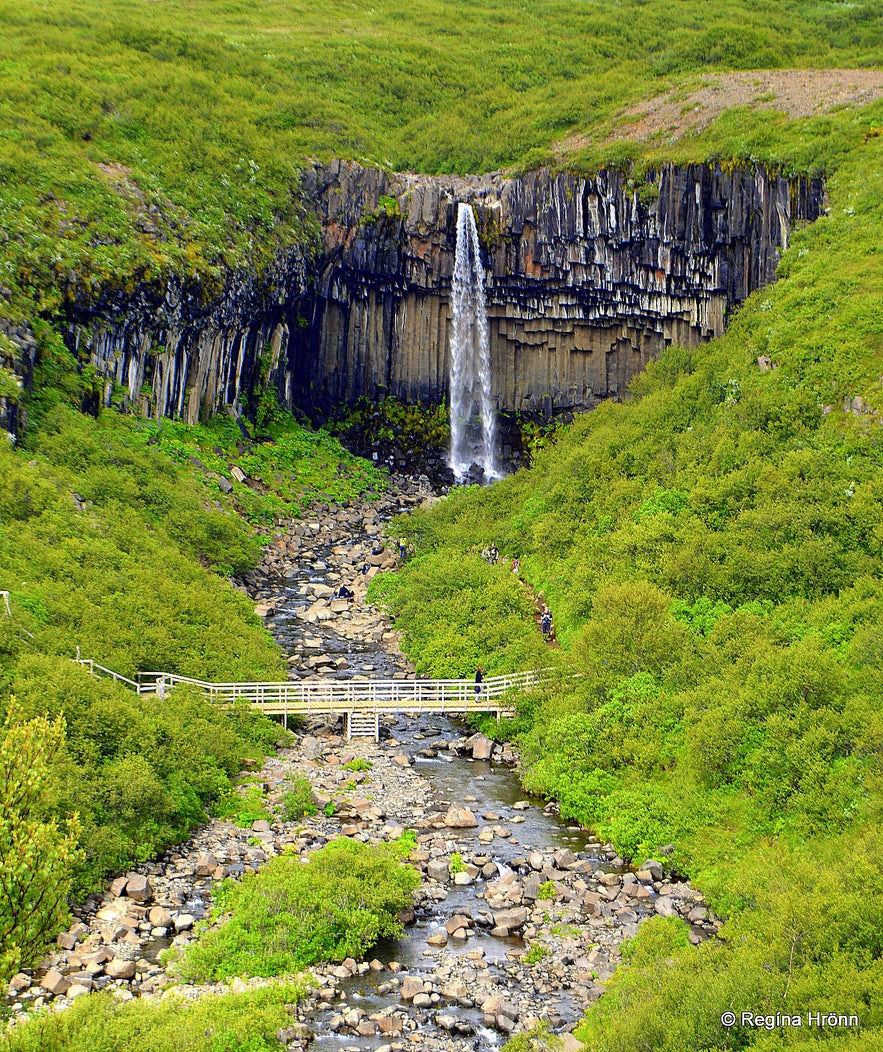
Svartifoss as seen from above
Now let's have a look at Svartifoss waterfall.
Svartifoss is such an elegant waterfall, 20 metres tall, and the black columnar basalt formations beautifully frame it, giving it its name, Black Fall. From afar, it looks like a big heart.
It is a very romantic waterfall and one of my girlfriends got engaged at Svartifoss decades ago :)
At the Visitor Centre in Skaftafell, which is open year-round, you can get information on how to reach Svartifoss waterfall. The hike is 1.5 kilometres from the Visitor Centre, uphill. Along the way, you come across other waterfalls in the gorge.
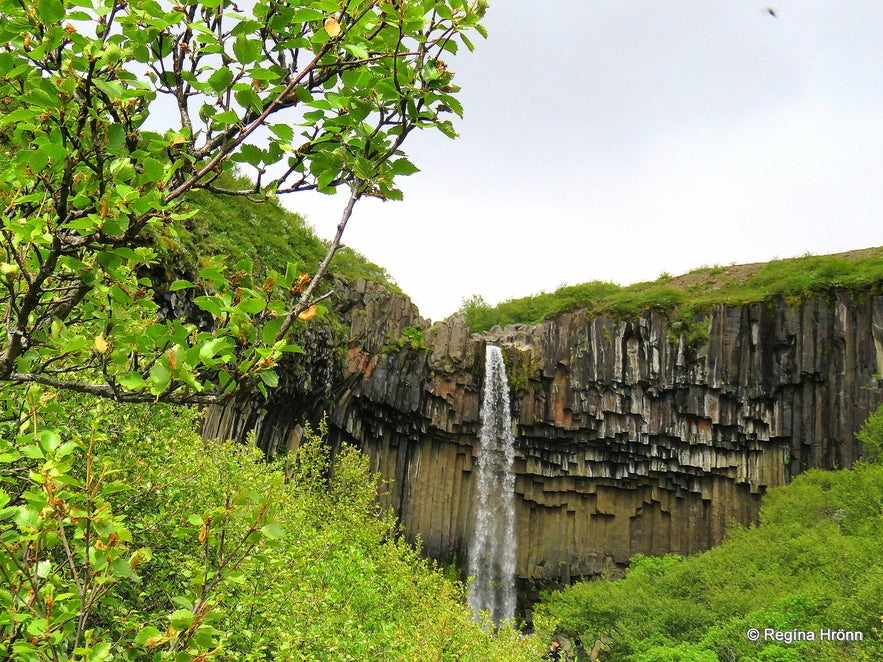
Svartifoss waterfall
Svartifoss cannot be seen from the road, and the hike to it takes about 90 minutes round-trip, with photo stops along the way.
If you do the circular hike, which I did and show in this travel blog, it is 5.5 km, according to the website of Vatnajökull National Park.
The whole circle took me 3 hours to complete, but I spent a lot of time taking photos for my travel blog. You can do this circle in less time, I am sure.
The short video above I shot so that you can hear the waterfall, as it were.
You can walk straight down to Svartifoss to see it up close. It has now been fenced off for nature protection, so we cannot get as close as before, but we can still get pretty close.
It is better now that the waterfall has been fenced off, as on my earlier visits, I couldn't take a decent photograph because visitors with tripods would be lined up right in front of it.
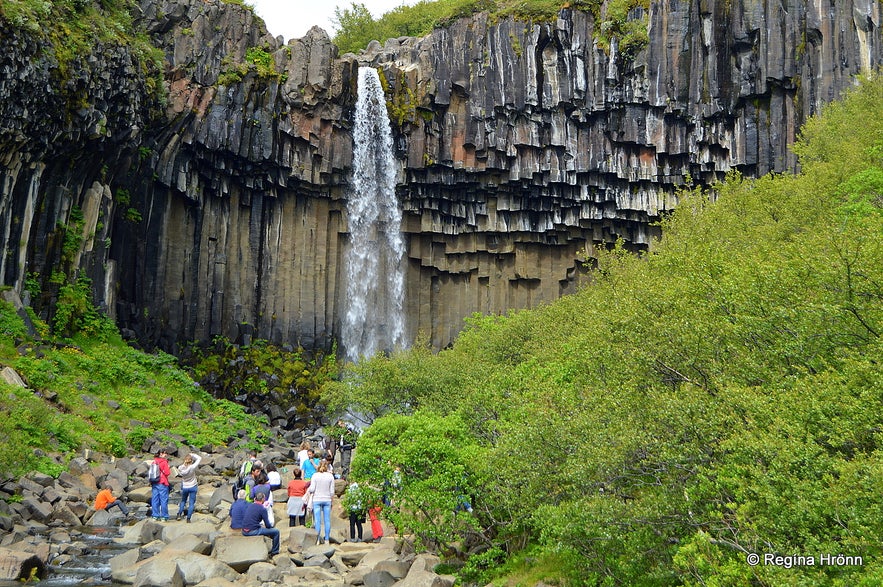
Svartifoss waterfall
The hike is uphill from the camping ground, but not too taxing. And it is so rewarding.
The small river Stórilækur (Big creek), in which Svartifoss cascades, originates below the Kristínartindar mountain peaks and runs through the Bæjargil gorge.
The beautiful hexagonal basalt columns at Svartifoss are believed to have inspired our State Architect Guðjón Samúelsson when he designed the ceiling in Þjóðleikhúsið, our national theatre, and Hallgrímskirkja church, which is one of the landmarks of Reykjavík - Iceland's capital city.
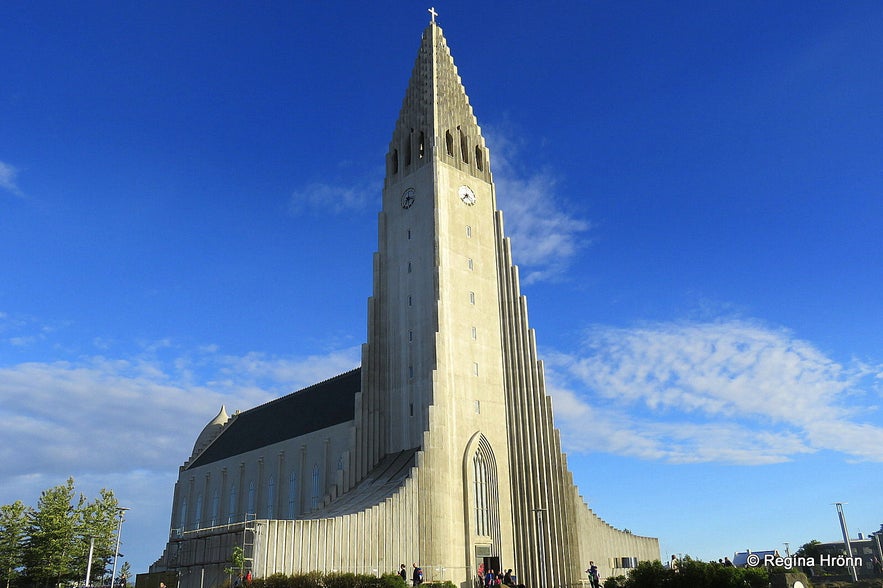
Hallgrímskirkja church in Reykjavík
On your way back from visiting Svartifoss, you can either return the same way or cross the bridge by Svartifoss and return on the western side.
On that route, you will get a closer look at some of the other three waterfalls, and get to see Selið turf house and the lovely Lambhagi - Lamb Pastures.
The waterfalls below Svartifoss
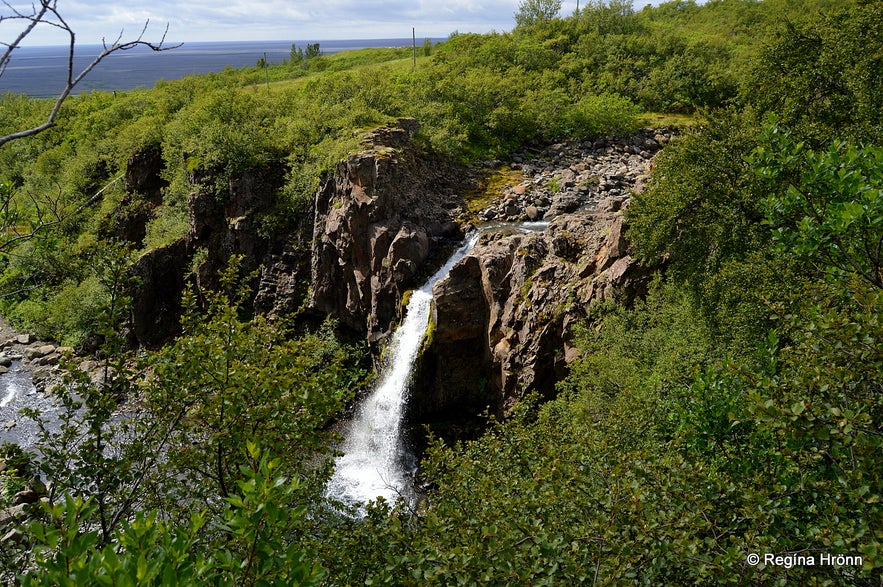
Photo of Magnúsarfoss from the east bank of the river.
The waterfalls below the famous Svartifoss waterfall are called: Magnúsarfoss, Hundafoss, Þjófafoss, and the last one was called Lambhagafoss waterfall, but it disappeared during the Skeiðarárhlaup glacial burst, which has caused the land to rise some 10 metres since 1800, according to the information sign at Lambhagi.
You can see the Magnúsarfoss waterfall from the east bank on your way to Svartifoss, somewhat blocked by the trees.
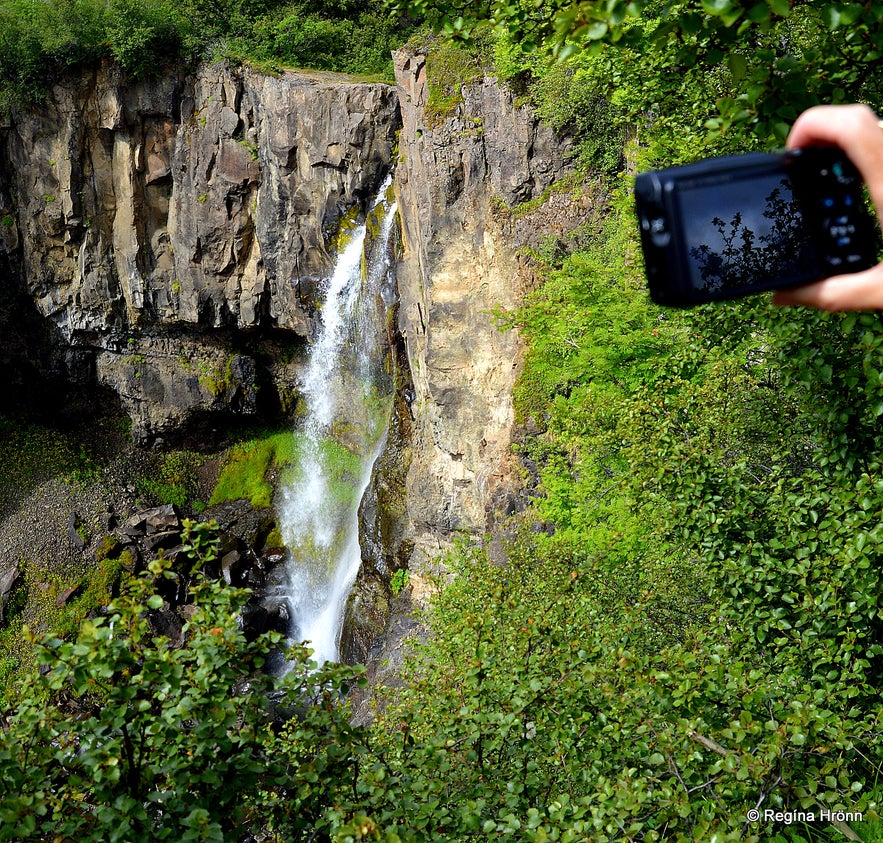
Photo of Hundafoss from the east bank of the river
It is the second waterfall you will see on the hike; the first one is Hundafoss, see my photo above.
Hundafoss - Dogs' Falls is not clearly visible on the east side of the river leading to Svartifoss; here, you can see it from the side, but it is clearly visible from the west side of the river.
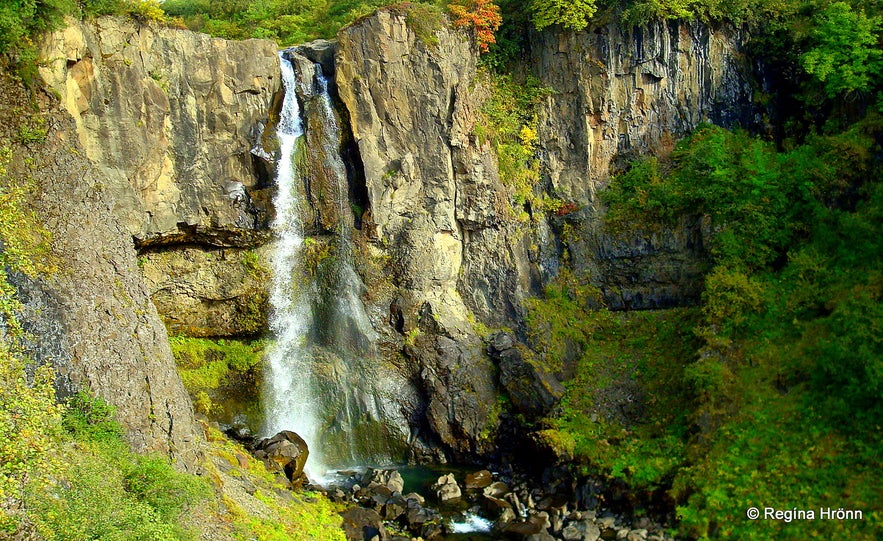
Photo of Hundafoss from the west bank of the river.
It is beautiful on either side of the river, though, just a different angle.
Hundafoss waterfall got its name - Dogs' Falls - as during the swelling of the river, dogs from the farms there sometimes floated off the waterfall!
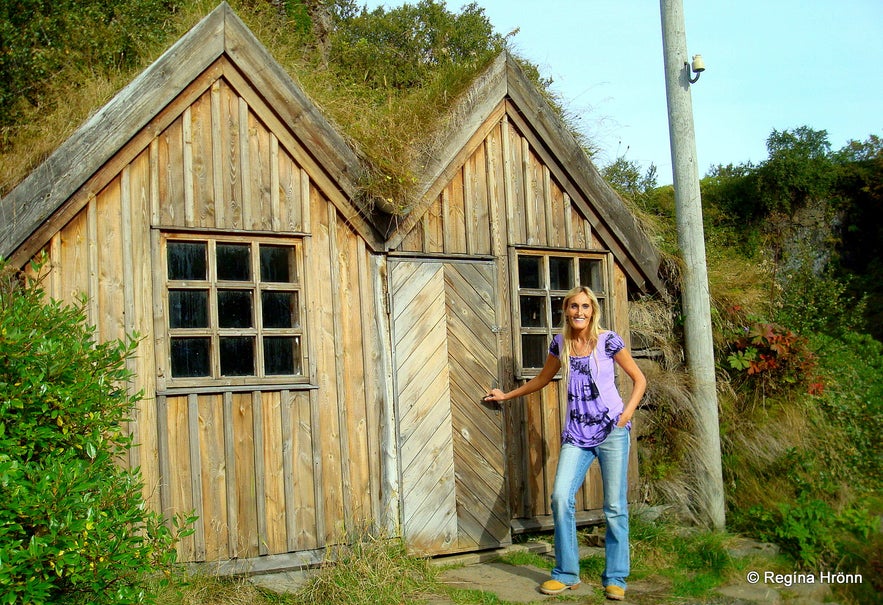
The home electric generator in Skaftafell
Magnúsarfoss, the Falls of Magnús (a male name), is visible just above the old home electric generator (used by Bölti farm), which operated from 1925 to 1973. First, one gable was built, and the second gable was built in 1940.
The locals of this area rebuilt the electric generator structure in 2001-2002. Rarik - Iceland State Electricity and Landsvirkjun - the National Power Company of Iceland helped in financing the project.
The generator is inside a turf-house-like structure, which looks quite magical in the gorge. If you pass the turf house, you will get a view of the Magnúsarfoss waterfall from the west bank.
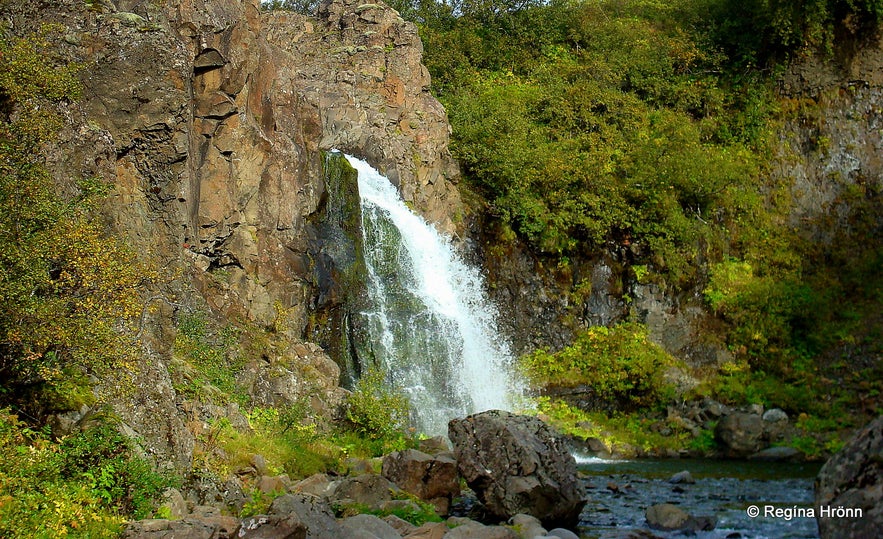
Magnúsarfoss waterfall as seen from the west bank of the river
To see some of the waterfalls from the west bank, you have to go to the edge of the gorge, and there is a lot of shrubbery (birch) blocking the view.
And probably even more now, since I took these photos a couple of years ago.
I never thought I would be complaining about trees in Iceland ;)
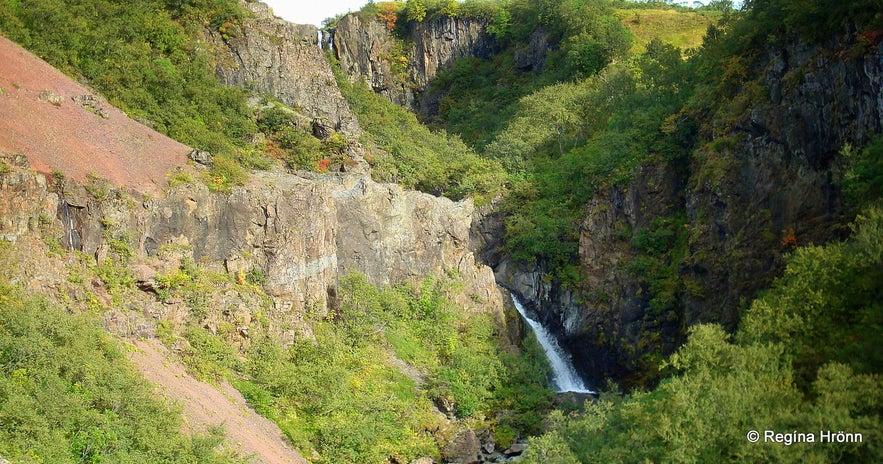
Þjófafoss as seen from the west bank.
Further down in the gorge, you can see a small waterfall called Þjófafoss - Thieves' Falls. The waterfall above it is Hundafoss - Dogs' Falls.
Sjónarsker view-dial
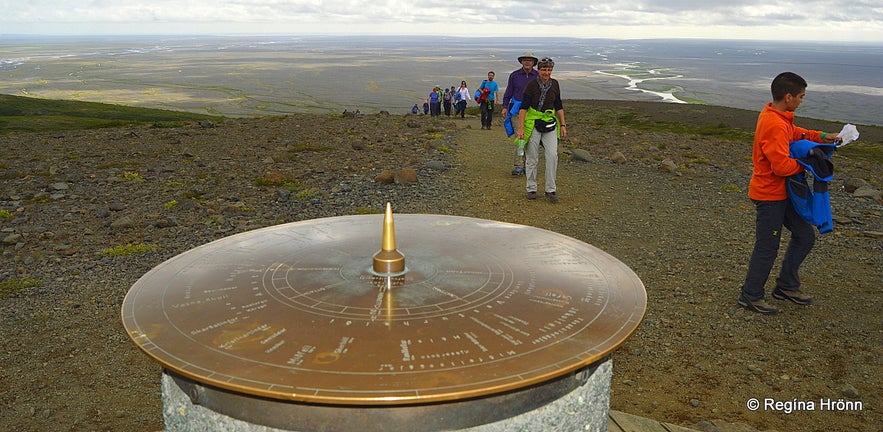
Sjónarsker view-dial
It is well worth taking a relatively short hike up Skaftafellsheiði heath to Sjónarsker for a great view of the surrounding area. There, at 310 meters above sea level, you will find a view-dial.
This view-dial was designed by the instigator of view-dials in Iceland, Jón J. Víðis, and erected by Mennamálaráðuneytið, the Department of Education, in 1973.
Jón J. Víðis was my husband's great-uncle, and my husband is named after him.
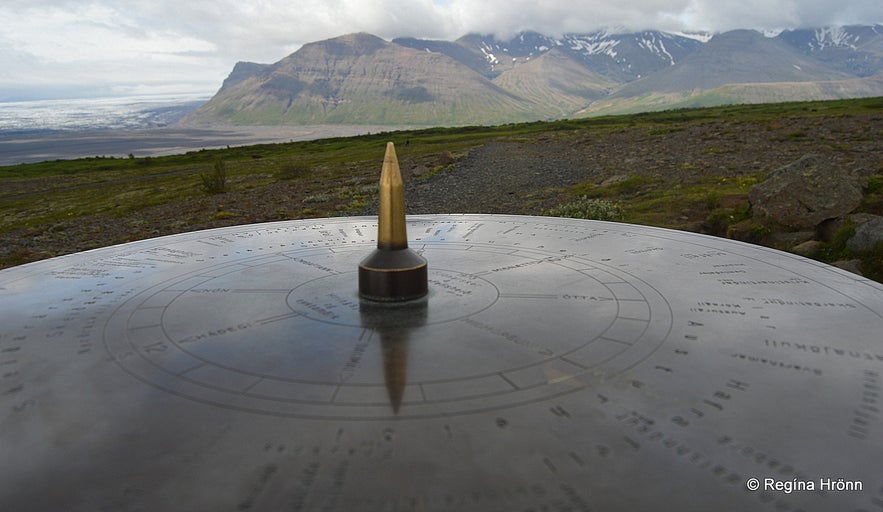
The view-dial at Sjónarsker on Skaftafellsheiði heath
The view-dials show the names and heights of the surrounding mountains.
I love finding these view-dials all around my country and seek them out on my travels.
My father-in-law, Jakob Hálfdanarson, has taken over the business of making these view-dials, and you can find his view-dials in many places in Iceland. Search for his name when you come across the view-dials in Iceland :)
Selið turf house
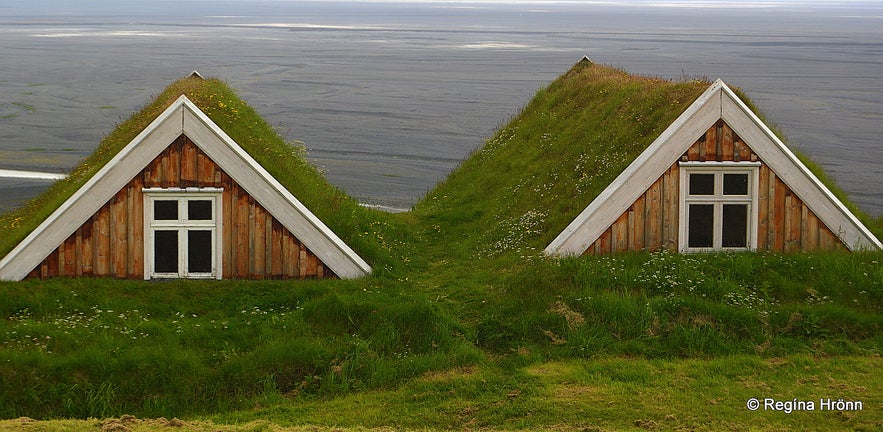
Selið turf house in Skaftafell
You will find a lovely small turf farm in Skaftafell, called Selið. It was built in 1912 in the southern style and is one of the few remaining turf houses in South Iceland.
Those of you who read my travel blog know that I have visited all the turf houses and turf churches in Iceland and have written about most of them.
I adore these traditional houses, in which Icelanders lived for more than a millennium.
See also my travel blog: A List of the beautiful Icelandic Turf Houses, which I have visited on my Travels in Iceland.
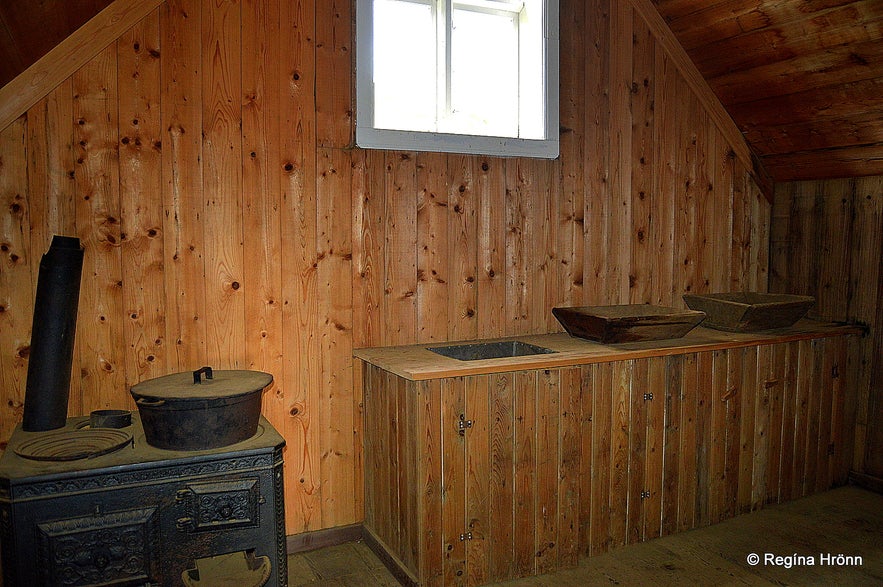
Inside Selið turf house in Skaftafell
Selið turf house was built from driftwood from the area's coastline, turf, and rock.
The cowshed was built under the living room so the heat from the cows could be used to heat the living room and the quarters above.
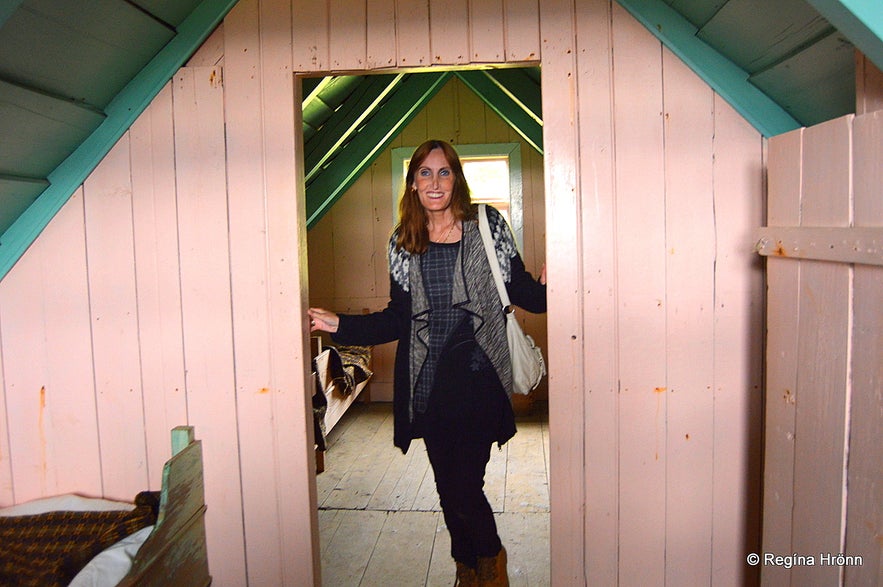
Inside Selið turf house in Skaftafell
This area was much more isolated in the olden days, with glacial rivers on both sides - it was indeed one of the most isolated areas in Iceland.
It wasn't until 1974 that Ring Road 1 was opened.
Before that time, the road ended by Mt. Lómagnúpur, and we from the west could only have a peek into the landscape further on.
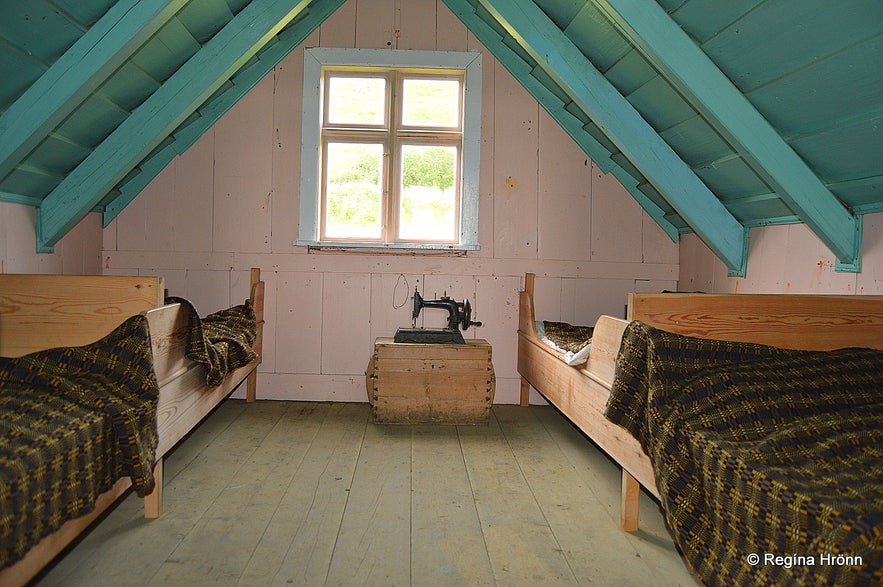
Selið turf house in Skaftafell
People were living at Selið at least as early as 1832, but at that time, the farm was moved up the hill because the glacial Skeiðará River was wreaking havoc in the area.
The last inhabitants, Runólfur Bjarnason and his wife Ólöf Sigurðardóttir, lived on this turf farm until 1946.
Most of the remaining turf houses in Iceland, though not all, now belong to and are under the supervision of Þjóðminjasafn Íslands - the National Museum of Iceland.
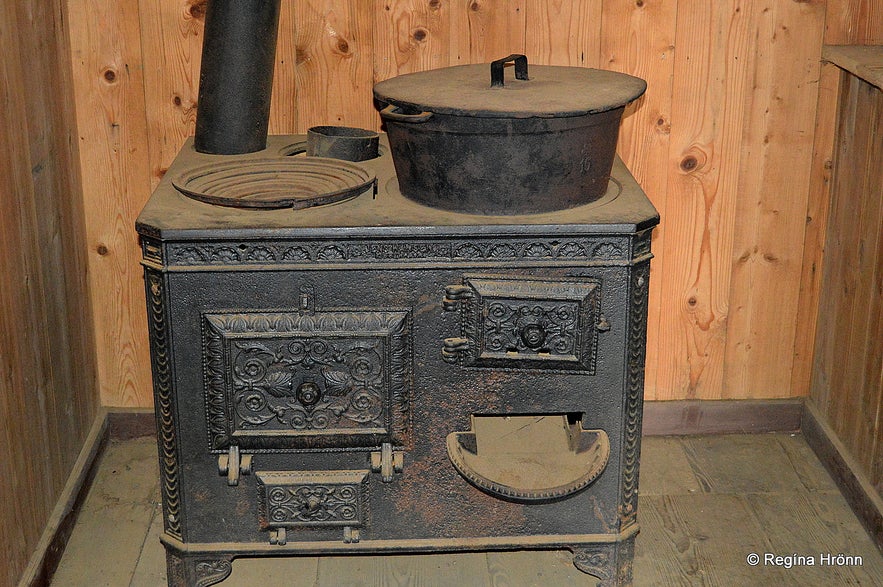
Selið turf house in Skaftafell
The Director of the National Museum in 1970 was Kristján Eldjárn, who later became the President of Iceland.
He visited Selið turf house and found it in such good condition that he decided it deserved preservation; it came into the possession of the National Museum in 1972.
The National Museum repaired and restored Selið from 1970 to 1980.
We are allowed to peek inside the turf houses in the summertime, but since the turf houses are historic buildings, we should tread lightly and show respect. No food is allowed inside Selið.
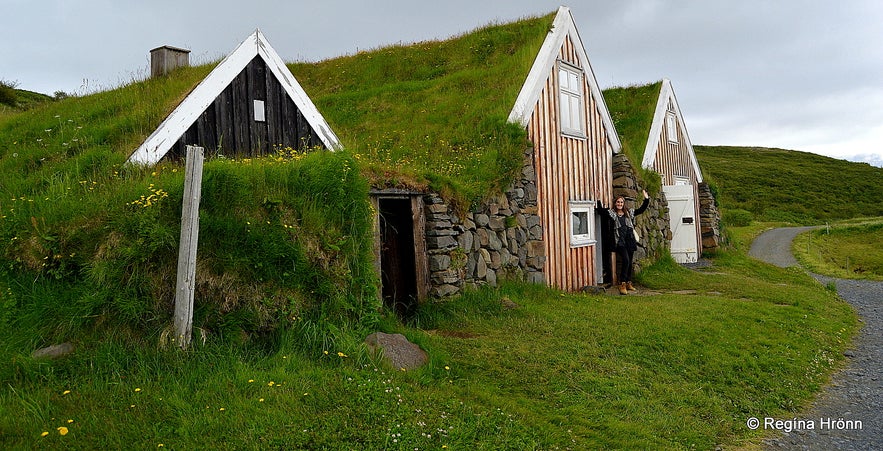
Selið turf house in Skaftafell
Turf houses must be maintained regularly because of their construction material. During my visit in the summer of 2015, when I took the photos, it was being painted, so I guess it must be black now.
Here you can see the location of Selið on Google Maps
Lambhagi - Lambs pastures
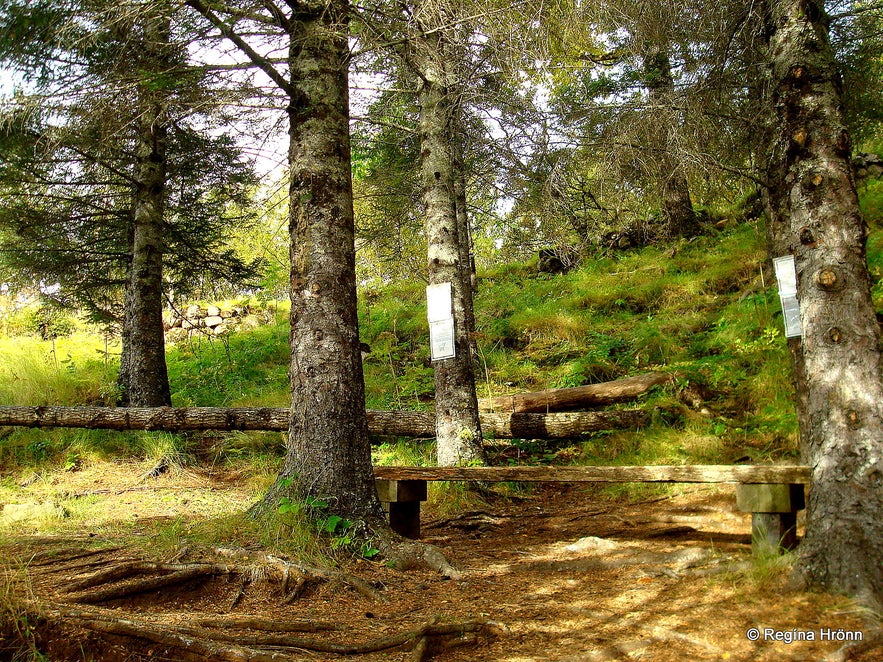
Lambhagi
Now, this is a beautiful spot in Skaftafell. Until 1900, farmers milked ewes. Their lambs were kept here in Lambhagi overnight as the ewes were milked in the mornings. After the milking, the ewes and the lambs were reunited.
This is such a lovely spot, and imagining it being crowded by lambs makes it even more special. The trees were planted in 1950 by Unnur, the daughter of Ingigerður from Bölti farm.
The river Stórilækur, which flows from the Svartifoss waterfall and the other three waterfalls, turns into a small, still lake here with small fish in it - it is ever so peaceful and serene.
I recommend resting here for a while after visiting the waterfalls, taking in the tranquillity of this lovely place.
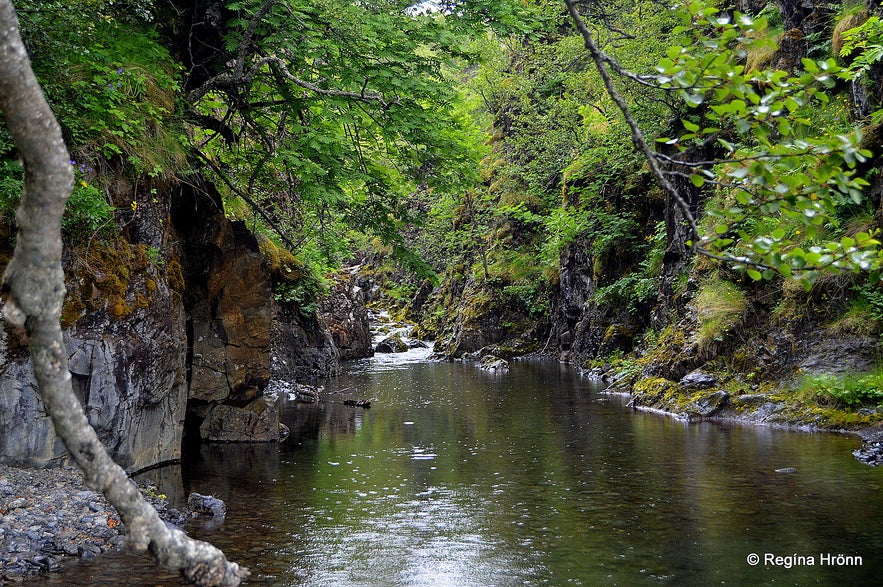
By Lambhagi
You now return to the Skaftafell Visitor Centre, which is quite close by. You can also walk around the ruins of the old turf structures in the old field - Gömlutún.
Here you can see the history of farming for the past centuries at Skaftafell, but older ruins are buried beneath the Skeiðarársandur glacial outwash.
The turf house ruins are very well marked with information signs - kudos to Skaftafell for doing such a good job!
I have often seen the ruins of turf houses in Iceland and would have loved to learn more about them, so I was happy to find so much information at Skaftafell.
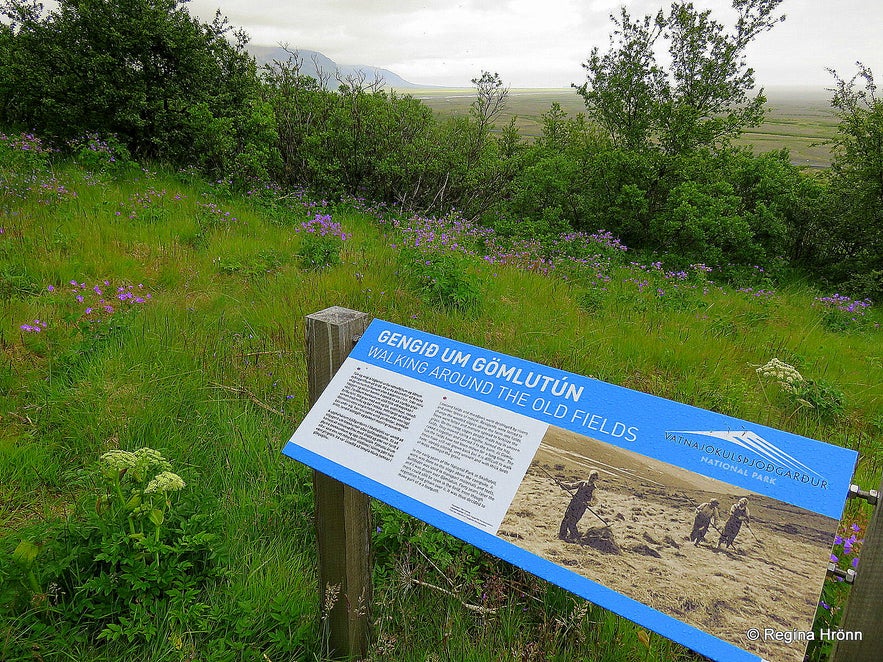
An information sign in Skaftafell tells us about the old fields
You can also hike to the edge of Skaftafellsjökull glacier, an easy 3.7 km round trip, starting from the Visitor Centre in the opposite direction from the previous hike. A part of the hike is paved, but it then turns to gravel.
The return hike is around 1.5 hours, depending on how close you go to the edge of the glacier.
Be careful here, though, and never go unaccompanied on the glacier. The glacier is moving, and there are deadly crevasses in the ice, which only experienced glacier guides know about.
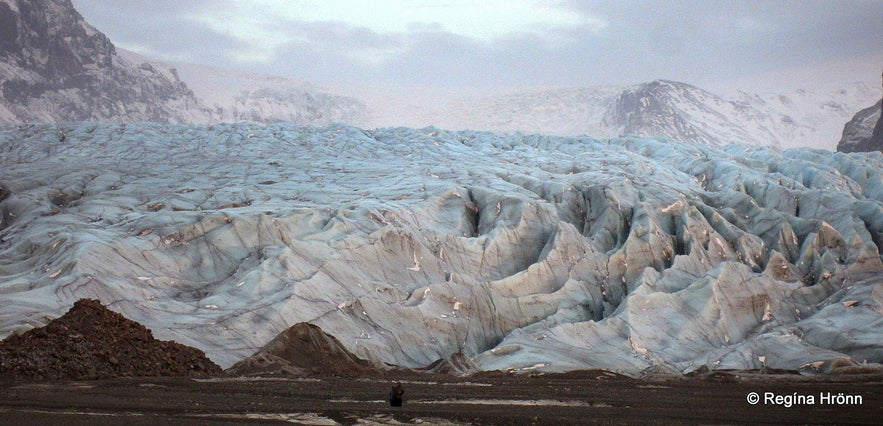
Skaftafellsjökull glacier
If you fancy going glacier hiking, you can join:
Glacier Hiking Tour in Skaftafell
Skaftafell Glacier Hiking Tour - Medium Difficulty on Svínafellsjökull glacier
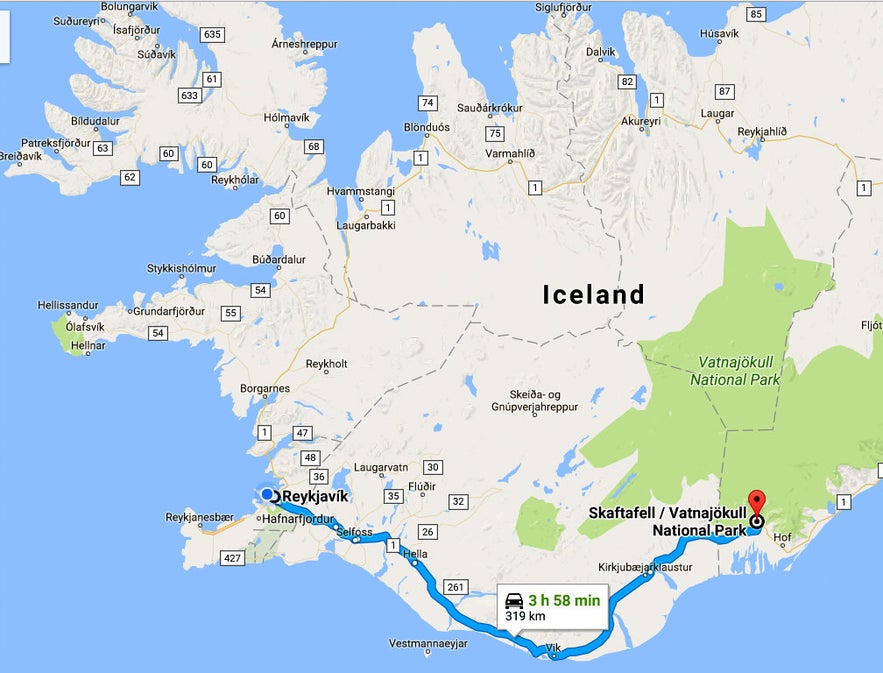
Skaftafell is located some 326 km from Reykjavík on the Ring Road 1, and 2 km from road 998 to Skaftafell.
Here you can see the location of Skaftafell and Svartifoss waterfall on the map.
You can rent a car in Reykjavík and drive to Skaftafell in 4 hours.
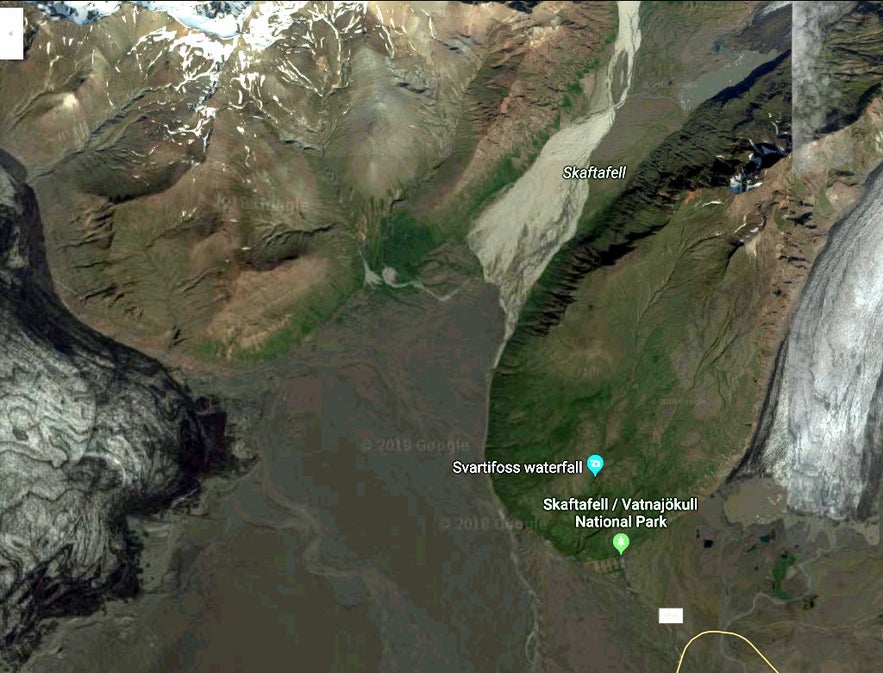
There are many stops on the way, so I would recommend that you take it easy and visit all the major sights on the South Coast along the way, e.g.:
The beautiful Waterfalls on the South Coast of Iceland
The historic Kirkjubæjarklaustur, Systrafoss & Systrastapi in South Iceland
Extraordinary Columnar Basalt and Waterfalls in South Iceland - Foss á Síðu & Dverghamrar
and many more...
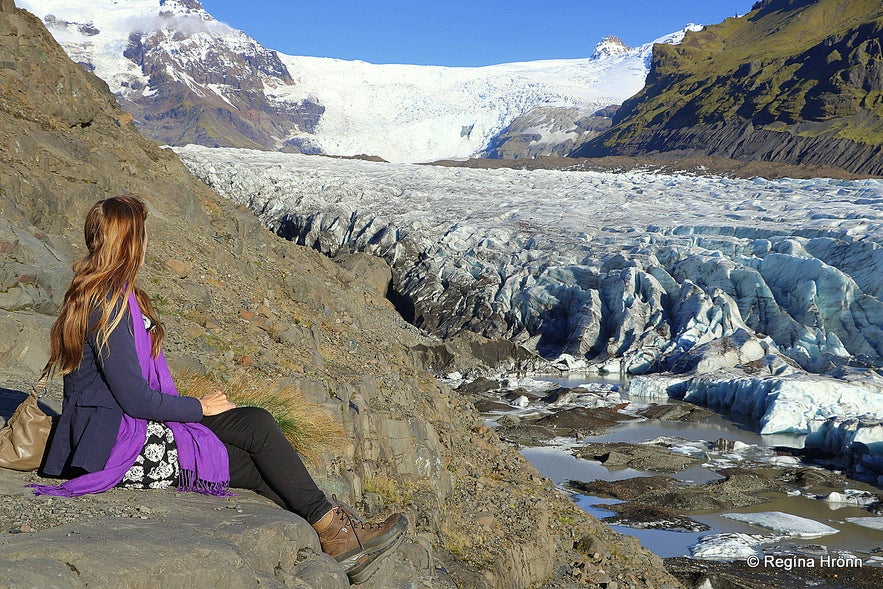
Svínafellsjökull glacier, where a Game of Thrones scene was filmed
I haven't hiked on Svínafellsjökull glacier yet. I have just hiked up to the edge of the glacier (see my photo above), but if you want to read more about glacier hikes, I have added a travel blog about a hike on Sólheimajökull glacier.
And, here you can see what a winter visit in this area might be like, but I visited this area on freezing November days with friends: A Winter Visit to the South Coast of Iceland- all the way to Jökulsárlón Glacial Lagoon.
Have a lovely time at the beautiful oasis of Skaftafell :)

Hi, my name is Regína Hrönn, and I was born and raised here in Iceland.