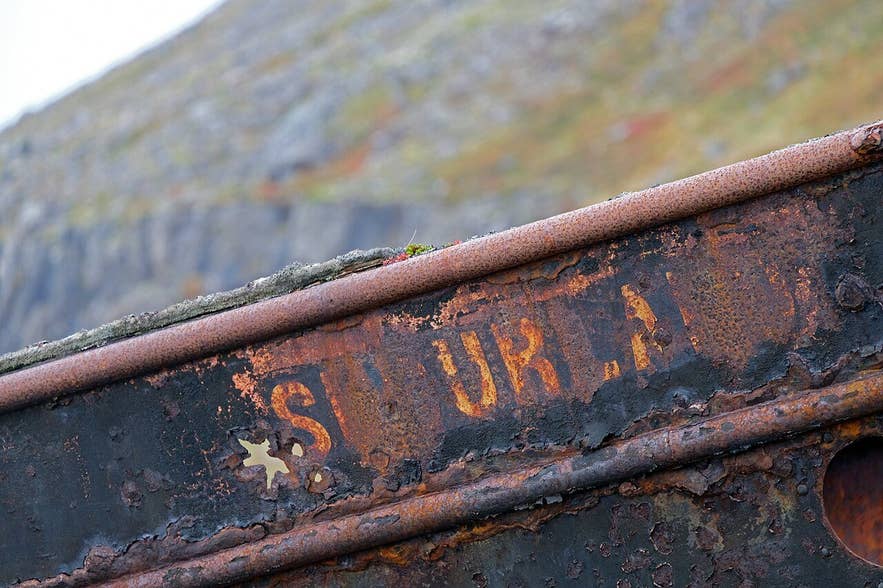
Rusted bow of the Suðurland, Djúpavík. Photo: Kasa Fue, CC BY-SA 4.0
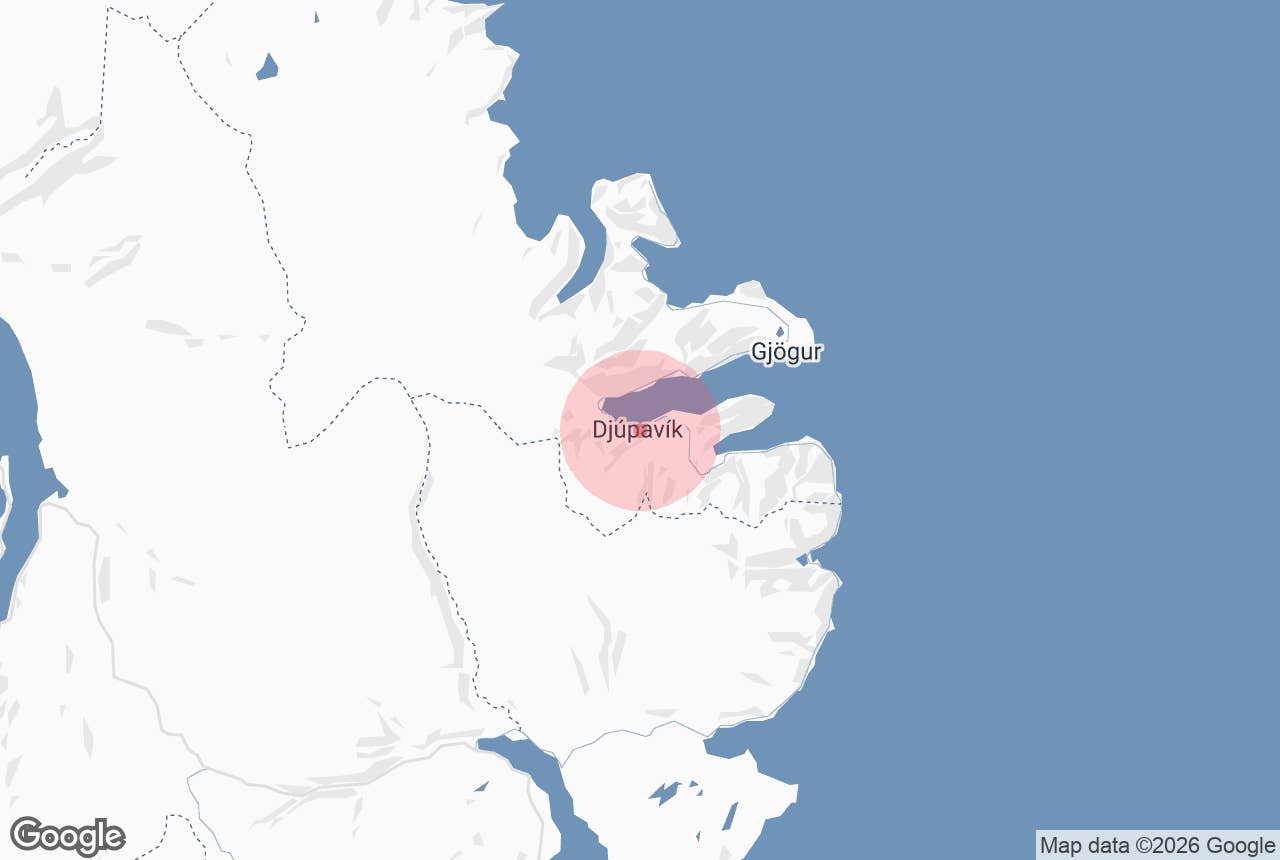
The Suðurland shipwreck (Icelandic: Suðurland, skipsflak í Djúpavík) is the rusted steel hull of an old steamer lying on the shore at Djúpavík, a near-abandoned herring village on Reykjarfjörður in the Strandir region of the Westfjords.
It sits a few steps from the huge concrete herring factory that dominates the village, and together the two are among the best-known sights on the long gravel road up the Strandir coast.
The ship's name is still faintly legible on the bow: Suðurland, meaning "South Land" (Suðurland is also the name of Iceland's southern region).
Key Takeaways About Suðurland
- Rusted hull of the old steamer Suðurland, beached on the shore beside the 1935 herring factory in Djúpavík
- Bought in Denmark in 1919 and used to house around 30 factory workers in the cold season; left on the shore after the factory closed in 1954
- Not the freighter MS Suðurland that sank between Iceland and Norway in 1986
- Reached by gravel Route 643 (Strandavegur), about 70 km / 1.5–2 hours north of Hólmavík; summer only, no fuel in Djúpavík
- Free to view; guided factory tours by Hótel Djúpavík in summer; stay at the hotel in the former women's dormitory
Why visit the Suðurland shipwreck
Djúpavík was settled in 1917 around a herring salting station, whose owner went bankrupt in the slump of 1919, and was reborn in 1934 when Djúpavík Ltd. built a new herring oil and meal factory financed with a loan from a Stockholm bank.
The factory was finished in a single year and was operating by July 1935. At 90 metres long it was the largest concrete building in Iceland at the time, and it is described as the largest and most modern herring factory in Europe when it opened.
That is where the ship comes in.
According to published accounts of the village, the old steamer Suðurland, bought in Denmark in 1919, was used at Djúpavík to house factory workers, around 30 men at a time, in the cold season when tents were no longer an option.
When herring catches collapsed after 1944 and the factory closed in 1954, the ship was left where it lay.
Decades of Atlantic weather have stripped it to a shell, and it now stands on the gravel beside the factory with driftwood piled around it and the fjord behind.
You can walk all the way around it and look in through the hull plates at the ribs and beams inside.
The ship is a good reason to stop, but the attraction is the whole site: the factory with its exhibition on the herring years, the former women's dormitory that became Hótel Djúpavík in 1985, and the setting under steep mountainsides with the waterfall Djúpavíkurfoss behind the village.
Nobel laureate Halldór Laxness set his 1972 novel Guðsgjafaþula in this herring world, and Sigur Rós played a concert inside the factory on 27 July 2006, filmed for their film Heima.
How to get to the Suðurland shipwreck
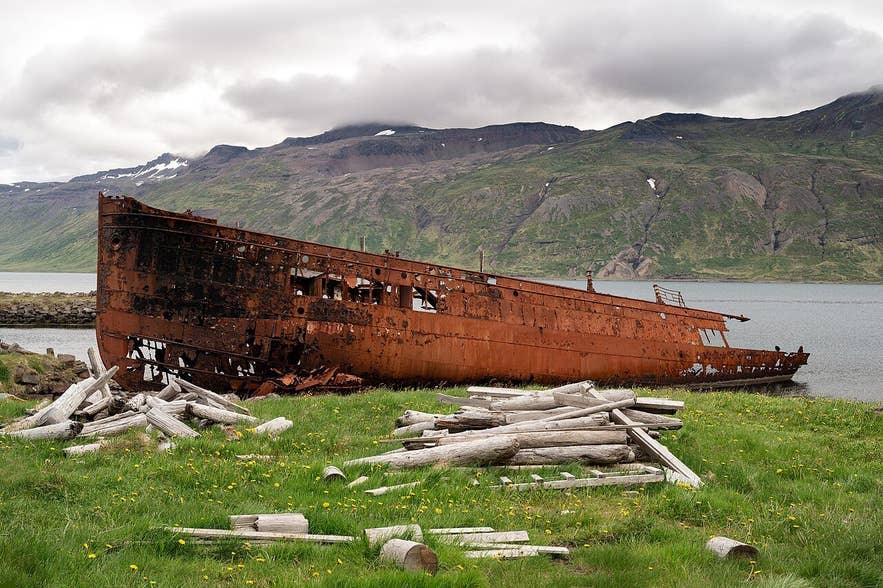
Suðurland shipwreck at Djúpavík. Photo: Eric Kilby, CC BY-SA 2.0
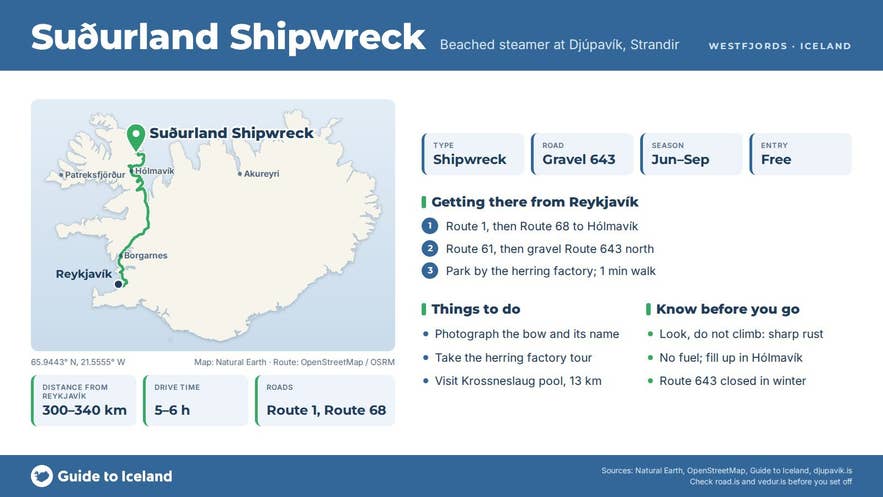
Djúpavík is on Road 643 (Strandavegur) on the east coast of the Westfjords. From Reykjavík, take the Ring Road (Route 1) north, then Route 68 up Strandir to Hólmavík, continue on Route 61 around Steingrímsfjörður and turn north onto Route 643 (Strandavegur) towards Bjarnarfjörður and Árneshreppur.
The whole drive is about 300–340 km depending on the route and takes five to six hours. Hólmavík, the nearest town with shops, fuel and services, is about 70 km south of Djúpavík by road.
Route 643 is a narrow gravel road that winds along the coast. Drive slowly and allow around 1.5 to 2 hours from Hólmavík.
The road gets little or no winter service north of Bjarnarfjörður, so Djúpavík is normally cut off by road for much of the winter; check road.is before travelling.
The village has no fuel station; the nearest pumps are in Hólmavík, Drangsnes and Norðurfjörður.
Park by the factory in the village. The wreck is right on the shore next to the factory, a walk of a minute or two from the car.
Best time to visit
June to September is the practical window, when Route 643 is open and Hótel Djúpavík runs its factory tours (the hotel is closed from October to May). Long daylight in June and July lets you photograph the wreck late in the evening. In winter the road is not reliably open and the area should be considered inaccessible by car.
Safety and practical tips
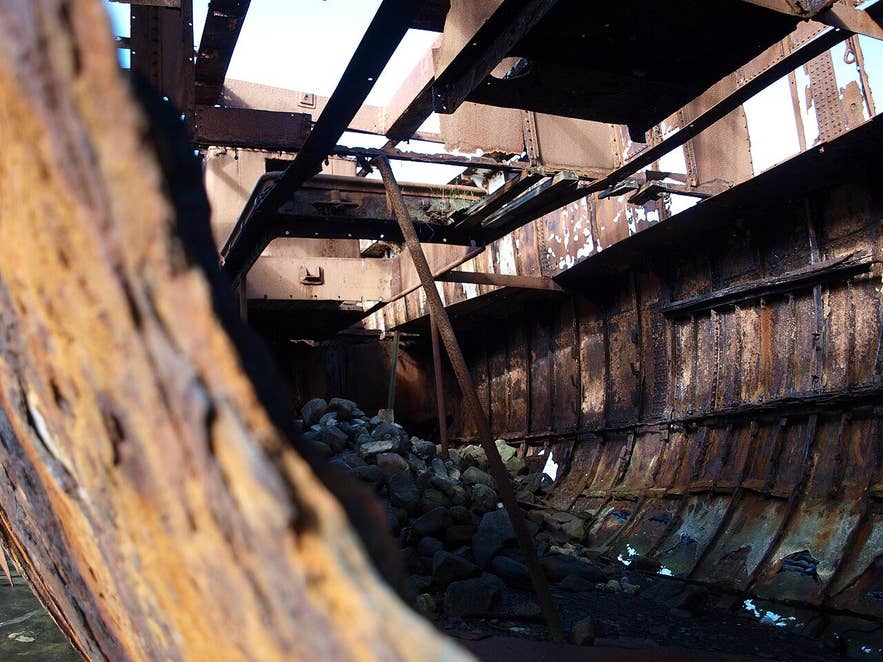
Inside the hull of the Suðurland. Photo: Ágúst Tómasson, CC BY 2.0
- The wreck is unfenced and sharp. Rusted plates, broken beams and holes in the hull mean you should look rather than climb, and keep children close.
- The shore is loose gravel and driftwood; wear proper shoes.
- There is no fee to view the ship or the factory exterior. Guided tours inside the factory are offered by Hótel Djúpavík daily in season at 10:00 (minimum two people) and 14:00 (minimum four people), roughly 60 to 90 minutes, for a per-person fee; check current times and prices on djupavik.is.
- Do not count on phone coverage in Árneshreppur. Check road.is before you set out and fill the tank in Hólmavík.
- Árneshreppur is one of Iceland's least populated municipalities, with about 60 residents in 2025. Respect private property and the few year-round households.
Nearby attractions
- Djúpavík – 0.2 km. The village, the herring factory and its exhibition.
- Gjögur – 7 km. Old shark-fishing station and the area's small airport.
- Kúvíkur – 10 km. The former trading post on Reykjarfjörður.
- Ingólfsfjörður – 12 km. Another abandoned herring factory at the end of the road.
- Krossneslaug – 13 km. The geothermal swimming pool on the shore north of Norðurfjörður.
- Hólmavík – 28 km direct, about 70 km by road. The main town of Strandir and home of the Museum of Icelandic Sorcery and Witchcraft.
Tours that visit the Suðurland shipwreck
- Private Day Tour to Strandir in Iceland's Westfjords from Reykjavik – a long private day trip that stops in Hólmavík, drives the Steingrímsfjörður coast, visits Djúpavík and the wreck, and continues north to the Krossneslaug pool.