I love visiting gorges on my travels in Iceland, especially gorges with rivers running through them. As that means that you will find a waterfall at the end of the gorge.
Kotagil gorge in Norðurádalur valley in Akrahreppur county (I know this is a mouthful), up in North Iceland, is such a gorge.
Furthermore, it is a very special gorge, as it is one of two places in Norðurárdalur listed on the Natural Heritage Register. And you will see why when you visit it.
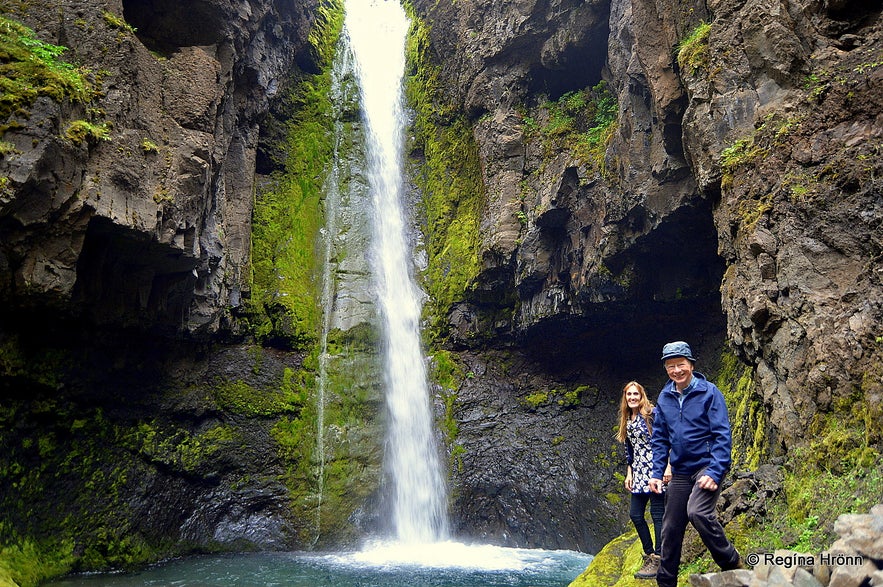
Top photo: by Kotárfoss waterfall in Kotagil with my father-in-law
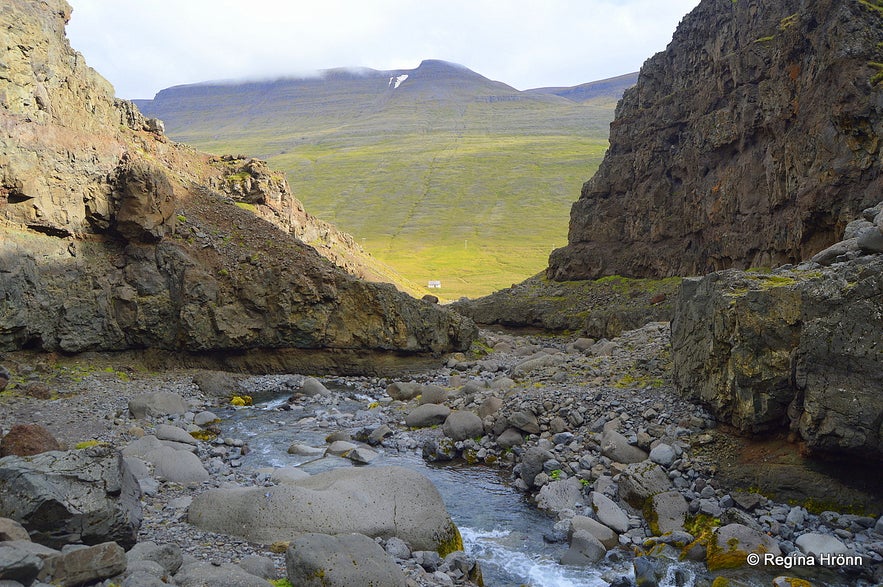
Kotagil gorge
The name of the gorge, Kotagil, means the gorge of the small farms, referring to two farms in the vicinity, Fremri-Kot and Ytri-Kot.
Kotá river, which runs through the gorge, also got its name from the small farms and means, quite simply, the river of the small farms.
I have seen 2 versions of the name of the gorge, Kotagil and Kotárgil, depending on whether it is referred to as the gorge of the small farms or the gorge of the river of the small farms.
I always refer to this gorge as Kotárgil, but I use Kotagil in my travel blog, as that is the name on the official maps.
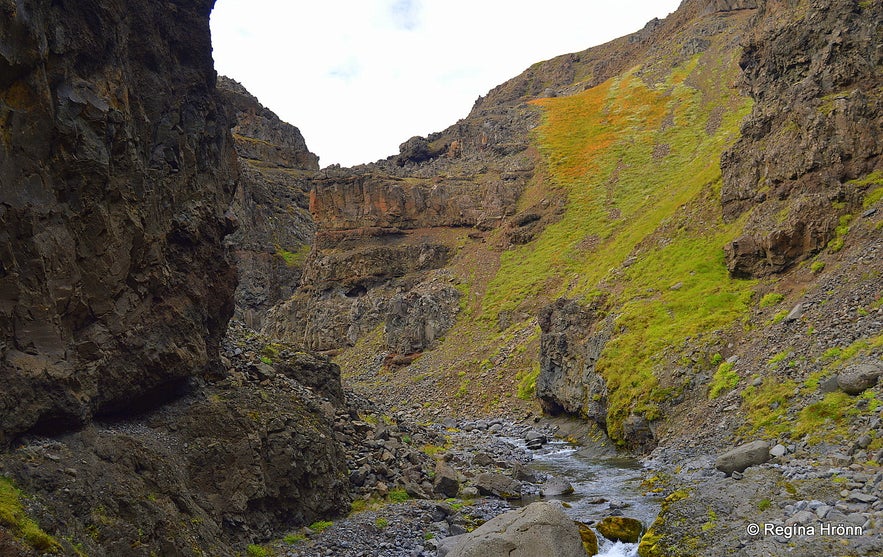
Kotagil gorge
We followed the river Kotá, which looked more like a creek on the day of our visit, into the gorge, stepping on stones to cross it in some places and trying to follow an unclear path into this craggy gorge.
It is not a difficult hike per se, but it is very uneven and rocky, and the river runs along the cliffs, so caution is needed here. And help from fellow travellers.
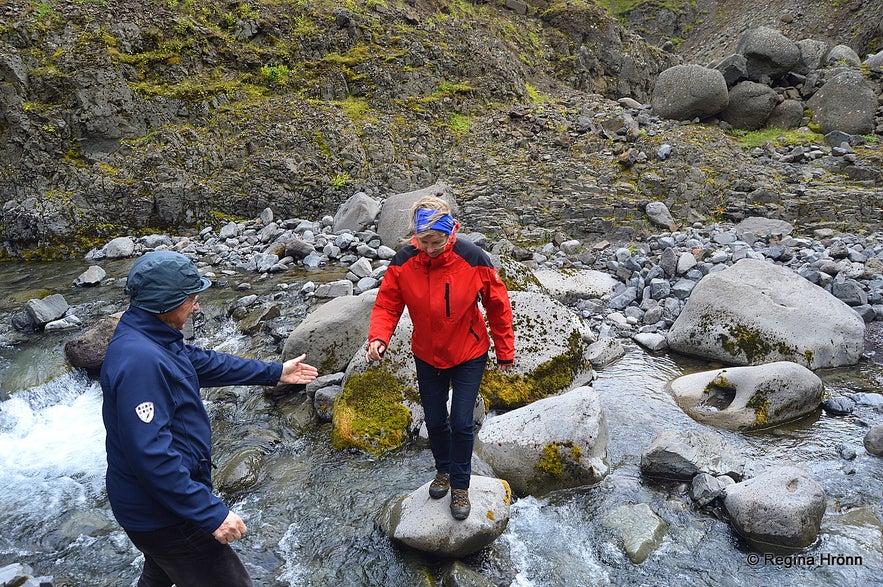
Lending a hand in Kotagil gorge
I spotted many holes in the basaltic rock, left by fossilized logs that once belonged to an ancient forest.
The holes are believed to have been created some 7-8 million years ago, when piping hot, thin-flowing lava reached a forest and covered the trees, burning them in the process.
The burnt trees then disappeared over time, leaving these holes behind. You can spot these holes close to the entrance of the gorge.
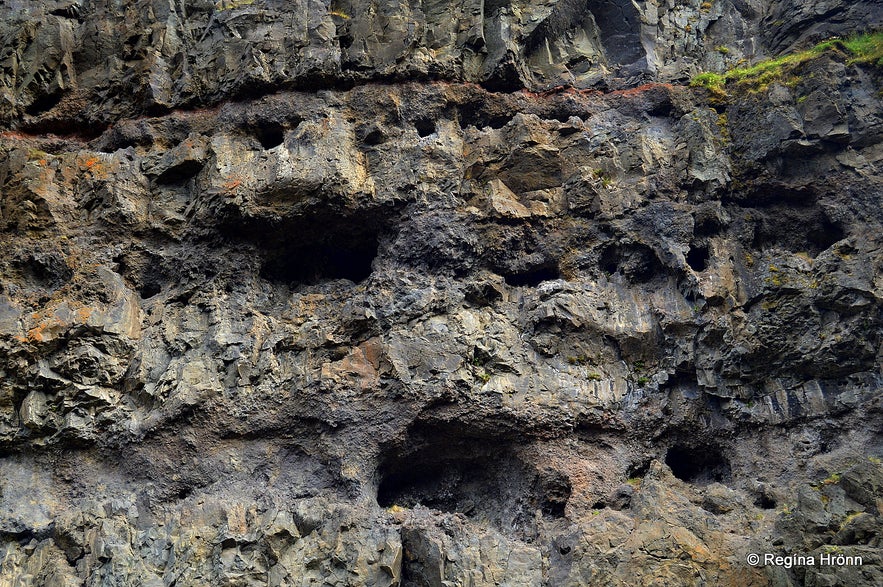
Holes in the rock from fossilized trees
The Kotá river was low during our visit to the gorge, but it can swell. In 1954, during heavy rain, severe floods occurred in Norðurárdalur, and a landslip fell onto the hayfield of the abandoned farm Ytri-Kot near Kotagil gorge.
A little bit further is the farm Fremri-Kot, where outhouses were severely damaged in this landslip. Fremri-Kot is still inhabited today.
During Whitsun the following year, the temperature rose, resulting in heavy rain that filled the riverbed of Kotá with alluvium.
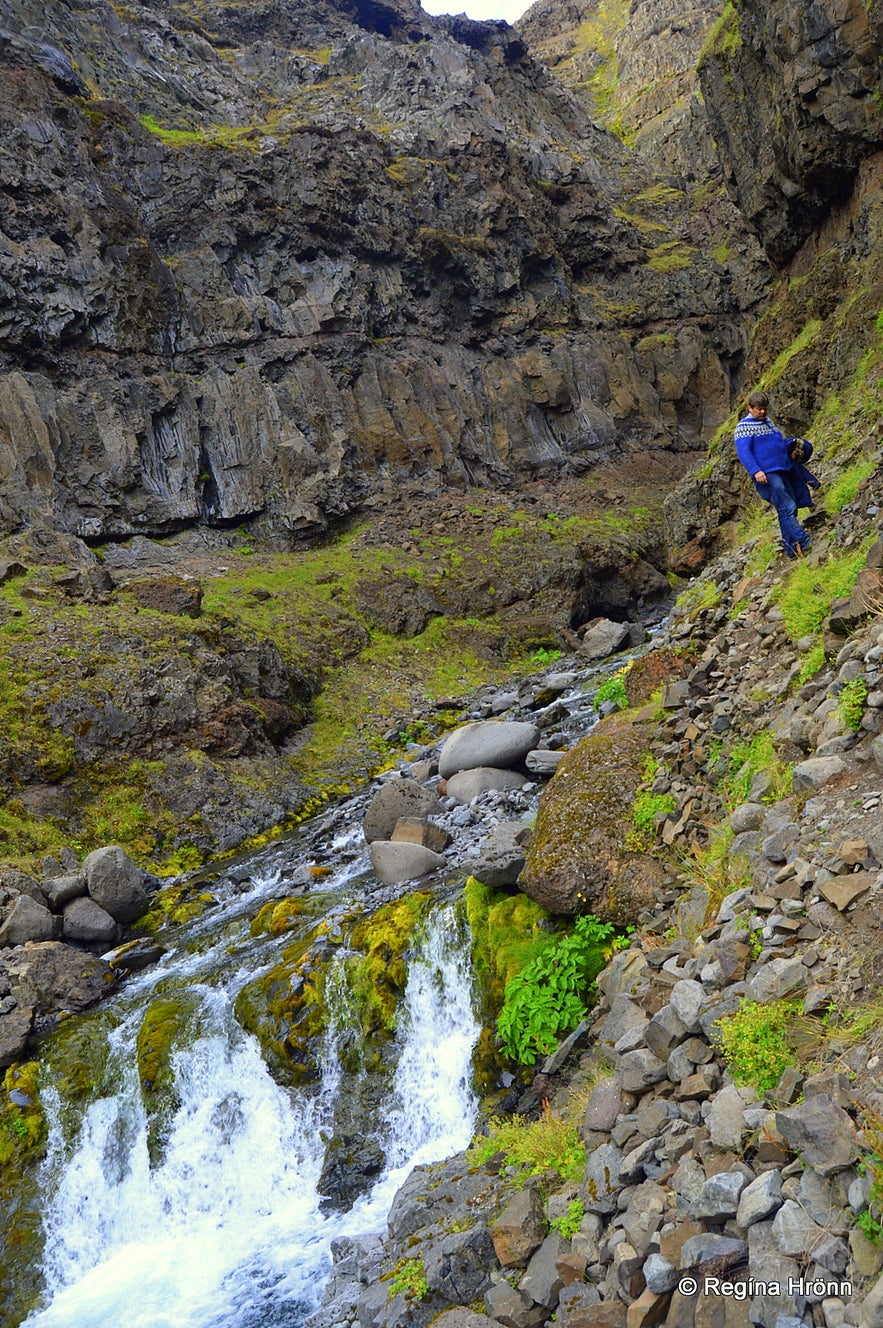
Hiking in Kotagil Gorge
The alluvium seems to have filled the gorge with 15-20 metres of high mud and gravel!
The alluvium, rocks, and gravel buried the bridge from 1926 under some 3 metres of thick gravel. This is quite something as the floor of the bridge reaches some 4 metres above the river.
As the temperature dropped again, the flood lessened.
Bulldozers were sent to the rescue as the bridge was on the main road, thus closing off the traffic from the south to the north (and vice versa) during the holidays.
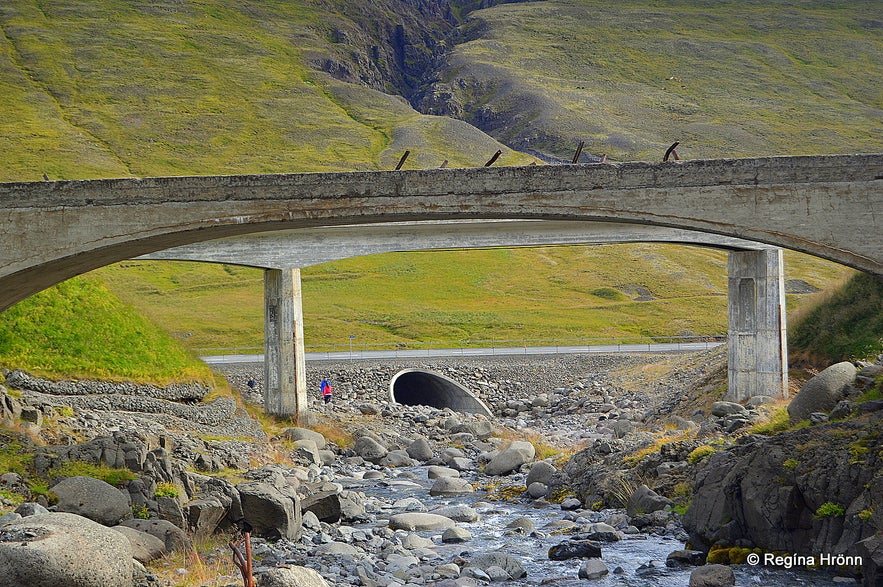
Bridges in Kotagil gorge
The bulldozers had to pull the cars over the obstacle to keep traffic moving, which was much less back in 1955 than it is now.
This road is now called Ring Road 1, with the last connection in South Iceland being opened in 1974.
Driving in Iceland was much different back then than it is nowadays.
It gives me chills thinking about this alluvium in the gorge. I would not have wanted to see it coming roaring towards me with great force!
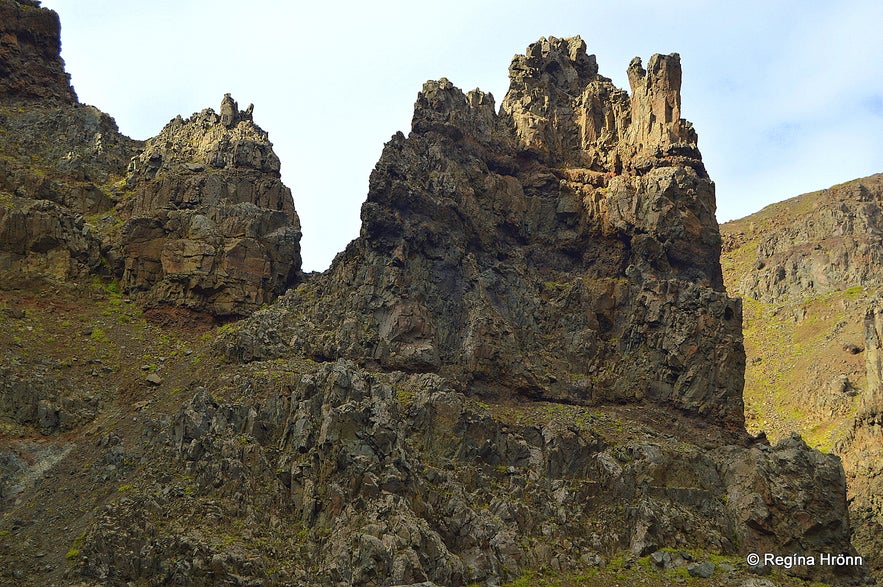
Kotagil gorge
We hiked another 20 minutes into the gorge and noticed my cell phone had lost its signal.
This hike had been a spur-of-the-moment thing, and a friend was waiting for us at Blönduós.
So I felt bad not having a connection to tell him that we would be late. And I must say that I have started to feel insecure when I am not constantly connected, modern times, eh ;)
I had read somewhere that the fulmar nests in the gorge, but the fulmar is my favourite seabird after the cute puffin. But I didn't hear any sounds from birds while hiking in the gorge.
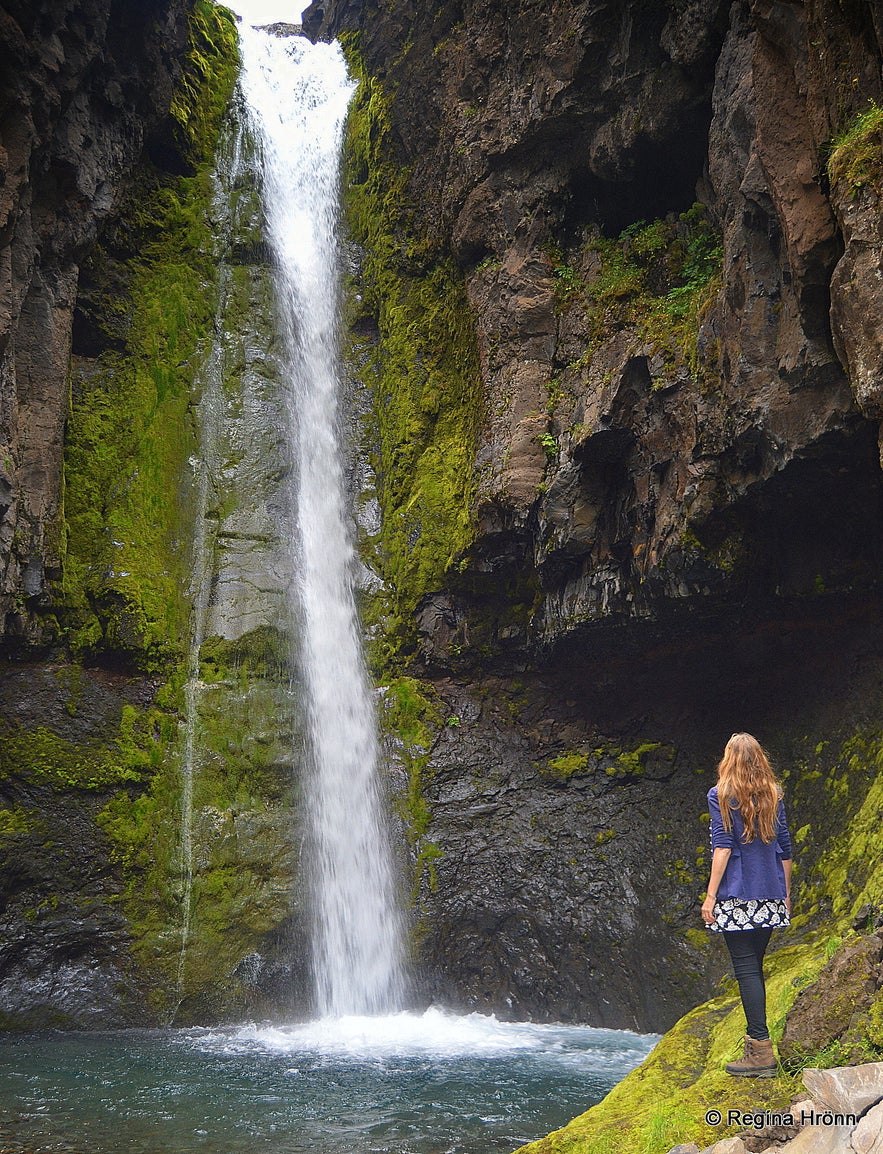
By the beautiful Kotárfoss waterfall in Kotagil gorge
Finally, we reached our destination, and I was not disappointed with the sight that awaited me by the end of the gorge: a pretty, serene waterfall, which falls into a small pond - Kotárfoss waterfall.
This waterfall reminded me of another waterfall I had visited in Nauthúsagil Gorge in South Iceland, even though visiting these two gorges is very different.
The Mystical Nauthúsagil Ravine in South Iceland & its beautiful Waterfalls
You never know what the waterfall at the end of the gorge is going to be like, and that is the surprise factor, which I seek. We stayed by Kotárfoss for a while, took photos, and then headed back the same way.
I was so happy with this hike, as seeing these waterfalls at the end of gorges is one of my favourite moments in life :)
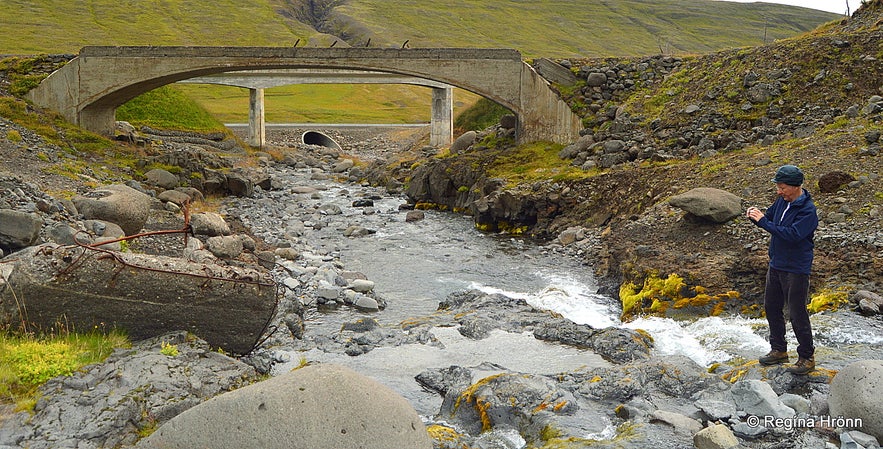
My father-in-law photographing the remains of the bridge from 1922, with two newer bridges in the background
There are older bridges over the Kotá river that belong to earlier versions of the main road. The oldest one is a concrete bridge from 1922, but it collapsed in a flood in the Kotá river only three years later, in 1925.
That flood might have been similar to the flood in 1955. You can still see parts of it in the riverbed (to the left in the photo above), but it replaced a wooden bridge from 1897.
The next bridge in the photo above was built in 1926. That is the bridge that was buried in alluvium in 1955.
The biggest bridge (37 metres long and 3.9 metres wide) was built in 1961. You can see that the newer bridges are built further and further away from the gorge.
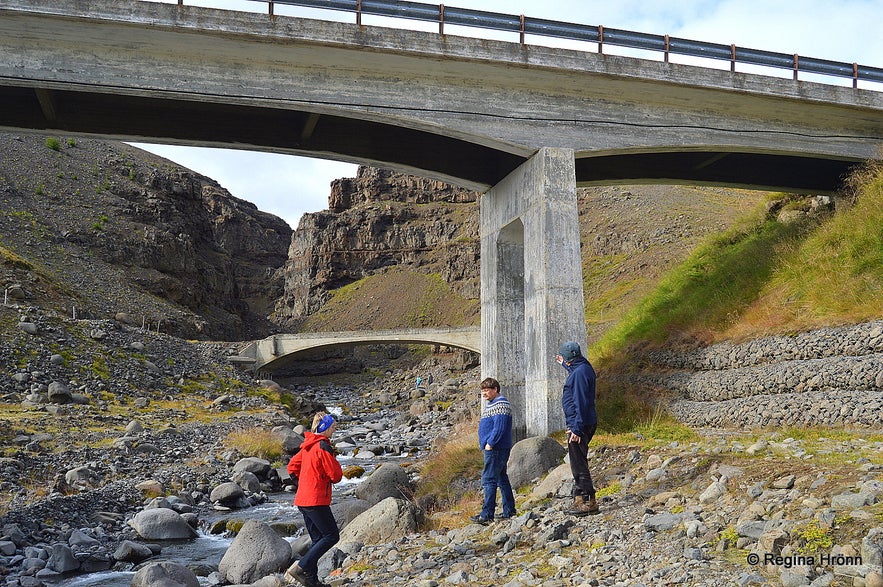
Checking out the bridges over the river Kotá
The bridges over the Kotá river were an accident trap, with many accidents occurring in this area.
Cars were known to collide in the middle of the one-lane bridge as the view from both ends was bad. And by now, motor traffic was increasing.
The final solution was to move the ring road 1 further away from the gorge. In 2007, a new road was laid over the river, and now the river runs through a 7-meter-wide tunnel under the road.
This should prevent the ring road from flooding and being covered in thick layers of mud and gravel.
I am glad that I got the opportunity to visit Kotagil gorge with my father-in-law, as he worked for over 55 years at Vegagerðin - the Icelandic Road Administration, and his specialty is bridges :)
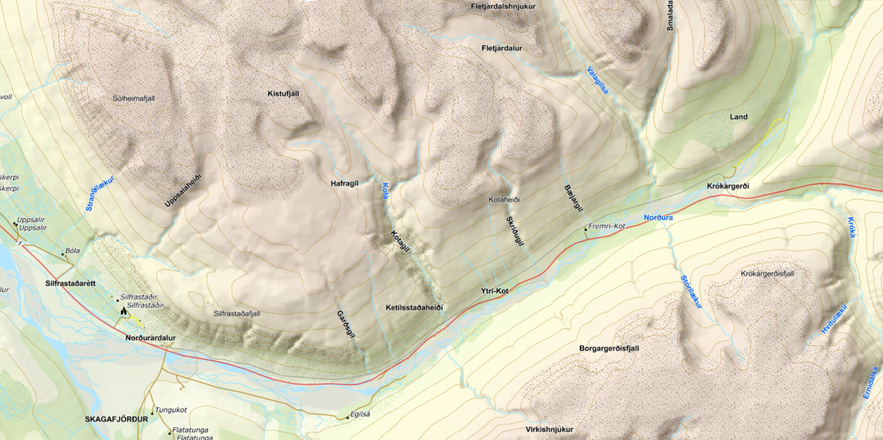
A map from the National Land Survey of Iceland of the area
Allow an hour for a visit to Kotagil gorge. You will see a sign at Ring Road 1 and a small parking lot where you can leave your car before hiking into the gorge.
But as is always the case, cars parked by gorges attract other travellers, and on our way back, we met several other hikers.
There are many other dramatic-looking gorges in this area. I also hiked in the gorge by the Króká river on Öxnadalsheiði heath nearby.
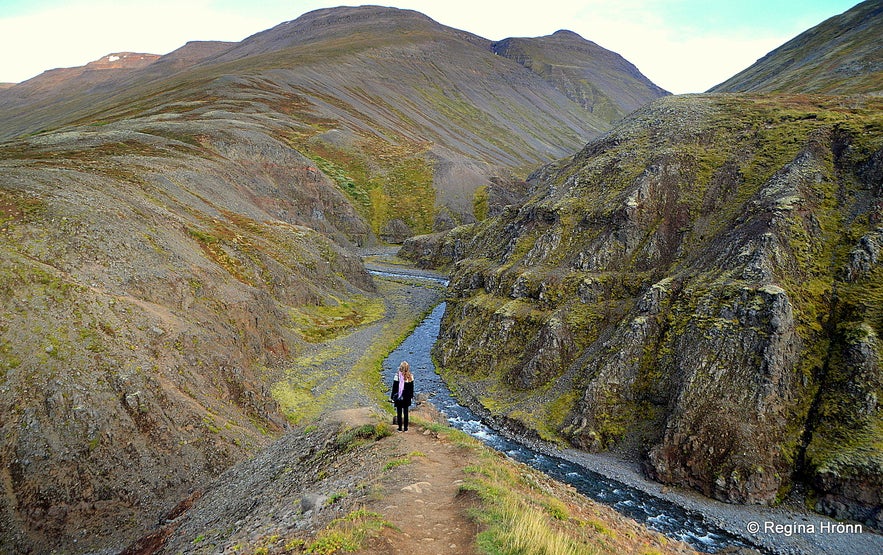
Króká river and the gorge opposite the road from Kotagil gorge on Holtavörðuheiði heath - in the dusk
And I visited the preserved Bólugil gorge, which lies on the boundaries between Blönduhlíð in Skagafjörður and Norðurárdalur valley.
The Ghost Skeljungur and Bóla in Bólugil - Folklore from North Iceland
And not far away is the scariest of the gorges in this area, Merkigil gorge, but the last farmer at Merkigil farm fell into that gorge and died.
That gorge is about the scariest-looking gorge I have seen on my travels in Iceland!
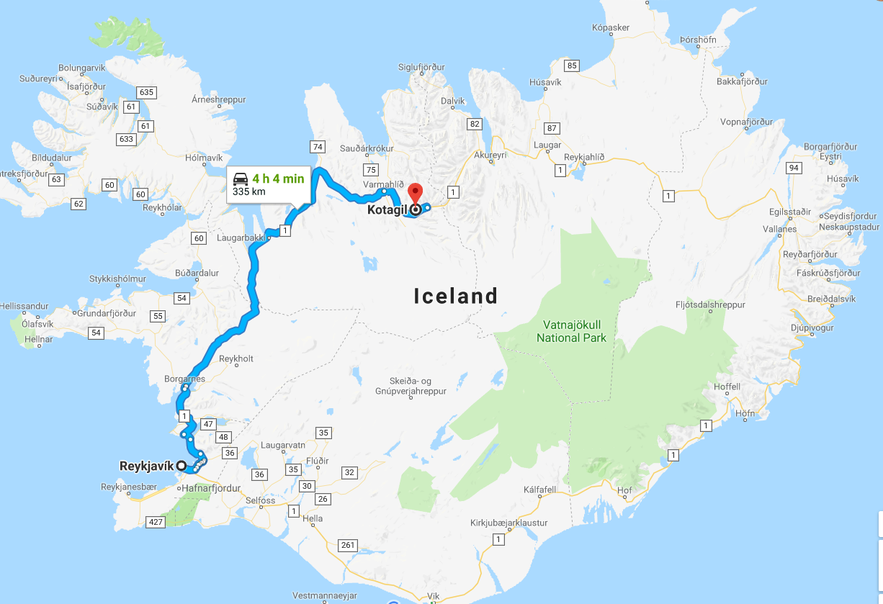
To visit the Kotagil Gorge, you can rent a car in Reykjavík and drive up north.
Norðurárdalur valley connects the historical Skagafjörður with Öxnadalsheiði heath, which in turn leads to Akureyri, the Capital of the North.
A very interesting drive with many stops to take in beautiful sights along the way.
Have a lovely time in Iceland :)
Sources:
Vegagerðin - the Road Administration

Hi, my name is Regína and I was born and raised here in Iceland. Since 2013 I have written 320 travel blogs about various interesting places to visit in Iceland. I hope you enjoy reading my travel-blog :)