Finally, I was able to see the volcanic eruption in Mt. Fagradalsfjall on the Reykjanes peninsula with my own eyes. We had booked a helicopter flight at the start of the eruption, but it wasn't until 7 weeks later that it was our turn, as demand for flights to the volcano was so high.
The people on the long waiting list were mostly Icelanders, as no tourists were visiting Iceland due to COVID-19 restrictions. We all wanted to see the volcanic eruptions, and hikers were flocking to the volcano.
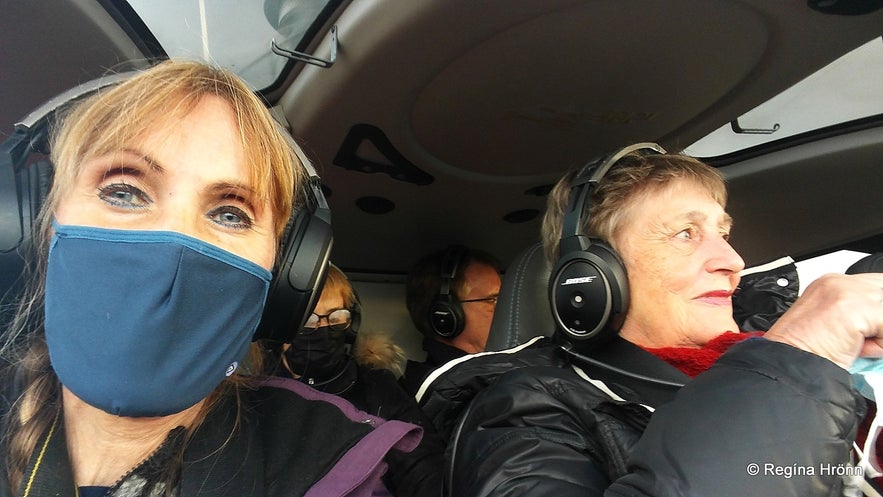
With my mother-in-law in the helicopter
In my last travel blog, I told you about the earthquakes that were driving us up the wall here on the southwest corner of Iceland before the eruption started.
And showed you photos my husband took while hiking to the volcano a couple of days after the eruption started.
See my travel blog: The Volcanic Eruption in Fagradalsfjall and Geldingadalir on Reykjanesskagi in SW-Iceland.
Back then, it erupted from a single crater, but since then, several craters have formed, and the one in my photos is the only one that is active today.
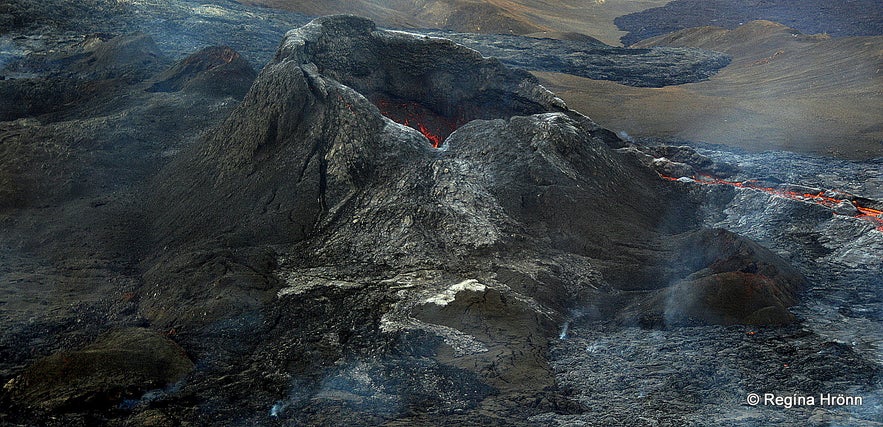
The volcanic crater is getting bigger and bigger
My brother-in-law lives in London, and he invited his mother on a helicopter ride for her birthday on the 3rd of April.
And I decided to join her - my husband invited me on this ride :)
Little did we know that we would be visiting the site of the volcanic eruption almost 2 months later. And I didn't write a travel blog for 2 months as I was always waiting for the helicopter ride ;)
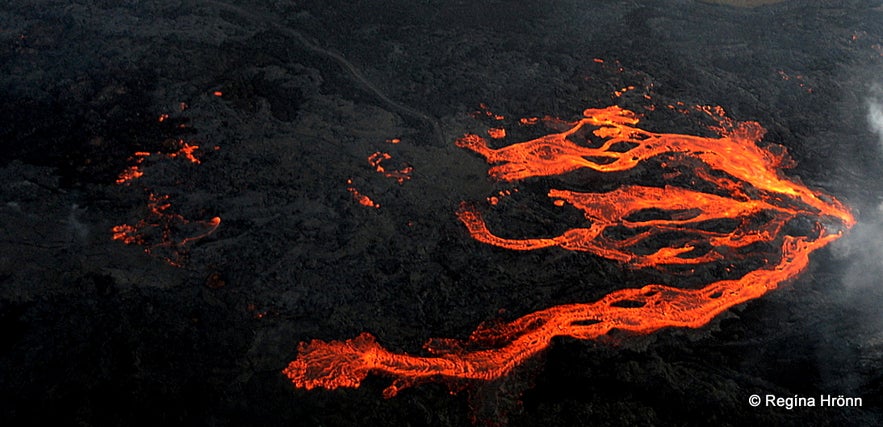
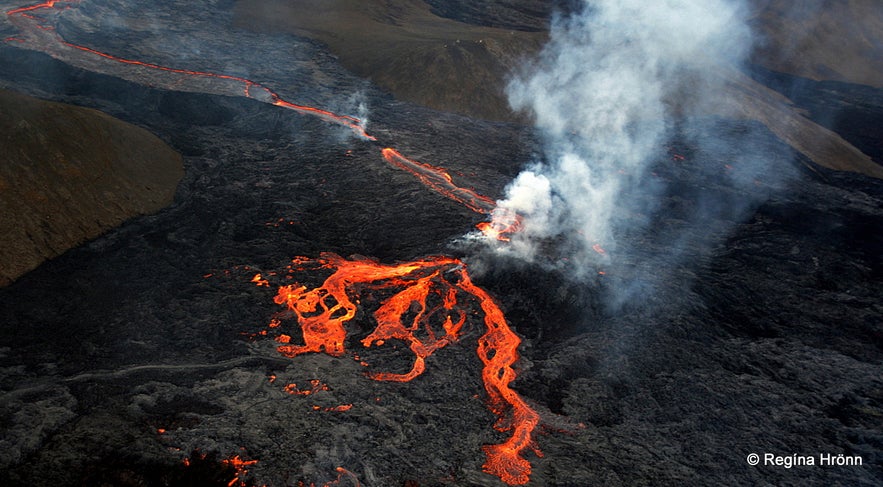
The lava flow as seen from the helicopter
Our flight was to be at 10:30 in the morning, but that helicopter ride was canceled due to mechanical problems... and our hearts sank.
But they, fortunately, rescheduled our tour to 18:30 that same day.
The helicopter ride from Reykjavík takes only 15 minutes, and it was great to see the volcanic landscape of the Reykjanes peninsula from above.
Here you will see many volcanoes and lava fields from various eruptions, some of them thousands of years old.
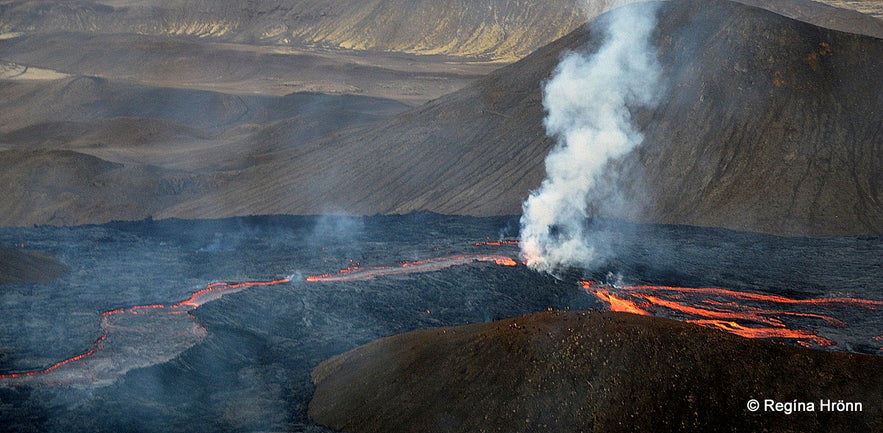
We landed on Mt. Stóri-Hrútur, which is the mountain behind the smoke
When we reached Mt. Fagradalsfjall, we first had a scenic flight over the volcano.
The helicopter bounced a bit in the hot air thermals, and the helicopter pilot circled over the volcanic area so both sides of the group in the helicopter could have a good view of the volcano.
I took as many photos as I could through the window, hoping that one of them would be ok. While also trying to be in the moment and enjoy this fantastic sight.
It was surreal, and the new lava field looked like it was glowing.
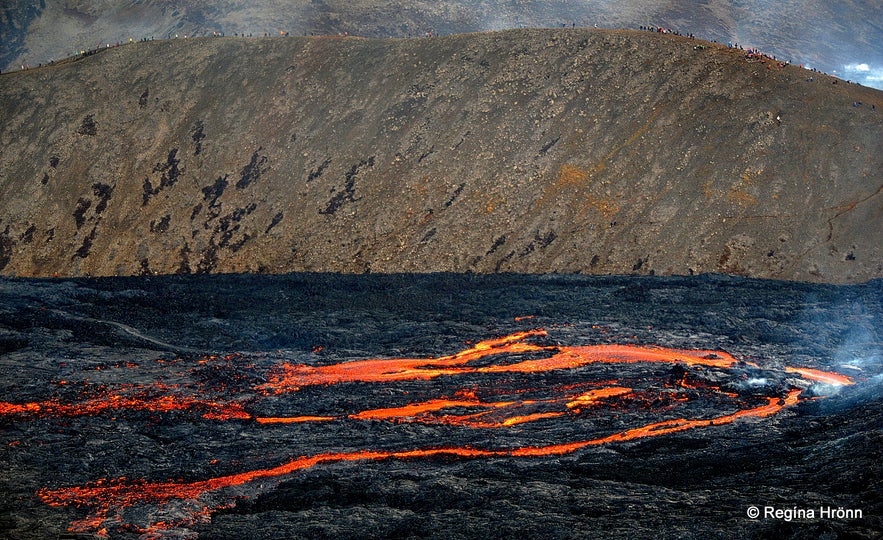
Here you can see the hikers on top of the hill. We landed on a much bigger mountain
The weather had changed, and a large black cloud hung over the volcanic area, casting a shadow that made it challenging to take decent photos.
The whole of May 2021 had been the sunniest ever, so I was a bit disappointed that I wasn't getting enough light for good photos, but they came out ok, also given that blue fumes were rising from the volcanic area.
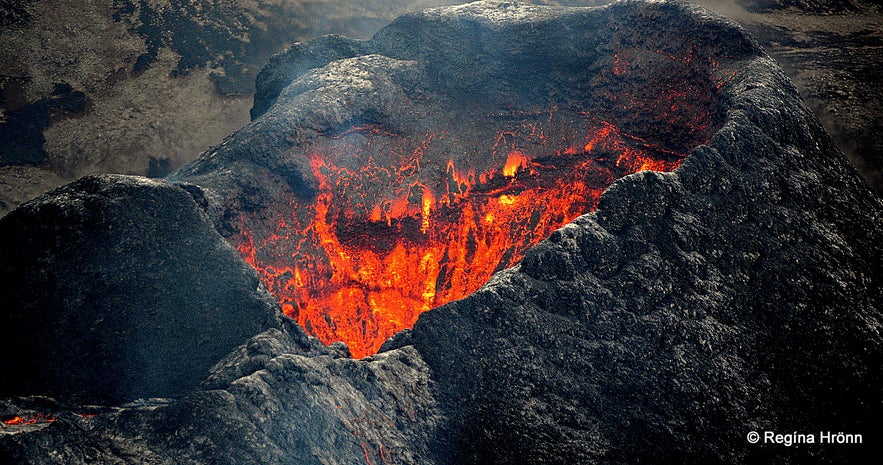
After the eruption, the crater looks like this
This crater erupts at about 7-10 minute intervals, which is very different from the beginning of the eruption, when it erupted constantly. So it behaves more like a geyser, really; it empties itself, then the pressure and gases build up, making it erupt again.
When we flew over it, it had just started erupting, but it was impossible for me, sitting in the back, to get a photo of the eruption, only the lava flow.
We could see the hikers standing on the hill like small ants watching the volcano. They had hiked from Suðurstrandarvegur road, but many thousands of people have hiked to the volcano since it started erupting, as I told you about in my previous travel blog.
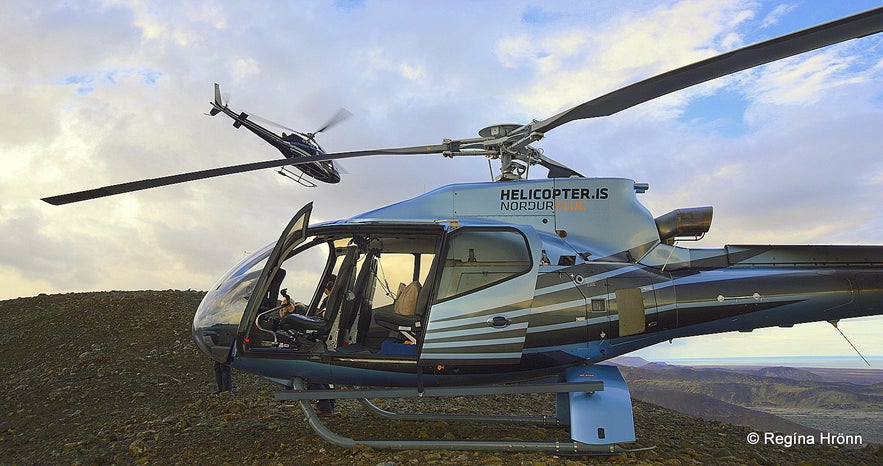
Landing on Mt. Stóri-Hrútur - the other helicopter took off shortly after we arrived
The helicopter landed on the mountain Stóri-Hrútur, which is on the opposite side of the lava field. Mt. Stóri-Hrútur is much higher (352 m) than the hill where the hikers stood, and we had a very different view of the area from this height.
We landed next to another helicopter, which must have been from Volcano Heli, but we booked with Norðurflug. I am happy for the helicopter companies that they are getting a lot of business after a long drought.
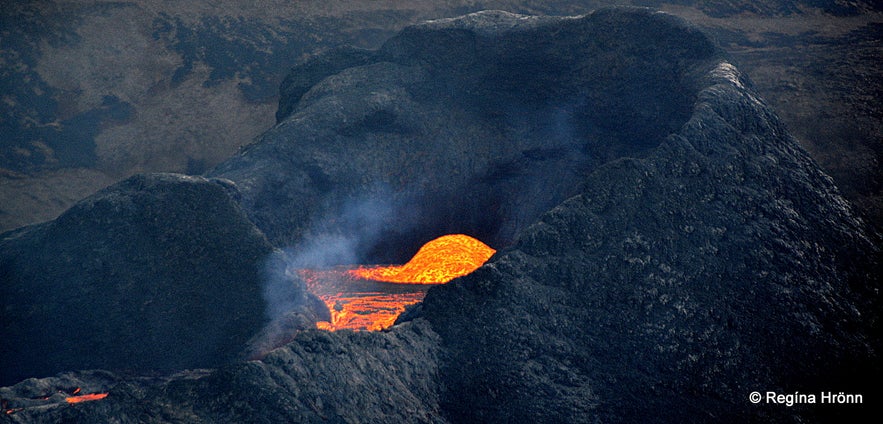
A new volcanic eruption starting - you can see the bubble appearing
When the second volcanic eruption began, we saw molten lava rising in the crater and a bright orange lava bubble forming, which then grew until it exploded into a full-blown volcanic eruption with a roar.
We could feel the heat from the molten lava rising up to our mountain. We were, of course, very well dressed, as it can get cold in this area, but it got so warm that we were taking off our mittens and hats.
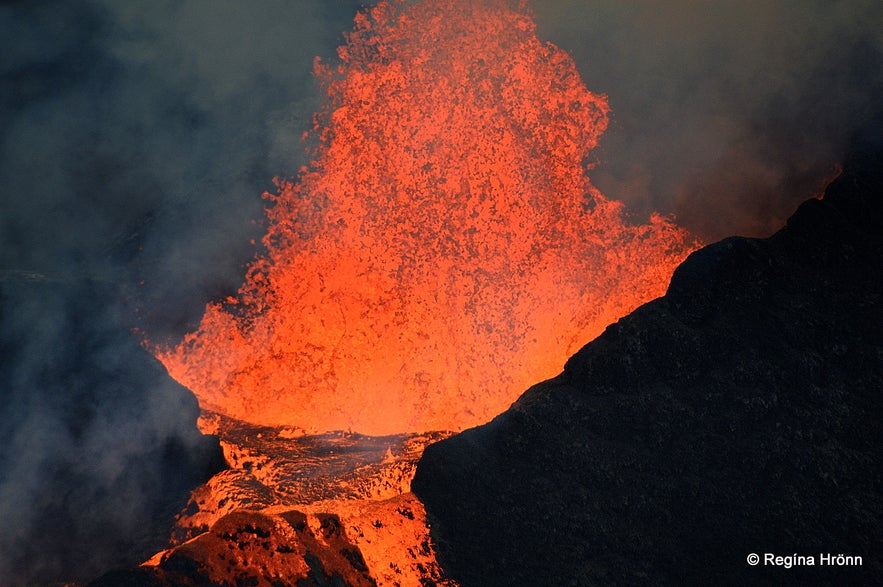
The volcanic eruption in full swing
We stood there in awe, wanting to take photos and videos to capture this magnificent sight and sound, but also wanting to be in the moment and take it all in.
We knew that we only had a limited time on the mountain, and I took a myriad of photos and two videos.
The one below I put on YouTube. You can see how dark it was, even though Iceland has almost unlimited daylight at this time of year.
We skipped taking selfies with the volcano erupting, because we didn't want to turn our backs on the eruption.
You can take selfies with the eruption when you have unlimited time on the hike to the volcano, but not when you have limited time on the mountain top, and there are 7-10 minutes between eruptions.
I had never been close to a volcanic eruption before, and it felt surreal, standing on top of a mountain watching a volcano at full throttle! It was magnificent, but also a bit eerie, as I am well aware of the dangers of volcanoes, having lived in Iceland my whole life.
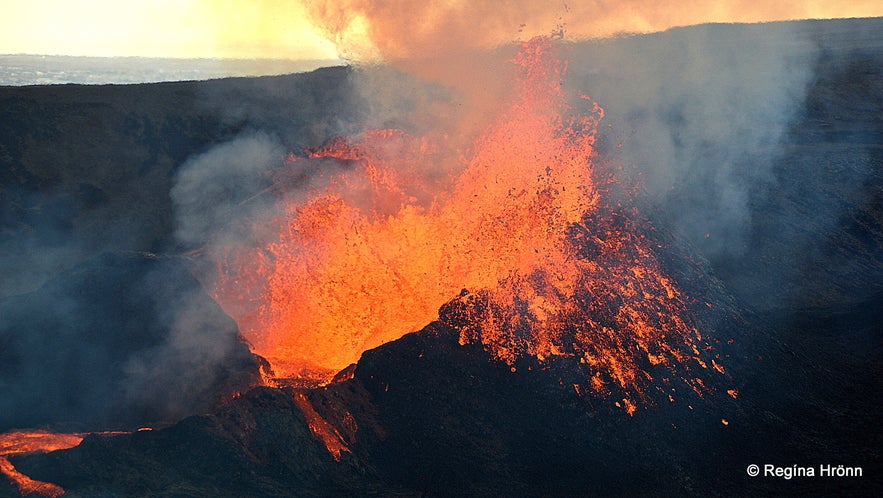
The volcanic eruption
The helicopter ride lasts for 45-60 minutes, with 15 minutes on the mountain top. Since we had to reschedule our flight, the pilot was kind enough to give us half an hour at the site!
We were very grateful for the opportunity to see more volcanic eruptions and take in the sights and sounds of the volcano.
"Thanks" to the dark cloud, it was almost like we were taking photos at night, and the bright orange colour of the lava flow really stood out.
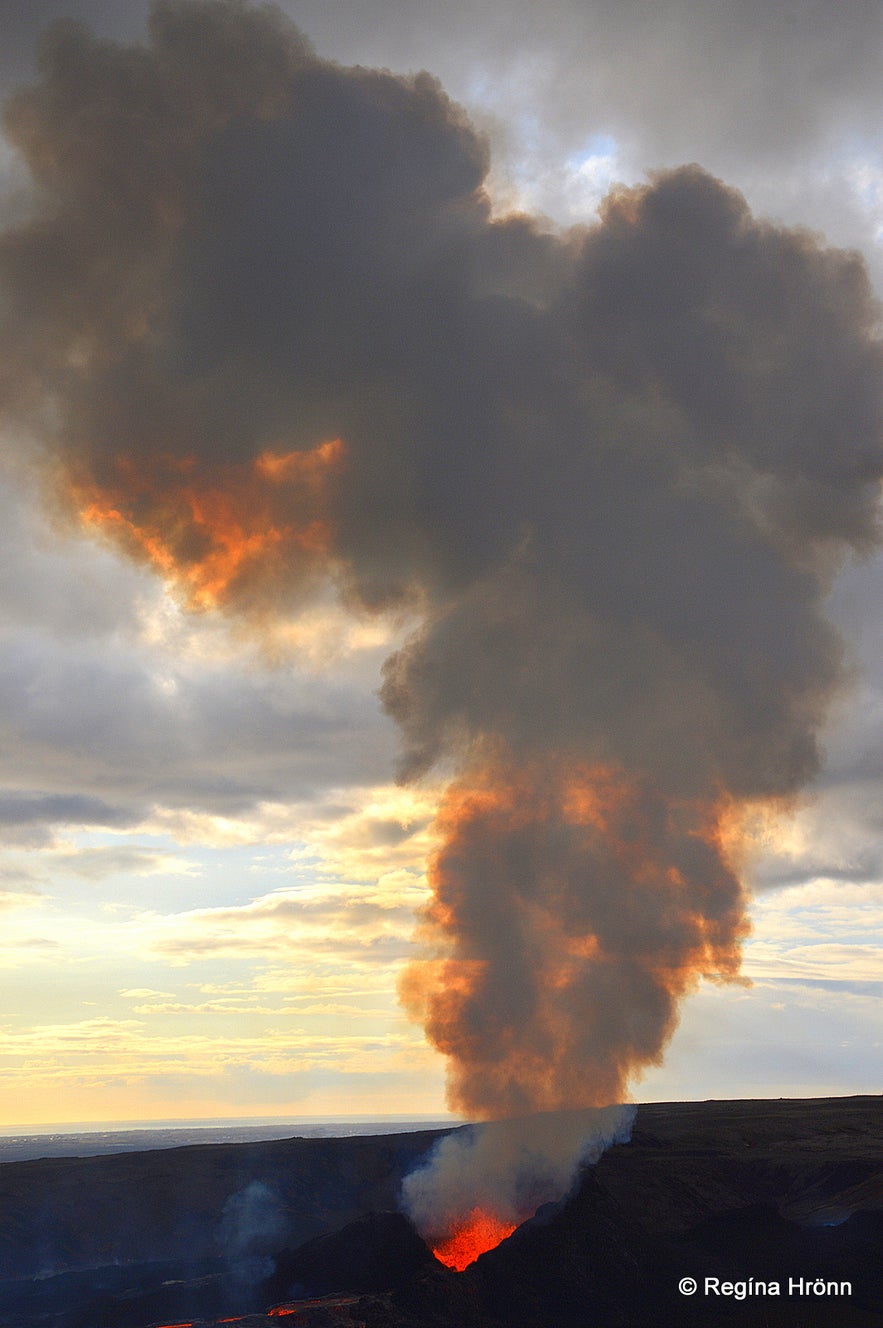
The smoke can be seen from Reykjavík.
The smoke from the volcano rises so high up in the air that it can be seen from Reykjavík, and we frequently watch it from our balcony. And the crater is getting bigger and bigger, and parts of it can now also be seen from my city.
All of a sudden, we noticed that our hair was standing on end, which means only one thing - we were getting affected by the static from the volcano!
If that happens while you are visiting the volcano, the meteorologists advise us to go lower or duck, as this means lightning may appear. And here we were on top of a mountain, standing next to a helicopter. So we got out of there fast.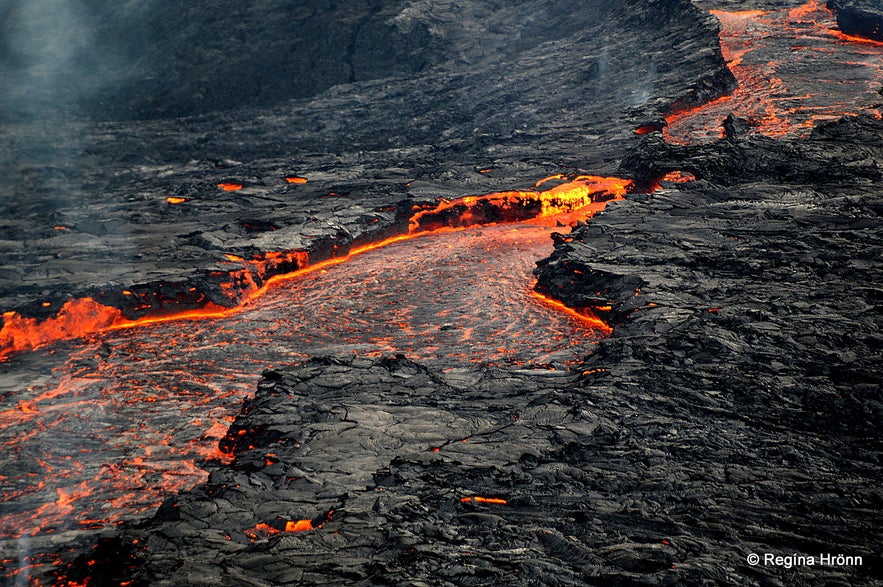
The lava flow from the volcanic eruption in Mt. Fagradalsfjall
I took a couple more photos from the helicopter as it was now our turn to sit in the front seats.
The lava flow looked spectacular, and it was extremely fast-flowing. It has already filled up Geldingadalir and is flowing into Meradalir valleys and Nátthagi.
The amount of fast-flowing molten lava that is coming from the earth astounds me, and the lava field is getting bigger and bigger. Where there were earlier grassy valleys, there is no indication that there was even a valley there.
The hill on which people were standing in my photos has now been closed off.
It makes me think about what all these lava fields in Iceland have covered and the antiquities they have destroyed since Iceland's settlement.
See also my travel blog: Stöng - Ruins of a Real Viking Settlement Manor and the Reconstructed Saga-Age Farm in Iceland, where I tell you about the 1104 volcanic eruption at Mt. Hekla and the Viking longhouses that were buried under layers of pumice.
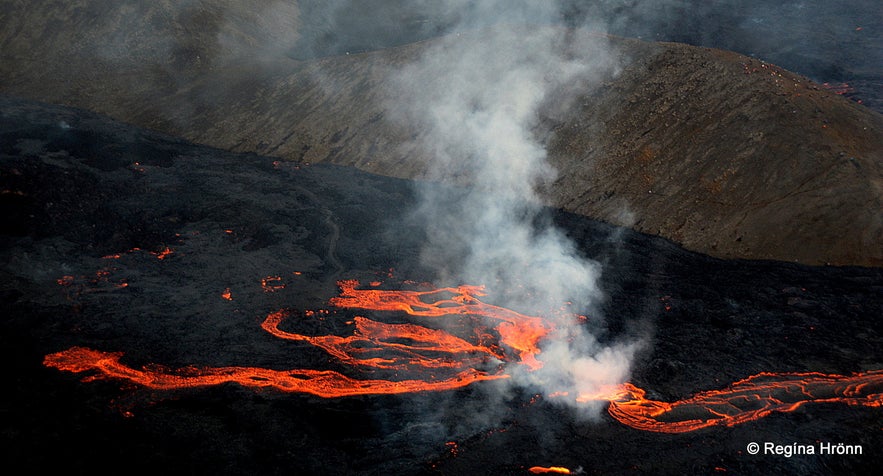
The lava flow looks beautiful from above
Barriers were put up to try to delay the lava flow from reaching Nátthagi and Suðurstrandarvegur road, where it seems to be heading, but the lava flow is so forceful that it broke down the barriers.
We will see if other barriers can be put up closer to the road. Suðurstrandarvegur is one of 2 escape routes for the inhabitants of the nearby Grindavík town.
Given that it has been centuries since a volcanic eruption on the Reykjanes peninsula, we don't know whether it will stop soon or if the peninsula has just started to wake up, as it were.
And then who knows where it will begin erupting on the peninsula, so the roads have to be protected. There have now been 10 volcanic eruptions on the Reykjanes Peninsula! (2026)
What a fantastic day this had been, and I returned feeling elated and filled with energy after witnessing the massive forces of nature at work :)
This is my second helicopter ride, as a couple of years earlier, I had joined a helicopter ride to the Hagavíkurlaugar/Ölfusvatnslaugar geothermal area:
A fantastic Helicopter ride with Norðurflug to a Geothermal Area in South Iceland
Have a lovely time in Iceland :)

Hi, my name is Regína Hrönn, and I was born and raised here in Iceland.