I adore turf houses, also called sod houses; they are so typical Icelandic. I have written a long travel blog listing all the turf houses in Iceland.
But I think it is appropriate to write a special travel blog about the oldest turf house in Iceland, the historical farm of Keldur in South Iceland.
Keldur is one of only a very few preserved turf houses in South Iceland; the other is the turf house at Austur-Meðalholt, which is now a museum. At Skógar Museum in South Iceland, you will also find a lovely collection of turf houses.
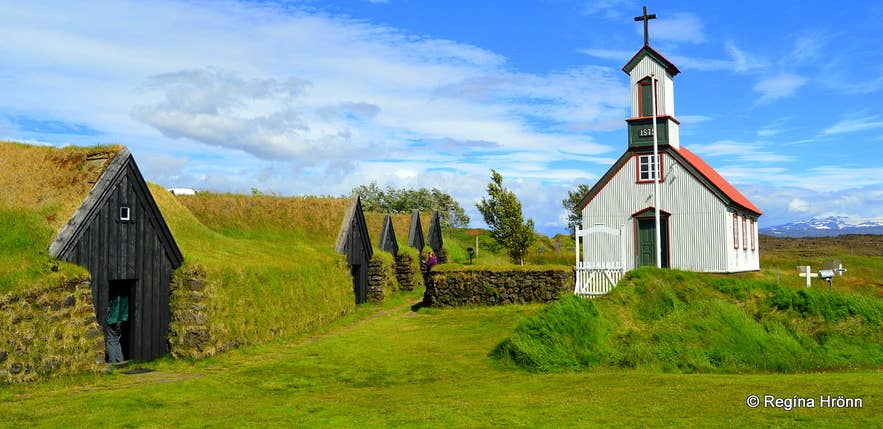
Top photo: Keldur turf farm and Keldnakirkja church
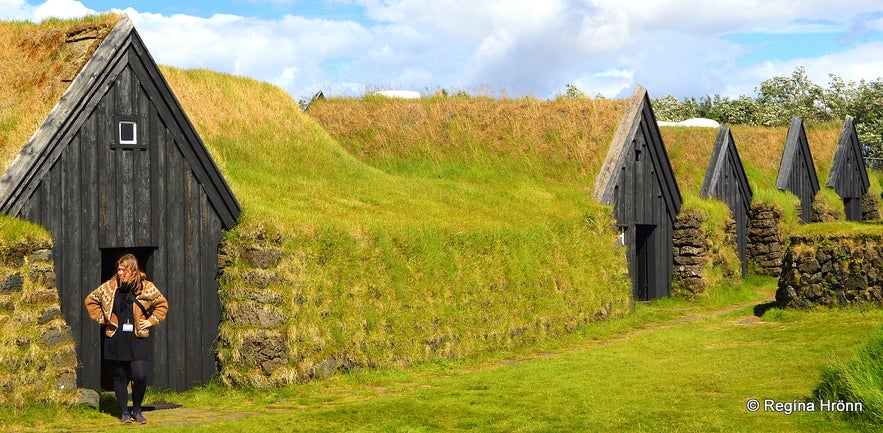
Keldur turf farm and an employee from the National Museum
Keldur farm is a historical place, and here lived one of the characters in the Saga of Njáll, Ingjaldur Höskuldsson, who lived at Keldur from 974 until around the year 1000.
In the 12th and 13th centuries, Keldur was one of the manors of the most powerful clan in Iceland, the Oddi clan, and Jón Loftsson (1124-1197), their chieftain, lived at Keldur when he grew old, until he died in 1197. He is believed to be buried here at Keldur.
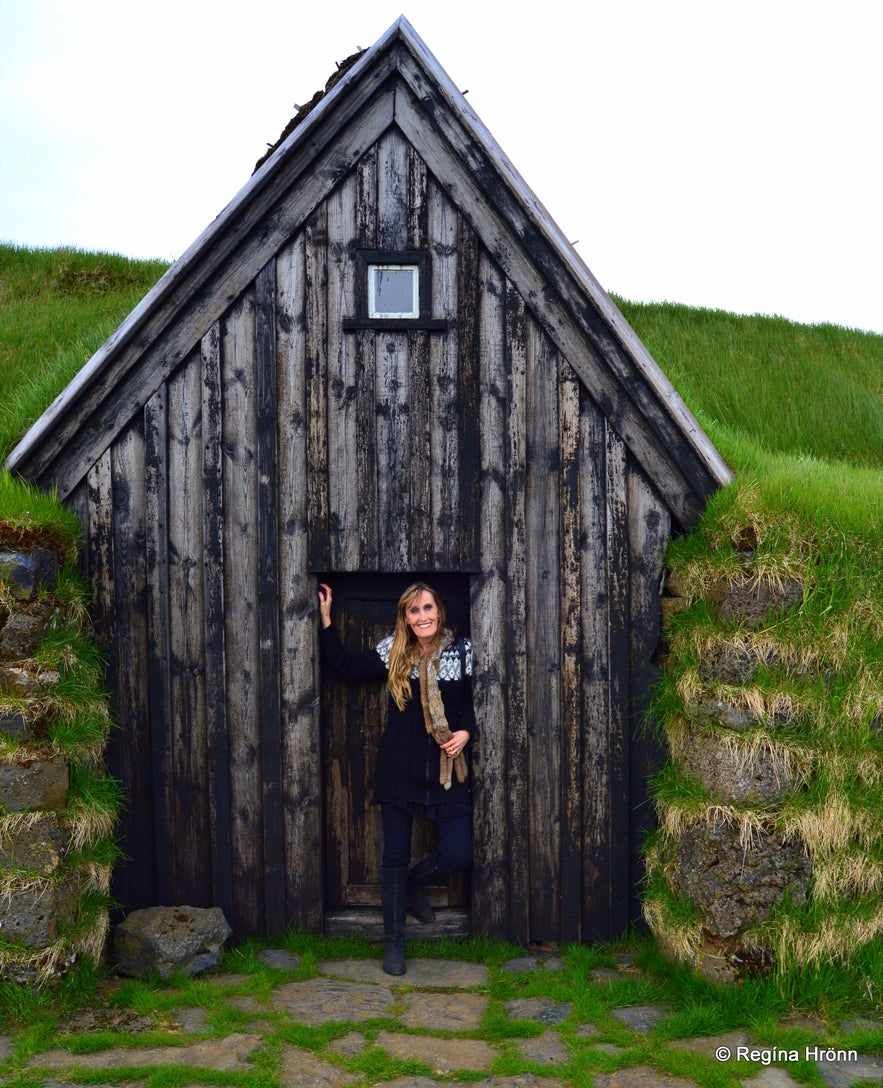
Keldur turf-farm
Jón Loftsson was one of the most powerful chieftains in Iceland in the 12th century. He also lived at the manor Oddi, which is nearby.
Jón apparently built a convent at Keldur in 1193, but it wasn't long-lived and was torn down 30 years later.
At the farm of Keldur, you will find the oldest surviving turf buildings of this kind in Iceland. The front buildings are parallel to the farmyard, a design used at Keldur since the Middle Ages.
The hall (skáli) of the turf houses is believed to be the oldest turf house hall in Iceland.
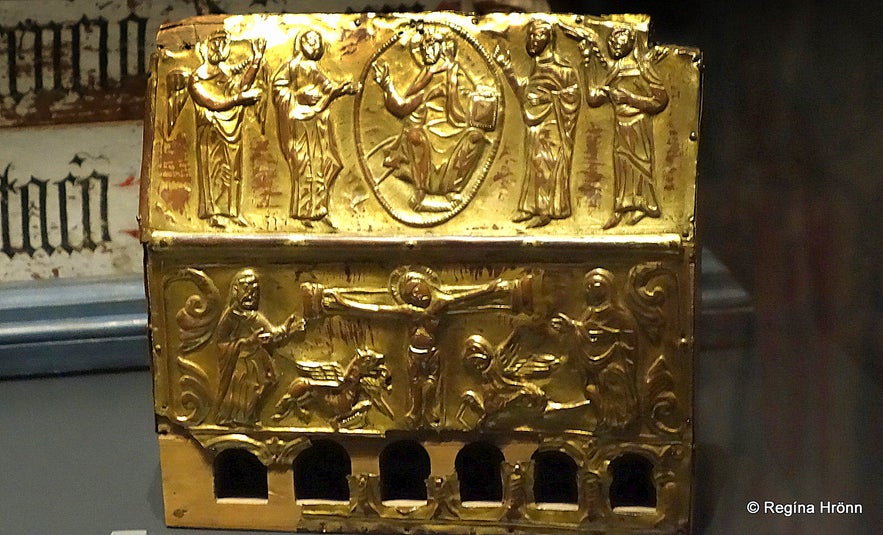
Keldnaskrínið - the Casket of Keldur
I saw this exquisite artifact at Þjóðminjasafn Íslands - Iceland's National Museum. It is called Keldnaskrínið, after the Keldnakirkja church, and is on loan from the National Museum of Denmark.
It is believed to date to the early 13th century, and it is quite possibly made in Iceland.
The turf houses at Keldur have been rebuilt many times. The present turf houses were rebuilt after the big earthquakes that shook the houses in 1896 and 1912.
The ruins of 16-18 farmsteads have been found at Keldur.
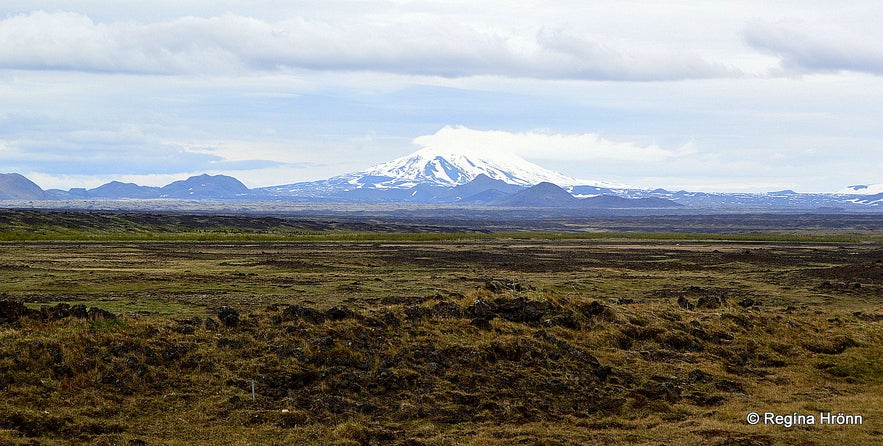
Mt. Hekla volcano
Close to Keldur is the well-known volcano Mt. Hekla, which erupts pretty frequently, and from Keldur is a beautiful view of the volcano (see my photo above).
My relative Drífa, who lives in Keldur, posts a photo of Mt. Hekla on her Facebook page every day she's there, and I love seeing how different the volcano looks from day to day.
Mt. Hekla can often be seen with a strange-looking cloud atop it, making it look like it is wearing a cap with a tassel.
Lava rocks from Hekla's eruptions were used for building the farmstead at Keldur. And driftwood was also used as a building material.
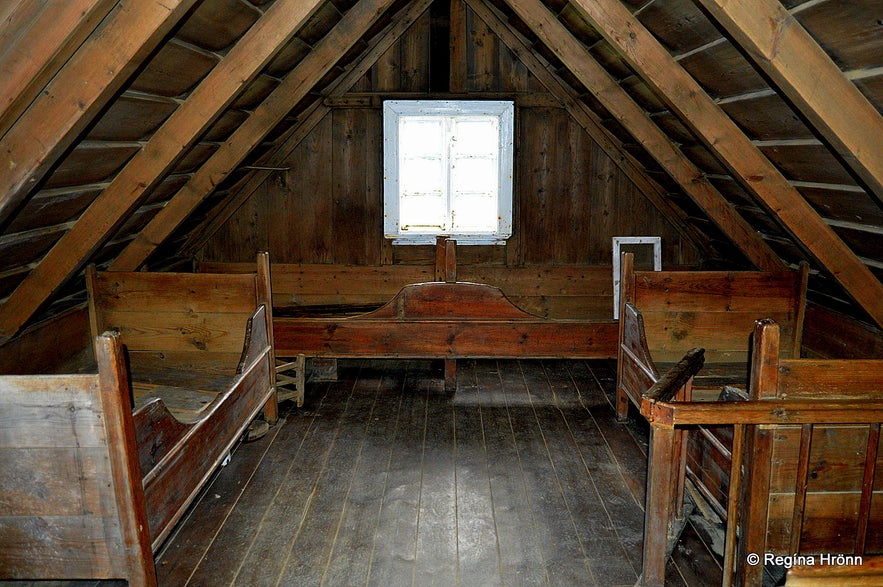
Inside the Keldur turf farm
The other buildings at Keldur, apart from the farm, include a smithy, a cattle shed, a stable, storehouses, and a stockyard.
At Keldur, you will find one of the oldest remaining structures in Iceland. An underpass leading to the creek was discovered in 1932 by coincidence when the residents were digging for a septic tank.
The underpass is believed to date back to the 11th-13th centuries, during the Viking Sturlungaöld age.
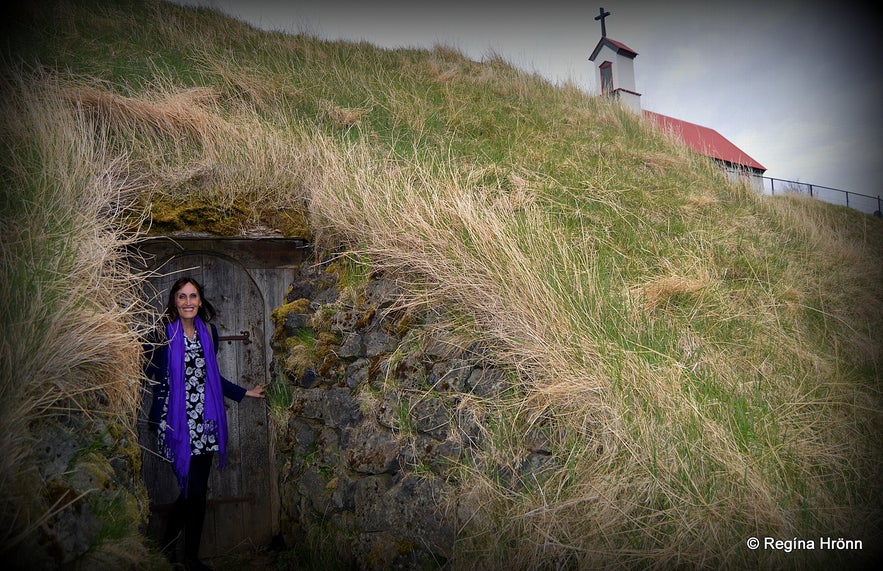
The old underpass
The 25-meter-long underpass leads from the farm to the creek and is believed to have served as an escape route during the Sturlungaöld age wars. It might also have been used to hold down the fort.
The daughter of Sighvatur Sturluson, Steinvör Sighvatsdóttir, lived at Keldur with her husband Hálfdan Sæmundsson, who was the grandson of the aforementioned Jón Loftsson.
See also my travel blog on the Viking battles during the Age of the Sturlungs:
The Bloody Viking Battles in Skagafjörður, North Iceland
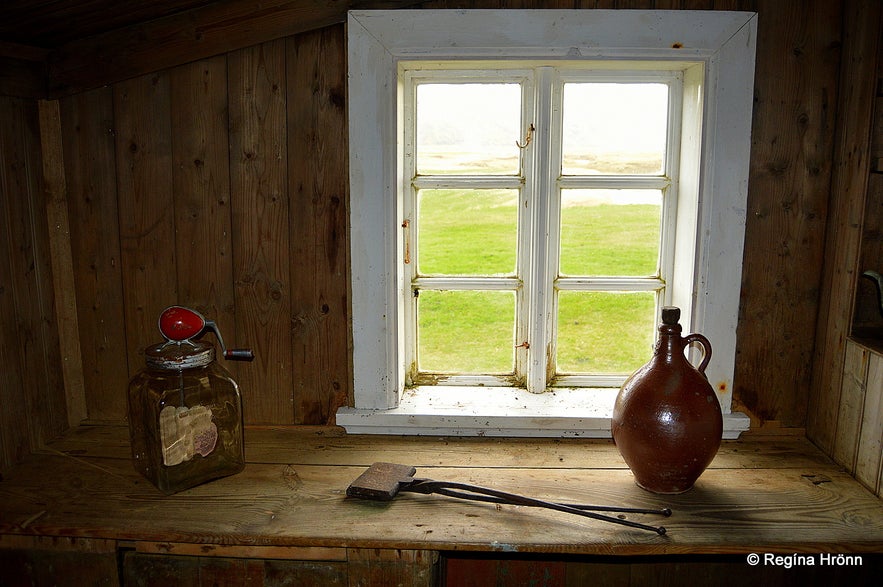
Inside the Keldur turf farm
My mother's cousin lives in Keldur, and her late husband's ancestors lived in Keldur. His grandfather was the last person to live on the old turf farm until 1946.
Drífa allowed my mother and me to have a look inside the old turf farm at Keldur and the church.
Additions were made to the turf farm in 1800, including a baðstofa (sitting room), which was rebuilt in 1891.
Since people are no longer living in the turf-houses, they get cold and damp. So a drying system is needed to keep them dry in the wintertime, but in the summertime, many of them are open to visitors.
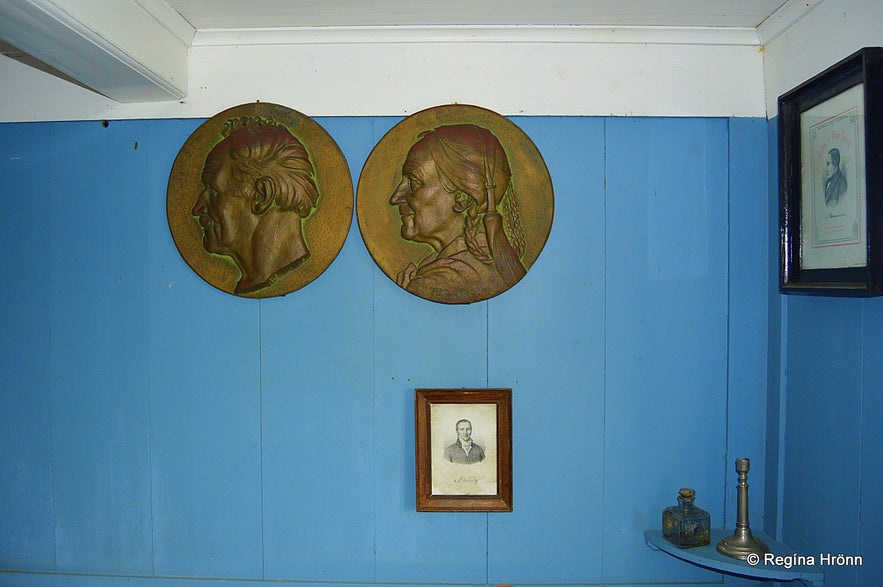
Inside the Keldur turf farm
The National Museum of Iceland bought the old turf farm in 1942, and the farmhouse is part of the National Museum Historic Buildings Collection. I plan to show you all the old houses in Iceland that belong to this collection.
I recently wrote a travel blog about all the turf houses in Iceland, which is a start, but there are several stone buildings in the collection as well, which I will show you in another travel blog.
Also, have a look at what UNESCO has to say about Keldur turf houses and all of the remaining turf houses in Iceland, for that matter.
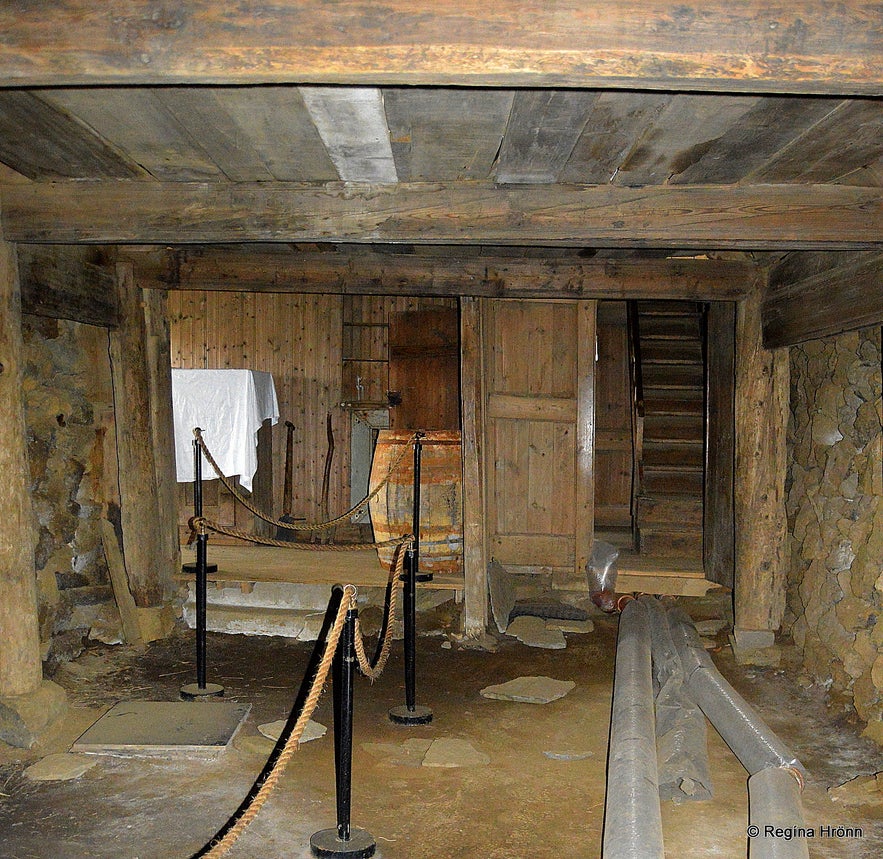
The drying system in full swing inside Keldur turf farm
It is possible to drive almost the whole way down to the turf houses at Keldur.
By the information sign, you will find a car park - leave your car there so as not to disturb the farmers, and walk for a short distance to the old farmhouses.
You will encounter a sign in Icelandic saying: "Bílastæði - Gestir sem koma til að skoða bæinn á Keldum eru beðnir að skilja bíla eftir hér á stæðinu og ganga heim að bænum. - Þjóðminjavörður" - want me to translate ;) "Parking - Visitors, who come to see the farm at Keldur, are asked to leave their car here in this car park and walk to the farm".
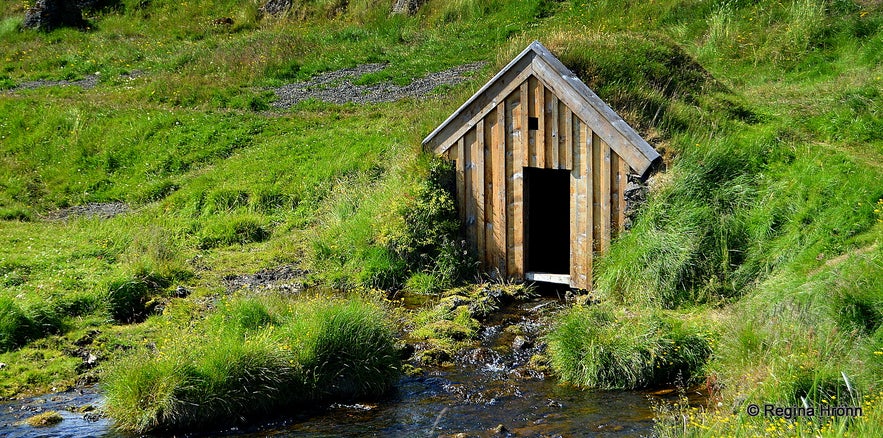
The mill-house
First, you will arrive at a cute little turf structure - it is a 120-year-old mill house, which runs by hydroelectric power in Króktúnslækur creek. There are hundreds of springs at Keldur, and the name Keldur stems from all these springs.
The clear spring water forms the two creeks, Króktúnslækur and Keldnalækur, which, in turn, flow into the river Eystri-Rangá. I have seen the water described as the clearest and coldest in Iceland, coming from the Heklauhraun lava field.
Below, you will see the old lamb houses (lambhús) at Framtún, Keldur. Most likely, the first farm building at Keldur stood here, and a large (30 m) "skáli", an old farm from the Viking age, lies beneath them; it might even be the skáli of Ingjaldur Höskuldsson, erected before the year 1000.
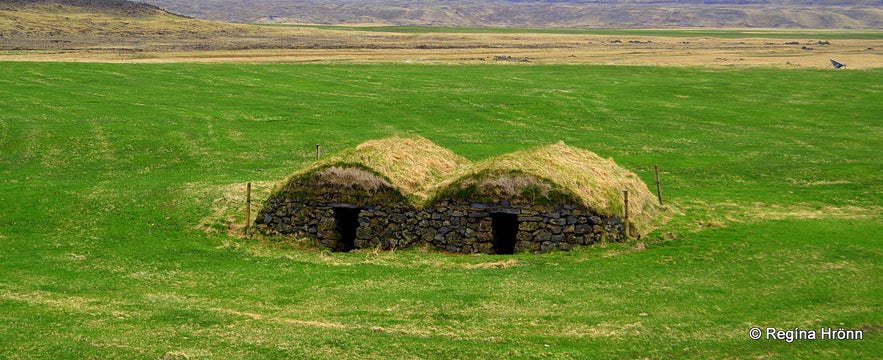
Lamb-houses at Keldur
The turf house is open to visitors from the 1st of June until the 31st of August. There is an entrance fee for adults (ISK 2,500, last time I checked), but it is free for children under 18.
In other seasons, you can have a look at the turf-house and take some photos from the outside.
But be very respectful and don't visit other buildings on the adjacent farm, Keldur, which is the farmers' home and workplace.
My relative at Keldur, Drífa Hjartardóttir, has told me that some visitors have even opened and entered the farm's barn, which is strictly forbidden due to obvious reasons. So let's always be respectful and keep a low profile when visiting the turf farm at Keldur.
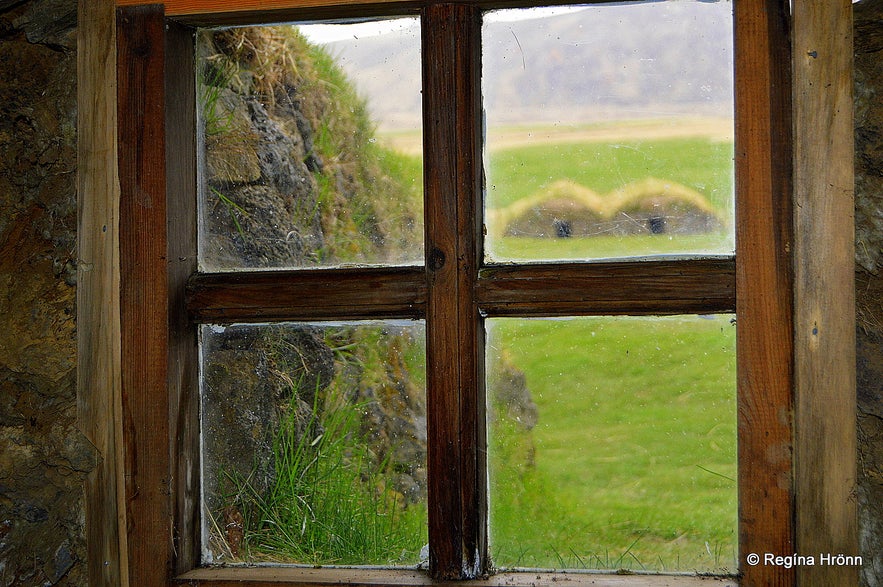
Looking out from the window of the Keldur turf farm
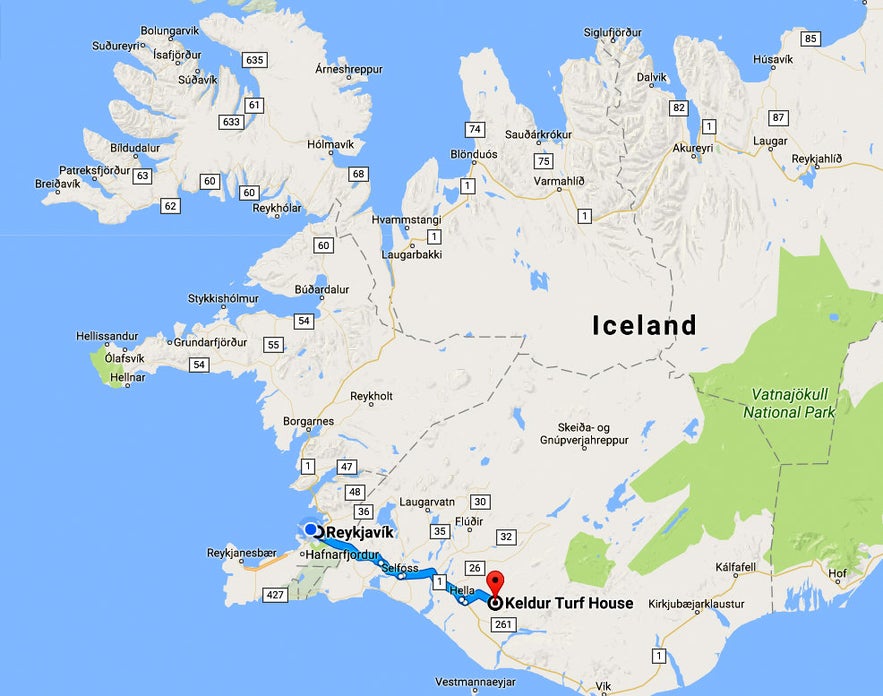
Keldur is located in South Iceland, between the villages of Hella and Hvolsvöllur, and is well worth the detour from the Ring Road 1.
After passing the village Hella, continue on Ring Road 1, then turn onto Road 264. Part of Road 264 is gravel, but it is suitable for 2WD cars. From Hella, the distance is 19 km.
Here is the location of Keldur on the map. GPS: 63°49'17.9"N 20°04'25.4"W
The Vestmannaeyjar islands are also nearby, so why not pop over to visit the volcanic islands that erupted in 1973?
Other travel blogs I have written about turf houses in Iceland are here if you are interested in seeing what they look like:
Almost all of the remaining turf houses in Iceland
Have a lovely time at Keldur :)

Hi, my name is Regína and I was born and raised here in Iceland. Since 2013 I have written 320 travel blogs about various interesting places to visit in Iceland. I hope you enjoy reading my travel-blog :)