In this travel blog, I am going to show you the turf farm at Íslenski bærinn at Austur-Meðalholt, Flói, South Iceland. Íslenski bærinn actually means the Icelandic turf farm.
Almost all of the remaining turf houses and turf churches in Iceland belong to the Historic Buildings Collection of Þjóðminjasafn Íslands - the National Museum of Iceland.
But not the turf farm of Austur-Meðalholt, it is in the possession of the farmer and artist Hannes Lárusson, who maintains the turf farm himself.
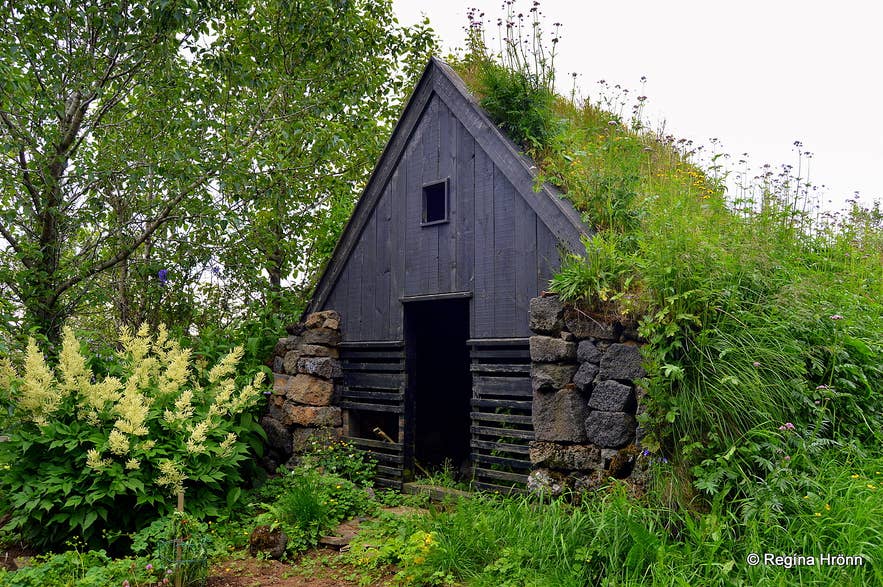
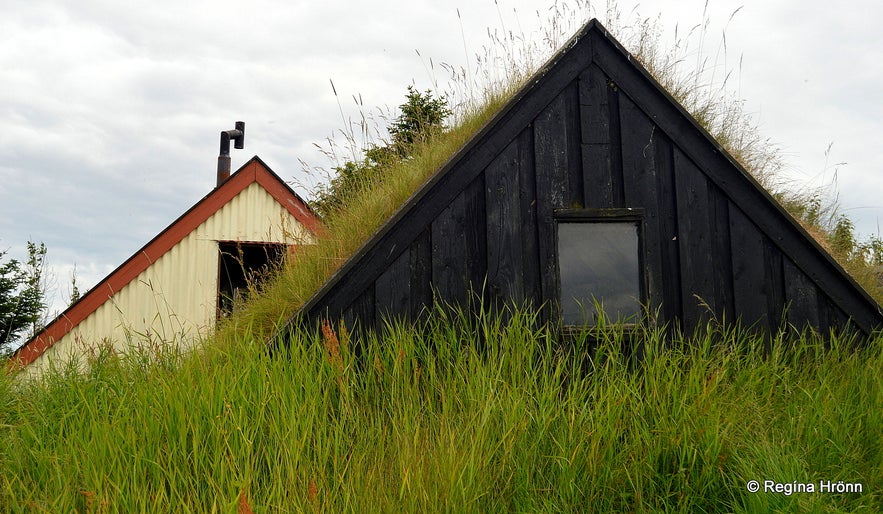
Top photo: an outhouse at Íslenski bærinn
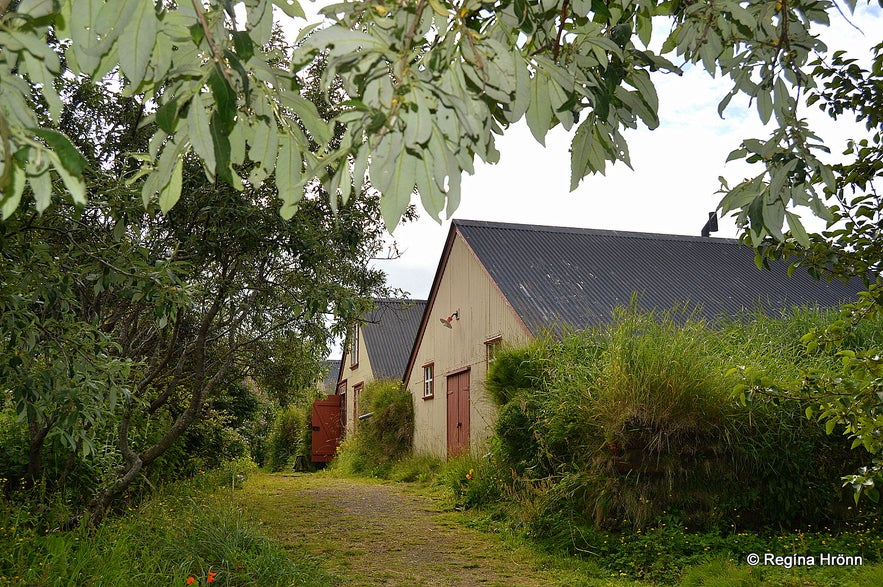
Íslenski bærinn Turf House
The turf houses at Austur-Meðalholt, which date back to the 19th century, are hidden away from sight in a beautiful grove just a short walk from the new building housing the photo exhibition.
The main turf farm consists of 4 houses, a barn, and stables - all in all, eight buildings.
Hannes will walk you to the turf farm and show you inside and explain the ways of living in the olden days - or maybe not so long ago, as Hannes himself was raised on this turf farm.
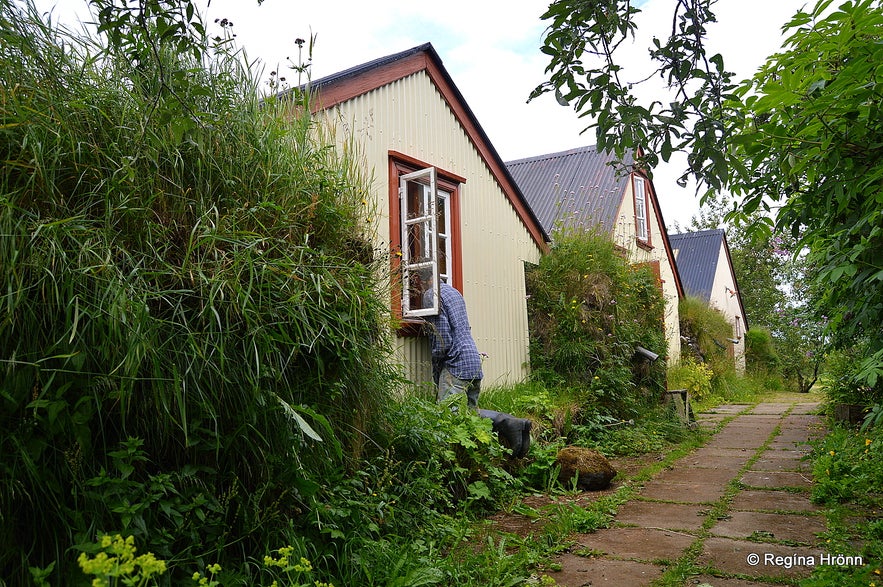
Íslenski bærinn Turf House
There is also a brilliant photo exhibition at Íslenski bærinn, with old photos, drawings, and models of old turf houses around Iceland.
On the west side of the turf farm, there is a potato and cabbage plot. As the trees grow so close to the farm, I could only take photos from the side, not from the front of this lovely turf farm.
In my photo above, you can see Hannes by the window talking to other visitors while I had a look around the turf farm.
The walls of the turf farm are made with turf and rocks, and the gables of the farm are made from timber.
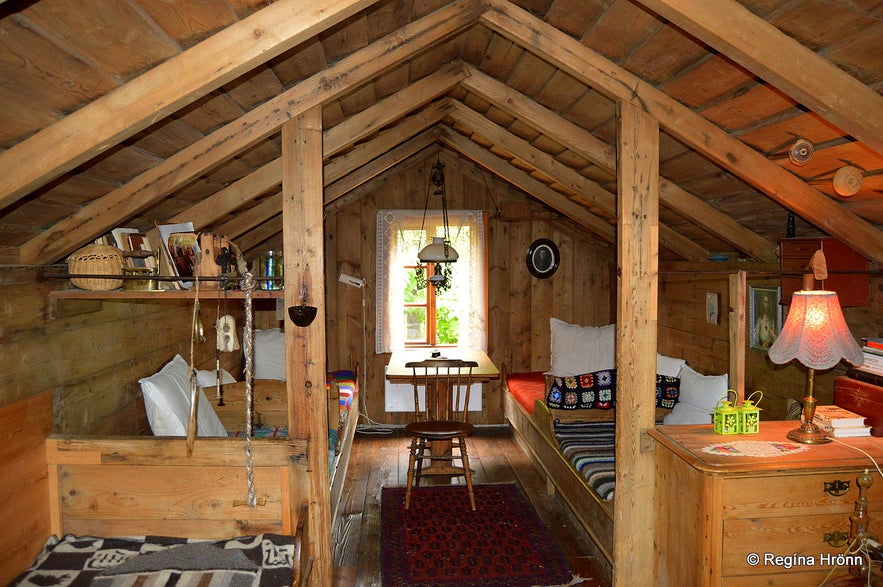
Inside Íslenski bærinn turf house
The walls and roof are clad with corrugated iron, which is popular here in Iceland due to the wet and windy climate. You will see many houses clad in corrugated iron in the old centre of Reykjavík.
Inside the turf farm, you will find the baðstofa or main living room, where people would eat, work, and sleep. In almost all the turf houses, the baðstofa was panelled, so on the inside, it looked like a timber house.
When the Austur-Meðalholt turf farm was rebuilt, the entire baðstofa was disassembled, and all of the pieces of wood were washed separately with green soap before being put in their proper place again.
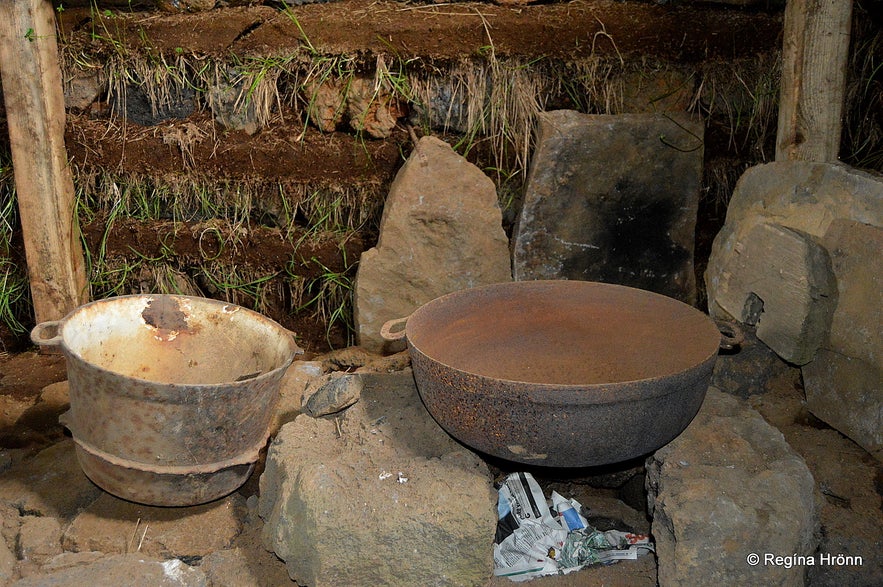
The old kitchen of Íslenski bærinn Turf House
Inside the farm, you will find a hearth kitchen with old pots and pans. And a lovely, furnished blue room.
There has been a farm at Austur-Meðalholt for at least 400 years, but the current farm dates back to 1895. In 1896, there was a major earthquake in South Iceland, and periodically, there is a major earthquake in the region called Suðurlandsskjálftinn, or the Southern region earthquake; the last one occurred in 2008.
The movements of the North American and Eurasian tectonic plates cause these earthquakes.
The 1896 earthquake caused widespread devastation, and several turf houses in this area collapsed. Fortunately, the turf farm at Austur-Meðalholt stood upright, probably due to it being newly built.
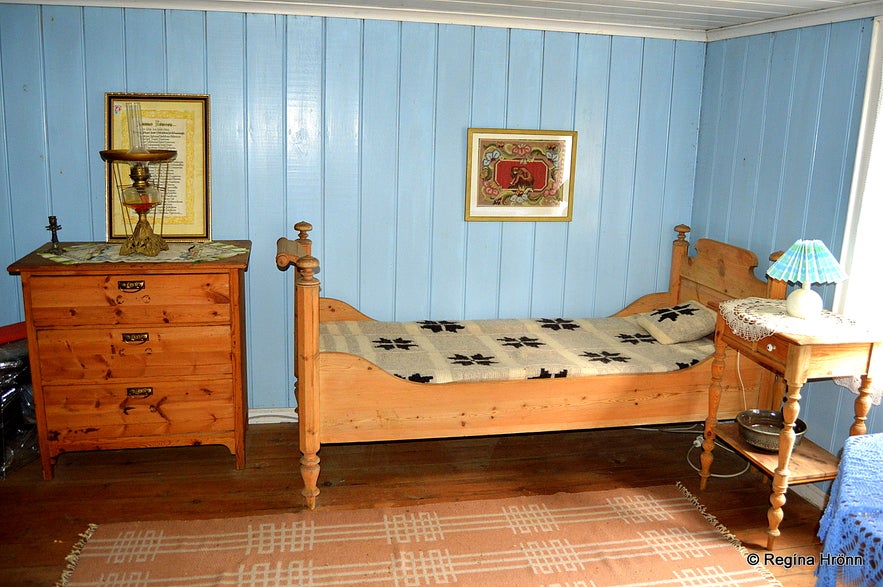
Inside Íslenski bærinn turf house
The turf farm at Austur-Meðalholt is a typical "sunnlenskur" type of farm. Adjacent to the turf farm is a hovel for drying food, a barn, and a storehouse.
People lived on this farm for the next 70 years or until 1965, when it was abandoned. It stood abandoned for 20 years and was slowly mouldering.
In 1985, the farmers at Austur-Meðalholt started repairing and renovating the turf farm with the help of professionals in this field. And other people who wanted to learn how to build a turf farm.
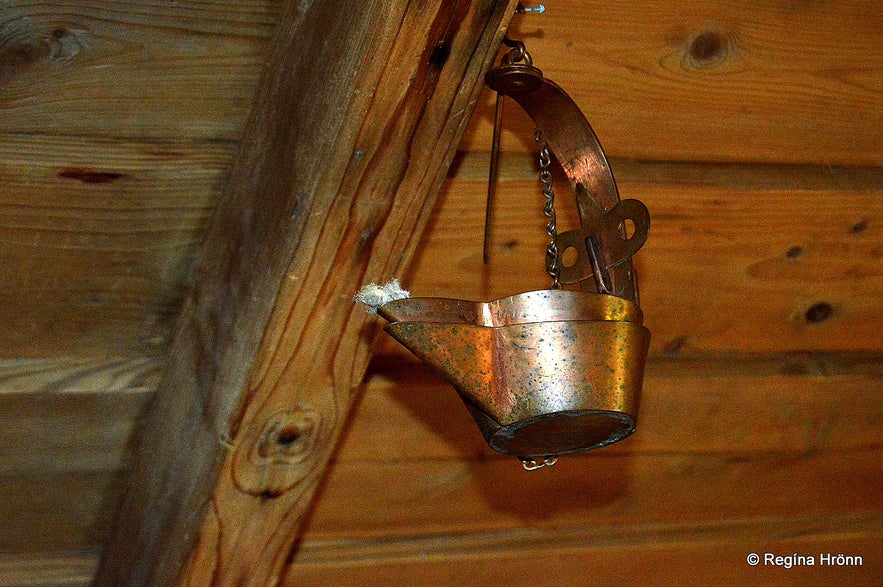
Inside Íslenski bærinn turf house
Hannes taught courses on traditional turf-building techniques and sustainable living and has now trained hundreds of people how to build a turf farm.
Hannes, who was born in 1955, grew up on his family's turf farm until the age of 9.
Hannes must be one of the youngest individuals with memories of living in a turf house.
Together with his mother Ásdís, who also had a passion for rebuilding and preserving the turf farm, and his wife, Kristín, Hannes has done an excellent job.
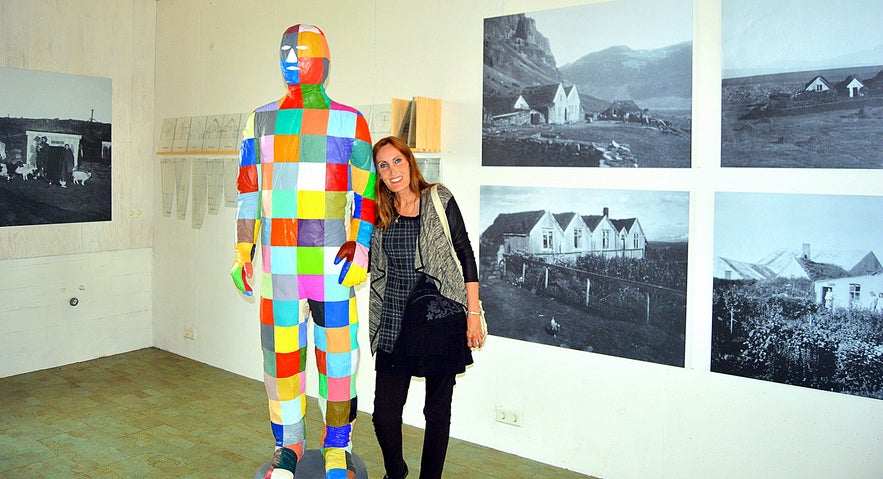
The photo collection
At the newly constructed sustainable museum building, there is also a great photo exhibition on old turf houses, which is not to be missed.
Here you can learn all about this old Icelandic architectural heritage.
A whole wall is covered with a photo collection of old photos of the Icelandic turf houses, most of which have disappeared.
Also, notice the floor of the museum - it is recycled from marble tabletops, which were to be thrown out, and now creates this most beautiful mosaic floor.
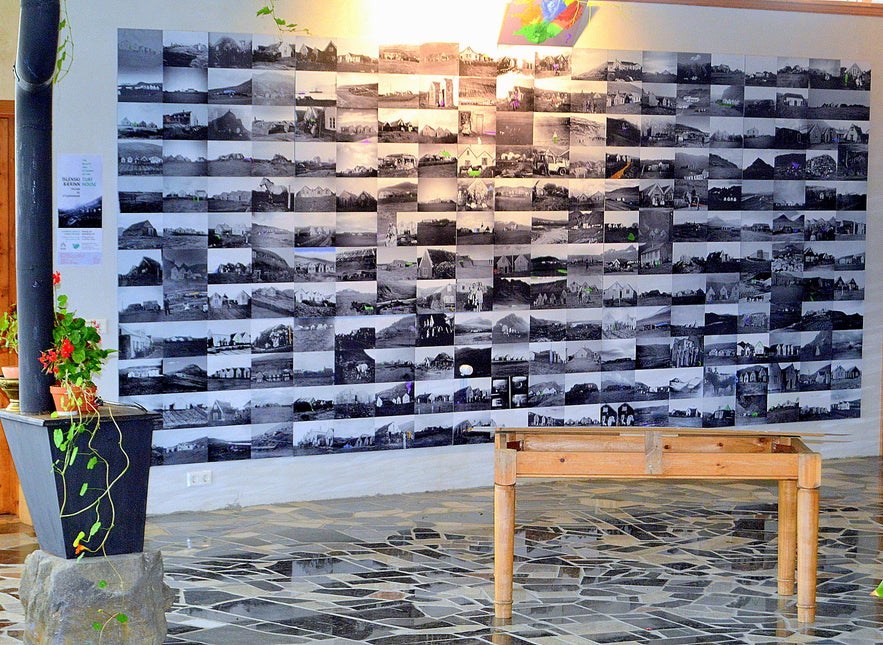
The photo collection
I spent way too much time looking in awe at all these old photos of long-lost turf houses. It made me think of the old days when the major part of the Icelandic nation lived in turf houses, both rich and poor. And how this architectural heritage is disappearing.
I am very grateful to the visionaries who understood how important it was to preserve this architectural and national heritage.
The photo below, which is one of the photos at the exhibition, shows what Núpsstaður turf farm looked like in 1918. Notice also the cute little turf church to the right of the turf farm :)
You can see what it looks like now in my travel blog about Núpsstaður.
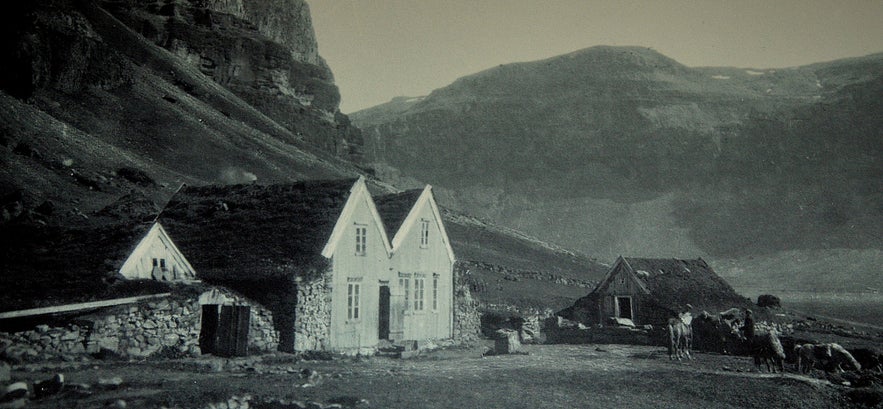
Núpsstaður turf farm
The turf houses and turf churches left in Iceland have been preserved and maintained by Þjóðminjasafn Íslands (the National Museum of Iceland), but a few entrepreneurs, like Hannes, have maintained other turf houses or built new ones.
Hannes's efforts in preserving this old turf farm should be applauded, as we don't want this part of our historical heritage to disappear.
When Icelanders moved from the turf houses into more modern dwellings, the turf houses were frowned upon.
You can see Hannes in the photo below. In the background is the beautiful, sustainable building housing the photo exhibition.
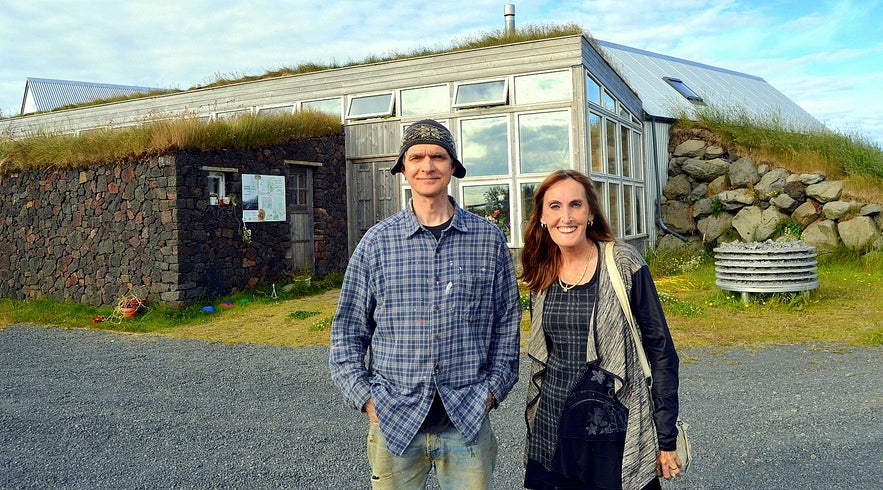
With Hannes at Íslenski bærinn
You can see the opening hours on the Íslenski bærinn website. It is well worth the detour to pop down to Íslenski torfbærinn in the Flói area of South Iceland.
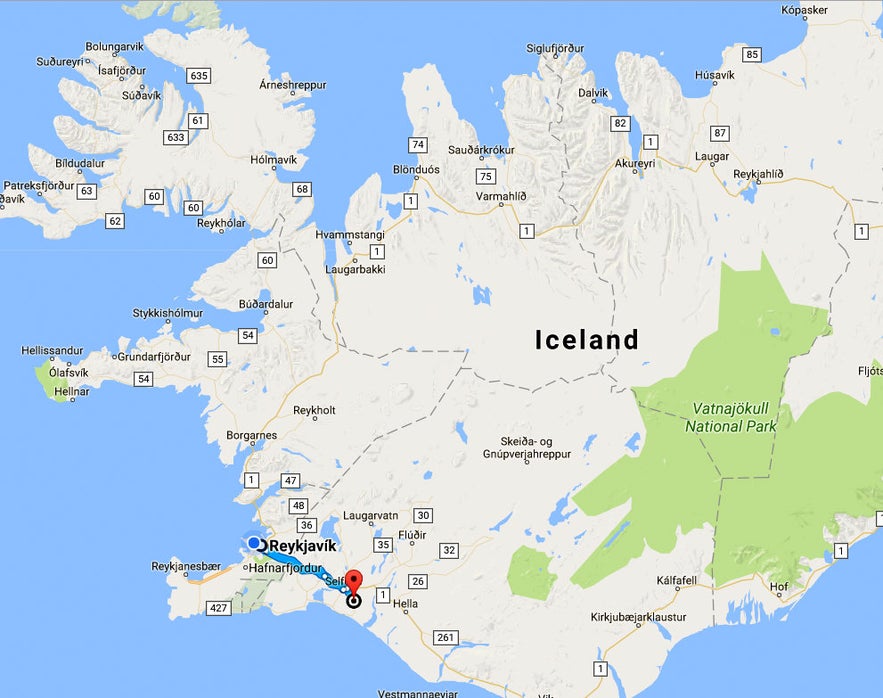
It is located just 60 km from Reykjavík, east of Selfoss on road 33.
To visit this area, you can rent a car in Reykjavík and get there in an hour or so.
This area of Iceland is beautiful, and we often drive there from Reykjavík on a day trip.
I would recommend driving further south on Road 33 and visiting the museum village of Stokkseyri.
I have written another travel blog about Stokkseyri, where my sister and my uncle live:
In Stokkseyri village, you will find the Wildlife Museum, with its myriad of animals and a very knowledgeable proprietor, who happens to be my brother-in-law :)
I have written about all of the remaining turf houses in Iceland in other travel blogs, seeing that they are very dear to me:
A list of the beautiful Icelandic turf houses I have visited on my travels in Iceland
Have a lovely time in South Iceland :)

Hi, my name is Regína Hrönn, and I was born and raised here in Iceland.