On our second day on the Melrakkaslétta peninsula in North-East Iceland, we headed for Hraunhafnartangi spit, which lies at 66° 32′ 9.6″ N, 16° 1′ 31.08″ W, making it one of the northernmost points on the mainland of Iceland, together with Rifstangi, which is also close by here on Melrakkaslétta.
In July 2016, it was confirmed by Landmælingar Íslands - the National Land Survey of Iceland that Rifstangi is located 68 metres further north than Hraunhafnartangi.
Top photo: on the way to Hraunhafnartangi
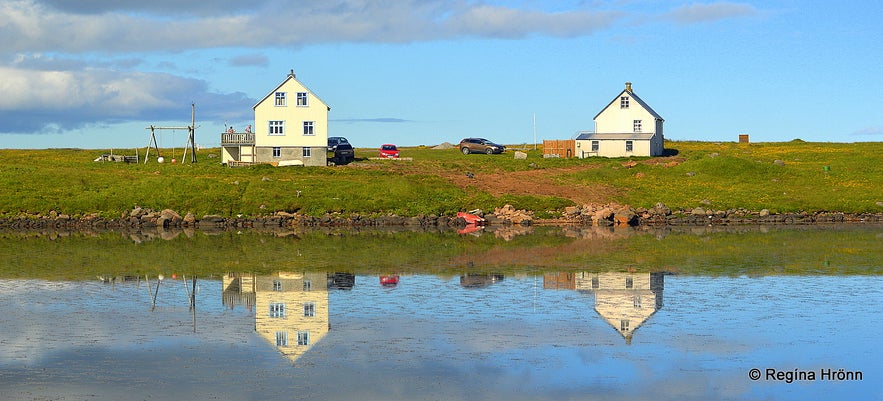
It is so peaceful and serene in this part of Iceland
Only the island of Grímsey is located a bit further north.
This was the closest we could get to the Arctic Circle on the mainland (or so we thought back in 2014 when we were on our honeymoon in this area), but it lies some 3 km north of Hraunhafnartangi spit in the middle of the sea.
Hraunhafnartangi spit is located only 10 km from Raufarhöfn village, where we stayed for 2 nights at Guesthouse Hreiðrið - Guesthouse Nest.
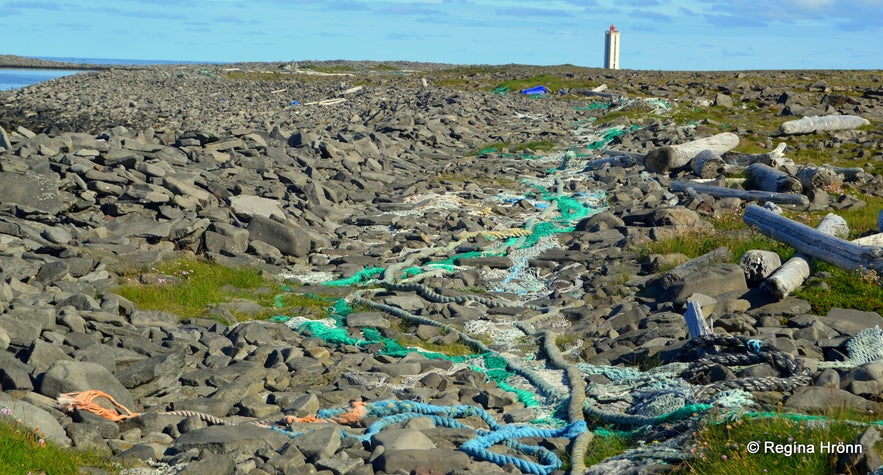
Hiking to Hraunhafnartangi
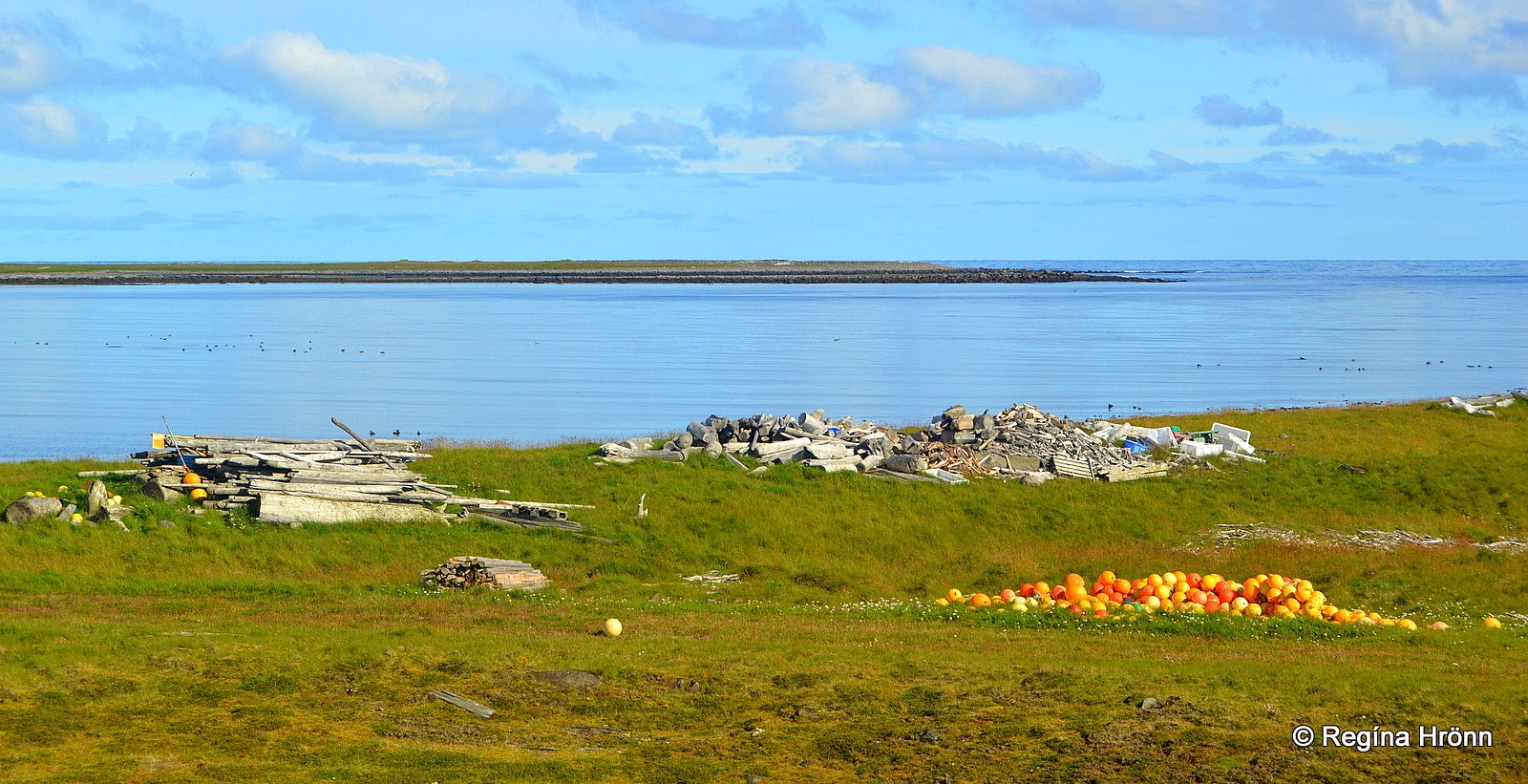
We drove along the beautiful seashore in sunny, still weather, enjoying the sight of the blue North Atlantic Ocean.
Everywhere, driftwood covered the seashore.
For the longest time, nobody was around, and we felt like we were alone in the world. It was so serene, and I felt ever so peaceful.
When we reached Hraunhafnartangi spit, we saw a couple of people who had camped here for the night. But everybody was quiet and taking in the peacefulness of this beautiful place.
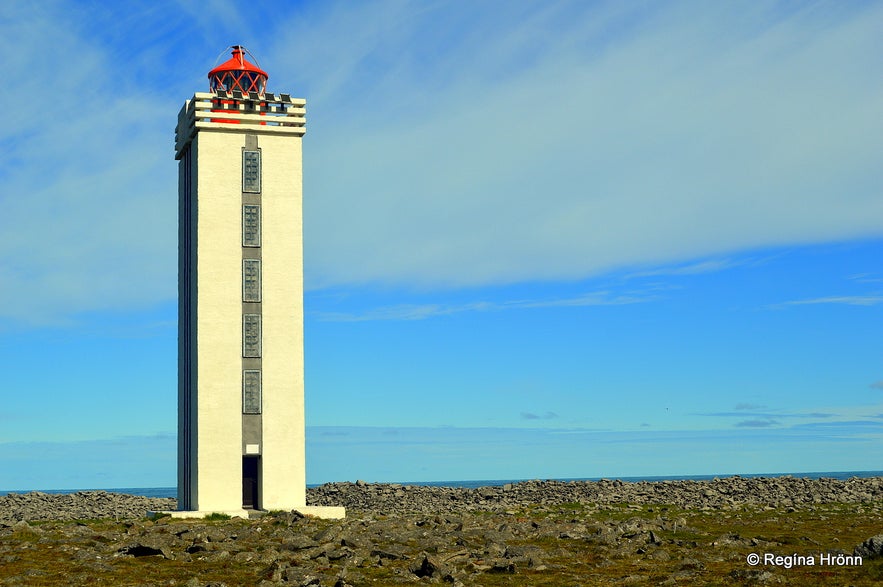
Hraunhafnartangi lighthouse
Our goal was to walk to the Hraunhafnartangi lighthouse. And to put up an imaginary Arctic circle and step over it.
The walk to Hraunhafnartangi lighthouse from the parking lot took half an hour along the rocky seashore, which was covered in driftwood and pieces of a net that had washed ashore.
Hraunhafnartangi lighthouse is a beautiful 19-meter-tall, square lighthouse.
It was moved in 1945 from the other northernmost part of the mainland of Iceland, the Rifstangi spit, to the Hraunhafnartangi spit.
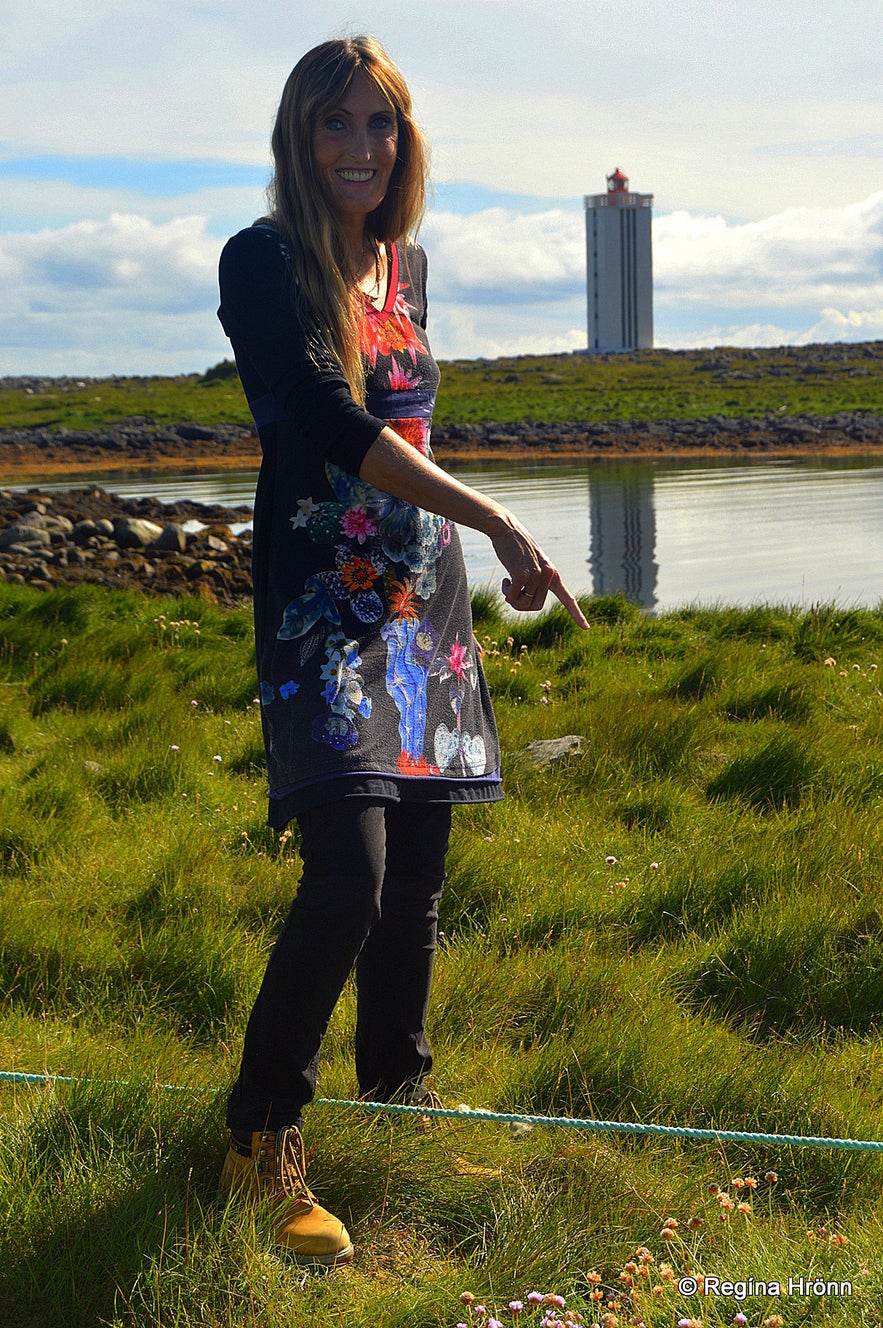
Stepping over an imaginary Arctic Circle
We found a rope on the seashore and made our own Arctic Circle on the northernmost parts of Hraunhafnartangi spit we could reach, and stepped over it to symbolize our accomplishment of standing so close to the Arctic Circle, which is located some 3 km further north.
The next morning, we received a certificate from Hotel Norðurljós in the village of Raufarhöfn, stating that we had gone this far north. They offered these certificates free of charge. I don't know if they still do it, though.
We brought a photo of us on Hraunhafnartangi spit and showed it to them. I think it is fun having a certificate of this kind :)
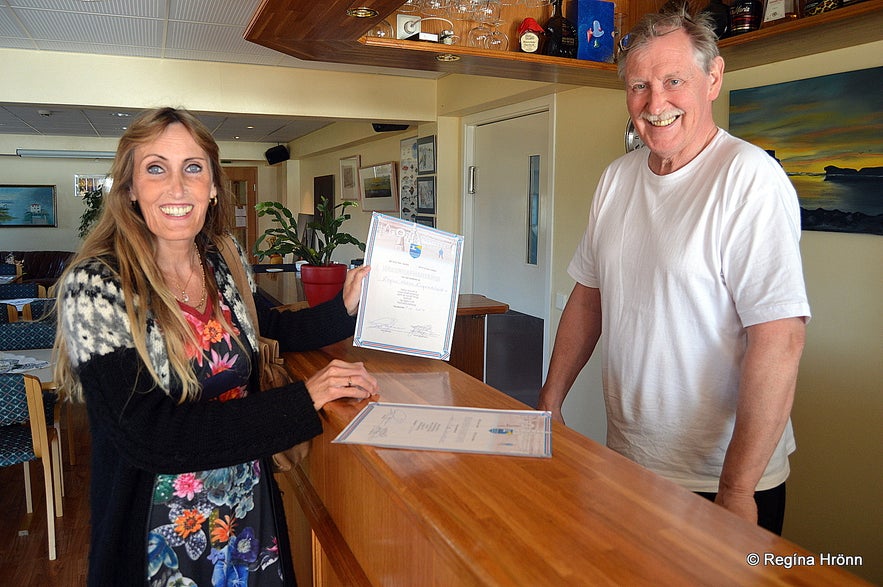
Receiving a certificate at Hotel Norðurljós
Sadly, the hotel manager, Erlingur Thoroddsen, passed away in December 2015. He was the instigator of the Arctic Henge above Raufarhöfn village, which has now become the biggest tourist attraction on the Melrakkaslétta plain.
See also:
Raufarhöfn Village and the Arctic Henge in North-East Iceland
Þorgeirsdys Burial Mound
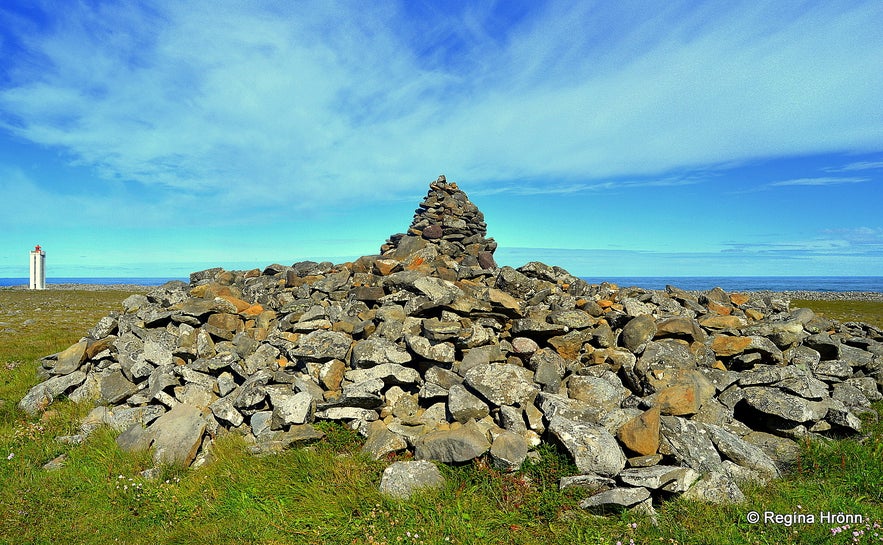
Þorgeirsdys
We spent a couple of hours at Hraunhafnartangi as it is such a peaceful place, and I didn't want to leave. But we had one more place to visit here before we continued on our journey on the Melrakkaslétta plain.
Close to the lighthouse is an ancient burial mound, Þorgeirsdys - the Burial Mound of Þorgeir, a Viking Age warrior.
Þorgeirsdys Burial Mound is mentioned in the Saga of Sworn-Brothers (Fóstbræðrasaga), where one can read about the sleighing of Þorgeir Hávarsson. He defended himself bravely and killed 14 of his enemies.
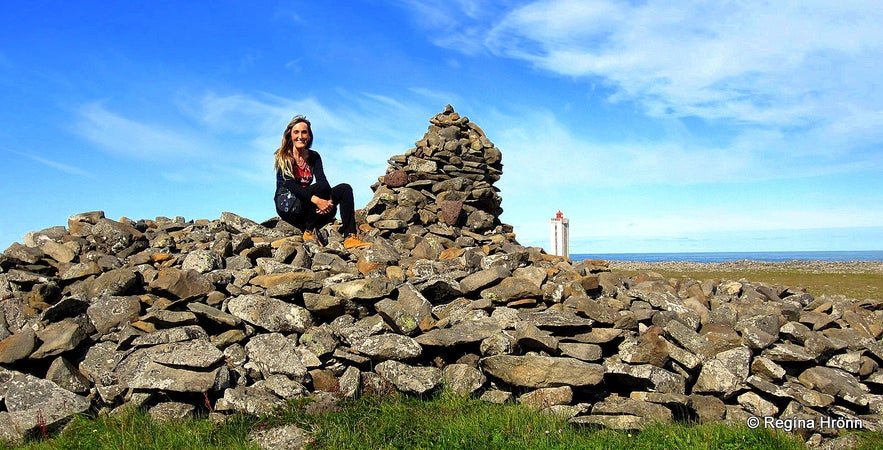
Þorgeirsdys burial mound
The burial mound (a huge heap of stones) is said to be the burial mound of Þorgeir, i.e., his torso is buried here, as he was beheaded and his enemy carried with him his head to Eyjafjörður fjord as proof of his victory over Þorgeir.
They made a game of putting the head on top of tussocks and mocked it. But when they did so in Eyjafjörður, the head seemed so frightful to them; with the eyes wide open and the mouth open, with the tongue falling out.
This sight frightened them, so they buried the head in Eyjafjörður (as described in the 20th chapter of the Saga of Sworn-Brothers).
The other victims of this gruesome battle are also believed to be buried in this burial mound.
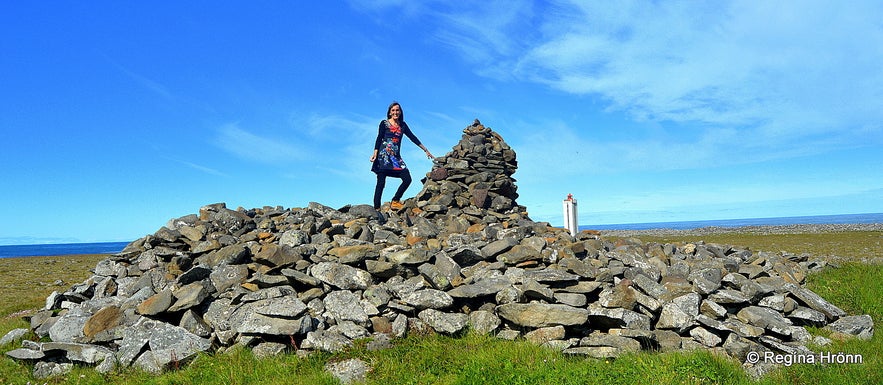
Þorgeirsdys burial mound
Maybe I should not have walked on the burial mound, but I wanted to show you how big it is. The burial mound has grown in size because it is an ancient custom to greet the "dweller of the burial mound" by throwing a stone onto it.
It is also said that people should walk clockwise around the burial mound, contemplate, and wish others well.
It is incredible, really, to find such an old burial mound. It is not marked, but there is a small information sign by the parking lot where one can read about it.
I have written another travel blog about Viking Burial Mounds and Pagan Graves I have visited on my Travels in Iceland.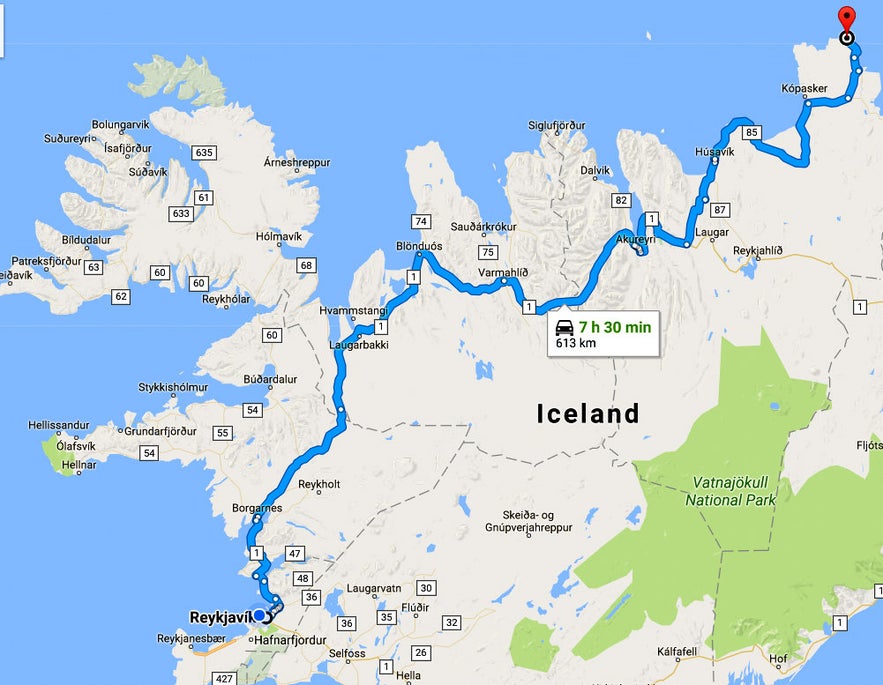
After spending a couple of hours at Hraunhafnartangi, we headed west on Melrakkaslétta towards Rauðinúpur cape, where there are two magnificent sea stacks and a crater.
I will tell you more about that beautiful place in my next travel blog:
Rauðinúpur Cape and the 2 Sea Stacks in North-East Iceland
Here you can see the location of the Hraunhafnartangi cape; it is some 613 km from Reykjavík, the capital of Iceland.
You can rent a car in Reykjavík and drive up to Melrakkaslétta in a couple of days.
Have a lovely time at Hraunhafnartangi and on the Melrakkaslétta plain :)

Hi, my name is Regína Hrönn, and I was born and raised here in Iceland.