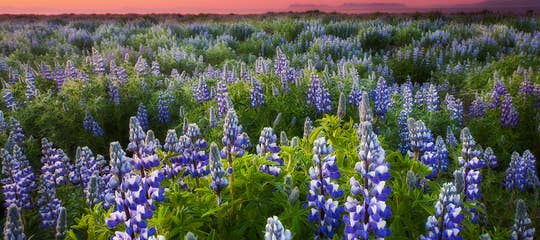
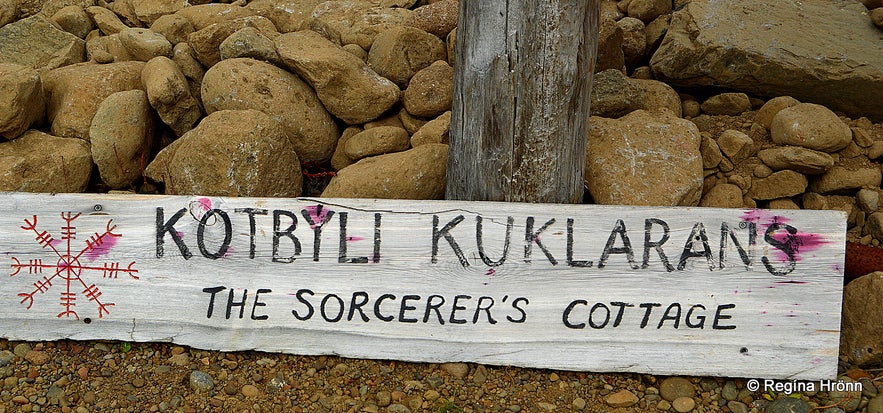
In the remote Strandir area in the Westfjords Region of Iceland, the mystical Kotbýli kuklarans - the Sorcerer's Cottage awaits you.
It represents both the habitation and living conditions of a sorcerer, but also the normal living conditions of tenant farmers in the 17th century.
In my travel blog about the Museum of Icelandic Witchcraft and Sorcery in Hólmavík village, I told you about my visit to the sorcery museum.
In this travel blog, I am going to tell you about the Sorcerer's Cottage at Klúka in Bjarnarfjörður at Strandir - the home of the Sorcerer himself...
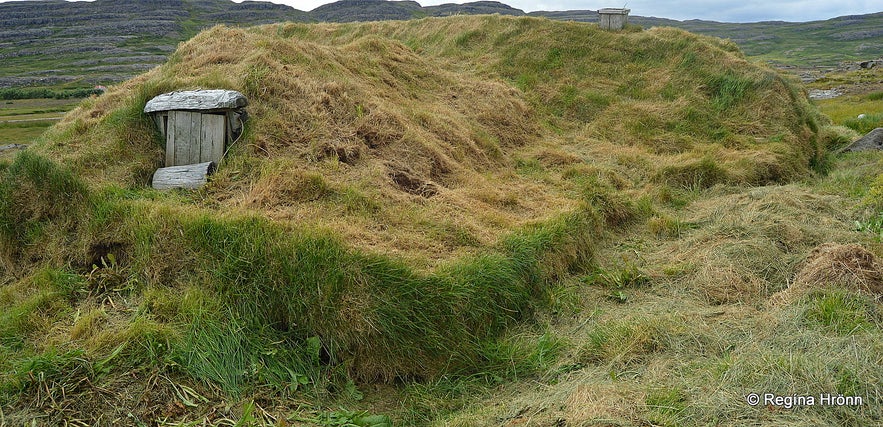
Kotbýli kuklarans - the Sorcerer's Cottage
Kotbýli kuklarans - the Sorcerer's Cottage was first opened on the 23rd of July 2005 and is the second exhibition of the Galdrasýning á Ströndum, but the first exhibition, the Museum of Icelandic Witchcraft and Sorcery, opened in the year 2000 in Hólmavík.
The Sorcerer's Cottage consists of 3 connected turf houses made of turf (sod), rocks, and driftwood according to age-old methods.
Driftwood is one of the primary resources in this remote area of the Westfjords Region and was used here as a building material for the turf houses to a much greater extent than in other parts of Iceland.
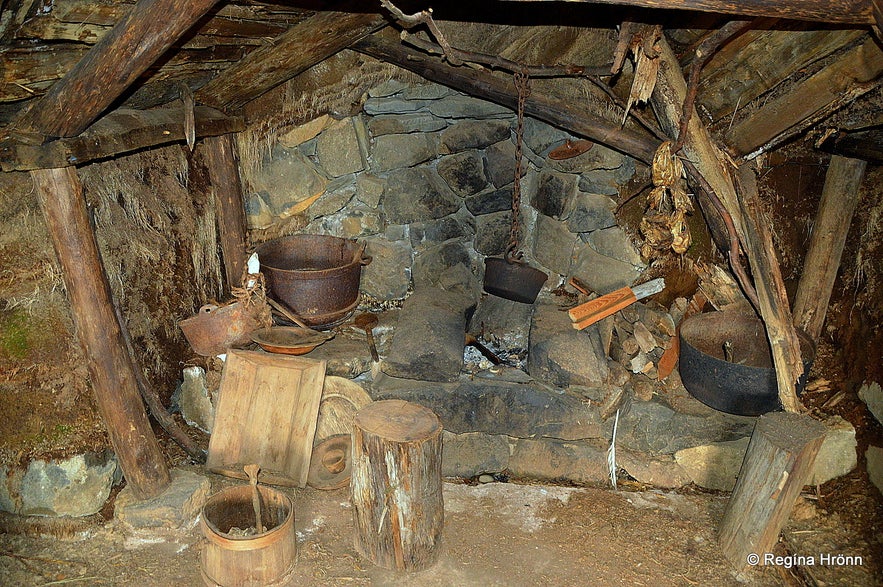
Kotbýli kuklarans - the Sorcerer's Cottage
A plea was made to Icelanders for things to use in the Sorcerer's Cottage, e.g., hides, lambskin, scythe handles, rakes, and all kinds of tools used in the turf houses in the olden times.
Icelanders lived in turf houses from the settlement of Iceland in ca 874, and the last inhabitants of turf houses here in Iceland moved out in ca 1966.
We have only got a few turf houses left in Iceland, mainly the larger turf houses from the 19th century, which were much bigger and bounteous than the turf houses of the commoners.
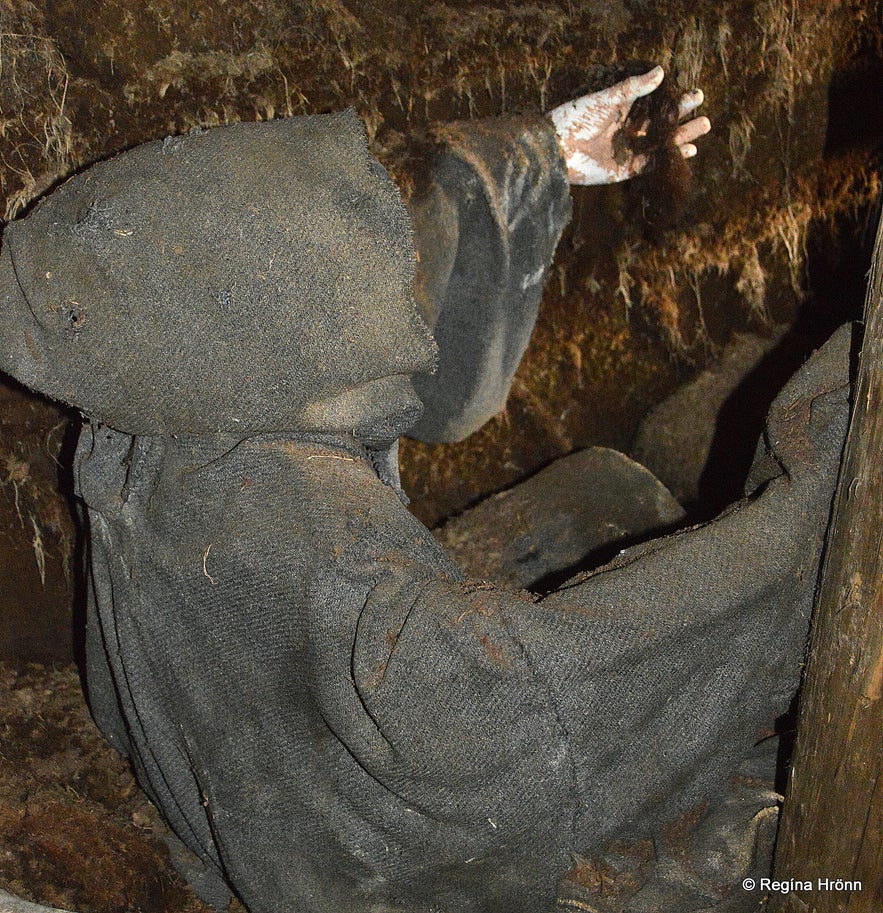
Kotbýli kuklarans - the Sorcerer's Cottage
At the Sorcerer's Cottage, you will get an insight into the mindset of the Icelandic commoners during the witch hunt in Iceland, and learn about the methods they used to try to lift the burdens and struggles of their daily life.
The kind of magic they used was harmless and could have been something like using simple magic for cow milk improvement, or for making your grass grow better, or your tools more efficient - something to make your daily life easier on this harsh island.
I don't blame them; living in Iceland in the 17th century and living in Iceland in the 21st century with all the modern comforts is not quite the same thing.
We, Icelanders, are still a superstitious lot, at least I am.
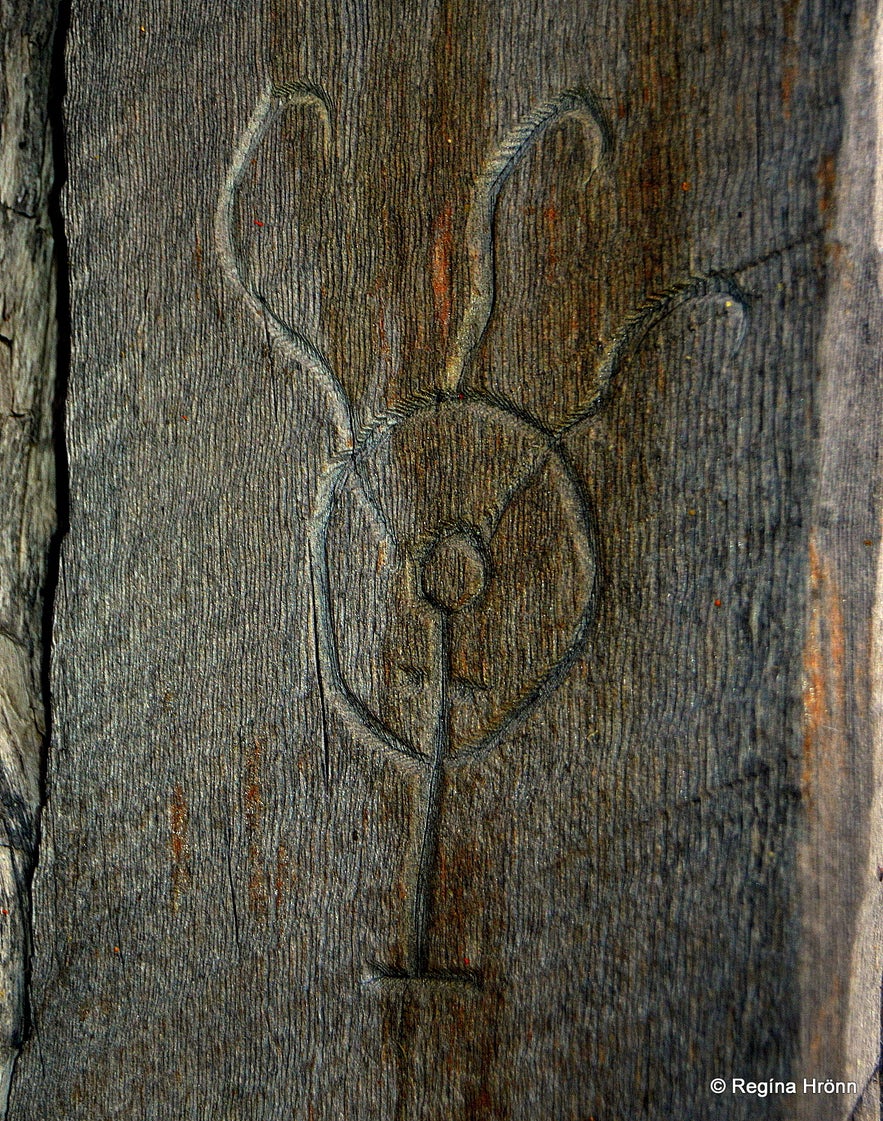
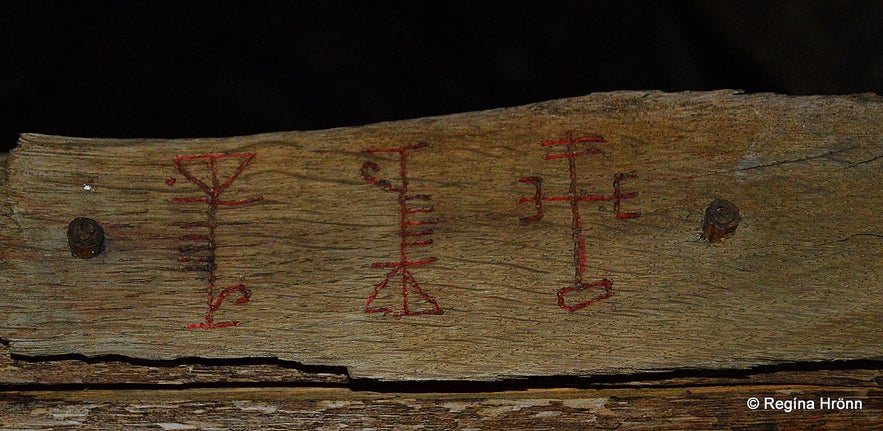
Inside the Sorcerer's Cottage, you will notice many strange signs in several places, e.g., on the wood of the bed, as you can see in my photos below.
These strange signs are called galdrastafir - magical staves or magical signs and were used by some common Icelanders during the witch hunt, for protection against evil spirits, fox-bites, etc.
Some of the signs were used to heal illnesses or tame sheep.
These signs may be linked to the old knowledge of Viking runes and religion, mixed with Catholic superstition, and it seems to have been tempting to use these magical signs when faced with difficulties, even though these poor people could have faced prosecution for sorcery.
Kotbýli kuklarans - the Sorcerer's Cottage
In 1/3 of the witchcraft accusations here in Iceland, such magic signs or grimoires (magic books) were mentioned.
The emblem of the Strandir area in the Westfjords Region is Ægishjálmur - the Helmet of Awe - due to its connection to sorcerers. I haven't got a photo of that sign, which I think is the most magnificent of all the signs I have seen, but if you click on the link above, you will see what it looks like.
Svanur at Svanshóll
Kotbýli kuklarans - the Sorcerer's Cottage
One of the most powerful sorcerers of Iceland lived here at Strandir, Svanur á Svanshóli. Svanur is mentioned in chapters 9-12 in Njálssaga - the Saga of Njáll.
Svanur was the son of Björn and Ljúfa (Sweetie), who, according to Landnámabók - the Book of Settlement, were the settlers of Bjarnarfjörður.
Svanur, a known sorcerer, settled here at Svanshóll, and the Saga describes him as very difficult to handle.

Kotbýli kuklarans - the Sorcerer's Cottage
Svanur gave shelter to a friend of (fóstri) of his niece, Hallgerður langbrók, - Þjóstólfur - after he had killed Hallgerður's first husband, Þorvaldur, but Þorvaldur had slapped Hallgerður so hard across the face that he had drawn blood.
After the murder, Hallgerður langbrók sent Þjóstólfur to her mother's brother, Svanur, where he could seek shelter.
When Ósvífur, Þorvaldur's father, and his men went to avenge him and seek Þjóstólfur, the fetches of Ósvífur approached Svanur (fetches are regarded as a common thing in Iceland, even nowadays, and I have often noticed them RHR).
Kotbýli kuklarans - the Sorcerer's Cottage
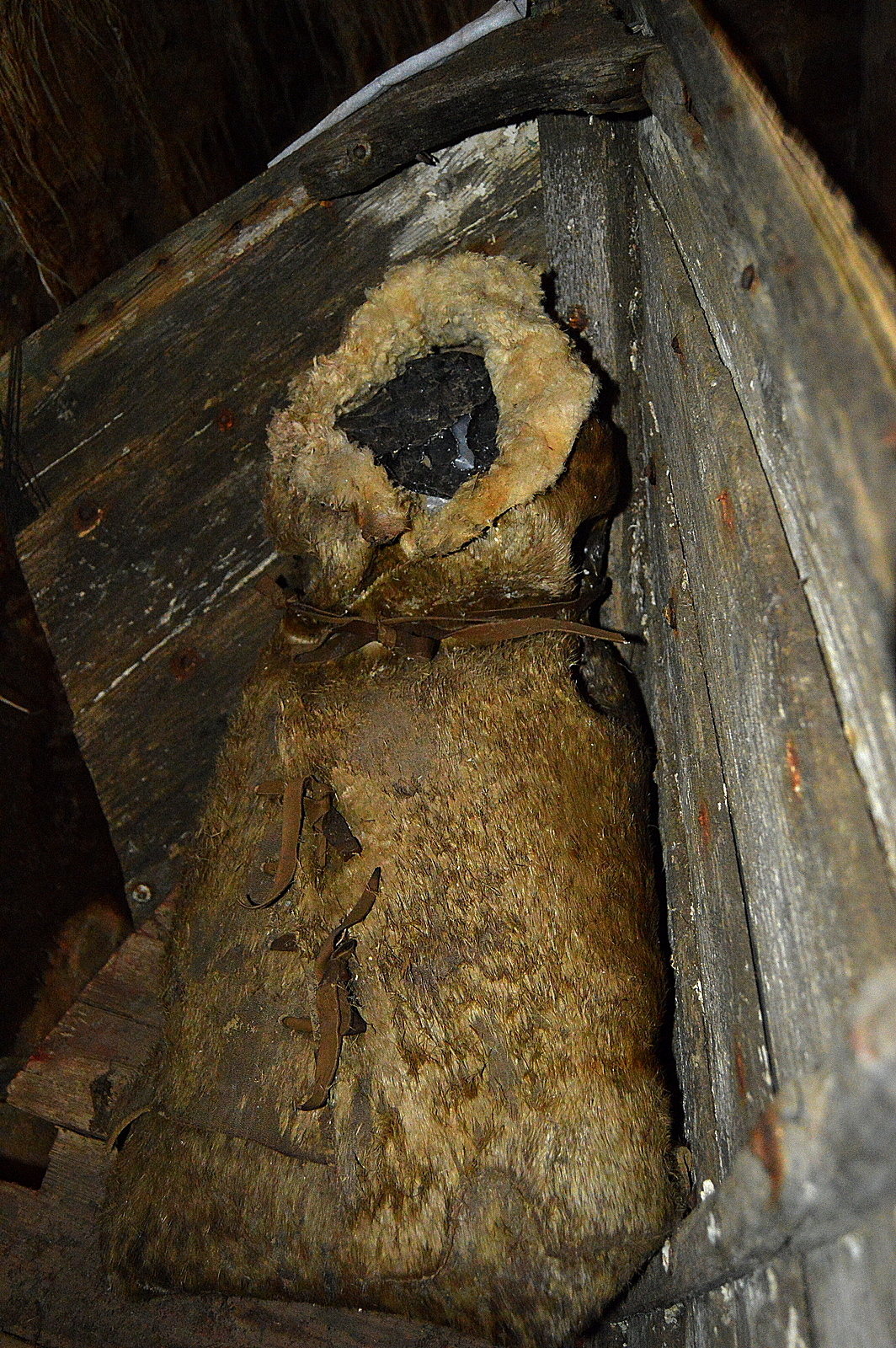
Svanur asked Þjóstólfur to follow him to Bjarnarfjarðarháls, wrapped a goatskin around his head, and uttered:
"Verði þoka
ok verði skrípi
ok undr öllum þeim,
er eptir þér sækja,"
Translated into English, it goes something like this:
"Let there be mist and fog,
let there be fright
and wonders to all those
who seek you."
Inside the Kotbýli kuklarans - the Sorcerer's Cottage
The sorcerer Svanur conjured up a thick fog in Bjarnarfjörður at Bjarnarfjarðarháls. The men tried to cross, but the dense fog made them fall off their horses and lose them. Some of the men walked into the swamp, and others into the woods, and they even lost their weapons in the thick fog.
Ósvífur thought of retreating if only they could find their horses and weapons. The fog lifted enough for them to find their belongings, and the men then retreated. But Ósvífur's men wanted to try again to cross, but the same happened.
The same thing happened 3 times, and the men finally retreated, and Ósvífur sought compensation for his son at Höskuldsstaðir farm, where Hallgerður's father, Höskuldur, lived. Höskuldur paid compensation in silver and settled this case once and for all.
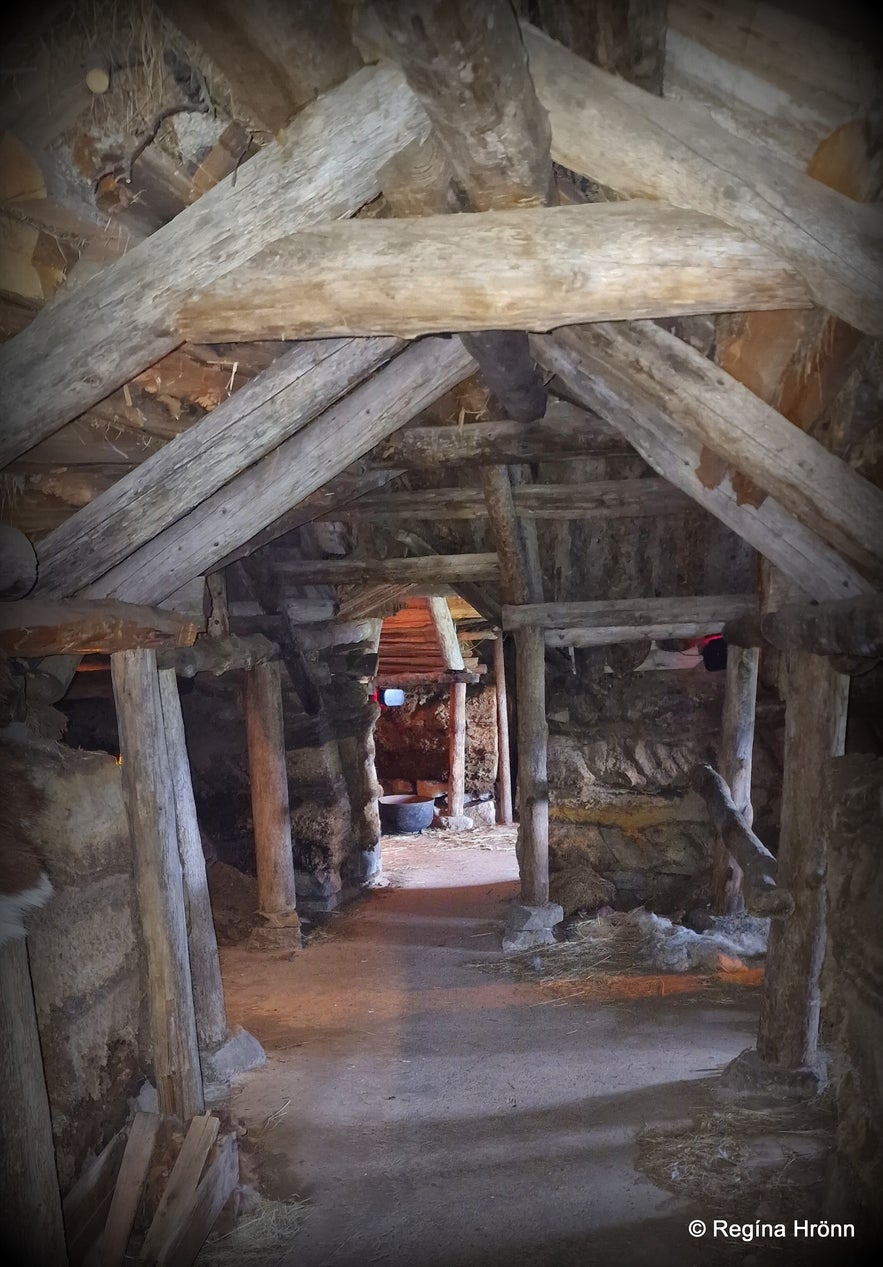 Inside Kotbýli kuklarans in 2024
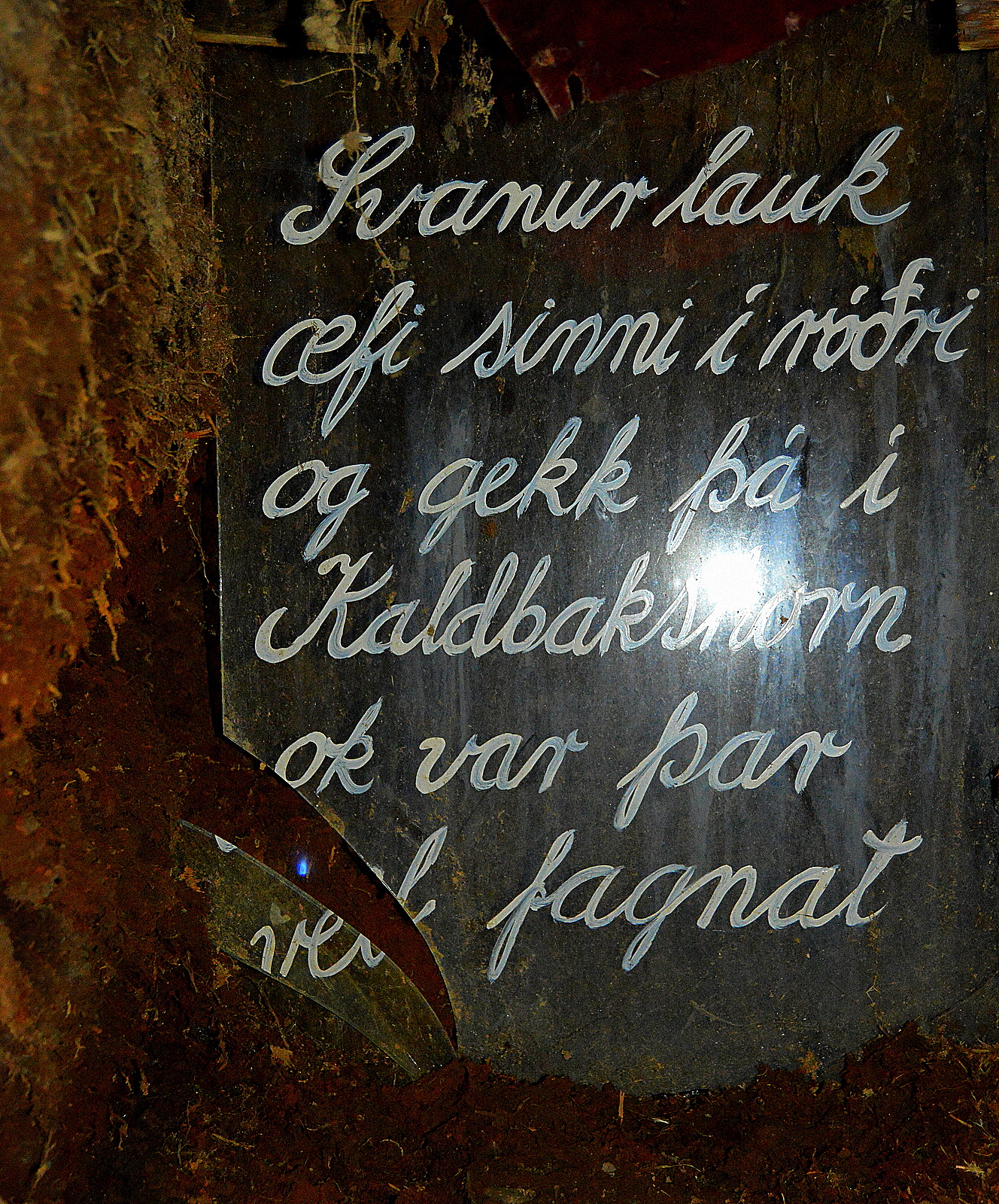
It is said that the sorcerer Svanur walked into the gorge above the Svanhóll farm and exited in Kaldbaksvík cove on the northern side of the mountain range, where he went fishing.
Svanur ended his life on the boat, and fishermen in Kaldbaksvík cove said he had disappeared into Svansgjá gorge in Kaldbakshorn after his death, where he is said to have been greeted warmly.
_______________________
The late Sigurður Atlason, the CEO of Strandagaldur, did a great job in recreating a mystical turf house of a sorcerer at Strandir, with good professional help. Sigurður called the Sorcerer's Cottage a set to show people how commoners lived.
Remember Sigurður from my travel blog on the Icelandic Museum of Witchcraft and Sorcery; he is the one with whom I am lying on the floor of the museum in Hólmavík - checking out the zombie ;)
Sadly, Sigurður died suddenly in November 2018.
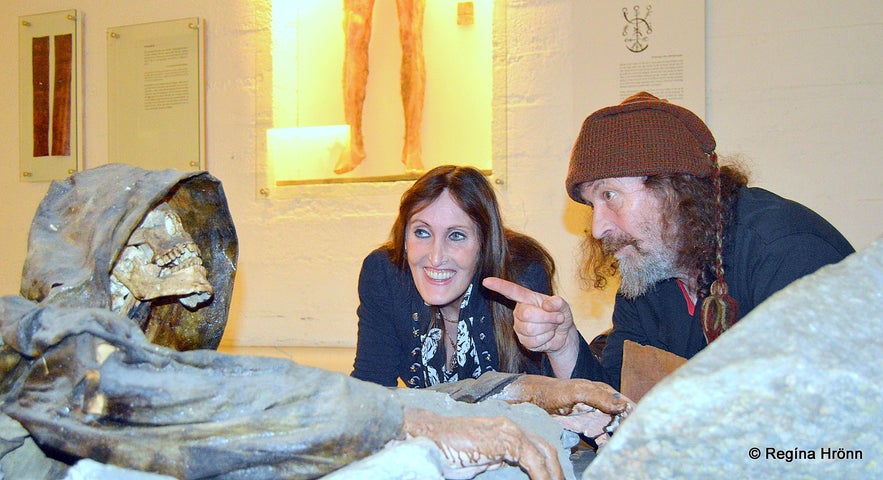
Sigurður and I on the floor by the zombie at the Icelandic Museum of Sorcery and Witchcraft
At the Sorcerer's Cottage, you might even have met Sigurður in full attire, acting as the sorcerer himself! On several occasions that I have visited the Sorcerer's Cottage, it was open, but there was nobody around.
Sigurður allowed me to use the photo below of the sorcerer, shot by Ágúst G. Atlason, photographer.
If you want a professional Viking photo, I recommend the Viking and Sorcery portrait at Mink in Reykjavík.
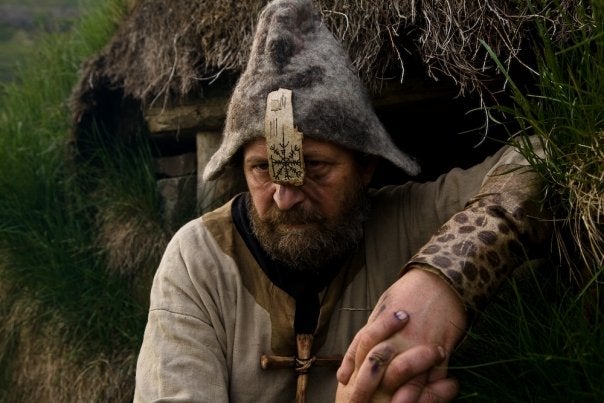
Photo courtesy: the Museum of Icelandic Sorcery & Witchcraft - the late Sigurður Atlason
Both these sorcery exhibitions depict the history of sorcery, which was seemingly very powerful in this area of Strandir.
In Trékyllisvík at Strandir, three men were burnt at the stake for sorcery in 1654, and then the witch craze started for real.
The first man thought to have been burnt at the stake, though as a sorcerer, was Jón Rögnvaldsson, who was burnt in 1652 in Svarfaðardalur in Eyjafjörður in North Iceland.
Jón Rögnvaldsson was charged with raising a ghost (zombie) to cause harm to his enemy.
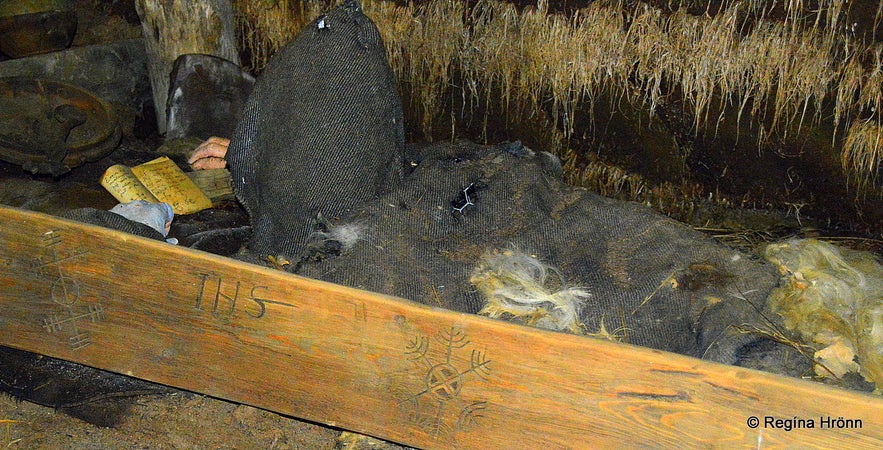
Kotbýli kuklarans - the Sorcerer's Cottage
This period in Iceland, from 1654 to 1690, has been called Brennuöldin - the Fire Century.
Another 16 men and one woman were burnt at the stake, the last one in 1683, again in the Westfjords Region
Written history tells of about two witchcraft trials related to Bjarnarfjörður, and many of the inhabitants in this fjord were connected to the last man to be sentenced to death for sorcery in Iceland in the year 1690, Klemus Bjarnason.
He was pardoned by the Danish King, saved from the fire, and sentenced to exile instead.
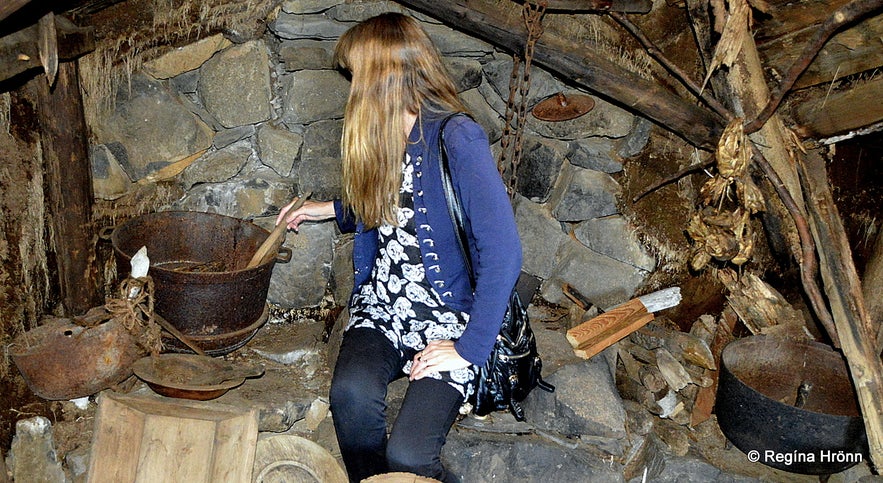
Checking out the kitchen at Kotbýli kuklarans - the Sorcerer's Cottage
Visiting these two sorcery exhibitions, the Sorcerer's Cottage at Klúka and the Museum of Icelandic Sorcery and Witchcraft in Hólmavík, is a very different experience.
The surrounding darkness in the Icelandic habitation of the old makes everything look more mystical and occult. These two sorcery exhibitions complement each other perfectly.
Some people get a bit wary inside the Sorcerer's Cottage, and some younger guests have left the cottage in panic. There is nothing to be afraid of, though, no harm will befall you inside the Sorcerer's Cottage :)
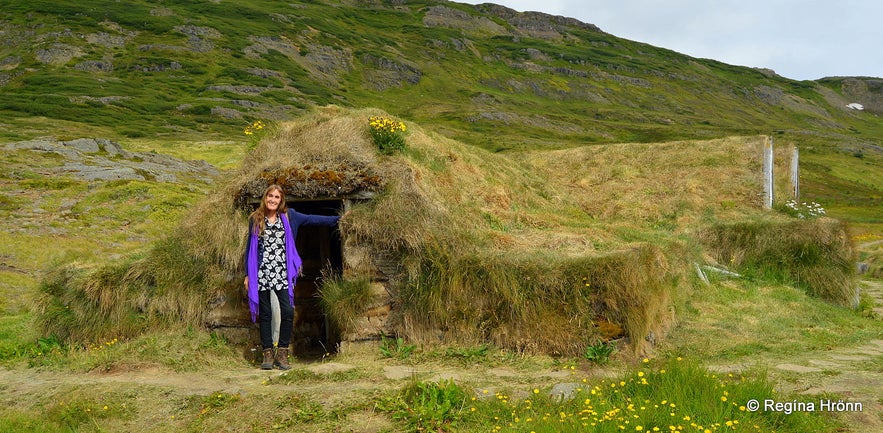
By Kotbýli kuklarans - the Sorcerer's Cottage
You will find the Sorcerer's Cottage at Klúka in Bjarnarfjörður next to Hotel Laugarhóll. This is a really interesting area, as here you will also find a swimming pool and natural hot springs, one of which is the preserved hot spring of Guðmundur the good, who was a bishop at Hólar.
I tell you about the hot springs in my travel blog about Hotel Laugarhóll and the hot pools.
The opening hours for the Sorcerer's Cottage or Kotbýli kuklarans, as it is called in Icelandic, are: in the summertime every day from the 15th of June until the 31st of August from 12 noon until 6 pm.
Here you can see the location of the Sorcerer's Cottage on the map. GPS: 65°46'51.9"N 21°31'08.1"W (to Laugarhóll hotel)
To reach Strandir, you can rent a car in Reykjavík and drive up to this area in a day.
Have a lovely time in the Strandir area :)

Hi, my name is Regína Hrönn, and I was born and raised here in Iceland.