I have written several travel blogs on the volcanic Vestmannaeyjar - the Westman Islands, and now I want to tell you about a lovely museum, which, in my opinion, is a must-visit.
This museum is called Sæheimar Aquarium or the Aquarium and Museum of Natural History of Vestmannaeyjar - the first of its kind in Iceland, established back in 1964.
Unfortunately, this lovely museum is now closed, and parts of it were moved to the Sea Life Trust Beluga Sanctuary.
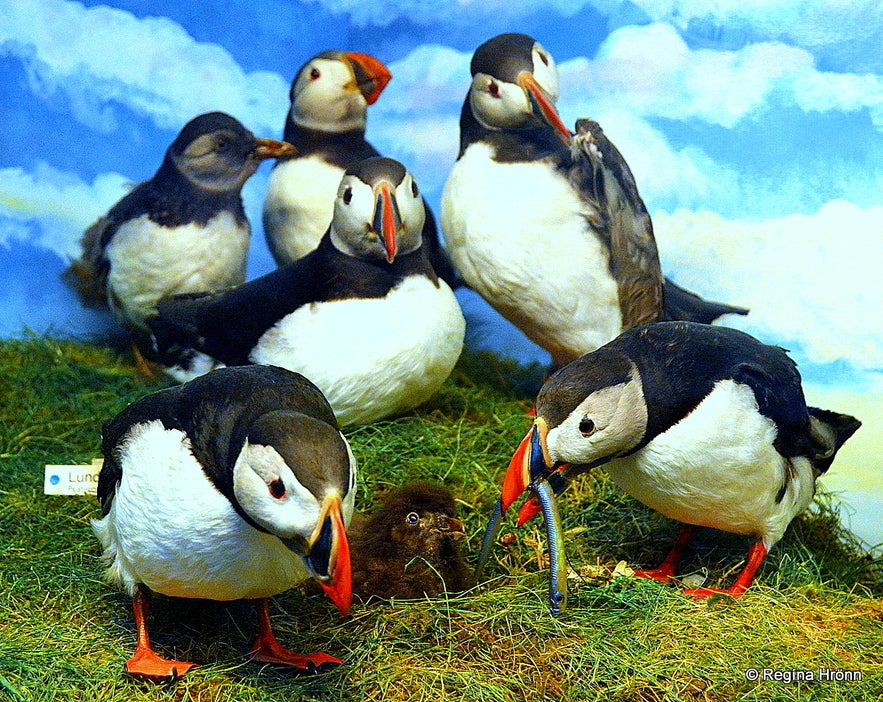
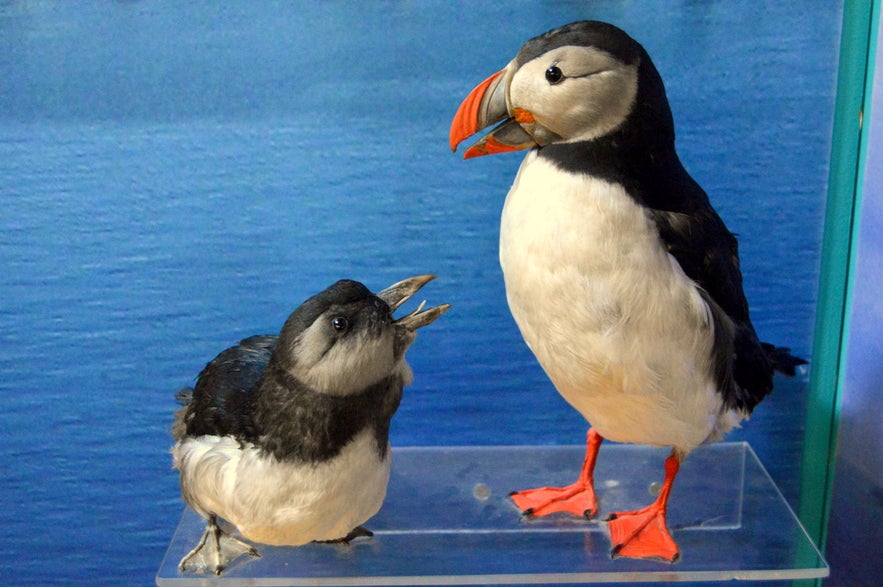
Stuffed puffins behind glass. See the puffling in the middle :)
At Sæheimar, you will find three exhibitions: the bird exhibition, the mineral exhibition, and the 12 large fish tanks (the aquarium).
At the museum, you can see a great variety of Icelandic birds, both migratory birds and others that stay in Iceland year-round and endure the dark, cold Icelandic winter with us Icelanders.
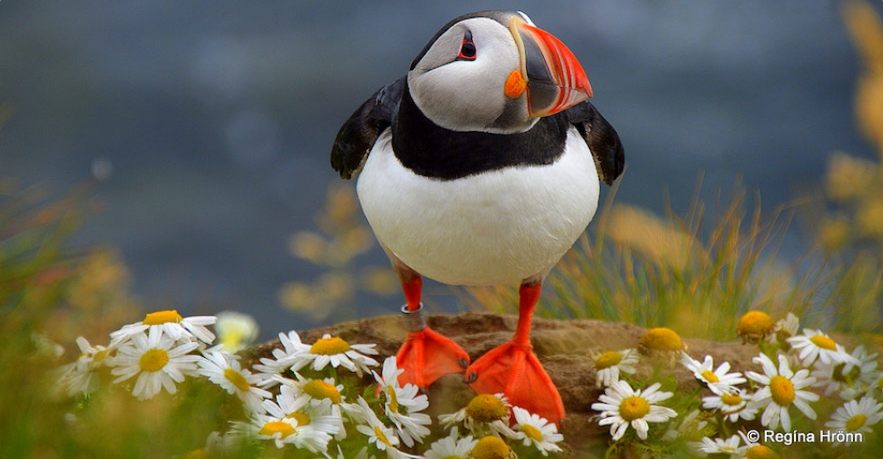 Puffin in the wild
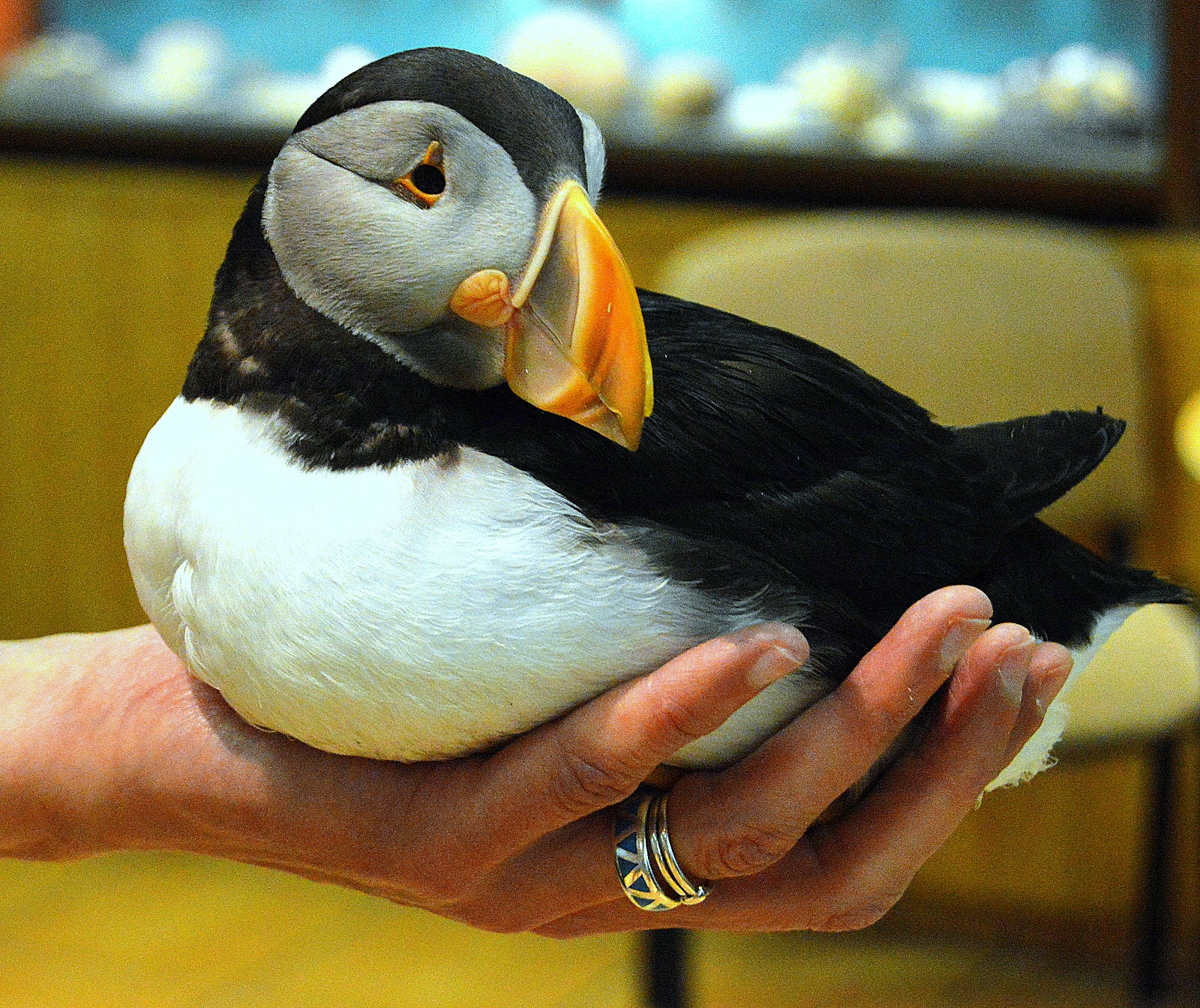
At Sæheimar, you can learn all about the most popular bird in Iceland - the puffin - and even get to meet a live puffin up close and personal!
There is a good exhibition of lava rocks and minerals at Sæheimar, with samples of almost every mineral in Iceland.
I love such exhibitions and always seek them out wherever I travel, be it in Iceland or in other countries I visit.
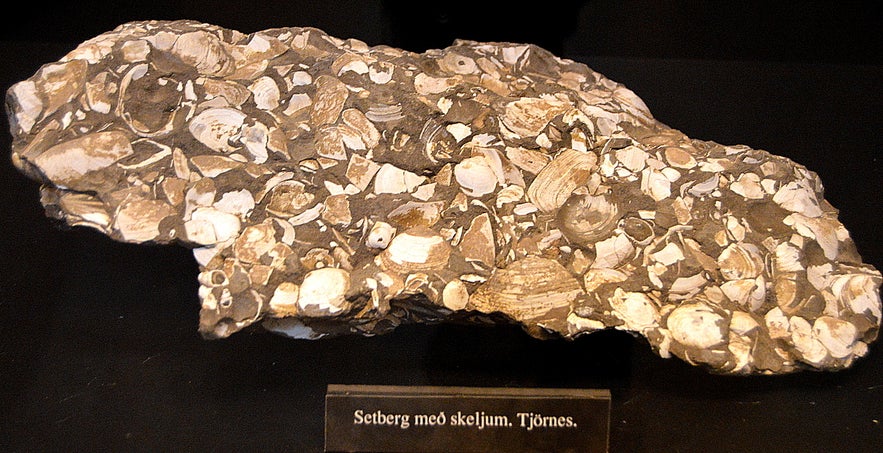
Sedimentary rock at the museum
Well, I also love natural history museums, so Sæheimar was right up my alley :) In my photo above, you can see a sedimentary rock with shells from the Tjörnes peninsula in North Iceland, which is well known for its fossilized shells.
There are 12 large fish tanks at Sæheimar, which is why this museum is called an aquarium, as that is the way it started.
I saw these Beluga whale sisters in 2023 at the Sea Life Trust Beluga Sanctuary
In the tanks, you will see various types of fish from the North Atlantic Ocean, along with some rarer fish species.
In one tank, I even saw a replica of a submarine volcanic eruption! On the Sæheimar website, you can read about what happened to the fish in the fish tanks during the volcanic eruption in the Westman Islands, which started on the 23rd of January in 1973.
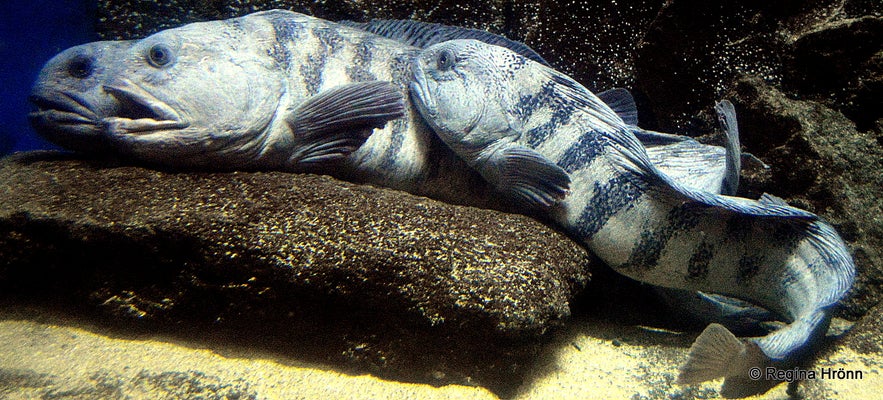
Life catfish in a fish tank
The curator didn't want to leave the fish to cook in their tanks at the aquarium when Heimaey Island, the only inhabited island of the Westman Islands, had to be evacuated due to the eruption.
On the night of the volcanic eruption, the inhabitants of the Westman Islands had to leave the island in a hurry.
Some of the fish tanks are now at the Sea Life Trust Beluga Sanctuary
The curator stayed behind, determined to release the fish and sea creatures into the sea if the lava reached the aquarium.
Fortunately, the lava didn't reach the aquarium, but in March 1973, the lava flow covered the electric company's generator building, cutting off electricity to the fish tanks!
The fire department of the Westman Islands immediately set up a transportable generator and connected it to the fish tanks.
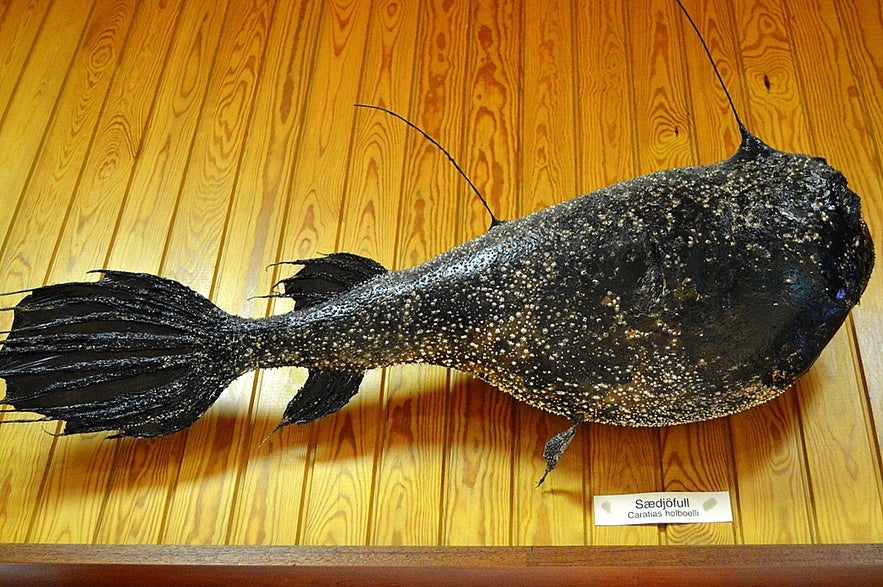
Sædjöfull - sea devil at the Sæheimar museum
I love this story because it shows how fond the islanders are of their aquarium and how they help each other in an emergency.
The local fishermen also supply the aquarium with new and interesting specimens when they catch something out of the ordinary, such as the sea devil (sædjöfull) in the photo above.
In the photo below, you will see one of the Icelandic birds that never leave my country: the ptarmigan, which changes its camouflage with the seasons.
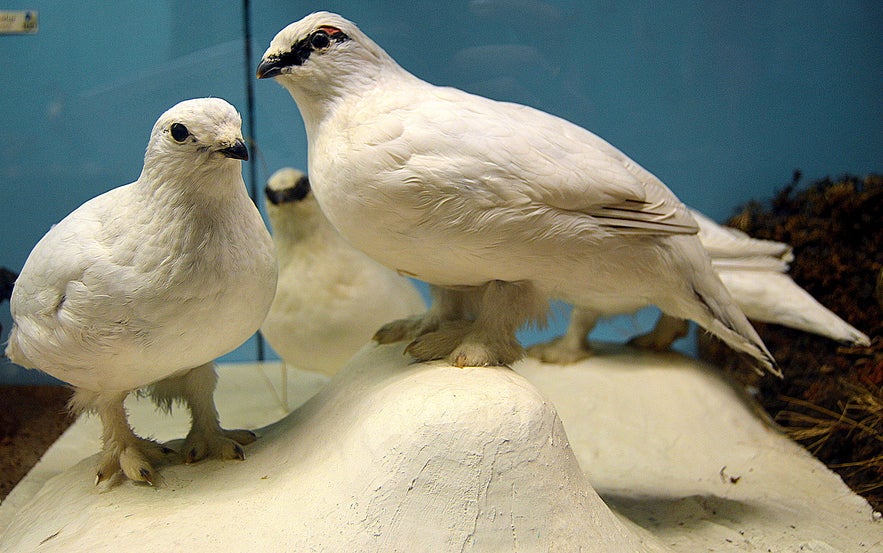
The ptarmigan in winter clothes
It is white in the wintertime so that it can hide in the snow, and brownish and dappled in the summertime so that it can hide in our summer landscape.
I always feel sorry for the ptarmigan when I see it in autumn and springtime, and its camouflage doesn't allow it to blend in.
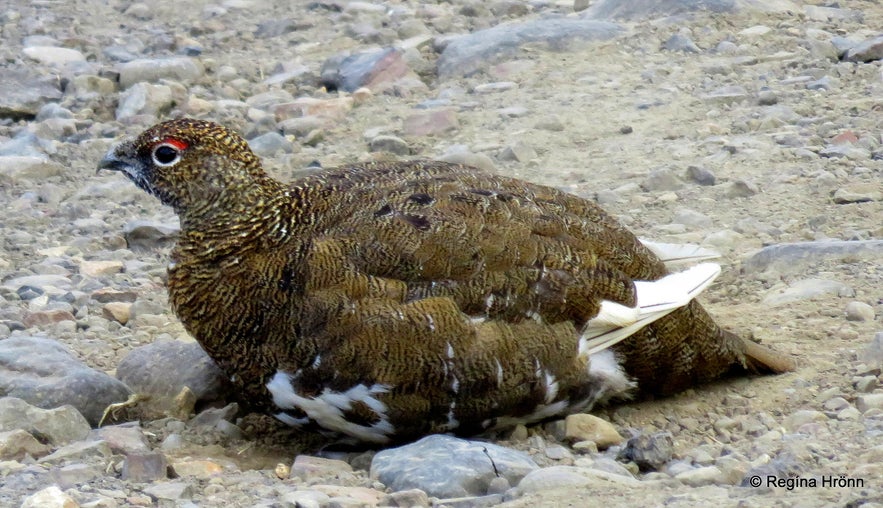 A ptarmigan in August
A lovely-looking bird, which is haunted by our predatory birds and humans alike, as the ptarmigan is a Christmas delicacy, as it were.
Tóti the Puffin - RIP
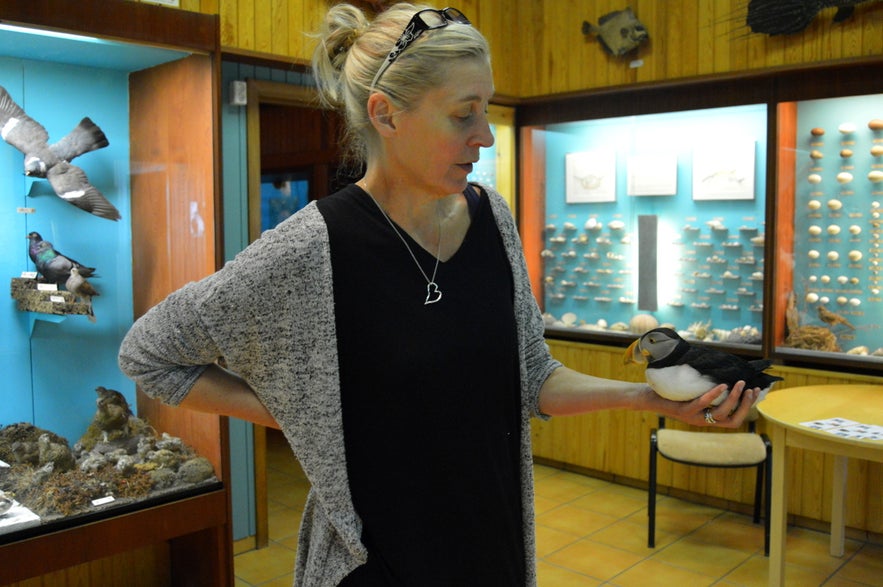
At Sæheimar Museum
Sæheimar is also a bird rescue centre, and birds that are found injured or chicks without parents are brought to the museum. Many arrive during the puffling patrol in late August and September. Our count of Iceland's biggest puffin colonies puts the Westman Islands at 1,125,000 burrows, 42% of the national total.
That is how Tóti the Puffin, the star of Sæheimar, originally ended up at the museum. Tóti, unfortunately, died recently :(
Tóti was found abandoned in a puffin colony when he was only 1 week old, so he must have hatched 6 weeks later than the other pufflings.
Poor little puffling wandering around so small at the end of the puffin season when the other much bigger pufflings - lundapysjur in Icelandic- were about to leave their nest. At the time Tóti was found, he weighed only 95 gr!
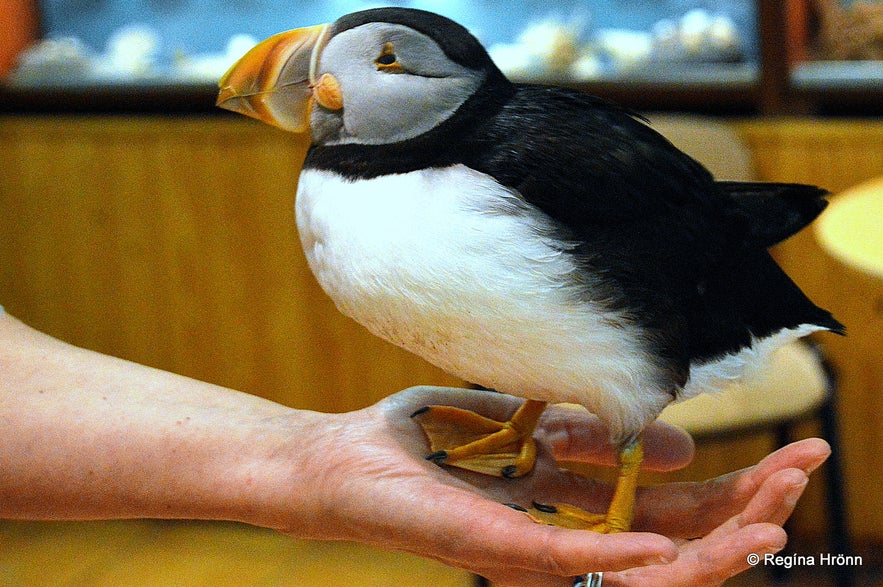
At Sæheimar Museum
He would never have been able to survive if Sæheimar hadn't rescued him.
By the time Sæheimar had fed him, and he was ready to fly, it was already too late to release him, and winter was coming, so they kept him and decided to raise him at the museum.
Tóti died in 2018, at only 7 years old (not that I know how long puffins live, so he might have been old for a puffin).
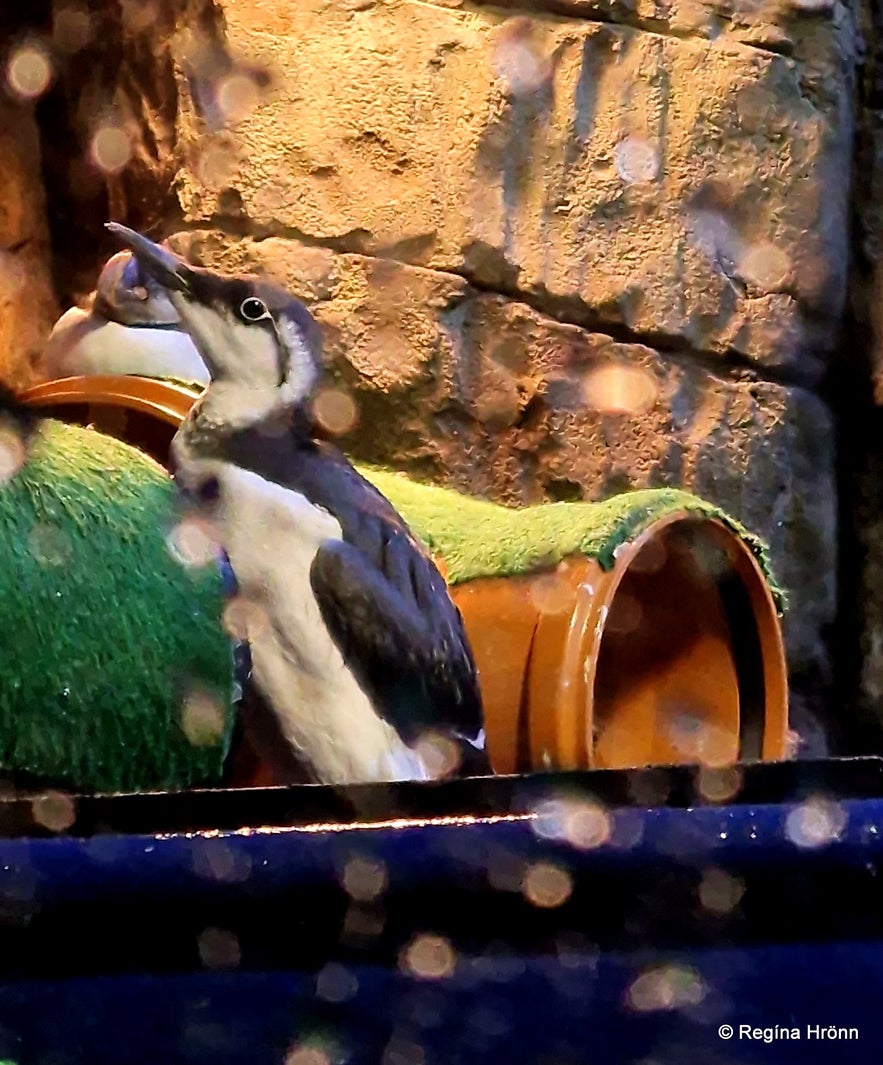 The life seabirds are now behind glass at the Sea Life Trust Beluga Sanctuary
You could visit Tóti at Sæheimar, given that he was not asleep. There are a couple of things, though, that we have to make sure of when meeting a live puffin like Tóti, such as not using the flash, as it is not good for his eyes.
He also could not be petted as it was not good for his feathers.
The puffins have an oil gland by the root of their tail, and if they are petted, they can lose the oil from their feathers, but the oil is there to protect them.
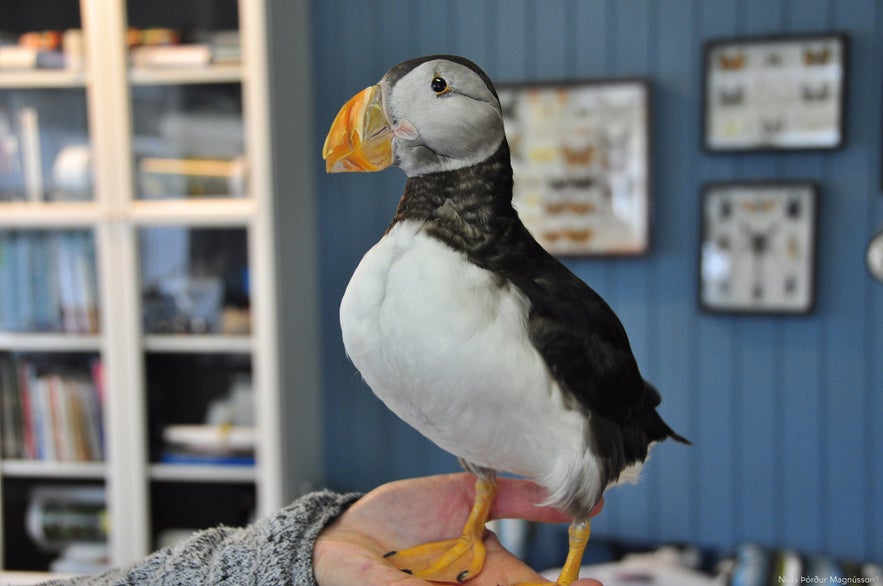
Photo credit: Niels Þórður Magnússon
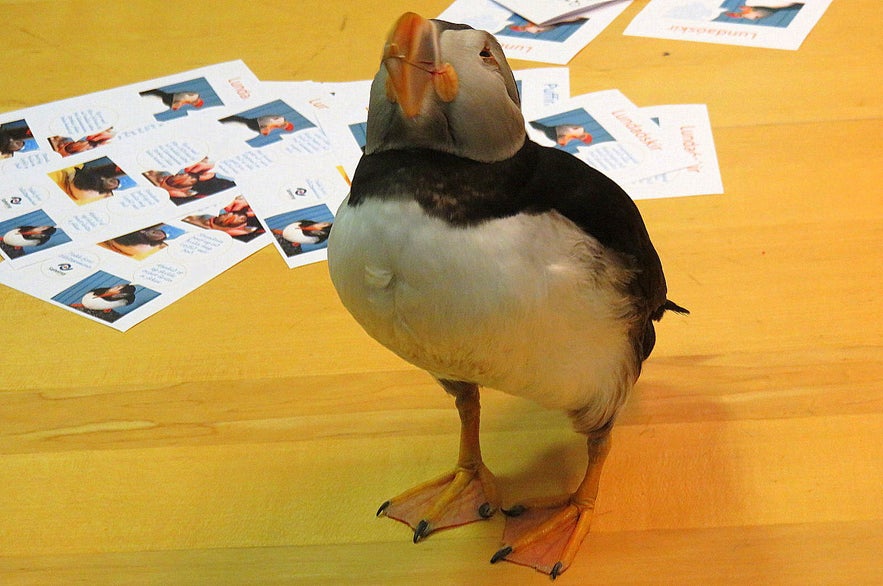
Tóti also needed his rest, as sometimes the museum gets a lot of visitors, and he got tired. I got to know Tóti the puffin at the museum, where the light gives the photos a yellow hue.
Flash is not allowed as it would hurt Tóti, so my photos are not my best work.
A friend of mine, the Dane with Icelandic roots, Niels Þórður Magnússon, allowed me to use his photo above of Tóti for my travel blog.
Niels Þórður was the only guest at the museum at the time, and Margrét Lilja, the curator, took Tóti into her office so Niels Þórður could get a better photo. I am grateful for that photo, as Tóti looks much better in the window light.
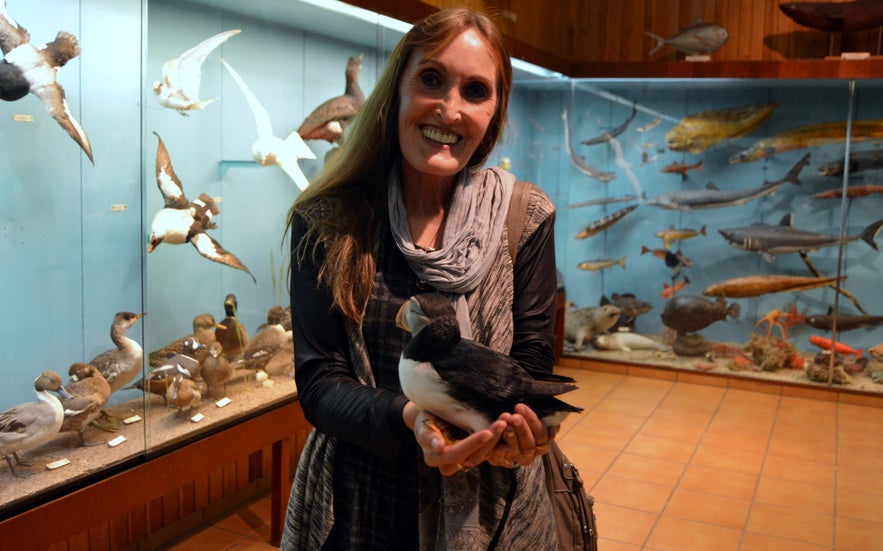
Holding Tóti at Sæheimar museum
I can tell you that it felt weird being so close to a puffin, which I have seen from afar for so many years of living in Iceland, and to be allowed to hold it was out of this world!
I have never felt close to birds, but at this moment, I was totally in love with this little puffin, which I was holding in my hands.
We have received questions from tourists about how they can get a puffin pet. We find this so funny, but I gather that the people asking this question must have seen photos of Tóti and thought that puffins could be kept as pets.
That is not the case. Puffins are wild birds, and it is only because Tóti was so young and helpless when he (and other helpless pufflings) was found that he adapted to life with humans at this museum.
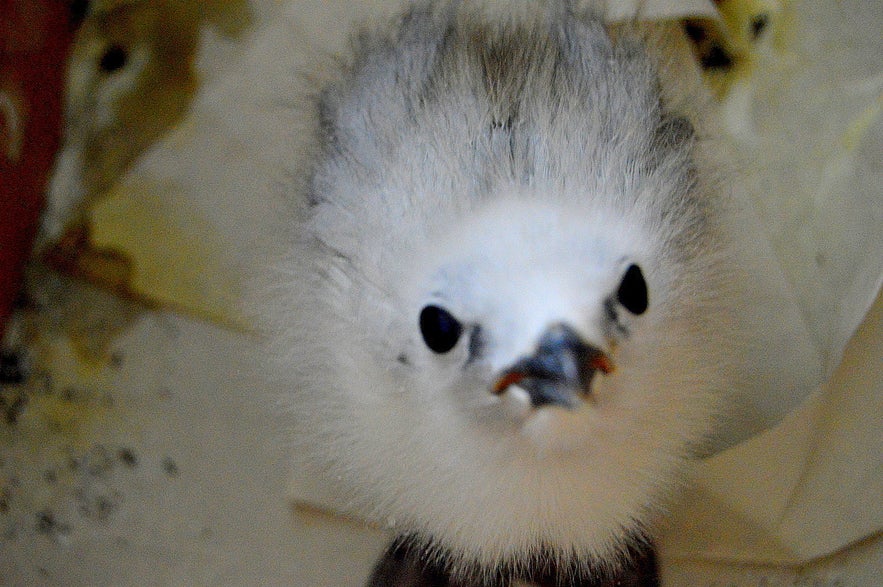
Kittiwake chicks at the Sæheimar museum
There are two other puffins at Sæheimar, but I didn't see them; they are female puffins named Karen and Hafdís.
Karen had an injured leg, and Hafdís nearly drowned in the sea after having crashed in Vestmannaeyjabær town and then being released in the direction of the sea by the kids in town, as is the custom here in the Westman Islands.
Hafdís has been receiving some swimming lessons at the museum ;)
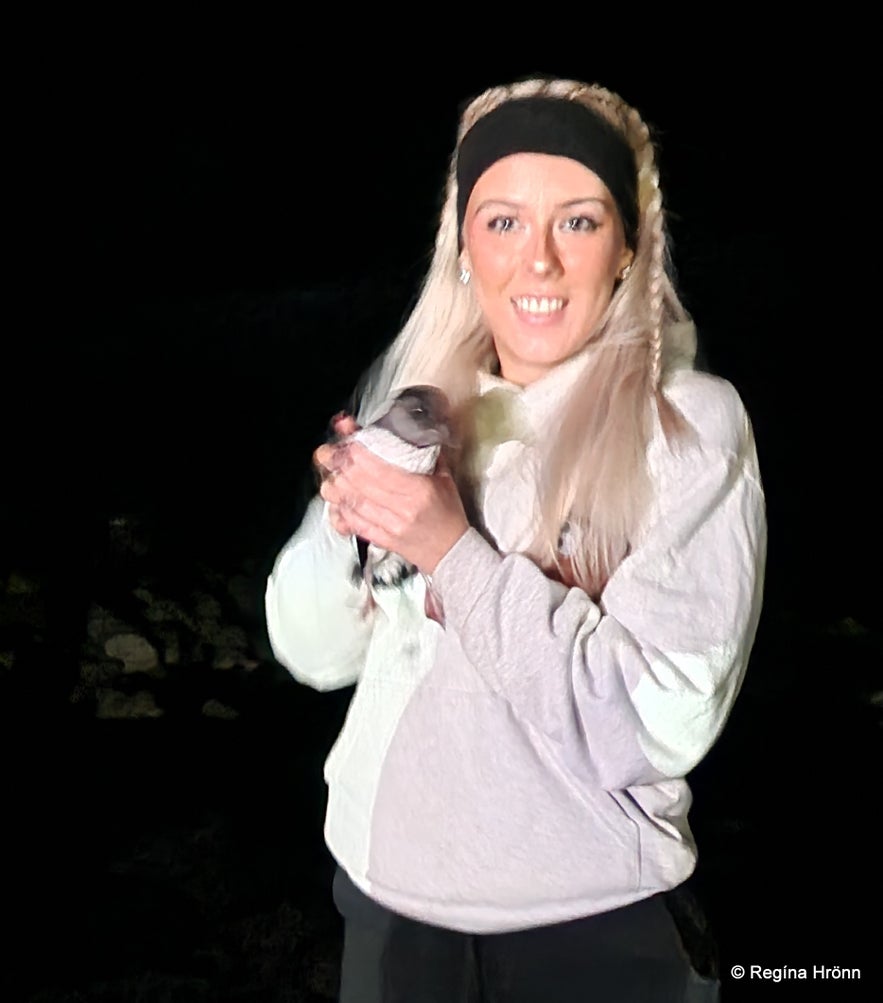 In 2023, I took a small part in puffling rescue and took this photo in the dark of a rescued puffling
I also visited the office of Margrét Lilja, the curator of Sæheimar, as my husband is selling Origami puffins at Sæheimar and was bringing in more stock.
Margrét Lilja is the woman holding Tóti in one of the photos in my travel blog. In the office were boxes with kittiwake chicks that had been rescued.
They were so loud with their beaks open, constantly asking for food. When I looked into the boxes, they went all quiet and ogled me.
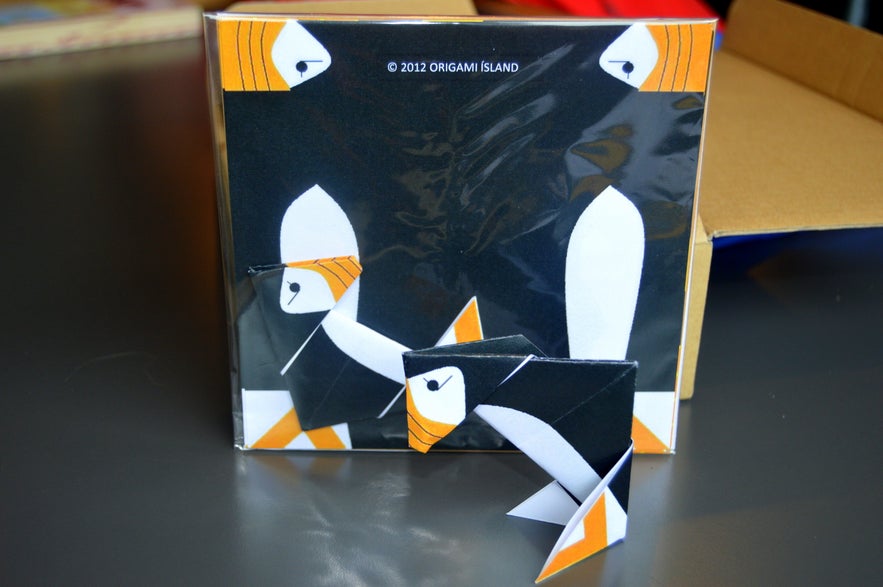
Origami puffins at the Sæheimar museum
In the photo above, you will see my husband's Origami puffins, a design by Origami Ísland (Iceland). They told us at Sæheimar that their Japanese visitors are the best buyers of this Origami design - of course :)
At Sæheimar, you can get to know all about puffins and see different types of puffins.
Did you know that puffins are monogamous and lay only one egg at a time? They dig burrows (70-100 cm long) where they lay their egg; so all around the puffin nesting areas, you will see holes or burrows in the grass and hills.
The puffins at Látrabjarg
This is also why nobody is allowed to sit on the edge of Látrabjarg cliff, as it is not safe. Látrabjarg is the best place to get close to the puffins in Iceland, in my opinion.
The best time to photograph a puffin is in the late afternoon and early evening when the parents return to their burrows after having spent the day fishing for their pufflings.
See also my travel blogs:
Látrabjarg in the Westfjords of Iceland - the largest Seabird Cliff in Europe
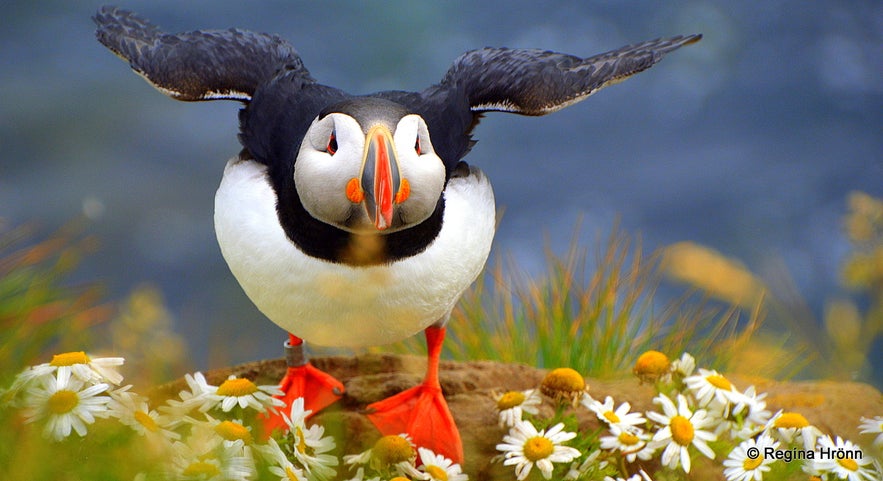
You can take beautiful photos of the puffins at Látrabjarg as they are so close and tame
The puffin, which has become so popular with our foreign visitors that it is almost like our national symbol, is the most common bird in Iceland, and the Westman Islands are the biggest puffin breeding colony in the world; around 1.1 million birds!
There is a reason why the puffin has been called the symbol of unity in the Westman Islands.
Around 8,000,000 - 8 million puffins can be found in Iceland, so you are bound to see a puffin if you visit us from mid-April until mid-August, which is the breeding season for the puffins in Iceland. The number of puffins in Iceland is sadly decreasing.
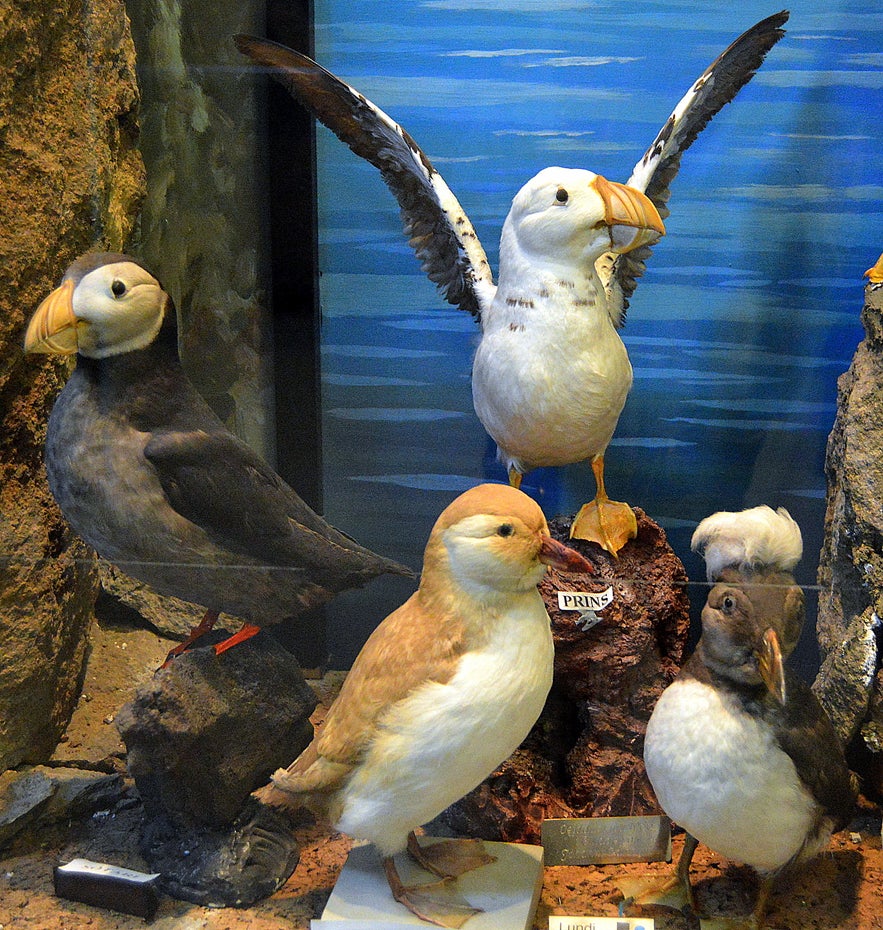
Different types of puffins at Sæheimar museum
Two years ago, in 2014, British ornithologists claimed that they had discovered Europe's oldest puffin on an island off the coast of Scotland - a 34-year-old puffin!
But the oldest puffin that we know of in the Westman Islands is 42-47 years old, being at least 38 years old in 2014. The Brits ignored us and have identified their puffin to be the oldest ;)
In the photos above and below, you will see different varieties of puffins, called the Prince and Princess of the puffins, Sótari or Chimney sweeper, Toppari, or the one with the feathers on his head, which is a scarce variety of puffins.
I have never seen these varieties in the wild, but I would absolutely love to see them one day, especially the one with feathers on its head!
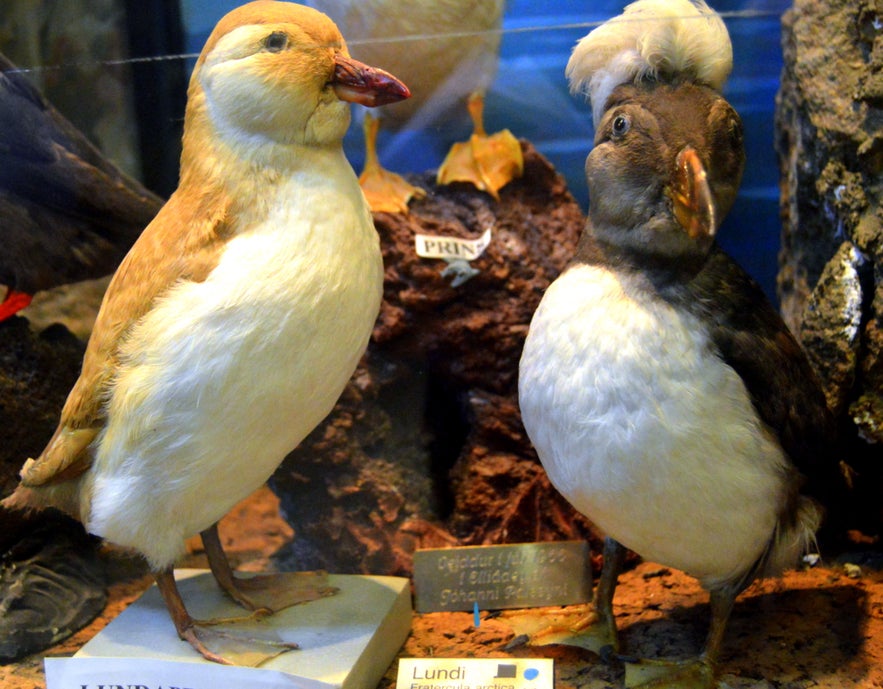
Different types of puffins at Sæheimar museum
In my photo below, you can see a fully grown puffin with its puffling, or puffin chick. It hasn't got the orange colour yet, and its beak is grey, so it is not as distinctive as its parents.
But even the grown-up puffins lose their distinctive orange colour in the wintertime when they are out at sea and only wear, so to speak, this beautiful orange colour during their breeding season.
In August, the pufflings start leaving their nest and fly in the direction of the sea, but some of them (approx. 1%) get distracted by the lights in Vestmannaeyjabær town and fly in the direction of the town instead, mistaking the lights for the reflection of the moon in the sea.
Puffins at the Sæheimar museum
Only to plummet to the ground in town, on the streets, in the gardens, etc., which must be a hard crash for these young pufflings. And they are, of course, totally disoriented after the crash. So they seek cover, making them difficult to find and rescue.
And some of them land on the harbour and get soaked in oil, so they have to be washed and taken into care.
In 2021, it was decided to dim the lights by the harbour to prevent the pufflings from heading for the harbour ref. Mbl.
Puffling rescue in the darkness in 2023
But help is near, as it has become a tradition for the kids (and kids at heart) of the Westman Islands to go out into the streets with flashlights, pick up pufflings, and put them in cardboard boxes (one in each).
They keep the pufflings in the boxes overnight, and the next morning, the kids bring their boxes filled with pufflings and release them by holding each one and throwing it high into the air toward the sea.
The pufflings then manage to fly to the sea by themselves.
Pysjueftirlitið keeps count of the rescued pufflings, and the Sea Life Trust takes care of the oil-soaked and injured pufflings.
Admittance to Sæheimar was included in the Puffin and Volcano tour, which I joined. So on the same day, I visited this lovely museum twice. If you want to read up on this tour, then here is my travel blog:
The Westman Islands in Iceland - the Puffin and Volcano Tour - Local Guidance
Sæheimar closed in 2019 after operating from 1964 (1965). The animals have found a new home at Ægisgata 2 at the Sea Life Trust Beluga Sanctuary.
Also, check out:
Guided tours to the Westman Islands
Have a lovely time in the Westman Islands :)

Hi, my name is Regína Hrönn, and I was born and raised here in Iceland.