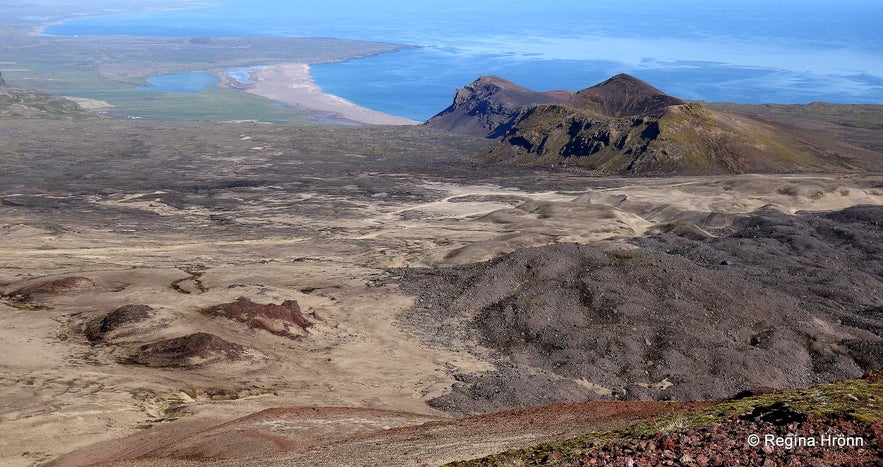
The Jökulháls mountain pass will take you from the Útnesvegur road no 574 from Arnarstapi in the south to Ólafsvík village on the north side of the Snæfellsnes peninsula.
Jökulháls means the Mountain Pass by the Glacier, and here we will be driving by the roots of the majestic Snæfellsjökull glacier.
Top photo: the view from the roots of the glacier
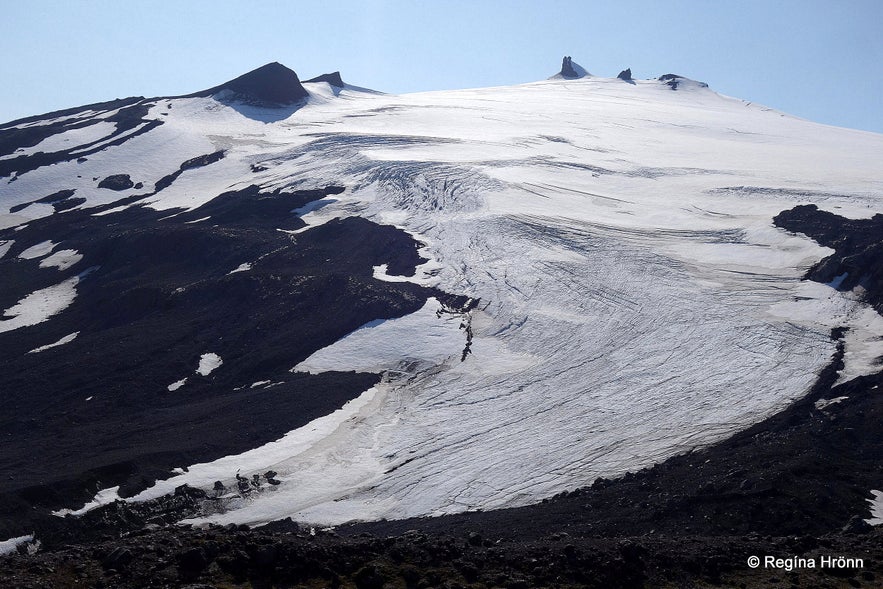 By the roots of the Snæfellsjökull glacier - this part is called Hyrningsjökull glacier
The road is impassable for most of the year because it is so high up, and sometimes it doesn't open until July.
I once tried to pass the heath on the 4th of July, but at the highest point, there was too much snow, so we had to turn back.
We met 2 Spanish guys who were also trying to pass Jökulháls, but in vain, so they offered me red wine, and we had a toast on Jökulháls next to the snowcats, which were parked in this spot :)
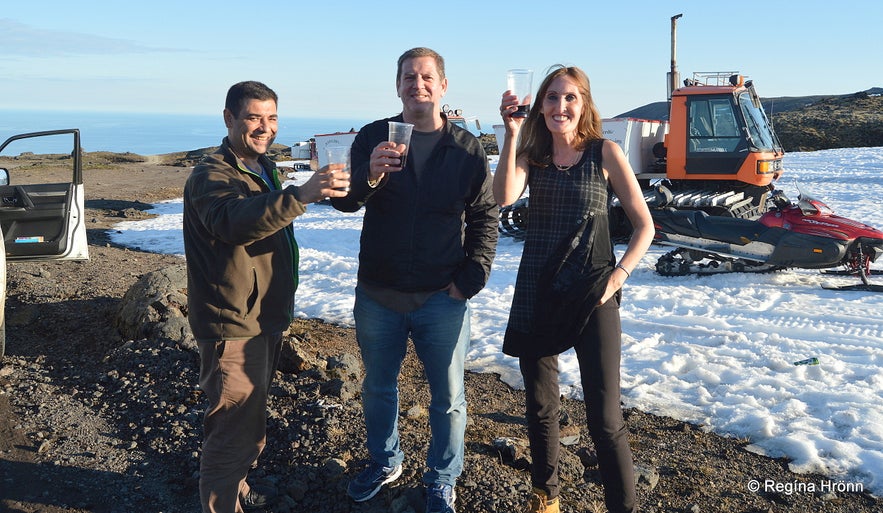 On the 4th of July, Jökulháls was impassable due to snow, so we had a drink instead
It is well worth driving this road in the few months it is open, and on a sunny day, the views from the Snæfellsjökull glacier are breathtaking.
In my video below, which I shot from the roots of Snæfellsjökull glacier, you will see what I am talking about.
Here we see, for example, Mt. Sandkúlur, Brennivínsþúfa - Booze Tussock (I would like to know the story behind this name), Mt. Stapafell, and Snæfellsjökull glacier.
Standing by the root of Snæfellsjökull glacier on a sunny day
The drive on Jökulháls is like driving across lunar landscapes, as here we are driving in yellow tephra/pumice in a pure volcanic landscape.
It is for sure raw beauty, and when driving in such landscapes, I always think to myself: "Now, this is Iceland!" I had the exact same feeling when I was being driven up to Askja in the highland of Iceland:
The amazing Lake Askja & Víti explosion Crater in the Highland of Iceland
Sönghellir - the Singing Cave
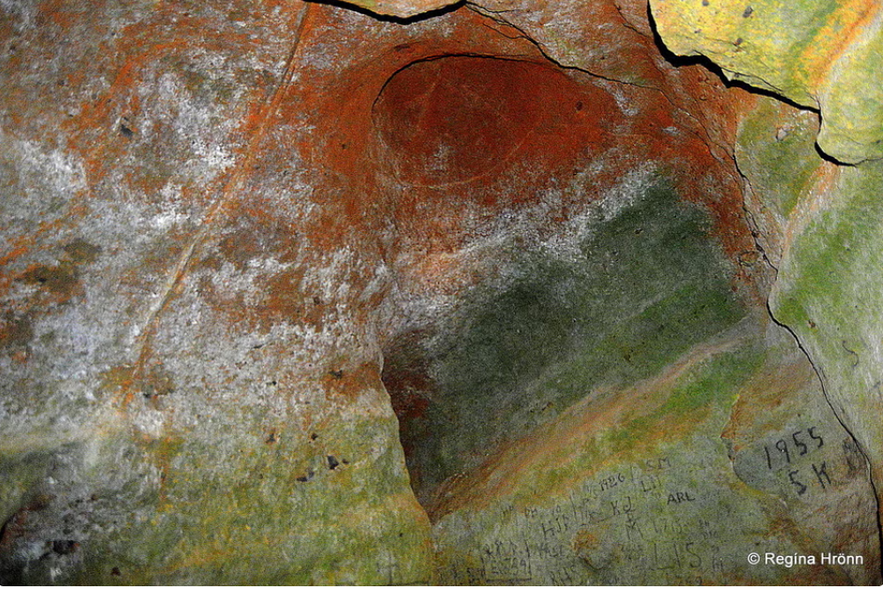 Inside Sönghellir cave
Before you reach the spot in the video, you can visit Sönghellir - the Singing Cave, which is a well-known cave in this area, and well hidden away, as the entrance to it is pretty small.
According to the Saga of Bárður Snæfellsás, then Bárður Snæfellsás - the Protector of the Snæfellsnes peninsula - stayed in this cave with his men before he settled at the farm Laugarbrekka.
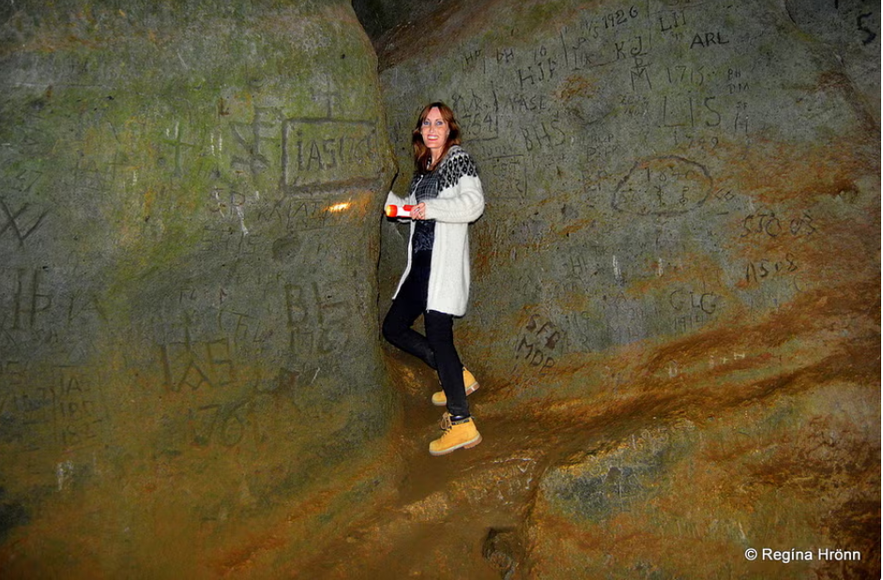 Inside Sönghellir cave on an earlier visit
We are talking about the 9th century here, so the cave's name is very old, and it has excellent acoustics.
We visited Sönghellir cave on an earlier visit and didn't stop by now. On this trip, our primary purpose was to pass the mountain pass.
Now, let's continue to the root of the glacier.
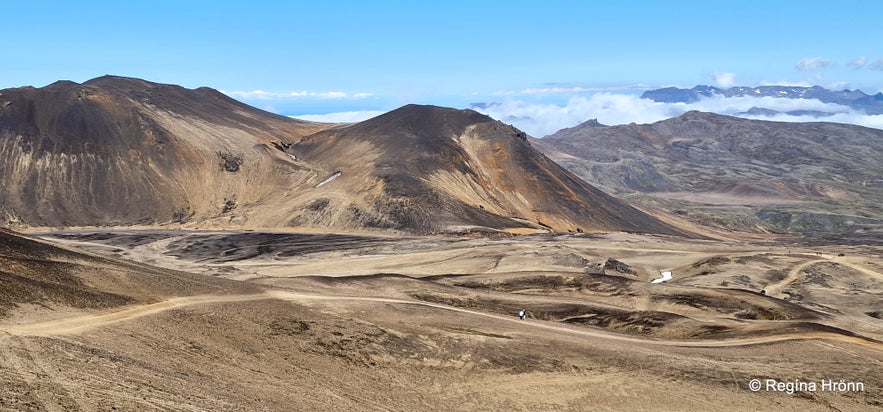
This road leads to the root of the glacier - Mt. Sandkúlur to the left
On Jökulháls, it is possible to drive straight up to the foot of the Snæfellsjökull glacier and to the glacial tongue Hyrningsjökull. The next glacial tongue to Hyrningsjökull is called Jökulhálsjökull.
The road through the pumice is bumpy and winding, and some sections are a bit scary.
The road is coarse and so steep that on parts of the road leading up to the glacier, I felt like I was going to fall out of the car as it leaned so much!
And it was so steep in one part of the road that we couldn't see if anybody was driving right at us! I was not amused. This part of the road is for jeeps only.
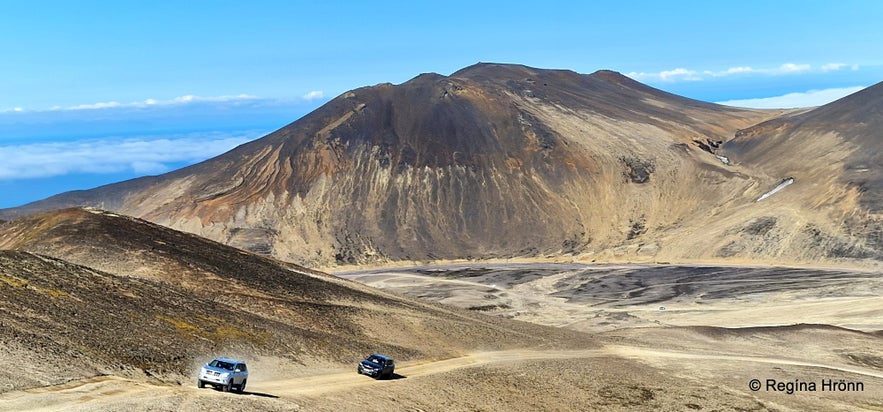 Jeeps driving up to the roots of Snæfellsjökull glacier
Many people left their cars and walked the rest of the way. But not my husband, he was driving a small jeep, and he is not scared of anything... unlike me, I wanted to get out of the car midway up and walk the rest of the way.
In the 3 jeeps behind us, there was a group of Icelanders, and when the women got out, they all said they were going to walk down the steepest part of the road; there was no way they were getting back into the jeeps.
I couldn't have agreed more with them and was glad I wasn't the only one who was uncomfortable while driving up this road!
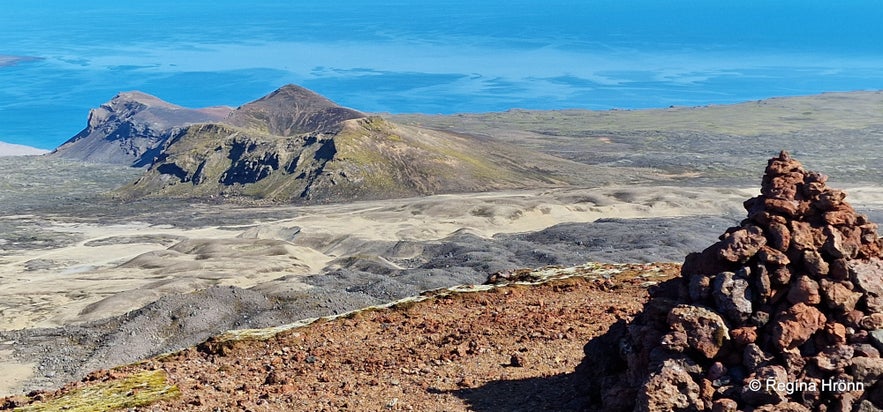
The view from the root of the glacier - Brennivínsþúfa - Booze tussock
You might notice that I am wearing pink wading shoes in the photo below, which is not the proper footwear in such a volcanic landscape.
We were driving some Faroese and Danish friends around the peninsula, and I had put my things in the trunk before we took off: provisions for the trip, proper footwear, and the right clothes.
My husband, without me knowing, then went to empty the trunk so that he could put in the things that our friends were bringing!
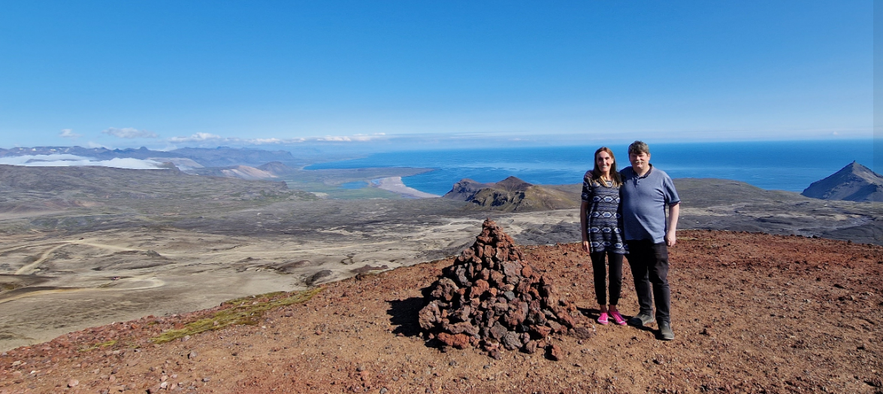 Wearing pink wading shoes at Jökulháls
So when we arrived in Arnarstapi, I realized I had no appropriate shoes for this journey, let alone food!
It was a hot summer day, sunny and 16 degrees C, and I was wearing my heavy hiking boots and boiling in them.
The only footwear left in the trunk of the car was my pink wading shoes - I was not happy with my husband at that moment ;)
But I was happy to be in this beautiful and scenic spot, which I had never visited before.
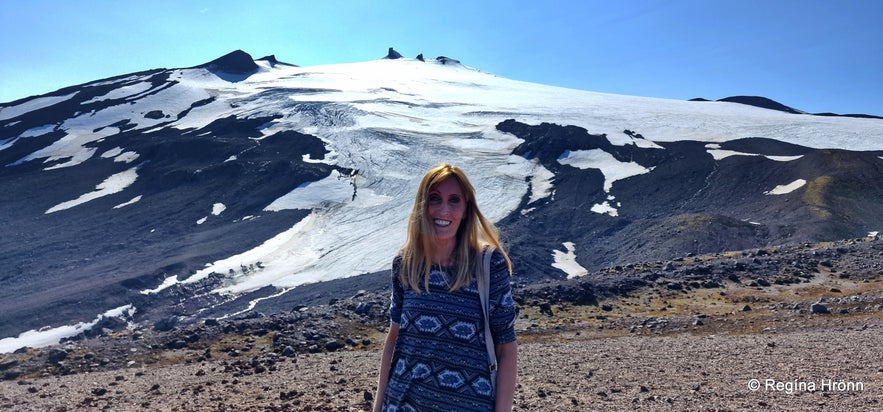 By the roots of Snæfellsjökull glacier
Snæfellsjökull glacier, the landmark of the Snæfellsnes peninsula, is Iceland's 8th-tallest glacier. It towered over us at an altitude of 1446 meters.
The glacier is a stratovolcano, and the last eruption took place some 1750-1800 years ago.
This majestic glacier possesses some strange powers, and some people believe that it is one of the 7 chakras of the world.
Others believe that it is a meeting place for extra-terrestrials.
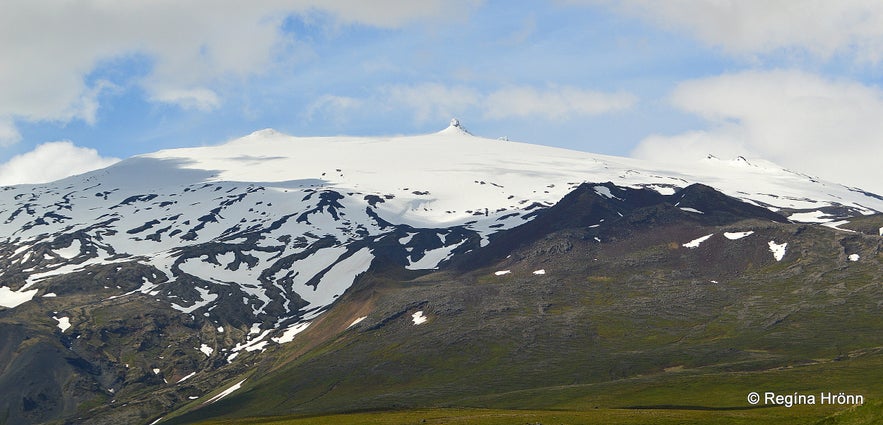 Snæfellsjökull glacier as seen from the main road
Many people visiting the Snæfellsnes peninsula are aware of the glacier's magnetic energies, and I, for one, have a hard time sleeping when I overnight in this area.
Remember Jule Verne's science fiction from 1864 - The Journey to the Center of the Earth?
The story is about a group of scientists who ventured into the crater of Snæfellsjökull.
The movie Journey to the Centre of the Earth, starring Brendan Fraser, was released in 2008. Some parts of it were filmed on the Snæfellsnes peninsula, and his co-star, Anita Briem, is Icelandic.
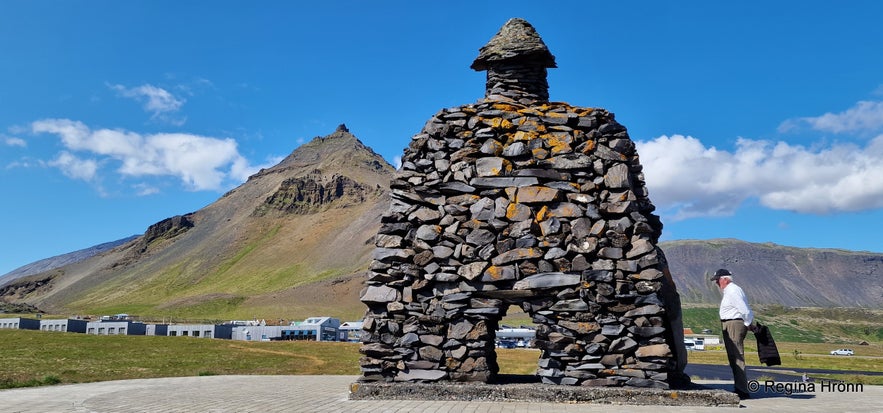 Bárður Snæfellsás at Arnarstapi. Mt. Stapafell in the distance
And let's not forget that Bárður Snæfellsás, the half-troll, half-man, might still be residing in Snæfellsjökull glacier. He is the one who spent time in Sönghellir cave.
Bárður disappeared into the glacier more than a thousand years ago after he had, in a terrible rage, killed 2 of his nephews and broken his brother's leg.
You can read more about Bárður and the reason why he was so angry at his nephews in my travel blog:
Bárður Snæfellsás - the Mythical Protector of the Snæfellsnes Peninsula.
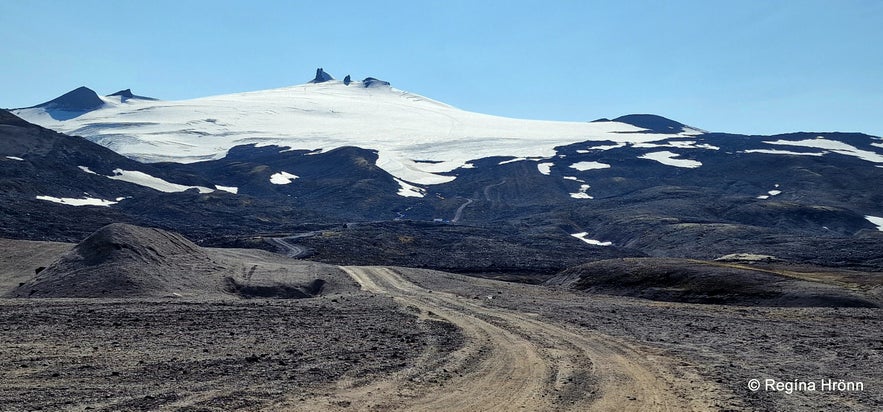
Another road leads up to the roots of the glacier
After admiring the view, we descended the steep road, which was much easier than ascending it, and continued on our journey across Jökulháls mountain pass.
We then arrived at a junction, a side road leading up to Snæfellsjökull glacier.
If we had followed the road to our left, we could have joined one of the guided tours to the glacier.
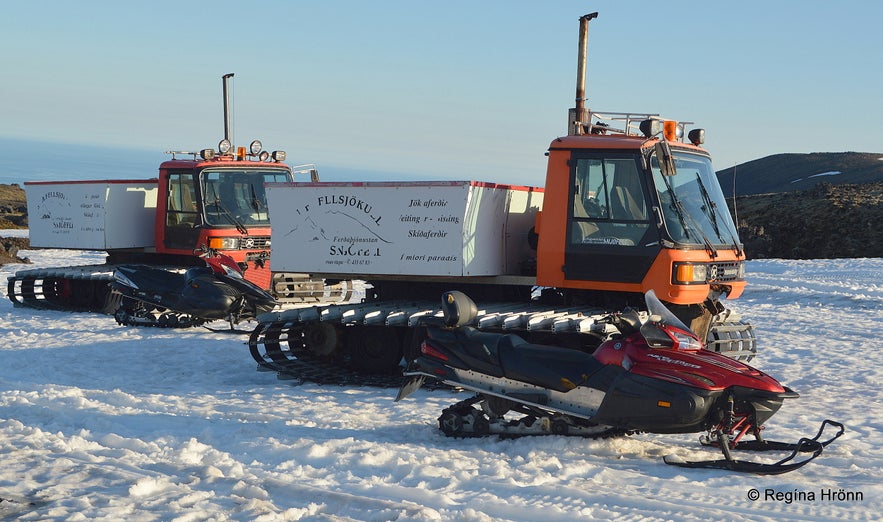 Snowcats on Jökulháls mountain pass
Guided tours on Snæfellsjökull glacier:
The Top of the Diamond - a tour to the Top of the Glacier
Snowcat Tour on Snaefellsjokull Glacier
Exciting 2-Hour ATV Tour of Snaefellsjokull from Hellnar
I have to try out some of these tours one day; it has been on my agenda for way too many years.
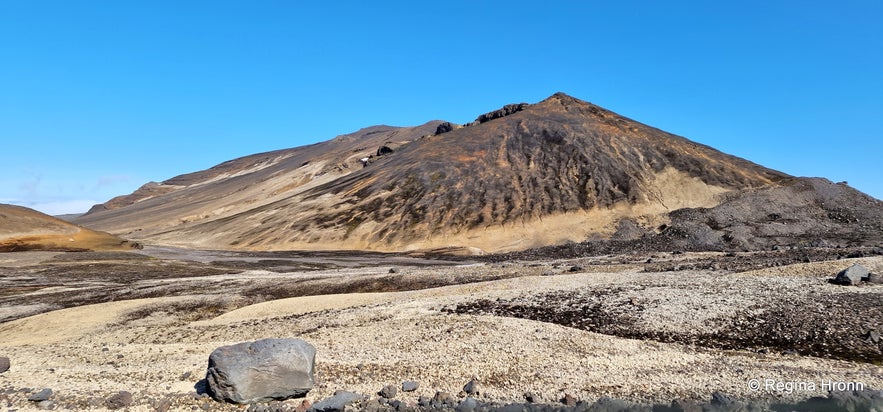
Pumice landscape on Jökulháls
But we followed road F-570 and drove through fields of pumice, which glowed like gold, all lit up by the sun.
And we saw colourful lava mountains, ranging from yellow to brown, red, and black. This yellow pumice landscape is, in my opinion, the most beautiful part of this route.
Soon, the landscape changed, and other mountains appeared, like Mt. Hrói in the photo below.
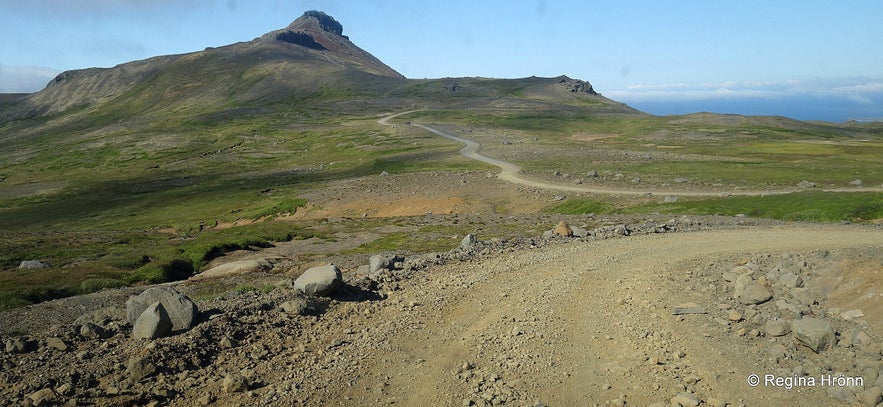 Mt. Hrói in the distance
When we approached the end of the road, we arrived at the dam at Rjúkandavirkjun.
Right above the waterfall Rjúkandi, below the spot where Gerðubergsá river joins Fossá river, a dam was built and activated in 1954.
It was named Fossárvirkjun, but was renamed Rjúkandavirkjun.
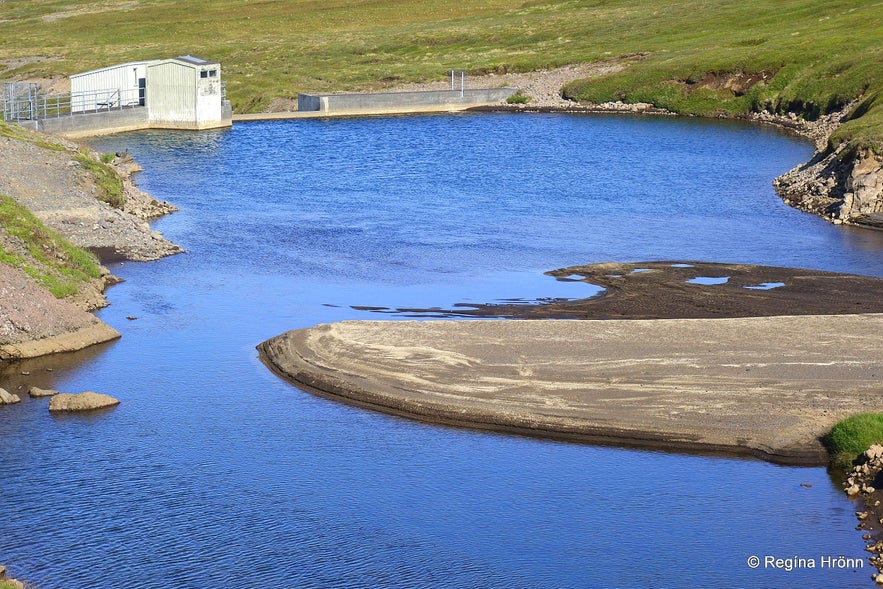 Rjúkandavirkjun dam
We stopped by the dam to get a closer look. This was the only stop we made after driving up to the glacier's roots.
After visiting the dam, we started descending from the mountain pass and saw the sea on the northern part of the Snæfellsnes peninsula.
We passed through Fossárdalur valley, which lies between Mt. Lambafell and Mt. Bugsmúli, and joined Útnesvegur road 574.
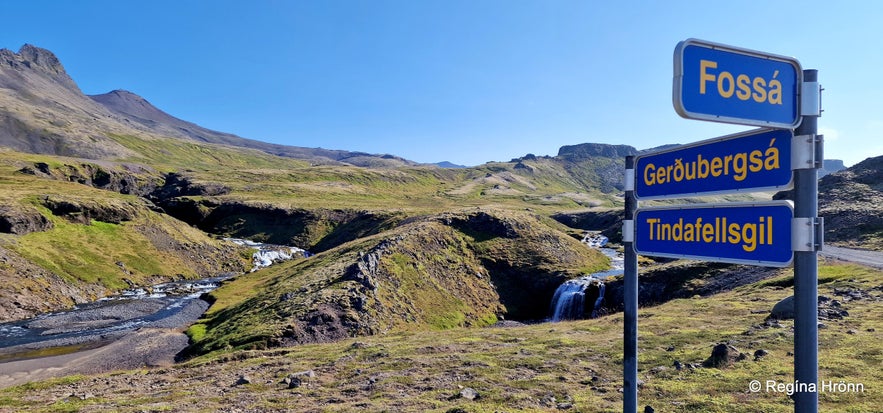
Fossárdalur valley
We then explored Ólafsvík village, which I have written about in another travel blog: Ólafsvík Town and the Bridal Veil Bæjarfoss Falls on Snæfellsnes Peninsula.
Now, let's look back at Jökulháls and the Snæfellsjökull glacier, as I want to tell you about the terrible giantess who lives on Jökulháls.
Skessan á Jökulhálsi - the Giantess on Jökulháls - Icelandic Folklore
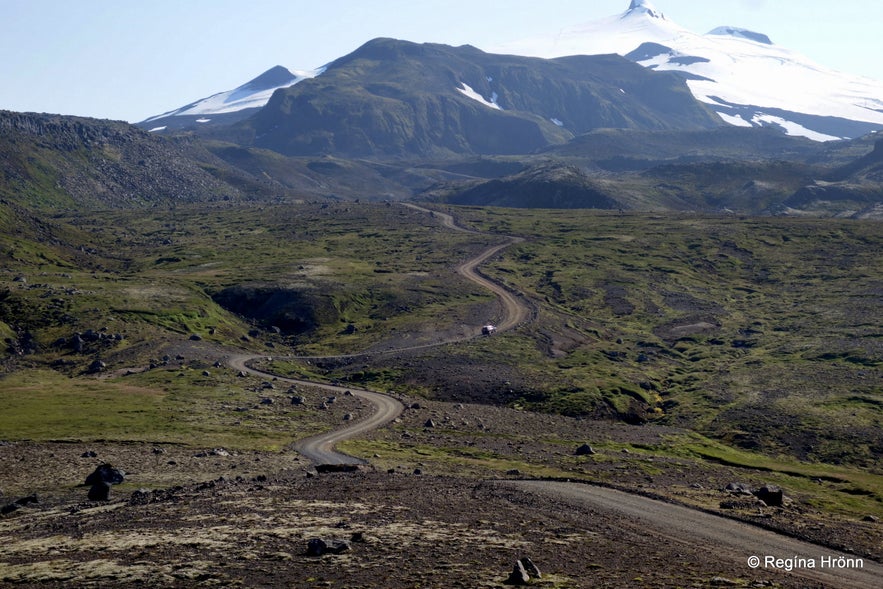 Looking back at the Snæfellsjökull glacier - I think this valley is called Gerðubergsdalur
Bárður Snæfellsás is not the only mythical figure in this area; our folklore also tells the story of a giantess who lives at Jökulháls mountain pass.
The story goes like this, translated into English:
"Vigfús Helgason, who lived for a long time at Hallbjarnareyri, was in his youth at Hellnar. He was the father of Ásgrímur Hellnaprestur, the minister of Hellnar.
One winter, the inhabitants faced a severe food shortage, and there was no food to be found anywhere except in Ólafsvík.
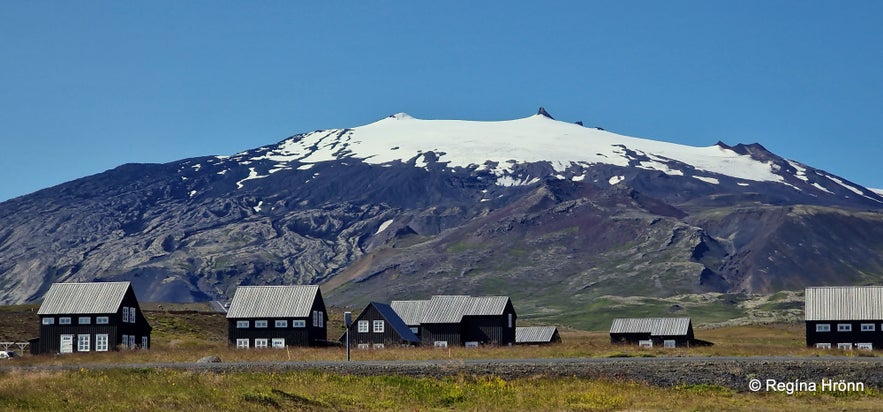 Snæfellsjökull glacier towers over Hellnar
A group of men decided to ride and walk across Jökuháls mountain pass, as it was passable at the time.
Vigfús was in charge of the expedition and was the only one who was riding a horse.
The trip went smoothly, and they bought provisions in Ólafsvík, loaded their horses, and returned home across the mountain pass.
Vigfús stayed for a little while behind, so he was a solo traveller across Jökulháls, as the others were way ahead of him.
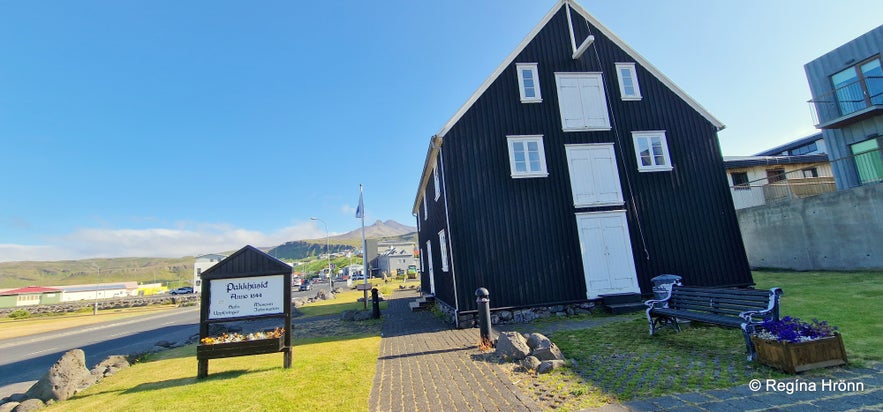 Pakkhúsið - the Warehouse in Ólafsvík was built in 1844
As he had almost reached the highest point of the mountain pass, he saw a giantess coming from the direction of the glacier. She was not tall, but extremely fat, and she walked very briskly.
Vigfús was startled and rode his horse as fast as he could. The giantess also hurried up, walked much quicker, and after only a short while, she reached the horse and then passed it.
She had gold on every finger and a cap with a tassel (skotthúfa).
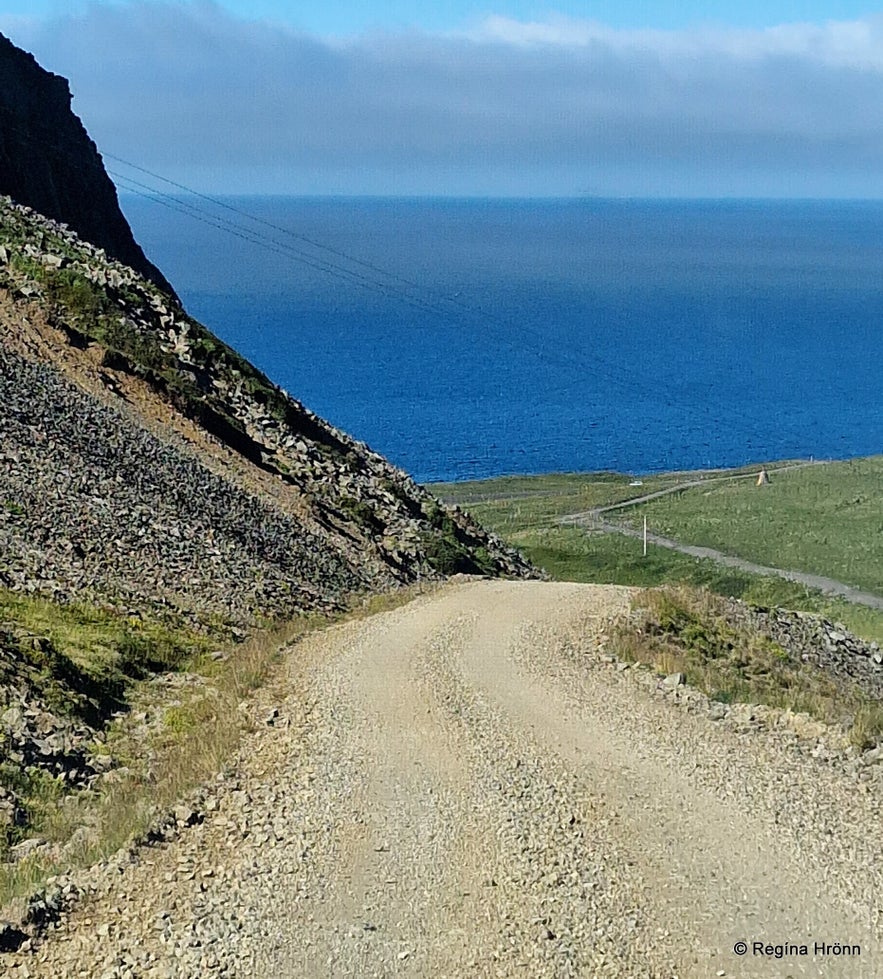 The group must have passed through Fossárdalur valley
She started talking to Vigfús gently, but he didn't understand her language. She wanted him to join her on the glacier, but Vigfús struggled to continue on his journey across Jökulháls.
As the giantess realized that Vigfús was not willing to accompany her, she took the reins of the horse and tried to lead the horse by the reins to the glacier by force.
Vigfús tried to loosen her grip on the reins but failed. So he had no choice but to take a knife from his pocket and cut across the giantess's wrist.
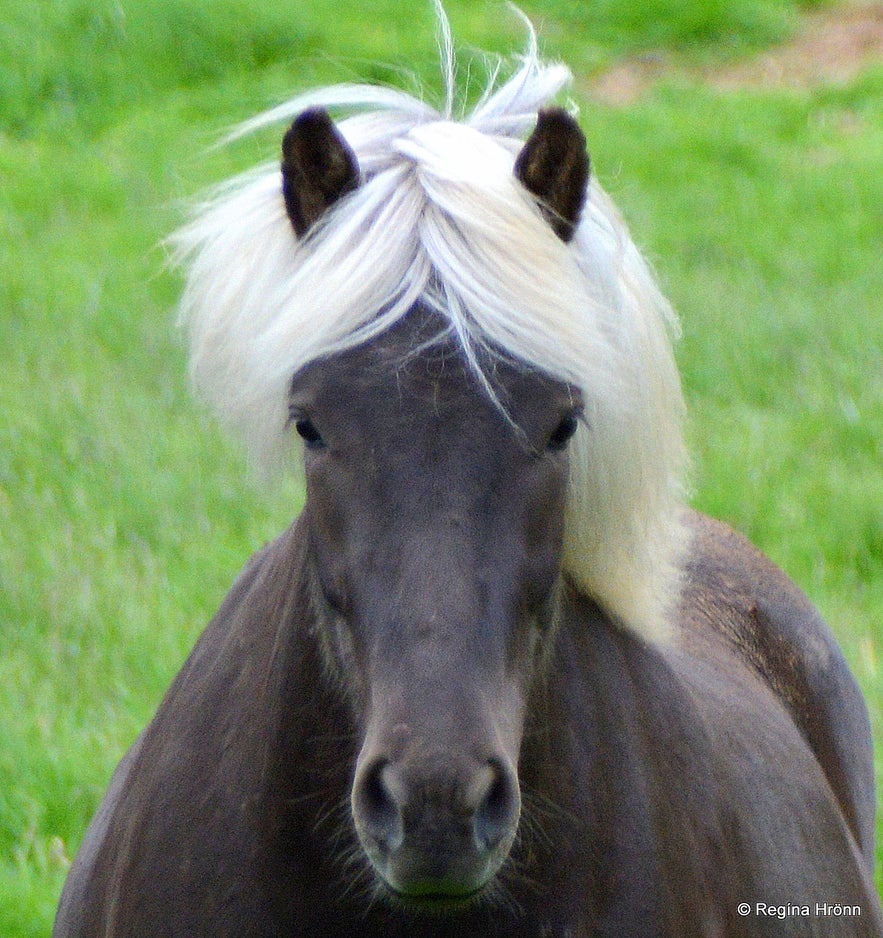 An Icelandic horse
The giantess thus lost the grip of the reins, and Vigfús acted quickly and rode away as fast as he could. He heard the giantess yelling something far from pleasant, but he didn't understand her.
He managed to escape her and reached his men at Stapaklif. They noticed blood on his clothes, the blood of the giantess!
They asked him what had happened, and he told them the story.
The giantess might have yelled a curse at Vigfús as he and some of his sons faced great adversity. This curse seems to have become an ancestral curse, and there were some strange men in this family."
(Translated into English from Þjóðsögur Jóns Árnasonar - the Compilation of Folklore of Jón Árnason - Volume III, pages 231-232).
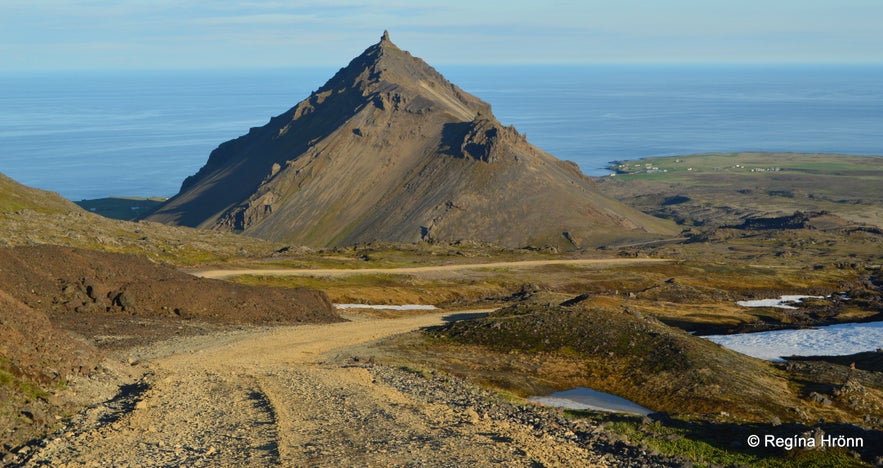 Mt. Stapafell - descending from Jökulháls on the south side of the peninsula
The abovementioned Vigfús Helgason was born around 1720. In 1762-1778, he was the manager of the leprosy hospital at Hallbjarnareyri here on the Snæfellsnes peninsula.
Other men than Vigfús have also claimed to have met a giantess while passing the Jökulháls mountain pass.
Icelandic folklore contains quite a lot of troll stories, so we never know...
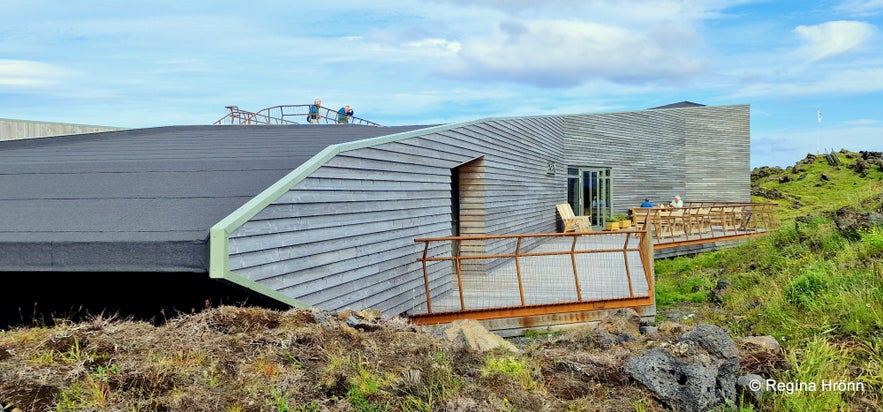 The new Visitor Centre at Hellissandur
Always stop at the Visitor Centre in Snæfellsnes and talk to the local guides before embarking on a trip across Jökulháls, to make sure that it is passable, and check the weather forecast.
Take into account that the annual Snæfellsjökulhlaup run takes place in late June (around the 22nd of June), on Jökuldalsheiði heath, and the runners run from Arnarstapi 22 km across the mountain pass to Ólafsvík.
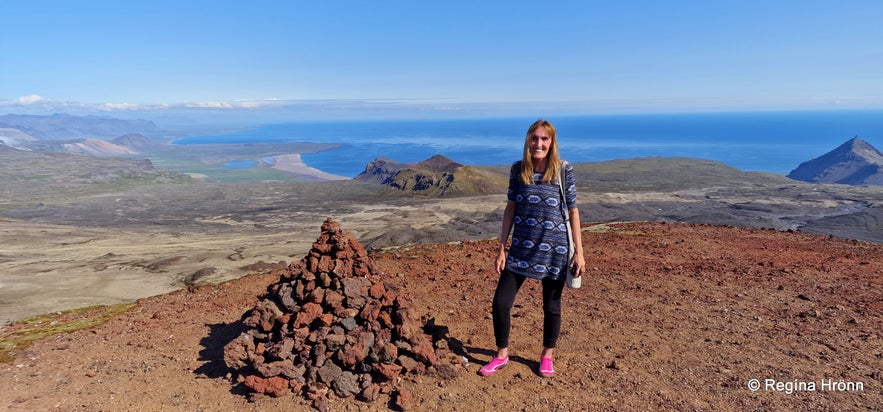 On Jökulháls mountain pass
There are a couple of other shortcuts on the Snæfellsnes peninsula that will take you from the southern part of the Snæfellsnes peninsula to the northern part.
One such route is the Vatnaleið route number 56, which will take you to Stykkishólmur town, and the Fróðárheiði route number 54, leading to, for example, Ólafsvík village.
There is yet another route, gravel road 55, that I have driven, which will take you directly to Skógarströnd.
Jökulháls mountain pass is, in my opinion, the most scenic route.
Have a lovely time on the Snæfellsnes peninsula :)
Ref.:

Hi, my name is Regína Hrönn, and I was born and raised here in Iceland.