After we visited Rauðinúpur cape at the northwest corner of the Melrakkaslétta plain peninsula, we continued south and visited one of the peninsula's two villages, Kópasker.
The inhabitants of Kópasker are only approximately 121, and meat processing is the biggest industry here.
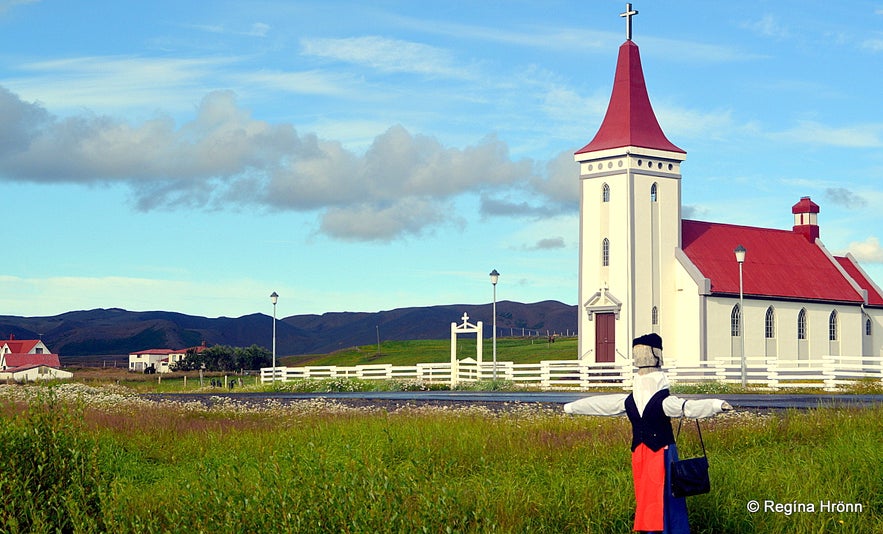
Top photo: Snartarstaðarkirkja church at Kópasker
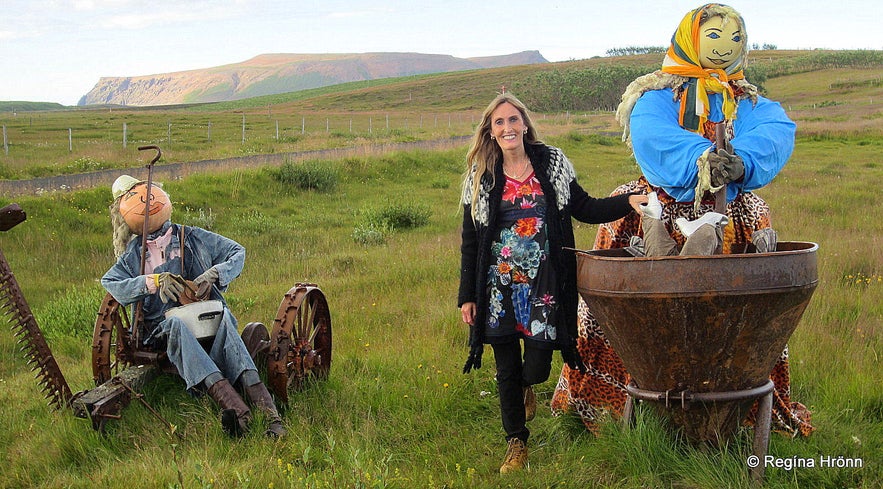
By 2 of the characters at Kópasker made by the artist Sigurlína
Just outside of Kópasker village, we came across some more fun characters made by the Icelandic artist Sigurlína J. Jóhannesdóttir. We had also seen such figures in Raufarhöfn, where we were staying.
The land by the farm Ás and Snartastaðir II was filled with these figures.
Sigurlína started putting up these characters some 30 years ago. They act as scarecrows, but now more and more of them have been made to attract attention, mainly the attention of kids travelling in this area.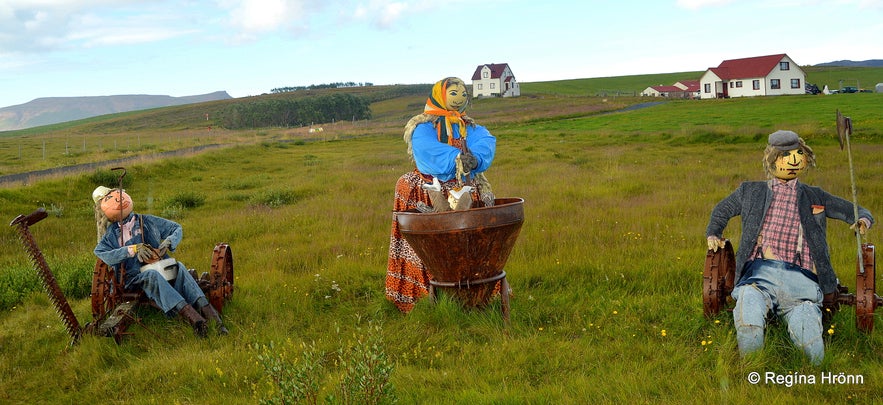
Grýla and Leppalúði
That way, the kids will remember where Kópasker is when they return home, the village with all the dolls :)
The dolls are not anonymous, as they each have a story of their own,
Many of them are cooking food, and if you look closely, you can see that one of them is cooking a kid in her cauldron! These two characters are from our folklore: Grýla and Leppalúði, the parents of our Icelandic Yule Lads. 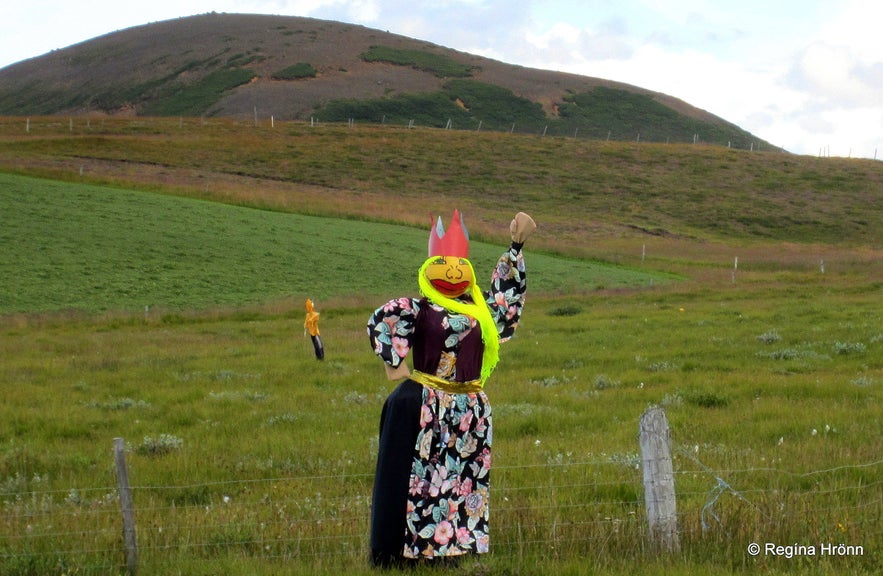
The hitchhiking queen
And one of them, the queen with the crown, is hitchhiking :)
I love stuff like this; it adds life to the surroundings.
There are more things of interest at Kópasker, and we visited Skjálftasetrið - the Earthquake Center.
From December 1975 to January 1976, there was repeated seismic activity at Kópasker, which accumulated and resulted in a major earthquake on the 13th of January 1976.
This earthquake is called the Kópasker Earthquake and measured 6.3 on the Richter Scale.
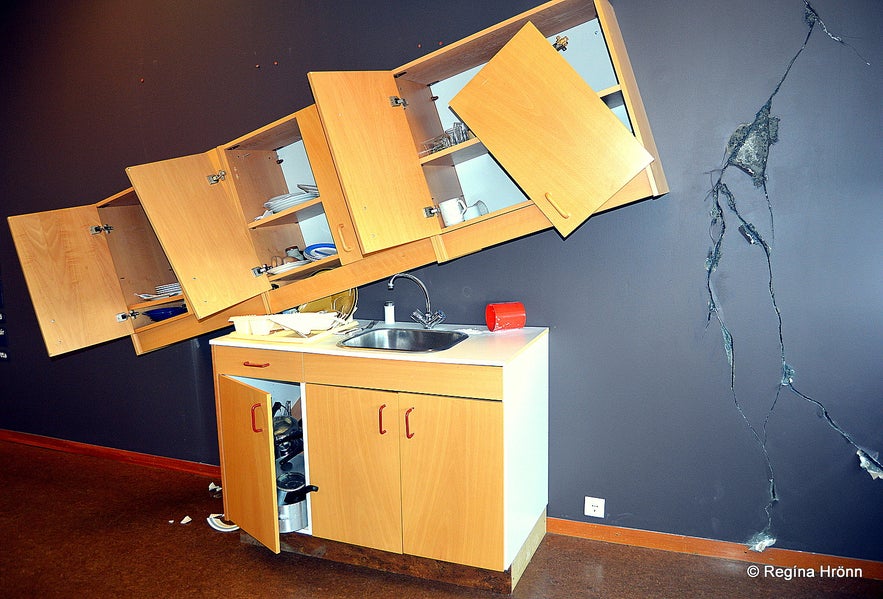
At the Earthquake Center in Kópasker
The earth was ripped apart in the earthquake, the harbour wall exploded in several places, and the road was damaged.
Houses got damaged, and the water pipe broke, so the little village was without water. People were injured, but fortunately, nobody was seriously injured.
The Earthquake Centre is located in the schoolhouse at Kópasker and was opened on our National Holiday, the 17th of June 2009.
Here, one can learn all about the earthquake and its effects on the inhabitants and neighbouring areas.
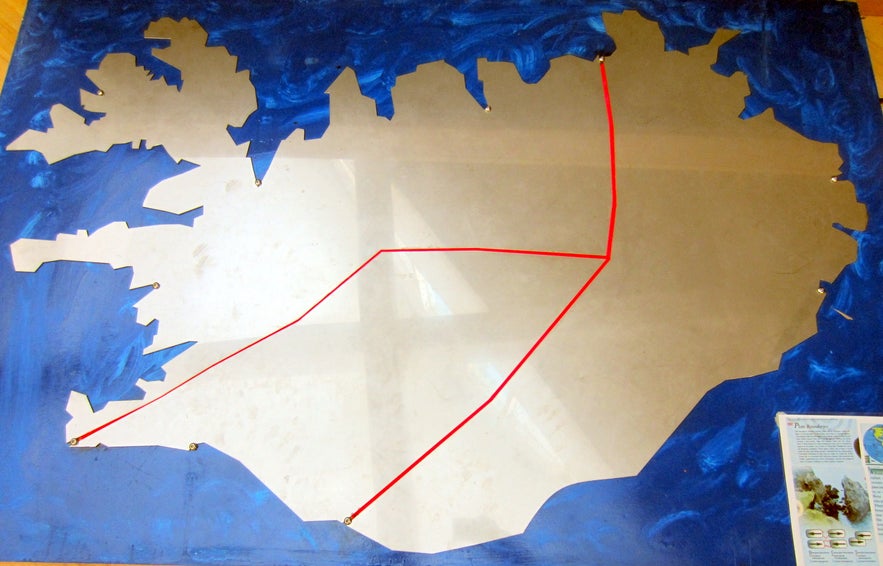
At the Earthquake Center in Kópasker
And learn about the plate boundaries in Iceland, as Iceland lies on the Mid-Atlantic Ridge, split by the North American Plate and the Eurasian Plate.
A new graben was formed during the earthquake, and a new lake formed south of Kópasker. It was appropriately named Skjálftavatnið or Lake Earthquake.
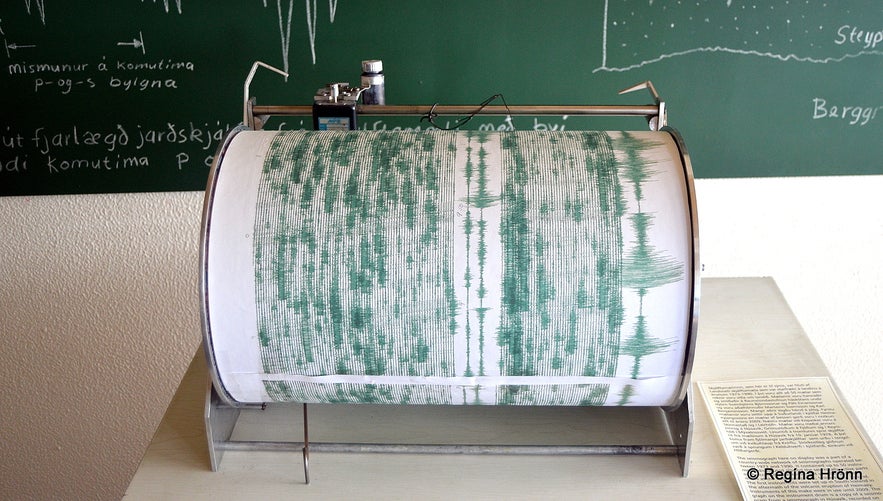
At the Earthquake Center in Kópasker
There are pictures on the walls and accounts of the inhabitants on how the earthquake affected their lives.
There is also an earthquake simulator, where one can feel how strong this earthquake was. I tried it, and it was pretty scary.
The Earthquake Centre is open during the summer months, with free admission.
At Kópasker, you will find another museum, the Folk Museum, called Byggðasafn Norður-Þingeyinga. I love visiting Folk museums and seek them out on my travels.
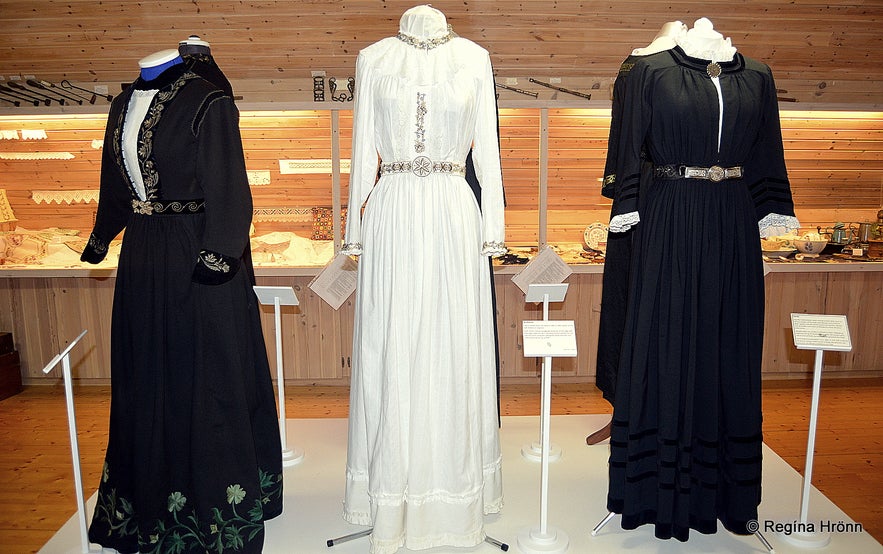
The national costumes and a wedding dress at the museum
At the museum, one can find all kinds of old artifacts. And a lot of homemade textiles. I loved the national costumes with the wedding dress in the middle. When I visited Kópasker, I had just got married and was very much into wedding dresses ;)
This dress belonged to Guðrún Halldórsdóttir (1882-1949), but she made her own wedding dress when she was 17. I think it is wonderful.
She was not allowed to marry until she was 18, and in the meantime, she made this beautiful wedding dress.
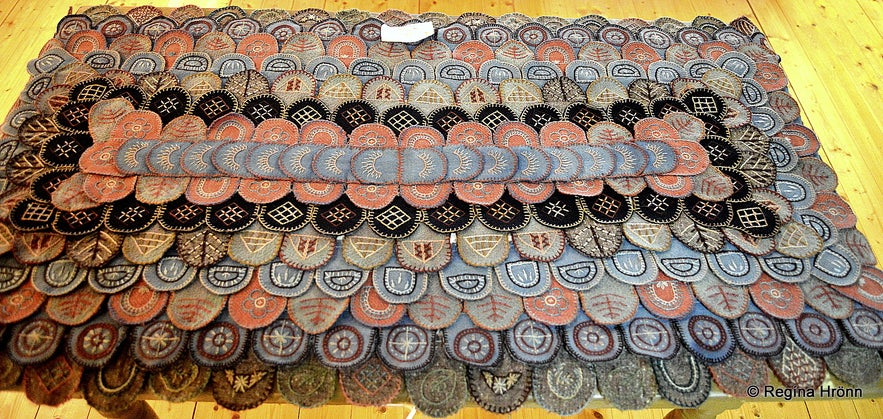
A rug at the museum, made out of woolen patches, created by Unnur Árnadóttir in the 1940s and 1950s
What also caught my eye was a beautiful rug made from woolen patches by Unnur Árnadóttir in the 1940s-1950s. It is pretty unique.
On the second floor, you will find a small library, which was a gift to the Folk museum from a farmer in the vicinity.
He was also a bookbinder and bound books and gilded them - excellent really. It is well worth a visit, and one can borrow books there.
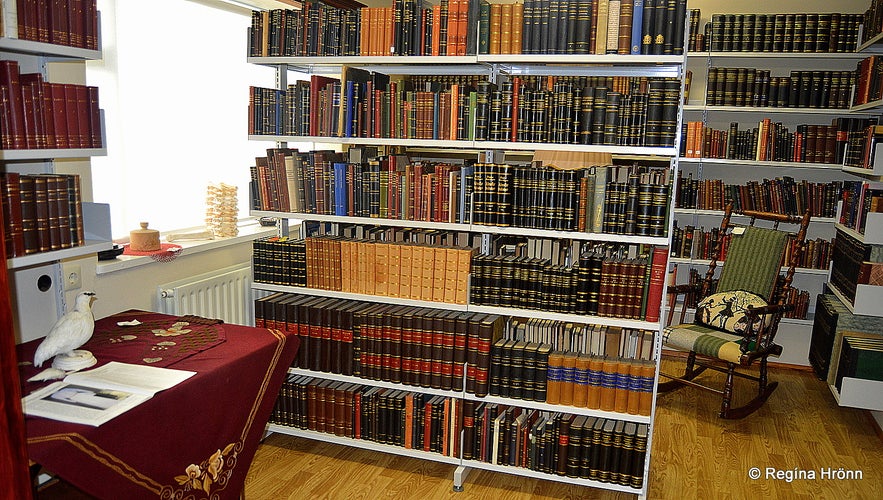
A small library at the Folk Museum at Kópasker
The museum displays a myriad of objects used on the farms in the olden days, and the collection is very varied. It is a pure delight to drop by for a visit.
Don't miss visiting it when you are travelling in this area.
We now left Kópasker village and drove further south as we had heard of a Grettisbæli - a lair of Grettir the Strong in the mountains south of Kópasker.
I have written about Grettir in a previous travel blog and will show you one of his lairs in my next travel blog.
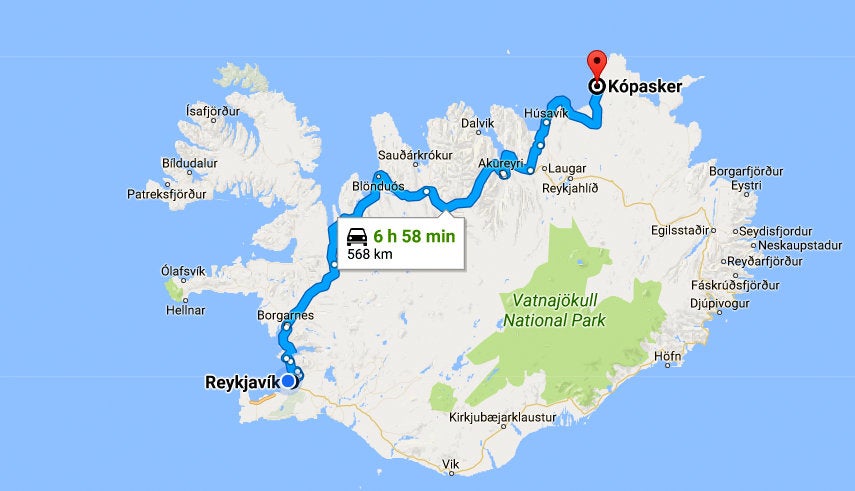
To visit this area, you can rent a car, and the drive up to the northeast corner of Iceland will take a couple of days at a leisurely pace.
In the vicinity, by the busy and ruggedly beautiful Jökulsárgljúfur canyon, you will find a myriad of visitors.
Do take your time to visit these lesser-visited parts of Iceland, where you will experience the real pace of life of Icelanders living in remote areas.
To visit this area, you can rent a car and drive north.
Have a lovely time in Melrakkaslétta off the beaten path in Iceland :)

Hi, my name is Regína Hrönn, and I was born and raised here in Iceland.