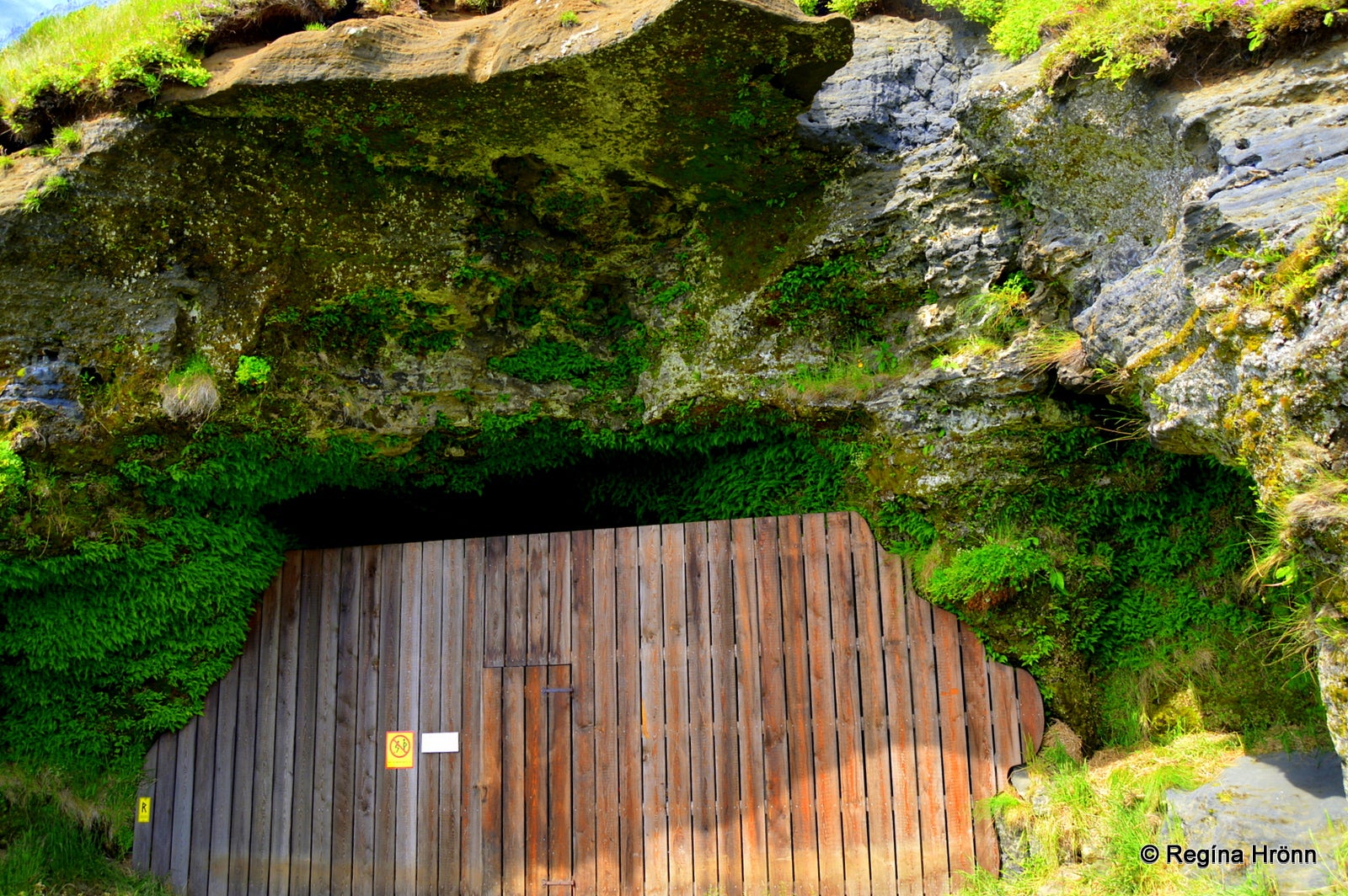
There are supernatural stories associated with Steinahellir cave, some of which tell of ghosts and the hidden people of Iceland.
One of them tells us about the wrath of the hidden people if we dare do one forbidden thing in the cave!
In this travel blog, I am going to tell you these stories and other interesting happenings in the Steinahellir cave, including a rebellion against the authorities.
Top photo: the entrance to Steinahellir cave
 Inside Steinahellir cave
Steinahellir cave is believed to have been a natural cave that has been broadened and deepened.
Holtsós estuary almost reaches Ring Road 1 by the cave, and when the sea rose higher, it might have eroded a cave into the sandstone.
The cave is approximately 20 meters long, 9-10 meters wide, and 6-7 meters tall, but it gets lower when you walk further inside it (ref. Manngerðir hellar á Íslandi).
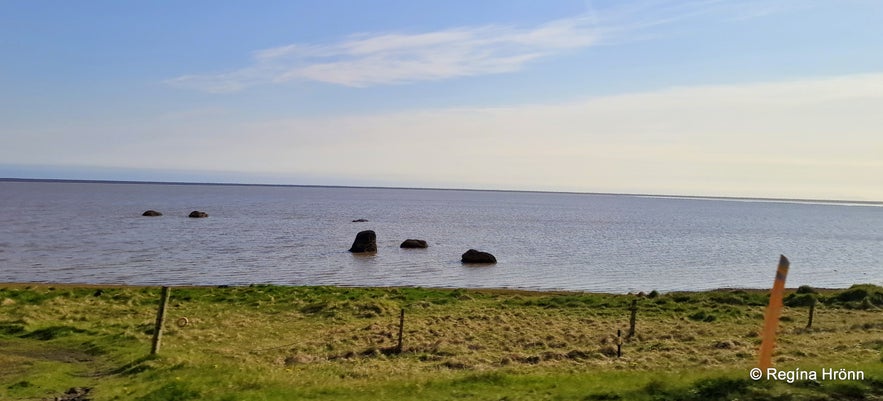 Holtsós estuary by Steinahellir cave
Close by is Steinar farm, which takes its name from 2 stones on which the old Steinakirkja church was built. They are called Kirkjusteinar - Church Stones.
Like so many other caves in Iceland, Steinahellir was used to keep sheep and has also served as a machinery shed. At one time, ships were built by the Steinahellir cave.
Then it changed its function and served as the site of Eyfellingar's local parliament from 1818 to 1905.
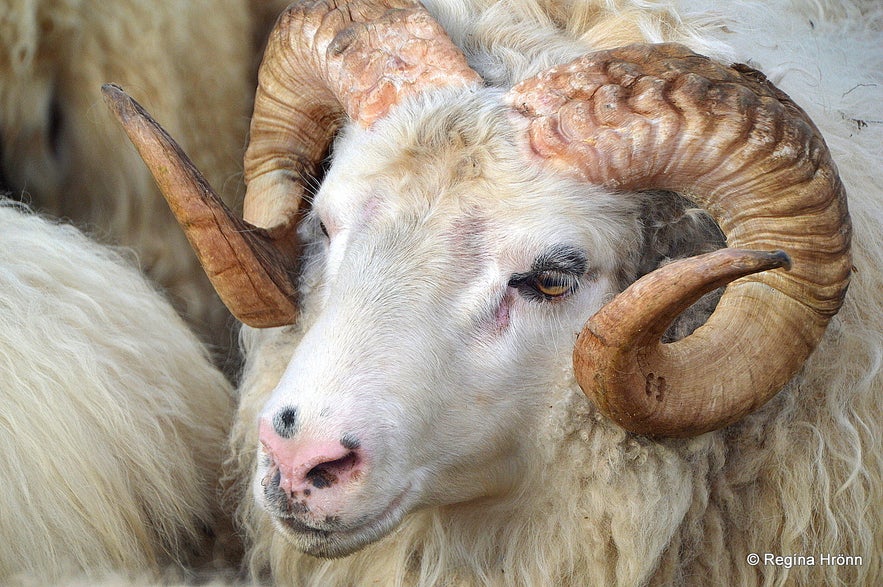 Icelandic sheep
Back then, it was paneled with windows and a locked door, and there were benches and a parliament table inside.
A parliament table from that time is preserved at Byggðasafnið Skógar, which I recommend visiting.
An auction of church objects was held on the 13th of June 1893 in Steinahellir cave, when Skógakirkja and Steinakirkja farm churches were disused.
Rebellion by Steinahellir cave
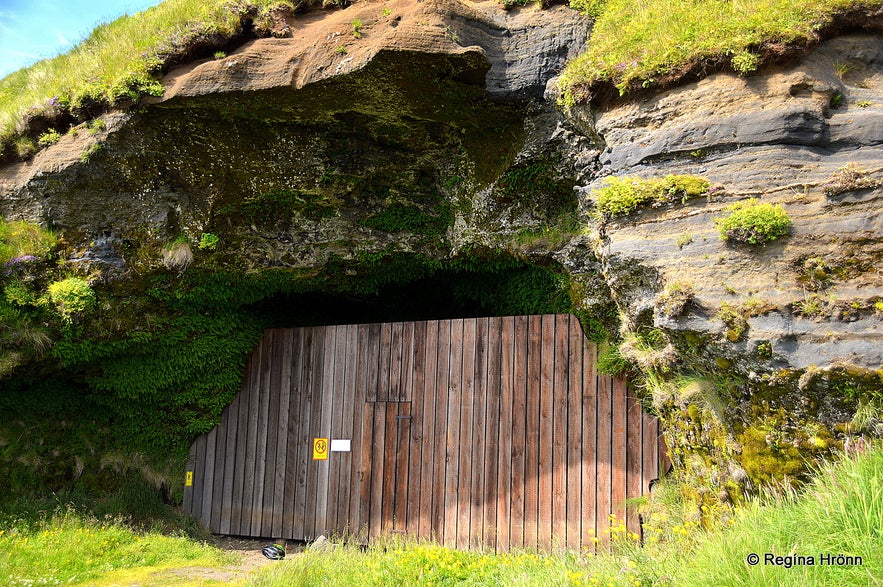
Steinahellir cave
Eyfellingar (the people living in this area) were feisty people. In 1858, Eyfellingar rebelled when the sheriff of Rangæingar and Prefect Trampe ordered the farmers to wash all their sheep to get rid of sheep scab.
Sheep scab had been discovered in some parts of Iceland, but had not reached this area.
The farmers bluntly refused to budge despite strict orders from their authorities. So the sheriff and the prefect ordered them to meet up at the parliamentary assembly in Steinahellir cave on a set date and time.
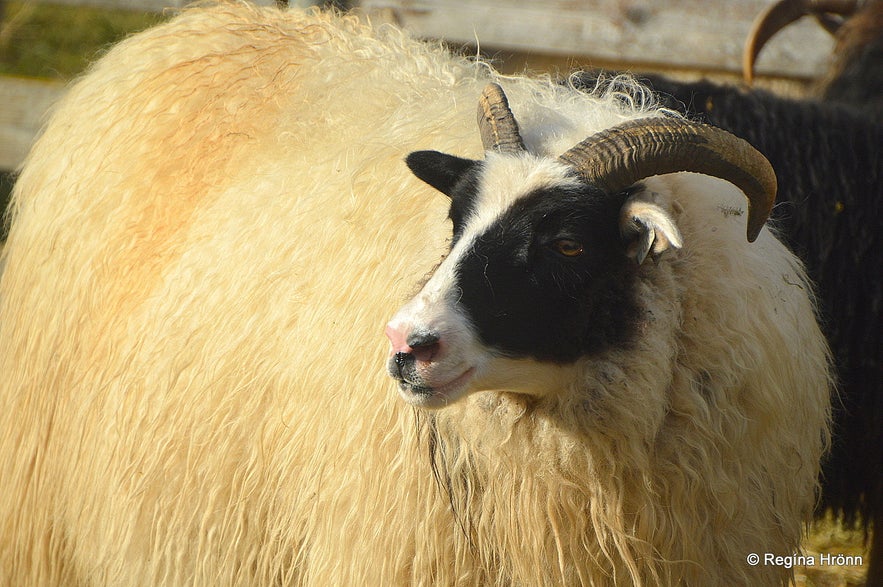 Sheep scab didn't reach this area of Iceland
Around 80 of the farmers showed up, and when the prefect and sheriff once again ordered them to wash their sheep, the farmers were livid.
They surrounded the sheriff, armed with whips, drove him to Lake Hellisvatn (Cave Lake) in front of Steinahellir cave, and threatened to bathe him instead.
The sheriff was petrified and couldn't escape the angry farmers, and when Prefect Trampe realized they had been overpowered, he told the farmers they could postpone bathing the sheep until next fall.
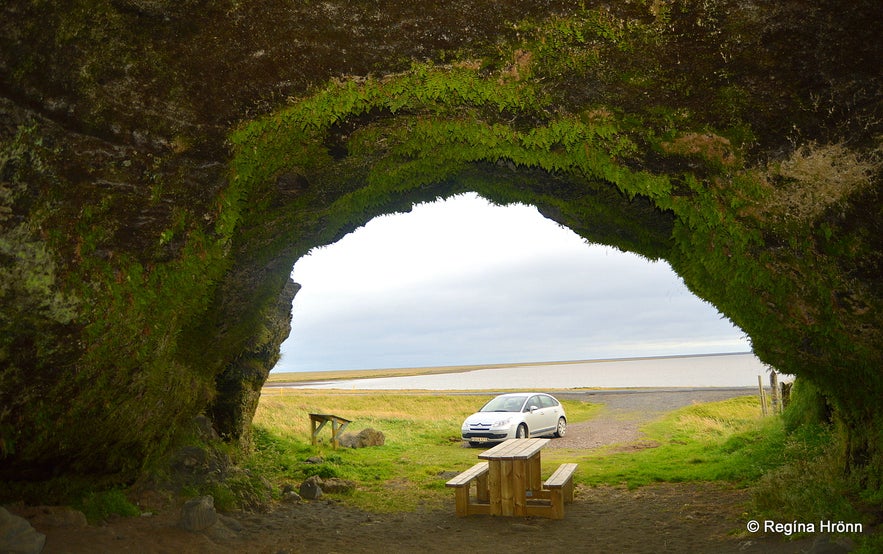
The Holtsós estuary almost reaches the main road
The farmers were adamant about not bathing their sheep at all, and Trampe had to give in and tell them they only had to wash their sheep if the sheep scab reached this area, which it never did.
Floods and falling rocks
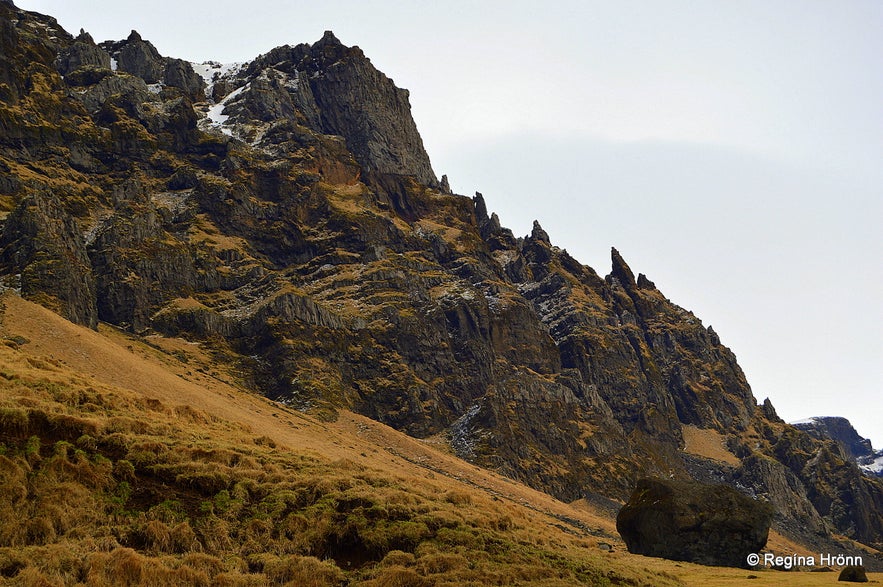 Boulders below Mt. Steinafjall
There is room for 60 sheep in Steinahellir cave. Nine sheep died in the cave in 1907 when rocks from the roof fell on them.
It had been foretold by the seer Jón Krukkur (16th century) that rocks would fall on the parliamentary members, but, fortunately, that didn't come true.
In 2011, rocks fell in the cave after heavy rain, which affected the edge above the mouth of the cave. Fortunately, nobody was hurt.
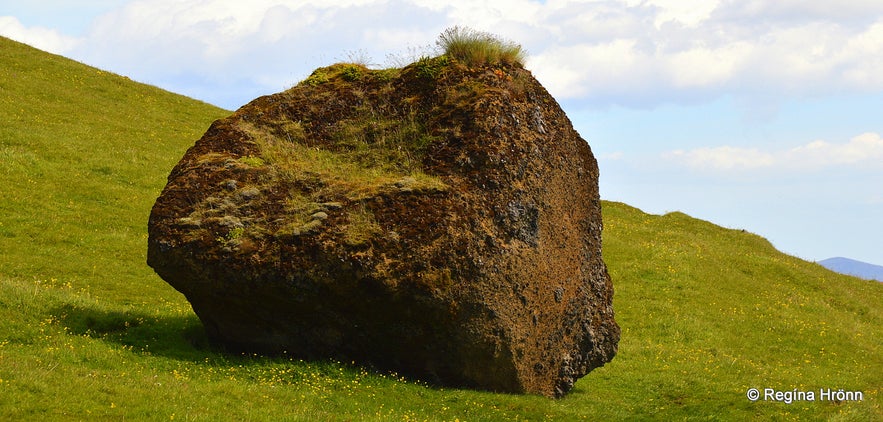 A boulder close to the Steinahellir cave
There have also been many rockslides and swellings of the Steinalækur creek in Mt. Steinafjall, and in 1604, a huge boulder came rushing down the mountain.
It headed straight for the farms, damaged them, then crossed the graveyard and entered the Steinakirkja church.
It broke everything inside the church to pieces and stopped at the pulpit. It took 12 strong men with tools to remove the boulder (Steinar undir Eyjafjöllum).
 Drangurinn in Drangshlíð is another rock, a little bit further east of Steinahellir cave
You will see many huge boulders beneath the ruggedly beautiful Eyjafjöll mountains, which have come rushing down the hills at some time.
Some of them have stories about hidden people connected to them, such as Drangurinn in Drangshlíð and the Elves in South Iceland - Icelandic Folklore.
 This boulder by Steinahellir cave almost reached the road
In March 2025, the driver of a car died when a boulder came tumbling down the hill of Mt Steinafjall. The other two passengers in the car got minor injuries.
They were all tourists visiting Iceland. What a tragic accident :( So please keep in mind the dangers when driving in this area.
The 1888 flood in Steinalækur Creek
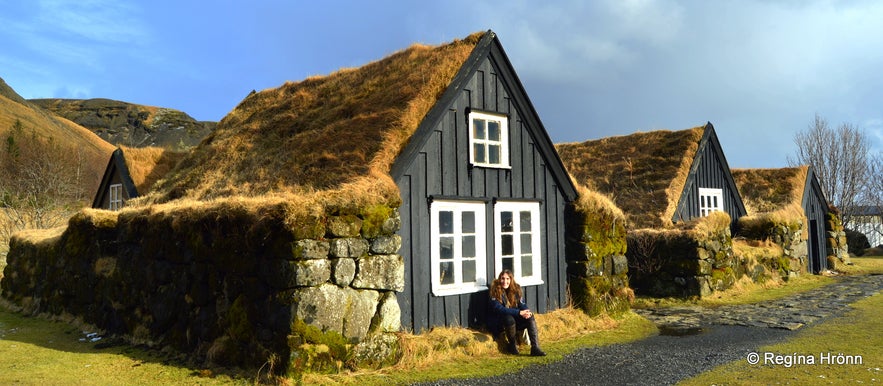 Back then, people in Iceland lived in turf houses similar to the turf houses at the Skógasafn Museum
In 1888, a major flood hit the Steinar farms, severely damaging them (there were eight farms at Steinar at the time).
The small Steinalækur creek had turned into a water torrent and came rushing towards the farms.
The farmers had built a protective wall above the farms to protect them from falling rocks, but it didn't protect them from this massive swelling of the creek.
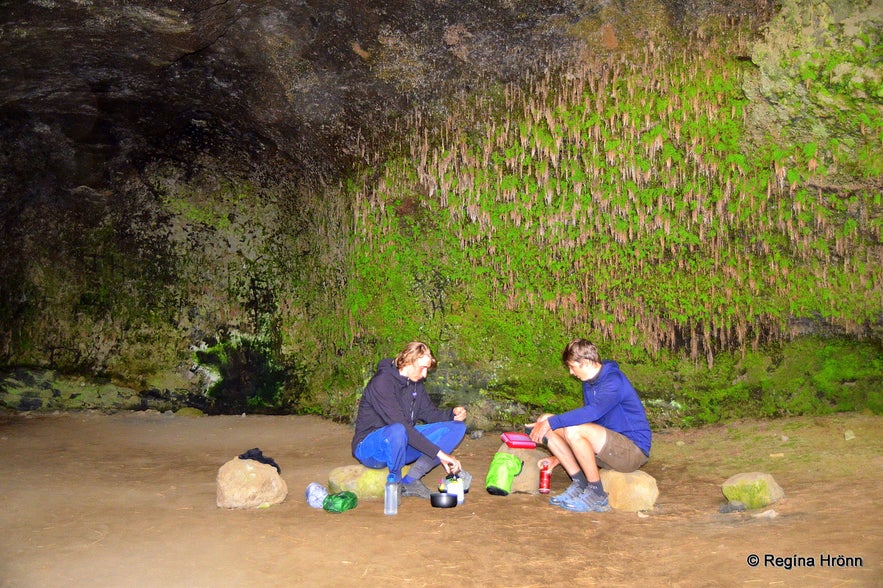 Inside Steinahellir cave - do not light a camping gas stove in the cave - the cave is protected and enchanted
The farmers managed to let the lambs out of the lamb house, and the cows were taken to Steinahellir cave, where they were safe from the flood.
Several people guarded the cows at Steinahellir during the flood, and they were milked in the cave in the evening.
The church bells at Steinakirkja church were rung for salvation during the flood.
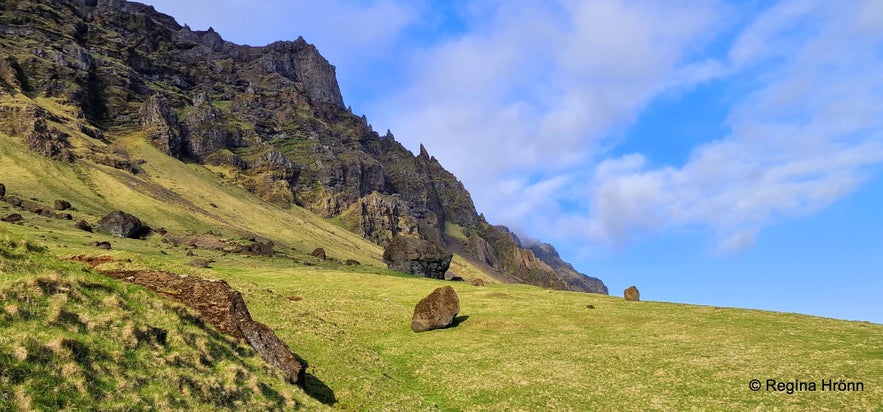 Many boulders have fallen from Mt. Steinafjall by the Steinahellir cave
The seer Jón Krukkur (Krukkspá) had predicted that Steinakirkja church protected the farm from falling rocks and rockslides, so the farmers loved their church even more for its protective role.
But a year later, the Steinakirkja church was unchurched and torn down.
The 1926 flood in Steinalækur Creek
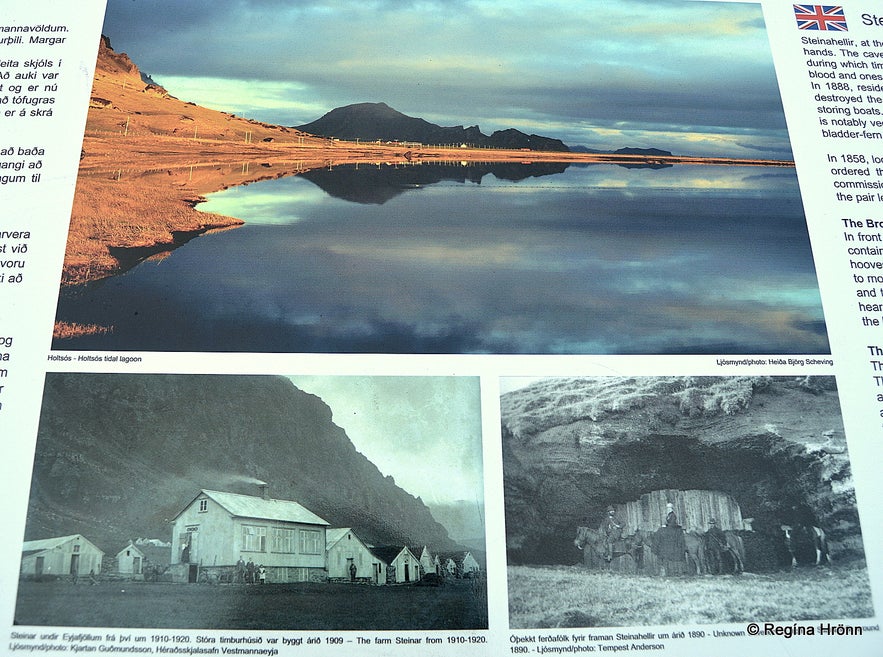
The old sign by Steinahellir cave shows us the farm Steinar
This is not the only misfortune to hit the Steinar farm.
At Christmas time in 1926, the small Steinalækur creek again swelled into a river even more forceful than in 1888.
Heavy rainfall on the south coast caused a flood that destroyed the farm.
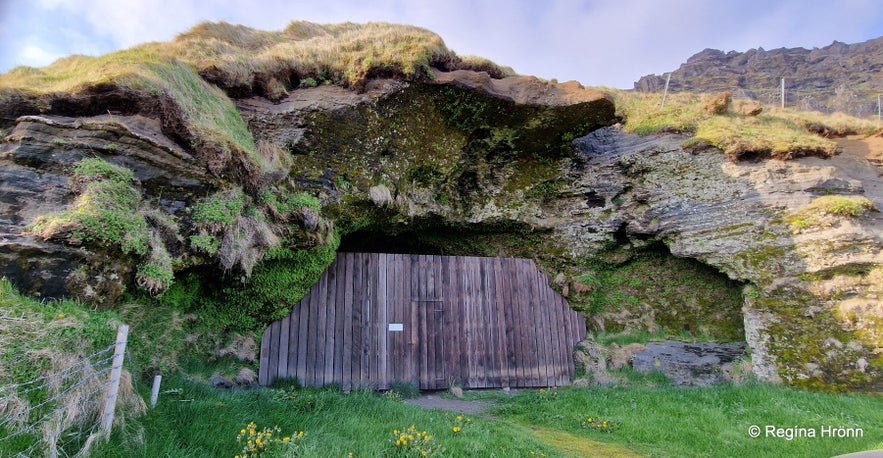 Steinahellir cave in 2025
The farmers and household at Steinar had a narrow escape but managed to save their livestock.
The poor people sat on the remaining roofs until early the next morning.
Two farms, two stalls, five stables, and 3 barns were swept away in this massive, destructive flood.
This put an end to the old Steinar farms, and new farms were built in a safer location on this land.
 Inside Steinahellir cave
I read in the book Álög og bannhelgi by Árni Óla that a farmer who had to sell the Steinar farm for a small price put a curse on the farm: that when the Steinakirkja church was unchurched, the creek would swell into a big river and destroy the Steinar farm.
Ghosts by Steinahellir cave
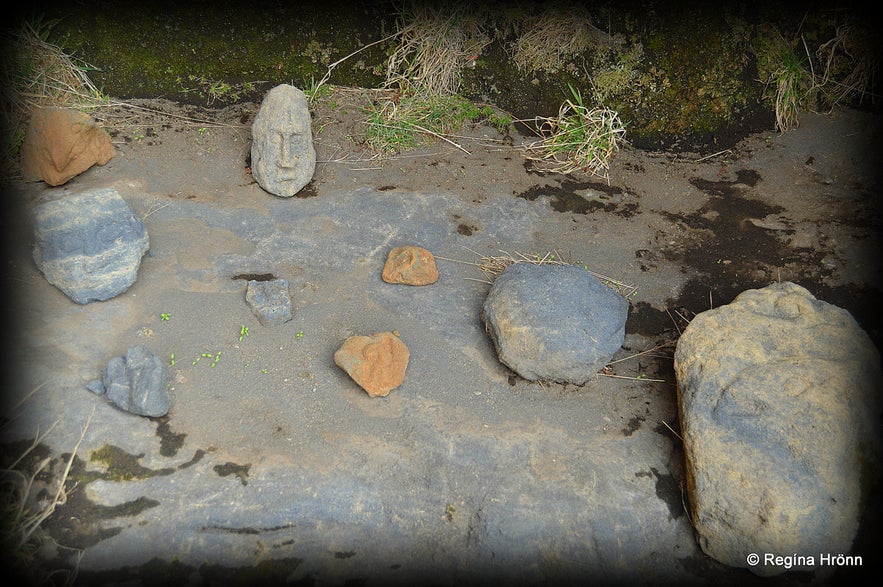
Inside Steinahellir cave in 2014 - these stones are no longer in the cave
There is a story about ghosts in and around the cave, so don't camp overnight near it (camping is only allowed on campsites in Iceland anyway).
I found the story and loosely translated it into English:
"Many years ago, a ship with 14 sailors perished under the Eyjafjöll mountains (I have read that it was on Fjallasandur beach - RHR).
Three of them managed to crawl up on the keel and yelled for help as there were many men on the sand - the ship perished right before it reached the shore - but the surf was so forceful that it was impossible to help them.
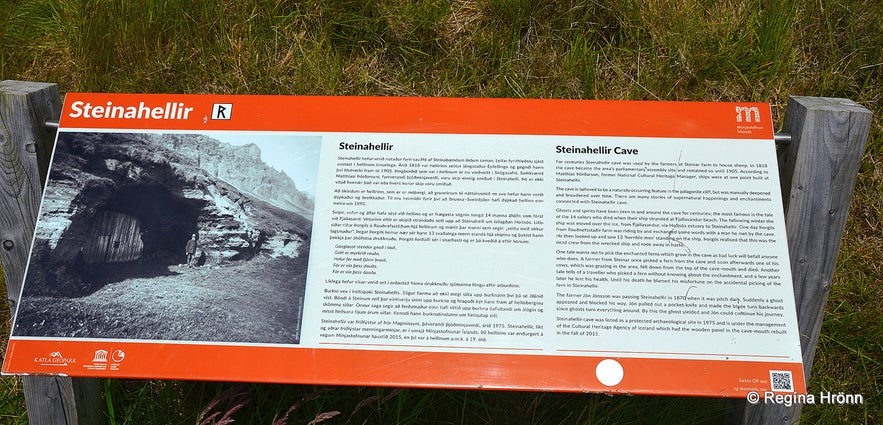 The information sign by Steinahellir cave tells us the story about the ghosts
But as all of the men had drowned, the ship capsized and sailed on its own ashore as if somebody was behind the steering wheel.
The ship was left on the beach until the following winter, when it was pulled across the frozen Holtsós estuary to Steinahellir cave. People were afraid of this ship, and nobody wanted to sail it.
When the ship was being pulled ashore, the shepherds from Steinar farm, who were guarding sheep under the mountains, got startled when they saw all the dead sailors walking behind the ship. And they looked terrifying and ominous.
The ship was kept in a deep depression on one side of Steinahellir cave.
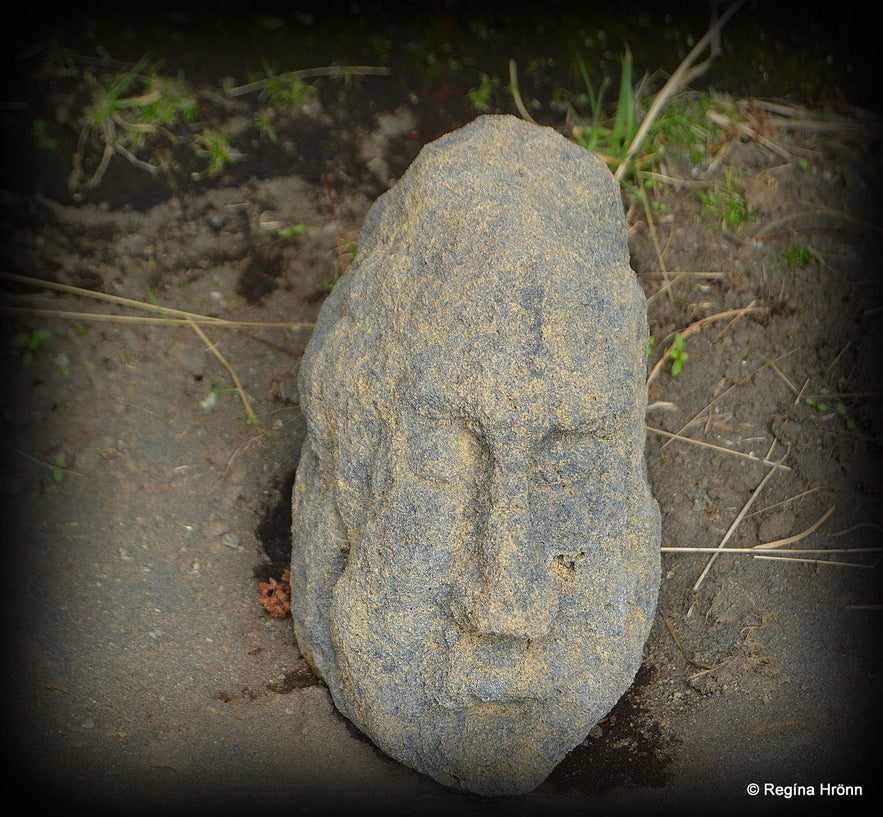
Inside Steinahellir cave in 2014
A little later, a farmer from Rangárvellir, Þorgils by name, from the farm Rauðnefsstaðir, rode by Steinahellir in the winter darkness heading east, but the cave is by the thoroughfare.
After crossing a small creek west of the cave, he met a man whom he didn't recognize. The man said, "Sit by us, mate."
He agreed, not suspecting anything, as the ship could not be seen from the path. He rode with the man, even though his neighing horse protested.
When they reached the depression where the ship was kept, Þorkell saw 13 frightening-looking men standing around the ship.
 Icelandic horses
He was startled when he recognized the dead ship crew from the shipwreck last fall, and realized that these men were ghosts, and he hastily rode away from the cave and the ship.
While escaping from the depression, he heard the ghosts cite a poem that Þorkell memorised:
„Gangslaus stendur gnoð í laut.
Gott er myrkrið rauða.
Halur fer með fjörvi braut.
Fár er vin þess dauða,
Fár er vin þess dauða.“
He rode as fast as he could and reached the farm Steinar on that same night.
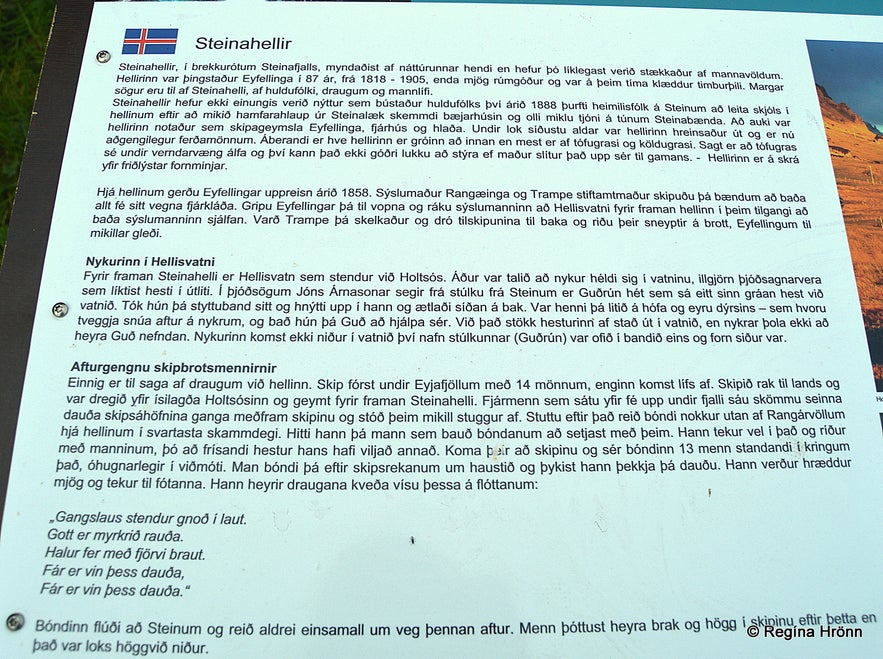 An information sign by Steinahellir cave
Þorkell never again rode alone on this path, and even though it was during the middle of the day, he always asked somebody to accompany him.
The ship was finally chopped down and used as firewood, but before it was chopped down, people had frequently heard knocks and cracks from the ship, especially at night."
(Translated into English from Sagnakver Bj Bj - Draugaskipið - the Ghost ship)
 Sailing on a Viking ship in Iceland
In 1870, the farmer Jón Jónsson was passing by the Steinahellir cave. It was pitch dark outside.
All of a sudden, a ghost stood in front of him on the path and blocked the way.
But Jón knew what to do; he pulled out his pocket knife and turned the blade backward.
This he did, knowing that ghosts turn everything around. The ghost made way for Jón, who could then continue on his journey.
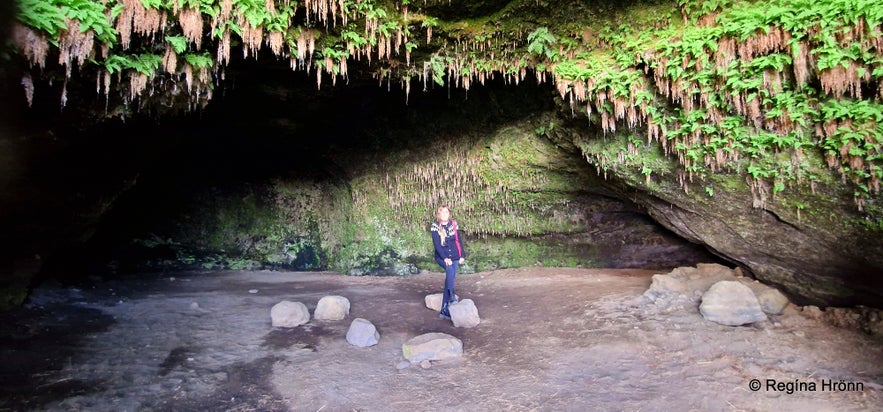 Inside Steinahellir cave in 2025
When I last visited the cave with my husband and our foreign friend, they locked me inside and stood outside, chuckling.
I, knowing these terrible ghost stories that happened by the cave, thought it was less funny ;)
I forgave them as they didn't know these stories.
The enchanted fern in Steinahellir cave
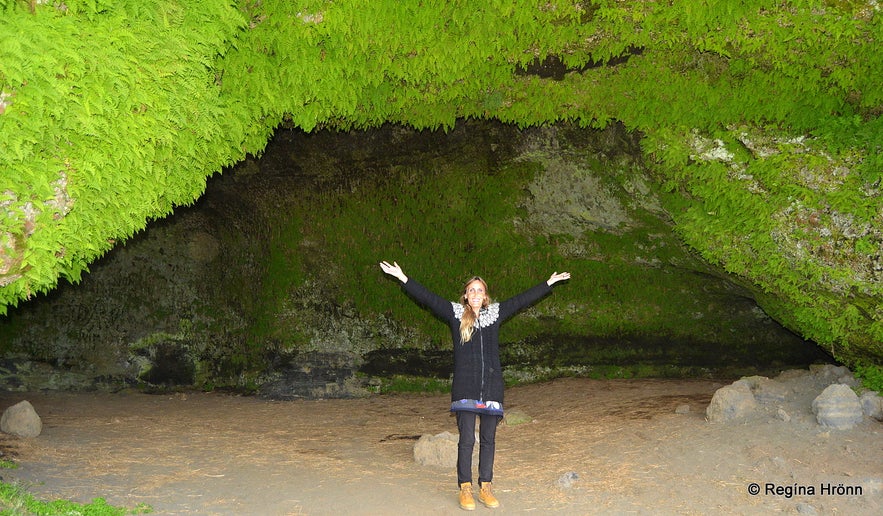
The enchanted green fern covers the ceiling of Steinahellir cave
On the ceiling of the cave, you will find brittle bladder ferns (tófugras).
Icelandic folklore tells us that if you tamper with the brittle bladder fern, misfortune will follow.
So this is an enchanted fern, most likely under the protection of the hidden people in Steinahellir cave.
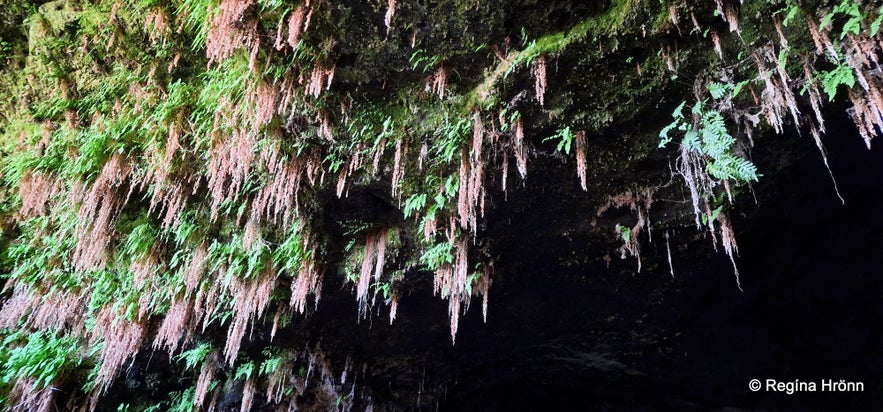 Enchanted fern in Steinahellir cave - this is what it looked like in May 2025
Folklore tells us that one day, a farmer from Steinar farm pulled some fern from the ceiling, and shortly afterward, one of his cows, which was grazing near the top of the mouth of the brittle cave, fell to its death.
We have many stories in Icelandic folklore about the farmers' cows (especially their favourite cow) dying as a result of the farmers' disobedience to the hidden people of Iceland.
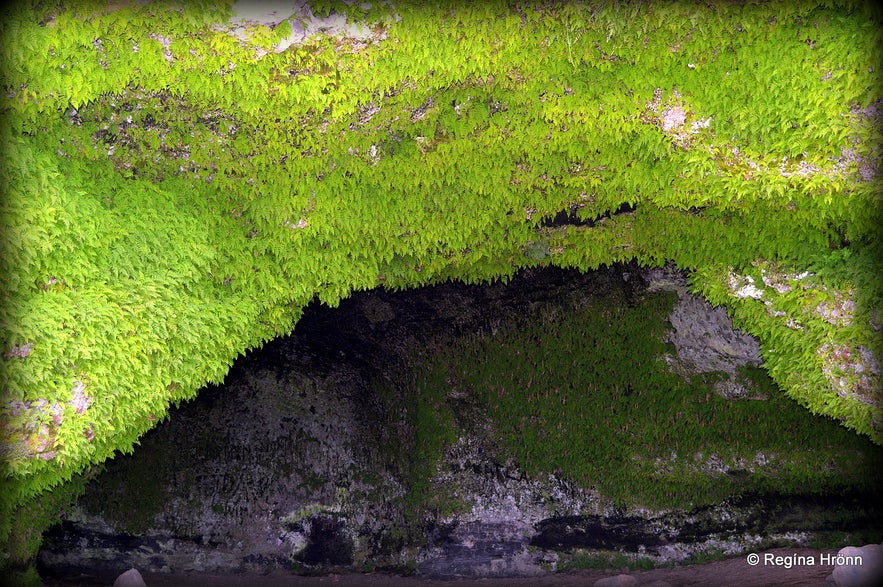
Enchanted fern in Steinahellir cave
There is another account of a traveller, who was unaware of the enchantment of the fern, so he picked it and lost his health.
He found out later that the fern was enchanted and blamed his ill health on the wrath of the elves/hidden people.
Folklore about Steinar and Steinahellir in Þjóðsögur Jóns Árnasonar
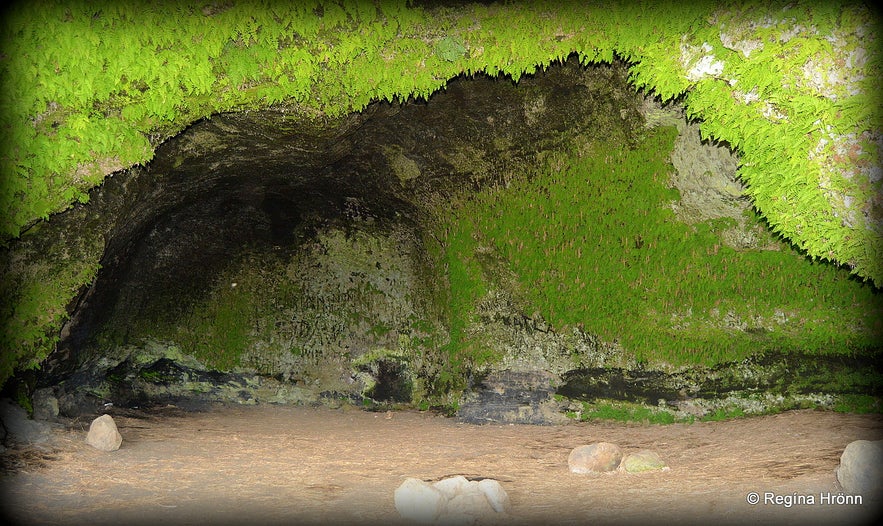
Inside Steinahellir cave
I found some folklore in Þjóðsögur Jóns Árnasonar - the Compilation of Folklore by Jón Árnason about Steinahellir cave (Volume III, pages 17-18):
Hidden people in Steinahellir cave:
"Steinahellir cave is now the site of the parliamentary assembly for the Eyjafjallasveit region for some years after the turn of the century, but earlier the parliament site was at Holt.
For ages, the cave has been used as a sheep barn, especially in bad weather.
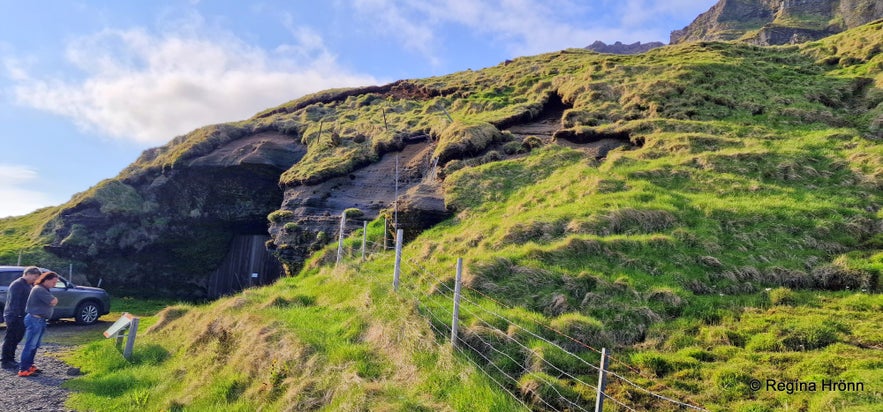 Outside Steinahellir cave in 2025
There aren't many tales about this cave, but all the same, it is considered to be the dwelling of the hidden people - and among other accounts, we have this tale:
Páll Jónsson skáldi (1779-1846), the minister in the Westman Islands, was traveling by the cave one evening with his daughter, Sólveig, who is now a midwife in the Westman Islands.
Sólveig saw crowds by the cave, and she had never seen so many people gathered, but Minister Páll didn't see anything, as he wasn't psychic.
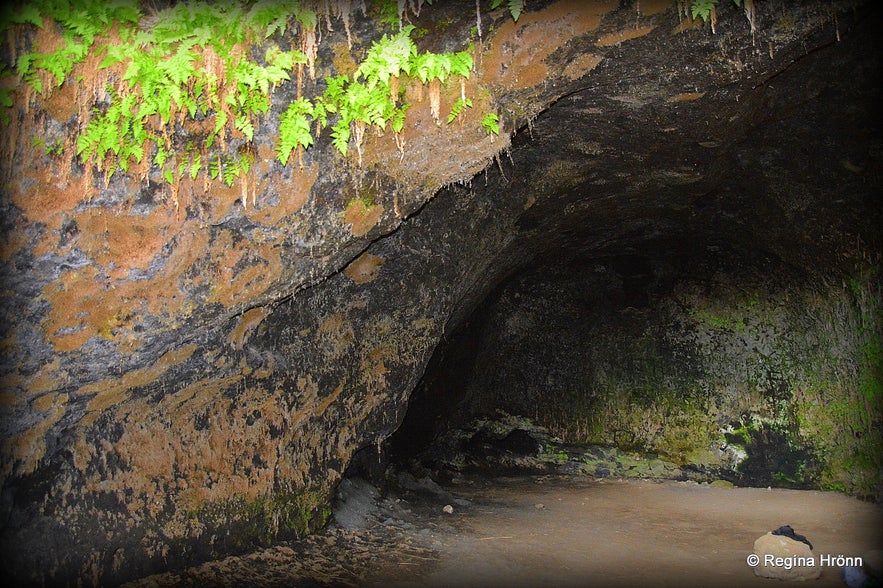
Inside Steinahellir cave
And this folklore also tells us:
The first section of the cave is covered with brittle bladder fern. It is forbidden to tear it down or else misfortune will happen.
Once the district administrative officer, Skúli at Grund (1831-1909), the son of the minister Þorvarður, now at Prestsbakki at Síða, came riding east of the estuary.
It was moonlight and a crust of snow, so it was an easy ride.
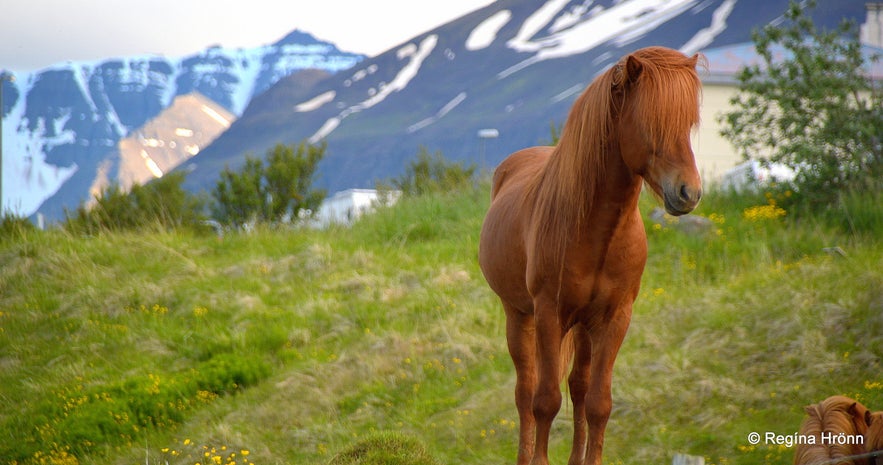 An Icelandic horse
As he came towards the rock in front of the cave door, the horse stopped abruptly and refused to move.
As Skúli tried to force the horse to carry on, it stood on its hind legs, snorted, and made a scene (so to speak).
Skúli was stubborn and zealous and didn't want to give in to the horse, but in vain.
So he got off the horse and examined the area in all directions, but didn't see anything. He then turned east and rode above the cave."
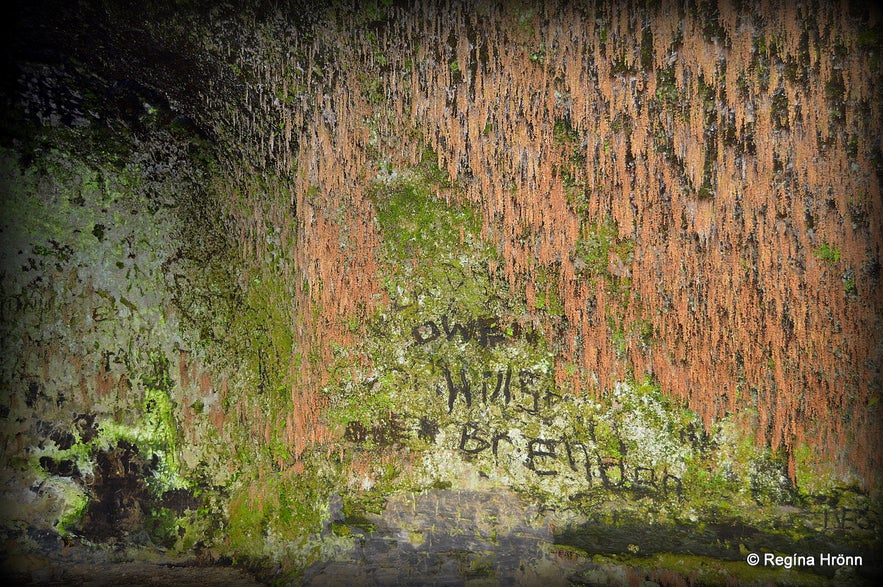
Somebody has carved their name on the walls of the protected cave; please, do not add any more
The noted Þórður Tómasson tells us about Jón Jónsson (mid-19th century), who was the farmer at Klambrir undir Eyjafjöllum (beneath the Eyjafjöll mountains).
Jón Jónsson was psychic and once dined with the hidden people in (or inside the rock) at Steinahellir.
The hidden people offered him the hip of cured sheep (ram) (hangna sauðarmjöðm), and he learned the following grace from them:
"Matur í munn,/ kross á brjóst,/ heilagur andi í hjarta" - "Food in the mouth/cross on the chest/the Holy Spirit in the heart".
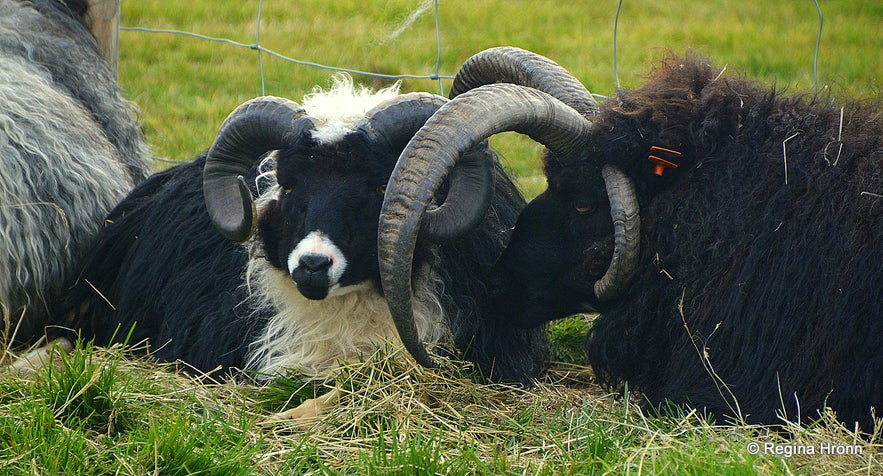 Icelandic rams
Steinahellir is also mentioned in volume III, page 44, where it is noted that the ships were by Steinahellir cave, as so often was the case.
At Steinar farm near the cave, a woman named Margrét Rafnkelsdóttir (1747-1836) often saw and heard the hidden people.
The hidden people fetched water in the well-house, and she always kept it open for them. She could also hear them in the kitchen, the folklore tells us, and the pleasant smell of smoked lamb would reach her room.
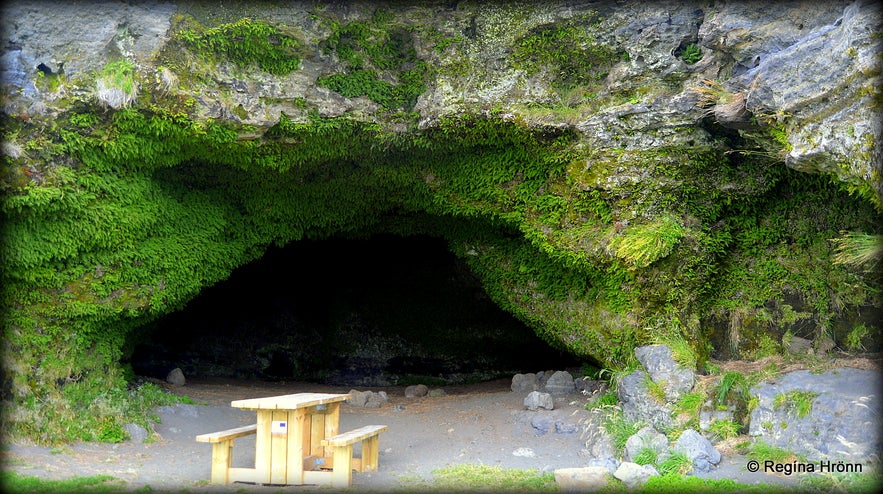
The entrance to Steinahellir cave in 2014
And this is written in volume IV, page 43:
"The cave is high at the front, but as you go further inside, it lowers a little until it reaches the floor. There is a hole on its east and west sides.
The story goes that the hole on the east side had reached very far, and once a calf had entered the east hole.
The people living on the westernmost part of the Steinar farm close by had heard the calf mooing beneath the floor in the pantry.
The other hole reached the pantry at the easternmost farm at Varmahlíð, which is quite far from the cave."
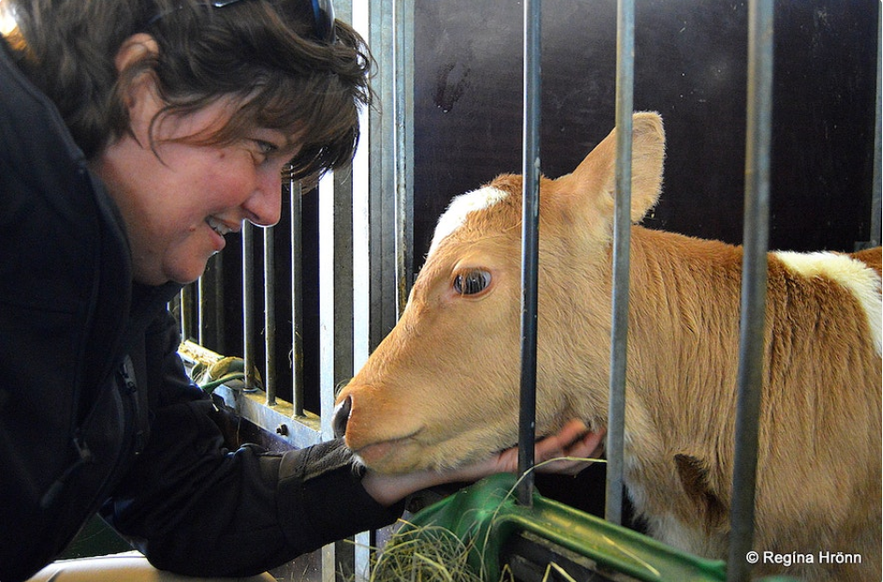 An Icelandic calf
The story goes that a buried treasure lies on the ridge west of the cave because "mundarlogi" has been seen there.
This mundarlogi/fjárlogi is a special phenomenon where light hovers over buried treasures.
And once a large boulder had come rushing down the hill and stopped by the entrance to Steinahellir cave.
On top of it, a tussock grew, and it was believed that inside it was a hidden treasure, as light was seen hovering above it as well (vafurlogi).
The tussock was not to be touched, or misfortune would happen.
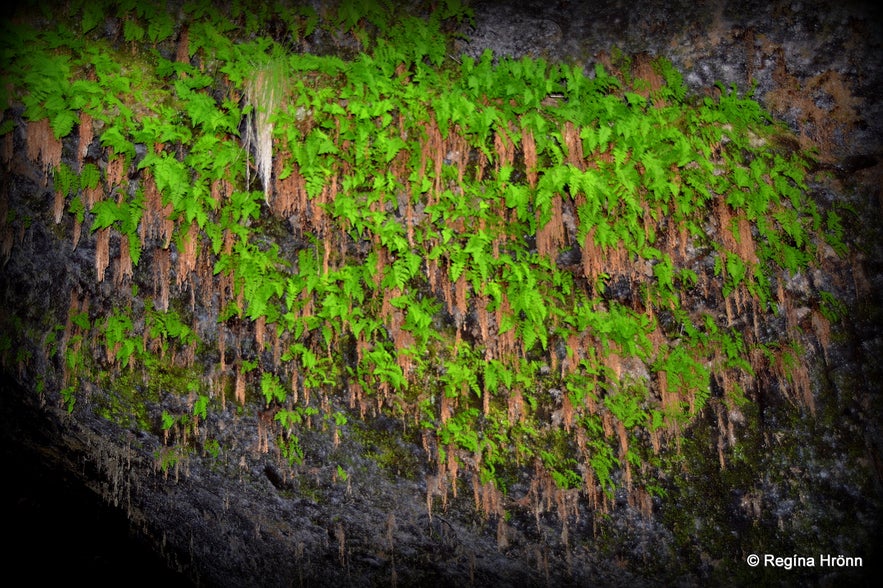 Fern in Steinahellir cave
People obeyed this, as misfortunes have been known to occur in Iceland when enchanted spots are disrupted, as I mentioned earlier.
But two zestful boys from the farm, Steinar, wanted to seek the treasure and disobeyed the orders. As they were burying in the tussock, they saw what looked like firelight above the hill east of the cave.
It rose into the sky in a massive cloud of smoke. The boys thought the Steinar farms might be on fire, so they stopped digging and rushed to the farm to help, but as they came closer, the smoke and the light from the fire disappeared.
The boys, realizing that this was a warning, didn't touch the tussock from then on.
We have many such stories, and they are always a warning from the other world.
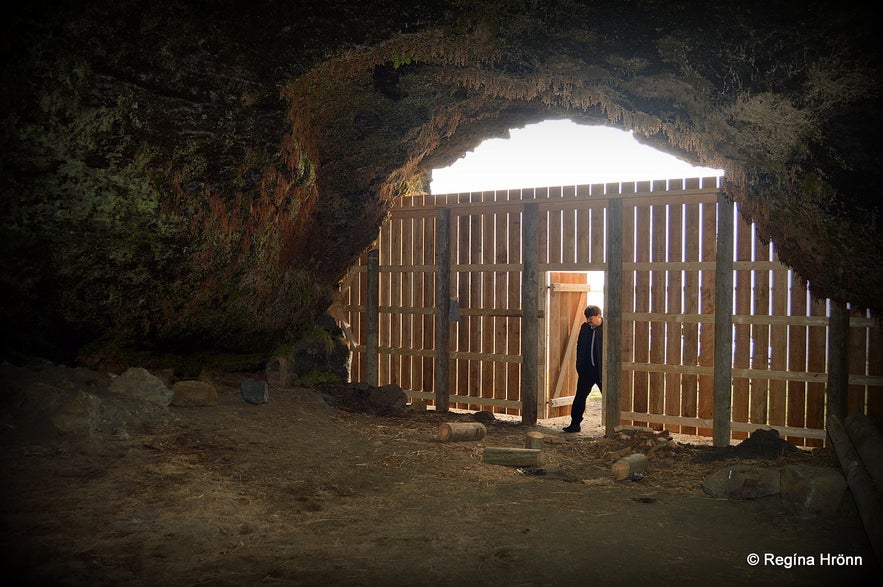 Steinahellir cave
The same happened at Skógafoss waterfall when they were trying to reach the treasure behind the waterfall, as I told you about in my travel blog: The Spectacular Skógafoss Waterfall in South Iceland and the Legend of the Treasure Chest.
Later, road construction workers blew up this rock while surveying the road.
There is one mention in Þjóðsögur Jóns Árnasonar about a kelpie in Hellisvatn - Cave Lake. There are many stories about kelpies in Icelandic folklore, one of which I have told you in Kerið crater and Nykurinn - the Water-kelpie in South Iceland.
Some of my photos are from my 2014 visit to the cave, when it was open. But since 2015, a wooden panel has closed the cave's mouth.
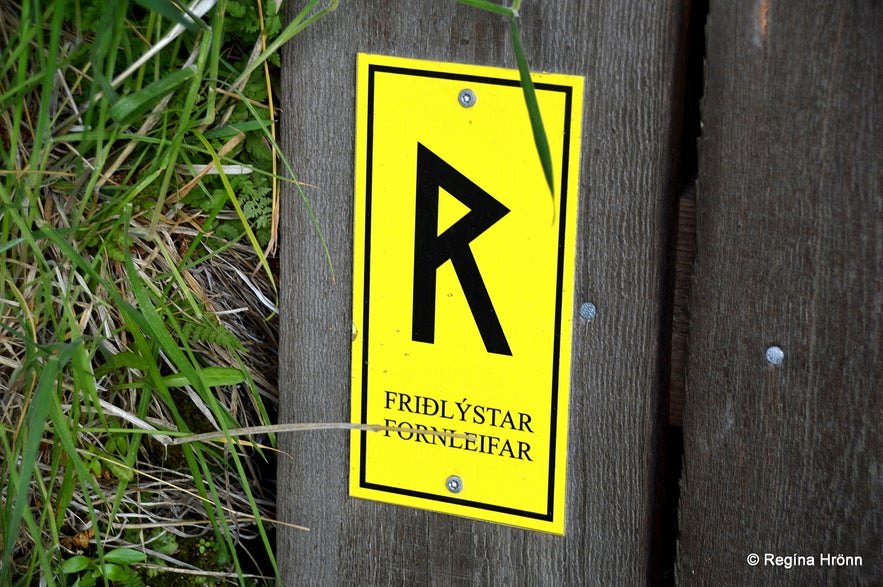 This yellow sign by Steinahellir tells us that it is a protected archaeological site
In 2020, I saw that signs had been added to the wooden panel. They were gone, hopefully only temporarily, in May 2025.
The yellow sign, which I have shown you in many of my travel blogs, has been fastened to the panel. On it is written "friðlýstar fornleifar" - a protected archaeological site.
See also: Ancient Ruins and Burial Mounds I have visited on my Travels in Iceland.
The cave has been protected since 1975 and is managed by Minjastofnun Íslands - the Cultural Heritage Agency of Iceland.
Most Icelanders know what this sign means, but most of our foreign visitors don't realize that it is a preserved historical cave.
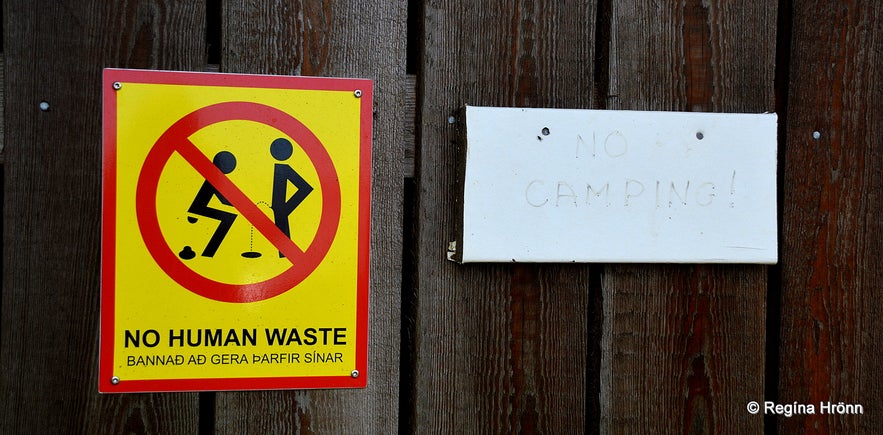
Signs by Steinahellir cave
On one occasion, when I entered the cave, two young guys on bikes were inside.
They were happily lighting their camping gas stove, unaware that they were inside a preserved cave with a curse on it (the wrath of the hidden people if you mess with the enchanted fern).
They were so happy to have found a shelter that I didn't want to spoil the moment for them by telling them it was a preserved cave. So I just took some photos and left.
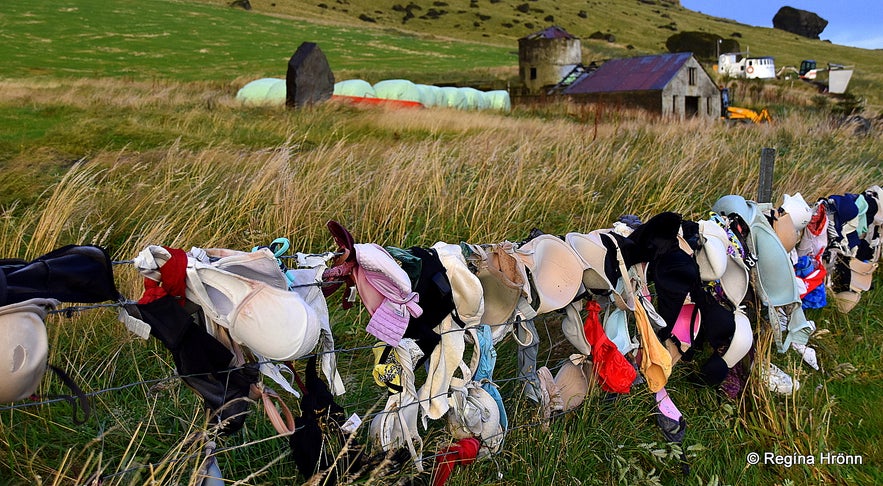 This popular fence is close to Steinahellir cave - the Bra Fence
So, when you visit Steinahellir cave, be aware that it is an enchanted preserved cave with a lot of history, so let's tread lightly and only take photos and leave nothing behind but our footsteps :)
You know that you are close to the cave when you see the Bra fence in my photo above. Hanging your bra there has become very popular for some reason.
Have a lovely time in Iceland :)
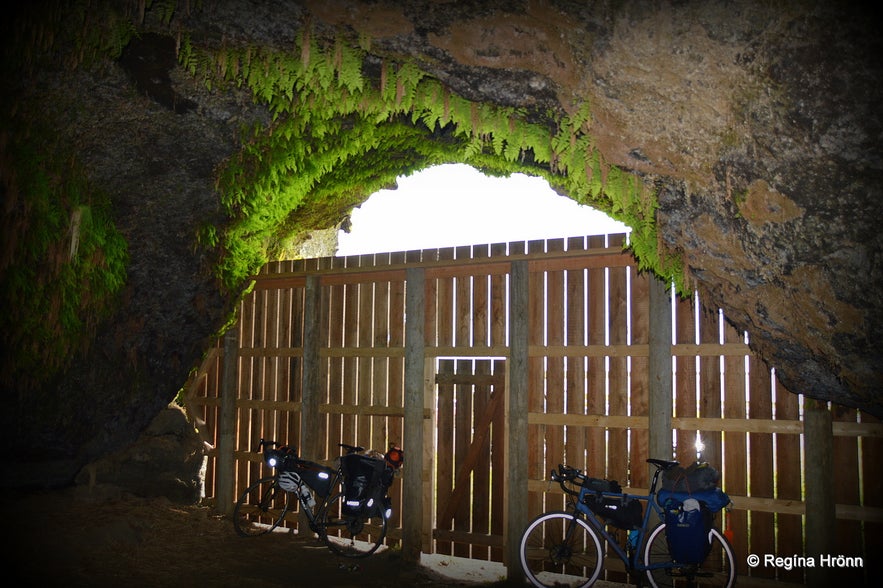 Inside Steinahellir cave
Ref. and further reading (in Icelandic):
Minjastofnun: Steinahellir undir Eyjafjöllum
Heima er bezt 1951 - Hræðileg jólanótt
Snerpa - Sagnakver Bj. Bj. - Draugaskipið
Vísir 1966- Steinar undir Eyjafjöllum
Álög og bannhelgi - Árni Óla - Álög á Steinum pages 198-199
Manngerðir hellar á Íslandi pages 251-255
Eyfellskar sagnir by Þórður Tómasson, published in 1949, Volume II, pages 114-115 and 162-169
Setið við Sagnabrunn - Þórður Tómasson í Skógum pages 16 and 27

Hi, my name is Regína Hrönn, and I was born and raised here in Iceland.