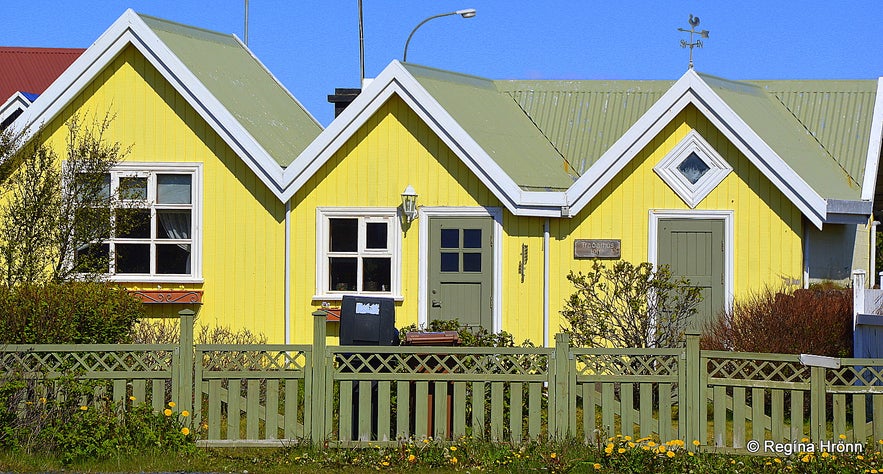
Stokkseyri is a lovely little village in South Iceland, close to Eyrarbakki village, which I have told you about in another travel blog.
These two little villages are often overlooked by travellers who don't know they exist and stick to Ring Road 1 on their travels in South Iceland.
But this detour from Ring Road 1 is well worth it, as, in both these villages, which are right by the sea, you will see beautiful old houses and several museums.
Top photo: one of the colourful houses in Stokkseyri village
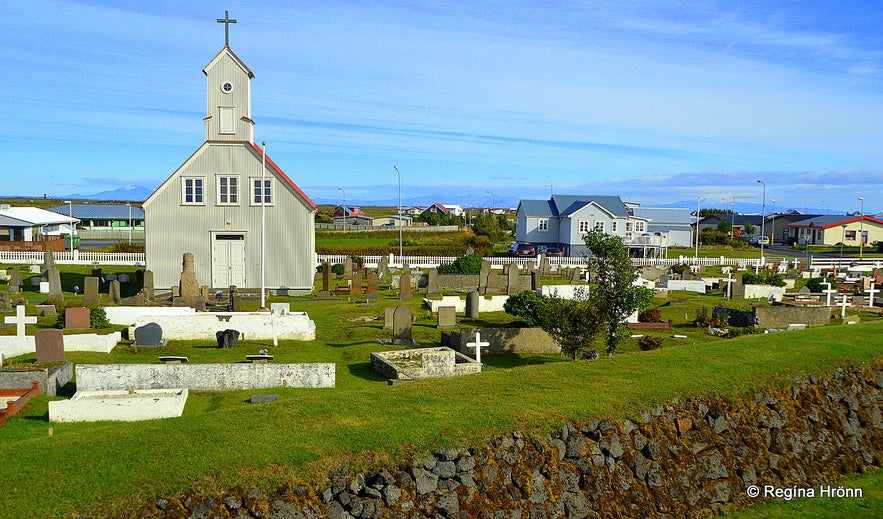
Stokkseyrarkirkja church
Stokkseyri is the village in Iceland, often referred to as the museum village, due to its many interesting museums.
Stokkseyri and Eyrarbakki are only 7 km apart, and jokingly, Icelanders often refer to the towns as "Stokkseyrarbakki" because we cannot be bothered to say we are going to Stokkseyri and Eyrarbakki.
The settler Hásteinn (Hallsteinn) Atlason and his sons, Ölvir and Atli, first settled this area. They are mentioned in Landnámabók and in Flóamannasaga, which is a fascinating read.
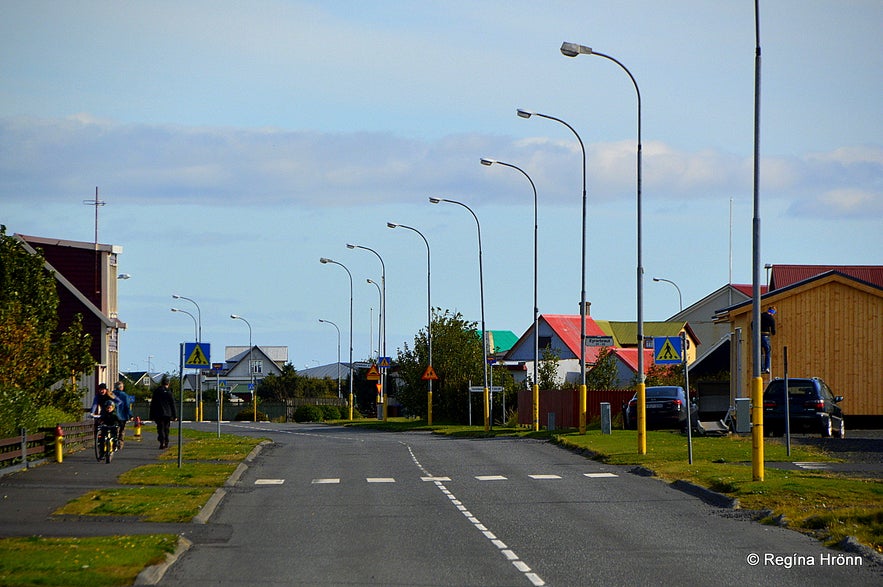 Stokkseyri
The population of Stokkseyri is approximately 535, but here you will find many activities, surprisingly so for such a small village.
Two of these 535 people are related to me, as my sister and my uncle live in Stokkseyri.
There is an excellent restaurant here, Fjöruborðið, and people come especially from Reykjavík (65 km) to get lobster soup and visit the museums.
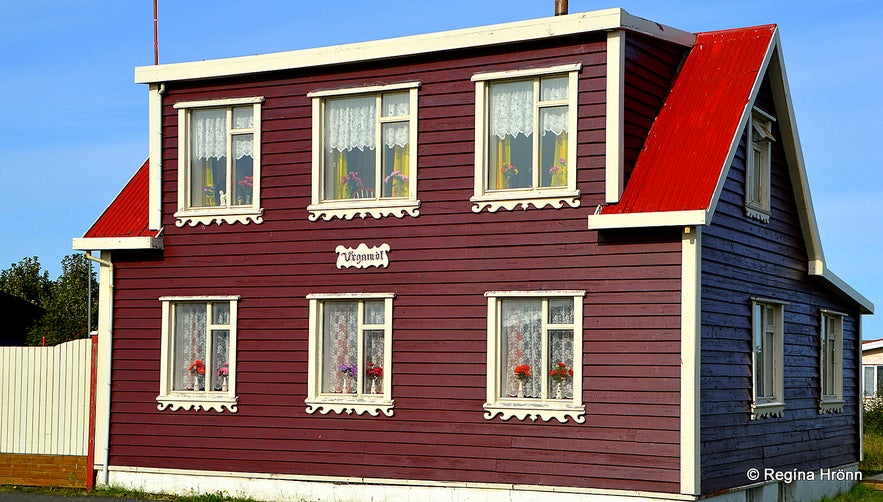
Vegamót house in Stokkseyri
In Stokkseyri, you will find the Icelandic Wonders Museum, with its elves, trolls, and Northern lights.
There is also a Ghost Museum in the same building, as well as art galleries and art studios, where one can buy handmade Icelandic crafts.
To me, Veiðisafnið - the Wildlife Museum, is the biggest attraction in Stokkseyri, and I will tell you all about it later in this travel blog.
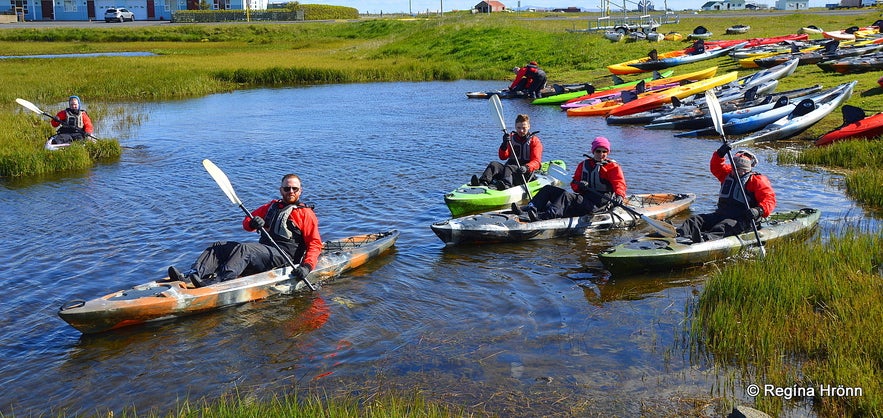
Kayaking in Stokkseyri is very popular
There are also popular organized Kayak tours, both in the canals and in the sea. I will tell you more about a kayak tour my friends joined later in my travel blog.
One of the museums in Stokkseyri is the replica of a fishermen's hut, Þuríðarbúð.
Þuríðarbúð fisherman's hut
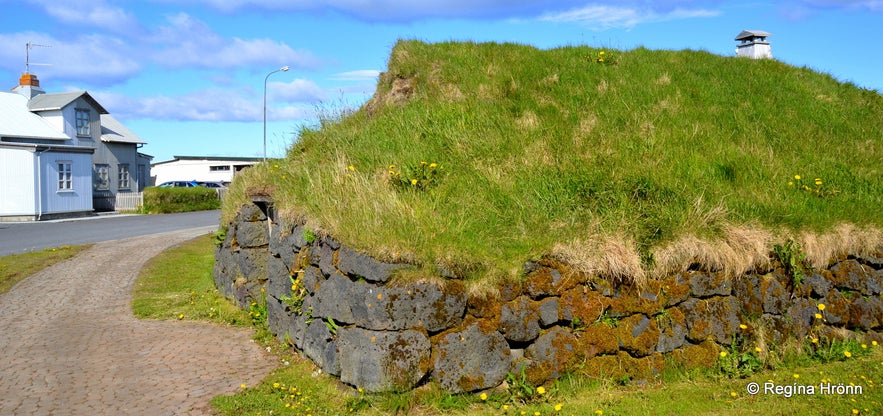
Þuríðarbúð fisherman's hut
In Stokkseyri village, you will find the hypothetical Þuríðarbúð.
Þuríðarbúð is a tiny turf hut; a well-made replica of what the old seasonal fisherman's hut looked like.
Þuríðarbúð was erected back in 1949 in memory of Þuríður Einarsdóttir (1777-1863), "formaður" - foreman, and the old ways of life of the seasonal fishermen in this part of Iceland.
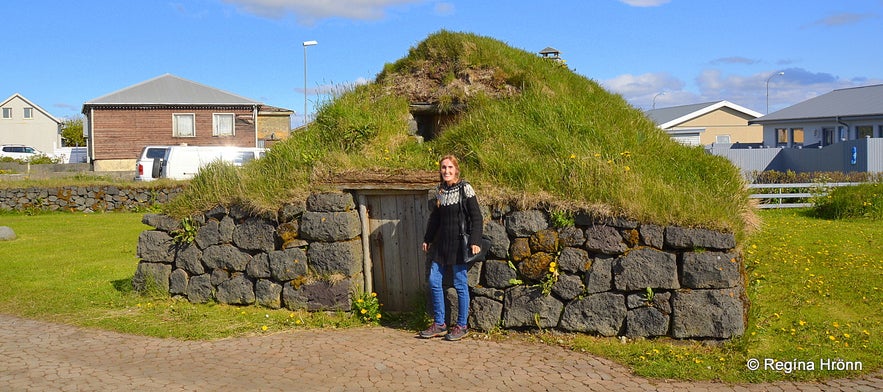
Þuríðarbúð fisherman's hut
In the 19th century, there were tens upon tens of fishermen's huts such as Þuríðarbúð in Stokkseyri.
These huts were made out of turf and stone, and here the fishermen slept two and two together, dined, and entertained themselves while on land.
It must have been a bit strange being the only woman in the hut.
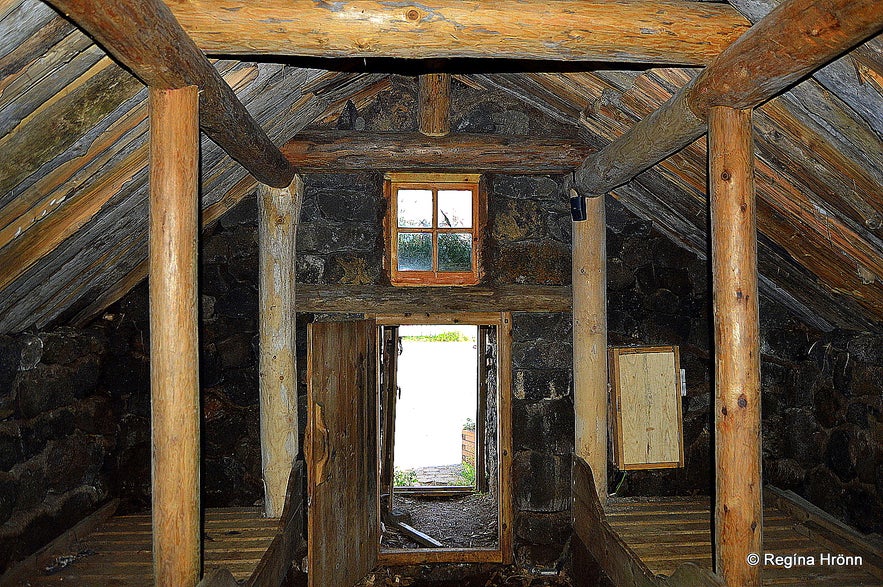
Inside Þuríðarbúð fisherman's hut
Þuríður was an extraordinary woman; at the age of only 11, she started fishing on rowing boats with her father, and at 17, she became an able-bodied seaman.
She was a fisherman for over 50 years, 34 of them in Stokkseyri, and a boat foreman for 25 years.
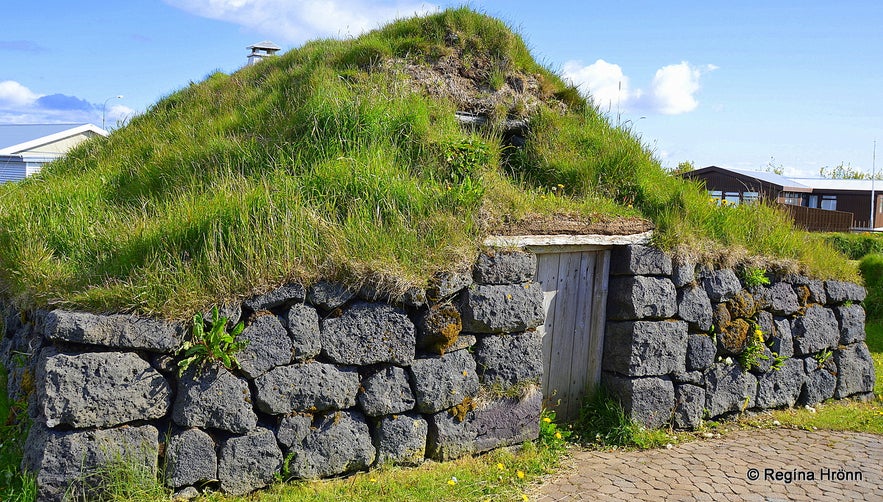
Þuríðarbúð fisherman's hut
Þuríður had to dress like the men working at sea, and she got a special permit from the district sheriff to dress as a man.
She was called "formaður" for the major part of her years at sea, which lasted until 1843. 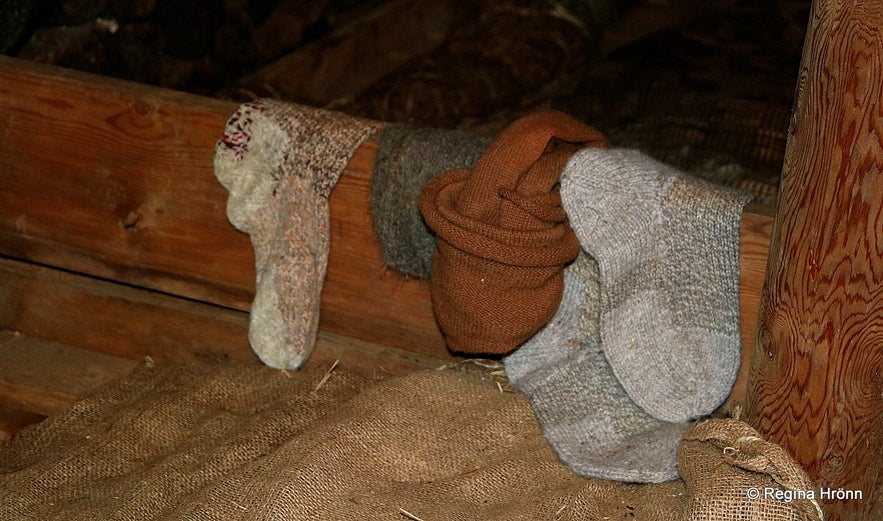
Inside Þuríðarbúð fisherman's hut
This was remarkable for a woman at the time, and I know of no other example of a woman having such a career as Þuríður.
Þuríðarbúð the fisherman's hut, was rebuilt in 2001. It is under the care of Byggðasafn Árnesinga - the Árnessýsla Heritage Museum and is open to visitors.
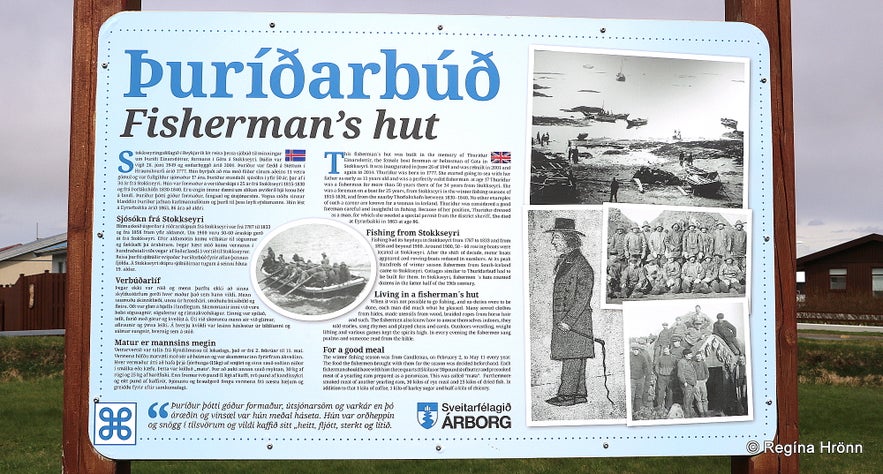
The information sign by Þuríðarbúð
The original Þuríðarbúð was located close to where the replica is now.
There is no admission fee. Please be respectful while visiting Þuríðarbúð.
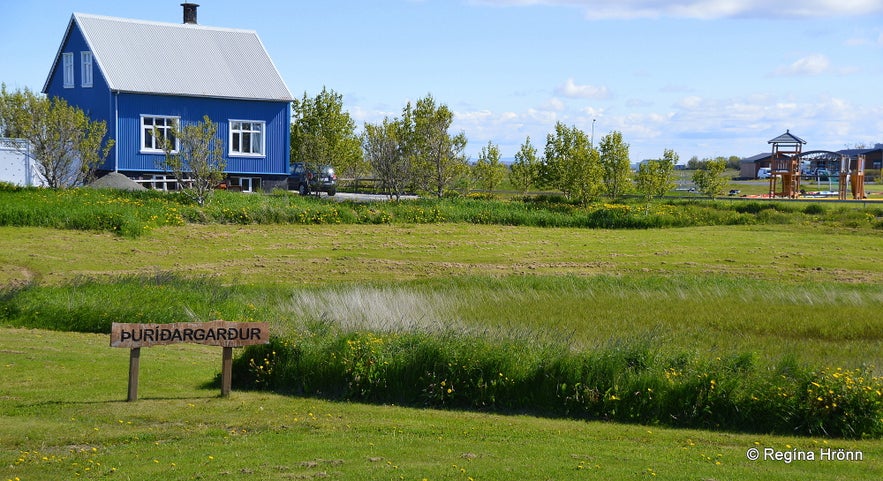 Þuríðargarður park
An ornamental park in Stokkseyri is also dedicated to the memory of Þuríður. It was opened in 2010.
Þuríðarbúð is not the only turf house in Stokkseyri...
Garðhús turf house
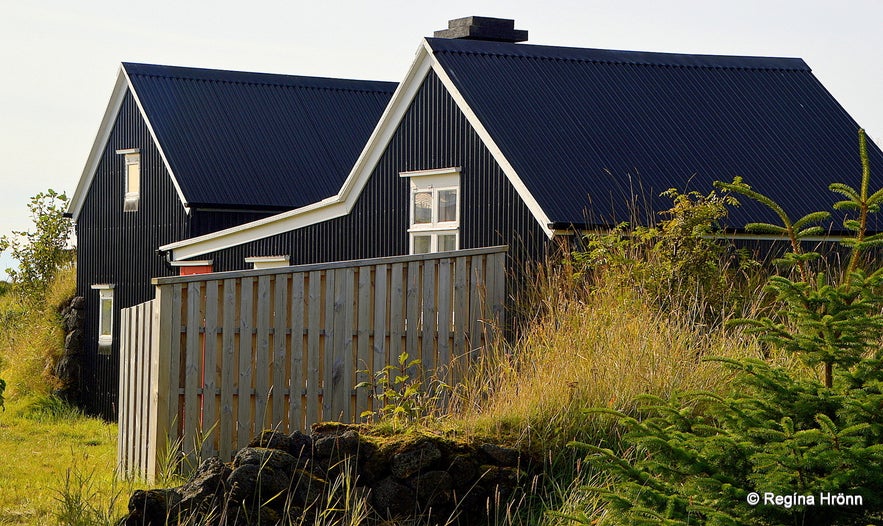
Garðhús turf house
There is another turf house by the main street in Stokkseyri village in South Iceland.
It is called Garðhús - the Garden house, and dates back to 1890, rebuilt in 1916 (Minjastofnun page 22-27).
It is a typical example of a workingman's cottage, the black house, and next to it are turf outhouses. From what I understand, there is an open-hearth kitchen in the turf house. 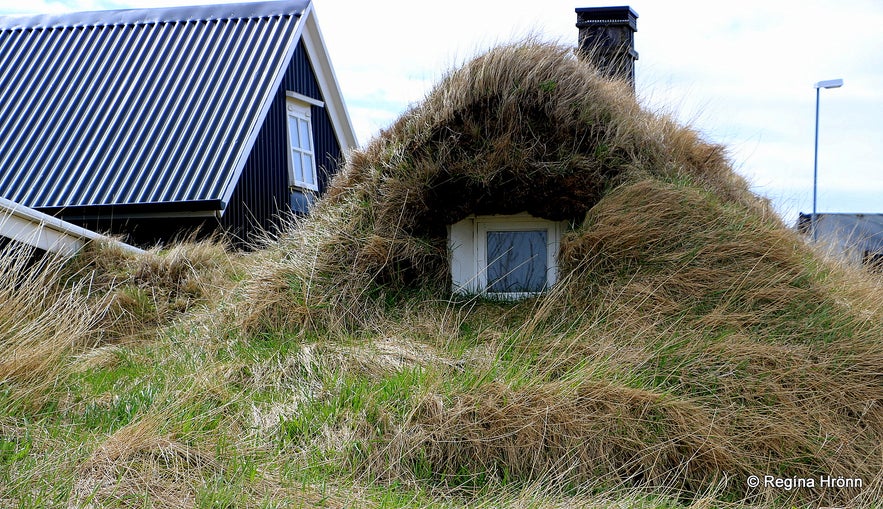
The turf house
Parts of the turf house look like a cyclops from the street.
The trees have grown so much, though, that it is difficult to see the turf house from the main street.
The last time I photographed the turf house, 2 German Shepherd dogs barked fiercely at me, thinking I was an intruder rather than a turf house fanatic.
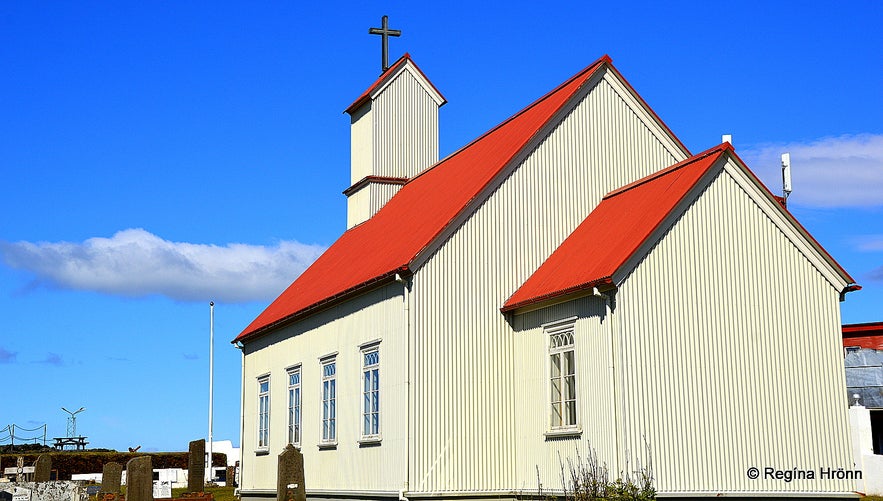
Stokkseyrarkirkja church
As in all the towns and villages in Iceland, there is a village church. Stokkseyrarkirkja church dates back to 1886. It was preserved in 1990.
I visit churches all over Iceland on my travels, and also Minnismerki drukknaðra sjómanna - the Memorials for drowned fishermen.
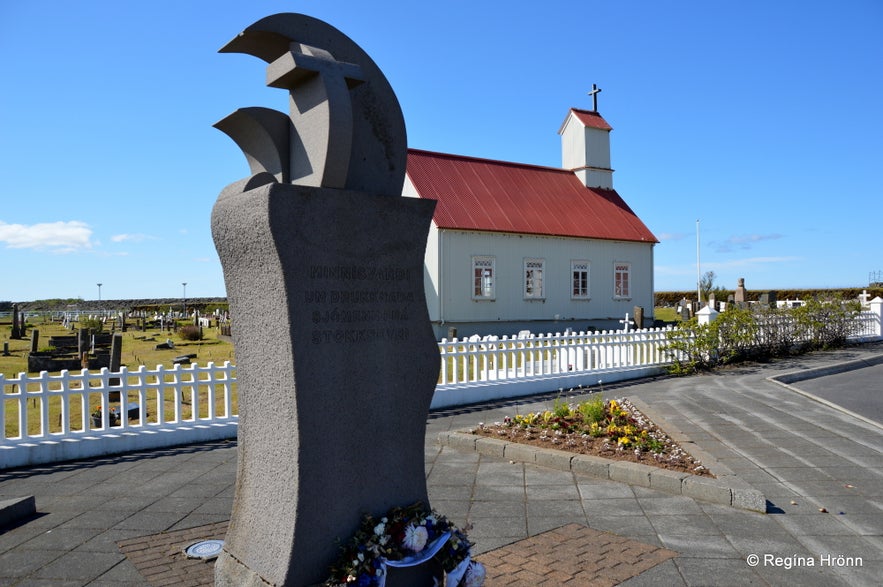
Minnismerki drukknaðra sjómanna - the Memorial for drowned fishermen in Stokkseyri
You will find these memorials in all the villages and towns by the sea in Iceland, and I consider them the heart of each village.
Elvar Þórðarson made the memorial in Stokkseyri.
Fishing kept the Icelandic nation alive, but the unforgiving sea has claimed many lives. These monuments are a reminder of how harsh life was in Iceland.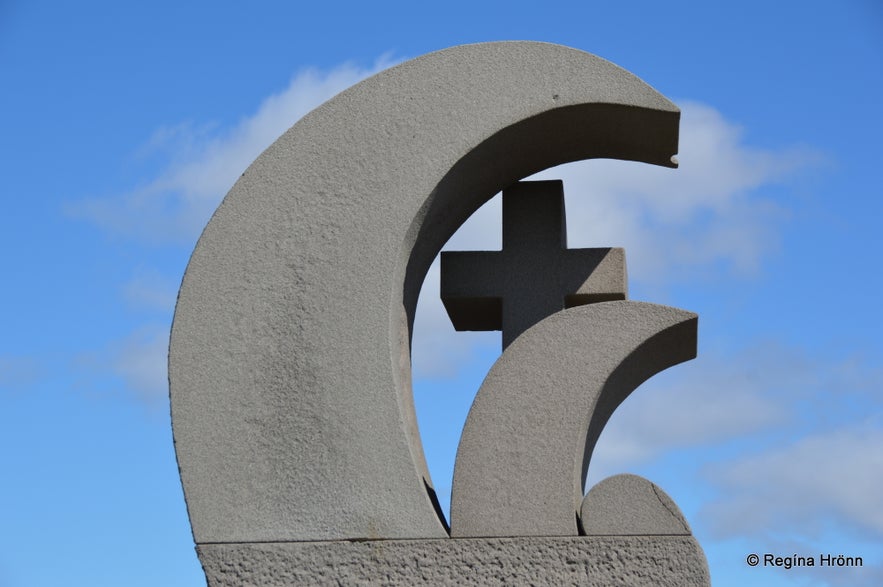
Minnismerki drukknaðra sjómanna - the Memorial for drowned fishermen in Stokkseyri
Many fishermen drowned in the former vibrant fishing village. The skerries in the fairway off Stokkseyri are dangerous, and the port facilities are difficult to access there.
I always visit these memorials on my travels in Iceland and pay my homage.
The view dial in Stokkseyri
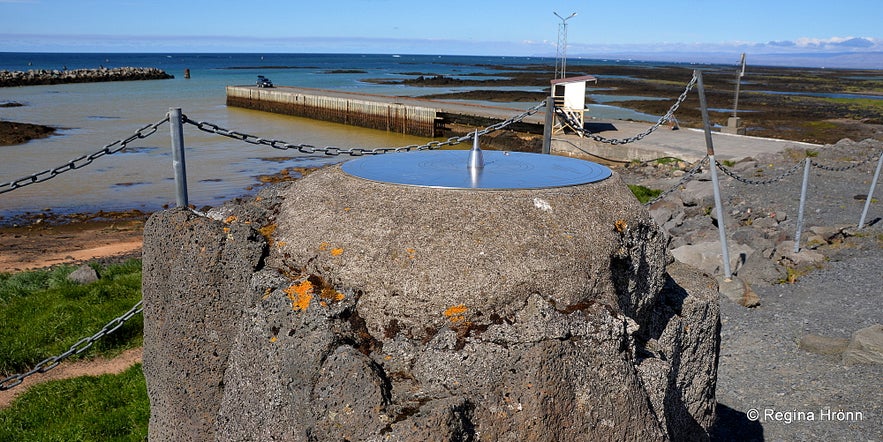
The view dial in Stokkseyri
I not only search for churches and memorials on my travels in Iceland, but also seek out the view dials, which are now 90+.
There is one such view dial in Stokkseyri by the sea behind the Stokkseyrarkirkja church.
You will find it on top of the sea wall.
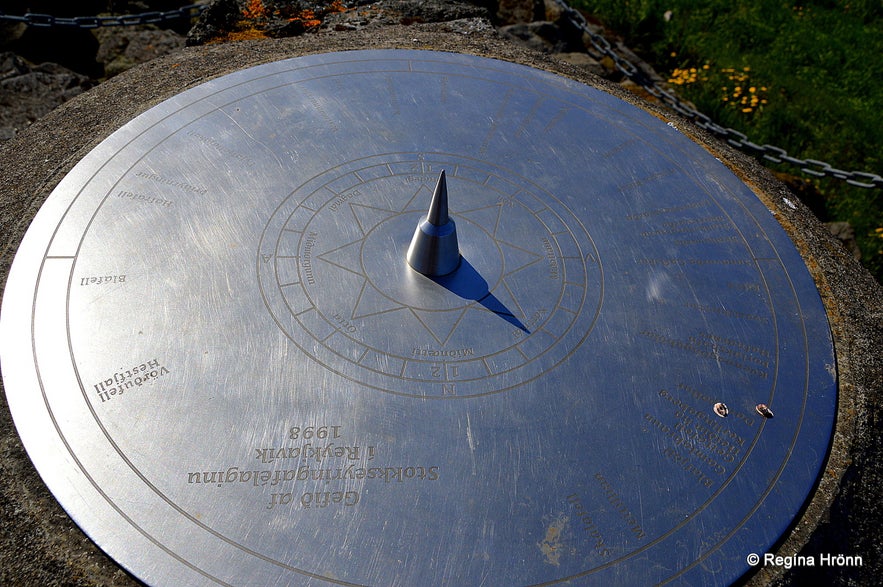
The view dial in Stokkseyri
The view dial in Stokkseyri, a gift from the Stokkseyringafélag club in Reykjavík, was erected in 1998.
The view dials usually show the name and height of the surrounding mountains.
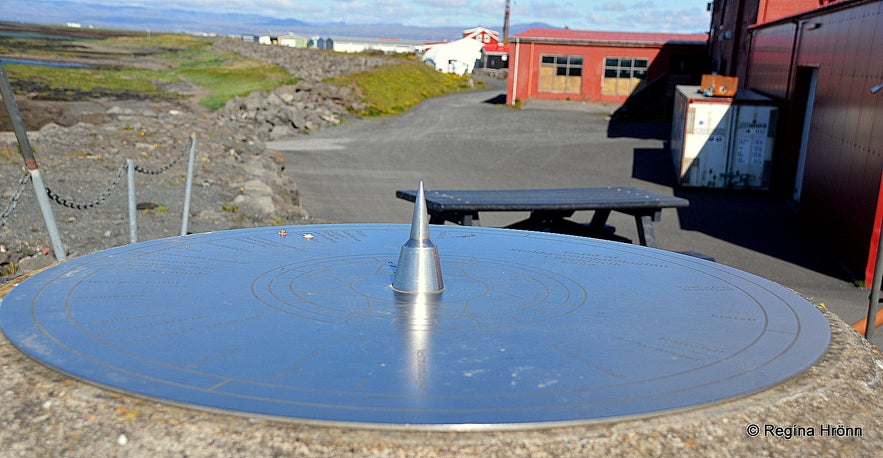
The view dial is next to the Ghost Museum
My father-in-law, Jakob Hálfdanarson, has designed many of the view dials in Iceland, and his uncle, Jón J. Víðis, was the instigator of view dial installations in Iceland.
Jón J. Víðis designed 23 view-dials from 1935 to 1974. When he died, my father-in-law continued his uncle's work.
Stokkseyrarfjara - the seashore at Stokkseyri
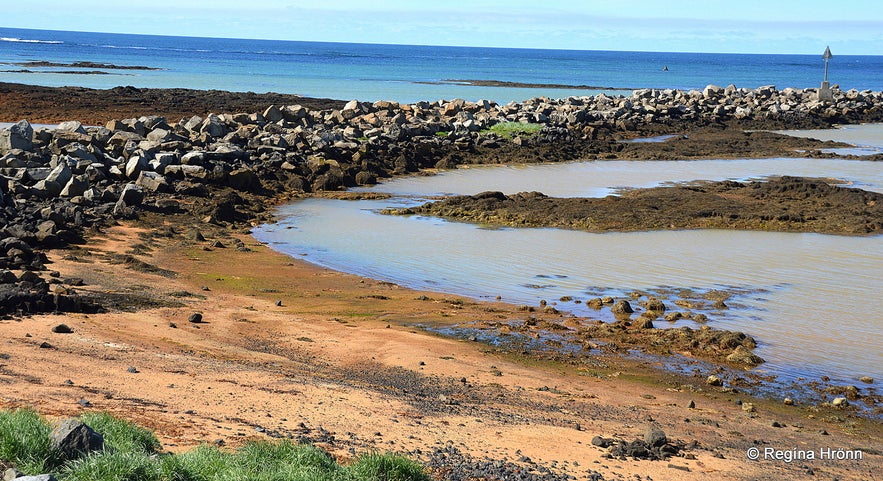
The pink beach at Stokkseyri
The seashore at Stokkseyri is very popular as well, with lovely little conches and brick-red sands.
The shore is popular among locals and tourists, and I have seen tourists camp in the area, but I wouldn't recommend pitching a tent so close to the North Atlantic Ocean.
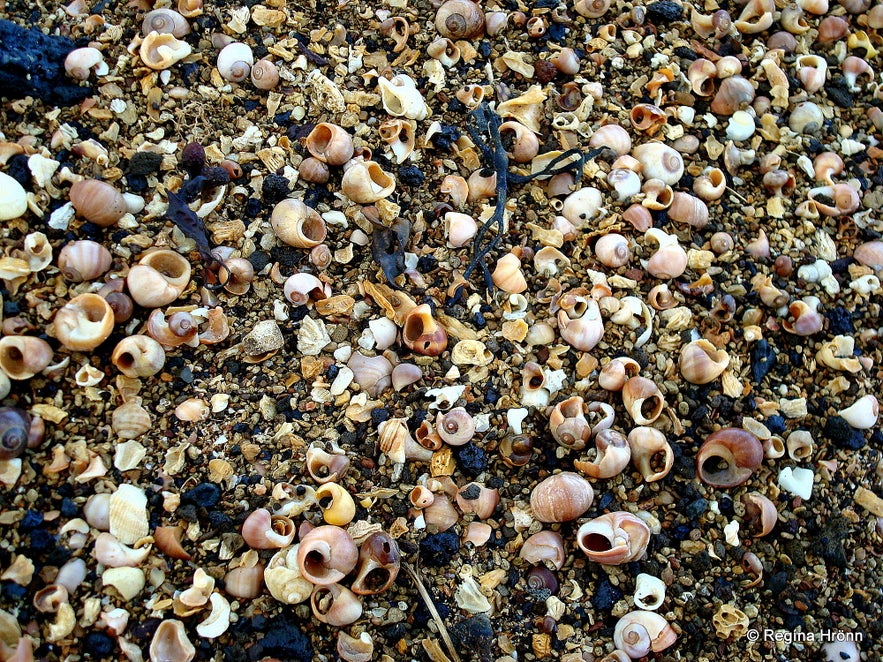
The beach is covered with conch shells
There is an information sign by the seashore with details on the vegetation and birdlife, as well as on the lava by the shore, which stems from the largest known Holocene lava flow on Earth, some 8,700 years ago!
It was huge, covering most of the lowlands for 140 kilometers, i.e., between the Ölfusá and Þjórsá glacial rivers, which are our most voluminous and longest rivers.
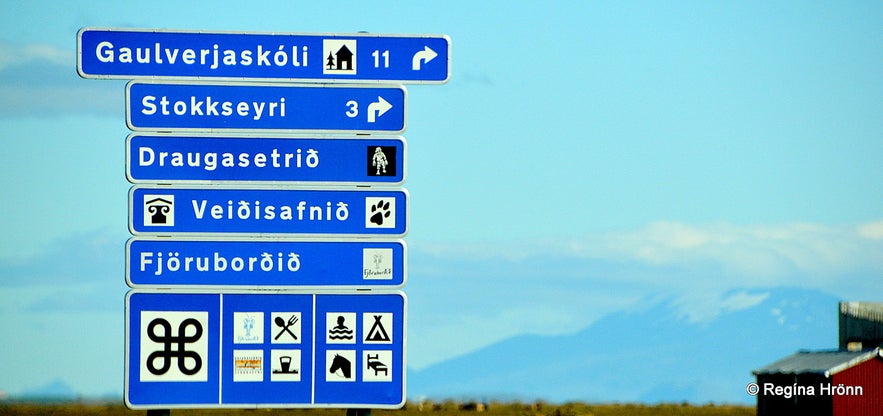
Road directions and the biggest attractions in Stokkseyri
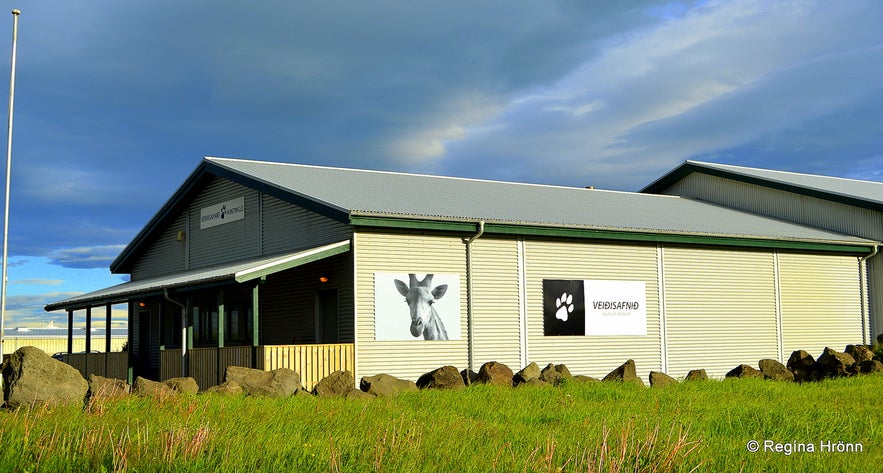
One of the museums in Stokkseyri village is the unique museum called Veiðisafnið, the Wildlife Museum (Hunting Museum) - the largest of its kind in the Nordic countries.
Veiðisafnið - the Wildlife Museum
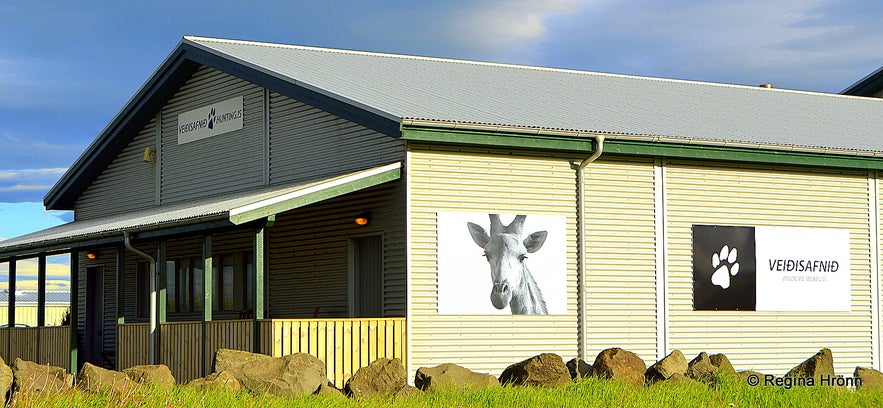
Veiðisafnið - the Wildlife Museum
The Wildlife Museum in Stokkseyri is a non-profit organization and the only museum in my country dedicated to wildlife and ethical hunting.
At the Wildlife Museum, you can see the animals, the guns with which they were hunted, and get a guided tour by the hunter himself!
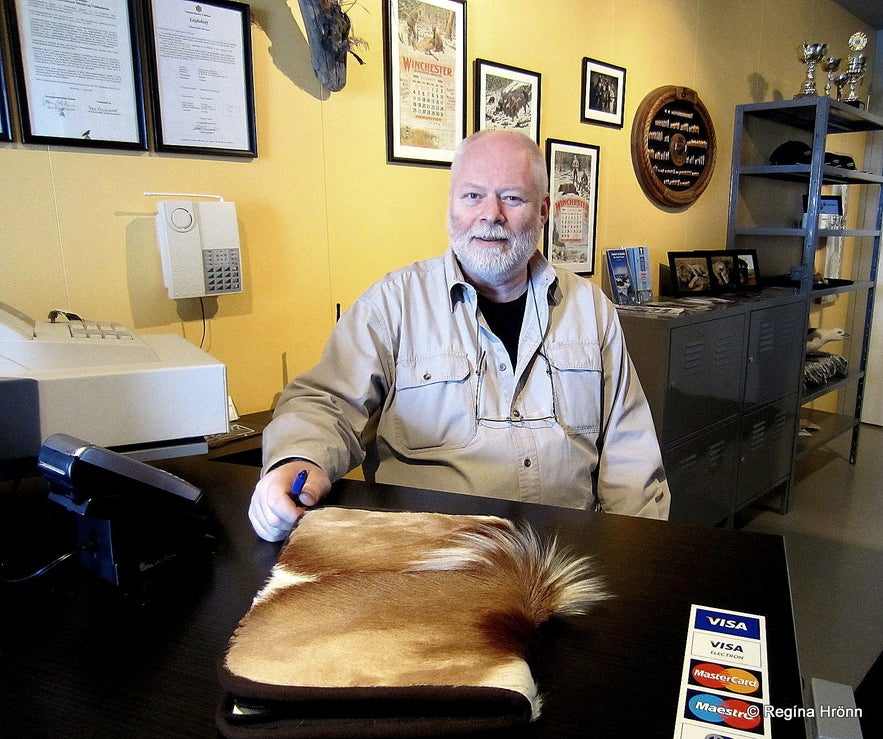
Páll Reynisson
At the museum, you will see all kinds of animals, for example, a giraffe, an ostrich, full mount lions, and a full mount polar bear, buffalo, a zebra, a musk ox, a crocodile, seals, and all kinds of mammals and birds from 3 continents.
The museum's visitors are mainly Icelanders, but I want to introduce it to our foreign visitors as well.
Driving down to the sea to visit the villages of Stokkseyri and Eyrarbakki is a lovely detour from Ring Road 1.
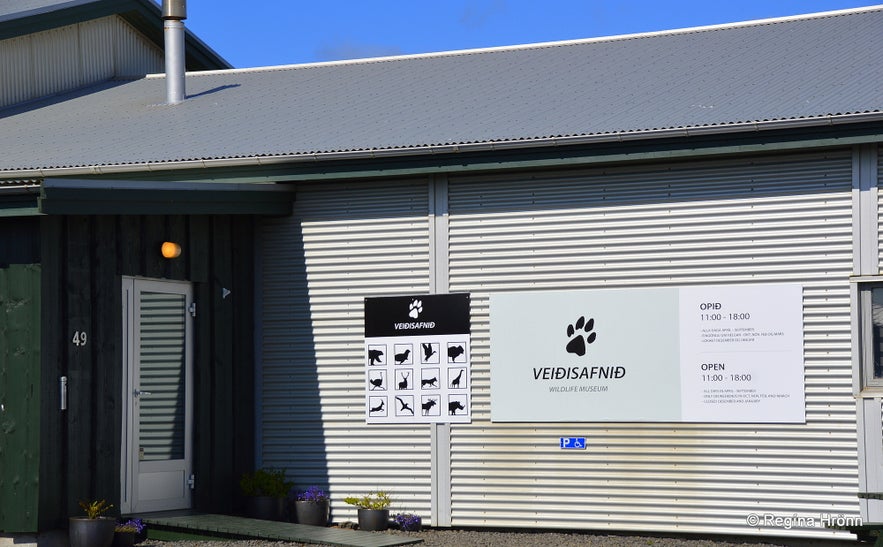
The entrance to the Wildlife Museum
Páll Reynisson, the founder of the Wildlife Museum, is the only Icelander who is well known for hunting with a handgun abroad. He hunts almost every type of animal with a handgun: lions, giraffes, antelopes, and even crocodiles!
Páll is a perfectionist, and his collection is beautifully mounted on the walls and floor, with birds flying overhead. The Wildlife Museum is the largest in Iceland, featuring birds in their natural flying positions.
This museum is extraordinary and much more than one expects. It is really amazing that in the small village of Stokkseyri, such a museum can be found. The museum is also home to the hunter Páll, who opened it to the public in 2004.
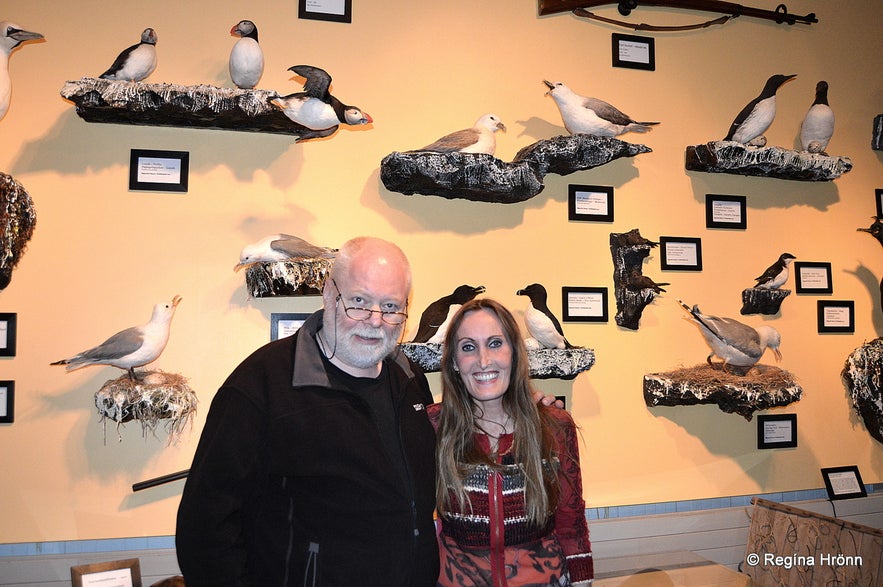
Páll and I at the Wildlife Museum
Páll started hunting when he was a teenager, and his collection began with two stuffed birds.
His collection eventually grew so much that he had filled three houses in Reykjavík. He then moved his collection to Stokkseyri village in 1999, right by the sea in South Iceland.
More and more people were knocking on his door to have a peek at his animals.
After 1,000 people had visited him for that purpose over 6 months, entering through his kitchen and saying it was selfish of him not to open a museum to display his huge collection, he decided to open a museum to display his collection.
The Wildlife Museum is accredited by the Museum Council of Iceland.
Páll told me that one night, a bus with 42 people arrived at the museum at 11 pm. This group had been dining at the nearby Fjöruborðið restaurant.
Páll opened the door in his pajamas and showed them his museum, proving that this unique museum has a personal touch :)
Over the next 2 years, the number of visitors to the museum increased, and Páll expanded the museum in 2005 and 2006, adding a second showroom on the 9th of June 2007, so that two groups can be welcomed at the same time.
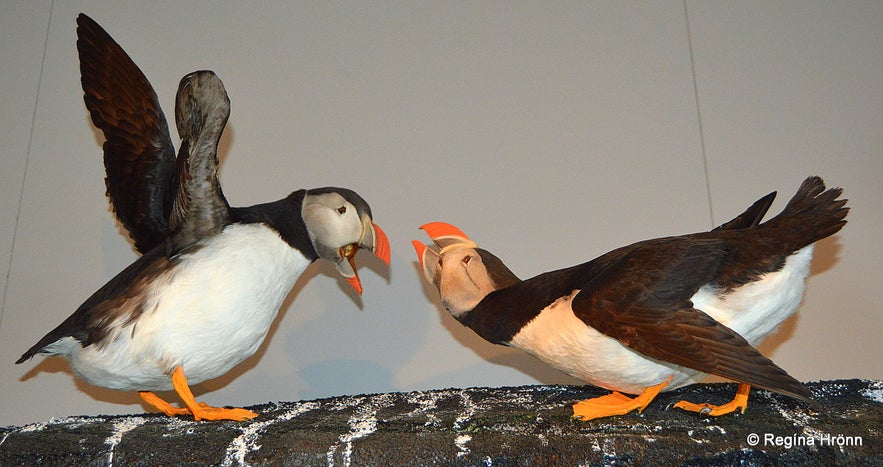
Puffins at the museum
Daily visitors vary from 2 to 424; on average, 7,000 guests visit the Wildlife Museum annually.
In 2009, in the first year after Iceland's financial collapse, a whopping 9,000 guests visited the Wildlife Museum!
Icelanders did not travel abroad that year because our króna collapsed during the financial crisis.
There are two big showrooms at the museum - one with a big giraffe in one part of the room, plus numerous other animals, which Páll has hunted in 3 continents: Europe (Iceland and Sweden), Greenland, North America, and South Africa.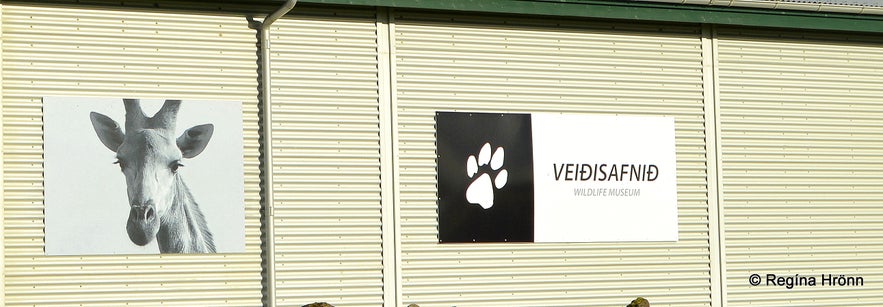
Veiðisafnið museum
Unfortunately, as Páll doesn't allow me to post photos of the animals, I don't have a picture of the giraffe, but it is huge!
Páll shot the giraffe in 2000 in South Africa with a cal. 44 Magnum, single-shot with Ruger Super Redhawk. The giraffe was 35 years old, 5.03 meters tall, and weighed 1,250 kilograms.
In the newer showroom, there is a lion and a lioness, a polar bear, a crocodile, and numerous birds and other animals. Also on display are various hunting gear, such as rifles and hunting knives.
It is pretty amazing and so worth a visit.
At the Wildlife Museum
The polar bear was shot in Greenland, not by Páll himself, though. The museum bought the polar bear from a taxidermist in Akureyri in North Iceland.
It has been jokingly said that this polar bear is the only one to have travelled under the ocean through the Hvalfjarðargöng tunnel.
Next to the polar bear, there are two white Arctic foxes, but Arctic foxes are among the few wild mammals in Iceland.
They stay away from humans, and I have seen foxes in Iceland's wilderness only three times during my travels.
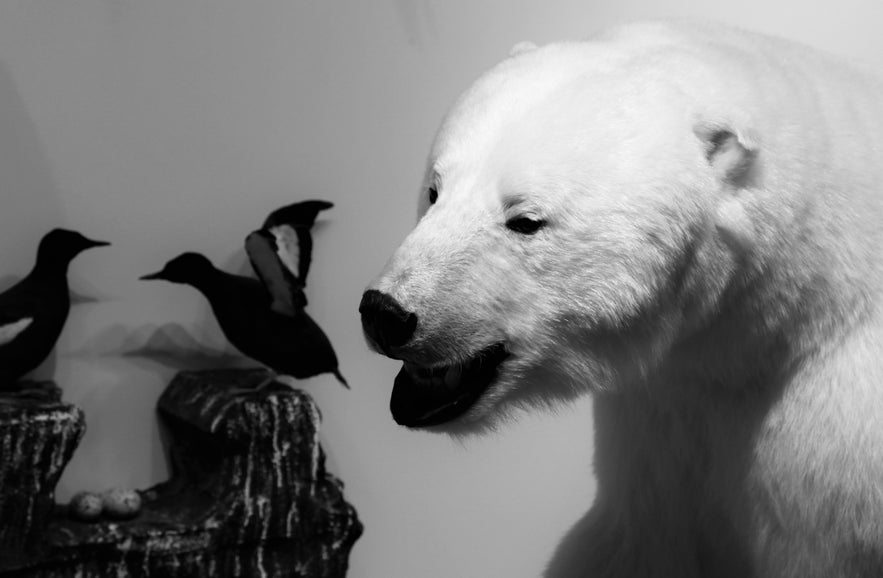
The polar bear, photo taken by Páll
The biggest prey in Iceland is the reindeer bull. The reindeer were imported from Norway in 1771 and have run wild only in East Iceland. At the museum, you will find two life-size reindeer.
Páll says the museum's main attractions are the lions and the giraffe. Páll shot the lions on his 50th birthday (19th of May) in South Africa. He swore on his 25th birthday that he would shoot a lion on his 50th birthday - and he kept his promise.
Páll and his friend, Jónas Geir Sigurðsson, shot two American buffalo (Bos Bison) with a handgun in Minnesota, USA. Their shoulder mounts have been mounted on the wall in the first showroom.
The Buffaloes were fully grown males - one weighing 950 kilos and the other one 1,100 kilos - they are massive!
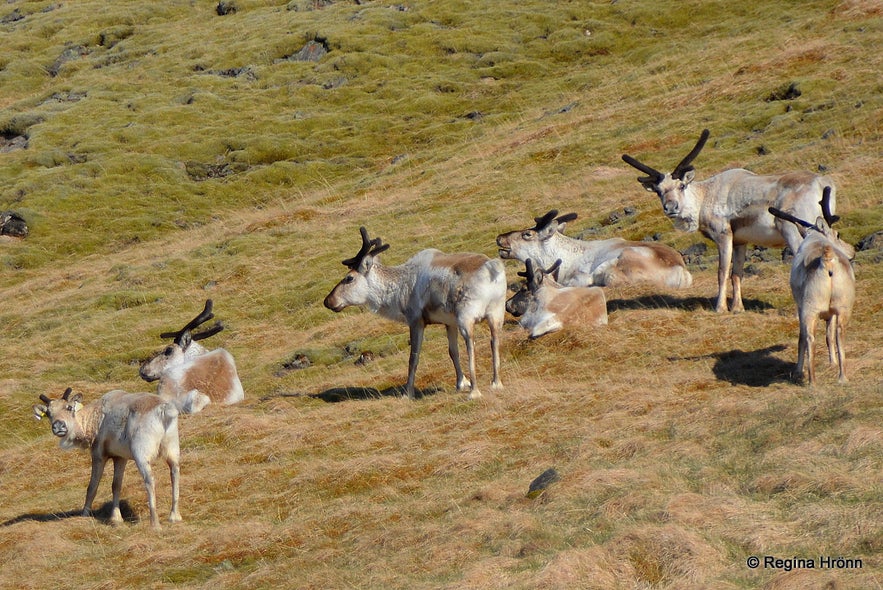
I spotted these reindeer by the road in SE-Iceland
Standing in front of them, looking into their glass eyes, is surreal. I never realized how big this animal is until I saw it at the Wildlife Museum! The gun they used was a T/C Contender caliber. 45-70, and the weight of the bullet was 400 grain.
Taxidermist Ted Pilgrim in the USA mounted the buffalo. I wish I had a photo of the buffalo to show you how big they really are.
Often, school groups visit the museum - from Iceland, the Faroe Islands, and students studying natural history have visited from Copenhagen. The museum also has lectures for kids, as they are especially enthusiastic about seeing all these animals and hearing hunting stories.
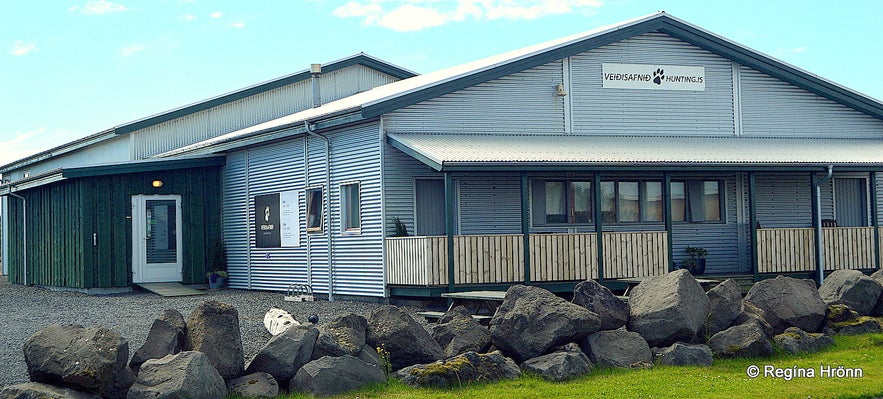
Veiðisafnið - the Wildlife Museum
There isn't another museum of this nature in Iceland, and the Wildlife Museum is one of its kind in the Nordic countries. Just imagine, this large museum, established and run by Páll, is one of its kind in the Nordic countries!
Páll has done everything at the museum himself, from A to Z - apart from the taxidermy. Páll has haunted 95% of the animals at the museum. Most of the animals are the work of taxidermists in South Africa and are shipped to Iceland.
According to Páll, the best taxidermists are in South Africa. The quality of the taxidermy is the central issue for the perfectionist Páll and is, of course, first-class.
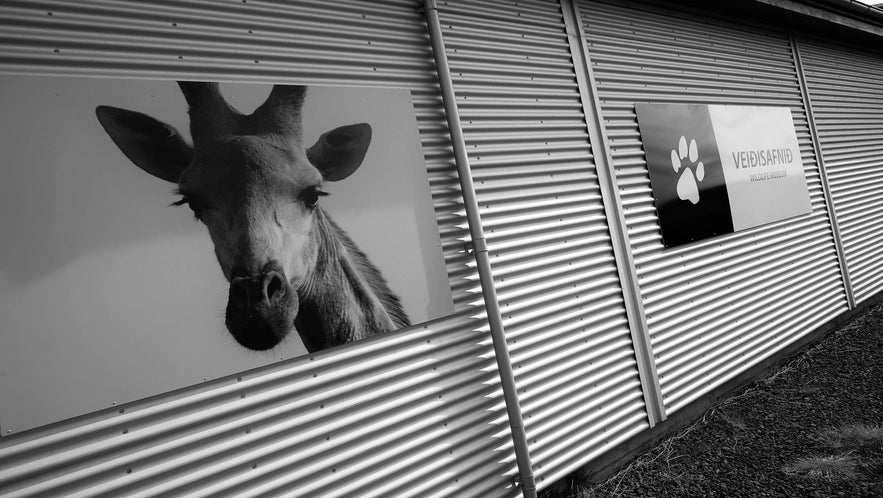
Photo by Páll, he is a professional photographer, I am just an amateur photographer ;)
All the ammunition for the guns is custom-made by Páll himself; he hunts the animals, he created the museum's lighting and design, he is a photographer, and he mops the floors. He imports the goods directly and organizes the hunting tours himself without a middleman, which keeps the prices low.
In 2009, Páll went on a hunting safari to South Africa and acquired an ostrich and a crocodile. The life-size ostrich is on display; it is a 2-meter-high male ostrich. It is enormous, much bigger than I am, and almost scary looking. I would not want that animal running after me, nor any other animal for that matter!
The Nile crocodile is mounted whole on one of the museum walls. I have noticed that some people think the whole animal is mounted on the wall, including the meat and everything!
Of course, that is not the case, but a cast is made, and the hide is put on the cast.
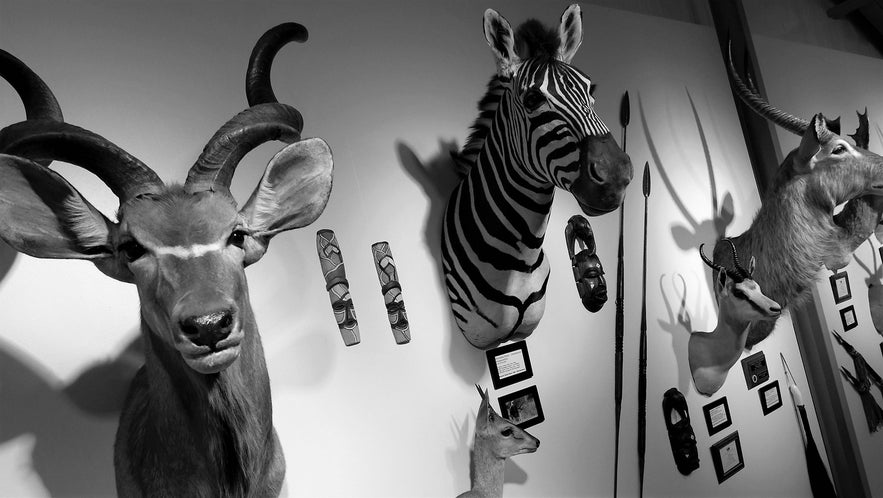
A photo by Páll
Páll also hunted four different types of antelopes, and you can see their shoulder mounts on one of the museum's walls.
On the same trip in 2009, Páll participated in a rescue hunt, shooting a rhino with a dart from a specially made rifle. The rhino was darted, its horns removed, then released.
Lacking horns, the rhino was of no value to poachers, and thus its life was saved. Poachers kill the rhinos for their horns, which they can get a good price for in Asia, as there the powdered horns of a rhino are believed to be medicinal.
Mounted on the wall in one of the showrooms at the Wildlife Museum is a cast of the shoulder mount of that giant rhino. It is the only replica at the museum.
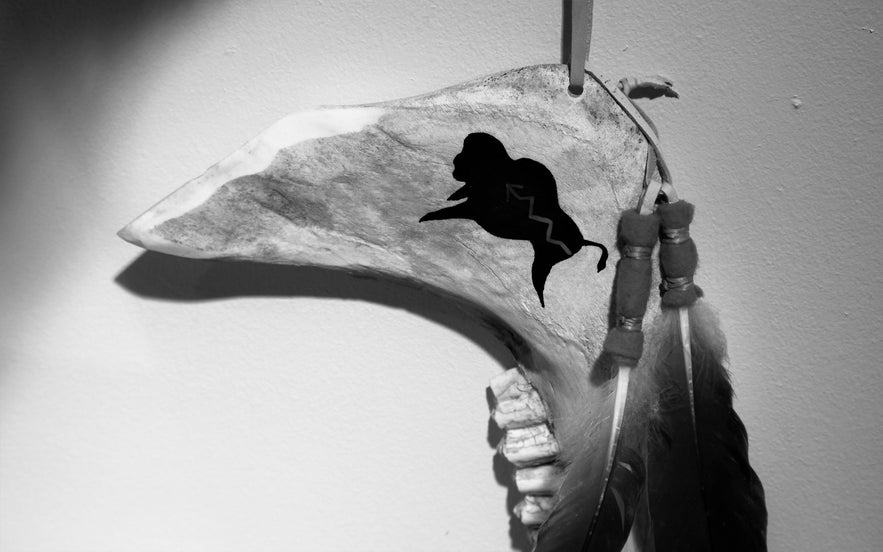
Photo by Páll
No photos are allowed inside the museum for security reasons, so I had to borrow some from the photographer and former TV cameraman, the hunter Páll. They are in black and white because the Wildlife Museum uses black-and-white photos on its website.
Páll allowed me to take a couple of photos in the museum reception, e.g., of the puffins, which, in my opinion, have to be shown in colour as they have such colourful beaks. So the colour photos are mine.
I stalked Páll for a couple of years - begging him for permission to take some photos as I wanted to write about his museum.
Even though he is my brother-in-law, I never got his permission. He eventually caved in, though, and allowed me to use some of the museum's photos. Thank you, Páll ;)
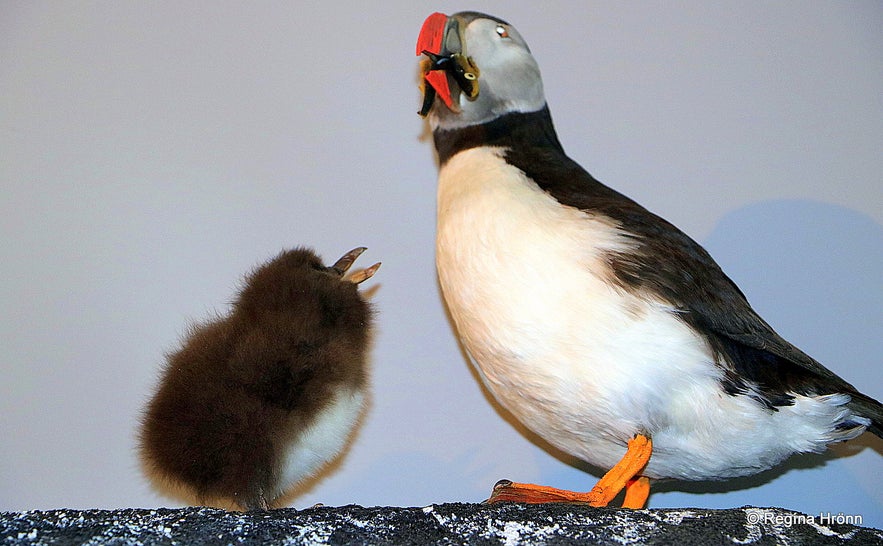
I am only allowed to take photos of the animals at the museum entrance, where one can see cute puffins
Two hundred fifty animals (birds and mammals) are on display at the Wildlife Museum, along with 55 guns!
Páll regularly moves things around, changes the display, and improves it, being the perfectionist he is.
A grey wolf hunted in December 2012 in Estonia was added to the museum in 2016. The grey wolf, the polar bear, and the moose are animals that have been bought for the museum.
The latest additions to the Wildlife Museum are eight animals from South Africa, which were hunted in 2016 and put on display in the summer of 2017.
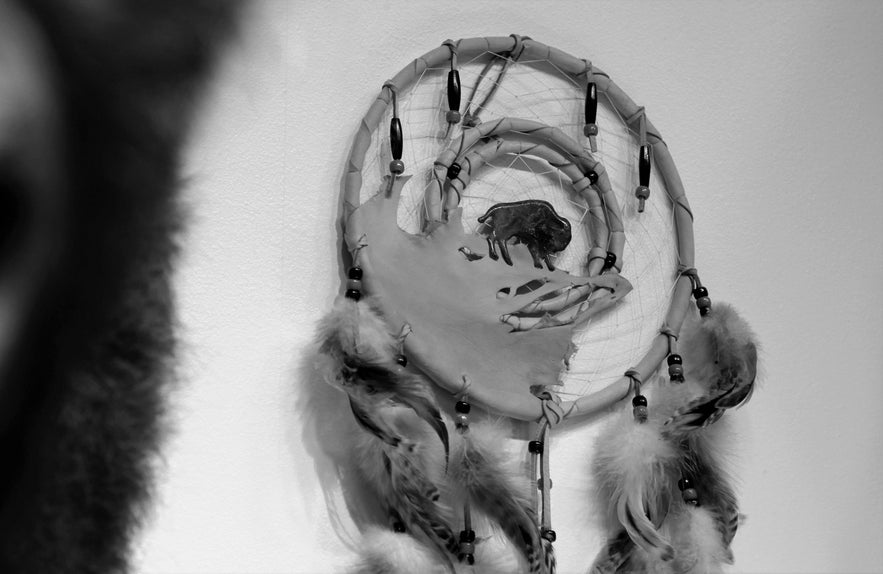
Photo by Páll
Some of the animals are on loan from the Icelandic Institute of Natural History, like the dusky leaf monkey, the beautiful big owl, and the lion's head. These items are old and were donated to the Icelandic Institute of Natural History.
Páll runs the Wildlife Museum and lives at the museum with my sister. They have a breathtaking ocean view from their apartment - and they often see whales swimming by! Fancy that! Once a year, they invited my whole family to a barbecue and a sleepover at the museum.
Then my husband and I slept on mattresses in the showroom with the polar bear and the lions, and when I opened my eyes in the morning, I had two reindeer staring at me - plus a couple of swans flying over my head. It was quite a unique experience!
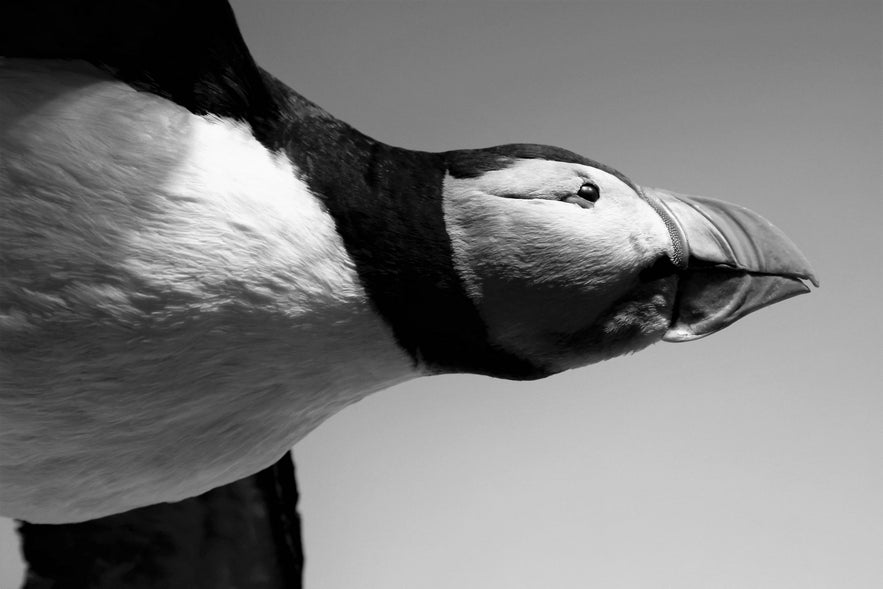
The puffin - photo by Páll
Páll is a trophy hunter with a good heart - the Indian in him tells him to follow the animals to the end, and he is sure that he will meet their souls again. Until then, the animals live eternally at the museum.
In Africa, they make use of the whole animal and eat the offal. Páll eats the meat of the animals he hunts, and it is sold, so nothing goes to waste. Only the animal's pelt is used for taxidermy.
I cannot see that this is anything different than slaughtering sheep, pigs, horses, and cattle on a large scale for their meat, as some people would like to argue.
The stock needs combing out, and often the older animals get haunted.
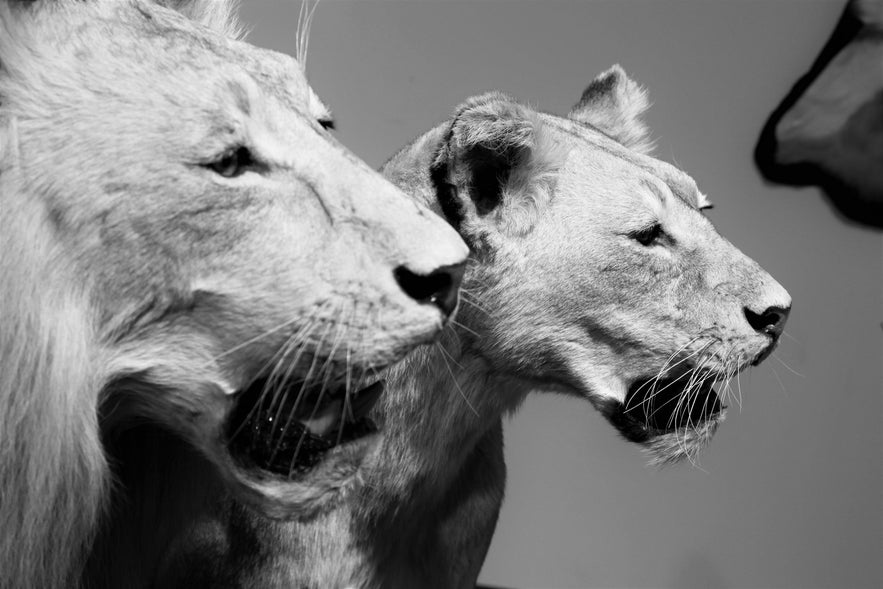
Photo by Páll
Páll tries the meat of all the animals he hunts and has tasted the polar bear meat, the meat of lions, giraffes, antelopes, etc.
Páll claims that hunting animals is intrinsic, and I must agree with him, even though I chose to be vegan for 26 years. Páll is a preservationist and says that most hunters are preservationists. The hunters pay a towering fee to hunt animals in Africa, which goes toward preserving the stock.
In Iceland, hunters also fund research on wild animals through the fee for the annual hunting license.
Páll has several acknowledgments from the Safari Club International – SCI hanging on the walls of the museum.
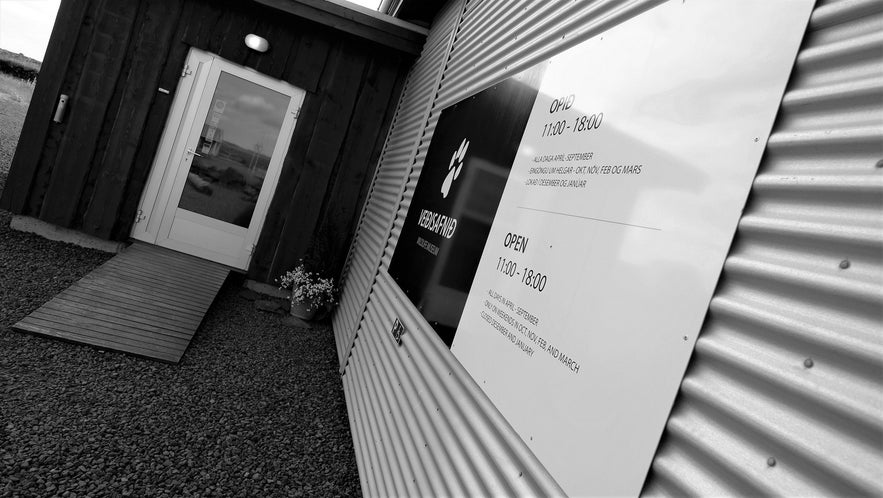
Photo by Páll
The Wildlife Museum invites blind and visually impaired people to a free touch safari over one weekend, in collaboration with the Icelandic organization for the visually impaired.
The animals are then dismounted, and the blind visitors are given gloves to touch them.
Up to 50 blind or visually impaired people can visit the museum at the same time.
Several blind people have travelled from England to visit the museum this weekend.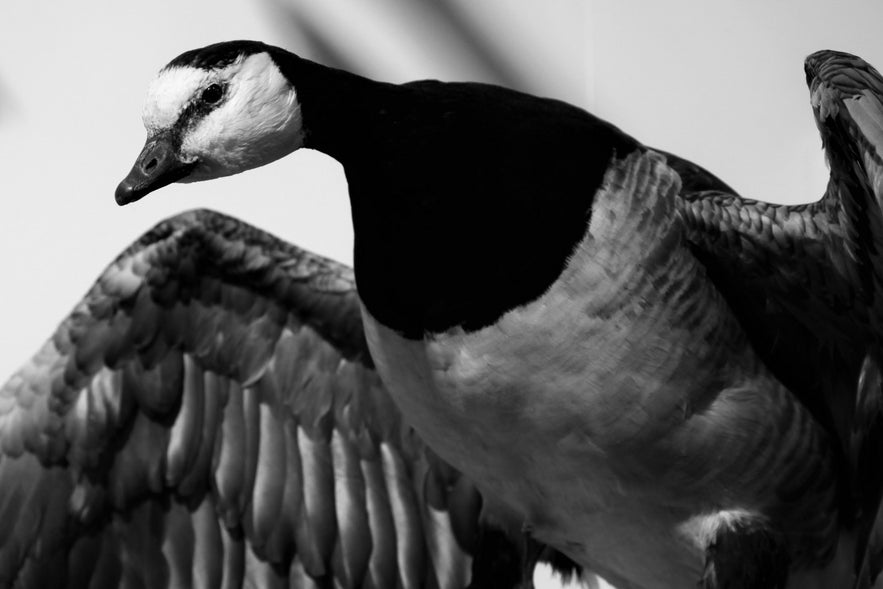
Photo by Páll
There is an annual gun exhibition at the Wildlife Museum for one weekend. It is the 20th time (2025) this exhibition has been held, and several hundred people visit the exhibition during those 2 days - it is very popular.
On display is a varied selection of firearms, including shotguns, machine guns, rifles, handguns, etc. Firearms from privately owned collections are on exhibition at the museum for the duration of this weekend only.
Watch an interview that the TV station Stöð 2 made with Páll at the gun exhibition. It is in Icelandic only, as it was on our news, but it will give you a rare glimpse into the museum and the guns.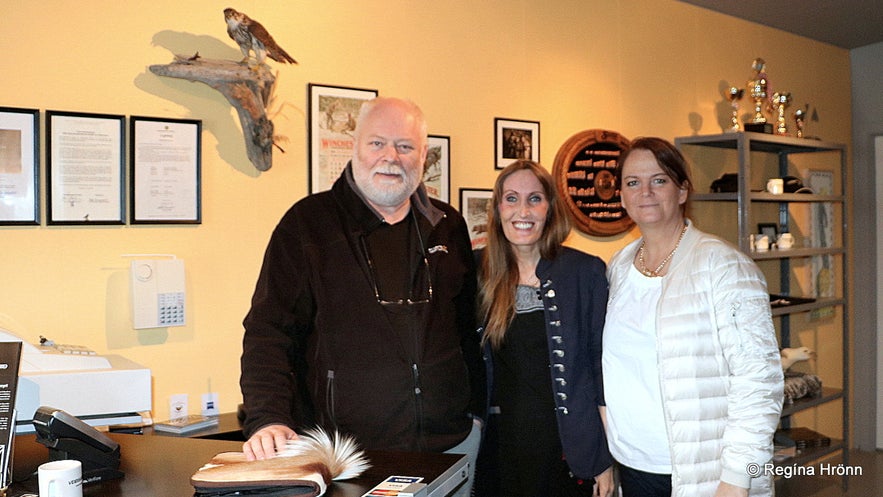
I often take my friends to the museum - Hildigunnur owns the travel company Rjúpa travel
At the museum, you will see two handmade shotguns made by the late Jón Björnsson from Dalvík, who was around 70 years old when he started making guns.
All in all, he made 120 handmade shotguns, which he called Drífa. They became very popular as Jón Björnsson was highly skilled in this art, and his guns are masterpieces and collector's items.
Páll and the descendants of Jón Björnsson managed to trace all 120 Drífa guns, which was a huge task. The location of these guns was part of a research project by the Wildlife Museum.

The Wildlife Museum logo
Páll has paid homage to some of Iceland's great hunters, e.g., two well-known fox hunters, with an exhibition on their lives and weapons. They are Sigurður Ásgeirsson (Siggi tófa) from Gunnarsholt and Einar Guðlaugsson from Þverá.
Páll has held a seminar for new gun owners at the local gun club SFS for the Icelandic police, teaching them how to use firearms.
A guided tour is available by appointment; make use of that, as Páll is very knowledgeable.
The museum is open: April-September, daily from 11:00-18:00; October-March, weekends only. December and January: closed.
The Wildlife Museum
The Wildlife Museum is the second building to the right as you enter the lovely village of Stokkseyri, so this is where you can start, by visiting the Wildlife Museum before you visit the village itself.
If you are interested in hunting and wildlife, or want to see the animals, then visiting this unique museum should not be missed.
Kayaking in Stokkseyri
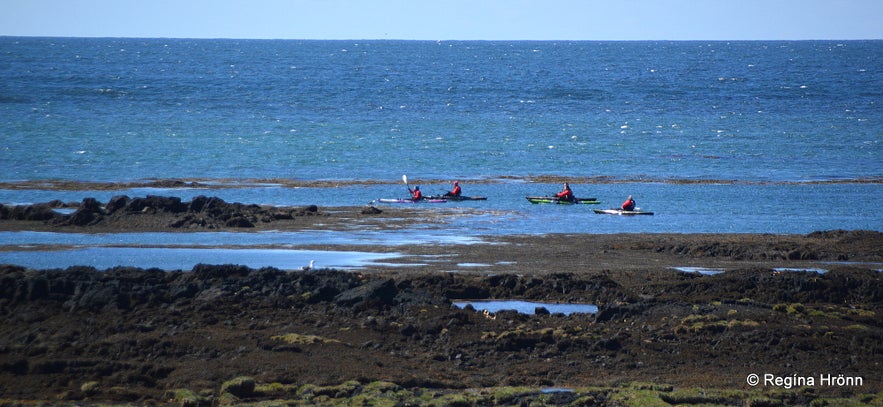
My friends kayaking in the sea in front of the museum
When my friends went kayaking for 2 hours in the canals and on the sea by Stokkseyri, I visited my sister and sat on her balcony, and zoomed in on them kayaking in the sea in front of the museum.
I joined them for the first part of the tour to take their photos. They were suited up in overalls and life vests, and they got warm gloves, as it can get pretty cold in Iceland.
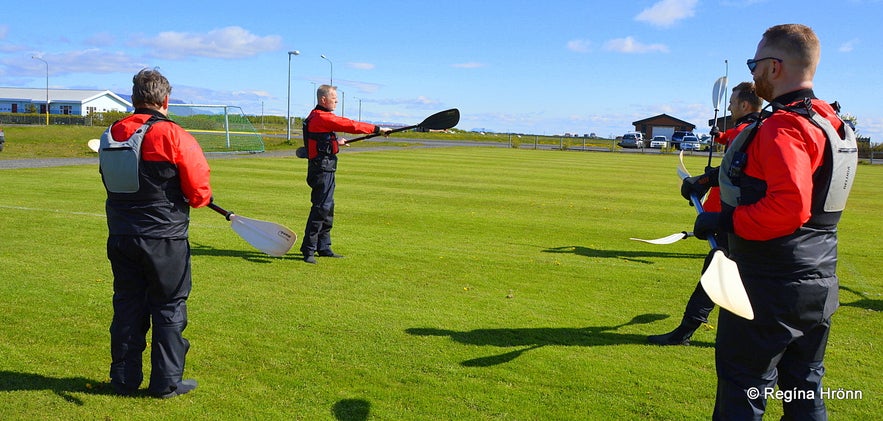
First, they got a lesson in kayaking
They first got a lesson in kayaking and paddling techniques from the instructor, and off they went into the canals of Stokkseyri.
At the beginning of the tour, one of our friends was taking photos of my husband when the kayak capsized, and he landed in the water. Please be careful when you take pictures while kayaking.
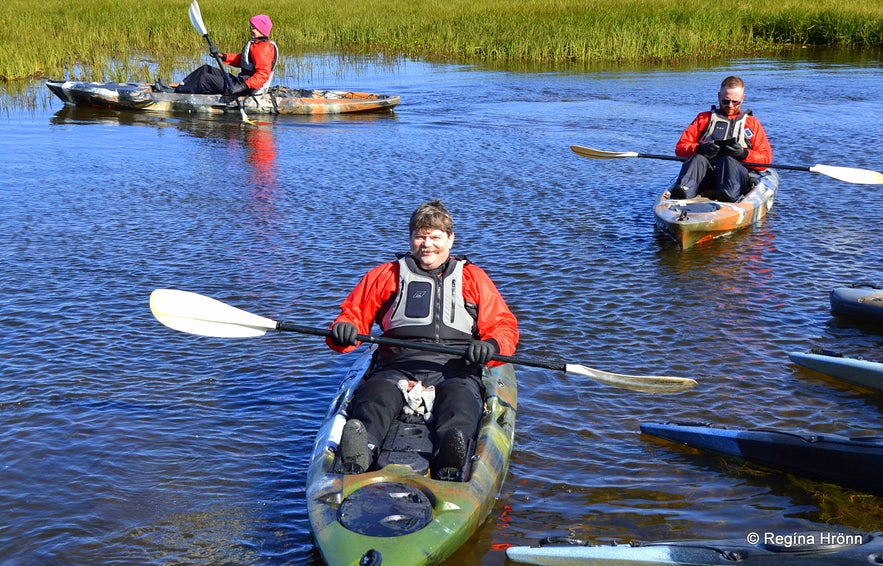
My friends kayaking in the canals at the beginning of the tour
This kayak tour is called the Power challenge circle tour - I do not do power challenges ;)
There is another tour, Family-Friendly 3-Hour Guideless Robinson Crusoe Kayaking Tour, which was more up my alley, but they wanted to include sea kayaking.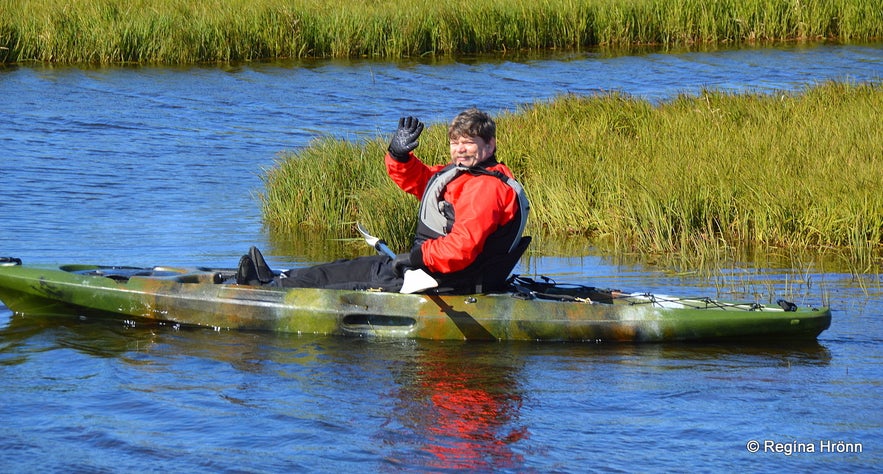
My husband kayaking in the calm canals
I have tried kayaking in a calm sea in Ísafjörður in the Westfjords, but since they wanted to do the more challenging tour, I went to visit my sister, as we don't see each other often, since we live in different towns in Iceland.
She used to live in Reykjavík, but when her husband died, she met Páll and moved in with him at the Wildlife Museum.
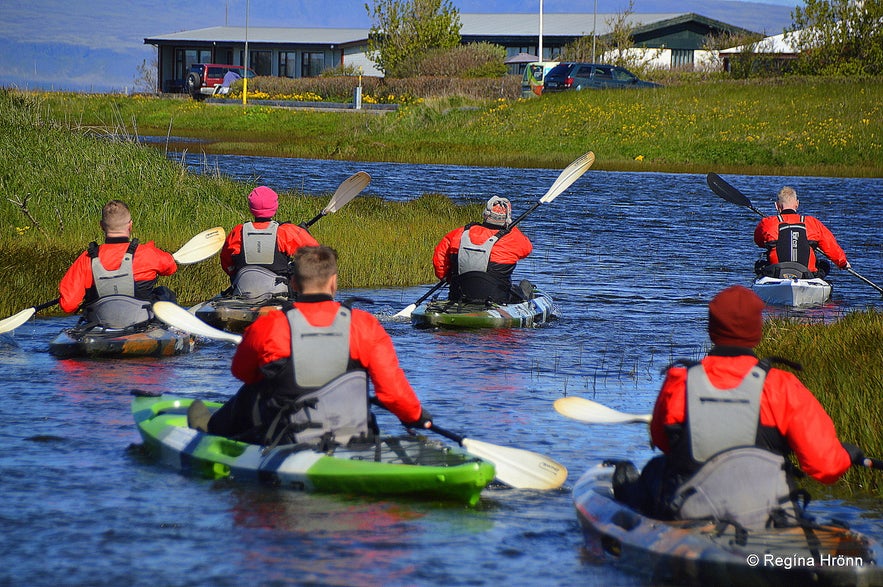
Here I left my friends when I saw them disappear into the canals on their way to the sea
To visit the south coast of Iceland, you can rent a car in Reykjavík and drive to Stokkseyri and Eyrarbakki in less than an hour via Route 1 South and Route 39, which we call Þrengslin.
Or you can take route one and drive to Stokkseyri from Selfoss.
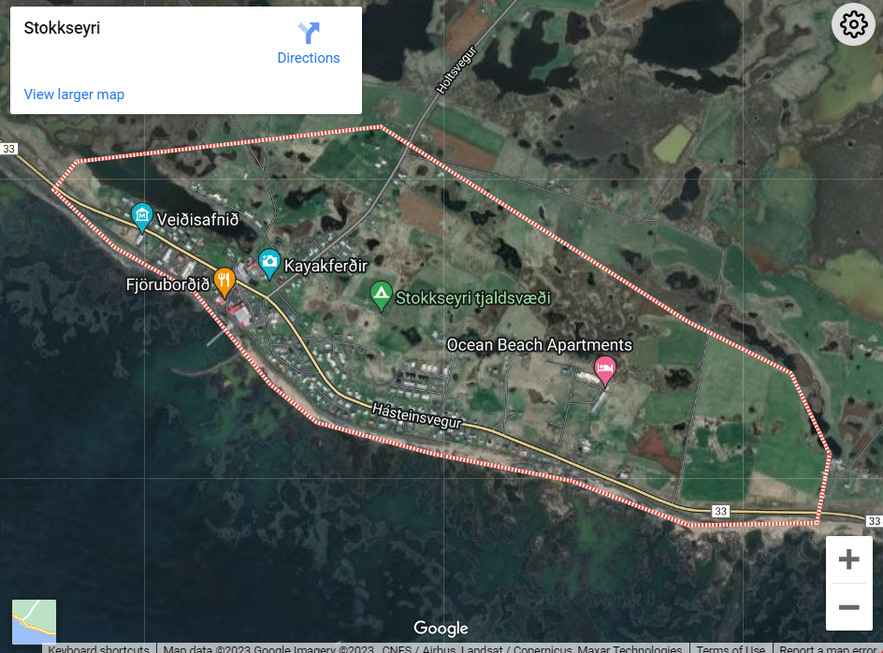
Here is the location of Stokkseyri on Google Maps.
 I hope that my travel blog has given you some ideas of what there is to see and do in Stokkseyri - have a lovely time :)
I will show you the Vitaleiðin - the Lighthouse trail of South Iceland in another travel blog.
Have a lovely time in Iceland :)

Hi, my name is Regína Hrönn, and I was born and raised here in Iceland.