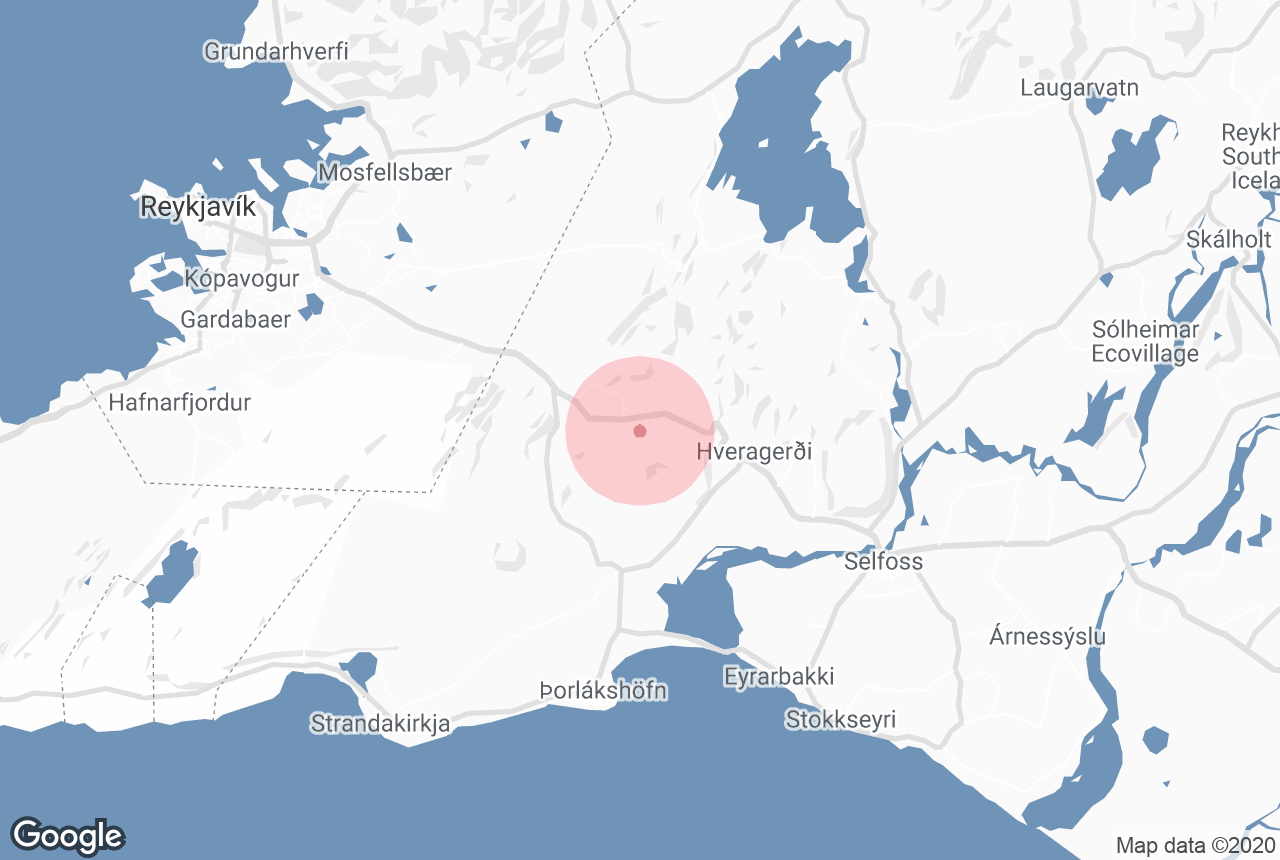
Hellisheiði is a lava plateau east of Reykavík, approximately 380 metres (1,247 feet) high.
Iceland's main highway, Route 1 passes through it, leading east. The latest and most distinctive lava field here is Kristnitökuhraun, formed in the year 1000.
当サイトの情報が信頼できる理由
Guide to Iceland (ガイド・トゥ・アイスランド)は、アイスランドで最も信頼されている旅行プラットフォームです。毎年、何百万人もの旅行者にご利用いただいています。 すべてのコンテンツは、アイスランドに精通した現地の専門家が執筆・監修しており、 常に正確で最新の情報を提供しています。 信頼できる旅のアドバイスをお探しなら、ぜひ当サイトをご活用ください。
Explore this area while on a self drive tour in Iceland.
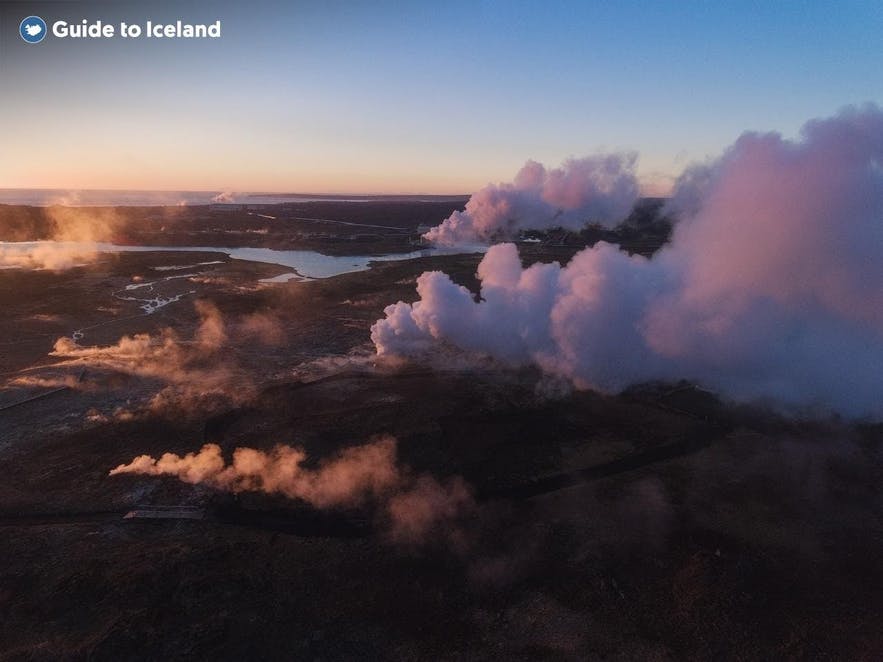
Geothermal Activity at Hellisheiði
The area is has a high amount of geothermal activity, as can be seen in nearby hot springs. The best example, however, can be found at the Hellisheiði geothermal power station.
This is the third largest power station in the world. It provides south and west Iceland, including Reykjavík, with hot water, and the energy is also harnessed for electricity (although most of this in Iceland comes from dams).
The Hellisheiði power station has an interactive educational centre. It allows guests to tour it, and learn all about Iceland’s environmentally friendly means of energy and heat production. The exhibitions are fascinating for adults and children alike.
What to do at Hellisheiði
On the way through Hellisheiði one can see many of Iceland’s beautiful landmarks. The most notable of these are the dramatic surrounding mountains, the main ones being Bláfjoll (the Blue Mountains) to the south and Mt. Hengill to the north.
From the highest point of the plateau one may view volcanoes Eyjafjallajökull and Hekla, along with the Westman Islands.
Eyjafjallajökull was the glacier covered volcano that erupted in 2010, causing widespread problems across Europe with air travel. It also flabbergasted newsreaders everywhere as they tried to pronounce it correctly (most settled on ‘E11’).
Hekla is another notorious volcano, having erupted many times throughout Iceland’s history.
Looking to the Westman Islands, you will see more reminders of Iceland’s volcanic history. In the centre of the largest island, Heimaey, is the crater of the Eldfell.
This volcano went off without warning in the middle of town in 1973. It created Iceland’s newest island, also visible just off shore, called Surtsey.