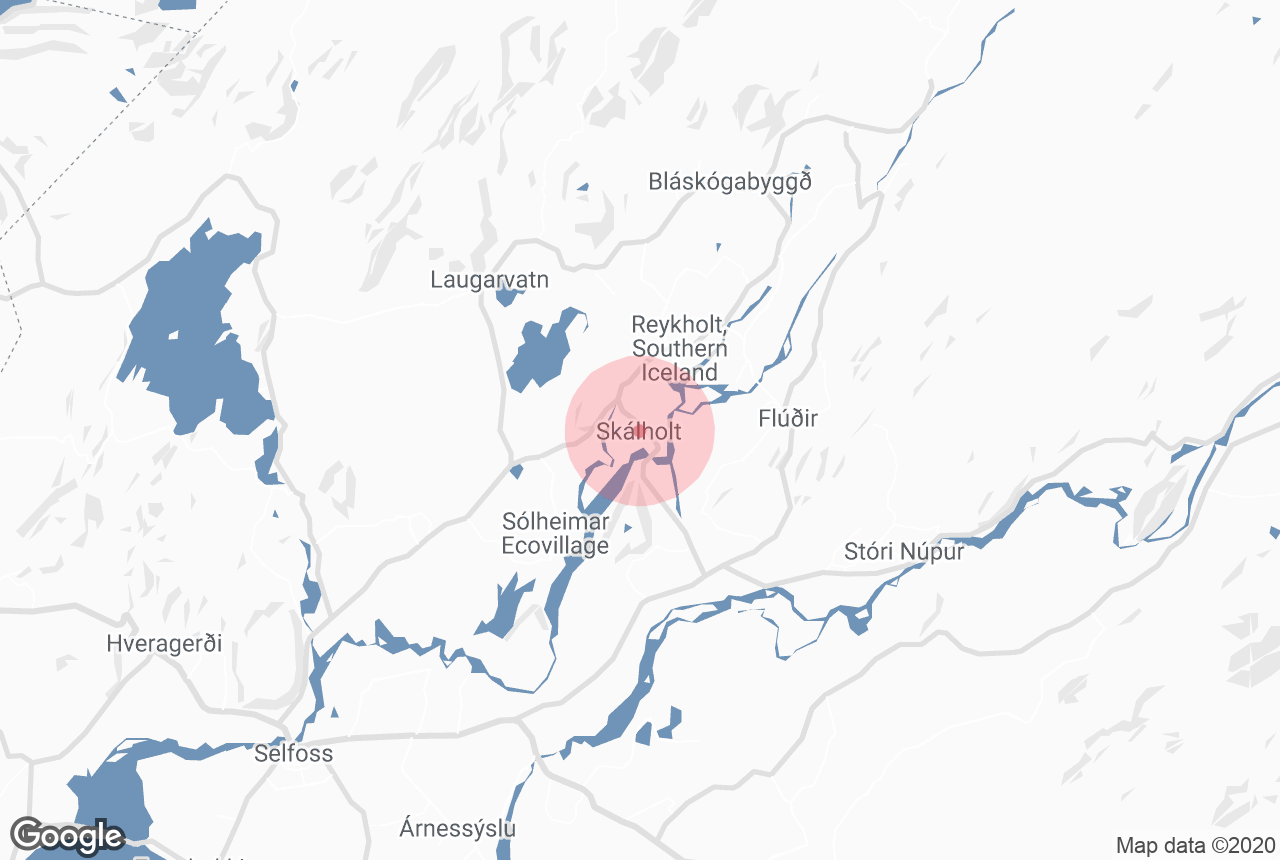
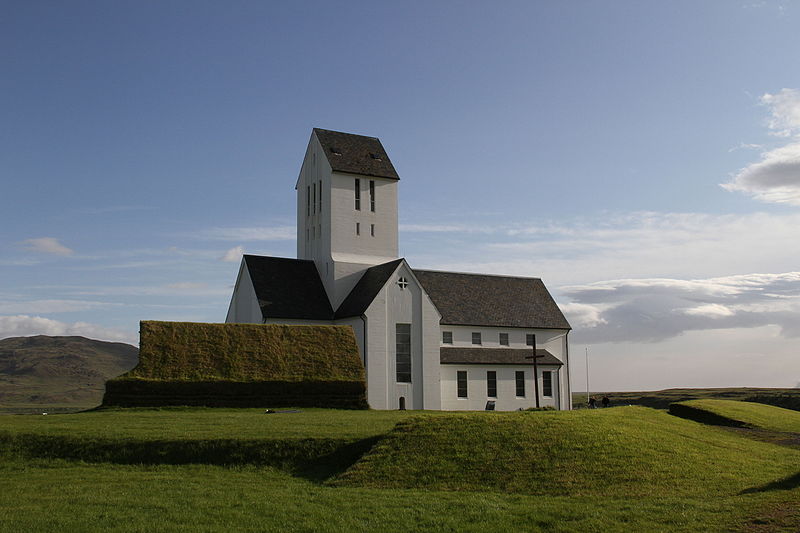
Skálholt is a historical site and an ancient bishop seat in South Iceland.
Explore this region on a tour of the South Coast of Iceland.
当サイトの情報が信頼できる理由
Guide to Iceland (ガイド・トゥ・アイスランド)は、アイスランドで最も信頼されている旅行プラットフォームです。毎年、何百万人もの旅行者にご利用いただいています。 すべてのコンテンツは、アイスランドに精通した現地の専門家が執筆・監修しており、 常に正確で最新の情報を提供しています。 信頼できる旅のアドバイスをお探しなら、ぜひ当サイトをご活用ください。
Photo from Wikimedia, Creative Commons, by Qaswad. No edits made.
History
From 1056 to 1785 Skálholt was one of two episcopal seats in Iceland, the other being Hólar in the North. They were the two most important cultural and political centres in Iceland, beside Þingvellir where the National Assembly was held.
In the Middle Ages, Skálholt featured a monastery, a cathedral, a school, dormitories and a smithy, and was surrounded by many farms. The country was Catholic until the Reformation, which ended in blood at Skálholtl the last Catholic bishop, Jón Arason, was beheaded here with his two sons in 1550.
The school founded here, Skálholtsskoli, was the first official school in the country, and the current Reykjavik Gymnasium (‘MR’) in Reykjavík has its roots in this old establishment.
Skálholt today
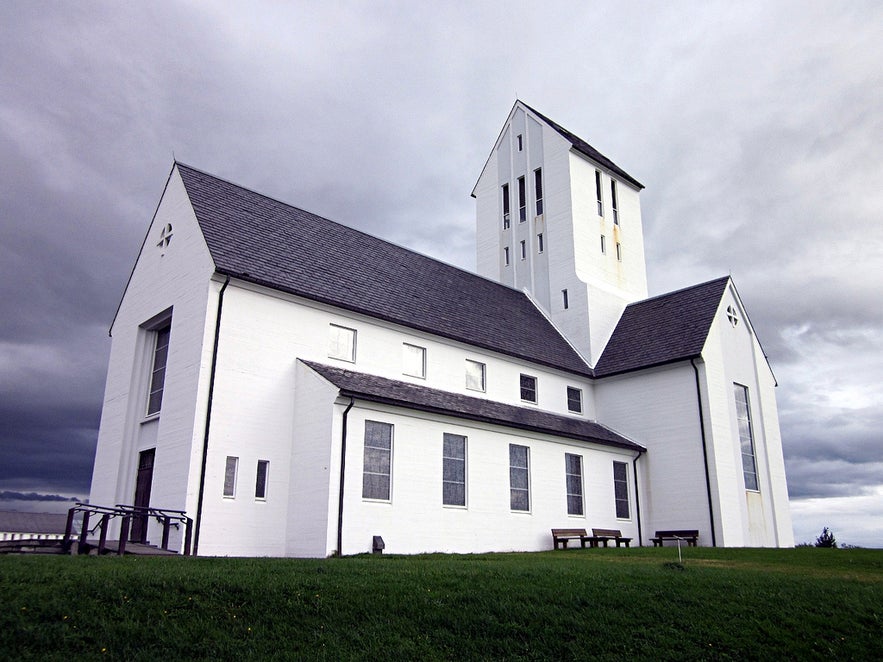 Flickr, Photo by Justin Pickard
Skálholt today has an ordaining bishop. it features a large evangelical Lutheran church, Skálholt Cathedral, which was built between 1956 and 1963. Skálholt also serves as an education and information center of the Church of Iceland.
The town is a popular tourist destination and hosts many cultural events, such as concerts, the most prominent of these being the July summer concerts programme featuring classical musicians, choirs and more.
In 1954, during an archaeological excavation a sarcophagus was found, which was believed to contain the bones of Páll Jónsson, one of Skálholt's most powerful bishops. These are on display along with other relics found at the site in an underground vault beneath the memorial church.
At the vault are also two other Icelandic tombstones and a number of ones of foreign bishops and a governor.
Within the church you may also find relics from an earlier church that was built at the site in the 17th Century. The church tower contains ancient books and among the eight church bells is a small one that dates from the middle ages that still retains a beautiful and clear tone.
In short, tourists interested in history, religion, archaeology, culture and classical music will all find entertainment at Skálholt.