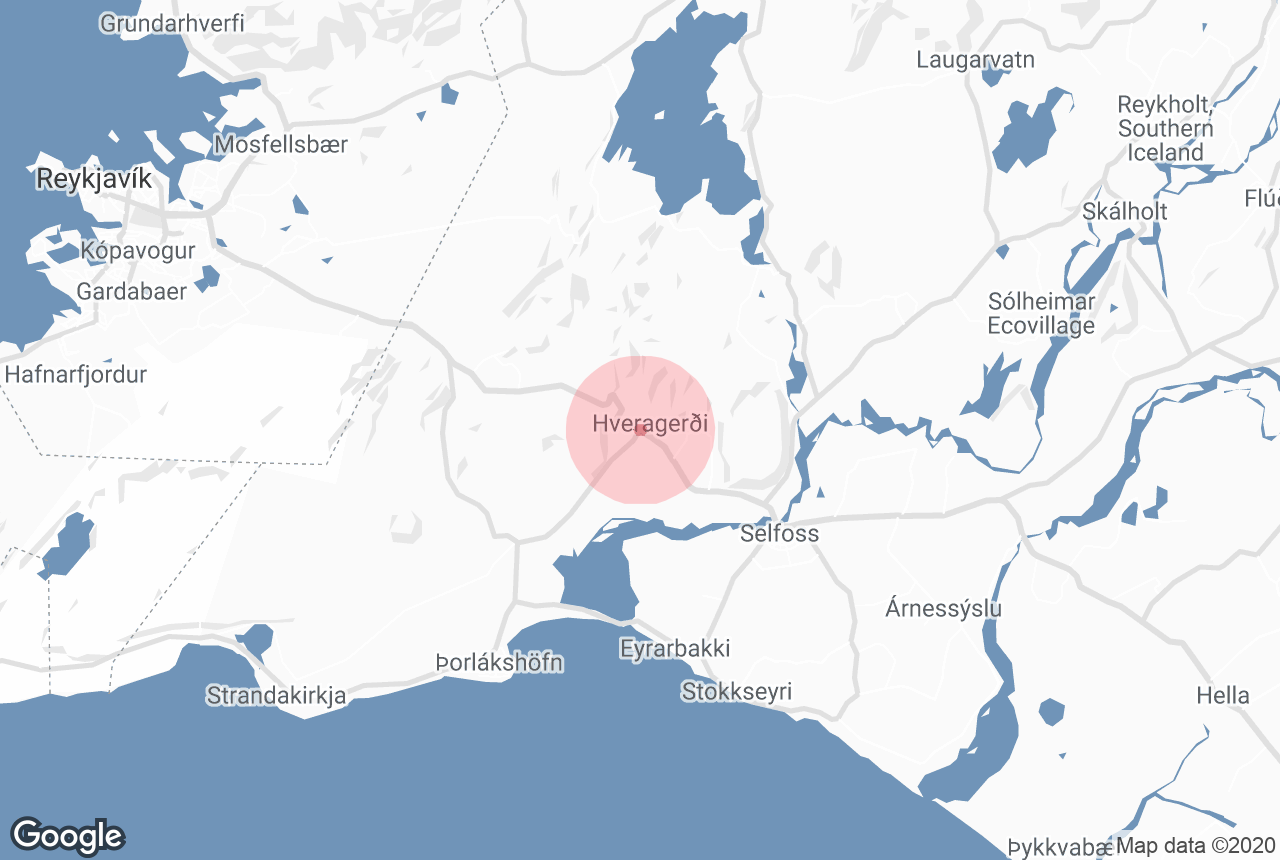
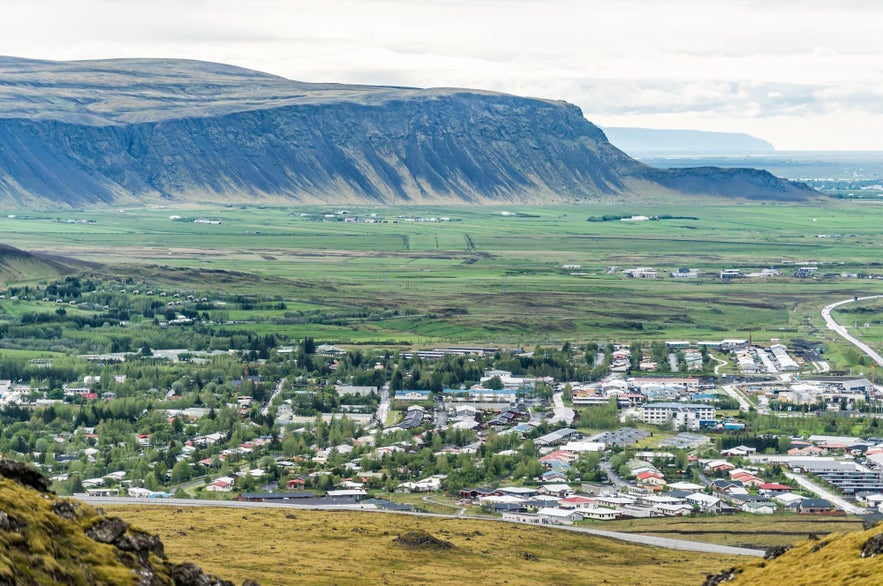
Hveragerdi is a geothermal town in South Iceland, located 28 miles (45 kilometers) east of Reykjavik along Route 1. Famous for its Geothermal Park, hot springs, geothermally heated greenhouses, and the Reykjadalur thermal river hike, it is one of the most rewarding and accessible stops on the South Coast.
Hveragerdi is a town of roughly 3,000 people where geothermal energy shapes everyday life. Steam vents dot the hillsides, hot springs bubble in backyards, and the warm Varma River runs through the town center. The town is best reached on self-drive tours and sits within the Hengill central volcano system, one of the most geothermally active zones in Iceland.
Why You Can Trust Our Content
Guide to Iceland is the most trusted travel platform in Iceland, helping millions of visitors each year. All our content is written and reviewed by local experts who are deeply familiar with Iceland. You can count on us for accurate, up-to-date, and trustworthy travel advice.
The drive from Reykjavik takes around 30 to 45 minutes, making Hveragerdi an easy addition to South Coast tours or a practical base for exploring the Golden Circle. Selfoss, the capital of South Iceland, is just 14 kilometers (9 miles) further along Route 1. The town is also nicknamed the "Flower Town of Iceland" and the "Greenhouse Village" for its extensive geothermally heated growing operations.
Hveragerdi is also known as the "Earthquake Town," a reference to the Mw 6.3 tremor that struck on May 29, 2008, and left visible marks on the landscape still commemorated in a local exhibition. There is a good range of hotels in Hveragerdi for those who want to use the town as a base.
Keep reading for everything you need to know before you go.
Key Facts About Hveragerdi
-
Located 28 miles (45 kilometers) from Reykjavik, around 30 to 45 minutes by car on Route 1.
-
The Hveragerdi Geothermal Park (Hveragardurin) is in the town center at Hveramork 13.
-
The Reykjadalur Thermal River hike is 1.9 miles (3 kilometers) one way and takes about 3 hours round trip. Free to access.
-
Hveragerdi is the world's northernmost place where bananas are commercially grown, thanks to 538,000 square feet (50,000 square meters) of geothermally heated greenhouses.
-
The Reykjabod Hot Springs are set to open in summer 2026 in the Reykjadalur Valley.
-
The annual Blomstrandi Dagar (Blooming Days) festival runs from August 13 to 16, 2026.
Reykjadalur Thermal River Hike
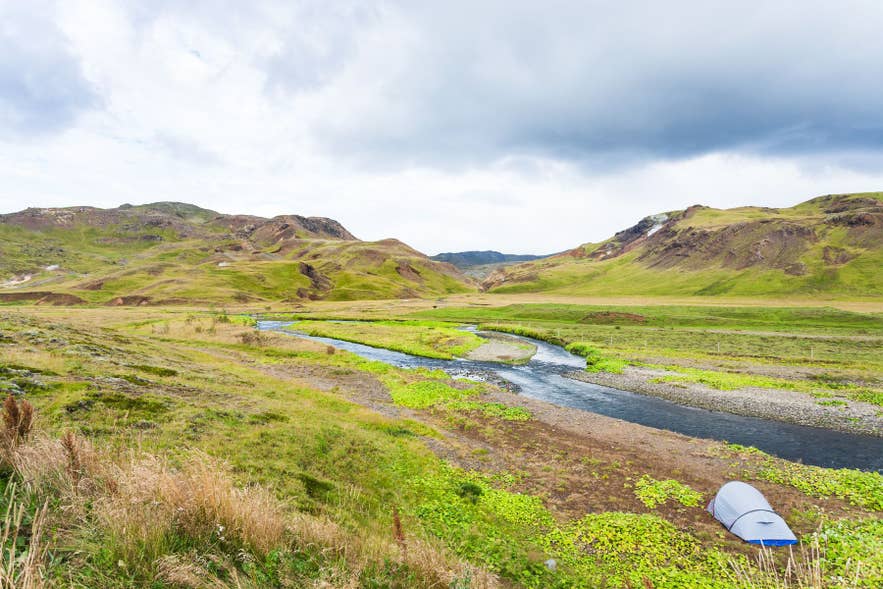
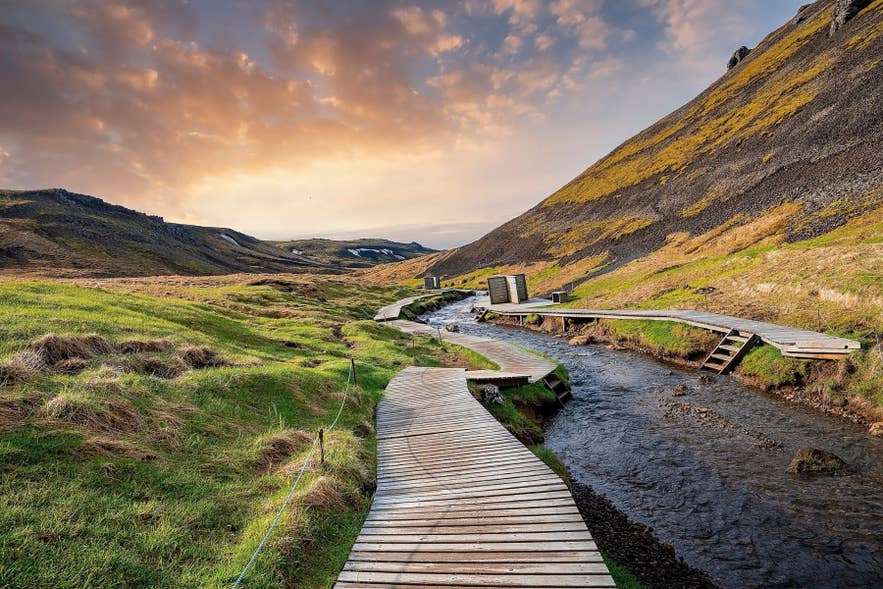 The Reykjadalur Valley hike is Hveragerdi's most popular activity and one of the best free geothermal experiences in Iceland. A 1.9-mile (3-kilometer) trail leads from the trailhead through steaming vents and mud pools before arriving at a naturally heated river where visitors can bathe year-round.
The river is hotter further upstream, away from where it meets a cold-water stream, so bathers can choose their preferred temperature. The full round trip takes about three hours. Wooden boardwalks protect the most sensitive landscape around the main bathing spots.
Parking at the trailhead costs approximately 2 USD (250 ISK) per hour. The cafe at Skalinn (The Lodge) serves cakes and light meals from noon daily. In winter, bring shoe spikes and only hike during daylight. There are no trash cans or changing cabins on the trail itself.
Reykjabod Hot Springs
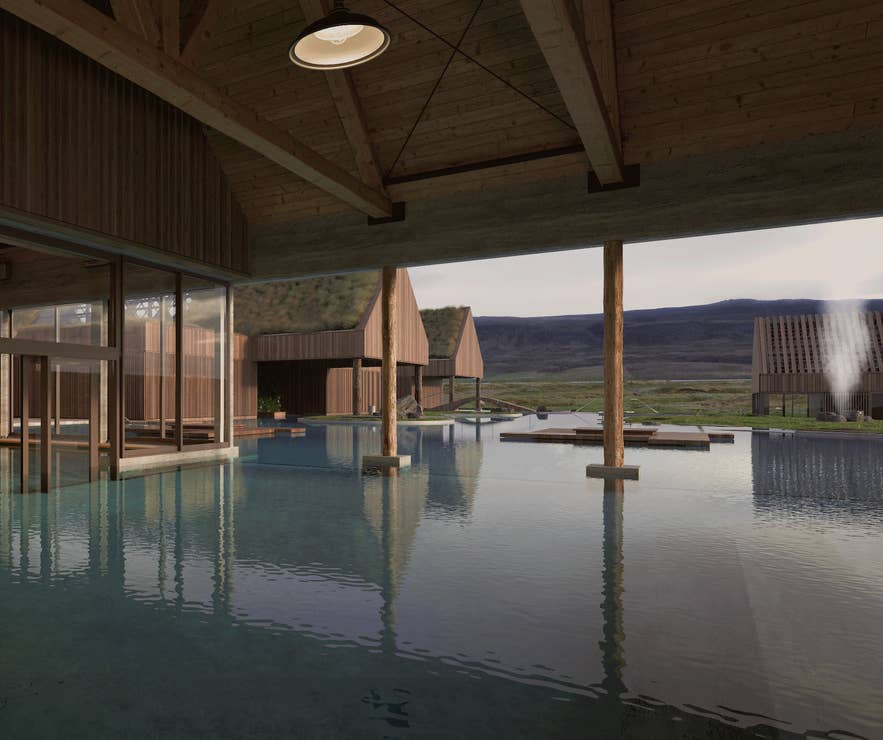 Reykjabod Hot Springs is Hveragerdi's newest attraction, scheduled to open in summer 2026. Set at the entrance to the Reykjadalur valley, it offers a more intimate alternative to Iceland's larger resort-style lagoons, with a focus on relaxation, contrast bathing, and sensory wellness. It pairs naturally with the Reykjadalur hike, sitting at the trailhead for a soak after the walk.
The facilities include a 9,688 square feet (900 square meters) geothermal lagoon maintained at 100 to 104 F (38 to 40 C), a cold plunge pool, event saunas, a Kneipp pool, a swim-up bar, and an on-site bistro. Spa treatments are available as upgrades. As with all Icelandic public baths, showering without a swimsuit before entering is required.
Hveragerdi Geothermal Park (Hveragardurin)
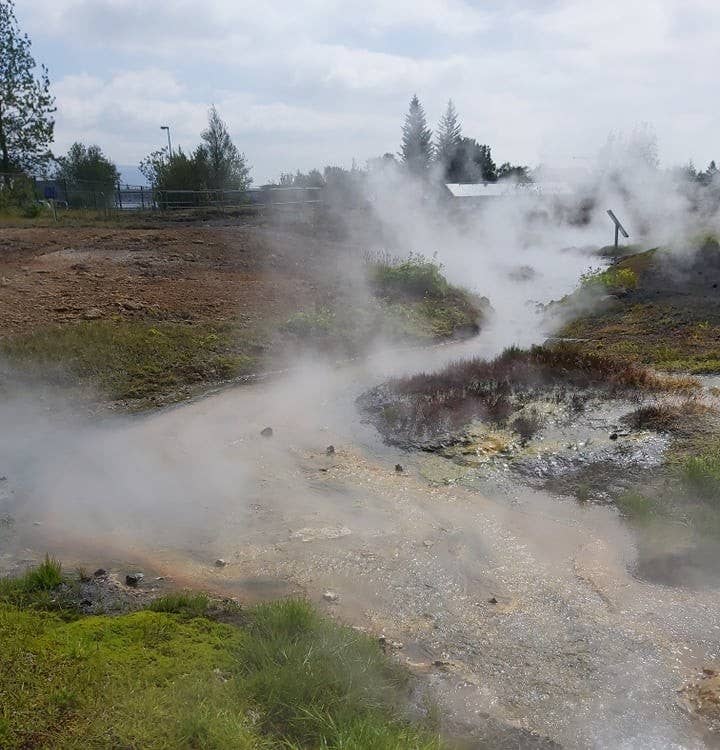 The Hveragerdi Geothermal Park, known in Icelandic as Hveragardurin ("Hveragarðurinn"), is the town's top attraction and Iceland's most accessible geothermal area. Sitting at Hveramork 13 in the town center, it brings visitors face to face with Iceland's volcanic forces without leaving an urban setting.
Well-maintained paths wind past bubbling hot springs, steaming fumaroles, colorful mineral deposits, and a small geyser that erupts every 10 to 20 minutes. Informative signs throughout explain the geothermal system and its role in shaping Hveragerdi's history and economy.
The park offers three hands-on experiences that visitors should not miss:
-
Mud baths: Natural clay foot soaks using geothermally heated clay, one of the most popular activities in Hveragerdi.
-
Hverabraud: Traditional Icelandic dark rye bread baked underground for 24 hours using geothermal heat, served fresh at the park cafe.
-
Egg boiling: Visitors can boil their own eggs directly in a natural hot spring.
Before visiting, here are the practical details to keep in mind:
-
Address: Hveramork 13, 810 Hveragerdi, Iceland
-
Admission: Approximately 3 USD (400 ISK) per person.
-
Summer hours: Monday to Saturday 9 AM to 6 PM, Sunday 9 AM to 4 PM
-
Winter hours: Check the park's Facebook page, as these vary
-
Cafe on-site serving hverabraud and light meals
Things To Do in Hveragerdi
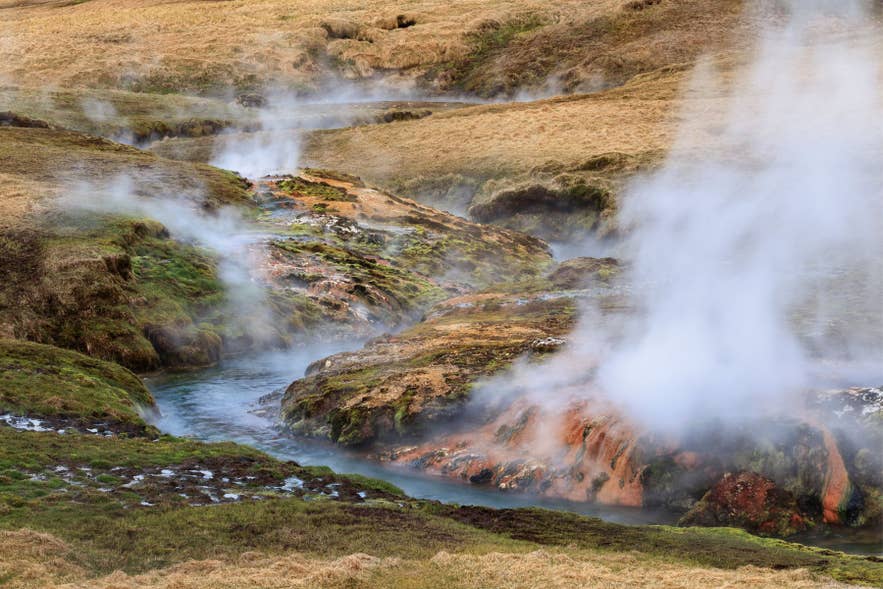 Hveragerdi packs a surprising range of activities into a small town. The geothermal landscape is the main draw, but there is also hiking, swimming, art, history, and adventure on offer. Aside from visiting the Geothermal Park and the Reykjadalur Valley hike, here are some of the top things to do in Hveragerdi:
-
Tour the Geothermal Greenhouses. Hveragerdi operates over 50,000 square meters of geothermally heated greenhouses, making it the world's northernmost place where bananas are commercially grown. Several greenhouses welcome visitors, and you can even enjoy a luxurious stay at the Greenhouse Hotel, which includes a food hall and shopping area.
-
Swim at Laugaskard Pool. Hveragerdi's geothermally heated public pool is open year-round with an outdoor pool, hot tubs, and facilities for children. As in all Icelandic public pools, showering without a swimsuit before entering is required.
-
See the Quake 2008 Exhibition. The exhibition at the Sunnumork Shopping Center documents the magnitude 6.3 earthquake that struck Hveragerdi on May 29, 2008, through photographs, footage, and geological data.
-
Visit the Listasafn Árnesinga Art Museum. Founded in 1963, the regional art museum for South Iceland holds a permanent collection of around 500 works by Icelandic artists and hosts rotating temporary exhibitions throughout the year.
-
Go Horse Riding. Several farms near Hveragerdi offer guided tours on Icelandic horses, ranging from short introductory rides to longer treks through geothermal valleys and lava fields. Advance booking for a horse riding tour from Hveragerdi is recommended in the summer.
-
Ride the MegaZipline. One of the longest ziplines in Iceland, running across a dramatic stretch of South Iceland landscape just outside Hveragerdi. Tours include equipment and a guide. Advance booking is strongly recommended in the summer.
-
Walk the Town. Hveragerdi rewards an unhurried stroll, with steam vents rising through gaps in the pavement, the warm Varma River winding through the town center, and the Hveragerðiskirkja church worth a look for its distinctive modern architecture.
Getting To Hveragerdi from Reykjavik
The most practical way to visit is by rental car. From Reykjavik, take Route 1 east toward the South Coast. Along the way, you pass Raudholar Pseudocraters before climbing over the Hellisheidi Heath. Hveragerdi comes into view as you descend, steam rising from the hillsides. Turn left at the main roundabout to enter the town.
Public bus services connect Reykjavik and Hveragerdi year-round, though a rental car gives much more flexibility. Hveragerdi is not a standard stop on most South Coast tours, but guided activities, including Reykjadalur hikes, horseback riding to the valley, and the MegaZipline, are all bookable locally.
Hveragerdi Day Trips
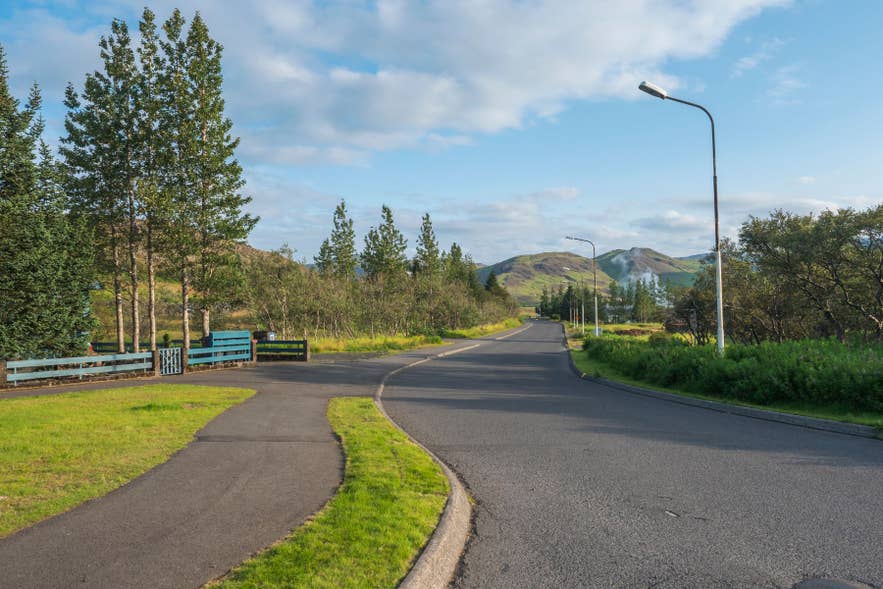 Hveragerdi's position on Route 1 makes it a natural base for two of Iceland's most popular sightseeing routes.
Thingvellir National Park, the Geysir Geothermal Area (home to the Strokkur Geyser), and Gullfoss Waterfall are all within an hour from Hveragerdi.
Kerid Volcanic Crater is around 22 miles (35 kilometers) away and fits easily into a Golden Circle loop. Lake Laugarvatn and Laugarvatn Fontana Spa are also nearby at roughly 31 miles (50 kilometers).
Continuing east on Route 1 brings travelers to Seljalandsfoss and Skogafoss waterfalls and Reynisfjara Black Sand Beach. Selfoss is just 8.7 miles (14 kilometers) away and is a useful service hub. Thorlakshofn, around 19 miles (30 kilometers) south, is the winter departure point for the ferry to the Westman Islands.
Where To Eat in Hveragerdi
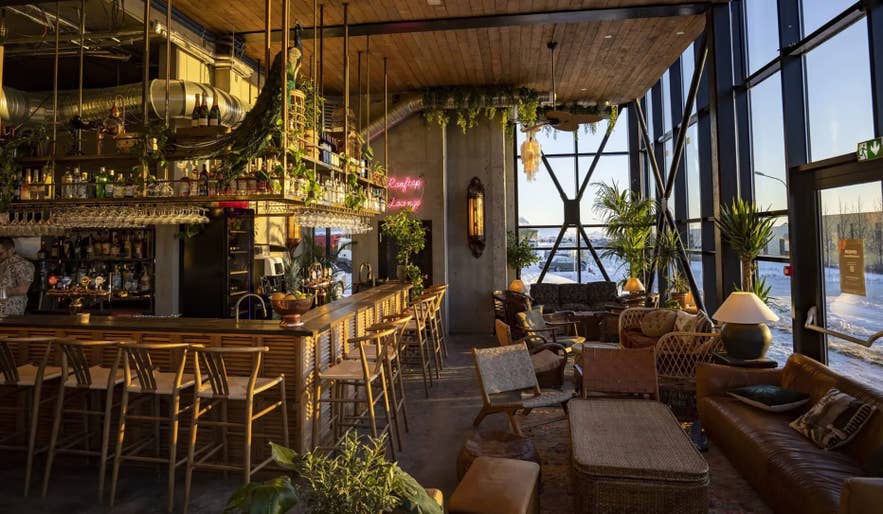 For a small town, Hveragerdi has a strong food scene. Several restaurants use geothermal cooking techniques and produce sourced directly from the local greenhouses.
-
Olverk: The only restaurant in Europe brewing craft beer using geothermal energy, also serving stone-oven pizzas with quality local ingredients.
-
Almar Bakari: Widely considered one of Iceland's best bakeries. Their baked goods are ideal to pack for the Reykjadalur hike.
-
Grodurhusid Food Hall: Seven vendors at the Greenhouse Hotel, serving everything from noodles to fried chicken in a beautifully designed setting.
-
Restaurant Varma: A locally loved restaurant with consistently strong reviews for Icelandic cuisine.
Best Time To Visit Hveragerdi
 The best time to visit Hveragerdi is summer (June to August), when the Reykjadalur hike is at its most scenic, the MegaZipline is in full operation, and the annual Blomstrandi Dagar festival runs in mid-August.
Spring (March to May) is the best season for budget travelers, with lower hotel prices and improving daylight. Autumn (September to November) brings fewer crowds and the start of the northern lights season, with the hills above town offering good viewing conditions on clear nights.
Winter visitors can still hike to the Reykjadalur thermal river with proper footwear and have some of the best chances of seeing the northern lights in the area.
History and Culture of Hveragerdi
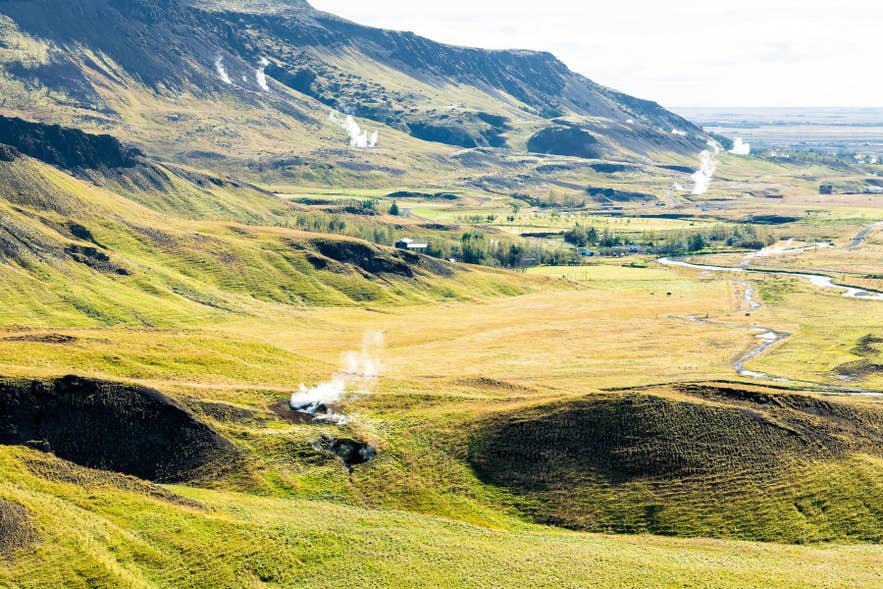 Hveragerdi began taking shape as a settled community in the early 20th century, with the first geothermally heated greenhouse built in 1923 and hot water piped into homes for heating by 1929.
The population was just 121 people in 1940, growing steadily as the greenhouse industry expanded and the town earned its reputation as Iceland's horticultural center. Municipal status was granted on July 1, 1987.
The town has long attracted artists, poets, and musicians drawn to its striking landscape. The historic Street of Poets was a well-known creative gathering place in the mid-20th century, and that artistic spirit continues today through the Listasafn Árnesinga Art Museum, founded in 1963 and home to around 500 works. Hveragerdiskirkja, the town's modern Protestant church, was built between 1967 and 1972.
The most significant event in recent history is the Mw 6.3 earthquake of May 29, 2008, which injured residents and damaged buildings across the town. It is now commemorated in the Quake 2008 Exhibition at the Sunnumork Shopping Center.
Each August, the town comes alive for Blomstrandi Dagar (Blooming Days), an annual festival of live music, markets, art shows, and workshops.
Start Planning Your Hveragerdi Visit
 Hveragerdi is one of the most geothermally rich and genuinely rewarding towns in Iceland, and at 28 miles (45 kilometers) from Reykjavik, it is easy to reach on a South Coast drive. Few places in Iceland make the country's volcanic energy feel as immediate as Hveragerdi does, from the steaming park in the town center to the hot river in the valley above.
The town also works well as a base. With the Golden Circle, Selfoss, and the rest of the South Coast all within easy reach, staying in Hveragerdi gives you access to a wide stretch of Iceland without the higher prices of central Reykjavik.
The growing wellness scene, from the NLFI rehabilitation clinic to the incoming Reykjabod Hot Springs opening in summer 2026, gives it an added draw for travelers looking to slow down.
Whether you come for a day or several nights, Hveragerdi consistently delivers more than travelers expect from a small Icelandic town. Give it more than a passing stop, and it will not disappoint.
What is Hveragerdi known for?
How far is Hveragerdi from Reykjavik?
Is Hveragerdi worth visiting?
What is the Reykjadalur hike in Hveragerdi?
Is Hveragerdi good for families?
Can you see the northern lights in Hveragerdi?
Is there a hot spring or lagoon in Hveragerdi?
How do you get to Hveragerdi from Reykjavik?
What is the best time of year to visit Hveragerdi?
Is Hveragerdi a good base for the South Coast and Golden Circle?
How long do you need in Hveragerdi?