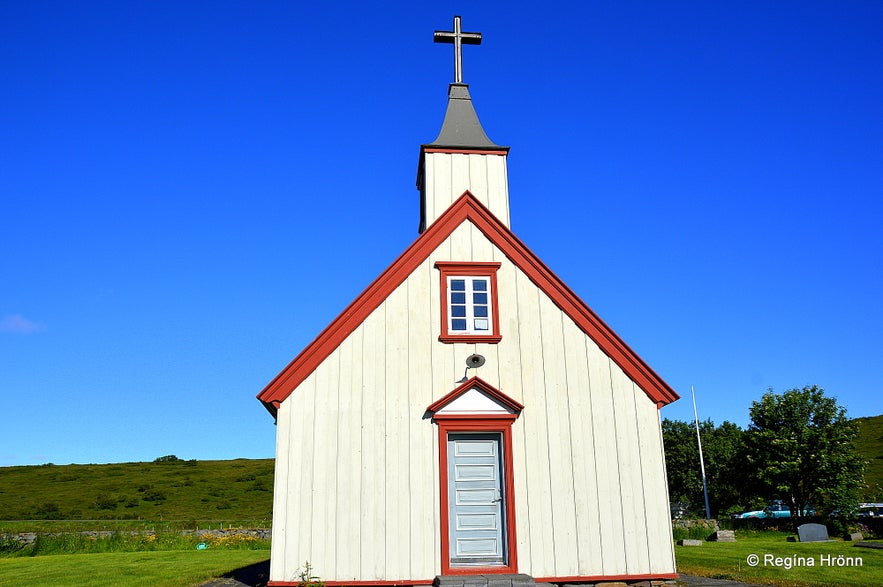
At Skinnastaður in NE-Iceland, you will find a beautiful church, Skinnastaðarkirkja. It was built in 1854 and is a true gem - wait until you see how colourful it is on the inside.
This church is very close to some of Iceland's natural gems, including the Ásbyrgi nature reserve and Jökulsárgljúfur canyon, which are my favourite locations in Iceland.
Icelandic folklore tells of strange events that have occurred in this church.
Top photo: Skinnastaðakirkja church
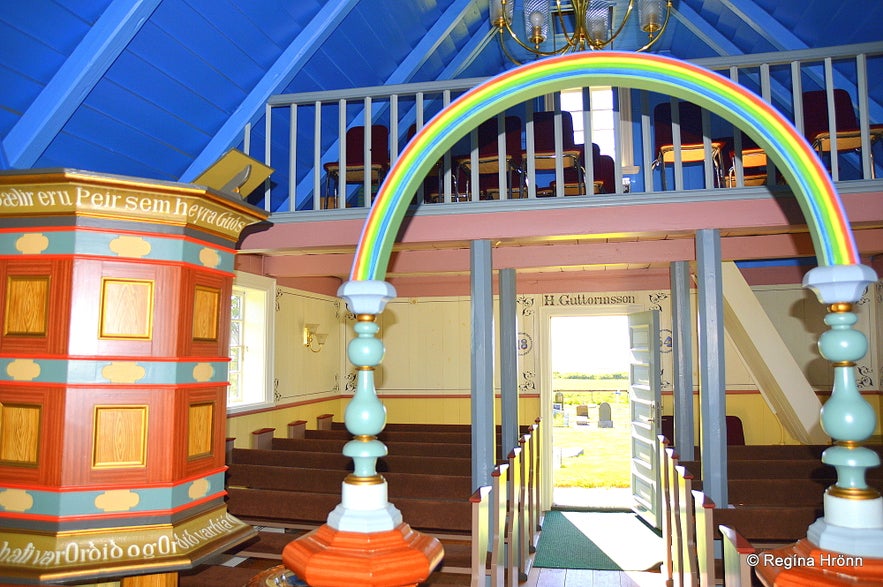
Inside the colourful Skinnastaðarkirkja church
My great-great-grandfather, Benedikt Kristjánsson (1840-1915), served as a minister at Skinnastaður from 1870-1873, and here 2 of his first children were born.
I am named after his first wife, my great-great-grandmother Regína Magdalena Sívertsen, who had joined Benedikt here from far away, from Keflavík in SW-Iceland.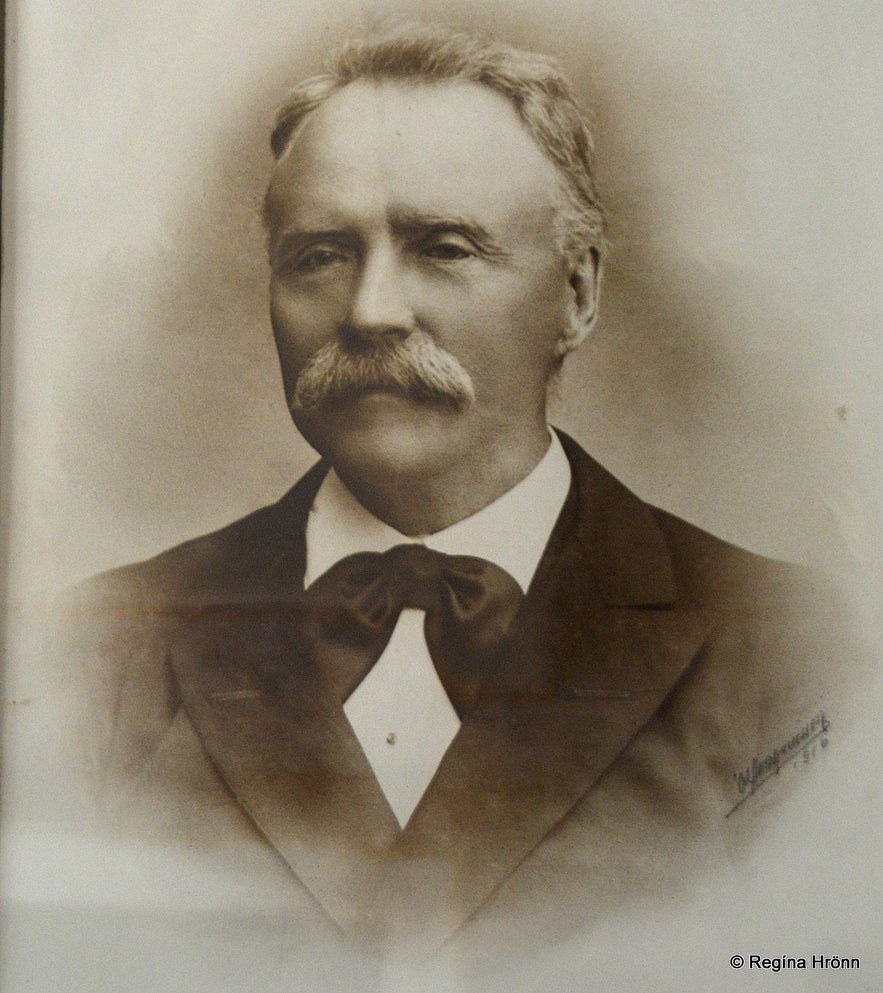
My great-great-grandfather Benedikt
I have told you about my great-great-grandparents in my Grenjaðarstaður travel blog, where later Benedikt served for 30 years.
Rev. Benedikt liked staying at Skinnastaður, but this parish was difficult, mainly as he also served Garðskirkja church on the other side of the massive unbridged glacial river Jökulsá á Fjöllum, which runs through Jökulsárgljúfur canyon.
Benedikt also found it challenging to reach Víðihóll á Fjöllum.
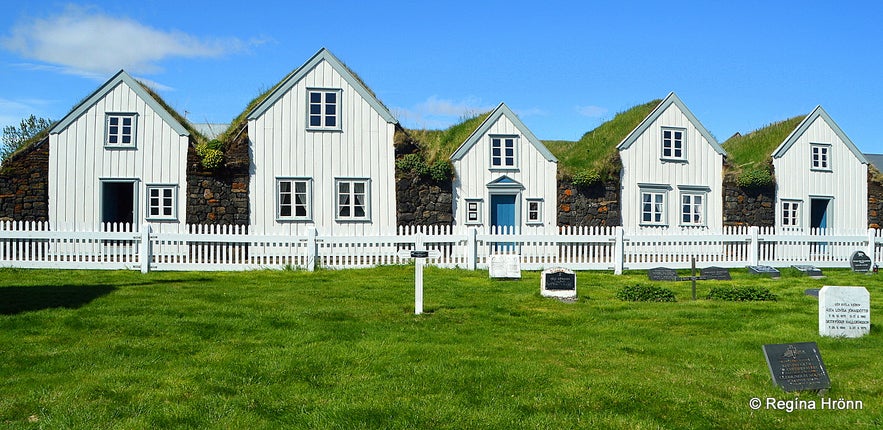
Grenjaðarstaður turf house museum
So in 1873, he moved and served as a minister at Helgastaðir in Suður-Þingaeyjarsýsla.
And 3 years later, he was appointed to the parish at Grenjaðarstaður manor, where he served for 30 years.
Grenjaðarstaður turf house is now a museum and one of the most beautiful turf houses left in Iceland.
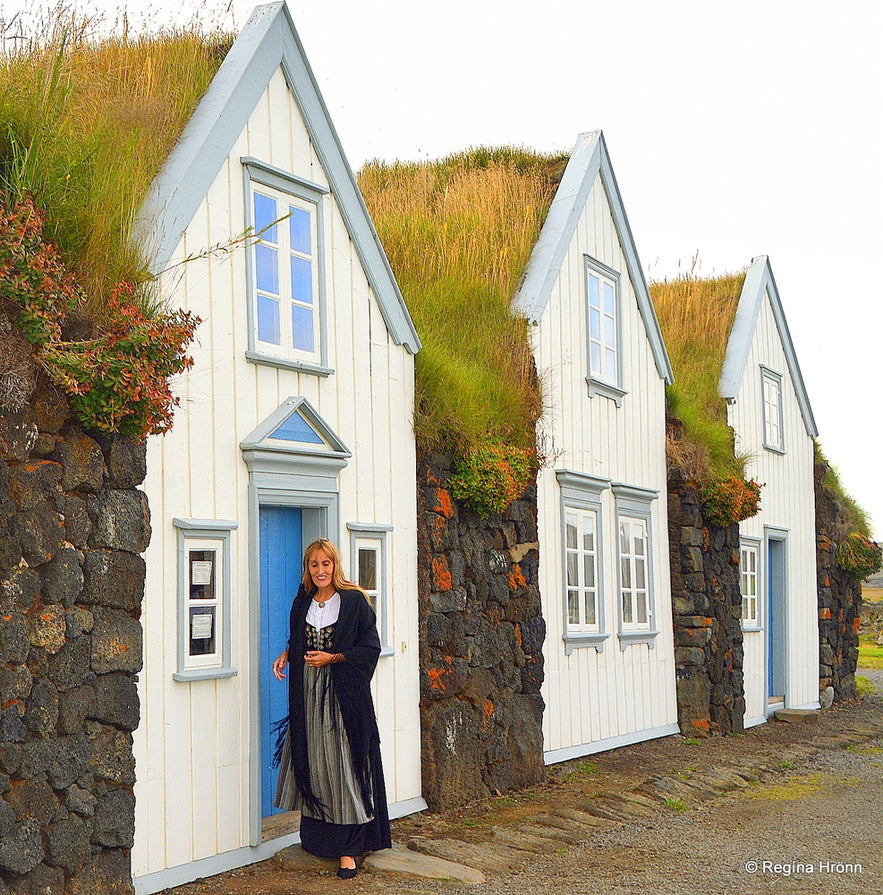
Grenjaðarstaður turf house, the former home of my ancestors
I have written a long travel blog about turf houses if you want to see how Icelanders lived in the olden times:
A List of the Beautiful Icelandic Turf Houses, which I have visited on my Travels in Iceland.
In 1907, Benedikt moved to Húsavík in North Iceland with his second wife, Ásta, and his son, Bjarni, my great-grandfather.
In the house to the right in my photo below, my grandmother, Kristín, and her 14 siblings were born.
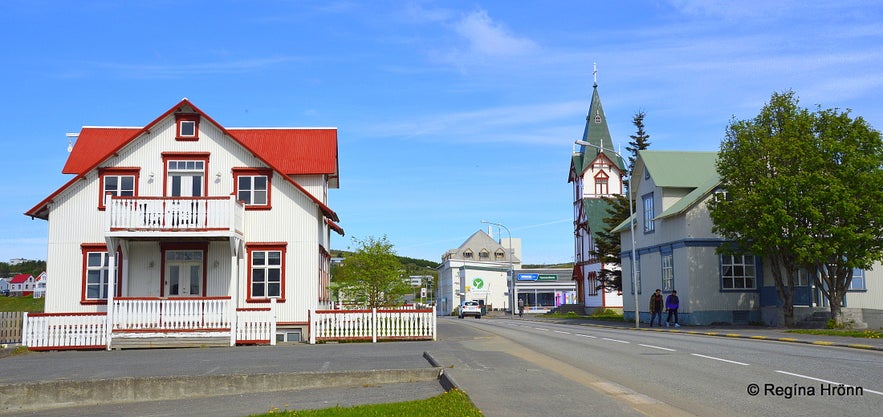
The two houses in Húsavík built by my great-great-grandfather, Benedikt, and my great-grandfather, Bjarni
My ancestors built two beautiful houses in Húsavík, which you can see in my travel blog: the lovely Húsavík - the Whale Watching Capital of Iceland.
These houses were built in 1907, the same year as the Húsavíkurkirkja church, the landmark of Húsavík. I consider that church the most beautiful in Iceland.
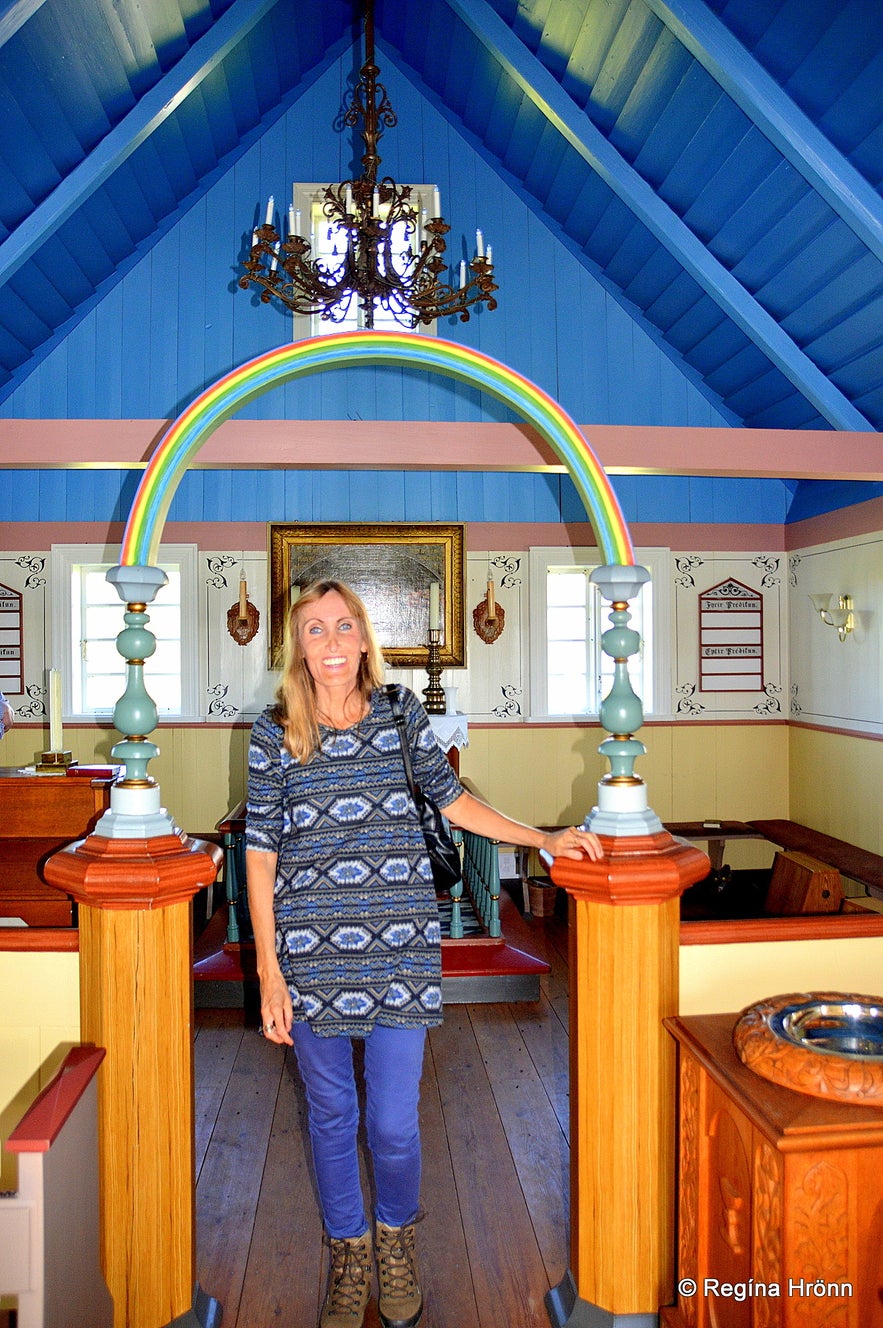
I love the rainbow and beautiful colours in Skinnastaðarkirkja church
I visit all the churches I can reach on my travels in Iceland.
They are, unfortunately, locked because of vandalism and theft in the churches.
People have slept in the churches and even cooked with a camping gas stove inside delicate old timber churches!
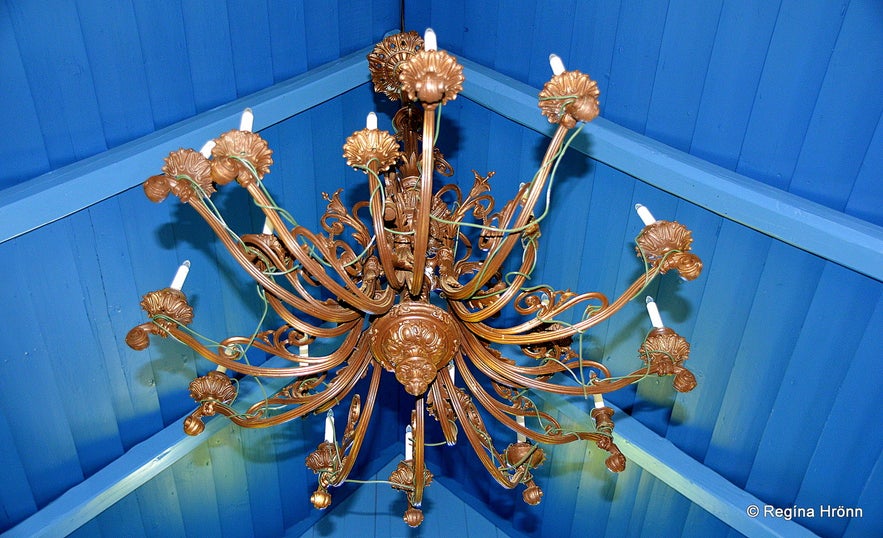
Inside Skinnastaðarkirkja church
So we are on an endless search for the church keys and are constantly disturbing the farmers or the ministers.
Minister Jón Ármann Gíslason at Skinnastaður was kind enough to open the church for us and show us around.
At the time of our visit, two ministers were living at Skinnastaður: Rev. Jón and his wife, Rev. Hildur Sigurðardóttir, whom I know from when we were teenagers in YMCW.
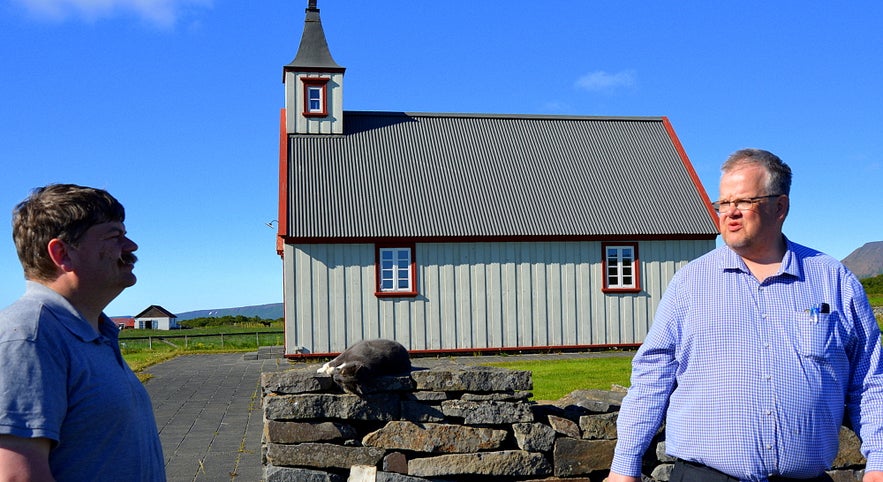
My Jón and Hildur's Jón
Old Icelandic folklore is related to this church. The name of the folklore is simply "Skinnastaðakirkja".
The name of the church is Skinnastaðarkirkja with an "r", but the folklore omits the "r" and calls it Skinnastaðakirkja. The "r" shows the difference between the singular and the plural form of the place name. The name seems to have changed from plural to singular.
The church and the folklore
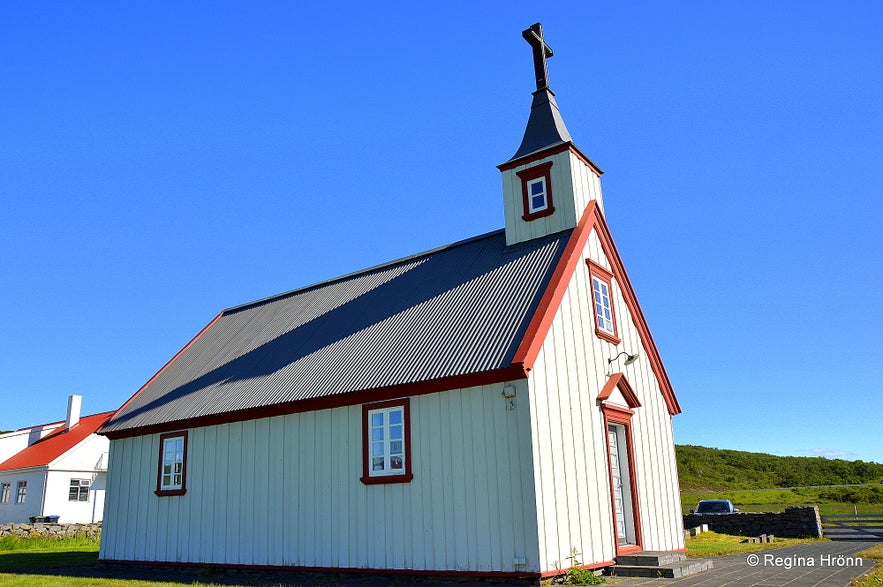
Skinnastaðarkirkja church and the parsonage
I translated this folklore into English as I think that folklore, elf locations, troll stories, and stories of the hidden beings of Iceland add value to the locations in question and thus enrich our travels in Iceland.
I found this folklore in Þjóðsögur Jóns Árnasonar - the Compilation of Folklore by Jón Árnason - Volume IV, page 52:
"According to the accounts of old men, a long time ago, there was a minister at Skinnastaðir in Axarfjörður fjord. The minister was unscrupulous and failed to reprimand his congregation for their behavior.
His old mother lived with him.
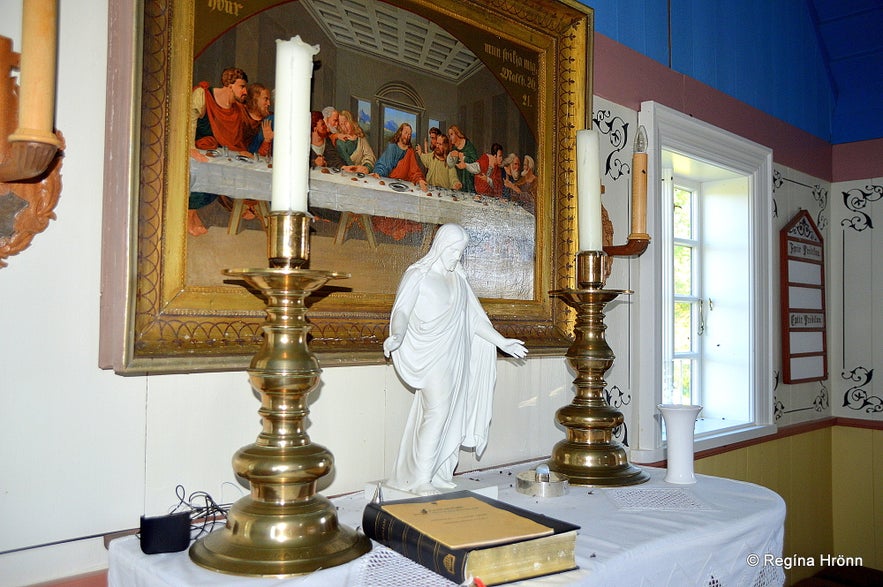
The copper altar candlesticks date back to 1694.
One Christmas Night, the minister was to perform the evening prayer according to tradition.
Many people had gathered in the church with the minister.
But instead of the mass ritual, the minister and his audience started performing all kinds of impiety. There was rumpus and dancing, games and playing of cards, promiscuity, and all sorts of evil activity.
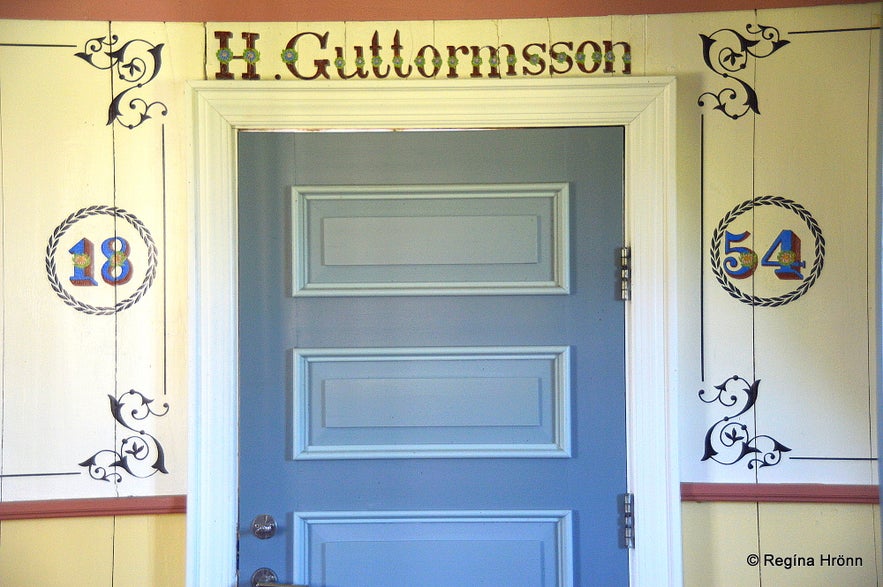
H. Guttormsson was a minister at Skinnastaður from 1849 to 1869
The minister's mother went to the church, and as she saw her son's conduct and the congregation's, she was startled.
She approached the minister and reprimanded him for his evil doings, and told him to tend to his duties.
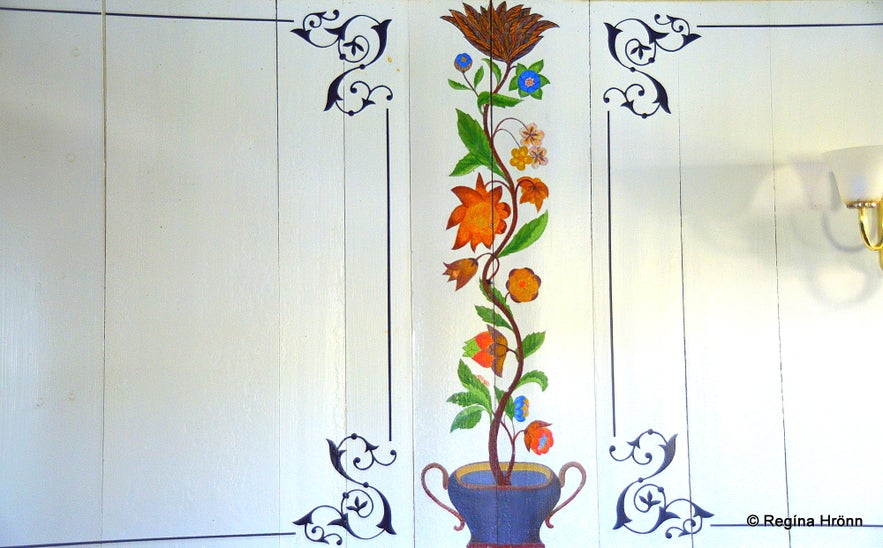
Decorative paintings from 1865 by Arngrímur Gíslason
But the minister carried on with what he was doing. The old woman repeated her reprimand three times, but he paid no attention.
The old woman then left the church and sat down on the wall surrounding it (in the olden days, Icelandic churches were turf churches, some with a circular turf wall).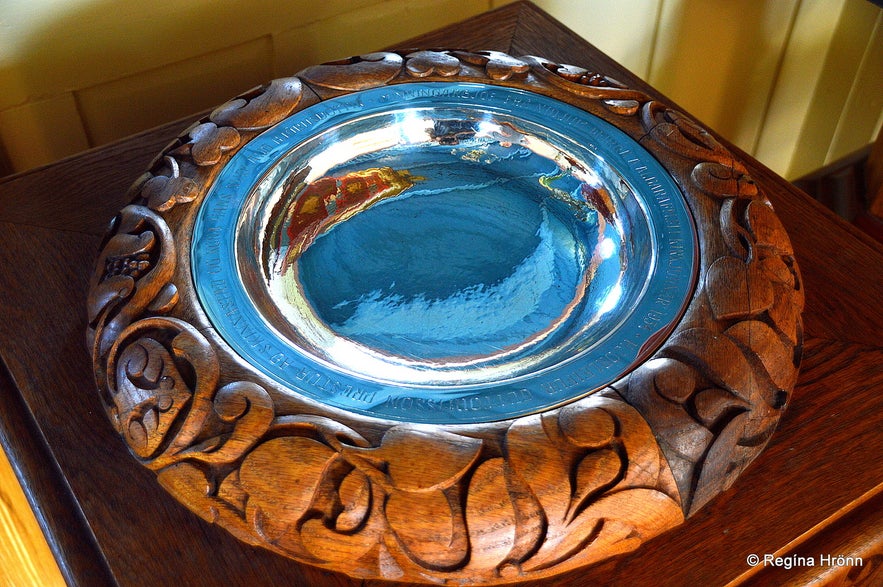
The blue ceiling reflects in the baptismal font - Leifur Kaldal made the silver bowl
As she sat outside for a while, listening to the racket in the church, she noticed that the church began to sink - and it sank quickly.
The old woman heard the mirth and merriment until the church reached Hell.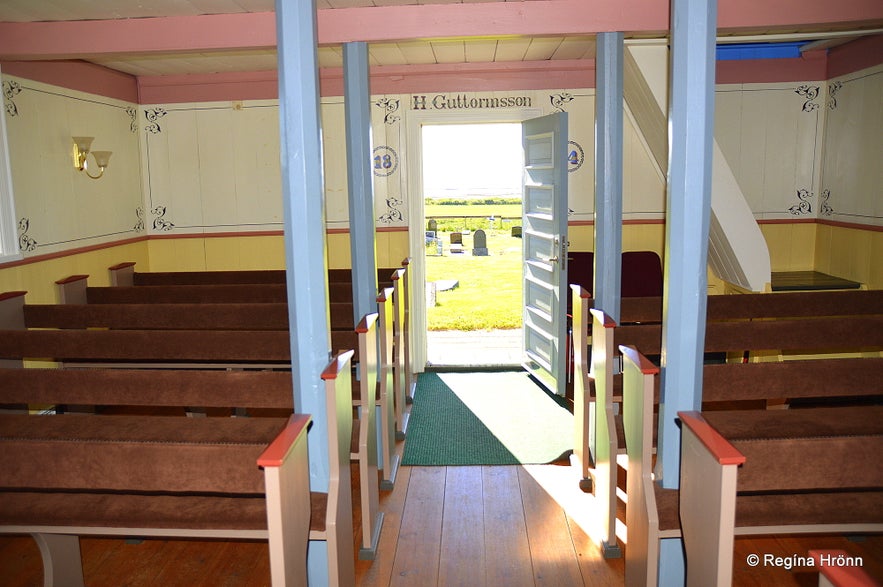
Skinnastaðarkirkja church
Some people say that when the old woman left the church, she went to the field, and that the whole farm sank, but that is unlikely.
The story goes that for a long time, nobody had dared live here, as the place was believed to be jinxed and haunted.
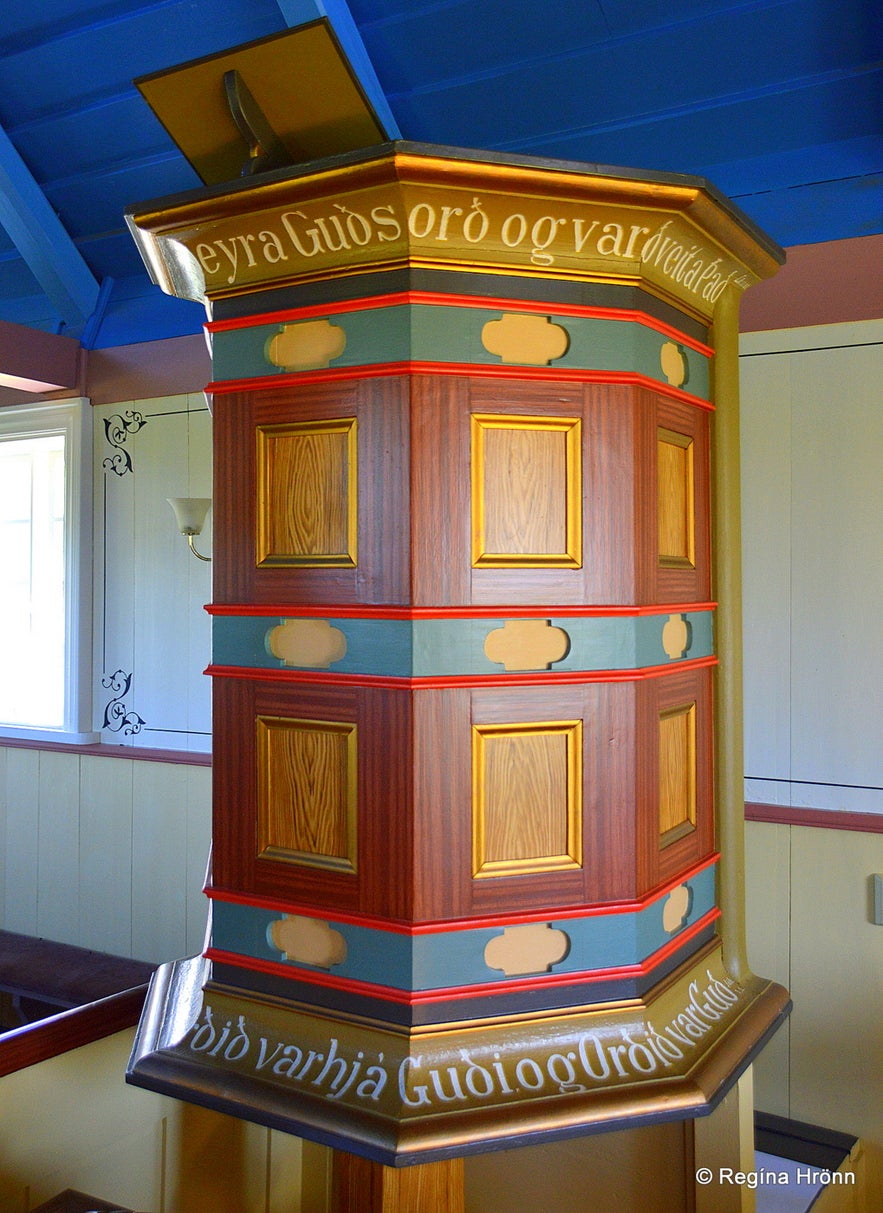
The pulpit dates back to 1858
A new church was not built until light began shining on the spot where it is now located.
After the light was seen, a new church was built, and the place was called Skinastaðir, but "skin" in Icelandic means "shine".
At the old church site, where the church sank, there has been, ever since this incident, a circular depression.
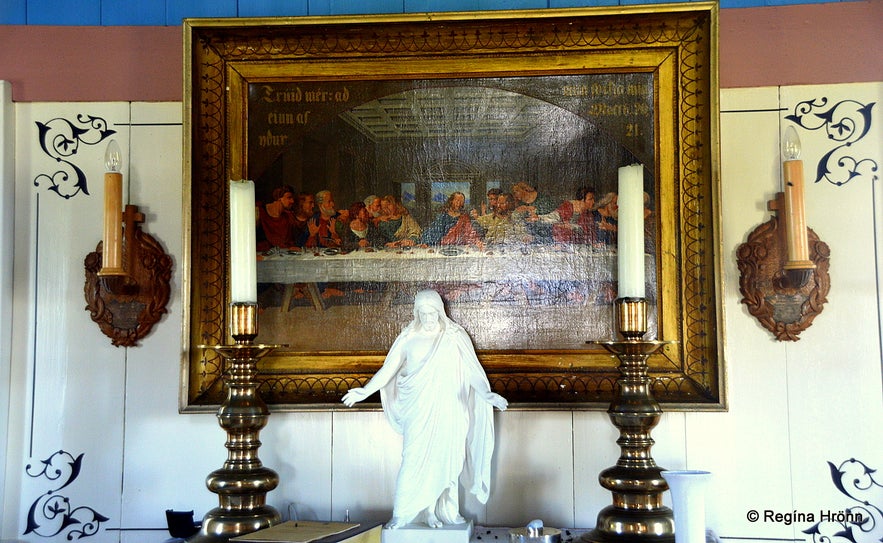
The altarpiece is an unmarked copy of Leonardo da Vinci's Last Supper
It is now (back when this folklore was written) just outside of the field of Skinastaðir, and on the south side of the depression, you will find the creek Brandslækur.
People who are familiar with this place know of this depression.
(Translated into English from Þjóðsögur Jóns Árnasonar - the Compilation of Folklore by Jón Árnason)
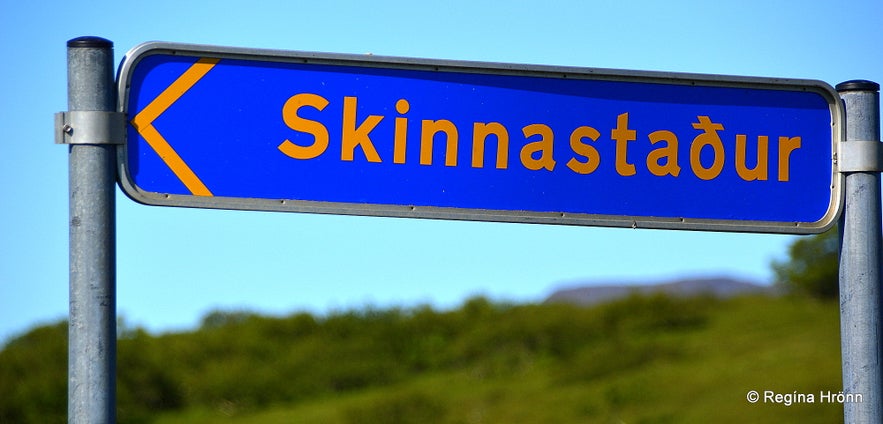
The sign by the farm
The farm's name is Skinnastaður, but in this folklore it is spelled Skinastaðir with one "n". And Skinnastaðir, as I mentioned earlier.
We don't know when this is supposed to have taken place, but this farm is first mentioned in the Sturlunga Saga, when Bishop Guðmundur góði Arason at Hólar in Hjaltadalur visited Skinnastaðir/Skinnastaður back in 1232.
I have mentioned Bishop Guðmundur góði - the Good, in many of my travel blogs, for example:
Hotel Laugarhóll at Strandir - hot Pools and Sorcery in Abundance
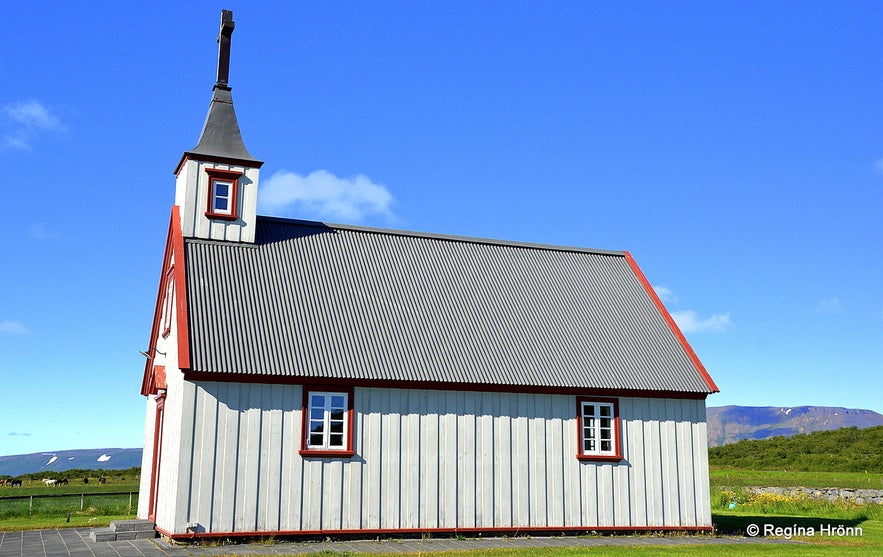
Skinnastaðarkirkja church
One of the ministers at Skinnastaður was Einar Nikulásson, who served at Skinnastaðarkirkja from 1660 to 1699.
Einar was often called a sorcerer, as he and some of his descendants were reputed to practice sorcery, as mentioned in Þjóðsögur Jóns Árnasonar - the Compilation of Folklore by Jón Árnason.
This was back in the days of the witch-hunt, so there is nothing to it, but I thought that I should mention it.
There is another similar folklore about Hrunakirkja church upcountry in South Iceland, which I am going to show you in my next travel blog:
Dansinn í Hruna - The Dance in Hrunakirkja church upcountry in South Iceland - Icelandic Folklore
Here is the location of Skinnastaðakirkja church on Google Maps.
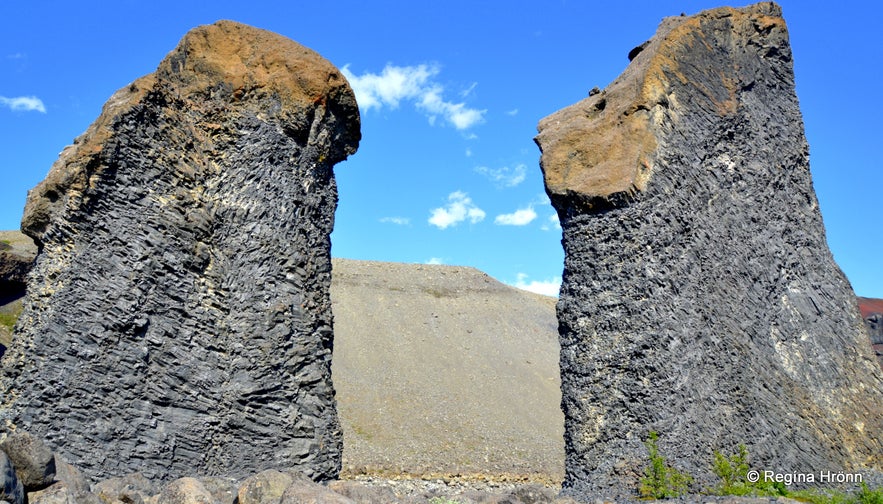 Hljóðaklettar in Jökulsárgljúfur canyon
In the vicinity of Skinnastaður, you will find many of Iceland's pearls of nature, as I mentioned earlier. But an interesting detour is a visit to the Melrakkaslétta plain.
I have written several travel blogs about the interesting sights in that area:
Jökulsá á Fjöllum Glacial River and the Waterfalls in Jökulsárgljúfur Canyon
Grettisbæli - the Lair of the Viking Grettir the Strong in Öxarnúpur in North-East Iceland
Kópasker Village on Melrakkaslétta Plain in North-East Iceland
Rauðinúpur Cape and the 2 Sea Stacks on Melrakkaslétta in North-East Iceland
Hraunhafnartangi in North Iceland - one of the Northernmost Spots on the Mainland of Iceland
Have a lovely time in NE-Iceland :)

Hi, my name is Regína Hrönn, and I was born and raised here in Iceland.