Ingjaldshóll on the Snæfellsnes peninsula in West Iceland is one of the historical sites in Iceland - a former settlement manor and an assembly, and important officials lived here.
This travel blog is a side blog to my 5-part travel blog series about the beautiful Snæfellsnes peninsula.
Ingjaldshóll was in the possession of the powerful and wealthy Sturlunga Clan for a while, but they controlled this part of Iceland during the 12th and 13th centuries.
Top photo: The road sign for Ingjaldshóll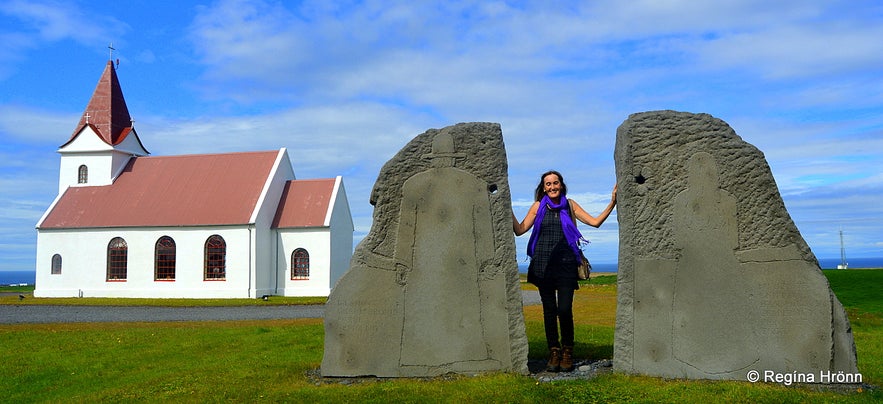
By the monuments at Ingjaldshóll
Ingjaldshóll came into the possession of the monastery at Helgafell from 1350-1550.
Helgafell is another very historical place on the Snæfellsnes peninsula, which I have written about in The Holy Mt. Helgafell on the Snæfellsnes Peninsula & the 3 Wishes, which is a part of a series of travel blogs about Snæfellsnes, where I show you the chronological order of visiting most of the interesting sights on the peninsula.
The church at Ingjaldshóll served a large congregation and, until the 19th century, was the 3rd-largest church in Iceland.
When the noted Eggert Ólafsson, natural scientist, poet, and explorer, and Bjarni Pálsson saw this church during their travels in 1754, they noted that it was so large that it was almost as large as the cathedrals at the bishoprics at Skálholt and Hólar!
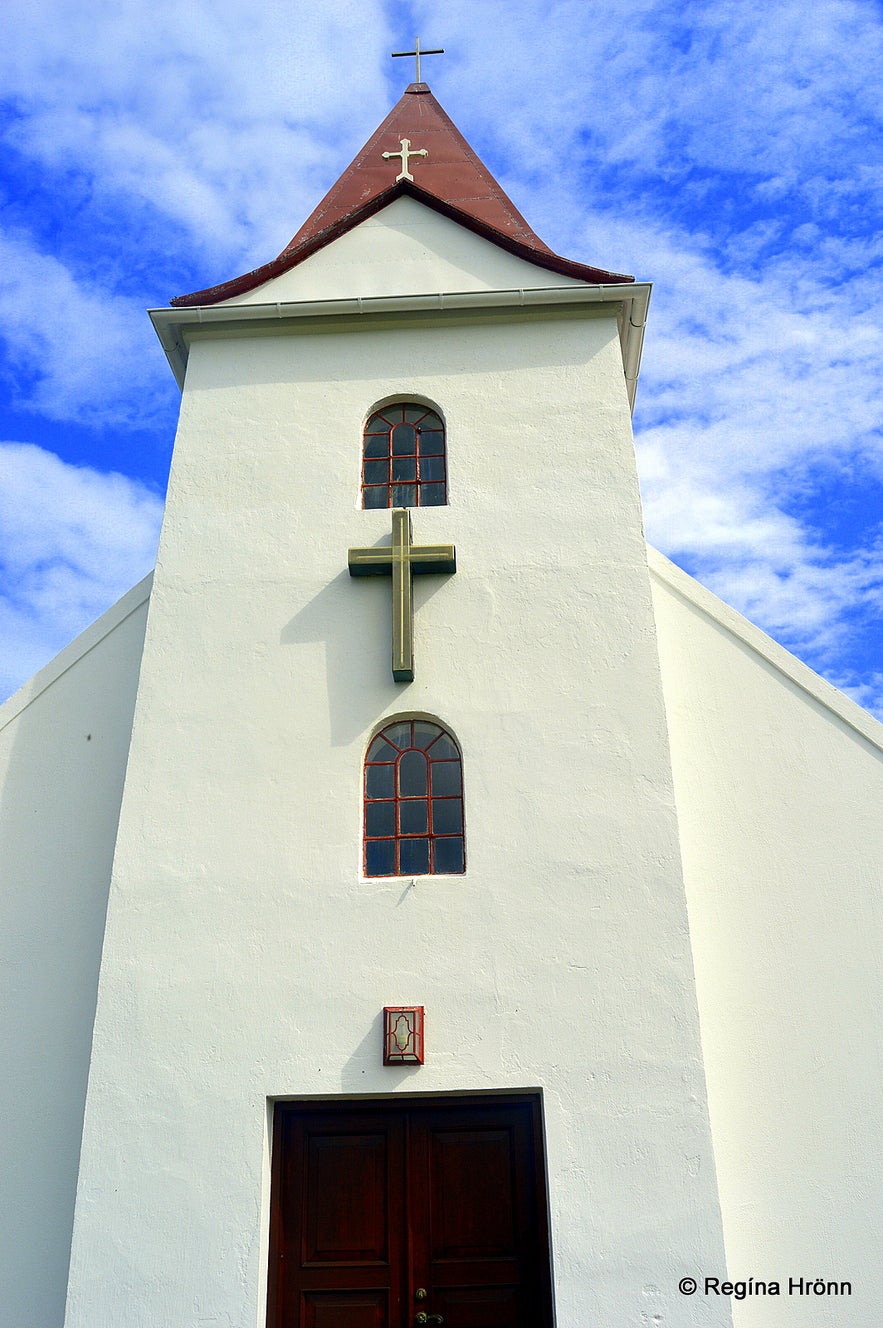
Ingjaldshólskirkja church
The current church at Ingjaldshóll serves the neighbouring villages Hellisandur and Rif and is the oldest concrete church in the world!
Behind the church, you will see a beautiful monument to the noted Eggert Ólafsson (1726-1768) and his wife, Ingibjörg Guðmundsdóttir, made by the sculptor Páll Guðmundsson from Húsafell.
You can see Páll's beautiful work in several locations in Iceland.
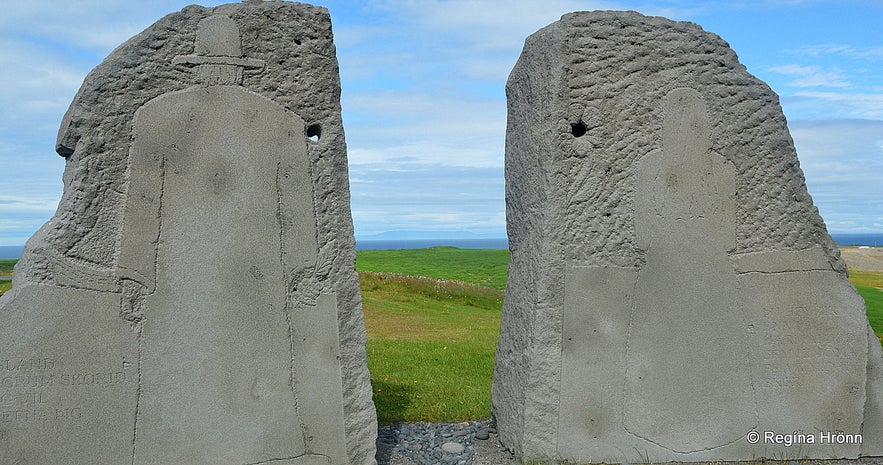
The monument for Eggert Ólafsson and Ingibjörg Guðmundsdóttir
The monument at Ingjaldshóll is cleverly erected; one rock depicts Eggert Ólafsson, and the other represents his wife, Ingibjörg Guðmundsdóttir. The rocks weigh 9 tonnes and are 2 meters tall. It was initially one big rock.
If you stand behind the monument and look through these 2 stones from the south side, you have a view of Breiðafjörður Bay and Skor at Rauðasandur, the popular off-the-beaten-path Red Sands on the south side of the Westfjords of Iceland. If you look at it from the north, you have a view of the Snæfellsjökull glacier.
From Skor at Rauðasandur, Eggert and Ingibjörg went on their final voyage on the 30th of May 1768 and drowned.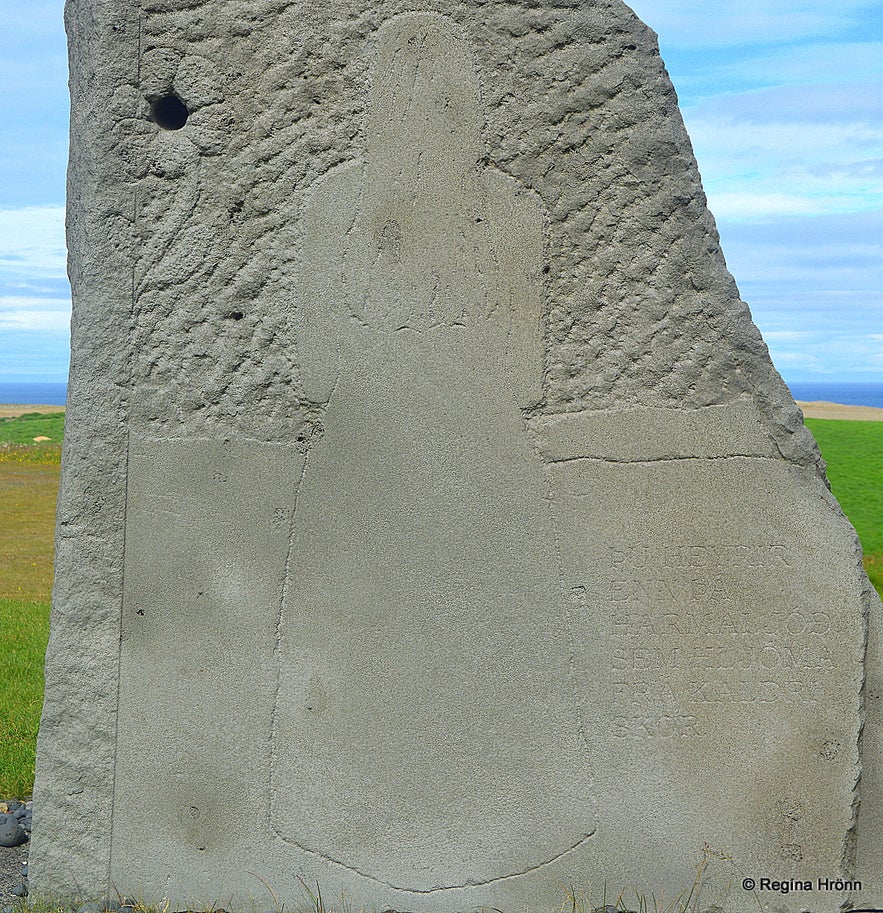
The monument of Ingibjörg Guðmundsdóttir
Eggert was in the foster care of his uncle, Guðmundur the Sheriff at Ingjaldshóll, for a period of time, and later married his own niece, Ingibjörg Guðmundsdóttir, the daughter of the aforementioned uncle from Ingjaldshóll.
This is why their monument was erected here at Ingjaldshóll, as both of them had ties to and grew up on this historical place.
They married at Reykholt and spent the winter in the Sauðlauksdalur valley in the Westfjords, which, by the way, is the home of the first Icelandic potato farming. The following spring, they meant to return and drowned on their final voyage in a major storm in 1768, together with 6 other people.
The whole nation mourned this great man and his wife.
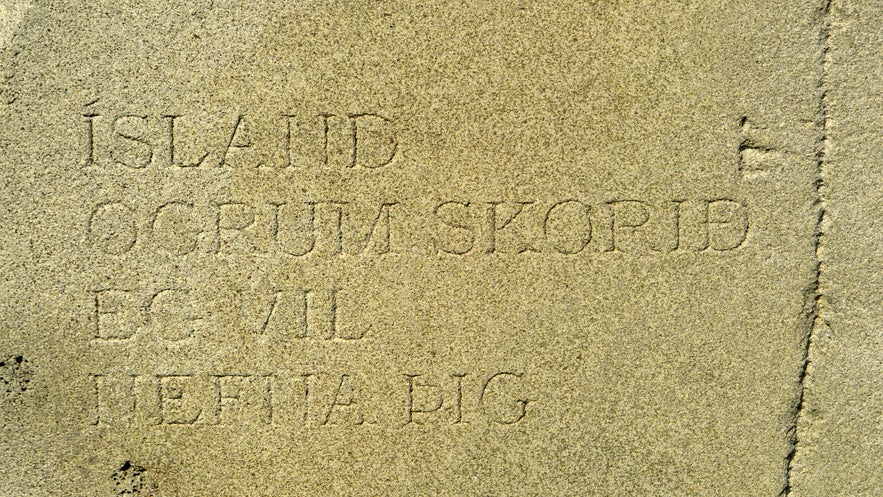
Ísland ögrum skorið...
On the frontal side of the monument of Eggert Ólafsson, you will see the above writing. It is the first part of a beautiful, magnificent poem written by Eggert:
"Ísland ögrum skorið,
ég vil nefna þig,
sem á brjóstum borið
og blessað hefur mig
fyrir skikkan skaparans.
Vertu blessað, blessi þig
blessað nafnið hans"
We Icelanders learn this poem by heart at school, and it has always been very close to my heart. It somehow expresses the spirit of Icelanders, in my opinion.
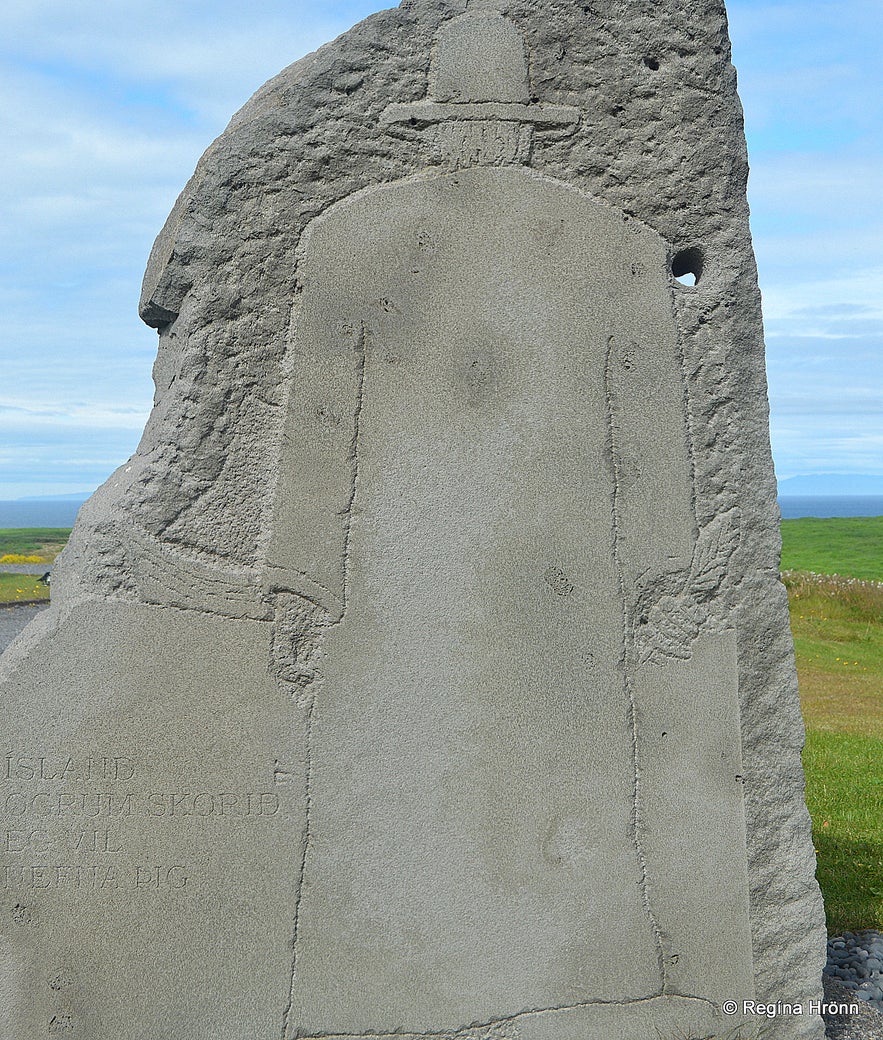
The monument of Eggert Ólafsson
According to Landnámabók - the Book of Settlement in Iceland, chapter 29, Ingjaldur Alfarinsson settled here at Ingjaldshóll. You can also read about the settlers of the Snæfellsnes peninsula in the Saga of Bárður Snæfellsás, which is a really interesting read (Ingjaldur is mentioned in chapter 8).
I have written another travel blog about Báður Snæfellsás - the mythical Protector of the Snæfellsnes peninsula.
There, you can read about the giantess Hetta in Mt. Ennisfjall, but Ingjaldur and Hetta had a disagreement when Hetta was caught stealing Ingjaldur's sheep. As a negotiation effort, Hetta told him about a rich fishing ground - but Hetta wanted Ingjaldur dead!
Seeing that Hetta was a giantess/troll, which can also be understood as a sorceress, she conjured up a storm when Ingjaldur was out fishing to drown him and thus get rid of him. The Saga of Bárður Snæfellsás tells of Bárður rescuing Ingjaldur after Ingjaldur had called upon Bárður in his hour of need.
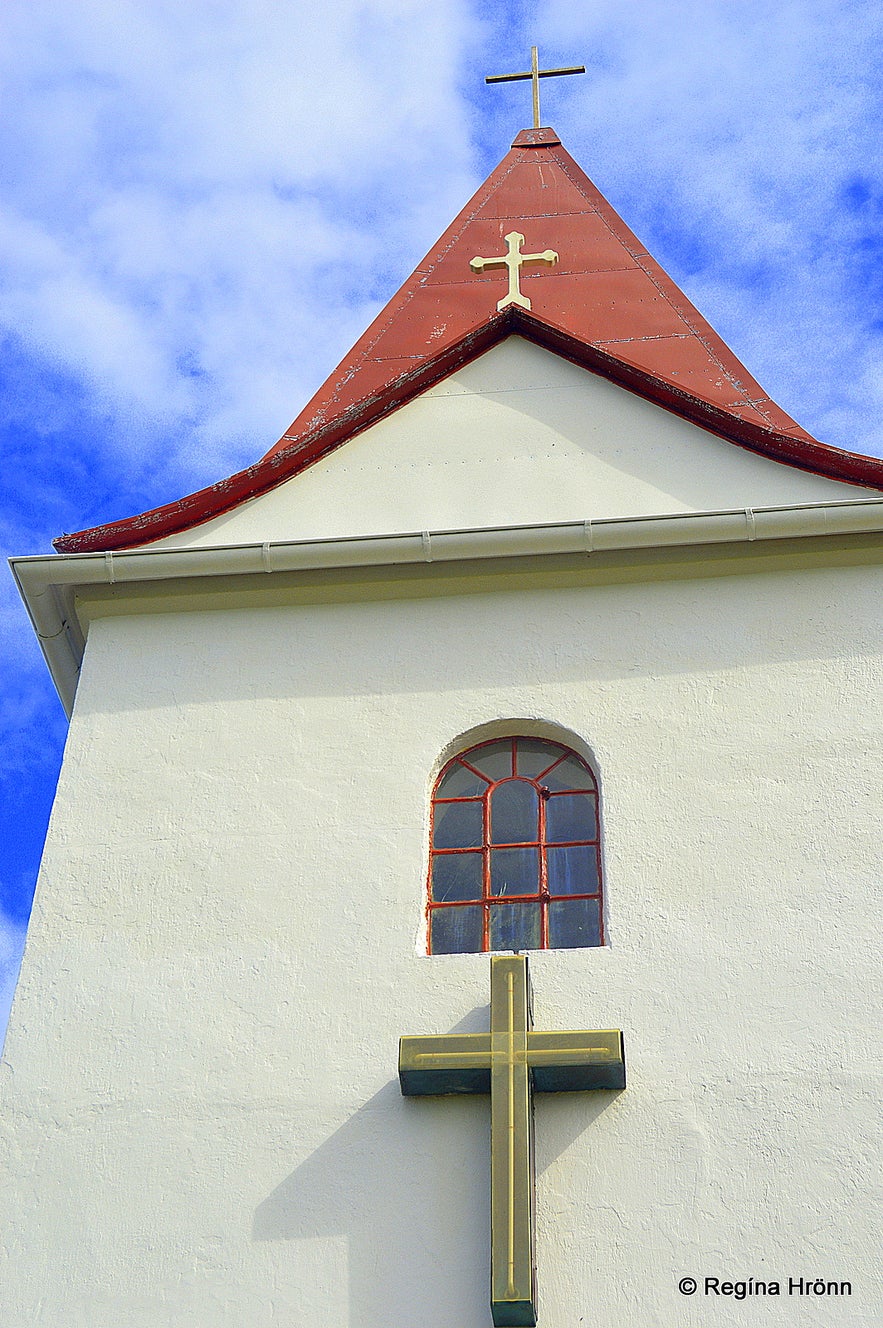
Ingjaldshólskirkja church
Christopher Columbus seems to have stayed at Ingjaldshóll during the winter of 1477-78. But as is well known, the Icelander Leif the Lucky was the first Caucasian to discover America or Vínland, and the first Caucasian child born in America was Icelandic.
Did Columbus know about this voyage and want to get information and tips about the Viking voyages before starting on his own journey west?
We have no source about Columbus visiting Iceland, though, and it might all be fiction.
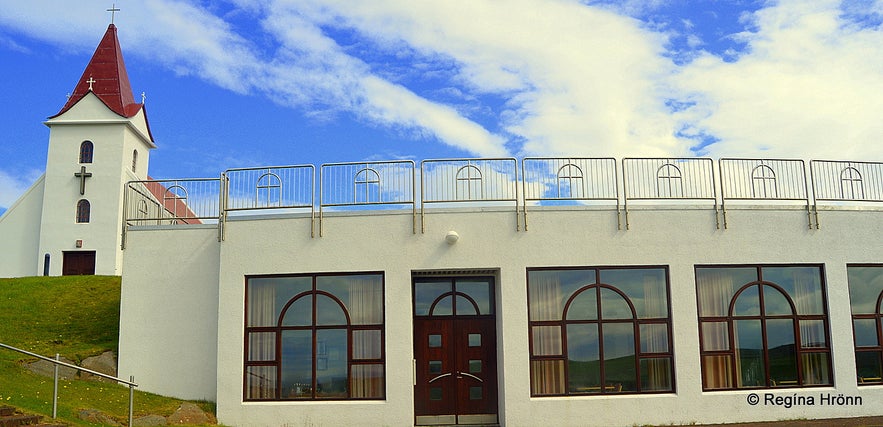
Ingjaldshólskirkja church and the parish house
The church was closed, so we peeked through the windows of the parish house, as I knew that there was a painting of Christopher Columbus on the wall, depicting him talking to the priest during his stay at Ingjaldshóll.
I saw the painting through the window, but next time I visit this area, I am going to phone ahead and ask them to show me both the painting and the church.
The View-dial at Háholt
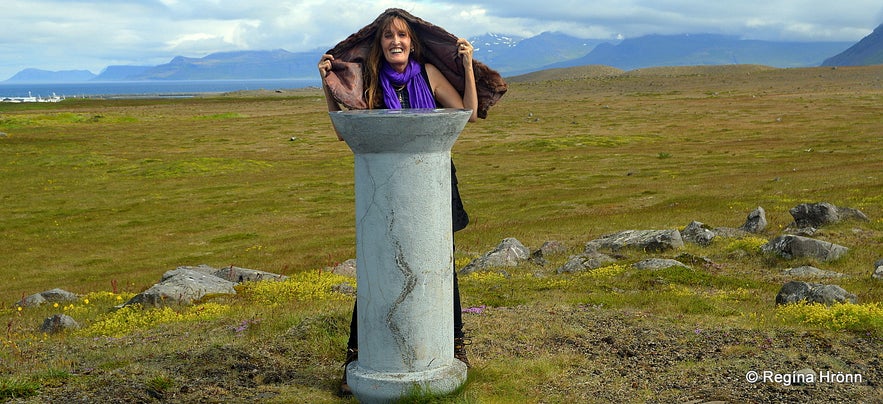
The view-dial at Háholt - protecting myself from the attacks of the Arctic tern
There is a view-dial a little bit further than Ingjaldshóll - in a place called Háholt. The view-dial is 41 meters above sea level and shows the names and heights of the mountains in the vicinity.
If you visit Háholt in the summertime, you will have to fight off the Arctic tern as it has all but taken it over. We stop by every view-dial in Iceland and take photos of them, but the Arctic tern was so aggressive at this particular view-dial that I had to shield myself with my coat. I think the Arctic tern was nesting right behind me, so no wonder they were aggressive!
While my husband was photographing the view-dial from every angle, I could see the Arctic terns attacking him at high speed, like fighter planes. He was using my "good" camera, and I only had one small one, so I took photos of him while I was hiding inside our car. These birds are so fast that they appear as white rays in my photo below :)
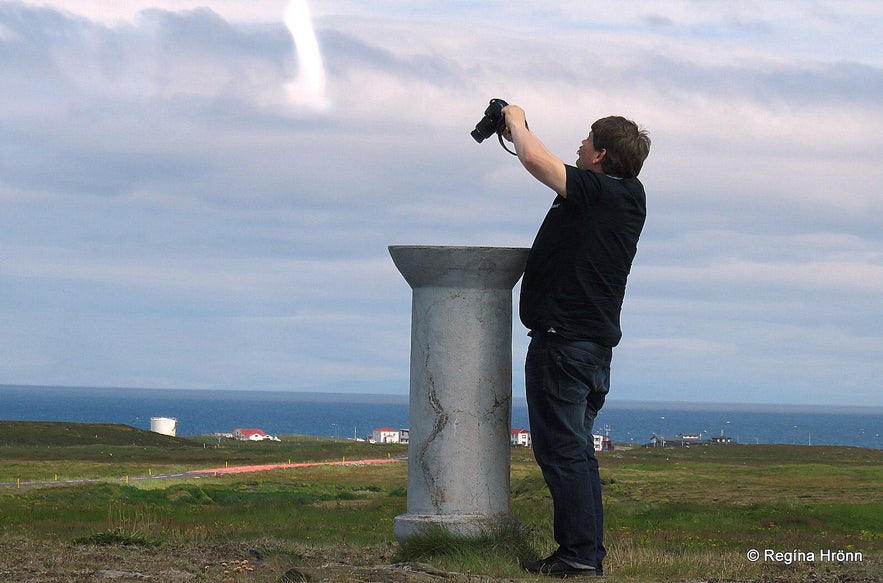
My husband photographing the view-dial at Háholt
If you want to visit this view dial, turn right by the sign that reads Sjónskífa. Here you can see the location of the gravel road for the view dial.
Let's return to road 574 and drive for 1 km towards the small village of Rif, which you will see on your left-hand side.
To visit this area, it is best to rent a car in Reykjavík and spend a couple of days exploring the whole Snæfellsnes peninsula.
If you want to read up on the Magical Snæfellsnes Peninsula, then I have written an I-V part travel blog on what there is to see and do here on the peninsula:
The Magical Snæfellsnes peninsula - part I
The Magical Snæfellsnes peninsula - part II
The Magical Snæfellsnes peninsula - part III
The Magical Snæfellsnes peninsula - part IV
The Magical Snæfellsnes peninsula - part V
Here you can see the location of Ingjaldshólskirkja church on the map, and if you zoom out, you will see that it is located right between Hellissandur and Rif.
Have a lovely time exploring the Snæfellsnes peninsula :)

Hi, my name is Regína Hrönn, and I was born and raised here in Iceland.