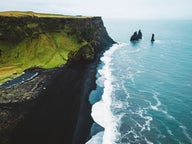
Látrabjarg bird cliff in the Westfjords of Iceland is the largest seabird cliff in Iceland and one of Europe's largest seabird cliffs. Látrabjarg is also one of the westernmost parts of Europe (24°32'´3" west).
The Bjargtangar part of Látrabjarg is often called the westernmost point if you skip the mid-Atlantic Azores archipelago. Látrabjarg is over 440 meters high and 14 km long.
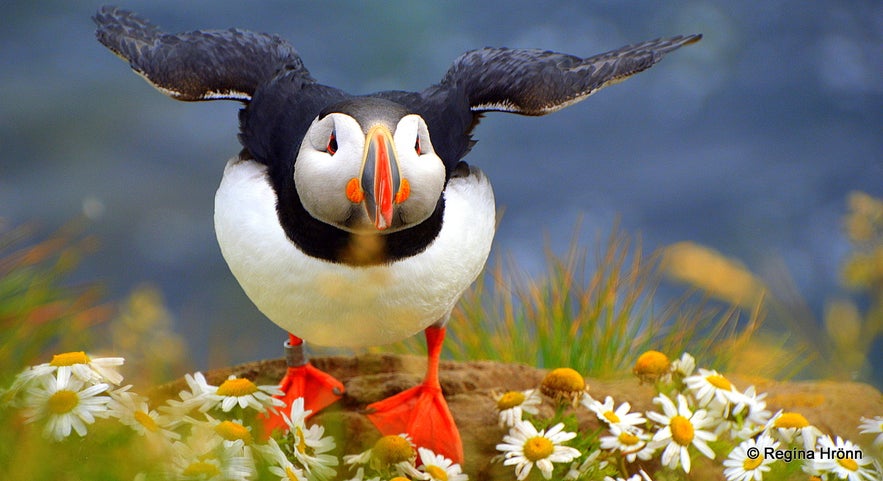
Top photo: a puffin at Látrabjarg
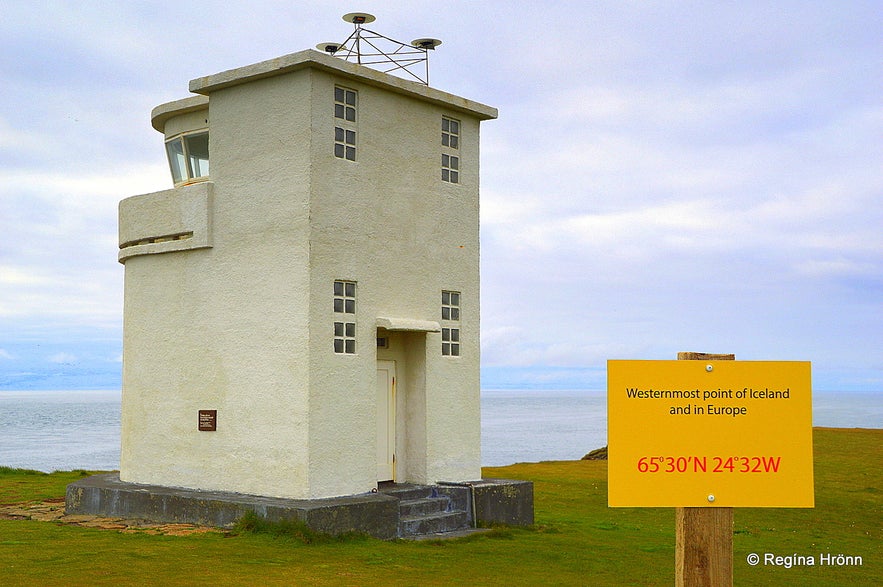
The lighthouse at Látrabjarg is the westernmost lighthouse in Europe.
Látrabjarg is considered to be one of the most spectacular seabird cliffs in the world, and the birdlife here is amazing.
Here are literally millions of seabirds, with the most sought-after (photography-wise) being the puffin.
But you will also see the razorbill (approx. 161,000 couples), fulmar, a lot of guillemots (approx. 226,00 couples), kittiwakes, and many, many other species of sea-birds - approx 10 in all - nesting and raising their chicks on the cliffs.
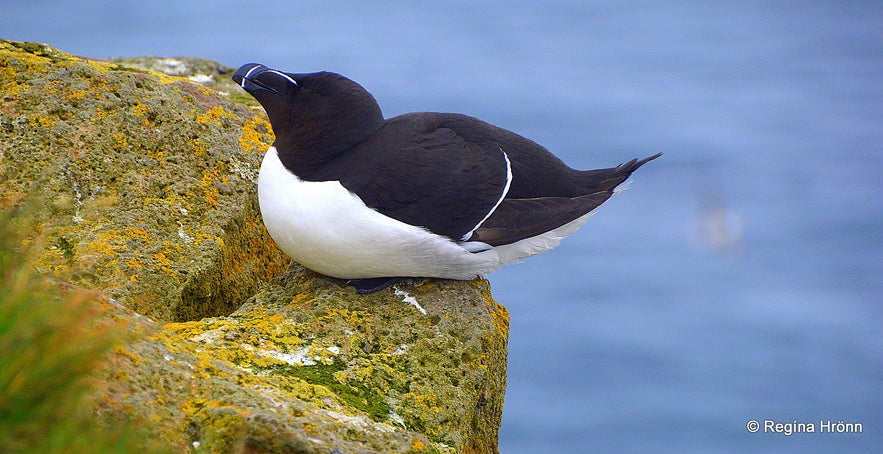
Razorbill on the cliffs
Látrabjarg is divided into four parts: Keflavíkurbjarg, Látrabjarg, Bæjarbjarg, and Breiðavíkurbjarg cliffs.
It is sheer-sided, and a painted white line warns people not to get too close to the edge and fall off the cliff.
In this travel blog, I will mainly show you Látrabjarg and the puffins, and a little bit about my detour to Keflavíkurbjarg cliffs as well.
Látrabjarg was declared as protected (friðlýst) in March 2021.
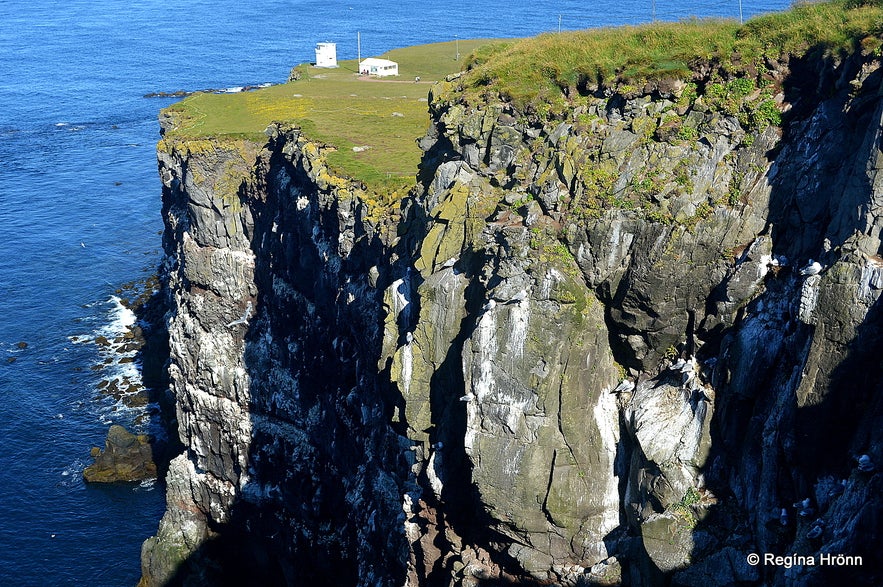
At Látrabjarg
Látrabjarg is, in my opinion, the best place in Iceland to get close to and photograph the puffins.
Another good spot, where you can get very close to the puffins, is in Bakkagerði in Borgarfjörður-Eystri in East Iceland.
At Látrabjarg, the puffins are so tame, as it were, and fearless of us humans. They barely budge, even though people get very close. They seem to be used to having people around and know that we are not going to harm them.
But people can go too close to them, as you will see a little later on in my travel blog.
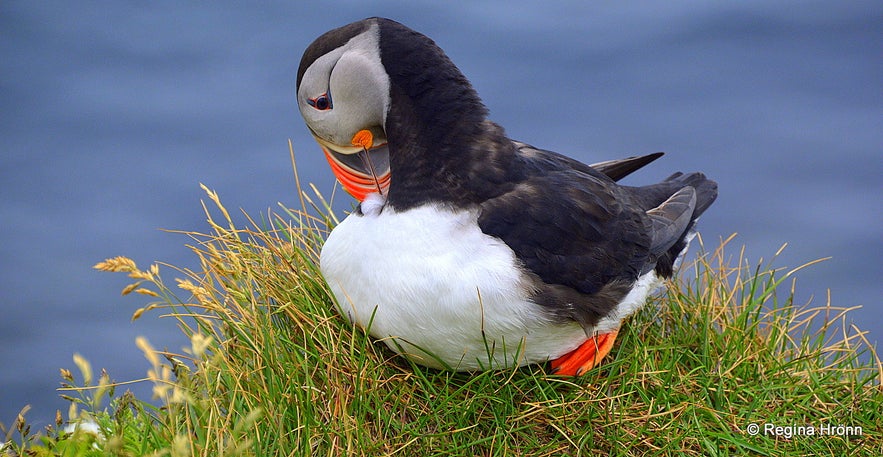
A grooming puffin
Sometimes the puffins look like they are posing for the camera, but that is just their manner.
They do their own business and go on with their lives, ignoring us as we gaze at them and point a camera at them. Let's avoid using flash when photographing puffins, as it can harm their eyes and disturb them.
Once, when I lay on my back in the grass close to the edge, a puffin jumped up on the edge and walked towards me. He then sat down almost right next to me and just stayed there for the longest time. I didn't dare to move and just enjoyed its company :)
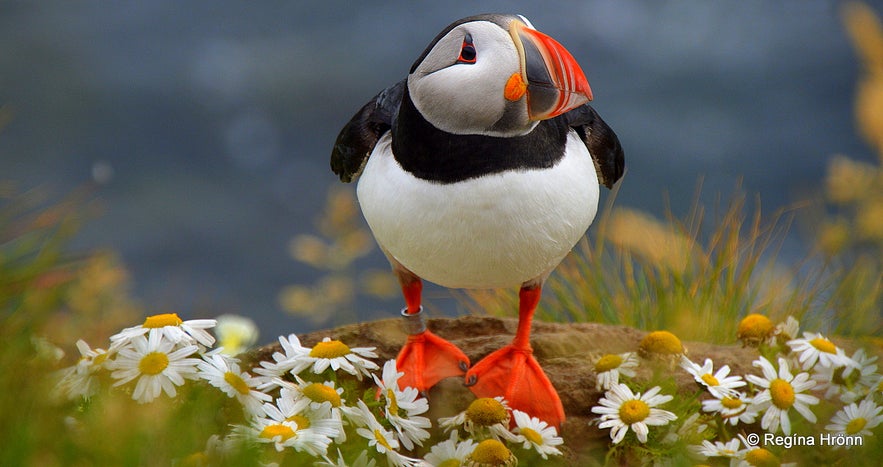
The cute puffins melt my heart
I have never been as close to puffins as I have been at Látrabjarg; it almost feels as if I can touch them here. But they will not allow us to touch them, and we should never try it.
As puffins have an oil gland by the root of their tail to protect their feathers in the sea. Touching them could remove their protective oil, so petting puffins is not allowed.
And they bite hard when feeling threatened or trapped, as Gordon Ramsey found out the hard way when a puffin bit his nose.
What is characteristic about the puffins is their brightly coloured beak and their bright orange legs.
The puffin chicks don't have the bright orange colour of their parents; they have grey beaks and legs. And even the grown-up puffins only sport the bright orange colour during their breeding season and lose it in the wintertime. But when this happens, they live out at sea, so we never see them looking like that.
The wings of the puffins are tiny, and it is so cute to see them fly as they flap their wings so rapidly. These small wings are perfect for catching fish, I have been told.
What is also characteristic about the puffin is that it digs a tunnel or a burrow in which it lays only one egg a year, so usually, eggs are not picked from the puffins.
I remember reading the news in 2014 about an Icelandic puffin egg being auctioned on eBay :(
The police were notified as eggs cannot be exported from Iceland without an exemption from the Ministry of Foreign Affairs. The seller was fortunately apprehended.
Látrabjarg is heaven for bird-lovers and photographers, given that you get the right weather conditions.
I have lain on my stomach and looked down at the birds to avoid losing my balance, since looking down and taking photos with a zoom lens can easily make people lose their balance.
In my videos above, you can see the view I had.
You can get really amazing photos of the puffins at Látrabjarg, even amateur photographers like me can get pictures that look quite professional :)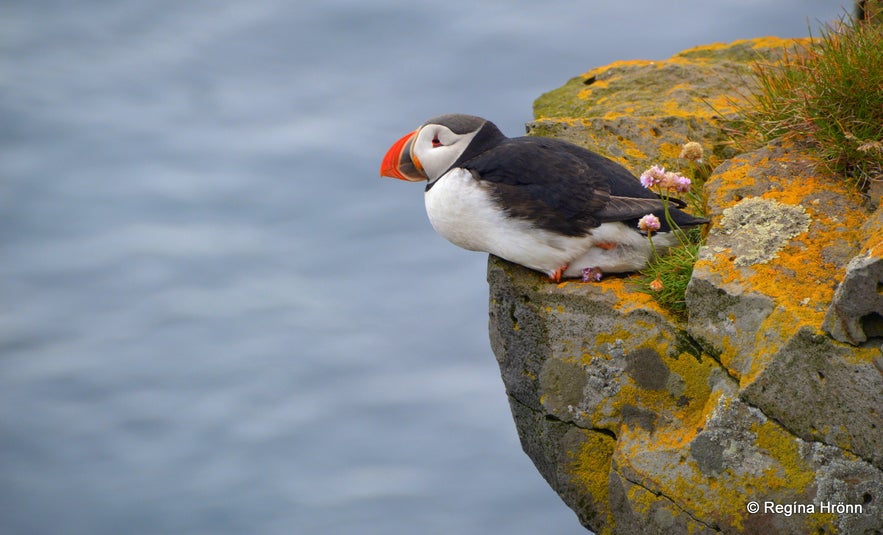
Living on the edge
You might want to stay in the vicinity for the night to visit Látrabjarg late at night and then return the next morning to get photos in different light.
The number of puffins also varies according to the time of day.
I stayed for one night at Hotel Breiðavík and have written a separate travel blog on my stay and my visit to Látrabjarg. The hotel is located some 12 km away from Látrabjarg.
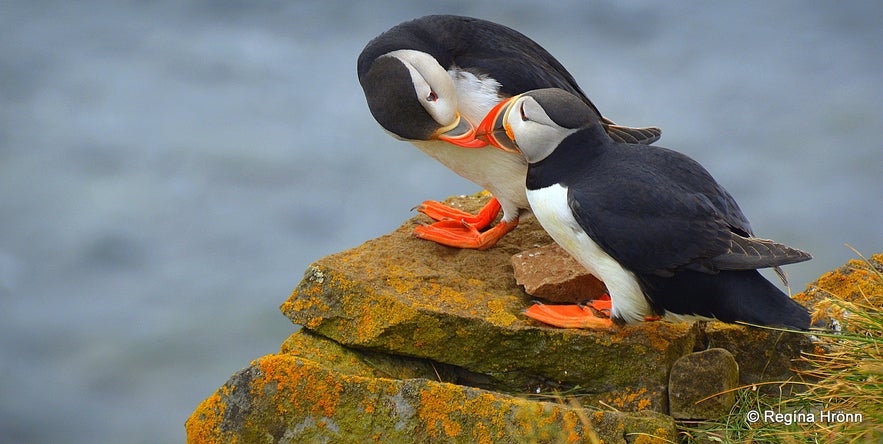
A cute puffin kiss - bill tapping strengthens the lifelong bond between these two birds
The Atlantic puffins stay in Iceland from mid-May until late August each year to raise their chicks. Then they stay out at sea in the wintertime.
All in all, there were around 8 million puffins in Iceland during the summertime, but their number is unfortunately decreasing.
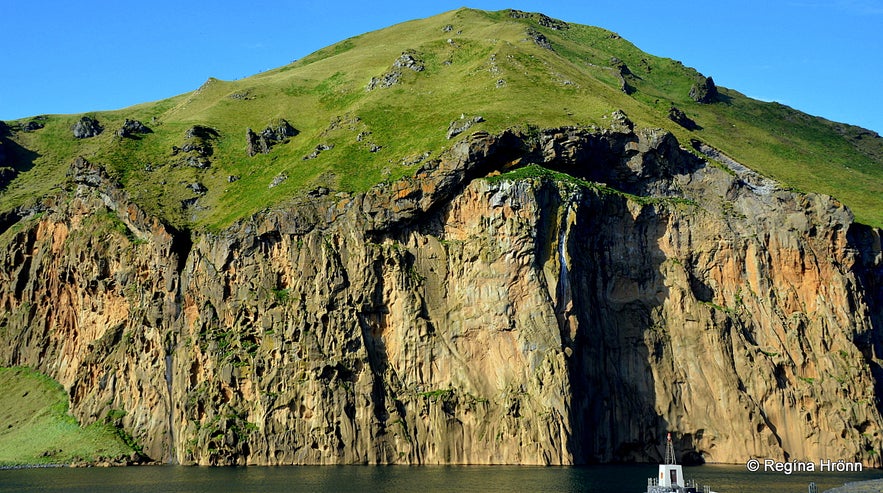
The Westman Islands
The largest breeding puffin colony in the world is in Vestmannaeyjar - the Westman Islands, which is a volcanic island just off the south shore of Iceland.
There are some 1.1 million puffins that nest in the islands. I would recommend a visit to the Westman Islands if you have time during your Iceland visit.
Until the summer of 2018, we were able to visit Tóti the Puffin up close and personal in the Westman Islands, but I have written about the late puffin in another travel blog.
The Westman Islands - Sæheimar Museum and the Puffins
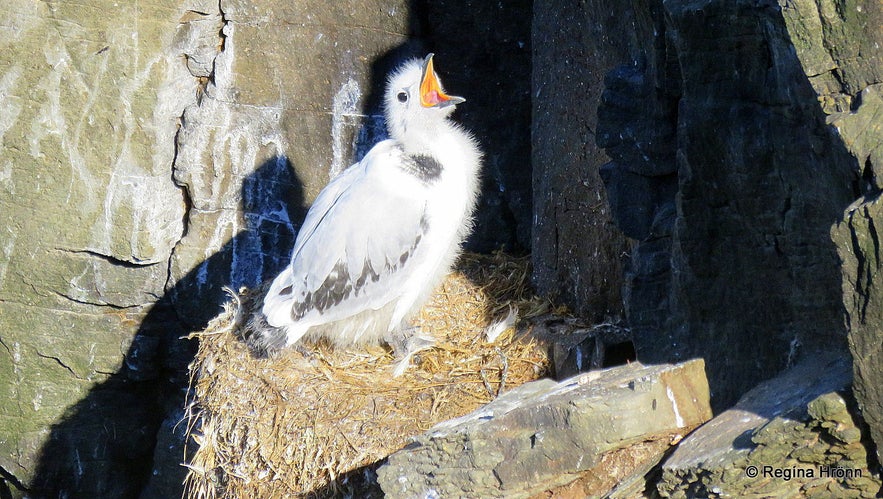
A cute kittiwake chick waiting for its food at Látrabjarg
There are some great photo opportunities at Látrabjarg, to say the least. Látrabjarg is visited by thousands of guests every summer, and even though it is remote, it is so worth the visit.
I used my camera's zoom to get close-up photos of the seabirds. But I saw some people getting really close to the puffins, way, way too close.
Now, as you can see in my photo below, this is way too close and on the border of harassing these cute birds, who are just nesting there, trying to raise their chicks.
And there is no need to go this close, as the zoom works fine for photographing them.
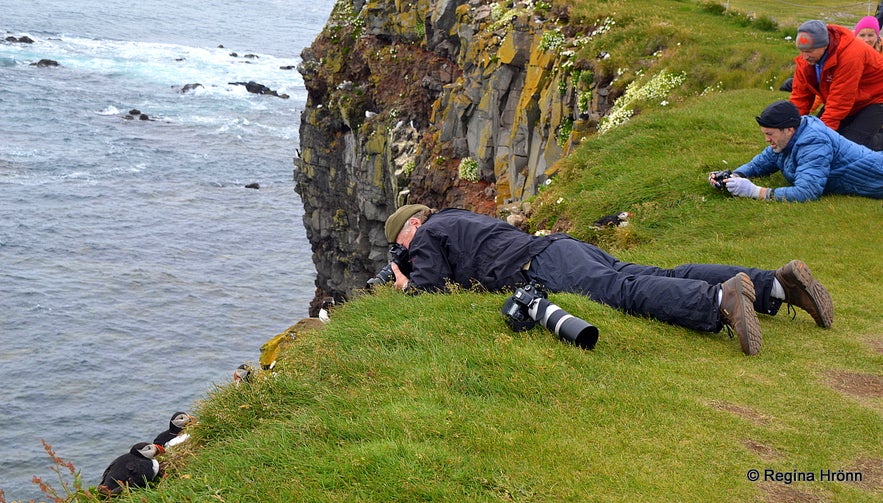
This is way too close; it's nature, not the zoo.
This is not the Zoo, but birds in their wild habitat, and as little stress as possible should be put on them during their breeding season.
Also, the puffins dig 70-100 cm long burrows where they lay their one egg, so there are burrows underneath where the puffins nest, and being so close to the edge is not safe at all. A white line has been sprayed close to the edge to show you how far it is safe to go.
I have seen too many people ignore this line, sit on the edge, and swing their legs. And the line fades, so people might not be fully aware of the danger.
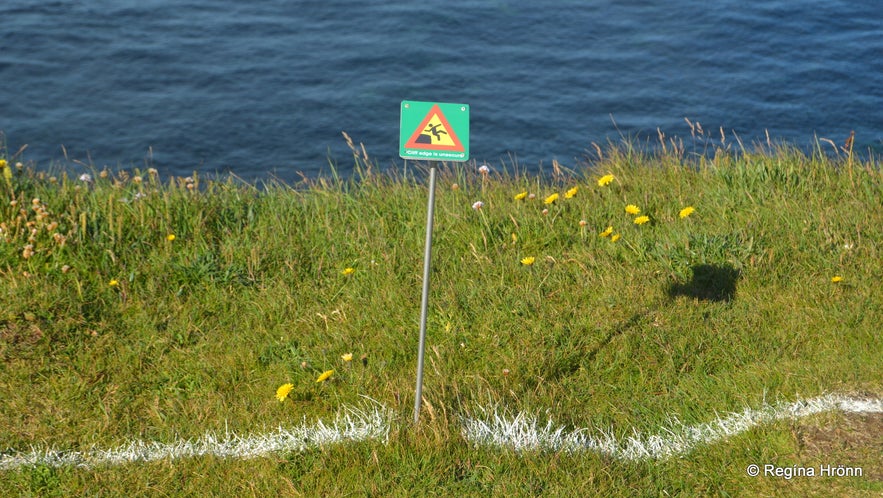
There is no crossing this white line, as the edges are unstable
I once pointed out to one gentleman who had ignored the white line that he might be sitting on a hollow burrow which might cave in under his legs; he was quick to jump up.
The lines are there for a reason: to keep us safe and to keep the puffins at a safe distance from the visitors.
Keflavíkurbjarg cliffs
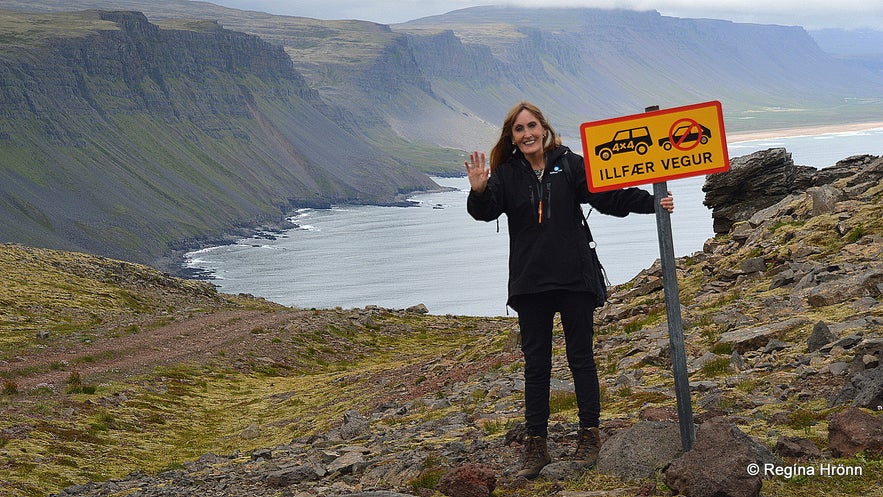
Drive no further if you are visiting in a 2WD
I was curious to know what Keflavíkurbjarg cliffs looked like. Seeing as I was staying in this area overnight, I decided to take the detour to Keflavíkurbjarg on my way back from Látrabjarg.
We drove as far as we could until we reached this sign "illfær vegur" meaning a bad or difficult road leading down to Keflavík. My husband always wants to see how far he can drive on these "illfær vegur" roads in our 2WD, but I put my foot down on this spot and said, "Stop!"
This was in the summer of 2017, and we bought a 4x4 Jeep the following year to explore our country further.
I did not want to be stuck on a bad road somewhere remote in the Westfjords, with no one around. As Látrabjarg and the puffins are the main attractions here, and Keflavíkurbjarg is a much less visited cliff.
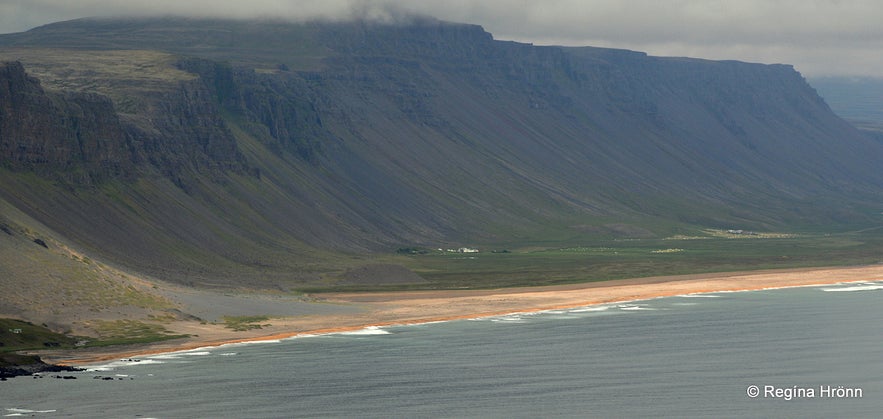
Rauðasandur - the Red Sand Beach as seen from Keflavíkurbjarg
We walked to the edge of the cliff and looked around. And this is the view we had; the other side of the beautiful Rauðasandur - Red Sand Beach!
It was worth making this detour to see this beautiful sight. It was overcast and ominous weather, though.
See also:
Rauðasandur Beach & Sjöundá in the Westfjords of Iceland - Red Sands & a Crime Scene
When I was little, we were told stories of the remote Westfjords, but we never visited them. My grandmother was born in the Westfjords, but my mother didn't see them until we held a family reunion there back in 2010.
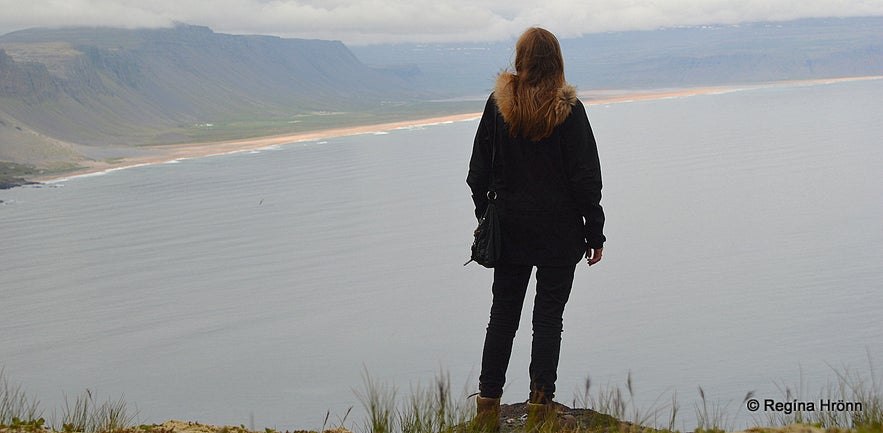
Taking in the beauty of the Westfjords
When I looked on the other side of the cliffs, I got chills. The cliffs looked so forbidding, like dark, silent giants guarding the Westfjords. I just wanted to get out of here.
My grandmother from the Westfjords told us stories about tall, ominous mountains, steep roads, and remote areas.
And I got back the old feeling of fearing the Westfjords when I saw this sight (see my photo below).
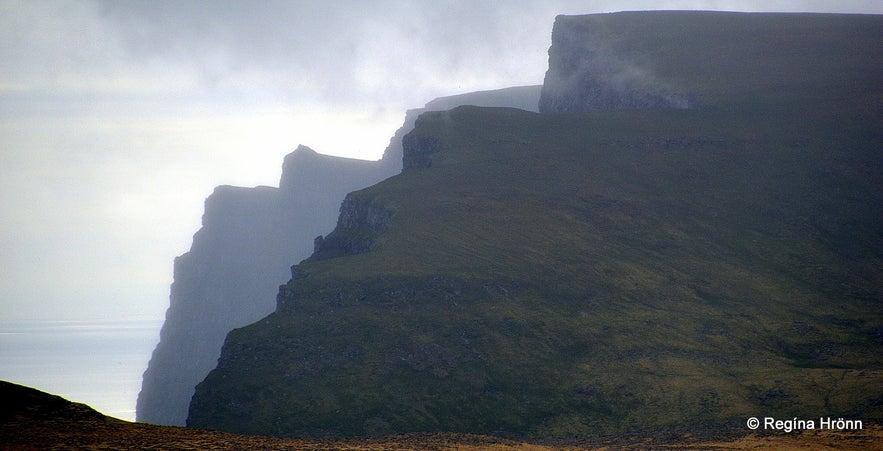
This sight scared me
By now, I have spent a lot of time exploring the Westfjords and absolutely love visiting them. My mother does not want to revisit them, and my sister has never visited them. Sometimes tourists in Iceland see more of the country than we locals do.
I noticed numerous small cairns here on Látraheiði heath at Brunnahæð. They were erected by travellers passing the heath for the first time a long time ago.
Then it was customary, and considered a duty, to erect a small cairn or even three cairns; 3 stones on top of each other were enough, for protection for the first time when passing the heath, in a location where it was easy to lose one's way.
Some people erected larger cairns, as you can see in my photos.
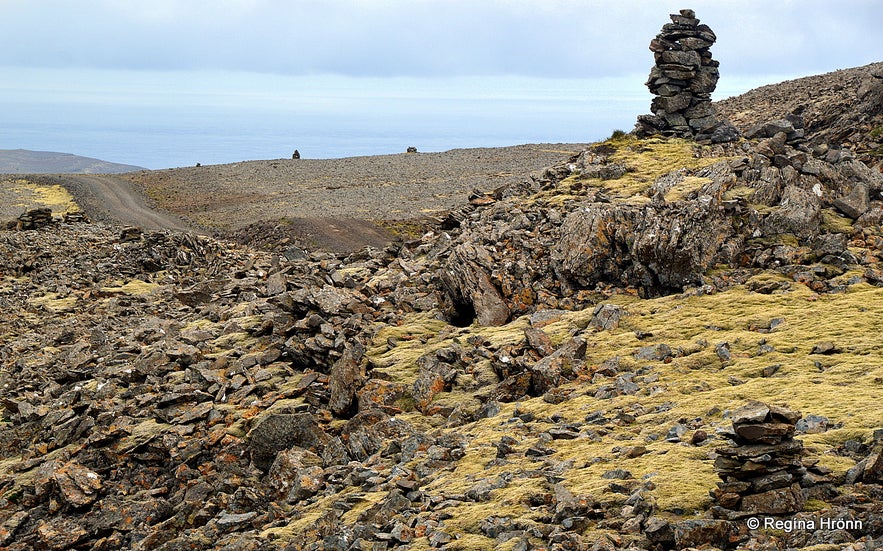
Cairns on Látraheiði heath
If you didn't erect a cairn, bad things could happen, so everybody passing for the first time built a cairn for their protection.
Getting caught in the fog was common here on the heath, so high above the sea level. And being so close to the sheer cliff in the fog and bad weather can be fatal, so the cairns acted as a warning sign.
Bishop Guðmundur góði "the good one" (1161-1237) blessed a waterhole here on Látraheiði heath at Brunnahæð. Guðmundur blessed many a place in Iceland, including Látrabjarg.
(Information from the book Álög og bannhelgi by Árna Óla - Þórður Jónsson, Látrum - 1958).
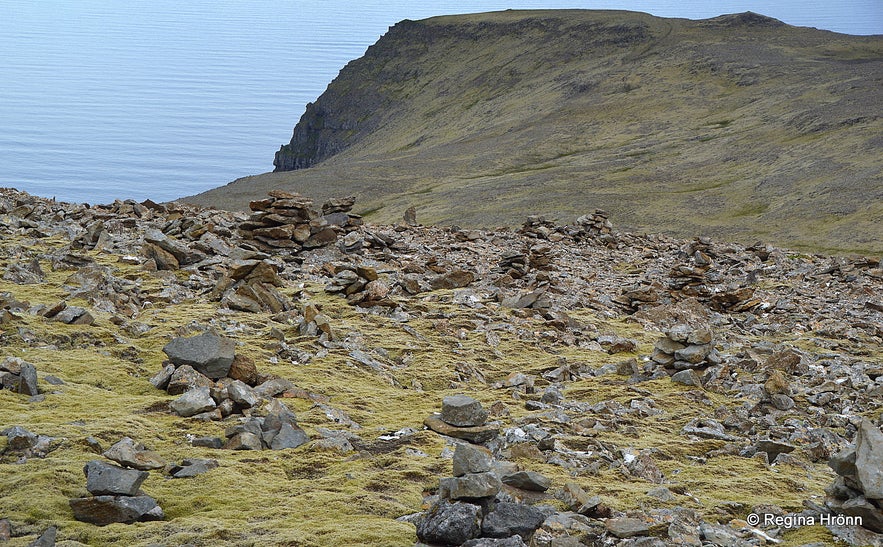
Cairns on Látraheiði heath
These cairns are never to be tampered with. There are other stone piles, the tourist cairns on the other hand, which have been popping up everywhere in Iceland, much to the dismay of us locals. We dismantle them when we see them.
We took a back road on our way back from Keflavíkurbjarg to Geldingsskorardalur to visit the spot where a heroic rescue took place.
In fog and heavy undercurrent, the British trawler Dhoon stranded on the 12th of December 1947 by Látrabjarg.
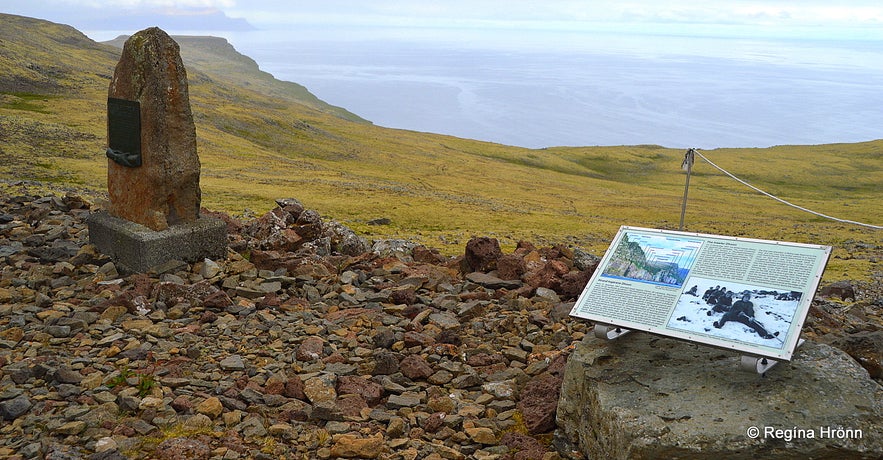
The monument for the heroic rescue
Fifteen people were aboard the trawler. The local volunteer rescue teams and farmers came to their rescue, saving 12 of them under challenging circumstances.
In this dreadfully cold weather in the dead of winter, the farmers used a string to heave the men up to safety. The farmers collected birds' eggs in the summertime and used this type of string to hang from the cliffs.
This difficult rescue took some 3 days under extremely tough conditions.
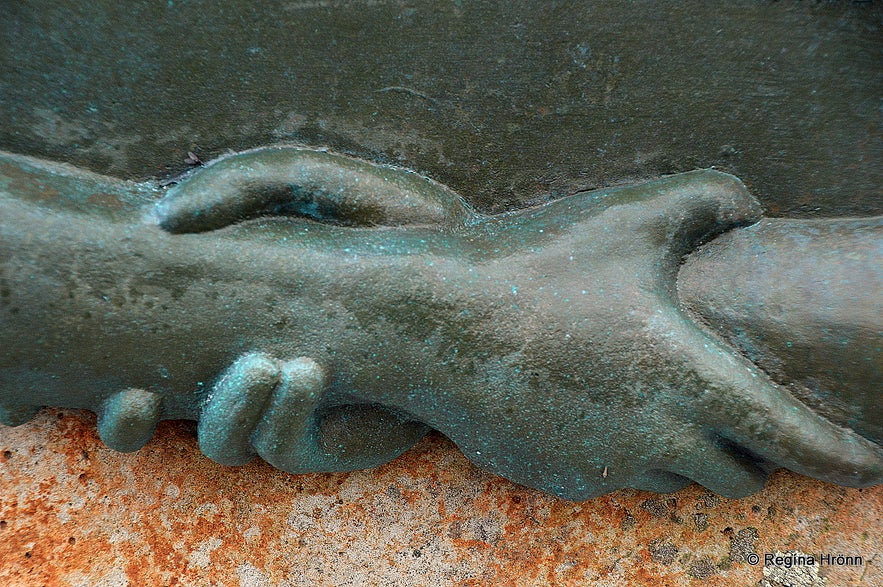
A memorial plaque was erected in 1997 on the 50th anniversary of the heroic rescue
Vestfirðingar - the locals from the Westfjords of Iceland - are a special breed of tough Icelanders, and you can read about one of them in my travel blog:
A Tour of Svalvogar & Dynjandi - driving on the most dangerous Road Construction in Iceland
You can watch a documentary on this heroic rescue operation at the museum at Hnjótur. When the film was being shot at Látrabjarg, the trawler Sargon stranded at Hafnarmúli by Örlygshöfn close by.
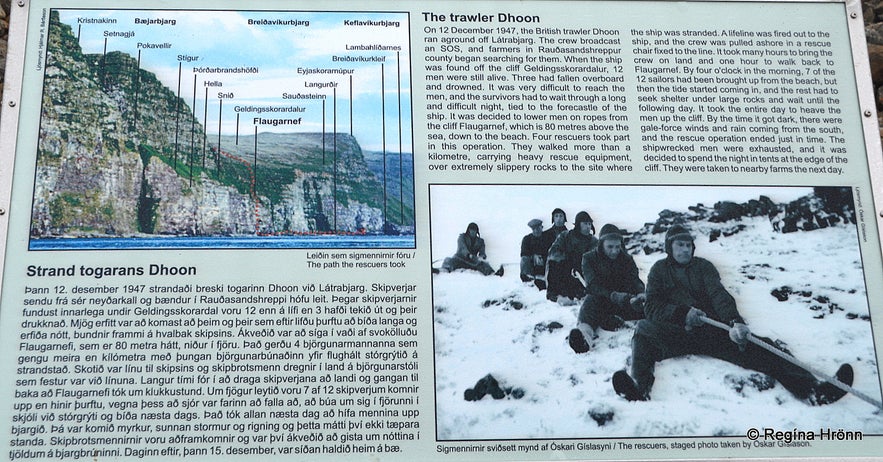
The information sign on the heroic rescue of the British trawler Dhoon
The men rushed to Hafnarmúli to rescue the seamen from the trawler Sargon. The director of the documentary on the British trawler Dhoon used footage from the real rescue operation of Sargon at Hafnarmúli in his film.
I recommend visiting the Hnjótur museum to watch the documentary, as it leaves no man untouched.
Hnjótur is included in the Grand West - Látrabjarg, Rauðasandur, and more tour, about which I have written another travel blog:
Visit the Natural Wonders of the Westfjords of Iceland - Látrabjarg Bird Cliff & Rauðasandur Beach
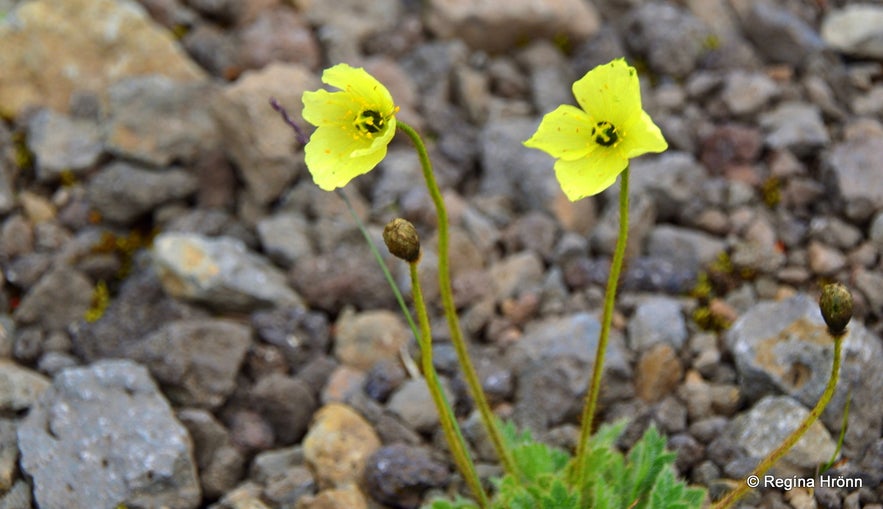
Melasól - papaver radicatum
By now, we have visited the oldest sedimentary strata of Iceland, created some 12-13 million years ago.
Life always finds its way, even under the harshest circumstances, and so did the beautiful flower in my photo above. I noticed it in several places on my way to Keflavíkurbjarg, growing amongst the rocks, beautifying the grey rocky landscape.
I stopped the car and took some photos of it. It is yellow and has a light green hue, ever so beautiful. It is called melasól in Icelandic - papaver radicatum in Latin, and it is common in the Westfjords of Iceland, the Eastfjords, and on the Snæfellsnes peninsula.
However, I have only come across it in the Westfjords.
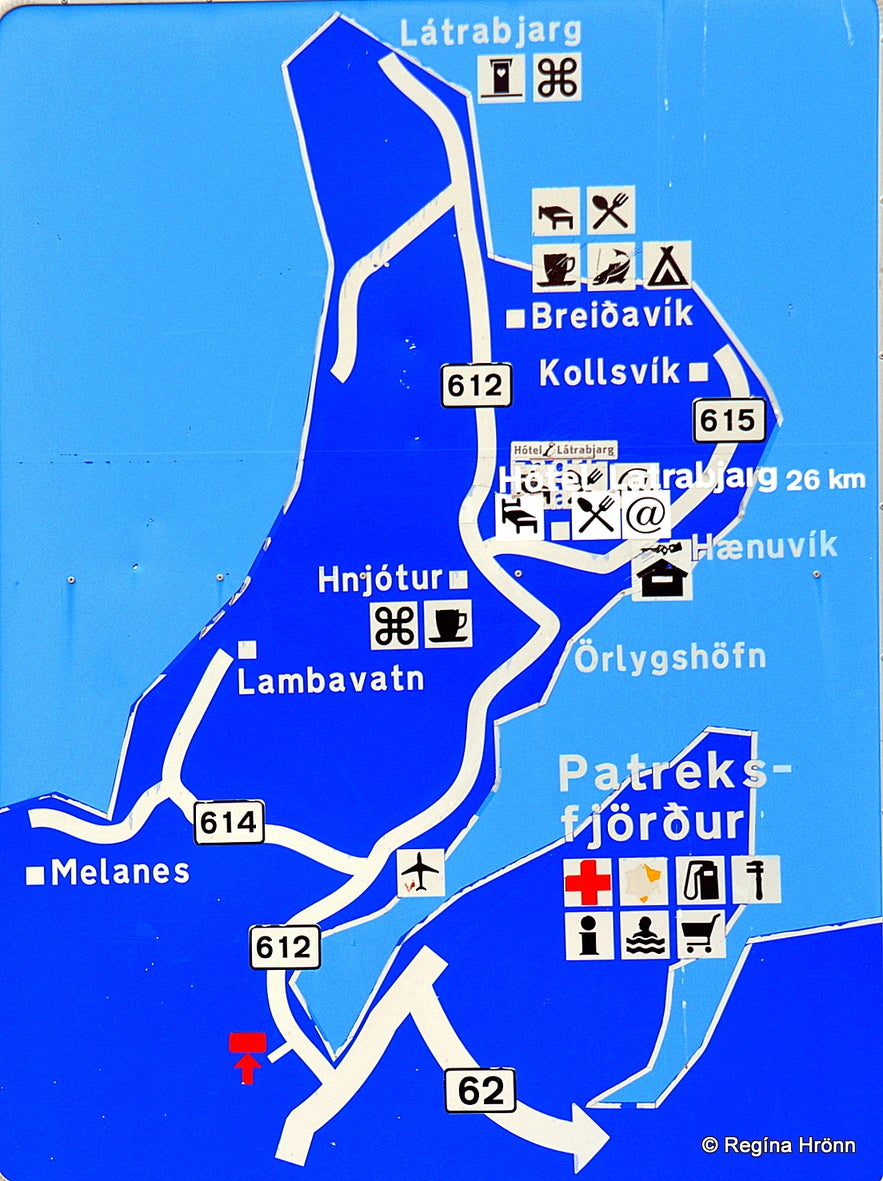
The road sign for Látrabjarg and more interesting locations
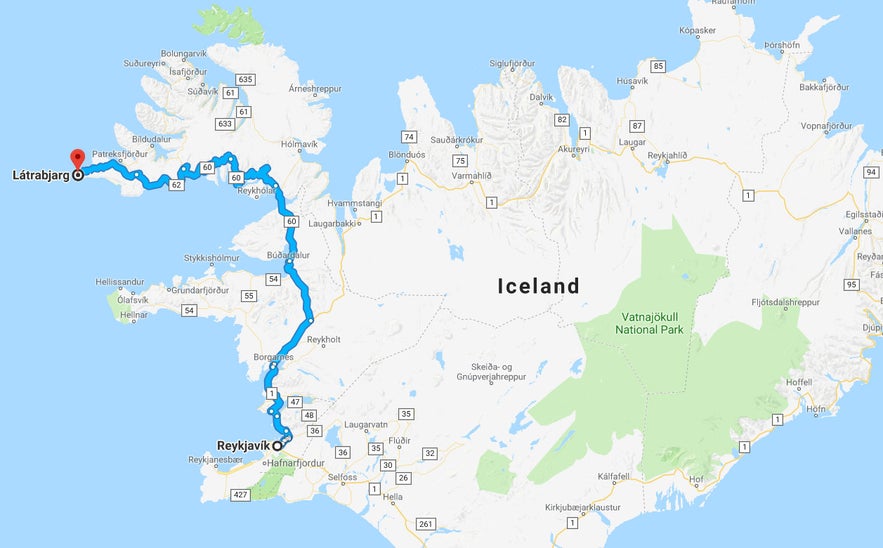
To visit this area, you can rent a car in Reykjavík and drive up to the Westfjords. Látrabjarg is located some 417 km from Reykjavík. Take Ring Road 1, Road 60, and Road 62, then turn onto Road 612 for Látrabjarg.
Also check out Kollsvík on road 615, the smallest settlement in Iceland.
Road 612, a 36 km-long gravel road, leads to Látrabjarg. Remember to fill up on gas before driving to Látrabjarg, as there is no gas station in this area. The nearest village is Patreksfjörður, some 13 km away from the intersection.
If you come by the ferry Baldur, then you will get off at Brjánslækur, which is some 80 km away.
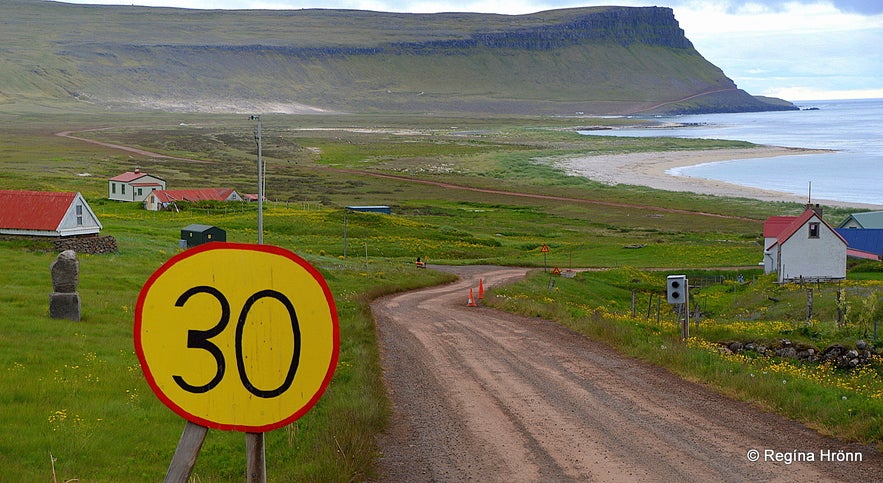
A home-made traffic sign in Látravík on the way to Látrabjarg - my ancestors lived here
Don't miss visiting Látrabjarg if you ever find yourself in this remote area of the Westfjords of Iceland. It is just amazing to see the puffins so unafraid and up close.
Guided tours to Látrabjarg:
The Bird Cliffs of Latrabjarg | Westfjords Hiking Tour
Pearls of the Westfjords | Latrabjarg Cliffs & Raudasandur Beach
Bike Tour of Bird Cliffs and Beautiful Beaches
Westfjords Bird Watching - Puffins and More
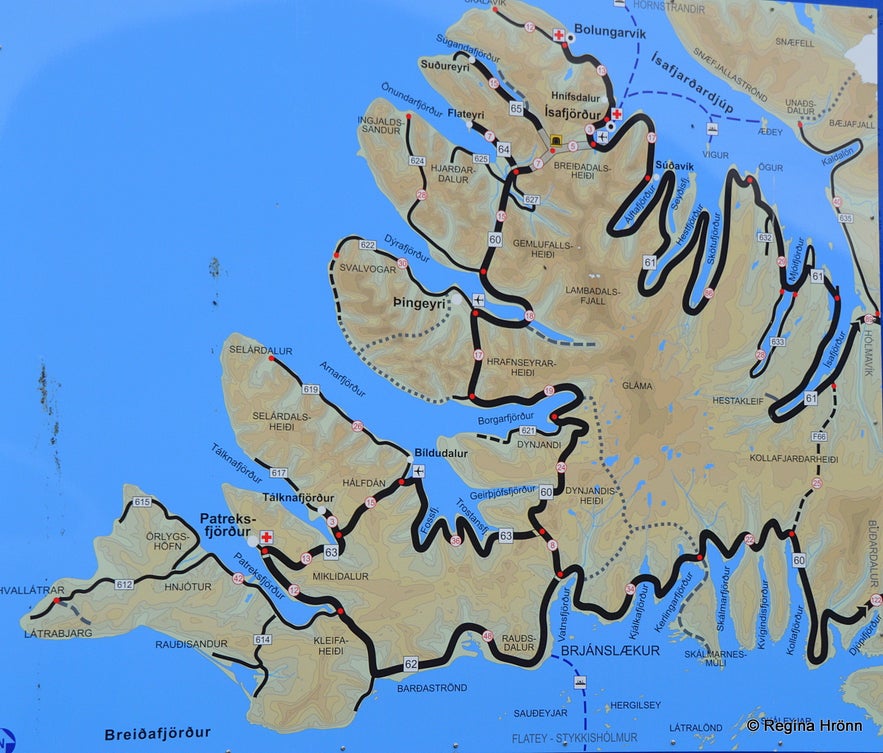
Westfjord road map sign
There is also the guided tour to Látrabjarg and Rauðasandur operating from May-August by Westfjord Adventures, which I joined and told you about earlier. The tours run by Westfjords Adventures start in the village of Patreksfjörður, and I would recommend joining a tour or two when visiting this area. It is priceless to get local guidance in such areas.
See also:
I have written several other travel blogs about the beautiful Westfjords of Iceland and will be adding more later on:
The Jewel of the Westfjords - Dynjandi waterfall
Hot pools in the Westfjords of Iceland
An Interview with Johann Svavarsson, the Owner of Hotel West in Patreksfjörður
A lovely stay at Hotel Breiðavík in the vicinity of Puffins galore at Látrabjarg
A fantastic Tour of the Kjaran's Avenue and Dynjandi
A Visit to Kollsvík Cove in the Westfjords - the smallest Settlement in Iceland
A Visit to Reykjanes Geothermal Area in the Westfjords
Vatnsfjörður in the Westfjords - the Viking Estate and Grettisvarða Cairn
Have a lovely time in the beautiful Westfjords of Iceland :)