Visit Haukadalur Geothermal Valley in South Iceland, where erupting geysers, steaming ground, and bubbling hot springs offer a close look at Iceland’s geothermal power. Read on to learn what to see, when to visit, and how to plan your time in this well-known geothermal area.
Haukadalur Geothermal Valley is one of the most famous geothermal areas in Iceland. It’s a key stop on Golden Circle tours, alongside Thingvellir National Park and Gullfoss Waterfall. Its central location makes it a popular choice for travelers exploring the region.
Located in South Iceland, Haukadalur is easy to reach by rental car and works well for day trips from Reykjavik. The valley is best known for its geysers, including the Great Geysir, which gave its name to geysers worldwide, and Strokkur, which erupts regularly throughout the day. These features, along with nearby hot springs and steam vents, draw visitors from around the world.
Why You Can Trust Our Content
Guide to Iceland is the most trusted travel platform in Iceland, helping millions of visitors each year. All our content is written and reviewed by local experts who are deeply familiar with Iceland. You can count on us for accurate, up-to-date, and trustworthy travel advice.
The geothermal activity in Haukadalur is spread across an open and compact valley. Steam rising from the ground, mineral-stained soil, and frequent eruptions create a constantly changing landscape. The area is easy to explore on foot, allowing you to see several geothermal features within a short walk.
This guide covers the essential information needed to visit Haukadalur Geothermal Valley. You will find details on how to get there, how long to stay, safety guidelines, and which geothermal features to see. Keep reading for a clear breakdown of what to expect and how to include Haukadalur in your travel plans.
Key Things To Know About Haukadalur Geothermal Valley
-
One of Iceland’s most famous geothermal areas: Haukadalur Geothermal Valley is a major highlight of the Golden Circle, known worldwide for its erupting geysers and active geothermal landscape.
-
Home to Strokkur and the Great Geysir: Strokkur erupts every 5–10 minutes, making it one of the most reliable geysers in Iceland, while the Great Geysir holds historical importance as the namesake of geysers globally.
-
Compact and easy to explore: The valley’s geothermal features are spread across a short, walkable area, allowing visitors to see geysers, hot springs, mud pots, and steam vents within a relatively brief visit.
-
No entrance fee and easy access: Located directly off Route 35 in South Iceland, Haukadalur is free to visit, has nearby parking, and works well as a day trip from Reykjavik or as part of a Golden Circle tour.
-
Expect crowds at peak hours: Midday is the busiest time, especially in summer, but visiting early in the morning or later in the afternoon offers a quieter and more relaxed experience.
-
Active and sensory environment: Steam, bubbling water, sulfur smells, and sudden eruptions create a constantly changing atmosphere, highlighting the valley’s ongoing geothermal activity.
-
Safety is essential: Boiling water and unstable ground make it crucial to stay on marked paths and behind safety barriers at all times.
-
Fits easily into a wider itinerary: Haukadalur pairs naturally with nearby attractions such as Gullfoss Waterfall, Thingvellir National Park, and geothermal spas like the Secret Lagoon or Laugarvatn Fontana Spa.
What To Expect When Visiting Haukadalur Geothermal Valley
 Haukadalur Geothermal Valley is an active landscape where sound, steam, and movement are constant. Water bubbles, steam hisses from vents, and eruptions from Strokkur arrive suddenly, adding to the sense that the ground is always shifting and alive. Standing behind the marked viewing areas is important here, as the terrain can be unstable and the water temperatures are extremely high.
The smell of sulfur is noticeable throughout the valley, especially near hot springs and steam vents. In some areas it’s faint, while in others it can be stronger, depending on wind and weather. Steam rises from the ground in many places, and the warmth near geothermal features can feel surprisingly strong, even on cooler days, making layers useful in changing conditions.
Crowds are common, particularly around Strokkur during the middle of the day, when Golden Circle tours pass through. Moving a little farther along the paths usually leads to quieter areas, where it’s easier to take your time without feeling rushed.
The valley is open and exposed, so wind, rain, and shifting steam can change how the area feels from one moment to the next. Paying attention to wind direction near the geysers helps avoid spray during eruptions and makes the experience more comfortable overall.
Geysers and Hot Springs of Haukadalur Geothermal Valley
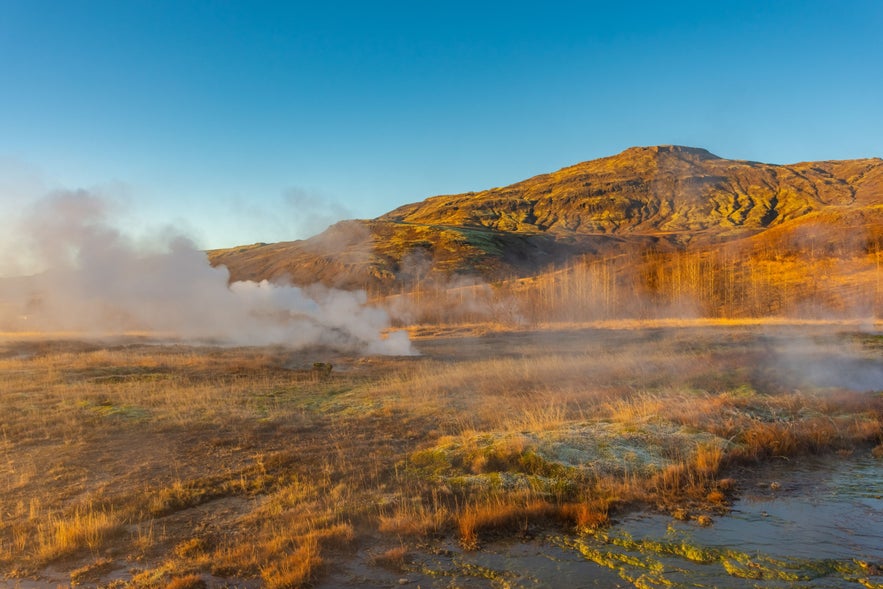 Haukadalur Geothermal Valley is shaped by visible geothermal activity spread across a shallow valley in South Iceland. Geysers, hot springs, steam vents, and bubbling pools are clustered within a compact, walkable area, creating an active landscape beyond just the famous eruptions.
Strokkur Geyser in Haukadalur
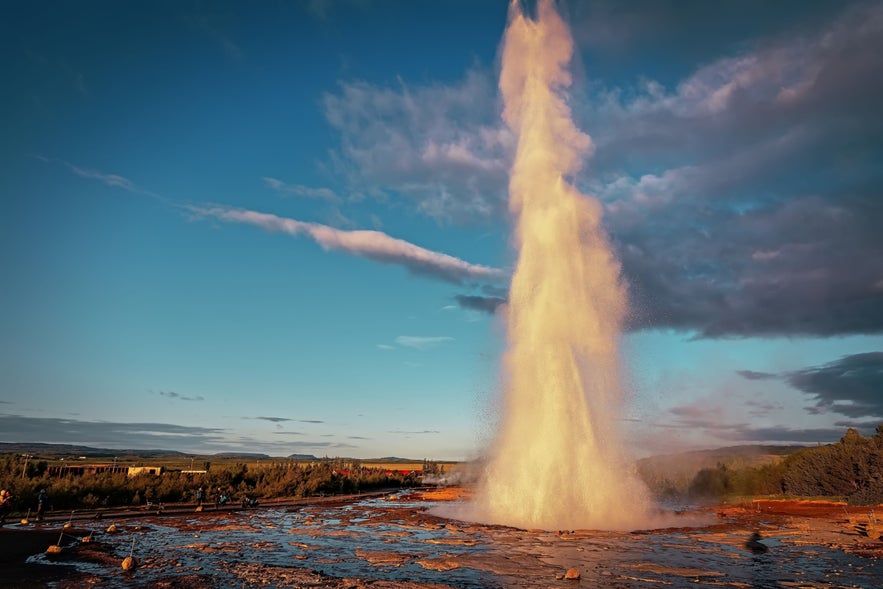
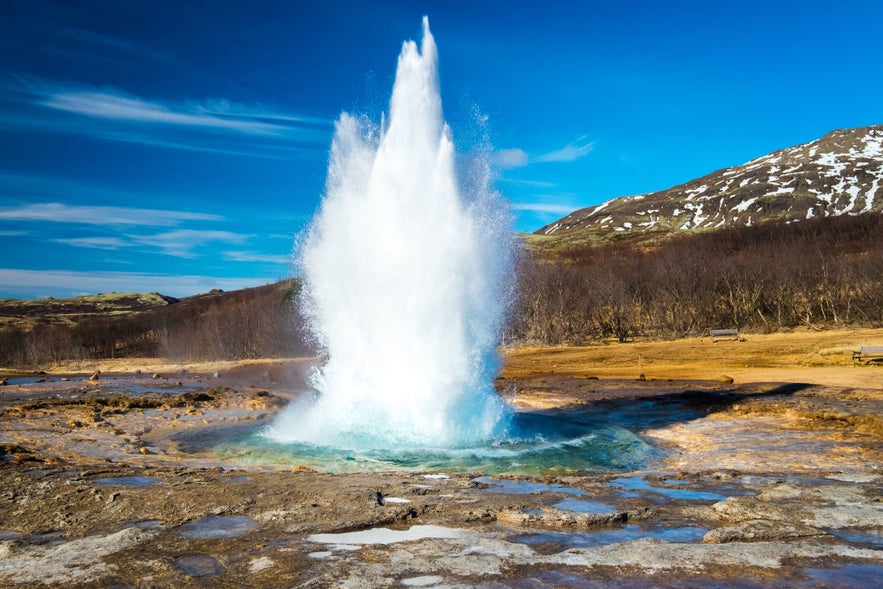
Strokkur is the most active and reliable geyser in Haukadalur and the main reason many people stop in the valley. It erupts regularly, usually every 5 to 10 minutes, sending a column of hot water and steam several meters into the air. Because of its frequent eruptions, it rarely takes long to see Strokkur erupt.
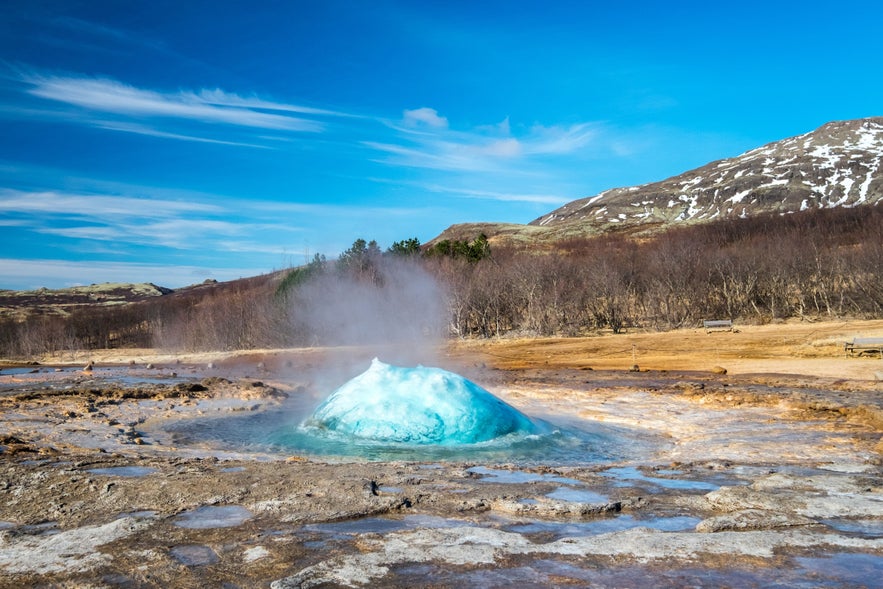
The geyser is located beside marked walking paths with a clear viewing area around it. Before each eruption, the water in the pool often swells into a blue dome, offering a brief visual cue that an eruption is about to happen. This predictability makes Strokkur one of the most dependable geysers to observe in Iceland.
The Great Geysir in Haukadalur
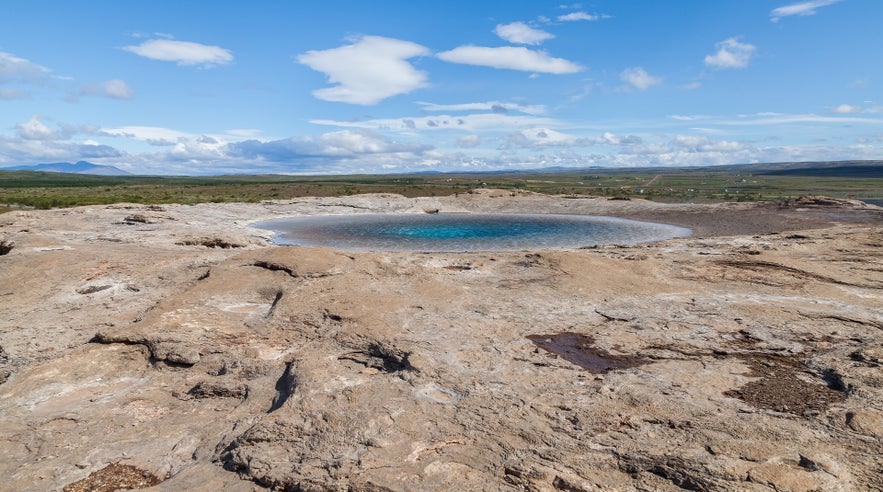
The Great Geysir geothermal hot spring in Iceland’s volcanic landscape. By Diego Delso, CC BY-SA 4.0, Source. No edits made.
The Great Geysir is the geothermal feature that gave all geysers their name. Although it is no longer regularly active, it holds an important place in the history of the area and remains one of the most famous geothermal sites in Iceland.
In the past, the Great Geysir was known for powerful eruptions that could reach impressive heights. Over time, changes underground have made eruptions rare, and today it usually stays quiet. Even so, the large, mineral-stained pool and surrounding steam vents give a clear sense of how powerful the geyser once was.
Located close to Strokkur, the Great Geysir is easy to include in a walk around the valley. While it may not erupt often, seeing it alongside the more active geysers helps put Haukadalur’s geothermal history into context.
Blesi Hot Springs in Haukadalur
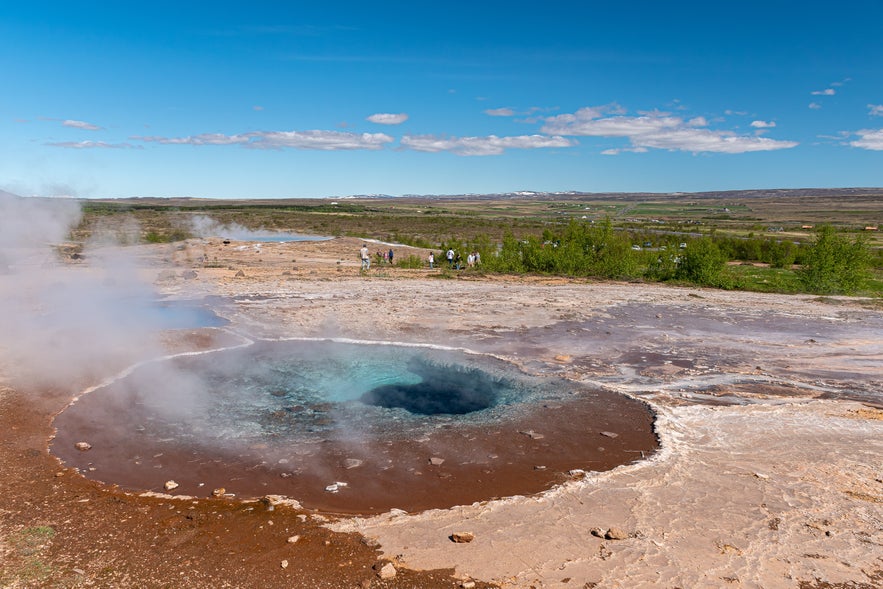 Blesi is a pair of small hot springs located a short walk from the main geyser area. The two pools sit side by side and are easy to spot because of their contrasting colors, with one appearing bright blue and the other a cloudy, milky white.
Unlike Strokkur, Blesi does not erupt, but it is still an interesting stop while walking through the valley. The calm surface of the pools and the visible geothermal water make it a good place to slow down and take a closer look at the variety of geothermal features in Haukadalur.
Litli Geysir and Nearby Small Geysers in Haukadalur
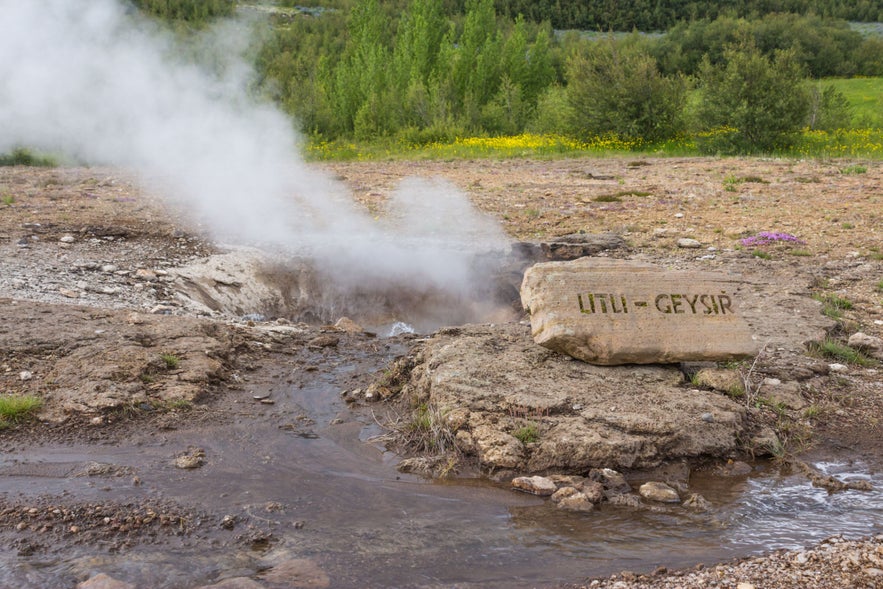 Litli Geysir and several smaller geysers are scattered around the main walking paths in Haukadalur. These features are less dramatic than Strokkur, but they add to the overall experience by showing geothermal activity on a smaller scale.
Some of these geysers may bubble, release steam, or erupt occasionally, while others remain quiet. Their activity can change over time, so what you see may vary from one visit to the next. Even when they are inactive, the steaming ground and mineral-stained pools make them worth noticing as you move through the area.
Konungshver Hot Spring in Haukadalur
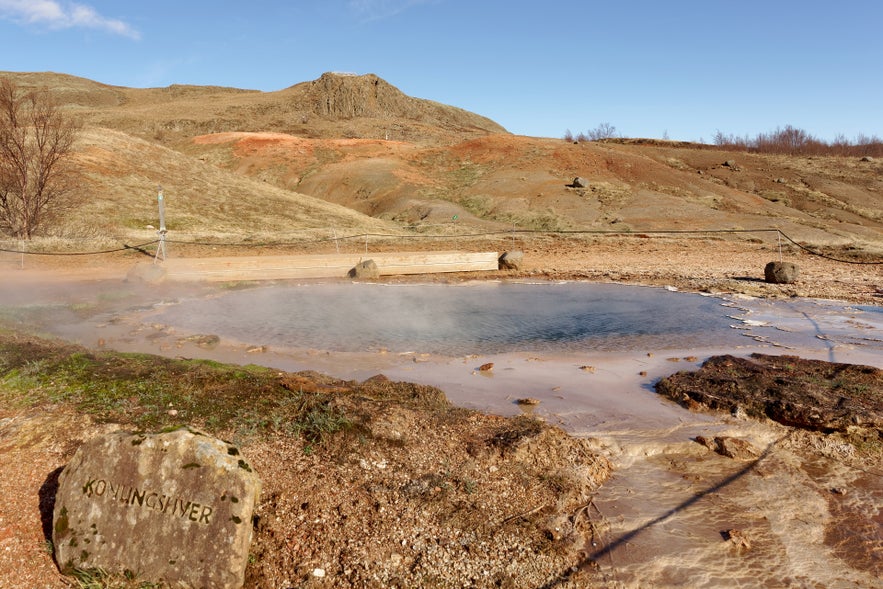 Konungshver hot spring in Haukadalur Geothermal Valley, with steaming water and mineral-stained ground. By Jakub Hałun - Own work, CC BY-SA 4.0, Source. No edits made.
Konungshver is one of the largest hot springs in Haukadalur and feels very different from the erupting geysers nearby. Instead of sudden bursts of water, this hot spring is wide, open, and constantly steaming, making it one of the most visually striking spots in the valley.
The pool is easy to spot along the walking paths, with clear barriers that allow you to look directly into the hot spring from a safe distance. The surface is often in constant motion, and mineral deposits around the edges give the area a raw, geothermal look that highlights how active the ground still is here.
Mud Pots and Steam Vents in Haukadalur Geothermal Valley
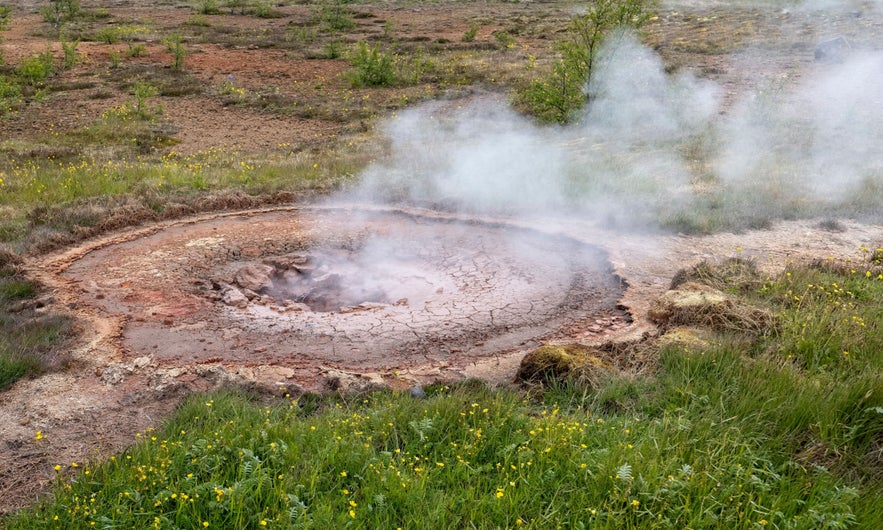 Scattered around Haukadalur are areas where the ground bubbles, hisses, and steams. Mud pots slowly churn with thick, gray mud, while steam vents release hot vapor straight from the earth. These features are often quieter than the geysers, but they make the geothermal activity feel constant and close at hand.
The mud pots and vents are found along the main walking paths and are easy to observe from marked viewing areas. The strong smell of sulfur and the sound of bubbling mud make this part of the valley feel raw and unsettled, offering a different experience from the larger, more dramatic geysers.
How To Get to Haukadalur Geothermal Valley
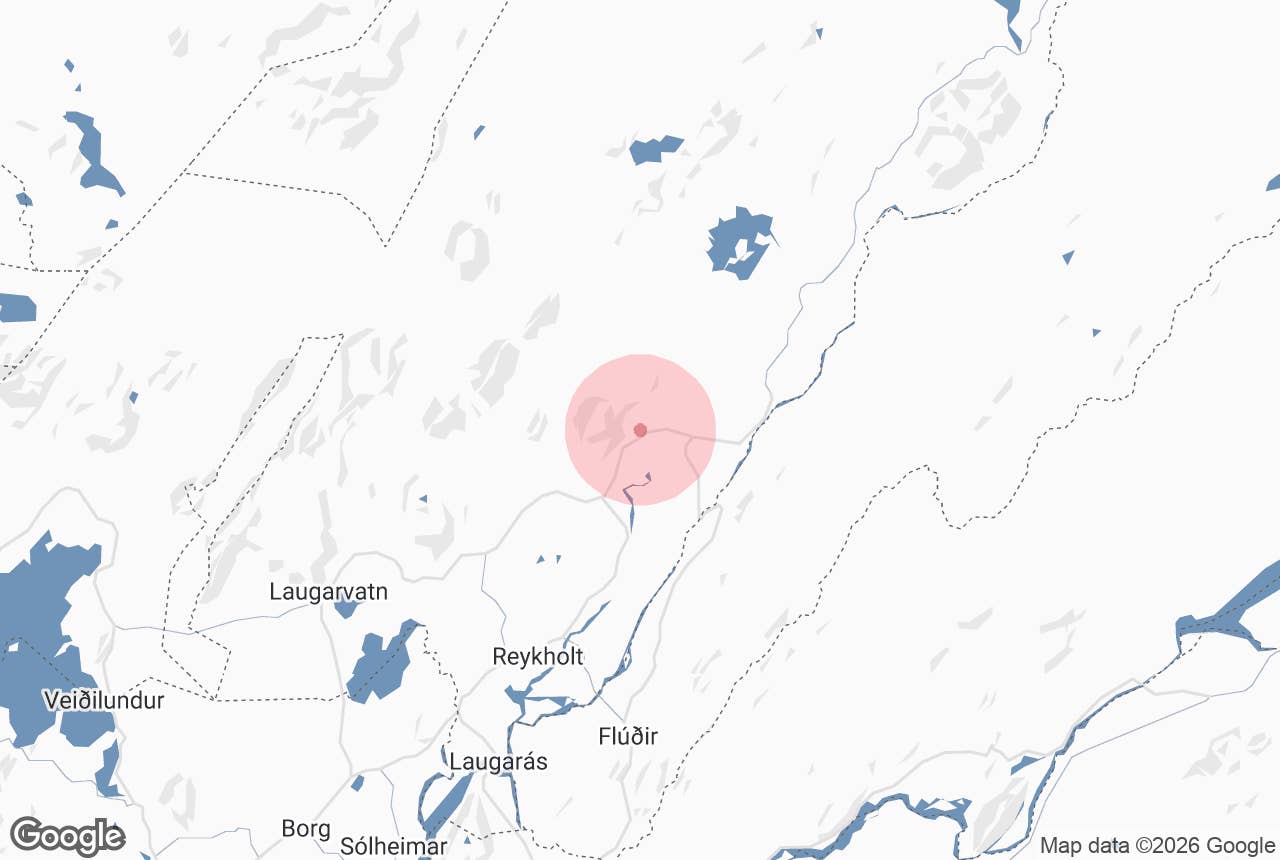
To get to Haukadalur Geothermal Valley from Reykjavik, follow Route 1 east and then continue onto Route 35 toward the Golden Circle. The site is located directly off Route 35, with clear signs and parking next to the geothermal area.
Haukadalur lies about 65 miles (105 kilometers) from Reykjavik. Driving from the city takes around 1.5 to 2 hours, depending on traffic and road conditions. The route is fully paved and well-maintained year-round, though winter weather can affect driving conditions. Checking road conditions and the weather forecast is recommended in colder months.
If you are not driving, Haukadalur is included in many Golden Circle tours from Reykjavik. These range from half-day bus tours to small group and private options, and they usually combine Haukadalur with stops at Thingvellir National Park and Gullfoss Waterfall.
Top Tours that Visit Haukadalur Geothermal Valley
Haukadalur Geothermal Valley appears on a wide range of tours that follow the Golden Circle and beyond. These options vary from short guided day trips to longer self-drive routes and complete vacation packages.
Golden Circle Tours
These tours focus on the classic Golden Circle route and include Haukadalur as one of the main stops of the day.
-
Golden Circle Minibus Tour from Reykjavik – See Iceland's classic Golden Circle highlights from Thingvellir to Gullfoss and Geysir with a smaller group, local guide insights, and Icelandic food samples and music along the way.
-
Golden Circle Tour with Kerid Crater & Fridheimar Farm – Combine the Golden Circle with visits to the volcanic Kerid Crater and a stop at Fridheimar Tomato Greenhouse for local produce and farm views.
-
Golden Circle & Blue Lagoon Tour With Admission – Experience the Golden Circle sights and then relax with entrance to the Blue Lagoon included on the same day.
Golden Circle Tours with Activities
These tours add a hands-on experience to the Golden Circle by combining sightseeing at Haukadalur with outdoor activities.
-
Golden Circle & Snowmobiling Tour from Reykjavik – Explore Thingvellir, Geysir, and Gullfoss Waterfall before an exhilarating snowmobile ride across the vast ice of Langjokull Glacier.
-
Golden Circle & Snorkeling in Silfra with Free Underwater Photos – Pair Golden Circle sightseeing with snorkeling between tectonic plates at Silfra Fissure, with underwater photos included for keepsake images.
-
Golden Circle & Horse Riding Tour from Reykjavik – Blend traditional Golden Circle viewing with an outdoor horse riding experience through the Icelandic countryside.
Multi-Day Tours
These guided itineraries include Haukadalur as part of a longer journey that covers multiple regions of Iceland.
-
3-Day Northern Lights & Ice Cave Multi-Day Tour – Travel the Golden Circle with the South Coast and Jokulsarlon Glacier Lagoon, with time set aside for northern lights and ice cave exploration.
-
3-Day Guided Summer Tour of the South Coast & Golden Circle – Discover Golden Circle and South Coast landscapes, glacier hikes, and the Jokulsarlon Glacier Lagoon with a guided summer itinerary.
-
8-Day Guided Tour of the Complete Ring Road With Top Activities – Circle all of Iceland's main regions over eight days, including the Golden Circle and premium activities along the Ring Road.
Self-Drive Tours
These tours provide a planned route and accommodation while allowing you to explore Haukadalur at your own pace.
-
7-Day Northern Lights Self-Drive Tour – Drive through South Iceland, the Golden Circle, and the Snaefellsnes Peninsula with flexible stops to chase northern lights and scenic landscapes.
-
1-Week Summer Ring Road & Golden Circle Self-Drive Tour – Cover Iceland's complete Ring Road loop and Golden Circle at your own pace with a summer itinerary.
-
10-Day Ring Road & Snaefellsnes Self-Drive Tour – Take a longer self-drive route around the full Ring Road and Snaefellsnes Peninsula, including Golden Circle stops and top natural attractions.
Vacation Packages
These packages combine accommodation with guided day tours that include Haukadalur and other major sights.
-
5-Day Northern Lights Winter Vacation with Ice Caving & Blue Lagoon – Combine Golden Circle highlights with winter ice cave excursions and time at the Blue Lagoon in a five-day winter package.
-
5-Day Summer Package With Glacier Lagoon & Golden Circle – Explore Jokulsarlon Glacier Lagoon and the Golden Circle in a short summer vacation itinerary.
-
5-Day Reykjavik Package With Blue Lagoon, Golden Circle, South Coast & Northern Lights – See the Golden Circle plus Blue Lagoon, South Coast waterfalls, and the northern lights in one multi-day Reykjavik base package.
How Long To Spend in Haukadalur Geothermal Valley
 Most travelers spend 30 to 60 minutes at Haukadalur Geothermal Valley, depending on whether it’s a quick stop on the Golden Circle or part of a more relaxed visit. Because the main geothermal features are located close together, even a short stay allows you to see the highlights.
A 20- to 30-minute visit is usually enough to watch Strokkur erupt and walk past the Great Geysir. This option works well for travelers on a tight schedule or those visiting Haukadalur as one stop among several Golden Circle attractions.
Spending 45 to 60 minutes gives you time to explore beyond the main geyser viewing area. At this pace, you can walk the marked paths, see smaller hot springs and steam vents, and visit features such as Blesi and Konungshver without rushing.
For a more in-depth experience, 90 minutes or more allows for a slower walk through the valley, time to watch multiple eruptions, and opportunities to explore quieter areas away from the busiest spots. This is a good choice for photography, relaxed sightseeing, or visits outside peak hours.
Best Time To Visit Haukadalur Geothermal Valley
 Haukadalur Geothermal Valley can be visited year-round, but the experience changes depending on the time of day and season. Because it is a key stop on the Golden Circle, crowd levels are the main factor to consider when planning a visit.
The best time of day to visit is early in the morning or later in the afternoon. During these hours, tour buses are less frequent, making the main geyser area around Strokkur more comfortable and easier to explore. Midday is typically the busiest time, especially in summer, when large tour groups arrive regularly.
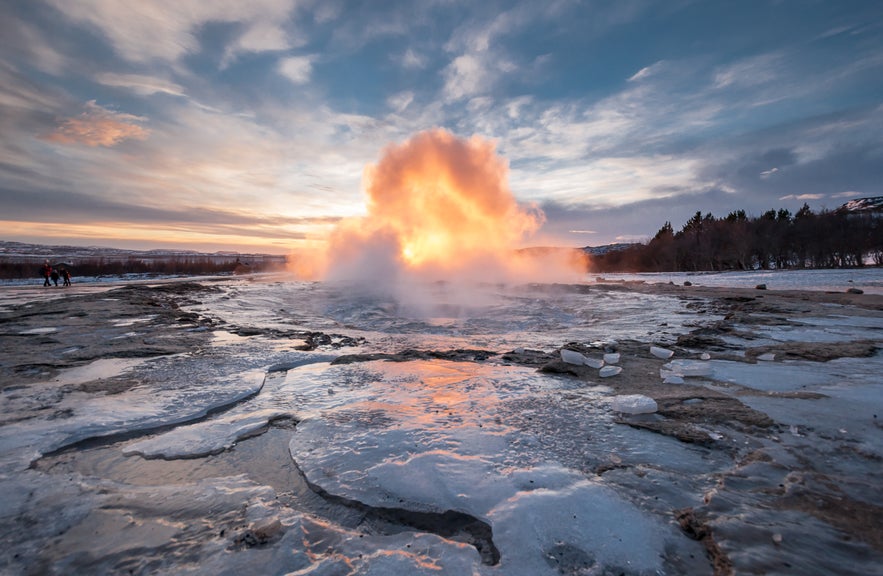
Summer (June to August) offers long daylight hours and easy walking conditions, but it is also the most crowded period. Spring and autumn tend to be quieter, with fewer visitors and changing light that adds atmosphere to the geothermal landscape. Winter visits are colder, but often less busy, and snow or frost can create striking contrasts against the steaming ground, though paths may be icy.
Facilities and Services at Haukadalur Geothermal Valley
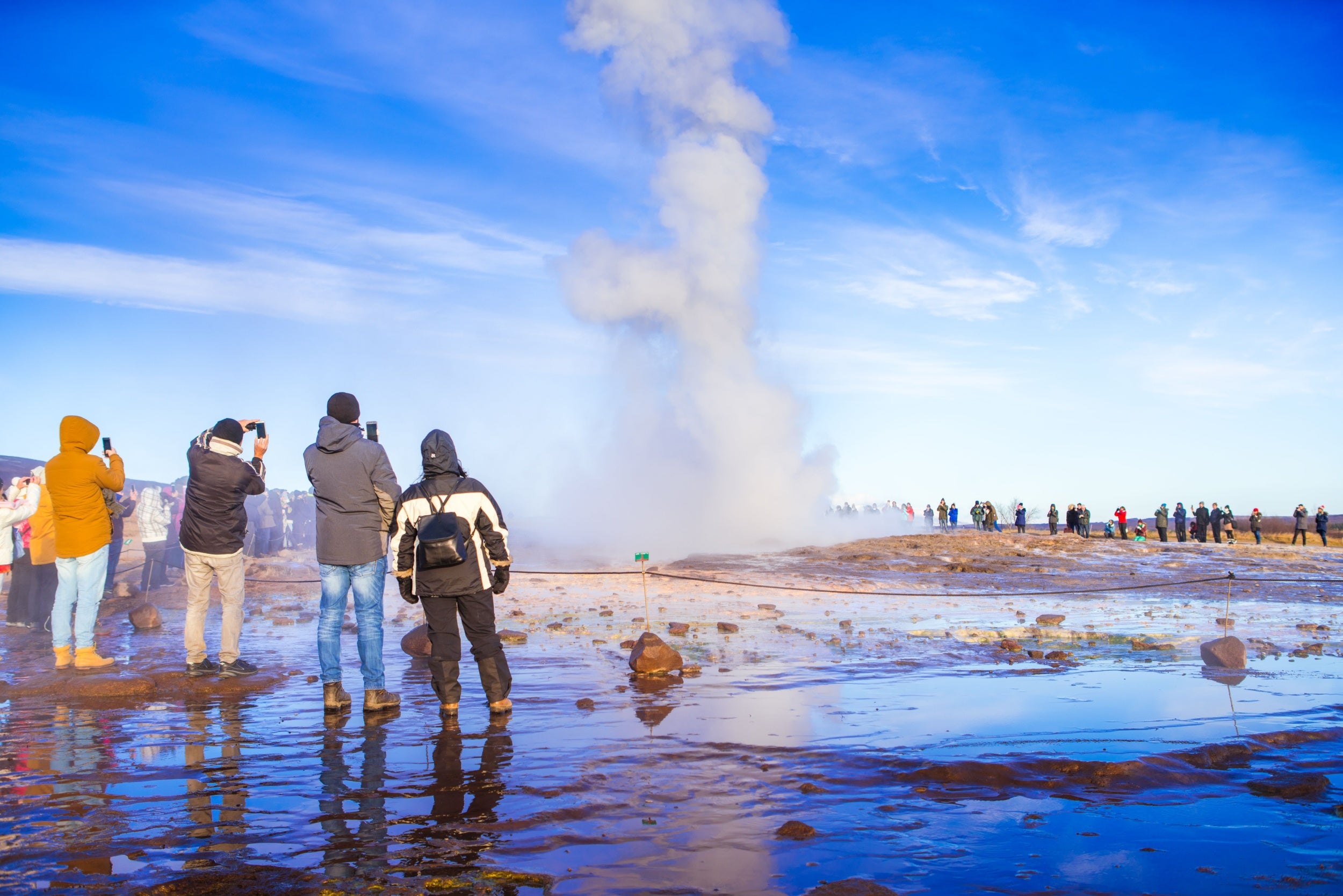 Haukadalur Geothermal Valley is well equipped for visitors, with services located close to the main geothermal area. A large free parking area sits directly across the road from the walking paths, making access straightforward and convenient.
Public toilets are available near the parking area and visitor facilities. These are maintained year-round and are easy to reach before or after exploring the geothermal valley.
Next to the parking area is a visitor center complex that includes a cafe, restaurant, and gift shops. The cafe offers light meals, snacks, and drinks, while the restaurant provides a more substantial dining option. Gift shops sell souvenirs, local products, and travel essentials.
Nearby Attractions Around Haukadalur Geothermal Valley
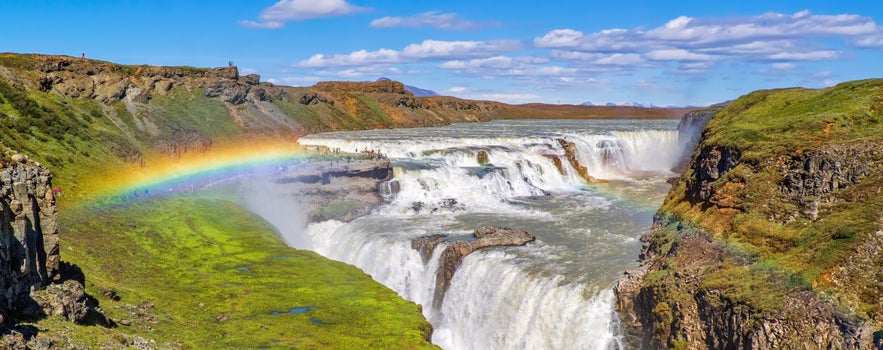 Haukadalur Geothermal Valley sits close to several well-known stops that are commonly included on Golden Circle itineraries.
Gullfoss Waterfall lies nearby, and many routes include it immediately before or after Haukadalur due to the short driving distance. Thingvellir National Park is typically visited earlier or later in the day and offers a landscape shaped by tectonic movement and historic sites rather than geothermal activity.
A short drive away, Laugarvatn offers a quieter pause between major sights. The area has options for food and geothermal bathing. Laugarvatn Fontana Spa features lakeside hot pools and steam rooms.
Laugaras Lagoon is a new geothermal spa that offers a more modern bathing experience in the same area. You can book a ticket for Laugaras Lagoon ahead of time.
The Secret Lagoon in Fludir is a natural hot spring for bathing and often marks a relaxed end to a Golden Circle day. You can also book a ticket for the Secret Lagoon ahead of time.
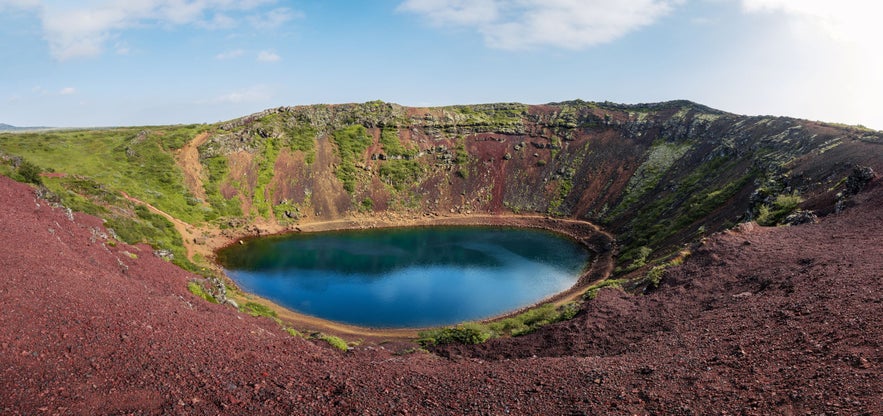 Other stops that are commonly added to Golden Circle routes include Kerid Crater, Bruarfoss Waterfall, and Fridheimar.
Kerid Crater is a volcanic crater with a steep rim and a bluish-green lake at the bottom. This setting creates a clear contrast to geothermal areas.
Bruarfoss Waterfall is known for its bright blue water and narrow channels. The walk to the waterfall is longer, and this distance keeps it calmer than many nearby sights.
Fridheimar is a working greenhouse that grows tomatoes with geothermal heat and often serves as a lunch stop focused on food and agriculture.
History of Geothermal Activity in Haukadalur Valley

An active geyser erupting in the Geysir Geothermal Area in Haukadalur Valley. By Hyppolyte de Saint-Rambert - Own work, CC BY-SA 4.0, Source. No edits made.
Haukadalur Valley has a long history of geothermal activity shaped by heat from below the Earth’s surface and frequent earthquakes in the region. Hot springs, steam vents, mud pots, and geysers have changed over time as underground channels opened, shifted, or closed.
Written sources from the Middle Ages already describe geothermal activity in the valley, showing that it has been active for centuries. Over time, different geysers and hot springs have increased or declined in activity, often after earthquakes that altered how water moved underground.
By the 18th and 19th centuries, Haukadalur had become an important place for studying geothermal activity as a whole. Scientists observed not just individual geysers, but how the entire valley responded to changes in pressure, heat, and water flow.
As interest in the area grew, human activity began to affect some geothermal features. This led to greater awareness of the need for protection and eventually to conservation measures across the valley.
Today, Haukadalur is valued for its long geological history and its role in shaping early understanding of geothermal systems, rather than for any single feature alone.
Safety and Rules in Haukadalur Geothermal Valley
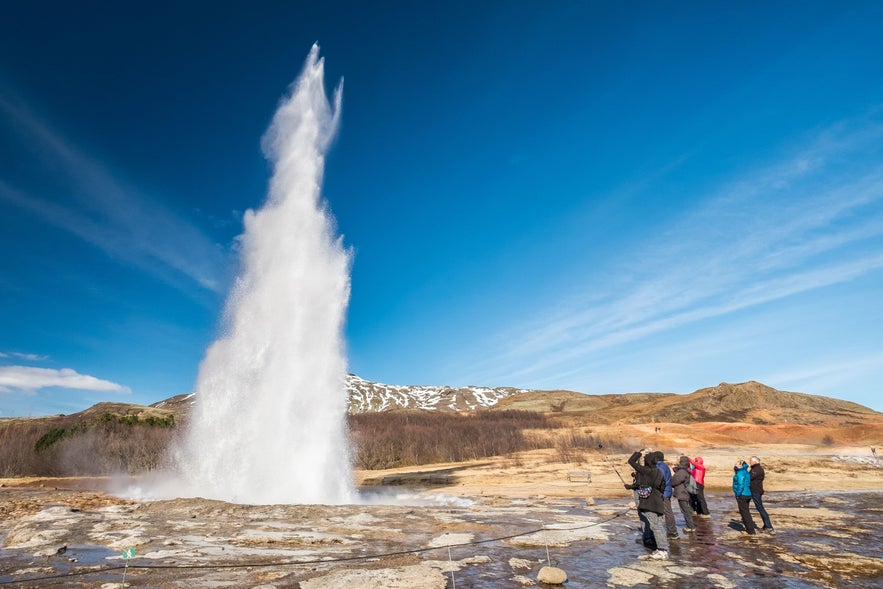 Geothermal features in Haukadalur contain boiling water and steam, and the ground around them can be thin or unstable. Areas that look solid or inactive may still be dangerous, which is why all access is limited to marked paths and designated viewing areas.
Active geysers such as Strokkur can release hot water and steam suddenly, especially when the wind shifts direction. Standing behind barriers and allowing space around viewing areas reduces the risk of exposure to spray during eruptions.
Touching geothermal water, crossing safety lines, or throwing objects into hot springs or geysers is strictly prohibited. Interference can cause serious injury and permanently damage geothermal features.
Following posted rules and respecting barriers is essential for personal safety and for preserving the geothermal activity in Haukadalur.
Visiting Haukadalur Geothermal Valley
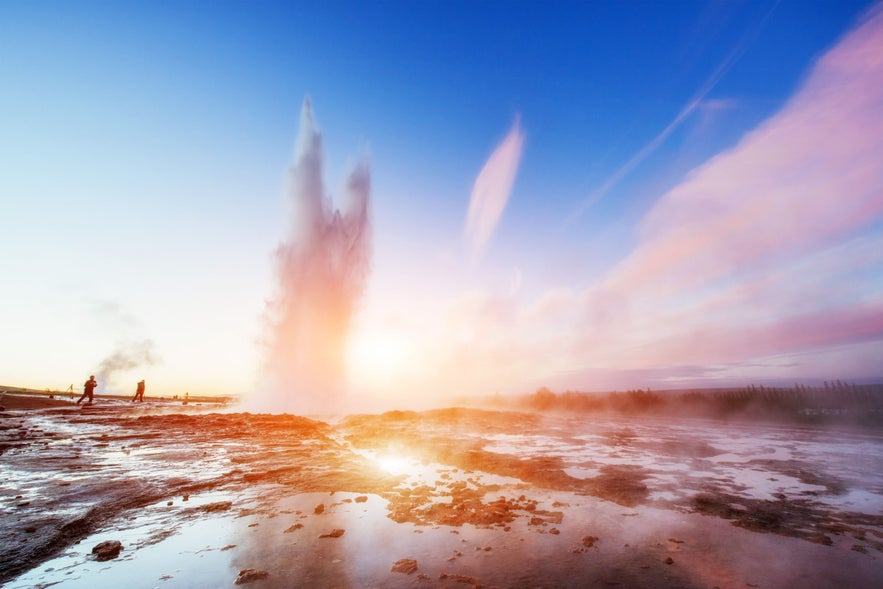 Haukadalur Geothermal Valley stands out as one of the most accessible places in Iceland to experience geothermal activity up close. Erupting geysers, steaming ground, and mineral-stained pools come together in a compact valley that clearly shows how active the landscape remains beneath the surface.
As part of the Golden Circle, Haukadalur fits easily into a wider itinerary, yet it offers enough variety to reward a slower visit. The contrast between sudden geyser eruptions and quieter hot springs gives a fuller picture of geothermal processes than a single feature alone.
With its combination of natural activity, clear walking paths, and nearby services, Haukadalur remains a defining stop in South Iceland. Whether visited briefly or explored in more detail, it provides a lasting impression of the forces that shape Iceland’s terrain.
What is Haukadalur Geothermal Valley?
Is Haukadalur Geothermal Valley worth visiting?
What are the things to do in Haukadalur Geothermal Valley?
Is Haukadalur Geothermal Valley the same as Geysir?
What is the difference between Haukadalur Geothermal Valley and the Geysir Geothermal Area?
How often does Strokkur erupt in Haukadalur?
Is there an entrance fee for Haukadalur Geothermal Valley?
How long should you spend in Haukadalur Geothermal Valley?
Can you visit Haukadalur Geothermal Valley in winter?
Is Haukadalur Geothermal Valley safe for children?
Does the Great Geysir still erupt?
Is Haukadalur part of the Golden Circle?
Is parking available at Haukadalur Geothermal Valley?
Can you walk around Haukadalur Geothermal Valley?
What is the best time of day to visit Haukadalur?