When preparing for a trip to Iceland, navigating the maze of visa paperwork might not be as exciting as dreaming about soaking in the Blue Lagoon or chasing the northern lights. Even still, it might be the golden ticket between you and your Nordic adventure.
This article aims to be your go-to guide in figuring out what paperwork you'll need before you can enter Iceland and begin exploring the land of ice and fire. Whether you want to rent a car, stay in the best hotels in Iceland, and explore the wonders of the Ring Road by yourself, take one of many fantastic self-drive tours, or book convenient vacation packages, getting your paperwork sorted is the first essential step.
Why You Can Trust Our Content
Guide to Iceland is the most trusted travel platform in Iceland, helping millions of visitors each year. All our content is written and reviewed by local experts who are deeply familiar with Iceland. You can count on us for accurate, up-to-date, and trustworthy travel advice.
Let's not waste any time and get right into it. Once you get through reading this article, the people at passport control will be standing vis-a-vis a visa wiz!
Key Takeaways
-
Iceland is part of the Schengen Area, so entry requirements depend on your nationality.
-
Some travelers need to apply for a Schengen visa in advance, while others can visit Iceland visa-free for short stays.
-
From 2026, visa-exempt travelers will need to obtain ETIAS travel authorization before entering Iceland.
-
Common requirements include a valid passport, travel insurance, proof of accommodation, and sufficient funds.
What is the Schengen Area?
 Iceland is part of the Schengen Area, which comprises 29 European countries (including Bulgaria and Romania, which became full Schengen members on 1 January 2025) that have eliminated passport and other border controls at their mutual borders. The zone allows for the unrestricted movement of people within its boundaries, essentially acting as a single jurisdiction for international travel purposes.
- See also: Where is Iceland?
The Schengen Area is not synonymous with the European Union. Some EU countries, like Ireland, are not part of the Schengen Area, while others, like Iceland and Norway, are non-EU members but are part of Schengen. If you plan a trip to multiple European countries, a single Schengen Visa can grant you entry to all member states. However, conditions apply, and visas are generally given by the government that is your primary destination. For more information, see this list of all the countries within the Schengen area.
Why Do I Need a Schengen Visa?
If you do not have visa-free travel to Iceland, you will require a Schengen visa, commonly referred to as a tourist visa, if you want to visit the country. This short-stay visa allows its holder to travel freely within the 29 countries of the Schengen Area for up to 90 days within 180 days. The visa is commonly used for tourism, business trips, or transit.
Citizens of certain countries outside of Schengen, such as the United States, do not require a Schengen Visa for short stays within the Schengen area. This is because visa-free arrangements between individual countries and the Schengen member states allow for reciprocal short-term travel.
How to Apply for a Visa to Visit Iceland
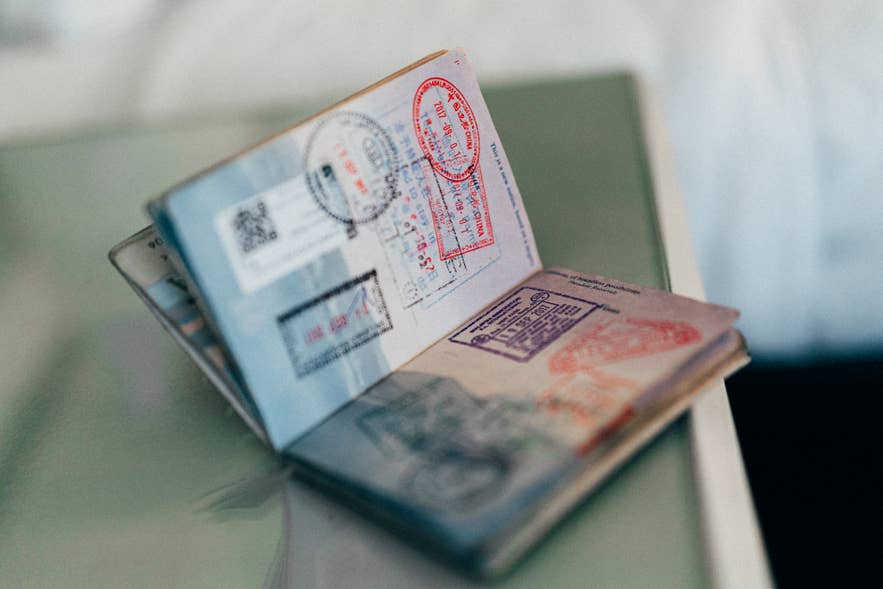
Photo by ConvertKit.
Before applying, it’s important to determine whether you actually need a visa or another form of travel authorisation to visit Iceland. Iceland is part of the Schengen Area, which means its entry rules follow the same framework as most European countries.
If you're unsure whether or not you have visa-free travel to Iceland, you can look at the list of countries that require a Schengen visa.
Applying for a Schengen Visa
If your nationality requires a visa to enter the Schengen Area, you must apply for a Schengen visa before travelling to Iceland.

Photo by ConvertKit.
Applying for a Schengen Visa
You can submit your application at an Icelandic embassy or consulate in your country of residence. If Iceland does not have a diplomatic mission in your country, another Schengen country may represent Iceland and handle visa applications on its behalf.
Icelandic embassies issue visas directly in locations such as London, New Delhi, Beijing, and Washington, D.C., while other embassies handle applications in additional regions.
The Icelandic Government has an informative site detailing the process of applying for a visa to visit Iceland.
When to Apply for a Schengen Visa
Applications should not be filed more than 6 months before the start of the intended visit or 9 months in the case of seafarers. As a rule, the application should not be filed later than 15 days before the start of the visit.
Required Documents
Although requirements can vary slightly by country, applicants are generally asked to provide:
-
A valid passport issued within the last 10 years and valid for at least three months beyond the planned departure from the Schengen Area
-
A completed Schengen visa application form
-
Two recent passport-size photographs
-
Proof of travel plans, such as a flight itinerary
-
Travel insurance valid throughout the Schengen Area
-
Proof of accommodation in Iceland, such as your hotel/guesthouse booking, a rental agreement, or a letter of invitation from the person hosting you.
-
Proof of financial means to show that you have enough money to support yourself through your stay in the Schengen Area. This can be a bank account statement, a sponsorship letter from another person who will support you financially during your stay, or a combination of both.
-
Biometric data (fingerprints) and payment of the visa fee
The EES (Entry/Exit System)
Since 10 April 2026, the EU’s Entry/Exit System (EES) has been fully operational at all Schengen borders, including Keflavik International Airport. Passport stamping has ended for non-EU/EFTA travellers. Instead, on first entry the system records a facial image and four fingerprints, which are stored for three years and used to track 90/180-day stays automatically.
EES is automatic and free. It applies to every short-stay non-EU/EFTA visitor, regardless of whether they hold a Schengen visa or are visa-exempt. ETIAS, by contrast, is a separate online travel authorisation that is launching later (see below).
Visa-Free Travel and the New 2026 ETIAS Requirement

Image by katyveldhorst.
Travelers from visa-exempt countries, including the United States, Canada, the United Kingdom, Australia, Japan, and others, do not currently need a visa to visit Iceland for short stays of up to 90 days within 180 days.
However, this process will change slightly in the coming years.
From late 2026, visa-exempt travellers will be required to obtain an ETIAS travel authorisation before entering Iceland.
What is ETIAS?
ETIAS stands for the European Travel Information and Authorisation System. It’s not a visa, but a mandatory online travel authorisation for visitors from visa-free countries travelling to Iceland and other Schengen Area destinations for short stays.
When Does ETIAS Start?
ETIAS is expected to become operational in the last quarter of 2026. After a transitional period of around six months, it is expected to become mandatory for all visa-exempt travellers in 2027. The European Union will announce the exact start date in advance.
How to Apply for ETIAS
Once the system is live, you’ll need to provide requirements, such as:
-
Complete an online application through the official ETIAS portal.
-
Provide personal and passport details.
-
Pay the EUR 7 application fee. Travellers under 18 or over 70 are exempt.
-
Submit the application and wait for approval.
Most applications are expected to be processed quickly, but travelers are advised to apply well before their departure date.
ETIAS Validity
An approved ETIAS travel authorisation will generally be valid for up to three years or until the passport expires, whichever comes first. It allows multiple short stays in Iceland and other Schengen countries during its validity period.
If you already hold a valid Schengen visa, you do not need to apply for ETIAS.
Important: The only official ETIAS application website is travel-europe.europa.eu/etias. Be cautious of third-party sites that may charge inflated fees or collect personal data.
What if My Visa Application is Refused?

Image by VIN JD.
It's essential to follow the instructions carefully when filling out your Schengen visa application, as there are many instances where these applications get refused. Make sure that you start your application early so you have the option to amend any mistakes before you run out of time.
Several reasons can lead to the denial of a Schengen visa application. Here are some examples:
-
A failure to provide all required documents, such as missing bank statements, travel insurance, or incomplete application forms.
-
The travel insurance does not cover the minimum required amount or the entire stay in the Schengen Area.
-
Failing to provide confirmed hotel bookings, invitation letters, or other forms of accommodation proof.
-
A lack of proof of financial sufficiency to support oneself during the stay.
If, for whatever reason, your application is refused, you will receive a refusal letter explaining the reason behind the decision. This refusal does not deny you the right to reapply for a Schengen visa at another time.
If a Schengen visa application is refused by the Directorate of Immigration in Iceland, the applicant can appeal the decision to the Immigration and Asylum Appeals Board within 15 days of receiving the refusal letter. Along with appeals, the applicant can hand in supporting documents that could help grant the applicant the preferred outcome of the appeal.
Who Needs a Visa to Visit Iceland (And Who Doesn’t)?
Planning to visit Iceland? Before you get lost in your itinerary, it’s important to figure out if you need a visa to enter Iceland.
Since Iceland is part of the Schengen Area, the same visa rules that apply to most European countries also apply here. Whether you need a visa depends entirely on your nationality, and the rules aren’t as complicated as you might think.
Let’s break it all down so you can plan your trip stress-free.
Visa-Free Entry to Iceland: Who’s Eligible?
 If you’re from an EU or EEA (European Economic Area) country, the good news is that you can travel to Iceland without any visa at all. In fact, as a citizen of the EU or EEA, you have freedom of movement, which means you can enter, live, and work in Iceland with minimal restrictions. You just need a valid passport or national ID card, and you're free to enjoy Iceland for as long as you like.
But even if you're not from Europe, there’s a long list of countries whose citizens can visit Iceland visa-free for up to 90 days within any 180-day period. This includes travelers from countries like the United States, Canada, the United Kingdom, Australia, New Zealand, Japan, South Korea, and Singapore, among others.
These travelers can enter Iceland for tourism, business, or family visits without applying for a visa beforehand. However, your passport must be valid for at least three months beyond your planned departure from the Schengen zone, and it’s always a good idea to carry proof of accommodation and return travel.
So, if you're from any of these visa-exempt countries, you're free to explore Iceland's waterfalls, volcanoes, and dramatic coastlines without much red tape.
Who Needs a Visa to Visit Iceland?
 If your country is not part of the EU/EEA and not on the visa-free list, you’ll need to apply for a Schengen short-stay visa (Type C) before traveling to Iceland. This visa allows you to stay for up to 90 days within a 180-day period for purposes such as tourism, family visits, or attending short-term business events.
Travelers from countries such as India, China, Nigeria, Pakistan, Bangladesh, Egypt, the Philippines, and South Africa typically fall under this category. The application process involves gathering documents such as proof of accommodation, travel insurance, a valid passport, return flight tickets, and bank statements to show financial means.
You’ll need to submit your application to the Icelandic embassy or consulate in your country. If Iceland does not have a diplomatic presence where you live, another Schengen country (like Denmark or Norway) may handle applications on Iceland’s behalf.
It’s important to apply well in advance—processing times can take up to 30 days, though in many cases it’s quicker. Don’t leave this step until the last minute, especially if you’re traveling during the peak summer season.
Not Sure If You Need a Visa to Visit Iceland?
If you're still unsure about your visa requirements, there are a few ways to check.
You can use the official Icelandic Directorate of Immigration website, which provides up-to-date information based on your nationality. Alternatively, contact the nearest Icelandic embassy or consulate. Many travelers also use trusted Schengen visa eligibility tools online to double-check before booking their trip.
Special Cases and Exceptions
There are a few special situations where the rules may differ slightly. For example, if you hold dual citizenship and one of your passports is from a visa-exempt country, you can use that passport to enter Iceland without a visa, even if your other nationality requires one.
Travelers with diplomatic or service passports may also be exempt from needing a visa, depending on bilateral agreements between countries. Likewise, stateless persons or recognized refugees may be allowed to travel if they have a valid refugee travel document that Iceland accepts. These cases are handled individually, so it's best to consult with the embassy directly.
 Overall, Iceland is a fantastic travel destination, and you shouldn't let a visa application stand in your way of getting to enjoy the country's wonders.
That's it for our guide on applying for a visa to visit Iceland. Did we leave any of your questions unanswered? Do you have any tips for would-be visitors? Let us know in the comments below!

Hi, I’m Arnar Tómas, a storyteller with a background in journalism and content creation. I’ve worked with top Icelandic media and travel organizations, and I’m into fantasy football, pro wrestling, and travel.