Iceland has been making headlines in the last few years due to its frequent volcanic eruptions in the Reykjanes Peninsula, and lately for a rise in pickpocketing at its most visited spots. But what does this all mean? How does it affect life in Iceland? And is it still safe to visit Iceland in 2026?
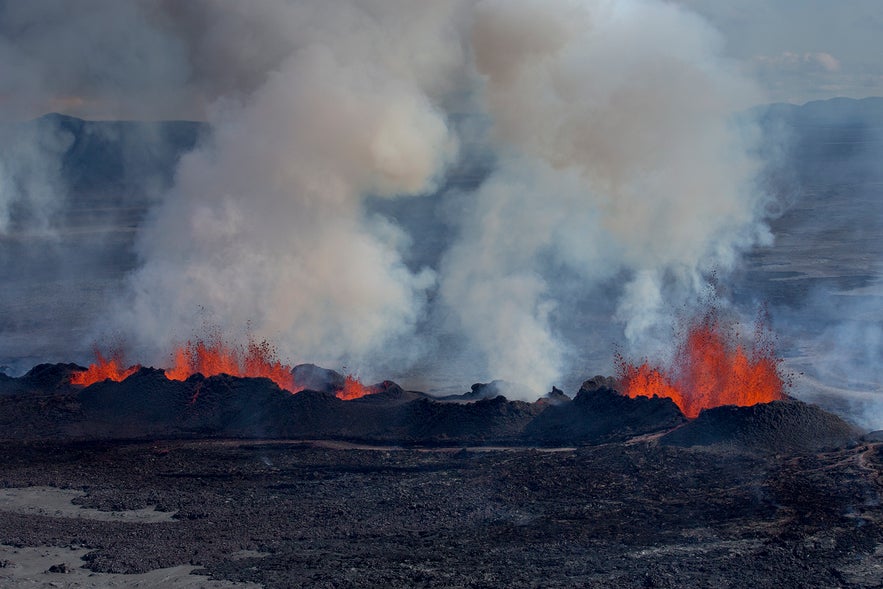
Since 2021, Iceland has seen 12 volcanic eruptions on Reykjanes, a relatively small area in the Southwest part of the island. This is due to the recent awakening of the volcanic channels in the region that had been dormant for over 800 years until the first eruption near Fagradalsfjall Mountain on the 19th of March 2021.
Why You Can Trust Our Content
Guide to Iceland is the most trusted travel platform in Iceland, helping millions of visitors each year. All our content is written and reviewed by local experts who are deeply familiar with Iceland. You can count on us for accurate, up-to-date, and trustworthy travel advice.
Iceland has also seen a rise in petty crime. Since 2025, police have dealt with pickpocketing targeted at travelers in downtown Reykjavik and at major attractions, a type of crime that was once extremely rare in the country. While it is more of an inconvenience than a serious threat, it is worth being aware of before you travel.
These developments may leave travelers wondering if Iceland is still a safe destination, a question that ranks among the most frequently asked questions about Iceland. The answer is still yes! Iceland remains one of the safest countries in the world. By following official guidance around eruption sites and taking simple precautions against pickpockets, you can travel safely and confidently.
This guide covers what the eruptions actually mean for your trip, how the Blue Lagoon has been affected, your chances of seeing lava in 2026, and how to keep your belongings safe in the crowds.
Reasons Why It’s Safe To Visit Iceland in 2026:
-
All of the Reykjanes volcanic eruptions have had no effect on flights to or from Iceland.
-
No one has been killed or injured by the eruptions themselves, thanks to close monitoring, early evacuations, and protective barriers.
-
Icelanders are exceptionally prepared for natural events such as volcanoes. This is due to the numerous natural phenomena that have occurred on the island throughout history.
-
Icelandic authorities monitor the activity in the area constantly and send out alerts to the population and media if anything happens.
-
If another volcanic eruption happens, all the protocols that have been perfected throughout the previous eruptions will be applied to ensure the safety of everyone.
-
Grindavik, the town closest to the eruption sites, was evacuated in November 2023 but is now open to visitors when conditions allow. Most residents have relocated through a state buyout.
-
Violent crime remains close to nonexistent, and Iceland topped the Global Peace Index in 2026 for the 19th year running. The recent rise in pickpocketing is a nuisance, not a threat to your safety.
-
Police have moved quickly against the pickpockets, with camera towers downtown, extra patrols at major attractions, and offenders arrested and deported. Basic precautions with your belongings are all you need.
What About Crime and Pickpocketing in Iceland?
If your worry is people rather than volcanoes, you can relax. Iceland has topped the Global Peace Index in 2026 for the 19th year running. Violent crime is close to nonexistent, and locals stroll home from downtown bars at 3 AM without a second thought.
The exception worth knowing about is pickpocketing. Organized thieves have targeted Iceland’s busiest tourist spots in recent years, seriously enough that police mounted camera towers in downtown Reykjavik after reports nearly quadrupled in spring 2025.
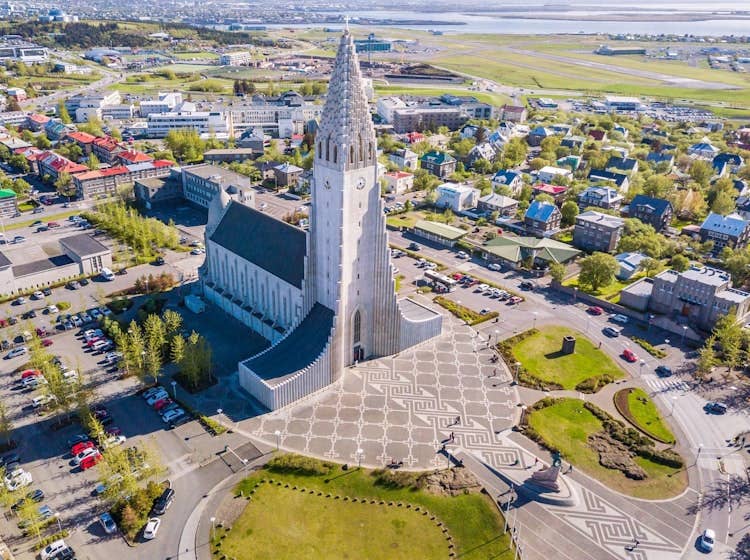
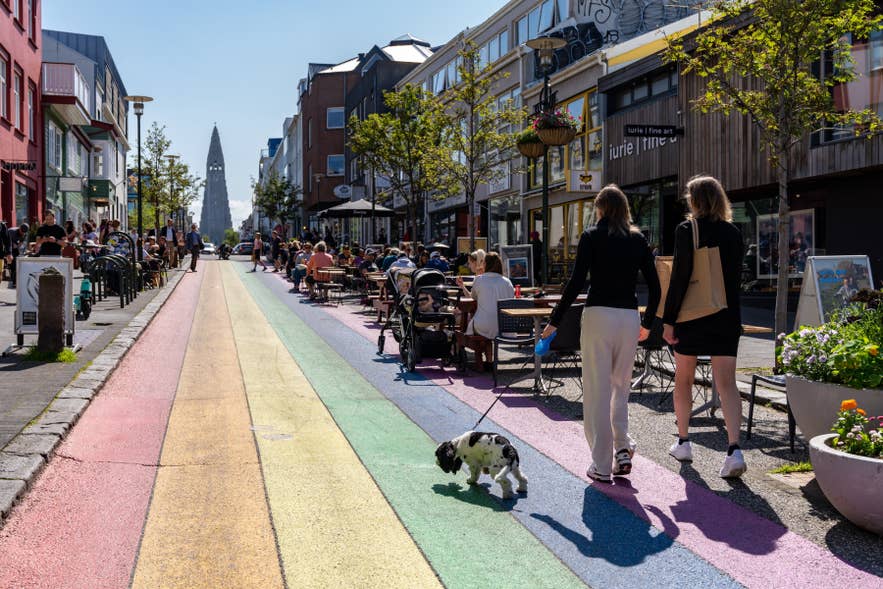
The activity comes in bursts rather than a steady stream. It returns to the blocks around Hallgrimskirkja Church, Skolavordustigur Street, and Laugavegur Shopping Street, and follows the crowds to Gullfoss, Geysir, and Thingvellir. Nearly all victims are visitors absorbed in the sights.
The police response has been firm, with extra patrols and offenders deported. Simple habits can also help prevent theft. Keep your bag zipped in crowds, avoid leaving your phone or camera unattended, and never leave valuables visible in a parked car.
Two habits deserve special mention. Cover your PIN when paying, since thieves have shoulder-surfed PINs in shops and then stolen the cards. And if theft does happen, freeze your cards, dial 112, and file a police report, which your travel insurance will ask for.
Can I Visit the Blue Lagoon in Iceland in 2026?
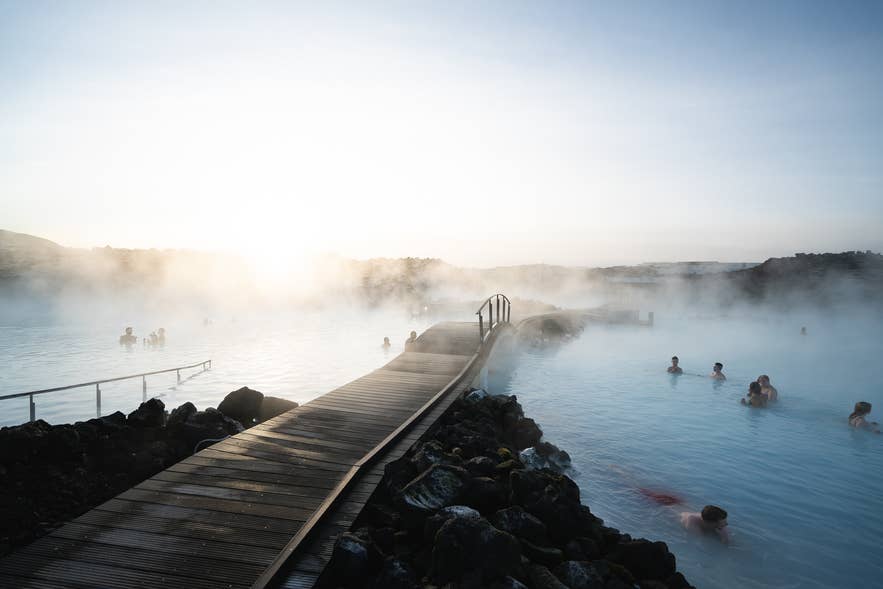
Eruptions at the Sundhnukagigar Crater Row between 2023 and 2025 occasionally affected the Blue Lagoon because of its proximity to the eruption sites. The biggest disruption came in November 2024, when lava reached the parking lot, and the spa closed for just over two weeks, while protective barriers kept the lagoon itself safe.
Safety is the top priority, so the Blue Lagoon usually closes when an eruption begins while authorities assess the situation. It reopens once it is deemed safe. For example, during the July 2025 eruption, the lagoon was evacuated as a precaution and reopened later that same day.
The good news is that you will most likely be able to enjoy bathing in the Blue Lagoon during your visit to Iceland in 2026. The lagoon remained mostly open throughout 2024 and 2025, and its team is highly trained in evacuation procedures and safety protocols to ensure visitor security if volcanic activity increases again.
Can I See a Live Volcanic Eruption in Iceland in 2026?
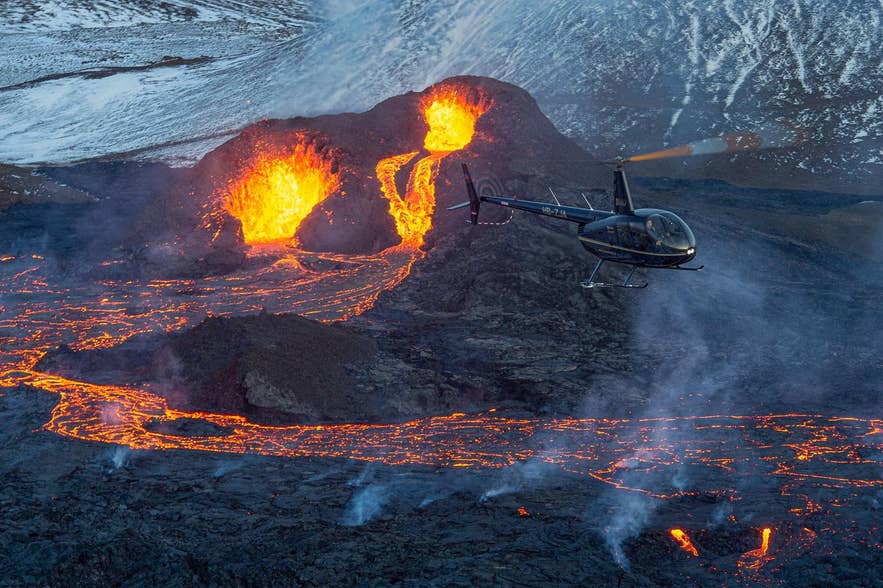
The first Reykjanes eruptions, beginning in 2021, occurred in areas and under conditions that allowed relatively safe hiking access. By 2025, eruptions were taking place in more complex terrain with greater uncertainty, and it was not until later in the year that conditions allowed limited safe visitation.
The last eruption began on July 16, 2025, and ended on August 5, 2025. Since then, scientists have continued monitoring the area, but there have been no further eruptions. It remains impossible to predict whether another eruption will occur in 2026 or whether it will be accessible to visitors.
Even without active lava, visiting previous eruption sites is still an incredible experience. A hiking trail runs between the craters, and you can take guided volcano tours or a volcano shuttle for an easier visit.
One of the most popular ways to see the area in 2026 is by the volcano helicopter tour, which offers a sweeping view of the lava fields and crater rows. If another eruption does occur, seeing it from the air would be an unforgettable experience.
Final Thoughts: Is It Safe To Travel to Iceland in 2026?
Yes. Twelve eruptions in five years have not injured a single traveler, flights have run without interruption, and Iceland still tops every global peace ranking. Stay informed through official channels, respect closures, and keep an eye on your belongings in crowded places, and Iceland is as safe a destination as you will find.
For a deeper look at staying safe on your trip, read our full guides to travel safety in Iceland and health and safety in Iceland.
Are you planning a trip to Iceland in 2026? Did the eruptions or the pickpocketing reports change how you prepare? Let us know in the comments below!

I’m Icelandic but grew up abroad, and returned as an adult to reconnect with my roots. I have a soft spot for scenic drives, peaceful geothermal spas, and the little details that turn a good trip into a great one. Here, I share all my best tips with you!