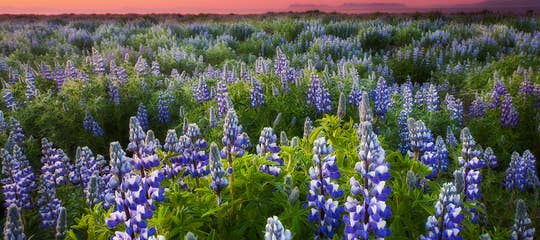
In many of my travel blogs, I have shown you what the turf houses in Iceland look like, and in this travel blog, I want to show you what the turf houses in East Iceland look like. There are a couple of turf houses and outhouses left in East Iceland that give us an idea of what turf houses were like in this part of Iceland in the olden days.
Top photo: Galtastaðir-fram turf house in East Iceland
Bustarfell turf house
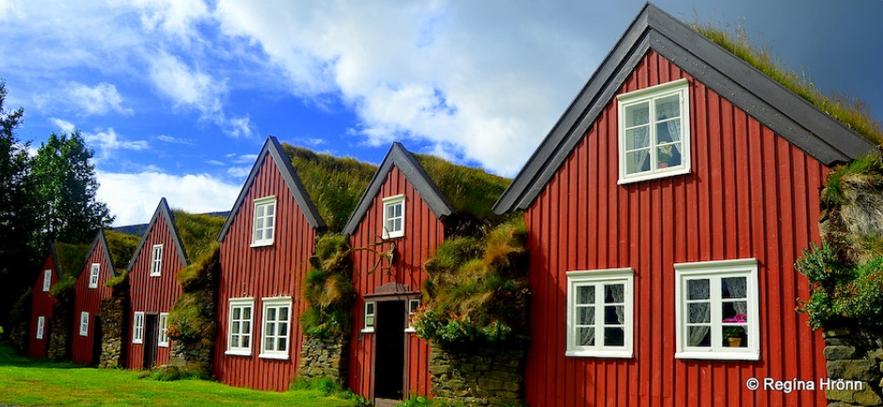 Bustarfell turf house was a stately manor and is now a museum
These habitations of past generations of Iceland are of great interest to me.
Everybody lived in a turf house, and my maternal grandmother was born in a turf house in a remote valley in the Westfjords.
Turf houses need constant upkeep because they are made of turf and rocks, so we are grateful for the few that remain in Iceland, as maintaining them is not easy.
The best-known turf house in East Iceland is the Bustarfell turf house, which is now open as a museum.
People lived in the turf houses at Bustarfell from 1770 to 1966, and the same family has lived here at Bustarfell since 1532.
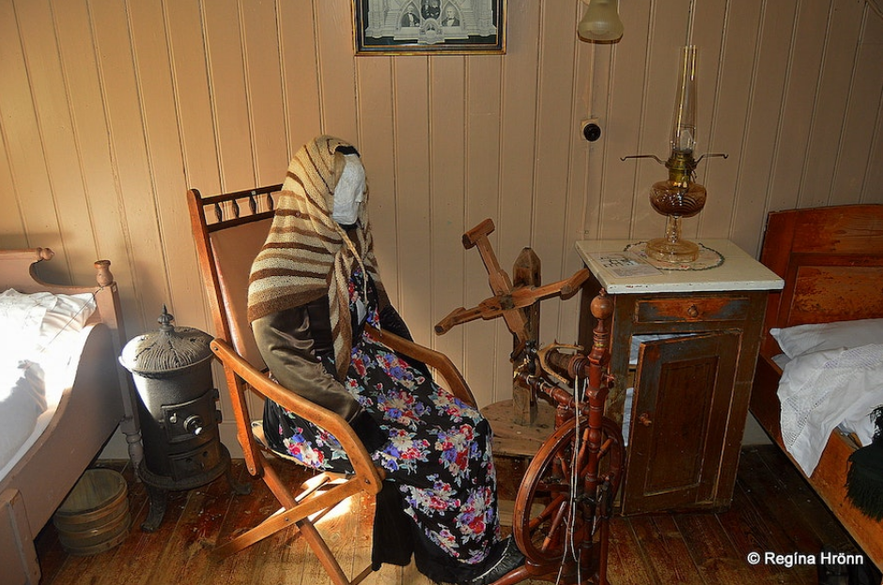 Inside the Bustarfell turf house museum
Bustarfell was a stately manor, much like the Grenjaðarstaður turf farm in North Iceland, which is now a museum.
Bustarfell turf house is the only remaining large turf house that is red in colour.
I have written about the lovely red turf farm in another travel blog: the beautiful Bustarfell turf house by Vopnafjörður.
There is folklore about elves connected to a large rock on this land: the Sheriff's Wife and the Elf-Woman in labour - Icelandic folklore.
Lindarbakki turf house
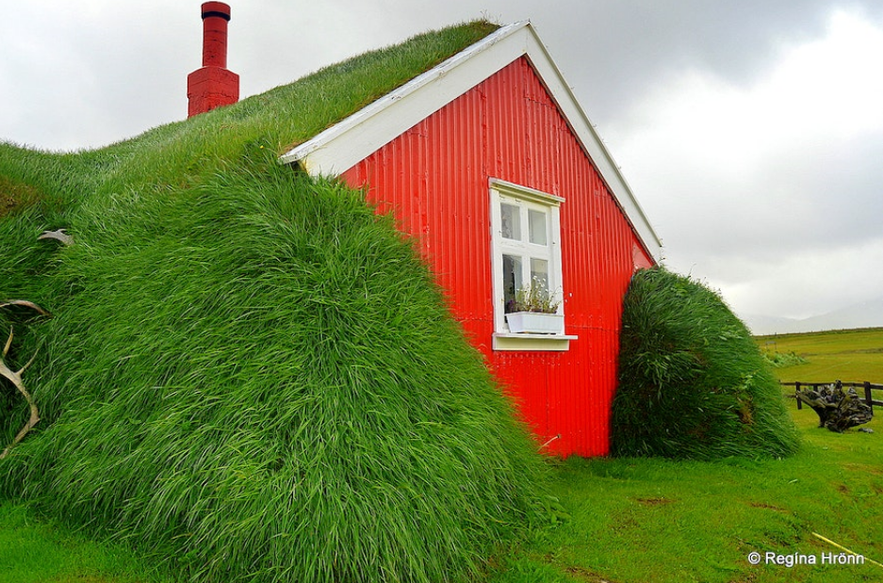 Lindarbakki turf house
You will find another red-painted turf house in East Iceland, the tiny, privately owned turf house Lindarbakki in Bakkagerði in Borgarfjörður-Eystri.
Lindarbakki turf house is one of the landmarks of this little village, Bakkagerði, and a very popular photo motive.
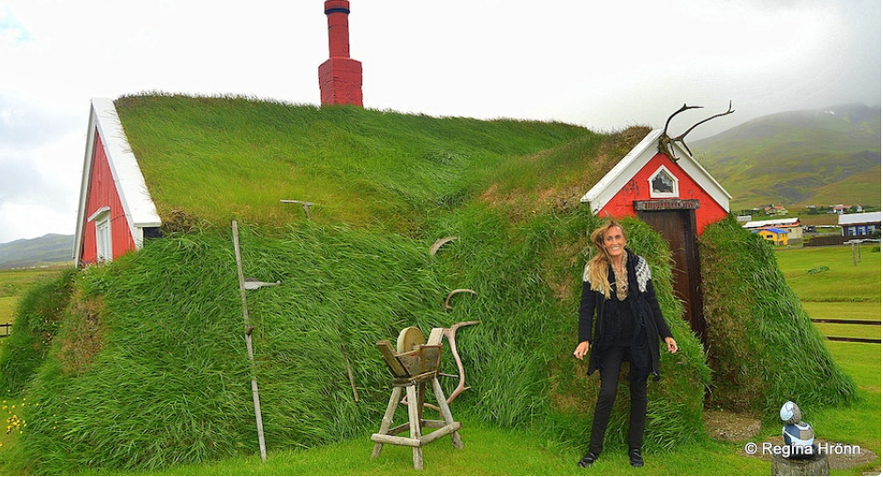 By the cute little turf house, Lindarbakki
The oldest part of the Lindarbakki turf house dates back to 1899, and some of the woodwork is from around 1934.
The last I knew, then this cute little turf house was still inhabited in the summertime. Elísabet Sveinsdóttir (1929) used it as a summerhouse, and once when visiting Bakkagerði, she invited us to have a look inside.
I have written another travel blog about Lindarbakki: Lindarbakki Turf House in Borgarfjörður-Eystri in East Iceland.
Galtastaðir-fram
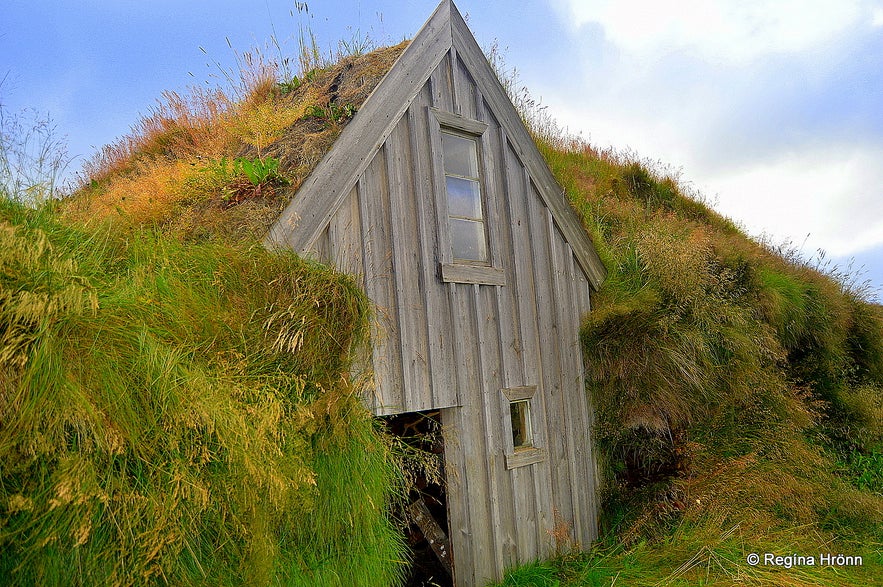 Galtastaðir-fram
There is an old turf farm in East Iceland that most people don't know about, as it is off the beaten path and closed to visitors.
It is called Galtastaðir-fram in Hróarstunga - sometimes also called Galtastaðir-fremri.
The "fram" or "fremri" part of the name means the foremost of two, just in case you thought that I misspelled the word farm :)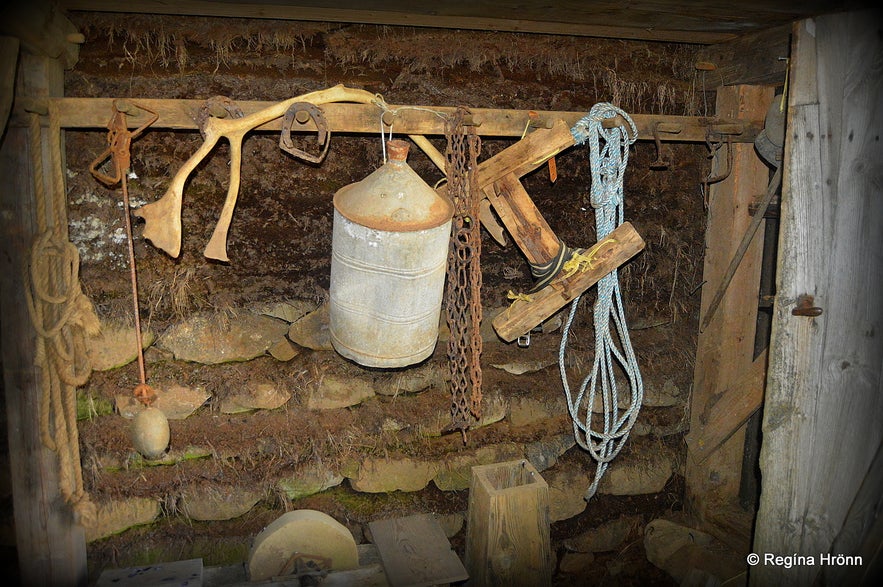
Inside Galtastaðir-fram
Galtastaðir-fram is not open to visitors, so I was reluctant to write about it, but I was given permission many years ago to write about this turf farm here on Guide to Iceland, with the warning, though, that it is closed to visitors.
I deleted this travel blog a couple of years ago, as I didn't want to draw attention to it.
But now I see that the official travel website for East Iceland mentions it, so I decided to repost it and added a short description of the other turf houses in East Iceland to this travel blog.
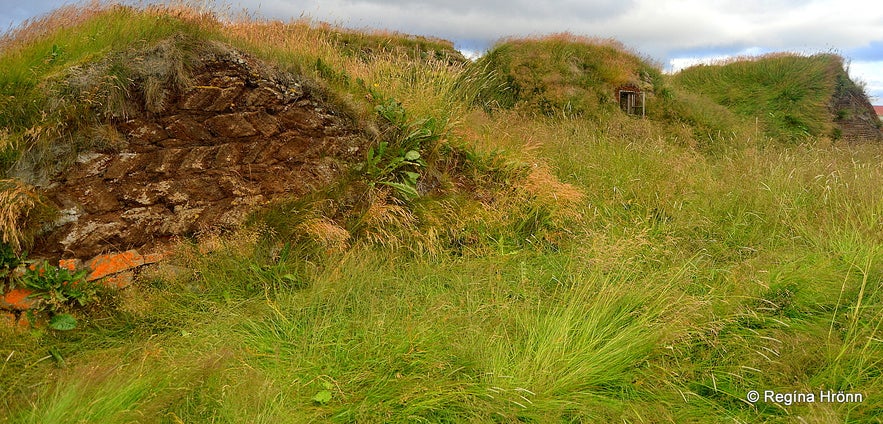 Galtastaðir-fram
When I visited Galtastaðir-fram back in 2014, it was empty, with no furniture, etc. It was under renovation, but the work halted due to a lack of funding to finish.
A new house was built adjacent to the turf farm in 1960, but the old farm was inhabited until 1967. This was common, as at both Þverá turf farm and Bustarfell turf farm, modern houses were built by the turf farm in 1960.
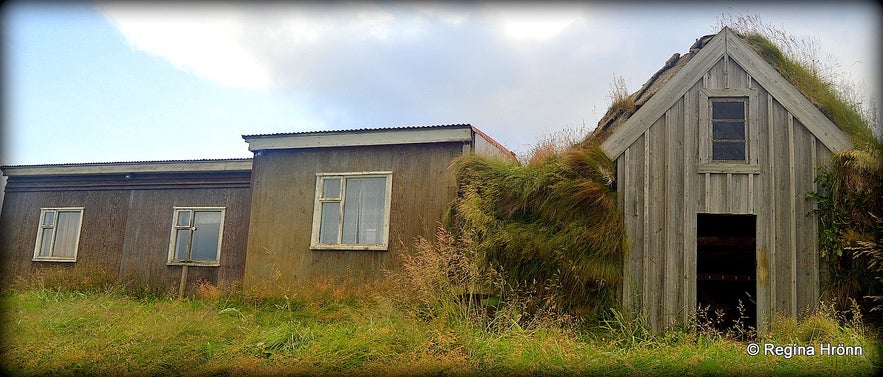 The new farm and the old farm at Galtastaðir-fram - it was dark and gloomy during our visit
Unlike many of the other turf houses I have written about, Galtastaðir-fram was not a manor, but a modest farm, where poorer people lived.
It is not known precisely when the turf house was built, but it dates to the latter part of the 19th century.
Galtastaðir-fram is different from other turf houses I have visited. In 1882, a cowshed was built on the ground floor, with the communal living room above it, so the warmth from the cows would heat the communal living room (baðstofa).
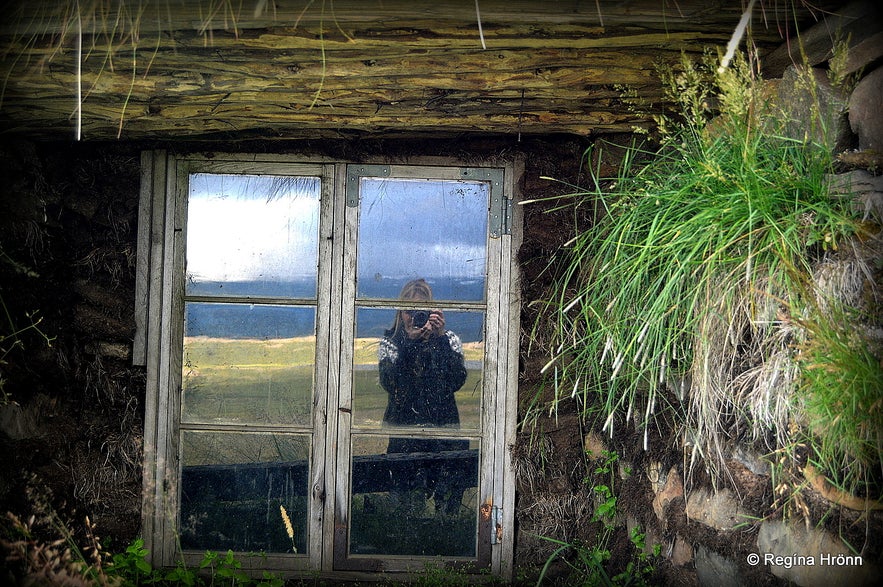
One of the windows of Galtastaðir-fram
This type of turf house is called "Galtastaðagerð" (fornugerð). Galtastaðir-fram has a "fjósbaðstofa," a so-called byre-dwelling.
The communal living room faces sideways to the main pathway, instead of facing the same way as the other turf houses, which is the more usual turf house type. (Ref. Þjóðminjasafnið).
In this communal living room, people would both sleep, eat, and do their handiwork.
All of the major turf houses in Iceland are part of the National Museum's Historic Buildings Collection and are on the UNESCO list.
Galtastaðir-fram turf house has belonged to Þjóðminjasafn Íslands - the National Museum of Iceland since 1976.
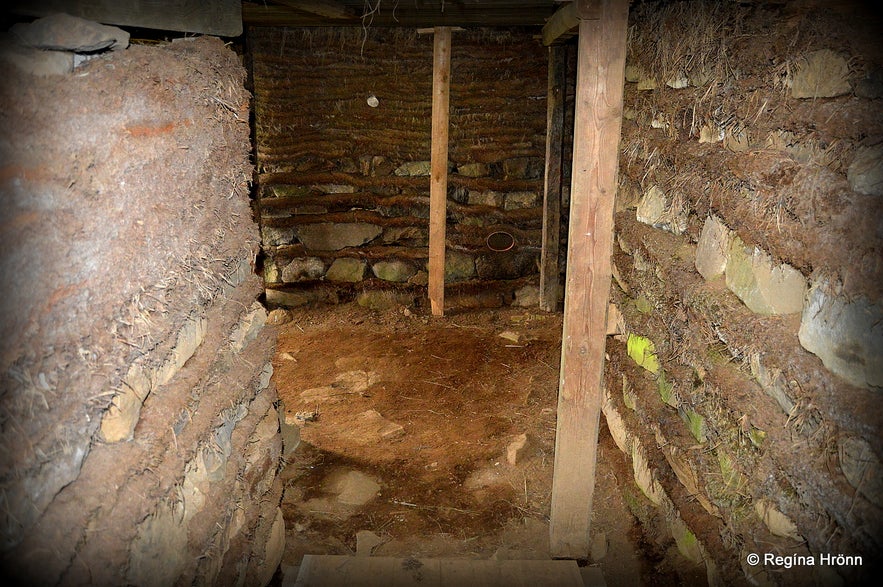 Inside Galtastaðir-fram
Folklore is linked to the farm. There are monoliths in Lake Álftavatn near the farm called Gullsteinar, or the Golden rocks.
The story goes that the settler Galti at Galtastaðir, who was a wealthy man, had two chests filled with gold. To ensure no one would get his gold after his death, he lowered it deep into Lake Álftavatn and placed a rock on top of it.
And he put a spell on the chests - if anybody were to touch them, the farm at Galtastaðir would burn down. Galti was then buried under his ship, and his burial mound, shaped like a ship, lies south of the farm.
Once, some men tried to get his gold but had to stop as the farm looked like it was on fire. This is a well-known motif in Icelandic Sagas.
The folklore is told in Galti og gullkisturnar in Íslenskar þjóðsögur og sagnir by Sigfús Sigfússon.
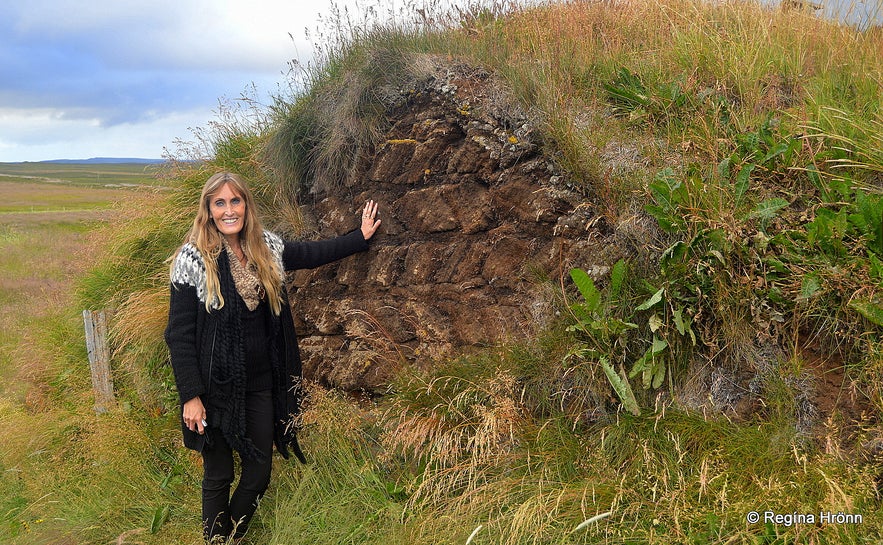 Traditional building methods at Galtastaðir-fram
I found another folklore about the settler Galti: "In Hróarstunga in Múlasýsla county, there are four farms: Gunnhildargerði, Nefbjarnarstaðir, and Geirastaðir; these three farms are in a row; at the front is Gunnhildargerði, the outermost is Geirastaðir, and Nefbjarnarstaðir is in the middle.
Above them is the fourth farm, Galtastaðir.
These farms are named after three brothers and their mother, who lived there in olden times.
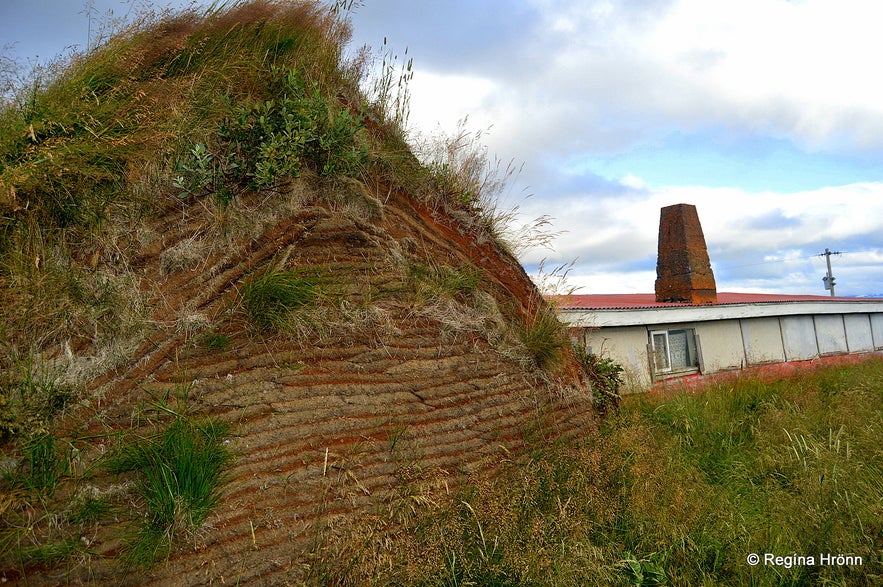
Galtastaðir-fram and the house beside it
On the estate of the brothers, there was a ridge, Tunguás, where there was good grazing. All of the brothers owned their part of the ridge.
Galti wanted to own the whole ridge, but his brothers, Geiri and Nefbjörn, opposed it. Finally, they agreed to fight over the ownership of the ridge.
They were to meet by a creek that runs between Galtastaðir and the other farms beneath Galtastaðir.
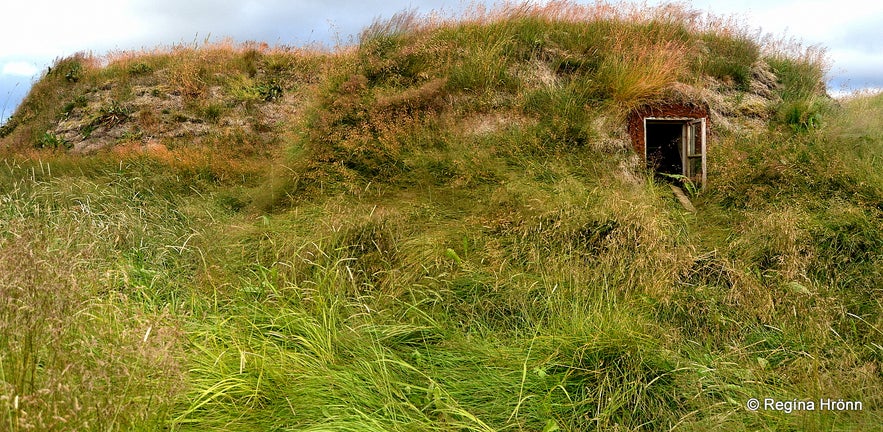 Galtastaðir-fram
There are no accounts of the fight, but all of the brothers were killed and are buried on this spot.
Their mother is buried there as well, as it was her wish to be buried with her sons after her death.
Her grave (dys) and the graves of her sons, Geiri and Nefbjörn, are east of the creek, but Galti's grave is north of the creek, as after he had been fatally wounded, he jumped over a vast pit in the creek. He did so as he wanted to die on his own land.
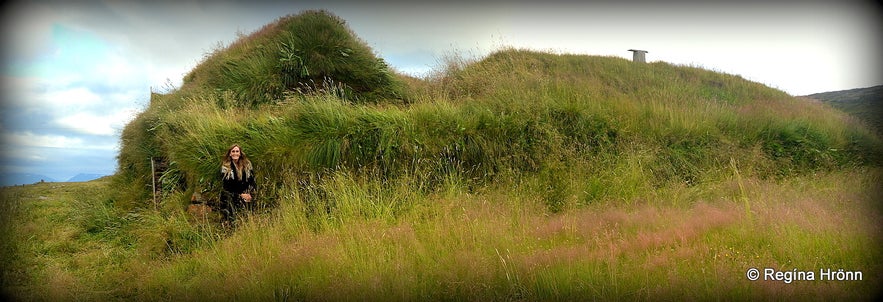
At Galtastaðir-fram
Another account exists, Dysjar við Haugalæk, of a man who had started to dig in the grave (dys) of Galti, looking for valuables, and as he had dug for a while, he fell asleep.
He felt a woman coming to him, saying: "It is of no use, my dear man, to dig here, as there is no money to be found, but in the green tussock by the large pit, there is gold".
The man woke up, stopped digging, and nobody has seen the tussock since then.
The graves can still be seen. The creek's name is Haugalækur creek".
(Translated into English from Þjóðsögur Jóns Árnasonar - the Compilation of Folklore of Jón Árnason, volume IV, pages 122-123).
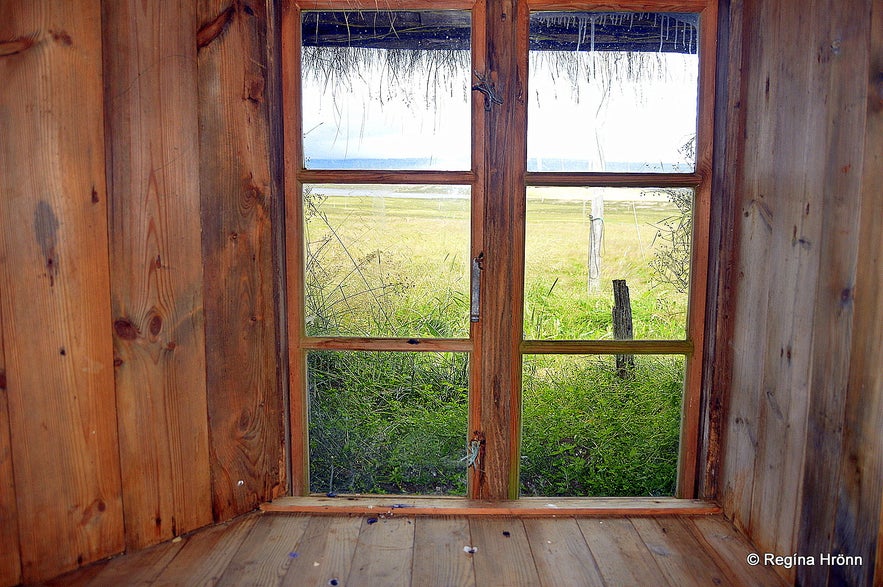 Galtastaðir-fram
Galtastaðir-fram is located between the Jökulsá river in Dalur and the Lagarfljót river. A dirt road leads to the farm, road no 927 off road 925.
It is located about 20 minutes from Egilsstaðir, the capital of East Iceland. But as I said earlier, it is still closed as far as I know.
Sænautasel turf house
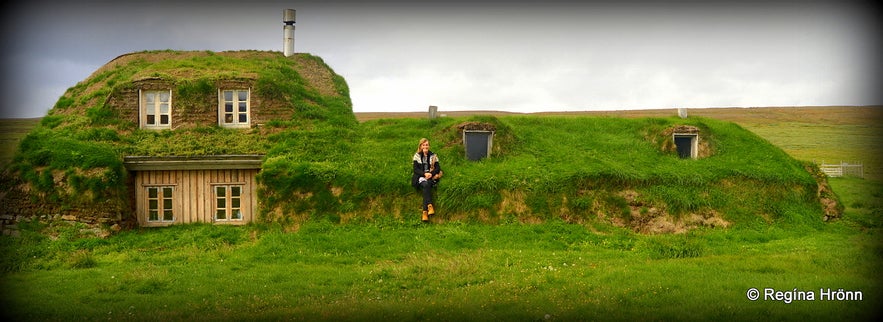 Sænautasel turf house in East Iceland
I have also written about an entirely different rebuilt turf farm at Sænautasel on the Jökuldalsheiði heath and shown you how poor people lived on Iceland's heaths.
If you visit this area and see this lone turf house, think about how many people lived here at one point in the 19th century. There were 16 turf houses on the heath, and approximately 120 people lived here on the heath.
Many of these turf houses on the heath were destroyed in the Askja eruption back in 1875.
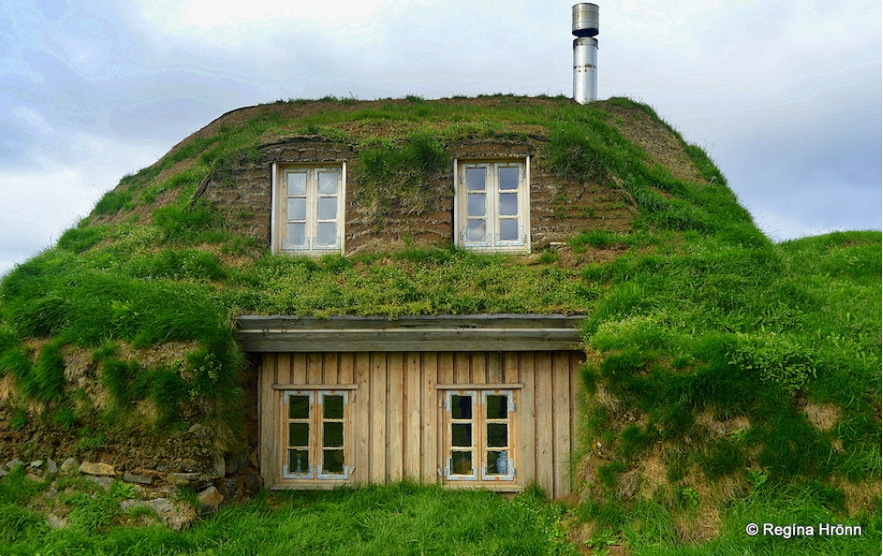 Some say that Sænautasel looks like a hobbit house - I only see a turf house
The original Sænautasel dates back to 1843, but it was evacuated along with many other turf houses in 1875. Five years later, it was inhabited again, and the last people moved out in 1943.
After Sænautasel was abandoned, it was not maintained, so it collapsed again and was completely rebuilt in 1992 (ref. Af jörðu, Íslensk torfhús, Hjörleifur Stefánsson).
Bear in mind that this is a heath in Iceland approx. Five hundred meters above sea level, and it must have been very cold here in the wintertime.
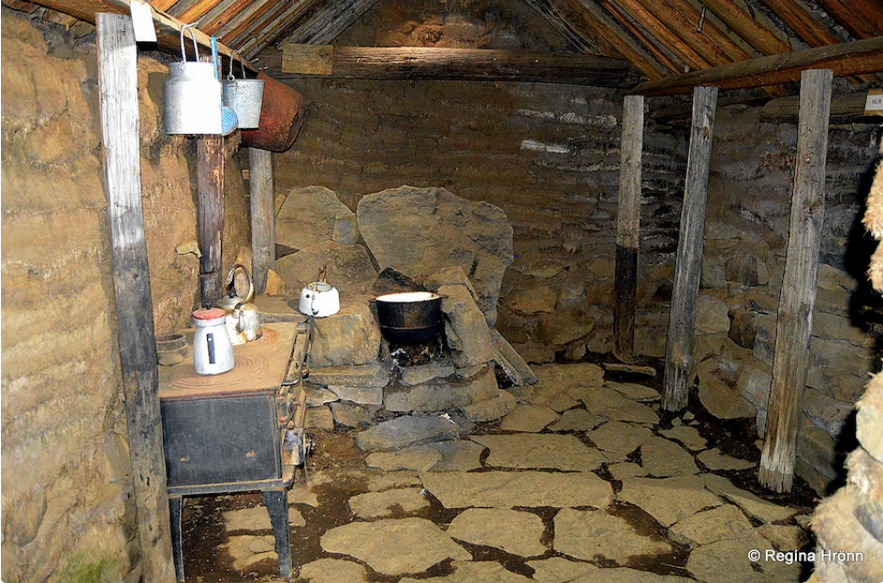 Inside Sænautasel turf house - the hearth kitchen
Here is my travel blog: Sænautasel turf house in the highland of Iceland.
That travel blog is one of my most widely read travel blogs, as people find this turf house to be so cute, and I must say that I agree with them :)
Geirsstaðakirkja turf church
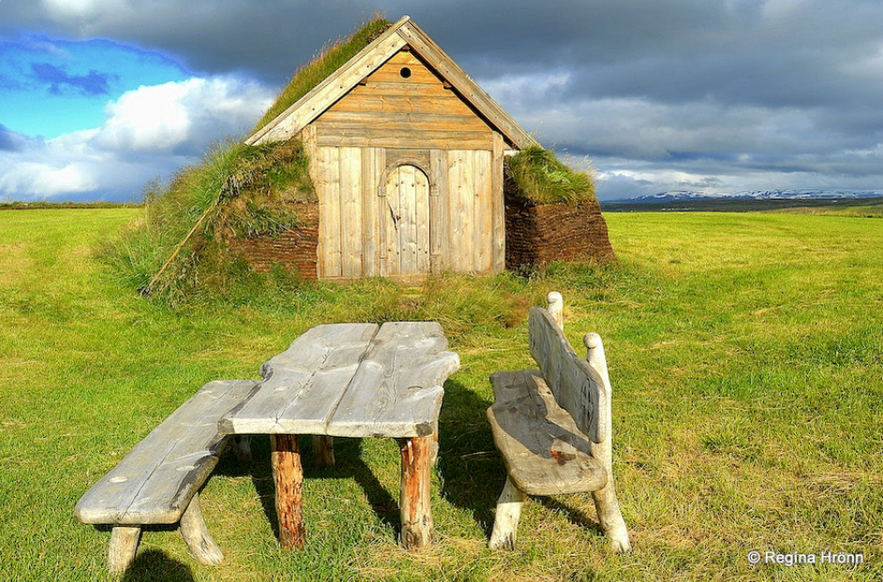 Geirsstaðakirkja turf church in East Iceland
Also in East Iceland, in Hróarstunga on the land of Litli-Bakki, is a replica of a 1000-year-old turf church called Geirsstaðakirkja.
During an archaeological dig back in 1997, the ruins of a turf church were unearthed, along with a longhouse, and two other buildings.
The turf church might have been the farm church of Chieftain Hróar Tungugoði at Hof, whom you can read about in the Fljótsdæla saga. He was married to Arngunnur, the sister of Gunnar at Hlíðarendi from Njálssaga - the Saga of Burnt Njál.
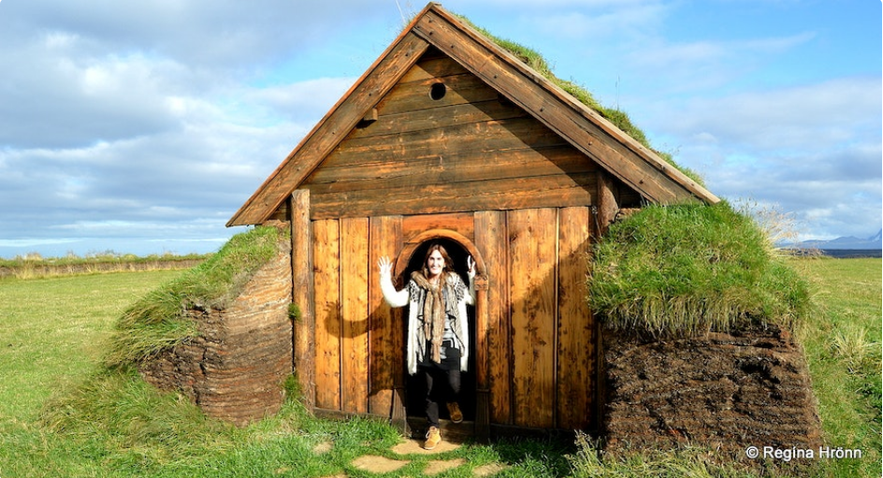 Geirsstaðakirkja turf church
Here is my travel blog about Geirsstaðakirkja: The beautiful Geirsstaðakirkja Turf Church in East Iceland - a Replica of an old Turf Church
Hjarðarhagi turf outhouses
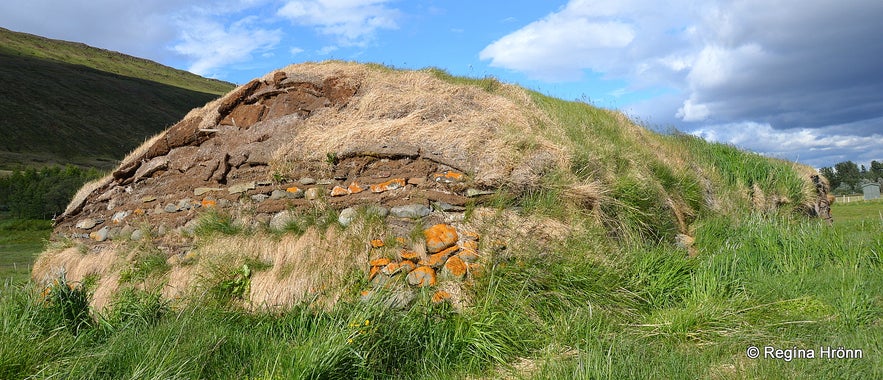 Hjarðarhagi turf outhouse
There are also a couple of reconstructed turf outhouses in East Iceland at Hjarðarhagi and Langhús.
I am so glad that these turf houses have been maintained. It is not an easy task, as they need constant upkeep.
The two turf outhouses at Hjarðarhagi in Jökuldalur valley, Miðhús, and Efstahús, are the only ones remaining from a cluster of 7 outhouses that were in use until the 1970s. The other five were torn down when the new road was built.
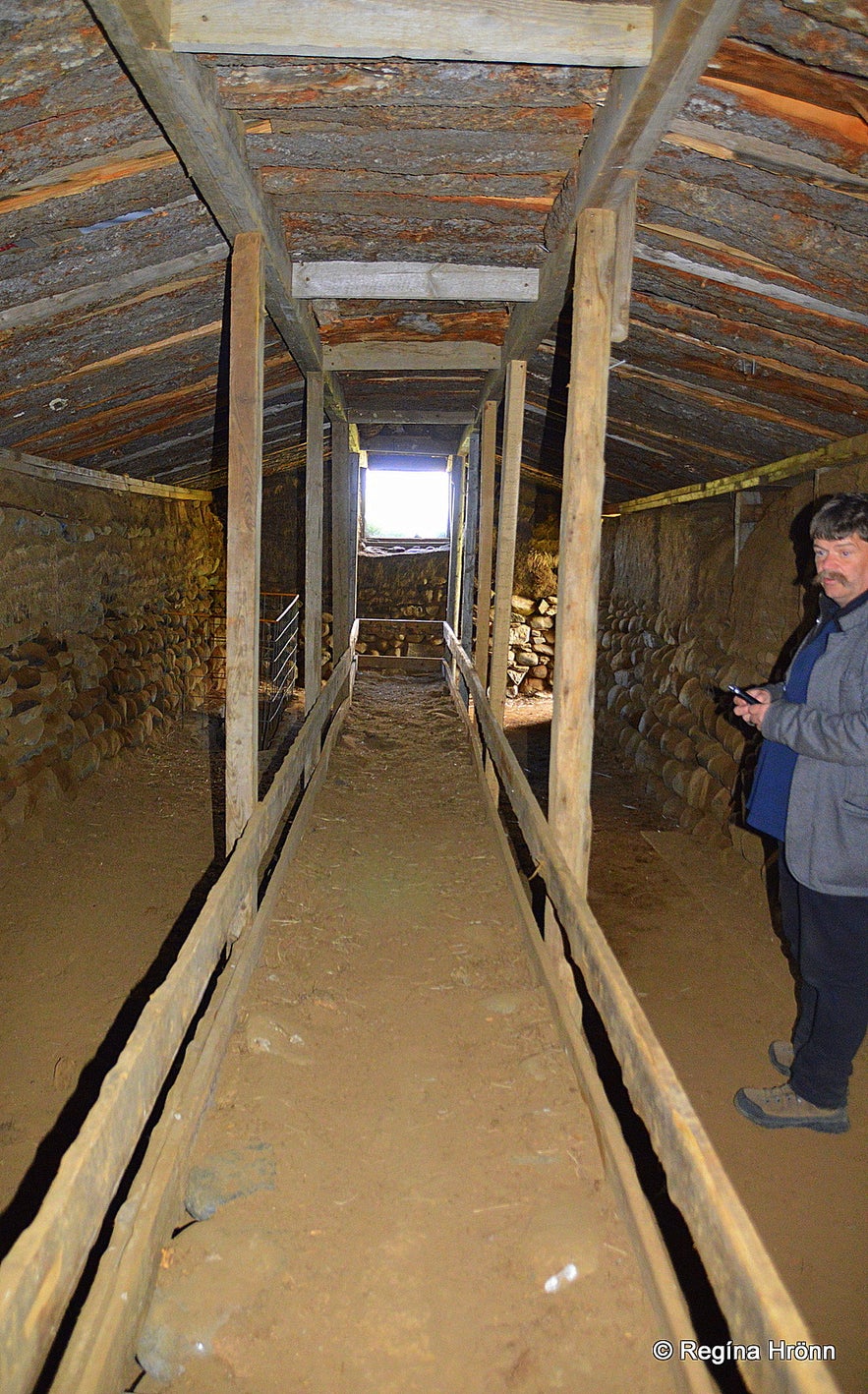 Inside Hjarðarhagi turf outhouse
The walls are made of rocks and turf, with turf and brushwood in the ceiling. They were used as sheep barns.
Now, let's have a look at other amazing turf outhouses close by in the Fljótsdalur valley, which are still in use as sheep barns. They are called Langhús - the Longhouses.
Langhús turf outhouses
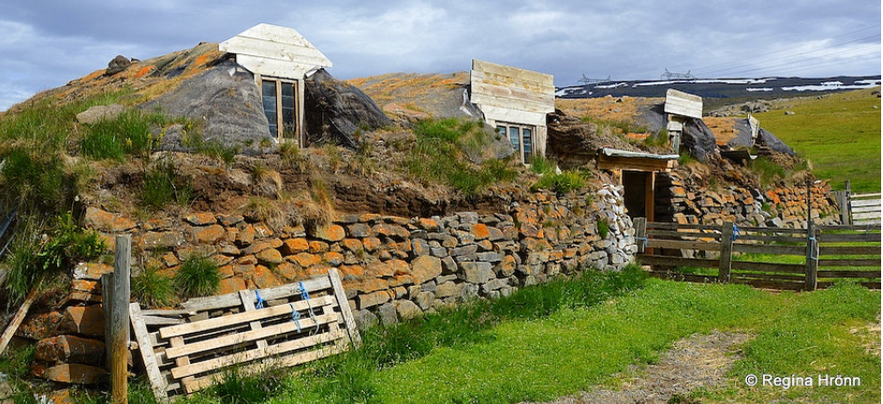 Langhús turf outhouses in East Iceland
Nowhere in Iceland have I seen such huge, well-maintained turf outhouses; kudos to the farmers for a job well done on these approximately 100-year-old structures.
On the land of Langhús, I saw several other turf outhouses, apart from the big turf outhouses.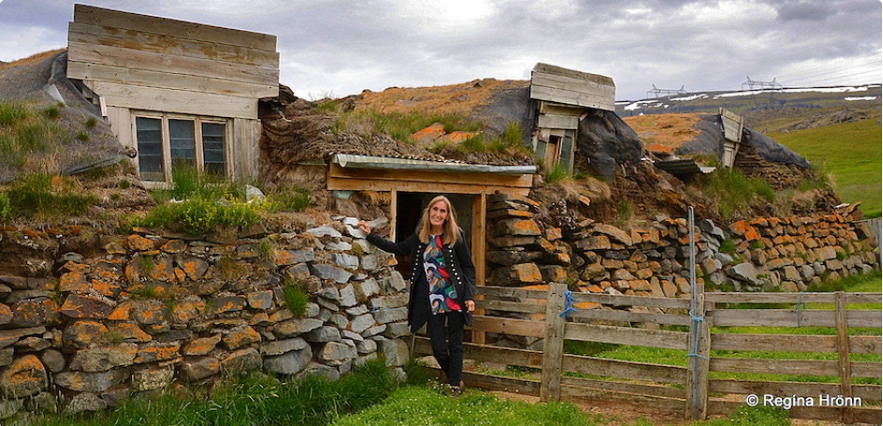
Unfortunately, the farmer was not at home, so I could not ask him to show me around, but I had a peek at the turf outhouses on my own. Aren't they amazing?
Many of the other turf outhouses in the Fljótsdalur valley were demolished when the sheep disease scrapie (riða) infected the sheep, and the whole stock of sheep had to be killed.
But Langhús was saved from demolition, and I am grateful for that.
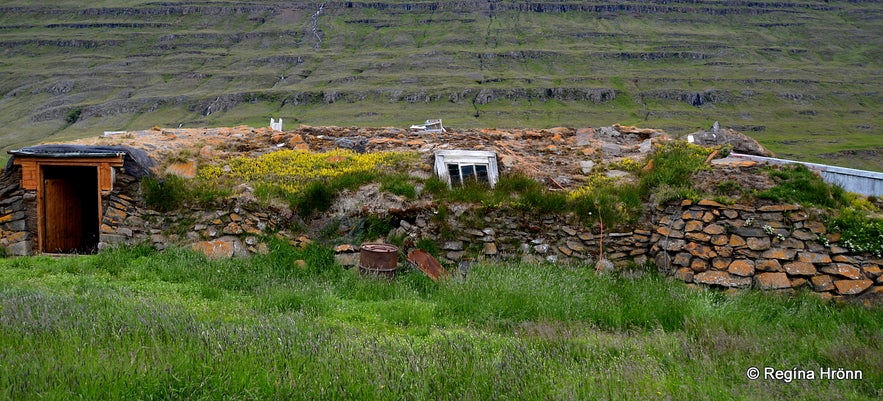 Turf outhouses at Langhús
These are the remaining turf houses in East Iceland that I know of, and you can see how different they are from one another.
Here we have a stately home that is now a museum, a house for the poor people of East Iceland, a reconstructed home for people living on the heath, a hypothetical turf church that stood on this spot a thousand years ago, and well-maintained outhouses, one of which is still in use.
I also saw these beautifully reconstructed turf outhouses at Berufjörður farm, but Berufjörður has a small museum called Nönnusafn, in memory of Nanna Guðmundsdóttir, and a lovely old church. 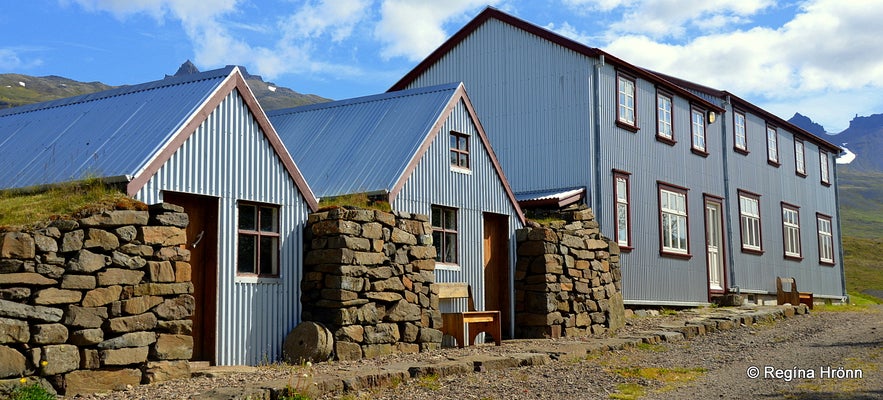 Reconstructed turf outhouses at Berufjörður farm
These turf houses add character to East Iceland, and we are reminded that, once upon a time, everybody in Iceland lived in turf houses, big and small, depending on their role in Icelandic society.
Most of the remaining turf houses in Iceland are owned by the Þjóðminjasafn Íslands - the National Museum of Iceland, and several are open as museums.
The following turf houses are open as a museum: Bustarfell turf house in East Iceland, Grenjaðarstaður turf house, Laufás turf house, and Glaumbær turf house in North Iceland, the turf house at Árbæjarsafn museum in Reykjavík, and Skógar museum and Keldur turf house in South Iceland.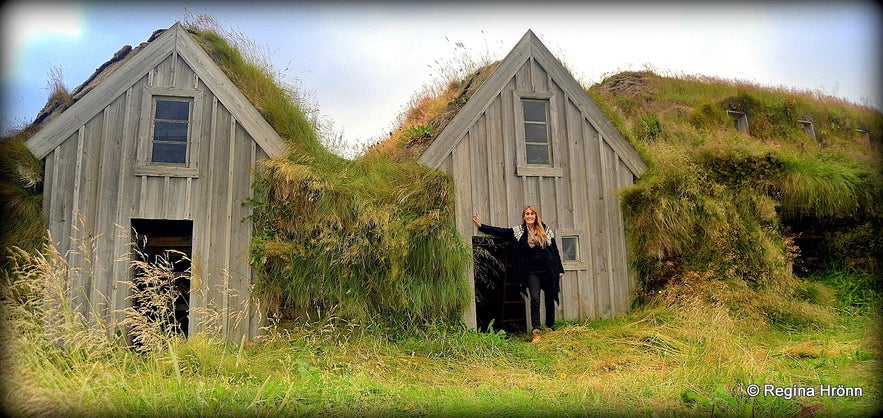 Galtastaðir-fram turf house
Others cannot be visited, like Þverá turf house and Grænavatn turf house, but you can have a look at them from the outside.
And then there is the turf house at Tyrfingsstaðir at Kjálki, where Fornverkaskólinn school teaches us how to build a turf house. That one can be visited as well.
I have written travel blogs about all the abovementioned turf houses and a list of all the turf houses in Iceland (or at least those that I know of).
Have a lovely time in East Iceland, there is so much to see and do in this part of Iceland :)
Ref.:

Hi, my name is Regína Hrönn, and I was born and raised here in Iceland.