In my travel blogs through the years, I have shown you many rocks and places where the Hidden people of Iceland live. Our folklore is filled with stories about encounters with the Hidden people of Iceland, together with whom we inhabit Iceland.
The hidden population of Iceland is elves, dwarves, and other supernatural beings who cannot be seen unless they want us to see them. Sometimes children can see the hidden people, and when I was 4-5 years old, I saw an elf, and he got equally startled as I was - and disappeared.
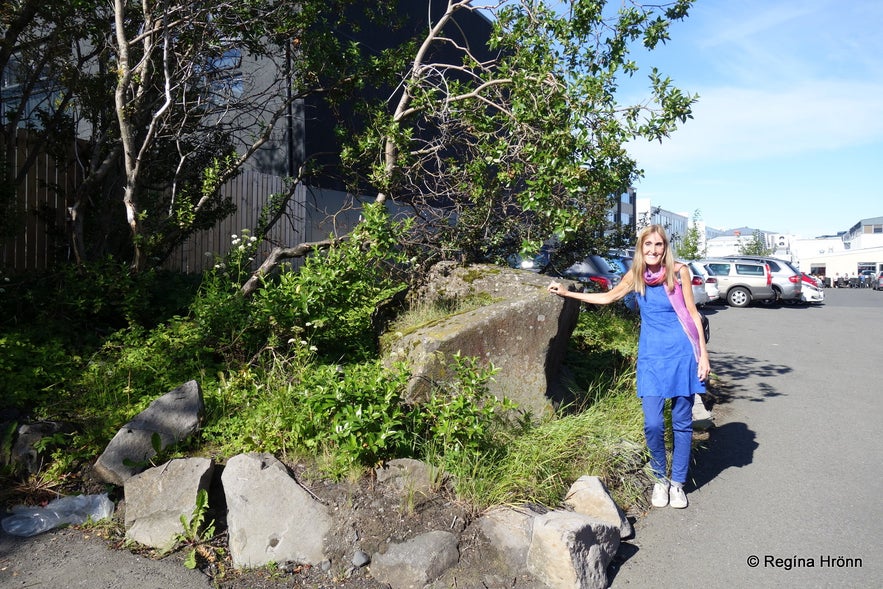
I have travelled all over Iceland to visit elf locations, but there is one such rock within a 4-minute walk from my home on Háaleitisbraut street in Reykjavík. I visit it often and greet the supernatural being who lives in the rock.
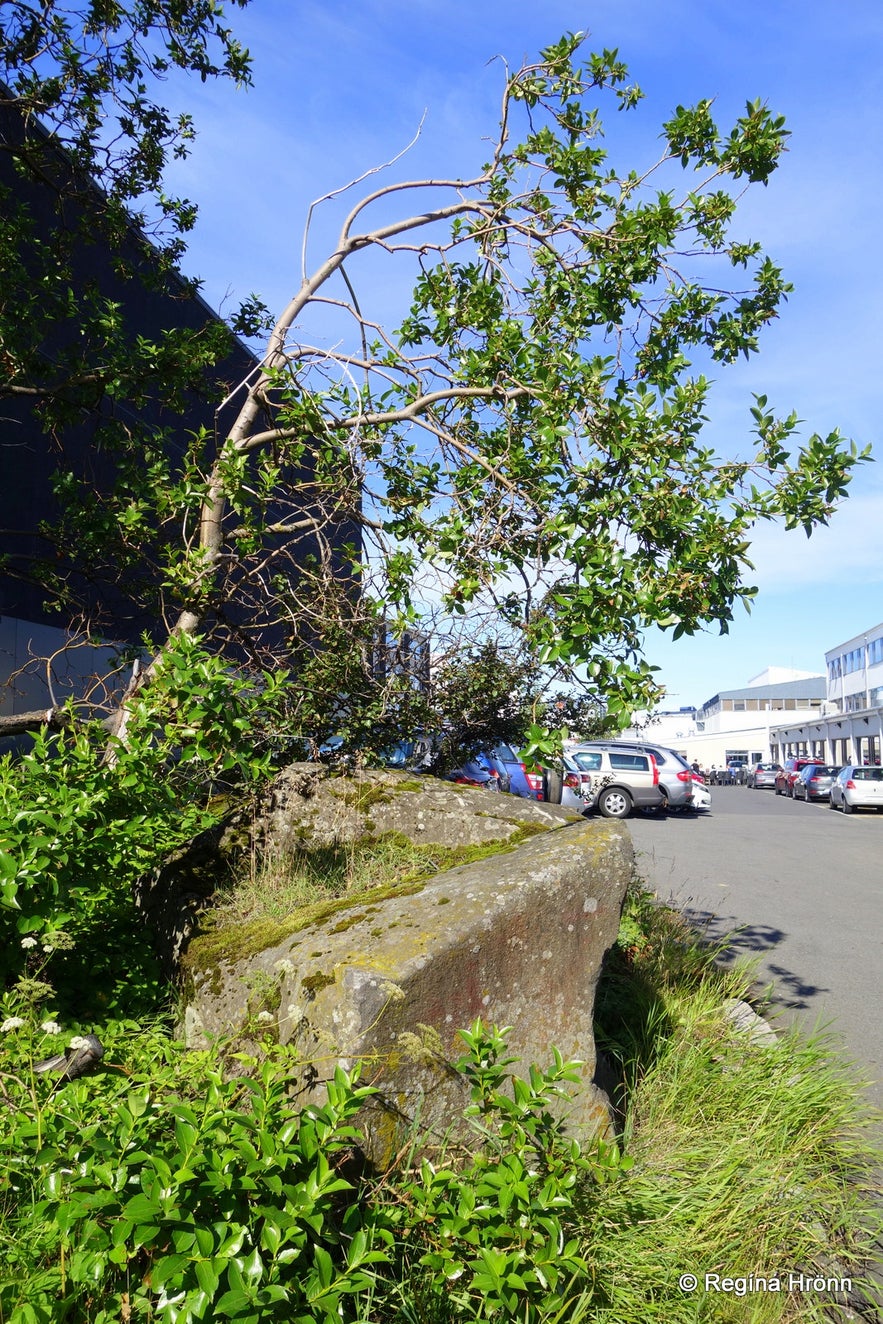
Top photo: by the rock in Reykjavík in August 2020
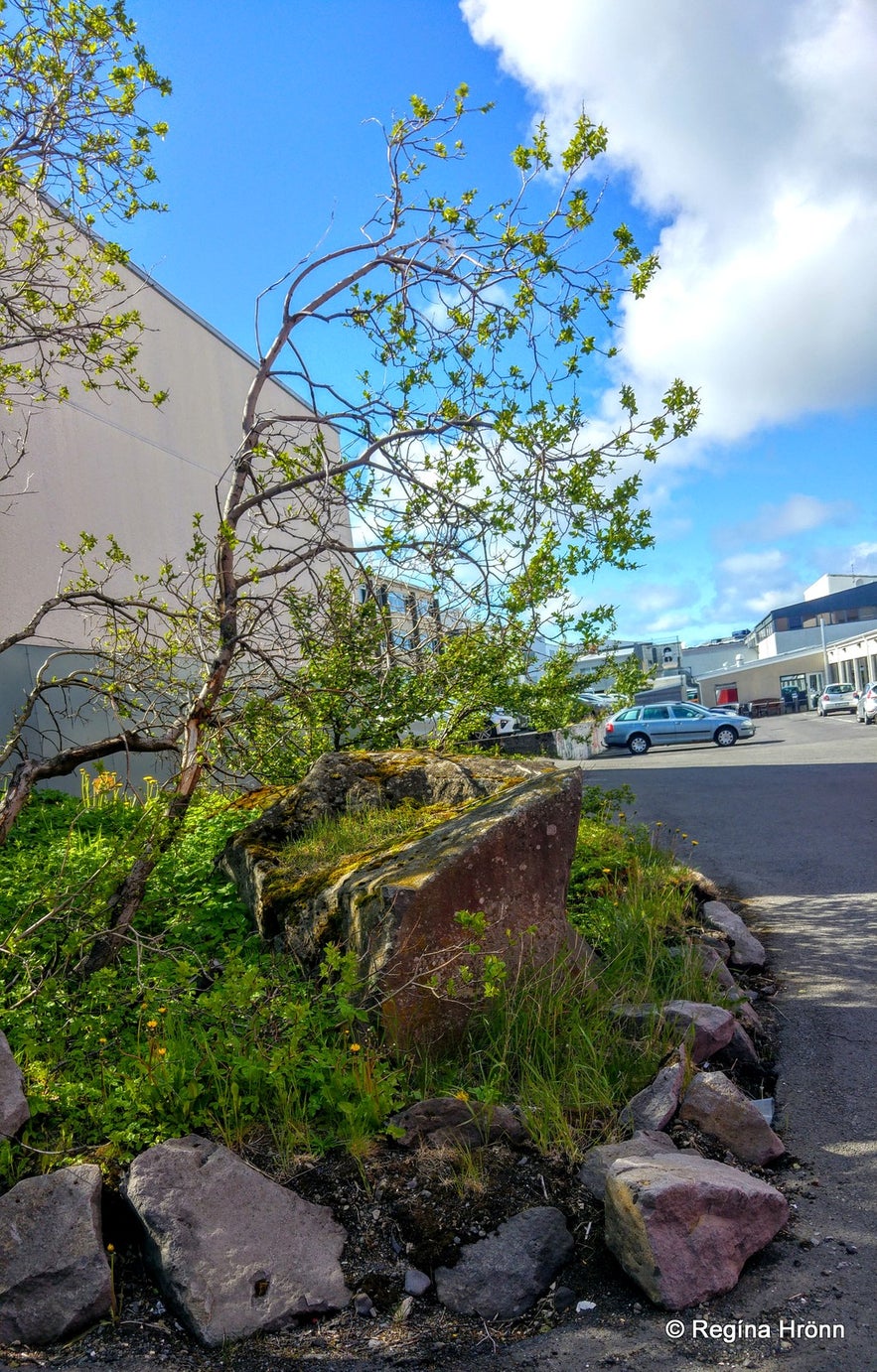 The rock in June 2020.
In that rock which can be found behind the busy streets, Ármúli and Síðumúli, lives an elf - a member of the hidden people of Iceland.
I don't have many photos to show you, only some I have taken of the rock when I pass by. Before taking pictures of elf locations in Iceland, we must ask for permission to do so, greet the inhabitants, and tell them that we mean no harm.
I want to point out that doing this is of utmost importance. I never visit such rocks without first asking the inhabitants for permission to approach them.
Not that I can see or hear them, but I believe they can see and hear me.
The rock in June
There are many accounts in Þjóðsögur Jóns Árnasonar - the Compilation of Folklore by Jón Árnason about the revenge of the hidden people if we don't show them respect, e.g.:
Mt. Pétursey in South Iceland and the Elves - Icelandic Folklore
Árni Óla (1888-1979), who was born up north in Kelduhverfi, was a journalist at Morgunblaðið - the Morning paper in Reykjavík ever since Morgunblaðið was first published in 1913. He was actually the first man to bear that title in Iceland - a journalist.
Árni has written many very interesting books about Iceland, which I collect, and now own 25 of his books.
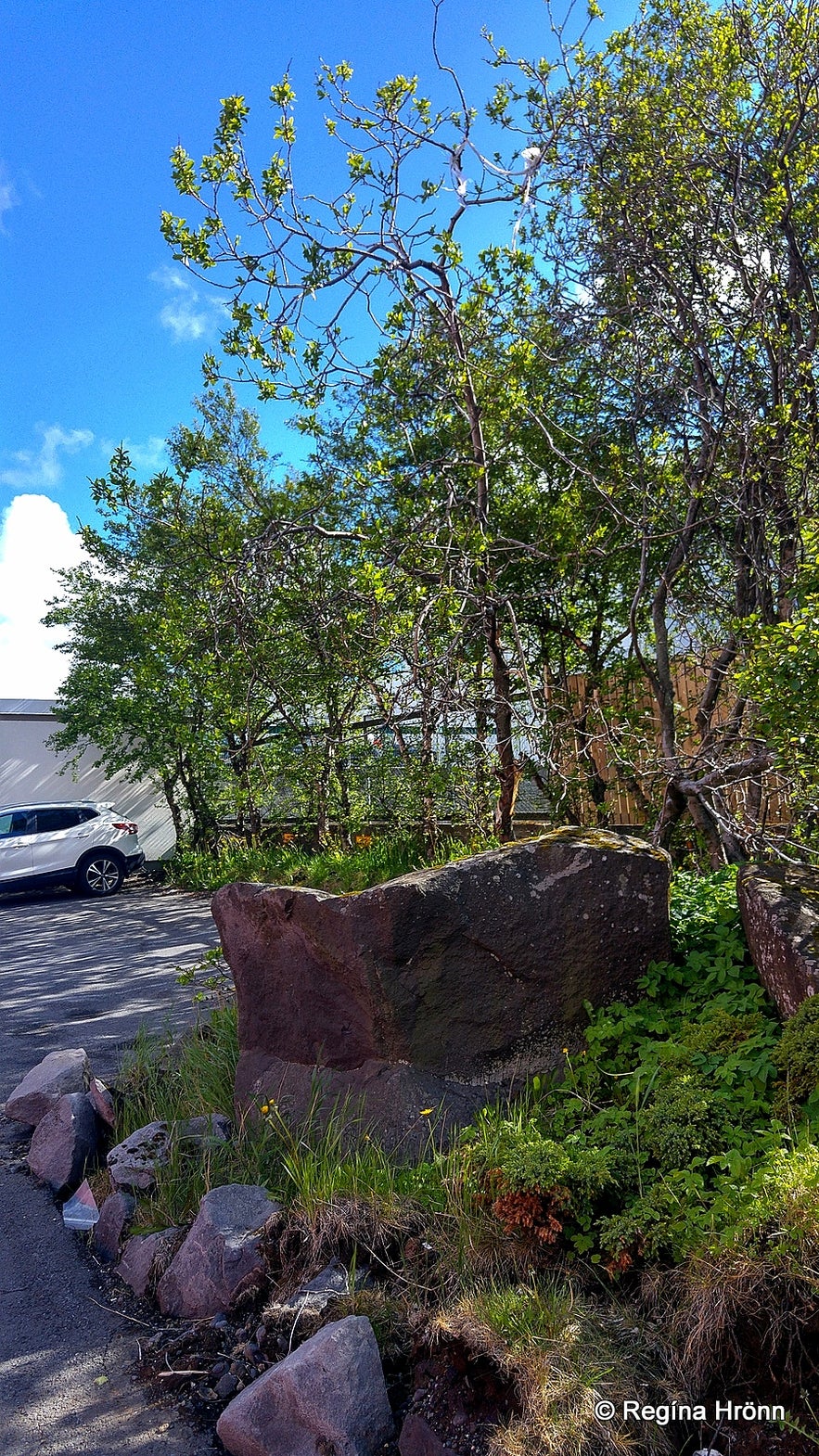
The rock in June - in this photo, you can see stones that have been put around it - they are now gone
In his book Álög og bannhelgi, which translates to something like Enchanted and taboo spots, he wrote about an elf rock in the area where I now live.
The story happened when this area was being built around 1942. Árni Óla wrote the story down in 1957 and published it in Álög and bannhelgi in 1968.
It seems to have been published earlier in one of his books, Horft á Reykjavík, in 1963, and in the Morning paper in 1949, but I have only read it in this book.
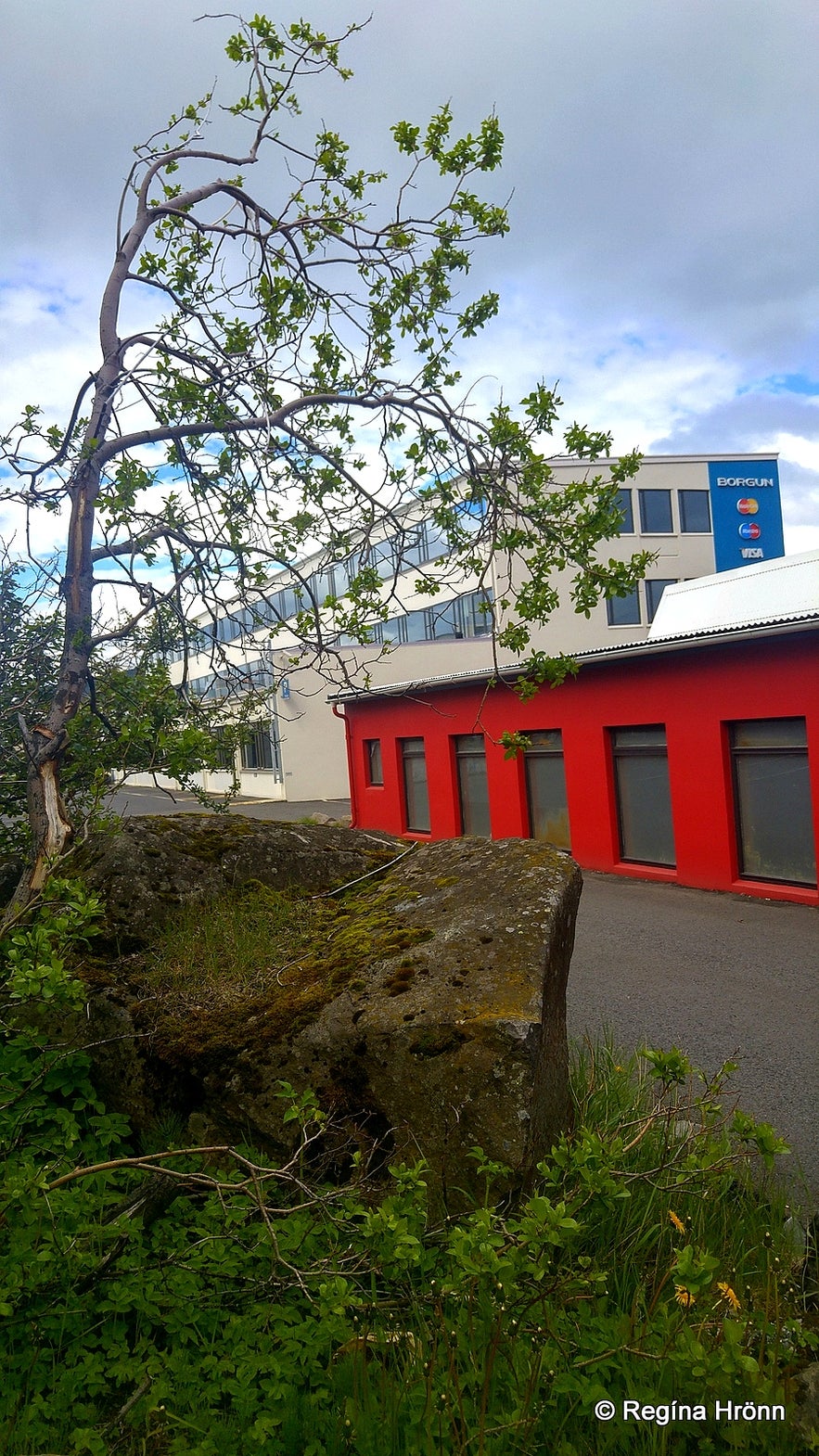
The rock in June
The chapter in his book is in Icelandic, but I made an effort to translate it into English and will have to recapitulate it, as I don't know whether I am allowed to translate and publish a whole chapter from his book. The following story is a recap of the original, with my notes.
When Reykjavík was still a small city and hadn't yet expanded any further than Rauðarárholt hill (where I was born and lived for the first 5 years of my life - RHR), people could still rent a sizable piece of land in the hills east of there (the hill where I live now - RHR).
If you want to know where Rauðarárholt - the Red River Hill was, then the beautiful Háteigskirkja church now stands on that hill. And Stýrimannaskólinn í Reykjavík - The College of Navigation in Reykjavík. It was consecrated in 1945, a little after this story took place.
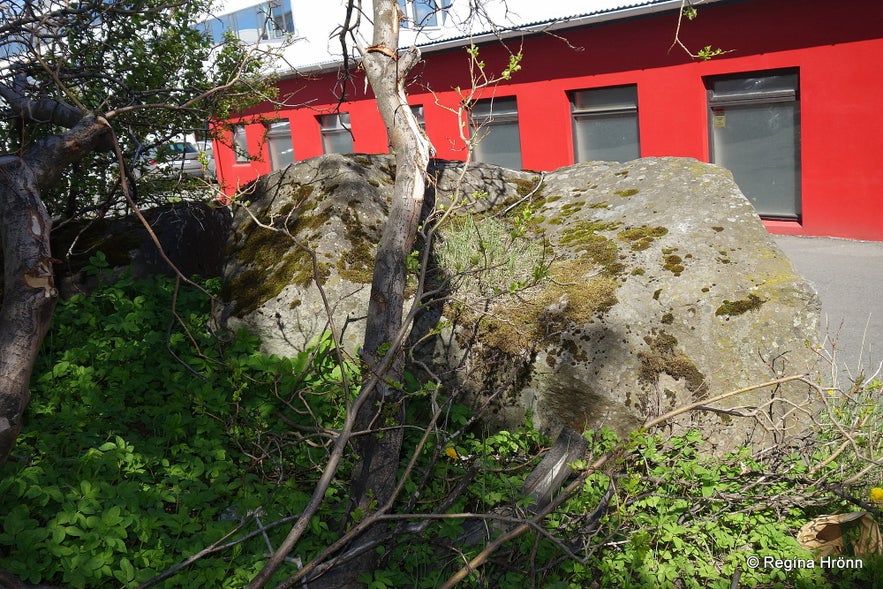
Another sunny day in June
Þorbjörn Jónsson rented a piece of land at Grensás, a short distance away from Múli. Here, Þorbjörn wanted to start poultry husbandry.
But the land which he had got was rock-ribbed, and it was necessary to clear away the rocks - this was either in 1934 or 1935.
Some of the rocks were big, so he got 4-5 workers to blow up the rocks, as some of them were pretty big. The rocks were then stacked onto trucks and driven to the harbour.
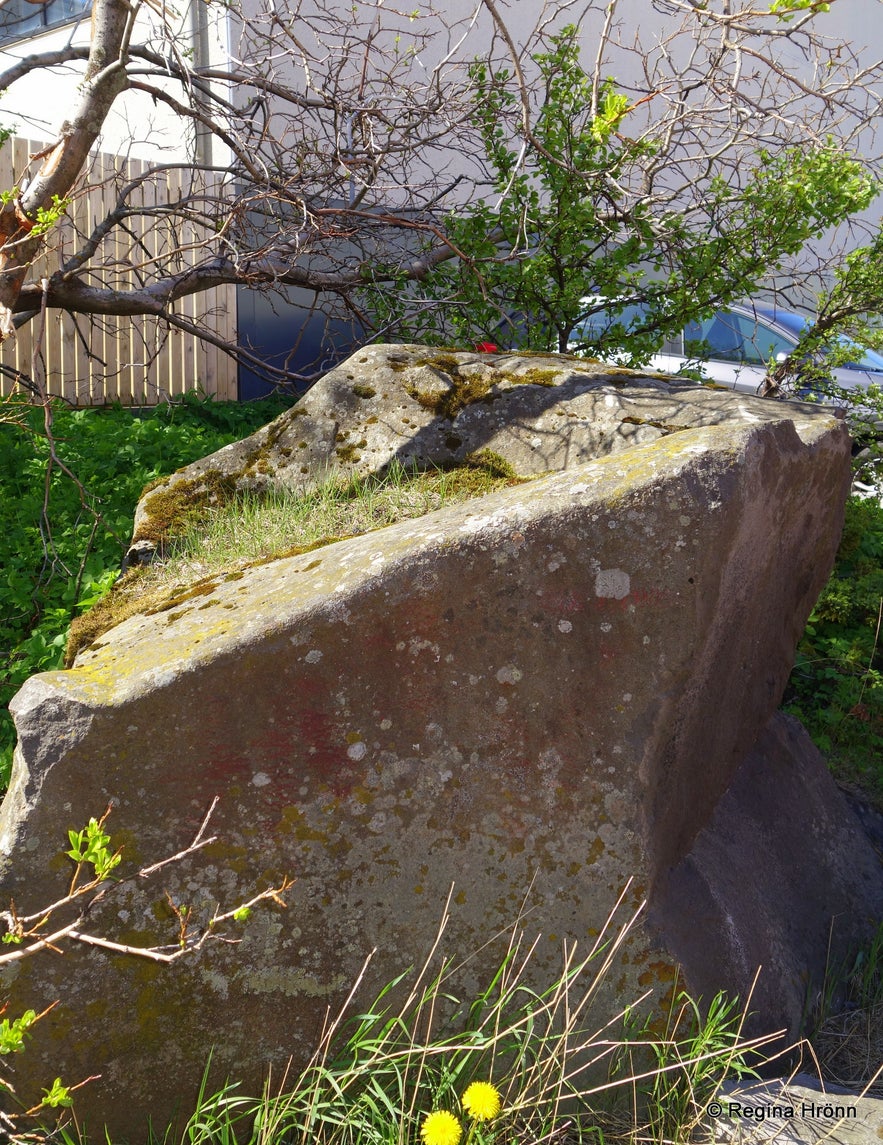
Visiting the rock dweller on a sunny day in June
One rock stood out, though, as it was quite large, more so than the others, and it was split in the middle, and a small spring came up from beneath it.
The workers, after clearing away the other rocks, started drilling one hole into the rock for the dynamite so they could blow it up the following day.
That night, Þorbjörn had a peculiar dream of a stranger who came to see him. The stranger was upset and asked Þorbjörn why he couldn't leave his farm alone.
As Þorbjörn didn't know where this stranger in his dream lived, the stranger explained that he lived in the rock on the plot, which they planned to blow up the following day. And he said to Þorbjörn: "If you tamper in any way with the rock, bad things will happen!"
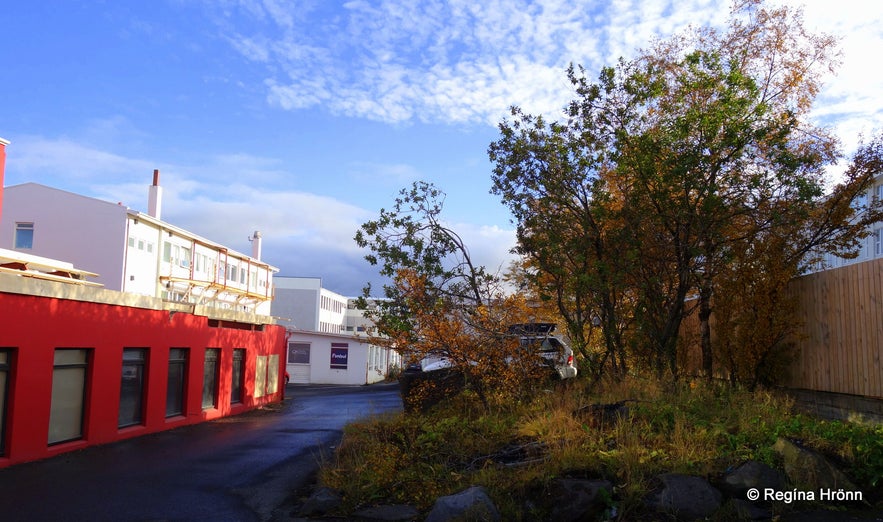
The rock in October
I have seen this happening in our folklore quite frequently. People dreamed that elves and other hidden beings appeared to them and either told them off or asked for help. Sometimes, children had been playing by the rocks, or there had been a racket or disrespect.
The man or woman appearing in the dream was then giving the human a chance to redeem themselves and to leave their habitation alone. Or else bad things would happen - and we have many stories about bad things happening.
And no one wants to be on the receiving end of the revenge of the elves, that is for sure. It is in our Icelandic genes to listen to such advice and not disrespect the elves and other hidden beings living around us.
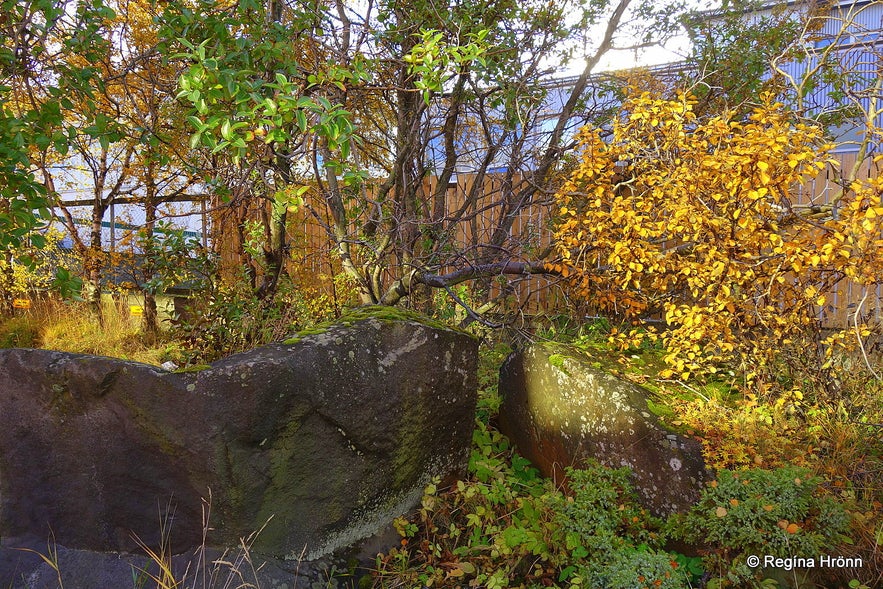
The rock in autumn colours
Even those who claim not to believe in the hidden world say that they would never throw a stone at an elf rock or show disrespect in any way.
Now, back to Þorbjörn, who had been given this warning in his dream. He didn't believe that anybody lived in the rock, but thought to himself that it would be better to be safe than sorry and to leave the rock be.
He told his workers that the rock could stay on the plot because it was not in anyone's way. And plans to blow up the rock were abandoned.
Þorbjörn told this story to Árni Óla, so this was firsthand.
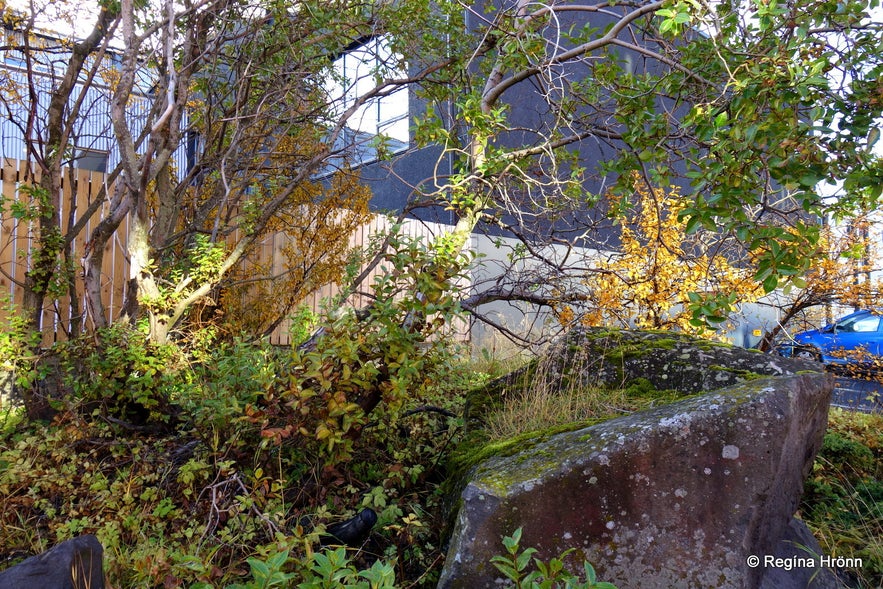
The rock in October
So the only rock left on the hill was this rock, and here it still stands more than 80 years later, untouched (apart from when it was later blown into three pieces), with many buildings, companies, and parking spaces all around it, as you can see in my photos.
Not many people know why this rock is still there, but now you know it - it is the home of a hidden person, and woe to those who disturb him.
But the story isn't finished yet: in 1940, Þorbjörn sold the poultry farm to some bakers. The bakers hired a Norwegian manager, Einar Tönsberg, and soon expanded the poultry husbandry.
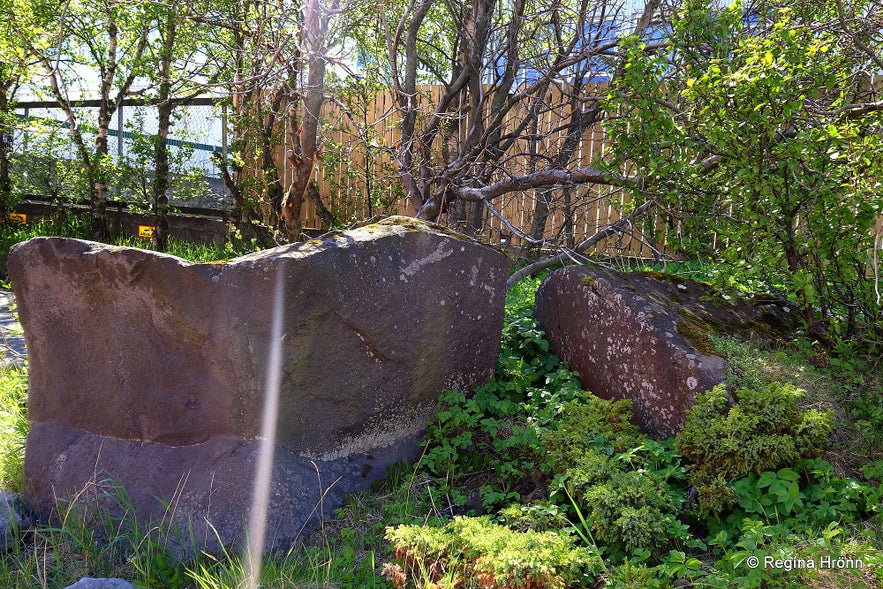
A sunray by the rock - see how lovely and green the surroundings were
Tönsberg wanted to build a house for himself on the spot where the big rock stood, and the rock would have to go!
Þorbjörn told him that he could not tamper with the rock, or else bad things would happen. So Tönsberg understood that this was an elf rock.
Tönsberg, being Norwegian and not Icelandic, didn't believe in this, but he had earlier heard about enchanted spots and the Icelandic people's unwillingness to tamper with them.
So he built his house in another location, towards the west of the plot.
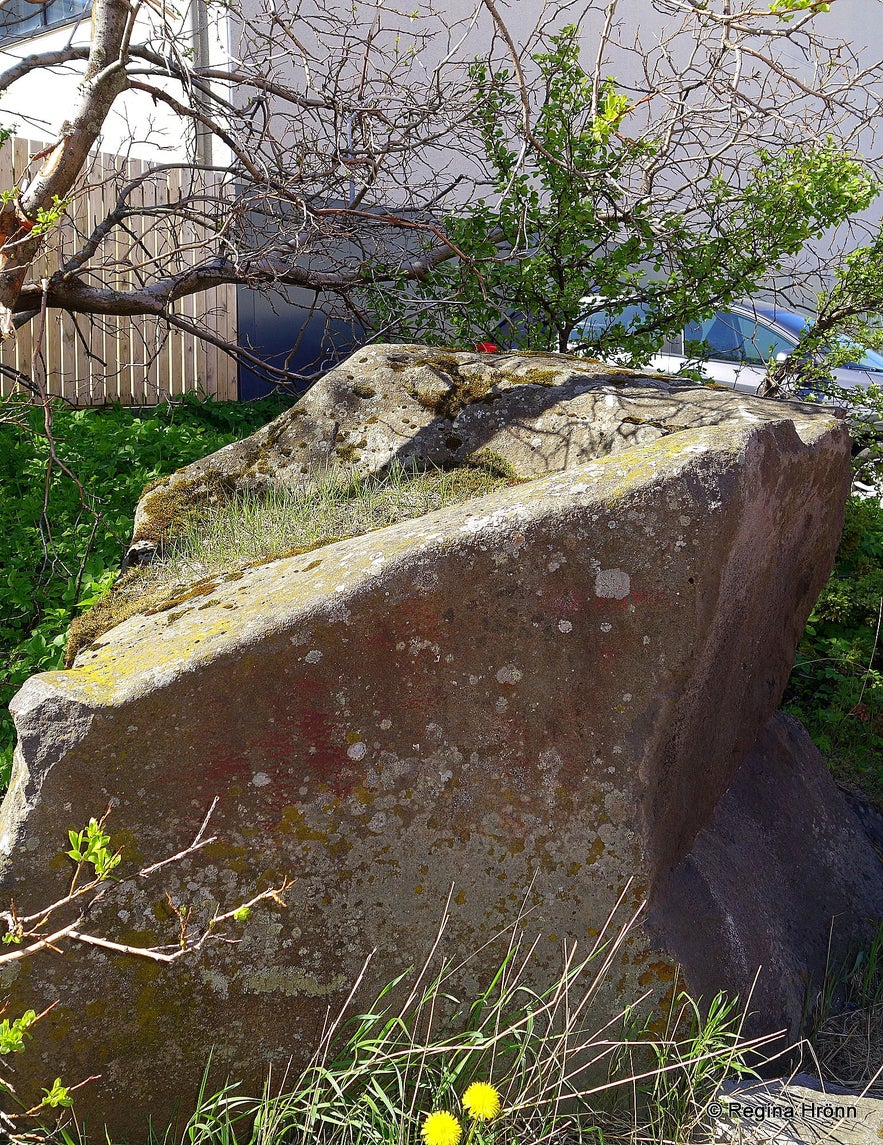
Dandelions by the rock
Now, in May 1942, the bakers decided to change the whole plot into a field. So what should they do with this big rock?
Tönsberg had told them that this was an enchanted rock and asked whether they were willing to risk removing it.
The bakers did not believe that anything bad would happen, so they decided to remove the rock. Two holes were drilled into the rock, and it was to be blown up in a couple of days!!
Now, something extraordinary happened, and I firmly believe that the inhabitant of the rock was behind this.
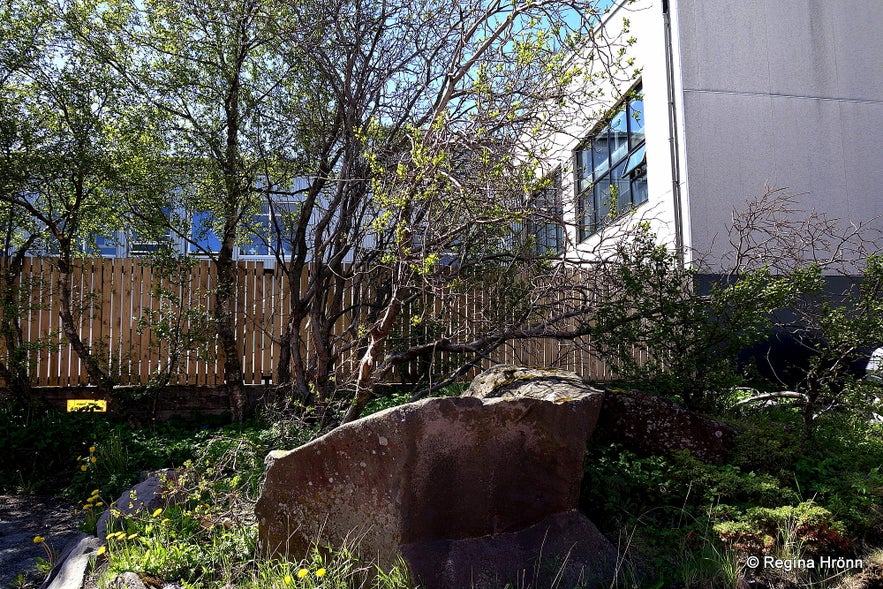
Now you know who lives here.
The egg-laying was in full swing at the poultry husbandry. But now a strange thing happened as the hens stopped laying eggs - they went on strike.
Árni Óla says that he was allowed to look at the report on the egg-laying.
On the 21st of May, there had been 353 eggs, the following day 320, on the 3rd day, 312, and on the 4th day, 235.
And for some reason, the plans of blowing up the rock were delayed again and again.
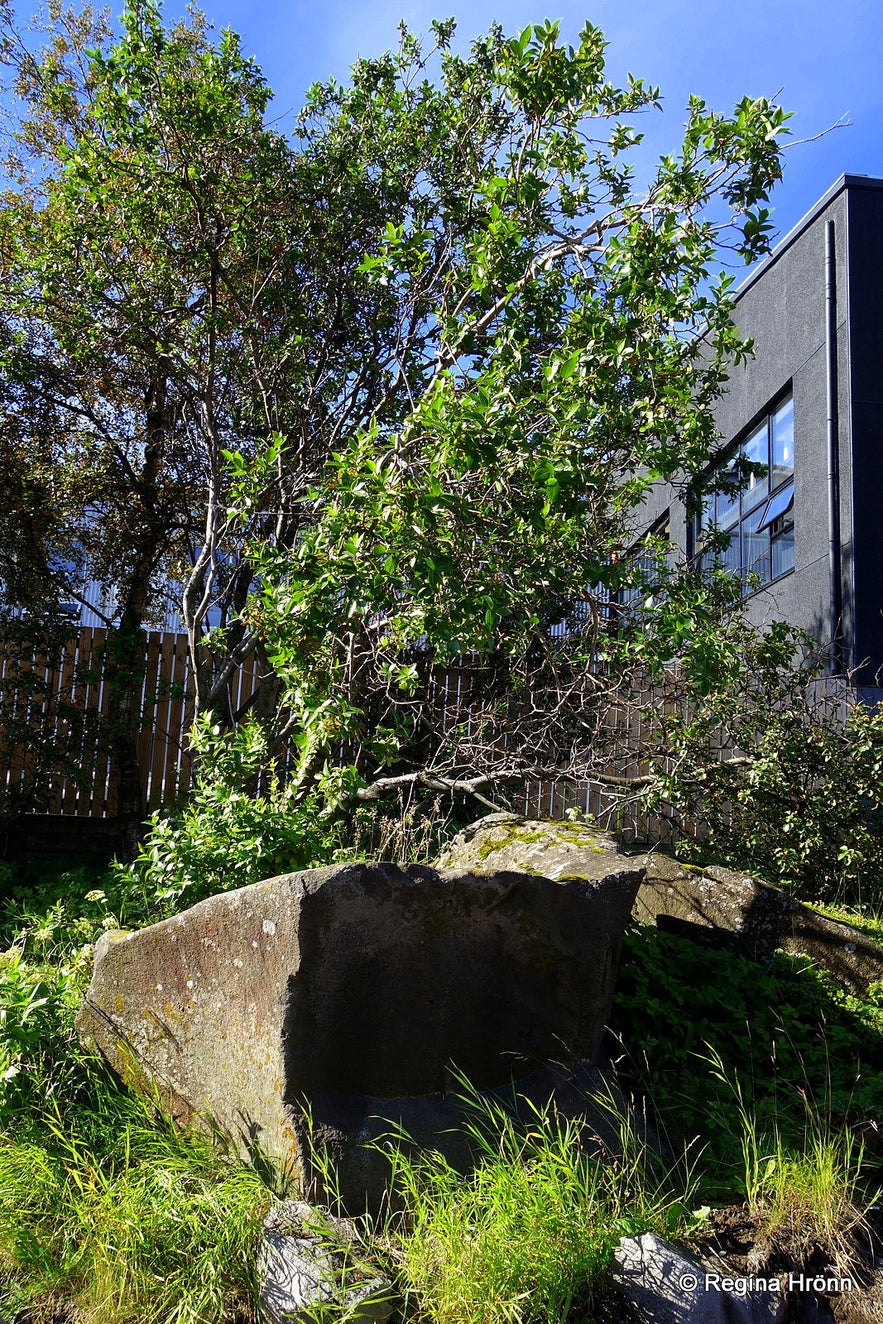
You can see in my photos how the colour of the houses changes over the years
The hens started laying fewer and fewer eggs:
"26th of May 120 eggs.
27th of May 80 eggs.
28th of May 47 eggs.
29th of May 20 eggs.
30th of May 8 eggs.
31st of May - NO EGG."
Now, isn't this amazing?!
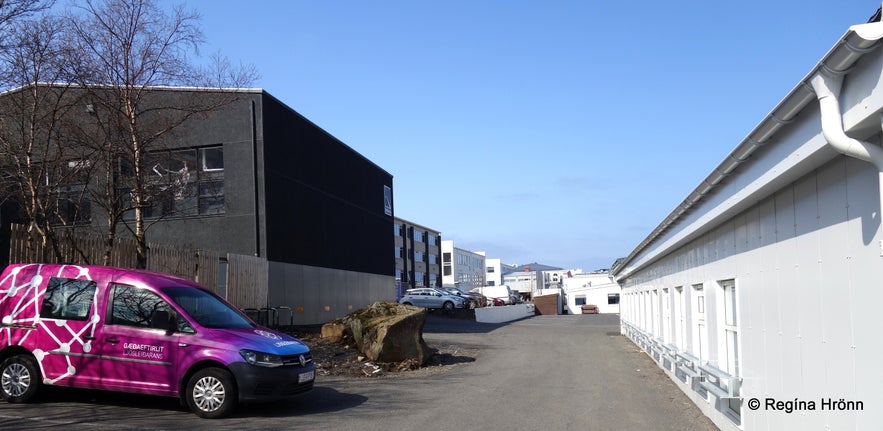
The rock in April 2022 - where are the trees and the grass and the stones around the rock??
Now, Tönsberg got a veterinarian to examine the hens, but all of them turned out to be healthy
. The University of Iceland's investigation department examined the fodder and found it perfectly okay.
The hens did not lay a single egg for 2 weeks, from the 31st of May until the 14th of June! What was wrong - why did hundreds of hens stop laying eggs?
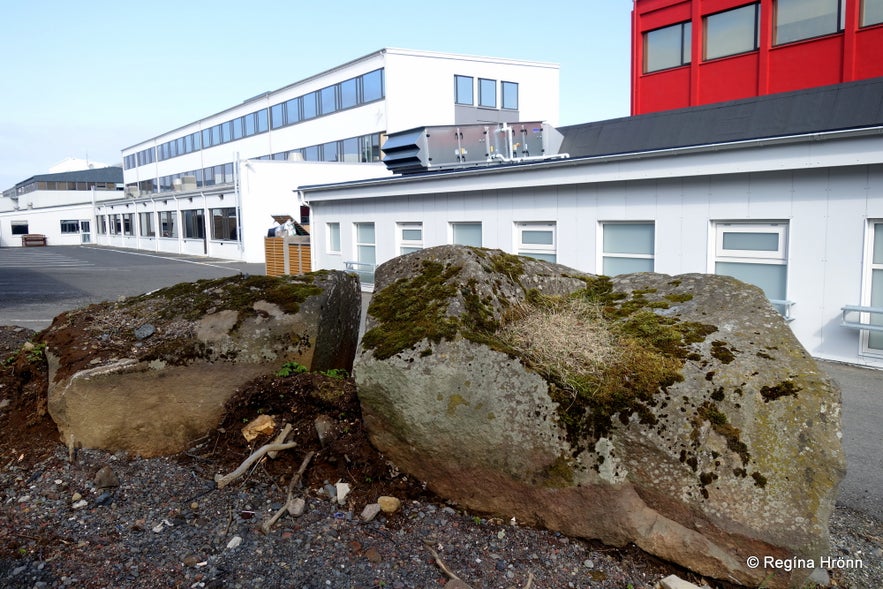
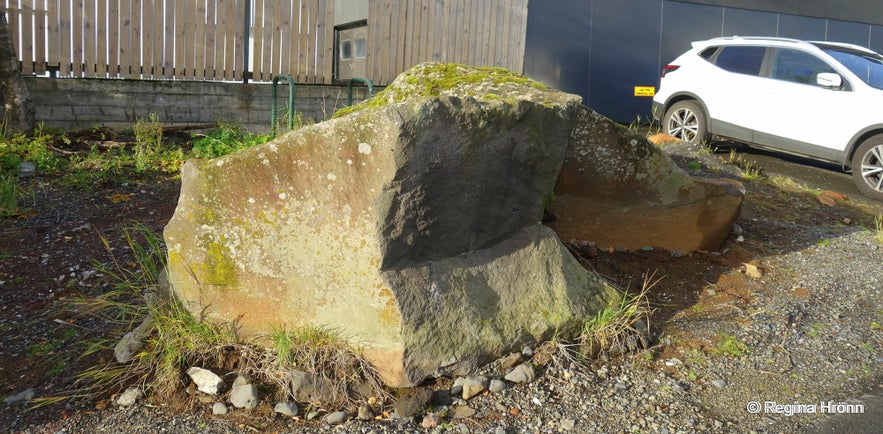
The rock in April 2022 - you can see, now that all the vegetation has been removed, that there are two rocks.
Day after day, Tönsberg returned from the hen houses empty-handed; there was not a single egg. Could it be that the rock dweller was taking his revenge for the holes that were drilled in the rock?
Was he warning us of bigger and worse incidents if the rock were to be blown up? (This paragraph I translated directly from the book, as this wording is vital for the story.)
Tönsberg thought there would be no harm in delaying the explosion of the rock. Better safe than sorry, eh?
As soon as Tönsberg had decided not to blow up, move, or tamper with the rock in any way, the hens slowly started laying eggs again.
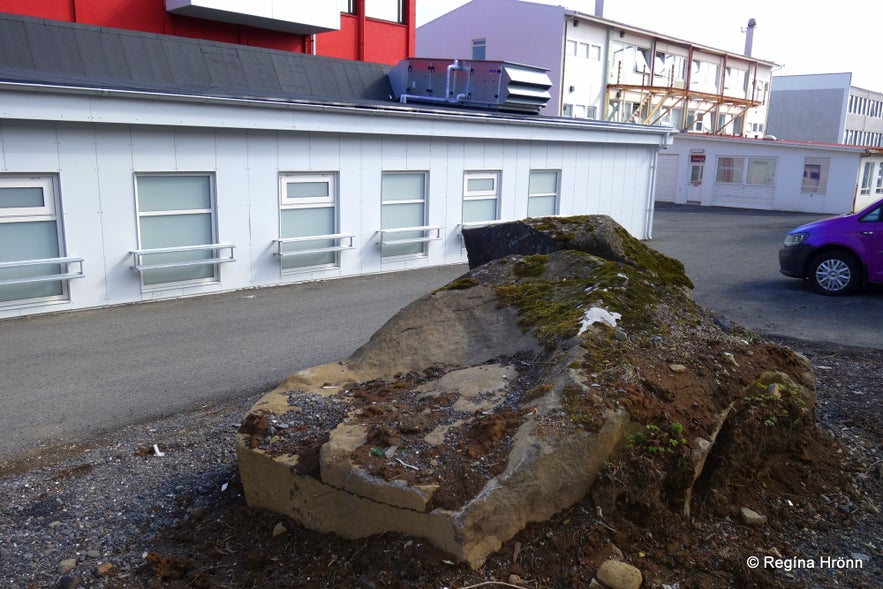
The rock in April 2022 - I don't think that the hidden inhabitant is happy with this :(
On the 14th of June - 5 eggs. More and more hens started laying eggs again, and on the 30th of June, there were 217 eggs in the hen houses!
In the minutes of the meeting of the management of the poultry husbandry, held on June 30th, it is written that it had been agreed upon not to tamper with the big rock on the plot. From then on, the hens showed no erratic behaviour.
(Roughly translated and recapitulated from the book Álög og bannhelgi, pages 29-33, by Árni Óla - printed in 1968)
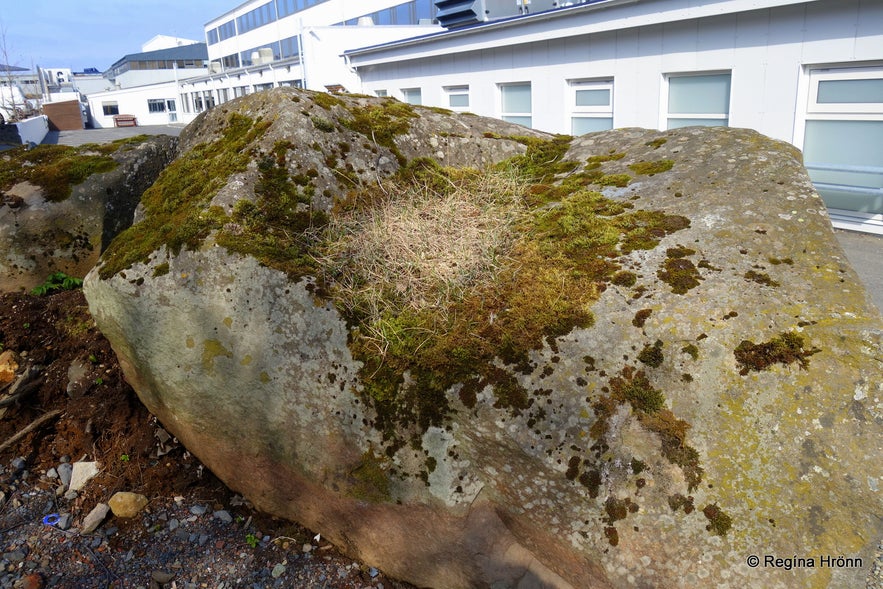
The rock in April 2022
I read in an article from 1984 that when Ármúli street was being built, the electricians Haukur Þorsteinsson and Ólafur Sveinsson erected a building for their electrical appliance services, Raftækjavinnustofa Hauks og Ólafs, at Ármúli 14.
They established this company back in 1949, but I don't know when they moved to Ármúli.
When I was searching for information about this company, I came across a New Year's greeting from them in an old 1968 newspaper, and back then, they were located at Ármúli 14.
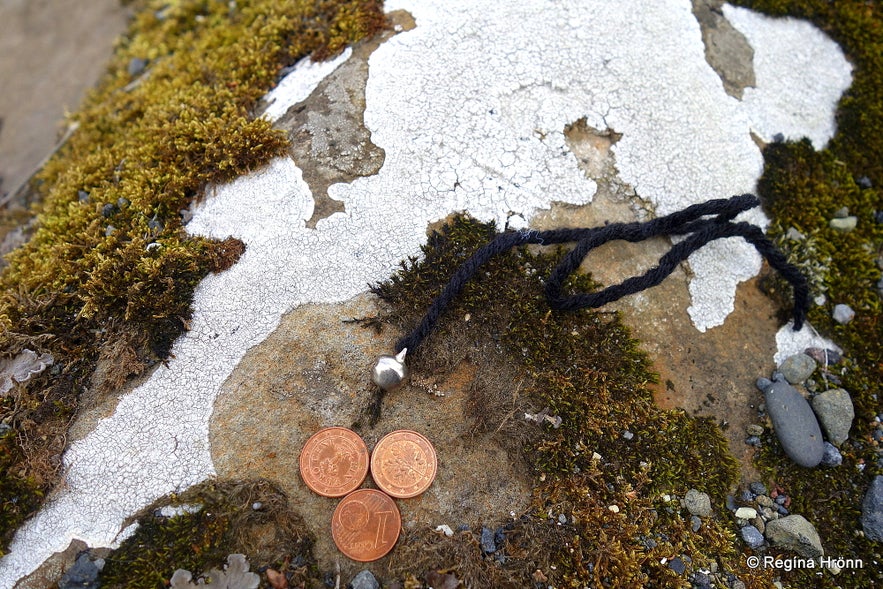 After I posted my article, somebody put foreign coins on the rock and a small bell (May 2022)
They were building here in the company of the 3rd man, who owned the major part of the plot with the rock.
He tried to blow up the rock and succeeded, blowing it into three pieces: two big rocks and a smaller one!
The smallest rock was removed, but as they tried to lift one of the larger rocks, the crane almost fell over, and this happened repeatedly. The man started having bad dreams at night and eventually gave up his plans to build on this plot.
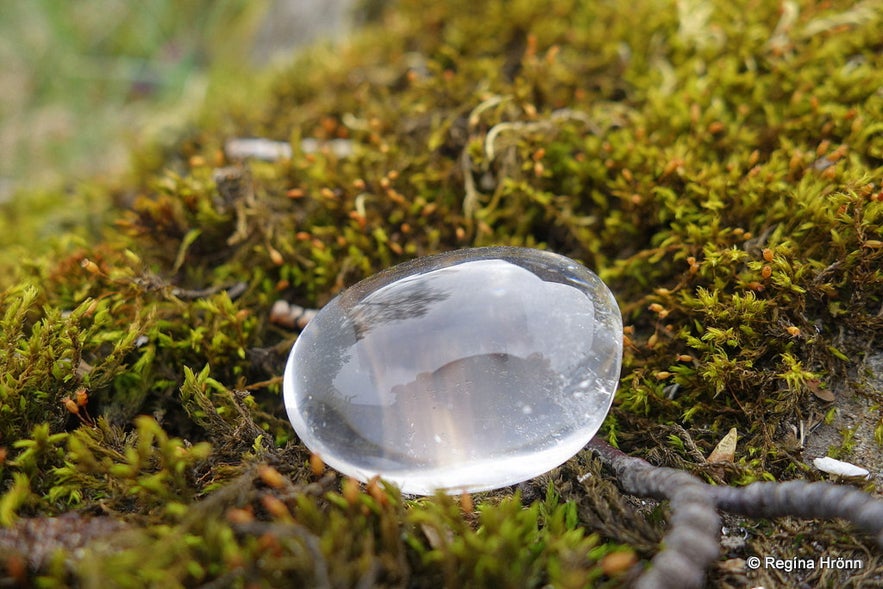 In May 2022, I also saw a crystal on the rock and yellow roses
When Haukur and Ólafur found out that the rock was an elf rock, they made sure that it was not tampered with again. They moved the pieces as close together as possible, and I think it has remained intact ever since.
Until April 2022, when all the vegetation and the tree were gone!
From my house, I take a shortcut via Síðumúli that passes straight by the rock. So I go there often, greet the rock dweller every time I pass by, and take a couple of photos.
I was pretty startled when, in April 2022, I saw that the trees and all vegetation by the rock had been removed, even the stones that surrounded it! What is happening?
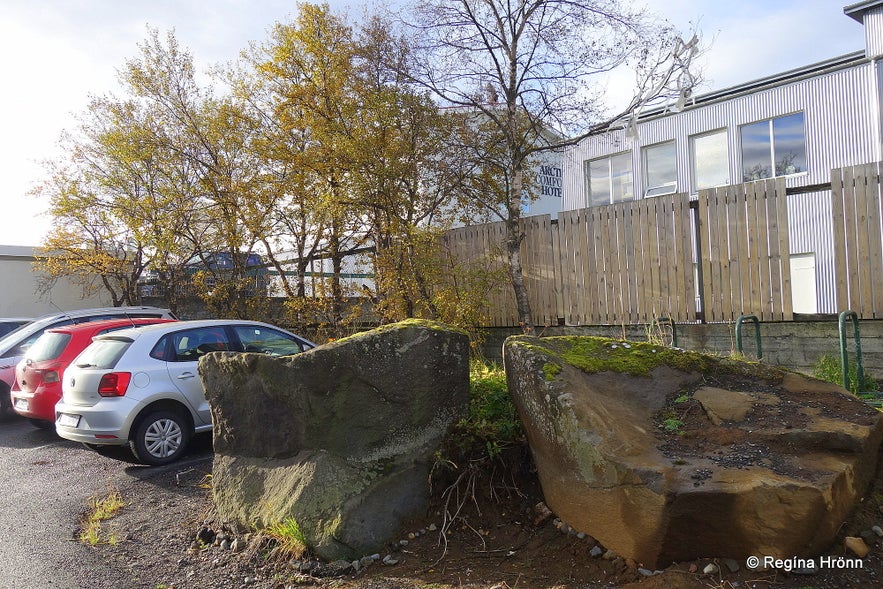 In October 2022, I put all the small rocks I could find in a row around the elf rock
Are they planning to remove the enchanted rock after 80 years to create more parking spaces?
I hope not, as we now know there is more to the rock than meets the eye.
I had wanted to write about this rock for the longest time, or ever since I read Árni Óla's book. But somehow it always got delayed. But now that I see that it is being tampered with, I feel obligated to write about the hidden man living in the rock.
Since I wrote my article, I have noticed some small items people have left on top of the rock, such as coins, an energy stone, a small bell, and yellow roses.
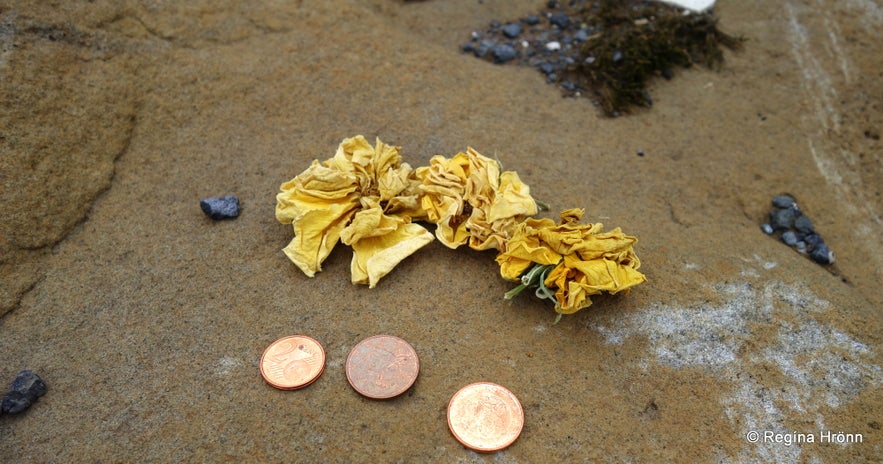
Coins and yellow roses on the elf rock
I put all the rocks I could find around the rock in October 2022 to draw attention to it, i.e., to mark that it is an elf rock and, as such, it is protected and should not be tampered with.
It is a pity, though, that the only rocks I could find were small, and they are not that prominent.
You can find the rock between Ármúli 32 and Síðumúli 17 :) Please be respectful.
 The rocks I put around the elf rock mark that it is an elf rock, and as such, are protected
I don't know if he lives there alone or if there are more inhabitants in this rock.
There are other stories about hidden beings living alone in rocks in Iceland, e.g., The Peculiar Rock, Steðji-Staupasteinn, in Hvalfjörður, Southwest Iceland.
There are some other elf spots like this one in the Great-Reykjavík area, which I will show you in other travel blogs.
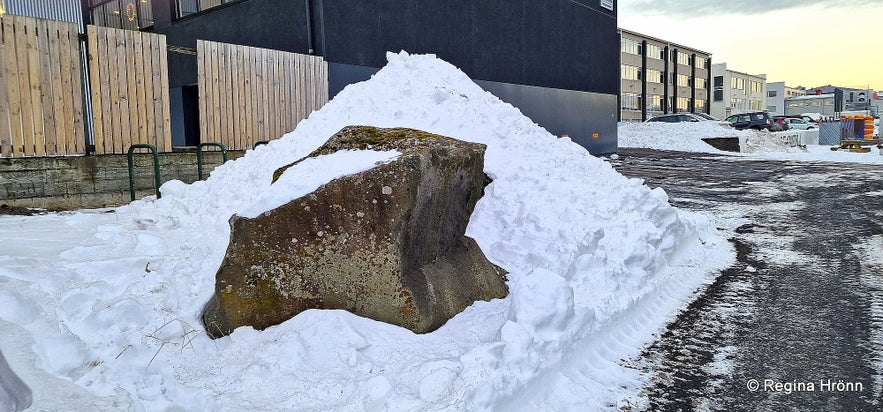 The rock in December - heaps of snow had been pushed on the rock further to the west
I have written other travel blogs about both old encounters with the elves and the hidden beings of Iceland, but also more recent accounts, e.g.:
The beautiful Elf City and Elf Church by Hotel Laki in South Iceland
The Sheriff's Wife at Burstarfell and the Elf-Rock in East Iceland - Icelandic Folklore
Dvergasteinn - the Rock of the Dwarfs - by Seyðisfjörður in East Iceland - Icelandic Folklore
Drangurinn in Drangshlíð and the Elves in South Iceland - Icelandic Folklore
The Daughter of the Minister - Prestsdóttirin frá Prestbakka á Síðu - Icelandic Folklore
Sources:
Álög og bannhelgi, Árni Óla 1968

Hi, my name is Regína Hrönn, and I was born and raised here in Iceland.