The Cheapest Time to Go to Iceland

When is the cheapest time to go to Iceland? What is the best time to fly to Iceland? Are there any times of the year when the country’s services become more expensive? Continue reading for the ultimate guide on the cheapest time to go to Iceland.
Iceland, a sought-after destination due to its natural and cultural wonders, is a notoriously pricey country. Food, drink, accommodation, tours, and car rentals do not come cheap, especially when compared to many other European destinations. To many, this makes the country seem totally inaccessible for those on a tight budget.
However, with a bit of strategic planning, visiting Iceland without breaking the bank is possible. One way to save money is to book a vacation package in Iceland, with multiple accommodations booked beforehand at a reduced price, along with activities.
If you're planning to drive around the country, getting a car from the cheapest car rental marketplace in Iceland is a great way to compare prices from multiple car rental services to make sure you're getting the most for your money.
To save money on restaurants, bars, and shopping, the VIP Club of Guide to Iceland gives you a lot of special offers and discounts around the country. But keep in mind that it's exclusive to the customers of Guide to Iceland.
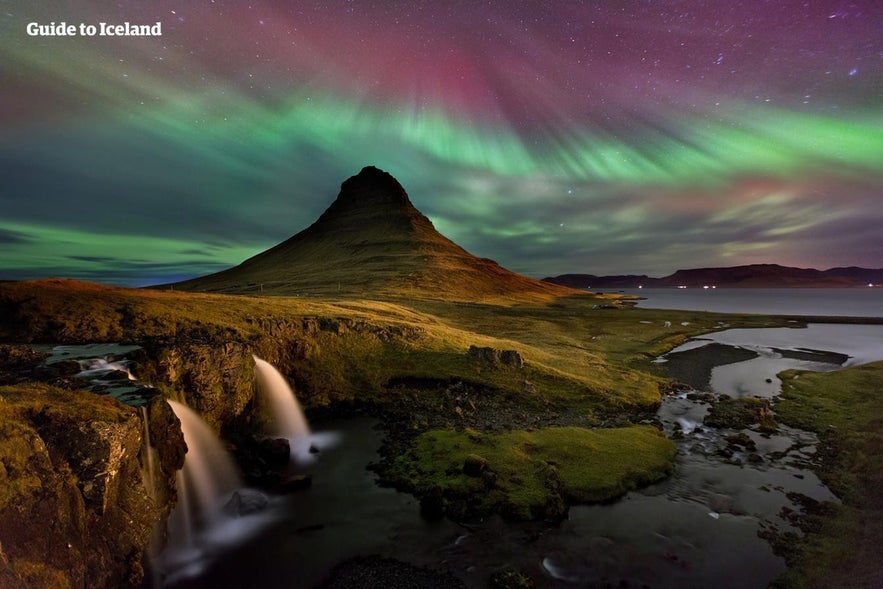
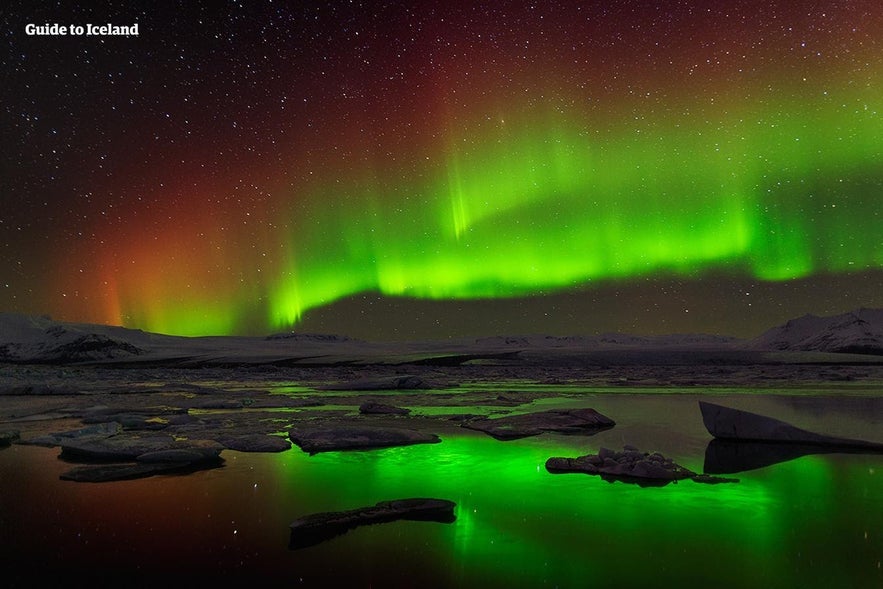 The Northern lights draw many visitors to Iceland
The shoulder seasons, typically late spring (April to early June) and early autumn (September to early October), offer a sweet spot for budget-conscious travelers. Flights to Iceland and accommodations are often cheaper during these times.
Visiting during winter can also be cheap (outside of Christmas & New Year's), and it opens up opportunities for fun winter activities such as northern lights tours and ice caving.
For an in-depth view, continue reading and learn all about the cheapest time to visit Iceland.
The Cheapest Time of Year in Iceland
Put simply, the cheapest time of year in Iceland is during its off-peak season; this covers September to November and January to May. Visiting Iceland in autumn or spring will be kind to your wallet and allow you to visit popular destinations without them being crowded, which is a win-win!
Due to school holidays, a more temperate climate, and the Midnight Sun, June to August are the most popular - and thus most expensive - months to visit Iceland. Christmas in Iceland is also a pricey time for travelers as thousands flock over because of the country’s reputation as a winter wonderland and the gusto with which the people embrace the festivities.
- Learn more: Christmas in Iceland

Traveling outside of these peak months will save you money on tours, car rentals, souvenirs, and, in some cases, meals and nights out. That is not to say, however, that your experience itself will be cheapened. The reasons that the peak months are so popular are limited to the factors mentioned above and have nothing to do with the country’s allure and beauty the rest of the year.
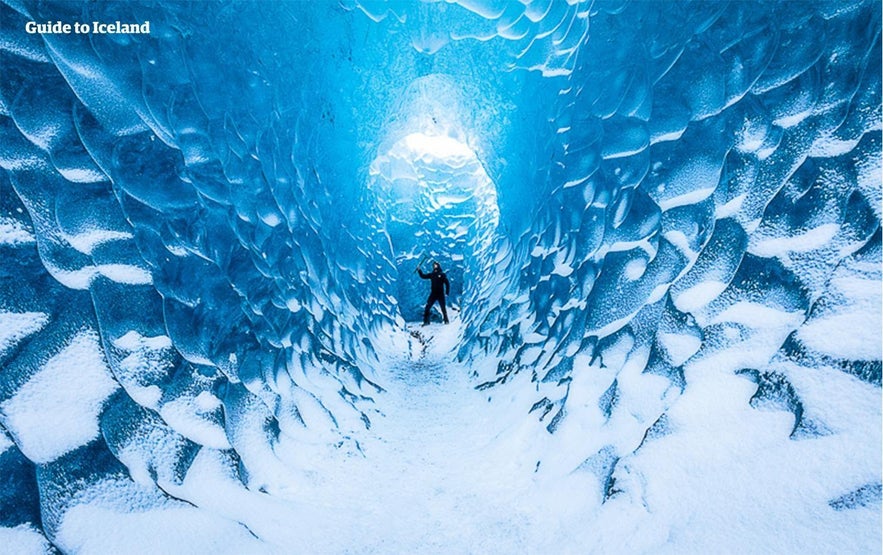
Coming between September and April provides guests with the once-in-a-lifetime opportunity to seek the Northern Lights; the more free-spending summer travelers will have no such luck. In some of the most off-peak months, November, February and March, you’ll have an opportunity to marvel at the ice caves of Vatnajokull, which are only open and safe to visit in Winter.
On the edges of the winter season, you can still partake in a wealth of summer tours. Highland hikes, for example, often run until October, whereas adventures such as river rafting start in May. Those traveling to Iceland to see its incredible migratory wildlife, such as the great whales and puffins, can easily do so in September.
In many cases, therefore, you can actually find a wider range of activities on offer if you plan your trip to during the cheaper times. You’ll also find much less competition for spaces on tours, and thus are likely to have more personalized interactions with your guides. Furthermore, the natural sites should be much less crowded, particularly if you are traveling to more remote regions such as the North, the Eastfjords, and the Westfjords.
 You could even argue that the best time to go to Iceland may also be the cheapest.
If you are determined to see Iceland under the Midnight Sun and embrace its full range of summer activities while saving money, it is recommended to book a trip for early June. This is because most schools will not have broken up for the year yet, and some airlines, rental companies and tour operators may not have raised their prices yet.
- Learn more: 18 Tips on How to Save Money in Iceland
The Cheapest Time to Fly to Iceland
Travelers from Europe and even North America will often find incredibly cheap flights to Iceland. For travelers from further afield, such as Asia, the Pacific, Africa, and South America, it is not quite so simple. Iceland’s distance from such regions means that flights will usually be expensive, even if they are part of a great deal.
Regardless of where you’re coming from, the cheapest time to go to Iceland is usually February and March. The festive season is over, and though the Northern Lights are on full display, the months are cold, dark, icy, and thus less popular with the vast majority of tourists. Airlines usually lower their standard seat prices and offer better deals over this time to make the journey to and from the country worthwhile.
April and May are also usually cheap times to fly to Iceland, compared to the summer months. But you can expect to pay a little more for a plane ticket in April and May than over winter, considering the weather is markedly better in these months.

As June, July, and August coincide with the school holidays for children in the Northern Hemisphere, flights from all operators will be much more expensive in these months. Even though September through November is a part of the quiet season, it’s still a popular time of the year to travel, so you can also expect pricier tickets.
As noted, December is a particularly expensive time to visit Iceland due to the seasonal festivities. Flights over this month will naturally reflect this.
The Worst Time to Visit Iceland

For those with a reasonable budget, there is no worst time to visit Iceland. Each month has its own magic, whether you want to indulge in the festivities of December, the arts and music festivals of June, or the beginning of the northern lights season in September.
Those with tighter purse strings, however, will find that there are times when prices for a range of services and goods will be much higher than the rest of the year.
Christmas, as touched upon, is the worst time to visit Iceland for those on a budget. Many restaurants will alternate to more indulgent festive menus; bars and breweries will often do the same with their choice of beverages; and shops will tick up the prices on standard souvenirs, knowing that the demand is there.
- Read more: The Top 10 Souvenirs from Iceland

Over this season, there are a number of public holidays, which occur on the 24th, 25th, 26th, and 31st of December and the 1st of January. Because of this, services and tours that are still running may charge more to accommodate the staff’s holiday.
The weather in Iceland is also particularly fickle during this time, and it’s more likely that your tours will get canceled or rescheduled in Winter. This can derail the whole trip for those who’ve been frugal with their tour bookings.
The other worst time to visit Iceland in terms of expense is the ‘high season’, when most tourists flock to the country. As stated, this coincides with the summer holidays of the Northern Hemisphere: June, July and August. Car rentals and other such services often operate differently during these months, hitching up prices as demand increases.
While the prices of shops, restaurants and bars will usually stay consistent throughout summer, if you're a customer of Guide to Iceland you can get exclusive offers and discounts by using the VIP Club.
- Learn more: Public Holidays in Iceland
Other Ways to Save Money in Iceland

There are plenty of other ways to save money outside of choosing the best time to go to Iceland. Some are as simple as eating in; others are tricks known only to locals, such as spots where you can find coffee for cheap or free, and how to track the happy hours of Reykjavik’s bars.
Of course, you can also save money by tailoring your holiday to a lower budget. Traveling the Ring Road around Iceland can get pricey, so if you don’t leave the city, you’ll save on tours and car rentals.
If you’re only planning to take a few trips further out, you’ll find cheap bus tours a great alternative to more pricey private tours. However, if you plan to see the whole country, you can do so by renting a car and making your own plans, rather than purchasing multiple excursions.
There is a range of budget self-drive tours on offer for the cost-averse traveler, which allows you to drive around the country in a cheap rental car with budget accommodations pre-planned along the way.

If you want the holiday of a lifetime, booking a vacation package or combo tour is a great way to shave down prices without missing out on a second of adventure.
While a holiday to Iceland is no doubt an investment, it need not be a bank-busting one for the savvy traveler. Visiting Iceland in its off-peak season, when you can catch the cheapest flights, can allow guests of all budgets to immerse themselves in the spectacular Land of Ice and Fire.
What do you think the best time to go to Iceland is? Did you find any ways to save money on flights to Iceland? How cheap did you find off-peak travel in Iceland? Let us know in the comment section below!











Andre interessante artikler


Kjøring på Island: Den ultimate guiden til bilturer
Lær alt du vil vite om bilkjøring på Island. Finn ut hvorfor det er lett å kjøre på Island om sommeren og vanskeligere om vinteren. Lær hvordan du leier et kjøretøy til din egen kjøretur og hvilke k...Les merKart over Island
Finn kartet du trenger over Island med disse 20 kartene til islandske attraksjoner. Vi har laget alle de essensielle kartene du trenger over de viktigste attraksjonene på Island for å hjelpe deg med...Les mer
Camping på Island | Alt du trenger å vite
Foto: Pavel Brodsky Drømmer du om å våkne til soloppgangen over en praktfull fjord? Eller drømmer du om å sovne mellom en rekke vakre fjell mens nordlyset danser over hodet på deg? I så fall finnes d...Les mer


Last ned Islands største reisemarkedsplass på telefonen din for å administrere hele reisen på ett sted
Skann denne QR-koden med telefonen din og trykk på lenken som vises, for å legge til Islands største reisemarkedsplass. Legg til telefonnummeret ditt eller e-postadressen din for å motta SMS eller e-post med nedlastingslenken.