In my last travel blog, I showed you several churches in Iceland and told you about the folklore and stories associated with them, such as the votive Strandarkirkja church.
But did you know about the chapel in the Kapelluhraun lava field in the Great-Reykjavík area? It is called Barbörukapella - the Chapel of St. Barbara, and we have no idea how old it is.
Top photo: Standing by the entrance to Barbörukapella chapel
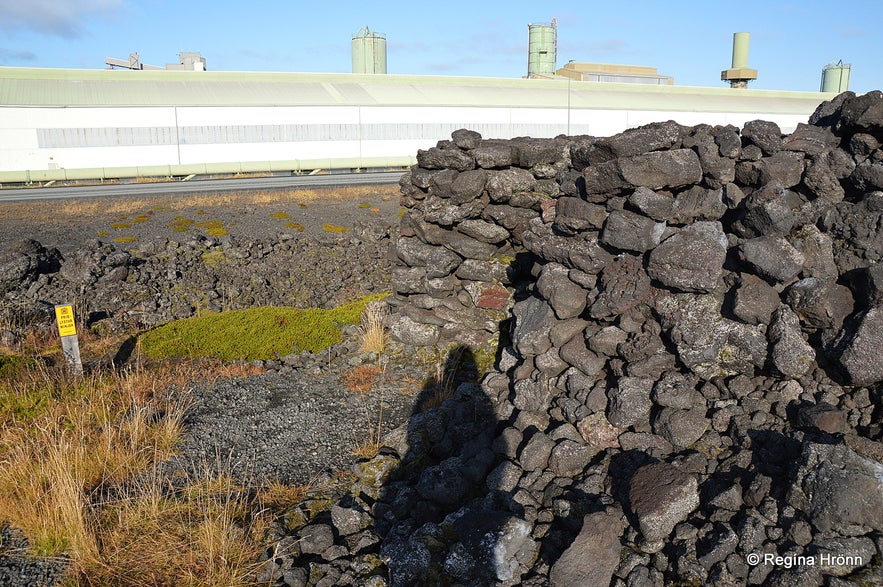
Barbörukapella chapel is opposite the road from an aluminum smelter - old meets new
The reconstruction of the old chapel is located on the top of a lava mound, opposite the ISAL aluminum smelter in Straumsvík by the busy road Reykjanesbraut, the one which leads from the international airport in Keflavík.
Everybody who drives to and from the airport via Reykjanesbraut road passes by the chapel in the lava, so keep an eye out for it when you see the aluminum smelter.
The chapel is made of lava, so it blends into the lava field, and not many people give it a second glance. But once you know about it, you cannot pass it without looking for it in the lava.
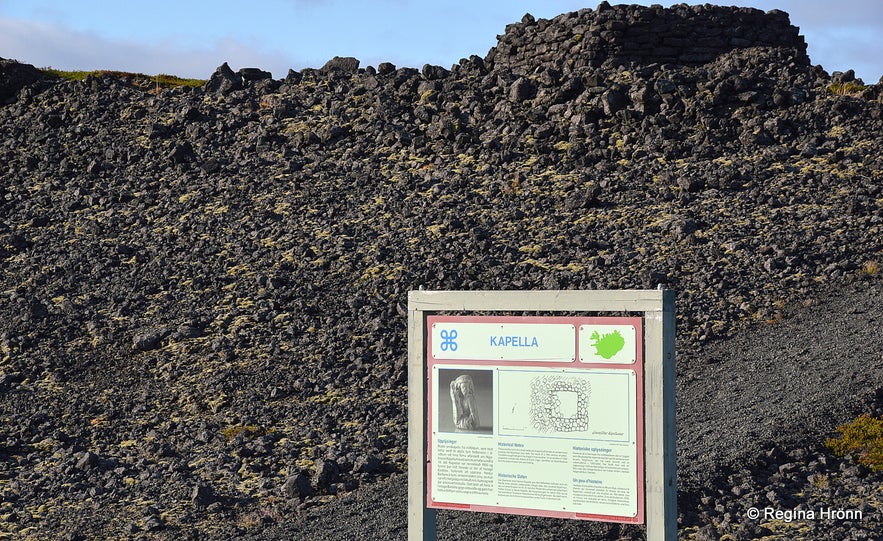
Barbörukapella and the information sign
This old chapel might have been both a chapel and a shelter in bad weather for those travelling on the Alfaraleið - the thoroughfare in the Nýjahraun - Kapelluhraun lava field.
Inside the chapel, people could pray but also make a fire to keep warm and cook food.
It is believed that this road through the lava was built shortly after the volcanic eruption in the 12th century, once the lava had cooled sufficiently.
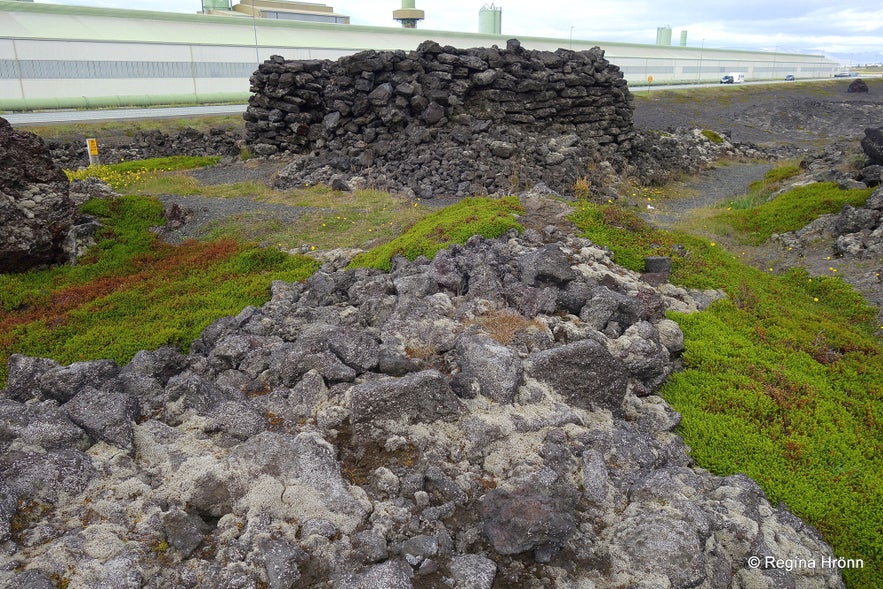 Parts of the old road by Barbarökapella chapel
You can still see a small section of the 1.5 m wide road by Barbörukapella. It is on your right-hand side if you stand in front of the entrance to the reconstructed lava chapel.
Kristján Eldjárn, the Director of the National Museum of Iceland and later the President of Iceland, excavated the chapel ruins in 1950.
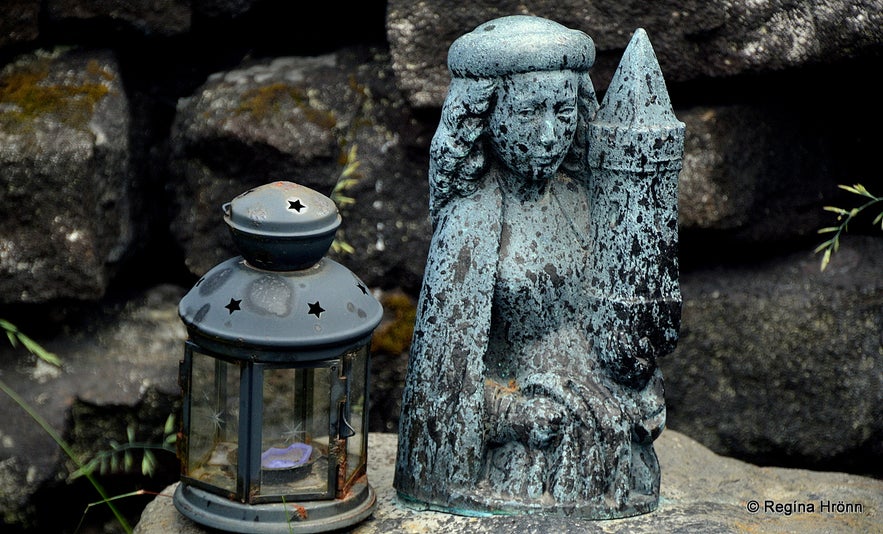
A replica of the clay statue inside Barbörukapella
He and his coworkers found several objects on the floor of the chapel: a broken piece of amber pearl, broken fragments of a clay pot, brass objects, fragments of horseshoes, several broken nails, and pieces of iron. And a part of a clay pipe.
The most remarkable object they found was a small clay statue of St. Barbara holding her signature tower.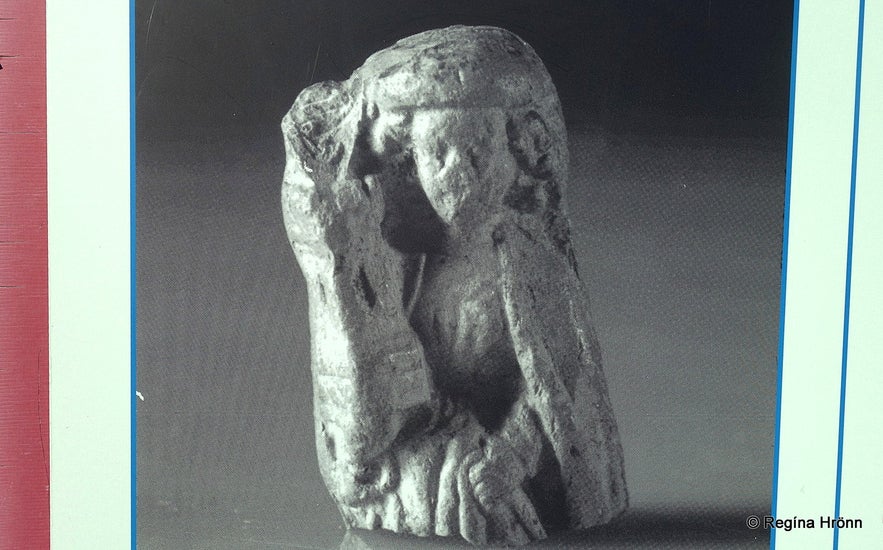
I took a photo of the original statue of Barbara on the information sign - it is tiny
The statue was most likely made in Utrecht, Holland, but that is only a guess, as many such statues came from there.
The original statue is in the possession of Þjóðminjasafn Íslands - the National Museum of Iceland.
I visited the museum to see the statue and was surprised by how tiny it is. It was impossible to take a photo of it, as it is so small and under glass, so I include a picture of the information sign by the Barbörukapella chapel.
You can also see a photo of the statue at Sarpur.
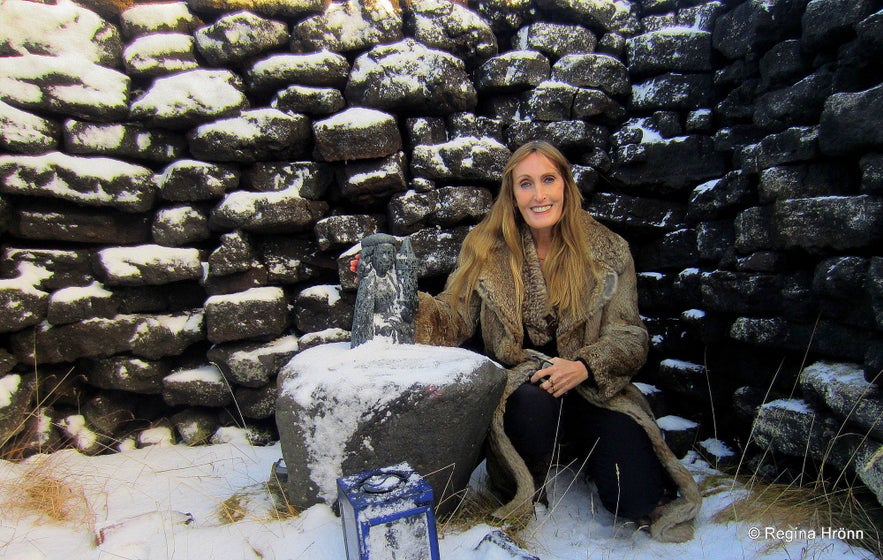
Visiting Barbörukapella in the snow - I get filled with serenity when I see the statue
The chapel was back then in a relatively untouched lava field, a bit sunken into it, but this area has changed quite a bit since Kristján examined it.
The chapel is not big, 2.40 m in length and 2.10-2.20 m in width. The height on the inside ranges from 0.95 to 1.8 meters.
The walls of the chapel are 1 meter thick. Parts of the chapel had collapsed, and many stones had fallen into the chapel when Kristján excavated it.
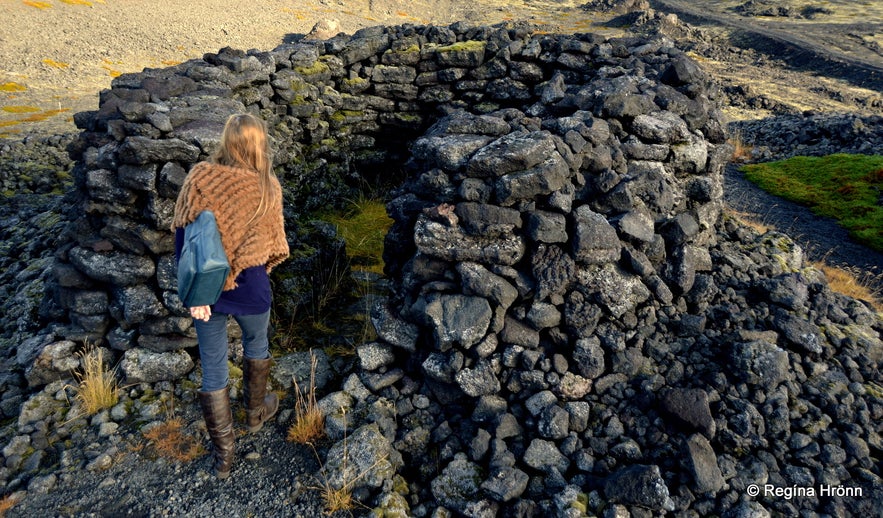
Barbörukapella
Kristján Eldjárn believed the chapel was square-shaped, based on the floor, but it was later rebuilt in an oval shape.
Here we are talking about the original chapel about which Kristján Eldjárn wrote a very detailed description in Árbók hins íslenska fornleifafélag, and from which I got excellent information for this travel blog.
The chapel was most likely used in the Catholic period of Iceland (until 1550). A clay pipe was found in the chapel, suggesting it was used as a shelter until at least the 17th century.
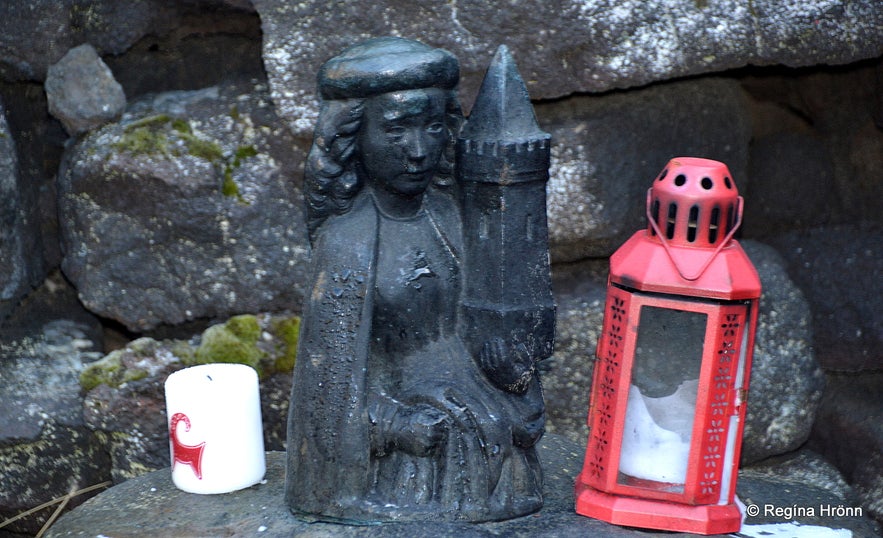
Candles by the statue
Catholics reconstructed the chapel in the late 20th century, and a statue of St. Barbara was placed inside.
I read that the management of the ÍSAL aluminum smelter financed the installation of the new statue in the chapel.
The statue that Kristján found in the chapel is tiny, only 3.3 cm. It was not intact; only the upper part was found in 3 pieces, but it would have been 5.5 cm long initially.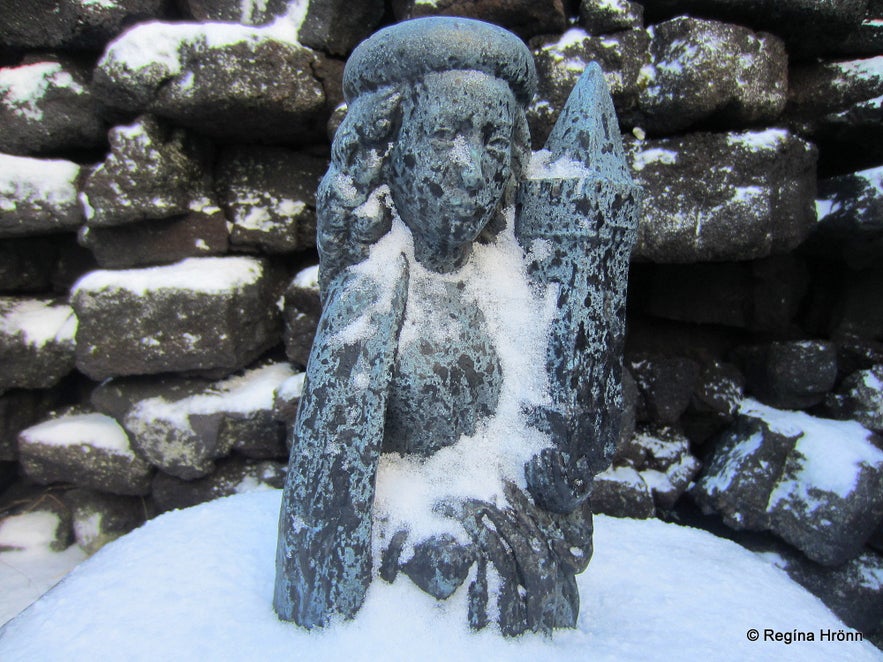
The statue of St. Barbara in the snow
The bronze replica is much larger, made in the likeness of the old statue, based on photos of the original. Walter Mellmann from Osnabrück, Germany, made the statue; the date 4.12.1981 is inscribed on a small plaque.
It is so lovely to visit the chapel and kneel by the small statue of St. Barbara. There is something so very holy about this open chapel made out of lava rocks in the middle of a lava field. Just ignore the aluminum smelter and the busy road.
Sometimes I see candles and lanterns by the statue, which shows that people come here to pray and make a pledge to St. Barbara.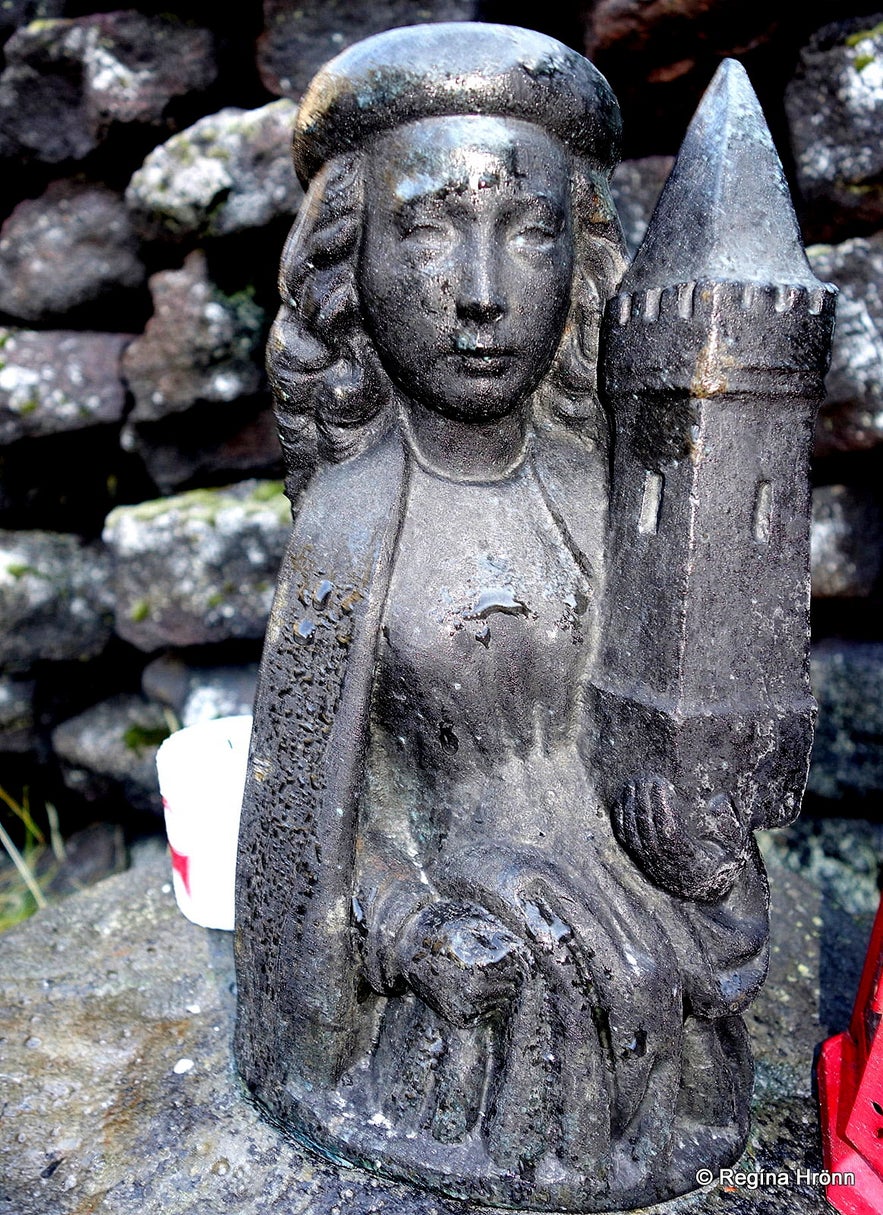
The statue of St. Barbara up close - isn't it lovely?
Iceland's state religion is Lutheran, so I guess Catholics are the ones who mainly come here to pray. Not that there is any difference, but we don't have any statues of saints in our churches. I say a prayer here whenever I stop by the chapel.
People would pledge to St. Barbara, for example, against fire and explosions, so that might be why she was placed in a chapel in a lava field.
Maybe she was placed here to ask her to prevent another calamity in this area, as who wants a massive hot lava flow rushing towards them? There are so many lava fields in Iceland, and who knows what lies hidden beneath them?
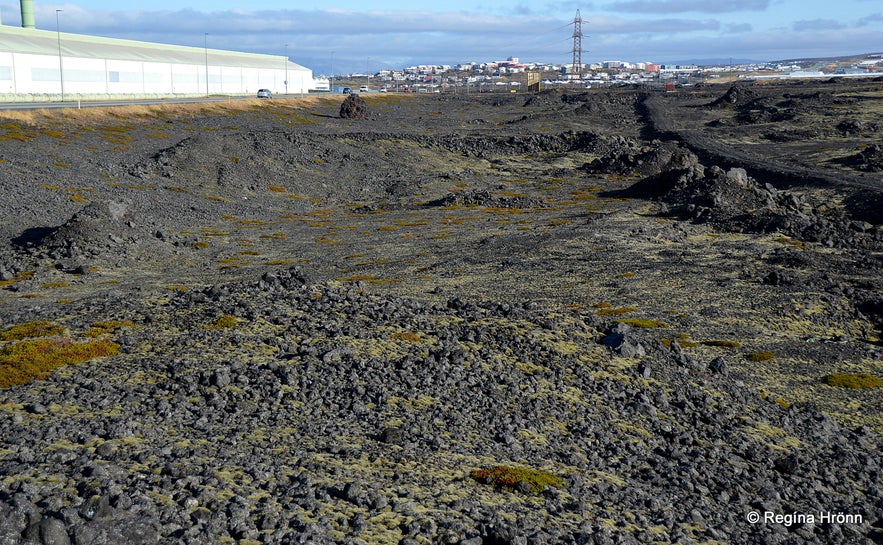
Kapelluhraun - a lot of the lava has been removed
Nýjahraun or Bruninn lava field stems from a volcanic eruption in a row of craters by Undirhlíðar on the Reykjanesskagi peninsula back in the 12th century.
Or at least after the age of settlement in Iceland, seeing that it was referred to as Nýjahraun, meaning the New lava field.
It was mentioned in an old annal that in the year 1343, a ship had been stranded by Nýjahraun. And this lava field is mentioned in the 2nd and 17th chapters of the Kjalnesinga saga.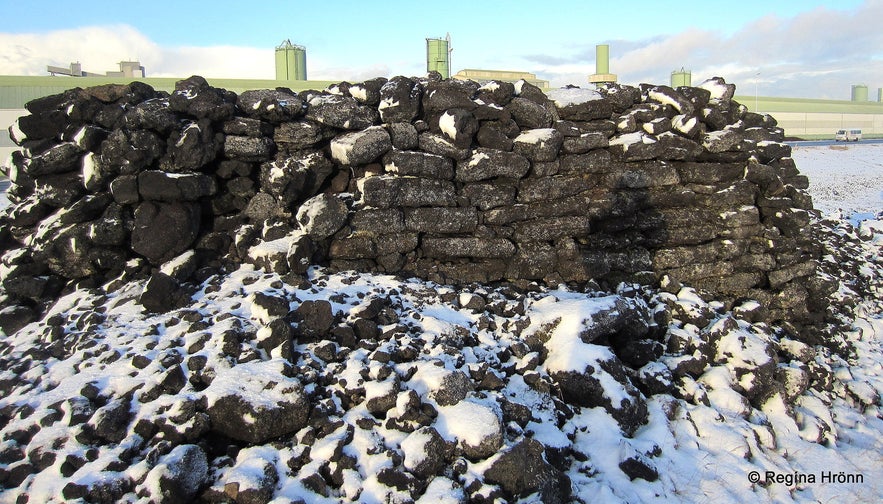
Barbörukapella is stacked with lava from the lava field
The lava field by the chapel is called Kapelluhran - the Chapel lava field.
A lot of the lava has been removed for the foundations of buildings in the Great-Reykjavík area, for road construction, and during the construction of the aluminum smelter in 1969.
So this area has changed quite a bit since Kristján Eldjárn examined the chapel's remains. Thank God the bulldozers didn't remove the chapel's remains before it was preserved.
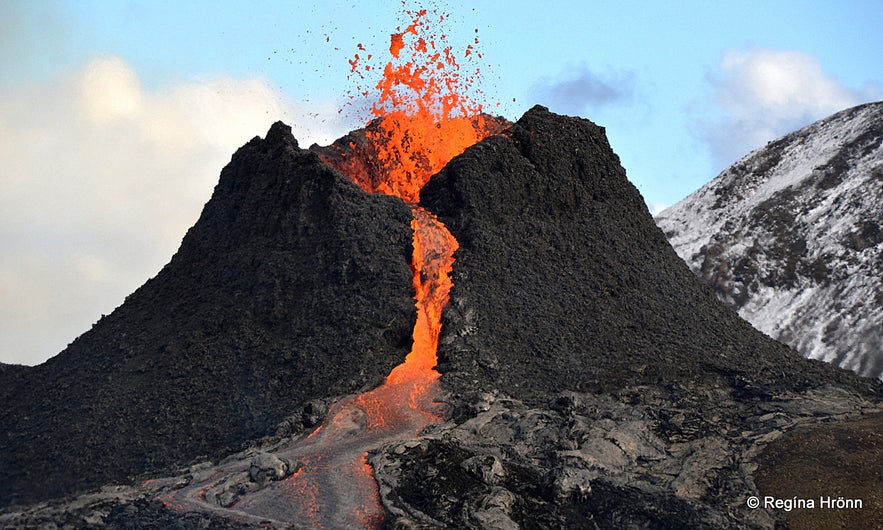
The volcanic eruption in Geldingadalir in 2021
Now the Reykjanes peninsula has come alive again after being dormant for many centuries, so we who live here in the southwest corner of Iceland have started worrying that a volcano might erupt too close to home.
There have been 10 volcanic eruptions on the Reykjanes peninsula since I wrote this travel blog. The last eruption was in 2025.
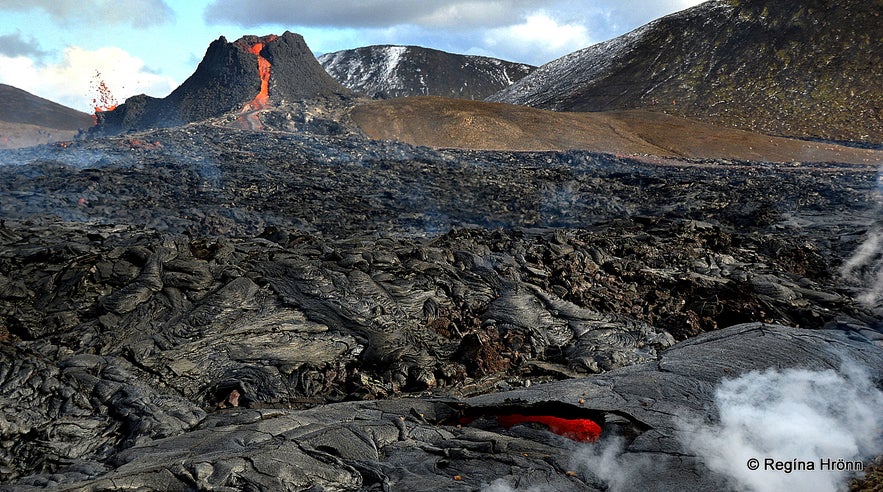
The volcanic eruption in 2021 on the Reykjanes peninsula
I have written two travel blogs about this latest volcanic eruption on the Reykjanes peninsula:
The Volcanic Eruption in Mt. Fagradalsfjall and Geldingadalir in SW-Iceland
A Helicopter Ride to the Volcanic Eruption in Mt. Fagradalsfjall in SW-Iceland
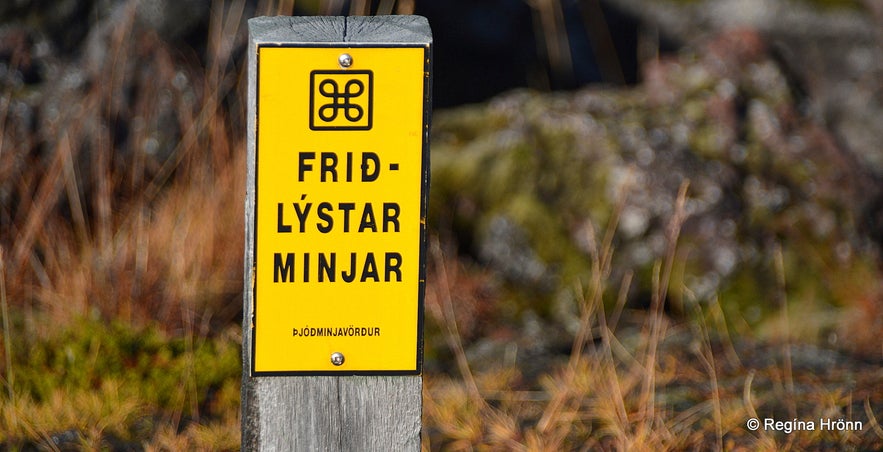
The yellow sign from the Director of the National Museum - preserved antiquities
Barbörukapella was rebuilt after examination, but the long, collapsed roof was omitted.
The door opening is on the west side, according to tradition: our churches face east, but the church doors are on the west side.
Kristján Eldjárn declared this site protected after examining it, and a yellow sign above it was placed.
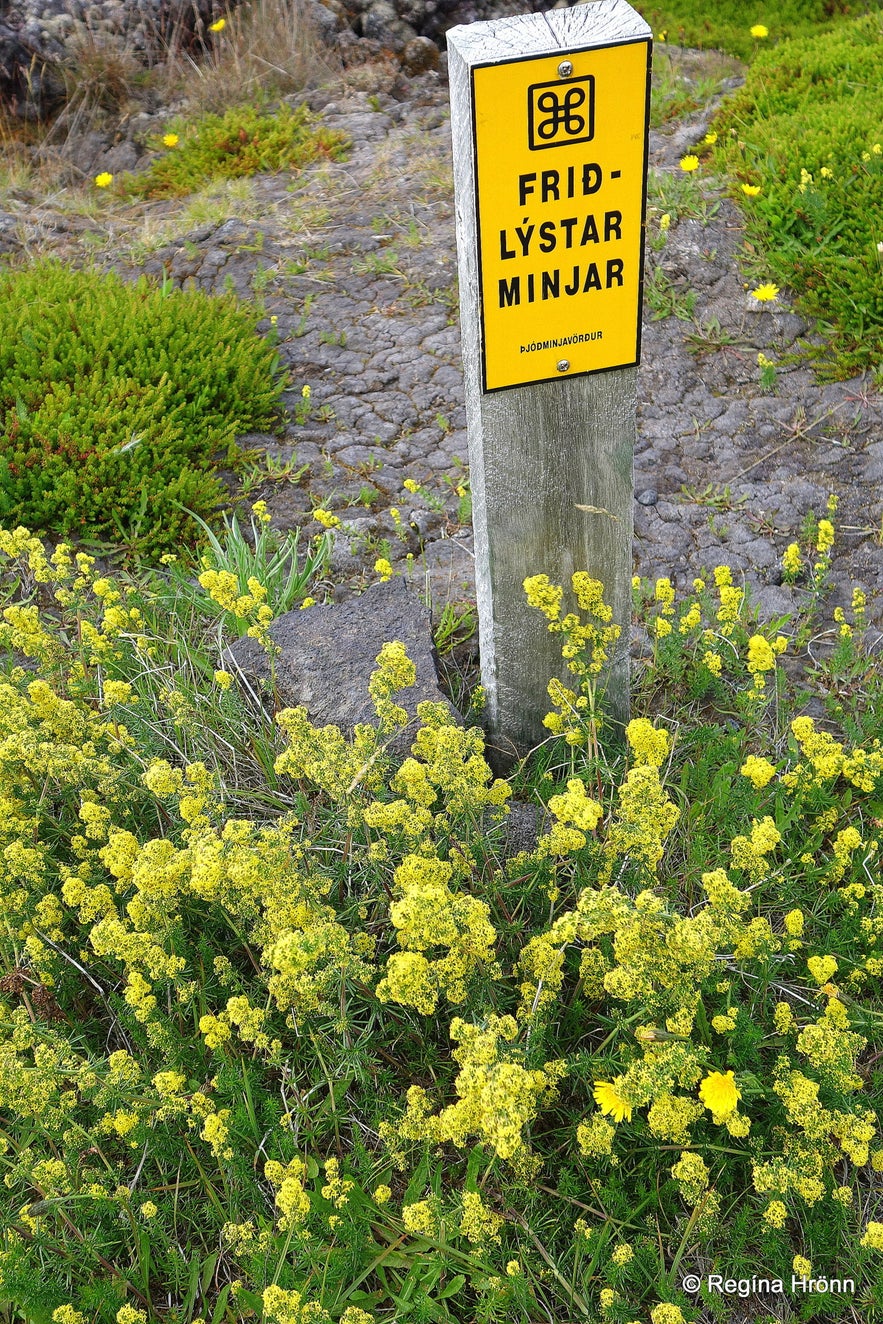 The yellow protection sign
You can see this sign in many places in Iceland, such as protected sites and preserved antiquities, as I have shown you in my travel blog: Viking Ruins and Burial Mounds I have visited on my travels in Iceland.
In many places, this sign is very worn or has blown away, so it takes some effort to find, but it is well-maintained here at Barbörukapella.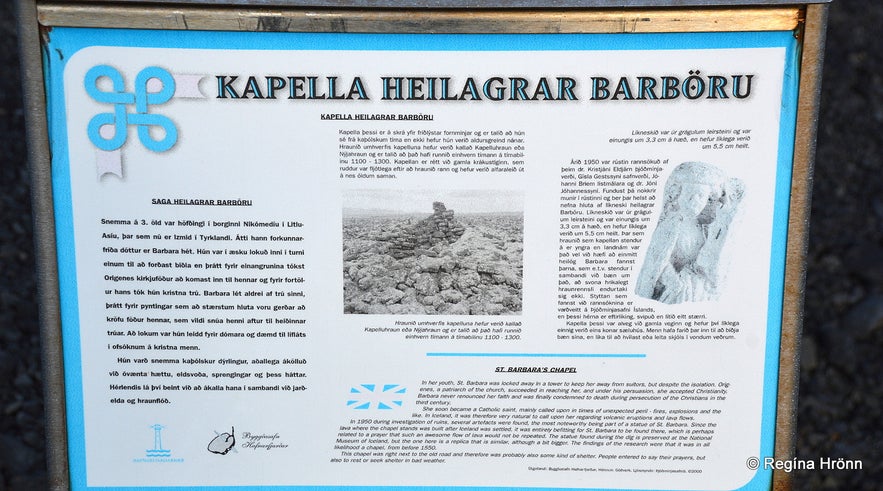
One of the information signs by Barbörukapella - this one was erected by the Hafnarfjörður town and Byggðasafn Hafnarfjarðar
St. Barbara was also the patron saint of seafarers and travellers. And I have read that she was also the patron saint for miners and founders.
And she was among the patron saints of Haukadalskirkja church and Reykholtskirkja church.
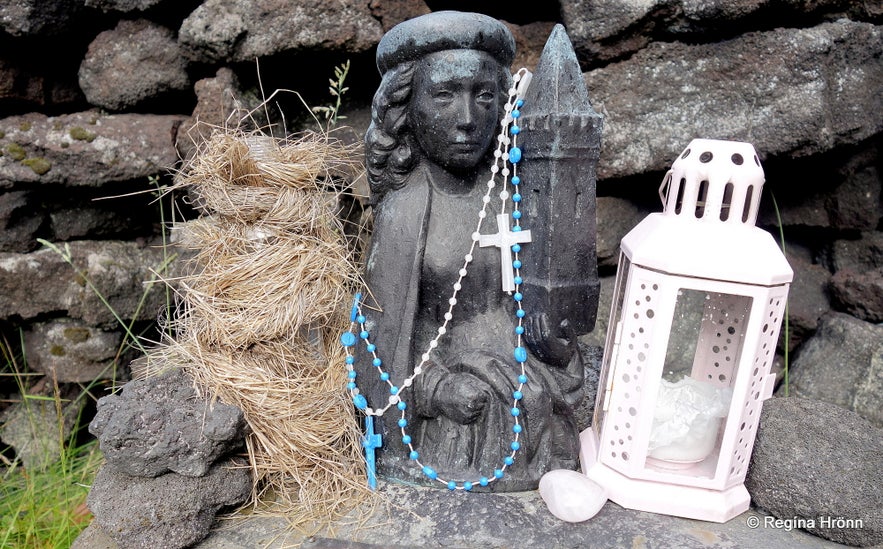 There were many religious objects in Barbörukapella the last time I visited it
Bishop Jón Arason at Hólar also had an image of St. Barbara stitched in his choir cope. I'll tell you about Jón Arason a little later in this travel blog.
Below is a photo I took back in the summer of 2010 of a replica of the choir cope of Jón Arason in Hóladómkirkja cathedral. The original is on display at Þjóðminjasafn Íslands.
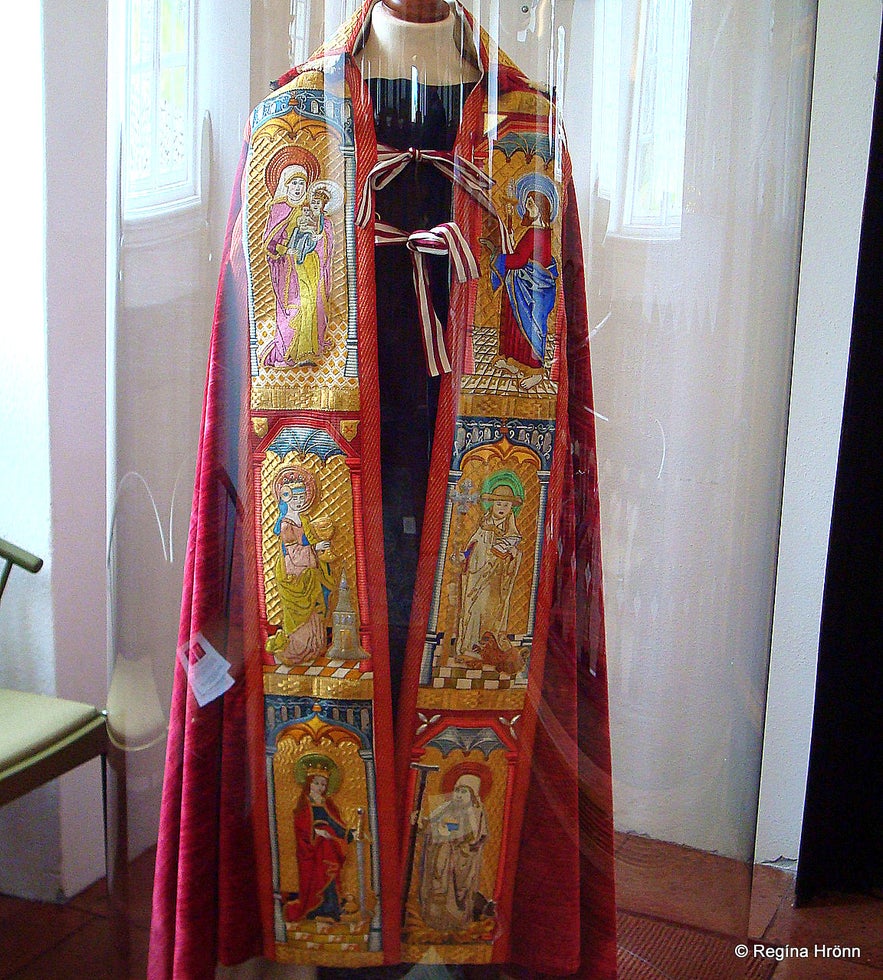
A replica of the choir cope of Jón Arason at Hólar - St. Barbara is in the middle, to the left
This is what Þjóðsögur Jóns Árnasonar - the Compilation of Folklore by Jón Árnason says about the Kapelluhraun lava field - Volume II, page 78:
"In Gullbringusýsla county, a large lava field is to be found between Hafnarfjörður and Vatnsleysuströnd. A part of the lava field is called Kapelluhraun. It gets its name from a chapel in the lava.
The chapel is on the north side of the road, stacked with lava rocks in the shape of a "borg" (see photos of what we call "borghlaðið").
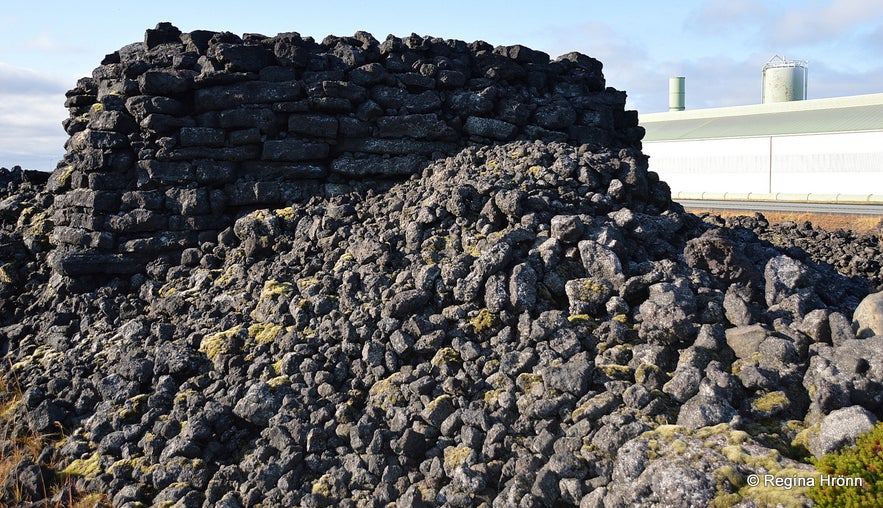
Barbörukapella chapel
The doors must have faced south, but now they are filled with dirt and moss. The northern part of the chapel is higher than the southern part.
The story goes that in the chapel is buried one of the procurators who was earlier at Bessastaðir. He was attacked in the lava field, killed, and buried here."
(Translated into English from Þjóðsögur Jóns Árnasonar - the Compilation of Folklore by Jón Árnason).
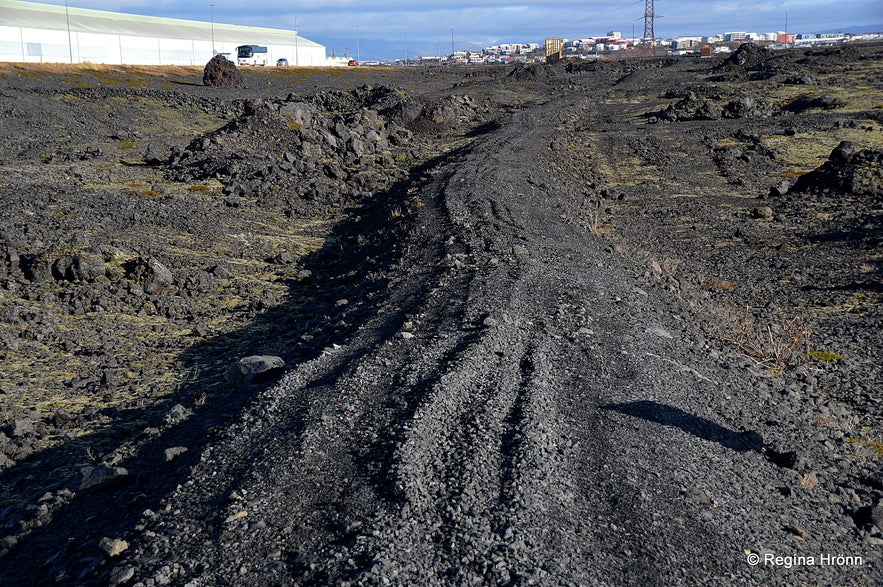
The gravel road leading to the chapel
What Jón Árnason is referring to has to do with the execution of Catholic Bishop Jón Arason and his two sons back in 1550.
Here, the folklore tells us that one of the men of Kristján skrifari, the envoy of the Danish Governor at Bessastaðir, was killed here and buried in the chapel.
Norðlendingar - the Northerners in 1551 killed many men to avenge the murder of the Catholic bishop Jón Arason at Hólar in Hjaltadalur in North Iceland and his two sons.
There were no signs of graves by the chapel, though, when Kristján Eldjárn examined the chapel in 1950 or 400 years later.
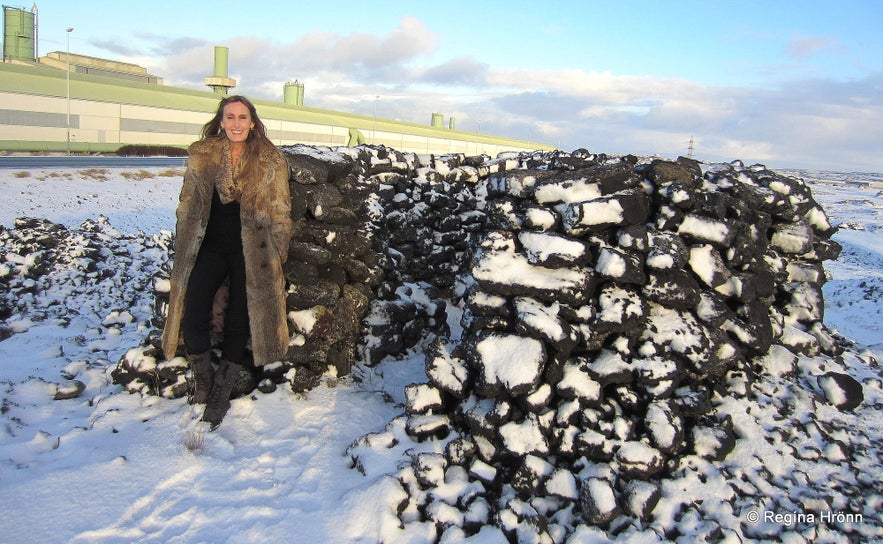
By Barbörukapella chapel in the wintertime
Many men were killed here at Suðurnes in revenge for this atrocity, the beheading of the Catholic bishop and his two sons, including Kristján skrifari, who was responsible for the beheadings.
He had been visiting Kirkjuból farm at Miðnes with his men, and the Northerners killed him there.
The men who had been killed at Kirkjuból were buried by the farm. The story goes that the body of Kristján skrifari was moved to Bessastaðir and that it might have been kept overnight in the Barbörukapella chapel.
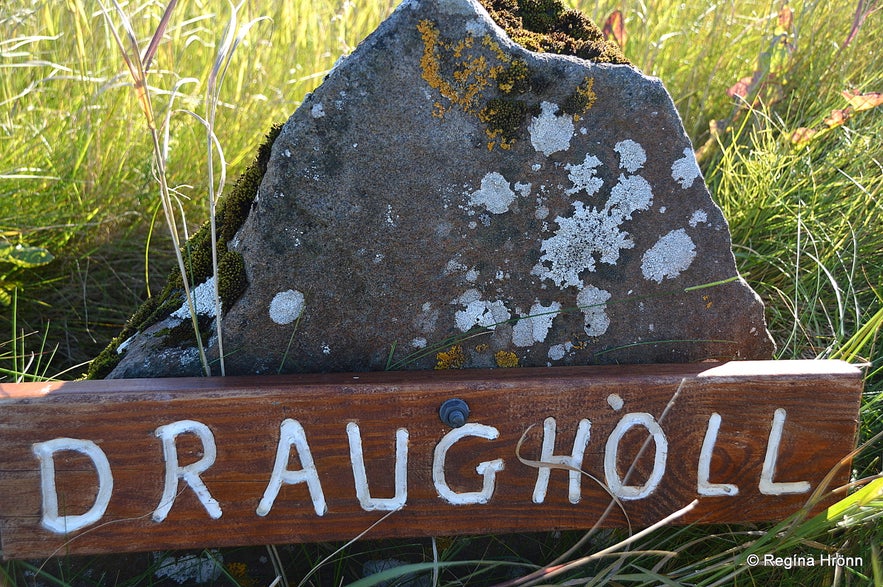
Draughóll - Ghost mound at Garður
The other men who had been killed at Kirkjuból started hunting the living (there are many such stories in the Icelandic Sagas, which are much older than these events).
What to do when this happens? Exhume the bodies, cut off their heads, and put their nose forward at their buttocks. That will stop them!
We went to Garður and Kirkjuból to see the locations of these events and found this rock with the sign Draughóll - Ghost mound. We must go back and find some ruins at Kirkjuból. We were not sure what to look for when we visited this location.
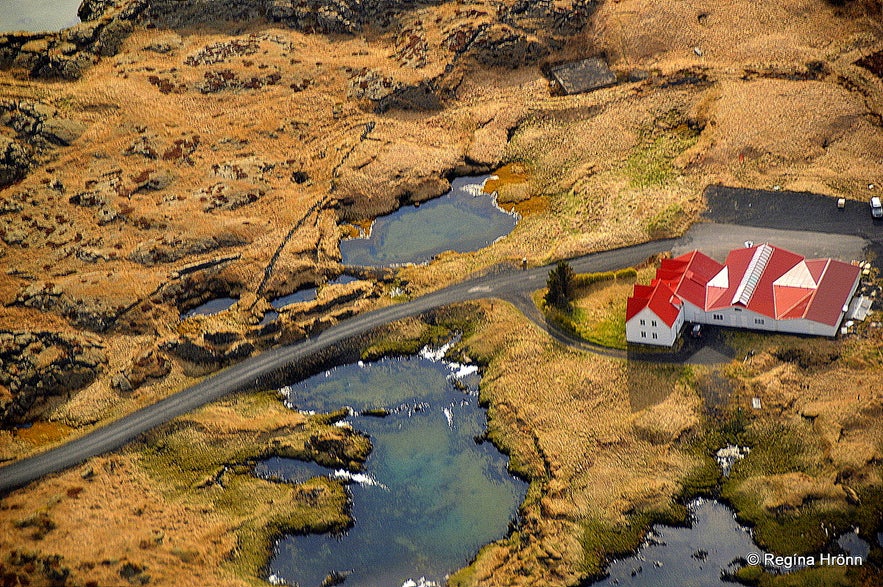
Straumur opposite the road from the chapel, as seen from a helicopter
The following year, the killings at Kirkjuból farm and the abuse done to the corpses were avenged, and the farmer at Kirkjuból was beheaded at Straumur for allegedly helping the Northerners enter his farm.
There are some really gruesome narratives regarding these killings, but I will spare you the gory details, as in this travel blog, I am focusing on the Barbörukapella chapel.
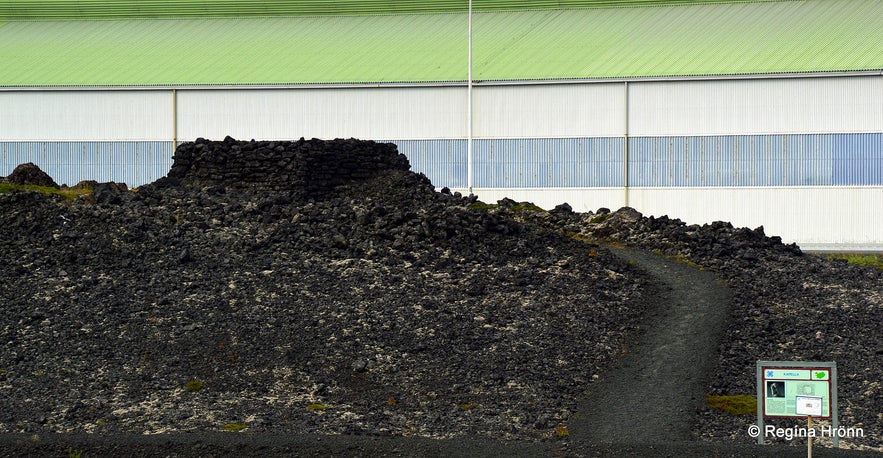
The chapel and the aluminum smelter in the background
Now, back to modern times. The aluminum smelter had expansion plans, but there is little room to expand because the Barbörukapella chapel is preserved.
Kristján Eldjárn said that the chapel in Kapelluhraun could be compared with the chapel on top of Mt. Helgafell on the Snæfellsnes peninsula: The Holy Mt. Helgafell on the Snæfellsnes Peninsula & the 3 Wishes.
And that in Christian countries, small chapels like this one, dating back to the Middle Ages, can be found by the road.
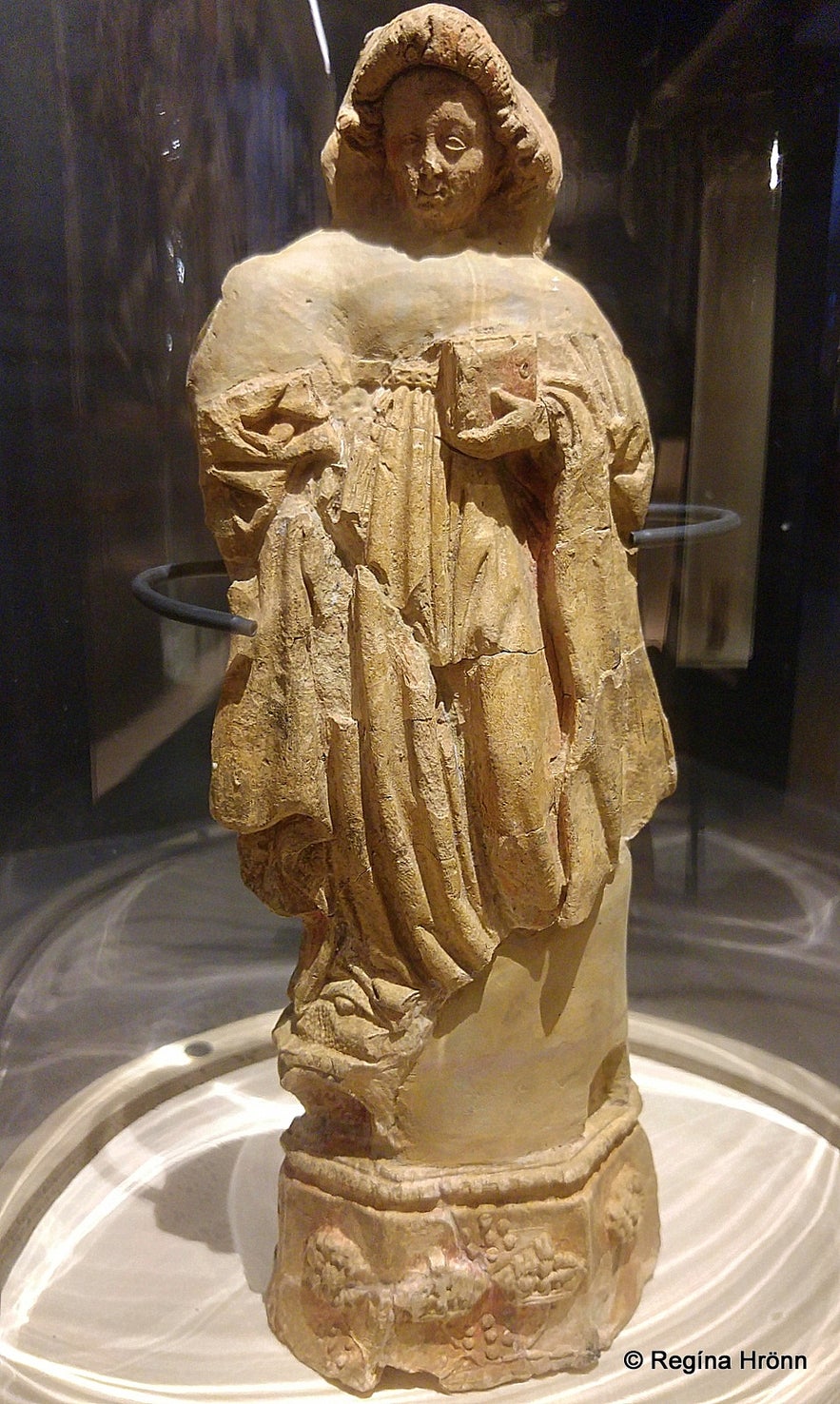
A statuette of St. Barbara found at Skriðuklaustur in East Iceland.
Kristján also mentions that sometimes crosses were erected so that people could pray, like the one I wrote about in my travel blog: Njarðvíkurskriður Screes and the Monster Naddi in East Iceland - Icelandic Folklore.
Another statue of St. Barbara was discovered in the ruins of Skriðuklaustur, an Augustinian monastery in East Iceland. Above is a photo I took of the statue during its temporary display at the National Museum.
I wrote another travel blog about Skriðuklaustur and the Archaeological Excavations in East Iceland, if you are interested in seeing the surroundings where the statue was found.
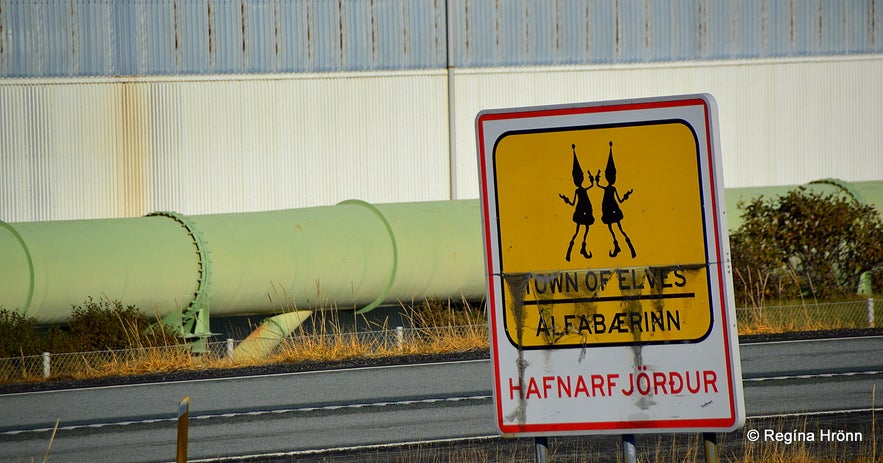
Hafnarfjörður - the Town of Elves
Barbörukapella chapel stands alone in the lava south of the town Hafnarfjörður, and it is well worth a visit. And close by is Straumur, where photographers love to take photos.
Hafnarfjörður town is known as the Town of Elves, as you can see from the sign above, which I zoomed in on from the Barbörukapella chapel.
It is also known as the Town in the Lava, as it is built on a lava field.
And the Viking town, where you will find the Viking Village.
The annual Viking Festival is held here in Hafnarfjörður: The Annual Viking Festival in Hafnarfjörður Town in Iceland.
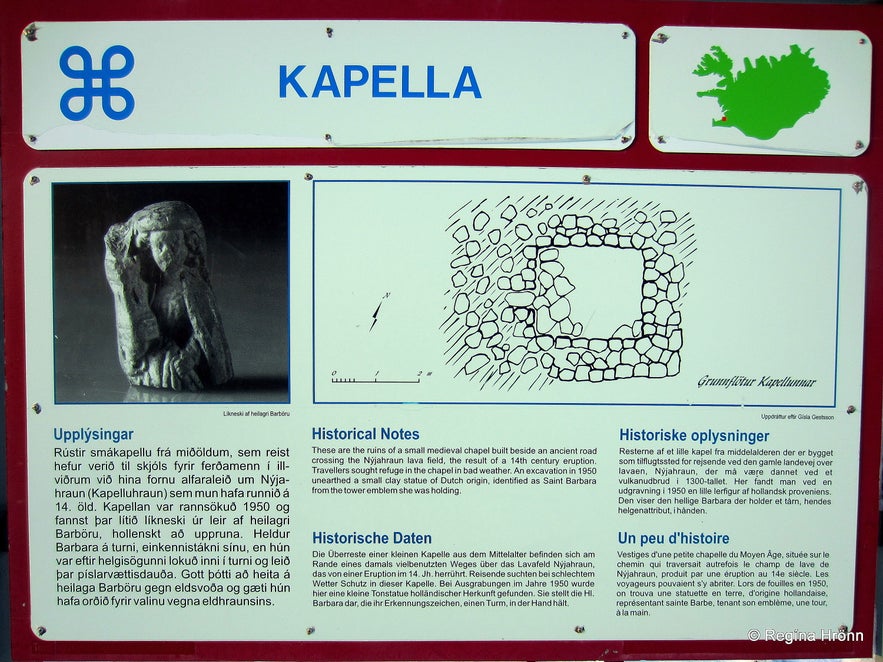
One of the information signs by Barbörukapella - erected by Þjóðminjasafn Íslands
Barbörukapella chapel is not marked on Google Maps, but Barböruvegur, the road leading to the chapel, is marked.
Sources and further reading (in Icelandic):
Kapelluhraun - Þjóðsögur Jóns Árnasonar II, page 78.
Hraunavinir - Kapellan í Kapelluhrauni
Fjarðarfréttir - Kapellan í Kapelluhrauni
Árbók his inslenska fornleifafélags 1955 - Kapelluhraun og Kapellulág - Kristján Eldjárn
Árbók hins íslenska fornleifafélags - af heilagri Barböru og uppruna hennar
Ferlir - Kapellan í Kapelluhrauni
Ferlir - Kapellan í Hrauninu og Heilög Barbara
Ferlir - Aftaka Jóns biskups Arasonar og atburðir á Suðurnesjum

Hi, my name is Regína Hrönn, and I was born and raised here in Iceland.