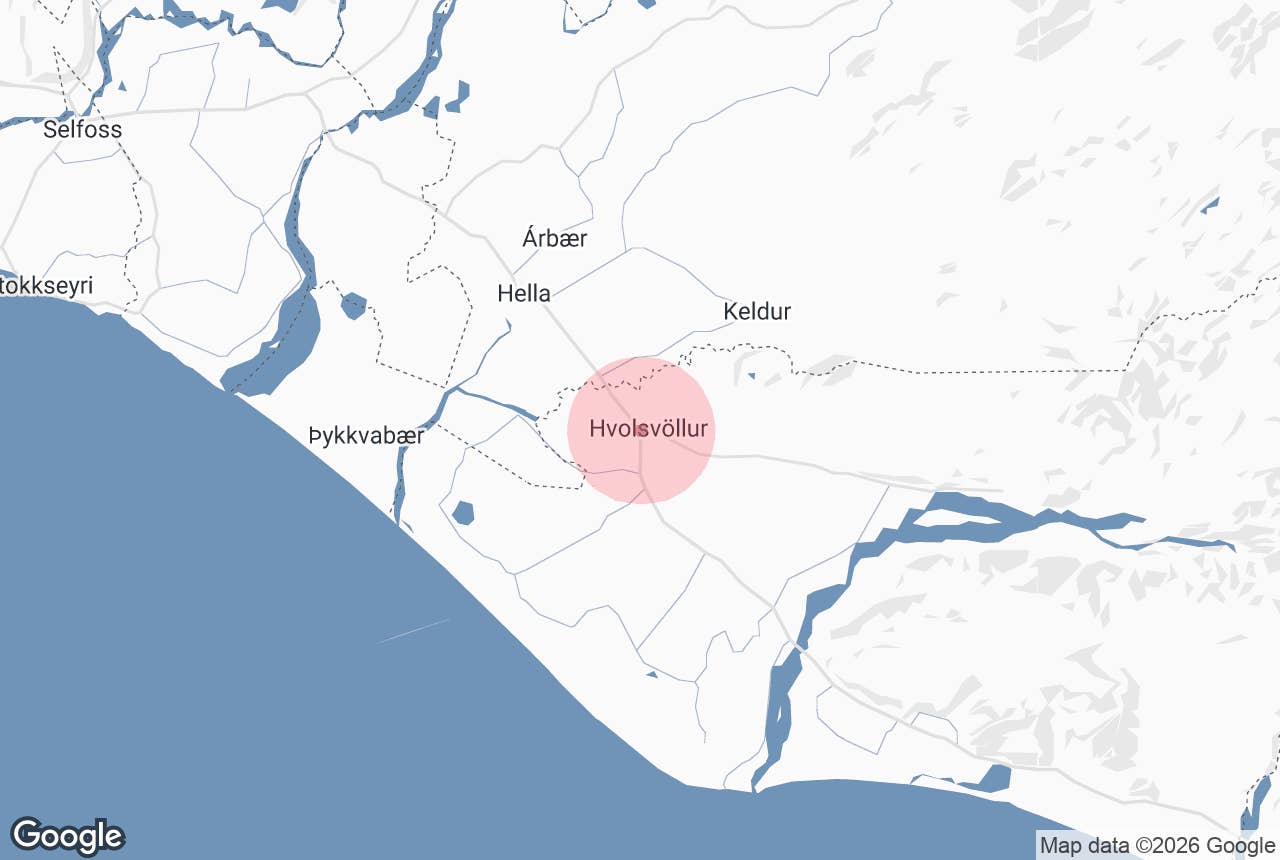
Located on the Ring Road, Hvolsvollur provides direct access to landscapes commonly associated with South Coast tours. Its position between the coastline and the volcanic interior makes it a practical reference point for understanding how Iceland’s natural systems intersect in this part of the island.
Hvolsvollur also functions as a natural gateway toward inland routes connected to Highland tours, particularly those leading toward Thorsmork and Landmannalaugar. This role is reinforced by seasonal transport links and infrastructure that support travel beyond paved coastal roads.
It also works well for travelers on self-drive excursions and for those interested in Viking history and saga tours, with nearby sites connected to Njals Saga and the early Icelandic Commonwealth. Museums, cultural landmarks, and preserved landscapes around town help place these stories in a real geographic setting.
The sections below explore what to see, how to get around, and where to stay and eat, helping you understand how Hvolsvollur fits into a South Iceland itinerary.
Why You Can Trust Our Content
Guide to Iceland is the most trusted travel platform in Iceland, helping millions of visitors each year. All our content is written and reviewed by local experts who are deeply familiar with Iceland. You can count on us for accurate, up-to-date, and trustworthy travel advice.
Key Takeaways
-
Hvolsvollur is a strong base on Iceland’s South Coast, offering convenient access to waterfalls, coastal sights, the Highlands, and the Westman Islands without the crowds of larger towns.
-
Major attractions are a short drive away, including Seljalandsfoss, Gljufrabui, Skogafoss, Gluggafoss, Nauthusagil, Efra-Hvolshellar, and Keldur Turf House.
-
Hvolsvollur works well for self-drive travel, sitting directly on the Ring Road with reliable services, fuel, EV fast charging, and winter road maintenance.
-
Accommodation options cover multiple travel styles, including full-service hotels, cabins, hostels, and a well-equipped campground.
-
The town has essential services and dining, which makes it a practical resupply stop before continuing east, heading inland, or starting multi-day hikes.
Is Hvolsvollur Worth Visiting?
 Yes. Hvolsvollur is worth visiting because it combines location, access, and everyday services in a way few South Coast towns do. It sits about 66 miles (106 kilometers) east of Reykjavik on the Ring Road, which makes it easy to reach while placing you closer to many of South Iceland’s most important landscapes.
Hvolsvollur works especially well as a base for the South Coast, with major waterfalls, black sand beaches, and coastal landmarks all within short driving distance. At the same time, it functions as a gateway to the Highlands, offering seasonal bus access to Thorsmork and Landmannalaugar without the need to drive F-roads yourself.
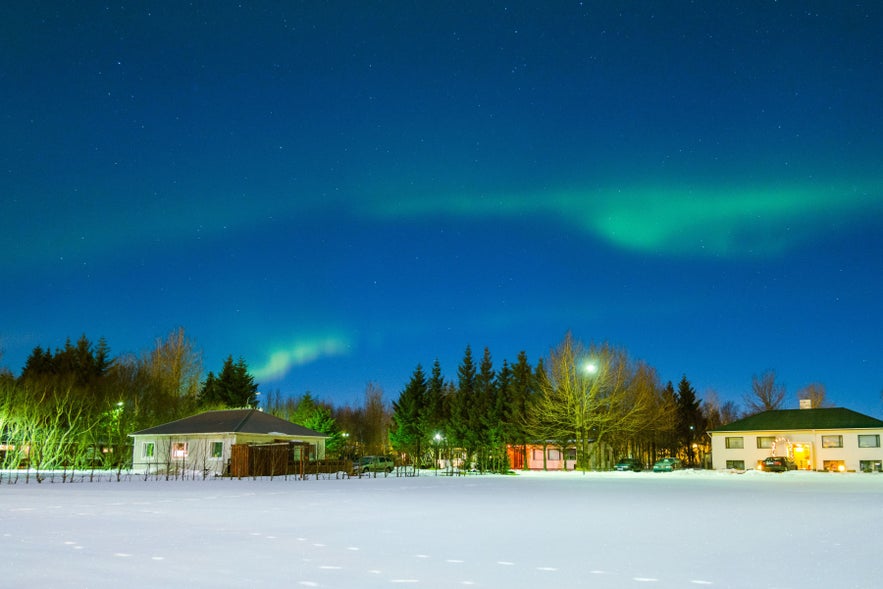
The town also stands out for its practical advantages. It has reliable fuel stops, grocery stores, restaurants, and a range of accommodations. Low light pollution supports northern lights viewing in winter, while cultural sites connected to Njals Saga add historical depth to the surrounding scenery.
Top 5 Things To Do in Hvolsvollur
Hvolsvollur has several cultural and indoor attractions that make it worth stopping beyond its location on Iceland’s South Coast. Things to do in Hvolsvollur include visiting volcano museums, learning about Viking history, checking local art projects, and exploring small shops that are easy to visit in a short amount of time.
5. Explore the Hiking Trails Around Hvolsvollur
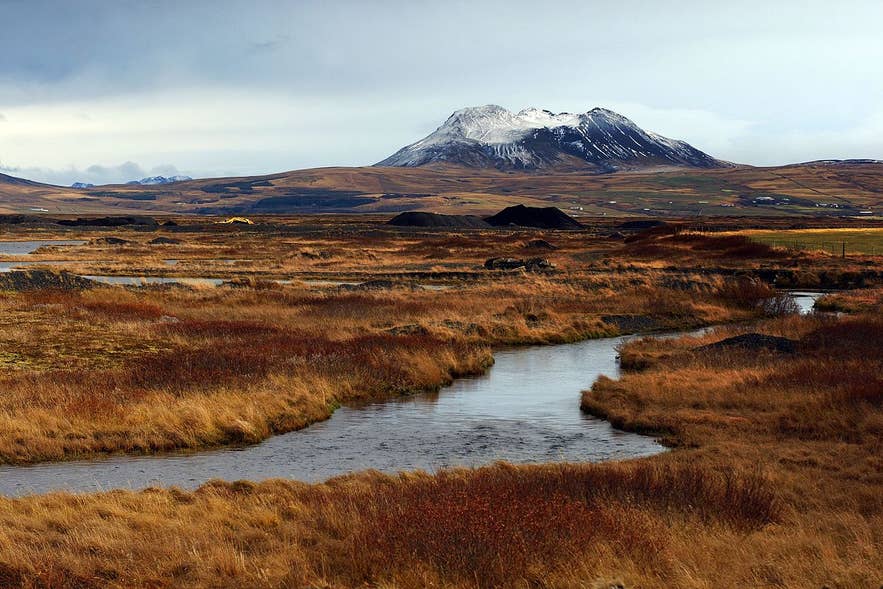
Several hiking trails in and around Hvolsvollur range from easy town walks to longer mountain routes. They offer accessible options for anyone interested in hiking in Iceland.
In town, the 1.2-mile (2-kilometer) Hvolsfjall Trail takes about one hour, while the 2.6-mile (4.2-kilometer) Hvolsvollur Training Trail offers several possible routes. Both are convenient choices if you want to explore on foot without driving elsewhere.
Farther afield, you can walk through the woodlands at Tumstadir or hike Thrihyrningur, Thorolfsfell, and Stora-Dimon. These routes vary from a one-hour climb to mountain hikes lasting up to five hours.
4. Relax at the Hvolsvollur Swimming Pool
Posted by Íþróttamiðstöðin Hvolsvelli on Friday, March 21, 2025
The Hvolsvollur Swimming Pool, also known as Hvolsvollur Sundlaug, is a good place to unwind, especially after a day of sightseeing along Iceland’s South Coast. Like most local pools in Iceland, it is used by both residents and travelers, which makes it a simple way to experience everyday life in the town.
The facility includes a main outdoor pool, hot tubs, and a sauna. Visiting the pool is a practical stop if you are staying overnight in Hvolsvollur or passing through between major attractions.
3. Discover Breidabolstadarkirkja Church
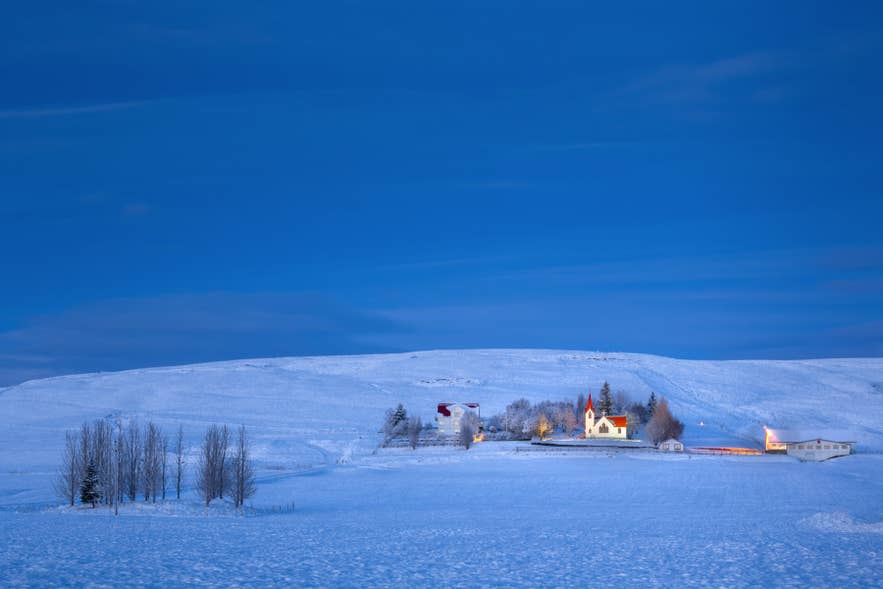
Breidabolstadarkirkja is a historic wooden church located in the countryside near Hvolsvollur. The site has long been part of the region’s religious history, which makes it a meaningful stop for travelers interested in Icelandic heritage beyond the major attractions.
The present church was built in 1911 and reflects traditional rural church architecture, with a wooden structure and a peaceful setting surrounded by farmland. It is best visited as a short stop while exploring the area, especially if you enjoy quiet historic sites and scenic drives through South Iceland.
2. Visit the Lava Centre Volcano Museum
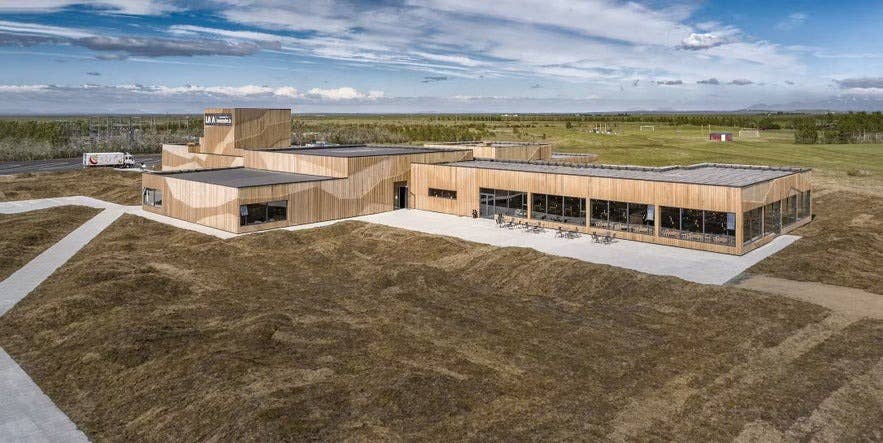 The Lava Centre is an interactive volcano museum in Hvolsvollur that explains how Iceland’s volcanoes, earthquakes, and tectonic plates shape the island. It is one of the top things to do in Hvolsvollur for families and travelers interested in Iceland’s geology.
Admission to the Lava Centre allows you to explore hands-on exhibits that simulate earthquakes, explain different types of magma, and show how volcanic eruptions form. The displays are designed to be clear and engaging, even if you have no background in geology.
Get your 4K volcano cinema ticket at the LAVA Centre, a highlight that features footage of recent Icelandic eruptions, including the 2010 Eyjafjallajokull eruption that disrupted air travel across Europe. On clear days, visit the rooftop observation platform for 360-degree views of the surrounding volcanic landscape.
This is a reliable indoor activity in South Iceland and a good choice in bad weather. The interactive layout also makes it suitable for families visiting Iceland with children and first-time visitors.
1. Shop for Local Products at UNA
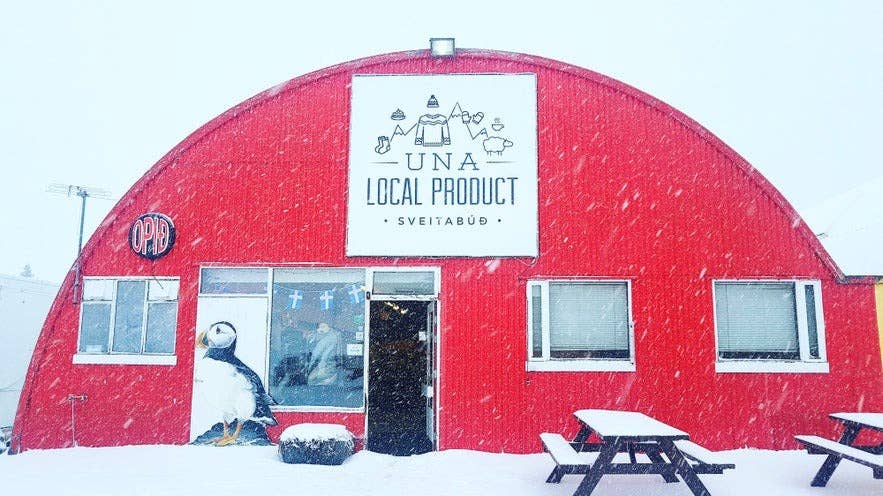 UNA Local Product, also known as Sveitabudin Una, is a small shop in Hvolsvollur focused on locally made goods and regional food products. It is one of the best places in South Iceland to buy authentic Icelandic souvenirs that are not mass-produced.
Inside, you find handmade items such as hand-knitted lopapeysa sweaters made by local residents, alongside a changing selection of Icelandic food products and an assortment of gifts. Shopping here is a simple way to support local makers and producers.
Best Attractions Near Hvolsvollur
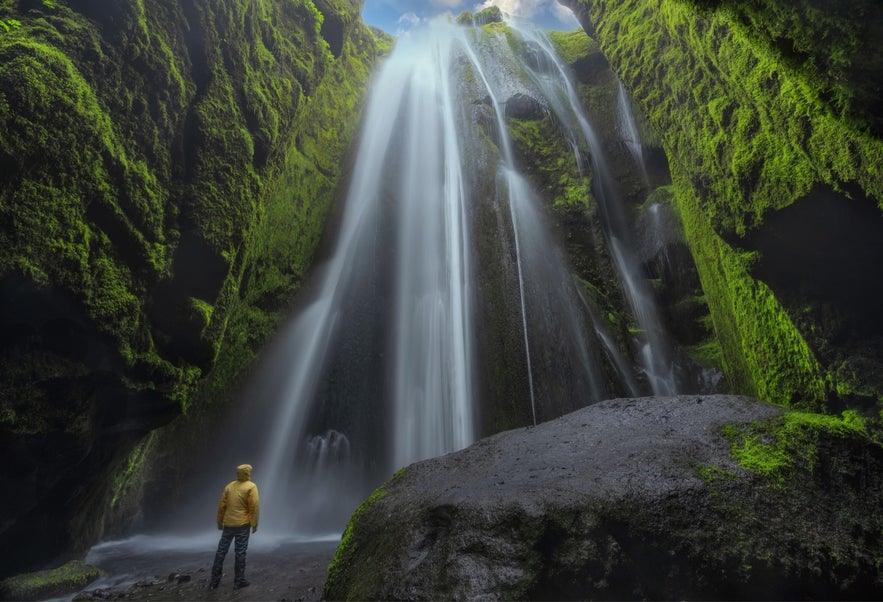 Hvolsvollur is surrounded by a mix of well-known South Coast sights and quieter local attractions, all within easy driving distance. Using the town as a base makes it easier to combine major highlights with lesser-visited sites and explore the area at a more flexible pace.
South Coast’s Top Waterfalls
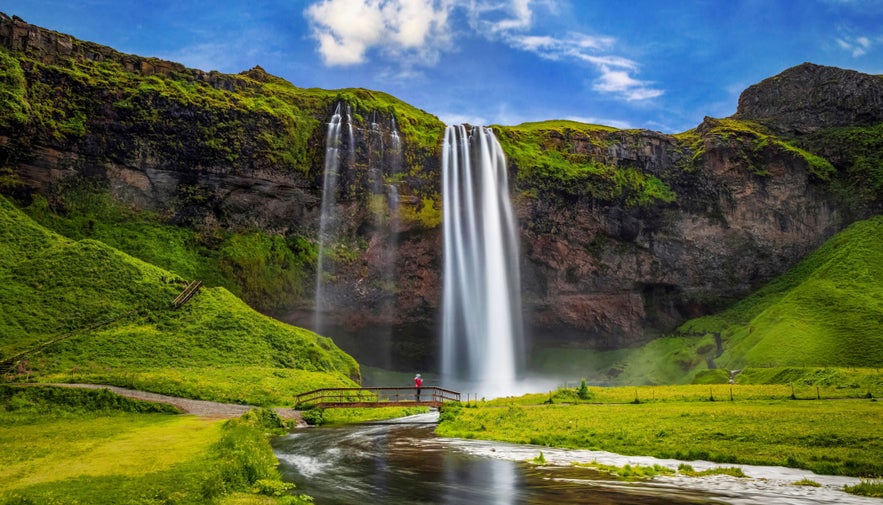 Seljalandsfoss, Gljufrabui, and Skogafoss are three of the most famous South Coast waterfalls, all within easy driving distance of Hvolsvollur. Staying in town lets you visit early in the morning or later in the evening, when crowds from Reykjavik day tours are lower.
-
Seljalandsfoss: One of the top walk-behind waterfalls in Iceland, with a drop of about 200 feet (60 meters). Expect heavy spray year-round.
-
Gljufrabui: Just a short walk from Seljalandsfoss, this waterfall is hidden inside a narrow canyon. Reaching it requires wading through shallow water into a roofless cave where the waterfall drops directly in front of you.
-
Skogafoss: One of Iceland’s most striking waterfalls, measuring about 82 feet (25 meters) wide and 200 feet (60 meters) tall. A staircase leads to a viewpoint above the falls and the start of the Fimmvorduhals Trail.
Gluggafoss (Window Waterfall)
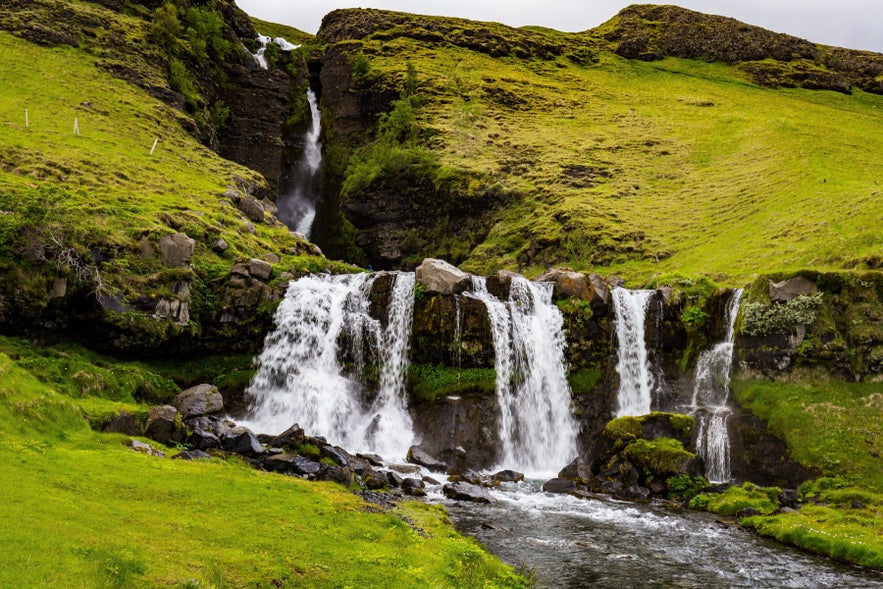
Gluggafoss, also known as Merkjarfoss, is about 13 miles (21 kilometers) from Hvolsvollur. The protected waterfall stands 131 feet (40 meters) high and is known for the unusual openings carved into its cliff.
The waterfall's name comes from gluggi, the Icelandic word for “window.” Water has carved tunnels, grooves, and window-like openings through the soft palagonite rock above a lower basalt ledge. The river also passes beneath a natural stone arch at the top.
From Hvolsvollur, drive about 13 miles (21 kilometers) along Road 261 to reach Gluggafoss. Visitors report a small parking area just off the road and a short, generally easy walk to the base of the waterfall. Reaching the upper section involves a steeper uphill path.
Nauthusagil (Rowan Tree Canyon)
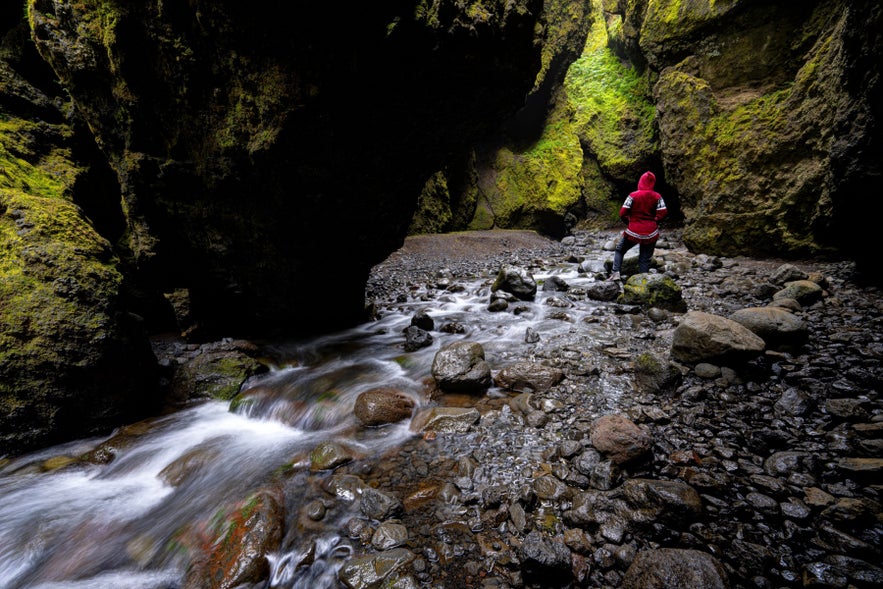
Nauthusagil is a deep, narrow ravine beneath the Eyjafjoll Volcanic System. The canyon is known for the rowan trees growing along its ridge. Their multiple trunks lean over the ravine, with some extending almost horizontally above it. Local tradition considers the wood holy and says cutting it brings bad luck.
The route follows the river to a waterfall about 7 to 10 feet (2 to 3 meters) high. Visitors can climb the rock beside it before continuing to a larger waterfall farther inside the ravine. It is also possible to walk along the western rim for views into the canyon and toward a third waterfall.
Nauthusagil is reached from Road 249, about 20 miles (32 kilometers) by road from Hvolsvollur. Visitors follow a gravel approach before walking through shallow sections of the stream, so waterproof boots are recommended. The final section is more challenging and requires careful footing on wet rocks.
Drangurinn at the Rock of Elves and Outlaws
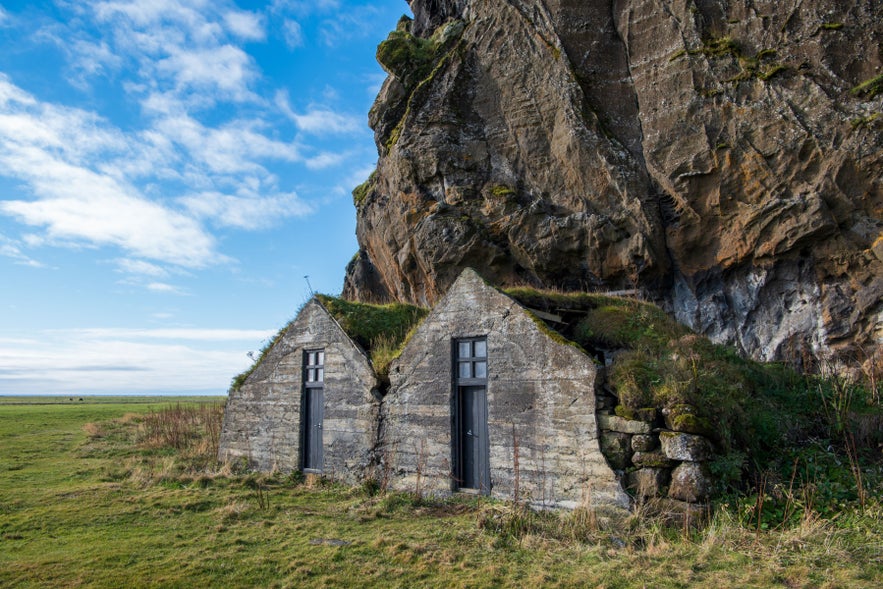
Drangurinn is a tuff rock formation standing alone on the grazing land of Drangshlid Farm at the foot of the Eyjafjoll Mountains. The rock and its immediate surroundings are protected and located on private land.
According to local folklore, Grettir Ásmundsson knocked the rock out of the Hrutafell Cliff while demonstrating his strength, leaving a pass in the ridge above Skardshlid. Geologists instead consider Drangurinn the remains of an old sea stack composed mainly of palagonite tuff and breccia.
Erosion created caves and grottoes in the rock that were later incorporated into farm buildings, including farm sheds, barns, and stables in or beside Drangurinn. Several buildings remain as examples of traditional Icelandic farm structures.
Drangurinn is about 29 miles (46 kilometers) east of Hvolsvollur along Route 1. Visitors report free parking at the entrance and a short walk to the rock. Follow posted signs during your visit.
Keldur Turf House and Medieval Tunnel
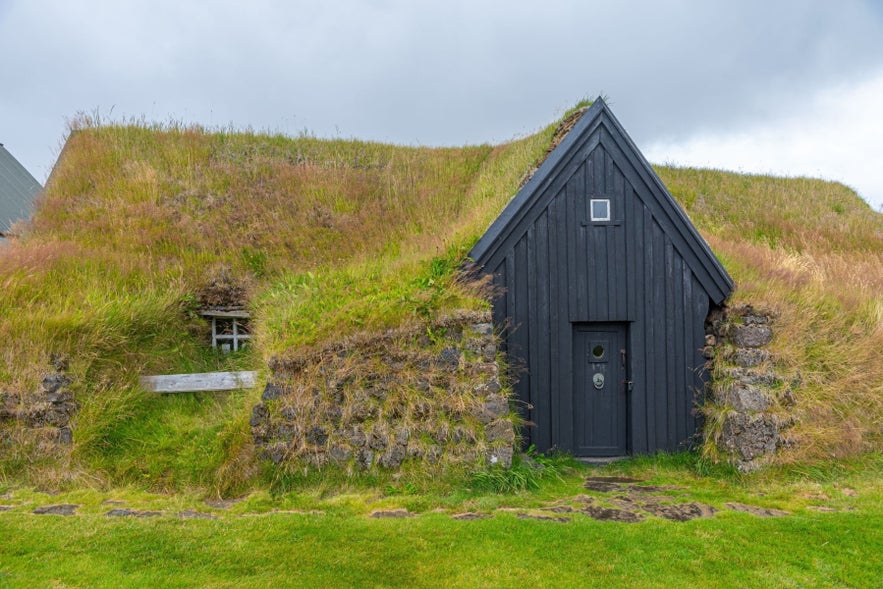
Keldur Turf House, about 10 miles (16 kilometers) from Hvolsvollur, is the oldest surviving farmhouse in the country. It is also the only large traditional site among the preserved turf houses in Iceland found in South Iceland.
The farm appears in several medieval works, including Njals Saga. A tunnel believed to date from the 12th or 13th century runs from the main hall toward the stream and may have served as an escape route during periods of conflict.
Most of the present farmhouse dates from the 19th century, although it contains older timber. The complex is part of the National Museum of Iceland’s collection and preserves an important example of Iceland’s architecture.
Keldur generally opens to visitors from June through August. Check the latest opening dates, hours, and admission fees before visiting.
Efra-Hvolshellar (Ancient Irish Caves)
Efra-Hvolshellar consists of three human-made sandstone caves. The Top and Center caves are connected by a short passage, while the 148-foot (45-meter) Big Cave is believed to be Iceland’s second-longest human-made cave.
The route is manageable for most visitors, though the final approach includes steep steps. Take care inside, as parts of the ceiling may be unstable, and note that winter snow can temporarily prevent access.
From Hvolsvollur, take Road 261 and then Road 262, following the signs to the parking area. A 525-foot (160-meter) path leads from the parking area to the caves. A nearby bench offers a place to rest and enjoy the surrounding countryside.
Getting To and Around Hvolsvollur
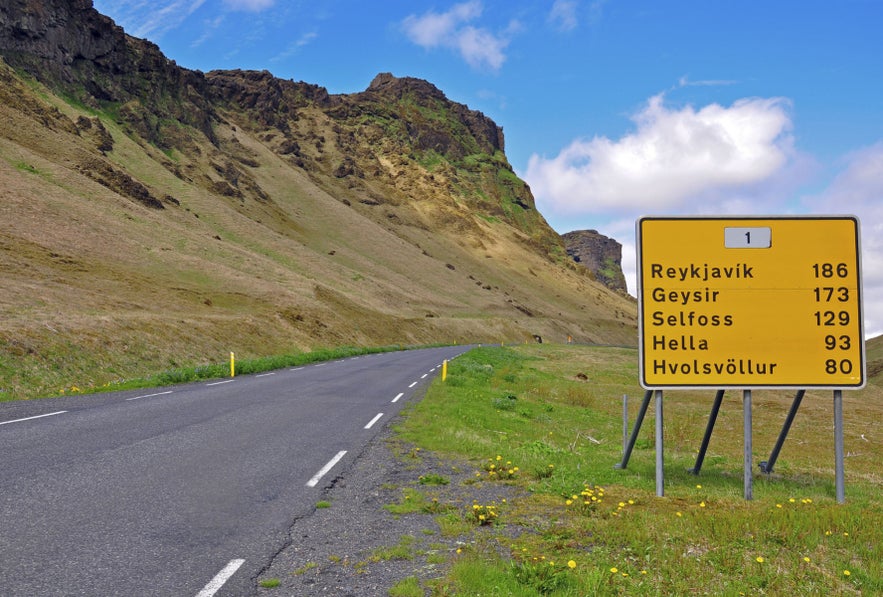 Getting to Hvolsvollur is straightforward, and the town makes it easy to continue exploring the South Coast and beyond. Below, you’ll find the main ways to arrive, move around locally, and connect to the Highlands and nearby islands.
Driving From Reykjavik to Hvolsvollur
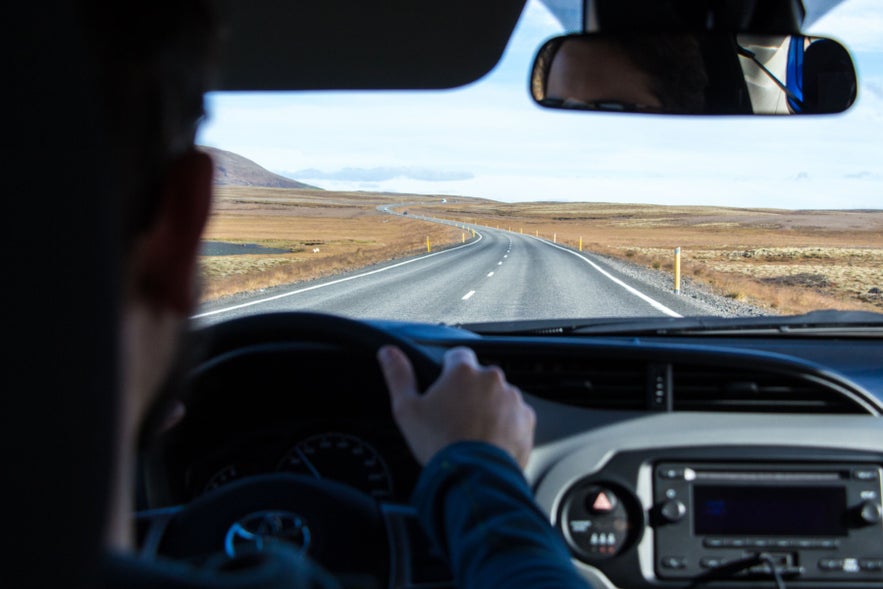
The drive from Reykjavik to Hvolsvollur follows Route 1 for about 66 miles (106 kilometers). It usually takes around 1 hour and 30 minutes in good conditions, although weather and traffic can affect the journey.
The route crosses the Hellisheidi Plateau before passing Hveragerdi, Selfoss, and Hella. Strong winds and sudden weather changes can affect the journey around Hellisheidi, so check road conditions before setting out.
EV tip: A fast-charging station by the Lava Centre in Hvolsvollur offers charging speeds of up to 210 kW. Check the charging operator’s live map or app for availability before arriving.
Regional Public Transport From Hvolsvollur
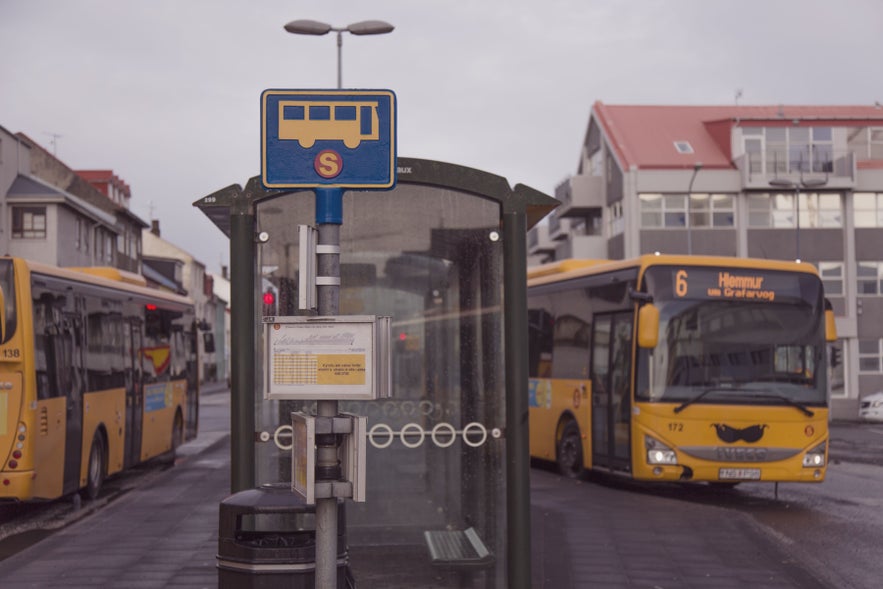
Hvolsvollur is a stop on Straeto Route 52, which runs between Reykjavik and Hofn. The route also serves South Coast destinations such as Hella, Skogar, Vik, Skaftafell, and Jokulsarlon. Services do not run every day, and timetables can change, so check the latest bus schedule when planning your trip.
Public transport can help travelers reach some towns and major stops along the South Coast, but it offers limited flexibility for visiting attractions around Hvolsvollur. South Coast tours, taxis, or rental cars may be needed for places that are not served directly by the bus.
Highland Bus Connections From Hvolsvollur
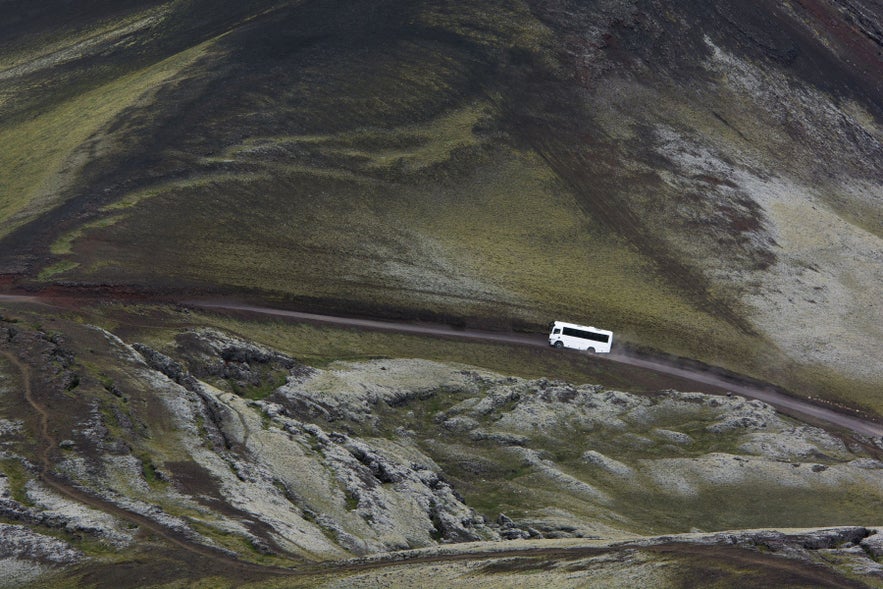
During the summer season, seasonal Highland buses stop at the N1 gas station in Hvolsvollur on their way to Thorsmork. Services generally operate from June into September, but dates vary by company and route.
A bus to Thorsmork from Hvolsvollur takes around 1.5 hours, depending on the destination and road conditions. Taking the bus avoids driving Road 249, which requires 4x4 vehicles and has rough sections and unbridged river crossings.
These services are especially useful for hikers beginning or ending the Laugavegur Trail. Some companies also run buses from Hvolsvollur to Skogar during a shorter summer season.
Ferry Access to the Westman Islands
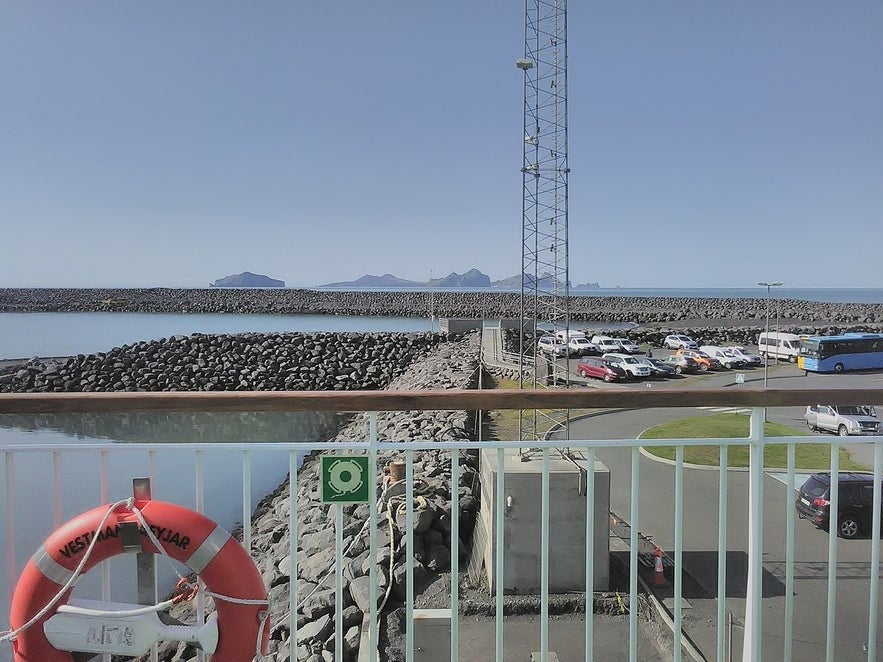
Although Hvolsvollur is inland, it is the closest service town to the mainland ferry terminal for the Westman Islands. It can serve as an overnight base before an early sailing or as a connection point for travelers using public transport.
Herjolfur normally departs from Landeyjahofn Terminal, about 19 miles (30 kilometers) south of Hvolsvollur. The drive takes around 25 minutes, while the crossing to Heimaey takes about 35 minutes.
Heimaey is the archipelago’s only inhabited island and has Westman Islands hotels and most of the area’s visitor services. Many attractions around the harbor and town are walkable, while Westman Islands tours provide access to places farther away.
Parking for ferry passengers at Landeyjahofn is free. Leaving the car on the mainland also avoids the additional vehicle fare, although taking it aboard offers more flexibility for exploring Heimaey.
Travelers without a car can take Straeto Route 53 directly from Hvolsvollur to Landeyjahofn. The trip takes around 27 minutes, but services are limited and schedules may change with the ferry timetable. Check both the bus schedule and ferry status before traveling.
Where To Stay in Hvolsvollur
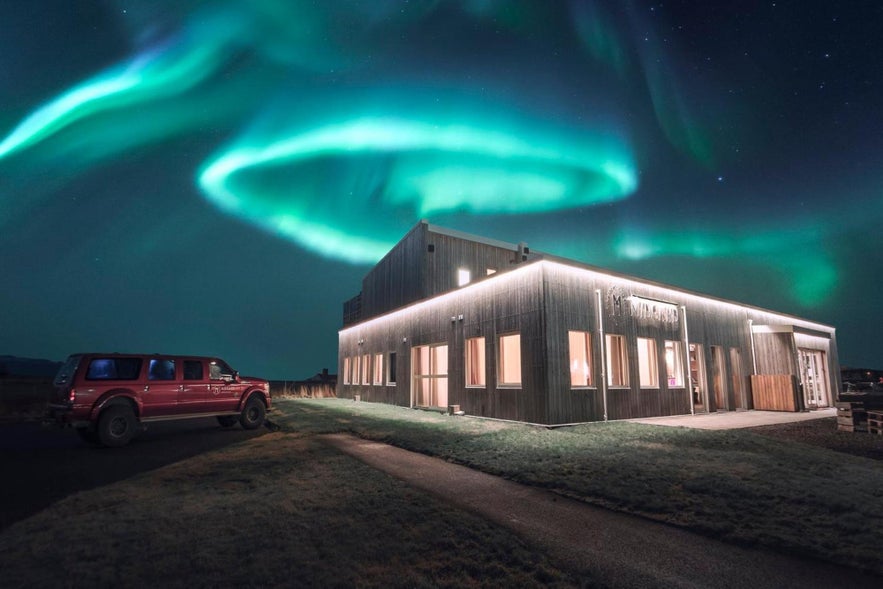 The accommodations in Hvolsvollur cover a small but varied range of travel styles. Options include centrally located hotels, countryside cabins, social lodges, and a well-equipped campground, depending on how you prefer to stay.
-
Hotel Hvolsvollur: This is a centrally located hotel that offers single, double, triple, and four-person rooms and an on-site restaurant. Hotel Hvolsvollur's location puts guests within walking distance of the town’s shops, restaurants, and other services.
-
Cottages and Cabins: Properties such as Chalet 1 and Cottage Vesturbaer provide more space and privacy in the countryside around Hvolsvollur. Their darker surroundings can also be suitable for northern lights viewing when skies are clear.
-
Midgard Base Camp: The camp combines private rooms with hostel-style shared accommodation. Midgard Base Camp's facilities include a restaurant and bar, a rooftop hot tub and sauna, and access to trips to the Highlands.
-
Hvolsvollur Camping Ground: The campsite welcomes tents and campervan rentals. Facilities include toilets, showers, simple cooking and dishwashing areas, laundry machines, electricity, and waste disposal for campervans. Check the current opening dates before visiting.
Where To Eat in Hvolsvollur
 Hvolsvollur has a small but practical food scene that fits well into a South Coast road trip. The places below offer reliable meals and casual dining options that travelers often look for when searching for the best restaurants in the South Coast.
-
Gallery Pizza: This casual restaurant in central Hvolsvollur serves pizzas, salads, sub sandwiches, burgers, fish, and chicken dishes. Gallery Pizza also has a second location at Landvegamot, near Hella.
-
Midgard Restaurant: Located inside Midgard Base Camp, this relaxed restaurant and bar serves Icelandic meat and fish alongside vegetarian and vegan dishes. Current menu options include the Adventure Burger, salmon pasta, Arctic char, lamb, and a vegan burger.
-
Eldsto Art Cafe: This family-run restaurant, cafe, and ceramics gallery serves home-style Icelandic dishes on pottery made in its Hvolsvollur workshop. The menu includes lamb soup and plokkfiskur, while the gallery sells ceramics glazed with Icelandic materials.
-
Lava Cafe: Located inside the Lava Centre, this cafe is a convenient option for coffee, pastries, and a light meal. The menu includes hot and cold drinks, sandwiches, bagels, and vegan choices.
Why Hvolsvollur Is a Practical Base on Iceland’s South Coast
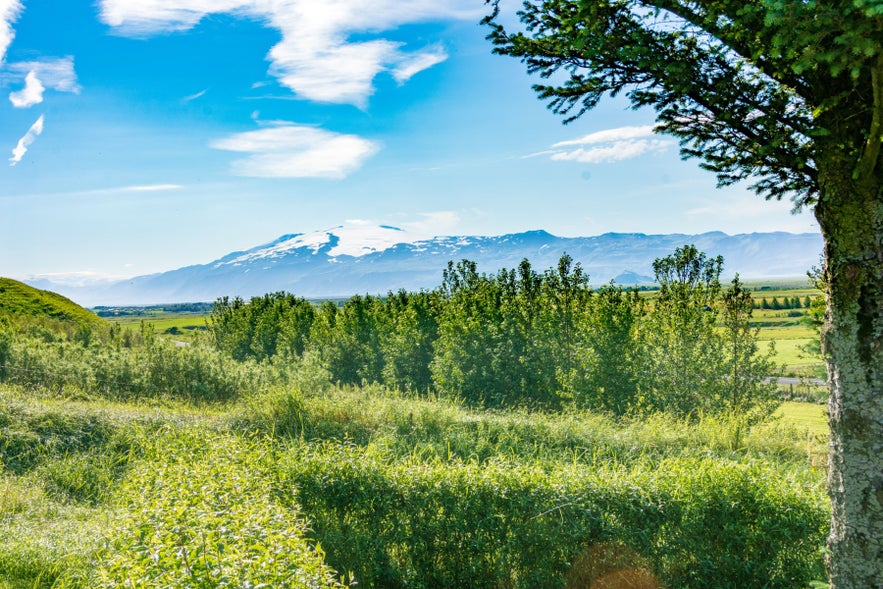 Hvolsvollur works well as a base on Iceland’s South Coast thanks to its central location and strong transport links. It provides easy access to major waterfalls, Highland routes, and the Westman Islands, while maintaining a quieter atmosphere than larger towns along the Ring Road.
The range of services, accommodations, and dining options supports both short stopovers and multi-night stays. Staying in Hvolsvollur helps streamline travel planning and reduces unnecessary driving between key sights.
For a South Iceland itinerary, it offers a practical balance of accessibility, infrastructure, and proximity to some of the region’s most important attractions. Choosing Hvolsvollur places you closer to the landscapes that define South Iceland, without the pressure of constant long-distance driving.
How far is Hvolsvollur from Reykjavik?
How long does it take to drive from Hvolsvollur to Vik?
Can you see the northern lights in Hvolsvollur?
You can also join guided northern lights tours in Iceland. Sightings are never guaranteed because they depend on cloud cover and solar activity.
Is Hvolsvollur a good base for the South Coast?
Is Hvolsvollur a good destination for winter travel?
Winter storms, snow, and ice can still disrupt road and bus travel. Check current road conditions before setting out and keep your plans flexible.
Can you visit Thorsmork or Landmannalaugar as a day trip from Hvolsvollur?
Do I need a 4x4 vehicle to visit Hvolsvollur?
A suitable 4x4 is required for F-roads, but vehicle requirements vary by route. Some Highland roads have unbridged rivers and require larger vehicles, so check road conditions and your rental agreement before traveling.
Where do I catch the bus from Hvolsvollur to Landmannalaugar or Thorsmork?
Are there grocery stores and services in Hvolsvollur?
When does Kjotsupuhatid take place in Hvolsvollur?