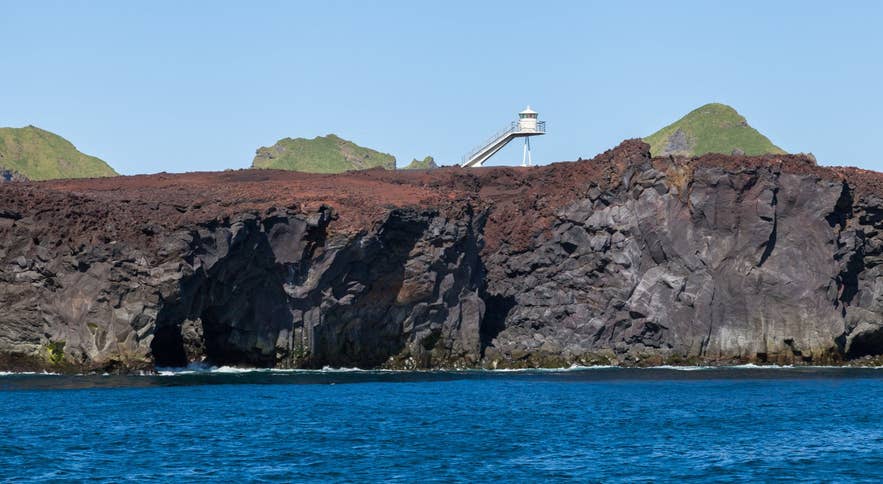
Urðaviti above the Heimaey lava cliffs. Photo: Diego Delso, CC BY-SA 4.0
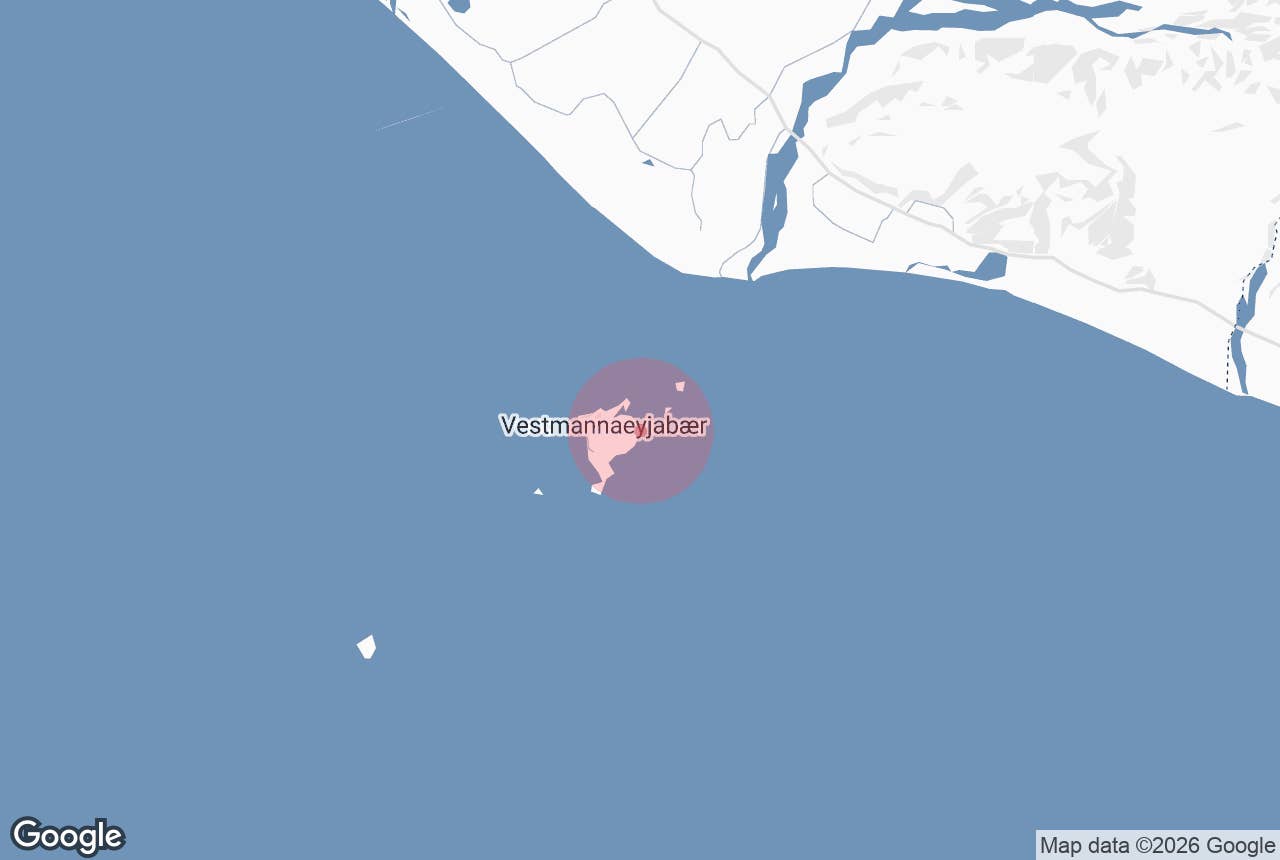
Urdaviti (Urðaviti, "the lighthouse at Urðir", urðir meaning a boulder field or scree) is a small lighthouse on the east coast of Heimaey, the only inhabited island of the Westman Islands (Vestmannaeyjar) off Iceland's south coast.
It stands on the seaward edge of the lava that poured out of Eldfell in 1973, a white lantern house raised on legs above the black rock, with a concrete stairway leading up to a viewing platform.
It is one of the easiest places on the island to stand on the 1973 lava and look straight out over the Atlantic.
Key Takeaways About Urðaviti
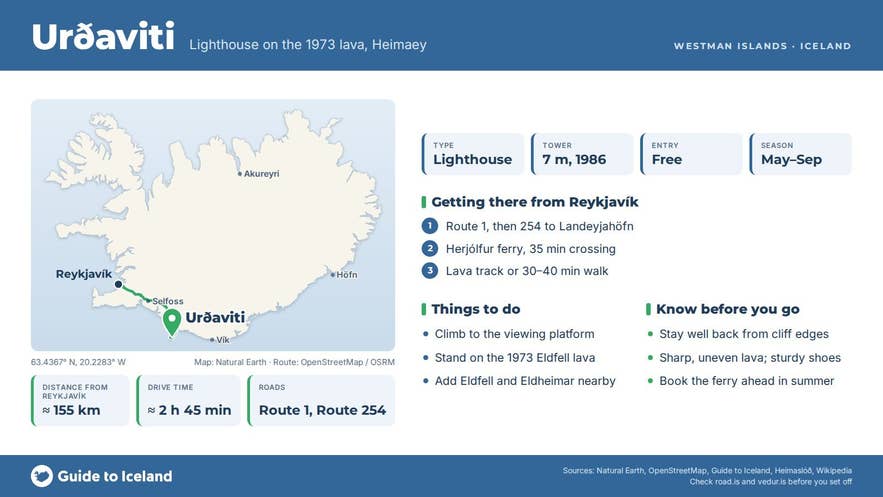
- Urðaviti stands on the seaward edge of the 1973 Eldfell lava on Heimaey's east coast, about 2 km in a straight line (3 km by road) from Vestmannaeyjar harbour.
- The first Urðaviti (1925) was buried by lava in 1973; the present 7 m lighthouse dates from 1986 and shows three flashes every 15 seconds.
- Concrete steps lead to an octagonal viewing platform; the lighthouse itself is not open inside.
- Reach Heimaey by the Herjólfur ferry from Landeyjahöfn (about 135 km, 2 hours from Reykjavík; about 35 minute crossing), or from Þorlákshöfn when Landeyjahöfn cannot be used, mostly in winter.
- Combine it with Eldfell and Eldheimar, both within 2 km; stay back from the eroding lava cliff edges.
Why visit Urdaviti
Urðaviti is as much a monument to the 1973 eruption as it is a working navigation light. The first lighthouse of this name was built in 1925 on the Urðir, a rocky stretch of Heimaey's old east shore. It was a modest structure, a three-metre iron frame clad in timber with a concrete lantern, lit by gas.
In January 1973 the Eldfell eruption opened a fissure on the east side of the island and the advancing lava buried the lighthouse, together with the old shoreline it stood on. Today the coast here lies hundreds of metres further out to sea than it did before the eruption.
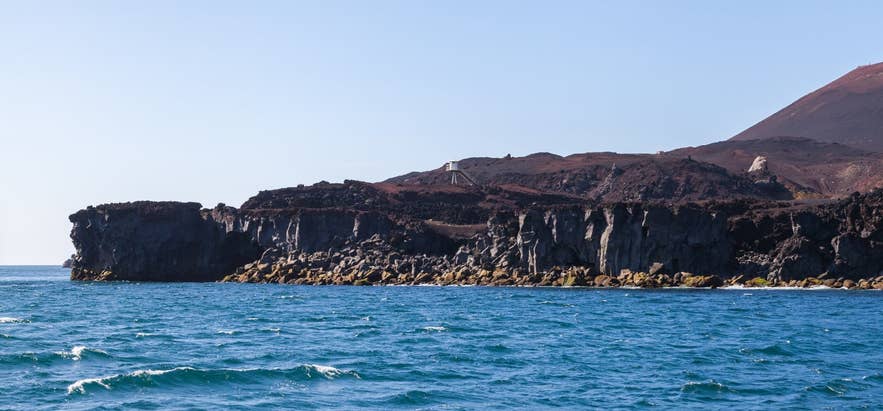
Lava coast at Urðaviti below Eldfell. Photo: Diego Delso, CC BY-SA 4.0
Three lighthouses have been built on the new lava since. The first, made of fibreglass, was lost when the lava edge collapsed beneath it into the sea. The second, a simple pole light, was removed before it met the same fate.
The lighthouse you see today was built in 1986, designed by engineer Steingrímur Arason, and was electrified from the start.
According to the 2002 lighthouse survey Vitar á Íslandi it is a 7-metre structure with its light 30 metres above sea level, showing a group of three flashes in white, red and green sectors every 15 seconds, visible for about 15 nautical miles.
What makes the visit worthwhile is the setting.
Concrete steps climb to an octagonal platform with a wide view: the open Atlantic to the east, the outlying islands of Bjarnarey and Elliðaey to the north-east, the red-brown cone of Eldfell directly behind you.
The raw, rust-coloured lava cliffs of the 1973 flow dropping into the sea on either side. Seabirds work the cliffs below in summer, and on a clear day the Eyjafjallajökull and Mýrdalsjökull glaciers are visible on the mainland.
How to get to Urdaviti
Heimaey is reached by the Herjólfur ferry from Landeyjahöfn on the south coast, roughly 135 km (about two hours) from Reykjavík via the Ring Road (Route 1) and Route 254. The crossing takes about 35 minutes.
When Landeyjahöfn cannot be used because of sand or swell, mostly in winter, the ferry sails from Þorlákshöfn instead, a much longer crossing of roughly three hours. You can bring a car on the ferry or walk on and explore Heimaey on foot, by rental car or with a local guide.
From Vestmannaeyjar harbour the lighthouse is about 2 km away in a straight line, on the far side of the new lava, and about 3 km by road: Eldfellsvegur (Route 239) east out of town, then the gravel track that crosses the 1973 lava to the lighthouse.
Check locally whether the track is open to private cars, as access on the lava can change. From the end of the track it is a short walk to the stairway.
If you prefer to walk from town, follow the same road and track across the lava from the Eldheimar museum area; it is an easy 30 to 40 minutes each way over uneven ground.
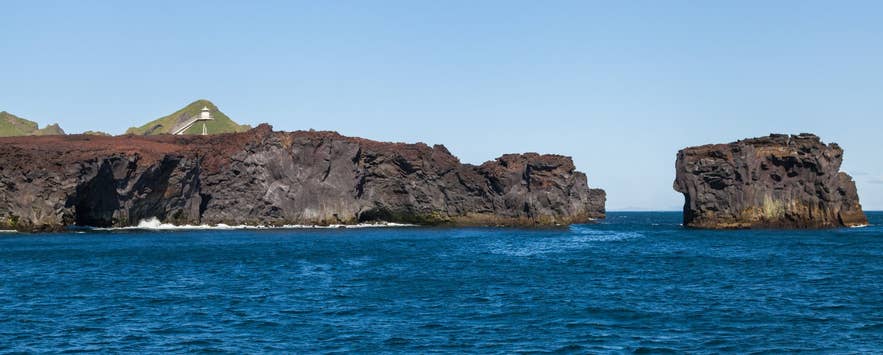
Urðaviti and Eldfell lava from the sea. Photo: Diego Delso, CC BY-SA 4.0
Best time to visit
Summer (May to September) gives the best weather, the longest days and the easiest ferry connection from Landeyjahöfn. Puffins and other seabirds are present around the island from roughly mid-April to August.
Evenings in June and July are particularly good for photographs, with low light on the red lava. The lighthouse can be visited year-round, but in winter the lava is often icy and the ferry may run from Þorlákshöfn, which makes a day trip from Reykjavík impractical.
Safety and practical tips
- The lighthouse stands at the edge of a lava cliff that is still being eroded by the sea. Stay on the stairway and platform and well back from the cliff edges, especially in wind.
- The 1973 lava is sharp, loose in places and uneven. Wear sturdy shoes and watch your footing.
- Weather in the Westman Islands changes quickly and the east coast is exposed. Bring a windproof layer even on sunny days.
- There is no fee and no opening hours; the lighthouse itself is not open inside. There are no facilities at the site. Toilets, cafés and shops are in Vestmannaeyjar town, about 3 km away by road.
- Check ferry schedules and book ahead in summer at herjolfur.is, as sailings fill up.
Can you go inside Urðaviti lighthouse?
Why is the lighthouse standing on new lava?
How long should I spend here?
Is it suitable for children?
Nearby attractions
- Eldfell Volcano – 1.1 km. The 1973 crater; an easy hike to the summit from the lava edge.
- Eldheimar – 1.6 km. Museum built around a house excavated from the 1973 ash.
- Skansinn Fort – 1.9 km. Old harbour defences and the stave church, at the edge of the new lava.
- Heimaklettur – 2.3 km. The island's highest cliff, above the harbour.
- Herjólfsdalur – 3.6 km. The green valley where Þjóðhátíð is held each August.
- Stórhöfði – 5.2 km. The southern headland, with another lighthouse and puffin colonies.
Tours that visit Urdaviti
- Private Westman Islands Day Tour with Ferry and Volcano Visit from Reykjavik – a full-day private tour that takes the ferry from Landeyjahöfn and stops at Urðaviti between the stave church and the Eldheimar museum, before a hike up Eldfell.