
Iceland weather & road conditions
Real-time weather, road conditions and closures always up to date
Today's outlook: Good
Heads up for today
 Heads up for today
One main route is closed (1). Most regions are good to travel.
- Largest Selection of Travel Services Experience all of Iceland's breathtaking beauty on any budget. Choose from thousands of tours, trips, and packages — including the northern lights, ice caves, whale watching, glacier hiking, and more.
- Best price guarantee Book with confidence. We offer the best available prices on Icelandic travel services, with no booking fees or hidden costs.
- Free cancellation & full refunds Plans change. Most bookings can be cancelled free of charge for a full refund, so you can plan your trip worry-free.
- Most Popular Website about Iceland Guide to Iceland is the world's largest marketplace for Icelandic travel services, trusted by millions of visitors every year.
Weather Forecast Map
Weather and road status by region next 6 days
Weather status
GoodModeratePoorRoad closures
OpenDifficultClosedReported incident
Weather & Roads By Regions
Current conditions across every region of Iceland.
Reykjavík
Southwest
BreezyDry8°C 46°F OvercastFeels like 6°C (43°F)
RoadsOpenGood day to travelReykjanes
Keflavík Airport
BreezyDry7°C 45°F OvercastFeels like 4°C (39°F)
RoadsOpenGood day to travelGolden Circle
Day-trip route
CalmDry5°C 41°F OvercastFeels like 5°C (41°F)
RoadsOpenGood day to travelSelfoss
South
BreezyDry5°C 41°F OvercastFeels like 3°C (37°F)
RoadsOpenGood day to travelSouth Coast
Seljalandsfoss to Vík
BreezyDry8°C 46°F OvercastFeels like 6°C (43°F)
RoadsOpenGood day to travelVík í Mýrdal
South coast
BreezyRainy8°C 46°F RainFeels like 5°C (41°F)
RoadsWetGood day to travelHöfn
Southeast
BreezySunny5°C 40°F Partly cloudyFeels like 3°C (37°F)
RoadsOpenGood day to travelEgilsstaðir
East
BreezySunny6°C 43°F Clear skyFeels like 2°C (36°F)
RoadsOpenGood day to travelBlönduós
Northwest
BreezyDry7°C 45°F CloudyFeels like 4°C (39°F)
RoadsOpenGood day to travelAkureyri
North
BreezySunny6°C 42°F Partly cloudyFeels like 3°C (37°F)
RoadsSlipperyRoads: Slippery
Take care drivingSnæfellsnes
West peninsula
BreezySunny8°C 46°F Partly cloudyFeels like 5°C (41°F)
RoadsOpenGood day to travelWestman Islands
South (islands)
BreezyDry8°C 47°F OvercastFeels like 6°C (43°F)
Roadsn/a — ferryGood day to travelÍsafjörður
Westfjords
CalmDry7°C 45°F CloudyFeels like 7°C (45°F)
RoadsOpenGood day to travelHighlands
Central highlands
BreezyDrizzle1°C 33°F Light rainFeels like -5°C (23°F)
RoadsMountain vehicles onlyRoads: Mountain vehicles only
Take care driving


Road Closures Today
Check current closures before you travel
- Roadworks
Due to construction on the "Ring Road (1) around Ölfusá", road closures will be put in place and traffic speeds will be reduced at the roundabout Hringvegur 1 / Biskupstungnabraut and on Hringvegur 1 at the intersection with Uppsala. Road users are asked to drive with caution around the work area and observe the markings. The construction is expected to be completed in the fall of 2028.
Roadworks are underway on this road (1) — expect delays.
Until 9 Mar 2029 - Roadworks
Due to construction on the "Ring Road (1) around Ölfusá", road closures will be put in place and traffic speeds will be reduced at the roundabout Hringvegur 1 / Biskupstungnabraut and on Hringvegur 1 at the intersection with Uppsala. Road users are asked to drive with caution around the work area and observe the markings. The construction is expected to be completed in the fall of 2028.
Roadworks are underway on this road (1) — expect delays.
Until 9 Mar 2029 - Other information
From September 10 to October 31, work will be carried out on the bridge over the Gljúfurá River on Ring Road 1 between Borgarnes and Bifröst. The maximum speed in the work area has been reduced to 30 km/h. Traffic will be controlled by traffic lights. Road users are asked to drive carefully and observe signs in the area.
An obstruction is affecting this road (1).
Until 31 Oct 2026 - Roadworks
Roadworks are underway on the Hringvegur (Route 1) bridge over the Þjórsá river, located between Selfoss and Hella.The speed limit in the construction zone has been reduced to 30 km/h. Traffic is currently regulated by traffic lights.Road users are asked to drive carefully and respect all posted signs and signals in the area.
Roadworks are underway on this road (1) — expect delays.
Until 18 Oct 2026
 Until 9 Mar 2029
Show all 6
- Closed
Due to repairs on the bridge over Hoffellsá, the bridge on Hornafjarðarvegur (987), the old Ring Road, will be closed to all traffic from 1:30 PM on Monday, October 5, until 12:00 AM (midnight) on Thursday, October 8. It will not be possible to drive across the bridge while the closure is in effect. Travelers are asked to use Road 1 across Hornafjarðarfljót during the closure period. There will be no toll charges on Road 1 around Hornafjörður while the Hoffellsá bridge is closed."
This road (1) is closed to all traffic.
Until 8 Oct 2026 - Restriction
Flying gravel
A travel restriction is in effect on this road (54).
Until further notice
74 roads are closed for the season.
Live Road Cameras
Live road status and closures across Iceland.
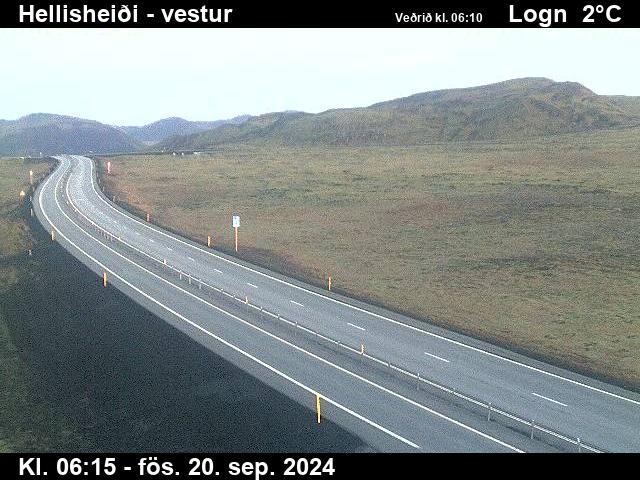 Live
Hellisheiði
Updated 12:45
View on Google Maps Live
Reynisfjall
Updated 12:45
View on Google Maps Live
Fjarðarheiði
Updated 12:45
View on Google Maps Live
Steingrímsfjarðarheiði
Updated 12:45
View on Google Maps Live
Holtavörðuheiði
Updated 12:45
View on Google Maps Live
Vatnsskarð
Updated 12:45
View on Google Maps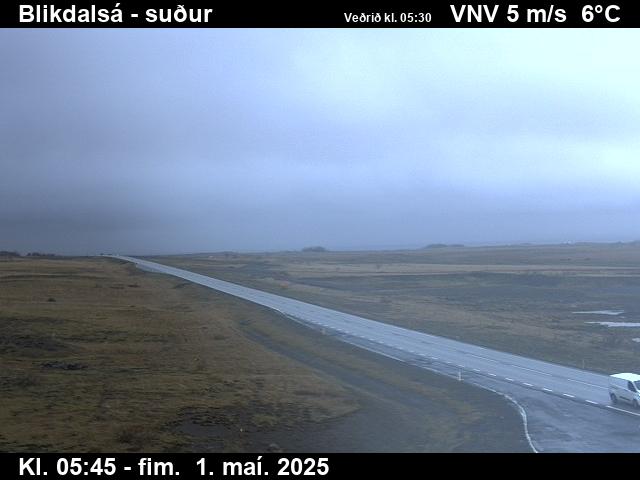 Live
Blikdalsá
Updated 12:45
View on Google Maps Live
Dýrafjarðargöng suður
Updated 12:47
View on Google Maps Live
Mývatnsöræfi
Updated 12:45
View on Google Maps Live
Breiðdalsheiði
Updated 12:45
View on Google Maps
 Live
 View on Google Maps
Iceland's cheapest & biggest selection of rental cars
Rent a cheap car on Iceland's biggest travel marketplace
Book a car rental nowWeather & Driving Information
Tips and guides for weather, wind, and aurora watching.
The Ultimate Guide to Weather & Temperature in Iceland
Learn everything about Iceland's weather. Find out the average temperature by month, the weather during each season, and other useful info for planning your trip.
The Warmest and Coldest Months in Iceland: A 26-Year Temperature Study
July is the warmest month in Iceland and January the coldest, at an average 33°F in Reykjavik. Plan your trip with 26 years of Met Office temperature data.
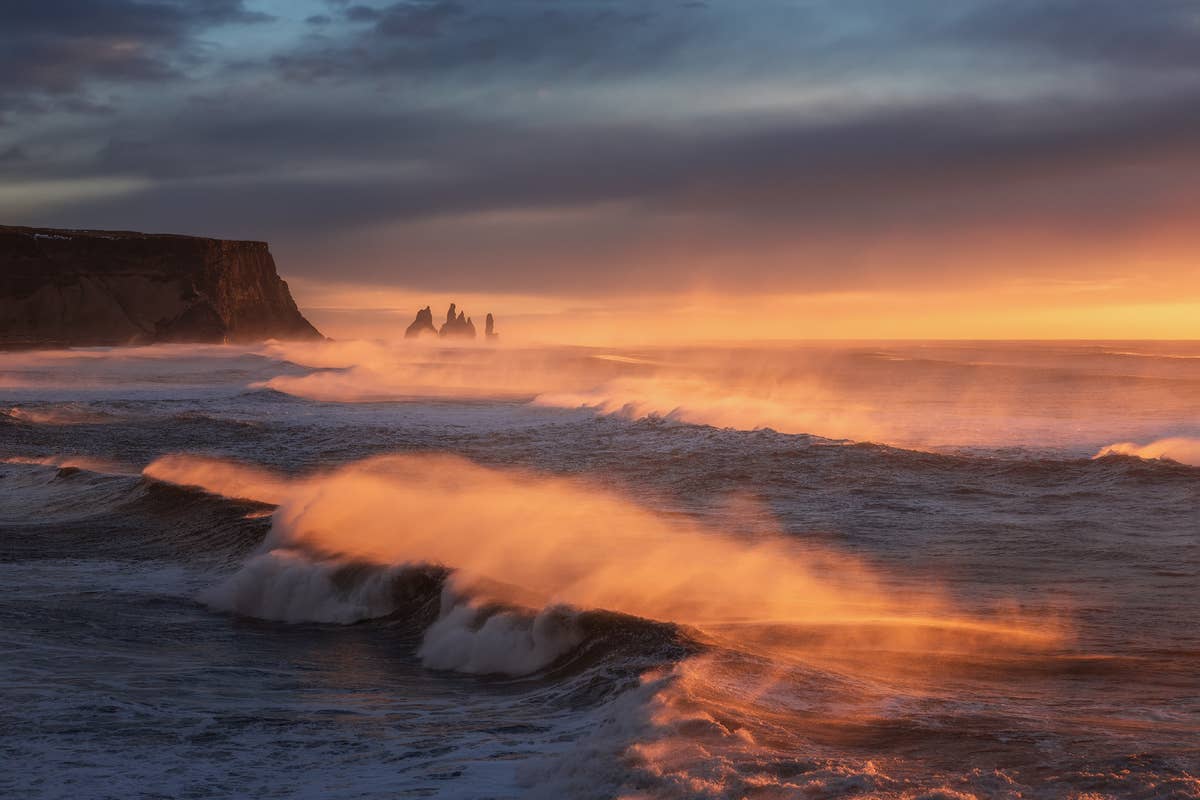
The Windiest and Least Windy Months in Iceland: A 26-Year Wind Study
Find the windiest and least windy months in Iceland. Our study of 26 years of Met Office wind data ranks every month and region, with tips for driving.
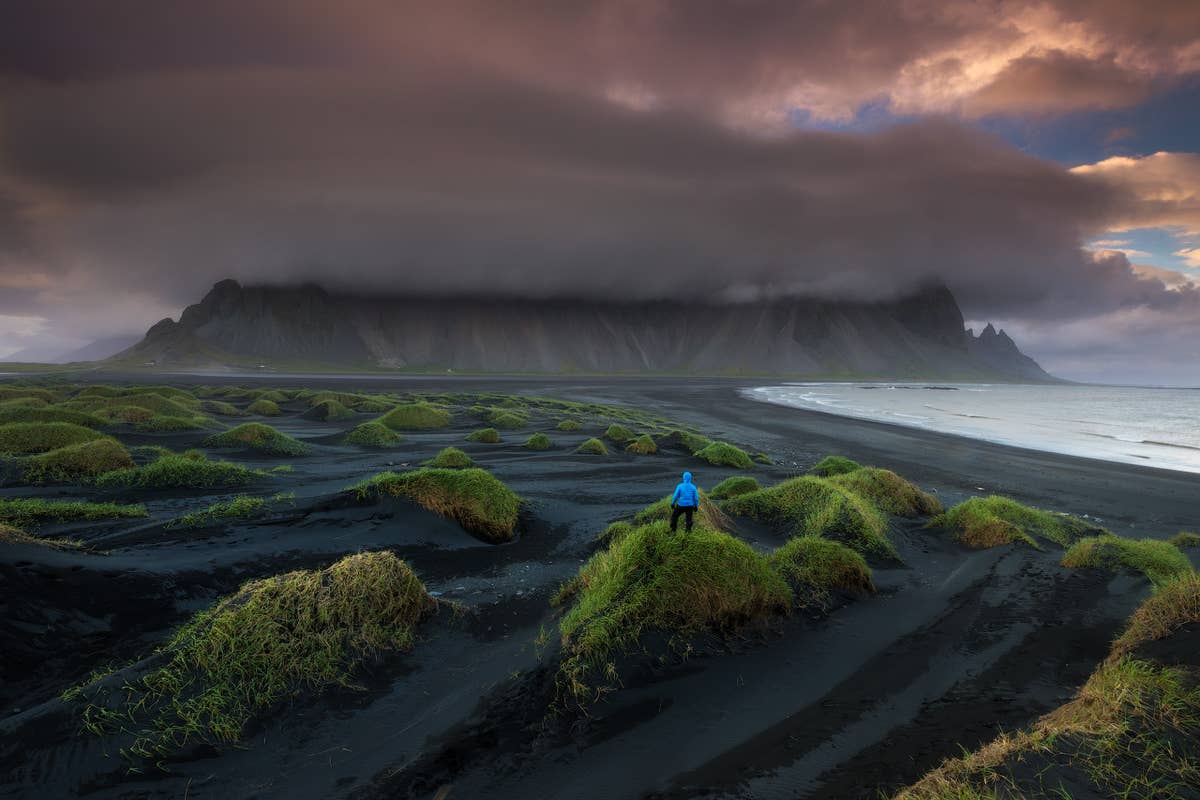
The Rainiest and Driest Months in Iceland: A 26-Year Rainfall Study
Iceland's rainiest month is September in the south and October in the north. See 26 years of Met Office data, and which month stays driest.
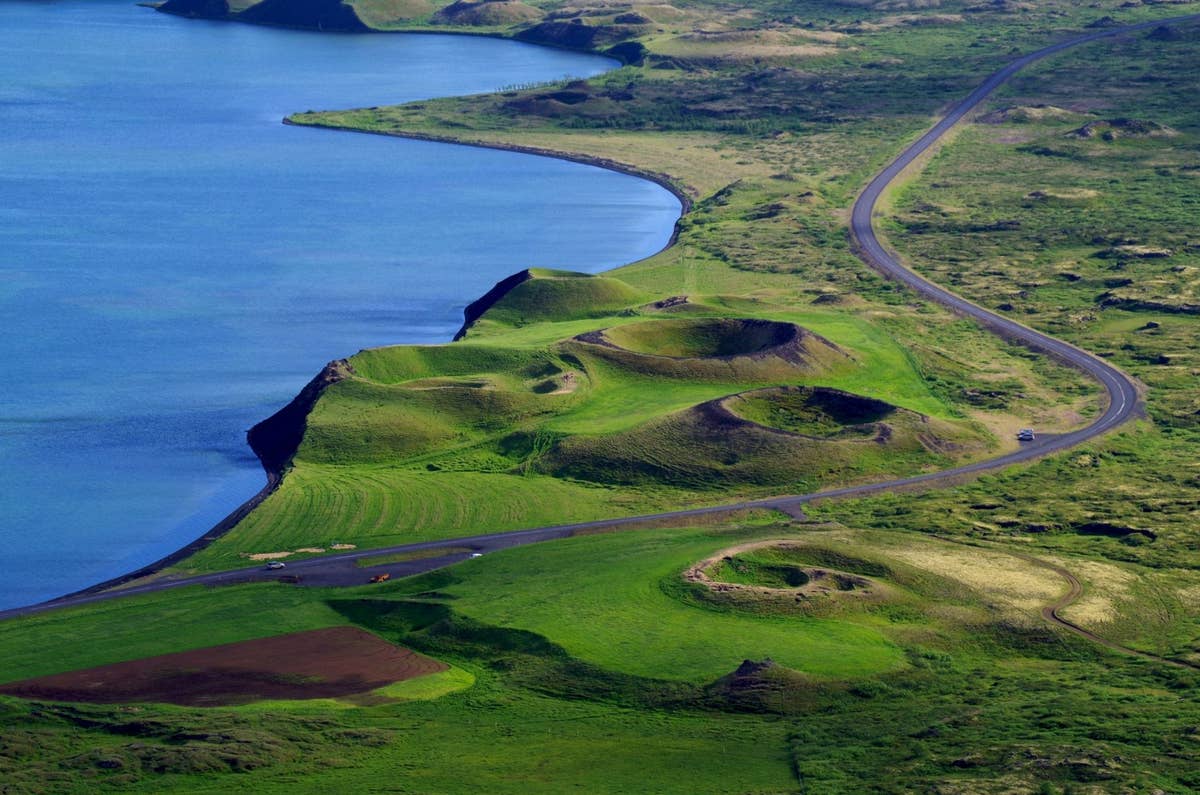
What Is the Sunniest Month in Iceland? A 26-Year Sunshine Study
May is the sunniest month in Iceland, with 221 hours of sun in Reykjavik. Our 26-year study ranks every month and eleven locations around the country.
Midnight Sun and Daylight Hours in Iceland
Read our midnight sun in Iceland guide including year-round daylight hours, midnight sun festivals and events, popular activities, and interesting facts.
Driving in Iceland: The Ultimate Guide to Road Trips
Learn everything about driving in Iceland for a self-drive road trip. Learn about roads, parking, driving rules, and more in this complete guide.
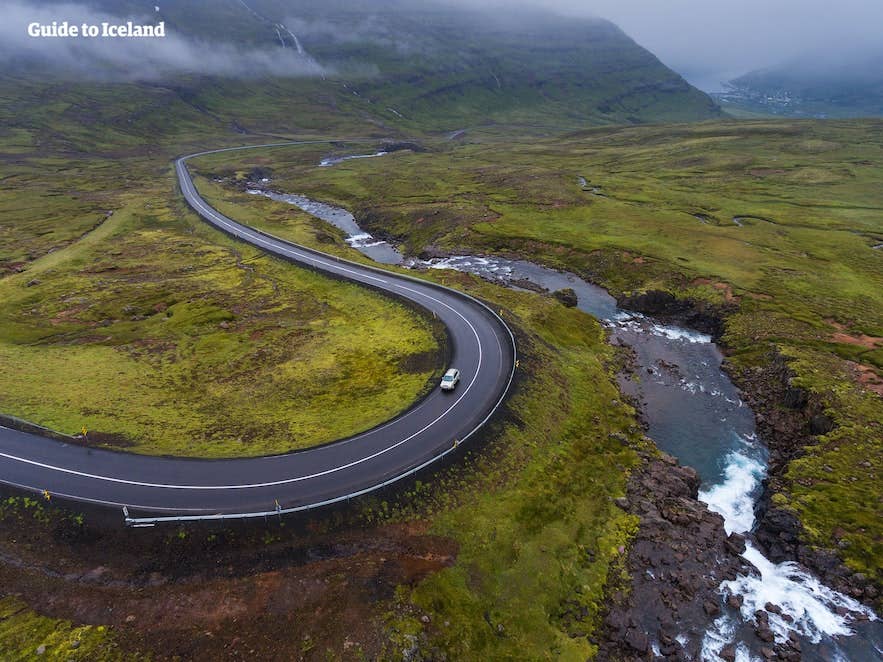
Everything You Need to Know About Road Signs in Iceland
You must understand Icelandic road signs when driving in Iceland. Learn about the different road signs in Iceland and drive confidently during your vacation.


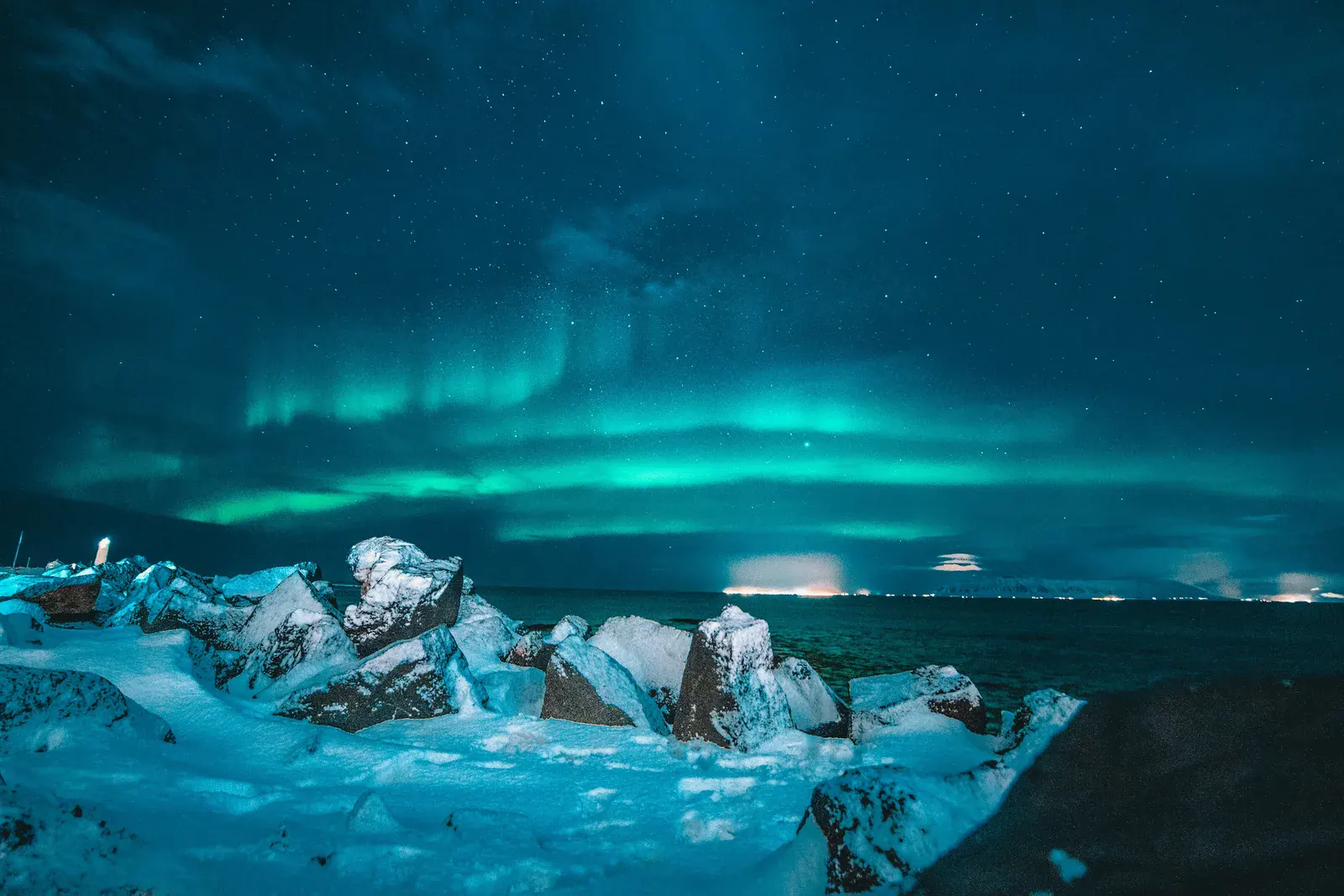
Best Aurora Forecast in Iceland
Get real-time cloud cover, solar activity, and the best viewing spots
Find the Northern lights tonightTours For Today's Conditions
Tours that make the most of today's weather
8.81,861 reviews
The Crystal Blue Ice Cave Tour in Vatnajokull Glacier - Starting from Jokulsarlon Glacier Lagoon
- Duration3 hours
- DifficultyEasy
- LanguagesEnglish
- AvailableOct. - Apr.
From18,700ISK9.6375 reviews
The Skaftafell Glacier Hiking Tour | Easy & Safe Adventure on Europe’s Largest Ice Cap
- Duration3.5 hours
- DifficultyEasy
- LanguagesEnglish
- AvailableAll year
From12,900ISK9.2665 reviews
The Jokulsarlon Glacier Lagoon Boat Tour
- Duration40 minutes
- DifficultyEasy
- LanguagesEnglish
- AvailableMay - Nov.
From7,100ISK8.84,302 reviews
Blue Lagoon Comfort Ticket
- Duration3 hours
- DifficultyEasy
- AvailableAll year
- Minimum age2 years old
From9,990ISK
 8.8


Frequently asked questions about weather and roads in Iceland
Iceland road and weather conditions on this page are updated continuously throughout the day. Road data comes from the Icelandic Road and Coastal Administration (Vegagerdin) and the forecast from the Icelandic Meteorological Office (Vedurstofa Islands), and both refresh several times an hour. Conditions can change within the hour, so check again right before you set off rather than relying on what you read last night. Our ultimate guide to weather and temperature in Iceland explains what drives those swings.
The color-coded weather warnings in Iceland rank how dangerous the weather is expected to be. Yellow means be aware, with conditions that could disrupt travel. Orange means be prepared, with damaging wind, snow, or flooding likely, and travel plans should change. Red means take action, with life-threatening conditions where all non-essential travel should stop until the warning lifts. Our guide to weather warnings in Iceland sets out what each color means for your day.
Iceland is milder than most people expect, and its temperature range is narrow. Reykjavik averages 33°F (0.7°C) in January, its coldest month, and 53°F (11.7°C) in July, its warmest. Inland and northern stations run colder, with Grimsstadir in the Highlands averaging 25°F (-3.9°C) in December. Our 26-year study of the warmest and coldest months in Iceland gives the figures station by station.
February is the windiest month in Iceland, and July is the calmest. Our 26-year wind study of Icelandic Met Office data found July averages 9.8 miles per hour (15.8 kilometers per hour) nationally, around 31 percent calmer than February. The Westman Islands and the South Coast get the strongest winds, and Akureyri in North Iceland stays calmest year-round. Wind matters far more than temperature when you are driving in Iceland.
The rainiest month in Iceland depends on which part of the country you are in. Our 26-year rainfall study found September is wettest in South and West Iceland, while October is wettest in North Iceland and the East. June is the driest month at eight of the nine weather stations analyzed. In Reykjavik, it rains on 15 to 18 days in every month of the year, so what changes through the year is intensity, not frequency.
May is the sunniest month in Iceland, and June has the most daylight, thanks to the midnight sun. Our 26-year sunshine study found Reykjavik averages 221 hours of sunshine in May, about seven hours a day, against roughly 625 daylight hours in June. December is the darkest month, with about 134 daylight hours and 16 measured hours of sunshine in Reykjavik. Akureyri peaks a month later than the capital.
It does snow in Iceland, most reliably from November through March, though snow can arrive as early as September and linger into May in North Iceland and the Highlands. Reykjavik gets less than people expect, and coastal wind clears it fast. Snow on the ground is not the same as a closed road, which is what the map above tracks. Our guide to how much snow Iceland gets has the regional breakdown, and Iceland in winter covers what to expect month by month.
An Iceland weather forecast is reliable about three days ahead, and less in winter. Iceland sits where Atlantic weather systems arrive fast and change course, so a ten-day forecast tells you the season rather than the day, and sun, rain, and snow can all turn up within a few hours. Plan the shape of your trip from long-run averages, such as our guide to the best time to visit Iceland, and the detail from vedur.is the night before.
A clear sky matters more than a strong aurora forecast when you are hunting the northern lights, and where you stand matters more than which month you pick. Our study of 89 years of cloud coverage found Southeast Iceland has the clearest skies in aurora season, along a corridor running from Kirkjubaejarklaustur through Jokulsarlon to Djupivogur. North Iceland, which is often recommended for aurora hunting, is cloudier on average than Reykjavik. Learn more in our full guide on when and where to see the northern lights in Iceland.
Dress for Iceland's weather in layers, with a windproof and waterproof outer shell, whatever the season. A good shell earns its place far more often than a heavy parka, because wind and rain ruin more days here than cold does. In winter, lightweight crampons or microspikes over your boots handle icy pavements and paths. Our guide to what to wear in Iceland breaks the layers down season by season, and our guide to the best things to do in bad weather in Iceland covers what to do when your day needs to change last minute.
You do not need a 4x4 for the Ring Road, the Golden Circle, or the South Coast, which are paved and open year-round to any car. A 4x4 is legally required on F-roads in the Highlands, where a two-wheel-drive car is not allowed at all. In winter in Iceland, renting a 4x4 is strongly recommended anywhere outside the main routes. Our ultimate guide to driving in Iceland covers picking the right car.
Most F-roads in Iceland, the mountain tracks that cross the Highlands, open in mid-June and close in early September, but the exact dates change every year with the snowmelt and vary road by road. Some open in late June or early July after a heavy winter. Always check the road conditions on the day, because an F-road can also close in the summer after heavy rain. Our guide to Icelandic mountain roads lists which routes need which vehicle.
If a road closes while you are driving in Iceland, turn back or wait, and never drive past a closure sign or gate. Doing so is illegal, invalidates the insurance on your rental car, and puts volunteer rescue teams at risk. Check for an alternative route, ask at the nearest petrol station or guesthouse, and call 112 if you are stuck or in danger. Our 10 rules for safe driving in Iceland help you prepare for a safe journey on the road.
Driving in Iceland in winter is safe with preparation. The Ring Road is cleared and open for most of the winter, and rental cars are fitted with winter tires, with studded tires permitted from early November to mid-April. The real risks are wind, ice, and short daylight, so drive between sunrise and sunset and cut your daily distance by half. Conditions shift month by month, so read our guides to driving in Iceland in December, driving in Iceland in January, and driving in Iceland in February before you book.
Wind is a problem when driving in Iceland because gusts regularly exceed what a car door can take, and wind damage is the most common rental claim in the country. Always hold the door with both hands when opening it. Gusts are strongest on mountain passes, bridges, and exposed coastal stretches, and sand or ash storms on the South Coast can strip paint in minutes. Our wind study shows which months and regions are worst.
Speed limits in Iceland are fifty kilometers per hour in towns, eighty on gravel roads, and ninety on paved rural roads, unless a sign says otherwise. Speed cameras are common and fines are high. On gravel, the posted limit is a maximum rather than a target, and slowing down before you meet an oncoming car prevents the most common windscreen damage. Our guide to road signs in Iceland explains the signage.