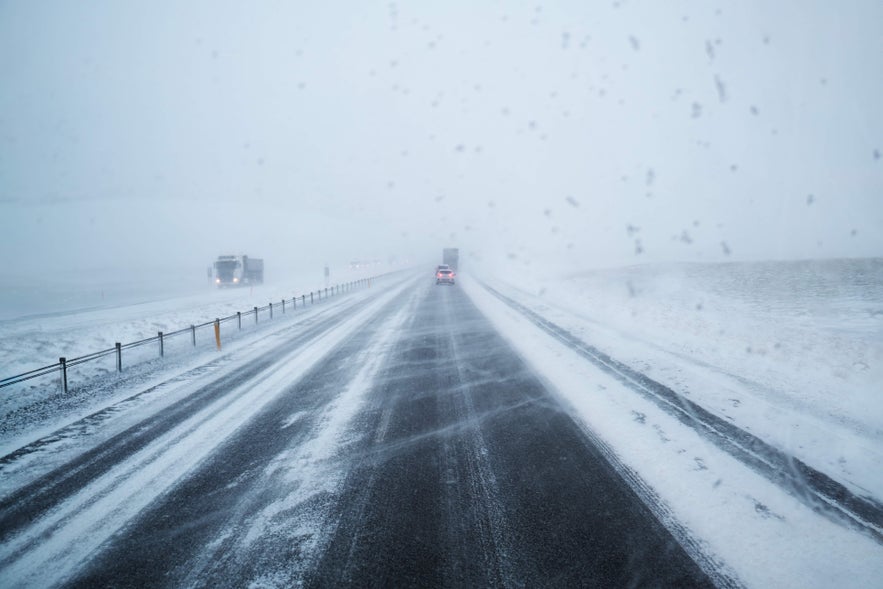
Just like its landscapes, the weather in Iceland can be dramatic. This is especially important to keep in mind when planning winter tours and packages or traveling in late fall and early spring, as conditions can change quickly.
To help locals and travelers stay safe, the Icelandic Meteorological Office issues color-coded weather alerts when conditions could be dangerous.
Why You Can Trust Our Content
Guide to Iceland is the most trusted travel platform in Iceland, helping millions of visitors each year. All our content is written and reviewed by local experts who are deeply familiar with Iceland. You can count on us for accurate, up-to-date, and trustworthy travel advice.
For travelers, knowing these warnings is essential. They show what to expect, how the weather may affect your plans, and where to find reliable updates.
Understanding the system is especially important if you are going on self-drive tours, helping you enjoy Iceland's incredible scenery safely. Severe weather can also affect flights to Iceland, so it pays to know when a warning might disrupt your arrival or departure.
Here is all you need to know about the weather warning system in Iceland and what it means for your road trips and travel plans. We also gathered insights from Keflavik International Airport on how storms affect flights.
Understanding Iceland’s Weather Warning Colors
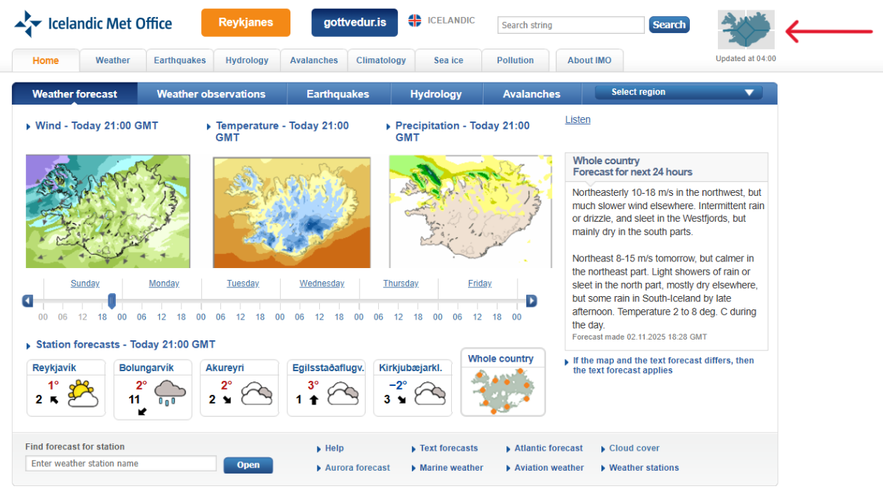 Iceland uses three levels of weather warnings: yellow, orange, and red. These warnings appear on the Icelandic Meteorological Office homepage in a small map located in the top right corner.
The map displays the weather for five regions of the country: North Iceland, South Iceland, East Iceland, West Iceland, and the Highlands. Each region is color-coded to reflect current conditions. Clicking on any region provides more detailed information about the weather and associated warnings.
Yellow Warning in Iceland
 Image Credit: Veðurstofa Íslands (Facebook), cropped for layout.
A yellow warning indicates mild to moderate conditions. Outdoor activities may be uncomfortable, particularly in the mountains, and drivers should exercise caution, especially on rural roads or with large vehicles like campervans or rental jeeps.
Recommended actions during a yellow alert:
-
Proceed with caution in all activities.
-
Secure outdoor items to prevent them from being blown away.
-
Adjust hiking or other outdoor plans.
Orange Warning in Iceland
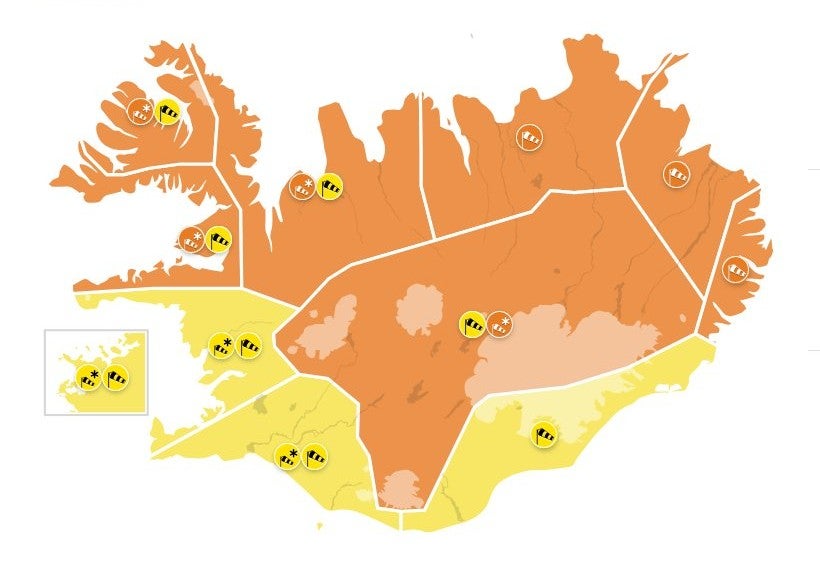 Image Credit: Veðurstofa Íslands (Facebook), cropped for layout.
An orange warning signals dangerous weather. Unnecessary trips outside are discouraged, and conditions affect both driving and outdoor activities.
Recommended actions during an orange alert:
-
Avoid non-essential travel.
-
Contact your accommodation for updates on local conditions, road closures, or safety advice.
-
Check with your tour operators for possible cancellations, schedule changes, or alternative plans.
-
Secure belongings that could be affected by wind or rain.
-
Remain alert while walking or driving.
Red Warning in Iceland
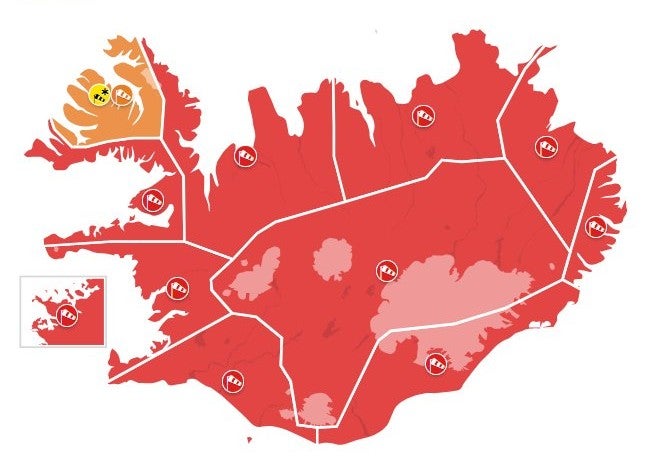 Image Credit: Veðurstofa Íslands (Facebook), cropped for layout.
A red warning indicates extreme and high-risk weather conditions. These warnings are rare but serious.
Recommended actions during a red alert:
-
Stay indoors and only leave for emergencies.
-
Postpone any travel plans until the warning has passed.
-
Follow all official guidance and advisories.
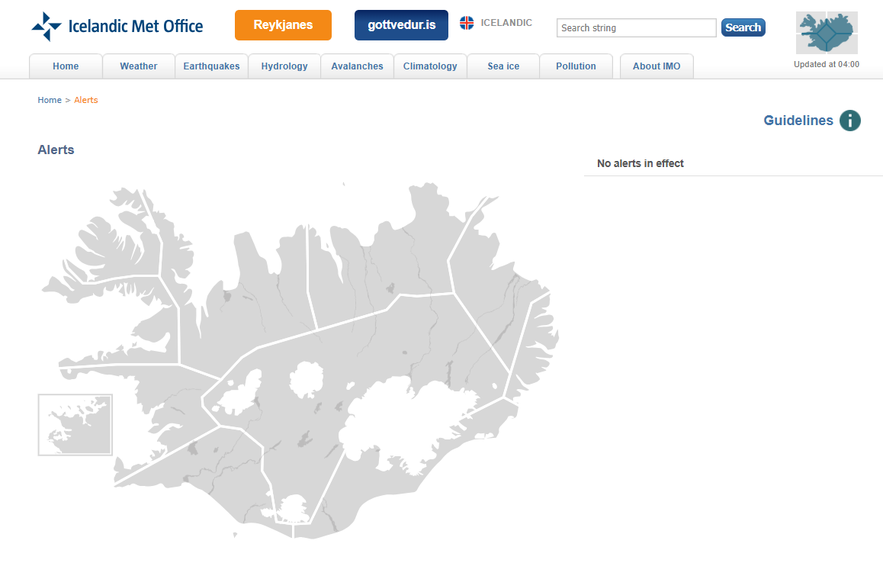
When the map is completely gray, there are no active warnings. This indicates that conditions are safe, and you can continue with your travel plans as usual.
Checking Weather and Road Conditions in Iceland
Before setting out on your trip, always review the latest weather and road updates. Iceland’s conditions can change within minutes, and staying informed helps you plan wisely and travel safely.
Icelandic Meteorological Office
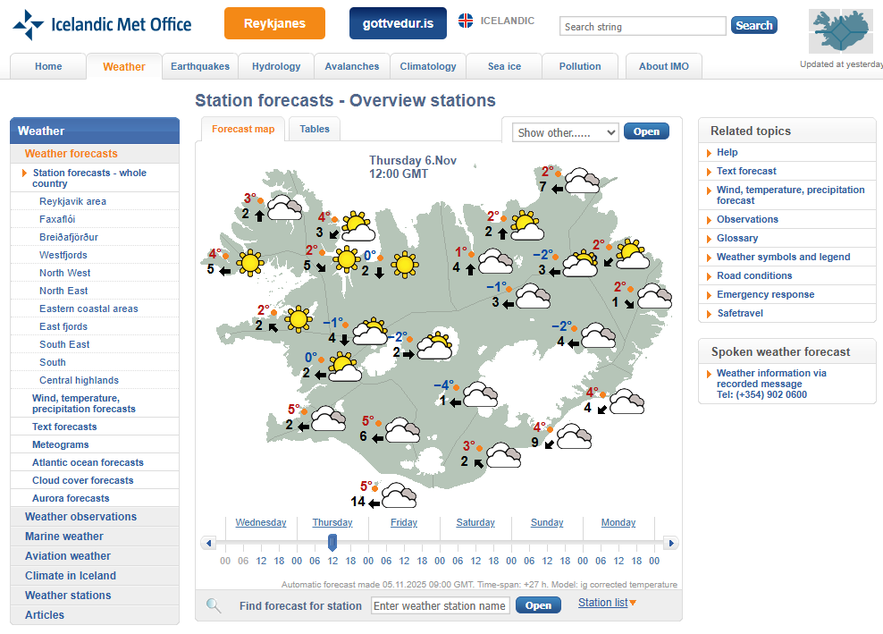 Start with the Icelandic Meteorological Office (IMO) website, the country’s most trusted source for forecasts and alerts. The IMO website shows detailed maps with sun, cloud, and precipitation symbols, along with temperatures in Celsius and wind speeds in metres per second.
You can move a sliding bar beneath the map to see how conditions evolve throughout the day. The site also offers specialized maps for temperature, wind, and precipitation, each one color-coded to indicate the severity of conditions.
The IMO mobile app is available for both iOS and Android, making it easy to check the forecast while traveling.
Icelandic Road and Coastal Administration
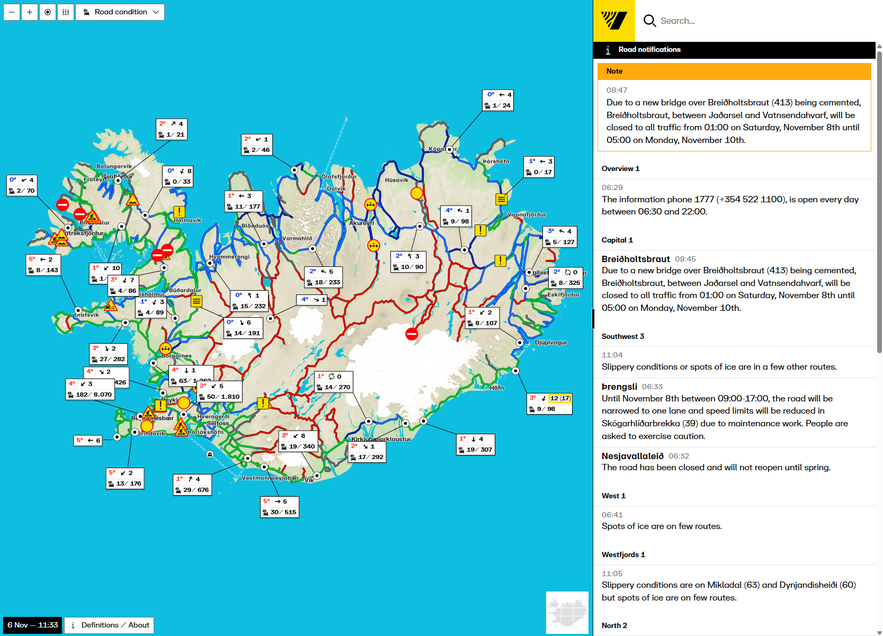 For road safety, visit the Icelandic Road and Coastal Administration’s website. The live map displays the current road status.
Green means clear, blue means slippery, and red means impassable. Clicking or tapping on a route reveals more information, such as wind speed, temperature, and flying gravel alerts.
The site also provides road closures and travel advisories in real time, which is especially important when driving long distances or through mountain passes.
SafeTravel
Another essential resource is SafeTravel.is, managed by the Icelandic Association for Search and Rescue. The site provides up-to-date information about weather, road conditions, and nationwide safety alerts.
You can sign up for SMS notifications or download the SafeTravel app for iOS and Android to receive alerts while traveling. Before setting out, always submit your travel plan through the website or app, especially if you plan to drive through remote regions or explore hiking trails. Doing so ensures that rescue teams have the details they need to locate you quickly in case of an emergency.
SafeTravel also shares regular updates and practical safety tips in English on Facebook and Instagram, which are worth following during your trip.
RÚV English
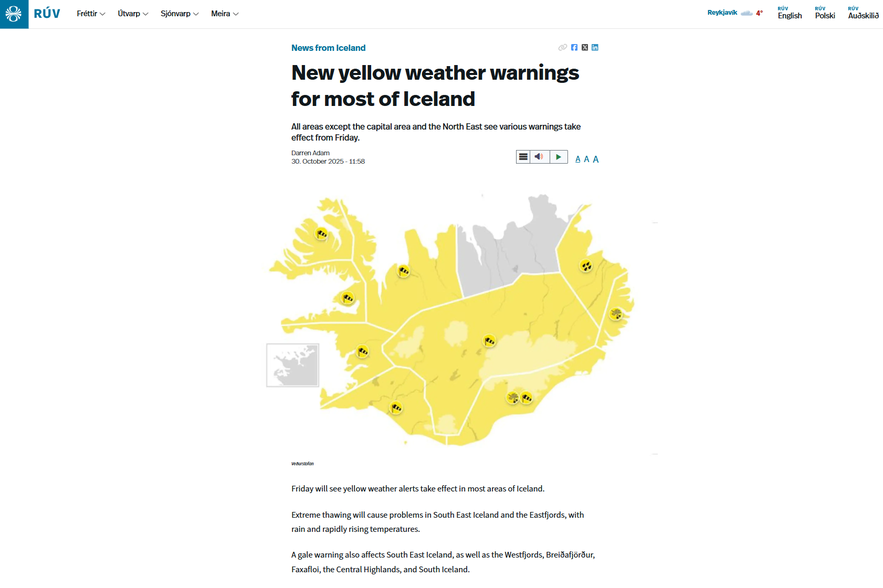 It is also useful to check RÚV English, Iceland’s national broadcaster. RÚV provides news, official advisories, and emergency information, and is especially valuable during weather events that affect travel or cause road closures.
Their radio service and social media accounts on Facebook, X, and Instagram are excellent sources for up-to-date local information.
Even if conditions appear safe where you start your journey, weather in remote areas, mountains, or the Highlands can differ significantly. Always check forecasts along your entire route and have backup plans for accommodations or indoor activities in case conditions change unexpectedly.
How Weather Warnings Affect Flights in Iceland
 Iceland's weather warnings apply to more than roads and hiking trails. Severe storms can also disrupt flights at Keflavik International Airport (KEF), the country's main gateway.
According to Isavia, the company that operates the airport, the conditions most likely to delay or cancel flights are wind gusts above 50 knots (around 100 km/h, 60 mph, or 26 m/s), along with snowstorms, blizzards, and heavy snowfall. Weather of this severity usually coincides with orange or red alerts, so a warning on your travel day is a good prompt to check your flight status early.
That said, flight disruptions are far less common than many travelers expect. Guðjón Helgason, Communications Manager for Keflavik Airport, puts the numbers in perspective:
Keflavík Airport operates in the sometimes challenging Icelandic climate and can be exposed to strong winds and severe winter weather. However, the number of days each winter when weather causes significant disruptions is relatively limited, typically ranging from 2 to 20 days.
Roads face a similar threshold. The storm-gust day data we've gathered from our study of the windiest month in Iceland puts the threshold at 56 mph (90 km/h) or more. That's the point at which car doors bend and roads close.
When disruptions do happen, they usually pass within a few hours, though they can occasionally last up to 24 hours. If a warning is forecast for the day you fly, check your flight status on the Keflavik Airport website, watch for updates from your airline, and review road conditions before driving to the airport, as the route can close in severe weather.
Iceland Travel and Driving Safety Tips
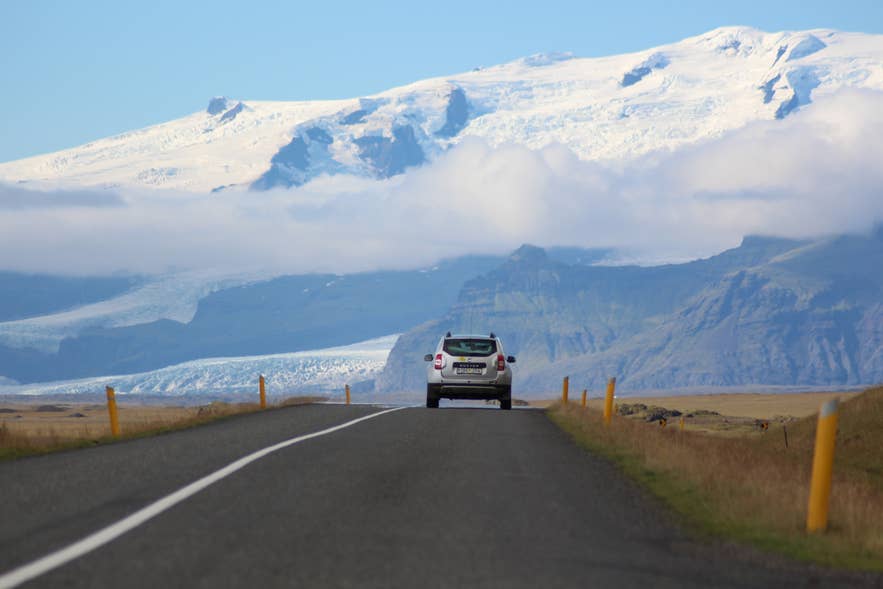 Driving in Iceland can be challenging because road conditions vary greatly depending on the season, so careful preparation is essential for a safe and comfortable journey. If you’re driving outside major towns or exploring remote areas, it’s best to rent a four-wheel-drive vehicle. Make sure your car has the right tires for the season, and in winter, check whether studded tires or chains are included.
Clothing is just as important as your vehicle. Dress in layers that can handle rain, wind, and sudden temperature drops. A waterproof and windproof outer layer is essential, and it’s wise to pack extra gloves, hats, and socks in case conditions worsen. Check our guide to dressing for Iceland’s weather for tips on layering, waterproof gear, and staying comfortable throughout the day.
Always review the weather and road forecasts before starting your route and throughout the day. Even during summer, heavy rain, strong winds, or gravel roads can make driving more difficult. If conditions deteriorate, adjust your plans and wait until it’s safe to continue.
It’s also smart to keep a “Plan B” in mind. Iceland offers plenty of indoor and low-risk activities such as museums, geothermal pools, and cafés that can turn a weather delay into a pleasant part of your adventure.
- Discover what to expect during each season in Iceland: summer, fall, winter, and spring.
- Read our guide on driving safely in Iceland for detailed tips on road safety and local driving rules.
What to Do in Iceland During Bad Weather
Even when Iceland’s weather keeps you indoors, there is no shortage of ways to enjoy your trip. Iceland’s top museums, such as the Perlan Museum, feature engaging exhibits on glaciers, volcanoes, and the northern lights, including a man-made ice cave for a unique hands-on experience. You can also visit geothermal swimming pools, which provide both relaxation and a taste of local culture.
The video above showcases these and other top indoor activities for bad weather in Iceland. Watching it can help you keep your itinerary flexible while staying safe and comfortable.
Staying Safe and Enjoying Iceland
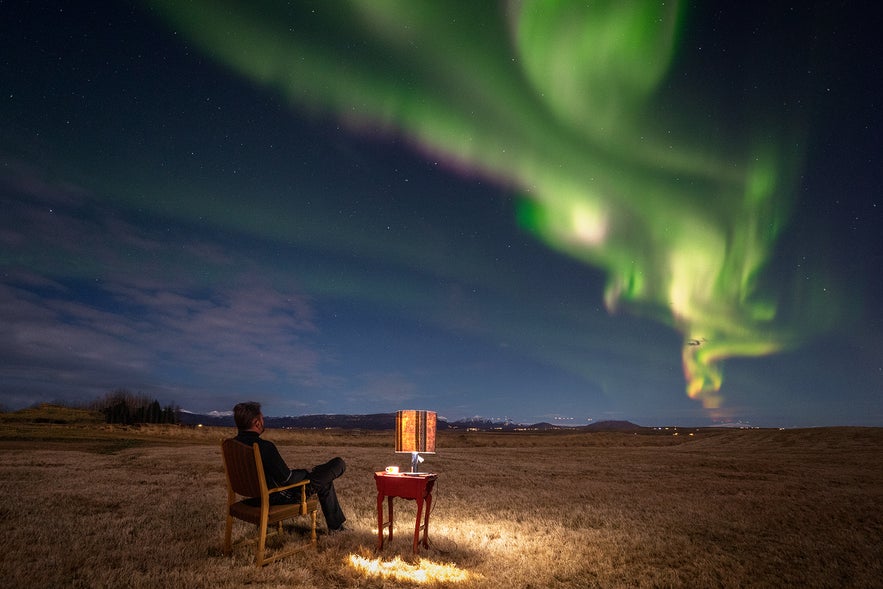 The weather in Iceland is unpredictable, and conditions can change rapidly even within a single day. By checking the latest forecasts, monitoring road conditions, and understanding color-coded warnings, you can plan your activities safely and avoid unnecessary risks.
Before your trip, it’s helpful to review the do’s and don’ts when traveling and know the essential apps for visiting Iceland. Always prepare for all types of weather, dress appropriately, and have backup plans in case travel becomes unsafe. Following local guidance and respecting warnings ensures that your trip remains enjoyable and accident-free.
Staying informed and flexible allows you to make the most of Iceland’s stunning landscapes, whatever the weather brings.
What is the current alert level in Iceland?
What month has the most challenging weather in Iceland?
What are the biggest safety concerns in Iceland?
How do I check weather and road conditions in Iceland?
You can also consult RÚV for news and weather updates in English. Before heading into remote areas, use SafeTravel to review alerts, receive SMS notifications, and submit your travel plan so authorities know your route.
Do weather warnings in Iceland affect flights?
What should I pack for Iceland’s unpredictable weather?
What are the best things to do in Iceland when the weather is bad?
Have you ever encountered a weather warning while traveling in Iceland? What steps did you take to stay safe or make the most of your trip? Share your experience in the comments below and help other travelers prepare for their Iceland adventure.

I’m drawn to the creative corners of Iceland. I love helping travelers discover the unexpected side of the country, whether that’s a hidden record store, a new tattoo studio, or a dramatic filming location off the beaten path. If you’re curious, open-minded, and up for something a little different, I’m here to point you in the right direction.