Summer self-drive trips are one of the most popular ways to explore Iceland in June. With long daylight hours and most roads open, it’s easy to rent a car and travel around Iceland at your own pace, whether you’re planning a full road trip or focusing on a few key regions.
These favorable summer conditions come with higher seasonal prices. Our study of self-drive tour prices by month found a median price of 32,223 ISK per person per day in June.
Driving in Iceland in June is generally straightforward. Main roads are in good condition, and you won’t have to deal with snow or icy surfaces. Still, not all routes are the same. Gravel roads, changing weather, and route choices can affect your experience, especially if you’re going beyond the main tourist areas.
Why You Can Trust Our Content
Guide to Iceland is the most trusted travel platform in Iceland, helping millions of visitors each year. All our content is written and reviewed by local experts who are deeply familiar with Iceland. You can count on us for accurate, up-to-date, and trustworthy travel advice.
This guide covers everything you need to know about driving in Iceland in June, from road conditions and vehicle options to the best routes and itineraries. Read through the full guide to plan your trip with confidence and make the most of your time on the road.
Key Takeaways
-
Driving conditions are generally easy, with no snow or ice on main roads.
-
June is the one month when the whole country is sunny at once, according to our 26-year sunshine study. The Ring Road and most routes are fully open, so detours to the north, the east, and the Westfjords pay off. Highland F-roads may still be closed early in the month.
-
A 2WD vehicle is enough for main routes, while a 4x4 is required for the Highlands and useful in more remote areas.
-
Long daylight hours give you flexibility, but it’s still important to pace your days and avoid overplanning.
-
Gravel roads, wind, and changing weather can still affect driving, especially outside major routes.
-
Route planning should focus on realistic driving times and overnight stops, not just distance.
Road Conditions When Driving in Iceland in June
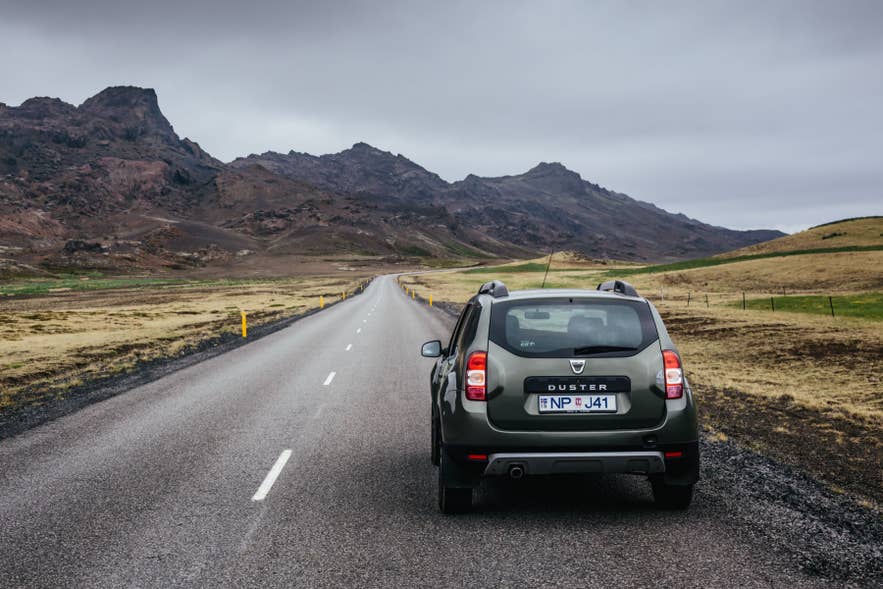 June is one of the easiest and most comfortable times to drive safely in Iceland. Winter is over, so you don’t have to deal with snow or ice, and most roads across the country are open. Travel becomes much more flexible, especially if you’re planning a road trip.
That said, not all roads are the same. Main routes are simple and well-maintained, but once you leave those, conditions can change quickly. It helps to know what to expect before you start driving in Iceland in June.
-
Check out our Ultimate Guide to Iceland in Summer
-
See also: Iceland's Weather, Climate, and Temperature Year-Round
Driving Conditions on Iceland’s Main Roads in June
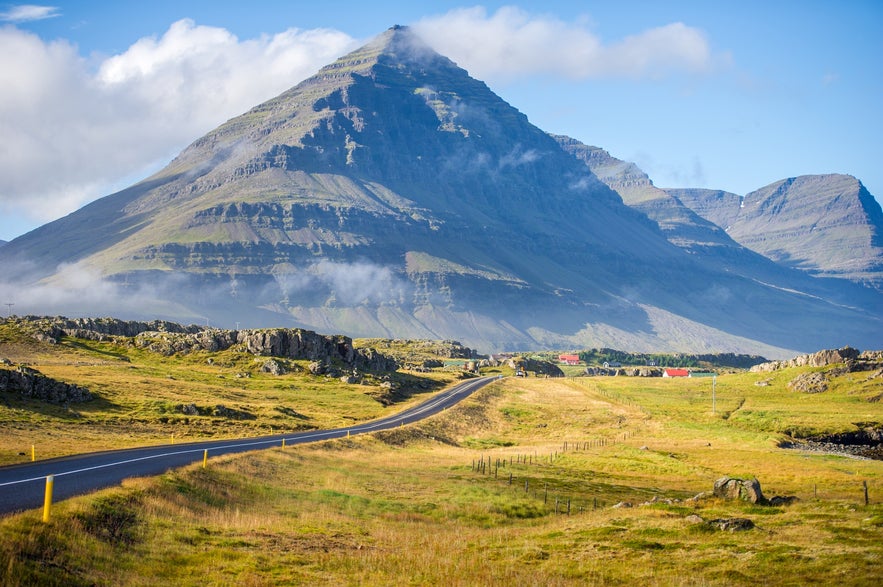
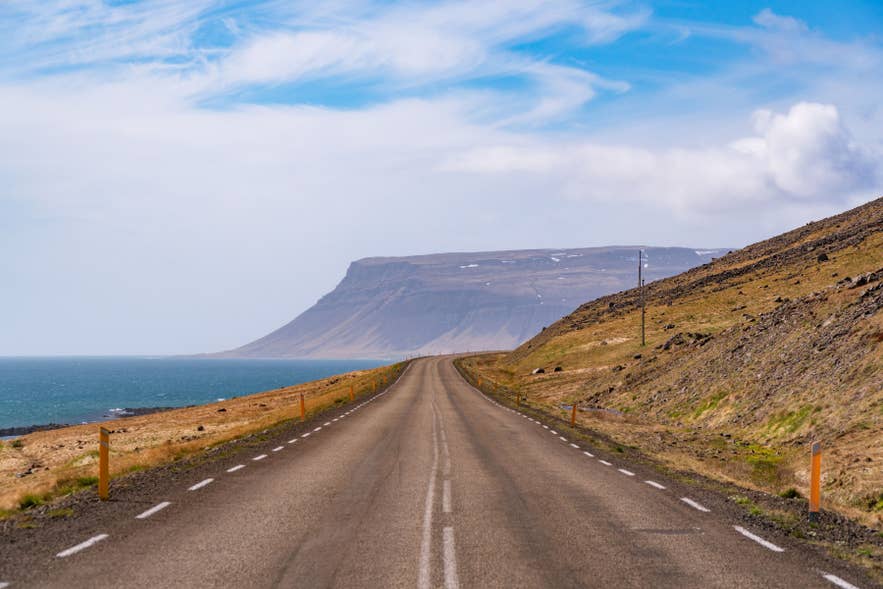 Most travelers stick to the main roads, and in June, these are in very good shape. The Ring Road (Route 1) is fully paved and circles the whole of Iceland. It’s the easiest way to get around and connects most major towns and attractions. For many visitors, this is where they’ll spend most of their time driving.
Driving Iceland's Ring Road in June feels straightforward. There’s no snow, no icy patches, and road conditions are stable. Add in the long daylight hours, and you’ll have plenty of time to drive without feeling rushed. It’s a good setup, especially if it’s you’re a first-time visitor in Iceland.
Once you move away from the main routes, things start to feel a bit different. Rural roads are often gravel, not paved. Some are narrow, with loose stones and uneven surfaces. You might hit a few potholes or rough sections along the way.
These roads are still manageable, even with a small car. You just need to slow down and stay focused. Driving too fast on gravel is one of the most common mistakes people make.
Roads Open When Driving in Iceland in June
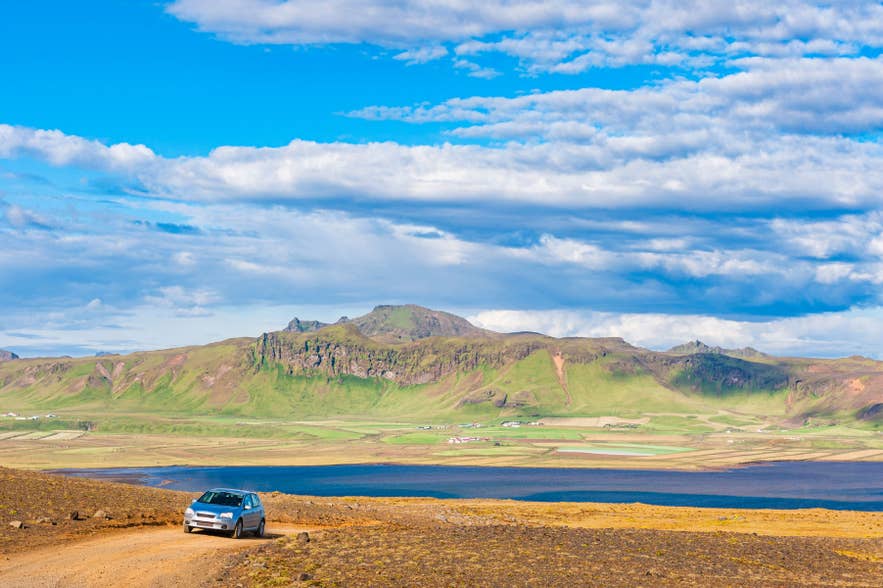 By June, most of Iceland is open for travel. The Ring Road is fully accessible, which means you can drive around Iceland without running into closures on your main route.
Things are less predictable when it comes to the Highlands. The mountain roads, known as F-roads, don’t all open at the same time. Some start opening in mid-June, while others stay closed until later in the month or even early July. It depends on how quickly the snow melts each year.
F-roads are very different from regular roads. They’re unpaved, often rough, and can include river crossings. In some places, the road is just a track through open land. You’ll need a 4x4 vehicle to drive on them, and even then, conditions can change quickly.
Because of this, checking road conditions before you head out is important. The official site, Umferdin (or road.is), shows real-time updates. It tells you which roads are open, which are closed, and what kind of conditions to expect. It’s worth checking every day, especially if you’re planning to go beyond the main routes.
Car Rental Guide for Driving in Iceland in June
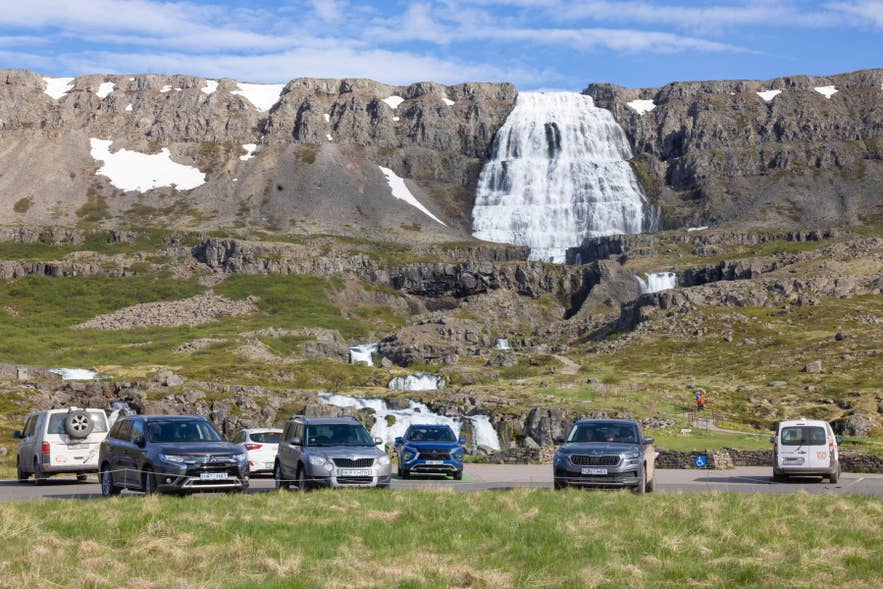 Choosing the right car in Iceland depends mostly on where you plan to go. In June, road conditions are generally good, so you don’t always need a large or expensive vehicle. For many trips, a smaller car works just fine.
Still, not all roads are equal. Main routes are easy to drive, but remote areas can be rough and unpredictable. It’s worth thinking about your itinerary before deciding what to rent.
2WD Vehicles for Driving in Iceland in June
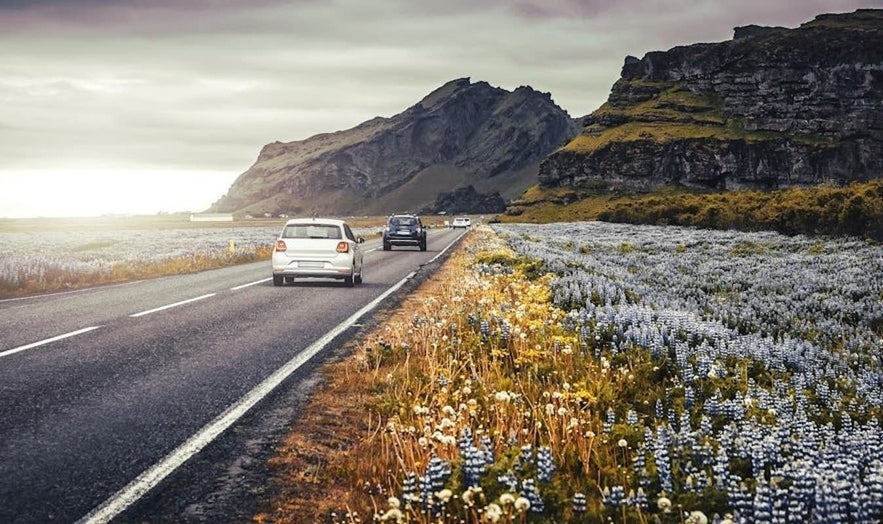 A 2WD car is enough for most trips in Iceland during June. If you’re planning to stay on the Ring Road, visit places like the Golden Circle or the South Coast, and stick to well-traveled routes, you won’t have any issues.
These standard car rentals are also the most budget-friendly option. They use less fuel, cost less to rent, and are easier to drive, especially if you’re not used to rough conditions.
For a typical road trip that includes Reykjavik, Akureyri, waterfalls, and major attractions, a 2WD is usually all you need. You might still come across some gravel roads along the way, but they are usually manageable. Just take it slow and drive carefully.
4x4 Vehicles for Driving in Iceland in June
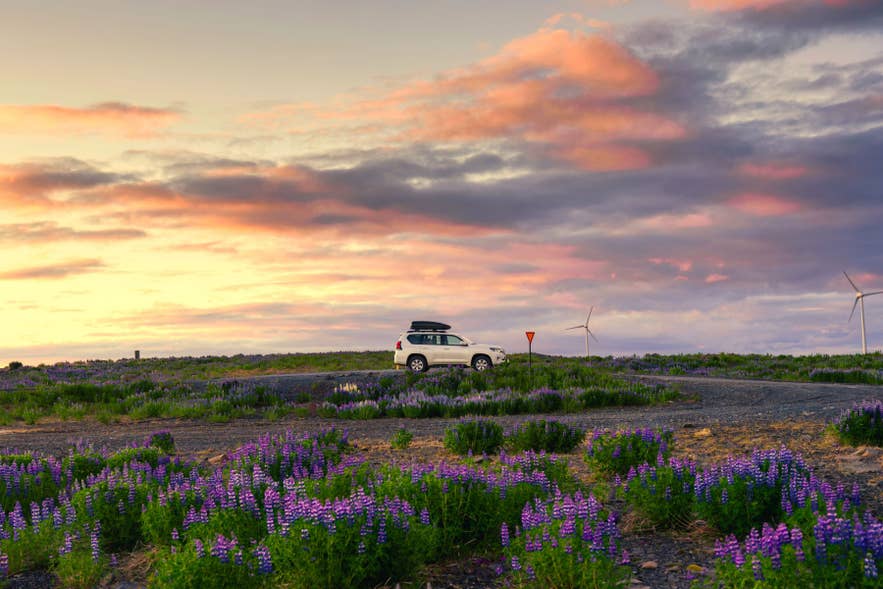 A 4x4 becomes necessary once you start heading into more remote areas. This includes the Highlands and any F-roads, where driving conditions are very different from regular roads.
F-roads are unpaved and often rough. You may need to cross rivers, drive over loose gravel, or handle steep and uneven terrain. Because of this, 4x4 vehicles are required by law on these routes.
Even outside the Highlands, a 4x4 can be useful if you plan to explore the Westfjords, the Eastfjords, or other remote coastal areas where roads are often gravel, and conditions can be rough. It gives you more confidence on rough roads and in changing weather, especially if conditions are not ideal.
If your trip includes places like Landmannalaugar Trail or other Highland destinations, a 4x4 is essential.
Best Routes for Driving in Iceland in June
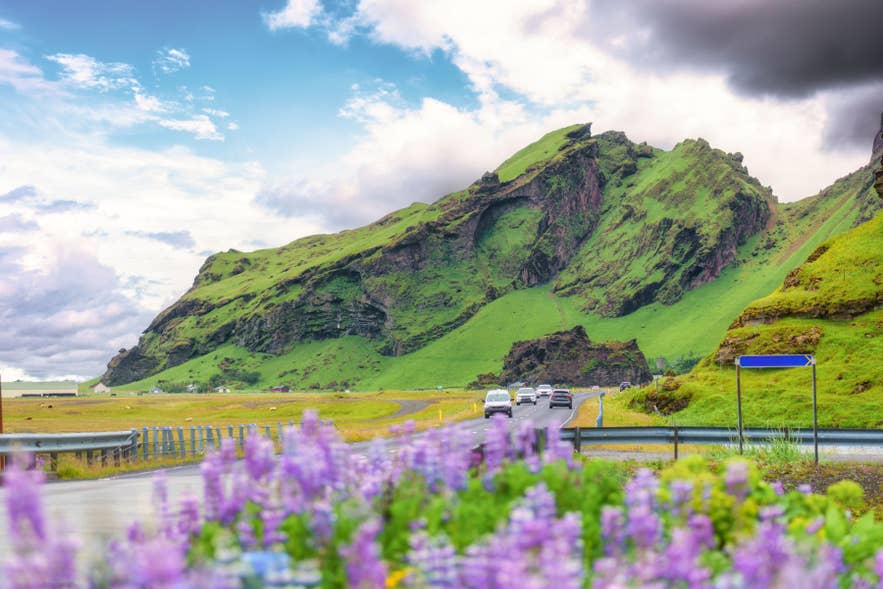 June is one of the best months to plan self-drive trips in Iceland because the main routes are accessible, the days are very long, and it is easier to cover more ground without rushing. That makes route choice especially important.
A shorter trip is usually better focused on one or two regions, while a longer trip can handle the full Ring Road at a more comfortable pace.
When planning your itineraries in June, it helps to build around overnight stops rather than just mileage. Distances may look manageable on a map, but Iceland road trips usually take longer than expected because of frequent sightseeing stops, short walks, photo pull-offs, and detours.
June offers extra flexibility because daylight is not a limiting factor, but that often leads people to overfill their plans. Our study on how many days to plan for Iceland finds that most travelers cover about 174 miles (280 kilometers) a day in summer before the trip starts feeling like a car journey.
Use that as your daily ceiling when you divide the Ring Road into legs. In practice, the best self-drive routes are the ones that leave room to stop often and still arrive at your accommodation at a reasonable time.
South Coast Route
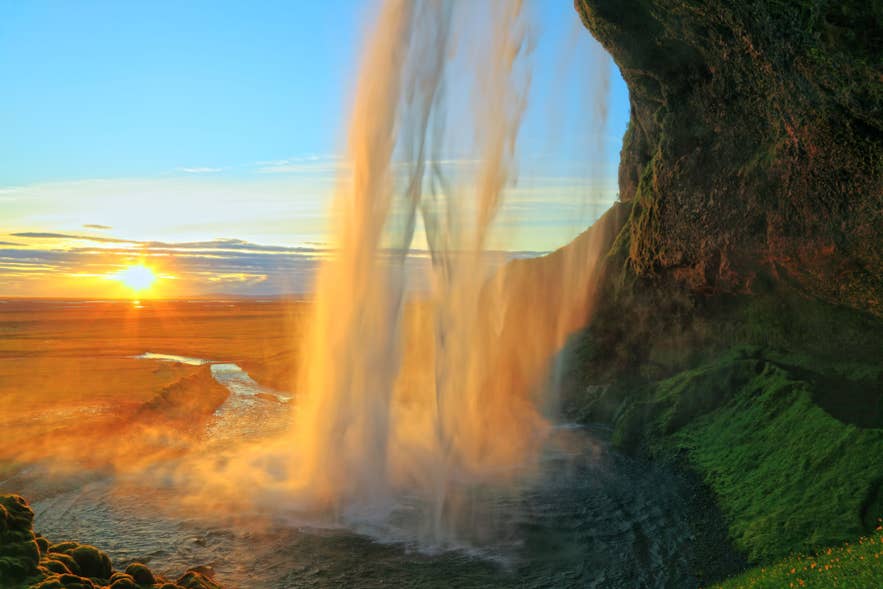 The South Coast is one of the easiest routes to plan in Iceland because everything follows a single direction. You drive east from Reykjavik along the Ring Road, with most major stops located directly along or just off the road. There’s very little need for detours, which makes the route simple to follow even for first-time visitors.
What makes the South Coast different from other routes is how concentrated the sights are. Instead of long stretches between destinations, you’ll find multiple stops within short distances. This changes how you plan your days. You won’t be driving far, but you’ll be stopping often.
From Reykjavik to Jokulsarlon Glacier Lagoon, the route is about 236 miles (380 kilometers) one way. In June, with long daylight hours, it’s possible to cover a lot in a day. Still, the route is best experienced over two to three days to avoid rushing through the main stops.
Recommended South Coast Itinerary
A common way to structure the drive is to move steadily east, staying overnight along the way rather than returning to Reykjavik each day. Here’s how the route can be organized:
-
Day 1: Reykjavik → Vik
The first part of the route is the busiest in terms of stops. Within a short distance, you’ll reach Seljalandsfoss Waterfall, where you can walk behind the waterfall, and Skogafoss Waterfall, which is larger and easy to access from the road.
As you continue, the landscape opens up into wide coastal plains before reaching Dyrholaey, a clifftop viewpoint over the ocean and a natural rock arch. Nearby is Reynisfjara Black Sand Beach, known for its basalt columns and strong waves. The day usually ends in the village of Vik, which is a practical place to stay before continuing east.
-
Day 2: Vik → Jokulsarlon Glacier Lagoon
After Vik, the route becomes less crowded and more spread out. A common stop is Fjadrargljufur Canyon, where you can walk along the edge for views of the winding river below.
Further along, you’ll reach Skaftafell Nature Reserve, part of Vatnajokull National Park, where you can take short hikes to waterfalls or join guided glacier hikes. The drive continues through glacial landscapes until you reach Jokulsarlon Glacier Lagoon, where icebergs drift across the water. Just across the road, Diamond Beach offers a completely different view, with ice scattered across black sand.
-
Day 3: Return or continue
From Jokulsarlon, you can either drive back toward Reykjavik or continue further along the Ring Road. The return journey is often quicker, but it’s useful for revisiting stops or spending more time at places you rushed through on the way east.
Reminder for Your South Coast Road Trip
In June, the South Coast is easier to manage because you’re not limited by daylight. You can start early or late, take longer breaks, and adjust your pace throughout the day. At the same time, this is one of the busiest routes in Iceland, so timing can still matter at popular stops.
A few practical points when planning this route:
-
Distances are short, but stops are frequent, especially between Reykjavik and Vik.
-
Many of the main attractions are directly along the road, so parking areas can fill up during peak hours.
-
Stay overnight in Vik or book accommodations near Jokulsarlon to avoid long return drives.
The South Coast works best when you keep the plan simple. Drive east, stop often, and give yourself enough time to enjoy each place without trying to fit everything into a single day.
Golden Circle Route
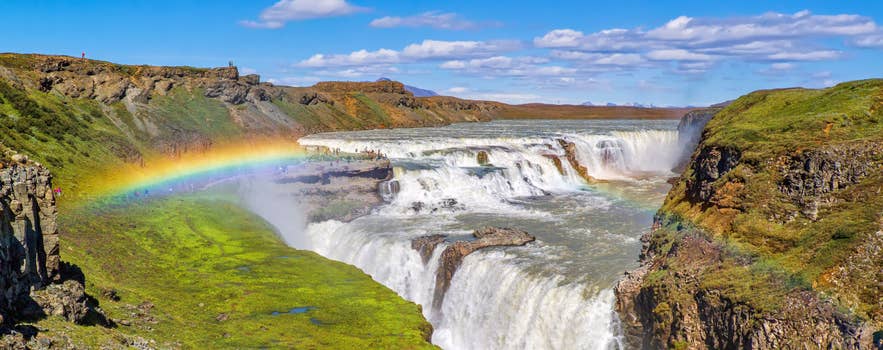 The Golden Circle is the most accessible driving route in Iceland and is often the first route travelers take on a self-drive trip. It forms a loop from Reykjavik and brings you to three of the country’s most well-known sites, all within a short distance of each other.
The full route is about 155 miles (250 kilometers) and can be completed in one day. Because of this, it works well as a standalone trip or as the first day before continuing toward the South Coast.
What makes the Golden Circle different from other routes is how easy it is to plan. Driving the Golden Circle is straightforward, and the main stops are clearly marked and close to the road. At the same time, it’s one of the busiest areas, especially in June.
Recommended Golden Circle Itinerary
A typical Golden Circle drive follows this sequence:
-
Reykjavik → Thingvellir National Park
The first stop is Thingvellir National Park, where you can walk through a rift valley between two tectonic plates. There are several walking paths, viewpoints, and historical sites, so it’s worth allowing time to explore beyond just a quick stop.
-
Thingvellir → Geysir Geothermal Area
Continue to the Geysir Geothermal Area, where hot springs and steam vents are spread across the landscape. The main attraction is Strokkur Geyser, which erupts every few minutes, making it one of the most predictable geothermal features to visit.
-
Geysir → Gullfoss Waterfall
A short drive away is Gullfoss Waterfall, a powerful two-tier waterfall. There are multiple viewpoints, and the walking paths allow you to get closer to the falls.
After Gullfoss, most travelers return directly to Reykjavik. However, there are optional detours that can make the route more flexible, especially in June when daylight is not a limitation. Your choices include:
-
Continuing toward Kerid Crater, a volcanic crater lake with a short walking loop.
-
Extending the route toward the Secret Lagoon in the village of Fludir for a geothermal bathing stop.
-
Or connect directly to the South Coast instead of returning to Reykjavik.
Reminder for Your Golden Circle Road Trip
A few things to keep in mind when planning:
-
This is one of the busiest routes in Iceland, so visiting early in the morning or later in the day can make a difference.
-
Stops are close together, but each location can take longer than expected if you walk around.
-
Parking is straightforward, but some areas require small parking fees.
The Golden Circle works best as a flexible route. It doesn’t require much planning, but how you time it during the day can shape your experience.
Snaefellsnes Peninsula Route
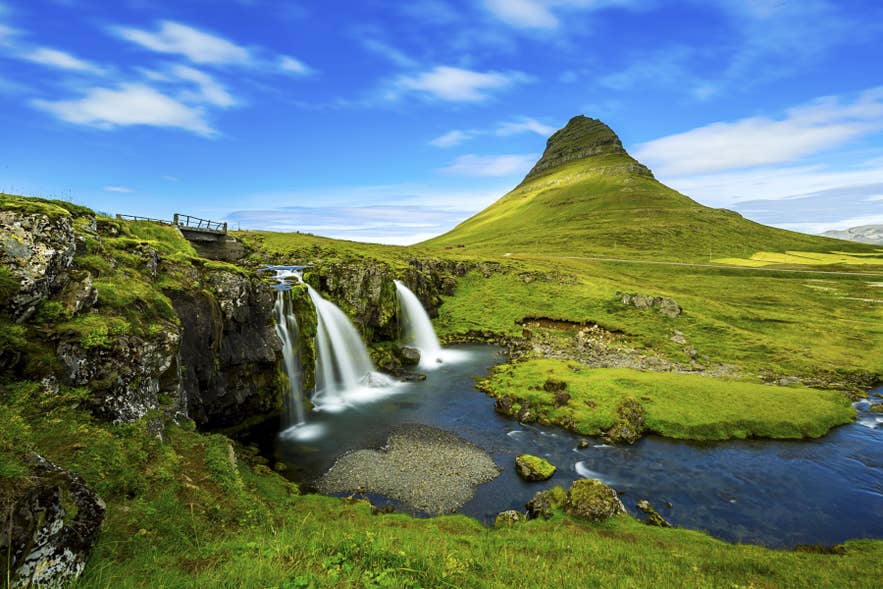 The Snaefellsnes Peninsula is often added to longer Iceland road trips because it offers a wide range of landscapes in a relatively small area. It’s located west of Reykjavik and can be explored as a loop, making it easy to include at the end of a Ring Road itinerary or as a separate trip.
The full loop around the peninsula is about 90 miles (145 kilometers), but with stops, it usually takes a full day or one to two days to explore properly. Unlike the South Coast, where stops are spread along a single road, Snaefellsnes involves short detours between coastal viewpoints, villages, and natural landmarks.
Driving here feels different from other routes. Distances are short, but there are frequent stops and changing scenery, so progress is slower than expected.
Recommended Snaefellsnes Itinerary
A typical Snaefellsnes drive follows this sequence:
-
Reykjavik → Borgarnes → Snaefellsnes
The drive begins by heading north out of Reykjavik toward Borgarnes, which is often used as a transition point before reaching the peninsula. From here, continue west into Snaefellsnes.
-
Snaefellsnes → Kirkjufell and Grundarfjordur
One of the first major stops is Kirkjufell Mountain, a distinct cone-shaped mountain often photographed with nearby Kirkjufellsfoss Waterfall. It’s located near the fishing town of Grundarfjordur and is one of the most recognizable landmarks in Iceland.
-
Kirkjufell → Snaefellsjokull National Park
Continue around the peninsula toward Snaefellsjokull National Park, centered around the glacier-covered volcano. This area includes lava fields, coastal cliffs, and walking trails with views of the glacier.
-
Snaefellsjokull National Park → Djupalonssandur Beach
A short detour brings you to Djupalonssandur Beach, a black pebble beach surrounded by lava formations. It’s known for its dramatic setting and remnants of a shipwreck.
-
Djupalonssandur Beach → Arnarstapi and Hellnar
Continue toward Arnarstapi and Hellnar, two small coastal villages known for cliffs and rock formations. Walking paths connect the villages, offering views of sea arches, birdlife, and rugged coastline.
After Hellnar, most travelers complete the loop and return toward Reykjavik, usually passing along the southern side of the peninsula.
Reminder for Your Snaefellsnes Peninsula Road Trip
A few things to keep in mind when planning:
-
Distances are short, but frequent stops and detours can make the day feel longer than expected.
-
Weather can change quickly along the coast, so conditions may vary throughout the drive.
-
Many key sights require short detours off the main road, which can add extra time.
-
Fuel and services are limited compared to more traveled routes, so plan stops in advance.
The Snaefellsnes Peninsula works best when you allow extra time for stops and keep your itinerary flexible rather than trying to cover everything in a single day.
Ring Road Route
The Ring Road (Route 1) is the main route for a full road trip in Iceland. It loops around Iceland and connects all major regions, which makes it the easiest way to plan a multi-day itinerary. In June, it becomes even more practical. Roads are fully accessible, and long daylight hours give you the flexibility to spread out stops and adjust your pace throughout the day.
A full loop is 821 miles (1,322 kilometers), but planning is less about distance and more about how you divide your days. The number of attractions by the Ring Road means even short drives can take several hours once you factor in stops, short walks, and viewpoints.
Recommended 7-Day Ring Road Itinerary
Most travelers drive the Ring Road counterclockwise, starting with the South Coast and continuing through the east, north, and west of Iceland. A typical 7-day self-drive trip around the Ring Road looks like this:
-
Day 1: Arrival in Reykjavik
Arrive at Keflavik International Airport, pick up your rental car, and drive to Reykjavik. Spend time exploring the city center, including Hallgrimskirkja Church, Harpa Concert Hall, and the Old Harbour. It’s also a good time for grocery shopping and to fuel up and get ready for the road trip ahead.
-
Day 2: Reykjavik → South Coast → Vik / Kirkjubaejarklaustur
Head east along the South Coast, where many of Iceland’s most well-known stops are located close to the road. Visit Seljalandsfoss Waterfall and Skogafoss Waterfall, then continue to Dyrholaey and Reynisfjara Black Sand Beach near Vik. Overnight in Vik or continue slightly farther east.
-
Day 3: South Coast → Skaftafell → Jokulsarlon → Hofn area
Continue through Vatnajokull National Park. Stop in Skaftafell for glacier views or short walks, then visit Jokulsarlon Glacier Lagoon and nearby Diamond Beach. End the day in the Hofn area, near the edge of the glacier region.
-
Day 4: Hofn → Eastfjords → Egilsstadir
Drive through the Eastfjords, following winding coastal roads past small fishing villages like Djupivogur and Faskrudsfjordur. This section involves slower driving but offers continuous coastal scenery and fewer crowds.
-
Day 5: Egilsstadir → Lake Myvatn → Akureyri (North Iceland)
Head toward the Lake Myvatn area, known for geothermal and volcanic landscapes. Stops include Hverir Geothermal Area and Dimmuborgir Lava Formations. Continue to Godafoss Waterfall before reaching Akureyri.
-
Day 6: Akureyri → Northwest Iceland → Borgarnes area
Drive west through Skagafjordur, an area known for horse farms and open valleys. This is a longer transition day with fewer major stops as you continue toward western Iceland. Horses outnumber people across this region. Our study of which parts of Iceland have the most horses covers the Skagafjordur herds, and June is when the foals are out in the paddocks.
-
Day 7: Borgarnes → Reykjavik → Departure
Complete the loop by returning to Reykjavik and continuing to Keflavik International Airport. If time allows, you can stop along the Reykjanes Peninsula before departure.
A 10-day self-drive tour of the complete Ring Road spreads the route out more evenly and allows time to include additional regions. Like shorter itineraries, it is typically traveled counterclockwise, starting with the South Coast and continuing through the east, north, and west of Iceland.
With extra time, you can extend the route beyond the main Ring Road to include the Snaefellsnes Peninsula and the Westfjords, adding more coastal landscapes, fjords, and less-visited areas to the trip.
Reminder for Your Ring Road Trip
When planning a Ring Road trip in June, a few things make a big difference. The long days allow more flexibility, but the number of stops can quickly fill your schedule. It helps to:
-
Keep daily driving around three to five hours, where possible.
-
Expect frequent stops at attractions by the Ring Road.
-
Fill up at gas stations when passing through towns, as fuel stops can be far apart.
-
Book hotels along the Ring Road in advance, especially in places like Vik, Hofn, Egilsstadir, and Akureyri.
-
Plan overnight stops based on distance, not just what you want to see.
The route itself is simple. What makes the trip enjoyable is how you pace it.
Optional Highlands Routes
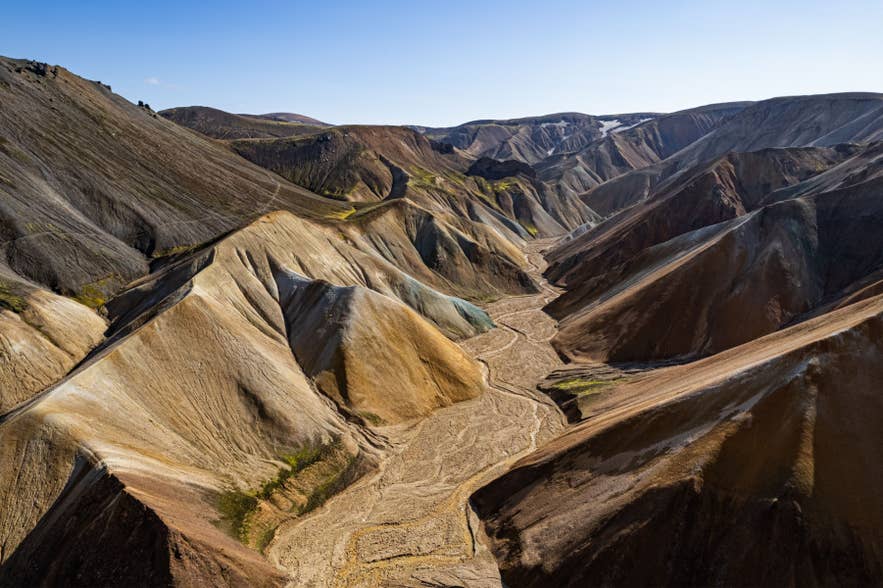 The Highlands offer a very different kind of driving compared to the rest of Iceland. These routes lead into the interior, where landscapes are more remote, services are limited, and the drive itself becomes a bigger part of the experience.
In June, Highland routes are not fully open at the start of the month. Some roads begin to open from mid to late June, depending on snowmelt and weather conditions. Because of this, Highlands driving is best treated as an optional addition rather than a fixed part of your itinerary.
Instead of building your trip around these routes, it’s more practical to add them if conditions allow.
Recommended Highland Attractions
Here are a few of the most common Highlands routes you can include:
-
Landmannalaugar (from the South Coast)
One of the most popular Highland destinations, Landmannalaugar is known for its colorful rhyolite mountains and hiking trails. It’s usually accessed from the South Coast, and in June, it’s more reliable toward the second half of the month. This route is often added as a one-day or overnight trip from areas like Hella or Vik.
-
Kjolur Route (between South and North Iceland)
Kjolur Route is a Highland road that runs between Gullfoss Waterfall and North Iceland. It’s one of the more accessible interior routes and passes through geothermal areas like Hveravellir.
This route also provides access to areas like Kerlingarfjoll Mountain Range, known for its geothermal valleys and hiking trails, as well as Highland Base, a newer accommodation and basecamp in the central Highlands.
In June, it may open earlier than other Highland roads, but conditions still vary.
-
Askja (Northeast Highlands)
Askja is a more remote destination known for its volcanic crater and lake. This route takes longer and requires more planning, so it’s usually only included in longer itineraries. In June, access can still be limited early in the month.
Reminder for Your Highlands Road Trip
Driving in the Highlands is less about distance and more about time. Even short routes can take several hours due to terrain and slower speeds. You also won’t find the same number of stops or facilities as you would along the Ring Road or the South Coast.
When planning Highlands routes in June, remember to:
-
Treat them as flexible additions, not guaranteed parts of your trip.
-
Place them later in your itinerary, when roads are more likely to be open.
-
Expect slower travel times, even for shorter distances.
-
Check road conditions before heading out, as access can change quickly.
The Highlands are one of the most unique areas in Iceland, but they require more planning and flexibility. In June, they work best for travelers who already have a structured route and want to add something more remote if conditions allow.
Exploring Iceland by Car in June
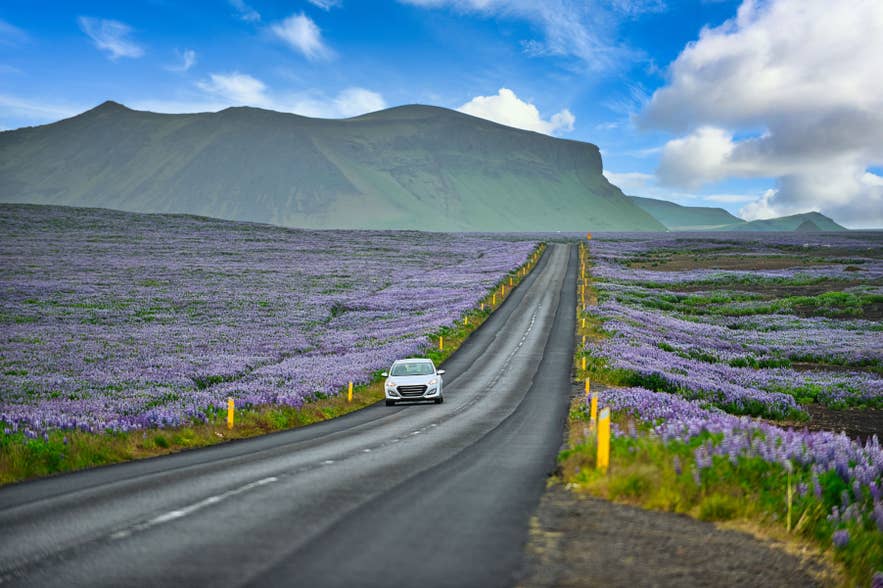 Driving in Iceland in June is one of the most straightforward ways to explore the country. Roads are open, conditions are stable, and long daylight hours give you the flexibility to move at your own pace. Whether you’re following the Ring Road, focusing on the South Coast, or adding routes like Snaefellsnes, June makes it easier to plan a smooth and flexible itinerary.
The key to a good trip is keeping things realistic. Even though driving is easier in Iceland in summer, distances can still take time, and stops add up quickly. Choosing the right vehicle for your route, spacing out your driving days, and staying flexible with your plans all make a big difference.
With the right preparation and a balanced itinerary, driving in Iceland in June is not only manageable but also one of the best ways to explore the country.
Is it safe to drive in Iceland in June?
Can you drive the Ring Road in Iceland in June?
Do you need a 4x4 when driving in Iceland in June?
Should you choose a 2WD or 4WD when driving in Iceland in June?
Can you drive the Highlands in Iceland in June?
How many hours should you drive per day in Iceland in June?
Do you need to check road conditions every day in Iceland?
What is the weather like for driving in Iceland in June?
Strong gusts can make it harder to control the vehicle, particularly for larger cars, and can reduce visibility or blow gravel onto the road. It can also make opening car doors difficult, so extra care is needed when stopping.
How do daylight hours affect driving in Iceland in June?
Can you see the northern lights when driving in Iceland in June?
Is it expensive to drive in Iceland in June?
Did this guide help you feel more prepared for driving in Iceland in June? Have you driven in Iceland before, or are you planning a trip soon? Share your thoughts, questions, or experiences in the comments below!

I was born on the west side of Reykjavík and grew up downtown, so Iceland has been my back yard for most of my life. I'm a father of two, I've traveled on five continents, and I still haven't found a country that holds my attention the way this one does.
That's why I co-founded Guide to Iceland. We connect travelers directly with Icelandic operators, guides and hosts, so the advice and the services both come from people who actually live here.
I write about the practical side of a trip: what eating out in Reykjavík really costs, whether to pick Sky Lagoon or Hvammsvík, where to stop for food along the Ring Road, and which regions give you the best odds of clear skies for the northern lights. If you're planning a trip and something doesn't add up, message me.