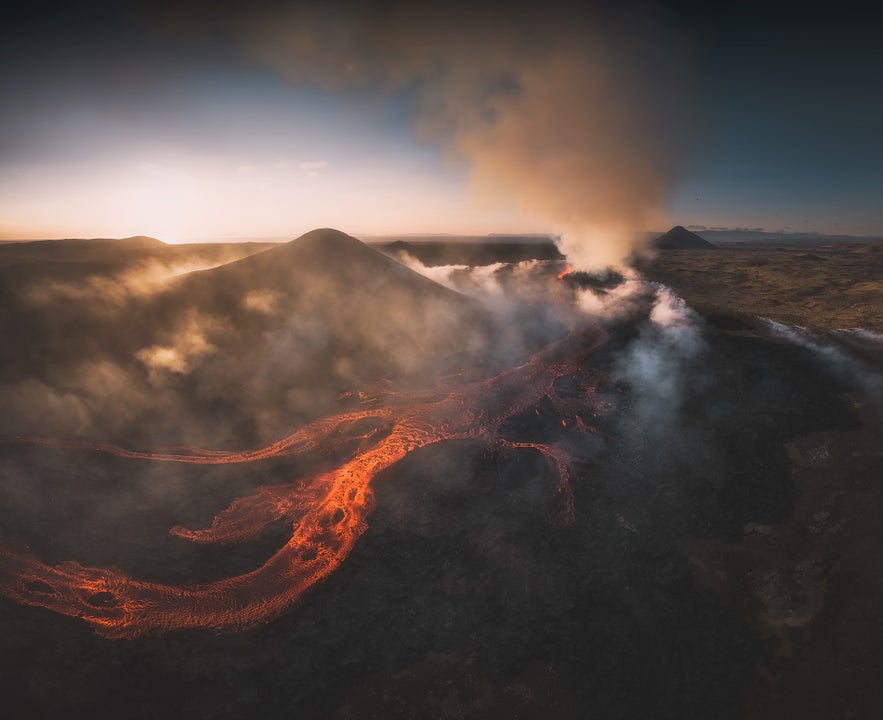
Litli-Hrutur is a small mountain on Iceland’s Reykjanes Peninsula and the site of a spectacular volcanic eruption in 2023, making it one of the most fascinating natural attractions near Reykjavik and Keflavik International Airport.
Located within the highly active Fagradalsfjall volcanic system, Litli-Hrutur has become an important stop for travelers interested in volcano tours and learning more about recent eruptions on the Reykjanes Peninsula.
Alongside earlier eruptions in 2021 and 2022, the 2023 event highlighted how dynamic this region remains and why it continues to attract visitors from around the world.
Why You Can Trust Our Content
Guide to Iceland is the most trusted travel platform in Iceland, helping millions of visitors each year. All our content is written and reviewed by local experts who are deeply familiar with Iceland. You can count on us for accurate, up-to-date, and trustworthy travel advice.
Thanks to its proximity to Keflavik International Airport and Reykjavik, Litli-Hrutur is easy to visit as part of guided Reykjanes tours or self-drive itineraries. While the eruption itself has ended, the surrounding lava fields, hiking trails, and viewpoints offer a unique opportunity to explore Iceland’s volcanic landscape safely and responsibly.
Key Takeaways
-
Litli-Hrutur is part of the active Reykjanes Peninsula volcanic system, which has seen multiple eruptions since 2021, including a major event in 2023.
-
The area is easily accessible from Reykjavik and Keflavik International Airport, making it one of Iceland’s most convenient locations to experience recent volcanic landscapes.
-
Volcano tours are the safest and easiest way to visit Litli-Hrutur, offering expert guidance, current safety information, and access to established viewpoints.
-
Hiking trails and lava fields remain open in designated areas, but conditions can change quickly, so staying on marked paths and checking official updates is essential.
-
Despite frequent eruptions on the Reykjanes Peninsula, travel in Iceland remains safe, with no impact on flights or major tourist infrastructure.
-
The region offers more than volcanoes, including geothermal areas, coastal scenery, and iconic sites like the Blue Lagoon, making it ideal for combining nature, relaxation, and adventure.
The 2023 Iceland Volcano Eruption at Litli-Hrutur
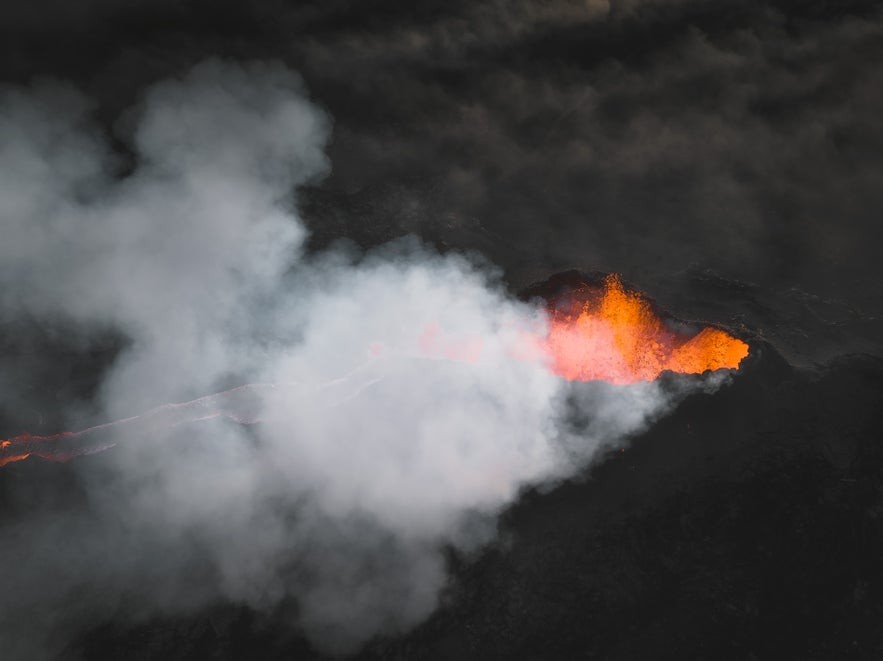
The Litli-Hrutur volcanic eruption began on July 10, 2023, just before 5 PM, following a week of intense seismic activity on the Reykjanes Peninsula. Hundreds of earthquakes were recorded in the days leading up to the eruption, mostly measuring between 3 and 4 in magnitude, with several stronger quakes reaching 4–5. The largest, a 5.3-magnitude earthquake, was felt as far away as Borgarnes in West Iceland.
When the eruption started, lava burst from a fissure roughly half a mile (900 meters) long and was noticeably more powerful than the earlier eruptions at Fagradalsfjall in 2021 and 2022. Authorities quickly established a designated hiking route, allowing visitors to safely hike toward the eruption site.
At peak activity, a massive gas plume rose into the sky and was visible from distant regions, including the Snaefellsnes Peninsula, highlighting the scale of this dramatic volcanic event.
After several weeks of activity, the Litli-Hrutur eruption gradually weakened and officially came to an end on August 5, 2023. Lava output slowed steadily, seismic activity subsided, and the fissure stopped producing new flows.
While the eruption was relatively short-lived, it left behind a dramatically altered landscape of fresh lava fields and newly formed craters, which remain visible today. These features have left a striking mark on the Reykjanes Peninsula and continue to attract visitors interested in Iceland’s ever-changing volcanic scenery.
Litli-Hrutur and the Ongoing Volcanic Activity on the Reykjanes Peninsula
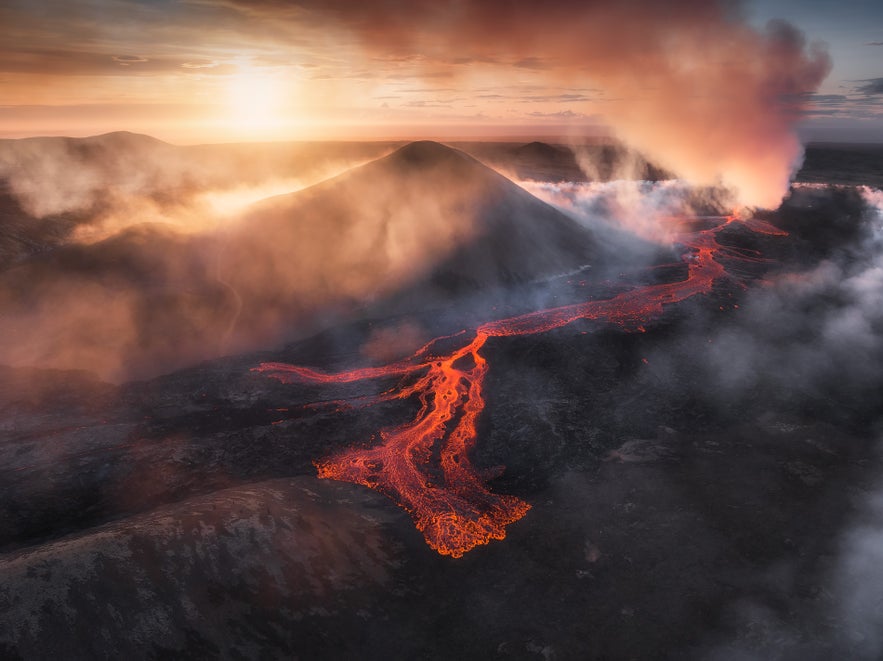 The 2023 eruption at Litli-Hrutur is part of a broader volcanic reawakening on the Reykjanes Peninsula that began in 2021. That year marked the first eruption in the area in nearly 800 years, when lava broke through at Fagradalsfjall, drawing visitors from around the world to witness a rare, accessible volcanic event. A second eruption followed at Fagradalsfjall in 2022, reinforcing scientific predictions that the region had entered a new active phase.
In 2023, activity shifted slightly north with the eruption at Litli-Hrutur, continuing the pattern of fissure eruptions along the same volcanic system. While dramatic, the Litli-Hrutur eruption occurred in a relatively remote area and posed minimal risk to infrastructure. Later that year, volcanic activity moved closer to populated areas with eruptions along the Sundhnukagigar Crater Row near Grindavik in December 2023.
Throughout 2024 and into 2025, repeated eruptions occurred along the Sundhnukagigar system, drawing international attention due to their proximity to Grindavik, the Svartsengi Power Station, and the Blue Lagoon. These eruptions were closely monitored, with extensive protective measures in place.
Although some lava flows crossed roads and impacted utilities, most eruptions followed predictable patterns and did not disrupt travel in Iceland. Flights continued as normal, and visitor safety remained a top priority.
For travelers, this sequence of eruptions has turned the Reykjanes Peninsula into one of Iceland’s most dynamic geological regions. Clearly marked hiking trails and volcano tours, such as the volcano shuttle service, and this popular helicopter tour now allow visitors to safely explore fresh lava fields and eruption sites formed between 2021 and 2025.
History of Litli-Hrutur and Surrounding Area
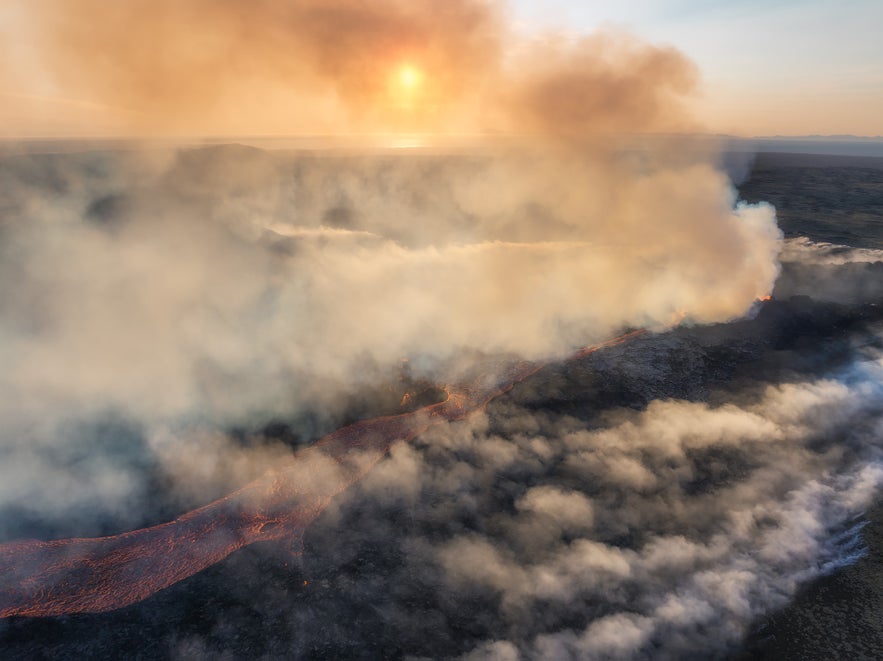
Long before this recent volcanic chapter, the Litli-Hrutur area played an important role in human settlement on the peninsula. Its name translates to “little ram,” reflecting its grassy surroundings, which once supported grazing and farm life in an otherwise rugged landscape.
Nearby place names such as Meradalir (Valleys of Mares) and Geldingadalir (Valleys of Geldings) preserve this agricultural heritage in the landscape itself.
Litli-Hrutur's nearby namesake, called Stori-Hrutur or "big ram," towers above the landscape. It offers some of the best views of the surrounding area, though the rewarding hike can be very challenging.
The surrounding grassy fields and moss of Litli-Hrutur have proved a new challenge following the volcanic eruption, as the fresh lava caused grassfires to spread. Fires were not such a big issue with the previous two eruptions in 2021 and 2022, as the surroundings of Fagradalsfjall are more rugged.
The region also carries reminders of more recent history. During World War II, two aircraft crashed near Fagradalsfjall and Litli-Hrutur during poor weather conditions, claiming multiple lives. A memorial now stands near the intersection of Reykjanesbraut and Grindavikurvegur, relocated in 2023 due to volcanic activity and easily accessible from Keflavik Airport.
Whether approached on foot, by guided tour, or viewed from above, the area around Litli Hrutur offers travelers a rare opportunity to see how centuries of quiet landscapes can be reshaped in just a few years by the forces beneath Iceland’s surface.
How to Visit the Litli-Hrutur and Nearby Reykjanes Eruption Sites
Visiting the recent eruption sites at Litli-Hrutur and Fagradalsfjall is one of the most accessible ways to experience Iceland’s active volcanic landscape. The area can be reached by rental car, with designated parking areas near the trailheads, but conditions around active and recently active volcanoes change frequently.
For this reason, joining a guided volcano tour is currently the safest and most reliable way to visit, as guides have up-to-date safety information and route access.
For experienced hikers visiting independently, the shortest route to Litli-Hrutur is the D-hiking path, also known as Merardalaleid. This is a long and demanding hike, covering just over 12 miles (20 kilometers) round trip, so visitors should allow plenty of time, bring proper gear, and be prepared for changing weather and rough lava terrain.
Several other marked trails lead to other eruption sites in the area, including Fagradalsfjall and Sundhnukagigar, offering different viewpoints and difficulty levels.
Trail availability and access can change due to volcanic gas, unstable ground, or weather conditions, so it’s essential to check official updates before setting out. For the most current trail maps and safety information, visitors should consult the Visit Reykjanes website or choose a guided tour option for a worry-free experience.
Exploring More of the Top Reykjanes Attractions
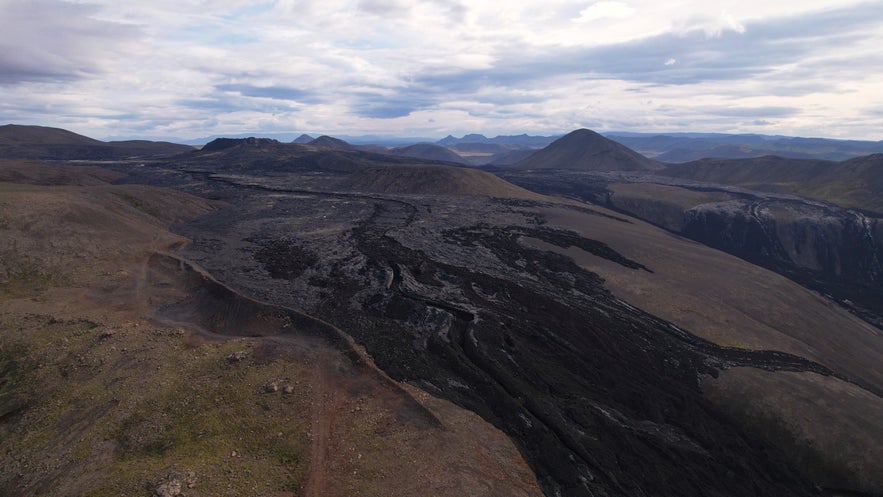
Mt. Litli-Hrutur is centrally located on the dramatic Reykjanes Peninsula, where you can find many natural wonders.
You can stroll between the tectonic plates of North America and Eurasia at the Bridge Between Continents, a physical testament to Earth's continuous evolution.
A short drive away, you'll find the geothermal area of Gunnuhver, which teems with hot springs and mud pools. The billowing steam clouds, colored by the minerals from the earth, create an otherworldly ambiance, and the ground rumbles under your feet, reminding you of the powerful forces at play beneath the surface.
For an immersive geothermal experience, you shouldn't miss a visit to the Blue Lagoon, globally acclaimed for its azure mineral-rich waters. This geothermal spa, set in the middle of a lava field, offers unparalleled relaxation and rejuvenation, with its warm, silica-laden waters known for their beneficial skin properties.
The peninsula's coastline is equally captivating. Dramatic cliffs plunge into the turbulent Atlantic, and the craggy rock formations near the Reykjanesviti Lighthouse and the surrounding area offer spectacular views. Here, you'll find one of the country's oldest lighthouses, standing as a solitary sentinel against Iceland's volatile weather, guiding seafarers through the ages.
Experiencing Litli-Hrutur and Iceland’s Active Volcanic Landscape
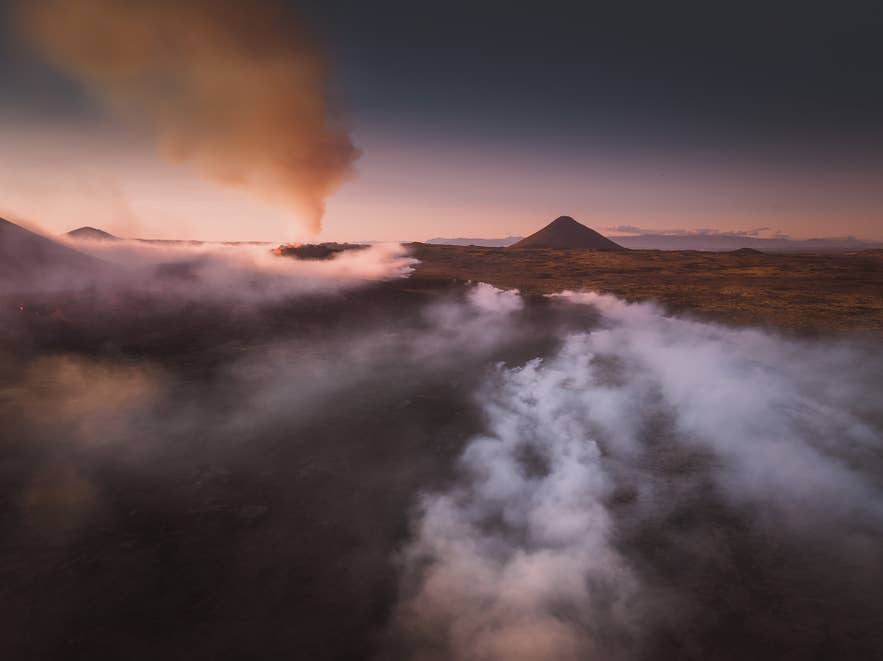 Litli-Hrutur offers a rare opportunity to witness how Iceland’s landscape is continuously shaped by volcanic forces. As part of the ongoing eruptions on the Reykjanes Peninsula, the area has become one of the most accessible places in the country to explore recent lava fields, fresh craters, and dramatic geological formations.
For travelers, visiting Litli-Hrutur adds depth to a trip through Southwest Iceland, whether you choose a guided volcano tour or explore the region independently. Combined with nearby highlights like the Blue Lagoon, Gunnuhver, and coastal viewpoints, it’s an unforgettable way to experience Iceland’s raw natural power.
While volcanic activity continues to be closely monitored, Iceland remains a safe and well-prepared destination. By staying informed and following local guidance, visitors can enjoy one of the most dynamic landscapes in the world, where geology, history, and adventure meet.