Kerid is a must-see volcanic crater lake in the Grimsnes Area of Iceland’s South Coast. It’s close to the three major sites that comprise Iceland’s world-famous Golden Circle sightseeing route. Read on to learn what makes Kerid so unique and tips to make the most of your road trip.
Kerid Crater is a striking volcanic crater lake along Iceland’s Golden Circle route, easily visited on guided Golden Circle tours or as a scenic stop for travelers renting a car. Unlike most craters formed by explosive eruptions, Kerid was created when a magma chamber emptied and the ground above collapsed, giving it a distinctive geological shape.
Why You Can Trust Our Content
Guide to Iceland is the most trusted travel platform in Iceland, helping millions of visitors each year. All our content is written and reviewed by local experts who are deeply familiar with Iceland. You can count on us for accurate, up-to-date, and trustworthy travel advice.
Whether you're on a quick day trip or planning a longer adventure, Kerid Crater is a rewarding detour. Explore this selection of self-drive tours to find one that suits your itinerary. Visitors should also note that there is a small entrance fee, and you can book admission to Kerid in advance.
Key Takeaways
-
Kerid Crater is a volcanic crater lake located along Iceland’s famous Golden Circle route in the Grimsnes area of South Iceland.
-
Unlike most volcanic craters formed by explosive eruptions, Kerid was created through a caldera collapse after magma drained underground.
-
The crater is geologically young, estimated to be between 3,000 and 6,500 years old, which explains its striking red volcanic slopes.
-
Kerid’s vivid blue-green lake gets its color from minerals in the surrounding volcanic rock and is fed by underground water sources rather than rainfall.
-
Visitors can walk the entire crater rim and descend to the lake via a short staircase trail.
-
The best time to visit Kerid Crater is during summer in Iceland (June to August), when dry trails, vibrant colors, and the midnight sun provide nearly 24 hours of daylight.
-
Winter visits offer dramatic scenery with snow-covered crater walls, frozen water, and opportunities to view the northern lights due to minimal light pollution.
-
Kerid is about a one-hour drive from Reykjavik and is commonly included in Golden Circle tours alongside Thingvellir National Park, Geysir Geothermal Area, and Gullfoss Waterfall.
-
Both the top-ranked and the cheapest company in our study of the best Golden Circle tour operators in Iceland stop at Kerid.
-
Entry costs about 5 USD (700 ISK), with parking and restroom access included.
-
Proper outdoor clothing and sturdy footwear are recommended year-round because Icelandic weather changes quickly, and trails may become slippery in winter.
-
Nearby attractions include the Secret Lagoon, Fontana Spa, Solheimar Ecovillage, and Fridheimar Tomato Farm, making Kerid an easy addition to a longer South Iceland itinerary.
-
Kerid remains one of Iceland’s most photogenic volcanic landmarks thanks to the contrast between red volcanic rock, bright green moss, and aquamarine water.
Geology of Kerid: A Natural Wonder
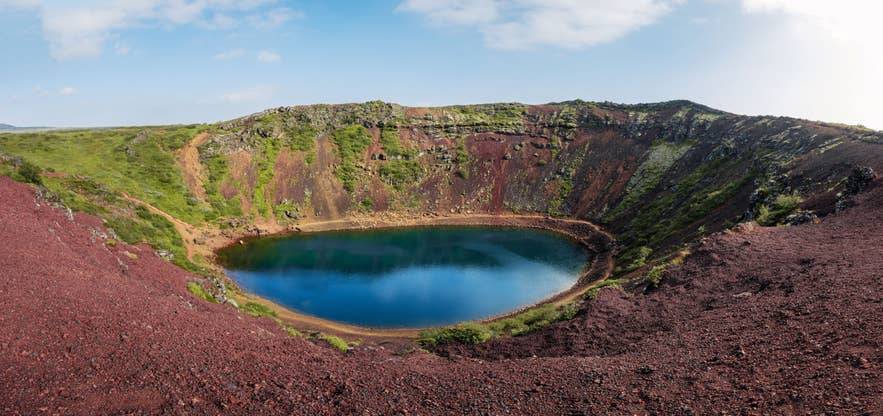 Kerid's landscape was carved by volcanic forces thousands of years ago. Its formation dates to somewhere between 3,000 and 6,500 years ago, though the exact age is still uncertain due to erosion.
What makes Kerid truly unique is how it came to be. Rather than forming from a violent explosion, magma drained away underground, the ground above lost its support, and the whole surface collapsed inward to create the bowl shape visible today. Geologists call this caldera collapse.
Kerid sits within Iceland's Western Volcanic Zone, a region that includes the Reykjanes Peninsula and the Langjokull Glacier. It is also the northernmost of four craters along a 2,625-foot (800-meter) fissure called the Tjarnarholar row, making it part of a much larger volcanic story beneath the surface.
The crater walls are made of basalt and scoria, a porous rock packed with iron. Because Kerid is so geologically young, the iron has not fully oxidized, leaving the walls a striking deep red rather than the dark black typical of older craters nearby.
The Kerid Lake’s Unique Characteristics
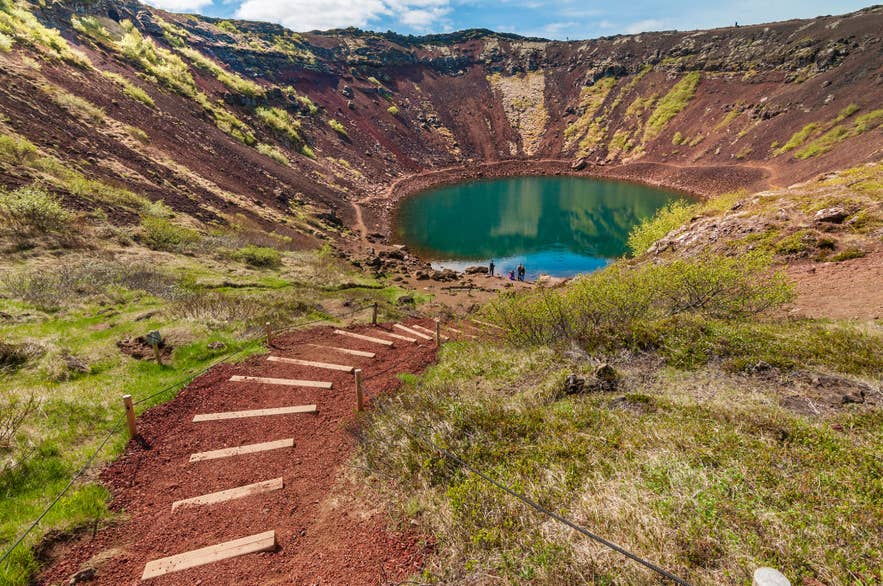 Kerid Crater is approximately 6,500 years old, making it roughly half the age of most volcanic craters in Iceland. This is the major reason why Kerid's slopes are red in color rather than volcanic black; the iron deposits are, geologically speaking, fresh.
This vivid redness is part of the appeal of visiting this crater. The crimson rocks contrast dramatically with their surroundings, particularly the intense azure color of the waters within the crater lake and the verdant bursts of vegetation.
At some point in the centuries following the collapse, Kerid Crater filled with water. The resulting lake is around 22 feet to 46 feet deep (7-14 meters), depending on the time of year and the amount of rainfall.
The lake’s striking color is due to mineral deposits in the crater’s rocks, which give it the famous aquamarine hue.
Kerid is approximately 180 feet (55 meters) deep, 558 feet (170 meters) wide, and 886 feet (270 meters) in circumference. There’s also a path to take right to the crater’s edge and walk completely around it.
You can find many crater lakes in a nearby region known as Iceland's Western Volcanic Zone. The surrounding area is full of barren, stark lava fields, further illustrating the region's volcanism.
Best Time To Visit the Kerid Crater
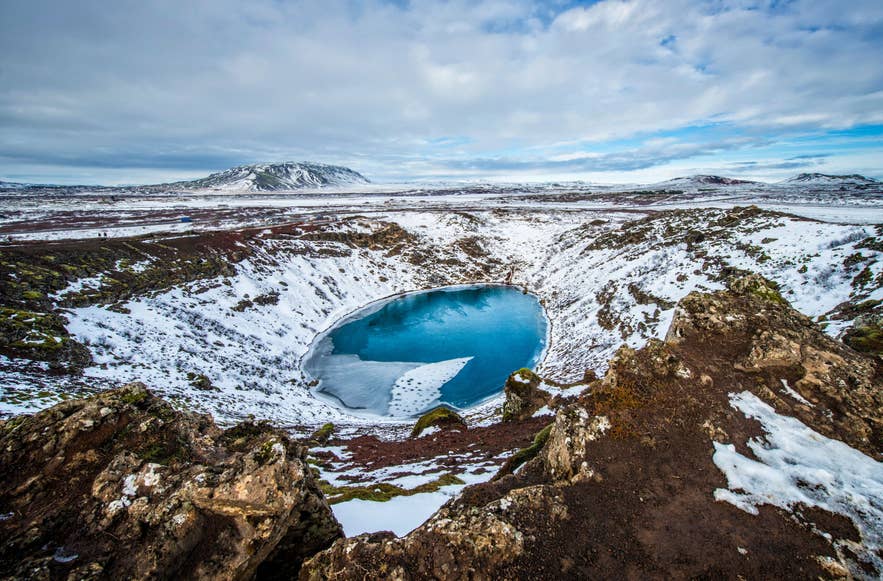 The best time to visit Kerid Crater is June through August, during summer in Iceland. Days are long, trails are dry, and the crater's red walls and blue-green lake are at their most vivid. Thanks to the midnight sun, daylight lasts nearly 24 hours at peak summer, giving you flexibility to visit early in the morning or late in the evening to avoid crowds.
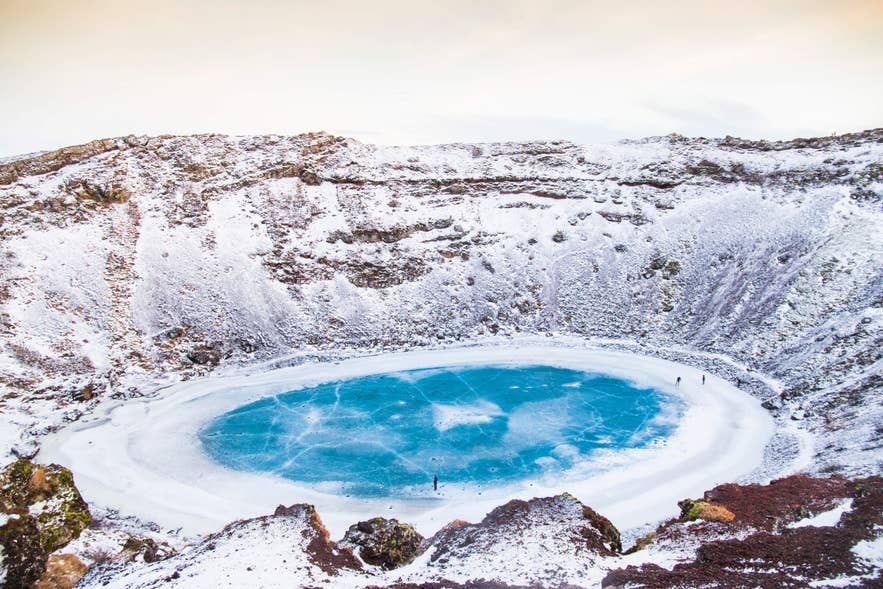
Winter (November to February) offers a quieter, more dramatic experience. Snow settles on the red volcanic walls, and the lake can freeze over entirely. The crater sits far enough from town that light pollution is minimal, making it one of the better spots along the Golden Circle for viewing the northern lights.
The aurora reflecting off the frozen lake is a rare and memorable sight. Expect just four to five hours of daylight and icy paths that require careful footing.
Spring and fall are solid alternatives for travelers who want fewer crowds, lower prices, and decent conditions.
How To Get to the Kerid Crater
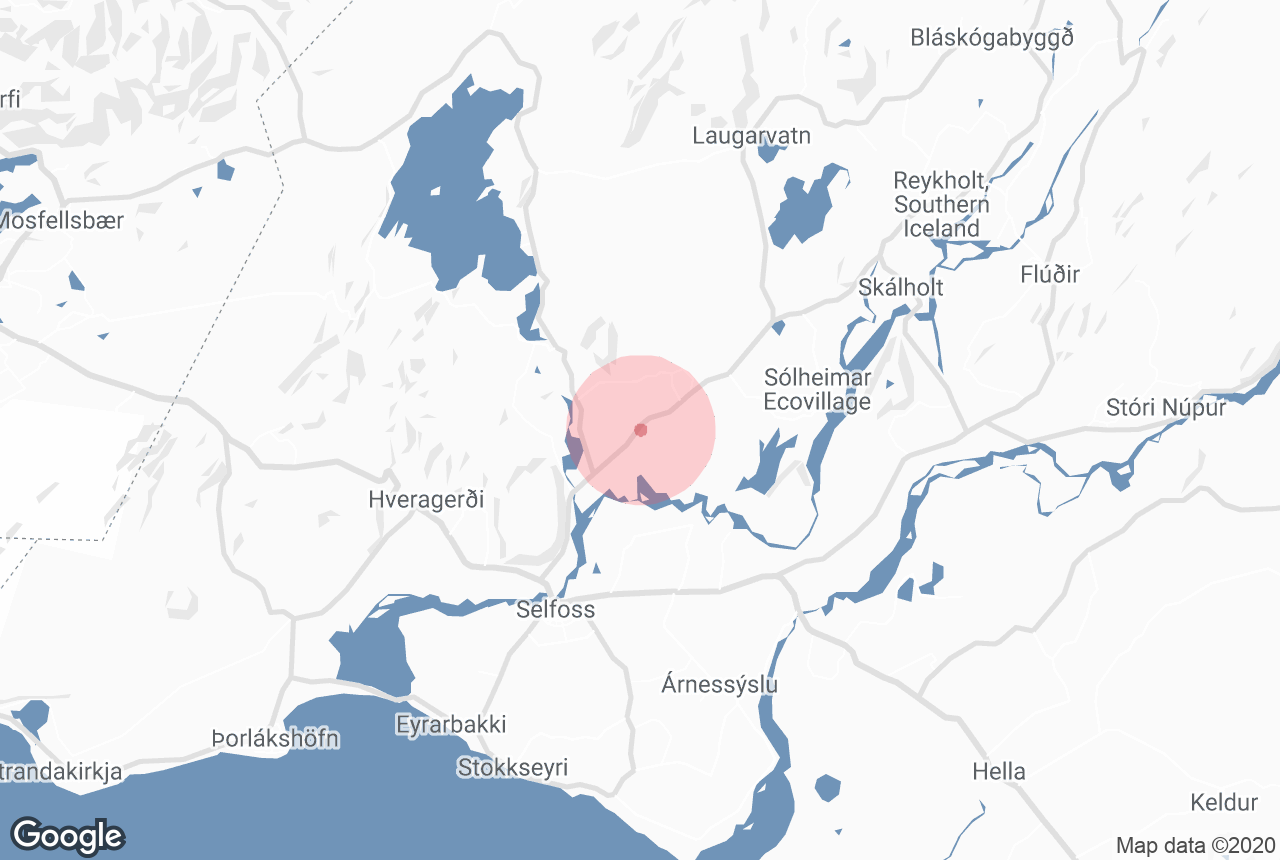
Kerid Crater is located along Route 35 (Biskupstungnabraut) in the Grimsnes area of South Iceland, about 47 miles (75 kilometers) east of Reykjavik. Sitting along the Golden Circle sightseeing route, it is one of the easiest volcanic landmarks in Iceland to visit on a day trip.
Travel times from Reykjavik vary depending on traffic, weather, and the route you choose. The most common driving options include:
-
Via Route 1 and Selfoss – The classic and most straightforward route. Drive east from Reykjavik along Route 1 (the Ring Road) toward Selfoss, then turn north onto Route 35 toward the Golden Circle. Kerid Crater is clearly signposted along the road. The drive typically takes around 1 hour and 15 minutes.
-
Via Nesjavallaleid / Route 435 – Often the fastest route depending on traffic conditions, taking around 1 hour and 10 minutes for roughly 45 miles (73 kilometers). This scenic drive passes geothermal areas near Lake Thingvallavatn before connecting to Route 35.
-
Via Nesjavallaleid / Route 435 and Grafningsvegur Efri – A quieter alternative route covering about 56 miles (90 kilometers), usually taking around 1 hour and 25 minutes.
-
Via Route 36 – The traditional Golden Circle route through Thingvellir National Park, taking about 1 hour and 25 minutes for approximately 56 miles (90 kilometers). This option is ideal if you plan to combine Kerid with Thingvellir, Geysir, and Gullfoss in a single itinerary.
Free parking is available directly at the entrance and accommodates both private vehicles and tour buses. During summer, the parking area is busiest between 10 AM and 2 PM, so arriving early in the morning or later in the evening is recommended.
Kerid is also included in many Golden Circle tours departing from Reykjavik, usually alongside Thingvellir National Park, the Geysir Geothermal Area, and Gullfoss Waterfall.
Cost and Opening Hours at the Kerid Crater
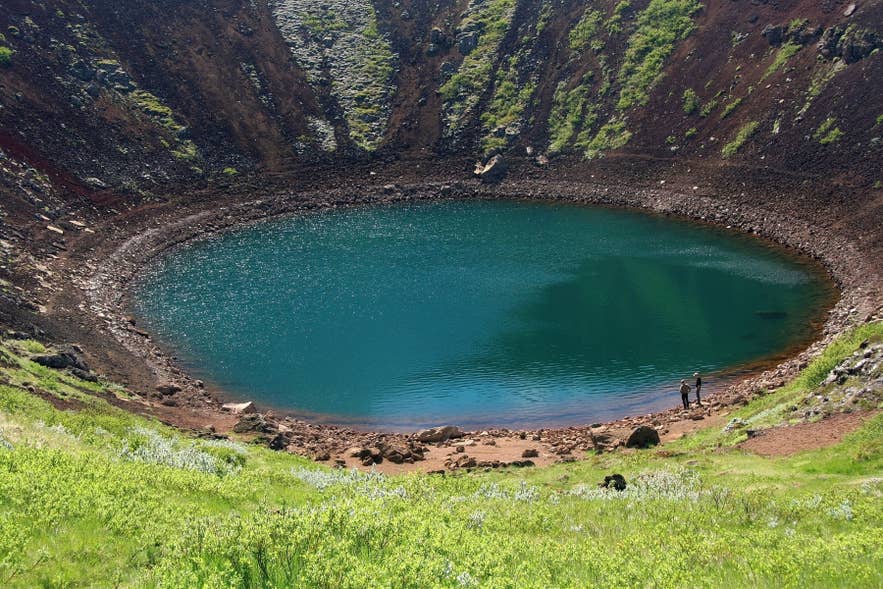 Kerid Crater sits on privately owned land, so a small admission fee is required to enter. The entrance fee is 700 ISK (about 5 USD) per person. Visitors who call the fee steep usually describe a short stop, according to our analysis of which Iceland attractions disappoint visitors. Walk the full rim and take the stairs down to the lake, and the stop earns its fee.
Payment at Kerid is by card at the on-site kiosk. Online pre-booking is available and recommended during peak summer months to skip the queue. Parking is free.
Opening hours follow available daylight and may shift slightly with the seasons. Restrooms are on-site and included in the entry fee. The fee goes toward preserving and maintaining the crater for visitors.
Accessibility at the Kerid Crater
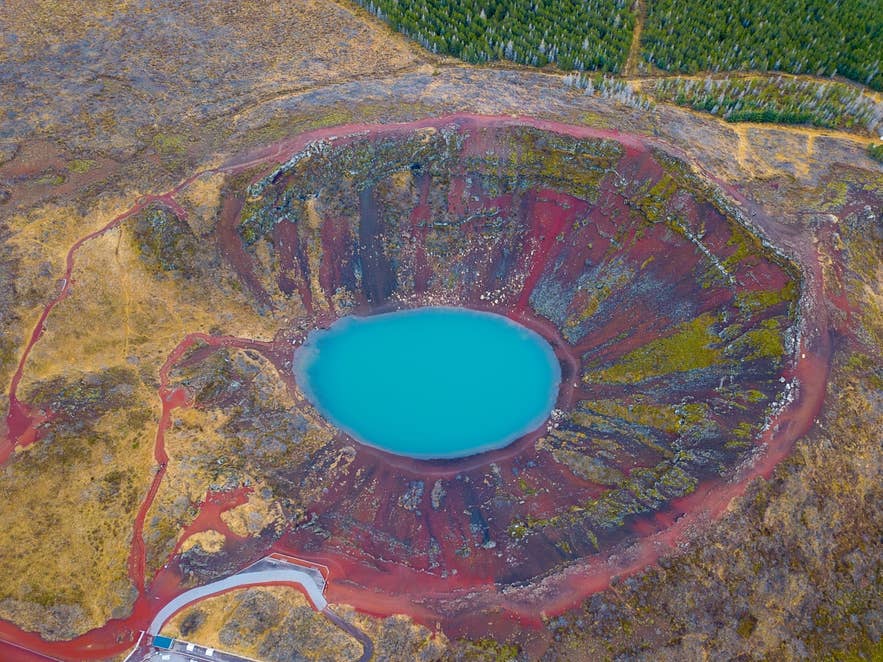 From the parking lot, a short walk brings you to the crater rim, where views open up immediately. A gravel staircase leads down to the water's edge, a one-way distance of about 0.1 miles (164 meters). The full walk around the rim is a gentle, mostly flat loop of about half a mile.
The trail is not wheelchair accessible and may be difficult for visitors with limited mobility. In winter, icy paths add an extra challenge, and some visitors bring crampons for added grip. The rim itself offers impressive views without needing to descend, making it a worthwhile stop even for those who skip the stairs.
What To Pack for the Kerid Crater
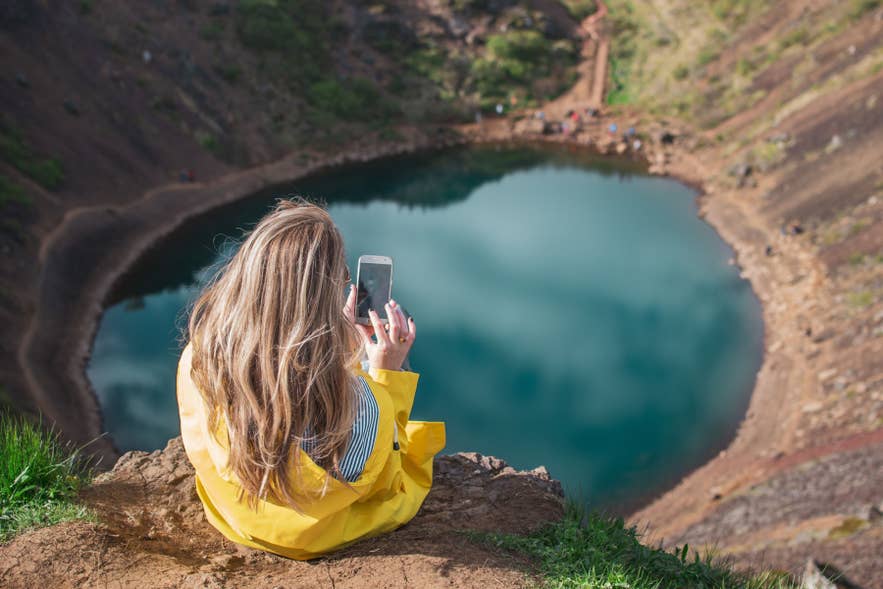 Iceland's weather is famously unpredictable, and Kerid's open crater makes it especially exposed to wind. A windproof and waterproof jacket is worth packing year-round. Summer temperatures sit between 50 F (10 C) and 59 F (15 C), while winter can drop to as low as 23 F (-5 C). For a full breakdown of clothing essentials, check out our guide on what to wear in Iceland.
Sturdy footwear with good grip is a must, especially if you plan to descend to the lake. In winter, crampons or ice grips are a smart addition. Layering is always a good strategy since conditions can shift quickly.
For photos, a wide lens works well for capturing the full scale of the crater. A tripod helps if you plan to shoot at dusk or during the northern lights season. There is a small food truck in the parking area, but it is worth carrying snacks and water since facilities along the Golden Circle between stops are limited.
The Golden Circle and Kerid Crater
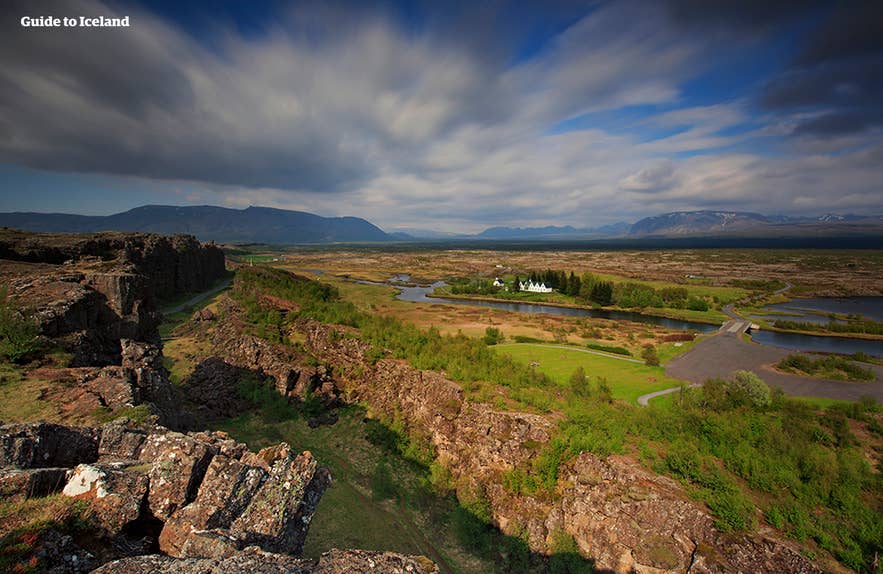
The Golden Circle is Iceland’s most popular tourist route. Its three main highlights are Gullfoss Waterfall, or the "Golden Waterfall," the Geysir Geothermal Area, with its many springs and geysers, and Thingvellir National Park, a UNESCO World Heritage Site and the birthplace of the country’s parliament.
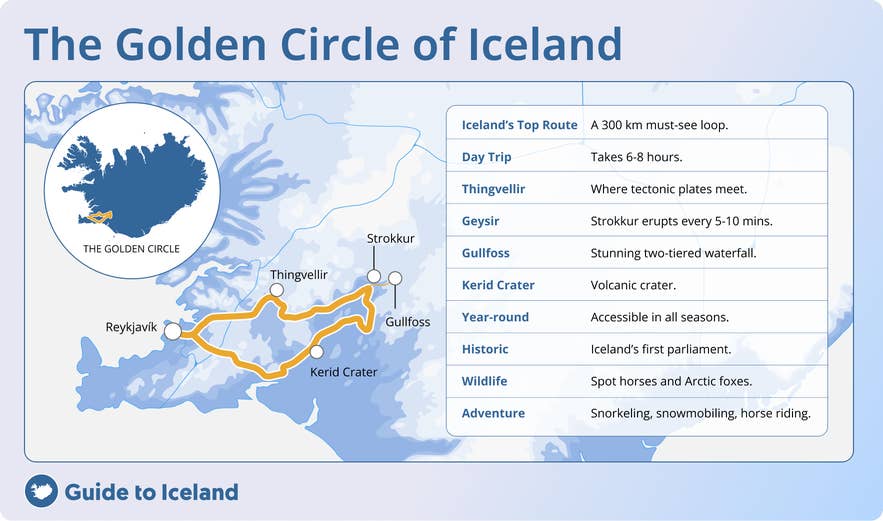 Several tour operators offer trips to the Golden Circle, with Kerid as a popular bonus stop. It’s approximately a 17-mile (30-kilometer) drive from Thingvellir National Park and Geysir Hot Spring in different directions. This provides visitors with two routes back to the city of Reykjavik.
If you are traveling alone to Kerid Crater Lake, please remember that there is a small entrance fee. This fee is to help the landowners preserve and protect the crater, which is on privately owned land.
Other Stops and Detours Near Kerid Crater
For more adventures off the beaten path, here are other sites to see when traveling Iceland’s Golden Circle:
-
Solheimar Ecovillage: A sustainable community focused on eco-friendly living and supporting people with disabilities, Solheimar offers a peaceful atmosphere, charming guesthouses, and shops selling handmade art and organic goods.
-
Fontana Spa in Laugarvatn: Nestled on the edge of a geothermal lake, Fontana offers relaxing hot pools, steam baths, and a unique geothermal bakery experience where you can sample traditional Icelandic rye bread baked underground.
-
The Secret Lagoon in Fludir: This natural hot spring is one of Iceland’s oldest swimming pools and offers a more rustic, authentic alternative to the Blue Lagoon, complete with surrounding geothermal features and minimal crowds.
-
The Fridheimar Tomato and Horse Farm: A warm and welcoming greenhouse restaurant where guests can dine among tomato plants and enjoy fresh produce year-round, with the added bonus of Icelandic horse shows during the summer months.
Where To Stay Near the Kerid Crater
 If you plan to visit the Kerid Crater while on vacation in Iceland, there are a few noteworthy spots to consider. Here are some Golden Circle hotels and accommodations conveniently located in the area.
-
Hotel Grimsborgir: One of the best options is the Hotel Grimsborgir, a 5-star luxury hotel offering a variety of room types, including suites and private apartments. The hotel also features a gourmet restaurant and outdoor hot tubs, perfect for unwinding after a day of exploring.
-
Sel Guesthouse: For a more budget-friendly option, the Sel Guesthouse is a great choice. It's about a 12-mile (20-kilometer) drive away from Kerid Crater, and you can enjoy a homey stay among nature.
-
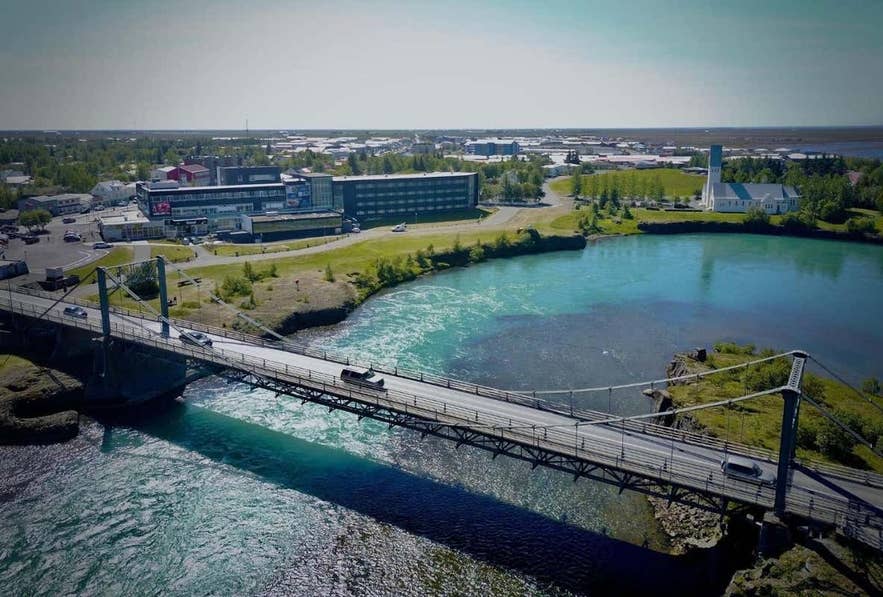
Hotel Selfoss: Kerid is only about a 10-mile (16-kilometer) drive from Selfoss, the largest town on the South Coast, making Selfoss accommodations a good option. You can stay in Hotel Selfoss, a 4-star hotel located along the Olfusa River. It offers comfortable rooms, a spa, and easy access to nearby attractions, such as the Selfoss New Old Town.
Kerid: Your Volcanic Adventure Awaits
 With an accessible trail and panoramic views, Kerid Crater is one Icelandic destination you won’t want to skip. Just remember, timing is key. To see and experience this landmark, you’ll want to plan ahead for your visit, especially with daylight and weather at the top of your mind.
Looking to explore this and more volcanic gems? We’ve got you covered. Check out the top volcano tours in Iceland, from hiking hidden lava caves to soaring helicopter rides, for an unforgettable trip.