Learn how Icelandic names work, a system so different from the rest of the world. Find out why Icelandic phone books are sorted by first name and why the prime minister is addressed by hers. Keep reading to learn how Icelanders are named and what the most popular ones mean.
Unlike many countries, Iceland has a unique naming tradition that reflects language, family connections, and cultural identity. You can learn more about this interesting practice firsthand by meeting locals on guided tours or during self-drive trips around Iceland. These experiences help you connect with the culture and hear how Icelandic names are used in everyday interactions.
Why You Can Trust Our Content
Guide to Iceland is the most trusted travel platform in Iceland, helping millions of visitors each year. All our content is written and reviewed by local experts who are deeply familiar with Iceland. You can count on us for accurate, up-to-date, and trustworthy travel advice.
Below, you’ll find a closer look at the patronymic and matronymic system, the Icelandic Naming Committee, and the meanings behind 40+ popular Icelandic first names. The guide also explains how to address people properly during your visit to Iceland.
What to Know About Icelandic Names
-
Icelanders use patronymics or matronymics instead of family surnames. Children form their last name by taking a parent’s first name and adding -son or -dóttir.
-
Siblings have different last names. Brothers use -son, sisters use -dóttir.
-
Some use -bur, a gender-neutral ending meaning “child of,” instead of -son or -dóttir.
-
The Icelandic Naming Committee must approve new first names. Names must follow language rules.
-
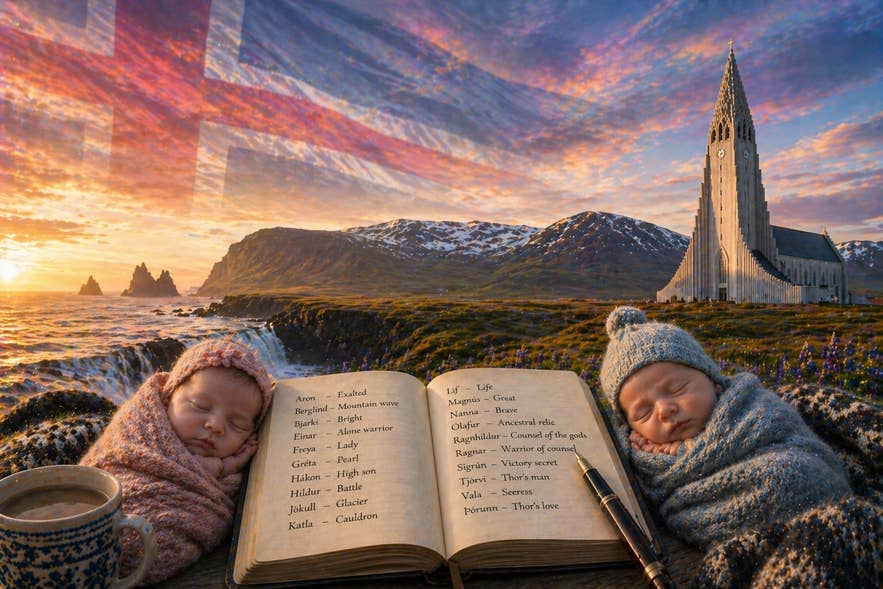
Many first names come from Old Norse and have meanings, such as Björn (bear) or Sigrún (victory rune).
-
Everyone is addressed by first name, including public figures.
How People Are Named in Iceland
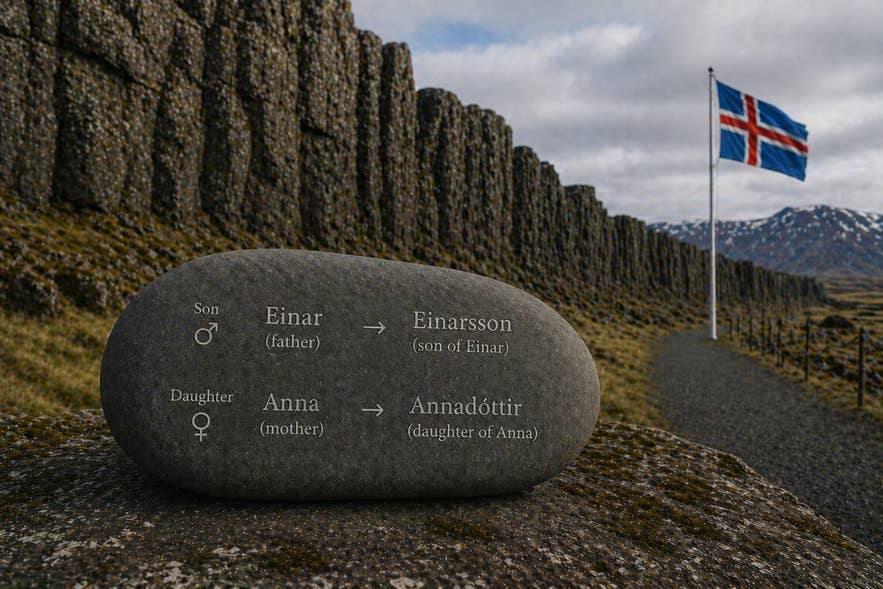
In Iceland, people do not use fixed family surnames. Instead, they carry a patronymic or matronymic built from their parent’s first name.
A child’s last name shows who their parent is. For example, Jón’s son becomes Jónsson, and Jón’s daughter becomes Jónsdóttir. Because of this system, last names change with each generation rather than being passed down through a family line.
The Patronymic System
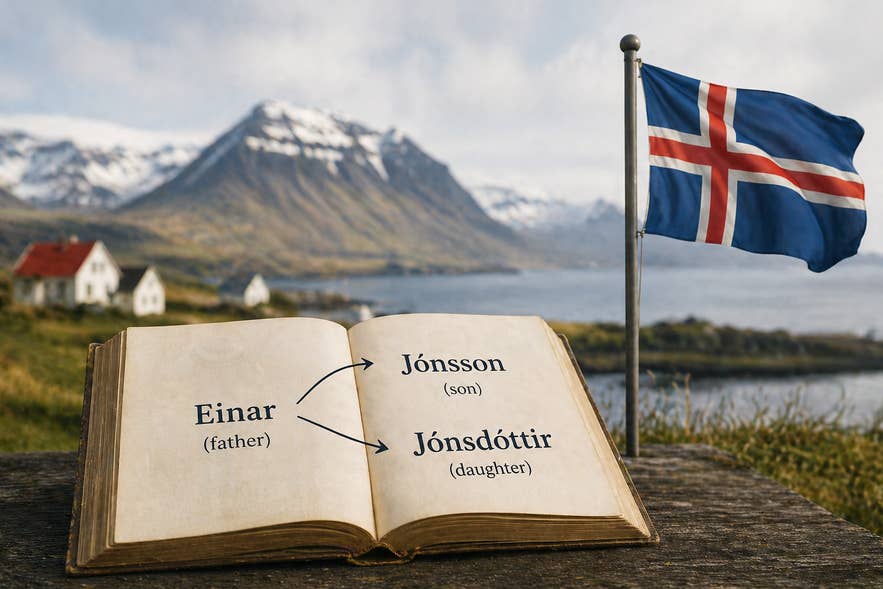
The most common naming method in Iceland is the patronymic system, where a child’s last name is derived from the father’s first name. The father’s name is first converted into its genitive form.
For example:
-
Jón → Jóns
The appropriate suffix is then added:
-
A son adds -son (meaning “son”)
-
A daughter adds -dóttir (meaning “daughter”)
The child’s last name is then formed like this:
-
Jón → Jóns + son → Jónsson
-
Jón → Jóns + dóttir → Jónsdóttir
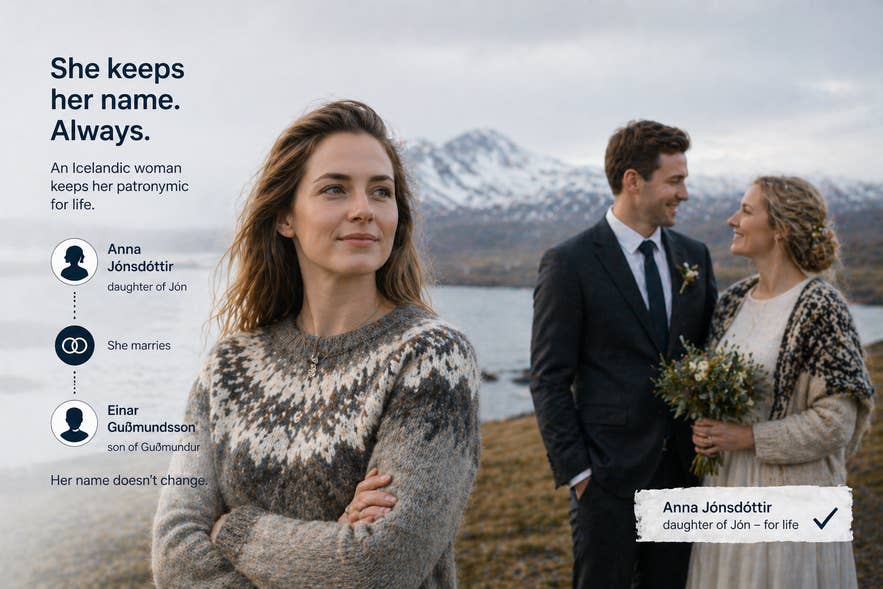
Siblings in the same family can have different last names. For example, if two children named Anna (female) and Bjarni (male) have a father named Jón, they would be called Anna Jónsdóttir and Bjarni Jónsson.
The Matronymic System
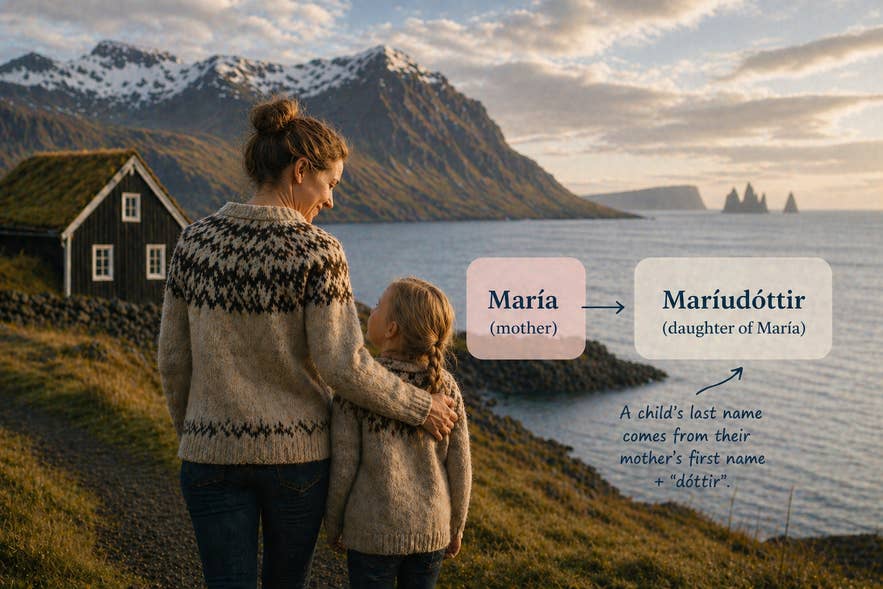
Icelanders can also use a matronymic system, where the last name is based on the mother’s first name. While less common, they are fully legal and follow the same structure as patronymics. The mother’s name is also converted to its genitive form first before adding the right suffix.
For example:
-
Helga → Helgu + son → Helguson
-
Helga → Helgu + dóttir → Helgudóttir
Although patronymics (based on the father’s name) are more traditional, some Icelanders choose matronymics for personal or family reasons. This may happen if the mother played a stronger role in upbringing, if the father is absent, or if the family simply prefers to highlight the maternal line.
In modern Iceland, the choice can also reflect equality or personal identity, as the naming system allows flexibility rather than strict rules.
Using Both Parents’ Names in Icelandic Surnames
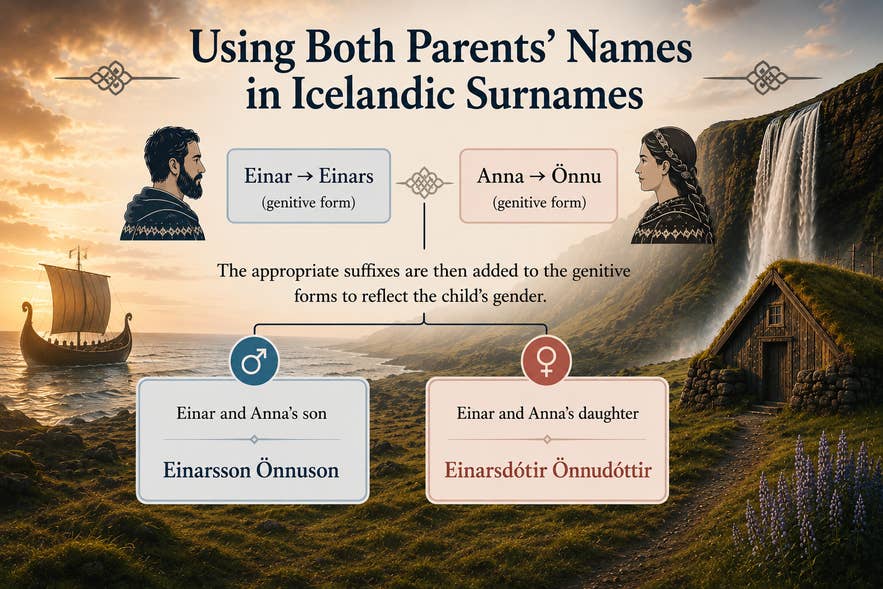
While Icelandic naming typically relies on a single patronymic or matronymic, it is also possible to use both parents’ names. In this case, a person forms a compound surname by converting each parent’s first name into its genitive form:
-
Einar → Einars
-
Anna → Önnu
The appropriate suffixes are then added to the genitive forms to reflect the child’s gender. For example, the son and daughter of Einar and Anna might be named like this:
-
Einar and Anna’s son → Einarsson Önnuson
-
Einar and Anna’s daughter → Einarsdóttir Önnudóttir
Although this option is legally allowed, it is relatively uncommon. Most Icelanders use just one parental name in everyday practice.
The Non-Binary Naming Option
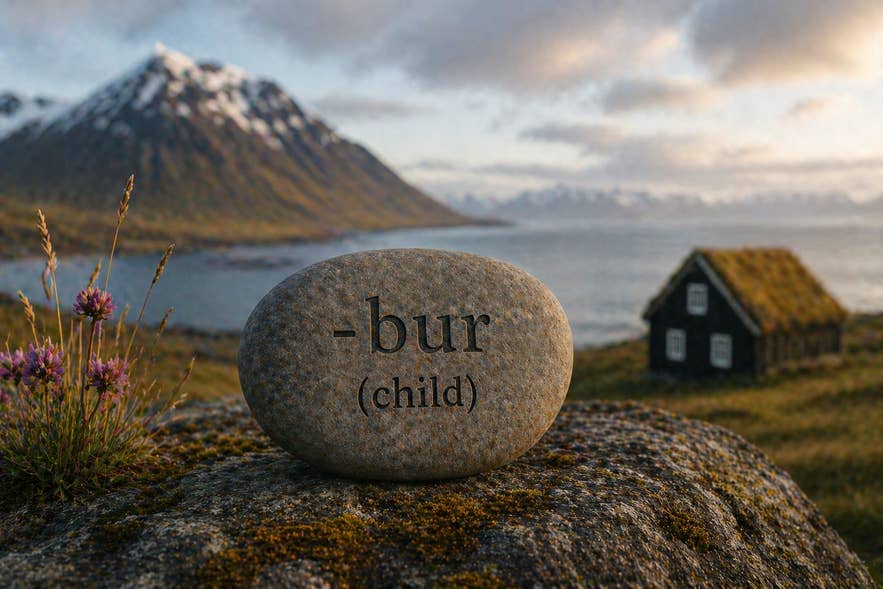
In 2019, Iceland introduced a gender-neutral suffix: -bur, meaning “child.” This addition allows people who do not identify as male or female to have a surname that does not specify gender.
For example:
-
Jón’s child → Jónsbur
Instead of using -son or -dóttir, some non-binary Icelanders may use the suffix -bur, such as Jónsbur instead of Jónsson or Jónsdóttir. As in the patronymic and matronymic systems, the parent’s name is also converted to its genitive form before adding the suffix -bur.
This change reflects Iceland’s flexible naming system and its effort to make official naming more inclusive while still preserving traditional linguistic roots.
The Icelandic Naming Committee
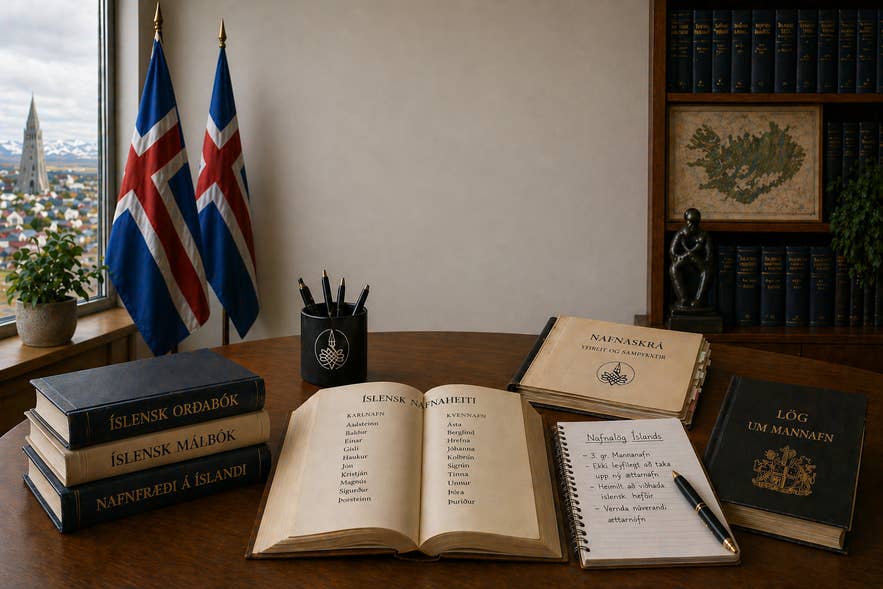
Parents in Iceland do not have complete freedom when naming a child. A first name must either appear in the official Icelandic Personal Name Register (Mannanafnaskrá) or be approved by the Mannanafnanefnd, also known as the Icelandic Naming Committee.
The Mannanafnanefnd was created in 1991 to protect Iceland’s naming system and language traditions. It operates under Icelandic law and reviews names that are not already included in the official register or may not follow Icelandic language rules.
Parents can access the Icelandic Personal Name Register (Mannanafnaskrá) online and check if the name they want for their child is listed. If it is, the name can usually be registered without further review. If it is not listed or if it raises questions about spelling, grammar, or linguistic compatibility, the name must be submitted to the committee for evaluation.
The committee ensures that new names fit Icelandic grammar, spelling conventions, and language traditions. It has three members appointed by the Minister of Justice. One member is nominated by the Icelandic Language Council, one by the University of Iceland’s humanities faculty, and one by the university’s law faculty.
Naming Rules in Iceland
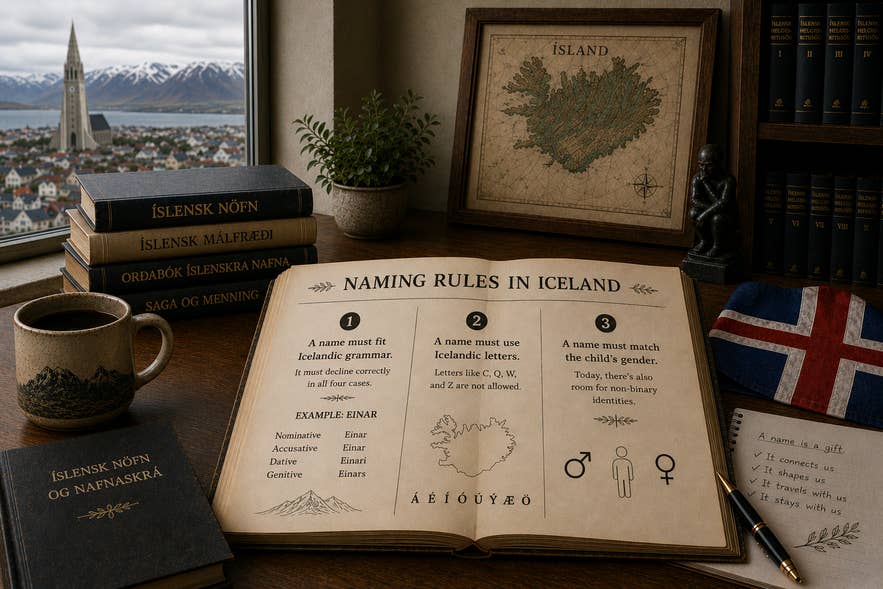
The Icelandic Naming Committee follows three main rules:
-
A name must fit Icelandic grammar and work in four grammatical forms: nominative, accusative, dative, and genitive.
-
A name must use the Icelandic alphabet. Letters like C, Q, W, and Z are usually not allowed.
-
A name must match the child’s gender, although there is now more flexibility for non-binary identities.
The first rule is connected to Icelandic grammar. In Icelandic, words change form depending on how they are used in a sentence. Personal names must follow these same patterns so they sound natural in everyday speech.
For example, the name Jón changes like this:
-
Jón (nominative)
-
Jón (accusative)
-
Jóni (dative)
-
Jóns (genitive)
If a name cannot change in a similar way, it may not be approved.
The second rule relates to spelling and pronunciation. Icelandic uses a specific alphabet. Letters like C, Q, W, and Z are usually excluded because they are not part of traditional Icelandic spelling. This helps keep names easy to read and pronounce.
The third rule concerns gender. Most Icelandic names are traditionally male or female and are expected to match the child’s gender. Today, there is more flexibility for non-binary identities, including the gender-neutral suffix -bur, which still follows Icelandic language rules.
How to Understand Icelandic Last Names (With Examples)
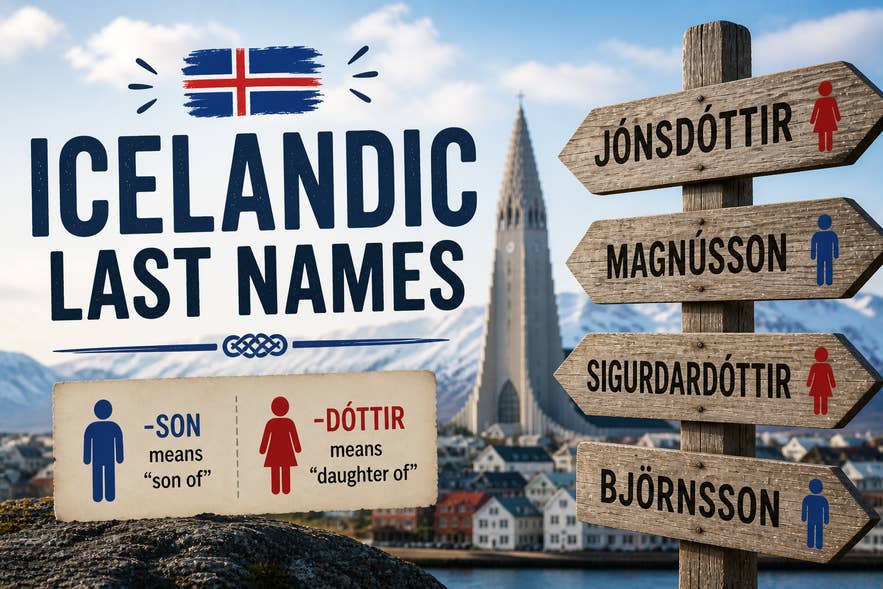
Once you understand the pattern, Icelandic names are easy to interpret because they tell you who a person’s parent is.
Here are some examples:
-
Jón Einarsson → Jón, son of Einar
-
Anna Einardóttir → Anna, daughter of Einar
-
Alex Einarbur → Alex, child of Einar
These examples show that siblings in Iceland may have different last names. However, if they are named after the same parent and use the same suffix, they will usually share the same last name.
Icelandic Names and What They Tell You About the Culture
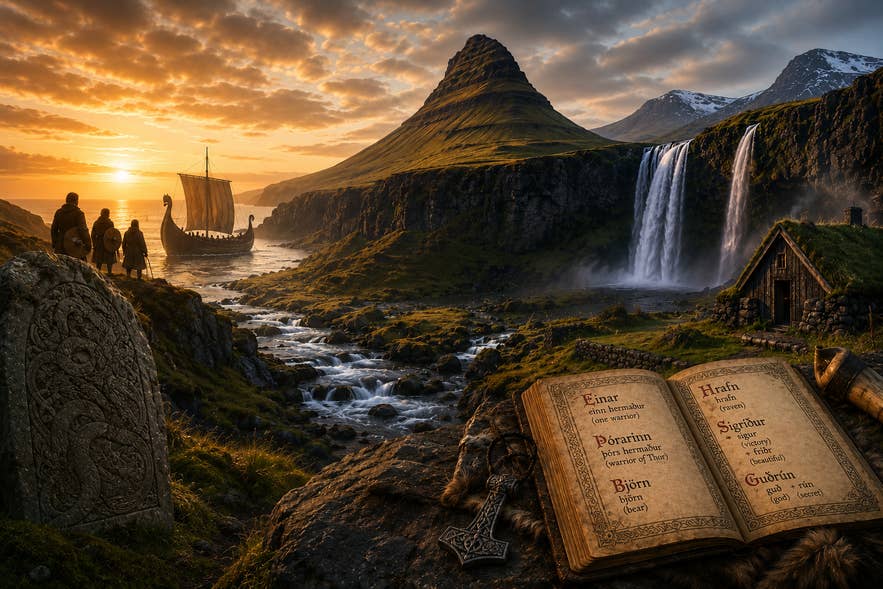
Names in Iceland aren’t just simple identifiers. Many of them have deep roots in the Viking Age traditions, the Icelandic sagas, or in older folklore that is still part of everyday storytelling. These names often carry meanings tied to nature, strength, or character traits, reflecting how closely language and identity are connected in Icelandic history and culture.
You can see this connection most clearly in Iceland’s literary and mythological heritage. Many modern names echo figures from the sagas, linking Icelanders today to stories passed down for centuries.
Rare Icelandic Family Surnames and Their Origins
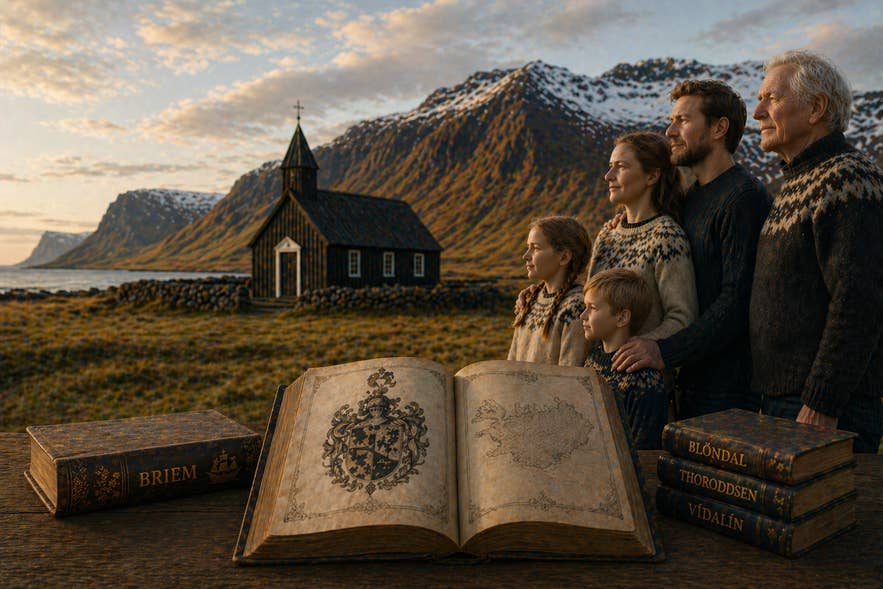
Unlike most of Europe, Iceland never fully adopted hereditary family surnames, preserving an older Nordic naming tradition that dates back to the Viking Age. Early settlers identified people by their first name and either of their parents’ names, and this system has continued with relatively little change over time.
However, a small number of Icelanders have inherited surnames. They usually come from foreign origins or from long-established families that existed before modern naming rules were formalized. Examples include Briem, Blöndal, Thoroddsen, and Vídalín.
Today, Icelandic law protects these existing surnames. People who are born with them are allowed to keep them and pass them on. However, creating new inherited family surnames is generally not allowed. This helps preserve the traditional Icelandic naming system while still respecting historical family names that have been in use for generations.
Why Icelanders Go by First Names (Even the Prime Minister)
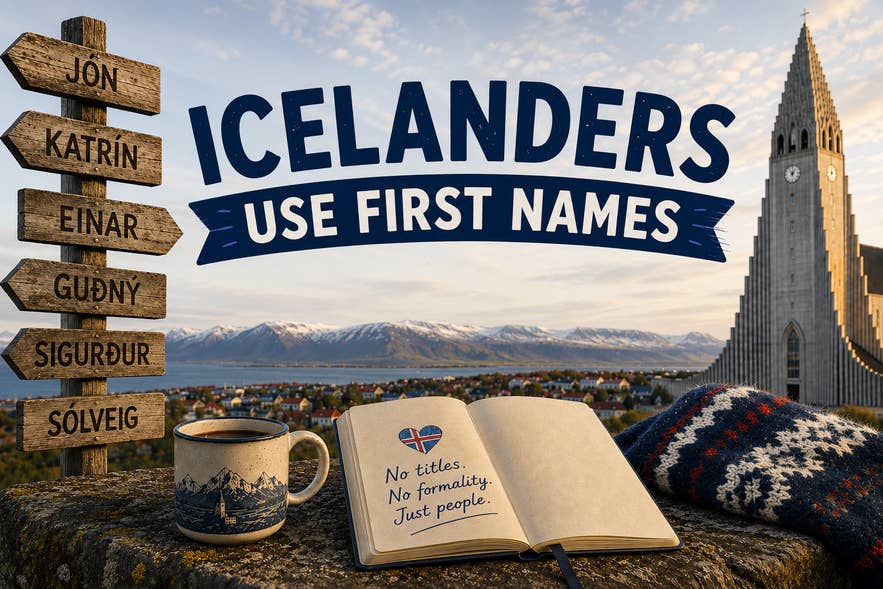
In Iceland, people are usually addressed by their first names, regardless of social status or profession. Titles are rarely used because they are not meant to create distance between people. A teacher, an employer, or a public figure is approached as a person first rather than by their position.
Even politicians and top leaders are referred to in the same way as anyone else. For example, former prime minister Katrín Jakobsdóttir is often called simply “Katrín” in conversation. This is not considered disrespectful. Instead, it reflects a shared understanding that respect comes from behavior and mutual trust, not formal language.
Because Iceland is a small and closely connected society, this level of informality feels natural. People often have overlapping social circles, and using first names helps maintain a sense of familiarity and openness across different roles and levels of authority.
Why Phone Books in Iceland Are Alphabetized by First Name
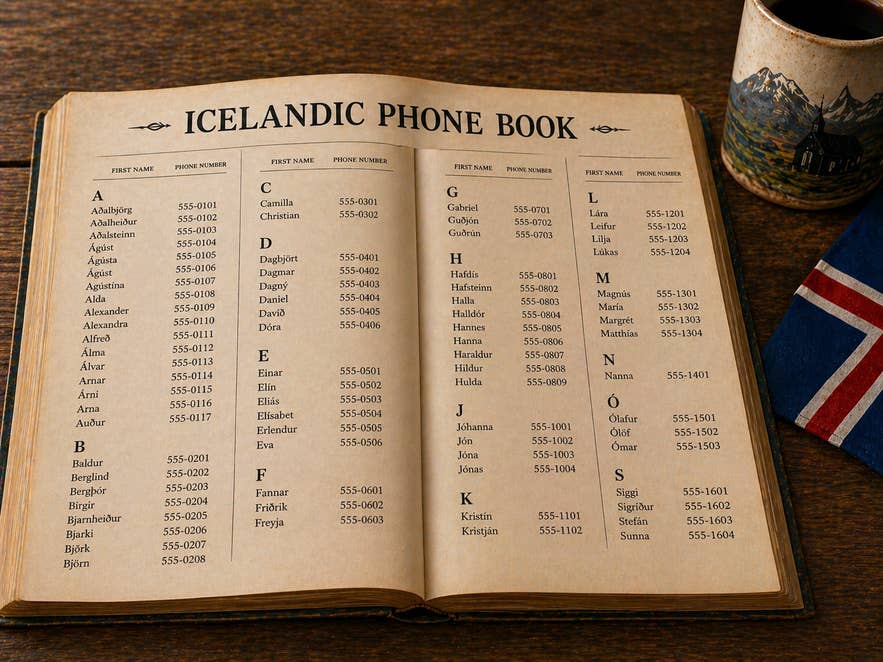
Because Icelandic “last names” change every generation, sorting by them would be impractical. In a typical Icelandic phone book, many people may share the same patronymic surname, such as Jónsson or Jónsdóttir, which makes it difficult to distinguish individuals. To solve this, the Icelandic phone book is alphabetized by first name instead, making it easier to quickly locate the correct person.
How to Address Someone in Iceland if You Are a Foreigner
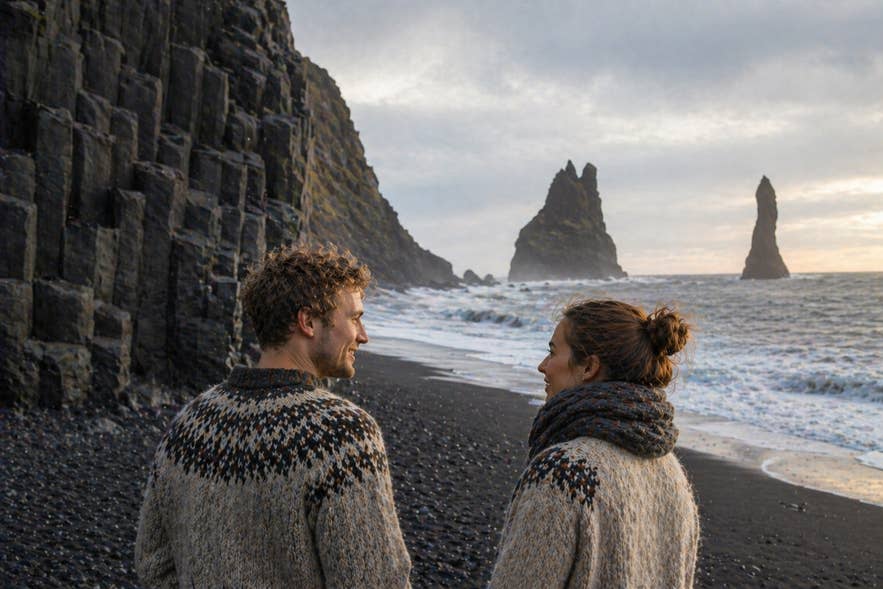
Foreign travelers sometimes worry about the first-name system, but using it is easy. When visiting Iceland, address people by their first names in almost all situations.
Start conversations by using the person’s given name, even if you have just met them or are in a professional setting. You do not need to add titles such as “Mr.”, “Mrs.”, or job-related honorifics. This applies whether you are speaking to a coworker, a service staff member, or someone you are meeting for the first time.
Follow the same approach when speaking to authority figures. If you meet a teacher, doctor, or official, use their first name rather than a formal title. Keep your tone polite and respectful, but do not switch to more formal language. This style of address is standard in Icelandic culture and helps interactions feel more direct, equal, and relaxed.
Popular Icelandic First Names and What They Mean
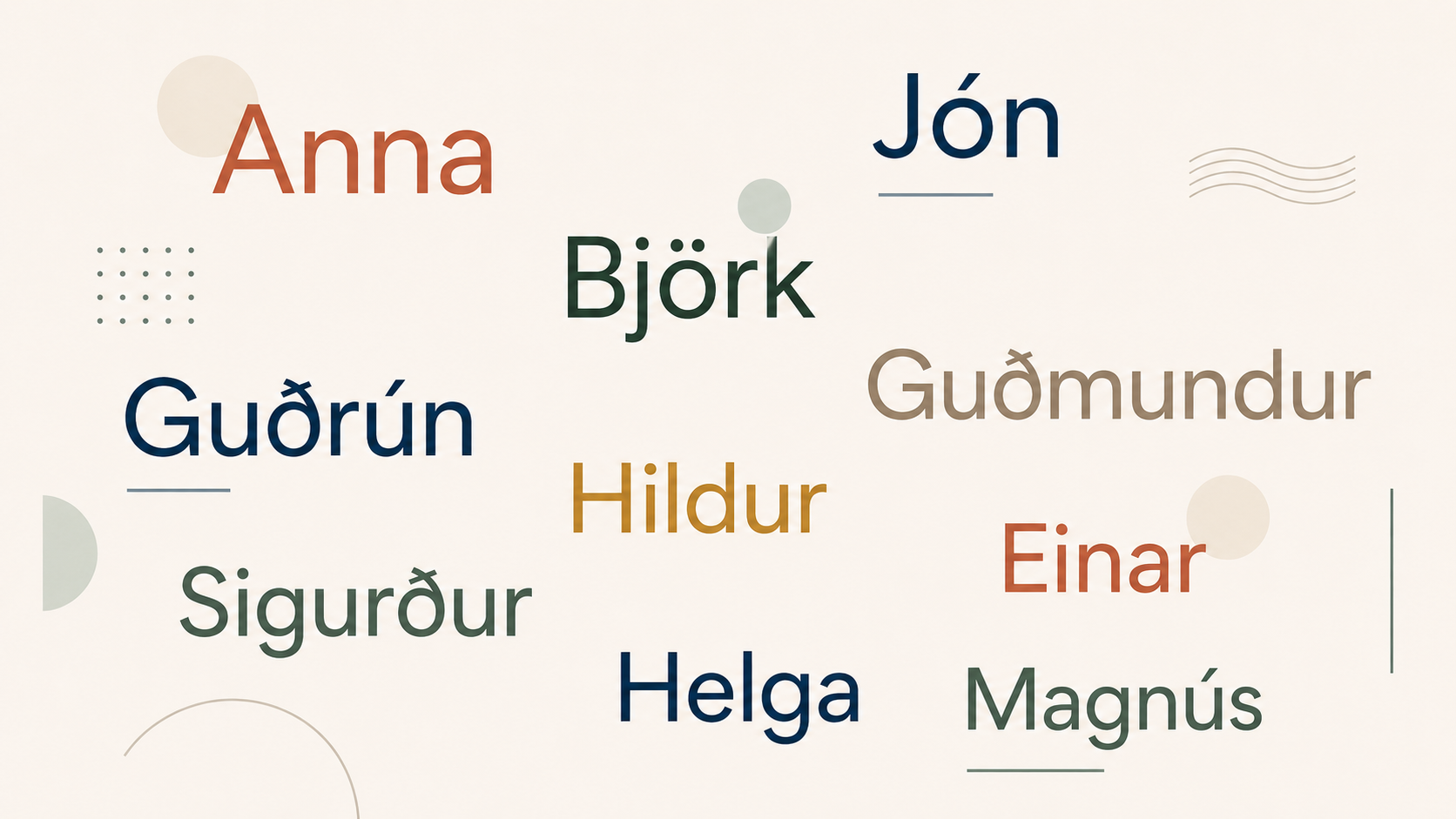
Many Icelandic names come from Old Norse and have clear, symbolic meanings tied to nature, mythology, or history. Here are some of the most popular ones:
Female Icelandic Names
-
Anna — Grace or favor (from Hebrew Hannah)
-
Björk — Birch tree
-
Guðrún — God + secret (or divine secret)
-
Hildur — Battle
-
Helga — Holy, blessed
-
Kristín — Follower of Christ
-
Margrét — Pearl
-
Ragnheiður — Counsel + brightness or honor
-
Sigrún — Victory + secret
-
Sigríður — Victory + peace or protection
-
Ásta — Love
-
Birna — She-bear
-
Freyja — Norse goddess of love, fertility, and war
-
Halla — Rock or slope
-
Hrefna — Raven
-
Þóra — Related to Thor (feminine form of Þór)
-
Katrín — Pure (from Greek Katherine)
-
Unnur — Possibly “wave” or “to love,” origin uncertain
-
Birta — Brightness
-
Sólveig — Sun strength or sun path
-
Hekla — Named after the volcano in South Iceland
-
Katla — Named after the volcano in South Iceland
Male Icelandic Names
-
Jón — God is gracious
-
Guðmundur — God + protection (protected by God)
-
Sigurður — Victory + guardian/protector
-
Einar — One warrior or lone warrior
-
Magnús — Great or mighty
-
Arnar — Of the eagle
-
Björn — Bear
-
Egill — Meaning uncertain; often linked to “edge” or “blade.”
-
Gunnar — Warrior in battle
-
Hjalti — Possibly “sword hilt” (traditional interpretation)
-
Kristján — Christian, follower of Christ
-
Þór — Thor, thunder god
-
Ragnar — Army counsel or warrior counsel
-
Stefán — Crown
-
Eiður — Oath or pledge
-
Ólafur — Ancestral heirloom or heritage
-
Snorri — Meaning uncertain (Old Norse origin), associated with Snorri Sturluson
-
Halldór — Thor’s rock
-
Hannes — Short form of Jóhannes
-
Bjarki — Little bear
-
Úlfar — Wolf warrior or wolf army
-
Hreinn — Reindeer; also “pure” in Old Norse usage
-
Askur — Ash tree
Famous Icelanders and Their Names Explained
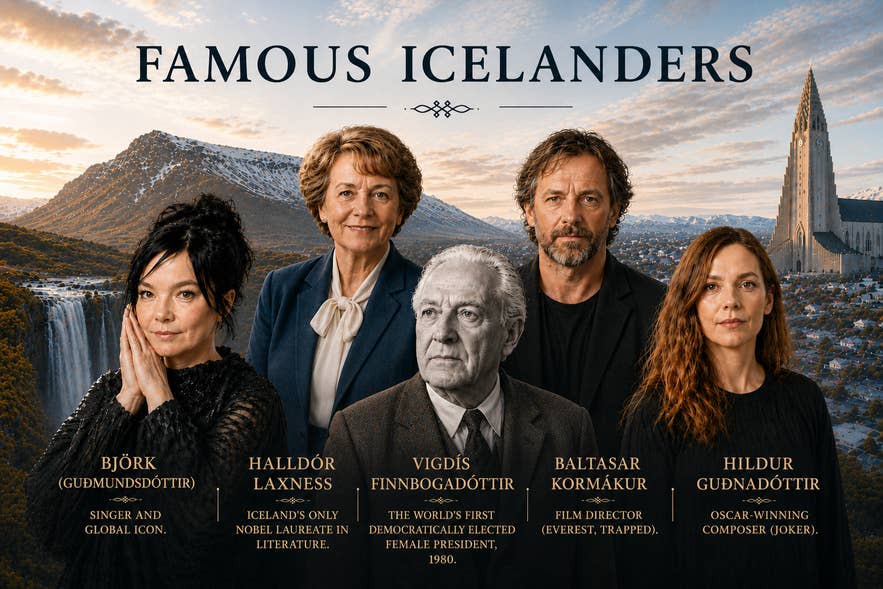
Icelanders are known globally, yet they are still referred to by their first names. This reflects the importance of first names in Icelandic identity. Here are some famous Icelanders and the meanings of their first names:
-
Björk — singer-songwriter; “birch tree.”
-
Halldór Laxness — writer and Nobel laureate; traditionally interpreted as “Thor’s rock” or “Thor’s stone.”
-
Vigdís Finnbogadóttir — former president of Iceland; “goddess/spirit of battle.”
-
Halla Tómasdóttir — president of Iceland; probably related to “rock,” “slope,” or “stone.”
-
Kristrún Frostadóttir — prime minister of Iceland; usually interpreted as “Christian secret” or “Christian rune.”
-
Eiður Guðjohnsen — footballer; uncertain, possibly related to “oath,” “good fortune,” or “luck.”
-
Gylfi Sigurðsson — footballer; “tribute,” “payment,” or “reward.”
-
Baltasar Kormákur Baltasarsson — film director; Baltasar means “Baal protects the king,” while Kormákur is of uncertain origin
-
Hildur Guðnadóttir — composer; “battle.”
Why the Icelandic Naming System Survives
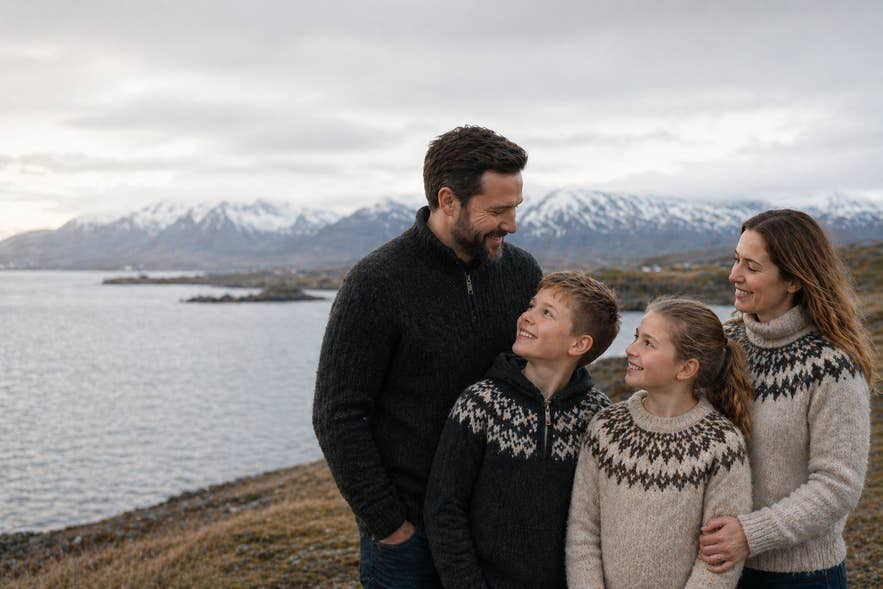
Iceland is the last country in Europe that still uses patronymics as the main system. The rest of Scandinavia dropped them in the 19th and early 20th centuries. Iceland held on because of a deliberate effort to preserve the Icelandic language during its long push for independence from Denmark. The country has a small population, making its system manageable for record-keeping.
The Naming Committee also plays a role in maintaining linguistic consistency. Icelandic has survived for over a thousand years because each generation passes it on intact.
A Few More Things to Know About Icelandic Names
-
Icelandic women don’t change their names when they marry. An Icelandic woman keeps her patronymic or matronymic for life.
-
Non-Icelanders who become citizens used to be required to adopt an approved Icelandic name, but this rule was relaxed in 1996.
Plan a Visit Where You’ll Hear the Icelandic Names in Action
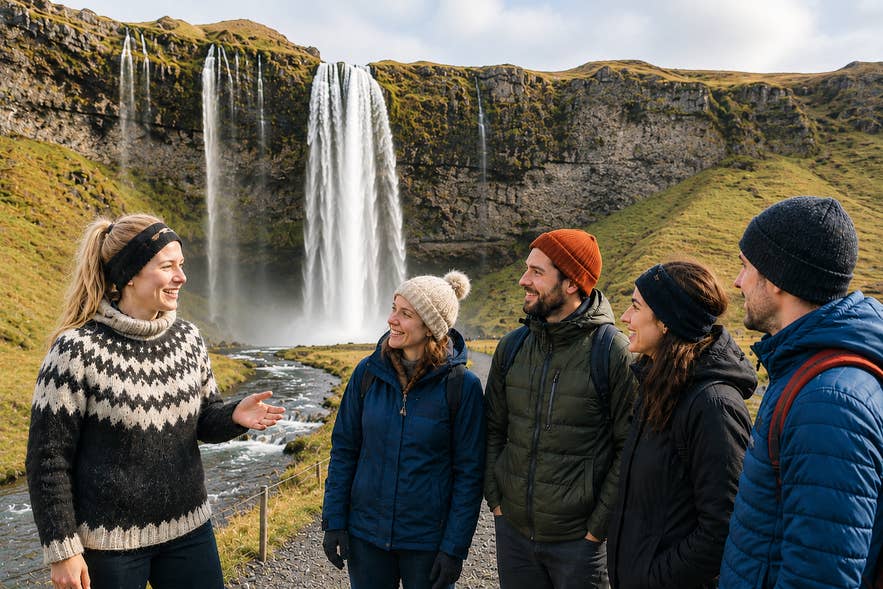
Family trees in Iceland look like a chain, not a branching tree. The best way to be more familiar with Icelandic names is to meet Icelanders. Tour guides, innkeepers, and shop owners will introduce themselves by first name and ask for yours.
Travelers based in the capital can pick up local names on day tours from Reykjavik. For a longer trip, Snaefellsnes day tours from Reykjavik or full Ring Road tours will introduce you to dozens of locals in different towns, each with their own patronymic story.
If you get the chance, don’t hesitate to ask Icelanders what their names mean. Most are happy to explain.
Do you have a favorite Icelandic name, or have you tried working out what your Icelandic name would be? Share it in the comments below. If you have questions about Icelandic culture and what to expect on your visit, feel free to ask in the comments, and we’ll do our best to help.

I was born on the west side of Reykjavík and grew up downtown, so Iceland has been my back yard for most of my life. I'm a father of two, I've traveled on five continents, and I still haven't found a country that holds my attention the way this one does.
That's why I co-founded Guide to Iceland. We connect travelers directly with Icelandic operators, guides and hosts, so the advice and the services both come from people who actually live here.
I write about the practical side of a trip: what eating out in Reykjavík really costs, whether to pick Sky Lagoon or Hvammsvík, where to stop for food along the Ring Road, and which regions give you the best odds of clear skies for the northern lights. If you're planning a trip and something doesn't add up, message me.