Icelandic literature spans a thousand years, from the medieval sagas to Nobel winner Halldór Laxness and today's Nordic noir. Visit Iceland and you can walk the saga landscapes and see the original manuscripts yourself. Read on to plan your trip.
To say Icelanders love books is an understatement. They are utterly obsessed with them. Every year, more than 1,300 titles are published in a language spoken by only around 330,000 people.
It is said that one in every ten Icelanders has published a book. Iceland has more books published, more writers, and more books read than anywhere else in the world, per capita of course. This heritage is something travelers can experience firsthand on their vacations in Iceland.
Why You Can Trust Our Content
Guide to Iceland is the most trusted travel platform in Iceland, helping millions of visitors each year. All our content is written and reviewed by local experts who are deeply familiar with Iceland. You can count on us for accurate, up-to-date, and trustworthy travel advice.
You can see original medieval manuscripts in Reykjavik, follow the Icelandic sagas across the landscapes where they unfolded, and visit the homes of famous authors. Many of these spots fit easily into quick weekend breaks or longer self-drive holidays.
The Icelandic language even has proverbs about this love of books, such as "it is better to be without shoes than without a book" and "a man's best friend is a book," not a dog. To "walk around with a book in your stomach" means to have an idea for a book. Keep reading to discover the stories, the authors, and where to find them on your trip.
Important Facts About Icelandic Literature
-
The medieval Sagas and Eddas, written in the 13th and 14th centuries, are the foundation of Icelandic literary heritage.
-
Iceland publishes more books per capita than any other country, with an estimated one in ten Icelanders having published a book.
-
Halldór Laxness is Iceland's only Nobel laureate in Literature, awarded in 1955.
-
The Christmas Book Flood, or Jólabókaflóðið, is a national tradition of gifting and reading books on Christmas Eve.
-
Iceland is a major force in Nordic noir crime fiction, led by authors like Arnaldur Indriðason, Yrsa Sigurðardóttir, and Ragnar Jónasson.
-
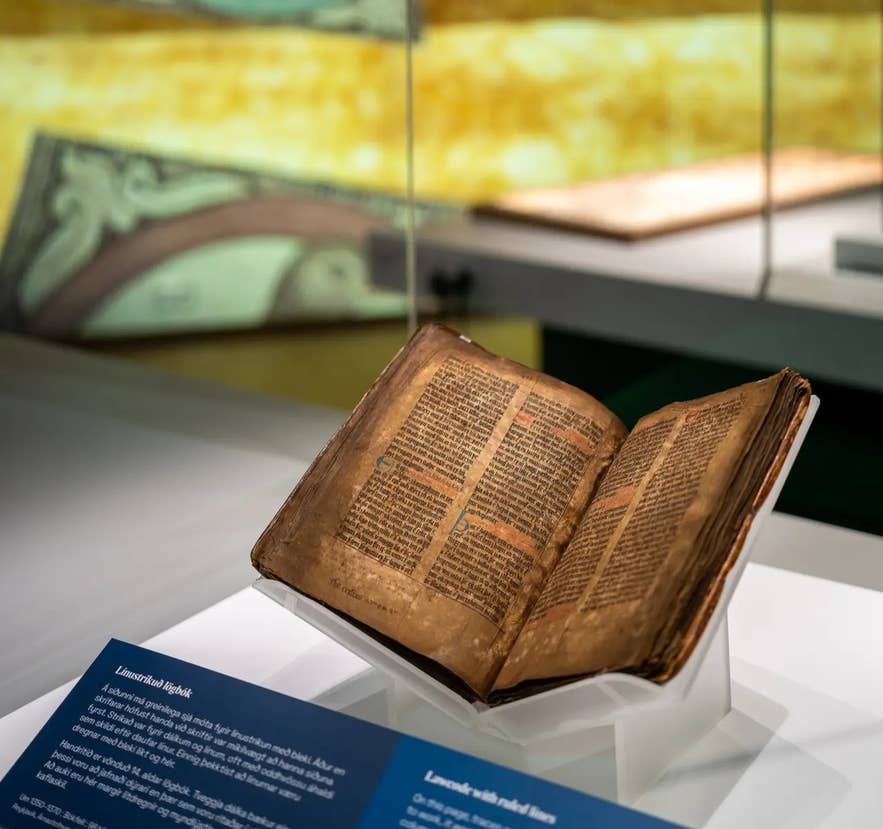
You can see original medieval manuscripts at the World in Words exhibition in Reykjavik.
The Icelandic Sagas and Norse Mythology
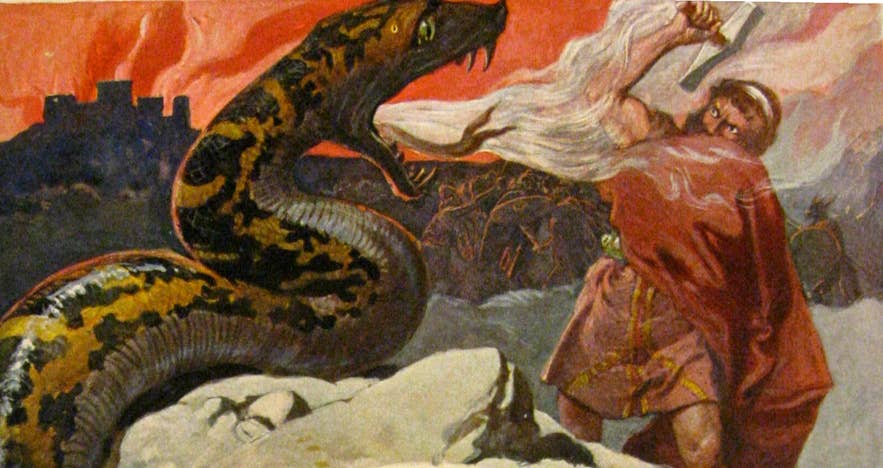
Photo from Wikimedia, Creative Commons, by Haukurth. No edits made.
Iceland's love of the written word has deep roots. Runic inscriptions from the settlement era show that the settlers could read and believed their thoughts were important enough to set in stone. That conviction never left the nation.
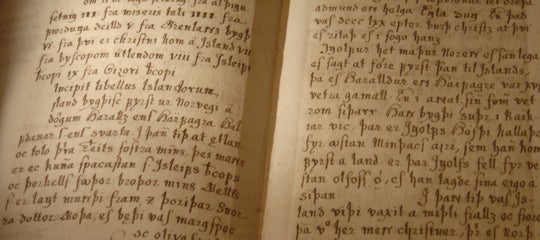
This need to create something permanent is perhaps why monks in the 13th century began writing down the Icelandic sagas. Nobody knows who authored them, if anyone did. One theory holds that they are true-ish stories passed down orally across generations.
The sagas are the best known of all Icelandic literature and remain central to the country's identity. This large body of medieval literature depicts the lives of Icelandic settlers across the 9th, 10th, and early 11th centuries. Written in a realistic style with a hint of fantasy, they are filled with epic battles and larger-than-life heroes, where the themes are honor, glory, and revenge.
These stories inspired authors such as Sir Walter Scott, W.H. Auden, and J.R.R. Tolkien. Two of the most celebrated are Njáls Saga and Egil's Saga. More manuscripts of Njáls Saga survive than of any other Icelandic saga, a sign that hearing it once was never enough.
Njáls Saga centres on the lawyer and wise man Njáll Þorgeirsson and the great warrior Gunnar Hámundarson. It follows a chain of blood feuds and shows how minor insults can escalate into prolonged bloodshed, all in the name of honor.
Some scholars argue the sagas are not simple pastime stories but allegories built to preserve the pagan worldview that came under threat after Iceland's conversion to Christianity in the year 1000. By this reading, each character represents a mythological concept, and Njáls Saga becomes one vast puzzle assembling a way of interpreting reality itself.
We reached out to Sandra Gunnarsdóttir, a local historian, to understand what made this literary heritage so consequential. She points to the Commonwealth-era manuscripts as the foundation of Iceland's 19th-century independence movement, noting that documenting the country's laws, sagas and poetry in the mother tongue gave later generations "a distinct history, language and traditions" to fight for.
"I reckon that if these poets and authors had not documented our early history and legends in our language, then our fight for independence and our national self-image would be very different from what we know today."
Sandra recommends the World in Words exhibition at the Edda building on the University of Iceland campus in Reykjavik as one of the best places to encounter these manuscripts in person. You can book admission to the World in Words exhibition and see original sagas, poetry, and historical texts up close.
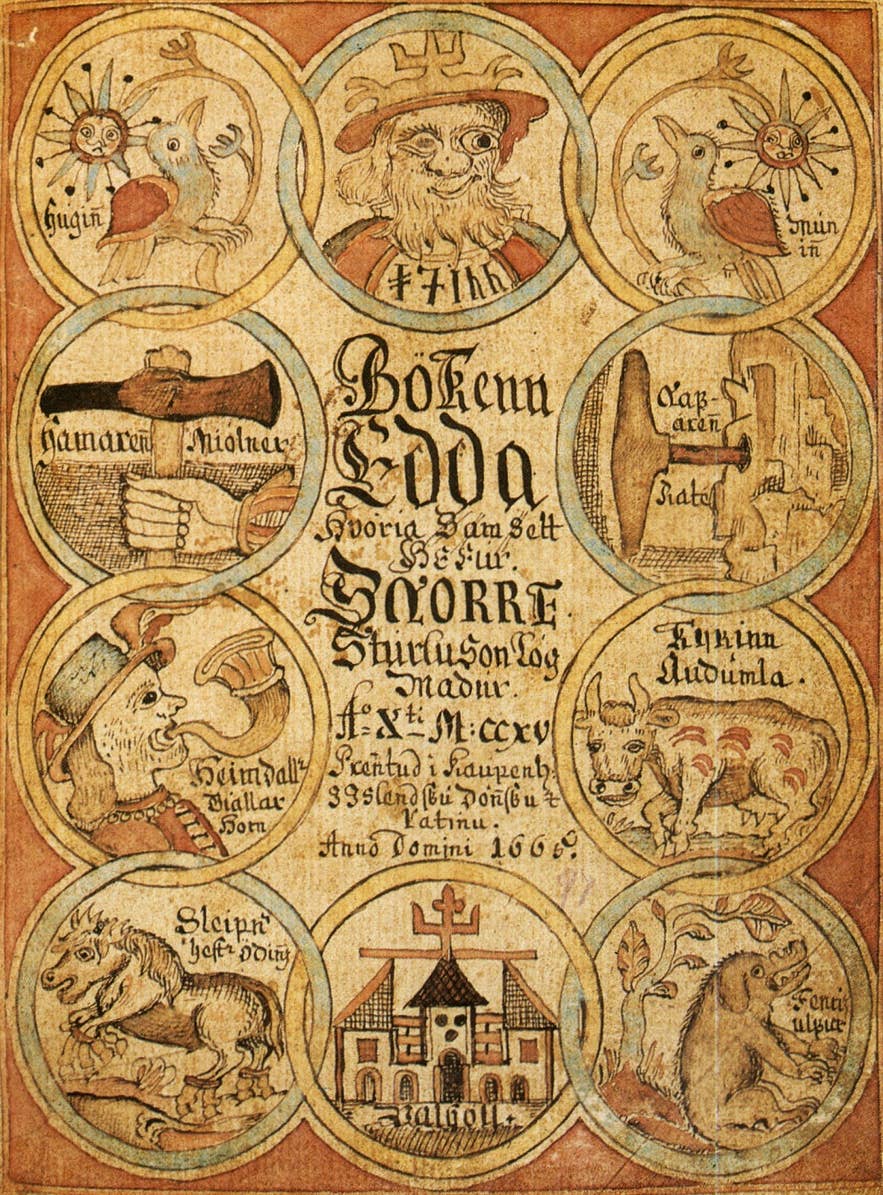
Photo from Wikimedia, Creative Commons, from the Edda. No edits made.
If you want more magic with your Viking stories, look to the Edda, the two medieval texts known as the Poetic Edda and the Prose Edda. The Poetic Edda is sometimes attributed to Sæmundur Fróði, a larger-than-life 12th-century priest. It is a collection of Nordic poems and perhaps the most important source on Norse mythology and Germanic heroic legend.
The Prose Edda is believed to have been compiled by historian and scholar Snorri Sturluson around 1220. It comes in four parts: the Prologue, Gylfaginning ("Tricking Gylfi"), Skáldskaparmál ("The Language of Poetry"), and Háttatal ("List of Verse Forms"), a 102-verse poem in which every verse uses a different poetic form.
Rebel Writers and the Rise of the Modern Icelandic Novel
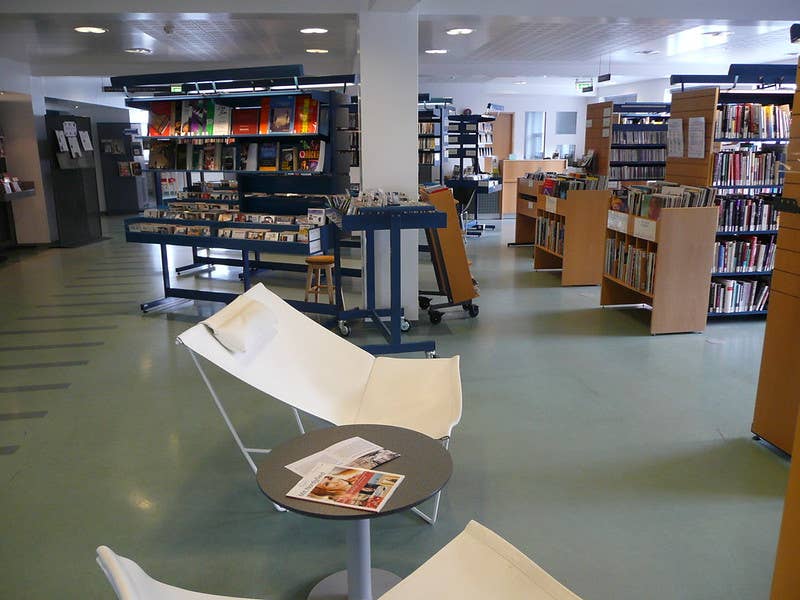 The Viking Sagas have remained Icelandic favourites ever since they were written down. A few centuries later, poetry became the dominant form, with poets such as Hallgrímur Pétursson and Grímur Thomsen writing about Iceland's landscape.
At the start of the 20th century, most books published in Iceland were poetry collections. Not everyone was content with poetry, and eventually a few rebel writers emerged.
One was Þórbergur Þórðarson, now one of Iceland's most beloved authors. He was among the first in Iceland to experiment with auto-fiction in 1924, writing books packed with satire, irony, and rowdy self-expression that unsettled a public used to romantic poetry and the objective style of the sagas.
A contemporary was Gunnar Gunnarsson. Born in 1889 to poor farmers, he moved to Denmark for an education and wrote most of his works there, including the novella The Good Shepherd.
The story, about a shepherd rounding up sheep near Lake Myvatn, caught the attention of Walt Disney, who called Gunnar about turning it into a cartoon. When Gunnar asked about payment, Disney replied that he was not used to paying authors commission, so Gunnar hung up on him.
The first Icelandic author to make a living as a writer, and the first to publish a historical fiction novel, was Torfhildur Hólm. Born in 1845, she is considered Iceland's first female novelist.
Her collection of folktales, Sögur og Ævintýri ("Stories and Fairytales"), told stories from the perspective of its female characters and took a stance on women's rights. Her writing influenced a young boy named Halldór Laxness, who would go on to win the Nobel Prize.
- Read about stories and fairy tales in Folklore in Iceland
The Nobel Prize and Halldór Laxness
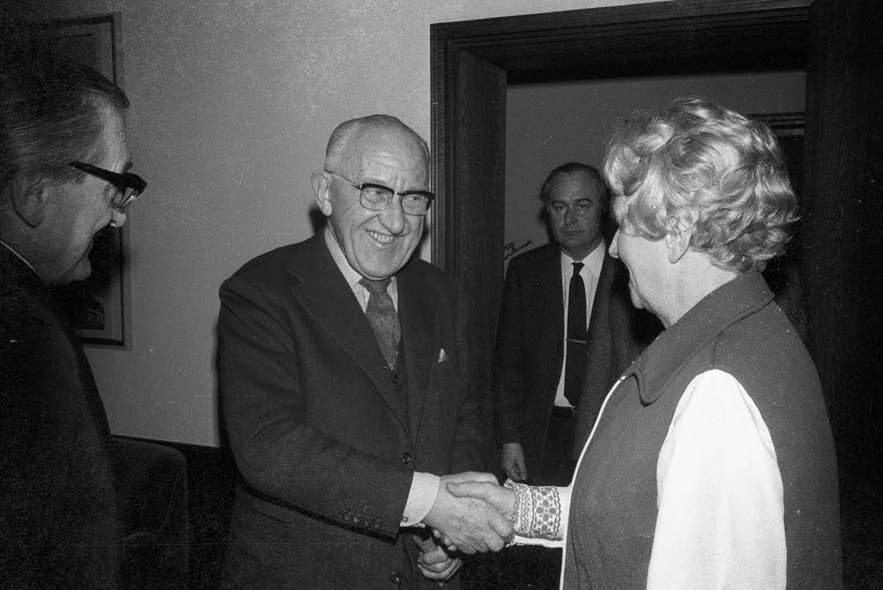
Photo from Wikimedia, Creative Commons, by Stadtarchiv Kiel. No edits made.
Growing up, Halldór Laxness read the Viking Sagas like so many Icelanders. Unlike most of them, he was not a fan. In a letter to a friend, he wrote that he knew of no text more boring than the works of Snorri Sturluson and the medieval writers.
A farm boy in the countryside community of Mosfellsbaer, Halldór grew up partly at Laxnes Farm, whose name he later adopted as his own. He published his first newspaper article in 1916 at just fourteen.
Three years later, at seventeen, he published his first novel, Barn Náttúrunnar ("Nature's Child"), influenced by Torfhildur Hólm, Sigmund Freud, Ernest Hemingway, and his grandmother, Guðný Klængsdóttir.
Halldór's output was vast. He translated Voltaire's Candide and Hemingway's A Farewell to Arms into Icelandic, and wrote poems, short stories, essays, plays, and nonfiction. He is best known for novels that captured the social tensions of 20th-century Iceland, shaped by urbanisation, migration, and industrialisation. That vivid social vision earned him the Nobel Prize in Literature in 1955.
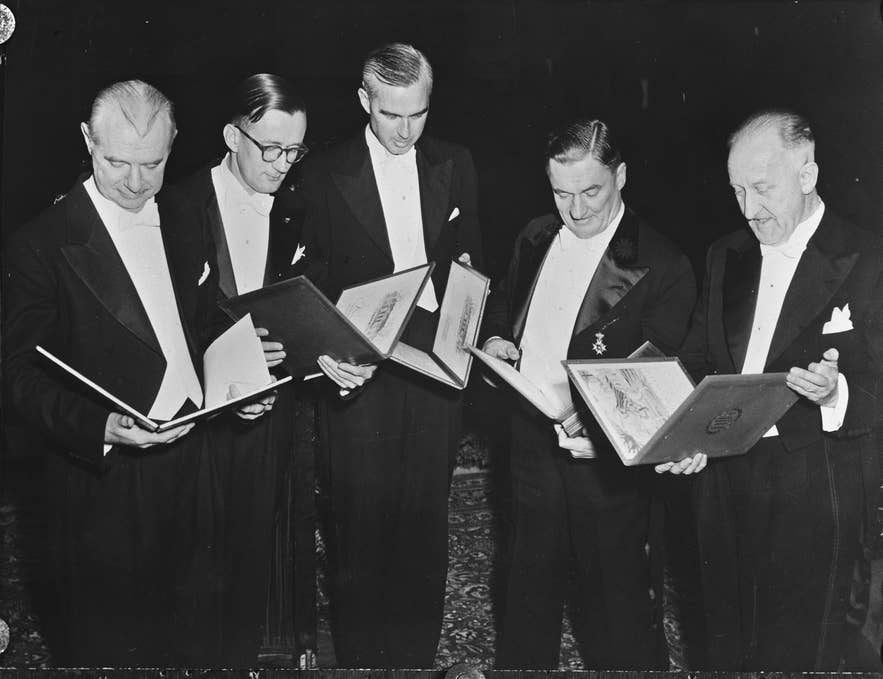
Photo from Wikimedia, Creative Commons, by Wim van Rossem for Anefo. No edits made.
His most revered work, and many Icelanders' favorite book, is Sjálfstætt fólk, or Independent People, published in two parts in 1934 and 1935. On the surface it is the story of an impoverished farmer, Bjartur of Summerhouses, but the Viking blood in his veins makes it far more than that.
Other famous works include Salka Valka, Heimsljós ("World Light"), Íslandsklukkan ("Iceland's Bell"), Kristnihald undir jökli ("Under the Glacier"), and Atómstöðin ("The Atom Station"). The last, written in 1948 in response to the permanent US military base in Keflavik, got him blacklisted in the United States.
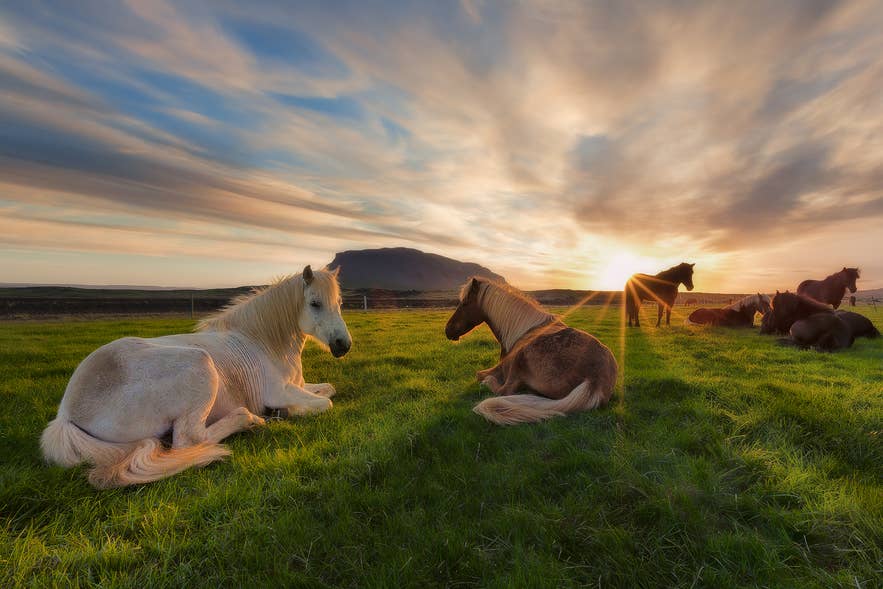 You can step into his world at Gljufrasteinn, the home he built in the valley in 1945, now a museum preserved much as he left it, with his paintings, furniture, and even his car still in place. The surrounding valley is also home to a horse riding experience through Mosfellsbaer, following the same landscape that shaped his early years.
- Read about other notable figures in Iceland’s history
- Find out what to expect on a horse riding tour in this complete guide to the Icelandic horse
The Christmas Book Flood, or Jólabókaflóðið, Explained
The Christmas Book Flood, or Jólabókaflóðið, is Iceland's tradition of giving books as gifts and reading them on Christmas Eve. It begins each November, when every household receives a free catalog, Bókatíðindin or "book bulletin," listing every title due for release in the coming weeks.
From November to December, around 500 to 1,000 new titles appear, not only in bookstores but also in supermarkets and even gas stations. The most popular Christmas gift in Iceland is a book, and many Icelanders use the book bulletin as a wishlist, marking everything they hope to receive.
The tradition was created in Iceland during World War II, when paper was one of the few goods not rationed, making books a practical and popular gift. On Christmas Eve, Icelanders open their book gifts and settle in to read, often with hot chocolate or jólabland, a drink made by mixing orange soda with dark ale.
- Learn about Christmas and New Year's Eve in Iceland
Murder and the Rise of Icelandic Nordic Noir
Realistic but eerie settings, desolate characters, and complex themes set Nordic noir apart from older whodunit mysteries. These novels, also called Scandinavian noir, are the new craze in the literary world, and many have been adapted for film and television. Iceland is doing its part to keep the genre alive.
Authors such as Arnaldur Indriðason and Yrsa Sigurðardóttir are established names with worldwide sales. They are considered Iceland's crime writing royalty, and characters like Arnaldur's detective Erlendur have become as beloved as Bjartur of Summerhouses and Burnt Njáll.
The newest royal is Ragnar Jónasson. As a teenager, he translated Agatha Christie novels into Icelandic, which is why his books, such as Snowblind and Nightblind, carry a hint of the classic whodunit. They are set in remote towns like Siglufjordur, reachable only through mountain tunnels.
More Modern Icelandic Authors Worth Reading
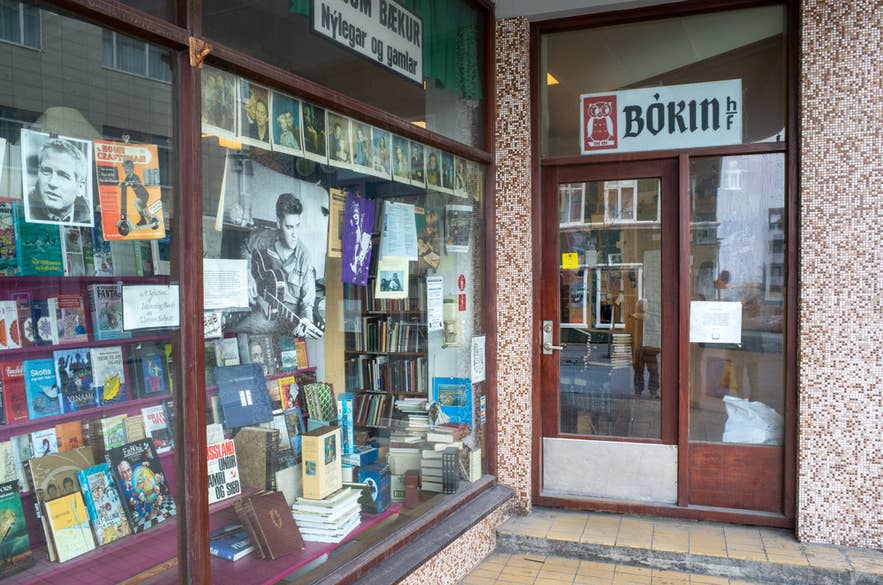 Not into murder mysteries? Iceland has plenty of other voices. The poet and novelist Steinunn Sigurðardóttir wrote Tímaþjófurinn ("The Thief of Time"), an unusual love story infused with her poetry that became a French film in 1999.
The poet, novelist, and lyricist Sjón has been active on the Icelandic music scene since the early 1980s and collaborates often with Björk. His novella Skugga-Baldur ("The Blue Fox") was adapted into a one-woman play.
Several novelists have collected awards at home and abroad, including Auður Ava Ólafsdóttir, known for quiet, moving works like Hotel Silence, along with Jón Kalman Stefánsson, Andri Snær Magnason, and Gerður Kristný.
For a laugh, try the stick-figure comics of Hugleikur Dagsson or the work of Lóa Hlín Hjálmtýsdóttir, lead singer of the band FM Belfast, whose comic book Generalizations About Nations skewers national stereotypes with affection.
- Find out local recommendations in The Best Icelandic Literature for a Non-Icelander
Where to Experience Icelandic Literature for Yourself
 From ancient Viking sagas to Nobel Prize winners and offensive cartoons, Icelandic literature offers something for every reader. Its thousand-year arc runs from oral storytelling carved into stone, through the manuscripts that preserved a worldview, to a thriving modern scene of poets, novelists, and crime writers.
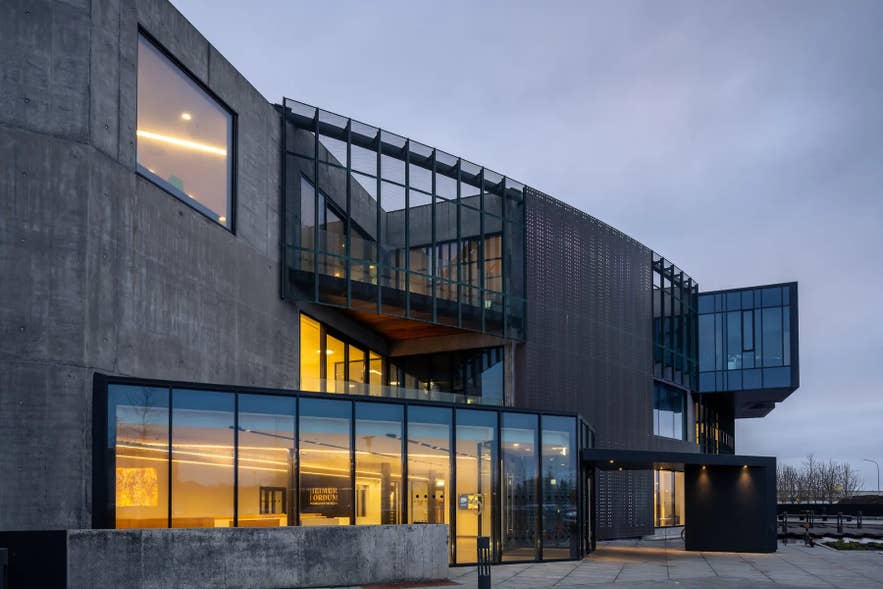
If you want to encounter this heritage in person, the World in Words exhibition in Reykjavik is the best place to start, where you can see original sagas and eddas up close. Pair it with a visit to the National Museum of Iceland next door, or follow the stories into the countryside on popular Viking history and saga tours.
What is Icelandic literature?
What is Iceland's most famous book?
Who is Iceland's most famous writer?
Why do Icelanders read so much?
Which Icelandic author won the Nobel Prize in Literature?
Where can you experience Icelandic literature in Iceland?
Which Icelandic book or author are you most excited to discover? Let us know in the comments below, we would love to hear your favorites.

I'm a local girl from Reykjavík. When not travelling around Iceland, you can usually find me downtown at concerts, shows or other artsy events. Feel free to contact me for advice about life in Iceland or anything else you might think of.