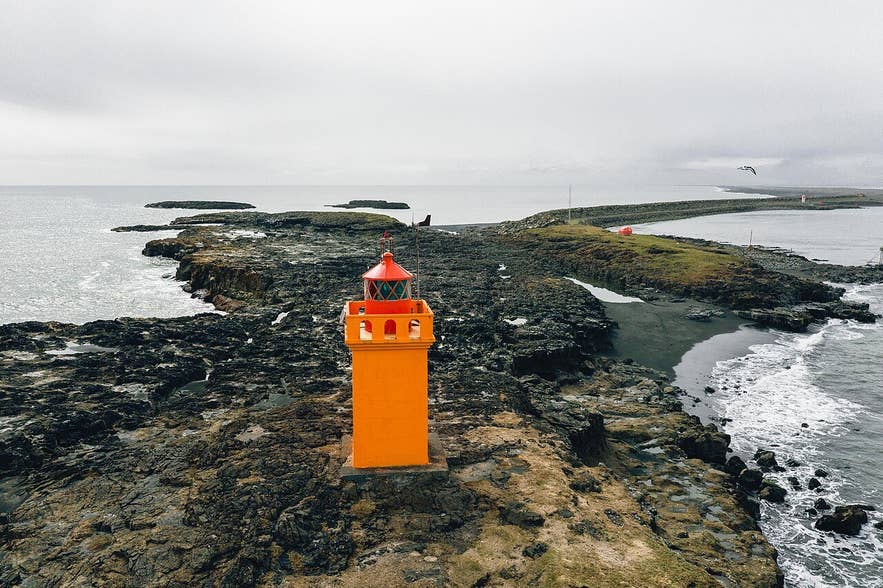
Hvanneyjarviti lighthouse on Hvanney. Photo: Bjorn.thorvaldsson.is, CC BY-SA 4.0
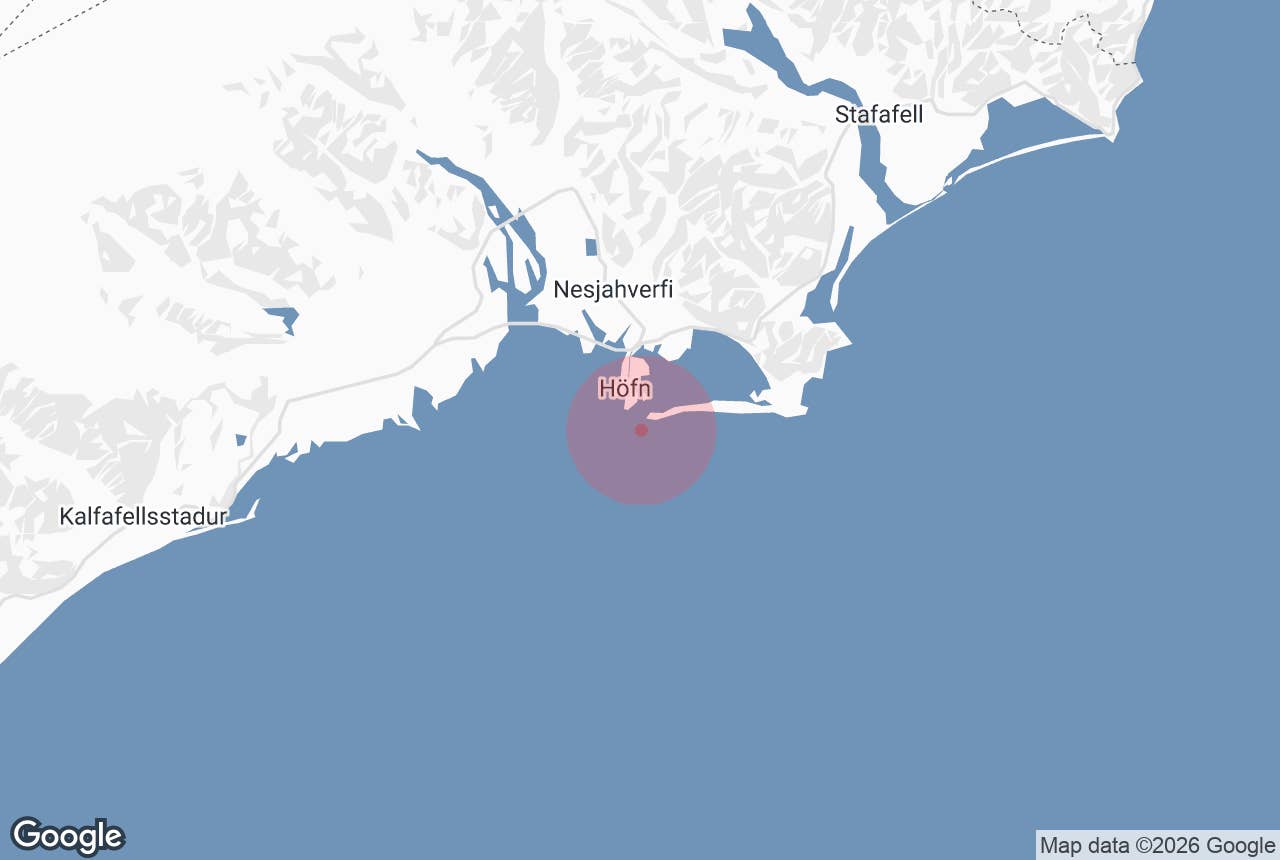
Hvanneyjarviti is the small lighthouse that guards the southern side of the entrance to Hornafjörður lagoon, about 2 kilometres south of the centre of Höfn in Southeast Iceland.
It stands at the eastern tip of Hvanney, a low barrier of sand, shingle and rock that closes off the lagoon from the open Atlantic. The name means "Hvanney lighthouse"; Hvanney itself is "angelica island", from hvönn, the wild angelica plant, and ey, island.
There is no road to Hvanneyjarviti lighthouse: it is reached by boat or, on guided super jeep tours, across the black sands south of Höfn, and the view from it takes in the glaciers of Vatnajökull on one side and the harbour mouth on the other.
Key Takeaways About Hvanneyjarviti
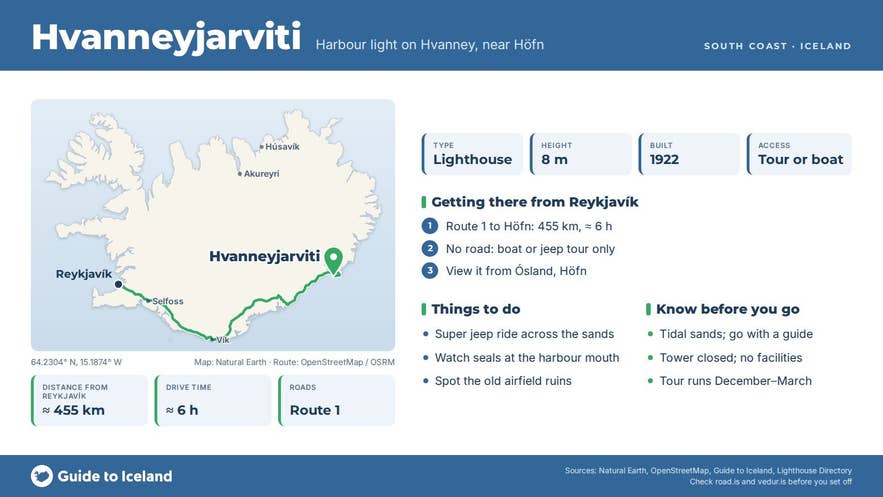
- 8 m concrete sector light at the east end of Hvanney, guarding the Hornafjörður harbour entrance; still active
- Built 1922 and raised in 1938 per the Lighthouse Directory (the tour listing says 1929)
- No road: reached by boat or on guided super jeep tours across the Suðurfjörur sands; viewable from Ósland in Höfn
- Höfn is about 455 km / 6 hours from Reykjavík on Route 1
- GTI super jeep tour runs December–March; seals, airfield ruins and glacier views along the way
Why visit Hvanneyjarviti
The lighthouse is modest: an 8-metre square concrete tower with a lantern and gallery, lit at a focal height of 15 metres above the sea.
According to the Lighthouse Directory it was built in 1922 and raised to its present height in 1938; the Guide to Iceland tour listing for the super jeep tour that visits it dates its first light to 1929.
It is still active, flashing every 5 seconds in white, red or green depending on the direction of approach.
The coloured sectors matter, because the channel into Höfn is a difficult harbour entrance with strong tidal currents and shifting sandbars that the lights help skippers to line up.
That setting is the real attraction. From Hvanneyjarviti you look across the narrow channel to the Austurfjörur sands, and behind you the beach runs west for kilometres along Suðurfjörur, a black-sand barrier that is almost always empty. Seals haul out on the sandbanks in the harbour mouth.
To the north and west the Vatnajökull outlet glaciers Hoffellsjökull, Fláajökull and Heinabergsjökull line the horizon beyond Höfn, and to the east the dark ridges of Vestrahorn mountain rise beyond the Stokksnes headland.
On the sands west of the lighthouse are the remains of the area's first landing strip at Melatangi, which served Höfn until the present airport opened in 1965.
How to get to Hvanneyjarviti
There is no public road.
The Lighthouse Directory describes Hvanney as reachable only by boat, with a distant view from the town; in practice Glacier Journey's super jeep tour drives the Suðurfjörur sands to reach it, and that is how almost all visitors get there.
Do not attempt this in a rental car: the sand is soft, the tide comes in fast and the area is unmarked.
To see Hvanneyjarviti from land, drive to Höfn (about 455 kilometres from Reykjavík on Route 1, roughly six hours; about 75 kilometres east of Jökulsárlón).
From the town centre follow Óslandsvegur south to the Ósland nature reserve at the end of the peninsula, where a short walking loop gives a clear view across the lagoon to the lighthouse, about 1.5 kilometres away. Binoculars help.
Best time to visit
The GTI super jeep tour to the lighthouse is listed as running from December to March, when the sands are firm and the low winter light suits the black beach; clear nights add a chance of northern lights.
Departures depend on weather and tide, so keep a spare day in Höfn. In summer the lighthouse is best seen from the Ósland viewpoint in near 24-hour daylight, or ask Glacier Journey about private departures.
Safety and practical tips
- The sands and the harbour entrance are tidal. Go only with a local guide who knows the tide tables.
- The tower is closed; you can walk around it but not up it.
- There are no facilities of any kind on Hvanney. Höfn has fuel, shops, restaurants and the Gamlabúð visitor centre by the harbour.
- Wind off the Atlantic is constant and cold even in summer; bring a windproof layer and something to cover your camera against blown sand.
- Keep your distance from seals on the sandbanks and do not disturb nesting birds on the dunes during the nesting season in early summer.
- The Ósland viewpoint in Höfn is free, open all year and reached by car along Óslandsvegur.
Can I drive to Hvanneyjarviti myself?
Can you go inside the lighthouse?
How old is the lighthouse?
Why is the harbour entrance so difficult?
What else is on the tour route?
Nearby attractions
- Ósland, 1.7 km, the nature reserve and viewpoint at the tip of the Höfn peninsula
- Höfn, 2.3 km across the lagoon, the Southeast's harbour town known for its langoustine
- Höfn Visitor Centre (Gamlabúð) / Vatnajökull National Park, 2.4 km
- Stokksnes, 9.6 km, the black-sand headland below Vestrahorn
- Vestrahorn Mountain, about 10 km
- Hoffell Hot Tubs, 19.5 km
- Heinabergslón, 24.5 km, the glacier lagoon below Heinabergsjökull
Tours that visit Hvanneyjarviti
- Exciting 3-Hour Super Jeep Black Sand Beach Tour: a three-hour super jeep drive across the black sands south of Höfn that takes in the old airfield ruins, Hvanneyjarviti lighthouse and the harbour entrance to look for seals, plus a frozen glacier lagoon where reindeer are sometimes seen (the Guide to Iceland listing names Fláajökull; the operator's own page names Heinabergsjökull). Listed on Guide to Iceland as running December to March, minimum age 2. The meeting point is the operator's base camp by Hotel Smyrlabjörg on Route 1, about 46 km west of Höfn.