Iceland's speed limit tops out at 56 mph (90 km/h), one of the lowest in Europe, because narrow two-lane roads, single-lane bridges, and fast-changing weather make higher speeds unsafe. Read on to learn the limits by road type and how to avoid fines.
Most visitors explore Iceland behind the wheel, on self-drive tours or in their own rental cars, and the speed limits apply the same way to everyone. The rugged landscape that makes the drive so scenic also makes it demanding. Narrow roads, single-lane bridges, loose gravel, and fast-changing weather leave little room for error.
The driving laws apply everywhere, but the limit itself changes with the road. It is higher on the paved Ring Road and lower on the gravel F-roads of the Highlands. Learning to read Iceland's road signs before you set off makes the changes easy to follow.
It also helps to know how to find your way on Icelandic roads and to plan realistic distances, since the best road trips in the country cover long stretches at modest speeds. Read on for the limits by road type, how Iceland compares to the rest of Europe, why the limit is so low, and what happens if you are caught speeding.
Why You Can Trust Our Content
Guide to Iceland is the most trusted travel platform in Iceland, helping millions of visitors each year. All our content is written and reviewed by local experts who are deeply familiar with Iceland. You can count on us for accurate, up-to-date, and trustworthy travel advice.
What To Know About Iceland's Speed Limit
-
The maximum speed limit in Iceland is 56 mph (90 km/h) on paved rural roads, and no road is signed higher.
-
Gravel roads and Highland F-roads are capped at 50 mph (80 km/h), towns at 31 mph (50 km/h), and residential streets at 19 mph (30 km/h).
-
The 56 mph (90 km/h) ceiling is among the lowest national limits in Europe, where motorways often allow 75 to 81 mph (120 to 130 km/h).
-
The low limit reflects real hazards: no multi-lane motorways, single-lane bridges on the Ring Road, blind hills, loose gravel, free-roaming sheep, and fast-changing weather.
-
Speeding fines run from about 20,000 ISK (145 USD) to well over 150,000 ISK (1,075 USD), and speed cameras are common.
-
Speed limits are maximums for good conditions, so slow down in rain, fog, wind, or on gravel.
Iceland Speed Limits by Road Type
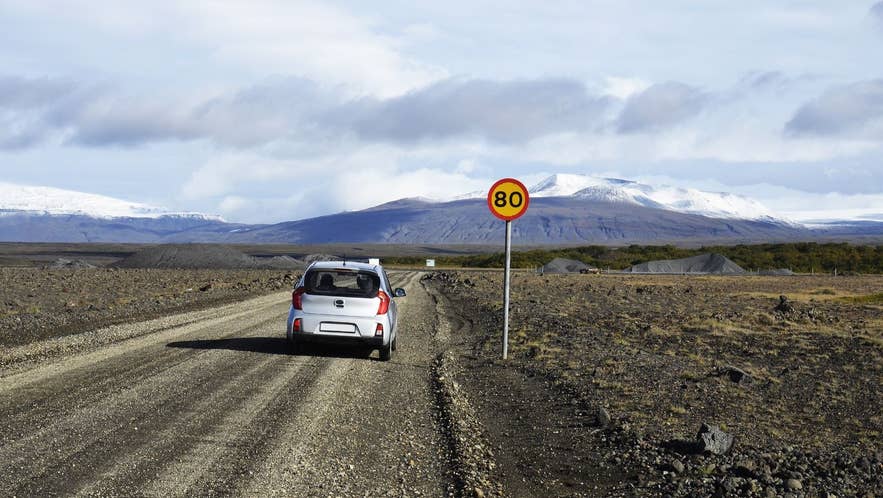
Iceland sets its speed limits by location and road surface rather than posting a single national number. As a rule of thumb, the limit is 31 mph (50 km/h) in towns, 50 mph (80 km/h) on gravel, and 56 mph (90 km/h) on paved rural roads such as most of the Ring Road. Once the pavement turns to gravel, the limit falls to 50 mph (80 km/h).
Iceland's speed limit signs follow the European standard. A round sign with a red border and a black number on a yellow background marks the legal maximum for that stretch, and it stays in force until the next sign. The table shows the limits you will meet on each road type.
| Road type or situation | Speed limit | Traveler notes |
|---|---|---|
| Residential streets and school zones | 19 mph (30 km/h) | Found in all towns and near schools. Watch for flashing warning signs outside school zones. |
| Built-up and urban areas (all towns and cities) | 31 mph (50 km/h) | Applies throughout Reykjavik and all urban areas, and is strictly enforced with speed cameras. |
| Urban through-roads separated from pedestrians (urban expressways) | 37 mph (60 km/h) or as signed | Common on Reykjavik's main through-roads and bypasses. Follow posted signs, as limits can vary. |
| Unsealed gravel roads, including all Highland F-roads | 50 mph (80 km/h) | Applies to all unpaved gravel roads, including F-roads and remote Highland tracks. Slow down on loose gravel and around blind curves. |
| Paved rural roads, including most of the Ring Road (Route 1) | 56 mph (90 km/h) | Mostly paved, but conditions, weather, and single-lane bridges require lower speeds in practice. |
Good to know: Rectangular blue advisory signs with white numbers appear at hazard zones like sharp corners, single-lane bridges, and blind hills. They suggest a safe speed rather than a legal limit. Treat them as a strong recommendation, since they mark where most accidents happen.
How Iceland's Speed Limit Compares to the Rest of Europe
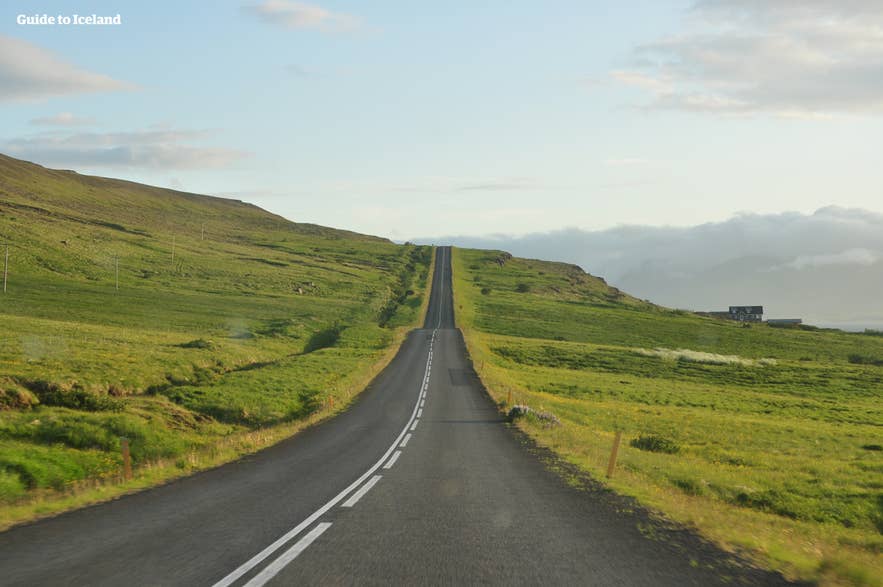
Iceland's 56 mph (90 km/h) ceiling looks low next to most of Europe. Many countries allow 75 to 81 mph (120 to 130 km/h) on their motorways, and a few go higher. The difference reflects the fact that Iceland has almost no motorway-grade roads. The table below puts Iceland alongside several other countries.
| Country | Top motorway or rural limit | Context for Iceland visitors |
|---|---|---|
| Iceland | 56 mph (90 km/h) | No motorways exist outside the capital region, and the Ring Road is a two-lane highway. |
| Norway | 68 mph (110 km/h) | Has some motorways but keeps rural limits stricter than most of Europe. |
| Sweden | Up to 75 mph (120 km/h) | Uses variable limits, with the fastest motorway stretches reaching the higher figure. |
| Denmark, France, Italy, Austria | 81 mph (130 km/h) | Extensive motorway networks with wide, divided, grade-separated roads not found in Iceland. |
| Netherlands | 62 mph (100 km/h) daytime, up to 81 mph (130 km/h) at night | Lowered its daytime motorway limit in 2020, allowing higher speeds only at night on some roads. |
| Bulgaria and Poland | 87 mph (140 km/h) | Among the highest fixed motorway limits in the EU on purpose-built high-speed roads. |
| Germany (Autobahn) | No general limit on about 70 percent of the network | Has limit-free motorway stretches, with an advised 81 mph (130 km/h), on purpose-built high-speed roads. |
Why Iceland's Speed Limit Is So Low
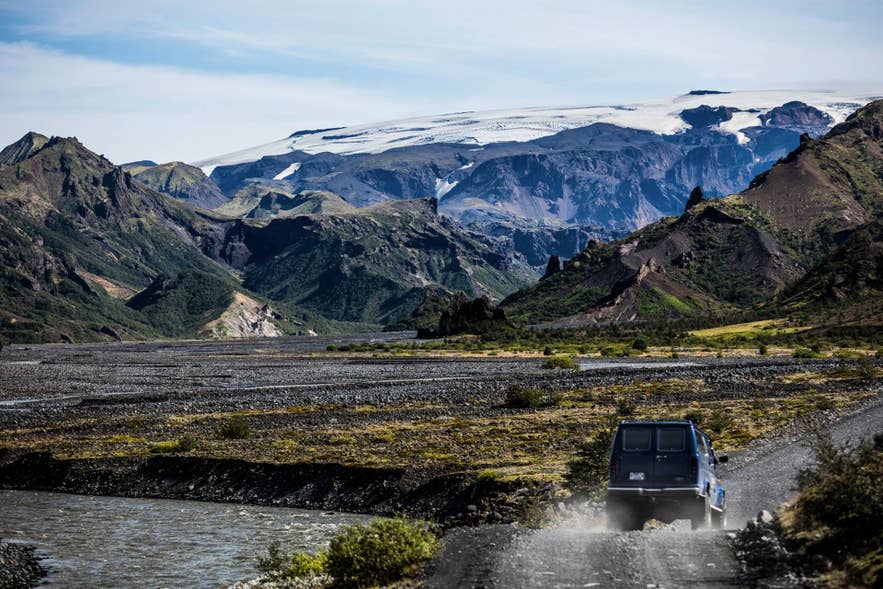
Iceland's speed limit is low because its roads cannot safely carry higher speeds. The country has no multi-lane motorways outside the capital region. Its two-lane roads cross lava fields, glacial plains, and mountain passes, where hazards appear with little warning. The biggest factors are explained below.
-
No motorways, only two narrow lanes: Almost every route is a single carriageway with one lane each way and no central barrier. Oncoming traffic passes just a few feet away, leaving no margin for higher speeds.
-
Single-lane bridges and blind hills: The Ring Road still crosses several single-lane bridges (einbreið brú), where only one car fits at a time. Blind crests (blindhæð) hide oncoming traffic until the last moment.
-
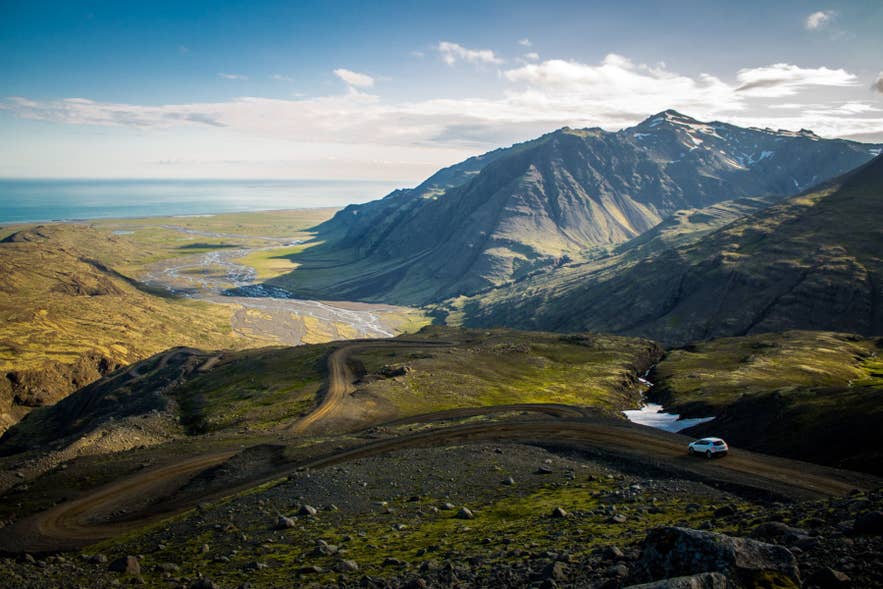
Gravel and loose surfaces: A large share of the network is gravel. The spot where pavement turns to gravel is a common place to lose control, which is why the gravel limit drops to 50 mph (80 km/h).
-
Fast-changing weather: The posted limit is a fair-weather maximum. Fog, rain, ice, and winds strong enough to rip a car door off its hinges can cut grip and visibility within minutes. That is why the ceiling stays conservative.
-
Free-roaming sheep and wildlife: In summer, Icelandic sheep graze freely and wander onto the road, and reindeer roam East Iceland. Lower speeds give you time to stop. If you do hit a sheep, call the police right away. Farmers are insured against it, and you are only fined if the crash was caused by your negligence.
Speeding Fines and Speed Cameras in Iceland
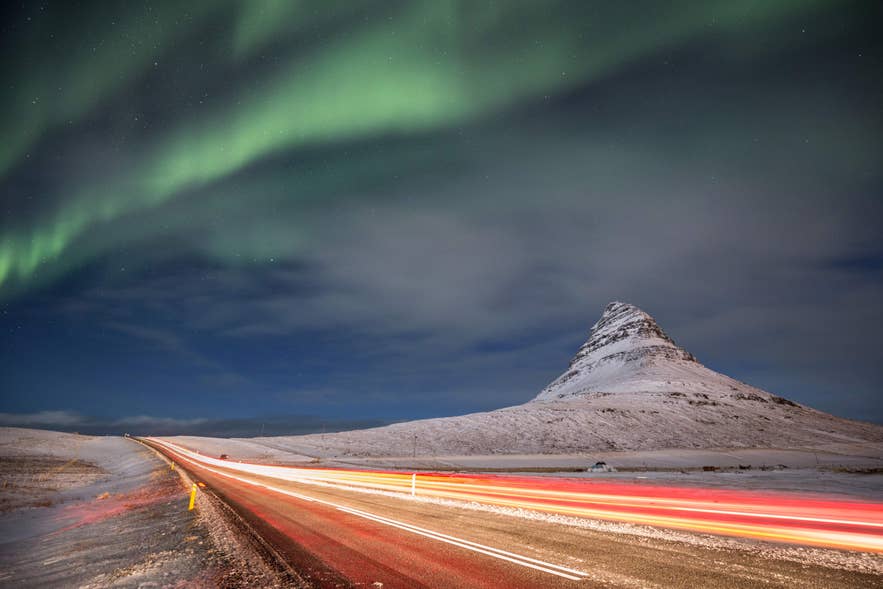
Speeding fines in Iceland are strictly enforced and rise steeply with your speed. The figures below are a general guide for a standard car on a 56 mph (90 km/h) road, based on the Icelandic police's official online fine calculator. Exact amounts can vary, so check the calculator for the current figure.
| Caught going over the limit | Fine |
|---|---|
| About 6 mph (10 km/h) over | 20,000 ISK (about 145 USD) |
| About 12 mph (20 km/h) over | 50,000 ISK (about 360 USD) |
| About 19 mph (30 km/h) over | 80,000 ISK (about 570 USD) |
| About 25 mph (40 km/h) over | 120,000 ISK (about 860 USD) |
| About 31 mph (50 km/h) over | 150,000 ISK (about 1,075 USD) |
If you drive a rental car, the fine comes through the rental company. They pay the police and charge your card, with a processing fee added. Paying within 30 days, or on the spot to an officer, cuts the amount by about 25 percent.
Enforcement reaches well beyond the capital. Fixed cameras sit in towns and on rural highways. Average-speed cameras on some routes, including the Thingvellir National Park road, clock your speed between two points. Braking only at a camera will not help.
The easiest way to avoid a fine is to treat the posted limit as firm and leave a margin. Slow down for towns, gravel, single-lane bridges, and blind hills. Matching your speed to the weather and road conditions protects both your trip and your wallet.
What Iceland's Speed Limits Mean for Your Trip
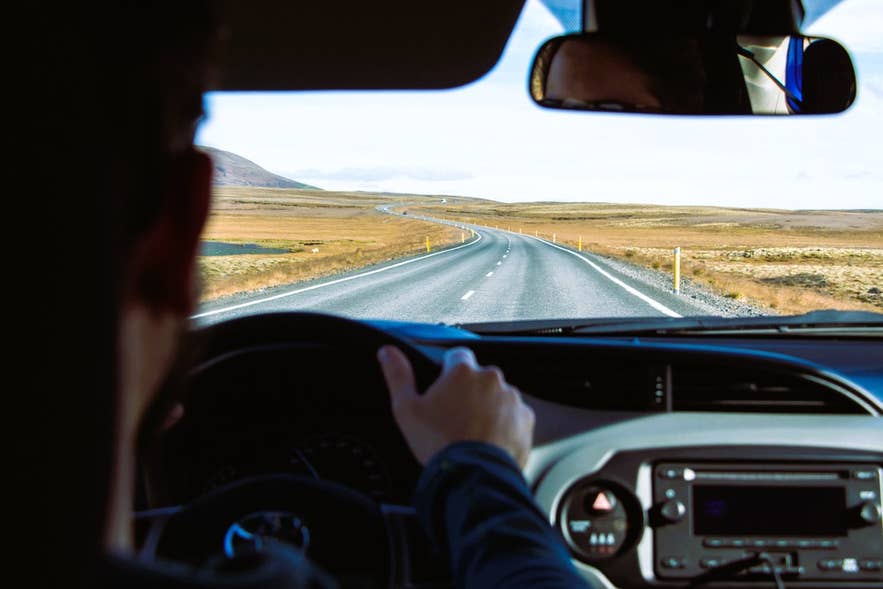
Iceland's speed limits are low for sound reasons. Once you understand the roads, they make complete sense. Most visitors quickly stop noticing the lower numbers, because the scenery and the conditions set the pace anyway.
Plan your days around realistic drive times rather than raw distance, and keep an eye on the weather and the signs. The limits soon feel natural. The complete guide to driving in Iceland fills in the rest of the rules. If you would rather leave the driving to someone else, guided Ring Road tours cover the same routes.
What is the speed limit in Iceland?
What is the speed limit on Iceland's Ring Road (Route 1)?
What is the speed limit on gravel roads and F-roads in Iceland?
Are there speed cameras in Iceland?
How much is a speeding fine in Iceland?
Is there a speed tolerance before you are fined in Iceland?
What do Iceland's speed limit signs look like?
Iceland's speed limits are part of what makes its roads so rewarding. Take your time and enjoy the drive. Have you driven in Iceland, or do you have a tip for first-time travelers? Share it in the comments below.

I was born on the west side of Reykjavík and grew up downtown, so Iceland has been my back yard for most of my life. I'm a father of two, I've traveled on five continents, and I still haven't found a country that holds my attention the way this one does.
That's why I co-founded Guide to Iceland. We connect travelers directly with Icelandic operators, guides and hosts, so the advice and the services both come from people who actually live here.
I write about the practical side of a trip: what eating out in Reykjavík really costs, whether to pick Sky Lagoon or Hvammsvík, where to stop for food along the Ring Road, and which regions give you the best odds of clear skies for the northern lights. If you're planning a trip and something doesn't add up, message me.